Your move: Gamers join nuke industry in planning future atomic disasters
NFLA 1st April 2025
Following a £2.8 million investment made by Sellafield to transform a Whitehaven furniture department store into a high-tech digital and gaming hub[i], today nuclear industry bosses have announced that they are teaming up with Digital Gaming Content PHD students to embrace a new gaming genre – Atomic Disaster Gaming.
Under Project ‘Atomquake’, the students will be invited to participate in multiple team scenarios in which unprecedented catastrophes will be mapped out which place Cumbria’s population and environment in grave peril.
One such scenario relates to the possible location of a Geological Disposal Facility in West Cumbria in which the work of multiple giant boring machines tunnelling mass voids under the sea alongside the Sellafield site trigger earthquakes along the long-dormant Lake District Boundary Fault Zone.
Another envisages the ongoing leaks from Magnox silos contributing to the liquification of the Sellafield site.
Frightening stuff, and in parts true.
But if you were questioning the entire veracity of our story, you would be right to do so – please take account of the date.
In outlining this tale, we tip our hat to acknowledge software developers, Rebellion Developments, who have just released ‘Atomfall’, an acclaimed action game set in an alternate 1960s Cumbria, where radiation from the 1957 Windscale Fire has blanketed much of Northern England making it a contaminated quarantine zone. In the game, participants in the online world take on player characters who are engaged in a battle for survival.
The disaster outlined in ‘Atomfall’ almost came to pass, so, as life sometime imitates art, who is to say whether, in whole or in part, our innocent April Fool’s Day tale may one day also become our future reality.
(The NFLAs wish to thank Marianne Birkby from Radiation Free Lakeland for her contribution to this article and for the illustration she has kindly provided to accompany it)………………………………………………….https://www.nuclearpolicy.info/news/your-move-gamers-join-nuke-industry-in-planning-future-atomic-disasters/
UK nuclear deterrent: the mutual defense agreement is at risk in a Trumpian age
Prime Minister Keir Starmer recently boarded one of the UK’s four
nuclear-armed submarines for a photo call as part of his attempts to
demonstrate the UK’s defence capabilities as tensions with Russia
continue. However, Starmer faces a problem. The submarine, and the rest of
the UK’s nuclear fleet, is heavily reliant on the US as an operating
partner. And at a time when the US becomes an increasingly unreliable
partner under the leadership of an entirely transactional president, this
is not ideal. The US can, if it chooses, effectively switch off the UK’s
nuclear deterrent.
The Conversation 27th March 2025 https://theconversation.com/uk-nuclear-deterrent-the-mutual-defense-agreement-is-at-risk-in-a-trumpian-age-252674
Cumbria could be only option for nuclear disposal

(and still they intend to keep making the foul stuff!)
Ian Duncan, BBC News, 2 April 25
Cumbria could be the only area left in the search for a new nuclear disposal site, councillors have been told.
Members of Cumberland Council’s nuclear issues board were given an update on the search to pin down a site to build a geological disposal facility (GDF) on Monday.
Three areas had previously been shortlisted by government body Nuclear Waste Services (NWS) – Mid Copeland and South Copeland in Cumbria and Lincolnshire.
Councillors were told that Lincolnshire County Council plans to withdraw, however, the authority is due to meet in June after local elections, when the result could signal a change in a new council’s intention.
Nuclear waste would be stored at the GDF beneath up to 1,000m (3,300ft) of solid rock until its radioactivity had naturally decayed.
Earlier this month Lincolnshire County Council said it would pull out of talks unless it received “significant” further information about the plan.
Two surface areas of focus had been identified by NWS in Mid Copeland, east of Sellafield and east of Seascale.
In South Copeland, land west of Haverigg had been chosen.
The Copeland area is already home to Sellafield, where the vast majority of the UK’s radioactive nuclear waste is stored, as well as the world’s largest stockpile of plutonium…………….
The nuclear waste disposal site would need community support, the Local Democracy Reporting Service said.
NWS previously said construction would only start when a potential community had confirmed its “willingness” to host the facility……….
https://www.bbc.co.uk/news/articles/cqj4rvkd8e7o
Britain is aiding Israel’s nuclear force
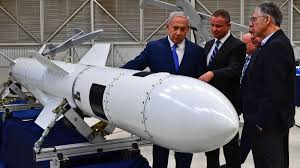
Israeli ministers may not see their nuclear weapons just as weapons of last resort, to be used if the country were threatened with annihilation.
In the months after the Hamas attacks on Israel in October 2023, several Israeli policymakers and commentators—including heritage minister Amihai Eliyahu who was later suspended from the cabinet—suggested that Israel should use nuclear arms against Hamas fighters in Gaza.
DECLASSIFIED UK, MARK CURTIS, 26 March 2025
When the government recently published its arms exports data for the period July to September last year, one item caught the eye: a licence to sell Israel £7.1m worth of “technology for submarines”.
Israel’s submarines are believed to house nuclear arms.
The government data included a footnote stating that the licence related to “marketing and promotional purposes, including demonstration to potential customers, temporary exhibitions”.
Whatever that might mean, what is clearer is that British ministers have authorised 77 export licences to supply Israel with components for its submarines since 2010. This makes that category of equipment the fourth most numerous for all UK military exports to Israel.
The total value of these licences is £8.96m, Declassified has established. Two of the licences are, however, “open” rather than “single”, meaning that unlimited quantities and values of such equipment can be exported from Britain.
These licences for Israel’s submarines were excluded from the UK’s restrictions on exports of military equipment for Israel announced last September during its bombardment of Gaza.
Also excluded were components from Israel’s F-35 warplanes used to devastating effect in the territory.
Israeli military officials are doubtless pleased that British companies can continue to support their submarines – since their underwater and nuclear arms programmes are both being upgraded.
Nuclear dolphins
Research institute SIPRI estimates that Israel has at least 90 nuclear warheads but that the number could reach as high as 300.
While Israel continues to deny it has nuclear arms, SIPRI says it is “believed to be modernizing its nuclear arsenal and appears to be upgrading its plutonium production reactor site at Dimona” in the Negev desert.
The Stockholm-based institute also notes unconfirmed reports that “all or some of the submarines have been equipped to launch an indigenously produced nuclear-armed sea-launched variant of the Popeye cruise missile, giving Israel a sea-based nuclear strike capability”.
It “assesses that around 10 cruise missile warheads might be available for the submarine fleet”………………………………………………………………………….
‘Armed with nuclear weapons’
Israel’s most recent, and sixth, submarine, known as the INS Drakon, is the country’s largest and was unveiled last November at the Kiel shipyard in northern Germany where it was built, and from where it will be delivered to Israel later this year.
“Israeli nuclear submarines have the capability to be armed with nuclear weapons as well as to perform clandestine spying missions all over the world”, the Jerusalem Post reported at the time.
Israeli ministers may not see their nuclear weapons just as weapons of last resort, to be used if the country were threatened with annihilation.
In the months after the Hamas attacks on Israel in October 2023, several Israeli policymakers and commentators—including heritage minister Amihai Eliyahu who was later suspended from the cabinet—suggested that Israel should use nuclear arms against Hamas fighters in Gaza.
Whitehall in denial
The UK government has consistently refused to acknowledge the open secret that Israel possesses nuclear weapons. One reason Whitehall can be certain, however, is that it helped Israel acquire nuclear arms in the first place.
In the late 1950s, Britain sold Israel 20 tonnes of heavy water, a vital ingredient for the production of plutonium at Israel’s top secret Dimona nuclear site.
In fact, Declassified previously found that staff in the Foreign Office and Ministry of Defence have for over 40 years believed Israel has developed nuclear arms.
Britain has also aided Israel’s submarine development…………………………………………………………………….https://www.declassifieduk.org/britain-is-aiding-israels-nuclear-force/?utm_source=Email&utm_medium=Button&utm_campaign=ICYMI&utm_content=Button
Britain sent over 500 spy flights to Gaza
Exclusive: New study reveals the scale of British intelligence gathering above Gaza, raising fears of complicity in Israeli war crimes
DECLASSIFIED UK, IAIN OVERTON, 27 March 2025
- Flights have continued even after Israel broke the ceasefire
The Royal Air Force (RAF) has conducted at least 518 surveillance flights around Gaza since December 2023, an investigation by Action on Armed Violence (AOAV) for Declassified UK has found.
The flights, carried out by 14 Squadron’s Shadow R1 aircraft from RAF Akrotiri in Cyprus, have been shrouded in secrecy, raising concerns about whether British intelligence has played a role in Israeli military operations that have resulted in mass civilian casualties in Gaza.
These revelations come as Israel faces allegations of genocide at the International Court of Justice (ICJ) and war crimes at the International Criminal Court (ICC), with warrants issued for Israeli prime minister Benjamin Netanyahu and former defence minister Yoav Gallant.
The UK government insists that the flights are purely for hostage recovery, but the lack of transparency has done little to allay suspicions that the intelligence gathered may be facilitating Israeli attacks.
Surveillance sorties continued during and after the ceasefire, despite Israel’s renewed bombing of Gaza killing hundreds of children.
Over 500 missions in 15 months
AOAV’s analysis of flight-tracking data shows that between 3 December 2023 and 27 March 2025, the RAF carried out at least 518 Intelligence, Surveillance, and Reconnaissance (ISR) flights over or close to Gaza’s airspace.
Both Labour and Conservative governments have enacted the policy, with at least 215 flights taking place during Keir Starmer’s tenure as prime minister and 303 under Rishi Sunak’s administration.
The frequency of flights remained high throughout 2024, with some months seeing as many as 49 sorties. The missions have typically lasted up to six hours, with the longest flight recorded at seven hours and four minutes.
While the Ministry of Defence (MoD) claims these flights are solely for locating Israeli hostages held by Hamas, AOAV found that the RAF conducted 24 flights in the two weeks leading up to and including the day of Israel’s deadly attack on the Nuseirat refugee camp on 8 June 2024, which reportedly killed 274 Palestinians and injured over 700.
Four Israeli hostages were rescued in the operation; it remains unclear whether British intelligence directly contributed to the attack or was solely used to locate hostages…………………………………
Parliamentary stonewalling
Parliamentary efforts to probe the true purpose of these flights have been repeatedly stonewalled by the UK government. ………………………………
This lack of transparency raises serious questions about whether the UK is complicit in violations of international law. If intelligence gathered by the RAF was used to facilitate war crimes, the UK could itself be liable under the Rome Statute of the ICC.
The ICJ’s genocide case against Israel, brought by South Africa, highlights mass civilian deaths, deliberate destruction of infrastructure, and obstruction of humanitarian aid as key components of the allegations.
The UK, as a signatory to the Arms Trade Treaty and the Geneva Conventions, is legally obligated to ensure its military intelligence is not used to facilitate war crimes. However, the UK government has admitted in court that “Israel is not committed to upholding international humanitarian law” – yet surveillance flights continue…………………………………………….
Calls for a public inquiry
Pressure is growing for a full public inquiry into the UK’s role in Israel’s bombardment of Gaza. This month, Independent MP Jeremy Corbyn called for a ‘Chilcot-style’ investigation into the UK’s military collaboration with Israel, warning that “parliament has been kept in the dark”.
Human rights groups, including Amnesty International and Human Rights Watch, have also demanded full transparency regarding UK surveillance flights and their potential role in Israeli operations.
Nuvpreet Kalra from campaign group CODEPINK told Declassified that when a bomb “massacres Palestinians sheltering in tents or a drone shoots dead a journalist, we have to ask where the intelligence to target these attacks come from…Britain must immediately stop the spy flights and shut down their colonial military bases on Cyprus.”……………………….
If UK intelligence has been used in any Israeli strikes that resulted in civilian deaths, the British government could be found complicit in war crimes. https://www.declassifieduk.org/britain-sent-over-500-spy-flights-to-gaza/?utm_source=Email&utm_medium=Button&utm_campaign=ICYMI&utm_content=Button
Resistance to nuke dump grows in South Copeland

NFLA 31st March 2025
Kirksanton and Bankhead residents in the South Copeland GDF Search Area will be heartened by the support of Millom Town Councillors who approved a motion at their 26 March meeting to ‘reject the area of focus as being beneficial to Bank Head’.
In January, Nuclear Waste Services announced that a site surrounding the prison West of Haverigg was its ‘Area of Focus’, the preferred inland site for a Geological Disposal Facility, a deep repository for Britain’s legacy and future high-level radioactive waste. This site borders the village of Kirksanton and the Bank Head housing estate.
The Council also agreed to a request that a public meeting be held to examine the ‘positives and negatives’ of bringing the GDF to the area. In September 2023, a Community Forum attended by the public and organised by the South Copeland GDF Community Partnership drew up an initial list. In response to this NWS promised to commission an ‘impacts report’ from an independent consultant, but this has never materialised.
Councillors also agreed to send a letter of complaint to NWS about the size of the Area of Focus and how the announcement has impacted house sales and affected residents of the area. At the meeting, the Chair conceded that, after speaking to estate agents, he believed the area to be ‘blighted’. Since the announcement, one house sale in nearby Silecroft has fallen through and a house owner in Bank Head has been forced to significantly reduce their asking price in make a sale.
Jan Bridget, who co-founded Millom and District against the GDF in 2022, was delighted at the level of attendance from the public and at the outcome:
“Well, what can I say, we have won a battle but not the war. And I am thrilled that around 40 people turned up at the Millom Town Council meeting, demonstrating that Bank Head and Kirksanton are not willing communities”.
Millom and District Against the Nuclear Dump organised a meeting of Bank Head residents to meet their local councillors from Cumberland and Millom Town Councils in February. Thirty-nine people attended the meeting, most from the Bank Head estate. Residents asked the councillors for their help after sharing their very moving concerns.
We reported on this meeting:…………………………………..
https://www.nuclearpolicy.info/news/resistance-to-nuke-dump-grows-in-south-copeland/
Nuclear waste centre delayed

Nuclear center must replace roof on 70-year-old lab so it can process radioactive waste.
Project sees 7-year delay and budget swell to £1.5B, but nuclear leadership ‘confident’ it has an alternative
Lindsay Clark, 28 Mar 25, The Register
The center of the UK’s nuclear industry has agreed on alternatives for how it will process waste into the next decade after delays and overspending hit a lab project.
In the face of a 2028 deadline to put facilities in place to treat and repackage plutonium, Sellafield paused a delayed project to build a replacement for its 70-year-old analytical lab.
Speaking to MPs last week, Euan Hutton, CEO of Sellafield Ltd, said he was “confident” in an alternative that involves refurbishing its old lab and borrowing facilities from another onsite lab.
This comes after the go live date for its Replacement Analytical Project (RAP) was delayed from 2028 until at least 2034 and costs ballooned to £1.5 billion ($1.93 billion).
The center of the UK’s nuclear industry has agreed on alternatives for how it will process waste into the next decade after delays and overspending hit a lab project.
In the face of a 2028 deadline to put facilities in place to treat and repackage plutonium, Sellafield paused a delayed project to build a replacement for its 70-year-old analytical lab.
Speaking to MPs last week, Euan Hutton, CEO of Sellafield Ltd, said he was “confident” in an alternative that involves refurbishing its old lab and borrowing facilities from another onsite lab.
This comes after the go live date for its Replacement Analytical Project (RAP) was delayed from 2028 until at least 2034 and costs ballooned to £1.5 billion ($1.93 billion).
Sellafield, formerly known as Windscale, has been the center of the UK’s nuclear industry since the 1950s. While the site is home to a number of companies, and the government’s Nuclear Decommissioning Authority, Sellafield Limited is a British nuclear decommissioning Site Licence Company controlled by the NDA.
In October last year, the UK’s public spending watchdog said Sellafield depends on an on-site laboratory that is “over 70 years old, does not meet modern construction standards and is in extremely poor (and deteriorating) condition.”
The National Audit Office said [PDF] the laboratory is “not technically capable of carrying out the analysis required to commission the Sellafield Product and Residue Store Retreatment Plant (SRP)” to treat and repackage plutonium.
Sellafield’s plan in 2016 was to convert a 25-year-old laboratory on the site, to replace the 70 year-old lab, under the “Replacement Analytical Project.” The outline business case was approved in 2019 with an estimated cost of between £486 million and £1 billion ($626 million – $1.3 billion).
However, that project was “strategically paused” in February 2024 after it emerged Sellafield believed it could take until December 2034 to deliver the full capability, while cost could reach £1.5 billion ($1.93 billion).
Speaking to Parliament’s Public Accounts Committee last week, Hutton said: “Fundamentally, around December 2023, there was an incoherence that came out between the availability of the analytical services and when I needed to have those available for the plutonium repack plant…………………………………………
https://www.theregister.com/2025/03/28/uk_nuclear_center_waste_project_delayed/
‘Greedy landlords are cashing in and forcing us out of town’.
The construction of the Sizewell C nuclear power plant on the Suffolk
coast is a key part of the government’s growth programme. But some locals
fear being forced out, accusing landlords of cashing in on a jobs boom by
evicting tenants and raising rents to unaffordable levels. The plant is due
to open in 2031, and although a final investment decision has not yet been
made, groundwork is already well under way.
The construction project will
require a predicted workforce of 7,900, of which about two-thirds will be
from outside the area. About 2,400 workers will be based on site with 500
others living at the former Pontins holiday park at Pakefield, near
Lowestoft. The remaining contractors, however, will have to move into
properties in or around the town of Leiston – population 5,508 – where some
rents have doubled to more than £3,000 a month.
BBC 31st March 2025,
https://www.bbc.co.uk/news/articles/ce98ljn1gzno
Disappointing but predictable: Government minister’s reply on nuke treaty
In February 2025, the UK/Ireland Nuclear Free Local Authorities was a
signatory alongside academics and peace campaigners to a letter drafted by
the United Nations Association UK (UNAUK) that was sent to Prime Minister
Sir Keir Starmer and Foreign Secretary David Lammy.
NFLA Chair Cllr Lawrence O’Neill and NFLA Secretary Richard Outram co-signed for the
NFLAs as did signatories from twenty-five other organisations, including
community advocates from Kiribati, an island nation impacted by British
nuclear weapons testing carried out in the 1950’s and by the United
States in 1962.
As the islanders were not evacuated both they and the
participating servicemen were impacted by radiation. The letter called on
the UK Government to send an observer to the 3rd Meeting of States Parties
(3MSP) to the Treaty on the Prohibition of Nuclear Weapons (TPNW) which was
held in New York until 7 March. The UK Government did not take up this
opportunity.
NFLA 29th May 2025,
https://www.nuclearpolicy.info/wp/wp-content/uploads/2025/05/A434-NB320-Disappointing-but-predictable-Government-ministers-reply-on-nuke-treaty-ban.-May-2025.pdf
Quakers condemn police raid on Westminster Meeting House

Quakers 28th March 2025, https://www.quaker.org.uk/news-and-events/news/quakers-condemn-police-raid-on-westminster-meeting-house
Police broke into a Quaker Meeting House last night (27 March) and arrested six young people holding a meeting over concerns for the climate and Gaza.
Quakers in Britain strongly condemned the violation of their place of worship which they say is a direct result of stricter protest laws removing virtually all routes to challenge the status quo.
Just before 7.15pm more than 20 uniformed police, some equipped with tasers, forced their way into Westminster Meeting House.
They broke open the front door without warning or ringing the bell first, searching the whole building and arresting six women attending the meeting in a hired room.
The Police, Crime, Sentencing and Courts Act 2022 and the Public Order Act 2023 have criminalised many forms of protest and allow police to halt actions deemed too disruptive.
Meanwhile, changes in judicial procedures limit protesters’ ability to defend their actions in court. All this means that there are fewer and fewer ways to speak truth to power.
Quakers support the right to nonviolent public protest, acting themselves from a deep moral imperative to stand up against injustice and for our planet.
Many have taken nonviolent direct action over the centuries from the abolition of slavery to women’s suffrage and prison reform.
Paul Parker, recording clerk for Quakers in Britain, said: “No-one has been arrested in a Quaker meeting house in living memory.
“This aggressive violation of our place of worship and the forceful removal of young people holding a protest group meeting clearly shows what happens when a society criminalises protest.
“Freedom of speech, assembly, and fair trials are an essential part of free public debate which underpins democracy.”
France’s UK energy apathy poses nuclear problem for Labour
France’s public spending watchdog is advising the country to cut back on its involvement in UK nuclear projects
Brad Gray, Tortoise 27th March 2025, https://www.tortoisemedia.com/2025/03/26/frances-uk-energy-apathy-poses-nuclear-problem-for-labour
EDF has reduced its stake in the Sizewell C nuclear power plant by a further 7.7 per cent, leaving the UK government with an 83.8 per cent share.
In 2022, a government buy-out to allow the Chinese state to exit the project made the UK the leading investor.
Last week Emmanuel Macron fired the EDF chief following a row over energy prices, and France’s public spending watchdog is advising the country to cut back on its involvement in UK nuclear projects and focus on small modular reactors instead.
As France reduces its investment, taxpayers are likely to foot more of the bill than anticipated – a tough pill to swallow as the chancellor slashes public funding.
When complete, Sizewell C is forecast to provide up to 7 per cent of the country’s electricity needs, with reactors lasting 60 years. Right now it’s a political headache.
Dounreay more likely to build up than knock down.

By Iain Grant, 26 March 2025
People are being warned not to expect any of Dounreay’s former fuel or
waste buildings to be levelled any time soon. NRS Dounreay managing
director Dave Wilson was responding to a query posed at the latest meeting
of Dounreay Stakeholder Group (DSG). Mr Wilson said none of the cluster of
buildings deployed in the former fast reactor complex is slated for
demolition in the next couple of years. He added: “Skyline changes in the
short term might be a building going up to store material.
John O Groat Journal 26th March 2025, https://www.johnogroat-journal.co.uk/news/dounreay-more-likely-to-build-up-than-knock-down-377882/
**Plutonium**
The US has the power to switch off the UK’s nuclear subs – a big problem as Donald Trump becomes an unreliable partner

Th Conversation, March 28, 2025 , Becky Alexis-Martin, Peace Studies and International Development, University of Bradford
Prime Minister Keir Starmer recently boarded one of the UK’s four nuclear-armed submarines for a photo call as part of his attempts to demonstrate the UK’s defence capabilities as tensions with Russia continue.
However, Starmer faces a problem. The submarine, and the rest of the UK’s nuclear fleet, is heavily reliant on the US as an operating partner. And at a time when the US becomes an increasingly unreliable partner under the leadership of an entirely transactional president, this is not ideal. The US can, if it chooses, effectively switch off the UK’s nuclear deterrent.
British and US nuclear history is irrevocably interwoven. The US and UK cooperated on the Manhattan project, under the 1943 Quebec agreements and the 1944 Hyde Park aide memoire. This work generated the world’s first nuclear weapons, which were deployed on Hiroshima and Nagasaki in 1945.
It also led to the first rupture. In 1946, the US classified UK citizens as “foreign” and prevented them from engaging in secret nuclear work. Collaboration with the UK immediately ceased.
The UK decided to develop its own arsenal of nuclear weapons. The successful detonation of the “Grapple Y” hydrogen bomb in April 1958 cemented its position as a thermonuclear power.
In the meantime, however, Russia’s launch of the Sputnik satellite in 1957 had demonstrated the lethal reach of Soviet nuclear technology. This brought the US and UK back together as nuclear partners…………………………………………..
Serious concerns are now being raised about the UK’s nuclear capacity, given the unpredictability and potential unreliability of the new US administration. Trump could ignore or threaten to terminate the agreement in a show of power or contempt.
The UK’s nuclear subs
The UK’s Trident nuclear deterrence programme consists of four Vanguard nuclear-powered and armed submarines. The UK has some autonomy, as it is operationally independent and controls the decision to launch.
However, it remains dependent on the US because the nuclear technologies at the heart of the Trident system are US designed and leased by Lockheed Martin – and there is no suitable alternative. The Trident system therefore relies on the US for support and maintenance.
The UK is currently in the process of upgrading the current system. But its options seem limited. If the US were to renege on its commitments, the UK would either have to produce its own weapons domestically, collaborate with France or Europe or disarm. Each scenario creates new issues for the UK. Manufacturing nuclear weapons from scratch in the UK, for example, would be a costly and protracted activity.
Technical collaboration with France seems the most plausible back-up option at the moment. The two countries already have a nuclear collaboration treaty in place. France has taken a similar submarine-based approach to deterrence as the UK and French president Emmanuel Macron has suggested its deterrent could be used to protect other European countries. Another alternative would be to spread the cost across Europe and create a European deterrence – but both strategies just re-embed the UK’s current nuclear reliance.
While these weapons may deter a hostile nuclear strike, they have failed to prevent broader acts of aggression. Nuclear weapons have not been used in warfare for 80 years. Perhaps it is time to completely and permanently unshackle the UK from nuclear deterrence, and consider alternative forms of defence.
The UK’s nuclear arsenal is expensive to maintain. The cost of replacing Trident is £205 billion. In 2023, the Ministry of Defence reported that the anticipated costs for supporting the nuclear deterrent would exceed its budget by £7.9 billion over the next ten years. This funding could be channelled into more pressing security threats, such as cybersecurity, terrorism or climate change.
Nuclear weapons will become strategically redundant if the UK cannot act independently. As Nato and the US dominate the global nuclear stage, the UK’s capacity to respond has become contested. The time has come to decide whether the US is really our friend – or a new foe. https://theconversation.com/the-us-has-the-power-to-switch-off-the-uks-nuclear-subs-a-big-problem-as-donald-trump-becomes-an-unreliable-partner-252674
Second shipment of high level waste departs UK for Germany
Second shipment of high level waste departs UK for Germany. As previously
announced, the UK will be returning high level waste (HLW) in the form of
vitrified residues to Germany. The second of three planned shipments is now
safely under way. Seven flasks containing high level waste were transported
from the Sellafield site in West Cumbria to the nearby port of
Barrow-in-Furness by rail. The flasks were then loaded to the specialist
nuclear transport vessel Pacific Grebe, operated by Nuclear Transport
Solutions (NTS).
Sellafield 27th March 2025. https://www.gov.uk/government/news/second-shipment-of-high-level-waste-departs-uk-for-germany
Britain’s worst nuclear disaster: the Windscale fire of 1957
When a routine procedure went wrong in October 1957, a fire broke out at
the Windscale nuclear power station in Cumbria, UK. By the time it was put
out, radiation had been sent across Britain and Europe.
Jonny Wilkes reveals what happened, and why we should be grateful that it wasn’t much
worse. Chernobyl, Three Mile Island, Fukushima: three names that have gone
down in infamy; bywords for the nightmare scenarios that can occur when the
production of nuclear power goes disastrously wrong. Before them all
though, was Windscale.
History Extra 27th March 2025,
https://www.historyextra.com/period/20th-century/atomfall-real-nuclear-windscale-disaster-fire/
1 This Month

of the week – Shut Down Drone Warfare!


Tell the Ukrainian Government to Drop Prosecution of Peace Activist Yurii Sheliazhenko

Petition to revoke the licensing of the Near Surface Nuclear Disposal Facility (NSDF) at Chalk River. https://www.ourcommons.ca/petitions/en/Petition/Details?Petition=e-7247
To see nuclear-related stories in greater depth and intensity – go to https://nuclearinformation.wordpress.com
-
Archives
- April 2026 (103)
- March 2026 (251)
- February 2026 (268)
- January 2026 (308)
- December 2025 (358)
- November 2025 (359)
- October 2025 (376)
- September 2025 (257)
- August 2025 (319)
- July 2025 (230)
- June 2025 (348)
- May 2025 (261)
-
Categories
- 1
- 1 NUCLEAR ISSUES
- business and costs
- climate change
- culture and arts
- ENERGY
- environment
- health
- history
- indigenous issues
- Legal
- marketing of nuclear
- media
- opposition to nuclear
- PERSONAL STORIES
- politics
- politics international
- Religion and ethics
- safety
- secrets,lies and civil liberties
- spinbuster
- technology
- Uranium
- wastes
- weapons and war
- Women
- 2 WORLD
- ACTION
- AFRICA
- Atrocities
- AUSTRALIA
- Christina's notes
- Christina's themes
- culture and arts
- Events
- Fuk 2022
- Fuk 2023
- Fukushima 2017
- Fukushima 2018
- fukushima 2019
- Fukushima 2020
- Fukushima 2021
- general
- global warming
- Humour (God we need it)
- Nuclear
- RARE EARTHS
- Reference
- resources – print
- Resources -audiovicual
- Weekly Newsletter
- World
- World Nuclear
- YouTube
-
RSS
Entries RSS
Comments RSS
 nuclear-news