Keir Starmer set to approve nuclear plant in bid to power up economic growth.
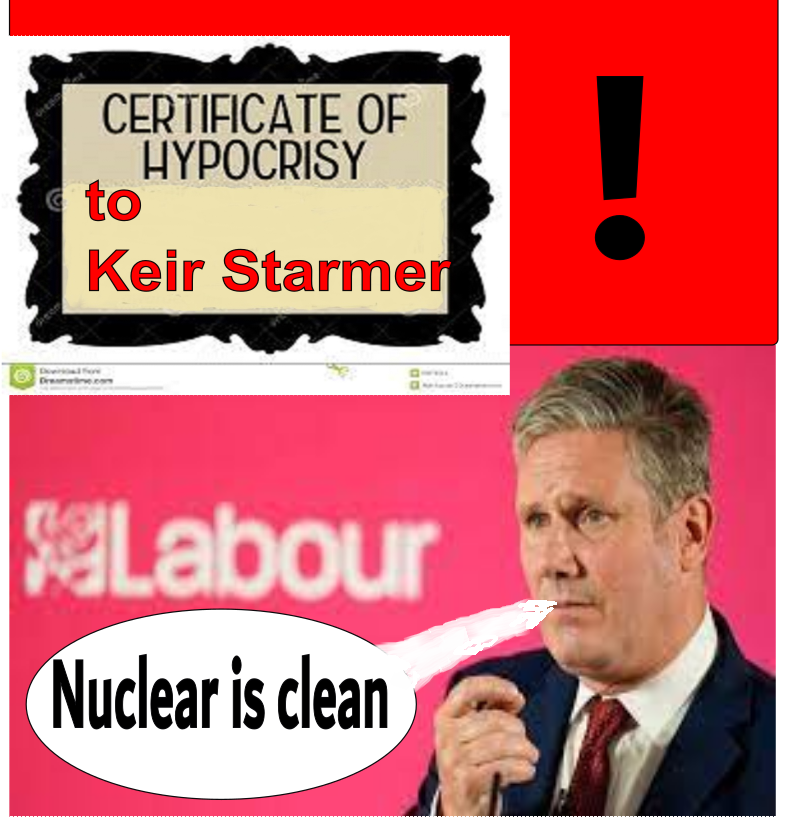
The prime minister is pinning his hopes of economic growth on a major nuclear plant and a series of mini nuclear sites
Archie Mitchell, Political correspondent, Independent 10th April 2025
Sir Keir Starmer is expected to approve a major nuclear power plant alongside a slew of mini reactors in a bid to boost Britain’s stagnant economy.
The prime minister will approve investment for the construction of the Sizewell C nuclear plant in Suffolk before the June spending review, The Times reported, as well as unveiling plans for a fleet of small modular reactors (SMRs) across the UK.
Sizewell C is expected to be up and running in 2035 and will provide 7 per cent of Britain’s energy demand at a cost of £20 billion……………………
Sizewell C is yet to be signed off by the government.
A decision on whether to give Sizewell C the green light has formed part of the government’s upcoming spending review, but Sir Keir has been bringing announcements forward in response to Donald Trump’s tariffs.
The PM has been desperately trying to spur on growth amid fears the US president’s trade war will cause Britain’s economy to stagnate and force further cuts in the autumn Budget.
EDF, the French energy giant that owns and runs Britain’s nuclear fleet, and the government, which has committed £6 billion so far, were the first backers of the project.
But they have been trying to raise billions more from prospective investors, including British Gas owner Centrica.
The government in January was forced to deny reports the expected costs of Sizewell C had spiralled to £40bn due to inflation and the knock-on effects of delays at Hinkley Point C.
Whitehall sources told The Independent the government is hugely supportive of Sizewell C, but that an announcement on its approval and funding would not come before June.
Sources told The Times Sir Keir wants to make a “nuclear moment” by combining the approval of Sizewell C with an announcement on a generation of SMRs.
The government has been running a competition to develop the reactors, which are potentially cheaper, much faster to build and easier to deploy, with Rolls-Royce and GE Hitachi Nuclear Energy the frontrunners. https://www.independent.co.uk/news/uk/politics/starmer-nuclear-growth-trump-tariffs-b2730868.html
Starmer appoints ex-Office of Fair Trading chief to lead nuclear regulatory taskforce
The prime minister has appointed ex-Office of Fair Trading boss John Fingleton to head up the country’s nuclear taskforce
Energy Voice, By Jessica Mills Davies, 10/04/2025
The UK government’s nuclear taskforce will be led by John Fingleton, formerly the boss of the Office of Fair Trading, following his appointment to spearhead the unit.
The Nuclear Regulatory Taskforce, which was set up to accelerate the development of new nuclear power stations across the country, is poised to embark on an overhaul of UK planning regulation.
In February, Keir Starmer moved to slash “red tape” in the industry to enable more nuclear power plants to be approved across England and Wales.
Those reforms are designed to enable small modular reactors to be built for the first time. That is the intended result of the government abolishing a set list of approved sites for nuclear development so that nuclear power stations can be built anywhere in the country.
The energy department said that contract negotiations to progress a competition for these small reactors, held by Great British Nuclear, are “currently underway”, and that a panel of nuclear experts will be appointed to the taskforce in due course.
In a controversial move, the government is also getting rid of expiry dates on nuclear planning rules, in an effort to avoid projects timing out.
These changes to nuclear planning rules were proposed after the pre-development stage Sizewell C nuclear plant in Suffolk was taken to court by local activists.
The Department for Net Zero and Energy Security said that the government committed a further £2.7 billion in public funding to Sizewell C last month………………………..
The independent taskforce will seek to identify how nuclear power regulation can incentivise investment in new projects more quickly and cost efficiently, it said………….
Fingleton said he will “work closely with business, regulators and other interested individuals and groups to identify how regulation can better enable and incentivise investment in this area”…………………. https://www.energyvoice.com/renewables-energy-transition/570966/starmer-selects-fingleton-to-head-up-nuclear-taskforce/
NFLAs ‘shout up’ for National Parks to be spared from nuclear development

Despite our objections and those of many in the antinuclear community, Energy Ministers and departmental civil servants remain intent upon introducing a new National Planning Statement, called the EN-7, which gives considerable latitude to prospective developers to site new nuclear plants more widely, subject to meeting certain criterion (called the ‘criteria-based approach’) and lifts any time limits (called ‘the removal of a deployment deadline’).
10th April 2025, https://www.nuclearpolicy.info/news/nflas-shout-up-for-national-parks-to-be-spared-from-nuclear-development/
NFLAs ‘shout up’ for National Parks to be spared from nuclear development
The Nuclear Free Local Authorities have made an emphatic plea to the government for National Parks to be definitively spared from development and for further ‘specific consideration’ to be given to the challenges attendant to siting so-called Small and Advanced Modular Reactors (SMRs and AMRs).
Despite our objections and those of many in the antinuclear community, Energy Ministers and departmental civil servants remain intent upon introducing a new National Planning Statement, called the EN-7, which gives considerable latitude to prospective developers to site new nuclear plants more widely, subject to meeting certain criterion (called the ‘criteria-based approach’) and lifts any time limits (called ‘the removal of a deployment deadline’).
Interestingly neither of these notions was popular amongst respondents in the initial consultation on the policy with only 47% supporting the first and 50% the second; which begs the NFLAs to ask the question: why change the existing policy which is based on a government led strategic assessment of sites to in effect a ‘free-for-all’?
As we did in response to the first stage consultation, so in the second the NFLAs ‘shout up…against new nuclear in any of our National Parks and on sites adjoining or threatening Sites of Outstanding Natural Beauty or Immense Heritage Value’. The Welsh NFLA affiliates are particularly passionate in seeking to defend Trawsfynydd, which lies at the heart of Eryri, the premier National Park of Wales, from new development. As we point out:
‘The principle that National Parks can be excluded from future nuclear development has already been established by Government diktat. Any part of the Lake District National Park in England has been specifically (and in our view rightly) excluded from any consideration as a prospective site of a future Geological Disposal Facility. Surely then Trawsfynydd being at the heart of the Eryri National Park should enjoy the same protection in law?
In our view, to do otherwise exposes UK Government policy as hypocritical and inconsistent, implying that the premier National Park of Wales is not worthy of the same protection as the premier National Park of England and unfortunately conveys the impression that Wales remains a rank colonial possession, rather than a nation in its own right, whose natural assets are open to exploitation by any major nuclear development of the most egregious kind’.
Only 59% of respondents in phase one backed the inclusion of ‘SMRS and AMRs alongside large-scale GW technologies’ within the policy, with the NGO community calling for a separate policy. Despite this, Ministers intend this policy to be one-size-fits-all. In this second phase consultation, the NFLAs have referenced the lack of ‘specific consideration’ of the ‘additional, and not entirely defined, challenges’ that accompany the inclusion of SMRs and AMRs.
There have been many recent reports of concerns amongst the nuclear industry and the academic community about the radioactive waste produced by smaller reactors and the security implications of a wider rollout of smaller reactors. The NFLAs have therefore requested that final version of EN-7 should require ‘SMR, AMR, Micro reactor developers to submit robust statements about their proposals to address radioactive waste management, safety, security and proliferation concerns’.
1
UK Government convenes AI Energy Council, but could be ignoring hidden climate impacts in supply chains
Edie 10th April 2025, Sidhi Mittal
The UK Government has officially launched its AI Energy Council, with its first meeting outlining five key priorities for aligning the country’s clean energy ambitions with the rapid growth of artificial intelligence (AI).
However, while the Council focuses on integrating AI intro the UK’s energy system, Ministers are being warned that they are overlooking the strain which AI supply chains are putting on energy systems overseas.
The Council is led by Science, Innovation and Technology Secretary Peter Kyle and Energy Secretary Ed Miliband. Representatives from companies including Microsoft, Google, Amazon, ARM, EDF and ScottishPower sit on the Council, alongside energy regulator Ofgem and the National Energy System Operator (NESO).
The Council this week met for the first time, and agreed on focus points for the year ahead. These include preparing the UK’s energy grid for the electricity demands of AI and computer infrastructure, accelerating renewable energy adoption, and ensuring AI’s role in the energy sector contributes to the transition to net-zero.
Emphasis was also placed on using AI to improve grid flexibility and ensuring its safe, secure deployment in the energy system.
This move comes amid growing pressure for the UK’s AI ecosystem to deliver more public benefit. A recent report from the Institute for Public Policy Research (IPPR) found that only 15% of AI firms in the UK are developing solutions aimed at social challenges such as public health or environmental sustainability, despite 20% having received public funding.
IPPR’s head of AI Carsten Jung said: “Too many companies are focussed on generic process improvements rather than coming up with new, better products. And too few innovations are aimed at solving big societal problems, such as public health and climate change.
“This quantity over quality, profit over purpose, speed over substance, approach is a hugely missed opportunity.”
But as the UK attempts to shape a greener AI-powered future through initiatives like the AI Energy Council, the global supply chain it relies on presents an emissions challenge far beyond its borders.
AI chip boom in East Asia drives fossil fuel surge
New research from Greenpeace East Asia has found that electricity demand for manufacturing AI chips has risen more than 350% between 2023 and 2024. East Asia—home to the bulk of global AI chip production—is seeing this growth largely powered by fossil fuels………………………..
Greenpeace East Asia’s supply chain project lead Katrin Wu said: “While fabless hardware companies like Nvidia and AMD are reaping billions from the AI boom, they are neglecting the climate impact of their supply chains in East Asia.
“Across East Asia, there are many opportunities for companies to invest directly in wind and solar energy, yet chipmakers have failed to do so on a meaningful scale.
“Hardware companies can overcome renewable energy bottlenecks by investing directly in wind and solar capacity, signing power purchase agreements, and leveraging their influence to advocate for a higher ratio of renewable energy in the grid.”……………………………………………………………. https://www.edie.net/uk-government-convenes-ai-energy-council-but-could-be-ignoring-hidden-climate-impacts-in-supply-chains/
EDF urged to tackle ‘nuclear rats’ infestation at Somerset power plant site
Unite and GMB trade unions have warned French energy giant EDF that urgent action is needed to tackle the massive rodent outbreak at the construction site of Hinkley Point C nuclear reactor in Somerset.
Katie Timms, Joshua Whorms, Somerset Live 9th April 2025
“Nuclear rats” have reportedly overrun the construction site of a new nuclear reactor in Somerset, raising alarm among workers about their health and safety as they contend with the pervasive rodent problem.
Trade unions Unite and GMB have urgently called on French energy giant EDF to take immediate action to address the significant rodent infestation at the Hinkley Point C nuclear reactor site.
Concerns are mounting for the wellbeing of the workforce tasked with constructing Britain’s first new nuclear power station in decades due to the burgeoning rat population, reports the Daily Star.
An insider at the site disclosed to the Observer: “They’re all over. You see them just sat there, looking at you. It is worse near the canteens, where I guess it started. But they are everywhere now.
“The more men working on the site, the more rubbish on the site and the canteens are not clean either. It has just become worse over time,” the source elaborated.
Other employees have described the situation as “quite grim”. Amidst the project exceeding its budget by a billion pounds, workers have voiced concerns that financial constraints imposed by EDF are compromising their working conditions and impacting their wages.
These persistent issues led to industrial action last November, with hundreds of electricians, pipe fitters, and welders ceasing work due to security worries…………………….
The Star previously reported on the alarming sight of “cat-sized rats” which ignited concerns about a potential outbreak of a rare bacterial disease in the UK’s second largest city.
Residents have reported sightings of enormous “rats the size of cats” prowling their streets, as industrial action by waste collectors has resulted in rubbish accumulating in the streets of Birmingham. There is growing concern among experts about these oversized rodents potentially leading to locals contracting Leptospirosis…………………………………
https://www.somersetlive.co.uk/news/somerset-news/edf-urged-tackle-nuclear-rats-10094730
Declassified MoD document reveals US Visiting Forces across Britain are exempt from nuclear safety rules

CND 7th April 2025
At a time of heightened nuclear dangers, the Campaign for Nuclear Disarmament has uncovered shocking evidence that US military bases across Britain are exempt from UK emergency radiation regulations.
This means that bases like RAF Lakenheath, which is being prepared to host deadly new US nuclear weapons, is under no legal obligation to have emergency radiation plans in case of nuclear accidents.
A declassified exemption order shows that the government is putting so-called ‘national security’ before people’s safety.
CND is calling on Prime Minister Keir Starmer to announce in Parliament that no US nuclear weapons will be welcomed in Britain and that the exemption on adhering to legally required safety standards is revoked.
A letter from CND’s lawyers Leigh Day has forced the Ministry of Defence to declassify a significant nationwide exemption certificate, issued in March 2021 by former Defence Secretary, Ben Wallace, on the grounds of ‘national security’.
The certificate exempts Visiting Forces – primarily US military personnel – engaged in work with ionising radiations, from any legal enforcement of safety standards, using powers under Regulation 40 of the Ionising Radiations Regulations 2017 and Regulation 25 of the Radiation (Emergency Preparedness and Public Information) Regulation 2019. This means they are not legally bound to have in place plans and measures for emergency situations involving radioactive materials and nuclear weapons.
This is particularly dangerous given US preparations at RAF Lakenheath in Suffolk for a new nuclear weapons mission. However, the exemption not only covers RAF Lakenheath but all US military bases across Britain.
There are at least 10,000 US Department of Defence personnel stationed at 13 RAF bases. Nuclear material for Britain’s own nuclear weapons programme is regularly transported through RAF Brize Norton and RAF Fairford regularly hosts the US B2 nuclear-capable stealth bomber.
The government’s exemption means that local councils will never be told about the presence of nuclear weapons at these bases – and are therefore not obliged to produce their own emergency plans for a radiological accident. This puts the British population at even greater risk.
CND is calling on Prime Minister Keir Starmer to announce in Parliament that no US nuclear weapons will be welcomed in Britain and that the exemption on adhering to legally required safety standards is revoked. The majority of the British public don’t want US nuclear weapons in this country.
CND is upping pressure on the government, supporting two weeks of protest actions from Monday 14 April, culminating in a blockade of the base on Saturday 26 April. The peace camp and actions are organised by the Lakenheath Alliance for Peace, of which CND is a member………………………………………………………………………………………………. https://cnduk.org/declassified-mod-document-reveals-us-visiting-forces-across-britain-are-exempt-from-nuclear-safety-rules/
Radiation Monitoring – Scottish university in ‘world-first’ for nuclear technology
A “cutting-edge” radiation detector module for nuclear experiments has
been developed by staff and students at the University of the West of
Scotland (UWS) that will be deployed at the world’s top laboratories. The
detection module, which can be used for nuclear experiments, will have
“far-reaching impact” on the areas where radiation detection is required.
Herald 7th April 2025,
https://www.heraldscotland.com/news/25068881.scottish-university-world-first-nuclear-technology/
Hartlepool Nuclear site moved into enhanced regulatory attention
The Office for Nuclear Regulation (ONR) has moved Hartlepool Nuclear Power Station operated by EDF into enhanced regulatory attention for safety.
ONR has made the decision based on evidence gained from ongoing targeted engagements at the site which have identified areas where improvements are required.
The change in regulatory attention level does not relate to EDF’s recent decision to extend the operating lifetime of the station in County Durham, which is subject to ongoing safety standards being demonstrated.
The enhanced regulatory attention level reflects the effort ONR is using to influence improvements in areas including conventional health and safety, the number of site incidents and the production of nuclear safety cases.
ONR 7th April 2025, https://www.onr.org.uk/news/all-news/2025/04/nuclear-site-moved-into-enhanced-regulatory-attention/
Ex-Hinkley boss called ‘greedy toad’ over bribes
A senior manager at a nuclear power plant has been described to a tribunal as a “greedy little toad” over claims he accepted bribes.
Ashley Daniels, who worked at Hinkley Point C in Somerset under the French energy company EDF, accepted an £11,000 quad bike from a subcontractor looking to secure more work, the employment tribunal in Bristol heard.
Mr Daniels, who the BBC understands no longer works for the company, was not the subject of the tribunal, which was brought by a former employee of the subcontractor.
The tribunal heard Mr Daniels also received gifts including £2,000 hospitality tickets for a boxing match and a refill for his Montblanc fountain pen.
The hearing, for a claim of unfair dismissal, was brought by engineer Garrick Nisbet against the subcontractor, Notus Heavy Lift Solutions.
Mr Nisbet was dismissed without notice in April 2023 in the belief he had gifted the quad bike to Mr Daniels – at the time the head of lifting and temporary works at Hinkley – to “ensure that work was directed” to Notus, the hearing was told.
Speaking about messages he had sent regarding the alleged bribes, Mr Nisbet told the tribunal Mr Daniels was “cheeky and a greedy little toad”.
In other messages, the tribunal heard, he said the purchase of the quad bike would give Notus “a bit of breathing space”, later saying Mr Daniels was “hard to say no to”.
‘Clearly bribes’
Hinkley Point B halted operations in August 2022 having come to the end of its life, with Hinkley Point C under construction since late 2018………….
BBC 8th April 2025 https://www.bbc.co.uk/news/articles/cn7xv8vyzp3o
£2.7bn more taxpayer funding for Sizewell C confirmed
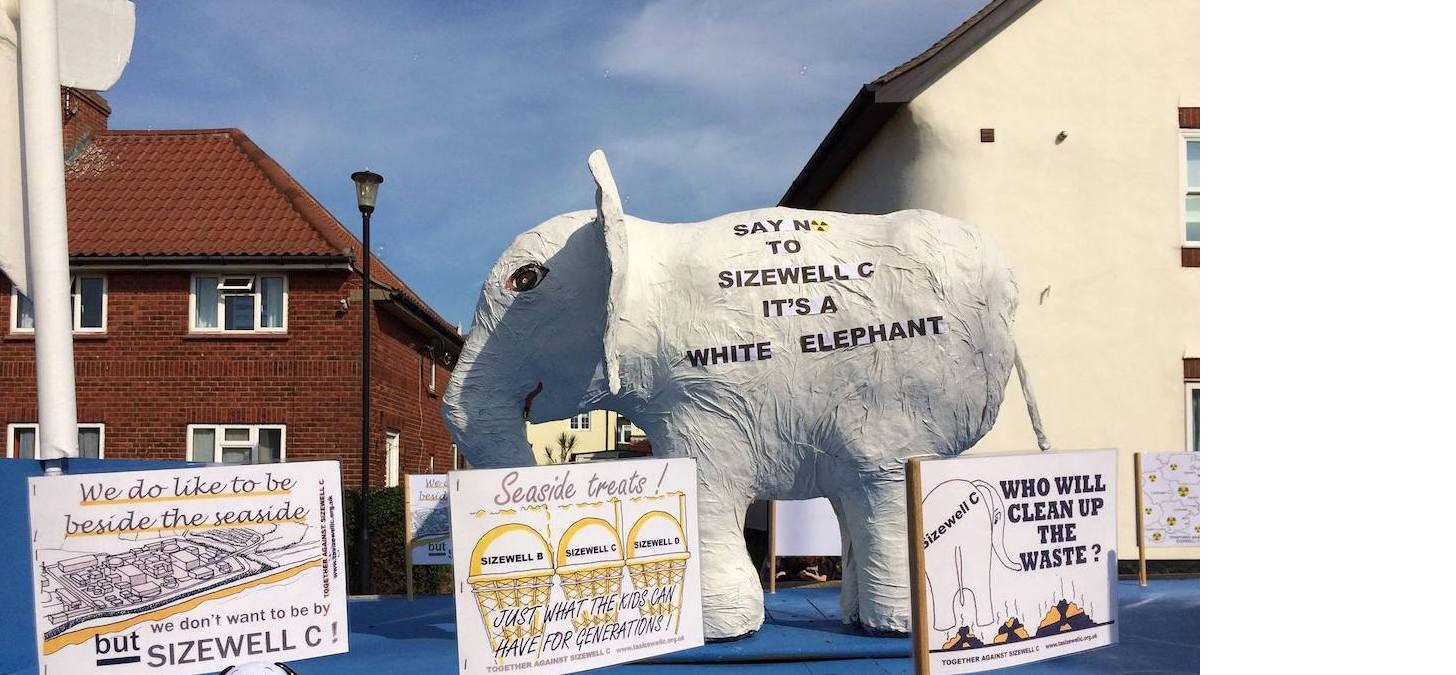
The government has announced that a further £2.7bn of taxpayer cash has made available for Sizewell C, bringing the total to £6.4bn ahead of the final investment decision (FID) on the nuclear power station.
A FID is needed before main construction can start on the planned nuclear power
station in Suffolk. The FID will confirm who is to pay for the construction
and through what model.
As of January, £2.5bn of contracts had already
been agreed for works towards the project. It is expected that the FID
decision, which is not a foregone conclusion, will come at or around the
conclusion of the Spending Review, scheduled for 11 June 2025.
Rumours have swirled around which investors might help with getting the FID over the
line. Centrica chief executive Chris O’Shea said the multinational energy
company’s stake in Sizewell C could be “between 1% or 2% and 50%”,
and EDF has been slowly having its stake in the plant eroded by taxpayer
cash injections while it inputs no further of its own funds.
NCE approached
DESNZ to clarify the status of the previously announced £5.5bn development
expenditure (Devex) scheme, and what the total figure for public investment
in Sizewell C stands at. A DESNZ spokesperson confirmed that the £2.7bn
announced on 4 April is not from the Devex fund. “The government has
committed £3.9bn from the Devex scheme – so £1.6bn is left,” the
spokesperson told NCE. “£8bn has been ringfenced for Sizewell C, and
£6.4bn made available for the project.”
By Tom Pashby, New Civil Engineer 7th April 2025, https://www.newcivilengineer.com/latest/2-7bn-more-taxpayer-funding-for-sizewell-c-confirmed-07-04-2025/
Disconnection of nuclear plants during severe space weather highlighted as risk to grid stability
08 Apr, 2025 By Tom Pashby
Nuclear power station operators’ reactions to severe space weather could negatively impact the stability of the electricity transmission grid, a space weather expert has told NCE……………….
New Civil Engineer 8th April 2025 https://www.newcivilengineer.com/latest/disconnection-of-nuclear-plants-during-severe-space-weather-highlighted-as-risk-to-grid-stability-08-04-2025/
Nuclear missile ‘cover-up’ fears as secret pact allowing US to bring deadly weapons to UK revealed

US nuclear missiles could be delivered to the UK as the Mirror reveals Ministry of Defence chiefs signed off on a secret pact allowing American forces to bring deadly bombs to UK
Chris Hughes Defence and Security Editor and Ashley Cowburn Political Correspondent, 06 Apr 2025
https://www.mirror.co.uk/news/world-news/nuclear-missile-cover-up-fears-34997771
British defence chiefs are at the centre of a ‘cover-up’ row over secretly exempting US troops from telling local authorities they are storing nuclear weapons. A declassified document proves former defence secretary Ben Wallace signed the ‘sensitive’ waiver which means local authorities are being left in the dark over the missiles.
The nuclear bust-up centres upon US air base RAF Lakenheath, home of F-35A Lightning II fighters, although the March 2021 waiver exempts all US bases in the UK. Not only are locals being kept in the dark over the possible nuclear missile storage but troops are also exempt from sticking to regulations applied to radiation risks. That means local authorities cannot draft disaster emergency plans.
The MoD was forced to declassify the Ben Wallace document down from ‘sensitive’ to prove to the Campaign for Nuclear Disarmament that legally they do not have to tell locals. It clearly says it was signed for ‘national security’ and that they are exempt from Ionisation Regulations 2017 and Radiation Regulations 2019.
Although it is not known publicly if RAF Lakenheath has US nuclear weapons on site, the exemption means nobody outside security-cleared personnel will ever know. CND General Secretary Sophie Bolt said: “The government’s exemption order smacks of a cover-up for a new generation of deadly US nuclear bombs that could be deployed in Britain.
“Nuclear weapons are the most destructive in the world. They put us all at risk every day. Yet the government is more concerned about its special relationship with the US than people’s safety.
“This declassified document shows that not only are US forces exempt from British nuclear safety laws at RAF Lakenheath, they are exempt at US bases right across Britain. This means that local authorities will never be told about any nuclear weapons present in their area. And will be under no legal obligation to produce emergency radiation plans.”
“The government doesn’t want people to know what’s going on. The government has to put a stop to these deadly nuclear risks. That means PM Keir Starmer should announce publicly that US nuclear weapons will not be stationed here.”
The exclusion of US troops from having to tell local authorities about the presence of nuclear weapons has infuriated politician critics in relation to blanket secrecy on nuclear weapons. Senior MP and former shadow chancellor John McDonnell stormed: “This is extremely concerning. “People need to know what risks their government is imposing on them. The ability to hold governments and the military to account is totally undermined by this level of secrecy. “
RAF Lakenheath first hit the nuclear spotlight again in 2022 when American plans to deploy nuclear weapons to the Suffolk airbase were revealed. It emerged again in department of defence documents showing plans to build accommodation for more US troops. The document stated the work was in preparation for the base’s “upcoming nuclear mission,” sparking controversy.
The US Office of the Under Secretary of Defence document sparked further fear as it stated the work was in preparation for the base’s potential ‘surety mission.’ The word ‘surety’ is understood to mean ‘nuclear weapons storage.’
But the UK Ministry of Defence said at the time it had a long-standing agreement within the department and its allies not to discuss nuclear weaponry. The following September a US government contracts award notice showed how £728,379.96 was to be spent on constructing guard facilities known as “hardened ballistic security shelters”.
Twenty-two blast resistant manoeuvrable cabins were being built with bulletproof metal flat sheets welded onto the frame to “to protect our high value assets”of RAF Lakenheath’s defence force, the 48th Security Forces Squadron (48 SFS). The specification for the windows included glass which could withstand an impact from a .30 calibre rifle.
In 2008 it was revealed nuclear bombs had been removed from RAF Lakenheath, which houses 4,000 service personnel and more than 1,500 British and US civilians. It is home to the US Air Force’s 48th Fighter Wing, which operates both the F-15E Eagle and the F-35A Lighting II fighter aircraft.
As well as normal combat duties it is believed the newer F-35A has been flight tested to use the latest variant of the B61-12 thermonuclear bomb. Defence specialising Janes Magazine said the B61-12 was capable of an explosive power of up to 340 kilotons, twenty times the power of the Hiroshima bomb.
On Friday an MoD spokesman, asked about the exemption, replied in a statement: “The UK and NATO have a long-standing policy to neither confirm nor deny the presence of nuclear weapons at any given location.
Manager at Hinkley Point C accepted a quad bike as a bribe, tribunal hears
Ashley Daniels accused of giving more work to engineering firm after gifts that also included £2,000 boxing tickets
Jamie Grierson, 8 Apr 25, Guardian
A senior manager at the Hinkley nuclear power plant accepted bribes such as an £11,000 quad bike to funnel extra work to a British engineering firm, an employment tribunal has heard.
Ashley Daniels was investigated by Hinkley’s owner, EDF, after he was given gifts such as £2,000 hospitality tickets for a boxing match and a refill for his Montblanc fountain pen, the tribunal in Bristol heard.
The hearing was told Daniels ensured more work was “directed” to a firm specialising in heavy lifting so that it could continue operating at the Somerset site.
The Guardian understands Daniels was dismissed by EDF.
The details have emerged in the judgment of a tribunal claim brought by an engineer called Garrick Nisbet, who sued his employer, Notus Heavy Lift Solutions – a subcontractor at Hinkley Point C – for unfair dismissal.
Hinkley Point C will be the first nuclear power station to be built in the UK for more than 30 years and is reported to have a price tag of up to £46bn…………………………………………………………..
https://www.theguardian.com/uk-news/2025/apr/07/manager-at-hinkley-point-c-accepted-a-quad-bike-as-a-bribe-tribunal-hears
‘They’re everywhere’: workers warn of rat infestation at Somerset nuclear plant
Unions urge energy giant EDF to take action as concerns mount over health of construction staff.
Guardian, Jillian Ambrose, Sun 6 Apr 2025
Workers building the troubled Hinkley Point C nuclear reactor in Somerset have raised concerns that the construction site is overrun by rats.
The Unite and GMB trade unions are understood to have warned the developer, the French energy giant EDF, that urgent action is needed because the rodents are “everywhere”.
The growing vermin population has prompted fears over the health of the workforce building Britain’s first new nuclear power plant in a generation, which is running years late and billions of pounds over budget. A source on the site told the Observer: “They’re all over. You see them just sat there, looking at you. It is worse near the canteens, where I guess it started. But they are everywhere now.”
A second source confirmed that the trade unions had broached the issue with EDF, describing the number of rats on the site as “quite grim”.
“The more men working on the site, the more rubbish on the site – and the canteens are not clean either. It has just become worse over time,” the source added………………………………………………………….https://www.theguardian.com/world/2025/apr/06/theyre-everywhere-workers-warn-of-rat-infestation-at-somerset-nuclear-plant
Inside the bizarre race to secure Earth’s nuclear tombs
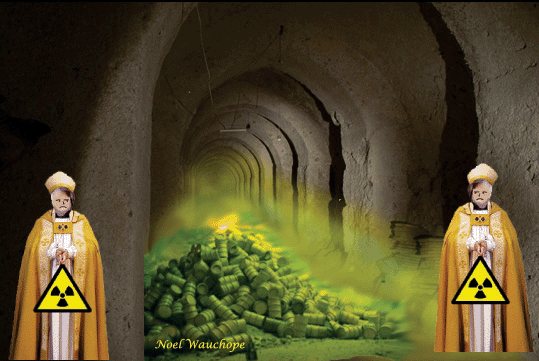
outlandish ideas have included linguist Thomas Sebeok’s proposal of an ‘atomic priesthood’ that would pass on nuclear folklore (in much the same way that generations of clergy have been relaying the tenets of their respective faiths for thousands of years
“Our generation must find a way to bury the waste very deep to avoid radioactive pollution or exposure to people and animals up to one million years into the future.”
“Currently, about 75 per cent of the UK’s nuclear waste is already stored across 20 sites,” says Winsley. “People are surprised to hear you’re never far away from the most hazardous radioactive waste, wherever you are in the UK.
Jheni Osman, BBC Science Focus, April 5, 2025
With nuclear energy production increasing globally, the problem of what to do with the waste demands a solution. But where do you store something that stays dangerous for thousands of years?
Uniformed guards with holstered guns stand at the entrance and watch you lumber past. Ahead lies a wasteland of barren metal gantries, dormant chimney stacks and abandoned equipment.
You trudge towards the ruins of a large, derelict red-brick building. Your white hazmat suit and heavy steel-toe-capped boots make it difficult to walk. Your hands are encased in a double layer of gloves, your face protected by a particulate-filtering breathing mask. Not an inch of flesh is left exposed.
Peering into the building’s gloomy interior, the beam from your head torch picks out machinery and vats turned orange with rust. On a wall nearby, a yellow warning sign featuring a black circle flanked by three black blades reminds you of the danger lurking inside.
Apart from the sound of your own breathing behind your mask, the only thing you can hear is the crackling popcorn of your Geiger counter.
This is what entering the Prydniprovsky Chemical Plant is like for nuclear researchers, including Tom Scott, professor of materials at the University of Bristol and head of the UK Government’s Nuclear Threat Reduction Network.
Prydniprovsky was once a large Soviet materials and chemicals processing site on the outskirts of Kamianske in central Ukraine. Between 1948 and 1991, it processed uranium and thorium ore into concentrate, generating tens of millions of tonnes of low-level radioactive waste.
When the Soviet Union dissolved, Prydniprovsky was abandoned and fell into disrepair.
“The buildings are impressively awful and not for the faint-hearted,” says Scott. “As well as physical hazards, such as gaping holes in the floor, there’s no light or power. And obviously there are radiological hazards. Until very recently, the Ukrainian Government didn’t have a clue what had gone on at the site, so there were concerns about the high radiation levels and ground contamination.”
When radiation levels are deemed too high for humans, Scott sends in the robots. ………………………….
Scott and his team are known as industrial nuclear archaeologists, and they’re working to find, characterise and quantify the ‘legacy’ radioactive waste at sites around the world.
“High-level radioactive waste gives off a significant amount of radioactivity, sufficient to make humans sick if they get too close,” he says. “Some of this waste will be dangerously radioactive for very long periods of time, meaning that it needs to be physically kept away from people and the environment to ensure that no harm is caused.”
But finding legacy waste like this, which has been amassing since the 1940s, is only part of the challenge. Once it’s been found, it has to be isolated and stored long enough for it to no longer pose a threat. And that’s not easy.
“Currently we’re storing our high-level wastes above ground in secure, shielded facilities,” Scott says. “Such facilities need to be replaced every so often because buildings and concrete structures can’t last indefinitely.”
Safely storing the nuclear waste that already exists is only the start of the problem, however. With the world moving away from fossil fuels towards low-carbon alternatives, nuclear energy production is set to increase, which means more waste is going to be produced – a lot more.
Currently, nuclear energy provides roughly nine per cent of global electricity from about 440 power reactors. By 2125, however, the UK alone is predicted to have 4.77 million m3 (168 million ft3) of packaged radioactive waste. That’s enough to fill 1,900 Olympic swimming pools.
Hence, the world needs more safe storage sites for both legacy and new nuclear waste. And it needs them fast.
Safe spaces
In the UK, most nuclear waste is currently sent to Sellafield, a sprawling site in Cumbria, in the north-west of England, with about 11,000 employees, its own road and railway network, a special laundry service for contaminated clothes and a dedicated, armed police force (the Civil Nuclear Constabulary).
Sellafield processes and stores more radioactive waste than anywhere in the world.
But more hazardous material is on the way, much of which will come from the new nuclear power station being built at Hinckley Point in Somerset. To keep pace, experts have been hunting for other, much stranger, disposal solutions.
It’s a challenge for nuclear agencies all around the world. All sorts of proposals have been put forward, including some bizarre ideas like firing nuclear waste into space. (The potential risk of a launch failure showering the planet with nuclear debris has silenced that proposal’s supporters.)
So far, the most plausible solution is putting the waste in special containers and storing them 200–1,000m (660–3,280ft) underground in geological disposal facilities (GDFs). Eventually, these GDFs would be closed and sealed shut to avoid any human intrusion.
These ‘nuclear tombs’ are the safest, most secure option for the long-term and minimise the burden on future generations.
“In the UK, around 90 per cent of the volume of our legacy waste can be disposed of at surface facilities, but there’s about 10 per cent that we don’t currently have a disposal facility for. The solution is internationally accepted as being GDFs,” says Dr Robert Winsley, design authority lead at the UK’s Nuclear Waste Services.
“We estimate that about 90 per cent of the radioactive material in our inventory will decay in the first 1,000 years or so. But a portion of that inventory will remain hazardous for much longer – tens of thousands, even hundreds of thousands of years.
“GDFs use engineered barriers to work alongside the natural barrier of stable rock. This multi-barrier approach isolates and contains waste, ensuring no radioactivity ever comes back to the surface in levels that could do harm.”
But how do you keep that radioactivity in the ground? Radioactive waste is typically classified as either low-, intermediate- or high-level waste.
Before being disposed of deep underground, high-level waste is converted into glass (a process known as vitrification) and then packed in metal containers made of copper or carbon steel. Intermediate-level waste is typically packaged in stainless-steel or concrete containers, which are then placed in stable rock and surrounded by clay, cement or crushed rock.
The process isn’t set in stone yet, though. Other materials, such as titanium- and nickel-based alloys, are being considered for the containers due to their resistance to corrosion.
Meanwhile, scientists in Canada have developed ultra-thin copper cladding that would allow them to produce containers that take up less space, while providing the same level of protection.
Rock solid
The hunt is also on to find facilities with bedrock that can withstand events such as wars and natural disasters (‘short-term challenges’, geologically speaking). Sites that won’t change dramatically over the millennia needed for nuclear waste to no longer pose a risk.
“A misconception is that we’re looking for an environment that doesn’t change, but the reality is the planet does change, very slowly,” says Stuart Haszeldine, professor of carbon capture and storage at the University of Edinburgh.
“Our generation must find a way to bury the waste very deep to avoid radioactive pollution or exposure to people and animals up to one million years into the future.”
To achieve this, the site ideally needs to be below sea level. If it’s above sea level, rainwater seeping down through fractures in the rock around the site might become radioactive and eventually find its way to the sea.
When this radioactive freshwater meets the denser saltwater, it’ll float upwards, posing a risk to anything in the water above.
Another challenge is predicting future glaciations, which happen roughly once every 100,000 years. During such a period, the sort of glaciers that cut the valleys in today’s landscape could form again, gouging new troughs in the bedrock that might breach an underground disposal facility.
“Accurate and reliable future predictions depend on how well you understand the past,” says Haszeldine.
“Typically, repository safety assessments cover a one-million-year timeframe, and regulations require a GDF site to cause fewer than one human death in a million for the next million years. Exploration doesn’t search for a single best site to retain radioactive waste, but one that’s good enough to fulfil these regulations.”
Hiding places
In 2002, the US approved the construction of a nuclear tomb in an extinct supervolcano in Yucca Mountain, Nevada, about 160km (100 miles) north-west of Las Vegas.
…………. opponents cited concerns that it was too close to a fault line and, in 2011, US Congress ended funding for the project. Since then, waste from all US nuclear power plants has been building up in steel and concrete casks on the surface at 93 sites across the country.
Other sites have fared better, however. Already this year, construction has begun on a nuclear tomb in Sweden, expected to be ready in the 2030s, but it’s also the year the world’s first tomb – at a site in Finland, called Onkalo (Finnish for ‘cave’ or ‘hollow’) – could open its doors for waste………………..
In January 2025, the UK Government announced plans to permanently dispose of its 140 tonnes of radioactive plutonium, currently stored at Sellafield. In a statement, energy minister Michael Shanks cited plans to put it “beyond reach”, deep underground.
Three potential sites in England and Wales are being explored by Nuclear Waste Services, and one of Haszeldine’s PhD students is independently investigating a fourth off the Cumbrian coast. The offshore site appears to be hydro-geologically stable (even over glacial timescales), but it would be expensive and difficult to engineer.
“Currently, about 75 per cent of the UK’s nuclear waste is already stored across 20 sites,” says Winsley. “People are surprised to hear you’re never far away from the most hazardous radioactive waste, wherever you are in the UK. Our mission is to make this radioactive waste permanently safe, sooner.”
……………………..The deep isolation approach costs less than a third of what it costs to construct a nuclear tomb and uses smaller sites, but the canisters are harder to recover if anything goes wrong.
Nevertheless, it’s a viable option for smaller nuclear countries and a second prototype is expected to undergo field testing at a deep borehole demonstration site in the UK in early 2025.
……………………………………………………………………………………………………………“The half-life of plutonium 239 is about 24,100 years, but the requirement is to keep a ceramic in that state for up to a million years. Essentially, we’re trying to design materials that’ll last forever. I don’t think humans will be around in a million years’ time, so the work we do needs to outlast humanity.”
Hide and seek
But even after you’ve found a suitable site and buried the radioactive material safely inside it, you still need to warn future generations about what’s hidden inside.
The trouble is, even if humans are still around in a million years’ time, there’s no guarantee the languages our ancestors speak, or the symbols they use, will be anything like those of today.
In Japan, 1,000-year-old ‘tsunami stones’, which warned future generations to find high ground after earthquakes, have failed to prevent construction on vulnerable sites.
Even the radiation symbol we use today (that black circle flanked by black blades on a yellow background) isn’t universally recognised. Research by the International Atomic Energy Agency found that only six per cent of the global population know what it signifies.
That’s why scientists have been working with everyone from artists to anthropologists, librarians to linguists, and sculptors to science-fiction writers – to come up with other ways of warning future generations about nuclear tombs.
………………….outlandish ideas have included linguist Thomas Sebeok’s proposal of an ‘atomic priesthood’ that would pass on nuclear folklore (in much the same way that generations of clergy have been relaying the tenets of their respective faiths for thousands of years
…………………………….. While some back this active forgetting of future nuclear tombs, researchers like Scott are still trying to get everyone to remember the nuclear sites we’ve already forgotten. It’s like a game of nuclear ‘hide and seek’ – but the stakes are high, and there’s no room for error.
…………………Currently, nuclear tombs are our best bet, but it’s a burden humanity must shoulder for thousands of years, long after the benefits gained from nuclear technology will have faded.
“My personal opinion is, I don’t think we should allow future generations to forget about a geological disposal facility,” says Scott. “The material is both dangerous and, in longer timescales, potentially valuable. People need to be reminded of its presence.”…………………… https://www.sciencefocus.com/planet-earth/inside-the-bizarre-race-to-secure-earths-nuclear-tombs
1 This Month

of the week – Shut Down Drone Warfare!


Tell the Ukrainian Government to Drop Prosecution of Peace Activist Yurii Sheliazhenko

Petition to revoke the licensing of the Near Surface Nuclear Disposal Facility (NSDF) at Chalk River. https://www.ourcommons.ca/petitions/en/Petition/Details?Petition=e-7247
To see nuclear-related stories in greater depth and intensity – go to https://nuclearinformation.wordpress.com
-
Archives
- April 2026 (79)
- March 2026 (251)
- February 2026 (268)
- January 2026 (308)
- December 2025 (358)
- November 2025 (359)
- October 2025 (376)
- September 2025 (257)
- August 2025 (319)
- July 2025 (230)
- June 2025 (348)
- May 2025 (261)
-
Categories
- 1
- 1 NUCLEAR ISSUES
- business and costs
- climate change
- culture and arts
- ENERGY
- environment
- health
- history
- indigenous issues
- Legal
- marketing of nuclear
- media
- opposition to nuclear
- PERSONAL STORIES
- politics
- politics international
- Religion and ethics
- safety
- secrets,lies and civil liberties
- spinbuster
- technology
- Uranium
- wastes
- weapons and war
- Women
- 2 WORLD
- ACTION
- AFRICA
- Atrocities
- AUSTRALIA
- Christina's notes
- Christina's themes
- culture and arts
- Events
- Fuk 2022
- Fuk 2023
- Fukushima 2017
- Fukushima 2018
- fukushima 2019
- Fukushima 2020
- Fukushima 2021
- general
- global warming
- Humour (God we need it)
- Nuclear
- RARE EARTHS
- Reference
- resources – print
- Resources -audiovicual
- Weekly Newsletter
- World
- World Nuclear
- YouTube
-
RSS
Entries RSS
Comments RSS
 nuclear-news