Opposition to Sizewell C Nuclear Power Station sea defence plans lodged
Campaign group Together Against Sizewell C (TASC) has filed a legal claim
over plans for additional coastal flood defences at Sizewell C Nuclear
Power Station, which were omitted from the original planning application
and which the group says could negatively impact local wildlife. The claim
comes after it emerged that developer Sizewell C Ltd had committed to
potentially building additional flood barriers which weren’t included in
the power station’s development consent order. TASC has raised concerns
that the construction of the additional barriers could disrupt nearby
protected areas of wildlife and says other less invasive flood defence
options were not pursued.
Leigh Day 5th June 2025, https://www.leighday.co.uk/news/news/2025-news/opposition-to-sizewell-c-nuclear-power-station-sea-defence-plans-lodged/
Let’s not pretend nuclear works

Funding the Future, Richard Murphy, June 6 2025, https://www.taxresearch.org.uk/Blog/2025/06/06/lets-not-pretend-nuclear-works/
As the Public Accounts Committee has reported this week:
The retrieval of waste from ageing buildings at the most hazardous nuclear site in the UK is not happening quickly enough.
In its report on decommissioning Sellafield, the Public Accounts Committee (PAC) warns that the estimated £136bn cost of the project would rise even more if work is further delayed, while expressing scepticism as to whether or not recent signs of improvement in performance could represent another false dawn.
The PAC found in 2018 that government needed a firmer grip on Sellafield’s nuclear challenges, and now warns that not enough progress has been made in addressing its most significant hazards.
One building, the Magnox Swarf Storage Silo (MSSS), has been leaking radioactive water into the ground since 2018 – the PAC calculates, at current rates, enough to fill an Olympic swimming pool roughly every three years. The Nuclear Decommissioning Authority (NDA) accepts this leak is its “single biggest environmental issue”, but that the radioactive particles are “contained” in the soil and do not pose a risk to the public.
The PAC’s report finds that Sellafield Ltd has missed most of its annual targets for retrieving waste from several buildings on the site, including the MSSS. The PAC’s inquiry heard that the MSSS is the most hazardous building in the UK, and as a result of Sellafield Ltd’s underperformance will likely remain extremely hazardous for longer. The report seeks answers from Government on how it will hold the NDA and Sellafield Ltd to account in ameliorating the site’s greatest hazards.
Nuclear power created the most hazardous building in the UK.
The cost of nuclear cleanups is staggering.
And still, we pretend that nuclear power is a cost-effective way of generating power.
Who do those making this claim think are fooled by it?
The true cost of the nuclear weapons industry
The CND responds to Starmer’s growing militarism with a ‘Tour of the bases’ protest. TONY STAUNTON reports from Plymouth
Morning Star 6th June 2025 https://www.morningstaronline.co.uk/article/true-cost-nuclear-weapons-industry
NE of the most outrageous elements of Starmer’s offensive Strategic Defence Review is the suggestion of a “Defence Dividend.” Our demand for “Welfare not Warfare” is acutely illustrated by the reality of life for working-class communities surrounding military nuclear sites.
Plymouth Devonport, with the Trident nuclear submarine base situated at its heart, is one of the poorest electoral wards in southern England.
The Devonport nuclear naval base is managed by Babcock International plc, the arms manufacturer with an annual turnover of £4.5 billion, profits mostly contrived out of taxpayers’ hefty payments.
That the nuclear weapons are in the hands of private corporations for profit surely undermines the concept of national security — Babcock is the main benefactor of the local freeport, deregulating its secret nuclear enterprise.
Plymouth’s Establishment constantly reminds the population that the nuclear facility is responsible for 10 per cent of the city’s economy. This alone is a fabrication. The highly paid nuclear engineers and scientists at the base live outside the infrastructure-poor city and take their incomes with them.
It’s been like this for 40 years. There has been no “Plymouth dividend.” One in three children in Devonport and neighbouring wards live in poverty, surely impossible were the dockyard to really be a “jobs magnet.”
In fact, a total of 5,500 people work there, half as naval service personnel with little local connection. The wages of many of the rest are nothing to shout about.
Meanwhile Devonport’s local index of social deprivation according to the Public Health Service is 44, twice the annual average. Nuclear weaponry does not produce social wealth and prosperity.
Investment in arms industries take the money away from social infrastructure. Plymouth has the huge regional hospital, Derriford, now in a financial meltdown, making cuts to the 11,000 staff and standards of service.
The hospital is reliant upon the addition of medical staff from the Royal Navy, offering a false-propaganda device for Babcock as the city’s benefactor.
Plymouth University is in financial crisis, with over 5,000 staff easily competing with the dockyard as an income generator for the city (students live in the city centre), now making 200 redundancies.
Babcock funds nuclear research and training at the Uni and FE College, making them beholden, uncritical, and pro-nuclear across the curriculum.
Plymouth’s Labour Council, combating potential bankruptcy and absurd debt levels, has always supported the nuclear dockyard, championing the military nuclear cause, the status of nuclear weaponry, and the nationalism it projects.
The council has half the workforce of 20 years ago. Our schools are crumbling, all “academised’ with the continuous shedding of staff.
Meanwhile, there have been at least 10 serious accidents at the dockyard including spills of radioactive waste in the past 30 years, Babcock was fined over £600,000 in 2022 for breaches in health and safety regulations (H&S). Human-made toxic radioactive elements are identifiable in our sea, rivers, soil and air.
Plymouth is the decommissioning centre for nuclear vessels, 15 rotting nuclear submarines bobbing at anchor and costing £30 million a year to “keep safe,” their nuclear cores needing constant cooling and the rusting hulks routinely patched to prevent leaks.
The subs are the subject of stalled decommissioning, the authorities not sure what to do with these hulks of radioactive waste. Were the UK’s nuclear weapons to be cancelled tomorrow, there is at least 100 years of work here, just to decommission and clean up the contamination.
Yet now they’re going to build more. Plymouth Devonport nuclear dockyard is receiving £1 billion to refit the dry docks in order to service the Dreadnought super-submarines carrying nuclear warheads up to 300 times the power of the bomb dropped on Hiroshima in 1945. The contract will suck-up 600 construction workers much needed for house building and home-retrofitting, the city is littered with half-finished buildings lost to skill shortages.
We all can list what £1 billion could do for the city if invested in social infrastructure and climate jobs.
Plymouth, our coastline dramatic and beautiful, could long have been a centre for construction of wind and wave electricity generators, our geography predisposed, but those industries are not nearly as profitable as the tax-funded nuclear blank-cheque cash cow.
Nuclear weapons are not just illegal weapons of mass destruction, they represent the impoverishment of working-class lives.
Join us on Saturday to send a powerful message to the government to shift its disastrous direction and invest in Peace not Nukes! March and rally. Meet at 12 noon at the Guildhall Square, Armada Way, Plymouth and from 2pm at Devonport MoD Naval Base, Camels Head.
Tony Staunton is CND vice-chair and Plymouth resident.
TASC’s new legal challenge against Sizewell C’s secret flood defences
by Together Against Sizewell C (TASC
ASC urgently need your help in our battle against the environmentally
damaging Sizewell C project. We have discovered that the project now
includes a stated commitment by Sizewell C Ltd to the Office for Nuclear
Regulation (ONR) to install additional sea defences in a ‘credible maximum’
climate change scenario. These defences in the form of two huge 10 metre
high ‘overland flood barriers’ were not included in the approved DCO
project. In our opinion, these flood barriers, if installed, will likely
have additional adverse impacts on the neighbouring designated wildlife
sites including RSPB Minsmere as well as the Heritage Coast and Suffolk
Coast & Heaths National Landscape. We need to ensure that the original
promotor EDF and the now UK government controlled Sizewell C Ltd are not
allowed to use climate change uncertainties as an excuse to delay
assessment and avoid public scrutiny of these additional structures for
decades. The full impact of the whole project should be assessed now.
Crowd Justice 5th June 2025,
https://www.crowdjustice.com/case/sizewell-c-legal-challenge/
Sellafield failing to address ‘intolerable risks’, damning parliamentary report warns
Sam Baker, Staff reporter, The Chemical Engineer, 6 June 25
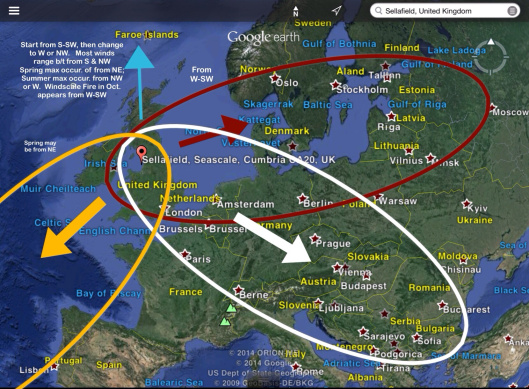
MANAGEMENT of the Sellafield nuclear facility in Cumbria, UK is not responding quickly enough to “intolerable risks” at the site posed by ageing assets, a damning new report has warned.
In the report published yesterday, the UK Public Accounts Committee (PAC), a group of MPs tasked with evaluating the cost-effectiveness of public spending projects, said that deteriorating assets are making the site “increasingly unsafe”.
Sellafield, the UK’s oldest nuclear site, has been in the long process of decommissioning since it stopped generating power in 2003, overseen by wholly state-owned Sellafield Ltd, and now works primarily in processing spent nuclear fuel.
The PAC’s report found that sluggish progress in decommissioning Sellafield has meant Sellafield Ltd has missed most of its annual targets in retrieving waste. This includes radioactive waste currently stored in Sellafield’s Magnox Swarf Storage Silo (MSSS), the UK’s most hazardous building.
After setting a target to have emptied the MSSS of waste by 2046, Sellafield Ltd now does not expect to achieve this until between 2054 and 2059. Problems at the MSSS are also behind the plant’s “single biggest environmental issue” – radioactive water has been leaking into the ground since 2018. Sellafield Ltd has confirmed that radioactive particles are “contained” in the soil and that there is no risk to the public…………………………………………………………………………………………………………………………..
Money not well spent
The current estimate for the total cost to the public of decommissioning Sellafield is £136bn (US$184bn), with completion expected no earlier than 2125, although problems identified by the PAC are likely to see the cost rise and the completion delayed.
One example of overspend highlighted in the report was the water sample lab refurbishment, which the PAC said was “very poorly managed” leading to a “waste” of £127m.
The report also resurfaced past issues of bullying and harassment at Sellafield, which the NDA settled in 2023-24 for £377,200. The PAC pointed out that Sellafield Ltd has signed 16 non-disclosure agreements in the last three years. These are separate from the Official Secrets Act which most staff routinely sign when joining Sellafield.
Clifton-Brown acknowledged the “early indications of some improvement” at Sellafield but said that the “government must do far more to hold all involved immediately accountable to ensure these do not represent a false dawn, and to better safeguard both the public purse and the public itself”………………………………………………………………………………………………………………………………………………………………
Not going underground
Sellafield’s troubles this week do not end with the PAC report. On Tuesday, Lincolnshire County Council withdrew its candidacy to host a geological disposal facility (GDF) that could store radioactive plutonium for thousands of years once retrieved from stockpiles at Sellafield.
As recently as July 2024, a site in Theddlethorpe in Lincolnshire was a leading candidate to build the GDF. However, the newly elected council, led since May 2025 by Reform UK, this week revoked its membership of the nuclear waste community partnership, which council leader Sean Matthews described as a “nuclear nightmare”.
Announcing the results of the vote to withdraw membership, Matthews, a former London police officer, said: “Now, Lincolnshire people can get back to living their lives, assured that this nuclear nonsense is over.” https://www.thechemicalengineer.com/news/sellafield-failing-to-address-intolerable-risks-damning-parliamentary-report-warns/
Nuclear-powered submarines, F35A fighter jets, a ‘more lethal’ army by 2035, and AI: How Starmer will spend billions to beef up Britain’s defences to make country ‘war-ready’
By MARK NICOL DEFENCE AND DIPLOMACY EDITOR, 3 June 2025 , https://www.dailymail.co.uk/news/article-14773857/Nuclear-powered-submarines-fighter-army-2035-Starmer.html
More submarines, soldiers and drones, along with an airborne nuclear strike capability and the exploration of technologies such as lasers, AI and robotics, are among the proposals in the Strategic Defence Review.
These are the key ambitions outlined in the SDR:
Army to be ‘ten times more lethal’
This ambition relies on the harnessing of new technologies and weapon systems, particularly drones. Lethality is difficult to measure and the claim is strong on political rhetoric.
Only a couple of months ago, the Chief of the Defence Staff, Admiral Sir Tony Radakin, said the ambition was to double lethality by 2027 and triple it by 2030.
The new Archer artillery system, the belated introduction of the Ajax vehicle and Challenger 3 tanks will increase lethality… but to what extent?
Three forces to be integrated into one
The Integrated Force, unveiled as part of the SDR, is not a merger of the Armed Forces, but they will lose much of the traditional
independence as they are moulded into a centralised Integrated Force. The SDR suggested the services were ‘siloed’. The need for them to train together and prepare for war shoulder to shoulder was essential in the months and years ahead.
£15billion boost for nuclear warheads
Britain’s nuclear deterrent has long been in need of recapitalisation. The £15billion will pay for these weapons to be upgraded or replaced.
It will also see the significant modernisation of infrastructure at the Atomic Weapons Establishment at Aldermaston, supporting more than 9,000 jobs at the Berkshire site
Up to 12 new nuclear attack submarines
The as yet uncosted pledge to develop ‘up to’ 12 new attack submarines has been welcomed by military observers but the first boat is not expected to enter service before the late 2030s.
The submarines will support the AUKUS security alliance between the UK, Australia and the United States and will be used to protect the Pacific from Chinese aggression.
Over the decades ahead, the boats will replace the Royal Navy’s current fleet of seven Astute-class submarines. They will be built at key sites such as BAE in Barrow-in-Furness.
Over the decades ahead, the boats will replace the Royal Navy’s current fleet of seven Astute-class submarines. They will be built at key sites such as BAE in Barrow-in-Furness.
Six new factories to make munitions
The SDR proposes at least six factories making munitions and energetics such as explosives and propellants for weapons.
The SDR recommends creating an ‘always on’ munitions production capacity in the UK, allowing production to be scaled up at speed if needed.
Britain’s military warehouses are bare after £5billion in weaponry and munitions was provided for Ukraine since the start of the conflict in 2022. The programme will create more than 1,000 skilled jobs, according to the SDR.
Robotics, cyber warfare and AI
The review says AI will improve the quality and speed of decision-making and operational effectiveness for Britain’s military, its allies… and its enemies.
It should be an immediate priority to ‘shift towards greater use of autonomy and AI within the UK’s conventional forces’. This has shown to be transformational in Ukraine. Chiefs will launch a Defence AI Investment Fund by February 2026.
The report warns cyber threats will become harder to mitigate as technology evolves, with government departments, military hardware, communications, increasingly vulnerable.
Hardening critical defence functions to cyber-attack is crucial. Directed Energy Weapon systems, such as the UK’s DragonFire, a world-leading laser ground to air system being developed at Porton Down, Wiltshire, can save millions of pounds in expenditure on ordnance systems.
The review also calls for the MoD to seize the opportunities presented by technologies such as robots and lasers.
£4billion expansion of the drone force
The Government unveiled a £4billion investment package for drones and autonomous systems. Drones are dominating the conflict in Ukraine and in Russia, following the audacious Ukrainian attack on Russian airfields in Siberia just days ago.
Hardening critical defence functions to cyber-attack is crucial. Directed Energy Weapon systems, such as the UK’s DragonFire, a world-leading laser ground to air system being developed at Porton Down, Wiltshire, can save millions of pounds in expenditure on ordnance systems.
The review also calls for the MoD to seize the opportunities presented by technologies such as robots and lasers.
£4billion expansion of the drone force
The Government unveiled a £4billion investment package for drones and autonomous systems. Drones are dominating the conflict in Ukraine and in Russia, following the audacious Ukrainian attack on Russian airfields in Siberia just days ago.
Fighter jets to carry nuclear bombs
Britain is exploring the potential return of air-delivered nuclear weapons in collaboration with the United States. America’s F-35A Lightning II aircraft is capable of carrying tactical gravity nuclear bombs.
The proposal marks the most significant shift in UK nuclear posture since the Cold War. Currently, this country’s nuclear deterrent is carried by the Royal Navy’s ‘bomber’ submarines.
The air-launched nuclear weapons would carry a much smaller payload. The lower yield B61 munitions are already integrated into US aircraft stationed on continental Europe and could be brought to Britain.
Thousands of new long-range weapons
At least 7,000 long-range weapons will be made to restock UK military warehouses and to prepare for an extended conflict against an adversary such as Russia.
Children taught value of the military
Defence chiefs will work with the Department for Education to develop understanding of the Armed Forces among young people in schools, by means of a two-year series of public outreach events across the UK, explaining current threats and future trends.
Schools and community-based cadet forces will also be expanded, with an ambition of a 30 per cent rise by 2030 with a view to the UK having 250,000 cadets, many of whom will then go on to join the armed forces.
More reservists and investment in them
To meet the challenge of engaging in a lengthy conflict, the report identified the need to boost the number of reservists.
These part-time personnel, many of whom are former regulars with operational experience, would join full-time troops on the frontline.
The report identified the need to increase the size of the UK’s Active Reserve forces by at least 20 per cent ‘when funding allows, most likely in the 2030s’.
The UK has around 25,000 Army reservists, 3,500 Royal Navy and Royal Marines reservists and 3,200 RAF reservists.
Sellafield nuclear clean-up too slow and too costly, say MPs

Alex Lawson, 4 June 25 https://www.theguardian.com/business/2025/jun/04/sellafield-nuclear-clean-up-mps-public-accounts-committee
Parliamentary committee raises concerns over ‘suboptimal’ workplace culture at ageing waste dump.
MPs have warned about the speed and cost of cleaning up the Sellafield nuclear waste dump and raised concerns over a “suboptimal” workplace culture at the site.
Members of parliament’s public accounts committee (PAC) urged the government and bosses at the sprawling collection of crumbling buildings in Cumbria to get a grasp on the “intolerable risks” presented by its ageing infrastructure.
In a detailed report into the site, the PAC said Sellafield was not moving quickly enough to tackle its biggest hazards; raised the alarm over its culture; and said the government was not ensuring value for money was being achieved from taxpayer funds.
In 2023, the Guardian’s Nuclear Leaks investigation revealed a string of safety concerns at the site – including escalating fears over a leak of radioactive liquid from a decaying building known as the Magnox swarf storage silo (MSSS) – as well as cybersecurity failings and allegations of a poor workplace culture.
The PAC – which heard evidence in March from Sellafield and its oversight body, the Nuclear Decommissioning Authority (NDA) – found that the state-owned company had missed most of its annual targets to retrieve waste from several buildings, including the MSSS.
“As a result of Sellafield’s underperformance [the MSSS] will likely remain extremely hazardous for longer,” the MPs said.
The ultimate cost of cleaning up Sellafield, which contains waste from weapons programmes and atomic power generation, has been estimated at £136bn and could take more than 100 years.
Geoffrey Clifton-Brown, the chair of the PAC, said: “Unfortunately, our latest report is interleaved with a number of examples of failure, cost overruns, and continuing safety concerns. Given the tens of billions at stake, and the dangers on site to both the environment and human life, this is simply not good enough.”
He added: “As with the fight against climate change, the sheer scale of the hundred-year timeframe of the decommissioning project makes it hard to grasp the immediacy of safety hazards and cost overruns that delays can have.
“Every day at Sellafield is a race against time to complete works before buildings reach the end of their life. Our report contains too many signs that this is a race that Sellafield risks losing.”
MPs noted that one project, a now-paused replacement of an on-site lab, had resulted in “£127m wasted”.
The cost of cleaning up Sellafield has caused tensions with the Treasury as the chancellor, Rachel Reeves, attempts to tighten public spending and spur growth. Sellafield, which is home to the world’s largest store of plutonium, said in February that nearly £3bn in new funding was “not enough”.
Last year, Sellafield apologised and was fined £332,500 after it pleaded guilty to criminal charges over years of cybersecurity failings.
The PAC noted that the timeline for a government project to create a long-term deep underground store for nuclear waste, including that held at Sellafield, had slipped from 2040 to the late 2050s. The government is considering sites in Cumbria and Lincolnshire, although Lincolnshire county council is expected to withdraw the latter from the process after vocal local opposition.
The MPs said they had found “indications of a suboptimal culture” at Sellafield, and noted that the NDA paid £377,200 in 2023-24 to settle employment-related claims. Alison McDermott, a former HR consultant who raised concerns over bullying and a “toxic culture” at the site, said she felt “vindicated” by the report.
The PAC urged the government to set out how it would hold the NDA and Sellafield to account over its performance. It said Sellafield should report annually on progress against targets and explain how it is addressing the deteriorating condition of its assets. The NDA should publish data on the prevalence of bullying and harassment at nuclear sites, it said.
Clifton-Brown said there were “early indications of some improvements in Sellafield’s delivery” but said the government needed to do “far more” to ensure bosses safeguard the public and taxpayer funds.
The NDA’s chief executive, David Peattie, responding on behalf of Sellafield, said: “We welcome the scrutiny of the committee and their report. We will now look in more detail at the recommendations and consider how best to address them.
“We take the findings seriously, and the safety of the site and the wellbeing of our people will always be our highest priorities.”
A spokesperson for the Department for Energy Security and Net Zero said: “We expect the highest standards of safety and security as former nuclear sites are dismantled, and the regulator is clear that public safety is not compromised at Sellafield.
“We continue to support the Nuclear Decommissioning Authority in its oversight of Sellafield, while driving value for money. This is underpinned by monthly performance reviews and increased responsibility for overseeing major project performance, enabling more direct scrutiny and intervention.
“We have zero-tolerance of bullying, harassment and offensive behaviour in the workplace – we expect Sellafield and the NDA to operate on this basis, investigate allegations and take robust action when needed.”
Sizewell C nuclear power plant ‘could get go-ahead within weeks’

Keir Starmer expected to confirm result of 15-year search for investment at UK-France summit next month
Jillian Ambrose, 3 June 25, https://www.theguardian.com/business/2025/jun/03/sizewell-c-nuclear-power-plant-keir-starmer-uk-france-edf
UK ministers could give the go-ahead to the new Sizewell C nuclear power plant in Suffolk within weeks, according to reports.
Keir Starmer is expected to give the final nod to begin construction of Britain’s second new nuclear power project in a generation, alongside the French nuclear developer EDF, at a Franco-British summit next month.
The final approval for Sizewell C, first reported by the Financial Times, would mark the end of a 15-year journey to secure investment for the plant since the site was first earmarked for new nuclear development in 2010.
The government is understood to be in the final stages of securing billions of pounds of investment from the private sector to back the project, which follows the Hinkley Point C nuclear plant, which is under construction in Somerset.
Ministers are expected to use the government’s spending review, scheduled for 11 June, to set out the UK’s investment in the project, which will ultimately rely on a mix of funding from taxpayers and via energy bills.
The final go-ahead from Starmer and the French president, Emmanuel Macron, will then follow during the Anglo-French summit due to take place in London on 8-10 July, according to the Financial Times.
The UK government’s stake in the project stood at 84% at the end of last year compared with EDF’s 16% share of the project. The French state’s cash-strapped utilities company is understood to be eager to reduce its stake in the project even further.
Potential investors in the project according to the report include Schroders Greencoat, Equitix, the Canadian pension fund CDPQ, Amber Infrastructure Partners, Brookfield Asset Management, the UK pension fund USS and the insurer Rothesay, backed by the Singaporean infrastructure fund GIC.
EDF had originally planned to build the nuclear plant alongside China’s state nuclear developer China General Nuclear Power Corp, which also holds a stake in the Hinkley Point C project, but its partner was forced to step back from the project by the UK government on security grounds.
The project has secured £6.4bn of government funding to support its development to date, of which £2.5bn was granted by the Conservative government under Rishi Sunak and a further £3.9bn has come from the current Labour administration.
Stop Sizewell C carries out bold projection on Sizewell B dome a week before the Spending Review, highlighting alternatives for Sizewell C’s £40 billion cost.

Stop Sizewell C tonight projected a series of messages to the Prime Minister onto Sizewell B’s dome, stating that the £40 billion Sizewell C project is a Nuclear Waste of Money. [1] The messages urge him to make alternative choices for spending taxpayers’ money on ways to generate cheaper electricity and to reduce household bills.
In one week, on 11 June, the Chancellor is expected to set out taxpayers’ commitment to Sizewell C at the conclusion of the Spending Review. Sizewell C has already swallowed £6.4 billion of taxpayers’ money [2] and the entire project is bogging down the government balance sheet. The two-year equity raise process remains ongoing with an uncertain outcome, meaning the much-delayed Final Investment Decision is unlikely before next month at the earliest. The Financial Times says this could take place at an Anglo French Summit between 8-10 July. [3]
Alison Downes of Stop Sizewell C said: “Every pound sunk into risky, expensive Sizewell C is a pound lost to alternative energy sources and critical social funding that the voting public cares deeply about. It’s not too late to redirect money to offshore wind, or warm homes – creating thousands of jobs – or to restoring the most unpopular and unjust cuts. Sizewell C, given the terrible track record of Hinkley Point C, would be £40 billion badly spent.”
Stop Sizewell C 4th June 2025,
https://docs.google.com/document/d/1IugTc5hAy7N9SlPrdvbfevH5USEfIsjJKw-jIDoo74c/edit?tab=t.0
Britain considering fleet of nuclear strike aircraft
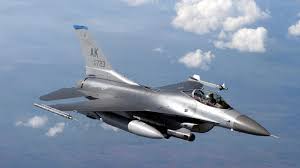
The UK may acquire F-35A fighter jets as part of a broader effort to
deepen its contribution to NATO’s nuclear sharing arrangements, following
a key recommendation in the newly published Strategic Defence Review (SDR).
The document states:
“More F-35s will be required over the next decade.
This could comprise a mix of F-35A and B models according to military
requirements to provide greater value for money.”
This reference to a
potential F-35A acquisition has been interpreted by experts and
parliamentarians as linked to the UK’s possible future role in NATO’s
nuclear sharing mission—an arrangement under which non-nuclear states
host US nuclear weapons and are capable of delivering them in wartime.
While the UK already possesses its own independent nuclear deterrent via
the submarine-based Trident system, participation in NATO’s air-delivered
nuclear mission would mark a significant evolution in its commitment to
Alliance nuclear burden-sharing.
UK Defence Journal 3rd June 2025,
https://ukdefencejournal.org.uk/britain-considering-fleet-of-nuclear-strike-aircraft/
It’s over! Anti-nuke dump campaigners in East Lincolnshire celebrate victory
The UK/Ireland Nuclear Free Local Authorities are delighted to share in
the celebrations of East Lincolnshire residents and their elected members
as Nuclear Waste Services announces that it shall now take the ‘immediate
steps needed to close the Community Partnership and the communities of
Withern and Theddlethorpe, and Mablethorpe will leave the GDF (Geological
Disposal Facility) siting process’.
The announcement came hot on the
heels of the decision this morning by the Lincolnshire County Council
Executive to withdraw its support from the GDF process.
NFLA 3rd June 2025, https://www.nuclearpolicy.info/news/its-over-anti-nuke-dump-campaigners-in-east-lincolnshire-celebrate-victory/
Priming us up for war – “it’s not so bad, after all” – Britain’s Labour government leads the way
The Unseen March video from 9 years ago – but now it’s getting worse. https://theaimn.net/priming-us-up-for-war-its-not-so-bad-after-all-britains-labour-government-leads-the-way/
On the outskirts of Berlin, you can visit what’s left of Sachsenhausen , one of the first Nazi concentration camps, set up in 1936, as a model for the more than 44,000 such camps they ran between 1933 and 1945.
I was impressed by the efficiency shown by the way that the Nazis carried out mass murder in this camp – which became a model for how to run this operation as quickly and with as little fuss as possible.
In the early days of the camp, the inmates were used as forced labour. Systematic extermination was carried out. Many thousands died by hunger, disease, overwork, medical experiments and mistreatment. But by 1941, tens of thousands of Jews and Soviet prisoners were being directly murdered.
I saw where this happened. Originally, the prisoners were forced down a brick path, and shot. You can still see stains on this path. But here’s the interesting bit. It turned out that the German soldiers who did the shooting became badly affected by it. Sometimes they would miss, or have to make several shots to actually kill a man. It made the soldiers unwell, having to rather messily murder their victims – it’s not like being in combat, not at all fair. It was making those soldiers mentally ill.
Here’s where the practical genius of the Nazis came in. They devised a special unit, (which was still there, when I visited a few years ago). In this unit, the shooter could be sure of doing one direct lethal hit, but the victim was placed in such a way that the shooter was unable to see him. This system solved the psychological problem of upsetting the man doing the shooting. No more mental illness, and the mass killing could proceed in an orderly way.
In a sort of sequel to this discovery, the Americans in recent years developed the efficiency of drones. targeting and killing suspected terrorists and militants in countries like Pakistan, Yemen, and Afghanistan. Once again, – such a beneficial effect on the operator’s mental health. From thousands of miles away – press a button, no sight of any mess. and a beneficial effect on the the public too – all this killing being done so neatly, and so far away – so much better than an old-fashioned war battle.
So it is that the thought of war becomes much less unpleasant. With drones, and missiles, it has become a sort of distant, sort of “clean”, precision operation.
This new palatability of war comes to add to the already existing beneficial aspects of war. Getting ready for war shows that our great leaders are strong and decisive. It’s patriotic. It defends our democratic values. There are those other – nebulous, but still real, concepts of courage, heroism, and past glorious victories. The new “war-readiness” shows that we are aware, and awake-up to the threats of other countries, who undoubtedly want to attack us. And on top of all that – getting ready for war provides jobs jobs jobs!
Now Sir Keir Starmer’s UK Labour government is not so sure that the British public is convinced of all this. So they’re accentuating the already existing British trend to promote militarism. The Daily Mail announces the new education programme:
Children taught value of the military
Defence chiefs will work with the Department for Education to develop understanding of the Armed Forces among young people in schools, by means of a two-year series of public outreach events across the UK, explaining current threats and future trends.
Schools and community-based cadet forces will also be expanded, with an ambition of a 30 per cent rise by 2030 with a view to the UK having 250,000 cadets, many of whom will then go on to join the armed forces.

Those radical terrorists, The Quakers, have provided an alternative view – The military in education & youth activities. But I’m not sure that their view is widely known.
It looks as if mass education on the necessity of war is now well underway. The general public in the West is being brainwashed with the doctrine that authoritarian Russia and China are about to invade our peace-loving democracies. Sir Keir Starmer takes the initiative, showing how Labour there is in concert with the Tories. We must be ready to fight back, or perhaps better, to pre-empt such attacks. No doubt the Russian and Chinese populations are being taught a similar message, the other way around.
What now makes it easier is that we can buy ever more of those glorious distance methods, so much neater than sending our boys out for messy personal danger. The efficient Nazis got the ball rolling on this. In education Sir Keir Starmer now takes the initiative. Labour in the UK is enthusiastically backing their own and and the USA’s arms manufacturers. Weapons-making is the big thing in business now – in Europe too, and of course in the USA.
War School – The Battle for Britain’s Children – https://www.youtube.com/watch?v=bl5Zc71KV_g
Sellafield’s race against time: nuclear waste clean-up not going quickly enough, Public Accounts Committee (PAC) warns

Sir Geoffrey Clifton-Brown MP, Chair of the Committee, said: “The intolerable risks presented by Sellafield’s ageing infrastructure are truly world-class. When visiting the site, it is impossible not to be struck by the fact that one can be standing in what is surely one of the most hazardous places in the world.
“Our report contains too many signs that this is a race that Sellafield risks losing.”
Report highlights latest picture on delays and cost rises in c.£136bn 100-year nuclear decommissioning project.
The retrieval of waste from ageing buildings at the most hazardous nuclear site in the UK is not happening quickly enough. In its report on decommissioning Sellafield, the Public Accounts Committee (PAC) warns that the estimated £136bn cost of the project would rise even more if work is further delayed, while expressing scepticism as to whether or not recent signs of improvement in performance could represent another false dawn.
The PAC found in 2018 that government needed a firmer grip on Sellafield’s nuclear challenges, and now warns that not enough progress has been made in addressing its most significant hazards. One building, the Magnox Swarf Storage Silo (MSSS), has been leaking radioactive water into the ground since 2018 – the PAC calculates, at current rates, enough to fill an Olympic swimming pool roughly every three years. The Nuclear Decommissioning Authority (NDA) accepts this leak is its “single biggest environmental issue”, but that the radioactive particles are “contained” in the soil and do not pose a risk to the public.
The PAC’s report finds that Sellafield Ltd has missed most of its annual targets for retrieving waste from several buildings on the site, including the MSSS. The PAC’s inquiry heard that the MSSS is the most hazardous building in the UK, and as a result of Sellafield Ltd’s underperformance will likely remain extremely hazardous for longer. The report seeks answers from Government on how it will hold the NDA and Sellafield Ltd to account in ameliorating the site’s greatest hazards.
As well as safety concerns, the PAC further warns of the impact that delays in the programme have on costs. In the long-term, waste will need to be stored in an underground Geological Disposal Facility (GDF) capable of storing it for thousands of years. The PAC finds that the date for the GDF has slipped from 2040 to the late 2050s, with every decade of delay meaning Sellafield could need to construct another storage building, each costing £500m-£760m. The GDF project is still at an early stage, with sites considered in Cumbria and Lincolnshire – though the PAC understands that Lincolnshire County Council has recently announced it is likely to withdraw.
The report highlights some recent signs of improvement in Sellafield’s delivery, with more emphasis put on planning in how it works with contractors and most recently-started projects being delivered in line with their business cases as a result. However, the report highlights the example of one of Sellafield’s project to refurbish an onsite lab so it could continue analysing waste samples – essential for safety.
The report finds that this very poorly managed and now-paused project has seen £127m wasted. Its failure, which resulted from a lack of understanding of what physical state its labs were in, and from not doing the right remedial work to address their deterioration, illustrates the need to improve asset management at Sellafield. The report urges Sellafield Ltd to explain how it is addressing the deteriorating condition of its assets, which its safety experts have warned is making the site increasingly unsafe.
The PAC’s report also finds indications of a sub-optimal culture at the site, with concerns raised in the report given that the exceptionally hazardous nature of many of Sellafield’s activities means that it is imperative that all employees and contractors on the site feel able to raise any concerns that they have without fear of consequences. The PAC is aware that the NDA paid £377,200 in 2023-24 to settle employment-related claims.
Further, the PAC previously noted that non-disclosure agreements have been used elsewhere in the public sector to cover up failure. The report finds that Sellafield Ltd has signed 16 non-disclosure agreements in the last three years. It further seeks publication from the NDA of information around the prevalence and perception of bullying and harassment in its annual report.
Chair comment
Sir Geoffrey Clifton-Brown MP, Chair of the Committee, said: “The intolerable risks presented by Sellafield’s ageing infrastructure are truly world-class. When visiting the site, it is impossible not to be struck by the fact that one can be standing in what is surely one of the most hazardous places in the world. This is why we expect Sellafield’s management of its assets, and the delivery of the project to decommission it, to be similarly world-class. Unfortunately, our latest report is interleaved with a number of examples of failure, cost overruns, and continuing safety concerns. Given the tens of billions at stake, and the dangers onsite to both the environment and human life, this is simply not good enough.
“As with the fight against climate change, the sheer scale of the hundred-year timeframe of the decommissioning project makes it hard to grasp the immediacy of safety hazards and cost overruns that delays can have. Every day at Sellafield is a race against time to complete works before buildings reach the end of their life. Our report contains too many signs that this is a race that Sellafield risks losing. It is of vital importance that the Government grasp the daily urgency of the work taking place at Sellafield, and shed any sense of a far-off date of completion for which no-one currently living is responsible. Sellafield’s risks and challenges are those of the present day. There are some early indications of some improvement in Sellafield’s delivery which our report notes. Government must do far more to hold all involved immediately accountable to ensure these do not represent a false dawn, and to better safeguard both the public purse and the public itself.”
UK government has already allocated £6.4bn to the Sizewell C nuclear project!
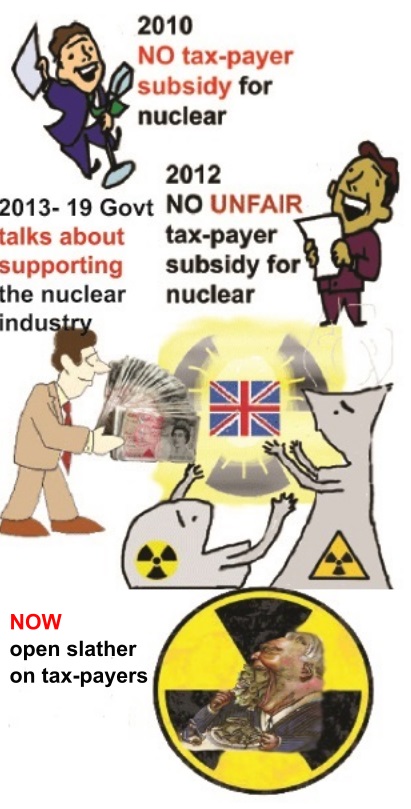
The Sizewell C Development Expenditure Subsidy Scheme (DEVEX Scheme) has
been made for £5.5bn for the Sizewell C company. Under this scheme to
date, £3.9bn has been awarded to the company, in two tranches, one of
£1.2bn and one of £2.7bn. Prior to these awards, the Department had
awarded £2.5bn to the project since the Government Investment Decision in
November 2022 under the SZC Investment Funding Scheme. Hence, in total, the
Department has to date allocated £6.4bn to the project under both subsidy
scheme.
Hansard 2nd June 2025
UIN 54121, tabled on 21 May 2025
https://questions-statements.parliament.uk/written-questions/detail/2025-05-21/54121
Sizewell C nuclear project to get go-ahead during Anglo-French summit

UK ministers hope to sign up private sector investors for new Suffolk power
plant later this month. The new Sizewell C nuclear power station is
expected to get the final go-ahead during an Anglo-French summit in London
next month, as UK ministers edge towards securing billions of investment
from the private sector.
Darren Jones, a Treasury minister, told the
Financial Times earlier this year that the final investment decision for
Sizewell C, where shareholders formally commit to the investment, would be
“at the spending review” on June 11. Ministers are expected to reaffirm
the government’s intention to invest in Sizewell in or around the
spending review, according to people close to the situation, with details
expected on how much they could allocate in taxpayer support for the
project.
However, the final go-ahead is not expected until an announcement
by Prime Minister Sir Keir Starmer and French President Emmanuel Macron
during the Franco-British summit in London between July 8 and July 10,
according to people close to the talks in Britain and France. By then the
government and EDF will have received final bids from several private
investors who have been given a deadline of late June, allowing the formal
final investment decision to proceed.
Groups expected to bid for a stake in
Sizewell include insurer Rothesay, backed by the Singaporean infrastructure
fund GIC, the Canadian pension fund CDPQ, Amber Infrastructure Partners,
Brookfield Asset Management, pension fund USS, Schroders Greencoat and
Equitix, people close to the talks have said. Centrica, the owner of
British Gas, has also confirmed that it is in talks to invest in the
project.
FT 3rd June 2025,
https://www.ft.com/content/25927b63-6ce5-4964-b8df-086c010148f8
1 This Month

of the week – Shut Down Drone Warfare!


Tell the Ukrainian Government to Drop Prosecution of Peace Activist Yurii Sheliazhenko

Petition to revoke the licensing of the Near Surface Nuclear Disposal Facility (NSDF) at Chalk River. https://www.ourcommons.ca/petitions/en/Petition/Details?Petition=e-7247
To see nuclear-related stories in greater depth and intensity – go to https://nuclearinformation.wordpress.com
-
Archives
- April 2026 (68)
- March 2026 (251)
- February 2026 (268)
- January 2026 (308)
- December 2025 (358)
- November 2025 (359)
- October 2025 (376)
- September 2025 (257)
- August 2025 (319)
- July 2025 (230)
- June 2025 (348)
- May 2025 (261)
-
Categories
- 1
- 1 NUCLEAR ISSUES
- business and costs
- climate change
- culture and arts
- ENERGY
- environment
- health
- history
- indigenous issues
- Legal
- marketing of nuclear
- media
- opposition to nuclear
- PERSONAL STORIES
- politics
- politics international
- Religion and ethics
- safety
- secrets,lies and civil liberties
- spinbuster
- technology
- Uranium
- wastes
- weapons and war
- Women
- 2 WORLD
- ACTION
- AFRICA
- Atrocities
- AUSTRALIA
- Christina's notes
- Christina's themes
- culture and arts
- Events
- Fuk 2022
- Fuk 2023
- Fukushima 2017
- Fukushima 2018
- fukushima 2019
- Fukushima 2020
- Fukushima 2021
- general
- global warming
- Humour (God we need it)
- Nuclear
- RARE EARTHS
- Reference
- resources – print
- Resources -audiovicual
- Weekly Newsletter
- World
- World Nuclear
- YouTube
-
RSS
Entries RSS
Comments RSS
 nuclear-news