Confusion in , and opposition to, Bradwell’s Chinese-built nuclear plant plans

 Bradwell Notes NuClear News No 91, Jan 2017 Maldon District and Essex County Council are paving the way for Bradwell’s Chinese-built nuclear plant by offering free Mandarin lessons to councillors. Professor Andy Blowers, chairman of the Blackwater Against New Nuclear Group (BANNG), said “it may be that neither council possesses expertise in understanding what is proposed. And learning Mandarin will not compensate for that.” (1)
BANNG has been opposing new nuclear development at Bradwell for the last 8 years, on the grounds that the low-lying site is totally unsuitable for such development and, now, also because of concerns, shared with others, regarding security issues and Chinese involvement in such sensitive UK infrastructure. Professor Andy Blowers said: “There is a long process ahead before any new nuclear power station can be built at Bradwell. The rigorous Generic Design Assessment has not yet commenced and then there will be a planning process in which Maldon District and Essex County Councils will be consultees. By celebrating in any way, the County Council potentially compromises its disinterested role as a consulted planning authority. The suggestion that there is something to celebrate could give the impression that a new Chinese power station will simply be waved through”. (2)
Meanwhile the NDA’s policy of spreading nuclear waste around the country to save money continues. Essex County Council has voted to lift restrictions imposed only 4 years ago and to allow Magnox, operators of the Bradwell site, to transfer Intermediate-Level Waste (ILW) from Dungeness and Sizewell to the Bradwell Interim Storage Facility (ISF). The restriction had decreed that only Bradwell-generated waste could be stored there. Bradwell will now become a regional nuclear waste store for the indefinite future and a precedent for the import of further wastes may have been set. The planning approval means that the long-held principle of selfsufficiency, whereby each site hosts its own wastes, is contravened. (3)
In a surprise move EDF and Chinese nuclear company CGN have consulted Mersea Island residents over the proposed new nuclear power station at Bradwell. The previous official position was that Mersea Island was in the wrong planning area (despite being much closer to and directly downwind from the site). If people want to share their views on the project they can do so via the website: http://www.bradwellb.co.uk (4)
Sizewell C EDF Energy has launched its stage2 public consultation on the proposals for two EPRs to be built at Sizewell. The consultation is open until 3 February 2017. (1)
Community leaders who met to discuss the proposals agreed that the developers need to offer a better deal for Suffolk. Nearly 80 town and parish representatives along with members of the Joint Local Authority Group (JLAG) concluded that EDF Energy’s stage two consultation for Sizewell C has failed to make enough progress from its proposals four years ago. The key concerns raised at the summit focussed on the proposed accommodation campus, whose location near Therberton is feared to lack the required infrastructure to transport up to 2,400 workers to and from the construction site. Other issues included EDF’s alleged failure to “fully understand the communities of east Suffolk” and their concerns. The summit also heard that EDF’s proposals to have 35 metre high “spoil heaps” would have a significant impact on those living and visiting the area and it was not yet clear what mitigation would be provided. Transport routes for construction material were also said to be unclear, with EDF urged to provide more detail about how much would be brought in by road, sea and rail. (2) http://www.no2nuclearpower.org.uk/nuclearnews/NuClearNewsNo91.pdf
Anglesey UK: economy stagnates during the struggle to find finance for Wylfa Newydd New Nuclear
 Wylfa Newydd NuClear News No 91, Jan 2017 “The Government knows that solar and wind will be cheaper by the time Hinkley is generating” says Stop Hinkley spokesperson Roy Pumfrey. “It is blindingly obvious that solar and wind will win through in the end.” (21)
If the French nuclear industry managed to somehow get through its current difficulties ,EDF and China’s state-backed CGN can always appeal to their respective governments to help fund delivery of Hinkley Point C if things go pear-shaped, but Horizon, which is proposing to build two Advanced Boiling Water Reactors at Wylfa on Anglesey and two at Oldbury in Gloucestershire doesn’t have that luxury. Instead it will need to raise much more of its capital funding through attracting private investors – and proving to them it’s a safe bet. Horizon’s CEO Duncan Hawthorne admits this will be a challenge. “Quite honestly, we can’t point to a large parade of successful (nuclear) projects … We have to have a credible story in order to get financial support for the build costs”. He has got to somehow show that it is possible to construct a plant that will guarantee to investors it can be built on time and budget – and be commercially viable. (22) Given that there were only four ABWRs operating anywhere in the world before Fukushima with an average load factor of only 45%, and all have been closed since 2011, this might be a tall order for Hawthorne. (23)
The Japanese government and Hitachi are reported to be putting together a package worth £6.79bn to finance the Wylfa. The total cost of the project is expected to be around £19bn. There has been talk, according to the Nikkei Asian Review of the UK Government shouldering 25% of the cost. Even if that were the case that still leaves £11.5bn to be found from somewhere. (24)
While Wales and the global climate waits for Horizon to prove something that might well be impossible to prove the local economy on Anglesey has been “allowed to stagnate over decades due to a promise that nuclear power would come and save the day”. Robat Idris from People Against Wylfa B says residents are concerned about nuclear waste from the proposed Wylfa Newydd power plant and were not convinced that any new jobs would be for local people. He says focusing efforts on bringing renewable and community energy schemes to Anglesey would offer more long-term benefits. (25) http://www.no2nuclearpower.org.uk/nuclearnews/NuClearNewsNo91.pdf
Japanese government planning to subsidise Britain’s new nuclear build
 Tokyo eyes ¥1 trillion in financial support for Japanese firms pursuing U.K. nuclear plants http://www.japantimes.co.jp/news/2016/12/16/business/tokyo-eyes-%C2%A51-trillion-financial-support-japanese-firms-pursuing-u-k-nuclear-plants/#.WFONt9J97Gg The government is considering offering financial assistance through state-affiliated banks for projects won by Japanese companies for nuclear power plant construction in Britain, sources said Thursday.
Under study is a plan for the Japan Bank for International Cooperation and the Development Bank of Japan to invest in and provide loans to local companies that build and operate nuclear power stations, the sources said.
Visiting British Chancellor of the Exchequer Philip Hammond told reporters in Tokyo on Thursday that Britain is holding talks with the Japanese government, Hitachi Ltd. and Toshiba Corp. on a financial support framework for nuclear power plant construction projects in his country.
On the same day, Hammond met with Chief Cabinet Secretary Yoshihide Suga to exchange opinions about nuclear plant construction.
British Business, Energy and Industrial Strategy Secretary Greg Clark plans to visit Japan as early as next week and hold meetings with officials of Hitachi, Toshiba and the JBIC.
Under the envisaged scheme, the Japanese government expects to offer financial assistance to Horizon Nuclear Power Ltd., a unit of Hitachi, and NuGeneration Ltd., which is under the wing of Toshiba.
Cheap energy storage will change the renewable energy debate
 Storage – the missing link NuClear News No 91, Jan 2017 Bloomberg New Energy Finance (BNEF) predicts a six-fold increase in investment in energy storage to $8.2bn (£6.7bn) by 2024, and to $250bn (£197bn) by 2040. This massive growth in energy storage will create a “fundamentally different” global power system. This energy storage ‘megashift’ is already beginning to gather pace. The battery market has seen breath-taking levels of growth from utilities over the past 12 months, while non-utilities are increasingly realising that lithium-ion or flow storage systems can act as the perfect accompaniment to onsite renewable energy installation. (11)
Paul Massara, former CEO of RWE nPower, is now CEO of North Star Solar, a new solar PV + battery home energy system start-up. He says that lithium ion batteries for electrical storage are getting cheaper and cheaper, and PV + battery packages are now cost effective in the UK with the right financing package. Cheap, ubiquitous electrical energy storage will lead to a very different world and may change the focus of many of today’s energy policy debates. It is likely to help reduce peak demand, and allow renewables to provide a much higher percentage of electricity demand, especially if they are cheaper than alternative forms of low carbon electricity such as nuclear or fossil fuel with carbon capture and storage. (12)
North Star Solar has set up a joint scheme with the former colliery town of Stanley in Co Durham to offer in-home batteries and solar panels for free to all the town’s 35,000 households. Paul Massara says the combination of rooftop panels, a lithium battery and energy-efficient LED light bulbs will immediately cut power bills by 20%. (13)
The £19m ‘Big Battery’ installed at a sub-station in Leighton Buzzard, Bedfordshire has completed a two-year trial and successfully shown that power storage has the potential to be both technically and commercially viable. (14)
Camden Council has teamed up with Islington and Waltham Forest Councils to deliver a pilot programme to test the potential benefits of solar panels and energy storage systems for residents at risk of fuel poverty. The ’24/7 Solar’ initiative is being part-funded by national fuel poverty charity National Energy Action. The aim of the trial is to see if there is evidence that integrated solar and storage technologies can effectively reduce the energy bills of fuel poor households. (15) Meanwhile in Edinburgh and surrounding towns several housing associations have been working with Sunamp to install solar PV and heat storage ‘batteries’. Surplus solar generated electricity can be diverted to the heat battery and used for hot water or central heating when required later. (16) And in Orkney where renewable energy generators are often curtailed due to the constraints on the distribution of electricity around the Orkney grid, yet fuel poverty levels are at 63%, a new project, launched by Heat Smart Orkney Ltd, is aiming to divert unused renewable energy into affordable heat. (17) The Scottish Government has given a new 400-MW pumped-storage hydro power plant in Dumfriesshire permission to go ahead. (18)
Solar power is expected to be the cheapest form of energy (not just electricity) everywhere in the world by around 2030. Cheap solar panels and advances in storage technology are transforming the world. By 2030 or 2040 solar will be the cheapest way to generate electricity, indeed any form of energy EVERYWHERE. The proportion of global electricity provided by solar is likely to grow from 2% now to at least 50% by 2030. We can see the cost of batteries coming down in price dramatically, but turning surplus solar electricity generating during the summer into something we can put into natural gas networks will probably come soon. Generating hydrogen from water and, using microbes, combining it with carbon dioxide to form methane is the simplest way to do this. (19)
Even offshore wind costs are falling. Swedish utility Vattenfall has agreed to build a giant offshore wind farm in Denmark that would sell power for €49.50 per MWh. Vattenfall has broken its own previous record of €60 per MWh. Once the cost of transmission is included this works out at around £75.50/MWh compared with £100.50/MWh for Hinkley Point C (once inflation has been added to the £92.50 at 2012 prices). (20) http://www.no2nuclearpower.org.uk/nuclearnews/NuClearNewsNo91.pdf
Studyfinds that wind farms have significantly reduced UK’s greenhouse emissions
 Wind farms play key role in cutting carbon emissions, study finds https://www.eurekalert.org/pub_releases/2016-12/uoe-wf120916.phpUNIVERSITY OF EDINBURGH: WIND FARMS HAVE MADE A SIGNIFICANT IMPACT IN LIMITING CARBON EMISSIONS FROM OTHER SOURCES OF POWER GENERATION IN GREAT BRITAIN, A STUDY SHOWS.
Power from wind farms prevented the creation of almost 36 million tonnes of greenhouse gas emissions from sources such as coal and gas, in a six-year period – the equivalent of taking 2.3 million cars off the road, analysis of nationwide output shows.
The figures from 2008-2014, analysed in the most accurate study of its kind to date, suggest that a greater investment in wind energy could help meet Scottish and UK government targets for carbon emissions reduction.
Engineers from the University of Edinburgh analysed National Grid figures for the power generated by various sources including wind, coal and gas. Their data detailed generator energy output figures for every half hour, creating a comprehensive picture of how demand over time was met by power from the various sources.
Their study improves on previous estimates because it uses real, rather than estimated, energy output figures and takes into account the inefficiency of individual conventional generators, researchers say. The calculations are complex because energy demand is met from a mix of sources at any one time, and when output from wind turbines increases, a number of different conventional sources may need to decrease their outputs.
The study demonstrates that government estimates for carbon savings underestimated the benefits from wind farms. Over the six year period, 3.4 million more tonnes of greenhouse gases were saved than thought – the equivalent of taking an extra 220,000 cars off the road.
Engineers say their methodology could be applied to give accurate estimates of possible future emissions savings for energy developers, planners and policymakers. They suggest wind power generation could play an increasingly important role in the future energy mix, which could also include carbon capture and storage, marine and nuclear power.
The study, published in Energy Policy, was supported by the Engineering and Physical Sciences Research Council.
Dr Camilla Thomson, from the University of Edinburgh’s School of Engineering, who led the study, said: “Until now, the impact of clean energy from wind farms was unclear. Our findings show that wind plays an effective role in curbing emissions that would otherwise be generated from conventional sources, and it has a key role to play in helping to meet Britain’s need for power in future.”
No room for wives in BBC’s staff nuclear cold war bunker

 BBC staff offered chance to survive nuclear holocaust – but wives left at
  home http://www.telegraph.co.uk/news/2016/07/23/bbc-staff-offered-chance-to-survive-nuclear-holocaust—but-wive/ Telegraph Reporters 23 JULY 2016
BBC employees were offered the chance to survive a nuclear holocaust by broadcasting from an underground bunker, but they could not tell their wives, newly released files reveal.
The broadcaster secretly drew up plans during the Cold War for how it would run a Wartime Broadcasting System in the event of a major disaster.
Early versions of the plan – known as the ‘War Book’ – say that staff were “assigned” or “designated” to go underground, but later editions suggest they were “invited”. Chosen workers were informed not to tell their wives or bring them to the bunker, the files released by the BBC reveal.
“My clearest memory is of a discussion about whether people with spouses could bring them along,” Bob Doran, an experienced editor in Radio News in the 1980s, who attended a civil service seminar in Yorkshire said. The answer was no.
BBC bosses planned to set up 11 protected bunkers – known as ‘Regional Seats of Government’ – spread across the UK, each with a studio and five staff from nearby local radio stations.
A bunker at the Engineering Training Department at Wood Norton in Worcestershire would be a headquarters staffed by 90 BBC staff including engineers, announcers, 12 news editors and sub-editors.
The output would be controlled by the government, but the BBC made a collection of cassette tapes of old radio comedies to entertain the public.
Shows chosen to amuse listeners during Armageddon included the Goon Show, Just a Minute and Round the Horne.
EDF’s nuclear reactor troubles pose another hindrance to UK’s Hinkley project
New blow for Hinkley Point contractor EDF after French safety checks
Safety issues force many reactors offline with warnings of power cuts across France, higher energy prices and a rise in emissions, Guardian, Adam Vaughan and Kim Willsher, 4 Dec 16, The company building the UK’s first new nuclear power station for decades is facing questions over the health of its fleet of French nuclear plants after an investigation which has left the country with the lowest level of nuclear power for 10 years and the prospect of power cuts during a cold snap.
Thirteen of Électricité de France’s (EDF) 58 atomic plants are offline, some due to planned maintenance, but most for safety checks ordered by the regulator over anomalies discovered in reactor parts……..
The problems stem from a fault identified last year by the Nuclear Safety Authority (ASN) in the as-yet-unfinished reactor at north-western France’s Flamanville plant – the same design approved for Hinkley Point C in the UK…….
Nuclear critics believe the situation shows the need for France to diversify away from nuclear and invest more in renewable sources such as wind and solar power, which account for less than 4% of electricity generation, compared with 25% in the UK.
Charlotte Mijeon, of the anti-nuclear group Sortir du Nucléaire (Get Out of Nuclear), said there was a “chain of responsibility” for the crisis in France’s nuclear industry which ranged from the government at the top to subcontracted private suppliers.
“The system of nuclear safety in France has always been limited,” she said. “It starts from the premise that the industrials are honest and the moment there is a problem they will flag it up to the safety authorities and it will be sorted out.” https://www.theguardian.com/environment/2016/dec/02/hinkley-point-edf-new-crisis-safety-checks-french-nuclear-plants
Britain’s planned new nuclear reactors will produce twice as much highly radioactive trash as now exists
The nuclear industry and government have repeatedly said the volume of nuclear waste produced by new reactors will  be small, approximately 10% of the volume of existing wastes; implying this additional waste will not make a significant difference to finding a GDF for the wastes the UK’s nuclear industry has already created. However, the use of volume as a measure of the impact of radioactive waste is highly misleading.
A much better measure would be the likely impact of wastes and spent fuel on the size or “footprint” of a GDF. New reactors will use so-called ‘high burn-up fuel’ which will be much more radioactive than the spent fuel produced by existing reactors. As a result it will generate more heat, so it will need to be allocated more space in the GDF’s disposal chambers. So rather than using volume as a yardstick, the amount of radioactivity in the waste – and the space required in a GDF to deal with it – are more appropriate ways of measuring the impact of nuclear waste from new reactors.
 The activity of existing waste – mostly stored at Sellafield amounts to 4,770,000 TBq. The proposed reactors at Moorside would produce spent fuel and ILW with an activity of around 4,206,012 TBq making a total of 8,976012 TBq stored in Cumbria. However the activity of spent fuel and ILW stored at new reactor sites outwith Cumbria would amount to 15,586,988 TBq – almost twice as much. And if we assume that the reactors at Bradwell goahead it will probably be more than twice as much.
NuClear News No 90 4. Nuclear Waste Updates The Department of Business, Energy and  Industrial Strategy – BEIS – (formerly called ‘DECC’) was planning to hold two public consultations, on the draft National Policy Statement for a Geological Disposal Facility and on Working With Communities based on the work of the Community Representation Working Group, this autumn, but the uncertainty caused by recent turbulence in the wider political environment means that these now look likely to be delayed until early 2017.
Energy Minister Baroness Lucy Neville-Rolfe hailed a “nuclear renaissance” when she addressed the Office for Nuclear Regulation Industry Conference in Cumbria. She said that as well as Hinkley Point C and proposals for new reactors at Moorside the Government is “going further, with proposals to develop 18GW of nuclear power across six sites in the UK.”
She said the Government would be launching a new siting process for a Geological Disposal Facility (GDF) in 2017. The Whitehaven News reported that the site for the GDF would almost certainly be in West Cumbria, but this was not in the Minister’s published speech. (1)
Just to finally knock on the head the idea that most of the nuclear waste is in Cumbria already so we might as well build the GDF there, nuClear News has done some number crunching:
Radioactive Waste Management Ltd (RWM) has developed a detailed inventory of radioactive waste for disposal in its proposed GDF which it calls the ‘Derived Inventory’. This inventory is subject to uncertainty due to a range of factors such as uncertainty about the life of the AGR reactors and what happens to the UK’s plutonium inventory, and, of course proposals for new reactors.
The Derived Inventory is therefore updated periodically to take into account new information. RWM published a new 2013 Derived Inventory in July 2015. This can be compared with the previous 2010 Derived Inventory to obtain further information about the impact of a new reactor programme. The table below is from an RWM report which does just that. (2)
The 2010 inventory showed a derived inventory (2010 DI) which did not include any spent fuel or other waste from new reactors and an upper inventory (2010 UI) – which did include spent fuel and wastes from a 10GW new reactor programme. On the other hand the 2013 Derived Inventory has only one set of figures which includes spent fuel and waste from a 16GW new reactor programme. As mentioned above this could increase in future to take account of the fact that the Government now anticipates the size of the new reactor programme will be 18GW, to allow for the latest additional to the proposed fleet – Bradwell B. Beyond that there are ambitions to build between 7 and 21GW of Small Modular Reactor (SMR) capacity by 2035.
The nuclear industry and government have repeatedly said the volume of nuclear waste produced by new reactors will be small, approximately 10% of the volume of existing wastes; implying this additional waste will not make a significant difference to finding a GDF for the wastes the UK’s nuclear industry has already created. However, the use of volume as a measure of the impact of radioactive waste is highly misleading.
A much better measure would be the likely impact of wastes and spent fuel on the size or “footprint” of a GDF. New reactors will use so-called ‘high burn-up fuel’ which will be much more radioactive than the spent fuel produced by existing reactors. As a result it will generate more heat, so it will need to be allocated more space in the GDF’s disposal chambers. So rather than using volume as a yardstick, the amount of radioactivity in the waste – and the space required in a GDF to deal with it – are more appropriate ways of measuring the impact of nuclear waste from new reactors. The total activity measured in Terabecquerels (TBq) of the 2010 Derived Inventory, (not including any wastes from new reactors) was 4,770,000 TBq.
The total activity given in the 2013 Derived Inventory, which includes waste and spent fuel from a 16GW new reactor programme, was 27,300,000 TBq. Not all of this huge increase in activity is down to new reactors. For instance there is a big jump in the activity of legacy spent fuel and 3,700,000 TBq from spent mixed plutonium-uranium oxide (MoX) fuel – a category which does not appear at all in the 2010 inventory. However, 19,793,000 TBq is activity from new reactor wastes and spent fuel. So the activity of radioactive waste from a new reactor programme would be roughly four times the activity in the total 2010 inventory.
Of course this figure is for a 16GW new reactor programme. For an 18GW programme the total activity of spent fuel and intermediate level waste would be about 22,267,125 TBq or almost five times the activity of existing waste.
[Table on original]
These numbers are significant because of the amount of repository space taken up by existing waste mostly located in Cumbria compared with waste stored on reactor sites outwith Cumbria. The NDA has estimated the total repository footprint for a baseline inventory (the total waste expected to be created by the existing programme) of between 5.6 km2 and 10.3km2 depending on the rock-type. However, the footprint from a maximum inventory which includes a 16GW new reactor programme would be between 12.3km2 and 25km2. (3) [Table on original]
So the activity of existing waste – mostly stored at Sellafield amounts to 4,770,000 TBq. The proposed reactors at Moorside would produce spent fuel and ILW with an activity of around 4,206,012 TBq making a total of 8,976012 TBq stored in Cumbria. However the activity of spent fuel and ILW stored at new reactor sites outwith Cumbria would amount to 15,586,988 TBq – almost twice as much. And if we assume that the reactors at Bradwell goahead it will probably be more than twice as much. http://www.no2nuclearpower.org.uk/nuclearnews/NuClearNewsNo90.pdf
Nuclear fusion project in doubt, because of Britain’s exit from EU
 Brexit puts Europe’s nuclear fusion future in doubt By
Brexit puts the future of the world’s largest nuclear fusion reactor, based in Oxfordshire, in doubt. By leaving the European Union the UK might also exit Euratom, the EU’s framework for safe nuclear energy.
“It would be bizarre and extreme for the UK, which has been at the forefront of fusion research for 50 years, to just leave these projects,” says Ian Chapman, CEO of the UK Atomic Energy Authority. “It would make no sense strategically.”
At the moment, JET hosts 350 scientists and is funded by 40 different countries. Its aim is to commercialise nuclear fusion, which releases energy by forcing atoms together in the same process that powers the sun.
The energy output should be far greater than that of current nuclear power stations and produce a smaller amount of waste. But making it work effectively has proved incredibly difficult, as reactors require huge amounts of energy to get going and only remain stable for short periods……https://www.newscientist.com/article/2114690-brexit-puts-europes-nuclear-fusion-future-in-doubt/
UK fails in appeal to UN to reverse its ruling in favour of Julian Assange

 UN rejects UK appeal on Assange, Justice for Assange On 30 November 2016, the United Nations rejected the United Kingdom’s attempt to appeal the UN’s February ruling in favour of Julian Assange.
The decision therefore stands and the UK and Sweden are once again required to immediately put an end to Mr. Assange’s arbitrary detention and afford him monetary compensation.
Earlier this year the United Nations concluded the 16 month long case to which the UK was a party. The UK lost, appealed, and today – lost again. The UN instructed the UK and Sweden to take immediate steps to ensure Mr. Assange’s liberty, protection, and enjoyment of fundamental human rights. No steps have been taken, jeopardising Mr. Assange’s life, health and physical integrity, and undermining the UN system of human rights protection.
Now, the United Nations has found that the United Kingdom’s request for review of this decision (filed on March 24) was inadmissible; the United Kingdom has now reached the end of the road in its attempt to overturn the ruling. As a member of the Security Council and the United Nations Human Rights Council, the United Kingdom must respect its commitment to the United Nations, and release Mr. Assange immediately. Now, more than ever, moral leadership is required; maintaining Mr. Assange’s effective detention (which stands at six years as of 7 December, 2016) will only serve to green light future abuses against defenders of free speech and human rights.
Mr. Assange stated “Now that all appeals are exhausted I expect that the UK and Sweden will comply with their international obligations and set me free. It is an obvious and grotesque injustice to detain someone for six years who hasn’t even been charged with an offence.”….. https://justice4assange.com/?rejects
The AP1000 Nuclear Reactor Design is not fit for purpose: several safety flaws
The AP1000 advanced passive nuclear reactor design has a weaker containment, and fewer back-up safety systems than current reactor designs..
The AP1000 appears to be vulnerable to a very large release of radioactivity following an accident if there were just a small failure in the steel containment vessel, because the gasses would be sucked out the hole in the top of the AP1000 Shield Building due to the chimney effect.
Recent experience with existing reactors suggests that containment corrosion, cracking, and leakage is more common than previously thought, and AP1000s are more vulnerable to containment corrosion than conventional reactors.
In addition the AP1000 shield building lacks flexibility and so could crack in the event of an earthquake or aircraft impact.
The AP1000 reactor design is not fit for purpose and so should be refused a Design Acceptance Confirmation (DAC) and Statement of Design Acceptability (SDA).
NuClear News No 90 26 Nov 16 The AP1000 Reactor Design
NuGen, a consortium of Toshiba and Engie (formerly GDF Suez), is proposing to build three AP1000 reactors at Moorside in Cumbria – a site adjacent to Sellafield. These three reactors together would have a capacity of up to 3.8GW.

The AP1000 reactor is a pressurised water reactor (PWR) designed and sold by Westinghouse Electric Company, now majority owned by Toshiba. But unlike other PWR designs it is what is called an advanced passive design. The idea behind advanced passive design is that it shouldn’t require operator actions or electronic feedback in order to shut it down safely in the event of a loss of coolant accident (LOCA). Such reactors rely more on natural processes such as natural convection for cooling and gravity rather than motor-driven pumps to provide a backup water supply. Westinghouse claims that AP1000 plant safety systems are able to automatically establish and maintain cooling of the reactor core and maintain the integrity of the containment which holds in the radioactive contents indefinitely following design-basis accidents.
The nuclear regulators – the Office for Nuclear Regulation (ONR) and Environment Agency – have been carrying out a new process called ‘Generic Design Assessment’ (GDA), which looks at the safety, security and environmental implications of new reactor designs before an application is made to build that design at a particular site. Initially the GDA for the AP1000 was expected to be completed around spring 2011, when the regulators would have issued a statement about the acceptability of the design. By the end of 2010 it was clear that the ONR would only be able to issue “interim” approvals for the Areva EPR and Westinghouse AP1000 reactor designs at the end of the generic design assessment (GDA) in June 2011. Construction could only occur after any outstanding “GDA issues” had been resolved.
Eventually on 14th December 2011 the Regulators granted interim Design Acceptance Confirmations (iDACs) and interim Statements of Design Acceptability (iSoDAs) for the UK EPR and the AP1000 reactor designs. The Regulators also confirmed that they are satisfied with how EDF and Westinghouse plan to resolve the GDA issues identified during the process.
ONR’s interim approval for the AP1000 contained 51 GDA Issues. At this point Westinghouse decided to request a pause in the GDA process for the AP1000 pending customer input to finalizing it. Westinghouse has since become part of the NuGen consortium with its parent company Toshiba taking a 60% stake, the process for AP1000 has resumed, and is scheduled to be completed by March 2017 with issuance of DAC and SODA. By March 2016, the cost of the GDA for the AP1000 had reached £30 million. (5)
The GDA process is being carried out in, what is described as, an open and transparent manner, designed to facilitate the involvement of the public, who are able to view and comment on design information published on the web. Questions and comments can be submitted electronically via the Westinghouse website, or direct to the UK regulators. The deadline for making a comment on the AP1000 plant, as part of the GDA process is 30th November 2016. (6)
Edinburgh Energy and Environment Consultancy was commissioned by Radiation Free Lakeland to write a report on the AP1000 reactor design to submit to this consultation.
(Available here http://www.no2nuclearpower.org.uk/wp/wpcontent/uploads/2016/11/AP1000_reactors.pdf )
The report came to the following conclusions:
The AP1000 advanced passive nuclear reactor design has a weaker containment, and fewer back-up safety systems than current reactor designs. Conventional reactors rely on defence-indepth made up of layers of redundancy and diversity – this is where, say, two valves are fitted instead of one (redundancy) or where the function may be achieved by one of two entirely different means (diversity). In contrast advanced passive designs rely much more on natural processes such as natural convection for cooling and gravity rather than motor-driven pumps to provide a backup water supply.
The AP1000 appears to be vulnerable to a very large release of radioactivity following an accident if there were just a small failure in the steel containment vessel, because the gasses would be sucked out the hole in the top of the AP1000 Shield Building due to the chimney effect.
Recent experience with existing reactors suggests that containment corrosion, cracking, and leakage is more common than previously thought, and AP1000s are more vulnerable to containment corrosion than conventional reactors.
In addition the AP1000 shield building lacks flexibility and so could crack in the event of an earthquake or aircraft impact.
A thorough review of the AP1000 design in the light of the Japanese accident at Fukushima has shown that:
- Ongoing nuclear fission after a reactor has supposedly been shutdown continues to be the source of significant pressure inside the containment. The AP1000 containment is extraordinarily close to exceeding its peak post accident design pressure which means post accident pressure increases could easily lead to a breach of the containment.
- At least seven ways in which an AP1000 reactor design might lose the ability to cool the reactors in an emergency have been identified. These include damage to the water tank which sits on top of the shield building and some sort of disruption to the air flow around the steel containment.
- The accidents at Fukushima, especially the overheating and the hydrogen explosions in the Unit 4 Spent Fuel Pool showed that the calculations and assumptions about the AP1000 Spent Fuel Pond design were wholly inadequate.
- Fukushima showed that when several reactors share a site an accident at one reactor could damage other reactors. In the AP1000 the water tank on top of the reactor, and the shield building could be vulnerable to damage.
- Westinghouse assumes that there is zero probability of an AP1000 containment breach. But the accidents at Fukushima have shown that there is a high, probability of Containment System failure resulting in significant releases of radioactivity directly into the environment.
The AP1000 reactor design is not fit for purpose and so should be refused a Design Acceptance Confirmation (DAC) and Statement of Design Acceptability (SDA). http://www.no2nuclearpower.org.uk/nuclearnews/NuClearNewsNo90.pdf
New sanctions on North Korea, agreed on by China and USA. Russia delays
China, U.S. agree on new sanctions to punish North Korea for nuclear test, but Russia ‘trying to hold it up’, National Post Michelle Nichols, Reuters | November 24, 2016 UNITED NATIONS — The United States and China have agreed on new U.N. sanctions to impose on North Korea over the nuclear test it conducted in September, but Russia is delaying action on a draft resolution, a senior Security Council diplomat said on Wednesday.
The diplomat, who spoke on condition of anonymity, believed China could persuade Russia to agree to the new sanctions and that the 15-member Security Council could vote on the draft resolution as early as next week.
Since North Korea’s fifth and largest nuclear test on Sept. 9, the United States and China, a close ally of North Korea, have been negotiating a new draft Security Council resolution to punish Pyongyang.
That draft text was recently given to the remaining three permanent council veto powers, Britain, France and Russia.
“The (permanent five members) are getting very close to agreement on a draft resolution,” the diplomat said. “The key thing is that China and the U.S., who have led this, have got to a position that they agree on. So the issue now is Russia…….http://news.nationalpost.com/news/world/china-u-s-agree-on-new-sanctions-to-punish-north-korea-for-nuclear-test-but-russia-trying-to-hold-it-up
Renewables – the cheapest way for Britain decarbonise
NucClear News No 90 , 26 Nov 16 A new report from a think-tank called E3G, which aims to accelerate the transition to a lowcarbon economy, says the Government needs to deliver new low carbon generation capacity as cheaply as possible. The UK will need new capacity capable of producing around 150TWh (terawatt hours = 1,000 million kWh) per year of electricity by 2030 – around half of all current output. All plausible scenarios imply that this can only be achieved by deploying a significantly increased volume of renewable generation – likely to be around 50GW, predominantly from a combination of onshore and offshore wind and solar PV.
The E3G report says there is an increasing body of evidence that the system integration costs of renewable generation are low and that the power system can operate securely and at least cost with more than 50% of electricity demand being met from variable renewable sources. System integration costs are predicted to remain less than £10/MWh which means that not only is it possible to securely operate the power system with high levels of renewable generation, but it also represents the cheapest option. E3G shows that under the current trajectory onshore wind will be at least 22% cheaper than nuclear with offshore wind and solar PV providing savings in excess of 4% and 8% respectively, and savings will probably be even greater as the flexibility of the electricity system improves.
The important conclusion from this E3G study is that the cheapest way to decarbonise the power system involves large volumes of variable renewable generation even when taking system integration costs into account. (1)
Renewable costs keep falling
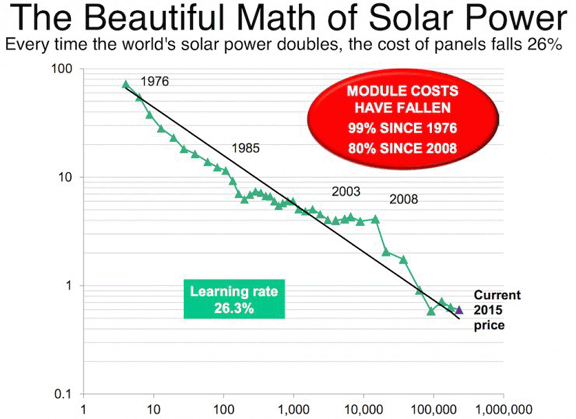
In fact researchers at Citi, a global investment bank, think that paying for energy could soon become a thing of the past. Cheaper storage and smart data analytics may soon make solar and wind energy available to consumers in some parts of the world – completely for free. (2)
Even the government now expects solar and wind power to be cheaper than new nuclear power by the time Hinkley Point C is completed. And Business Secretary, Greg Clark, has admitted that fears that intermittent renewables would jeopardise Britain’s ability to keep the lights on have been overblown. (3) An unpublished report by the energy department shows that it expects onshore wind power and large-scale solar to cost around £50-75 per megawatt hour (MWh) of power generated in 2025. New nuclear is anticipated to be around £85-125/MWh, in line with the guaranteed price of £92.50/MWh that the government has offered Hinkley’s developer, EDF. On previous forecasts, made in 2010 and 2013, the two renewable technologies were expected to be more expensive than nuclear or around the same cost. This is the first time the government has shown it expects them to be a cheaper option. The figures were revealed in a National Audit Office (NAO) report on nuclear in July. “The [energy] department’s forecasts for the levelised cost of electricity of wind and solar in 2025 have decreased since 2010. The cost forecast for gas has not changed, while for nuclear it has increased,” the NAO said. (4)
 Onshore Wind Costs
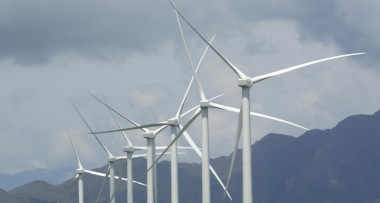
In Europe onshore wind has become one of the most competitive sources of new electricity. Mott MacDonald estimated in 2011 that costs would fall to around £52-55/MWh by 2040 compared with £83-90/MWh in 2011. (5) But according to Bloomberg New Energy Finance (BNEF) new onshore windfarms were the cheapest way for a power company to produce electricity in Britain by 2015 with costs dropping to £55/MWh. (6) The trade body, Scottish Renewables, has shown that costs could be cut by a further 20% if government, industry and regulators work together to make sure we can use the latest generation of turbines on suitable sites, reduce grid charges, and deploy energy storage technologies. (7)
 Solar Power
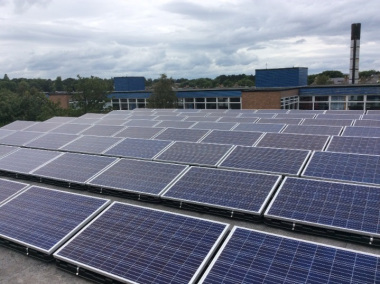
Sustainability expert, Chris Goodall, author of new book called “The Switch” (8), says cheap solar panels and advances in storage technology are about to transform the world. By 2030 or 2040 solar will be the cheapest way to generate electricity, indeed any form of energy EVERYWHERE. At the rate of growth that we are seeing at the moment of 35-45% per year solar will grow from providing 2% of global electricity to at least 50% by 2030. We can see the cost of batteries coming down in price dramatically. Turning surplus solar electricity generating during the summer into something we can put into natural gas networks is what we should be looking at in the UK. Generating hydrogen from water and, using microbes, combining it with carbon dioxide to form methane is the simplest way to do this. The era of fossil fuels is drawing to a close. (9)
 Offshore wind
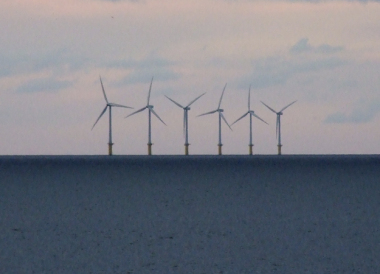
Earlier this year DONG Energy of Denmark, the world’s largest offshore wind company, won a bid to build two wind farms 22 kilometres off the Dutch coast. The company says power will be produced for less than any other offshore scheme to date. It is estimated that when the scheme is fully operational, electricity will cost €72.70 per megawatt hour (MWh) and €87 MWh when transmission costs are included. (10)
At the time this was described as the cheapest offshore wind electricity in the world: “beyond even the most optimistic expectations in the market.” (11) Since then Swedish utility Vattenfall has agreed to build a giant offshore wind farm in Denmark that would sell power for €49.50 per MWh. Vattenfall has broken its own previous record of €60 per MWh.
Greenpeace has produced the chart below [on original] to show the cost of offshore wind power compared with the cost of Hinkley Point C. The UK’s cheapest offshore windfarm will produce power at roughly £120 per MWh, which is far more than the projects being built in Denmark and the Netherlands. Part of the reason for that is that those governments cover transmission costs, so in the name of fairness Greenpeace adds £25 per MWh. And then to address offshore wind’s intermittency, you’ve got to add another £7.6 per MWh — according to the UK government’s top climate advisers to cover the cost of the ‘balancing’the system. (12)
So we can see that the latest Vattenfall bid is coming in at £75.50/MWh compared with £100.50/MWh for Hinkley Point C. (The £92.50/MWh strike price agreed for Hinkley Point C was index-linked at 2012 prices so £8/MWh has been added to allow for inflation.)
 Energy Efficiency
Research out by sustainability expert, Chris Goodall, shows a business and government drive to promote switching of homes, street lights and offices to energy efficient LED light bulbs would see a huge reduction in the UK’s electricity demand for lighting – more than two Hinkley nuclear plants’ worth of electricity. Lighting is responsible for nearly a third (29%) of total winter peak electricity demand – a complete switch would halve that. Switching entirely to LEDs in homes will save about 2.7 GW of peak winter demand; street lighting 0.5 GW; offices and commercial buildings 4.5 GW.
An expenditure of about £62 in an average house, replacing about 21 of the bulbs in living areas would cut electricity bills by at least £24 per year. This could be done relatively quickly and the total cost of partially upgrading all UK homes to energy-efficient LED lights would be around £1.7 billion. The price of LED light bulbs is falling over time and they cost just £1.60 each at major retailers. Aside from saving money for the householder directly, the government would conservatively save £65 million per year on capacity market payments from this action in houses and more elsewhere in street lighting and commercial sector. (13)
There are good reasons for using investment in energy efficiency as a vehicle to stimulate the economy – the macroeconomic benefits of public energy efficiency programmes have been illustrated by economists time and time again. For instance Verco and Cambridge Econometrics estimate that if delivered as part of a major infrastructure investment programme for £1 invested by government £3.20 is returned through increased GDP resulting in increased employment of up to 108,000 net jobs per annum. A recent study by Frontier Economics calculates that an energy efficiency infrastructure programme could generate £8.7 billion of netbenefits to the economy.
We know from the German KfW loan scheme that public subsidies for energy efficiency are more than offset by the increase in tax revenues and savings in welfare spending due to lower unemployment. Now is the time to do this in the UK, according to Jan Resnow at the Science Policy Research Unit at Sussex University. The economic uncertainty caused by the Brexit vote will prevail for some time until Britain’s new status becomes clearer. At the same time, there will be no energy efficiency programme for the able-to-pay sector after 2017 and funds for fuel poverty alleviation are falling short of what is required to achieve the target. The economic evidence is clear – energy efficiency provides a golden opportunity for an economic stimulus in the UK. (14) http://www.no2nuclearpower.org.uk/nuclearnews/NuClearNewsNo90.pdf
Nuclear reactor graphite cores cracking: Hinkley Point B and Hunterston B
 NuClear News No 90 26 Nov 16 Radio Four’s Costing the Earth has been investigating whether it is safe to keep reactors running long past their expected lifespan of about 30 years. Five of Britain’s seven AGRs are already older (Torness and Heysham 2 are only 27 years old). Hinkley Point B and Hunterston B are already 40 years old but EDF energy wants them to continue operating for at least another 7 years.
In 2005 the Nuclear Installations Inspectorate (now the Office for Nuclear Regulation -ONR) expressed concern about the structure of the reactor core. The core is made up of 6,000 graphite blocks. Around half of these are 1 metre tall with a bore or channel running through each block. Around 200 of these channels contain rods of nuclear fuel. If anything goes wrong control rods are inserted between the channels to dampen the nuclear reaction and shut down the reactor.
Nuclear Engineering consultant John Large explains that graphite is not elastic, it doesn’t bend, and it is not particularly strong. And now the graphite bricks are cracking. The core is an assembly of several thousand bricks, loosely stacked together and the expectation was that the core would never fail, so there was no facility to replace any individual blocks if they did become damaged. But now there are physical changes occurring in the core, in the individual bricks – cracking and fracturing – that must result in some loss of strength – not only of the individual bricks, but of the core as a whole.
The BBC used a Freedom of Information request to obtain a number of documents. One paper from ONR reveals that one third of the channels inspected at Hinkley B and Hunterston B contain what they describe as significant cracks. EDF says the cracks were anticipated at this stage in the reactors’ life and it is safe to operate for years to come. It says evidence suggests that its predictions about cracking are accurate.
Brian Cowell, director of nuclear operations, says: “in fact we are looking to extend life further (than 2023) if we can.” The analysis suggests that we can have more than 1,000 axial cracked bricks and still operate with massive margins of safety. 1,000 cracked bricks would exceed the current safety limit set by ONR, but the regulator is considering changing that limit.
Mark Foy – Deputy Chief Nuclear Inspector says the percentage of cracked bricks ONR is currently happy to accept is 10%, but they are considering increasing that to 20%. Foy says that the original safety case provided by EDF was on the basis of 10% cracking. As experience is gained and analysis and research is undertaken it allows EDF and ONR to gain a more informed and accurate view of what is acceptable and what isn’t.
EDF has now provided ONR with a safety case for allowing 20% cracking. This is based on the analysis EDF has undertaken; samples they’ve taken and the inspections they’ve undertaken. The focus has been to look at the likelihood of core disruption after an earthquake which could prevent the control rods being inserted. ONR is considering the new safety case.
Keyway Route Cracking
The ONR is also investigating a very specific and more concerning form of cracking. The keyway is a slot that holds each brick to the adjacent brick, the bricks underneath and the bricks on top. These keyways, which are acknowledged to be the limiting factor in the life of these reactors, are beginning to fracture. John Large points out that this will make the graphite blocks a very loose set of bricks.
Prof Paul Bowen of Birmingham University sits on the graphite technical advisory committee for ONR. He says the keyway cracks could potentially prevent the entry of the control rods. If the core distorts too much, it’s easy to see how trying to feed anything in could become very difficult
Seven of the keyways have been discovered to have cracks at Hunterston B. John Large believes the presence of keyway cracks casts doubt on the safety of the reactor in the event of an emergency like an earthquake. We have a cracked and deteriorating core that’s lost its residual strength and we don’t know by how much. Some of the design case accidents will test the core – one of these would be a seismic shake where the whole core is wobbled. If the core becomes misaligned, and the fuel modules get stuck in the core, the fuel temperature will get raised and could undergo a melt. If the radioactivity gets into the gas stream and the reactor is venting because it’s over pressurised then you have a release to the atmosphere and you have dispersion and a contamination problem.
ONR agrees keyway cracks could compromise safety. One of the documents the BBC obtained said the discovery of keyway route cracks at Hunterston invalidates the previous safety case. EDF had to consider what information to present to ONR to satisfy them that the reactor was still safe to operate. EDF brought in articulated control rods and nitrogen injection systems to address the extra risks posed by the keyway route cracking. The new rods are bendy making them easier to insert into a distorted core and an injection of nitrogen could buy several hours of invaluable time in the event of an accident.
However, concern remains because we can’t be certain how many keyway route cracks there are. John Large explains that to examine where the cracks are you have to take the fuel out of the reactor and put a camera down to inspect the inside of the bore, but these keyway cracks are on the outside of the bricks so you can’t actually see them.
It’s very hard to inspect the channels in which the fuel sits. Around 10% are inspected each time the reactor is shutdown. So there may be keyway route cracks that have never been seen at Hunterston and Hinkley. In the absence of a full visual inspection a mathematical model is used to work out the likelihood of cracks in particular parts of the reactor. The trouble is the model has already been shown to be flawed.
Paul Bowen says they haven’t been able to get the exact timing of the cracks right. The industry argued that cracks would appear first in layers 4 and 5, but they actually appeared in level 6. John Large says the model relied upon by ONR is not working, so they can’t predict the strength of the core. More to the point they can’t work out where to put their investigative probes to see where cracking is taking place. So they’re in the dark.
If the ONR gives the go-ahead for an increase in the number of cracked bricks from 10 to 20%, it might be difficult for people living near theses reactors to understand why the definition of “safe” seems to be changing. http://www.no2nuclearpower.org.uk/nuclearnews/NuClearNewsNo90.pdf
Britain – new nuclear reactor plans
NucClear News, 26 Nov 16 New Reactor Notes The Environment Agency is planning to launch a consultation on its preliminary conclusions on the Advanced Boiling Water Reactor design which Horizon Nuclear is proposing to build at Wylfa on Anglesey and Oldbury in Gloucestershire. The consultation will run between 12 December 2016 and 3 March 2017. (1) EA will hold a consultation meeting on 24th January 2017 at the Botanical Gardens, Birmingham. This should give participants an introductory understanding of the reactor design currently being assessed through the GDA. (1)
1 This Month





PLEASE OPPOSE HR 8255 AND S.3639 – bills would accelerate satellite deployment, with no environmental review or safeguards – https://ncstd5li.quorum.us/campaign/169331/
To see nuclear-related stories in greater depth and intensity – go to https://nuclearinformation.wordpress.com
-
Archives
- October 2026 (40)
- September 2026 (339)
- August 2026 (330)
- July 2026 (355)
- June 2026 (287)
- May 2026 (306)
- April 2026 (356)
- March 2026 (251)
- February 2026 (267)
- January 2026 (308)
- December 2025 (358)
- November 2025 (359)
-
Categories
- 1
- 1 NUCLEAR ISSUES
- business and costs
- climate change
- culture and arts
- ENERGY
- environment
- health
- history
- indigenous issues
- Legal
- marketing of nuclear
- media
- opposition to nuclear
- PERSONAL STORIES
- politics
- politics international
- Religion and ethics
- safety
- secrets,lies and civil liberties
- spinbuster
- technology
- Uranium
- wastes
- weapons and war
- Women
- 2 WORLD
- ACTION
- AFRICA
- Atrocities
- AUSTRALIA
- Christina's notes
- Christina's themes
- culture and arts
- Events
- Fuk 2022
- Fuk 2023
- Fukushima 2017
- Fukushima 2018
- fukushima 2019
- Fukushima 2020
- Fukushima 2021
- general
- global warming
- Humour (God we need it)
- Nuclear
- RARE EARTHS
- Reference
- resources – print
- Resources -audiovicual
- Weekly Newsletter
- World
- World Nuclear
- YouTube
-
RSS
Entries RSS
Comments RSS

