UK Conservatives – inconsistent, incoherent, policy – agreeing to Russia’s involvement in UK’s nuclear power development
Times 18th March 2018, Ed Davey: Vladimir Putin’s ambitions have been evident for some time, but
the Conservatives’ position has long been incoherent and inconsistent.
During the coalition years, the Conservatives seemed torn between the
national security evidence of the country’s wrongdoings and the billions
of roubles it had to invest.
Russian industrial investment plans would
never have stood up to the sort of detailed scrutiny we gave to Chinese
ones. I was particularly astonished when David Cameron agreed to Putin’s
request that the Russian state nuclear power company, Rosatom, be
introduced to the UK’s civil nuclear power market and develop an
international consortium with Rolls-Royce.
It was left to the Lib Dems to insist of downgrading this to a simpler, meaningless memorandum of
understanding. I was gobsmacked that even after Putin’s annexation of
Crimea, the prime minister clung on to the idea — even as we searched
around for sanctions to impose. https://www.thetimes.co.uk/article/former-energy-minister-ed-davey-tories-position-on-russia-is-incoherent-and-inconsistent-fhnvfkmgp
UK’s headlong rush into new nuclear power development could run into big problems about selecting sites
PeterBanks Blog 17th March 2018, It has been a busy time lately. BANNG has attended a number of meetings and
Prof. Andy Blowers has been involved as an expert in the Geological Disposal Facility (GDF) consultation process. And on top of that the weather has thrown a wobbly which has potential implications on the decisions for energy policies.

There have been two important meetings. One concerned the Government’s consultation on reviewing the siting criteria
for new nuclear power stations. For all of us concerned about the Government’s headlong rush towards more ridiculous nuclear development it is vital to respond to this consultation.
Clearly the Government is attempting to extend the time period allocated for selecting potential new nuclear sites. The sites included in the previous consultation on the siting criteria in 2008 should have had power stations generating by 2025 and even Hinkley Point C (HPC) has only a remote chance of being up and running by then.
BANNG also had an important strategic meeting with the Nuclear New Build departments of the Office for Nuclear Regulation (ONR) and the Environment Agency (EA). This event was co-chaired by BANNG’s Andy Blowers and the EA’s Simon Barlow. The meeting was attended by senior representatives from the EA and ONR and 6 from BANNG. Andy Blowers once again was also able to represent Colchester Borough Council.
http://banksyboy.blogspot.co.uk/2018/03/the-other-beast-from-east.html
UK nuclear regulator identifies 5 areas needing improvement in Hinkley Point C EPR project
 Nucnet 16th March 2018, The UK’s nuclear regulator has identified five key areas of supply chain
management where improvements are needed ahead of acceleration in both
construction and manufacturing for the Hinkley Point C EPR project in
Somerset, England.
The Office for Nuclear Regulation has rated an overall
inspection finding as ‘amber’. This means that some arrangements are
below standard and the ONR is seeking improvements.
The five key areas include issues such as improvement programmes, lessons learned,
self-assessment and quality assurance. The ONR said the inspection of the
supply chain for Hinkley Point C was instigated in the context of the
records falsification issues that emerged in 2016 at Areva’s Le Creusot
forge facility. The facility, now operated by Framatome, is a supplier of
key components to the Hinkley Point C project. The falsification issues
became apparent after the French nuclear safety regulator, ASN, confirmed
that major technical and organisational shortcomings had occurred at the Le
Creusot.
https://www.nucnet.org/all-the-news/2018/03/16/uk-regulator-says-improvements-are-needed-in-hinkley-point-c-supply-chain
British nuclear submarine joins American naval exercises under Arctic ice
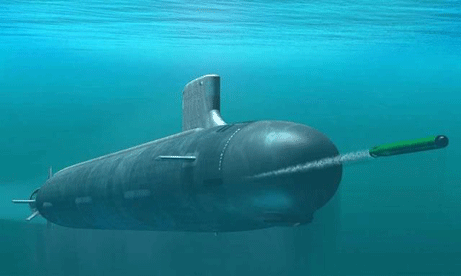 Britain Sends Nuclear Sub Under Arctic Ice As Tensions With Russia Heat Up, Sputnik News, 16 Mar 18, One British and two US nuclear submarines are taking part in a joint naval exercise currently underway in the icy waters of the Arctic Ocean.
Armed with Tomahawk cruise missiles and Spearfish heavy torpedoes, the HMS Trenchant is the first British nuclear sub to be deployed under the Arctic ice in a decade.
It joined a pair of the US Navy’s fast attack submarines the USS Hartford and USS Connecticut, both of which surfaced in the Arctic Circle on March 10 as part of the multinational maritime Ice Exercise 2018……..https://sputniknews.com/military/201803161062602535-uk-submarine-arctic/
America’s NuScale, and UK firms trying to sell Small Modular Nuclear Reactors to France.
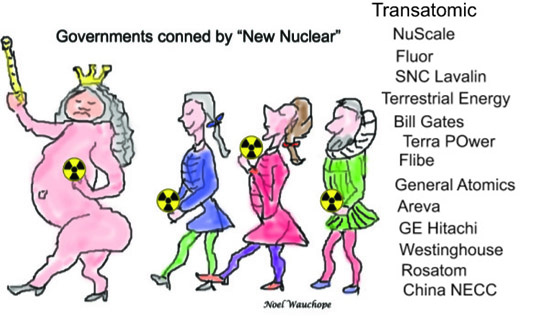 France considers developing mini nuclear reactors, eyes cost Euro News , 15/03/2018 PARIS – The French nuclear industry is considering developing Small Modular Reactors (SMRs), but will have to ensure these miniaturised generators are not only technically feasible but also financially viable, executives said.
Now revealed: Queen Elizabeth’s speech for World War 3 is ready
Queen Elizabeth’s WWIII speech revealed, AS RELATIONS between the UK and Russia plummet and talk of a new Cold War spreads, these are the chilling words we hope are never said. News.com.au, 15 Mar 18, Alexis Carey alexis.carey@news.com.au QUEEN Elizabeth has a pre-written speech prepared for the outbreak of World War 3.
And as tensions between the UK and Russia continue to escalate, some believe the threat of nuclear war is more real than it has been since the Cold War.
The current crisis began on March 4, when former Russian spy Sergei Skripal and his daughter Yulia were found slumped on a bench in Salisbury, England.
UK Prime Minister Theresa May said they had been poisoned by a nerve agent called Novichok, one of the world’s deadliest.
While the pair remain in hospital, their prognosis is grim.
Novichok has been made in Russia for many years, and Ms May said it was “highly likely” Russia was involved in the poisoning. She demanded that Russia explain what happened, but when the country didn’t comply, she said: “There is no alternative conclusion other than that the Russian State was culpable for the attempted murder of Mr Skripal and his daughter — and for threatening the lives of other British citizens.”
As a result, the government has ordered 23 Russian diplomats to leave UK soil by next Wednesday, which is the UK’s biggest removal of foreign representatives in three decades.
UK government ministers and members of the Royal Family will also not attend the World Cup in Russia in June in a further show of retaliation.
As the dispute grows, UK media have republished Queen Elizabeth’s speech, which she will deliver if a nuclear war is ever declared.
The monarch’s speech was initially written in 1983 during the peak of the Cold War.
It had previously been kept a strict secret under the National Archives’ 30-year rule.
The sombre speech was written as if it was delivered at midday on Friday, March 4, 1983 — and while some aspects are now outdated, such as the reference to Queen Elizabeth’s son Prince Andrew serving in the Royal navy, the majority remains relevant.
The speech begins by referencing Queen Elizabeth’s recent Christmas message, before detailing her childhood during World War II.
It goes on to encourage British citizens to “fight off the new evil”.
The speech was previously published by the BBC and has been reproduced here in full:
UK Labour in tune with young people’s enthusiasm for renewable energy: Tories are tone deaf
Dave Toke’s Blog 14th March 2018, How Labour can really put the wind up the Tories. Labour is well placed to
embarrass the Tories by attacking the Government’s war on the onshore
wind industry in the UK.
Despite onshore wind now being the cheapest widely
available electricity source the Government is actively sabotaging the
industry by refusing to allow long term contracts to be issued to wind
developers. Meanwhile large subsidies are being offered to gas, coal and
nuclear power stations.
Under the last Labour Government incentives were
given to build up a large increase in onshore wind power, which now
supplies around a tenth of UK’s electricity supply, with offshore wind
and solar farms now supplying around another ten per cent of UK
electricity.
But right wing English Tory pressure has prevented any move
towards enabling long term contracts to be issued so that new windfarms can
be financed. Meanwhile the UK risks becoming increasingly dependent on
supplies of gas from places like Russia and Qatar.
The Labour frontbench is beginning to realise that young people in particular want to see green
energy being given a chance, and, for example, John McDonnell has recently
attacked the Tories for failing to doing anything to revive support for the
feed-in tariff scheme that helped people install solar panels on their
roofs.
But attention ought also to be turned to promoting onshore
windfarms. Doing so would embarrass the Government and also sow division
inside the Tory ranks. More practically, it would offer hope to people who
are working in the industry that they might have a future.
Places like Grimsby are benefitting from offshore wind projects which are still being
built, but onshore wind factories are being closed down, the latest being
the Glasgow based Gaia Wind. The Minister of State for Energy, Claire
Perry, has, in recent months, been making some encouraging noises about
providing some ‘contracts for differences’, but appears to lack the
required political clout to do much that changes anything, especially to
overcome the vocal hostility of the climate-and-wind sceptical group of
Tory MPs.
http://realfeed-intariffs.blogspot.co.uk/2018/03/how-labour-can-really-put-wind-up-tories.html
UK renews process – geological screening for nuclear waste dump
Geological Screening, NO2 NuclearPower 14 Mar 18 On 30th January 2013, Cumbria County Council rejected the Government’s plans to undertake preliminary work on an underground radioactive waste dump. (See Cumbria Plan Dumped nuClear News No.47) The county and its western district councils Allerdale and Copeland were the only local authorities in the UK still involved in feasibility studies for a £12bn – £19bn disposal facility. So the rejection left the UK once again, without a plan for dealing with its nuclear waste legacy, let alone waste from proposed new reactors.
Then, in July 2014 the UK Government published a renewed process for siting a Geological Disposal Facility (GDF) – the ‘Implementing Geological Disposal’ White Paper. (1)
The White Paper explained that certain ‘Initial Actions’ would have to happen before formal discussions between communities interested in hosting a GDF and the delivery body Radioactive Waste Management Limited (RWM) could take place. (2)
These ‘Initial Actions’ included: · A National Geological Screening exercise; · The establishment of a policy framework for planning decisions in England; and · Development of a process of Working with Communities, including Community Engagement, Community Representation, Community Investment and the Test of Public Support…….http://www.no2nuclearpower.org.uk/wp/wp-content/uploads/2018/03/NuClearNews_No105.pdf
Small drone to measure radiation, used at Sellafield and Windscale, -might be used at Fukushima
In Cumbria 9th March 2018, Nuclear Decommissioning Authority funds have helped two UK businesses
develop a small drone to measure radiation levels in the damaged reactor
building of the Fukushima nuclear power plant in Japan. The lightweight
drone uses lasers to self-navigate deep inside hazardous facilities where
GPS signals cannot reach, and has already been used successfully at
Sellafield.
The drone, called Remote Intelligence Survey Equipment for
Radiation or Riser, carries a sophisticated radiation detection and mapping
system which has been collecting vital information about conditions in the
remaining Windscale Pile chimney. More than 60 years after the 1957 fire,
the chimney remains highly contaminated.
http://www.in-cumbria.com/news/Cumbrian-technology-used-at-Japans-Fukushima-nuclear-power-plant-c5720302-2ca4-4270-854d-99e934c64148-ds
Need to monitor beaches near Dounreay, as another toxic radioactive fragment is found
 Energy Voice 8th March 2018, A leading independent nuclear expert has called for increased monitoring of
a Caithness beach after an “alarming” radioactive fragment was found.
Dr John Large, who oversaw the salvage of Russian nuclear sub Kursk in 2000
and advises governments around the world, said the situation was
“serious” and could threaten local communities.
The tiny particle of reprocessed fuel from Dounreay was discovered to contain radioactive
americium. Dr Large said the first recorded presence of the so-called
“daughter of plutonium” in nuclear waste washed up on Sandside beach,
near Reay, was probably discharged into the sea decades ago.
He added: “The trouble is that 20 or 30 or so years later it has turned up on a
beach. If it reaches the surface – which is quite possible given natural
disturbance by the tide etc – and gets dried out it can become airborne,
thus threatening local communities. It is alarming. “Of course it is
serious.
There’s not a lot you can do either – because finding these
particles is a random process, you cannot predict where they are.
“Monitoring needs to be stepped up because there is a real risk these
particles could end up in areas of population.”
A spokeswoman for Dounreay said: ”Addressing the legacy of radioactive particles in the
marine environment around Dounreay is an important part of the site’s
decommissioning programme. The particle monitoring regime for external
beaches has been carried out for many years and is reported on our
website.”
The particle was the 275th to be unearthed on the beach since
the discovery of the first in 1984. Found 18 centimetres under the surface
during a routine sweep on January 11, it has a caesium 137 count of 110,000
bequerels of radioactivity.
If ingested, americium-241 can work its way
into the bones, liver and, in males, the testicles, and remain in the body
for some time. Sand-sized fragments of irradiated nuclear fuel were flushed
into the sea from Dounreay in the 1960s and 1970s. Particles of irradiated
nuclear fuel were first detected on the Dounreay site coastal strip in 1983
and on the beach at Sandside in 1984. Work to recover particles from the
seabed was done between the 1990s and 2012.
https://www.energyvoice.com/other-news/165626/beach-needs-nuclear-monitoring/
Britain’s Nuclear Decommissioning Authority (NDA) wasted tax-payers’money bigtime , in its failed contract with Cavendish Fluor
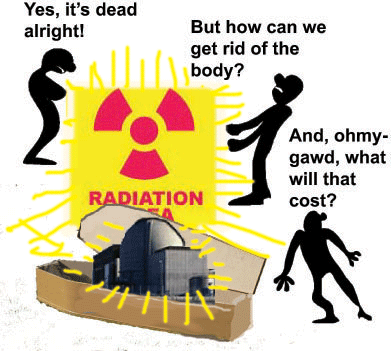
 Nucnet 1st March 2018, The Nuclear Decommissioning Authority (NDA) completely failed in both the procurement and management of a contract to clean up the UK’s Magnox
nuclear reactor and research sites, a report by the Public Accounts
Committee says.
The report, released on 28 February 2018, says this
disrupted an important component of vital nuclear decommissioning work and
cost the taxpayer upwards of £122m (€137m, $167m). The £6.2bn contract
— one of the largest awarded by the UK government — was to dismantle 12
first-generation Magnox nuclear sites.
It was awarded to Cavendish Fluor Partnership, a joint venture between UK-based Babcock International and
Fluor of the US. The committee, which oversees government expenditure,
said: “The NDA ran an overly complex procurement process, resulting in it
awarding the contract to the wrong bidder, and subsequently settling legal
claims from a losing consortium to the tune of nearly £100m.”
The committee also said the NDA, a public body established in 2004 to oversee
the clean-up of the UK’s nuclear legacy, “drastically
under-estimated” the scale of the work needed to decommission the sites
at the time it let the contract – a failure which ultimately led to the
termination of the Magnox contract nine years early.
The NDA did not have sufficient capability to manage the procurement or the complex process of
resolving differences between what the contractor was told to expect on the
sites and what it actually found, the committee concluded.
The NDA will now have to spend even more effort and money to find a suitable way of managing
these sites after the contract comes to an official end in September 2019,
the committee said. The NDA may have further wasted taxpayers’ money by
paying its previous contractor for work that was not done. The NDA cannot
fully account for £500m of the £2.2bn increase in the cost of the
contract between September 2014 and March 2017. In particular, it does not
know whether the £500m cost increase was due to its incorrect assumptions
about the state of the sites when it let the contract or underperformance
by the previous contractor.
https://www.nucnet.org/all-the-news/2018/03/01/accounts-committee-says-nda-completely-failed-with-6-2-billion-uk-magnox-contract
The UK Energy Research Centre (Ukerc) wants a change in funding renewable energy projects, to make the system fairer
Guardian 2nd March 2018, The richest households should pay £410 a year more towards supporting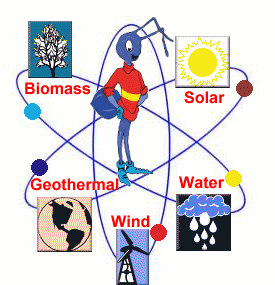
energy subsidies for wind farms, solar rooftops and home insulation
schemes, government-funded researchers have urged.
The UK Energy Research Centre (Ukerc) said that shifting environmental and social levies off
electricity bills and instead loading them on to general taxation would
reduce the cost of energy for more than two thirds of households. The
researchers argued the current approach to funding low-carbon power and
energy efficiency was regressive.
The poorest households spend 10% of their income on heating and keeping the lights on, compared to 3% for the
richest.
The report by Ukerc found that shifting the costs to taxation
would save the poorest 10% of households £102 a year, “a significant
difference for them”. Meanwhile the 10% of the country with the highest
income would pay an extra £410 a year, “a relatively small difference”
for such earners.
The two high income brackets below the richest group
would see rises of between £26 and £102 a year, while the remaining 70%
would see no change or a decrease.
John Barrett, professor of energy and climate policy, who worked on the analysis, said the status quo was hurting
the switch to greener energy. Subsidies for low-carbon power cost
billpayers £5.2bn in 2016-17 but are projected by the Treasury to rise to
£8.6bn in 2024-25 as new wind farms and other projects come online.
Campaigners have said for years that funding green energy subsidies through
energy bills is regressive because the poor are disproportionately
affected, but there has been little political appetite for a change.
https://www.theguardian.com/environment/2018/mar/02/richest-uk-households-should-pay-more-to-fund-clean-energy
Damning report accuses UK government on the collapse of contract to clean up redundant fleet of Magnox nuclear reactors.
 Telegraph 28th Feb 2018, The Government must share the blame for the bungling of a multi-billion
pound nuclear clean-up contract after failing to protect taxpayers from
spiraling costs, MPs have said.
In a damning report the Public Accounts Committee (PAC) accused the Government of being “culpable” in the
collapse of a contract to clean up Britain’s redundant fleet of Magnox
nuclear reactors. The Nuclear Decommissioning Authority’s £6.1bn deal was
aborted almost a year ago after it bungled how the 14 year contract was
awarded to the Cavendish Fluor Partnership (CFP) formed by Babcock and
Fluor.
The botched award led to a two year High Court legal battle which
effectively put taxpayers on the hook to pay £122m in compensation to
companies who bid for the Magnox work but failed to get it. The
committee’s report blamed the NDA for running “an overly complex
procurement process” which ultimately ended nine years early.
The NDA also drastically under-estimated the scale of the work needed to
decommission the sites at the time it awarded the contract, the report
said. The PAC said the debacle had caused “untold reputational damage” to
the NDA, but it added that the Government must share the blame for
approving the authority’s approach. Geoffrey Clifton-Brown, the
committee’s deputy chair, branded the contract “an appalling piece of
mismanagement and financial waste” which had cost the taxpayer over
£122m. The committee has asked the NDA to update MPs within three months
on its investigation into whether it overpaid its previous contractor and,
if so, how it planned to recover money.
https://www.telegraph.co.uk/business/2018/02/28/government-culpable-nuclear-clean-bungle/
“Appalling” mismanagement by UK’s Nuclear Decommissioning Authority (NDA)
 Morning Star 28th Feb 2018, CATALOGUE of “appalling” mismanagement costing hundreds of millions of
pounds in taxpayers’ cash has been revealed by an investigation into the
government’s Nuclear Decommissioning Authority (NDA). The NDA handed out
contracts to private firms for the decommissioning of 11 ageing Magnox
nuclear reactors in British power stations, including Sellafield in Cumbria
and Hinkley A in Somerset.
https://www.morningstaronline.co.uk/article/ndas-failings-costing-taxpayers-millions
Jeremy Corbyn’s pledge to keep Britain in EU internal energy market (IEM) and in Euratom
 Edie 27th Feb 2018, Jeremy Corbyn has pledged that Labour would keep Britain in the EU internal
energy market (IEM) and the Euratom nuclear co-operation treaty. In a
landmark speech setting out his party’s stance on the UK’s future
trading relationships following Brexit, the opposition leader said it was
in Britain’s interests to remain part of Euratom. He said: “We will
want to remain a part of agencies like Euratom, regulating nuclear
materials in energy and health sectors.” The Labour leader also used his
speech to signal Labour will seek continued UK membership of the IEM to
help support the development of the low carbon energy sector. He said
barrier-free trade of low carbon goods is necessary to underpin the growth
of the UK’s low carbon and renewable energy sectors.
https://www.edie.net/news/11/Labour-would-keep-Britain-in-EU-internal-energy-market/
1 This Month





PLEASE OPPOSE HR 8255 AND S.3639 – bills would accelerate satellite deployment, with no environmental review or safeguards – https://ncstd5li.quorum.us/campaign/169331/
To see nuclear-related stories in greater depth and intensity – go to https://nuclearinformation.wordpress.com
-
Archives
- October 2026 (19)
- September 2026 (339)
- August 2026 (330)
- July 2026 (355)
- June 2026 (287)
- May 2026 (306)
- April 2026 (356)
- March 2026 (251)
- February 2026 (267)
- January 2026 (308)
- December 2025 (358)
- November 2025 (359)
-
Categories
- 1
- 1 NUCLEAR ISSUES
- business and costs
- climate change
- culture and arts
- ENERGY
- environment
- health
- history
- indigenous issues
- Legal
- marketing of nuclear
- media
- opposition to nuclear
- PERSONAL STORIES
- politics
- politics international
- Religion and ethics
- safety
- secrets,lies and civil liberties
- spinbuster
- technology
- Uranium
- wastes
- weapons and war
- Women
- 2 WORLD
- ACTION
- AFRICA
- Atrocities
- AUSTRALIA
- Christina's notes
- Christina's themes
- culture and arts
- Events
- Fuk 2022
- Fuk 2023
- Fukushima 2017
- Fukushima 2018
- fukushima 2019
- Fukushima 2020
- Fukushima 2021
- general
- global warming
- Humour (God we need it)
- Nuclear
- RARE EARTHS
- Reference
- resources – print
- Resources -audiovicual
- Weekly Newsletter
- World
- World Nuclear
- YouTube
-
RSS
Entries RSS
Comments RSS

