3 Royal Navy sailors serving on nuclear missile ship were caught taking cocaine
Evening Standard 2nd June 2019 Three sailors serving on a submarine which carries 16 nuclear missiles have
been caught taking cocaine, the Ministry of Defence has confirmed. The
Royal Navy submariners failed a Compulsory Drugs Test shortly after HMS
Vengeance visited a US naval facility in Florida.
Australian Julian Assange the victim of psychological torture: Australian government no help
UN rapporteur on torture: Julian Assange subjected to psychological torture
May 31, 2019 London: Julian Assange has been subjected to intense psychological torture comparable to some of the gravest cases from “interrogation prisons” around the world, a United Nations expert says.He accuses the UK, US and Sweden of a “consistent failure” to protect Assange’s human rights – and Australia of a “glaring absence” where it should be helping one of its citizens…..Nils Melzer, a Geneva-based former Red Cross lawyer and human rights expert who is now the UN special rapporteur on torture, spent four hours with Assange in Belmarsh in early May, assessing his psychological and mental state along with two medical specialists.
In a currently confidential report submitted to the British government on Monday, along with letters to the US, Swedish and Ecuadorian governments, Melzer concluded Assange “shows all the symptoms of someone exposed to prolonged psychological ill-treatment”.
“The evidence is overwhelming and clear,” Melzer said. “Mr Assange has been deliberately exposed, for a period of several years, to progressively severe forms of cruel, inhuman or degrading treatment or punishment, the cumulative effects of which can only be described as psychological torture.
“I condemn, in the strongest terms, the deliberate, concerted and sustained nature of the abuse inflicted on Mr Assange and seriously deplore the consistent failure of all involved governments to take measures for the protection of his most fundamental human rights and dignity.”
Melzer said the ill treatment was a combination of the way Assange was confined, isolated and persecuted while inside the Ecuadorean embassy, especially in his last year there, along with death threats and public accusations, the prosecutions pursued against him and the public statements made by US government officials as to how he should be dealt with.
Torture did not just include active efforts, but also covers a situation where a State is “aware your behaviour will have these consequences and not doing anything about it”, Melzer said.
“In 20 years of work with victims of war, violence and political persecution I have never seen a group of democratic States ganging up to deliberately isolate, demonise and abuse a single individual for such a long time and with so little regard for human dignity and the rule of law.”
Melzer told The Sydney Morning Herald and The Age that in his work with the UN and before in the field with the Red Cross he had seen people in rendition for interrogation after 9/11, and prisoners of war who had been ill-treated on a daily basis.
“But [Assange] is really something I’ve never seen in 20 years,” Melzer said. “I’ve seen atrocities in war areas that were physically more horrible but I’ve never seen a single person pursued so relentlessly and with so little foundation.
He said Assange’s treatment was “very close to the intentional, purposeful infliction of coercive measures to try to break him”.
Melzer said his visit on May 9 involved a three-hour psychological and physical assessment based on the “Istanbul Protocol”, a standard manual for assessing torture victims around the world.
The assessment took place before WikiLeaks revealed, on Wednesday, that Assange had been moved to a prison hospital having “dramatically lost weight” and in such a state that “it was not possible to conduct a normal conversation with him”…….
Assange, unlike other prisoners, was exposed to multiple major pending legal proceedings with “so much political commotion”, and was not being given enough time to talk to his lawyers and get updates on his case. ……
Melzer said he had seen no sign of Australian assistance for Assange.
“Australia is a glaring absence in this case. They’re just not around, as if Assange was not an Australian citizen. That is not the correct way of dealing with that.”…..
After it was reported Assange had been taken to the hospital prison this week, the Australian government again got in contact with the prison to check on him.
“We are confident that Mr Assange is being treated appropriately in Belmarsh Prison. Mr Assange has advised us that he is being treated the same as other prisoners in Belmarsh,” the spokesperson said. “We will continue to visit Mr Assange in prison, monitor and advocate for his health, welfare and equitable treatment, and closely follow his legal proceedings.” https://www.theage.com.au/world/europe/assange-a-victim-of-torture-and-australia-shares-blame-says-un-expert-20190531-p51t1v.html
Laundry in UK permitted to take radioactive materials from Sellafield!!
|
A Quick & Dirty Look At Energy Coast Laundry’s Radioactive Materials Permit (Starting With Caesium 137 Discharges to Air) https://mariannewildart.wordpress.com/2019/05/30/a-quick-dirty-look-at-energy-coast-laundrys-radioactive-materials-permit-starting-with-caesium-137-discharges-to-air/ |
|
Proposals to transport nuclear waste through Bridgwater, Somerset
Somerset Live 29th May 2019 , Bridgwater residents only have a few days to have their say on proposals to
transport nuclear waste through their town. Magnox Ltd currently operates
the Hinkley Point A site near Stogursey, which includes a small area where
nuclear waste is stored before being moved elsewhere for processing. The
company has applied to Somerset County Council for permission to store
waste from other nuclear power stations at the Hinkley site – which would
involve moving it through Bridgwater on agreed routes.
It is staging four drop-in sessions in June where residents of Bridgwater and the surrounding
villages can have their say on the plans before county councillors make a
final decision. Magnox’s proposals relate to “intermediate-level waste”,
which includes cladding around nuclear fuel and materials which have become
contaminated in the process of decommissioning a nuclear reactor.
https://www.somersetlive.co.uk/news/somerset-news/bridgwater-residents-only-few-days-2921627
The long-lasting impact on North Wales agriculture, from Chernobyl nuclear disaster
following the Chernobyl disaster. The most significant way this impacted on
the region was the effect it had on livestock, primarily in north western
areas.
1986 catastrophe reached upland farms of over 53,000 hectares – with the
impact lasting for more than 20 years. Just days after the Ukrainian
disaster, the UK Government announced a ban on the sale of sheep across
parts of the region as well as in Cumbria and Scotland – as the enormity of
the problem for farmers became apparent. The protocol was motivated by
heavy rain following the explosion, which washed radioactive decay – mostly
caesium 137 – out of clouds and on to fields all across the continent.
were absorbed by plants – rather than being locked up in the soil itself.
Local sheep grazing on the land then became contaminated by eating the
radioactive grass, with restrictions affecting 180,000 sheep. The
restrictions in Snowdonia and beyond – which remained in some areas until
2012 – were imposed on more than 300 Welsh farms following concern for the
caesium in soil and vegetation in upland areas.
https://www.dailypost.co.uk/news/north-wales-news/chernobyl-disaster-how-north-wales-16340587
Scotland the first country to set legally binding annual emission reduction targets
Scotsman 29th May 2019 , Scotland is leading way by being first country to set legally binding annual emission reduction targets, writes Jamie Livingstone, head of Oxfam Scotland. Earlier this month, Environment Secretary Roseanna Cunningham reaffirmed in the Scottish Parliament the First Minister’s declaration that we are facing a “climate emergency”.
It’s a phrase that’s suddenly in vogue among political leaders from Edinburgh to Cardiff, London, Dublin and
beyond. It’s not hard to see why. Politicians are feeling the climate heat after schoolchildren went on strike and campaigners brought prominent locations, including in Edinburgh, to a standstill.
A recent poll by Stop Climate Chaos Scotland shows 70 per cent of people in Scotland support further action on climate change. It follows dire warnings by climate scientists that we have until 2030 to avert a climate catastrophe.
Political language is, it seems, catching up with reality. And not before time. When I hear the words “climate emergency”, I picture Jenipher, a young woman from the Mulanje district of southern Malawi. When I met her in 2016, Malawi was suffering from the worst drought the country had experienced in over 30 years, one made worse by climate change. Jenipher’s crops had withered; her family was starving; her life depended on the rain
coming next season.
Robot boats, drones, artificial intelligence to repair Britain’s repair offshore wind farms
Britain’s seas to repair offshore wind farms within two years, a coalition
of arms makers, space scientists and green energy experts said yesterday. A
£4 million project funded by the government will develop an autonomous
mothership that will transport a fleet of self-piloting drones, which will
carry a swarm of six-legged, insect-like robots known as Bladebugs. These
will use suction pads to cling to the blades of wind turbines and assess
them for wear and tear. They should also be able to carry out basic repairs
such as sanding and repainting damaged areas. The system will also make use
of artificial intelligence techniques pioneered by Nasa to run unmanned
space missions. It will be tested at Levenmouth in Fife using a wind
turbine owned by a renewable energy research facility funded by the
government.
https://www.thetimes.co.uk/article/182d58a8-817f-11e9-bb89-165499dc1684
Climate change protest action growing
Climate change protests held worldwide to call for government action
A fight for the future as climate change school strikes grow for fourth month running An estimated 4,000 teenagers and young people turn out in Manchester – and another 1.5m around the world – to demand they inherit a planet that is not dying, The Independent, 27 May 19, Colin Drury, Manchester
In UK Councillors to get briefing from nuclear panel – anyone can offer their land for nuclear waste dump!

Councillors to get briefing from nuclear panel https://www.newsandstar.co.uk/news/17663707.councillors-to-get-briefing-from-nuclear-panel/
By John Connell @JConnell35 Reporter 24 May 19, NEW councillors appointed to Copeland council’s nuclear panel will receive their first briefing early next month.The Strategic Nuclear Energy team is one of the authority’s most important committees, working with the Government and companies including Sellafield.
The first meeting since borough council elections will be held on Tuesday June 4 and will see members given an overview of the roles and responsibilities of the committee.
Members will be discussing some huge issues in the coming months including the Government’s search for a host community for a nuclear waste store.
Anyone with a reasonably-sized patch of land can volunteer it as a contender for the multi-million Geological Disposal Facility (GDF), effectively kick-starting the process.
West Cumbria has also been rocked in recent months by the collapse of the Moorside nuclear investment deal, while Sellafield is moving into the decommissioning phase.
Coun David Moore, Portfolio holder for Nuclear and Corporate Services, said the briefing would be an opportunity for councillors who have not worked on the panel before or were completely new to local politics to get to grip with the scope of the committee’s important work.
He added: “Some of the councillors who will be there are first-time councillors, just about to dip a toe in the water. This meeting them will give them an overview and it will be a learning curve for them.
“We are key players in nuclear consultations. Not many councils have an equivalent of our committee. I have no equivalent to my role as nuclear portfolio-holder.”
Academics advise Labour that there’s no viable place for nuclear in renewable energy plans
 Dave Toke’s Blog 24th May 2019 Academics tell Labour that their renewable energy plans don’t leave any room for nuclear power. Published below is a memorandum from the ‘Red Lion
Group’ of 12 academics, to the Labour Party Shadow Energy Secretary, which
sets out how Labour’s plans for renewable energy do not leave any room for
any new nuclear power (not even Hinkley C).
This means that Labour’s plans to give many £billions of state support for new nuclear power will merely replace cheaper renewable energy. The analysis was based on projections for
energy demand used by the Committee on Climate Change. Review of the CCC’s
projections of energy supply and demand. Letter to Shadow Energy Secretary
from 12 academics and policy analysts.
https://realfeed-intariffs.blogspot.com/2019/05/academics-tell-labour-that-their.html
EDF planning to restart troubled Hunterston and Dungeness B nuclear reactors
Energy Reporters 21st May 2019and B8 reactor, the least cracked at the site, on June 24. Centrica has a
20-per-cent interest in eight nuclear plants, mostly built in the 1960s and
1970s, which are controlled by EDF. Centrica said it was selling its stake
in February last year.
have been put out of action. EDF, which is also looking to sell some of its
interest in the nuclear hubs, said Dungeness B would “continue to produce
low-carbon electricity safely and reliably for many years to come”.
summer for regular inspections, which identified the need for repairs on
steam pipes. EDF said it was carrying out “additional inspections and
repairs [to] put the plant in a state to deliver best-ever performance
later this year”. The restart of the twin reactors was due for September
and October, according to the French firm.
https://www.energy-reporters.com/production/edf-extends-nuclear-plant-outages/
New research into plutonium workers’ internal radiation exposure.
 Job-exposure matrix sheds light on plutonium workers’ radiation exposure https://physicsworld.com/a/job-exposure-matrix-sheds-light-on-plutonium-workers-radiation-exposure/ Job-exposure matrix sheds light on plutonium workers’ radiation exposure https://physicsworld.com/a/job-exposure-matrix-sheds-light-on-plutonium-workers-radiation-exposure/
Internal exposure to plutonium, which decays via alpha particle emission, is a recognised health hazard. But with little specific information available, potential risks from plutonium exposure have largely been assessed through knowledge of radiation exposure risks in general, much of which comes from external exposure to photon radiation such as gamma and X-rays. However, due to its high linear energy transfer rate, alpha particle radiation exhibits significantly enhanced biological effects at the cellular level, creating a specific need to investigate the associated exposure risks. To obtain more direct estimates of potential internal exposure risks, epidemiological studies of plutonium workers need to be conducted,” explains lead author Tony Riddell, from Public Health England’s Centre for Radiation, Chemical and Environmental Hazards. “These studies require individual plutonium exposure estimates that are as accurate and unbiased as possible.” The Sellafield workforce includes one of the world’s largest cohorts of plutonium workers. Through the support of the workforce, this group has been comprehensively monitored for internal exposure to plutonium, primarily through inhalation. However, for 630 workers employed there at the start of plutonium operations, from 1952 to 1963, the historical urinalysis results available do not provide sufficiently accurate and unbiased exposure assessments. These results were based on a threshold level of urinary plutonium excretion, which was suitable for operational protection purposes at the time, but tended to overestimate exposure, leading to underestimation of any risks if used in epidemiological analyses. “This means these early workers are excluded from epidemiological studies of exposure risks, which significantly reduces the power of these studies,” says Riddell. “Early workers are important for assessing potential exposure risks because they usually received some of the highest plutonium exposures and, due to the passage of time, health outcomes for these workers will now be largely known.” To solve this problem, Riddell and colleagues employed an approach called a job-exposure matrix (JEM). The JEM approach uses exposure data from other sources to estimate the average exposure that a typical worker (in the same work group) would have received in a given period. Substituting the missing data with these JEM estimates allowed the researchers to build a more reliable picture of the early workers’ radiation exposure. “To overcome the problem of missing or deficient exposure data, we used more reliable data from other relevant workers (‘exposure analogues’) along with statistical, mathematical and empirical analyses to estimate the average exposures for a typical worker at Windscale/Sellafield for all combinations of specific occupation and year required to build the JEM,” explains principal investigator Frank De Vocht from the University of Bristol. The authors note that the exposure analogues approach developed in this study provides a generic methodological advance that is potentially transferable to other internally exposed workers, and which may permit other epidemiological cohorts to include significant groups of workers who otherwise might have been excluded due to the lack of reliable exposure information. “It’s likely that replacing the missing or unreliable exposure data with JEM-derived values in future epidemiological studies could have considerable impact on the risk estimates which can be produced,” adds De Vocht. |
|
Sweden Requests Detention of Assange as WikiLeaks Accuses U.S. of Illegally Seizing His Property
|
Sweden Requests Detention of Assange as WikiLeaks Accuses U.S. of Illegally Seizing His Property https://www.democracynow.org/2019/5/20/headlines/sweden_requests_detention_of_assange_as_wikileaks_accuses_us_of_illegally_seizing_his_property MAY 20, 2019 Swedish authorities issued a request Monday for the detention in absentia of WikiLeaks founder Julian Assange, who is facing rape charges in Sweden and is currently serving jail time in Britain for skipping bail in 2012. Last week, Swedish prosecutors reopened a sexual assault investigation into Assange which was dropped in 2017 because they said the case could not proceed while Assange was holed up at the Ecuadorean Embassy in London, where he lived for seven years before being forcefully removed by British police last month. Assange has denied the accusation, and his lawyer representing him in Sweden said he has not been able to get hold of his client to discuss the detention order. WikiLeaks’ Editor-in-Chief Kristinn Hrafnsson has previously said of Sweden’s case, “Since Julian Assange was arrested on 11 April 2019 there has been considerable political pressure on Sweden to reopen their investigation, but there has always been political pressure surrounding this case. Its reopening will give Julian a chance to clear his name. This case has been mishandled throughout.” Assange must reportedly serve 25 weeks of his British prison sentence before he can be released. Assange now faces possible extradition to both Sweden and the United States, where he is wanted for the publication of leaked documents by Army whistleblower Chelsea Manning which showed evidence of U.S. war crimes in Iraq. In related news, WikiLeaks is reporting that Ecuador will allow U.S. prosecutors to go through and take possession of Assange’s belongings left in their London embassy. Assange reportedly has two manuscripts at his former living quarters; his lawyers have called it an illegal seizure of property.
|
Climate change action is a top priority for UK’s moderate Conservatives
 Guardian 19th May 2019 , Moderate Conservatives including Nicky Morgan and Amber Rudd are urging contenders for their party’s leadership to put the battle against the climate emergency at the forefront of the contest.
The 60-strong One Nation group of senior Tories, created as a bulwark against what they perceive as their party’s lurch to the right, is calling for the environment to form a central part of the leadership debate. The heat is on over the climate crisis. Only radical measures will work.
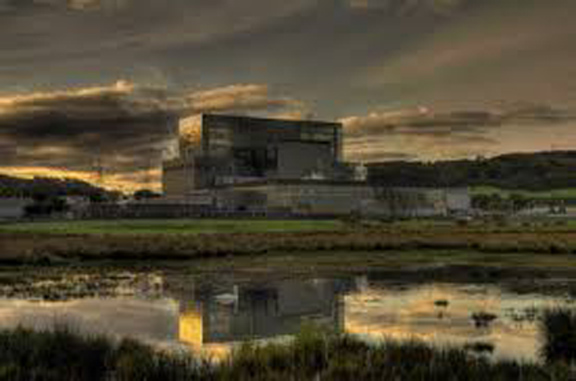
Outages extended at EDF’s Hunterston nuclear plant
|
EDF Energy extends outages at Hunterston nuclear plant https://www.euronews.com/2019/05/20/edf-energy-extends-outages-at-hunterston-nuclear-plant
|
|
|
1 This Month





PLEASE OPPOSE HR 8255 AND S.3639 – bills would accelerate satellite deployment, with no environmental review or safeguards – https://ncstd5li.quorum.us/campaign/169331/
To see nuclear-related stories in greater depth and intensity – go to https://nuclearinformation.wordpress.com
-
Archives
- September 2026 (339)
- August 2026 (330)
- July 2026 (355)
- June 2026 (287)
- May 2026 (306)
- April 2026 (356)
- March 2026 (251)
- February 2026 (267)
- January 2026 (308)
- December 2025 (358)
- November 2025 (359)
- October 2025 (375)
-
Categories
- 1
- 1 NUCLEAR ISSUES
- business and costs
- climate change
- culture and arts
- ENERGY
- environment
- health
- history
- indigenous issues
- Legal
- marketing of nuclear
- media
- opposition to nuclear
- PERSONAL STORIES
- politics
- politics international
- Religion and ethics
- safety
- secrets,lies and civil liberties
- spinbuster
- technology
- Uranium
- wastes
- weapons and war
- Women
- 2 WORLD
- ACTION
- AFRICA
- Atrocities
- AUSTRALIA
- Christina's notes
- Christina's themes
- culture and arts
- Events
- Fuk 2022
- Fuk 2023
- Fukushima 2017
- Fukushima 2018
- fukushima 2019
- Fukushima 2020
- Fukushima 2021
- general
- global warming
- Humour (God we need it)
- Nuclear
- RARE EARTHS
- Reference
- resources – print
- Resources -audiovicual
- Weekly Newsletter
- World
- World Nuclear
- YouTube
-
RSS
Entries RSS
Comments RSS

