New report lays bare media bias on Gaza

| DECLASSIFIED UK, Hamza Yusuf, 23 April 26 A comprehensive, data-rich report released today by UK media monitoring group NewsCord puts hard numbers on the UK media’s failings in reporting on Israel’s crimes in Gaza.The study analyses coverage from Al Jazeera, BBC, The Guardian and Sky News across 686 articles and 11,295 classified excerpts.The findings illustrate how the UK mainstream media methodically sanitises genocide, shields the public from reality and marginalises Palestinian experience. For example, when civilians are killed in Gaza, the BBC attributes the attack to Israel in only 50% of cases, with the Guardian only marginally better with 54%. The BBC also labels Gaza’s health ministry as “Hamas-affiliated” in 60% of death toll citations, but mentions that the United Nations considers these figures credible in only 0.6% of cases. Al Jazeera names the perpetrator at nearly twice the rate of the BBC and Guardian. References to “genocide” in UK outlets are notably limited in the dataset – 15 mentions by the BBC, 12 by Sky News, and 21 by the Guardian – compared to 58 by Al Jazeera. Just as important as how a story is told is whose story is heard: Sky News gives Israeli perspectives nearly double the space of Palestinian ones. Meanwhile, when Israeli officials declared explicit genocidal intent, this went practically unreported. The BBC never covered such statements by Israeli figures like Benjamin Netanyahu, Isaac Herzog or Yoav Gallant. This is despite some of those statements being cited in proceedings at the International Court of Justice in the case against Israel. Reflecting on the report’s findings, NewsCord founder Nima Akram said: “The data is not opinion, it’s the result of classifying thousands of articles to measure bias. These aren’t isolated incidents, they’re structural patterns that shape how millions understand the genocide in Gaza, and whose suffering deserves attention.” Their report demands the outlets publicly review their Gaza coverage against the evidence and to disclose and revise their editorial practices. Simply put, the mainstream media has failed in its duty to report Israel’s actions with accuracy, fairness and integrity. The new data leaves little room for denial. |
Nuclear Power No Thanks

Mike Small, 20th April 2026, https://bellacaledonia.org.uk/2026/04/20/nuclear-power-no-thanks/
A new Survation poll has shown a “miserable” level of support for nuclear power in Scotland while more than half believe the main focus should be on renewables. The polling makes grim reading for Scottish Labour and the LibDems who are both promoting new nuclear. The study carried out by Survation showed just 14% thought Scotland should rely on uranium used in nuclear reactors for its long-term energy security needs.
Only Reform UK and Conservative voters appear to prefer a focus on nuclear power. People who voted SNP and Green in 2024 appear overwhelmingly (over two thirds) in support of renewables.
In regions where nuclear facilities exist around Hunterston, Torness and Dounreay, a preference for renewables was in the clear majority over nuclear. When asked which energy sector could be trusted most to ‘tell the truth’ about their costs, pollutants and safety record, nuclear scored last at 12%, just behind the oil and gas industry at 13%.
This despite the fact that, as we exposed here the nuclear lobby group Britain Remade are run by PR/lobbying firm Stonehaven who donated £7,200 to the Scottish Labour Party.
Read our previous investigation here: Who are Britain Remade? – Bella Caledonia
Read The Ferret investigation here: This pro-nuclear group claims to be ‘grassroots’. So why are its directors industry lobbyists?
George Baxter, from Green Power said:
“New nuclear power is a costly distraction for Scotland. Between eye-watering costs, huge public subsidies, decades-long delivery timelines and leaving a toxic legacy for future generations, it cannot compete with the immediate, affordable potential of our renewable resources. With the technology already available, a 100% renewables-led system is the only logical path to a secure and sustainable economy.”
“A renewables-based energy system needs flexible power, a modern upgraded grid and energy storage, these should be the priority. That is what will provide lower cost energy, power industry and keep the lights on. Moreover, because nuclear is so inflexible it blocks renewables off the grid, forcing green energy generators to be turned off. Nuclear is no friend of sustainable energy
Nuclear Free Scotland
This is a major blow to the dark money, the front-groups, and the media campaigns that have been desperately promoting new nuclear for the past year.
Commonweal has covered this with a handy briefing note on the nuclear lobby [How to debunk the nuclear lies — Common Weal]. They ask you to Google search:
“How many former Labour politicians have been lobbyists for the nuclear industry, and who is the current CEO of the Nuclear Industry Association, which is behind all of this lobbying?”
The answer is:
Tom Greatrex, a former Labour MP and energy spokesperson, is the current CEO of the Nuclear Industry Association (NIA), representing the industry. While the specific number of former Labour politicians acting as nuclear lobbyists varies over time, key figures like Brian Wilson and Tom Greatrex have bridged the Labour Party and the nuclear industry.
Brian Wilson is of course is a devout nuclear enthusiast. In 2013 he decried Scotland’s energy policy as “Salmond’s nuclear fatwa”. In October 2005, he was appointed non-executive director of AMEC Nuclear Holdings Ltd, the nuclear services arm of AMEC plc. The announcement boasted that the firm is the UK’s largest private nuclear services business. In 2021 it was announced that he would lead a commission into new nuclear power [see Labour Go Nuclear – Bella Caledonia].
The extent to which new nuclear is a major focus for Scottish Labour is demonstrated in their manifesto, in which their ‘top priorities’ are listed as ‘Improve the NHS’, Top up tax-free childcare’ and ‘Back nuclear energy.’ In their Economy section the first two actions listed are ‘Create a Scottish Treasury’ and second ‘Remove the Scottish government’s block on nuclear energy.’ See:
Scottish Labour’s 2026 election manifesto at-a-glance – BBC News
This is a major blow to the Labour Party and the nuclear lobby, showing once again that the Scottish people are resolutely opposed to nuclear power.
Pull the plug over nuclear reactors
Sir, – I refer to the letter from Dr Steven Welsh (April 11) headed “We have been failed on energy and jobs” in which he states that “Dounreay is crying out to be developed as a site for a small modular nuclear reactor”.
He argues that by ignoring our crying need for nuclear Scotland continues to miss out on investment, jobs and a long-term future for Scotland’s civil nuclear sector.
I presume he knows that Dounreay currently employs 1,300 people with 700 in the supply chain and that the clean up will continue into the 2070s at a cost of £8.7 billion.
Highlands Against Nuclear Power (HANP) will be crying out to prevent any
nuclear in Scotland as it is not carbon free nor safe, does nothing to
reach netzero, is the most expensive form of energy production and the UK
has no solution for dealing with highly radioactive nuclear waste.
Press & Journal 20th April 2026, https://www.pressreader.com/uk/the-press-and-journal-aberdeen-and-aberdeenshire/20260420/282041923714019
Arms industry given direct influence over university courses
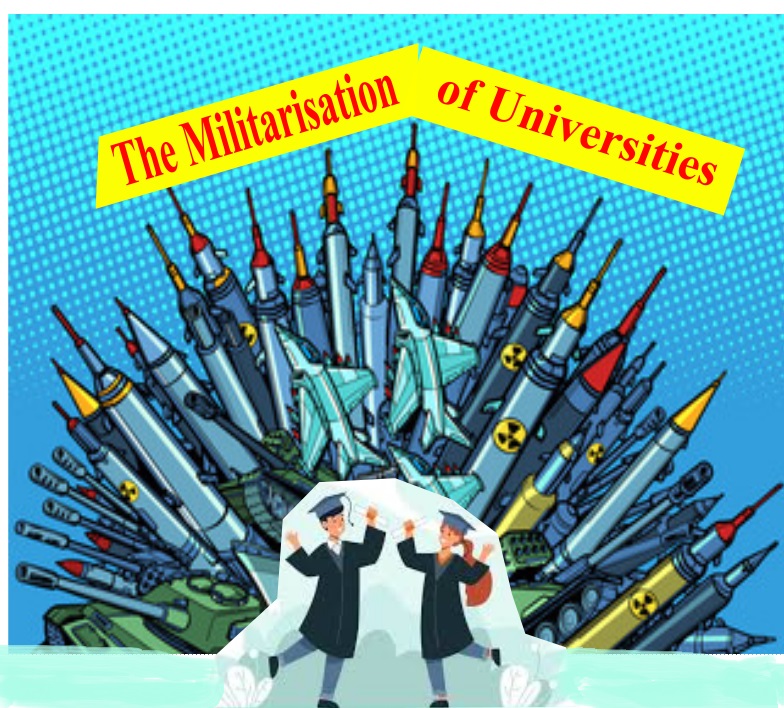
Officials from BAE Systems, Leonardo and Thales sit on advisory committees that oversee the ‘strategic direction’ of academic departments
Martin Williams, 8 April 2026, https://www.declassifieduk.org/arms-industry-given-direct-influence-over-university-courses/
Arms industry executives have been given direct influence over British university courses, Declassified can reveal.
BAE Systems, Leonardo, Thales and Rolls-Royce are among the firms who have been invited to sit on at least 53 university advisory committees across the country.
They are usually asked to provide “strategic direction” for academic departments – and sometimes also review the progress of research projects.
Using the Freedom of Information Act, Declassified found that at least 21 universities had asked arms companies to sit on their committees. They include the universities of Southampton, Edinburgh, Glasgow, Leicester, Cardiff, York and Queens University Belfast.
Some institutions boast that the setup allows them to “respond to the needs of employers”. The minutes of one committee meeting show that arms executives – along with officials from other companies – were thanked for “ensuring that our programmes fit industry requirements and demand”.
During a meeting at the University of Hull, an official from BAE Systems said they would “welcome applications” from students for “industrial placements”, adding that they would “like to develop the relationship”.
And a committee at the University of Cardiff discussed whether “industry” could “teach material to students,” noting that this would be “an appealing prospect for the School but would also offer good exposure for industry”.
They also agreed to meet with Rolls-Royce to discuss “research challenges”.
‘Disturbing’
The finding comes two years after it was revealed how British universities had taken almost £100m from defence companies – including many that are arming Israel.
In one case, BAE Systems gave almost £50,000 in sponsorship to University College London (UCL) to fund its Centre for Ethics and Law – despite the company being accused of being party to alleged war crimes in Yemen in 2019.
Universities including Oxford, Cambridge and Sheffield were all found to have taken huge sums from arms firms – accepting £17m, £10m, and £42m respectively.
Sam Perlo-Freeman, of the Campaign Against the Arms Trade (CAAT), said: “Declassified’s disturbing findings add to CAAT’s growing concern about deepening ties between UK universities and the military-industrial complex.
“As purveyors of a deeply corrupt and immoral trade that blights human life and the planet like no other, arms company executives should be nowhere near institutions of learning and intellectual freedom.”
He added: “Universities should be treating arms trade representatives as pariahs. Instead, and thanks to Declassified, we now know that they sit on at least 53 different advisory committees across 21 universities.
“We have little doubt that this will have impacted academic freedom and the integrity of higher education research. The question is exactly how. We need answers.”
Responding to our investigation, the co-founder of Demiliterise Education, Jinsella Kennaway, said: “Academic freedom is undermined while arms companies hold such influence over what gets researched, funded, and legitimised on campus”.
“Students deserve pathways into work that make the world safer and more humane, not careers that contribute to mass killing and deepening global insecurity,” they said.
“University leaders have a responsibility to ensure Britain’s knowledge centres contribute to saving lives, rather than allowing education to become a pipeline into the war economy.”
Martin is Declassified UK’s chief investigator. He previously worked for The Guardian, Channel 4 News and openDemocracy, where he was UK Investigations Editor. His book, ‘Parliament Ltd’, exposed widespread corruption in British politics and sparked multiple inquiries by Westminster authorities. It was described as “ground-breaking” by the Sunday Times, while the New Statesman said the book was “a powerful reminder that reporters can serve the public good”. Martin has published investigations on issues ranging from lobbying and dark money, to espionage and human rights. He has also produced investigations for TV and YouTube, including going undercover. Between 2015 and 2016, he co-presented a live stage show with comedian Josie Long which combined investigative journalism with stand-up.
Poll finds ‘miserable’ support for nuclear power in Scotland.
20th April, By Steph Brawn
A POLL has found a “miserable” level of support for nuclear power in
Scotland while more than half believe the main focus should be on
renewables.
In what will make “grim reading” for Scottish Labour and the
LibDems as the election draws near, the study carried out by Survation
showed just 14% thought Scotland should rely on uranium used in nuclear
reactors for its long-term energy security needs. Just 20% said it was the
energy source Scotland should focus on to “make the most effective
contribution to tackling climate change”, while almost 60% supported
renewables like wind and solar.
Only 12% said they trusted the nuclear
industry “to tell the truth about their products” including costs, the
pollutants they might produce and their safety record, which put it behind
the oil and gas industry. Just 18% said it was the energy source most
likely to reduce bills.
Pete Roche, of the Scottish Campaign to Resist the
Atomic Menace (SCRAM), said: “The poll demonstrates that Scots are not as
gullible as the lobbyists and pro-nuclear political parties seem to think.
“A renewable energy future is not only possible, but is the most supported
and most trusted sector by far. Relying on a uranium-fuelled nuclear future
is like jumping out of the oil and gas frying pan and into a nuclear fire.
It makes no sense and Scots seem to get that. “A score of 14% for a
uranium-fuelled future is quite miserable. The crisis in the Middle East,
with its heady mix of oil and gas dependency and uranium stockpiles is a
wake up call.
The National 20th April 2026,
https://www.thenational.scot/news/26035122.poll-finds-miserable-support-nuclear-power-scotland/
Scotland & Nuclear Power
A fresh opinion poll conducted in the middle of the Scottish election
campaign has found widespread support for renewable energy sources to
reduce energy bills and tackle climate change.
When asked about
Scotland’s energy security needs, support for a uranium-fuelled nuclear
future polled a ‘miserable’ 14%, compared to 55% support for harvesting
home grown wind, water and solar sources. The findings will likely make
grim reading for Scottish Labour and Libdem campaign bosses who are
promoting new nuclear power stations, due to resounding support for
renewables compared to nuclear, from their own voters.
SCRAM 20th April 2026,
https://www.no2nuclearpower.org.uk/scram/
Greenham Women’s Peace Camp: The forgotten protest against nuclear weapons that lasted 19 years
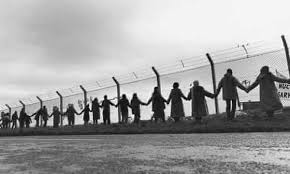
Writing her novel Fallout – set against the backdrop of the Greenham Women’s Peace Camp – turned Eleanor Anstruther into an anarchist
Eleanor Anstruther, The Big Issue, 16 Apr 2026,
You’d have thought a protest that lasted 19 years, involved hundreds of thousands of people, achieved its aims through non-violent direct action and was women-only would already be assured of its place in history. If not in the story of women, then surely as a module in a political degree, or on the school curriculum alongside the suffragettes, apartheid, Gandhi and the American civil rights movement.

Yet throughout all my research and the many conversations I’ve had since writing Fallout, I’ve only met one – yes, you read that right, one – person under the age of 30 who’d heard of it, and she was a journalist who’d studied politics at university and consciously sought out the missing pieces in the history of British civil disobedience.
.
Even those of us who knew about Greenham from seeing it on the news as young people ourselves in the Eighties are surprised when I tell them how long it lasted. “Nineteen years?” They say, incredulously. “Yes,” I reply,“ and in the signing of the INF treaty which marked the removal of the cruise missiles from RAF Greenham Common, Reagan and Gorbachev cited Greenham women as part of their inspiration.
The leaders of America and Russia, locked for so long in a deadly battle of mutually assured destruction (or MAD for short) found it in themselves to namecheck these women who refused to give in to bullying, not only from the government but consistently from the British media. Yet, the history books? Barely a whisper. A level politics? Forget it. Primary school dress-up days? You can’t move for Emmeline Pankhursts, but Greenham women are nowhere to be found.
Can you hear the outrage in my voice? You’d be right in thinking Fallout is more to me than a book. I thought I knew about Greenham until I started researching it and I thought I had a pretty good handle on the history of protest until I started talking to Greenham women. I’ve been holding up banners and holding up the traffic for much of my adult life, but writing Fallout turned me into an anarchist, and I mean that in the true sense of the word; a belief in the goodness of people to organise themselves around caring for one another.
Because more than a political action which got rid of the bombs and reclaimed the land, Greenham Common Women’s Peace Camp was living proof of our ability to share space with conflicting opinions. Greenham was not one-size-fits-all. It was an idea, not an ideology, and no one, as far as I know, was thrown out of camp for failing to comply. There was no dogma to comply with, and not everyone who came to Greenham was there for political reasons…………………………………….
The women who did leave home to take up space at Greenham did so at their peril – not only physically at the hands of the police but also reputationally throughout their towns and villages. They weren’t held up as icons by their children and husbands; they were lambasted for failing their families.
And this weapon was liberally used by state and media too, shaming them into returning home and if they refused, shaming them on the front pages of national newspapers.
Yet they persisted. Through biting winters and heatwave summers, through prison and beatings and bailiffs and the nighttime assaults by local vigilante groups who tore through camp on motorbikes hurling buckets of blood and maggots.
Despite every effort by the government to get the women to give up and go home, they stood firm. They crawled through brambles, bolt cutters down their boots to cut the fence, proving how poorly the bombs were defended. They threw carpets over barbed wire and danced on the silos. They sang and weaved and fought and held hands and were funny and refused to back down, and they won.
When young people, overwhelmed by the challenge before them, ask me what can be done, I point them towards Greenham. Look, I say. Look what they did. Never underestimate the power of being consistently and creatively annoying. Believe in your rage. There is nothing so powerful as an idea whose time has come. Greenham women are all of us and we are everywhere. https://www.bigissue.com/news/activism/greenham-womens-peace-camp-eleanor-anstruther/
CND opposes new contract to build nuclear reactors on Anglesey.
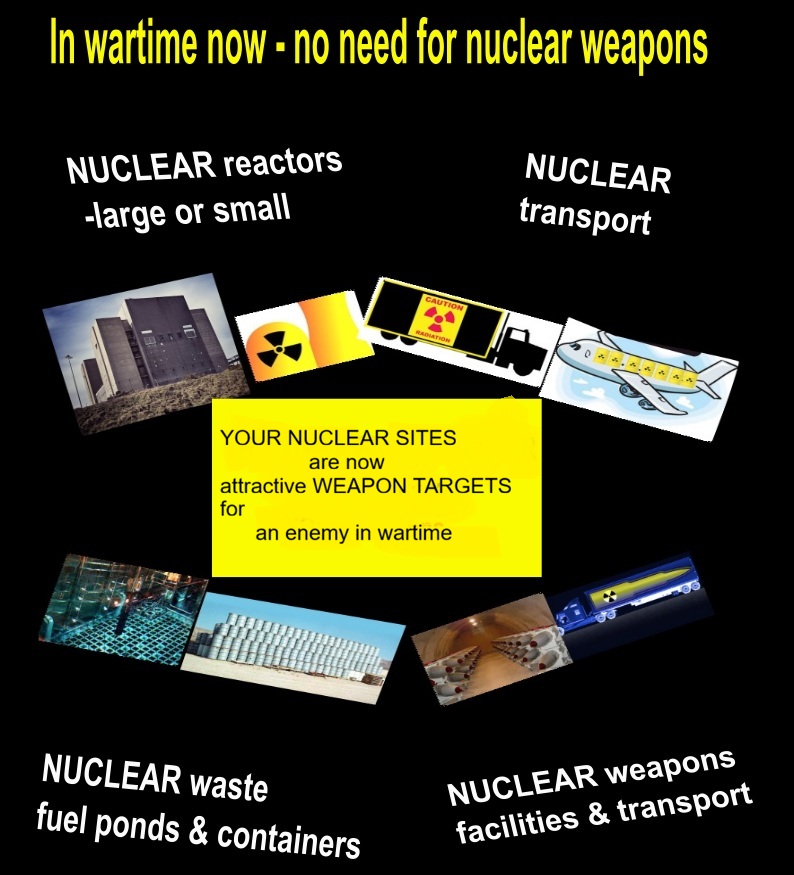
COMMENT Just by the way, in this new Trumpian era, our nuclear sites become a useful weapon for an enemy – an appealing target to be attacked
Anti-nuclear campaigners have condemned plans to build small modular
reactors (SMRs) at Wylfa on Anglesey, dismissing claims that they will
bring energy independence as a “fantasy” today.
CND Cymru commented
after contracts to construct Britain’s first SMRs in north Wales were
signed. Anglesey was selected last year to become the site of the SMR
programme by the Labour government at Westminster.
CND Cymru national
secretary Dylan Lewis-Rowlands said: “Nuclear power does not deliver
energy independence. Wales doesn’t mine fissile material, lacks the
ability to enrich it and convert it into fuel, and has no storage capacity.
“We need to end the corporate nuclear fantasy and focus on the
deliverable solutions that can be done quicker, cheaper and placed in the
hands of communities — that is how we truly make Wales energy
independent.”
Morning Star 13th April 2026, https://morningstaronline.co.uk/article/cnd-opposes-new-contract-build-nuclear-reactors-anglesey
27 April – Bangor University UK Dr David Toke talks on Chernobyl & Fukushima
Come to Neuadd Rathbone, College Road, Bangor University, Monday evening
27 April at 6:00 pm to a special meeting organised by CADNO/PAWB to note
that 15 years have passed since the Fukushima nuclear disaster, and 40
years since the nuclear explosion at the Chernobyl nuclear power station in
Ukraine which led to many European countries being polluted, including
Cymru. Photographs taken by the photographer Lis Fields of the effects of
the Fukushima disaster will be on display and we hope to have her company
online. The evening’s main speaker will be the campaigning academic, Dr
David Toke from Aberdeen University. David has written extensively about
the dangers of nuclear power and its extortionate cost. He also has strong
warnings for us about modular nuclear reactors such as the one Rolls Royce
wants to build at Wylfa
PAWB 10th April 2026, https://www.stop-wylfa.org/
Tony Blair’s latest deceit-riddled column vilifies the UK left to justify genocide

Britain former PM shows there’s no price to be paid for engineering mass slaughter in the service of western empire. Which is why those crimes not only continue, but grow in scale
Jonathan Cook, Apr 08, 2026
Tony Blair, the man who led Britain into a disastrous and illegal war on Iraq more than 20 years ago based on false information, is still very much a sought-after commentator in the UK media.
His regular political pronouncements are treated as pearls of wisdom; his columns as consequential insights from a globe-striding elder statesman.
Even his leading role on Donald Trump’s Board of Peace, the US president’s panel of autocrats seeking to elbow the United Nations – and international law – off the world stage, appears to have done little to dent his claim to moral authority.
Blair, more than anybody, illustrates the capacity of western leaders – with the help of a complicit establishment media – to rewrite their criminal past and escape accountability in perpetuity.
The former British prime minister’s latest political intervention is a lengthy, and typically repugnant, article published by the Sunday Times newspaper. It effectively blames “the left” for an arson attack last month on four ambulances owned by a Jewish charity in London.
No, Blair hasn’t unearthed any startling new information tying leftwingers to the attack. His article is a pure disinformation – propaganda designed to malign those critical of Israel.
More on that in a moment.
But as a prelude, let us note that there are many terrible things going on in the world right now that might be considered more pressing for Blair to write about than the torching of a handful of ambulances: whether it be a genocide in Gaza – where Israel destroyed not just four ambulances but the enclave’s entire health sector – or an illegal, joint US-Israeli war on Iran that has similarly targeted medical centres and other civilian infrastructure.
Twisted logic
Blair once served as a Middle East envoy to an international body known as the Quartet. In that role, he spent several years shuttling futilely between his eponymous institute in London and Israel and the Palestinian territories.
There are, however, two self-evident reasons why Blair may have been averse to dedicating his latest column to the catastrophes unfolding in the Middle East.
First, because his close allies – the leaders of the US and Israel – are indisputably the ones committing the crimes of genocide and aggression respectively in Gaza and Iran.
And second, because Blair was himself responsible for launching, alongside the US, a war of aggression on Iraq in 2003.
But it is not just that Blair is in no position to moralise on matters of the utmost global importance.
He has made it his primary duty in public life to excuse the West’s supreme crimes – crimes that, were there meaningful accountability for western leaders, would necessitate that he stand trial at the international war crimes court in the Hague.
That is the context for understanding both why Blair penned his column on the arson attack in London and the twisted logic that underpins his argument in that article.
Dirty war
Anyone who has studied Blair’s back-catalogue of opinion pieces will hardly be surprised by the Sunday Times headline: “We must end left’s unholy alliance with the Islamists.”
Or its subhead: “Parts of the left cast Jewish communities as supporters of Israel and Jews become ‘fair game’.”
Although the article ostensibly concerns an arson attack on a Jewish community ambulance service in London, Blair has much larger – carefully veiled – ambitions.
This is his latest manoeuvre in a dirty war to silence and crush Britain’s progressive left – waged by those, like Blair, who duplicitiously claim both to belong to that left and to serve as its natural leaders.
Blair is central to a cabal of so-called Atlanticists who view the world in Manichean terms, as “a clash of civilisations” between a supposedly superior, enlightened Judeo-Christian West, led by the US, and a backward, primitive Islamic East, now, it seems, led de facto by Iran.
Israel is presented as a first line of defence against this dangerous “Muslim” enemy.
Everything for Blair is seen through this racist prism.
He would sound more obviously like some Victorian, pith-helmeted empire-builder were it not for the fact that his fundamental, and fundamentalist, worldview continues to be shared by the entire UK ruling class, including the billionaire-owned media and the main political parties.
And for good reason. A Britain belonging to a “superior” West can openly aid Israel’s genocidal campaign of carpet-bombing and starvation in Gaza, and loan air bases to assist the US in its illegal war of aggression on Iran, and still pretend to itself that this is all being done “defensively”.
Christendom is still, apparently, “defending” itself against the rampaging barbarian hordes.
Achilles’ heel
In fact, Blair’s column in the Sunday Times should be seen as another front in a continuing war being waged by British prime minister Keir Starmer – a disciple of Blair – on the Corbynite left.
Their joint aim is to shepherd back into the Atlanticist fold a Labour party that supposedly lost its way under Starmer’s predecessor, Jeremy Corbyn.
Corbyn’s crime was to have taken Labour towards internationalism – and the prioritising of human rights for all, not just westerners. That project necessarily entailed treating British Muslims as an integral part of British society, no less than British Jews.
Corbyn’s politics were an ideological assault on – and continue to pose a threat to – the Blair-Starmer worldview.
In other words, Blair’s article is part of a running battle – as the British establishment’s claim to moral authority is steadily eroded by its collusion in Israeli and US crimes – to prevent the progressive left ever reviving its political fortunes.
With the help of the Israel lobby, Blair and his ilk believe they have identified the achilles’ heel of a British left determined to highlight a brutal US-led western imperialism and its inherent hypocrisies.
The goal is to crop out the left’s increasingly persuasive critique of US imperialism and zoom in instead on the left’s parallel criticisms of Israel: its apartheid rule over Palestinians, its ethnic cleansing of the West Bank, and its genocidal campaign of destruction in Gaza.
Blair wishes to wave all this away, as if wielding a magic wand, by labelling it as “antisemitism”.
After that move worked so successfully in fatally wounding Corbyn as Labour leader, Blair and Starmer assume the same smear can be repurposed more generally – in this case, to implicate an undefined “left” over the torching of a handful of ambulances.
It goes without saying, that in prioritising the suppression of the left’s critiques of western imperialism, Blair and Starmer are leaving the door wide open to a resurgence by the far-right – which indeed is antisemitic.
That should serve as a reminder that Blair, Starmer and the rest of the British establishment have no real concern for the welfare of the Jewish community they profess to be protecting.
If the Jewish community turns out to be collateral damage in their war on the left, then so be it.
‘New antisemitism’
In the article itself, Blair argues that a so-called left-wing antisemitism “is a pernicious and novel development in progressive politics: the alliance with Islamists”.
First, notice the sleight of hand. British Muslims who, quite reasonably, are deeply critical of Israel because its army has been committing for decades war crimes with impunity against their extended families are reduced here simply to “Islamists”.
Blair is doing to Muslims precisely what he accuses – falsely – the left of doing to Jews. He is conflating Muslims, a religious group, with Islamists, champions of an extreme political ideology…………………………………………………………………………………………………………………………………………………………………………………….
Blair appears to be excusing Israel’s starvation of the 2.3 million people of Gaza, half of them children.
According to Blair, no one, not even the progressive left, should be allowed to criticise an Israeli siege that has blocked food, water, fuel and medicines to Gaza – unless they first justify that blockade as essential to Israel’s “security”.
Again, maybe he needs to have a word with the judges of the International Criminal Court in the Hague. Because they are seeking Benjamin Netanyahu, Israel’s prime minister, on charges of crimes against humanity over his efforts to starve Gaza’s population……………………………………………………………………………………………………………………………………………………………………
What Blair wants is for the left to be utterly silenced so that its protests do not rouse uncomfortable twinges of guilt forcibly reminding him that long ago he became a soulless creature of the West’s war machine.
It is not just that Blair has faced no consequences for his criminal undertaking in Iraq. He has instead become fabulously wealthy, venerated by western establishments, and an oracle for an equally complicit, billionaire-owned media…………………………… https://jonathancook.substack.com/p/blairs-latest-deceit-riddled-column
Making London councils allies in the campaign to oppose Britain’s nuclear expansion

As weapons return to Suffolk and defence spending soars, London CND is pressing local candidates to oppose nuclear expansion and support the UN ban treaty. SALLY SPIERS explains.
LONDON Region CND has launched a campaign to make London nuclear weapon-free. There are compelling reasons for local council candidates to oppose the expansion of Britain’s nuclear weapons by promising to sign up to the UN Treaty on the Prohibition of Nuclear Weapons (TPNW).
US nuclear weapons have returned to Britain for the first time since their complete removal in 2008. These weapons have been sited at US air base Lakenheath in Suffolk, approximately 75 miles from London. The majority of voters are opposed to US nuclear weapons being stationed in the UK, according to a 2025 YouGov poll.
In addition, Keir Starmer has announced Britain is buying 12 nuclear-capable jets (F-35As) from the United States. These are equipped to carry and fire the same nuclear weapons that are based at Lakenheath.
These weapons will not in any way be an independent nuclear deterrent. The US president must authorise the use of these missiles. Buying them and having them on our territory meshes us even deeper into US foreign policy.
We have all witnessed President Donald Trump threatening Nato countries to get them to enter a crazy illegal war of his making. US foreign policy is aggressive, expansionist, threatening to its allies and it is highly unpopular with British people.
We cannot believe for one minute these jets and weapons will protect the security of the people of these islands.
Given the proximity to London, it seems more likely they actually constitute a threat to Londoners from either attack or accident. Councils have a duty to ensure their residents are safe. Opposing Britain’s nuclear expansion and supporting the TPNW is an obvious first step in fulfilling this duty.
And then there’s the cost. The nuclear capable jets that Britain is buying are estimated to cost £80 million each, almost £1 billion in total. When he first announced the increased spending on defence, John Healey argued the money would secure British high-skilled jobs.
Whether you are convinced by this argument or not, it is clear that this £1bn is going to secure high-skills jobs in Indianapolis where the jets will be built, not Britain.
LONDON Region CND has launched a campaign to make London nuclear weapon-free. There are compelling reasons for local council candidates to oppose the expansion of Britain’s nuclear weapons by promising to sign up to the UN Treaty on the Prohibition of Nuclear Weapons (TPNW).
US nuclear weapons have returned to Britain for the first time since their complete removal in 2008. These weapons have been sited at US air base Lakenheath in Suffolk, approximately 75 miles from London. The majority of voters are opposed to US nuclear weapons being stationed in the UK, according to a 2025 YouGov poll.
In addition, Keir Starmer has announced Britain is buying 12 nuclear-capable jets (F-35As) from the United States. These are equipped to carry and fire the same nuclear weapons that are based at Lakenheath.
These weapons will not in any way be an independent nuclear deterrent. The US president must authorise the use of these missiles. Buying them and having them on our territory meshes us even deeper into US foreign policy.
We have all witnessed President Donald Trump threatening Nato countries to get them to enter a crazy illegal war of his making. US foreign policy is aggressive, expansionist, threatening to its allies and it is highly unpopular with British people.
We cannot believe for one minute these jets and weapons will protect the security of the people of these islands.
Given the proximity to London, it seems more likely they actually constitute a threat to Londoners from either attack or accident. Councils have a duty to ensure their residents are safe. Opposing Britain’s nuclear expansion and supporting the TPNW is an obvious first step in fulfilling this duty.
And then there’s the cost. The nuclear capable jets that Britain is buying are estimated to cost £80 million each, almost £1 billion in total. When he first announced the increased spending on defence, John Healey argued the money would secure British high-skilled jobs.
Whether you are convinced by this argument or not, it is clear that this £1bn is going to secure high-skills jobs in Indianapolis where the jets will be built, not Britain.
In mid-March, London Councils which speaks for all London authorities, described the financial situation of our councils as being “extremely challenging.” They “are grappling with a £1bn budget shortfall this year.”
How can prospective councillors not question the expenditure on nuclear-capable jets? There cannot be a single council in this country that has the resources to mend potholes effectively. Our councils need that money to provide basic services that keep the capital functioning.
Incredibly, neither decision — bringing US nukes back nor expanding our own nuclear capabilities — has been debated in Parliament. War is most definitely on people’s minds. Last year, voters identified defence as the fourth-most important concern for them.
The only way this concern seems to be discussed is in terms of increased spending on defence. But these important matters could be discussed in council chambers if councillors were willing to consider signing up to the TPNW or even making their mayors a mayor for peace.
This would send an important message to the government that is entirely in line with the view of the majority of the British public.
There is movement. It seems likely Green candidates will support the TPNW at council level. Labour candidates must be feeling the burn from the Greens and other parties. Supporting the TPNW will be a popular move with voters and Labour candidates would be foolish to ignore it.
London CND is asking voters to write to their council candidates to urge them to sign their support for the TPNW.
Councils and individual councillors can sign the cities pledge of the International Campaign for the Abolition of Nuclear Weapons, the authors of the TPNW.
Mayors can sign up to mayors for peace. Cities and mayors throughout the world, and particularly Europe, have already signed. What a coup it would be for peace if London and London Councils were to sign.
Further information on how to support the London CND campaign is available on the London CND website Make London Nuclear Free Campaign, “London’s TPNW Pledge” www.londoncnd.org.
Sally Spiers is vice-chair of London CND.
Labour and SNP clash over nuclear power for Scotland amid Holyrood campaign.
Labour touts “stability” while SNP blasts “misguided” nuclear
plan. Torness power station — could nuclear become a key battleground
ahead of the May poll?
The SNP and Scottish Labour have traded barbs over
energy policy as the debate on new nuclear power in Scotland took centre
stage on the Holyrood campaign trail. It comes as the Scottish Greens
pledged to deliver 40,000 new green energy jobs in Scotland by the end of
the next Holyrood term in 2031. In a statement, Scottish Labour leader Anas
Sarwar vowed to end what he called the SNP’s “ideological and
anti-science” prohibition on new nuclear power.
Opposition to nuclear
energy has a long history in Scotland, beginning in the 1970s with the
construction of the Torness Point reactor in East Lothian. Sarwar said the
SNP stance against nuclear power is costing Scotland high-quality jobs,
investment, and energy security. Scottish Labour said it would immediately
end a ban on new nuclear in office, and begin the process of securing sites
for next-generation technologies such as small modular reactors (SMRs).
Sarwar said the SNP’s nuclear policy leaves Scots “vulnerable to
tyrants abroad”. The SNP have chosen misinformation and scaremongering on
nuclear power — leaving Scotland with less energy security, higher bills
and fewer jobs,” he said.
The Scottish Liberal Democrats have also backed
new nuclear in Scotland ahead of the May elections, with the party open to
supporting projects at Hunterston and Torness.
SNP warns of high costs from
nuclear In response, the SNP said Scottish Labour’s nuclear plans would
“hammer Scottish bill payers”. The party pointed to North Sea neighbour
Norway, where a government-appointed commission this week recommended
against investing in nuclear power at present. SNP depute leader Keith
Brown said Scottish families “already pay a ‘nuclear tax’ to fund the
two most expensive nuclear plants in the world”, referring to Hinkley
Point C and Sizewell C. “Why on earth does Anas Sarwar want to inflict
more of this on Scotland?” Brown questioned.
Energy Voice 9th April 2026,
https://www.energyvoice.com/renewables-energy-transition/nuclear/595535/labour-and-snp-clash-over-nuclear-power-for-scotland-amid-holyrood-campaign/
Arrests at Lakenheath nuclear base blockade
News, Apr 6th, https://freedomnews.org.uk/2026/04/06/arrests-at-lakenheath-nuclear-base-blockade/
International Peace Camp protests British complicity in Iran and Gaza
Several protesters were arrested at RAF Lakenheath over the weekend, during the International Peace Camp held at the US-occupied nuclear base. The actions included a successful blockade of the main gates of the base, with protestors focusing on the ongoing Iran war, the Gaza genocide, and the presence of nuclear weapons at the site.
The camp, taking place from 1-6 April, built to a crescendo over the Easter weekend with the main gates successfully blockaded for three hours on Saturday. Two protestors were arrested for refusing to move, with one of them citing attacks on over 600 schools and 300 medical facilities in Iran as her motivation for direct action.
Easter Sunday saw a further seven arrests when a number of protestors focusing on the genocide in Gaza wore tabards offering support for Palestine Action. The camp has also featured dramatic interventions from the Red Rebel Brigade.
Lakenheath, located in Suffolk, has for decades been a home of the US Air Force in Europe, and last year once again became home to US nuclear weapons on UK soil, with B61 gravity bombs delivered last summer after a long period of preparation. The base has been actively involved in the Iran war, used by a wide range of US aircraft to transit to stations in the Middle East. An F-15E Strike Eagle shot down over Iran is believed to have been a Lakenheath aircraft.
The camp, organised by the Lakenheath Alliance for Peace, has featured addresses from CND General Secretary Sophie Bolt, and former British Army Colonel Chris Romberg, who was arrested last year in Parliament Square for carrying a sign in support of Palestine Action.
The camp is scheduled to conclude with a ‘grand finale’ today, Easter Monday (6th April) .
Nuclear fusion – triumph of hope over expectation.

Letter Andrew Warren: The subhead for your editorial (The FT View, March
20) enthusing about the UK government’s latest £2.5bn commitment to
nuclear fusion research acknowledges it to be an “elusive power
source”. That is a decided understatement.
Back in 1967, the second
Wilson government produced an energy white paper. In it, regret was
expressed that, despite 20 years of government funding, nuclear fusion
research had yet to begin any moves towards producing any hard results.
Nonetheless confidence was expressed that a breakthrough, with important
commercial and policy implications, could be confidently anticipated by
1990.
Strangely enough, the next energy white paper (not published until
2003, by the Blair government) expressed very similar sentiments — but
with the “fulfilment date” for nuclear fusion brought forward by a
further 20-plus years. Here we are 23 years later. And now we have the
latest Labour government, announcing further billions in research funds
dished out towards delivering nuclear fusion, with results due perhaps some
time after 2040. Truly, a triumph of hope over expectation.
FT 25th March 2026 https://www.ft.com/content/232c1ef5-9689-4911-8936-72af18e88165
Did Trump bomb Iranian schoolgirls with UK-made weaponry?
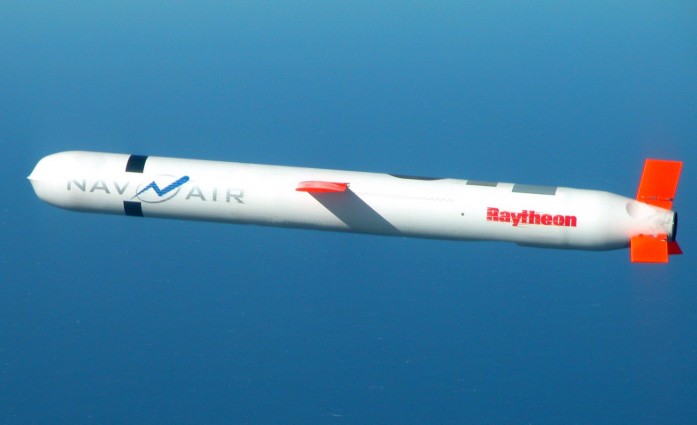
Exclusive: Scottish factory helps make US Tomahawk missiles reportedly used in attack on the Minab compound in Iran, where over 100 children were killed.
JOHN McEVOY, 9 March 2026
On 28 February, a girls’ primary school in southern Iran was hit by a missile, killing 168 people, mostly children.
The UN education agency, UNESCO, said the bombing of the Shajareh Tayyebeh school in Minab was a “grave violation of humanitarian law”.
Videos analysed by Bellingcat revealed yesterday that a US Tomahawk missile was used to hit another building inside the same compound, adding to evidence indicating the US was responsible for the school strike minutes earlier.
Neither Israel nor Iran is known to possess Tomahawk missiles.
The revelation raises serious questions about whether UK-made components were used in the attack.
This is because a factory owned by US arms firm Raytheon in Glenrothes, Scotland, has won several contracts to produce components for Tomahawk missile systems over recent years.
In 2017, Raytheon won a $260 million contract to make 196 Tomahawks, with 4.4 percent of the goods being supplied from its factory in Glenrothes.
A similar US navy contract published in May 2022 shows that around 3 percent of the Tomahawk supply chain was awarded to Raytheon’s site in Scotland.
Most recently, in December 2025, the Pentagon announced Glenrothes would have a 2.9 percent stake in making another 350 Tomahawks.
A defence industry website said this arrangement reflected the missiles’ “longstanding transatlantic supply chain”.
Campaign Against Arms Trade (CAAT) spokesperson Sam Perlo-Freeman told Declassified: “The UK arms industry is deeply entwined with the US. This is true of the F-35 aircraft that has played such a devastating role in Israel’s genocide in Gaza, and is now playing a crucial role in the illegal US-Israeli war on Iran.
“And it is true of the Tomahawk missiles, which appear to have been used to commit this horrific massacre of schoolgirls in Iran.
“Far from being a guarantee of international peace and security as the government claims, this arms producing partnership is a principal source of war, death and destruction across the world. It is time for the UK to stop fuelling this US-led war machine, and disentangle itself from it”.
Asked whether it will review and potentially suspend export of the components, a UK government spokesperson said: “We operate one of the most robust export control regimes in the world and keep export licences under continual and careful review”.
Raytheon was asked to comment.
‘Play a key part’
A parliamentary report published in 2012-13 noted that Raytheon’s site in Glenrothes “design and manufacture components, predominantly exported to the US, for guidance systems used in weapons like the Tomahawk missile”.
A Glenrothes manager said in 2020 the factory “designed and manufactured three power supplies” for the Tomahawk, adding: “This work enabled us to be involved in one of the US Navy’s flagship programmes and to play a key part in the manufacture of the electronics used in the system”.
Raytheon UK’s own website notes that its “advanced manufacturing business supports… Tomahawk long-range land attack cruise missile[s]”.
A CAAT report from 2021 found that “Glenrothes was the only Raytheon facility outside North America to play a part in the US-sold Tomahawk Missile production and is the sixth most involved of the 25-plus factories contributing to the weapon system”.
‘It was done by Iran’
The new evidence contradicts statements made by US president Donald Trump, who said on Sunday that the attack was launched “by Iran”.
He said: “They’re very inaccurate, as you know, with their munitions. They have no accuracy whatsoever. It was done by Iran”
NR Jenzen-Jones, the director of Armament Research Services, an intelligence consultancy that provides munitions analysis to governments and NGOs, told the Guardian: “The video shows a Tomahawk missile striking a target. Given the belligerents, that indicates it is a US strike, as Israel is not known to possess Tomahawk missiles”.
He added: “Despite various claims circulating online, the munition in question is clearly not an Iranian Soumar missile [as] the Soumar has a distinctive external engine located towards the rear, on the underside of the munition”.
Reuters reported on 5 March that US military investigators “believe it is likely that US forces were responsible” for the “strike on an Iranian girls’ school”.
Raytheon’s site in Glenrothes has previously been linked to war crimes in Yemen by Saudi Arabia, a key customer.
When Declassified visited the town in 2022, local primary school teacher Sharon Rickard said she was “horrified” to hear weapons made in her town might be used on civilians.
“I have a friend who works there as an engineer and she’s never really said too much about her job”, she said, “but maybe that’s why”.
1 This Month


Shut down the radiation-damaged Heysham nuclear reactors now
To see nuclear-related stories in greater depth and intensity – go to https://nuclearinformation.wordpress.com

Say No to NASA’s Reckless Nuclear Reactor on the Moon
Say No to NASA’s Reckless Nuclear Reactor on the Moon
-
Archives
- October 2026 (256)
- September 2026 (339)
- August 2026 (330)
- July 2026 (355)
- June 2026 (287)
- May 2026 (306)
- April 2026 (356)
- March 2026 (251)
- February 2026 (267)
- January 2026 (308)
- December 2025 (358)
- November 2025 (359)
-
Categories
- 1
- 1 NUCLEAR ISSUES
- business and costs
- climate change
- culture and arts
- ENERGY
- environment
- health
- history
- indigenous issues
- Legal
- marketing of nuclear
- media
- opposition to nuclear
- PERSONAL STORIES
- politics
- politics international
- Religion and ethics
- safety
- secrets,lies and civil liberties
- spinbuster
- technology
- Uranium
- wastes
- weapons and war
- Women
- 2 WORLD
- ACTION
- AFRICA
- Atrocities
- AUSTRALIA
- Christina's notes
- Christina's themes
- culture and arts
- Events
- Fuk 2022
- Fuk 2023
- Fukushima 2017
- Fukushima 2018
- fukushima 2019
- Fukushima 2020
- Fukushima 2021
- general
- global warming
- Humour (God we need it)
- Nuclear
- RARE EARTHS
- Reference
- resources – print
- Resources -audiovicual
- Weekly Newsletter
- World
- World Nuclear
- YouTube
-
RSS
Entries RSS
Comments RSS

