Rolls-Royce explores small nuclear reactor unit funding options including IPO (Initial Public Offering) .

An Initial Public Offering (IPO) is the process where a private company sells its shares to the public for the first time, thereby becoming a public company listed on a stock exchange. (The process involves significant costs, ongoing reporting requirements, a loss of some control, and increased exposure to litigation)
The consortium led by the UK engineer is in talks to finalise a
contract with the government later this year. Rolls-Royce has held
exploratory talks with advisers over financing options for its small
nuclear business, including an initial public offering, amid growing
investor excitement about the nascent technology.
The FTSE 100 engineer was
selected to build Britain’s first fleet of small modular reactors in June
as part of a plan by the Labour government to make the UK a world leader in
the technology. The Rolls-Royce-led SMR consortium is in talks to finalise
a contract with the government later this year.
The talks with investment
houses and banks focused on future funding requirements of the business,
according to two people familiar with the situation. “There is a live
debate within the shareholder base,” said one of the people, noting that
a listing at a high valuation would generate significant funding. Other
members of the consortium include CEZ Group, the Czech utility, which holds
a 20 per cent stake as part of a wider partnership with Rolls-Royce, the
Qatar Investment Authority and BNF Resources.
There were “different
views” among shareholders, the person added. Discussions were at an early
stage, with the Rolls-Royce board not in a rush to make any decision, said
the other person. The UK government would be eager to ensure that any
listing occurred in London, which has suffered a marked slowdown in
flotations in recent years, they added. The government has said it will
pledge £2.5bn to small modular reactors during this three-year spending
review period, helping to develop Rolls-Royce’s technology as well as
develop sites for the reactors.
FT 30th Aug 2025,
https://www.ft.com/content/234b4c2e-5e1a-46ba-82fd-472e271a289f
Why are saltmarshes such effective carbon sinks?
The invisible yet lethal threat of radioactive pollution is an ever-present risk to the Blackwater. Even a small leakage of nuclear material from the decommissioned Bradwell reactor cores or radioactive waste stores could negatively affect the role that the estuary’s marshlands play in trapping carbon, known as carbon sequestration. In short, radioactive leakage may erode the amount of carbon that can be sequestered in future. This risk alone should be enough to deter any further development of new nuclear power at the Bradwell site.
2 September 2025
David Humphreys explains the role of saltmarshes in the struggle against our heating climate in the August 2025 column for Regional Life
The saltmarshes and mudflats of the Blackwater Estuary are an important yet fragile environment rich in birds, flora, invertebrates, fish and oysters. But saltmarshes are also highly effective in storing carbon, thereby acting as carbon sinks with a vital role to play in tackling increases to the global temperature.
Like all forms of plant life, the vegetation that thrives in marshlands absorbs carbon from the atmosphere through photosynthesis to create food for the plants.
Carbon sinks may release their carbon back into the atmosphere in two ways. First, combustion generates carbon dioxide emissions, for example during forest fires. Second, carbon dioxide is realised when living organisms respire. Respiration is how life forms, including plants, obtain energy. If plants are in an oxygen-rich (aerobic) environment they create more carbon dioxide when breathing than if their environment is lacking in oxygen (anaerobic).
Why are saltmarshes such effective carbon sinks?
2 September 2025
David Humphreys explains the role of saltmarshes in the struggle against our heating climate in the August 2025 column for Regional Life
The saltmarshes and mudflats of the Blackwater Estuary are an important yet fragile environment rich in birds, flora, invertebrates, fish and oysters. But saltmarshes are also highly effective in storing carbon, thereby acting as carbon sinks with a vital role to play in tackling increases to the global temperature.

Like all forms of plant life, the vegetation that thrives in marshlands absorbs carbon from the atmosphere through photosynthesis to create food for the plants.
Carbon sinks may release their carbon back into the atmosphere in two ways. First, combustion generates carbon dioxide emissions, for example during forest fires. Second, carbon dioxide is realised when living organisms respire. Respiration is how life forms, including plants, obtain energy. If plants are in an oxygen-rich (aerobic) environment they create more carbon dioxide when breathing than if their environment is lacking in oxygen (anaerobic).
And here’s why saltmarshes are such effective sinks: they are anaerobic, so plants breathe without oxygen. Anaerobic respiration generates less energy than aerobic respiration and produces less carbon dioxide. This enables carbon stocks to build up. Coastal marshlands also receive a constant influx of tide-borne sediment, which buries organic matter in sediment layers, a further factor that enables carbon to accumulate. The result is that coastal marshlands are more effective at carbon storage per hectare than any other ecosystem, including tropical forests.
The Blackwater Estuary forms part of a broader category of carbon sink known as ‘blue carbon’. This is carbon that has been captured and stored by living coastal ecosystems such as saltmarshes, mangrove forests and seagrass beds. Blue carbon ecosystems also provide other environmental services such as protection against sea-level rise and storm surges. Given the global sea-level increases projected for this century, the importance of blue carbon ecosystems cannot be overstated, both for coastal protection and trapping carbon.
The saltmarshes of Essex, then, are a vital asset in the fight against global heating. At the same time, they are threatened by the impacts of climate change, in particular coastal retreat from sea-level rise.
Marshland ecosystems are also at the mercy of pollution, which can reduce their carbon storage capacity. The invisible yet lethal threat of radioactive pollution is an ever-present risk to the Blackwater. Even a small leakage of nuclear material from the decommissioned Bradwell reactor cores or radioactive waste stores could negatively affect the role that the estuary’s marshlands play in trapping carbon, known as carbon sequestration. In short, radioactive leakage may erode the amount of carbon that can be sequestered in future. This risk alone should be enough to deter any further development of new nuclear power at the Bradwell site.
This is a further reason to ‘BANNG the drum’ against new nuclear at Bradwell and to resist further nuclear power construction in the United Kingdom.
David Humphreys is Emeritus Professor of Environmental Policy at the Open University.
NFLAs join nuclear test appeal to French and Algerian Governments
On the UN International Day against Nuclear Tests (29 August), the
UK/Ireland Nuclear Free Local Authorities have joined French, Algerian and
global partners in appealing to the French and Algerian Governments for
justice for the victims of French nuclear tests in North Africa.
NFLA 29th Aug 2025 https://www.nuclearpolicy.info/news/nflas-join-nuclear-test-appeal-to-french-and-algerian-governments/
Extra funding revealed to fuel nuclear fusion energy training and research

The UK Atomic Energy Authority (UKAEA), University of York and University
of Edinburgh, will invest £7.8m over the next five years to advance fusion
energy research and post-graduate training. The funding will be distributed
through UKAEA’s Fusion Opportunities in Skills, Training, Education and
Research (FOSTER) Programme, which aims to develop the next generation of
fusion energy specialists. This investment is intended to create new
opportunities across collaborating universities for students to access
level Seven (master’s degree) qualifications in fusion and relevant
fields, supporting the FOSTER Programme’s mission to build a diverse
fusion skills ecosystem.
Business Desk 3rd Sept 2025, https://www.thebusinessdesk.com/yorkshire/news/2143485-extra-funding-revealed-to-fuel-nuclear-fusion-energy-training-and-research
Memorial unveiled at former RAF airbase threatened by nuke waste dump
NFLA Secretary Richard Outram was proud recently to participate in a
ceremony (31 August) at which a new memorial was unveiled to honour the
service of the many personnel once based at a Second World War RAF airbase
which may become the preferred site for a nuclear waste dump. The timing is
particularly poignant for, whilst once RAF Millom fought off an attack by a
Luftwaffe bomber, the former airfield now faces a graver threat from nearer
home. At the end of January, Nuclear Waste Services designated that part of
the airfield not occupied by His Majesty’s Prison Haverigg as its primary
Area of Focus in the South Copeland GDF Search Area. This could be the
future location for a surface facility that would receive nuclear waste
shipments as part of the plan to establish a Geological Disposal Facility.
NFLA 2nd Sept 2025,
https://www.nuclearpolicy.info/news/memorial-unveiled-at-former-raf-airbase-threatened-by-nuke-waste-dump/
Government ‘replanning’ £53.3bn geological disposal facility project
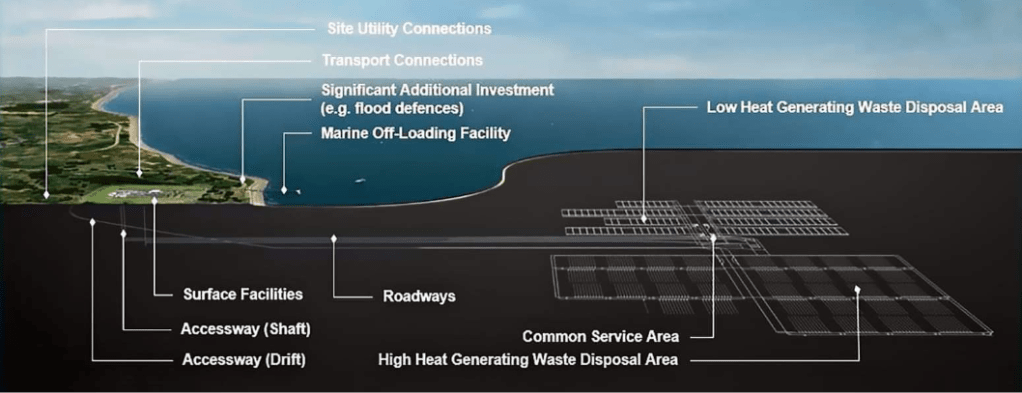
“Successful delivery of the project appears to be unachievable. “There are major issues with project definition, schedule, budget, quality and/or benefits delivery, which at this stage do not appear to be manageable or resolvable.”
02 Sep, 2025 By Tom Pashby
Government ‘replanning’ £53.3bn geological disposal facility project.
Construction of a UK geological disposal facility (GDF) for long-term
nuclear waste disposal is being “replanned” after recent revelations
about its cost and deliverability, according to the government.
A GDF represents a monumental undertaking, consisting of an engineered vault placed between 200m and 1km underground, covering an area of approximately 1km2 on the surface. This facility is designed to safely contain nuclear waste while allowing it to decay over thousands of years, thereby reducing its radioactivity and associated hazards.
The National Infrastructure and
Service Transformation Authority (Nista), a Treasury unit, assessed the GDF
in its Nista Annual Report 2024-2025 and gave it a Red rating in Delivery
Confidence Assessment. This means: “Successful delivery of the project
appears to be unachievable. “There are major issues with project
definition, schedule, budget, quality and/or benefits delivery, which at
this stage do not appear to be manageable or resolvable. The project may
need re-scoping and/or its overall viability reassessed.” In addition,
the Nista annual report lists the “whole life cost” of the GDF as
£20bn as a mid-range assessment and £53.3bn as a high-end assessment.
Government says GDF project facing ‘replanning’ by NDA, but remains
necessary
New Civil Engineer 2nd Sept 2025, https://www.newcivilengineer.com/latest/government-replanning-53-3bn-geological-disposal-facility-project-02-09-2025/
The final furlong: EDF announces further lifetime extension for aging AGR reactors

Britain’s aging Advanced Gas Cooled reactors may, like exhausted
racehorses, be on their last legs, but operator EDF Energy is clearly
intent on keeping them running for as long as possible.
The company
announced yesterday a twelve month extension in operations at their Heysham
1 and Hartlepool AGR plants until March 2028, citing the retention of jobs
and a desire to contribute to the UK achieving net zero and energy security
– but the NFLAs suspect a more pressing motivation.
In a comment to
industry media, NFLA Secretary Richard Outram said: ‘The EDF announcement
is unsurprising. Although company bosses may crow a lot about the
preservation of local jobs, the NFLAs suspect this is about the
preservation of EDF’s bottom line. ‘Given the parlous state of the
French parent company’s finances, the intermittent output of the domestic
fleet, and the vast overspend on Hinkley Point C, EDF have a clear
incentive to keep open for as long as possible any nuclear plant in their
portfolio which operates and generates profits.’
Dr Ian Fairlie, an
independent consultant on radioactivity in the environment and a former
advisor to the UK Government and European Parliament, is also sceptical as
to EDF’s motives: “The real reason why French parent company
Électricité de France wants to prolong the lives of their obsolete,
past-it, reactors is financial.
NFLA 3rd Sept 2025, https://www.nuclearpolicy.info/news/the-final-furlong-edf-announces-further-lifetime-extension-for-aging-agr-reactors/
Sizewell C Funded Decommissioning Programme: Contingent Liability (Public on the hook)
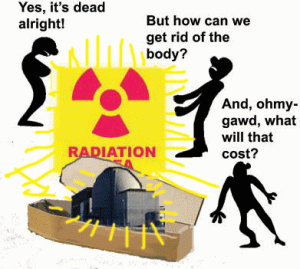
I am pleased to have laid a departmental minute describing the contingent
liabilities arising from the signing of the funded decommissioning
programme and Government support package for Sizewell C. The funded
decommissioning programme at Sizewell C will be funded via the regulated
asset base. The regulated asset base contains a series of protections that
aim to minimise the risk that public funds will be required to meet
decommissioning costs.
However, in certain remote circumstances whereby all
the protections afforded by Sizewell C’s economic licence fall away or a
shortfall in the fund materialises, public funds could be used to
contribute towards decommissioning costs and this liability would
crystalise. Based on best estimates by the Government Actuary Department,
the maximum potential exposure from the liability is £12 billion—in 2022
terms. This has been estimated on a worse-case scenario whereby the
Government were required to meet the full costs of decommissioning the
Sizewell C power plant.
Hansard 1st Sept 2025, https://hansard.parliament.uk/commons/2025-09-01/debates/25090137000015/SizewellCFundedDecommissioningProgrammeContingentLiability
A Folly Too Far?
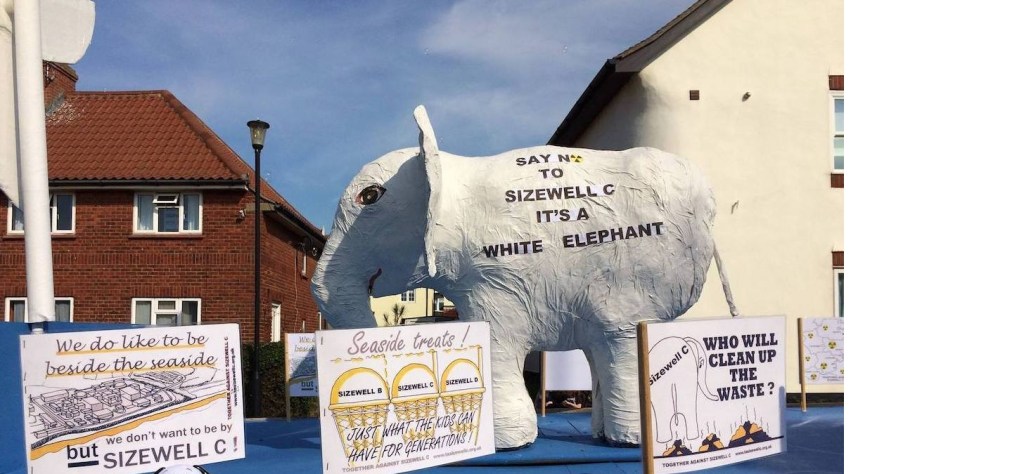
In 2020 the cost was set at £20bn. but the ultimate cost by 2040, when it might begin operating, could well be north of £40bn. By 2040 it will be too late to make any impression on Net Zero and, if it ever gets finished, Sizewell C will be an expensive and inflexible white elephant cranking out power that is not needed but which will impede the development of the array of renewable systems.
2 September 2025, https://www.banng.info/news/regional-life/folly-too-far/
Andrew Blowers tackles this question in the BANNG column for July 2025
On a fine summer’s day, in early June, Varrie and I travelled to Suffolk to show BANNG’s support for the Outrage Rally against Sizewell C. There were around 300 people assembled on the dunes to protest against the outrageous project and to commemorate the life of one of the great environmental and anti-nuclear campaigners, Pete Wilkinson, who had died in January. There were speeches from his two daughters, Amy and Emily and from Jonathon Porritt, the veteran campaigner who drew attention to the scene before us – the invisible power of the wind and sea on the one hand and the unseen threat of radioactivity posed by the hulk of Sizewell A and the operating Sizewell B on the other.
The protesters marched along the sandy beach to the site of Sizewell C where we tied yellow ribbons to the perimeter security fence in tribute to the outrage and courage that Pete had displayed through his life, successfully campaigning against mining in the Antarctic, dumping of radioactive waste in the Atlantic and stopping up the Sellafield outflow pipe into the Irish Sea. Beyond the fence could be seen the removal of ancient woodland, construction of roads and destruction of countryside and wildlife bordering the precious RSPB Minsmere Reserve in preparation for construction. And the subsequent construction of a huge and dangerous complex of reactors, turbines and long-term, highly radioactive waste stores on a precarious coast was terrifying to imagine.
There was a sense of an unequal struggle, a local community fighting together against an uncompromising government and powerful and well-resourced industry. While the mood was defiant there was an underlying sense of impending defeat.
And, sure enough, three days later came the long-anticipated announcement that Sizewell C was to go ahead, backed by £14.2bn. subsidy for the first four years of construction and up-front payments loaded onto consumer bills. A Final Investment Decision has not been taken, awaiting the commitment of private investors to match the public investment. If private investors do not come forward then either the project must be ditched (too embarrassing for the government) or we (taxpayers and consumers) are in hock for the total cost.
The Sizewell project is the type of big investment that encourages government ministers to don hard hats and suitably logoed high-vis jackets to proclaim a new golden age of clean energy. They haughtily dismiss the ‘blockers’ – we who strive to defend precious communities and landscapes and prevent the financial incontinence that inevitably flows from such complex and uncertain projects.
So, as the Sizewell protesters say, Sizewell C could become Suffolk’s HS2: half-built and unfinished because of finance.
EDF’s Heysham 1 and Hartlepool nuclear plants to operate for further 12 months
New Civil Engineer, 02 Sep, 2025 By Tom Pashby
The operational lives of the Heysham 1 and Hartlepool nuclear power plants have been extended by 12 months by their operator EDF………………
Hartlepool, Heysham 1, Heysham 2 and Torness all underwent reviews by EDF in December 2024 to assess how long they can continue to generate electricity. Heysham 1 and Hartlepool were scheduled to stop producing power in March 2027.
At the time, an EDF spokesperson explained to NCE that the best-case scenario for the Heysham 1 and Hartlepool power stations was that they could justify a one-year extension. However, that was caveated with a need to await the outcomes of “important inspection and safety case milestones”, which were due to be completed in 2025.
Those milestones have now passed and the results were positive for the power stations. When EDF’s executive and licensee boards met yesterday, 1 September, they gave approval to extend the lives of the nuclear stations, so Heysham 1 and Hartlepool will now likely operate through to at least March 2028.
A statement from EDF on 2 September said: “Heysham 2 and Torness, which are both scheduled to generate until March 2030, were not in scope for this review after a two-year extension was granted last year.”
EDF still hopes to see all four AGRs continue producing electricity for as long as possible, so it can be expected to conduct further reviews down the line, but these reviews do not have set dates for completion, the spokesperson told NCE……………………………………………………………………………………………………………………………
AGRs now well past their sell-by date’ – anti-nuclear campaigner
Nuclear Free Local Authorities secretary Richard Outram told NCE that the extension of the plants’ operating lives raises concerns about the possibility of graphite cracking.
“The EDF announcement is unsurprising. Although company bosses may crow a lot about the preservation of local jobs, the NFLAs suspect this is actually about the preservation of EDF’s bottom line,” he said.
“Given the parlous state of the French parent company’s finances, the intermittent output of the domestic fleet, and the vast overspend on Hinkley Point C, EDF has a clear incentive to keep open for as long as possible any nuclear plant in the portfolio which actually operates and generates profits.
“The NFLAs have previously expressed our concerns with the Office for Nuclear Regulation that these ageing AGRs are now well past their sell-by date, with graphite cracking being a real worry, as seen recently at the sister AGR plant at Torness.
“We shall continue to monitor the situation and ask challenging questions of regulators and the industry because public safety and environmental harm must never be compromised in favour of company profit.”………………………………………………. https://www.newcivilengineer.com/latest/edfs-heysham-1-and-hartlepool-nuclear-plants-to-operate-for-further-12-months-02-09-2025/
The lunacy of Britain’s Sizewell C nuclear project

Tom Burke:
All of these problems have been pointed out to the Government
very often, by many energy experts for several years. Even so this only
tells you part of the lunacy of this project. Britain’s electricity
consumers will start paying for Sizewell C now and will go on doing so
without receiving any electricity from it for the next 12-15 years.
They are in effect compulsory investors. However, unlike the private sector
investors in the project they will not receive a handsome double digit
returned on their forced capital investment. Instead they will then be
forced, as the Bloomberg diagram shows, to pay about three times as much
for Sizewell C’s electricity than would otherwise be available to them from
other sources as cheaper electricity will be forced off the grid in order
to preferentially take that from Sizewell C. It is truly said that those
whom the Gods destroy they first make mad.
FT 27th Aug 2025,
https://www.ft.com/content/ee89bce2-a3e9-48ed-82eb-85916eb24777#comments-anchor
East Lothian Council calls for a study into new nuclear at Torness
EAST Lothian Council will ask the UK Government to carry out a study into
the possibility of creating a new nuclear power station at Torness. The
Council will ask the UK Government to fund the study. The Tories and Labour
supported the motion; SNP and Greens opposed it.
Musselburgh Courier 28th Aug 2025, https://www.pressreader.com/uk/musselburgh-courier-SAXC/20250828/281548002004589
An Elbit-Bain Consortium is Nightmare Fuel: the UK Government Must Not Award £2bn Contract to These Corporate Horrors
Why are Israel’s largest arms firm and a company mired in a corruption scandal even being considered for training British troops?
ANDREW FEINSTEIN, PAUL HOLDEN and JACK CINAMON, DECLASSIFIED UK.
28 August 2025
Britain’s Ministry of Defence might imminently award a 15 year contract, worth £2.5bn, to a consortium headed by the British subsidiary of the Israeli arms firm Elbit Systems and including the US management consultancy firm, Bain and Company.
If successful, Elbit’s consortium would be responsible for training as many as 60,000 members of the UK military.
The consortium seems well-placed to win the contract; it is, in fact, one of only two shortlisted and preferred bidders.
The Ministry of Defence has already given the consortium a £2m contract so that it can develop its proposals further.
This is unacceptable. And it is frankly unbelievable that this consortium is even in the running considering its track record.
Elbit Systems UK is the fully-owned subsidiary of Elbit Systems Limited. Elbit Systems Limited is headquartered in Tel Aviv and is listed on both the Israeli and US stock exchanges.
Elbit is one of the two largest Israeli weapons manufacturers and is central to the IDF’s operations, providing 85% of its drones. Elbit International is also a major contributor to the F-35 fighter jet program, bragging that it plays a ‘critical role’ in the ‘success of the world’s most advanced fighter jet.’
In July 2025, Francesca Albanese, the UN Special Rapporteur for the Occupied Palestine Territories, published an excoriating report setting out corporate complicity in Israel’s “plausibly” genocidal conduct in Gaza – for which she was subsequently sanctioned by Donald Trump.
Her report is clear that Elbit forms a central part of Israel’s military-industrial complex, which has become “the economic backbone of [Israel].”
“Elbit has cooperated closely on Israeli military operations, embedding key staff in the Ministry of Defence,” Albanese points out, further noting that Elbit provides “a critical domestic supply of weaponry.”
Bain
But we’re also deeply concerned about Elbit’s partner, Bain and Company. Bain and Company (not to be confused with the mega hedge fund Bain Capital, which confirmed to us that it is not involved in the Elbit consortium) is a US-based management consultancy firm. …………………………………………………………………….. https://www.declassifieduk.org/labour-must-not-award-elbit-a-2-billion-military-deal/
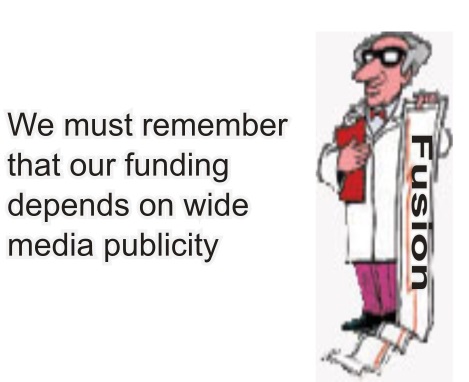
On fusion liability, Energy Minister completely sidelines the issue.
NFLA 27th Aug 2025
NFLA Secretary Richard Outram is disappointed that the new Energy Minister has completely missed the point that taxpayers should not be on the hook for unlimited liabilities to the nuclear fusion industry ‘resulting from incidents involving nuclear matter or emissions of ionising radiation arising from fusion activities relating to the STEP programme’.
On July 21, Climate Minister Kerry McCarthy issued a Departmental Minute to Parliament indicating that the Government will assume these liabilities for STEP (the Spherical Tokamak for Energy Production) project, the fusion experimental plant being built on a former power station site in West Burton with taxpayer money.
Richard wrote to his MP, Debbie Abrahams protesting that ‘As a citizen, I do not want my future taxes in hoc to a private company whose insurance risk for its nuclear activities would reside 100% with the future taxpayer. The procedure is certainly experimental; it may also be risky’. He asked that a request be placed with the Minister ‘with a full published risk analysis for STEP’ prior to a Parliamentary debate and vote.
In response, Ms Abrahams advised Richard that she had written to ‘the Department for Energy Security and Net Zero to make further enquiries about the STEP programme and make representations about your concerns’.
Ms McCarthy has now written back with a standard response in which she waxes lyrical about the supposed benefits that will be delivered through nuclear fusion, yet this is a technology described in the minister’s response as ‘nascent’, a euphemism for currently non-functioning.
The Minister makes a summary assessment that the risk presented by fusion is low, yet concedes ‘there is no private insurance market to provide cover to UKIFS (UK Industrial Fusion Limited) or their industry partners for liabilities in the unlikely event that radiological material or radiation is released from STEP outside of permit conditions‘.
This could suggest that the private sector might not want to insure any emerging nuclear fusion market because of the risk it presents, and if this is the case His Majesty’s Government might ultimately also have to indemnify nuclear fusion operators other than STEP in the future.
The Ministerial Direction effectively saddles the British taxpayer with responsibility to indemnify UKIFS ‘for an unlimited amount of money, for an unlimited time’.
And there is ambiguity in the timescale as some sources suggest STEP will be operational by 2040, whilst the Minister’s statement of 21 July says ‘by the 2040s’. This could mean 2049.
Finally, Richard was gratified to hear that the Minister’s letter was made in response to ‘a number of constituents’ suggesting some level of public disquiet with the Government’s decision………………………………………………………………………………………………………………………. https://www.nuclearpolicy.info/news/on-fusion-liability-energy-minister-completely-sidelines-the-issue/
The nuclear fusion delusion -Government proposals re Nuclear Fusion Siting Policy

Twelve months after a consultation on a proposed new siting policy for
nuclear fusion concluded in July 2024, the Department for Energy Security
and Net Zero finally published the government’s response to the
submissions received. This new policy (EN-8) mirrors that under development
for nuclear fission (EN-7). Consequently, the NFLAs submitted a response to
both consultations which shared many similarities.
It is clear from the
flavour of the government response that the new Climate Minister Kerry
McCarthy MP has like her predecessors been drinking from the fusion ‘Kool
Aid’, continuing to believe that fusion technology will be deployable on
time and at scale to provide a remedy to climate change.
NFLA 26th Aug 2025, https://www.nuclearpolicy.info/wp/wp-content/uploads/2025/08/A438-NB324-Govt-proposals-over-nuclear-fusion-siting-policy-Aug-2025.pdf
1 This Month

of the week – Shut Down Drone Warfare!


Tell the Ukrainian Government to Drop Prosecution of Peace Activist Yurii Sheliazhenko

Petition to revoke the licensing of the Near Surface Nuclear Disposal Facility (NSDF) at Chalk River. https://www.ourcommons.ca/petitions/en/Petition/Details?Petition=e-7247
To see nuclear-related stories in greater depth and intensity – go to https://nuclearinformation.wordpress.com
-
Archives
- April 2026 (7)
- March 2026 (251)
- February 2026 (268)
- January 2026 (308)
- December 2025 (358)
- November 2025 (359)
- October 2025 (376)
- September 2025 (257)
- August 2025 (319)
- July 2025 (230)
- June 2025 (348)
- May 2025 (261)
-
Categories
- 1
- 1 NUCLEAR ISSUES
- business and costs
- climate change
- culture and arts
- ENERGY
- environment
- health
- history
- indigenous issues
- Legal
- marketing of nuclear
- media
- opposition to nuclear
- PERSONAL STORIES
- politics
- politics international
- Religion and ethics
- safety
- secrets,lies and civil liberties
- spinbuster
- technology
- Uranium
- wastes
- weapons and war
- Women
- 2 WORLD
- ACTION
- AFRICA
- Atrocities
- AUSTRALIA
- Christina's notes
- Christina's themes
- culture and arts
- Events
- Fuk 2022
- Fuk 2023
- Fukushima 2017
- Fukushima 2018
- fukushima 2019
- Fukushima 2020
- Fukushima 2021
- general
- global warming
- Humour (God we need it)
- Nuclear
- RARE EARTHS
- Reference
- resources – print
- Resources -audiovicual
- Weekly Newsletter
- World
- World Nuclear
- YouTube
-
RSS
Entries RSS
Comments RSS
 nuclear-news