EDF’s Economic Statement on impact of Sizewell nuclear project – gives unproven, misleading evidence
 Stop Sizewell C 3rd Sept 2020, An independent review of EDF’s Economic Statement, assessing the impacts of Sizewell C to Suffolk’s local economy, has concluded that the project threatens “profitability and, in some cases, viability” of some local businesses, while others will be “at an immediate disadvantage when bidding for contracts”.
The report, Sizewell Economic Statement – Response, by highly-regarded independent research and analysis consultancy Development Economics, reveals multiple areas where EDF’s claimed benefits are over-optimistic, unproven or misleading, frequently omitting
evidence to support its figures or relying on “erroneous analysis”.
It concludes, critically, that EDF’s Economic Statement “fails to meet the minimum requirements of the legislation”, with no serious attempt to measure the deterrent effect on tourists and their expenditure, traffic congestion or competition for skills and labour.
The National Policy Statement EN-6 requires that applicants for major nuclear energy projects take into account ‘potential pressures on local and regional resources, demographic change and economic benefit’.
KILDARE OPINION SOUGHT ON NEW BRITISH NUCLEAR PLANT
 KILDARE OPINION SOUGHT ON NEW BRITISH NUCLEAR PLANT, Kildare Nationalist, SUNDAY, SEPTEMBER 06, 2020 UNDER provisions made at the United Nations, submissions are invited from interested parties in Kildare to comment on the development of a new nuclear power station planned for the east coast of England.Under the terms of the 1991 United Nations Convention, the Transboundary Environmental Public Consultation allows citizens in neighbouring nations have their say on certain public and private projects likely to have significant effects on the environment.
For this purpose, the member state of the UN in whose territory the project is intended to be carried out is required to send to its neighbours – no later than when informing its own public – a description of the project and any available information on its possible transboundary impact.
In this case, the Department of Environment, Planning and Local Government (DEPLG) was contacted by the British authorites in July about their plans to build a third reactor at the Sizewell nuclear power campus in Suffolk, to afford Irish citizens their chance to offer an opinion.
The letter from the UK’s Planning Inspectorate states that the Secretary of State has received an application to build two reactor units, giving a total site capacity of approximately 3,340MW, along with associated development required for the construction and operation of the Sizewell C Nuclear Power Station. …….
the Secretary of State decided to notify Ireland as if the development is likely to have significant adverse transboundary effects on the environment in this
State, as provided for in the UN Convention.
All documents related to the application are available to view on the Department of Environment’s website, and at the Planning Department, Kildare County Council – but by appointment only.
Submissions made in relation to the potential transboundary environmental effects of Sizewell C may be made in writing to the Planning Department, Kildare County Council, Aras Chill Dara, Naas, Co. Kildare or by e-mail to plandept@kildarecoco.ie by 28 October………….the Secretary of State decided to notify Ireland as if the development is likely to have significant adverse transboundary effects on the environment in this
State, as provided for in the UN Convention.
All documents related to the application are available to view on the Department of Environment’s website, and at the Planning Department, Kildare County Council – but by appointment only.
Submissions made in relation to the potential transboundary environmental effects of Sizewell C may be made in writing to the Planning Department, Kildare County Council, Aras Chill Dara, Naas, Co. Kildare or by e-mail to plandept@kildarecoco.ie by 28 October……..https://kildare-nationalist.ie/2020/09/06/kildare-opinion-sought-on-new-british-nuclear-plant/#.X1ViXHkzbIU
More of Britain’s ageing nuclear power stations are likely to close early
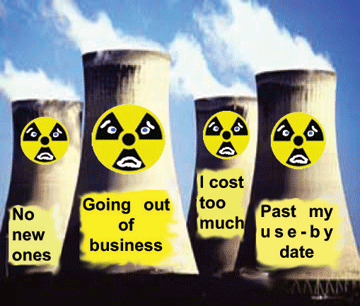 Times 6th Sept 2020, More nuclear power stations could close early as EDF wrestles with problems with patching up its ageing plants. The French power giant owns Britain’s fleet of eight nuclear power stations together with British Gas parent Centrica.
…………. just one new nuclear power station is being built, Hinkley Point C, in Somerset.
B in Somerset and Dungeness B in Kent.
happen sooner. It is currently not generating while its graphite core is inspected. EDF is due to make a decision on its future in November.
publication of a much-delayed energy white paper.
https://www.thetimes.co.uk/edition/business/nuclear-closures-pose-power-puzzle-d6bnnnrcs
Climate protestors stop Rupert Murdoch’s press in Britain
 Rupert Murdoch’s British papers delayed as climate protesters stop the presses, SMH 6 Sept, 20, London: Distribution of several British newspapers was disrupted on Saturday after climate change activists blockaded printworks used by Rupert Murdoch’s News UK, publisher of The Times and The Sun, drawing condemnation from Prime Minister Boris Johnson.Extinction Rebellion said nearly 80 people had blocked roads leading to two printworks, at Broxbourne in Hertfordshire, north east of London, and at Knowsley, near Liverpool. Hertfordshire police said they made 42 arrests and Merseyside police made 30.
The Murdoch-owned Newsprinters works also print the Daily Mail, the Daily Telegraph and the Financial Times. Campaigners said they had taken the action to highlight what they regard as the newspapers’ failure to accurately report on climate change. ……….
The blockade was part of more than a week of protests by Extinction Rebellion, which says an emergency response and mass move away from polluting industries and behaviours is needed to avert a looming climate cataclysm.
On Saturday it also protested in central London, including holding a “die-in” in front of Buckingham Palace, where demonstrators lay under white sheets to represent corpses. …….. https://www.smh.com.au/environment/climate-change/rupert-mudoch-s-british-newspapers-delayed-as-extinction-rebellion-protesters-stop-the-presses-20200905-p55sqr.html
Petition against dumping ‘nuclear mud’ off Cardiff reaches 5k threshold for Senedd debate
|
Petition against dumping ‘nuclear mud’ off Cardiff reaches 5k threshold for Senedd debate https://nation.cymru/news/petition-against-dumping-nuclear-mud-off-cardiff-reaches-5k-threshold-for-senedd-debate/, 2nd September 2020 A petition to stop the dumping of what campaigners are calling ‘nuclear mud’ off the coast of Cardiff has reached its 5,000 signature target.The campaigners are calling for plans to dump mud from the construction of the new Hinkley Point C nuclear power station into the sea off Cardiff Bay to be halted.
Reaching the 5,000 target means the controversial topic will be up for a debate in the Welsh Parliament. Campaign group Geiger Bay are pressing for extensive testing of the sediment following what they say is evidence of plutonium contamination, a claim that Westminster’s Environment Agency (EA) denies. The petition, created by Cian Ciaran of the Super Furry Animals, demands “that a full Environmental Impact Assessment (EIA) is carried out before any further sediment from Hinkley Point nuclear power station can be dumped”. 780,000 tonnes of the sediment from set to be dumped just one mile from Wales’ capital city. Concerned’ Speaking this morning, Welsh National Party leader and Cardiff West Senedd candidate Neil McEvoy MS said, who has been a prominent voice in the campaign, said that “Wales is standing up for itself”. “How can we allow 780,000 tonnes of material dredged from outside a nuclear power station to be dumped in our waters without testing it properly?” he said. “The Labour Government and Natural Resources Wales have a lot to answer for. “The public are concerned about this issue. Environmentalists are outraged. Eminent scientists are on record saying they are seriously concerned. The only people who don’t seem to be bothered about this are the Labour politicians sitting in Cardiff Bay. “This is first and foremost about the safety of our people and of our marine environment. It is also about how Wales is treated as a nation.” |
|
Wylfa nuclear project – a contentious issue in Wales
Wales’ controversial nuclear history and what comes next as D-Day approaches for Wylfa One of Wales’ most contentious projects is facing a possible D-Day next month but opinion remains divided about nuclear power on the isle of Anglesey, Wales Online, 31 AUG 2020
….since its announcement it has been met with a mixture of hope, optimism, and concern from campaigners and local politicians.
It has also been dogged by delays and uncertainty in the decade since it was confirmed Wylfa would get a new nuclear plant……. as we approach possible clarity on a long-proposed and controversial project, what do those closest to the project think?
People Against Wylfa B (or Pawb, meaning ‘everyone’ in Welsh) was set up in the late 1980s and opposes the establishment of a new nuclear plant in north Wales.
One of its leading members, Robat Idris, explained that the history of nuclear power’s prominence in the Anglesey region goes back more than 60 years.
“The development of the UK nuclear programme was part of the Cold War strategy of the government at the time,” he said.
“The Thatcher government wanted to start a programme of building nuclear reactors, which were then shelved. At the time there was strong opposition across the political parties, except the Tories, to nuclear in Wales.”………
the concerns shared by Pawb go deeper than local politics and economics. The dangers associated with nuclear power are well-documented.
Despite being more than 2,000 miles away, farms over 53,000 hectares in north Wales felt the effects of the 1986 Chernobyl disaster, with many restrictions placed on farms due to radioactive particles in the soil and vegetation.
This threatened livelihoods across Wales for decades. Some restrictions in areas like Snowdonia were only lifted as recently as 2012.
Often smaller incidents at nuclear stations are not reported on a national scale or are discovered belatedly. At the Sellafield nuclear site, off the coast of Cumbria, between 1950 and 2000 there were 21 incidents or accidents involving off-site radiological releases that warranted a rating on the International Nuclear Event Scale.
“Historical effects like Chernobyl and Fukushima show that if things go wrong they go wrong dramatically,” Mr Idris said.
“With capitalist extractive models you take what you want and leave the rest. Even though nothing has been built yet there has already been changes to the topography of the area – flattening of hills and demolishing of houses and purchasing of land from farmers.”…….
“We have concerns about the idea that nuclear energy is low-carbon. But it is only low-carbon in the actual production – not in the building and construction, mining of uranium, or other elements,” Mr Idris said.
“There is also an unknown element to the decommissioning process – you are talking about centuries after production stops before a site is safe.”……………………………….
Not all are convinced that Wylfa is the magic pill that will transform Anglesey’s fortunes ……….
we’ve had this salvation of nuclear in the 60s and 70s, and Anglesey is still one of the poorest areas.
“Renewables are coming in more – falling costs, improvements in storage technology. The technology is there and just needs to be purchased.
“It comes back to a lack of a plan B – why haven’t other credible scenarios been presented?”……..
With the impending decision from the UK Government it appears increasingly likely that clarity is coming either way.
If permission is granted then the final hurdle will be arranging funding between the UK Government and the company – something which has proven elusive thus far……… https://www.walesonline.co.uk/news/wales-news/nuclear-power-wales-anglesey-wylfa-18836063
The Assange extradition hearing – a continued travesty of justice

 Assange Travesty Continues https://www.craigmurray.org.uk/archives/2020/08/assange-travesty-continues/?fbclid=IwAR2MvHqWNmC2Z7gpPI3I24-XwXRvFGIUFmxoa5LgBm5vJqgDJ3BxSDexU4U
By 7 September it will be six months since I applied to resume my membership of the National Union of Journalists. I STILL have not the slightest idea who objected, or what the grounds were for objection. I have not heard from the NUJ for months. A senior official of an international journalists’ organisation has told us that he inquired, and learnt that the NUJ national executive has considered my application and set up a sub-committee to report. But if so, why is this secret, why have I not been informed, and why am I not allowed to know what the objection is? I find this all very sinister. At this stage it is not paranoid to wonder whose hand is behind this.
The practical effect of this is that without NUJ membership I cannot access a Press card, and avail myself of whatever media arrangements are in place for the Assange hearing (just as I was kept out of most of the Salmond trial). I have now reached the stage where I would like to take legal action against the NUJ, but the finances are beyond me. I am not going to ask you to donate because we are going to need all our resources for the contempt case against me, which the Crown drags out.
I shall be writing next week about my own case and that hearing earlier this week. I would just note now that the “virtual hearing” is entirely unsatisfactory and unfair on defendants. There was at least one occasion when my QC agreed with a suggestion of the judge when I would have instructed them not to had I been, as I should normally have been, seated near them in court and able to instruct.
Unlike our adversaries including the Integrity Initiative, the 77th Brigade, Bellingcat, the Atlantic Council and hundreds of other warmongering propaganda operations, this blog has no source of state, corporate or institutional finance whatsoever. It runs entirely on voluntary subscriptions from its readers – many of whom do not necessarily agree with the every article, but welcome the alternative voice, insider information and debate.
Cracks in UK’s Hunterston and other very old nuclear reactors
 Radio Scotland (From 1:41:33) 29th Aug 2020, Rob Edwards speaking about Hunterston. The lifetime of Hunterston has been extended 3 times. The problem is these very old reactors have developed all
these cracks.
Reactor 3 has an estimated 377 cracks. Reactor 4 has 209.
Those are only estimates based on looking at a part of the core. They have
underestimated the number of cracks that would appear in the past. If you
have too many cracks you get bits of debris breaking off so the graphite
core of these reactors start to crumble and that in some scenarios could
cause the core to overheat.
They are balancing how much money they can make
out of the plants against a leak. Climate change has been used by the
industry to try to make themselves look better. Hunterston has been closed
for most of the last two years.
The closure of Hunterston B will not cause power network outages
|
Insider Media 28th Aug 2020, The closure of Hunterston B will not cause power network outages,
Scotland’s energy minister Paul Wheelhouse has insisted. The nuclear power station is to close by January 2022, according to operator EDF Energy, almost two years earlier than expected. Last year, Scottish Gas owner
Centrica blamed interruption of electricity supply from Hunterston for loss of income. Wheelhouse reiterated the Scottish Government’s position that no new nuclear power stations should be built in Scotland, with energy generated by renewable sources instead. He said that for a two-month period
in 2018, Hunterston B was entirely offline and the Torness nuclear power station in East Lothian was operating at reduced capacity, but it caused no issues for the energy supply. Wheelhouse told the BBC: “Scotland, in the last year for which we got full statistics, exported a net 15.9 terawatt hours of energy – which dwarfs the output of Hunterston.” https://www.insider.co.uk/news/energy-minister-hunterston-closure-not-22593000 |
|
A series of safety problems bring EDF’s decision on early shut down of Scotland’s Hunterston nuclear station
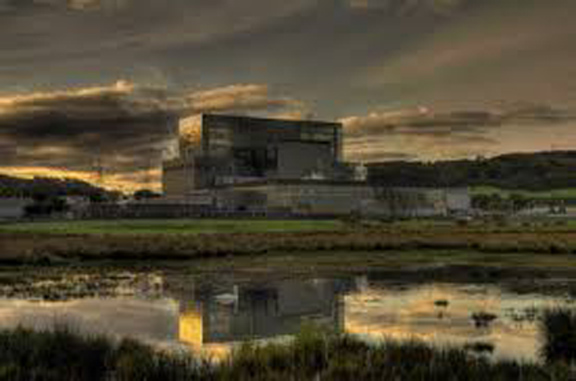
Scottish nuclear power station to shut down early after reactor problems
EDF Energy to close Hunterston next year after spending £200m on repairs, Guardian, Severin Carrell and Jillian Ambrose, Fri 28 Aug 2020 Hunterston nuclear power station, one of the UK’s oldest remaining nuclear plants, is to close down next year, earlier than expected, after encountering a series of safety-critical problems in its reactors.
Industry sources told the Guardian that EDF Energy, the state-owned French operator of Hunterston, decided at a board meeting on Thursday afternoon that the plant would stop generating electricity in late 2021, at least two years earlier than planned.
The energy company had hoped to keep generating electricity from the 44-year-old nuclear plant on the Firth of Clyde until 2023, after ploughing more than £200m into repairing the reactor.
Hunterston, which first began generating electricity in 1976, has been offline since 2018 after inspectors discovered 350 microscopic cracks in the reactor’s graphite core.
In October last year the Ferret, an investigative website, reported that at least 58 fragments and pieces of debris had fallen off the graphite blocks as the cracks worsened. It quoted the Office for Nuclear Regulation (ONR) as saying this had created “significant uncertainty” about the risks of debris blocking channels for cooling the reactor and causing fuel cladding to melt.
After a two-year investigation, the ONR said on Thursday that reactor 3 at Hunterston would be allowed to restart as planned, but it would only be allowed to generate electricity for approximately six months.
EDF then plans to apply next spring to extend its life for one final six-month run. EDF said it would begin the process of decommissioning Hunterston no later than the first week of 2022…….
Richard Dixon, the director of Friends of the Earth Scotland, said: “In terms of energy security, clearly there’s no problem. Its reactors haven’t been running and the lights haven’t gone out. What’s more urgent now is to build up renewables and energy efficiency, to make sure the gap left by Hunterston is filled by zero-carbon electricity or energy saving.” ……… https://www.theguardian.com/uk-news/2020/aug/27/hunterston-scottish-nuclear-power-station-to-shut-down-early-after-reactor-problems
EDF’s Hunterston ageing nuclear power station kept going in effort to prolong all EDF’s old reactors
The Ferret 27th Aug 2020, The energy company, EDF, is planning to operate a cracked and ageingnuclear power station at Hunterston in North Ayrshire for another year before closing it down for good. The company is hoping to restart the two 44-year-old reactors at the site for two last six-month periods and then
begin decommissioning them “no later than 7 January 2022”.
being put at risk. They are calling for the plant to be permanently closed down now. The 50-strong group of Nuclear-Free Local Authorities in the UK demanded that both reactors never re-open. “The safest thing to do is to
close Hunterston B and start accelerated decommissioning of its reactors,” said the group’s Scottish convener, Glasgow SNP councillor Feargal Dalton. “We totally disagree with EDF that decommissioning should start in 2022. It should happen now for the sake of public safety.” He added: “The fact it has taken two years and much resource from EDF to provide sufficient information to the ONR to allow a restart to take place is indicative of the level of risk over the structural integrity of these reactors.”
been in such a financial pickle long before the virus hit,” he added.https://theferret.scot/hunterston-cracked-nuclear-reactors-another-year/
UK’s Dounreay nuclear power site, opened in 1955, closed 1994, cleaned up in 2333, if they’re lucky

Dounreay on Scottish north coast has been site of considerable radioactive leaks https://www.independent.co.uk/environment/nuclear-power-dounreay-scotland-thurso-decommissioning-radiation-a9680611.html Harry Cockburn, Thursday 20 August 2020 In 313 years’ time, 378 years after it first opened in 1955, and 339 years after it ceased operations in 1994, the 178-acre nuclear power facility site at Dounreay will be safe for other uses, a new report has stated.
Though the site on the north coast of Scotland was only home to functioning nuclear reactors for 39 years, the clean-up will take roughly ten times as long, with efforts already underway to clean up hazardous radioactive material.
The facility, near Thurso, was used by the government for research and testing of various types of nuclear reactors, including a “fast reactor” and those intended for use on nuclear submarines.
The first reactor at the site to provide power to the National Grid was the Dounreay Fast Reactor, which provided power between 1962 and 1977. A second reactor also pumped power into the grid between 1975 and 1994.
A draft report from the government’s nuclear decommissioning authority states the site will only be ready for other uses after the year 2333.
Over the next two years, Dounreay Site Restoration Limited has said it will undertake assessments of “installations, current and future disposals, areas of land contamination, sub-surface structures and other discrete site conditions” to determine “credible options for the site end state”.
A process of demolition of buildings and waste removal is already underway at the site, which has previously been used to store dangerous radioactive material.
Part of the demolition process has involved the use of a remote controlled robot nicknamed the “Reactosaurus”, a 75-tonne device with radiation-proof cameras, and robotic arms which are able to reach 12 metres into the reactors where they can operate an array of size-reduction and handling tools, including diamond wire and disks and hydraulic shears.
One of the areas targeted for waste removal is a highly contaminated area called the Shaft.
The water reacted violently with the sodium and potassium, throwing off the massive steel and concrete lids of the shaft, and littered the area with radioactive particles.
The dangerous pollution affected local beaches, the coastline and the seabed. Fishing has been banned within a two-kilometre radius of the plant since 1997.
Milled shards from the processing of irradiated plutonium and uranium, are roughly the size of grains of grains of sand. The most radioactive of the particles are believed to be potentially lethal if ingested. These small fragments are known to contain caesium-137, which has a half-life of 30 years, but they can also incorporate traces of plutonium-239, which has a half-life of over 24,000 years.
Sizewell nuclear plant to take 20 years to build, emitting 5.7 million tonnes of carbon dioxide


|
|
Times 25th Aug 2020 A proposed new nuclear plant in Suffolk could take six years to offset the greenhouse gas
emissions generated in its construction, EDF has admitted. The French energy group estimates that 5.7 million tonnes
of carbon dioxide will be emitted in the nine to twelve years that it will take to build the Sizewell C plant. It argues
that this is “small in comparison to the savings that would be achieved once the power station becomes operational,
when the station will be displacing more carbon-intensive energy from the national grid”.
In publicity material, EDF claims that Sizewell C will “save nine million tonnes of carbon dioxide emissions for every
year of its operation”, based on it replacing gas-fired power plants. However, in planning documents it admits that
the actual savings may be far lower. By the time that the proposed plant is built, Britain’s power mix is expected to
be far greener, as more wind and solar farms are built.
Alison Downes, of Stop Sizewell C, said this meant that it would be 2040 before the plant was “making a positive
contribution to the UK’s net zero targets . . . EDF’s revelation that it will be 20 years before Sizewell C is built and has
paid off the carbon from its construction exposes what a hopeless — as well as expensive and risky — solution it is to
our urgent climate crisis.” National Grid has said that it plans to be able to run Britain’s power network with entirely
“zero carbon” electricity by 2025 whenever there is sufficient renewable generation to do so — well before Sizewell
|
East Suffolk Council dithers over Sizewell C nuclear project, many questions unanswered
Concern over unanswered questions as Sizewell C plans progress East Anglian Daily Times, 24 August 2020 , Richard Cornwell
Community leaders say there are still “many unknowns” over the proposals for a new £20billion nuclear power plant on the Suffolk coast – and work is taking place on mitigation and funding packages should it receive the go-ahead.
East Suffolk Council is preparing to submit its views on EDF Energy’s Sizewell C project, currently being considered by the Planning Inspectorate.
On September 3 councillors will discuss a draft report and then on September 21 the final version.
Council leader Steve Gallant says it is essential east Suffolk remains “open for business” during the twin reactor’s decade-long construction, and the council is working with stakeholders, government and EDF to “to get the best possible outcome for East Suffolk”.
He said: “I am clear that if the potential concerns cannot be fully mitigated, we will require fully funded programmes to further compensate any adverse impacts.
“Furthermore, I entirely acknowledge there is a difficult balance to be struck between supporting the national and local economy and the environmental impacts this proposal will have in such a sensitive location and I want to hear from all our councillors about local concerns so that this information can be fed in to the final submission. ……..
Craig Rivett, deputy council leader and lead member for the Sizewell C project, said: “The report contains a detailed early assessment of all the submission material and it is clear that whilst many aspects of the proposal are now clear there are still many unknowns that we want to understand further before finalising our position on all aspects………
As part of the Development Consent Order process, all interested parties must submit their views on the project (Relevant Representations) to the Planning Inspectorate by September 30 so that the Examiners can consider all issues and prepare an Examination of the proposal.
Receipt of Relevant Representations from all parties to the Planning Inspectorate is the start of the process that will continue through a formal Examination period which East Suffolk Council will take part in, before the Planning Inspectorate’s Examining Authority submit a report to the Secretary of State for Business, Energy and Industrial Strategy who will make the final decision. https://www.eadt.co.uk/news/east-suffolk-council-draft-sizewell-c-dco-report-1-6806704
Scotland’s Covid-19 recovery and Climate Policy
|
THE Scottish Government remains “absolutely committed” to meeting emissions
reduction targets despite the Covid-19 crisis, Environment Secretary Roseanna Cunningham has said. She described the virus as an “unprecedented global crisis” but also insisted the need to tackle climate change has not gone away. She spoke out on the issue on Earth Overshoot Day – which marks
the date when global demand for ecological resources and services exceeds what the planet can regenerate. Although Cunnignham insisted that “no aspect of this terrible pandemic is to be celebrated” she said coronavirus had underlined “the changes we could see in our environment in the long term if, at this critical juncture, we choose not to return to previous practice”. She added: “Resetting our pathway towards a sustainable net-zero
future, while creating good jobs for people across Scotland, will be the core objective of a just and green recovery from Covid-19.” Cunningham stressed: “We must learn lessons for the future, redesign our economy and create a different way of life to support a greener, more sustainable society which will secure the wellbeing of our planet for generations to come. |
|
1 This Month




PLEASE OPPOSE HR 8255 AND S.3639 – bills would accelerate satellite deployment, with no environmental review or safeguards – https://ncstd5li.quorum.us/campaign/169331/
To see nuclear-related stories in greater depth and intensity – go to https://nuclearinformation.wordpress.com
-
Archives
- September 2026 (330)
- August 2026 (330)
- July 2026 (355)
- June 2026 (287)
- May 2026 (306)
- April 2026 (356)
- March 2026 (251)
- February 2026 (267)
- January 2026 (308)
- December 2025 (358)
- November 2025 (359)
- October 2025 (375)
-
Categories
- 1
- 1 NUCLEAR ISSUES
- business and costs
- climate change
- culture and arts
- ENERGY
- environment
- health
- history
- indigenous issues
- Legal
- marketing of nuclear
- media
- opposition to nuclear
- PERSONAL STORIES
- politics
- politics international
- Religion and ethics
- safety
- secrets,lies and civil liberties
- spinbuster
- technology
- Uranium
- wastes
- weapons and war
- Women
- 2 WORLD
- ACTION
- AFRICA
- Atrocities
- AUSTRALIA
- Christina's notes
- Christina's themes
- culture and arts
- Events
- Fuk 2022
- Fuk 2023
- Fukushima 2017
- Fukushima 2018
- fukushima 2019
- Fukushima 2020
- Fukushima 2021
- general
- global warming
- Humour (God we need it)
- Nuclear
- RARE EARTHS
- Reference
- resources – print
- Resources -audiovicual
- Weekly Newsletter
- World
- World Nuclear
- YouTube
-
RSS
Entries RSS
Comments RSS

