Strong feeling in UK public that the Covid recovery must be a green recovery, too
 Centre for Science & Policy 12th Oct 2020, According to Professor Rebecca Willis, the findings from the UK Climate Assembly suggest that the general public feels strongly that covid recovery must be aligned with net zero goals, both in terms of a green economic stimulus and in terms of not giving government money to big polluters. She also noted that the pandemic has create an opportunity space, in which people are more open to lifestyle changes – including those that might be more environmentally friendly.
http://www.csap.cam.ac.uk/news/article-understanding-challenges-green-recovery/
UK government’s economic recovery plan funds fossil fuels £3.8bn, but renewables only £121m
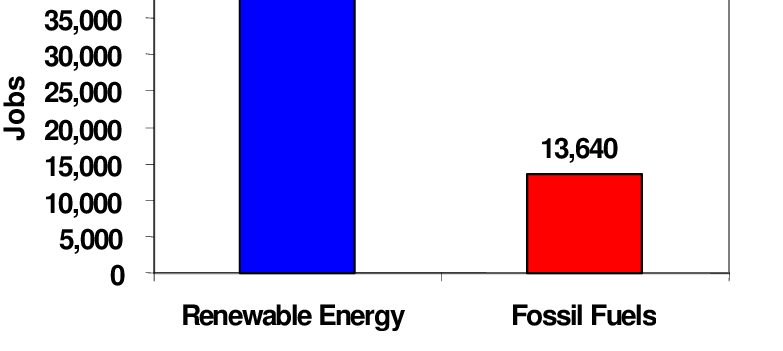
Edie 29th Oct 2020, The UK Government has earmarked £3.8bn of stimulus funding for legacy fossil fuel and nuclear generation, compared to just £121m for renewables, a damning new report has claimed. Published by global technology company Wärtsilä’s energy arm, the analysis concludes that the UK Government’s short-term plans for helping the energy sector recover from the financial impacts of Covid-19 are not aligned with the 2050 net-zero target or the interim carbon budgets.
storage capacity would be scaled up dramatically.
90% of Sellafield’s Discharged Plutonium Wastes are on the “Cumbrian Mud Patch” Below which Lies the Coal Mine Plan —

Graphic from New Report Published in Science of the Total Environment “Controls on anthropogenic radionuclide distribution in the Sellafield-impacted Eastern Irish Sea”? Daisy Ray et al.??https://www.sciencedirect.com/science/article/pii/S0048969720342893 This information has been sent out to press on numerous occasions. So far it has not been picked up.
“our concerns are that no-one is taking
adequate notice of, or responsibility for the impact this mine would have
both on the wastes at Sellafield and also on the reprocessing wastes that
have been discharged over many decades and are now sitting on the Irish Sea
bed directly under the area that West Cumbria Mining propose mine out.A massive void the size of Wastwater lake is proposed under the Cumbrian Mud
Patch, this would lead to likely collapse of the Irish Sea bed. Our own
commissioned report by Tim Deere-Jones has been vindicated with another
report published more recently in Science of the Total Environment which
includes findings from the Centre for Radiochemistry Research -The
University of Manchester and Radiochemistry Unit -The University of
Helsinki, Finland.Findings are that up to 90% of the plutonium discharged
90% of Sellafield’s Discharged Plutonium Wastes are on the “Cumbrian Mud Patch” Below which Lies the Coal Mine Plan —
from Sellafield are likely to be sitting in the silts on the Cumbrian Mud
patch along with a cocktail of other radionuclides. To mine underneath this
area for any reason, let alone for unneeded coal, knowing that this is the
case, is an act of premeditated murder no less than letting off a series of
nuclear bombs.” New Report Published under Creative Commons in Science of
the Total Environment “Controls on anthropogenic radionuclide
distribution in the Sellafield-impacted Eastern Irish Sea” Daisy Ray et
al. https://www.sciencedirect.com/science/article/pii/S0048969720342893
Britain to lose protection of the environment – as a result of Brexit
behalf of citizens is being undermined by the UK government. Ministers
promised that after Brexit, laws on air, water and waste would be policed
by an independent Office for Environmental Protection (OEP).
these laws were enforced by European courts, which prosecuted EU
governments that breached green rules. Ministers promised the OEP would be
similarly independent. But they now want to grant themselves powers to
“advise” the new body. These plans were revealed in a tabled amendment
to the Environment Bill. Critics fear ministers may counsel the OEP against
taking the government to court if it breaches laws.
Pressure on UK Prime Minister to show strong climate leadership
Business Green 28th Oct 2020, Pressure is mounting on Boris Johnson to come up with an ambitious
decarbonisation plan ahead of COP26 next year, with a major coalition of
health professionals, academics, faith and youth leaders today joining
calls from Conservative MPs and former world leaders for UK to demonstrate
strong climate leadership in the run up to the critical UN summit.
In a
series of letters to the Prime Minister today, various groups representing
millions of people in the UK and overseas urge the government to deliver a
“world-leading” climate plan to the UN in support of the Paris Agreement
“as early as possible this year” or well ahead of COP26 in November 2021.
Such a plan – or Nationally-Determined Contribution (NDC) in UN jargon –
should “at the very least” aligned with limiting global warming to 1.5C by
the end of the century and the UK’s 2050 net zero target, and should be
achieved entirely through domestic action without the use of international
carbon credits, according to the letter from faith groups.
https://www.businessgreen.com/news/4022373/pressure-mounts-pm-ambitious-uk-climate-plan-soon
Britain, and other countries, got nuclear weapons for reasons of status and pride
|
We’re nuclear because of the kudos, https://www.heraldscotland.com/news/18818883.letters-nuclear-kudos/ Ian W Thomson, Lenzie. 23 Oct 20 DAVID Crawford asks a question about why the UK Government allows a large element of UK tax revenue to be spent with the US facilities to support the UK nuclear weapon submarine resource. He answers his question by saying “money”, because the UK itself is a substantial supplier of weapons
I believe that there is more to it than he suggests. The Labour Government at the end of the Second World War could have decided not to have nuclear weapons. It initially took the option to have them largely because of status and pride. Ernest Bevin, then the Foreign Secretary, stated: “We’ve got to have the bloody Union Jack on top of it.” The costs of maintaining that status have become more and more expensive over the years, which has led to the UK becoming more and more reliant upon the US for technical support at a cost. The theory must be that it is better to have a nuclear deterrent sort of independent rather than not have such deterrent at all. I also believe that status still has a large part to play in the UK’s position today, albeit we are far removed from the circumstances prevailing at the end of the Second World War. It is interesting that all five permanent members of the UN Security Council are nuclear powers: China, France, Russia, the UK and the US. The UK, no doubt, places great value upon that status and is likely to regard being a nuclear power as helping to sustain it. The original idea was that the five would progressively disarm in exchange for other states not acquiring nuclear weapon facilities. That idea has gone well, hasn’t it? Look at India and Pakistan and the likelihood of some others. |
|
Legal fight to stop Sizewell nuclear project destroying an historic Suffolk woodland
 East Anglian Daily Times 24th Oct 2020, Campaigners have agreed to continue their battle to stop an historic
Suffolk woodland from being felled – and are taking the fight to the
Court of Appeal.
Wood in order to use the land and Pillbox Field to relocate some Sizewell B
buildings ready for a start on Sizewell C.
Sizewell C) says the project is premature because the twin reactor nuclear
power station has yet to receive planning permission. TASC has now applied
to Court of Appeal following the High Court’s dismissal of supporter Joan
Girling’s bid for a judicial review application of the planning consent
earlier this month. Joan Girling said, ‘‘The Planning Inspectorate has
now accepted EdF’s recently submitted Sizewell C DCO application.
foregone conclusion. “There is no certainty that it will be given
approval. Until such time that the Sizewell C application is determined, it
is the view of many people that the needless destruction of Coronation Wood
should not go ahead.
https://www.eadt.co.uk/news/legal-fight-goes-on-to-save-coronation-wood-1-6898954
Not only Fukushima – UK nuclear reactors also empty radioactive water into the sea
 Ian Fairlie’s Blog 22nd Oct 2020, Concerns over proposed tritium discharges from Fukushima – why no apparent concern about the larger tritium releases from Hunterston B and Torness? Recent newspaper reports have expressed concern about the apparent decision by the Japanese Government and TEPCO to discharge large volumes of radioactive tritiated water from the stricken Fukukshima nuclear power station in Japan into the Pacific Ocean. Ian Fairlie’s Blog 22nd Oct 2020, Concerns over proposed tritium discharges from Fukushima – why no apparent concern about the larger tritium releases from Hunterston B and Torness? Recent newspaper reports have expressed concern about the apparent decision by the Japanese Government and TEPCO to discharge large volumes of radioactive tritiated water from the stricken Fukukshima nuclear power station in Japan into the Pacific Ocean.I have expressed concern myself about this proposed decision -see here. Instead I recommend that TEPCO and the Japanese Government should build more storage tanks to allow for the decay of the radioactive tritium. Some readers have commented that all nuclear power stations world-wide discharge tritium into the sea (sometimes via rivers) and into the atmosphere. This is true and TEPCO used this fact to try to justify its proposed dumping of tritium into the sea.
My reply as that two wrongs do not make a right: it is in fact quite worrying that all nuclear facilities routinely dump large volumes of tritium into the sea and the air. This applies to all UK nuclear power stations as well – including Hunterston B and Torness in Scotland. Recent reports have expressed concern about the restarts of the ancient dilapidated reactors at Hunterston B which are well past their sell-by dates.
These fears largely centre on the risks of a nuclear accident at these oldunsafe reactors. But shouldn’t we also be concerned about their tritium discharges? In 2018, annual tritium releases to the sea from Hunterston B were 148 terabecquerels (TBq) and the even more dangerous tritium emissions to the atmosphere totalled 0.96 TBq.
The situation is similar at all other UK nuclear power stations. For example, at Torness, the tritium discharges in 2018 were 295 TBq into the sea and 1.32 TBq into the air. In most cases, these annual amounts are larger than the annual amounts being proposed to
be released at Fukushima. So shouldn’t we be equally be concerned at these releases, as we are at the Japanese ones? |
|
How would Bradwell B affect local people, place and environment? What powers are behind the decision?
South Wales and the danger of pollution from the dumping of radioactive mud from Hinkley nuclear project
|
Welsh politicians urge openness on impact of mud from nuclear power stationHinkley Point C building site waste due to be dumped in sea near Cardiff, Guardian, Steven Morris, @stevenmorris20, Thu 22 Oct 2020 The builders of the Hinkley Point C nuclear power station must be completely open about the potential environmental impact of dumping tens of thousands of tonnes of mud in the sea near Cardiff, politicians in Wales have said.
EDF is proposing to deposit mud excavated as part of the huge construction project on the Somerset coast in the waters off the Welsh capital next year. The Welsh parliament debated the issue on Wednesday after 10,000 people signed a petition calling for a full environmental impact assessment (EIA) to be carried out on the proposal. Petitioners, led by the musician Cian Ciarán, of the band Super Furry Animals, fear the mud could be contaminated and may cause environmental damage and harm the health of people who live in south Wales. Ahead of the debate, EDF confirmed it would carry out a full EIA but members of the Welsh parliament, or Senedd Cymru, said it was vital the findings – and the workings – were published in full. Llyr Gruffydd, a Plaid Cymru member of the Senedd, said there were “real concerns” that the dumping may harm marine life and put public health in danger. “Radioactive particles from the outflow pipes of Hinkley Point A and Hinkley Point B have been flushed out for the last 55 years,” he said. “We know there were plutonium leaks in the 1970s that might also have contaminated the mud they want to dump in Welsh waters.” …….. https://www.theguardian.com/uk-news/2020/oct/21/welsh-politicians-urge-openness-on-impact-of-mud-from-nuclear-power-station |
|
Culture and pride – Britain’s unnecessary attachment to nuclear weapons
|
THE NUCLEAR TREATY dividing the World, Byline Times, Stephen Colegrave, 21 October 2020 “……….. Problem for Brexit Britain In the UK, our predilection for nuclear arms is cultural as much as political.
Brexit Britain is clinging on to its belief that it can regain and retain its place at the centre of the world. But the irony is that many of the nations that it wants to trade with as it turns its back on Europe are in the Nuclear Weapon Free Zones and have been part of developing and signing the treaty banning nuclear weapons. The Brexiters’ love of patriotic militarism with navy ships and flags spearheading trade missions are likely to have the opposite effect than expected. These nuclear-free nations might be no match for the military might of NATO and the other nuclear powers but they do have complete control of their own trade. “The ground is moving under the UK’s feet,” says Ben Donaldson, head of campaigns at the United Nations Association. “Whether or not the UK supports the UN Treaty on the Prohibition of Nuclear Weapons, the impact will be felt. The treaty is popular with states the UK is looking to strike trade deals with and the UK is finding itself increasingly diplomatically isolated on this issue. A large majority of countries have made it clear they have lived in fear of nuclear fallout for too long and want action. As well as being immoral, the UK’s current position of variously ignoring and attacking the treaty and its supporters is unsustainable and damages its influence on the world stage.” Government Gives Arms Industry Extra Tens of Millions of Pounds During COVID-19 Pandemic Joshua Stein As the fiftieth nation prepares to sign the treaty, there is hope that the nations with nuclear weapons themselves are finding it harder to justify themselves to their own populations. There have been concerns about US President Donald Trump pressing the red button in the same way he presses ‘tweet’. Even in Britain there is a backlash. Although there are not protests on the streets like at the height of the Campaign for Nuclear Disarmament (CND), more and more councils are signing up to be nuclear-free zones, such as Manchester City Council. In America, the whole state of California, which has the fourth largest GDP in the world, has gone down this route. Increasingly, financial institutions are divesting in companies that are part of the supply chain and manufacturing nuclear weapons in an initiative called Wall of Fame. Hopefully this treaty will start to call time on the nuclear weapon nations and their allies ignoring the moral and ethical case for a ban, when an increasingly large part of the world wants nothing to do with these dangerous and potentially powerless ‘deterrents’. |
|
EDF facing legal action over planned dumping of radioactive mud, and over fish safety problems
 Campaigners attempting to stop mud from the construction of Hinkley Point
Nuclear Power Station, Somerset, being dumped into Welsh waters, have
announced they are working with leading environmental lawyers Leigh Day to
block the proposals.
Wales for a licence to dump 800,0000 tonnes of mud dredged as part of
building work for the new plant that is being built on the site of the
disused Hinkley Point A facility. Two years ago, EDF were given permission
to dump 300,000 tonnes of mud from the site off the Cardiff coast, despite
protests and following a Senedd debate.
proposals received over 10,000 signatures and has triggered a debate in the
Senedd tomorrow. Earlier this month EDF Energy confirmed it will carry out
an Environmental Impact Assessment as part of its licence application. This
agreement reverses NRW and Welsh Government’s previous position that an
EIA was not needed for the dumping they permitted in 2018 just 2.1 miles
off the South Wales coast and 2.5 miles from Cardiff.
written to Natural Resources Wales (NRW) requesting full disclosure of
documents on the Environmental Impact Assessment (EIA)-screening
application from EDF and the agreement with NRW that “environmental
impact assessment is required”.
a controversial fish management system that is being installed at the site
of the new facility. The Environment Agency granted a licence to EDF in
2013 that permitted sea water to be used for the nuclear power station’s
cooling system but required the deployment of a fish deterrent system on
the site to protect marine life in the estuary.
 proposed the use of an acoustic deterrent system to reduce the number of
fish being killed by the cooling system but in 2017 abandoned the plans
without suggesting any alternative. Currently the plant’s proposed Fish
Recovery and Return System will consist of a 5mm mesh barrier set up in the
water intake tunnel to stop large fish from being sucked in while another
channel will divert fish, dead or alive, back out to sea. Last year the
Sunday Times reported that marine and conservation groups estimated that
this system will kill 250,000 fish a day and called for it to be altered or
scrapped. EDF said the FRR will kills an estimated 650,00 fish a year.https://nation.cymru/news/senedd-roundup-leading-environmental-lawyers-join-battle-to-block-mud-dump/
UK’s Conservative politicians want strong action on climate change
|
Business Green 20th Oct 2020, The UK’s departure from the EU provides an opportunity to establish a “much
more” ambitious climate target for 2030 that aligns with its longer-term statutory goal of reaching net zero emissions by 2050, Conservative backbenchers have told the government. In a letter sent this morning to Business Secretary Alok Sharma, dozens of Tory MPs urged the government to submit a strengthened climate goal – or nationally determined contribution (NDC), in the UN jargon – that follows the forthcoming recommendations of the Committee on Climate Change (CCC), which is in December due to unveil its advice for meeting the UK’s emissions goals for the 2033-37 period, also known as the sixth carbon budget. Signatories to the letter include
former Environment Secretary Theresa Villiers, former First Secretary of State Damian Green, and former Under Secretary of State for BEIS Lord Duncan. The UK government, meanwhile – which has not updated its UN Paris
Agreement climate pledges since adopting its 2050 net zero target last year – has said it plans to submit its enhanced, net zero-aligned NDC ahead of next year’s UN climate summit in Glasgow. And, in a bid to keep up pressure
on the government to ensure the UK’s plans are as ambitious as possible, 42 MPs and Lords in the Conservative Environment Network have signed today’s letter arguing the UK has a responsibility as host of the forthcoming COP26 climate conference to establish a world-leading national climate plan that sets an example to other member states and raises collective international ambition. |
|
Hinkley Point C nuclear station – construction costs $388.9 million every month
S&P 20th Oct 2020, EDF Energy is spending GBP300 million ($388.9 million) a month on the
construction of the 3.2-GW Hinkley Point C nuclear power plant that it is
building with its equity partner China General Nuclear Corp. in western
England, a company executive said at a London webinar Oct. 20.
Humphrey Cadoux-Hudson, managing director, nuclear new build at EDF Energy, was
speaking at a webinar on the future development of the UK nuclear power
industry organized by the Westminster Energy, Environment and Transport
Forum. He said that EDF Energy had been spending this amount monthly on
Hinkley Point C “since 2018” and intended to continue at the same rate of
monthly expenditure until the plant’s completion.
The two EPR Hinkley Point C plant in western England is currently scheduled to start operations
during 2025. The plant is 66.5% owned by EDF Energy and 33.5% owned by CGN.
Do the UK authorities really understand the hazards of radioactive waste mud dumping off Cardiff?
|
Nation Cymru 20th Oct 2020, Richard Bramhall, Secretary of the Level Radiation Campaign. Tomorrow the
Senedd will debate a petition calling for an Environmental Impact Assessment (EIA) to be undertaken ahead of any further dredged material from Hinkley Point being disposed of at the Cardiff Grounds disposal site. This is taking centre stage as Electricité de France (EDF) seeks a licence
to dredge huge amounts of mud from the Severn Estuary and dump it on a shallow sandbank less than two miles from Cardiff. The Environment (Wales) Act 2016 requires decision-makers to take great care and to consult widely when there are uncertainties. We argue that there are large uncertainties
about how many uranium oxide fragments are in the mud, and about where they would go if dumped on Cardiff Grounds, how much genetic damage they would do to the population of Wales and whether the people who must make the licensing decisions understand the relevant science. https://nation.cymru/opinion/why-were-calling-for-more-testing-before-more-mud-from-hinkley-point-is-dumped-near-cardiff/ |
|
1 This Month




PLEASE OPPOSE HR 8255 AND S.3639 – bills would accelerate satellite deployment, with no environmental review or safeguards – https://ncstd5li.quorum.us/campaign/169331/
To see nuclear-related stories in greater depth and intensity – go to https://nuclearinformation.wordpress.com
-
Archives
- September 2026 (330)
- August 2026 (330)
- July 2026 (355)
- June 2026 (287)
- May 2026 (306)
- April 2026 (356)
- March 2026 (251)
- February 2026 (267)
- January 2026 (308)
- December 2025 (358)
- November 2025 (359)
- October 2025 (375)
-
Categories
- 1
- 1 NUCLEAR ISSUES
- business and costs
- climate change
- culture and arts
- ENERGY
- environment
- health
- history
- indigenous issues
- Legal
- marketing of nuclear
- media
- opposition to nuclear
- PERSONAL STORIES
- politics
- politics international
- Religion and ethics
- safety
- secrets,lies and civil liberties
- spinbuster
- technology
- Uranium
- wastes
- weapons and war
- Women
- 2 WORLD
- ACTION
- AFRICA
- Atrocities
- AUSTRALIA
- Christina's notes
- Christina's themes
- culture and arts
- Events
- Fuk 2022
- Fuk 2023
- Fukushima 2017
- Fukushima 2018
- fukushima 2019
- Fukushima 2020
- Fukushima 2021
- general
- global warming
- Humour (God we need it)
- Nuclear
- RARE EARTHS
- Reference
- resources – print
- Resources -audiovicual
- Weekly Newsletter
- World
- World Nuclear
- YouTube
-
RSS
Entries RSS
Comments RSS

