Sizewell C taking the axe to two century-old trees
Two century-old oak trees will be felled to make way for a new road
network which will eventually serve a new nuclear power plant in Suffolk.
Managers for Sizewell C will chop down the trees along the B1125 Leiston
Road in Middleton so a new junction can be built. Sizewell C had permission
to cut down seven trees, although residents feared as many as ten could be
chopped down. Steve Mannings, Sizewell C’s head of ecology, said only the
two oak trees nearest the new junction needed to be felled.
BBC 25th Sept 2025, https://www.bbc.co.uk/news/articles/c5y4dqw8vqqo
Sorry, Donald Trump and Keir Starmer – Scotland doesn’t need nuclear
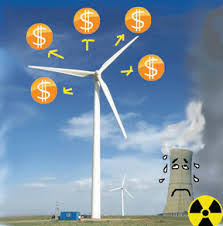
Craig Dalzell: I’M going to preface this article by saying that unlike
many of my comrades across the green and environmental movement, I’m not
ideologically against nuclear power per se.
In this decade of the 21st
century, we’re seeing the true energy transition start to change the
world around us faster than we realise. When I was in school, renewables
were taught as a thing that existed but were likely to only supply a small
fraction of the energy future. Today, wind and increasingly solar power are
dominating the globe in terms of new installed capacity.
Just after I left
high school in 2002, the total combined new energy generation installed
between both renewables and nuclear was about 20% of the global total that
year. Now, it’s more like 80%. And that’s massively overemphasising the
impact of nuclear.
The International Energy Agency’s 2025 Global Energy
Review found that more than 7GW of new nuclear power capacity was brought
online in the previous year compared to 700GW of new wind turbines and
solar photovoltaic panels (with solar providing around three-quarters of
that capacity). The age not just of renewables but of solar power
specifically, appears to be crashing over us.
It makes sense. The panels
are now cheap and easy to produce as once you have a production line going
it can just keep fabricating them. They’re easy to install just about
anywhere (to the point where in places like Germany it’s increasingly
common to see folk hanging them from their balconies). And every single new
panel installed anywhere starts producing power immediately with no fuel,
almost no maintenance and will keep producing power for decades.
The efficiencies of production have been stark. A solar PV panel in my school
days cost about £4.87 per watt in today’s prices. That panel now costs
about 20p per watt. A 96% price reduction in real terms.
Conventional nuclear power, on the other hand, requires years to decades of planning and
construction, truly massive upfront capital costs and the plants don’t
produce any power until they are switched on.
One way that the nuclear
sector is adapting is through the development of “small modular
reactors” (SMRs). Last week, Keir Starmer used Donald Trump’s state
visit to sign a deal for the US to produce such reactors for the UK. Costs
are expected to remain high though. Right now, a watt of conventional
nuclear energy costs about three to five times as much as solar and even
the best estimates for SMR cost reductions aren’t expected to make up
that gap.
The UK Government accepts that SMRs will only reduce the cost of
electricity by about 20% compared to conventional nuclear, which will mean
they will remain the most expensive way to generate electricity for the
foreseeable future. The future of energy, especially in Scotland, isn’t
going to be expensive conventional nuclear or expensive and untested SMRs.
It’s going to be by capturing the wind, waves and sun all around us and
bottling it for later use.
The National 25th Sept 2025, https://www.thenational.scot/politics/25496145.sorry-donald-trump-keir-starmer—scotland-doesnt-need-nuclear/
SNP defence plans ‘risk EU and NATO membership’, analyst warns
Current SNP policy states that nuclear weapons would be removed from
Scotland ‘in the safest and quickest way possible’ after independence. A
defence analyst has warned the SNP’s current plans for defence risk
potential future EU membership, NATO relations and independence.
He also
stressed ditching nuclear would take “a minimum” of two decades. Edward
Arnold, a senior research fellow for European security within the
International Security department at the Royal United Services Institute
(RUSI), has said Scotland must avoid giving NATO a “massive headache” by
ditching nuclear – a move he said would, in turn, aggravate EU members.
Current SNP policy states that nuclear weapons would be removed from
Scotland “in the safest and quickest way possible” after independence. It
also states that Scotland would apply to join NATO and the European Union,
participating fully in the EU’s Common Security and Defence Policy.
However, Mr Arnold told The Herald NATO membership and the removal of the
Trident nuclear deterrent at Faslane are “completely incompatible”.
Herald 25th Sept 2025, https://www.heraldscotland.com/politics/westminster/25492447.snp-defence-plans-risk-eu-nato-membership-analyst-warns/
Britain recognises Palestine. Now what?
| Declassified, UK 25 Sept 25 This week, UK prime minister Keir Starmer announced that Britain has officially recognised the state of Palestine. The Labour government had previously said it would only use the threat of recognition to pressure Israel to agree to a ceasefire and allow aid into Gaza .This clearly didn’t work and, amid mounting public pressue, the UK joined the Canadian, Australian, and Portuguese governments in recognising Palestine based on 1967 borders. Foreign Office maps have now been updated to include Gaza and the West Bank as “Palestine” rather than the “Occupied Palestinian Territories”. Benjamin Netanyahu responded to the move with fury, vowing that a Palestinian state “will not happen” and claiming the move “endangers our existence and constitutes an absurd reward for terrorism”. The Israeli prime minister found sympathy in British circles, with Nigel Farage sending his condolences and Tory party leader Kemi Badenoch calling the move “absolutely disastrous”. But what does recognition actually mean? For starters, it will not mean that Palestinians have the right to defend themselves from Israel – a right that is apparently exclusively available to the Israelis. “Our position is clear”, wrote Starmer in Israeli media outlet Ynet. “The Palestinian state must be demilitarised. It will have no army or air force”. Israel will thus continue to control the land, sea, and air borders around Palestine, signifiying no meaningful change in the current status quo. The Palestinians will also be deprived of their right to self-determination, with Starmer stressing that “Hamas can have no future” in Palestine, including “no role in government” or security. So what is Britain actually recognising? As Ilan Pappé recently wrote in Declassified, “geographically recognising [Palestine in its current state] is tantamount to recognising a disempowered political entity stretching over less than 20 percent of the West Bank”. There are currently more than 800,000 Jewish settlers in the West Bank, with more settlements being approved by the Israeli government and extremist ministers pushing for annexation of the area. Gaza, meanwhile, has been razed to the ground. In these circumstances, Britain’s recognition of Palestine looks more like empty gesture politics than a statement of intent to change the material reality on the ground. Indeed, it is difficult to take Starmer seriously when the UK continues to arm Israel and send spy flights over Gaza, while refusing to impose a trade ban on products from illegal settlements. Rather than helping to bring a new Palestinian reality into being, then, Starmer appears to be recognising a cadaver that the UK government had a hand in killing. |
UK Minister cites national security and public safety in dismissing 148-home scheme near nuclear weapons facility
The planning minister has dismissed
plans for 148 countryside homes citing “national security” and public
safety concerns due to the presence of a nearby nuclear warheads facility,
despite the local authority having a housing land supply of less than two
years.
Planning Resource 24th Sept 2025, https://www.planningresource.co.uk/article/1933536/minister-cites-national-security-public-safety-dismissing-148-home-scheme-near-nuclear-weapons-facility
‘Inevitable’ that nuclear waste facility will go ahead without local consent says former minister.

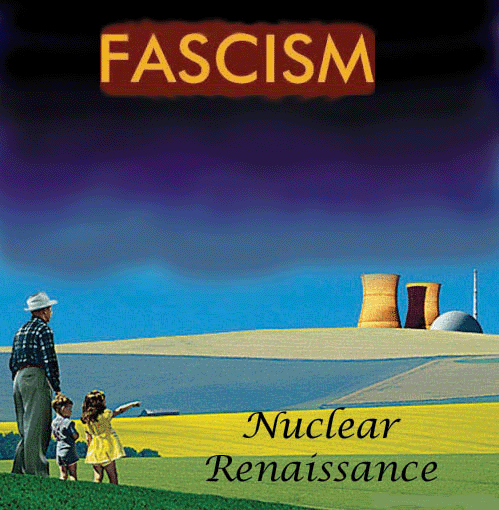
Now we see it- the nuclear industry, adopted by government, will lead to fascism.
Added to the madness, governments are hell-bent on making more nuclear radioactive trash that they don’t know how to get rid of.
“However, in the case of the UK, the DESNZ’s review raises the possibility that overriding public approval could be a matter of policy.
“These developments point to a growing sense of futility and desperation, to secure both a suitable site for nuclear waste disposal and public support for it.”
23 Sep, 2025 By Tom Pashby https://www.newcivilengineer.com/latest/inevitable-that-nuclear-waste-facility-will-go-ahead-without-local-consent-says-former-minister-23-09-2025/
It is “inevitable” that the government moves away from the consent-based approach for deciding where to site the planned geological disposal facility (GDF) for nuclear waste, a former Department for Energy Security and Net Zero (DESNZ) minister has told NCE.
The comments come as reports suggest the government is considering scrapping the “consent-based” approach for siting the GDF. However, DESNZ has asserted that the reports are “wrong” and “no changes are planned to this process currently”.
The GDF is currently the only solution proposed by the government for disposing of high level nuclear waste (HLW). HLW is generated by both the civil and defence nuclear sectors
It would involve disposing of HLW in an engineered vault placed between 200m and 1km underground, covering an area of approximately 1km2 on the surface.
Work to select a GDF site should take 20 years, according to the government body responsible for the project – Nuclear Waste Services (NWS) – and a further 150 years to build, fill and close the facility.
The HLW then needs to sit and remain undisturbed for 100,000 years before its radioactivity has reduced sufficiently for people to be able to be near it. Due to the hazards associated with radioactive waste, the government has always maintained that a GDF will only be sited in a location where the local community has agreed to host it. This is known as the “consent-based” approach and it has been in discussion with a few communities for a number of years.
Consent-based approach seeing little progress over years
The “voluntary” or “consent-based” approach to deciding where to site a GDF was first proposed by the government in a White Paper published in 2008 titled Managing radioactive waste safely: a framework for implementing geological disposal.
“For the purposes of this White Paper ‘an approach based on voluntarism’ means one in which communities voluntarily express an interest in taking part in the process that will ultimately provide a site for a geological disposal facility,” the paper said.
“Initially communities will be invited to express an interest in finding out more about what hosting a geological disposal facility would mean for the community in the long term.
“Participation up until late in the process, when underground operations and construction are due to begin, will be without commitment to further stages, whether on the part of the community or government. If at any stage a community or Government wished to withdraw then its involvement in the process would stop.
“In practice, development could also be halted by the independent regulators at any point in the process through a refusal to grant authorisations for the next stage of work.”
The government further committed to the approach in 2014, when the then secretary of state for energy and climate change Ed Davey said: “The UK Government also continues to favour an approach to identifying potential sites for a GDF that involves working with communities who are willing to participate in the siting process.”
Despite having been committed to the approach for more than 10 years, NWS only has two communities it is making gradual progress with via community partnerships – Mid Copeland and South Copeland. Lincolnshire withdrew from the process in June after a change in governance.
With the government pushing for the deployment of dozens more nuclear reactors in the coming decades, the need to confirm a long-term solution for the waste is pressing – something that has been stressed to NCE by both the Nuclear Industry Association (NIA) and anti-nuclear campaigners.
Reports say Government reviewing consent-based approach
The Telegraph published a story on 22 September that claimed, based on a government source, that DESNZ had decided to review the consent-based approach to siting the GDF.
The source told the newspaper that conversations were taking place within government to consider prioritising areas with the best geology rather than areas with the most welcoming communities.
Ending the consent-based process could result in ministers effectively imposing a GDF on a community, although they would still face the standard planning and consenting obstacles, including judicial reviews from campaigners.
A DESNZ spokesperson denied the reports, saying: “Our position continues to be that any potential geological disposal facility site will be subject to agreement with the community and won’t be imposed on an area without local consent.
“Progress continues to be made, with two areas in Cumberland taking part in the siting process for this multi-billion-pound facility, which would bring thousands of skilled jobs and economic growth.”
Former minister tells NCE ‘we must get on with GDF’
Lord Hunt of Kings Heath is now a backbench Labour peer but was a DESNZ minister of state from July 2024 to May 2025. He was also an energy minister at the end of the previous Labour government from 2008 to 2010 and served in shadow front bench roles from 2010 to 2018.
“This is an inevitable approach. We must get on with GDF,” Hunt told NCE.
“It’s vital to the nuclear programme. It’s a matter of national strategic importance and should proceed on that basis.”
Reported policy change points to ‘growing sense of desperation’
Nuclear Information Service research manager Okopi Ajonye told NCE: “The prospect of the DESNZ reforming policy to override local consent for hosting a geological disposal facility is very concerning.”
“Furthermore, it mirrors developments in Australia, where efforts to secure sites for nuclear waste disposal have, just like the UK, been repeatedly stalled by local opposition.
“But critics are now concerned that recent legislation grants broad powers to the Australian government to designate any site as a nuclear waste dump, even without local or indigenous approval.”
“However, in the case of the UK, the DESNZ’s review raises the possibility that overriding public approval could be a matter of policy.
“These developments point to a growing sense of futility and desperation, to secure both a suitable site for nuclear waste disposal and public support for it.”
End to consent-based approach would ‘lead to more vociferous public resistance’
Nuclear Free Local Authorities secretary Richard Outram told NCE: “Any decision to abandon the established consent-based approach to siting a nuclear waste dump will be an admission by ministers that no community actually wants to host it.
“Proposals to site a GDF at South Holderness and Theddlethorpe were roundly defeated by massive and persistent public protests, backed by responsive local councillors.
“Opposition is also growing in South Copeland with residents impacted by the declared area of focus up in arms.”
Outram added that two local councils in the South Copeland area – Millom Town Council and Whicham Parish Council – have withdrawn their support for the process, and a third – Millom Without Parish Council – is “about to confer with parishioners about continued engagement”, he said.
He also said that the NWS community partnership was “described in a recent external review as ‘dysfunctional’ and seemingly at war with itself”.
“Replacing voluntarism with a plan to railroad such a controversial project onto an unwilling community will be a retrograde step and simply lead to more vociferous public resistance,” he added.
Government reveals to NCE it is ‘replanning’ GDF project
These latest developments add to the uncertainty that has bubbled around the GDF project in recent months.
In August, the Treasury’s National Infrastructure and Service Transformation Authority (Nista) assessed the delivery confidence of the GDF as “appears unachievable” and said the cost could be as much as £53.3bn.
Following the rating, NCE asked DESNZ via the Freedom of Information Act whether the government was responding by changing its approach to the GDF project. It said that it is “undertaking some replanning to mitigate risks and support ongoing progress” on its major projects, including the GDF.
DESNZ added: “However, a GDF will always remain necessary as there are currently no credible alternatives that would accommodate all categories of waste in the inventory for disposal.”
Nuclear industry says credible GDF plan needed for investor confidence
The Nuclear Industry Association, which represents more than 300 companies across the civil and defence nuclear supply chain, was perturbed by this uncertainty around the GDF and told NCE: “A credible, long-term policy on HLW disposal is very important. Developers need confidence that the back end of the fuel cycle is being responsibly and sustainably managed, not just for regulatory compliance but also to secure investor confidence and public trust.
“Clarity and credibility in government policy reduces uncertainty, helps de-risk new nuclear projects and ensures that developers can focus on safe, efficient generation”
Nuclear Free Local Authorities join global call on World Bank to abandon plans to back new nuclear

24th September 2025, Nuclear Free Local Authorities
The NFLAs have become a co-signatory to a petition calling on the World Bank and Asian Development Bank to abandon their plans to finance new nuclear plants.
The online petition was launched by 64 Non-Government Organisations from 25 countries and regions on 1 September/
The World Bank and the ADB are funded by governments worldwide to support economic development, poverty reduction, and enhance infrastructure. Until now, both institutions have refrained from financing nuclear power, citing nuclear proliferation, safety concerns, dealing with the intractable problem of radioactive waste, and high costs as reasons to deny funding.
However, on June 10, the World Bank’s Board of Directors decided to lift the ban on nuclear power financing. Meanwhile, the ADB is currently revising its energy policy with plans to include support for nuclear power as part of the review.
The very concerns that have caused both institutions to be cautious about financing nuclear power remain unresolved.
The petition highlights these ongoing issues and stresses that “supporting the construction of nuclear power plants in developing countries imposes serious long-term risks and enormous economic burdens on both present and future generations in those countries.”
NFLAs urge supportive NGOs and individuals to join us in signing this petition.
You are urged to go to the website: https://chng.it/G9MCKn6Gpv…………………………………….. https://www.nuclearpolicy.info/news/nflas-join-global-call-on-world-bank-to-abandon-plans-to-back-new-nuclear/
UK to build 12 advanced “small ” modular nuclear plants in £10bn plan

COMMENT. A lovely glowing picture of this proposed wonderful source of electricity. But they’re very coy about telling us about the real cost of it all, the dangerous new radioactive fuel type, and the size of these so-called “small” nuclear reactors. And of course – not a mention of their radioactive wastes
COMMENT. A lovely glowing picture of this proposed wonderful source of electricity. But they’re very coy about telling us about the real cost of it all, the dangerous new radioactive fuel type, and the size of these so-called “small” nuclear reactors. And of course – not a mention of their radioactive wastes
Bernard Gray, 21 Sept 25, https://observer.co.uk/news/business/article/uk-to-build-12-nuclear-plants-in-10bn-plan
At a projected cost of £10bn – a rough estimate that could well balloon – two companies, Centrica, the parent of British Gas, and X-energy, a US startup, are proposing to develop and build a completely novel type of nuclear power plant.
The technical challenges for the two businesses are huge; the financial challenges perhaps even more so. Centrica is a large company with a big balance sheet, but it has limited nuclear experience. X-energy is a startup with some nuclear expertise, but which has raised only about $1bn in private capital and $1.2bn from the US energy department since the company was founded in 2009.
Far more money than that will be needed to complete the design, while the build of the fuel plant and demonstrator reactors will also cost an order of magnitude more.
Finishing the detailed design of both reactor and fuel plant, and getting them licensed to be built, is a work in progress but it will not be quick. X-energy has tried to boost its financial resources by partnering with potential users: the first is chemical producer Dow, for which X-energy is proposing to build a station to power a plant on the Texas Gulf coast.
Amazon has also invested in the company, and there is talk of power stations running Amazon datacentres in the Pacific north-west. The online retailer led investors in raising $700m to fund the next stage of X-energy’s development.
It is in this context that the Hartlepool proposal sits. The UK station would be the largest X-energy has attempted and Centrica has agreed to invest an undisclosed sum into the scheme.
The two companies are also seeking other equity investors. But even so, this will not be enough to fund even the completion of design development, let alone the build.
No UK government money is being proposed at this point, but Chris O’Shea, chief executive of Centrica, floated the idea last week that the project could be funded by a similar mechanism to the newly agreed Sizewell C reactor.
Under this plan, the £10bn that he says would be required to fund building would be added incrementally to all UK consumers’ electricity bills, to provide cashflow during construction. If that is what happens, then far from being an inward investment, UK consumers will have provided assistance to develop a US reactor design that it can sell elsewhere. The hurdles that have to be cleared to get to that point are, however, huge.
The design being proposed is unlike anything before seen on an electricity grid. Instead of the usual large fuel rods sitting in a highly pressurised water bath, this will use tennis-ball-sized pebbles of nuclear fuel to create the reaction, cooled by a flow of helium.
The idea for this kind of power station has been around for more than half a century, but it has never before been used in a commercial operation. It has some advantages over normal water-cooled reactors. The helium coolant does not pick up radioactivity so, unlike water, the design does not spread radioactivity beyond the fuel pebbles.
The pebbles are composed of agglomerations of much smaller ball bearings, each of which is like a Russian doll: shells within shells. The composition of these allows the fuel to act as its own barrier, stopping it melting and avoiding the need for a thick steel pressure cooker to make sure that any accident does not cause a huge environmental disaster, such as those at Chornobyl or Fukushima.
However, there are technical difficulties that have stopped this design being used before. The fuel is extremely complex and expensive to make. Some of the materials required are very scarce, including the nuclear component itself, which would mostly be available from Russia. It is far from clear that this kind of reactor can be commercially competitive against more traditional designs.
Three formal ‘special measures’ notices remain in place amid ongoing safety issues at Dounreay

By Iain Grant, 22 September 2025
Dounreay remains under ‘enhanced’ oversight from
its regulators over ongoing safety issues which have been flagged up at the
plant. While some have been resolved, three formal notices remain in force
including the need to improve the storage of drums containing radioactive
sodium and to better control the risk posed by ‘dangerous substances and
explosive atmospheres. ‘
The Office for Nuclear Regulation announced in June
last year that Dounreay was in “enhanced regulatory attention for
safety.” It had a raft of concerns covering ageing, deteriorating plant,
radioactive leaks and the storage of chemical and radioactive materials.
NRS Dounreay managing director Dave Wilson claims good progress has been
made since. Speaking at Wednesday’s meeting of Dounreay Stakeholder Group,
he said: “We’re pushing ahead with our plan to return to a routine
regulatory position.” He said it had taken advantage of the good weather to
‘rattle through’ the list of buildings in need of urgent attention. This
included work to fix leaks in the roof of the turbine hall of the prototype
fast reactor which have been blamed for corroding sodium drums stored
there. An extra £3 million was allocated in 2024/25 to address the
concerns about the state of the buildings and modernise elderly electrical
plant. The £12 million budget has increased to £19 million in the current
financial year.
John O’Groat Journal 22nd Sept 2025, https://www.johnogroat-journal.co.uk/news/three-formal-special-measures-notices-remain-in-place-amid-392690/
Cumberland Council is Looking Like Last Line of Defence Against Lake District Coast Nuclear Dump So Why Won’t They Hold A Full Vote and Full Debate ?

On By mariannewildart, Radiation Free Lakeland
Below are letters following Cumberland Council’s Nuclear Issues Board meeting yesterday and the news that the Government are looking to scrap the already flimsy “Test of Public Support” which would be limited to the Lake District coast’s “Areas of Focus” for the surface mine shafts through which to trundle plutonium and high level wastes to the proposed sub-sea mine between the Lake District and the Isle of Man.
Councillor Andy Pratt is Chair of the South-Copeland Community Partnership with the Developer Nuclear Waste Services (Friends of the Lake District are also members of this diabolic partnership). Councillor Mark Fryer is Cumberland Council Leader. Yesterday after the Nuclear Issues Board meeting I asked again for the Council to hold a full debate and full vote he said it “was not the right time” (we are four years into this “process”) and “it will happen when I say so”. I said: “what about democracy”? and he said ‘it is democracy, I’m elected leader, not you!’
He really said that – which kind of underlines the need for a full debate and vote – which ever way it goes the full council should take democratic responsibility now especially as they are accepting millions from the developer, Nuclear Waste Services.
sent today..
Dear Cllr Pratt and members of the Nuclear Issues Board,
Summary
Can you point to the documents showing that as you claim the “GDF has always assumed plutonium would go into the GDF?”
Please can you list any other country burying plutonium under the sea bed?
If so please send the documentation.
We demand the very least of demands, that the democratic duty of Cumberland Council is upheld and that a full debate and full vote is taken before another step towards a deep sub-sea mine for high level wastes and plutonium.
Response to Chair of South Copeland Community Partnership
When you and just three other councillors took the decision to take Cumbria once again into the GDF (deep sub-sea nuclear dump) plan, plutonium was most definitely not on the inventory.
Can you point to the documents showing that as you claim the “GDF has always assumed plutonium would go into the GDF?”
To repeat, this is unprecedented. No other country is burying plutonium under the seabed.
Please can you list any other country burying plutonium under the sea bed?
If so please send the documentation.
I attach again the recent paper on the dangers of burying plutonium en-masse (it must not come into contact with water!) and urge all the nuclear issues board to read it.
Finland, Sweden, Canada and France are not burying 140 tonnes of plutonium in the sub-sea geology and do not plan to bury huge amounts of plutonium in sub-sea geology. All those international plans are on a far smaller scale than the UK proposal and all of those plans are still in the experimental stage and are not in mountainous regions with complex and faulted geology.
Your reply ignores our call for the full council to hold a full debate and vote. It is painfully clear that the elected leaders of the new Unitary Authority, Cumberland Council, who are responsible for the immediate regions in the “Areas of Focus” for a GDF (and the wider area) are not listening to concerns from communities or reading, or seemingly understanding the complexities of the already known geology.
Also not read or seemingly understood are alternatives to GDF which despite it not being our responsibility to provide, we have already outlined along with Nuclear Free Local Authorities and others including geologists and the Scottish Government (see previous letter).
Accountability
The lack of Cumberland Council’s accountability for this situation is absolutely unprecedented. Never before has humanity made decisions that are potentially so damaging on behalf of 100,000 years (and more) of future generations. Other councils have had full debates and votes BEFORE embarking on long term “Partnership” with Nuclear Waste Services to deliver a GDF.
Cumbria has the most understood and explored geology in the UK due to the presence of Sellafield and multiple previous enquiries into “suitability” for GDFs of far lesser impact and all rejected because of the geology and mountainous context. This is a matter of public record which councillors should be aware of.
As Leader Mark Fryer pointed out after the meeting yesterday the few councillors who took the decision on the whole council’s and Cumbria’s behalf may well not be there to take the blame for total collapse of house prices (already happening in “Areas of Focus”)…….to be evacuated due to sub-sea criticality of the plutonium, to find out one day that their drinking water has been poisoned. Their names will not be in the history books. They will not pay the price in any way that counts. Descendants of the few councillors who undemocratically held the door open to GDF may well pay the ultimate price but who cares about them?
Rachel Reeves wants to dismiss opposition to the plans as ‘NIMBYism’. But the concerns held by local opposition groups are valid, and backed by science that isn’t funded by Nuclear Waste Services. ………………………………………………………………………………………………………………… https://mariannewildart.wordpress.com/2025/09/23/cumberland-council-is-looking-like-last-line-of-defence-against-lake-district-coast-nuclear-dump-so-why-wont-they-hold-a-full-vote-and-full-debate/
Miliband poised to overrule local opposition to build nuclear waste dumps.
Review considers scrapping public votes on sites for radioactive storage facilities
Matt Oliver Industry Editor. Dan Martin
Opposition to nuclear waste dumps in the English countryside could
be bypassed as Ed Miliband considers scrapping the need for local consent.
A review has been launched by the Department for Energy Security and Net
Zero (DESNZ), which could scrap the need for public votes when building
storage facilities for radioactive material.
A search is under way to find
a coastal location to host the UK’s first geological disposal facility
(GDF), a vast network of tunnels and vaults that would extend under the sea
and be used to store spent fuel from nuclear power plants. Opposition from
residents and councils is a particularly significant roadblock because the
Government’s policy is to only proceed with a scheme that has secured
local consent.
However, officials in the DESNZ have now begun a review of
that policy, The Telegraph understands. A Whitehall source stressed that no
decisions had been made but acknowledged that one potential outcome was
that other factors could be prioritised over local support, such as the
favourableness of local geology or the cost to the national purse.
They said the review was prompted by recent decisions of councils in
Lincolnshire and East Yorkshire to pull out of talks with Nuclear Waste
Services, the quango tasked with delivering the GDF. Talks are still
ongoing with local authorities in Cumbria, where there is greater local
support.
In its annual report last month, Nista downgraded the GDF
scheme’s rating from “amber” to “red” and said the change
reflected the “unaffordability” of the proposals. Nuclear Waste
Services has forecast that the facility could cost between £20bn and
£53bn to build, in a sign of the huge uncertainty surrounding the
project’s costs. Wherever it is eventually built, the Government has
argued that the GDF will bring billions of pounds of investment and more
than 4,000 local jobs. But Reform-run Lincolnshire county council and
Conservative-run East Lindsey council both voted to pull out of talks with
Nuclear Waste Services this year, with Lincolnshire councillors celebrating
with members of the public by popping bottles of champagne.
Sean Matthews, the county council’s leader, said locals had been subjected to years of
“distress and uncertainty”, adding: “I would like to apologise to the
communities who have been treated appallingly.” Guardians of the East
Coast, a pressure group set up to oppose the plans, said the looming
proposals had left people “unable to go on with their lives” or sell
their homes.
Telegraph 22nd Sept 2025, https://www.telegraph.co.uk/business/2025/09/22/miliband-poised-to-overrule-nimbys-to-build-nuclear-waste/
Who are Britain Remade?

By Mike Small, https://bellacaledonia.org.uk/2025/05/01/who-are-britain-remade/
There’s a concerted attempt to attack Scotland’s long-standing commitment to no new nuclear power, alongside a full-scale assault on the idea of Net Zero, and the very basics of climate policy (however inadequate mainstream policy is).
This is being led by Nigel Farage who has called Net Zero ‘the New Brexit’, whatever that means. All this has been echoed by Tony Blair’s intervention this week where he argued that any attempt to limit fossil fuels in the short term or encourages people to limit consumption is “doomed to fail”. Alongside this we can see Scottish Labour’s recent commitment to the cause of new nuclear power in Scotland.
Today The Scotsman ran with a front-page splash all about how ‘SNP voters back nuclear power’ by Deputy Political Editor David Bol and Alexander Brown.
The article was replete with quotes from Labour MSP for East Lothian, Martin Whitfield, Scottish Conservative MP, John Lamont, who said the Scottish Government embracing nuclear power would be “basic common sense”. Then there’s a quote from Sam Richards, founder and campaign director for Britain Remade, who, it turns out commissioned the poll and was also enthusiastically pro-nuclear.
What The Scotsman didn’t explain though, was who ‘Britain Remade’ are? They’re presented as if they’re maybe pollsters or some independent think-tank.
But Britain Remade is a Tory think-tank and lobby group campaigning on behalf of nuclear power. Jason Brown is Head of Communications for Britain Remade, a former No. 10 media Special Adviser and Ben Houchen’s comms Adviser.
Jeremy Driver is the Head of Campaigns at Britain Remade, a former Lloyds Banker and Parliamentary Assistant to Ann Soubry. Sam Dumitriu is Head of Policy at Britain Remade who formerly worked at the Adam Smith Institute. These are Tory SPADS working on their own campaign to support new nuclear in Scotland: Lift The Ban On New Scottish Nuclear Power.
Britain Remade claimed they are not affiliated: “We’re an independent grassroots organisation. We are not affiliated with, or part of, any political party” their website says. They may not be officially affiliated to any party, but it’s very clear where their politics (and their staff) come from.
So here we have the Scotsman giving over its front-page to a Tory lobby group to promote their campaign. On the same day they published a similar piece in the Telegraph “SNP’s ‘senseless’ nuclear ban ‘damaging Scotland’” so it’s really working for them.
This is not just a question of client journalism, it’s a question of how far right-wing forces, often working with dark money, will attempt to derail even the most modest (and completely inadequate) environmental policies. Quite why Saudi-funded Tony Blair should jump on the anti Net Zero bandwagon is anybody’s guess, but it’s quite clear there is a coordinated pro-nuclear lobbying group in action in Scotland that pans across the Conservatives and Labour parties, and is supported by astroturf groups and pliant media friends. Watch this space for more on the new nuclear lobby.
Plutonium, Public Money and a Perilous Nuclear Dump on the Lake District Coast, a Letter to Cumberland Council’s “Nuclear Issues Board”

By mariannewildart, https://mariannewildart.wordpress.com/2025/09/19/plutonium-public-money-and-a-perilous-nuclear-dump-on-the-lake-district-coast-a-letter-to-cumberland-councils-nuclear-issues-board/
Sent by Email 19th September 2025
For consideration by the Nuclear Issues Board
of Cumberland Council on Monday 22nd Sept 2025
Dear Nuclear Issues Board of Cumberland Council,
On 14 October 2021, Copeland Borough Council’s Executive of just four councillors took the decision to establish two Geological Disposal Facility (GDF) Community Partnerships in accordance with the UK Government’s “GDF siting process”
West Cumbria is predictably the only consideration by NWS as a potential site for a GDF (also known as a nuclear waste dump for the abandonment of high level wastes).
A lot has changed since those four Copeland councillors put forward the Lake District coast as a sacrifice zone for the UK’s nuclear waste geological disposal plan.
We urge the Nuclear Issues Board to exercise their democratic duty and call for a debate by the Full Cumberland Council and a Full vote before going any further in the partnership with Nuclear Waste Services for delivery of a very deep, very hot and very experimental nuclear waste dump for high level wastes.
There is no democratic mandate to continue in partnership with Nuclear Waste Services in delivery of a GDF for the following reasons:
Community Unwillingness.
Despite the ongoing Community Partnership funding, Millom Town Council and Whicham Parish Council have both withdrawn from the South Copeland Community Partnership. Whicham PC also held a parish poll that clearly indicated a 77% majority against the GDF . Millom Without Parish Council will be consulting its parishioners on withdrawal. An external review of the SCCP also found the Partnership to be totally dysfunctional with infighting between community representatives and NWS staff.
The Community of Seascale within the Mid-Copeland Community Partnership have also voiced opposition. Seascale Parish Council talked about GDF’s potential area of focus for Headworks and were shown a map of a potential area for Seascale: “as a Parish Council we rejected the proposal as it was not suitable for Seascale at all, but there needs to be more that just our voice, attached is a map of the proposed Headworks location for Seascale.. We encourage residents to attend these events with GDF and voice their concerns too.
” It is ironic, given the above, that one of the Copeland (now Cumberland) councillors who took the delegated decision to ‘volunteer’ the West Cumbrian coastline once again into the nuclear dump plan is Vice chair of Seascale Parish Council.
It is clear that previous geological work, public inquiries and Cumbria County Council resolutions on this subject are being ignored in order to proceed with a clearly unwanted, expensive, ultimately public money and time wasting project once more, casting known and unknown blight on communities for decades to come. As Martin Lowe of Close Capenhurst has observed “Cumberland Council have a duty of care to the public which this development flies in the face of.”
Increase of the mine footprint from 25km2 to 36km2 since Copeland Executive volunteered the Lake District coast.
Initially NWS literature stated that the mine footprint would be 25km2. A letter to Lakes Against Nuclear Dump from Nuclear Waste Services states that the footprint would now be 36km2 (or larger).
Increase in heat of the “thermal footprint” of the GDF from 100 degrees c to 200 degrees c.
100 degrees c is the maximum heat “allowed” to try to ensure integrity of the bentonite buffer (clay slurry to be pumped into the mine as backfill and to delay leakage), however the thermal footprint has been increased to 200 degrees c as confirmed in a letter to Lakes Against Nuclear Dump from Nuclear Waste Services.
Inclusion of Plutonium along with High Level Wastes.
The inclusion of plutonium for burial in a GDF is a new, experimental and dangerous concept. There are unresolved (and likely unresolvable) difficulties of containing the radiotoxic nature and criticality of plutonium in a geological disposal facility.
“The problems of criticality and toxicity to the biosphere essentially come down to water—it creates the conditions for potential criticality and provides the transport mechanism for plutonium’s toxicity.” (Plutonium—the complex and ‘forever’ radiotoxic element of nuclear waste. How exactly should we manage its containment? Nick Scarr 22/08/25).
Top geologists call the plan “dangerous”
– this is why…
Professor Stuart Haszeldine, Professor of Carbon Capture and Storage, School of Geosciences Edinburgh Climate Change Institute said: “Making waste into specialised solid compounds can help to become more resistant to dissolution in groundwater. But the heat generated from the radioactive decay of isotopes is not affected by that re-engineering. Adding material which may heat to 100-200C is a huge disruption and will undoubtedly change the pathways of groundwater flow. This is like having an electric kettle containing stable stationary water and then turning on the electricity to add heat – the water soon circulates and if heating continues, the water boils.”
Professor Haszeldine added: “Have the developers actually made computer predictions of these effects in this GDF? Because plutonium has isotopes which can last for thousands of years, it may be sensible to spread that through the GDF to minimise heating – but that will make predictions of containment in circulating hot water much more difficult. It’s perfectly reasonable to think of a 150C-200C heat source at 0.5km, producing a geyser of boiling water intermittently erupting at surface temperatures above boiling.”
The spread of this increased temperature, known as a thermal pulse, would be conducted through the rock over several thousand years. With the additional pressure of water column above the GDF (a hypothetical 500m below the surface), water would boil at the higher temperature of 250C, in which case superheated steam may also occur. There is currently no guarantee that the maximum heat of the GDF will remain at 200C.
Even a 1.0C increase in ocean water [ii]can cause ‘massive impacts’ on the health of sea life and contribute to marine desertification, including loss of biodiversity, collapse of fisheries, and accelerated climate change. The proposed GDF is planned to be at least 37 km3, a substantial section of seabed under the Irish Sea, in a Marine Protected Area. Similar to nature reserves or SSSIs, Marine Protected Areas are parts of the ocean established to protect habitats, species and healthy, functioning marine ecosystems. Professor Haszeldine pointed out that seeps of warm or hot waterfrom a GDF onto the seabed are unlikely to stabilise, repair, and rewild the natural seabed ecosystems.
Professor David K. Smythe, Emeritus Professor of Geophysics, University of Glasgow, said he agreed with Professor Haszeldine about the danger of trying to bury High Level Waste, whether it was conditioned or not. “The waste should be kept on the surface of the earth, and immobilised beyond any possibility of re-use, until a proper long-term solution is found.”
For all these reasons and many more, thousands of people including hundreds of Cumbrians have signed a pettion calling for the full Cumberland Council to debate and vote before going any further in the partnership with Nuclear Waste Services for delivery of an experimental and uniquely dangerous plan to abandon nuclear wastes.
We urge the Nuclear Issues Board to exercise their democratic duty and call for a full debate and vote by Cumberland Council. Currently there is no democratic mandate to continue with the GDF “process” without at least carrying out a full debate and full vote by all Cumberland Councillors
Yours sincerely,
Marianne Birkby, Lakes Against Nuclear Dump, a Radiation Free Lakeland campaign
Richard Outram, Secretary of the UK/Ireland Nuclear Free Local Authorities (NFLAs)
Can the UK fast-track nuclear power without cutting corners on safety?

The UK’s nuclear regulator is being asked to consider radically
different designs on a scale and pace never before seen. That’s partly
why, as part of the deal, the two countries have agreed to accept each
other’s safety checks. The government claims this will “halve the time
for a nuclear project to be licensed”. The question is whether this can
be done as safely.
The US and UK take fundamentally different approaches to
nuclear regulation. The US’s Nuclear Regulation Commission (NRC) takes a
“prescriptive” approach. It sets detailed rules based on its own
research and enforces them directly. Like police setting speed limits, the
regulator decides the standards and then ensures nuclear operators meet
them. If an accident happens, operators can point to meeting every
requirement as evidence they followed the rules. They could even
legitimately blame the regulator.
The UK’s Office for Nuclear Regulation
(ONR) takes a “descriptive” approach. It sets broad standards but
leaves operators to prove how they will meet them. In road terms, the US
sets the speed limit and checks drivers obey it. The UK simply says cars
must stay on the road, leaving drivers to decide their own limits, prove
they’re safe, and take full responsibility if they crash. These two
approaches are driven to a large extent by the two country’s history and
make up of their nuclear industries. So while UK-US collaboration could
boost Britain’s nuclear industry and accelerate the path to low-carbon
energy, independence and transparency will be essential. Any perception of
corner cutting or transatlantic political interference could undermine
public trust and derail Britain’s nuclear ambitions.
The Conversation 18th Sept 2025, https://theconversation.com/can-the-uk-fast-track-nuclear-power-without-cutting-corners-on-safety-265614
Why Starmer’s nuclear ‘golden age’ risks becoming a lot of hot air.

Crippling costs and mountains of red tape threaten to pour cold water on the PM’s ambitions.
Donald Trump hasn’t been shy about criticising British
energy policy under Labour, lashing out at “ugly” wind farms and
crippling taxes on North Sea oil and gas. Yet one area where the US
president and Sir Keir Starmer seem to fervently agree is on nuclear power.
This week, the US and UK governments promised to work together to deliver a
“golden age” of privately-financed power plant construction.
The agreement will see the two countries fast-track the approval of new,
cutting-edge reactor designs by recognising each other’s safety regimes – a
controversial move that has already raised the hackles of activists. But to
underline the economic prize on offer, the announcement featured a string
of eye-catching investments being looked at by American and British
companies with plans for fleets of reactors that will power the grid, as
well as high-tech data centres needed for artificial intelligence (AI)
software. British Gas owner Centrica and X-energy, a nuclear start-up
backed by Amazon, said they were exploring building up to 80 advanced
modular reactors (AMRs) capable of delivering electricity and heat to both
industrial businesses and millions of homes. Meanwhile, Holtec
International and the UK arm of EDF are looking at building a small modular
reactor (SMR) on the former site of a coal power plant in Nottinghamshire.
Micro-reactor firm Last Energy is also exploring plans to power the London
Gateway port, while Bill Gates-backed TerraPower is scouting out locations
for mini power plants as well.
On the face of it, the deals looked like a
major triumph for the Prime Minister. But industry veterans were quick to
note that, in their current form, they are just loosely-worded commitments,
with the companies yet to sign binding contracts or exchange serious sums
of cash. One potential blueprint may lie in a new report by pro-growth
campaign group Britain Remade, which argues that nuclear power can offer
“abundant, clean, reliable electricity” and lower bills for consumers –
but only if the Government overhauls red tape that is “not fit for
purpose”. “US firms want to build here,” says Sam Dumitriu, the
report’s author. “But turning it into shovels in the ground, data centres
online, on time and on budget, depends on making the UK a lower-cost,
faster place to build”
Telegraph 18th Sept 2025, https://www.telegraph.co.uk/business/2025/09/18/why-starmer-will-struggle-to-deliver-nuclear-golden-age/
1 This Month

of the week – Shut Down Drone Warfare!


Tell the Ukrainian Government to Drop Prosecution of Peace Activist Yurii Sheliazhenko

Petition to revoke the licensing of the Near Surface Nuclear Disposal Facility (NSDF) at Chalk River. https://www.ourcommons.ca/petitions/en/Petition/Details?Petition=e-7247
To see nuclear-related stories in greater depth and intensity – go to https://nuclearinformation.wordpress.com
-
Archives
- April 2026 (7)
- March 2026 (251)
- February 2026 (268)
- January 2026 (308)
- December 2025 (358)
- November 2025 (359)
- October 2025 (376)
- September 2025 (257)
- August 2025 (319)
- July 2025 (230)
- June 2025 (348)
- May 2025 (261)
-
Categories
- 1
- 1 NUCLEAR ISSUES
- business and costs
- climate change
- culture and arts
- ENERGY
- environment
- health
- history
- indigenous issues
- Legal
- marketing of nuclear
- media
- opposition to nuclear
- PERSONAL STORIES
- politics
- politics international
- Religion and ethics
- safety
- secrets,lies and civil liberties
- spinbuster
- technology
- Uranium
- wastes
- weapons and war
- Women
- 2 WORLD
- ACTION
- AFRICA
- Atrocities
- AUSTRALIA
- Christina's notes
- Christina's themes
- culture and arts
- Events
- Fuk 2022
- Fuk 2023
- Fukushima 2017
- Fukushima 2018
- fukushima 2019
- Fukushima 2020
- Fukushima 2021
- general
- global warming
- Humour (God we need it)
- Nuclear
- RARE EARTHS
- Reference
- resources – print
- Resources -audiovicual
- Weekly Newsletter
- World
- World Nuclear
- YouTube
-
RSS
Entries RSS
Comments RSS
 nuclear-news