UK High Court sides with US against Assange
UK High Court sides with US against Assange, WSW,Thomas Scripps11 August 2021 , The UK’s High Court has allowed the United States to appeal on two additional grounds the refusal of Julian Assange’s extradition by a lower court.Assange, the founder of WikiLeaks still held in Belmarsh maximum security prison, is threatened with extradition on charges under the Espionage Act with a potential life sentence for revealing state war crimes, torture, surveillance, corruption and coup plots.
On January 4, District Judge Vanessa Baraitser blocked extradition, ruling that it would be oppressive by virtue of his mental health and put him at substantial risk of suicide.Lawyers for the US government sought to appeal the decision on the five grounds:
- That Baraitser made errors of law in her application of the test under section 91 of the 2003 Extradition Act, which bars extradition if the person’s mental or physical condition would render it unjust or oppressive.
- That she ought to have notified the US ahead of time, to give the government the opportunity to provide assurances to the court that Assange’s health would be looked after.
- That the judge should not have accepted or at least given less weight to the evidence of the defence’s principal psychiatric expert, Professor Kopelman.
- That Baraitser erred in her overall assessment of the evidence on suicide risk.
- That the US has since provided the UK with a package of assurances about the conditions in which Assange would be held.
The US was initially granted leave to appeal on grounds one, two and five, but denied three and four. At a preliminary hearing yesterday in front of Lord Justice Holroyde and Mrs Justice Farbey, that decision was overturned and grounds three and four were granted as well.
Their decision confirms that the January 4 ruling against extradition was only a tactical pause in an ongoing pseudo-legal manhunt, which is again proceeding apace.
Baraitser’s original decision accepted every one of the prosecution’s anti-democratic, factually unsustainable arguments except on the single point of Assange’s mental health, leaving his fate hanging by a thread. Now the US is being given the opportunity to bulldoze this last remaining obstacle.As Assange’s legal team argue in their Notice of Objection, none of the points made in the appeal by the US stand up to scrutiny………………
https://www.wsws.org/en/articles/2021/08/11/assa-a11.html?fbclid=IwAR1KNVz7_kATvh53WeOYZ5iKOlCrE3-4Q9jGh9dv79DUkXxeezC91VXjmbU
Men, Conservative Party supporters and Brexit-backers more likely to support use of nuclear weapons

Men, Conservative Party supporters and Brexit-backers more likely to support use of nuclear weapons, Mirage News, University of Exeter, 13 Aug 21,
Men, Conservative Party supporters and those who wanted Britain to leave the EU, are more likely to want to retain Britain’s nuclear deterrent, a study shows.
Those who endorse superior military power worldwide as an important foreign policy goal and people who want to protect the transatlantic relationship are also more likely to be in favour of nuclear weapons, according to the research.
Those who voted ‘remain’ in the EU referendum are less likely to support keeping nuclear weapons relative to those who voted to leave the EU. Supporters of Labour, the Liberal Democrats, the SNP, UKIP, the Green Party, and Plaid Cymru are less likely to support keeping nuclear weapons.
The study, published in the European Journal of International Security, was carried out by Ben Clements, from the University of Leicester, and Catarina Thomson, from the University of Exeter.
Academics used data from the new UK Security Survey to analyse attitudes towards the possession of nuclear weapons among the British public, the majority of who supported retaining nuclear weapons.
Dr Thomson said: “We have found the recurring ‘gender gap’ found on state use of conventional military force extends to Britain’s nuclear force capabilities, with men more in favour of retaining the nuclear deterrent than women.
“Political preferences have a significant role to play in affecting people’s likelihood of supporting of Britain retaining its nuclear weapons. Identifying with political parties with a clear nuclear stance is generally significant in affecting people’s views on the UK nuclear programme.
“Our data suggest that supporters of parties that do not take an anti-nuclear stance, such as the Liberal Democrats or UKIP, are less likely to support keeping nuclear weapons. Those who voted for Britain to remain in the EU are less likely to agree with the statement that the UK should keep its nuclear weapons. This provides further evidence of the potency of views on the Brexit debate for other issues in the post-referendum political landscape, concerning both domestic and external policy.”…………..
The survey was fielded by YouGov between 1– 25 April 2017 (before the official announcement of the snap general election), with a representative sample of 2,002 adults in Britain. The data was weighed by age, gender, social class, region, level of education, how respondents voted at the previous election, how respondents voted at the EU referendum, and their general level of political interest. https://www.miragenews.com/men-conservative-party-supporters-and-brexit-613537/
Rhetoric for Bradwell nuclear power project is far removed from reality
Peter Banks, BANNG’s Coordinator, takes an overview of past nuclear
developments at Bradwell and what might be in store for the future in the
BANNG column for the August 2021 edition of Regional Life.
Locally here, all around the Blackwater Estuary, the twin towers of the reactor buildings
of the former Bradwell A nuclear power plant are visible for many miles
around. Now the industry wants to build a vast, new nuclear station ten
times the physical size and ten times the power output next door to the
former plant.
Bradwell A relied on the claim that nuclear power is clean,
safe and reliable. In reality that was far from the case. And the proposed
new station (Bradwell B) comes with the claim that it is vital to meet our
needs for power and will bring an employment bonanza. The rhetoric is far
from reality.
BANNG 10th Aug 2021
Conservative British MP opposes ‘nuclear dumping ground’
JILL MORTIMER (Conservative MP for Hartlepool): Plan would turn the town into a ‘nuclear dumping ground’. I am sure that a number of you are already aware of a meeting between Sacha Bedding, Chief Executive of the
Wharton Trust charity, and representatives from the Labour group on Hartlepool Borough Council – I want to take this opportunity to make my position on the proposal to introduce a nuclear waste dump to Hartlepool clear – not on my watch!
I was shocked to hear that these discussions have taken place, and I fully support Ben Houchen – Tees Valley Mayor in
his opposition to such a suggestion. This week myself and Ben have submitted a Freedom of Information request to Hartlepool Borough Council, relating to any correspondence between Staff at Radioactive Waste Management, Staff at The Wharton Trust and the Council, including elected councillors. Whoever is encouraging behind the scenes discussions of something that we believe will have such a devastating impact on the town’s prospects – the people of Hartlepool deserve to know.
Hartlepool Mail 12th Aug 2021
Concern over plan to bury nuclear waste offshore
Hartlepool’s storm in a nuclear teacup. A war of words has broken out in
Hartlepool about early discussions on a possible offshore radioactive waste
storage facility. Material in the Geological Disposal Facility (GDF) would
be stored one kilometre below the surface in concrete containers. The
opening salvo came from a press release by Conservative Tees Valley Mayor
Ben Houchen.
North East Bylines 12th Aug 2021
Nuclear waste – we don’t want that muck here!
‘We don’t want that muck here’: Residents react to nuclear waste row in
Hartlepool. A row exploded between politicians in Hartlepool over the issue
this week. People in Hartlepool have expressed concern about their town
becoming a nuclear waste “dumping ground”, after a row exploded between
politicians over the issue this week.
The decision by Hartlepool council’s
deputy leader, Conservative Mike Young, to defend facilitating meetings
about the potential for a waste disposal facility in the town, was branded
“hugely disappointing” by Tees Valley Mayor Ben Houchen. Mr Houchen is
“concerned” that the admission was only made after he brought the issue to
the attention of the public, and submitted an FOI to the council demanding
information about who has discussed Hartlepool as a potential location.
Teesside Gazette 13th Aug 2021
https://www.gazettelive.co.uk/news/teesside-news/we-dont-want-muck-here-21294512
UK’s Radioactive Waste Management employs ”behavioural science” group to monitor online talk about nuclear waste dump plan
We have been sent a leaked document indicating that Radioactive Waste Management, the government body tasked with “Delivery of a Geological Disposal Facility” have employed a company involved in “behavioural science” to monitor independent conversations of those talking online about the deep nuclear dump plan.
The Cumbrian nuclear safety group have sent this leaked report to Lincolnshire County Council and East Lindsey District Council urging them to follow the example of the most nuclear sympathetic County in the UK, Cumbria, and exclude themselves from the RWM agenda which is to implement one or more geological disposal facilities.
The nuclear safety group argue that the science of deep disposal of nuclear wastes is in its infancy and that instead of spending billions of pounds on behavioural scientists in order to deliver a dangerous deep nuclear dump, all effort should be made on containment at the Sellafield site.
Radiation Free Lakeland 9th Aug 2021
Radioactive Waste Management Employ Behavioural Scientists to ‘keep a friendly eye’ on what people are saying – really?
French nuclear company EDF is postponing its decision on whether or not to go ahead with the Sizewell nuclear project in Britain
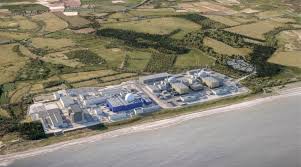
EDF delays final decision on Sizewell C. French energy giant now expects to leave it as late as 2023 before deciding whether to proceed with Suffolk nuclear power project. The timeline for EDF to decide whether to go ahead with the £20bn Sizewell C power station has slipped amid a lengthy planning approval process that is playing out as funding negotiations with ministers continue.
The French power giant now expects to make a final investment decision on the Suffolk plant at the end of 2022 or in 2023, compared to its previous expectations of mid-2022. EDF is in negotiations with the Government about a funding deal for Sizewell C and will also need external investors. Legislation is likely to be brought forward to allow developers to recoup costs during construction from household energy bills.
However, talks have been overshadowed in recent weeks by reports that ministers are seeking ways to block CGN from Sizewell and future UK nuclear projects. CGN has a 20pc development stake in Sizewell with an option to participate in the construction phase.
Telegraph 8th Aug 2021
https://www.telegraph.co.uk/business/2021/08/08/edf-delays-final-decision-sizewell-c/
More Nuclear Power Isn’t Needed, So Why Do Governments Keep Hyping it?

the claim that the ‘latest nuclear technology will be up and running within the next decade’ is unconvincing.”
That’s a problem, given that Britain needs to reduce its emissions 78% by 2035 to stay on track with the Paris Agreement.
Indeed, according to the independent World Nuclear Industry Status Report, nuclear energy “meets no technical or operational need that low-carbon competitors cannot meet better, cheaper and faster.”
The U.S. and France have openly acknowledged this military rationale for new civil nuclear build,” he told me. “U.K. defense literature is also very clear on the same point.
More Nuclear Power Isn’t Needed. So Why Do Governments Keep Hyping It?, Forbes, David Vetter 6 Aug 21,
.. …….Prime Minister Boris Johnson has consistently backed the development of “small and advanced reactors,” while last week the country’s Minister for Energy, Clean Growth and Climate Change, Anne-Marie Trevelyan, stated: “While renewables like wind and solar will become an integral part of where our electricity will come from by 2050, they will always require a stable low-carbon baseload from nuclear.”
This pronouncement, offered as a statement of fact, left some observers scratching their heads: here was a U.K. government minister claiming renewables would always require nuclear power to function. Was this true? And why do politicians like to use the word “baseload,” anyway?
………. many experts, including Steve Holliday, the former CEO of the U.K. National Grid, say that [the baseload] notion is outdated. In a 2015 interview Holliday trashed the concept of baseload, arguing that in a modern, decentralized electricity system, the usefulness of large power stations had been reduced to coping with peaks in demand.
But even for that purpose, Sarah J. Darby, associate professor of the energy program at the University of Oxford’s Environmental Change Institute, told me, nuclear isn’t of much use. “Nuclear stations are particularly unsuited to meeting peak demand: they are so expensive to build that it makes no sense to use them only for short periods of time,” she explained. “Even if it were easy to adjust their output flexibly—which it isn’t—there doesn’t appear to be any business case for nuclear, whether large, small, ‘advanced’ or otherwise.”
In a white paper published in June, a team of researchers at Imperial College London revealed that the quickest and cheapest way to meet Britain’s energy needs by 2035 would be to drastically ramp up the building of wind farms and energy storage, such as batteries. “If solar and/or nuclear become substantially cheaper then one should build more, but there is no reason to build more nuclear just because it is ‘firm’ or ‘baseload,’” Tim Green, co-director of Imperial’s Energy Future Lab told me. “Storage, demand-side response and international interconnection can all be used to manage the variability of wind.”
Another vital issue concerns time. Owing to the well-documented safety and environmental concerns surrounding ionizing radiation, planning and building even a small nuclear reactor takes many years. In 2007, Britain’s large Hinkley Point C nuclear power station was predicted to be up and running by 2017. “Estimated completion date is now 2026,” Darby noted. “And Hinkley C was using established technology. Given the nuclear industry’s record of time delays and overspends, the claim that the ‘latest nuclear technology will be up and running within the next decade’ is unconvincing.”
That’s a problem, given that Britain needs to reduce its emissions 78% by 2035 to stay on track with the Paris Agreement.
Indeed, according to the independent World Nuclear Industry Status Report, nuclear energy “meets no technical or operational need that low-carbon competitors cannot meet better, cheaper and faster.”
So if there isn’t a need for more nuclear power, and it’s too expensive and slow to do the job its proponents are saying it will do, why is the government so keen to back it?
Andy Stirling, professor of science and technology policy at the University of Sussex, is convinced that the pressure to support nuclear power comes from another U.K. commitment: defense. More specifically, the country’s fleet of nuclear submarines.
The U.S. and France have openly acknowledged this military rationale for new civil nuclear build,” he told me. “U.K. defense literature is also very clear on the same point. Sustaining civil nuclear power despite its high costs, helps channel taxpayer and consumer revenues into a shared infrastructure, without which support, military nuclear activities would become prohibitively expensive on their own.”
This is no conspiracy theory. In 2018, Stirling and his colleague Philip Johnstone published the findings of their research into “interdependencies between civil and military nuclear infrastructures” in countries with nuclear capability. In the U.S., a 2017 report from the Energy Futures Initiative, which includes testimony from former U.S. Energy Secretary Ernest Moniz in 2017, states: “a strong domestic supply chain is needed to provide for nuclear Navy requirements. This supply chain has an inherent and very strong overlap with the commercial nuclear energy sector and has a strong presence in states with commercial nuclear power plants”
In the U.K., bodies including the Nuclear Industry Council, a joint forum between the nuclear industry and the government, have explicitly highlighted the overlap between the need for a civil nuclear sector and the country’s submarine programs. And this week, Rolls-Royce, which builds the propulsion systems for the country’s nuclear submarines, announced it had secured some $292 million in funding to develop small modular reactors of the type touted by the Prime Minister.
In Stirling’s view, these relationships help to explain “the otherwise serious conundrum, as to why official support should continue for civil nuclear new build at a time when the energy case has become so transparently weak.”
Stirling and other experts say the energy case for nuclear is weak because there are better, cheaper and quicker alternatives that are readily available.
“When there is too little wind and solar, zero emissions generators which can flexibly and rapidly increase their output are needed,” said Mark Barrett, professor of energy and environmental systems modelling at University College London. “These can be renewables, such as biogas, or generators using fuels made with renewables such as hydrogen. But unlike nuclear, these can be turned off when wind and solar are adequate.”
Indeed, Barrett pointed out, renewables are becoming so cheap that energy surpluses won’t necessarily be that big a deal.
Renewable costs have fallen 60-80% in the last decade with more to come, such that it is lower cost to spill some renewable generation than store it, and predominantly renewable systems are lower cost than nuclear. Renewables can be rapidly built: U.K. wind has increased to 24% of total generation, mostly in just 10 years. And of course renewables do not engender safety and waste problems.”
Sarah Darby agreed, saying “a mix of energy efficiency, storage and more flexible demand shows much more promise for reducing carbon emissions overall and for coping with peaks and troughs in electricity supply.”
“The U.K. market for flexibility services is already delivering effective firm-equivalent capacity on the scale of a large nuclear reactor per year, at costs that are a small fraction of the costs of nuclear power,” Stirling told me. “With costs of flexibility diminishing radically—in batteries, other storage, electric vehicles, responsive demand, hydrogen production—the scope for further future cost savings is massive.”
“There is no foreseeable resource constraint on renewables or smart grids that makes the case for nuclear anywhere near credible,” he added. “That the U.K. Government is finding itself able to sustain such a manifestly flawed case, with so little serious questioning, is a major problem for U.K. democracy.”
In the U.K., both the incumbent Conservative party and the main opposition party, Labour, support the development of new and advanced nuclear power reactors. In an emailed response to questions for the U.K. government’s Department for Business, Energy and Industrial Strategy, a government spokesperson categorically denied any link between the civil nuclear sector and the defense industry……..
I contacted the office of Labour’s shadow secretary of state for business, energy and industrial strategy Edward Miliband for comment, but no response has been forthcoming……..https://www.forbes.com/sites/davidrvetter/2021/08/06/more-nuclear-power-isnt-needed-so-why-do-governments-keep-hyping-it/?sh=285eb017ddda
British Navy secrecy over nuclear submarine crashes
– The Royal Navy has refused to say whether anyone was disciplined following
an incident in which a nuclear submarine nearly crashed into a ferry
carrying 282 people off the Scottish coast. The navy also won’t say
whether it carried out an independent review to reduce the risks of future
collisions. This was recommended by government investigators concerned
about the near-miss and two other nuclear submarine crashes. Campaigners
accuse the navy of using the excuse of national security “to cover up
dangerous incompetence”. The Scottish National Party (SNP) condemns the
secrecy as “absolutely untenable”.
The Ferret 5th Aug 2021
The UK and Ireland Nuclear Free Local Authorities (NFLA)and other organisations dismayed at approval for dumping Hinkley radioactive mud into coastal waters
The UK and Ireland Nuclear Free Local Authorities (NFLA) and the
campaigning group Geiger Bay express their deep dismay on the decision over
the weekend by the Marine Management Organisation (MMO) to allow EDF Energy
to dredge mud and sediment from the cleared Hinkley Point C site into a
coastal site close to the North Somerset town of Portishead. (1)
That this controversial decision was issued unusually over a weekend in the middle of
the holiday season, and from initial reading, appears to be a rushed
response after previous delay, adds to that dismay. The NFLA and other
groups raised significant concerns in our submission to the MMO urging them
not to approve this application. Our concerns, like that of local councils
and a wide range of environmental and community groups, appear to have been
simply ignored. Campaigning groups and other environmental groups are now
seeking legal advice on the decision document.
NFLA 3rd Aug 2021
Campaigners dismayed as application to dump Hinkley Point mud in the Bristol Channel is approved.
| Campaigners dismayed as application to dump Hinkley Point mud in the Bristol Channel is approved. Anti-nuclear campaigners have expressed ‘deep dismay’ following confirmation that the Marine Management Organisation (MMO) has approved EDF Energy’s application to dump mud and sediment from the construction of the Hinkley Point C nuclear power station into a coastal site close to the north Somerset town of Portishead. “The MMO document endangers health all around the estuary, including the coast of south Wales, as the Welsh Government Davidson Committee’s independent report makes it clear that material dumped at Portishead travels anticlockwise round the estuary,” Geiger Bay spokesperson Richard Bramhall said. “This includes a long-term threat from inhalable particles of uranium and plutonium. We are facing a culture of deliberate ignorance. Future generations will pay the price.” Nation Cymru 3rd Aug 2021 https://nation.cymru/news/campaigners-dismayed-as-application-to-dump-hinkley-point-mud-in-the-bristol-channel-is-approved/ |
Housing market affected in Lincolnshire, as villagers react against UK government plans for a nuclear waste dump.
A Lincolnshire estate agent has warned that plans for a radioactive waste
storage facility in Theddlethorpe are causing people to reconsider buying
houses in the area, and has urged for the proposals to be scrapped.
News of the plans came in late July, when Radioactive Waste Management (RWM)
confirmed it was in “early discussions” with Lincolnshire County
Council about using the former ConocoPhillips Gas Terminal as a nuclear
waste underground disposal facility.
RWM has promised to start a conversation with the community about the proposals, in order to hear and
understand people’s views on the matter, and LCC has stressed that no
decision will be made without public backing.
The Theddlethorpe community
organised a campaign meeting in opposition to the radioactive waste storage
plans, with around 100 people gathering at Mablethorpe Sherwood Playing
Fields to protest it.
Lincolnite 3rd Aug 2021
Nuclear Free Local Authorities (NFLA) publishes analysis of report of-”Just Transition Commission in Scotland” – moving to renewables, while providing jobs.
NFLA publishes report on the need for a ‘Just Transition’ to help communities and protects jobs in mitigating and adapting to climate change. The UK and Ireland Nuclear Free Local Authorities (NFLA) publishes today a detailed analysis on the work of the Just Transition Commission in Scotland and the importance of such policies being delivered across the UK and Ireland. The necessity of tackling climate change requires a move away from fossil fuels and towards renewables. In the view of the NFLA, the long time and huge cost required to build new nuclear facilities means they are not a practical alternative within a ‘just transition’, whilst there are extensive costs in nuclear decommissioning and radioactive waste management that will keep jobs in this sector going well into the next century. There are lots of jobs in the fossil fuel and related sectors, and it is important, given the lessons that took place from the end of the mining industry, to transfer these jobs and skills to other sectors as carefully and as fairly as possible. A ‘Just Transition’ was included, following extensive international trade union lobbying, in the 2015 Paris Climate Change Agreement in reference to providing “a just transition of the workforce and the creation of decent work and quality jobs”. The NFLA report focuses on, and very much welcomes, the work of the Scottish Just Transition Commission, which has reported to the Scottish Government. Its final report, published just before the recent Scottish Parliament elections, had four key conclusions. These included: Pursue an orderly, managed transition to net-zero that creates benefits and opportunities for people across Scotland. Delivery of this must be a national mission. Just transition roadmaps will give direction and confidence, driving investment that brings jobs, skills and value. Equip people with the skills and education they need to benefit from the transition. A just transition is shaped by Scotland’s citizens, not imposed on them – empowers and invigorates communities and strengthens local economies. Share benefits widely and ensure burdens are distributed on the basis of ability to pay. In this way a just transition refocuses on wellbeing; it uses the power of government intervention and public finance (such as the Scottish National Investment Bank and public pension funds) to drive action; it explores new funding methods for local projects; it fully explores the distributional impact of taxes; it ensures new technologies and services are delivered in a way that works for people, and improves the lives of the most vulnerable in our society. For the NFLA, this ground-breaking report could be a blueprint for action not just in Scotland, but provide detail for the rest of the UK, Ireland and the wider European Union. NFLA 3rd Aug 2021 https://www.nuclearpolicy.info/news/nfla-report-need-for-just-transition-help-communities-protects-jobs-mitigating-adapting-climate-change |
The impact of climate change on nuclear reactors should be a key part of COP26 Climate Summit

the UK’s coastal nuclear power stations are vulnerable to sea-level rise, storm surges and flooding of reactor and spent fuel stores – and soon
In other words, action to address the impact of climate change on nuclear energy should be a key part of the United Nation’s Cop26 climate summit.
Climate change: Why nuclear power isn’t part of the solution to this global crisis – Dr Paul Dorfman https://www.scotsman.com/news/opinion/columnists/climate-change-why-nuclear-power-isnt-part-of-the-solution-to-this-global-crisis-dr-paul-dorfman-3328894
Over the past few weeks, the intensity and scale of the floods from slow-moving storms have broken records, and climate models are running hot.By Paul Dorfman
Monday, 2nd August 2021 This has prompted some to champion nuclear power as a source of lower-carbon electricity. But this newfound USP needs to be considered within the bigger picture because UK coastal nuclear power stations will be one of the first, and most significant, casualties to ramping climate impact. Put simply, nuclear is quite literally on the front-line of climate change – and not in a good way.
This has prompted some to champion nuclear power as a source of lower-carbon electricity. But this newfound USP needs to be considered within the bigger picture because UK coastal nuclear power stations will be one of the first, and most significant, casualties to ramping climate impact. Put simply, nuclear is quite literally on the front-line of climate change – and not in a good way.
All recent scientific data points to ramping sea-levels, faster, harder, more destructive storms and storm surges – inevitably bringing into question the operational safety, security and viability of UK coastal nuclear infrastructure.
Not normally given to exaggeration, the Institute of Mechanical Engineers says we may have to ‘up sticks’, relocate or abandon nuclear sites. This will cost. Trying to defend coastal nuclear means significantly increased expense for nuclear operation, waste management, and the 100-year-plus programme to decontaminate the UK’s 17 old nuclear reactors.
For nuclear to be practical, reactors have to be built economically, efficiently and on time. But practical experience says otherwise. EDF’s flagship EPR reactor is vastly over-cost and over-time at the two sites where it’s being built, at Olkiluoto in Finland and Flamanville in France.
Problems include poor concrete, bad welding and a faulty reactor pressure vessel – the main safety component. Things were supposed to have gone better in China, until last month’s nuclear fuel debacle demonstrated their inadequate safety oversight.
As for nuclear fusion, for the last 60 years proponents have said the technology will be ready in 20 years’ time – so perhaps this is an experiment to prove that time doesn’t exist in modern nuclear physics.
The reality is nuclear is a high-risk option. And this plays out in real time. Worldwide, nuclear is in stark decline and renewables are rising. The obvious explanation is the ramping costs of the former and the plummeting costs of the latter. So, not all lower carbon options are equal, benign or effective – and there are choices to be made.
Happily, big finance is at a tipping point as key global debt and equity investors pour record capital into renewables. With wind and solar power capacity growing at a record rate, the International Energy Agency predicts that renewables will supply 90 per cent of global electric power by 2050.
In Europe, renewables overtook fossil fuels to become the EU’s main source of electricity for the first time in 2020. Perhaps because it’s 50 per cent cheaper to generate electricity from renewables compared with fossil fuel-powered plants, the EU will increase renewables share in the total energy mix to 40 per cent by 2030.
OK, running an integrated renewable energy system will mean not just more wind and solar, but also a power network that ensures a balance of supply and demand at all times.
So it’s reassuring that power supply in nuclear-free Germany, the strongest economy in Europe, is one of the most reliable in the world, with government and grid operators confident that it will stay this way. In its last session before the summer recess, the German parliament brought forward the deadline for achieving climate neutrality by five years to 2045.
Here in Scotland, BP plans to invest £10 billion to make Aberdeen a global hub for offshore wind. Meanwhile Shell and Scottish Power are developing the world’s first large-scale floating offshore windfarms in the north-east of Scotland. And a very recent report by Imperial University says a massive expansion of offshore wind to 108 gigawatt will drive new power in the UK.
There are no resounding new revelations about the vulnerability of nuclear power to natural disasters, human or engineering faults, accidental or deliberate harm. Accidents are, by nature, accidental, and we’ve learned the cost of ignoring this common-sense axiom.
The fact is, the UK’s coastal nuclear power stations are vulnerable to sea-level rise, storm surges and flooding of reactor and spent fuel stores – and soon. This means that nuclear flood risk based on ‘all case scenarios’ must be published and regularly updated as climate science evolves, including costings and a range of contingency plans for the swift onset of climate-driven severe weather.
In other words, action to address the impact of climate change on nuclear energy should be a key part of the United Nation’s Cop26 climate summit.
It’s time to think constructively. We need to secure clean, safe, affordable, sustainable, low-carbon energy to power industry, transport, homes and businesses.
Our energy transition will involve the expansion of renewable energy in all sectors, rapid growth and modernisation of the electricity grid, energy conservation and efficiency, rapidly evolving storage technology, market innovations from supply to service provision, and transport restructure.
Nuclear sucks funds and vital political attention from this imperative zero-carbon investment. It displaces renewables on the grid and diverts essential research. The ramping costs of new nuclear compromises better, flexible, safe, productive, cost-effective and affordable technologies – and comes at a time when the development of renewable, sustainable and affordable low-carbon energy is a growing economic sector with a huge potential for jobs.
In bidding a long goodbye to fossil fuels, we’re also saying farewell to nuclear, that quintessentially mid-20th century technology – and not before time. Nuclear just can’t compete with the technological, economic, safety and security advantages of the renewable evolution.
Nuclear is an out-dated technology – a tired non-starter in the 21st century. We can do better.
Dr Paul Dorfman, of the UCL Energy Institute, University College London, is founder and chair of the Nuclear Consulting Group
1 This Month
26 September – International Day for the Total Elimination of Nuclear Weapons





PLEASE OPPOSE HR 8255 AND S.3639 – bills would accelerate satellite deployment, with no environmental review or safeguards – https://ncstd5li.quorum.us/campaign/169331/
To see nuclear-related stories in greater depth and intensity – go to https://nuclearinformation.wordpress.com
-
Archives
- September 2026 (323)
- August 2026 (330)
- July 2026 (355)
- June 2026 (287)
- May 2026 (306)
- April 2026 (356)
- March 2026 (251)
- February 2026 (267)
- January 2026 (308)
- December 2025 (358)
- November 2025 (359)
- October 2025 (375)
-
Categories
- 1
- 1 NUCLEAR ISSUES
- business and costs
- climate change
- culture and arts
- ENERGY
- environment
- health
- history
- indigenous issues
- Legal
- marketing of nuclear
- media
- opposition to nuclear
- PERSONAL STORIES
- politics
- politics international
- Religion and ethics
- safety
- secrets,lies and civil liberties
- spinbuster
- technology
- Uranium
- wastes
- weapons and war
- Women
- 2 WORLD
- ACTION
- AFRICA
- Atrocities
- AUSTRALIA
- Christina's notes
- Christina's themes
- culture and arts
- Events
- Fuk 2022
- Fuk 2023
- Fukushima 2017
- Fukushima 2018
- fukushima 2019
- Fukushima 2020
- Fukushima 2021
- general
- global warming
- Humour (God we need it)
- Nuclear
- RARE EARTHS
- Reference
- resources – print
- Resources -audiovicual
- Weekly Newsletter
- World
- World Nuclear
- YouTube
-
RSS
Entries RSS
Comments RSS

