Trident: Ministry of Defence confirms more than 50 radiation leaks this year

By Hamish Morrison The National 24 May 23
QUESTIONS are hanging over the safety of Britain’s nuclear arsenal after it was revealed there were 58 radiation leaks at Trident facilities in Scotland this year so far.
The Ministry of Defence (MOD) has revealed there were 15 recorded radiation leaks at Coulport and a further 43 at Faslane in 2023 as of April – but said none were considered “serious”.
Alba MP Neale Hanvey is putting pressure on the UK Government to come clean about the safety of Britain’s nuclear weapons.
……………… What constitutes ‘serious’?
Asked by The National to confirm the level of radiation at which the Government would consider a radiation leak to be “serious”, the MoD referred to the International Nuclear and Radiological Event Scale, which does not specify the level of radiation released into an environment is considered to be “serious”
………… The dates of the recorded breaches have also not been revealed.
Hanvey said: “The MoD has failed to confirm the date on which the staff at Coulport building 201 were first informed that they were being relocated to building 41 and have told me that ‘there was no requirement for a public announcement of the relocation of staff from one building to another’.
……………….“It seems that getting answers out of the MoD is like trying to get blood out of a stone. When it comes to weapons of mass destruction in Scotland, it is clear that the UK Government will tell us as much as they have to and as little as they want to.
“These answers continue to prompt further concerning questions. If the MoD will only make public ‘significant radiation exposure’, how many radiation leaks are there into the air or into Loch Long and the Gare Loch each year that the MoD are failing to tell the public about?………………………… https://www.thenational.scot/news/23545590.trident-mod-confirms-50-radiation-leaks-year/
Damning critique of Rolls Royce
The new chief executive of Rolls-Royce has delivered another damning
critique of its performance, saying that one of its core divisions has been
“grossly mismanaged”. Tufan Erginbilgic, 63, took the top job at the
aerospace and engineering group at the start of this year and weeks later
infamously described the group as a “burning platform”. In his latest
broadside, the former BP executive took aim at the performance of its power
systems division, which makes diesel and gas engines for use in
superyachts, trains and mining lorries, and for back-up power generation.
Times 22nd May 2023
Nuclear Free Local Authorities condemn UK Environment Agency’s failure to protect fish in Hinkley Point C’s nuclear project
NFLAs condemn ‘craven climbdown’ by Environment Agency over Acoustic
Fish Deterrent. In response to an ongoing consultation, the UK / Ireland
Nuclear Free Local Authorities has condemned the Environment Agency for
cravenly climbing down when faced with EDF Energy’s demand that it be
excused from providing an Acoustic Fish Deterrent at the new Hinkley Point
C nuclear power project, and has urged them not to waive this requirement.
The Environment Agency’s latest recommendation represents a complete
volte-face on its previous position on the permit requirements, which was
taken after an in-depth examination by an inspection team and by
verification by the Secretary of State. NFLA England Forum Chair,
Councillor David Blackburn said: “The consequences of the Environment
Agency granting this concession will be catastrophic for the local fish
population and marine environment.
NFLA 18th May 2023
Counting the rising costs of Scotland’s nuclear testing facility

Alan Laird, 12 May 23
https://www.thenational.scot/community/23516945.counting-rising-costs-scotlands-nuclear-testing-facility/
HOW magnanimous of Andrew Bowie, Westminster’s Nuclear Minister, not to “impose nuclear power on Scotland” (The National, May 4), although he’s a bit late with that assurance. But never mind democracy, let’s look at the cost.
Dounreay was commissioned as a test facility in 1955 on our north coast – in other words, “let’s put it waaaay up there in case something goes wrong”.
The initial research reactor “went critical” – a not very reassuring term for “started working” – in 1958.
The Dounreay Fast Reactor started up in 1959 and shut down in 1977 after 15 years of operation. Its maximum output of 14MW was negligible.
A Fast-Breeder Reactor, now an abandoned technology, began supplying 250MW from 1975 till 1995, enough for about 48,000 homes. Its cooling was by liquid sodium – 1500 tons of the stuff – which explodes instantly in contact with air. Cool.
Then there is the military site, HMS Vulcan, for development and testing the reactors of nuclear-powered submarines. From 1963 to 2015, five generations of small reactors have been tested here, routinely run at greater than operational stress to find out any faults before installation in the subs. How reassuring. As with MoD sites on the Clyde, full disclosure of breaches of health and safety are not disclosed. The site is due for decommissioning next year. Estimates of the costs are not available.
In 1998, following safety and pollution concerns, Norway, Sweden and the Irish Republic demanded the immediate closure of the site. PM Tony Blair was advised it would take £1 billion and 100 years to complete the work. By 2006, 25 years and £2.7bn was the estimate, then in 2007 it was 17 years and £2.6bn. In 2019 contracts worth £400m were awarded to continue the clean-up, with a new estimate of £4.3bn and 60 years. I guess no-one actually knows.
The site also took in foreign spent nuclear fuel for reprocessing. Unsurprisingly, many foreign customers refused to take their nuclear waste back. It’s mostly still there, along with Dounreay’s own.
The expected date of the return of the site to brownfield use is 2330. Yes, that’s more than 300 years from now. Uncountable billions of pounds and nearly 400 years of an unusable bit of Scotland is an astounding price to pay for powering 48,000 homes.
The arguments for nuclear power put forward by the industry and their UK Government lackeys are contradictory, disingenuous and downright dishonest.
Dounreay’s installation is a mere toy compared to Hunterston (both reactors now decommissioned) and Torness (the nuclear regulator thinks it should close by 2024). First estimates for decommissioning these sites is £132 billion and 120 years. I wonder when that estimate will be revised upward?
Just as a footnote, all of the UK’s uranium has to be imported. Much of it from Russia. The real reason the UK Government wants to continue with this outrageous waste of money is for the steady supply of enriched uranium for making atomic bombs. That’s worth it to them at any cost.
Rolls-Royce falls 6% as update lacks oomph and news on small nuclear business
Oliver Haill, 11 May 23, Proactive Investor 11th May 2023
Rolls-Royce Holdings PLC’s (LSE:RR.) shares fell 6% to a month’s low after its trading update contained nothing new, analysts said, with some concern about the lack of updates about its small nuclear reactor business…………
Weatherwatch: concerns over climate impact on UK nuclear power sites
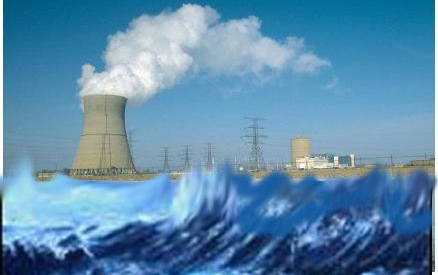
Ex-adviser worries ministers have not taken into account sea level rise and storms in selecting sites
Paul Brown https://www.theguardian.com/news/2023/may/12/weatherwatch-concerns-over-climate-impact-on-uk-nuclear-power-sites
Successive governments since the 1980s have had plans for new generations of nuclear power stations sited around the coasts of the United Kingdom. Although the main reason for building them, according to politicians, is to provide a low-carbon form of electricity to combat the climate crisis, no thought seems to have gone into what the climate crisis might do to the nuclear power stations.
Prof Andy Blowers, a former government adviser on nuclear waste, points out in the Town and Country Planning Association Journal that the eight sites identified in 2011 as suitable for new stations are the same as those identified half a century earlier, on which the first generation of nuclear power stations were built.
The reason the sites were originally chosen was their remoteness, for safety, and their proximity to the sea, for cooling purposes. The latest reasoning is that they would have a better chance of public acceptance because two generations of local people have worked in the industry. The new installations are planned to operate for 60 years and will need another century after closure to cool sufficiently to remove the waste.
Blowers, an opponent of the government plans, worries that ministers seem to have taken no account of sea level rise, intense storms and the prospect of flooding at these sites.
Campaigners against UK nuclear waste dump plan claim victory in local elections
Nuclear storage dump campaigners claim victory in local elections
Call for government to honour wishes
By Daniel Jaines Local Democracy Reporter, The Lincolnite, 11 May 23
Anti-nuclear campaigners have claimed victory in Theddlethorpe after last week’s district and parish council elections.
Opposition councillors, including independent Trais Hesketh, gained a majority of seats with a high voter turnout.
The campaign’s success saw voters “overwhelmingly reject” Nuclear Waste Service’s proposal to build a Geological Disposal Facility beneath the former Conoco gas terminal.
Prior to the election, anti-dump candidates were elected unopposed for eight of the ten available seats on Theddlethorpe Parish Council.
The Guardians of the East Coast campaigners have also claimed support from neighbouring towns such as Mablethorpe, Sutton on Sea, and Trusthorpe.
Ken Smith, chairperson for GOTEC, praised the residents for protesting through the ballot box.
“We now call upon Lincolnshire County Council and East Linsey District Council to honour the people’s decision by withdrawing from the so-called community partnership,” he said.
The Nuclear Free Local Authorities group has also backed the campaigners. Councillor David Blackburn said, “When it comes to a GDF, Mablethorpe, Theddlethorpe, and Sutton on Sea do not represent the ‘willing community’ that the government and nuclear industry say they are looking for to host the dump – instead voters there have clearly said ‘No’.”
………….An NWS spokesperson stated that the GDF would only be built where there was the consent of a willing community.
………………………………………………….. Concerns raised around seismic blasting
There have recently been concerns over the impact of seismic blasting in other areas of the UK as part of exploratory works carried out by NWS ahead of geophysical survey works.
The Lakes Against Nuclear Dump/Radiation Free Lakeland groups fear marine deaths in the Irish Sea and Allerdale’s Solway Firth area as part of Copeland exploration were a result of the seismic tests and have called for them to halt while investigations take place……… https://thelincolnite.co.uk/2023/05/nuclear-storage-dump-campaigners-claim-victory-in-local-elections
Nuclear Free Local Authorities issue appeal to King over Lincolnshire Nuke Dump

Save our sceptred isle: NFLAs issue appeal to King over Lincolnshire Nuke Dump. https://www.nuclearpolicy.info/news/save-our-sceptred-isle-nflas-issue-appeal-to-king-over-lincolnshire-nuke-dump/ 11 May 23
Just days after the Coronation, the English Nuclear Free Local Authorities (NFLAs) have written to the nation’s new Sovereign to ask His Majesty King Charles III to intercede over the plan to locate a nuclear waste dump in East Lincolnshire right next to the first Royal nature reserve.
The East Lincolnshire coast has been selected as the first of the ‘King’s Series of National Nature Reserves’ to mark the commencement of His Majesty’s Reign. A formal announcement by Natural England is expected in the summer.
The ‘Lincolnshire Coronation Coast Nature Reserve’ will cover some 21 square miles, centred upon existing protected areas at Theddlethorpe and Saltfleetby comprising mud flats, salt- and freshwater marshes and sand dunes, which support a diverse variety of wintering and breeding birds, natter jack toads, insects, and plants. The establishment of the reserve would enhance the area’s existing offer to visitors, many of whom flock to adjoining Mablethorpe to enjoy the beautiful Blue Flag award winning beaches.
So it was with regret that Councillor David Blackburn, Chair of the English Forum of the NFLAs had to sound a note of caution in his letter to His Majesty that Nuclear Waste Services has plans to locate a Geological Disposal Facility, a nuclear waste dump, right next to the reserve.
This would be the destination for Britain’s high-level, heat emitting radioactive waste, including its huge stockpile of plutonium. This waste has either already been generated through the UK’s military and civil nuclear programmes over the last 70 years or will be generated in the future through their continuance.
The GDF would comprise a surface facility approximately 1 square KM, which would most likely be located on the site of the former Conoco gas terminal in Theddlethorpe. This would be the railhead receiving regular shipments of nuclear waste. This waste would be transported below ground and out through tunnels beneath the North Sea. As nuclear waste is transported by rail, and there is no current infrastructure in place, there would be a necessity to construct a new rail line to serve the location.
The process of selecting a site for this facility could take between 15 and 20 years after which the construction and operation of such a facility would last more than 100 years.
In his letter, Councillor Blackburn contends that the project is ‘of such an immense size and in (such) a wholly inappropriate location’ that it would be ‘massively disruptive and harmful’ to the flora and fauna of the local environment, including that of the Royal Reserve, and to local people, as well as ‘massively ruinous’ to the local tourist and agrarian economy. Councillor Blackburn ends by appealing to the King on behalf of ‘His Majesty’s many loyal and anxious subjects in the affected area to intercede with relevant Ministers of the Crown to end this folly ‘.
Commenting Cllr Blackburn said: “The creation of this Royal Reserve is a wonderful idea and wholly in keeping with His Majesty the King’s known love for the natural environment. I can only hope that by drawing the Sovereign’s attention to the government’s lunatic plan to locate a nuclear waste dump next to the reserve that the King might be able to intervene to end the threat of it.”
Profitable industry in trying to clean up dead nuclear reactors

Magnox is ready to start a major decommissioning project to clean-up and
demolish four ‘blower house’ superstructures that surround Berkeley
site’s two reactor buildings. Altrad has bagged a £31m contract for the
design, asbestos removal, deplant, demolition and construction works in and
around the blower houses.
The firm will also be supported by Veolia KDC
Decommissioning Services, NSG Environmental, OBR Construction, Mammoet, and
Cavendish Nuclear. Ross McAllister, Magnox programme delivery director
said: “This is one of the largest decommissioning projects that Berkeley
site has seen for several years.
“It was originally planned for the
2070’s so it is fantastic to bring that forward by five decades in our aim
to deliver our mission better, faster and even safer. “The blower houses
circulated gas through the reactors to transfer heat into 310 tonne boilers
to create steam to turn the turbines and generate electricity. The last of
the 15 gigantic metal boilers was transported to Sweden for cleaning,
smelting and recycling in 2013. “The buildings will be emptied of the
residual metallic low-level waste and undergo a full asbestos clean before
being demolished.
Construction Enquirer 10th May 2023
Prevent, protect, consult – the NFLA (Nuclear Free Local Authorities)’ three priorities for UK radioactive waste policy
The UK Government has its priorities ‘all wrong’ in its proposals for the future management of radioactive substances and nuclear decommissioning, so says the UK/Ireland Nuclear Free Local Authorities in its response to the Department for Energy Security and Net Zero’s consultation on its proposals for the future management of radioactive substances and nuclear decommissioning.
Instead of an emphasis on cutting costs and reducing the burdens on the nuclear industry as DESNZ would like, the NFLA believes that government and the nuclear industry should do everything necessary for the protection of human health and safeguarding our natural environment – whatever the cost.
To the NFLA, government policy and industry practice should focus upon three main tenets:
- Preventing the creation of more radioactive waste, by not building any more nuclear power plants, by closing and decommissioning existing ones as quickly as possible, and by not revisiting mad-cap schemes that have failed before, like repurposing plutonium as reactor fuel, which creates yet more waste and risks nuclear weapons proliferation;
- Protecting the public and the natural environment, by ‘concentrating and containing’ existing waste on or near the surface on the sites where it was created or is currently stored and having a policy of active ongoing management, with the facility of retrieval if waste is stored below ground. This is opposed to government policy which for high-level waste is focused upon transportation by rail to a Geological Disposal Facility into which the waste would be deposited and forgotten about and for lower-level wastes is one of ‘dilute and disperse’, which involves incineration releasing radiation into the atmosphere or dumping into municipal waste tips or discharging it into rivers or oceans.
- Consulting the public, over the storage and treatment of radioactive waste, and its transportation if this should continue, and also educating the public on the radiological risks attached to these activities; all too often consultation is tokenistic, not inclusive and not open, with the nuclear industry still conducting much of its business behind closed doors.
The author of our response was Pete Roche, the NFLA Policy Advisor (Scotland). Pete has over fifty years of environmental and anti-nuclear campaigning experience, having first been involved in protests against the construction of the Torness Nuclear Power Station in the 1970s.
The NFLA’s full response can be read at the end of this media release [on original]; it amounts to a resounding ‘No’.
The DESNZ consultation is still open for public comments until 24 May 2023.
The consultation papers can be found at https://www.gov.uk/government/consultations/managing-radioactive-substances-and-nuclear-decommissioning
For more information, please contact NFLA Secretary Richard Outram by email on richard.outram@manchester.gov.uk or mobile 07583097793
Bristol solar farm connects directly to the grid.
A solar farm near Bristol has become the UK’s first to connect directly to
the national grid, opening a way to unblocking bottlenecks in renewable
energy schemes.
To date, the hundreds of solar farms and 1.2 million homes
with rooftop solar panels have been connected to the electricity grid’s
equivalent of A-roads, called distribution networks. However, the 50MW
Larks Green solar farm, capable of powering 17,000 homes, has instead been
connected to the transmission network, the motorways of the electricity
system.
Solar power is the cheapest electricity technology in many
countries and the fastest-growing electricity source globally. Solar
industry figures said that years-long delays were normal to enable projects
to start producing clean electricity. Some developers are routinely being
told they will have to wait until the 2030s, and in one case a company was
told it would have to wait until 2037. Ministers recently promised to
introduce reforms to speed up connections, but are yet to provide details.
On Thursday a cross-party group of MPs wrote to the government telling it
to work with energy networks, including National Grid ESO, to “unblock
the pipeline of delays”. “There is potential for solar energy to have a
bright future in the UK, but a dark cloud of delays for the industry
hinders the ability to meet its full potential,” said Philip Dunne,
chairman of the environmental audit committee.
Times 4th May 2023
https://www.thetimes.co.uk/article/first-solar-farm-connects-directly-to-national-grid-6nx7qjx5s
Protest against investment in Sizewell C nuclear power station.
Campaigners unfurled banners reading ‘Aviva, back renewables not Sizewell
C’ outside Norwich City’s Carrow Road football ground on Thursday.
Protestors from Stop Sizewell C gathered outside an insurer’s Annual
General Meeting (AGM) to vent concerns the firm was planning to invest in
the new Sizewell C nuclear power station.
East Anglian Daily Times 5th May 2023
https://www.eadt.co.uk/news/23501909.suffolk-sizewell-c-protestors-gather-norwich-city-fc/
Opposition to Sizewell C nuclear was a factor in Green Party success in East Suffolk
The conservatives in East Suffolk were swept out of power in a Green wave
as the Green Party gained 11 seats in the local elections. In total, the
Tories lost 24 seats as their number declined from 39 to just 15 seats,
leaving the council with no overall majority.
Meanwhile the Greens moved on to 16 seats, while there were also gains for Labour, who moved on to 12 seats, an increase of five, while the Liberal Democrats also saw a rise of
eight seats to leave them with 11. Southwold councillor David Beavan, who
represents the Liberal Democrats, said meetings would be held between the
Greens, Liberal Democrats and Labour next week to discuss forming a
coalition to run the council.
He believed voters had rejected the Tories
over issues such as Sizewell C and plans to route electricity cables from
offshore wind farms through the Suffolk and Essex countryside instead of
the Thames Estuary. A number of high profile Conservative candidates lost
their seats, including former district council leader Ray Herring, who led
for 20 years, but lost his Rendlesham and Orford seat to the Greens’ Tim
Wilson.
East Anglian Daily Times 5th May 2023
https://www.eadt.co.uk/news/23504329.tories-very-disappointed-greens-sweep-east-suffolk/
A KINGLY PROPOSAL: LETTER FROM JULIAN ASSANGE TO KING CHARLES III
JULIAN ASSANGE, 5 MAY 2023 https://www.theguardian.com/world/2023/may/06/port-kembla-rally-to-demand-nsw-site-be-ruled-out-as-aukus-nuclear-submarine-base
To His Majesty King Charles III,
On the coronation of my liege, I thought it only fitting to extend a heartfelt invitation to you to commemorate this momentous occasion by visiting your very own kingdom within a kingdom: His Majesty’s Prison Belmarsh.
You will no doubt recall the wise words of a renowned playwright: “The quality of mercy is not strained. It droppeth as the gentle rain from heaven upon the place beneath.”
Ah, but what would that bard know of mercy faced with the reckoning at the dawn of your historic reign? After all, one can truly know the measure of a society by how it treats its prisoners, and your kingdom has surely excelled in that regard.
Your Majesty’s Prison Belmarsh is located at the prestigious address of One Western Way, London, just a short foxhunt from the Old Royal Naval College in Greenwich. How delightful it must be to have such an esteemed establishment bear your name.
“One can truly know the measure of a society by how it treats its prisoners”
It is here that 687 of your loyal subjects are held, supporting the United Kingdom’s record as the nation with the largest prison population in Western Europe. As your noble government has recently declared, your kingdom is currently undergoing “the biggest expansion of prison places in over a century”, with its ambitious projections showing an increase of the prison population from 82,000 to 106,000 within the next four years. Quite the legacy, indeed.
As a political prisoner, held at Your Majesty’s pleasure on behalf of an embarrassed foreign sovereign, I am honoured to reside within the walls of this world class institution. Truly, your kingdom knows no bounds.
During your visit, you will have the opportunity to feast upon the culinary delights prepared for your loyal subjects on a generous budget of two pounds per day. Savour the blended tuna heads and the ubiquitous reconstituted forms that are purportedly made from chicken. And worry not, for unlike lesser institutions such as Alcatraz or San Quentin, there is no communal dining in a mess hall. At Belmarsh, prisoners dine alone in their cells, ensuring the utmost intimacy with their meal.
Beyond the gustatory pleasures, I can assure you that Belmarsh provides ample educational opportunities for your subjects. As Proverbs 22:6 has it: “Train up a child in the way he should go: and when he is old, he will not depart from it.” Observe the shuffling queues at the medicine hatch, where inmates gather their prescriptions, not for daily use, but for the horizon-expanding experience of a “big day out”—all at once.
You will also have the opportunity to pay your respects to my late friend Manoel Santos, a gay man facing deportation to Bolsonaro’s Brazil, who took his own life just eight yards from my cell using a crude rope fashioned from his bedsheets. His exquisite tenor voice now silenced forever.
Venture further into the depths of Belmarsh and you will find the most isolated place within its walls: Healthcare, or “Hellcare” as its inhabitants lovingly call it. Here, you will marvel at sensible rules designed for everyone’s safety, such as the prohibition of chess, whilst permitting the far less dangerous game of checkers.
Deep within Hellcare lies the most gloriously uplifting place in all of Belmarsh, nay, the whole of the United Kingdom: the sublimely named Belmarsh End of Life Suite. Listen closely, and you may hear the prisoners’ cries of “Brother, I’m going to die in here”, a testament to the quality of both life and death within your prison.
But fear not, for there is beauty to be found within these walls. Feast your eyes upon the picturesque crows nesting in the razor wire and the hundreds of hungry rats that call Belmarsh home. And if you come in the spring, you may even catch a glimpse of the ducklings laid by wayward mallards within the prison grounds. But don’t delay, for the ravenous rats ensure their lives are fleeting.
I implore you, King Charles, to visit His Majesty’s Prison Belmarsh, for it is an honour befitting a king. As you embark upon your reign, may you always remember the words of the King James Bible: “Blessed are the merciful, for they shall obtain mercy” (Matthew 5:7). And may mercy be the guiding light of your kingdom, both within and without the walls of Belmarsh.
Your most devoted subject,
Julian Assange A9379AY
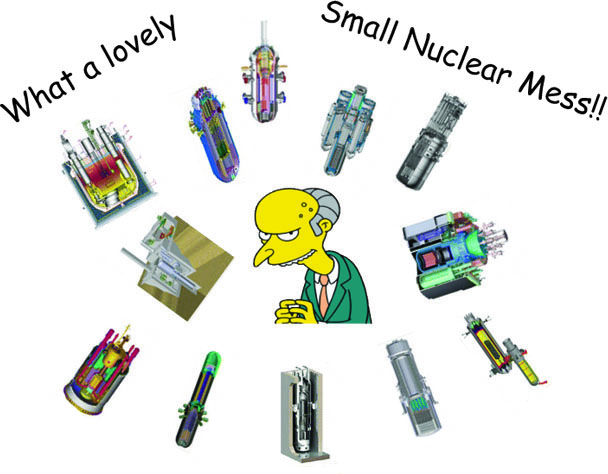
A mess of different Small Nuclear Reactor Designs in UK.
By the time SMRs might be deployable in significant numbers, realistically after 2035, it will be too late for them to contribute to reducing greenhouse gas emissions. The risk is that, as in all the previous failed nuclear revivals, the fruitless pursuit of SMRs will divert resources away from options that are cheaper, at least as effective, much less risky, and better able to contribute to energy security and environmental goals.
No2 Nuclear Power SAFE ENERGY E-JOURNAL No.97, April 2023
More designs of Small Modular Reactors (SMRs) are beginning to emerge which could rival the Rolls Royce design, so the government has decided to launch its competition to gather further evidence before any firm deals are struck. According to ONR a number of companies have, in recent months, applied to the Department for Business, Energy and Industrial Strategy (BEIS) for entry into Generic Design Assessment (GDA) process. BEIS is assessing those applications before deciding whether or not to ask ONR to start the GDA process. The plan is for the government to eventually award £1bn in co-funding to the winning SMR design. This money would help the company get through the GDA process.
At least six new SMR designs have applied to BEIS to be entered into the Generic Design Assessment (GDA) process. As well as Rolls Royce’s SMR, which has already entered the process. (1) The applicants are proposing to build a range of technologies including fast reactors and high temperature reactors which were built as prototypes in the 1950s and 1960s – but successive attempts to build demonstration plants have been short-lived failures. It is hard to see why these technologies should now succeed given their poor record.
The main claim for SMRs over their predecessors is that being smaller, they can be made in factories as modules using cheaper production line techniques, rather than one-off component fabrication methods being used at Hinkley Point C. Any savings made from factory-built modules will have to compensate for the scale economies lost. A 1,600MW reactor is likely to be much cheaper than 10 reactors of 160MW. And it will be expensive to test the claim that production line techniques will compensate for lost scale economies. By the time SMRs might be deployable in significant numbers, realistically after 2035, it will be too late for them to contribute to reducing greenhouse gas emissions. The risk is that, as in all the previous failed nuclear revivals, the fruitless pursuit of SMRs will divert resources away from options that are cheaper, at least as effective, much less risky, and better able to contribute to energy security and environmental goals. (2)
The six designs are:
- GE Hitachi (GEH) submitted an application for its BWRX-300 boiling water reactor in December.
- 2. The US firm Holtec has submitted its SMR-160 design, a 160MWe pressurised water reactor developed in collaboration with Mitsubishi Electric of Japan and Hyundai
- 3. US firm X-Energy, working with Cavendish Nuclear, wants to deploy its high-temperature gas reactor in the UK.
- 4. UK-Italian start-up Newcleo has submitted it lead-cooled fast reactor design. The company says it’s in discussions with the NDA about using Sellafield plutonium and depleted uranium. (3) The Company says it has raised £900m to further its plans which include the establishment of a first Mixed Plutonium-Uranium Oxides (MOX) production plant in France, with another plant to follow later in the UK. (4)
- 5. UK Atomics – a subsidiary of Denmark’s Copenhagen Atomics – says it has submitted a Generic Design Assessment (GDA) entry application for its small and modular thorium molten salt reactor. (5)
- 6. GMET, a Cumbrian engineering group which last year acquired established nuclear supplier TSP Engineering, said it is developing a small reactor called NuCell for production at TSP’s Workington facility. (6)
The list makes no mention of an application by NuScale, which has already expressed an interest in building at Trawsfynydd. (7) According to the Telegraph, NuScale’s reactor has received design approval from the US’s Nuclear Regulatory Commission (NRC) putting it ahead of the competition. (8) However, it was NuScale’s 50 MWe design which was approved by the NRC. That is no longer being pursued by the company. It is applying for a new approval for its 77 MWe design. Although NuScale claimed that the new design was so close to the original that the second approval would be simple, that is turning out not to be the case, as the NRC made clear in its recent letter. (9)
No mention either of the Last Energy micro reactor. The Company has signed a $19 billion deal to supply 34 x 20 MW nuclear reactors to Poland and the UK. These SMRs will be about 2.4 times the cost per MWh of the very expensive Hinkley facility. (10)
Mark Foy, Chief Executive and Chief Nuclear Inspector, Office for Nuclear Regulation, told the House of Commons Science and Technology Committee in January that he was assuming that ONR will be asked to undertake a number of GDAs for some of the SMR technologies that are currently being considered by BEIS. “Our assessment is that if BEIS determines that two or three technologies need to go through generic design assessment, that work will be done in the next four years, or thereabouts”. (11)
Prof Steve Thomas, Greenwich University, has critically assessed the current enthusiasm for Small Modular Reactors in the UK and elsewhere. He concludes:
“The risk is not so much that large numbers of SMRs will be built, they won’t be. The risk is that, as in all the previous failed nuclear revivals, the fruitless pursuit of SMRs will divert resources away from options that are cheaper, at least as effective, much less risky, and better able to contribute to energy security and environmental goals. Given the climate emergency we now face, surely it is time to finally turn our backs on this failing technology?” (12)
‘Green’ Freeports
Meanwhile, the Inverness Courier reports that the Cromarty Firth and Inverness green freeport hopes to fabricate parts for SMRs and then transport them to the construction site wherever that might be. (13) Highlands Against Nuclear Power (formerly Highlands Against Nuclear Transport) says nuclear should not be part of the Cromarty freeport vision. (14)
The Scottish NFLA convenor, Councillor Paul Leinster wrote to Scottish Government Net Zero Minister Michael Matheson asking him to reject nuclear power at Scotland’s two new Green Freeports and instead make them a hub for renewable technologies to produce power for the nation. (15) Unfortunately, the Minister replied saying he will not be opposed to a nuclear manufacturing facility in a supposed Green Freeport. (16)
Forth Green Freeport has said they have no plans for nuclear power generation at its sites – including Rosyth – after campaigners raised concerns. “The Forth Green Freeport vision for Rosyth is centred around a new freight terminal, offshore renewable manufacturing and green power generating capacity,” said the spokesperson. “The FGF will also enable the development of largescale advanced manufacturing, skills and innovation onsite, alongside a proposed new rail freight connection. This vision and the associated economic and community benefits will boost Fife and the wider region. There are no plans for nuclear power generation on FGF sites.” However, it’s possible FGF is answering the wrong question which is about manufacturing parts for SMRs, not nuclear generation. (17)
There were reports that the Ineos-run facility at Grangemouth was interested in building a Rolls Royce SMR, (18) but the Scottish Government said it would block such a move, (19) Energy Minister, Michael Matheson responded to a letter from Scottish NFLA chair, Councillor Paul Leinster, saying Scottish ministers “remain committed” to their “long-standing government policy to withhold support for any new nuclear power stations to be built in Scotland” and officials have been advised by Ineos that “Small Modular Reactors do not currently form part of their net zero road map for Grangemouth”. (20) The Scottish Tories attacked the Scottish Government for its stance describing it as anti-business. (21 https://www.no2nuclearpower.org.uk/wp/wp-content/uploads/2023/04/SafeEnergy_No97.pdf
1 This Month

22 June – Virtual Event –Climate Change: New Data, New Debate

Monday, June 22, 2026 2:30 p.m. – 3:15 p.m. CT
YouTube. Register here

Protect Sazan Island from the Trump family! https://secure.avaaz.org/campaign/en/protect_sazan_island_from_the_trump_family_loc/?bqFCVab&v=174511&cl=22707147157&_checksum=5e9dde668860e8231c33699735e16a1fbf22ab2cb01da50c999fe8732b9775ef&utm_source=email&utm_medium=blast_email&utm_campaign=174511

25 June- THE PUKE ON NUKES
Thursday, June 25, 2026
7pm Central Time (8pm ET, 6pm MT, 5pm PT) UTC – 5
From NRC & DOE Deregulation to Techno-Fascist Billionaires Going Nuclear, Plus a Few Songs from Atomic Cabaret REGISTER
26 June – Radiation Trainwreck at the NRC / Join the Protect Better Campaign – https://us02web.zoom.us/meeting/register/4ZlZ5_qLSHGiLSCg8FF6Bg#/registration


Cuba Is Not a Failed State – It Is a Besieged State
PETITION: “Global Appeal to Endorse Palestinian Right of Return of Refugees”
To see nuclear-related stories in greater depth and intensity – go to https://nuclearinformation.wordpress.com
-
Archives
- June 2026 (193)
- May 2026 (306)
- April 2026 (356)
- March 2026 (251)
- February 2026 (268)
- January 2026 (308)
- December 2025 (358)
- November 2025 (359)
- October 2025 (376)
- September 2025 (257)
- August 2025 (319)
- July 2025 (230)
-
Categories
- 1
- 1 NUCLEAR ISSUES
- business and costs
- climate change
- culture and arts
- ENERGY
- environment
- health
- history
- indigenous issues
- Legal
- marketing of nuclear
- media
- opposition to nuclear
- PERSONAL STORIES
- politics
- politics international
- Religion and ethics
- safety
- secrets,lies and civil liberties
- spinbuster
- technology
- Uranium
- wastes
- weapons and war
- Women
- 2 WORLD
- ACTION
- AFRICA
- Atrocities
- AUSTRALIA
- Christina's notes
- Christina's themes
- culture and arts
- Events
- Fuk 2022
- Fuk 2023
- Fukushima 2017
- Fukushima 2018
- fukushima 2019
- Fukushima 2020
- Fukushima 2021
- general
- global warming
- Humour (God we need it)
- Nuclear
- RARE EARTHS
- Reference
- resources – print
- Resources -audiovicual
- Weekly Newsletter
- World
- World Nuclear
- YouTube
-
RSS
Entries RSS
Comments RSS
 nuclear-news