Swedish PM open to hosting nuclear weapons on home soil in case of war

By Charles Szumski | Euractiv.com, 15 May 24, https://www.euractiv.com/section/politics/news/swedish-pm-open-to-hosting-nuclear-weapons-on-home-soil-in-case-of-war/
Sweden is open to the possibility of having nuclear weapons on its soil in the event of war, Swedish Prime Minister Ulf Kristersson said on Monday, calming the concerns of local communities by asserting that any action would be on “Swedish terms”.
As the Swedish parliament prepares to vote on the government’s proposal for a Defence Cooperation Agreement (DCA) with the US, Kristersson, of the conservative Moderate Party, declared that in peacetime there should be no permanent US troops or nuclear weapons on Swedish soil.
In wartime, however, the situation would be different, the Swedish prime minister told radio broadcaster P1 on Monday, ahead of a high-level meeting between the five Nordic prime ministers and the German chancellor in Stockholm.
“If there is a war with us on our land, which Sweden is drawn into after an attack by others, then it is a completely different situation. Then the whole of NATO benefits from the nuclear umbrella that must exist in democracies as long as countries like Russia have nuclear weapons,” Kristersson told P1.
The deal, which was announced a few months before Sweden joined NATO in late 2023, has already attracted criticism.
Especially as it gives the US military the right to use 17 Swedish military bases across the country, the Left Party and others have criticised the agreement for giving too much power and influence to the US military and for failing to address the issue of nuclear weapons on Swedish soil, as there is no explicit prohibition in the agreement, as there is in similar agreements the US has with Denmark and Norway.
The communities affected have also raised concerns, including that local people will not be allowed to stay in popular natural areas, that there will be more waste, and that there will be “social tensions between US troops and the local population.”
However, Kristersson stressed that Sweden still rules over Swedish territory.
“It is Sweden that decides over Swedish territory. That is crystal clear. Everything takes place on Swedish terms,” he simply added.
100,000 years and counting: how do we tell future generations about highly radioactive nuclear waste repositories?
Sweden and Finland have described KBS-3 as a world-first nuclear-waste management solution.

Critical questions remain about the storage method, however. There have been widely publicised concerns in Sweden about the corrosion of test copper canisters after just a few decades. This is worrying, to say the least, because it’s based on a principle of passive safety. The storage sites will be constructed, the canisters filled and sealed, and then everything will be left in the ground without any human monitoring its safe functioning and with no technological option for retrieving it. Yet, over 100,000 years the prospect of human or non-human intrusion into the site – both accidental or intentional – remains a serious threat.

International attention is increasingly fixated on “impactful” short-term responses to environmental problems – usually limited to the lifespan of two or three future generations of human life. Yet the nature of long-lived nuclear waste requires us to imagine and care for a future well beyond that time horizon, and perhaps even beyond the existence of humanity.
International attention is increasingly fixated on “impactful” short-term responses to environmental problems – usually limited to the lifespan of two or three future generations of human life. Yet the nature of long-lived nuclear waste requires us to imagine and care for a future well beyond that time horizon, and perhaps even beyond the existence of humanity.
March 19, 2024 Thomas Keating. Postdoctoral Researcher, Linköping University, Anna Storm, Professor of Technology and Social Change, Linköping University https://theconversation.com/100-000-years-and-counting-how-do-we-tell-future-generations-about-highly-radioactive-nuclear-waste-repositories-199441
In Europe, increasing efforts on climate change mitigation, a sudden focus on energy independence after Russia’s invasion of Ukraine, and reported breakthroughs in nuclear fusion have sparked renewed interest in the potential of nuclear power. So-called small modular reactors (SMRs) are increasingly under development, and familiar promises about nuclear power’s potential are being revived.
Nuclear power is routinely portrayed by proponents as the source of “limitless” amounts of carbon-free electricity. The rhetorical move from speaking about “renewable energy” to “fossil-free energy” is increasingly evident, and telling.
Yet nuclear energy production requires managing what is known as “spent” nuclear fuel where major problems arise about how best to safeguard these waste materials into the future – especially should nuclear energy production increase. Short-term storage facilities have been in place for decades, but the question of their long-term deposition has caused intense political debates, with a number of projects being delayed or cancelled entirely. In the United States, work on the Yucca Mountain facility has stopped completely leaving the country with 93 nuclear reactors and no long-term storage site for the waste they produce.
Nuclear power plants produce three kinds of radioactive waste:
- Short-lived low- and intermediate-level waste;
- Long-lived low- and intermediate-level waste;
- Long-lived and highly radioactive waste, known as spent nuclear fuel.
The critical challenge for nuclear energy production is the management of long-lived waste, which refers to nuclear materials that take thousands of years to return to a level of radioactivity that is deemed “safe”. According to the US Nuclear Regulatory Commission (NRC), in spent fuel half of the radiation in strontium-90 and cesium-137 can decay in 30 years, while it would take 24,000 years for plutonium-239 to return to a state considered “harmless”. However, exactly what is meant by “safe” and “harmless” in this context is something that remains poorly defined by international nuclear management organisations, and there is surprisingly little international consensus about the time it takes for radioactive waste to return to a state considered “safe” for organic life.
“Permanent” geological repositories
Despite the seeming revival of nuclear energy production today, very few of the countries that produce nuclear energy have defined a long-term strategy for managing highly radioactive spent fuel into the future. Only Finland and Sweden have confirmed plans for so-called “final” or “permanent” geological repositories.
The Swedish government granted approval for a final repository in the village of Forsmark in January 2022, with plans to construct, fill and seal the facility over the next century. This repository is designed to last 100,000 years, which is how long planners say that it will take to return to a level of radioactivity comparable to uranium found in the earth’s bedrock.
Finland is well underway in the construction of its Onkalo high-level nuclear waste repository, which they began building in 2004 with plans to seal their facility by the end of the 21st century.
The technological method that Finland and Sweden plan to use in their permanent repositories is referred to as KBS-3 storage. In this method, spent nuclear fuel is encased in cast iron, which is then placed inside copper canisters, which are then surrounded by clay and bedrock approximately 500 metres below ground. The same or similar methods are being considered by other countries, such as the United Kingdom.
Sweden and Finland have described KBS-3 as a world-first nuclear-waste management solution. It is the product of decades of scientific research and negotiation with stakeholders, in particular with the communities that will eventually live near the buried waste.
Critical questions remain about the storage method, however. There have been widely publicised concerns in Sweden about the corrosion of test copper canisters after just a few decades. This is worrying, to say the least, because it’s based on a principle of passive safety. The storage sites will be constructed, the canisters filled and sealed, and then everything will be left in the ground without any human monitoring its safe functioning and with no technological option for retrieving it. Yet, over 100,000 years the prospect of human or non-human intrusion into the site – both accidental or intentional – remains a serious threat.
The Key Information File
Another major problem is how to communicate the presence of buried nuclear waste to future generations. If spent fuel remains dangerous for 100,000 years, then clearly this is a time frame where languages can disappear and where the existence of humanity cannot be guaranteed. Transferring information about these sites into the future is a sizeable task that demands expertise and collaboration internationally across the social sciences and sciences into practices of nuclear waste memory transfer – what we refer to as nuclear memory communication.
In a project commissioned by the Swedish Nuclear Waste Management Company (SKB), we take up this precise task by writing the “Key Information File” – a document aimed at non-expert readers containing only the most essential information about Sweden’s nuclear waste repository under development.
The Key Information File has been formulated as a summary document that would help future readers understand the dangers posed by buried waste. Its purpose is to guide the reader to where they can find more detailed information about the repository – acting as a “key” to other archives and forms of nuclear memory communication until the site’s closure at the end of the 21st century. What happens to the Key Information File after this time is undecided, yet communicating the information that it contains to future generations is crucial.
The Key Information File we will publish in 2024 is intended to be securely stored at the entrance to the nuclear waste repository in Sweden, as well as at the National Archives in Stockholm. To ensure its durability and survival through time, the plan is for it to be reproduced in different media formats and translated into multiple languages. The initial version is in English and, when finalised, it will be translated into Swedish and other languages that have yet to be decided.
Our aim is for the file to be updated every 10 years to ensure that essential information is correct and that it remains understandable to a wide audience. We also see the need for the file to be incorporated into other intergenerational practices of knowledge transfer in the future – from its inclusion into educational syllabi in schools, to the use of graphic design and artwork to make the document distinctive and memorable, to the formation of international networks of Key Information File writing and storage in countries where, at the time of writing, decisions have not yet been made about how to store highly radioactive long-lived nuclear waste.
Fragility and short-termism: a great irony
In the process of writing the Key Information File, we have discovered many issues surrounding the efficacy of these strategies for communicating memory of nuclear waste repositories into the future. One is the remarkable fragility of programs and institutions – on more than one occasion in recent years, it has taken just one person to retire from a nuclear organisation for the knowledge of an entire programme of memory communication to be halted or even lost.
And if it is difficult to preserve and communicate crucial information even in the short term, what chance do we have over 100,000 years?
International attention is increasingly fixated on “impactful” short-term responses to environmental problems – usually limited to the lifespan of two or three future generations of human life. Yet the nature of long-lived nuclear waste requires us to imagine and care for a future well beyond that time horizon, and perhaps even beyond the existence of humanity.
Responding to these challenges, even partially, requires governments and research funders internationally to provide the capacity for long-term intergenerational research on these and related issues. It also demands care in developing succession plans for retiring experts to ensure their institutional knowledge and expertise is not lost. In Sweden, this could also mean committing long-term funding from the Swedish nuclear waste fund so that not only future technical problems with the waste deposition are tackled, but also future societal problems of memory and information transfer can be addressed by people with appropriate capacity and expertise.
Canada, Sweden Restore UNRWA Funds as Report Accuses Israel of Torturing Agency Staff
“The work that UNWRA does cannot be overstated,” said Canadian lawmaker Salma Zahid. “It will save lives as we have seen the visuals of children dying of hunger in Gaza. The need for immediate aid is non-negotiable.”
JON QUEALLY, Mar 09, 2024 https://scheerpost.com/2024/03/09/canada-sweden-restore-unrwa-funds-as-report-accuses-israel-of-torturing-agency-staff/
The governments of Canada and Sweden have announced they will resume funding for the United Nation’s agency that provides humanitarian aide and protection to Palestinians living in Gaza and elsewhere—a move that other powerful nations, including Israel’s most powerful ally the United States, continue to refuse.
Calling the lack of humanitarian relief inside Gaza “catastrophic,” Canadian Minister of International Development Ahmed Hussen said Friday his nation would restore funding for the United Nations Relief and Works Agency for Palestine Refugees in the Near East (UNRWA) in order to help address the “dire” situation on the ground living.
Sweden made its announcement Saturday and said a $20 million disbursement would be made to help UNRWA regain its financial footing.
The restoration of funds follows weeks of global criticism and protest for the decision by many Western nations to withhold UNRWA funds after Israel claimed, without presenting evidence, that a few members of the agency—the largest employer in the Gaza Strip—had participated in the Hamas-led attacks of October 7.
As a result, UNRWA has said it’s ability to provide aid and services to Gaza—where over 100,000 people have been killed or wounded in five months of constant bombardment and blockade by the Israeli military—has been pushed to the “breaking point” as malnutrition and starvation has been documented among the displaced population of over 2 million people.
“Canada is resuming its funding to UNRWA so more can be done to respond to the urgent needs of Palestinian civilians,” Hussen said. “Canada will continue to take the allegations against some of UNRWA’s staff extremely seriously and we will remain closely engaged with UNRWA and the UN to pursue accountability and reforms.”
“I welcome Canada lifting the pause on funding for UNWRA,” said Canadian MP Salma Zahid, a member of the Liberal party representing Scarborough Centre in the House of Commons. “The work that UNWRA does cannot be overstated. It will save lives as we have seen the visuals of children dying of hunger in Gaza. The need for immediate aid is non-negotiable.”
Earlier this week, UNRWA Commissioner-General Philippe Lazzarini told a special meeting of the U.N. General Assembly the agency was “facing a deliberate and concerted campaign” by Israel “to undermine its operations, and ultimately end them.”
On Friday, Reutersreported on an internal UNRWA report that included testimony of employees who said they were tortured by Israeli officers while in detention to make false admissions about involvement in the October 7 attack.
Nuclear power twice as expensive as the Swedish government thought?

Nuclear power may be almost twice as expensive as the government thought.
Nuclear power must stand on its own two feet, the government has said. But
Vattenfall’s latest assessment shows that new nuclear power can be almost
twice as expensive – which may require multibillion-dollar government
support.
Sweden’s forecasts from the Energy Agency are based on the fact
that electricity from new nuclear power is expected to cost 55-60 öre per
kilowatt hour. To be compared with 35 öre for wind power on land. SVT can
now reveal that Vattenfall has received price information from several
suppliers of both large and smaller so-called SMR reactors. The overall
conclusion is costs of 90-112 öre per kilowatt hour. Almost twice as much
as previous assessment, then. Vattenfall believes that this level mainly
applies to a first large-scale reactor, where you cannot lower the price
with economies of scale.
SVT Nyheter 16th Jan 2024
https://www.svt.se/nyheter/inrikes/karnkraften-kan-bli-nara-dubbelt-sa-dyr-som-regeringen-trott
Swedish nuclear outage extended by 3 weeks
The outage coincides with a winter cold snap that has sent Nordic temperatures to their lowest levels in decades
Terje Solsvik, Reuters News, January 3, 2024, https://www.zawya.com/en/world/uk-and-europe/swedish-nuclear-outage-extended-by-3-weeks-njnyjkcb
A partial outage at Sweden’s Forsmark 2 nuclear reactor was extended by three weeks until Jan. 24 while repairs are made to a generator, the operator said in a market message posted via Nordic power exchange Nord Pool on Wednesday.
Forsmark Block 2 will operate at just 490 megawatt (MW) of its total 1,121 MW capacity, the note said.
The outage coincides with a winter cold snap that has sent Nordic temperatures to their lowest levels in decades, boosting demand for electricity in heating. (Reporting by Terje Solsvik, editing by Nora Buli)
Sweden to slug tax-payers for the costs of small nuclear reactors, and big ones.
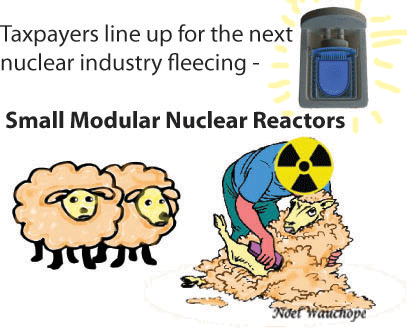
Sweden plans new nuclear reactors by 2035, will share costs
By Simon Johnson, November 16, 2023
STOCKHOLM, Nov 16 (Reuters) – Sweden’s government said it aimed to build the equivalent of two new conventional nuclear reactors by 2035 on Thursday to meet surging demand for clean power from industry and transport and was prepared to take on some of the costs.
By 2045 the government wants to have the equivalent of 10 new reactors, some of which are likely to be small modular reactors (SMRs), smaller than conventional reactors.
Energy Minister Ebba Busch said the government was planning a “massive build out” of new nuclear power by 2045.
“It’s decisive for the green transition, for Swedish jobs and at heart for the welfare of our citizens,” she told reporters.
……………..critics have pointed to the huge costs and the private sector’s reluctance to invest without guarantees or other incentives – like Britain’s deal with French nuclear developer EDF for its new Hinkley Point C plant which gave price guarantees.
Sweden’s government has already offered 400 billion crowns ($37.71 billion) of loan guarantees to support new nuclear power, which it says is needed to power developments like fossil-fuel free steel production, but said it was now willing to shoulder more of the burden.
“Guarantees are very important, but that won’t be enough,” Finance Minister Elisabeth Svantesson said. “For this type of infrastructure it is going to require the state to take part and share the risk.” https://www.reuters.com/business/energy/sweden-plans-new-nuclear-reactors-by-2035-can-take-costs-2023-11-16/—
Operators extend Finnish, Swedish nuclear reactor outages
OSLO, Nov 30 (Reuters) – The ongoing outages at Finland’s OL3 and Sweden’s Ringhals 4 nuclear reactors were extended on Thursday, operators TVO and Vattenfall said in market messages on power bourse Nord Pool, pushing up electricity prices at a time of high demand.
OL3 is now expected to restart at 1800 GMT on Thursday. The reactor, Europe’s largest with a capacity of 1,600 megawatt (MW), suffered an unexpected “rapid shutdown” during testing on Wednesday, operator TVO has said.
OL3 had originally been expected to be offline for eight hours, but the restart was since delayed several times.
In Sweden, Vattenfall extended an outage at Ringhals 4 with a capacity of 1,130 MW by two full days to 2259 GMT on Saturday.
The reactor had tripped on Wednesday morning due to a valve failure, with troubleshooting ongoing, according to the market message on Nord Pool.
The Nordic region has been hit by unusually cold weather in late November, pushing up demand for heating and boosting power prices.
Reporting by Terje Solsvik; editing by Nora Buli
Sweden: Vattenfall going too slow on developing nuclear reactors?
The Swedish government’s key coalition partner is ratcheting up pressure on
Vattenfall AB to expand nuclear power production and says a separate
company could be formed for that purpose if the state-run utility doesn’t
move fast enough.The strategy of the nationalist Sweden Democrats, whose
support is crucial to the country’s three-party government, stems from
their perception that Vattenfall is dragging its heels over expanding the
fleet of reactors. The utility has said it may take a decade or more to get
new units online.
Bloomberg 13th Oct 2023
https://www.bloomberg.com/news/articles/2023-10-13/swedish-nationalists-mull-new-nuclear-firm-to-rival-vattenfall #nuclear #antinuclear #NuclearFree #NoNukes #NuclearPlants
Endless energy use needed for endless data storage – so, small nuclear reactors for Sweden
Nuclear-powered campus in Sweden will power data centers
Small modular player Kärnfull Next plans commercial campus at Nyköping
September 11, 2023 By Peter Judge
Swedish nuclear company Kärnfull Next has announced plans for a campus of small modular reactors (SMRs) on the Swedish coast, which will power data centers.
The company plans to build the campus at a site in Nyköping, on the east coast of Sweden, where nuclear software firm Studsvik currently operates test reactors. It is planned to come on stream in 2030.
DCD has asked Kärnfull for more details, including the type of data center partners the company hopes to engage with…………………………………………
The company is still checking on aspects such as financing, permitting, and the possibility of power purchase agreements with power off-takers, and expects to finalize some decisions on all that towards the end of 2024……………………………………………………………. https://www.datacenterdynamics.com/en/news/nuclear-powered-campus-in-sweden-will-power-data-centers/
British activists join Nuclear Free Local Authorities in supporting Swedish Sami against uranium mining
The UK/Ireland Nuclear Free Local Authorities and Lakes against the Nuclear Dump have been joined by activists from twelve anti-nuclear campaign groups in a letter to organisations representing the Sami people of Sweden offering support in their fight against uranium mining.
A ban on uranium exploration, mining and processing in Sweden came into force on 1 August 2018 but, last month, Swedish Climate Minister Romina Pourmokhtari announced that the ban would be lifted and that ten new nuclear reactors would be built over the next twenty years. In the face of international and domestic criticism, the centre-right government has since reined in the commitment to new nuclear by talking instead of a vague commitment to developing ‘green power’, but there has been no roll-back on uranium mining.
Sweden accounts for 80% of the European Union’s uranium deposits and already extracts uranium as a waste product when mining for other metals. Foreign companies, including Aura Energy and District Metals, have already expressed an interest in exploiting reserves. Even if the new government’s nuclear hopes come to naught, there will still be a ready export market for any output. The ongoing conflict in Ukraine has made the surety of uranium supply from Russia and its allies uncertain and the recent military takeover in uranium-producing Niger has shaken the market; consequently, pro-nuclear European nations will be looking for any stable source from a neighbour.
The correspondents fear that any resumption of uranium mining will come at a heavy price to the traditional lands and lifestyles of the Indigenous Sami People, with a degradation of their natural environment and their health. The Sami (or Saami) inhabit the region of Sápmi, which embodies the most Northern parts of Norway, Sweden and Finland, and North West Russia, and are best known for their reliance upon semi-nomadic reindeer herding.
Councillor Lawrence O’Neill, Chair of the NFLA’s Steering Committee, said: “Sadly the world over, uranium mining has been, and still is, often visited upon Indigenous People in their Traditional Lands by large, profit-hungry corporations. In addition, national governments have chosen their lands to carry out nuclear weapons testing and nuclear waste dumping. The impact has been enormous – the lands of Indigenous People have been poisoned, their health destroyed and their culture and traditional way of life decimated.
“Sweden has signed the UN Declaration of the Rights of Indigenous People pledging to defend the lands and lifestyle of the Sami, but the decision to resume uranium mining could, if left unchallenged, lead to their destruction. In sending this collective letter, we, the British and Irish local authorities opposed to nuclear power, with British anti-nuclear groups and activists are pledging ourselves as allies in this fight”.
Co-sponsor, Marianne Kirkby, founder of LAND, Lakes against the Nuclear Dump, added: “Here in Cumbria, we feel so much empathy for the Sami people who have had no say whatsoever in the opening-up of Sweden’s wild areas to the devastation of uranium mining.
“In the UK, we have no uranium mining, but plenty of nuclear plants. We are constantly told that nuclear power is ‘clean’ and ‘home-grown’. This blatant lie is the means by which Sami lands are put under pressure for new uranium mining exploitation in areas where it was previously, and quite rightly, banned as being too destructive to the health of people and planet”.
“This lie of ‘clean nuclear’ is the means by which Indigenous people, whether in Cumbria or in Sweden, whether at the waste end or the fuel end of the nuclear industry, are being exploited by the most toxic industry there is without even a ‘by your leave’. We stand in solidarity with the Sami in saying NO – NO MORE!”
Could new nuclear kill one of the world’s most promising offshore windmarkets?
Sweden is slated to host some of the biggest projects at sea
globally but its government is talking up the virtues of atomic power,
writes Bernd Radowitz.
Recharge 5th Sept 2023
Swedish government removes nuclear power promise from website.
Climate minister accused of ‘exceeding her powers’ by announcing need for 10 new reactors.
The Swedish government has quietly walked back an announcement
that it would build at least 10 nuclear reactors by 2040 as part of its
plan to ditch fossil fuels.
Romina Pourmokhtari, Sweden’s climate and
environment minister, announced earlier this month that Sweden needed to
double electricity production in the next two decades in order to meet its
climate goals. An accompanying statement said that “Sweden will need
three times as much nuclear power in 20 years”.
But the statement was
quickly taken down from the government website and replaced with one that
makes no mention of the ten new reactors. Daniel Liljeberg, state secretary
to the minister for energy, business and industry, said there is no
official target matching Ms Pourmokhtari’s statement. Mr Liljeberg told the
Swedish daily Aftonbladet the government has not established targets or
assessments at that level of detail.
Insiders say Ms Pourmokhtari
“exceeded her powers” when she announced publicly that the government’s
aim was to put at least ten conventional reactors into operation during the
2030s and 2040s, Aftonbladet reported. Environmental experts had criticised
the government announcement, saying the new reactors would be too expensive
and not meet needs fast enough. The plans marked a dramatic change from the
country’s current capacity for nuclear power, where six reactors currently
account for around 30 per cent of its electricity production. In June,
Sweden’s coalition government adopted a new energy target, changing it to
“100 per cent fossil-free” electricity from “100 per cent
renewable”, giving the green light to push forward a new energy strategy
relying on expanding its nuclear power network.
Telegraph 26th Aug 2023
Sweden’s “Energiforsk” should remove misleading reports on nuclear power”.
Do you want an energy policy based on opinions and misleading information
or should we demand an energy policy based on research and facts?
Basing our energy policy on opinions without factual basis is bad, but even worse
is that the research company Energiforsks is currently providing Sweden’s
politicians with incorrect and misleading information about the
possibilities of nuclear power, writes energy consultant Hugo Franzén in a
debate post on SMB.
Some time ago I met a politician who claimed that we
must invest in nuclear power if we want a sustainable energy supply. The
politician was adamant in his conviction and referred to a “research report
from the UN where the authors concluded that nuclear power is an
indispensable tool for achieving the global sustainability goals formulated
in Agenda 2030″.
I work as an energy consultant and know that the UN does
not take such positions and was then curious about the source. I searched
and found the mentioned report on Energiforsk’s website, see further on
this link. On the website, Energiforsk highlights the report and writes,
among other things, “The 155-page long report states that nuclear power is
an indispensable tool for achieving the global sustainability goals
formulated in Agenda 2030″.
I emailed Energiforsk’s CEO, Markus Vråke, and
asked if it was a fact-based conclusion that was presented on the website
and that Energiforsk stood behind. Markus then replied “We do not stand
behind other people’s messages”. Now that Energiforsk’s CEO admits that it
is not a conclusion that can be drawn from the report but rather an
opinion, or a message from the report authors, I suggested that they should
remove the report from the website, or alternatively be clear that the
report is misleading and has no scientific support . Markus Vråke did not
respond to my email but continues to mislead by highlighting the report on
the website as a credible source of knowledge.
Supermiljobloggen 12th Aug 2023
Sweden criticised over plan to build at least 10 new nuclear reactors
Environmental experts say proposals are too expensive and will come too late to meet energy needs
Miranda Bryant in Stockholm, Fri 11 Aug 2023 https://www.theguardian.com/world/2023/aug/10/sweden-criticised-over-plan-to-build-at-least-10-new-nuclear-reactors
Environmental experts have criticised the Swedish government’s plan to build at least 10 nuclear reactors in the next 20 years, more than doubling the current number, saying it will be too expensive and will come too late to meet energy needs.
The climate minister, Romina Pourmokhtari, announced on Wednesday that in order to meet its climate goals Sweden needed to double electricity production in the next two decades.
The plan for 10 new reactors would mark a dramatic change from the country’s current capacity for nuclear power, with six reactors in operation in Forsmark, Oskarshamn and Ringhals accounting for about 30% of its electricity production.
Lars J Nilsson, a professor at Lund University and a member of the European climate advisory board, said he disputed the government’s claim that the new reactors were needed and dismissed the move as “symbolic”.
“You cannot certainly say that we need 10 new reactors. Right now the expansion of electricity production in Sweden is through wind power,” he told the Guardian. “I don’t expect any new nuclear power in Sweden, unless the government provides quite far-reaching guarantees similar to what you have at Hinkley Point [in the UK].”
The move was more about posturing than action, he said, claiming the government wanted to show it was taking action on meeting its climate goals. “I see it more as symbolic than actually creating any real change.”
If the reactors were built the costs were likely to fall heavily on the Swedish taxpayer, said Nilsson. Having been a hotly debated issue in the past, this latest announcement had had a “lukewarm response”.
Sweden’s reputation as a green leader on the global stage was shifting, he said. “Sweden will partly lose that profile. Now the momentum and progressiveness is coming from the EU and Brussels.”
The EU’s Fit for 55 plan legally requires member states to reduce emissions by at least 55% by 2030 and become “climate neutral” by 2050.
Sweden’s Moderates agreed when they formed a coalition government with the Christian Democrats, Liberals and the far-right Sweden Democrats that more reactors would be permitted and that investments in nuclear power would be made profitable through credit guarantees and changes to pricing.
This week was the first time the government had given an anticipated number of new reactors.skip past newsletter promotion
Sweden to clear obstacles for new nuclear reactors
ZAWYA, August 9, 2023
ALTERNATIVE ENERGYSWEDENEUROPENUCLEAR
Sweden’s government said Wednesday it would remove limits on the number of nuclear reactors allowed in Sweden and simplify the permit process for new reactors.
“The climate transition requires a doubling of the electricity production in the coming 20 years,” Climate Minister Romina Pourmokhtari told a press conference.
She added that the government believed that new nuclear power equalling 10 conventional reactors would need to go into service in the 2030s and 2040s.
Pourmokhtari said the government was therefore moving forward with proposed legislation that would remove a ceiling of maximum 10 reactors in the country and a requirement that new reactors be built in the same locations as existing ones.
The climate minister said these limitations were “in the way of a modern view of nuclear power,” adding they would also simplify the process for building new ones.
Pourmokhtari said a bill had been prepared to be considered by parliament during the autumn.
The Scandinavian country voted in a 1980 non-binding referendum to phase out nuclear power.
Since then, Sweden has shut down six of its 12 reactors and the remaining ones, at three nuclear power plants, generate about 30 percent of the electricity used in the country today…………………………………
The reactors were opened in the 1970s and 1980s. Most of them have lifespans of around 40 years and are in need of modernisation.
Sweden’s Social Democrats — which led the previous government — have traditionally been opposed to building new reactors, while the centre-right has been in favour.
Immediately after coming to power in late 2022, Prime Minister Ulf Kristersson’s right-wing coalition government announced it was seeking to build new reactors.
It has also announced a change to Sweden’s energy policy, changing its goal of 100 percent “renewable” energy to 100 percent “fossil-free” energy. https://www.zawya.com/en/world/uk-and-europe/sweden-to-clear-obstacles-for-new-nuclear-reactors-fymh51z0—
1 This Month
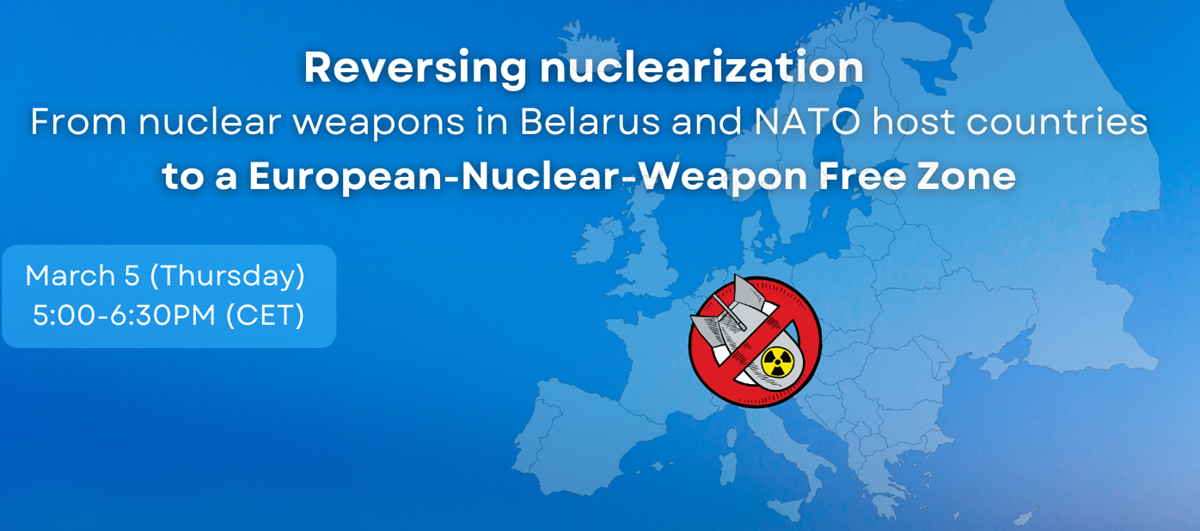
5 March -Online – Reversing nuclearization:
From nuclear weapons in Belarus and NATO host countries to a European-Nuclear-Weapon Free Zone
11am-12:30pm Eastern Time USA / 5pm-6:30pm CET

of the week – Advocating for a
nuclear free beach – https://www.samuellawrencefoundation.org/
The Samuel Lawrence Foundation advocates for a Nuclear Waste Free Beach at San Onofre, join us and take action!

10 March A LIVE WEBINAR THE REAL EFFECTS OF NUCLEAR POWER
What the Industry Isn’t Telling Us
1:00 PM Mountain, 2 pm Central, 3 pm Eastern. Live on the Keepers of the Water Facebook page

18 March Webinar @ 1 PM EST: An Assessment of SMR Projects: The Case of Canada
register for the zoom:
https://us02web.zoom.us/webinar/register/WN_o8BIIOUvQ2ONJR1nta65DQ#/registration

of the week – STOP SMALL MODULAR REACTORS IN CANADA
To see nuclear-related stories in greater depth and intensity – go to https://nuclearinformation.wordpress.com
-
Archives
- March 2026 (37)
- February 2026 (268)
- January 2026 (308)
- December 2025 (358)
- November 2025 (359)
- October 2025 (376)
- September 2025 (258)
- August 2025 (319)
- July 2025 (230)
- June 2025 (348)
- May 2025 (261)
- April 2025 (305)
-
Categories
- 1
- 1 NUCLEAR ISSUES
- business and costs
- climate change
- culture and arts
- ENERGY
- environment
- health
- history
- indigenous issues
- Legal
- marketing of nuclear
- media
- opposition to nuclear
- PERSONAL STORIES
- politics
- politics international
- Religion and ethics
- safety
- secrets,lies and civil liberties
- spinbuster
- technology
- Uranium
- wastes
- weapons and war
- Women
- 2 WORLD
- ACTION
- AFRICA
- Atrocities
- AUSTRALIA
- Christina's notes
- Christina's themes
- culture and arts
- Events
- Fuk 2022
- Fuk 2023
- Fukushima 2017
- Fukushima 2018
- fukushima 2019
- Fukushima 2020
- Fukushima 2021
- general
- global warming
- Humour (God we need it)
- Nuclear
- RARE EARTHS
- Reference
- resources – print
- Resources -audiovicual
- Weekly Newsletter
- World
- World Nuclear
- YouTube
-
RSS
Entries RSS
Comments RSS
 nuclear-news