India should not buy Russia’s unsafe nuclear reactors
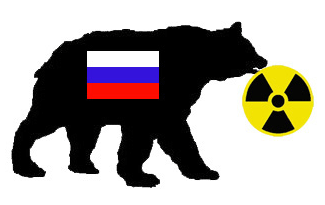
 Reactors from Russia are unsafe and unreliable, India shouldn’t buy them: Russian environmentalist Vladimir SlivyakDiaNuke.org, 9 Jan 15 DiaNuke.org interviewed the eminent environmentalist Vladimir Slivyak whose group EcoDefense has been facing repression in Russia for exposing the lack of nuclear safety and environmental impacts. His report on the status of nuclear industry in Russia, prepared on the request of an environmental group in Africa which is also an important market that the Russian nuclear giant Atomsroyexport is eyeing, has been published recently.
The Russian President in his recent visit to New Delhi, offered 21 more reactors to India. Why is the Russian nuclear industry is in such hurry when there is a global shift away from nuclear after Fukushima?
Unfortunately, Russia hasen’t learnt any lessons from Fukushima. Development of nuclear power industry remains the priority for Russian government……..
It is also about making other countries dependent on Russian services and supplies, including nuclear fuel and also so called treatment of high-level radioactive waste, such as spent nuclear fuel, which is usually taken back to Russia. Making someone dependent in such a sensitive field as nuclear power, where not many producers existing, has global political importance for Russian authorities……….
Rosatom promises are far bigger than its technical capability to build reactors. The only explanation I can think of is that they don’t believe that all these reactors will be actually ordered. And Rosatom’ $100billion portfolio is not about real orders actually. It looks great on paper and allows Rosatom managers to report about big success to the government and continue to benefit from big governmental subsidies. But let’s see how their promises are interacting with reality. Couple of years ago there was contract signed with Vietnam and it was said publicly construction will start soon. And last year it appeared that this plan is postponed until 2020. Contract with Turkey was signed before Vietnam and reported to be another big breakthrough, but no construction started until now. And the most of so-called “orders” of Rosatom in other countries are, in fact, not real contracts, but just talks and wishful thinking. Rosatom often gives away totally unreliable information on new reactors, and it was many times proven to be false.
It doesn’t mean Rosatom is not capable of building reactors in India at all. Rather it means that if they do, they would have to postpone many other plans for long, they will try to do it as fast as possible which will likely affect safety of new reactors.
We often hear from the Russian Ambassador and the industry leaders from Russia visiting India that the Russian reactors are safest in the world. What is your take?
Rosatom is promoting its new reactor design, the VVER-TOI, to international customers even though this design has never been tested in practical operation in Russia. No assessments of this design have been done by independent experts, either. It remains unclear if safety has been improved in the new design, as Rosatom claims. But even industry experts put Rosatom’s claims of increased safety in doubt and argue over the effectiveness of new safety systems.
Existing Russian reactors, likewise, do not demonstrate a high level of safety………http://www.dianuke.org/russian-reactors-are-unsafe-and-unreliable-india-shouldnt-buy-them-russian-environmentalist-vladimir-slivyak/
Russia cracks down on environmental group Ecodefense – classed as “foreign agent”

 Reactors from Russia are unsafe and unreliable, India shouldn’t buy them: Russian environmentalist Vladimir Slivyak DiaNuke.org, 9 Jan 15 “……….You were termed anti-national and had to face govt repression for raising voice on nuclear safety and environmental impacts in Russia. What is the status now? Why do the industry and govt go so hand-in-glove?
 Russia approved the “Foreign agent” Act in November 2012 which was an instrument to punish civil society criticizing the government. By Summer 2014, Ministry of justice started to forcibly include human rights and environmental groups to official list of “foreign agents” published on the ministry’ web-site. My organization – Ecodefense – was one of the first 10 non-governmental groups included to this list. And first environmental organization on this list.
It is probably symbolic that anti-nuclear group became the first environmental organization on the list of “foreign agents”. Sort of main enemy of the state among environmental movement. We never had any foreign influence on our decisions, and never had foreign people in our organization. Ironically, our work was to big extend focused on stopping the import of foreign radioactive waste to Russia, and also on stopping foreign money for new reactors in Russia. We also did campaigns on education, on climate issues, on coal. But according to official statement by the Ministry of justice, Ecodefense was put on the list of “foreign agents” for specific campaign against construction of nuclear plant near the city of Kaliningrad, my hometown.
We responded to governmental action by declaring that we will not accept the status of “foreign agent” and we will not follow legal requirements for “agents”. For one simple reason – Ecodefense is not anyone’s agent. Our work aims to stop nuclear danger, and not to benefit any government, Russian or foreign. We were openly criticizing Kudankulam project and many other projects of Rosatom, and we were criticizing European company Urenco (and its shareholders RWE and E.On) for sending radioactive waste to Russia.
It’s 6 month already since government declared us a “foreign agent”. We were fined for quite big amount of money for resisting to register as “foreign agent”. We have another lawsuit filed by the Ministry of justice for not following legal requirements for “agents”, this one is in court now. We got 4 other fines, both personal and organizational. We had three branches of Ecodefense legally registered in Russia. Two are closed down by the court in December. And we are struggling in court for our third organization in court. Unfortunately, we spend now a lot of time in courts. Expectations are not good, our last organization may be closed down this year, likely……….http://www.dianuke.org/russian-reactors-are-unsafe-and-unreliable-india-shouldnt-buy-them-russian-environmentalist-vladimir-slivyak/
Strategic Arms Reduction Treaty- USA has reduced no. of nuclear missiles, but Russia has increased theirs
U.S. Nuclear Arsenal Drops, Russia’s Missile Stocks Up – U.S. State Department Report IB Times, By Esther Tanquintic-Misa | January 13, 2015 A newly released report of the U.S. military’s nuclear arsenal by the State Department has disclosed that the country’s number of nuclear missiles had continued to reduce in compliance to the New START (Strategic Arms Reduction Treaty) treaty with Russia. The latter, however, continued the opposite.
Data collected as of Sept 1, 2014 showed that the number of deployed Intercontinental Ballistic Missiles, submarine-launched ICBMs and deployed heavy bombers by the U.S. went down from 809 the year before to 794. Russia‘s inventory was the opposite at 528, from 473 a year ago.
The U.S.’ warheads on deployed ICBMs, SLBMs and nuclear warheads for deployed bombers, from 1,688, went down to 1,642. Russia recorded the same number at 1,642, but the report said the previous was 1,400.
President Barack Obama’s bailiwick, as of Sept 2014, has 912 deployed and non-deployed missile launchers, from 1,015 a year ago. Vladimir Putin’s Russia has 911, up from 894.
The U.S. and Russia signed the New START Treaty on April 2010 primarily toreduce the number of nuclear weapons and launchers that the two countries own and deploy. The agreement entered into force on February 2011, and is expected to last at least until 2021.
With majority of the U.S. nuclear arsenal assigned to the Air Force, the latter has worked to demolish deactivated launch facilities throughout 2014 to comply with the New START Treaty, according to the State Department report. Crews with the 341st Missile Wing at Malmstrom Air Force Base, Montana reported in August they have completed the demolition of 50 Minuteman III launch facilities. This was inspected and verified by Russian inspectors.
A report by Air Force Times further revealed the following details:……….. http://au.ibtimes.com/articles/578890/20150113/u-s-nuclear-arsenal-russia.htm#.VLWF5NKUcnk
Unsafe, unreliable- Vladimir Slivyak’s verdict on Russian nuclear reactors
 Reactors from Russia are unsafe and unreliable, India shouldn’t buy them: Russian environmentalist Vladimir Slivyak DiaNuke.org, 9 Jan 15 “………….Over a dozen incidents and failures have already occurred at the newly built VVER at Kalinin NPP, including one involving a hydrogen explosion.
The Russian fast breeder reactor – the only commercial unit of this type in the world – has in its over 30 years of operation experienced almost as many various accidents, including fires involving radioactive substances and coolant leaks.
Further development of the breeder technology planned by Rosatom in Russia includes experiments with plutonium fuel. VVER-1200s are also designed to operate with plutonium fuel. Introducing this nuclear material into electricity generation on an industrial scale will likely lead to new accidents that will result in plutonium contamination.
Additionally, eleven old RBMK units – all variations on the Chernobyl design – still remain in operation in Russia.
Rosatom continues to reprocess spent nuclear fuel at the disastrous Mayak facility. Not only is the stockpile of extracted plutonium growing, but there is also a constant significant increase in volumes of radioactive waste resulting from reprocessing. The Mayak nuclear facility in Chelyabinsk Region was a place of a devastating nuclear accident of 1957, which caused widespread radioactive contamination and led to the resettlement of about 20,000 of local residents in the subsequent years.
Unfortuntely, several thousands of local residents still have to live in contaminated area because Rosatom doesn’t take responsibility for their resettlement and people themselves are too poor to move away. That’s best illustration of what is safety culture and social responsibility in understanding of the Russian nuclear industry.
Russia has no realistic and viable plan for the disposal of radioactive waste. The risk of radioactive leaks from the aging radioactive waste storage facilities is increasing. Rosatom’s attempts to build new disposal sites for radioactive waste in several regions of Russia have been met by harsh opposition from local populations and environmental groups. But even if such sites were ultimately built, their capacity would be enough to take care of only a small fraction of the waste accumulated over many decades.
How strong is the nuclear safety regulation in Russia? What have been post-Fukushima changes?
Unfortunately, it’s far from strong. In 1990s we had special safety regulator, Gosatomnadzor (or GAN). It was reporting directly to the president of country and was able to confront Rosatom on the most important safety issues. I mean there is certain difference in mandates of operator and regulator, and they must be in confrontation to improve the safety. When regulator becomes a friend to operator we are getting into Japanese situation which in the end bring us to another Fukushima sort of disaster. But that’s not the way it went in Russia. Rosatom successfully lobbied for dissolving of independent GAN. And finally it became just the department inside of another bigger structure, without any ability to control. After Fukushima, regulator proposed to close several old reactors down but that was easily ignored by Rosatom who said Russian reactors are best in the world and Fukushima would never happen in Russia. Something like that was said by Western industry after Chernobyl and all wanted to believe in it until Western-designed Fukushima exploded several times.
The Russian nuclear giant, Atomsroyeport, has been clearly unwilling to abide by the Indian liability law which has a clause on supliers liability in case of an accident. What does it say on their claims of safety?
It just confirms old fact that there is no 100% safe reactors. Which means, sooner or later, new Chernobyl or new Fukushima (or both) will happen again somewhere in the world. Russian industry knows very well that their reactors have vulnerabilities. And they don’t want to pay in case of another Chernobyl which they know is possible. Just like the owner of Fukushima is not paying to Japanese people……….http://www.dianuke.org/russian-reactors-are-unsafe-and-unreliable-india-shouldnt-buy-them-russian-environmentalist-vladimir-slivyak/
USA and Russia ramping up nuclear weapons rivalry
 US and Russia in danger of returning to era of nuclear rivalry Julian Borger, Guardian, 5 Jan 15 American threats to retaliate for Russian development of new cruise missile take tensions to new level. A widening rift between Moscow and Washington over cruise missiles and increasingly daring patrols by nuclear-capable Russian submarines threatens to end an era of arms control and bring back a dangerous rivalry between the world’s two dominant nuclear arsenals.
Tensions have been taken to a new level by US threats of retaliatory action for Russian development of a new cruise missile. Washington alleges it violates one of the key arms control treaties of the cold war, and has raised the prospect of redeploying its own cruise missiles in Europe after a 23-year absence.
On Boxing Day, in one of the more visible signs of the unease, the US military launched the first of two experimental “blimps” over Washington. The system, known as JLENS, is designed to detect incoming cruise missiles. The North American Aerospace Command (Norad) did not specify the nature of the threat, but the deployment comes nine months after the Norad commander, General Charles Jacoby, admitted the Pentagon faced “some significant challenges” in countering cruise missiles, referring in particular to the threat of Russian attack submarines.
Those submarines, which have been making forays across the Atlantic, routinely carry nuclear-capable cruise missiles. In the light of aggressive rhetoric from Moscow and the expiry of treaty-based restrictions, there is uncertainty over whether those missiles are now carrying nuclear warheads.
The rise in tension comes at a time when the arms control efforts of the post-cold-war era are losing momentum. The number of strategic nuclear warheads deployed by the US and Russia actually increased last year, and both countries are spending many billions of dollars a year modernising their arsenals. Against the backdrop of the war in Ukraine and a failing economy, Vladimir Putin is putting increasing emphasis on nuclear weapons as guarantors and symbols of Russian influence. In a speech primarily about the Ukrainian conflict last summer, Putin pointedly referred to his country’s nuclear arsenal and declared other countries “should understand it’s best not to mess with us”…………
Reintroducing cruise missiles into Europe would be politically fraught and divisive, but the Republican majority in Congress is pushing for a much more robust American response to the Russian missile.
The US military has also been rattled by the resurgence of the Russian submarine fleet. Moscow is building new generations of giant ballistic missile submarines, known as “boomers”, and attack submarines that are equal or superior to their US counterparts in performance and stealth. From a low point in 2002, when the Russian navy managed to send out no underwater patrols at all, it is steadily rebounding and reasserting its global reach.
There have been sporadic reports in the US press about Russian submarines reaching the American east coast, which have been denied by the US military. But last year Jacoby, the head of Norad and the US northern command at the time, admitted concerns about being able to counter new Russian investment in cruise missile technology and advanced submarines.
“They have just begun production of a new class of quiet nuclear submarines specifically designed to deliver cruise missiles,” Jacoby told Congress……………….
With both the US and Russia modernising their arsenals and Russia investing increasing importance its nuclear deterrent, Hans Kristensen, the director of the Nuclear Information Project at the Federation of American Scientists, said we are facing a period of “deepening military competition”.
He added: “It will bring very little added security, but a lot more nervous people on both sides.” http://www.theguardian.com/world/2015/jan/04/us-russia-era-nuclear-rivalry
For world peace, a nuclear arms control agreement between USA and Russia is vital

 A Vital Nuclear Agreement, at Risk, NYT, By THE EDITORIAL BOARD JAN. 1, 2015There’s much more to the deeply troubled Russian-American relationship than Ukraine. Under the radar, tensions have also been brewing over compliance with a number of arms control treaties that for decades have been vital to keeping the peace between the two nuclear powers and setting an example for other countries.
Washington accuses Moscow of violating at least five of these agreements. A failure to resolve the impasse could have extremely dangerous consequences for the post-Cold War order, since even 20 years after the fall of the Soviet Union, the two sides together possess more than 10,000 nuclear weapons, more than 90 percent of what exists in the world.
The most serious dispute centers on the 1987 Intermediate-range Nuclear Forces Treaty, which bans both sides from deploying ground-launched ballistic and cruise missiles with a range of between 300 and 3,400 miles that carry nuclear or conventional warheads. These were among the weapons America once stationed in Europe to demonstrate a commitment to its allies and deter the Soviets from aggression.
Under the treaty, signed by President Ronald Reagan and the Soviet leader, Mikhail Gorbachev, America destroyed 846 missiles and the Soviets, 1,846 missiles. Both sides had come to see the systems as unacceptably risky to their own forces…………….
Despite the dispute, it would be a huge mistake for the United States to withdraw from the I.N.F. treaty, as some congressmen have demanded. That would remove all restraints on Russia and seriously weaken a system of treaties that has been remarkably effective over decades at curbing the spread of destructive weapons.
It would also be a mistake for either side to reintroduce the banned weapons onto their own territory or elsewhere. Russia’s foreign minister, Sergey Lavrov, recently asserted Moscow’s right to put nuclear missiles in Crimea, while Brian McKeon, a senior Pentagon official, told Congress this month that one response to Russia’s treaty violation could be to deploy American ground missiles in Europe. New deployments would reverse a trend in which the two countries have substantially reduced their huge arsenals in recent years.
The Obama administration should continue pursuing a diplomatic solution to the treaty dispute and resist the growing pressure in Congress for quick retaliation, which could make the situation worse. And it should explore other forms of pressure, like economic punishment and deployment of new defenses against cruise missiles.
So far, there is no evidence that Russia has deployed its new missiles, which would be a serious escalation. The United States and its allies should make efforts to bring Russia back into compliance with the treaty, and Russia needs to know that defiance will come at a cost.http://www.nytimes.com/2015/01/02/opinion/a-vital-nuclear-agreement-at-risk.html?_
Russia keen to lock Jordan into long term contracts to buy nuclear reactors
Russia approves draft deal to build nuclear plant in Jordan, Times of Israel 25 Dec 14 State-owned company Rosatom expected to finish construction of first 1,000-megawatt unit by 2024, second by 2026 Russian Prime Minister Dmitry Medvedev endorsed a draft Russia-Jordan agreement on the construction and operation of a nuclear plant in Jordan, the official website of the Kremlin said on Thursday…….
The state-owned company will form a joint venture with the Jordanian government, in which the Russian company will have 49.9 percent of the shares and Jordan will own 50.1%. The agreement will be financed by investments from both parties……
Russia boasts of The Right To Put Nuclear Weapons In Crimea
Russia: We Have The Right To Put Nuclear Weapons In Crimea Business Insider JEREMY BENDER Russia announced on Monday that it believes it has the full right to deploy nuclear weapons in the recently annexed Crimean peninsula.
Russian Foreign Minister Sergei Lavrov told the Interfax news agency that since Crimea was now a part of Russia, Moscow had full rights to deploy nuclear weapons into the region.
Lavrov argues that Crimea can be treated just like any other part of Russia and can therefore host nuclear infrastructure. “Now Crimea has become part of a state which possesses such weapons in accordance with the Nuclear Nonproliferation Treaty,” says Lavrov. “In accordance with international law, Russia has every reason to dispose of its nuclear arsenal … to suit its interests and international legal obligations.”………
Technically, neither the US nor Russia can move strategic nuclear forces without verifying the deployment with the other country due to the 2010 New START treaty, which set a timeline for mutual cuts to the countries’ nuclear stockpiles. Any Russian movement of strategic nuclear weapons into Crimea (long-range, high-yield weapons, as opposed to tactical or battlefield nuclear warheads) without prior notification to the US would result in Russia violating the treaty. http://www.businessinsider.com.au/russia-we-can-put-nuclear-weapons-in-crimea-2014-12
Hostilities escalate, but Russia rules out a pre emptive nuclear strike
Russia Rules Out Pre-emptive Nuclear Attack But Will Strike When Provoked or Under Threat – Report International Business Times, By Erik Pineda | December 13, 2014 As reports came out that Russia under President Vladimir Putin is getting overly aggressive in Europe, per NATO claims, analysts begin to entertain fears of pre-emptive nuclear strike by the Kremlin.
The NATO leadership announced this week that Moscow is engaged in a high-level of military activities in the Baltic region, underscored by the 400 times that alliance jet fighters were scrambled this 2014 in response to incursions made byRussian military planes.
NATO declared that Russia’s recent actions “can be destabilising and potentially dangerous,” according to The Daily Mail.
Now the question begs: Will this bold display of power foreshadow the escalation of hostilities?
No pre-emptive strike
While the tense posturing between Russia and the West – the U.S. and NATO specifically, could potentially graduate into a shooting a war, the Kremlin, as dictated by its recently revised military doctrine, will not fire the first shot, according to a new report byRT.com.
“The renewed draft of the military doctrine would not have a reservation for preventive nuclear strikes on potential enemy,” the news site added, pointing to unnamed insiders from Russia’s Defence Ministry as sources.
It was indicated too in the same report that pre-emptive nuclear attack on specifically identified enemies was deliberated upon by the Russian military and political leaders but the option was not included in the doctrine that was finalised in 2010.
Russia, however, is not discounting the use of nuclear weapons, which they will be willing to rain down on deemed aggressors when provoked. “The Russian Federation reserves the right to use nuclear weapons in reply to strikes with nuclear weapons or other weapons of mass destruction on its territory or on the territory of its allies,” the doctrine reportedly states………
Perceived threats
Not surprisingly, Moscow pinpoints Washington and its NATO allies as threats. “Russian foreign policy appears to be based on a combination of fears of popular protest and opposition to U.S. world hegemony,” writes Jonathan Masters, deputy editor for the Council on Foreign Relations.
Putin is apparently convinced that the U.S. and NATO is undermining Russia’s influence in the former Soviet Union republics, according to Masters, likely making the two as prime targets of Russia’s nuclear attack blueprint in the event World War III erupts.
To report problems or to leave feedback about this article, e-mail:r.pineda@ibtimes..com.au
To contact the editor, e-mail: editor@ibtimes.com http://au.ibtimes.com/articles/575843/20141213/russia-nuclear-attack-world-war-3-nato.htm#.VI8opNLF8nk
USA resists tightening international safety rules on nuclear reactors
 Russian Nuclear Safety Proposal Put Focus on U.S. Reactors Bloomberg, By Jonathan Tirone Dec 10, 2014 Russia scaled back opposition to European proposals to improve the safety of nuclear power, leaving the U.S. as the main dissenter to new rules intended to avoid a repeat of Japan’s 2011 meltdown in Fukushima.
Russia changed its stance at a Dec. 4 meeting of nuclear diplomats, setting out the Moscow government’s view of new rules to limit radioactive contamination in the event of a nuclear accident, according to a copy of the 13-page presentation seen by Bloomberg. The move raised the chances of a deal to strengthen the Convention on Nuclear Safety, according to three Western diplomats present at the meeting, who asked not to be identified because the talks were private.
The European Union is trying to find a path to tighter safety rules for the world’s aging nuclear reactors with its relationship with Russia overshadowed by the conflict in Ukraine. Yet it’s the U.S., the world’s biggest nuclear-power generator, that is proving the biggest obstacle, the diplomats said, as company investments in reactor safety lag those of European peers.
U.S. resistance to the European safety proposals is a “serious concern,” Senators Barbara Boxerand Edward Markey said in a Dec. 1 letter to Nuclear Regulatory Commission chairman Allison Macfarlane. The Democrats urged U.S. diplomats to work with “international partners” to amend safety flaws exposed by the 2011 Fukushima Dai-Ichi meltdowns.
Two Proposals
Russia abandoned its opposition to tightening international rules on reactor safety the day after reports of a nuclear accident in Ukraine. The reported mishap — which ultimately proved to be false — roiled markets and sent Ukrainian bond yields to a record high. The 1986 meltdown of a Soviet-built reactor in Chernobyl, about 80 miles north of the capital Kiev, weighed on Ukraine’s budget for decades and resulted in a 2,600 square kilometer (1,000 square miles) exclusion zone.
The European proposal would compel nuclear operators to both prevent accidents and, should they occur, mitigate the effects of radioactive contamination. Most controversially, the treaty change would also force potentially costly upgrades at existing plants.
More than half of the world’s 438 reactors were built at least 30 years ago and are nearing the age when they’ll need special attention, according to International Atomic Energy Agency statistics………
“People in the U.S. don’t realize that in many ways our nuclear safety standards lag behind those inEurope,” former NRC commissioner Victor Gilinsky said in a written reply to questions. “The German and French containment structures are generally more formidable than ours and those reactors generally have more protection systems.”……
Regulators worldwide have tried to boost safety standards in response to the Fukushima meltdown, which forced 160,000 people to flee radioactive contamination after a tsunami flooded safety back-up systems.
The NRC is still working out the parameters on how it values human lives at risk from a nuclear accident, spokesman Scott Burnell said. The value helps determine how much nuclear-plant operators need to spend on backfitting reactors with new safety gear. The NRC was criticized Dec. 3 by Boxer, chairman of the Senate’s Environment and Public Works committee, for being slow to ensure plant safety improvements.
“Some reactor operators are still not in compliance with the safety requirements that were in place before the Fukushima disaster,” Boxer said. “This is unacceptable.”
To contact the reporter on this story: Jonathan Tirone in Vienna at jtirone@bloomberg.net http://www.bloomberg.com/news/2014-12-10/russian-concessions-on-nuclear-safety-put-focus-on-u-s-reactors.html
Putin determined to market nuclear reactors to India
Putin’s India visit: New nuclear plants high on agenda , Live Mint 9 Dec 14 Vladimir Putin dispels concerns about military cooperation between Russia and Pakistan, says India is a ‘reliable and time-tested partner’ Moscow: Terming the ties with India as a “privileged strategic partnership”, Russian President Vladimir Putin on Tuesday disclosed that construction of new nuclear plants besides military and technical cooperation was high on the agenda during his visit to New Delhi…………Report: Russian Nuclear Industry in Review
“PAY MORE WITH NUCLEAR” : REPORT 4 http://earthlife.org.za/2014/12/pay-more-with-nuclear-report-4/ The report, entitled “Russian Nuclear Industry in Review”, is authored by Russian environmental activist and academic Vladimir Slivyak; and provides an insider view into the workings of the Russian nuclear industry. The report is fourth in the series “Pay more with nuclear”, which examines the enormous costs involved in building, operating and decommissioning nuclear power plants.The Russian deal is being marketed as preferential because it includes Russian government funding, construction assistance and fuel cycle services. But the “Russian Nuclear Industry in Review” report shows fatal flaws with the concept and reveals the shady corners of the Russian nuclear industry.
Key Documents:
The disastrous problem of Russia’s mounting spent nuclear fuel waste
 RUSSIAN NUCLEAR INDUSTRY OVERVIEW, Earth Life Johannesburg Vladimir Slivyak Russian environmental group, Ecodefense
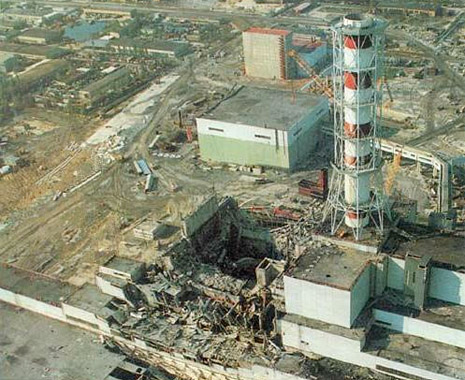 The overall amount of spent nuclear fuel accumulated at Russian nuclear sites is estimated
Fast breeder nuclear reactors: Russia the only country with one in commercial operation
“………..Fast breeders
Troubled story of Russia’s new nuclear reactors plan
1 This Month
Chernobyl: The Lost Tapes – A good documentary on Chernobyl on SBS available On Demand for the next 3 weeks– https://www.sbs.com.au/ondemand/tv-program/chernobyl-the-lost-tapes/2352741955560

of the week–London Campaign for Nuclear Disarmament

Tell the Ukrainian Government to Drop Prosecution of Peace Activist Yurii Sheliazhenko
To see nuclear-related stories in greater depth and intensity – go to https://nuclearinformation.wordpress.com
-
Archives
- April 2026 (152)
- March 2026 (251)
- February 2026 (268)
- January 2026 (308)
- December 2025 (358)
- November 2025 (359)
- October 2025 (376)
- September 2025 (257)
- August 2025 (319)
- July 2025 (230)
- June 2025 (348)
- May 2025 (261)
-
Categories
- 1
- 1 NUCLEAR ISSUES
- business and costs
- climate change
- culture and arts
- ENERGY
- environment
- health
- history
- indigenous issues
- Legal
- marketing of nuclear
- media
- opposition to nuclear
- PERSONAL STORIES
- politics
- politics international
- Religion and ethics
- safety
- secrets,lies and civil liberties
- spinbuster
- technology
- Uranium
- wastes
- weapons and war
- Women
- 2 WORLD
- ACTION
- AFRICA
- Atrocities
- AUSTRALIA
- Christina's notes
- Christina's themes
- culture and arts
- Events
- Fuk 2022
- Fuk 2023
- Fukushima 2017
- Fukushima 2018
- fukushima 2019
- Fukushima 2020
- Fukushima 2021
- general
- global warming
- Humour (God we need it)
- Nuclear
- RARE EARTHS
- Reference
- resources – print
- Resources -audiovicual
- Weekly Newsletter
- World
- World Nuclear
- YouTube
-
RSS
Entries RSS
Comments RSS
 nuclear-news