Russia adhering to Cold War-era nuclear treaty , rejects US accusations
 Russia rejects US accusations of nuclear treaty breach Yahoo News By VLADIMIR ISACHENKOV 9 June MOSCOW (AP) — Russia on Tuesday pledged adherence to a Cold War-era nuclear treaty and rejected U.S. accusations that it had violated it. Speaking at a briefing, Foreign Minister Sergey Lavrov said the U.S. has failed to provide evidence to prove allegations of Russian breaches of the 1987 Intermediate-range Nuclear Forces, or INF, treaty.
He added that Moscow is ready for an “honest but specific dialogue” and said Russia “has no intention to break the treaty.” The disagreements over the INF treaty come amid the Ukrainian crisis and may further foment Russia-West tensions.
Asked to comment on U.S. considerations to deploy land-based missiles in Europe as a possible response to the alleged Russian violations, Lavrov warned that “building up militarist rhetoric is absolutely counterproductive and harmful.”He said that Russia had its own grievances regarding the U.S. implementation of the treaty and that mutual concerns could be assuaged through dialogue.
The U.S. has accused Russia of flight-testing a ground-launched cruise missile with a range prohibited by the treaty. Russia denied the claim and, in its turn, alleged that some elements of the U.S. missile defense shield violate the treaty…….
The INF Treaty, signed by President Ronald Reagan and Soviet leader Mikhail Gorbachev in 1987, eliminated an entire class of nuclear weapons. Its signing followed some of the darkest periods of the Cold War, when NATO allies hosted U.S. ground-launched cruise missiles and Pershing 2 ballistic missiles to countering Soviet SS-20 missiles….. http://news.yahoo.com/russia-rejects-us-accusations-nuclear-treaty-breach-121350545.html?soc_src=mediacontentstory&soc_trk=tw
Russia to participate with India in building nuclear submarines?
 Russia’s Eyes Massive Nuclear Submarine Deal with India National Interest, 29 May 15 Russia may help India build nuclear submarines and stealth warships, according to Indian media reports.
Last week India’s Economic Times reported that the Indian conglomerate Reliance Infrastructure—which owns stakes in numerous Indian defense companies—is seeking Russian assistance for programs to locally produce nuclear submarines and other stealth warships. According to the report, top Reliance executives were in Moscow last week to meet with Russian defense officials about finding a partner for a joint venture between a Russian defense company and Pipavav Defence & Offshore Engineering, India’s largest defense shipyard, which Reliance has an 18 percent stake in. Specifically, Reliance is looking for a Russian partner with the “requisite technology expertise for manufacturing warships in India.”
As the Economic Times points out, the meetings come on the heels of India’s Cabinet Committee on Security (CCS) approving a plan for an Indian company to locally manufacture six nuclear submarines and seven stealth warships. The initial investment outlay for the project was set at Rs 1 trillion ($15.67 billion.)
Although the Russian government refused to specifically confirm the report, it did sound receptive to such a possibility…….http://nationalinterest.org/blog/the-buzz/russias-eyes-massive-nuclear-submarine-deal-india-12997
No Signs of Russian Nuclear Weapons Deployment – NATO Commander
Commenting on the possibility of Russian nuclear deployments, Breedlove said that the military alliance had not seen any changes recently.
“We have to be very clear – we have not seen direct evidence of any deployment of nuclear weapons [by Russia],” Breedlove told reporters.
Relations between NATO and Moscow deteriorated after Crimea’s reunification with Russia and the escalation of the crisis in eastern Ukraine in 2014.
In April 2014, the military alliance halted all practical cooperation with Russia, accusing Moscow of fueling the conflict in Ukraine.
Russia has repeatedly denied these accusations and, in turn, voiced concern over NATO’s military buildup close to its western borders.
Tough times ahead for the global nuclear industry
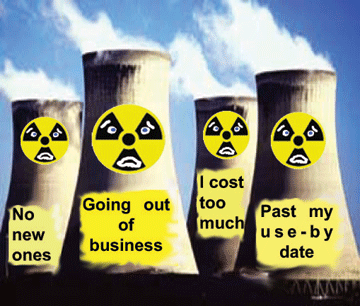 Survival of the fittest? World’s major nuclear builders are in for a long stretch in the red, Bellona, May 18, 2015 by Vladimir Slivyak, Translated by Maria Kaminskaya MOSCOW – Judging by the numerous reports on negotiations under way over new reactor construction projects, 2015 should be a pivotal year for nuclear power development across the world. The most vigorous efforts toward expanding their presence on the international markets are applied by the Russian Rosatom and France’s Areva. But all is not so rosy with both companies’ balance sheets. In free market conditions, without generous subsidies from state budget, the industry is as good as paralyzed, and it’s no wonder that its leaders are made of those with access to state coffers. Will the largest nuclear competitors find salvation in their governments’ support? Continue reading
USA spending $60 Mln on Multilateral Nuclear Environmental Program in Russia (MNEPR)
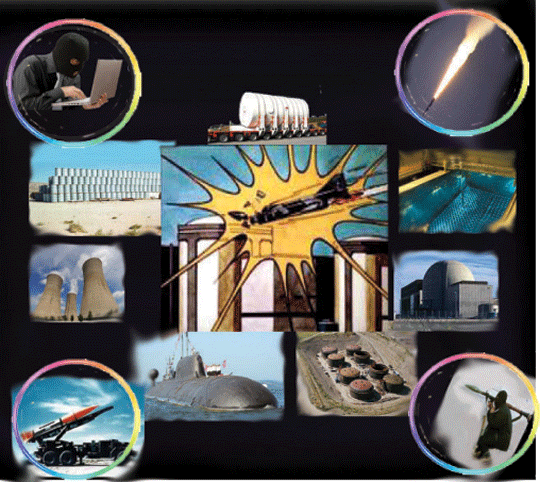 US to Spend $60 Mln on Russian Nuclear Security Despite Sanctions http://sputniknews.com/us/20150508/1021898724.html The United States Department of Energy might spend over $60 million on nuclear security activities in Russia.
The DOE National Nuclear Security Administration (NNSA) “has budgeted the funds to be spent this year through an international organization called the Multilateral Nuclear Environmental Program in Russia (MNEPR),” news website read, citing administration sources. NNSA spokesperson Derrick Robinson did not reject this information and said that US-Russian dialogue on nuclear security issues plays a great role in diminishing the level of nuclear terrorism threat.
He added that the United States has worked with Russia for a long time in order to stop the spread of weapons of mass destruction.
The United States and the European Union, as well as some other Western nations, have accused Moscow of escalating the crisis in Ukraine, and imposed economic sanctions on Russia to exert a change in Kremlin policy. Moscow r
The new “modern” nuclear arms race between USA and Russia
 Russia and the US are racing to modernize their nuclear forces http://www.businessinsider.com.au/russia-and-the-us-are-racing-modernize-their-nuclear-forces-2015-5 JEREMY BENDER The Kremlin has embarked on a process to update all of its nuclear warheads and launch systems.
The modernization effort will affect all of Russia’s strategic and nonstrategic nuclear weapons — a total of 4,500 warheads, the Bulletin of Atomic Scientists reports. The modernization process includes the replacement of Soviet-era intercontinental ballistic missiles (ICBMs) with new rocket launch systems.
Also included in the modernization push is the development and launch of an upgraded Borei-class ballistic missile submarine. Within the coming decade, Moscow plans to replace two older ballistic missile submarine classes with the newly updated Borei. The new variant will feature improved electronics, among other modifications.
Russia is not alone in wanting to upgrade its nuclear forces. The US also wants to modernize its nuclear weapons and launch platforms with the express aim of making its arsenal more efficient without having to acquire new warheads.
“[W]hile we haven’t deployed major new strategic systems in some time, we’ve been modernising the ones we’ve got more or less continuously — new rocket motors and guidance systems for the Minuteman missiles, lots of rebuilt parts for the B-52s, etc., etc.,” Matthew Bunn, a nuclear proliferation expert at Harvard, told Politifact.
In total, the US modernization plans are estimated to cost a total of $US348 billion over the coming decade,accordingto estimates from the Congressional Budget Office.
However, the total bill could rise to as much as $US1 trillion over the following three decades thanks to upkeep costs, a report from the James Martin Center for Nonproliferation Studiesestimates.
This process of modernization is triggering what John Mecklin, the editor of The Bulletin of Atomic Scientists, calls a “different kind of arms race.”
“It’s one in which technological advance is the race,” Mecklin told the BBC. “Nuclear countries are trying to make sure that the other nuclear countries don’t get some sort of technological edge.”
This modernization drive has no resulted in matching efforts within the US and Russia. Just as Russia is modernising its arsenal of ICBMs and ballistic missile submarines, the US is also replacing its nuclear triad with new missiles, submarines, and a next-generation bomber.
Russia has been reducing its nuclear armaments, complying with NPT
Is Russia Headed Towards Nuclear Disarmament?Sunday, 03 May 2015 Truth Out By Lizabeth Paulat, Care2 | Report Is Russia stepping up its game regarding the disarmament of nuclear weapons? This was the news last week when Russia sent a letter to a Non Proliferation of Nuclear Weapons Conference, describing the steps Russia has taken to fulfill the aims of the Non-Proliferation Treaty (NPT)……..
it turns out, neither side is doing that much better than the other. A look at the Federation of American Scientists fact sheet shows us that while Russia has a few more nuclear weapons (Russia has 7,500 while the U.S. has 7,200), the U.S. has more weapons strategically deployed.
But the real shame is that the U.S. and Russia are busy pointing fingers at each other, because when these two sides work together on nuclear disarmament they can achieve some monumental goals.
The Megatons to Megawatts program, which started in 1993, helped to rid the world of the equivalent of 20,000 nuclear warheads. It was a 10-year agreement that took Russia’s highly enriched uranium and converted it into electricity in the United States. This helped Russia rid itself of excess weapons, while powering about 10 percent of the United State’s electricity needs. The program ended in 2013, and so far there have been no talks on reinstating a similar deal………
Regardless of how these two countries go head-to-head, there is evidence that Russia has been steadily reducing their number of nuclear weapons and complying with the NPT. An independent peer review of Russia by the IAEA in 2013 revealed, “the Russian Federation had made significant progress since an earlier review in 2009. It also identified good practices in the country’s nuclear regulatory system”.
Although many will wait on another independent review before taking Russia’s claims to heart, most can agree that anything that conforms with the NPT is a step in the right direction. http://www.truth-out.org/news/item/30562-is-russia-headed-towards-nuclear-disarmament
Corruption in Russia’s nuclear industry
Russia’s Corruption In Nuclear Industry A US Concern And ‘Threat’ To National Security; FBI Still Investigates, IBT, By Reissa Su on May 02 2015 The Federal Bureau of Investigation continues to investigate bribery allegations in Russian uranium sales to the United States. The seven-year-old probe has been described as another indication of tense relations between the U.S. and Russia.
The probe reflects the concern of the U.S. on crime and corruption in the post-Soviet Russia era. It is also an indication that the West continues to worry about nuclear stockpiles and national security since the Cold War, reports WSJ………
 U.S. officials have long been worried about the corruption in Russia’s nuclear industry. If briberies continue, there is a possibility that weapons grade materials will be taken by criminal minds. “Corrupt insiders are a huge threat to nuclear security,” said William Tobey, former deputy administrator of the National Nuclear Security Administration. He believes it is considered a “national security threat” due to corruption in Russia’s nuclear industry. http://au.ibtimes.com/russias-corruption-nuclear-industry-us-concern-threat-national-security-fbi-still-investigates
Take nuclear arsenal off high alert , urges former USA commander
Cartwright said cyberthreats to the systems that command and control U.S. nuclear weapons demand greater  attention. While the main worry once was a hacker acting alone, today it is a hostile nation-state, he said, that poses more of a threat even as the Pentagon has improved its cyberdefenses.
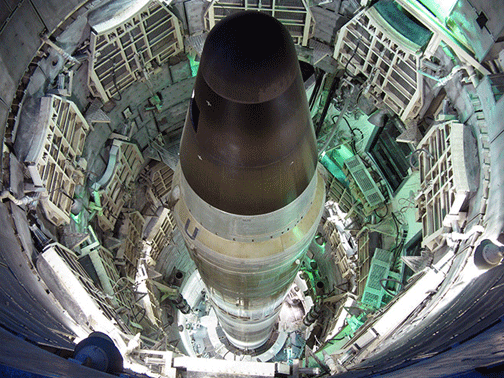 Former U.S commander: Take nuclear arsenal off high alert By Tribune wire reports contact the reporter 28 Apr 15 Taking U.S. and Russian missiles off high alert could keep a possible cyberattack from starting a nuclear war, a former commander of U.S. nuclear forces says, but neither country appears willing to increase the lead-time to prepare the weapons for launch.
Retired Gen. James Cartwright said in an interview that “de-alerting” nuclear arsenals could foil hackers by reducing the chance of firing a weapon in response to a false warning of attack.
Essentially adding a longer fuse can be done without eroding the weapons’ deterrent value, said Cartwright, who headed Strategic Command from 2004 to 2007 and was vice chairman of the Joint Chiefs of Staff before retiring in 2011.
The Obama administration has considered and rejected the idea before of taking nuclear missiles off high alert. There appears to be little near-term chance that Moscow would agree to pursue this or any other kind of nuclear arms control measure, given the deteriorating U.S.-Russian relations after Russia’s intervention in eastern Ukraine.
The U.S. and Russia also are at odds over a U.S. accusation that Moscow is violating a treaty banning medium-range nuclear missiles…….
An example of the high alert level of U.S. nuclear weapons is the land-based nuclear force. These are the 450 Minuteman 3 missiles that are kept ready, 24/7, to launch from underground silos within minutes after receiving a presidential order.
A study led by Cartwright proposes to adjust the missile command and control system so that it would take 24 hours to 72 hours to get the missiles ready for launch. Continue reading
Middle East chaos a financial bonanza for weapons industry
The Middle East accounts for approximately 32 percent of the United States’ weapons export market. From 2010 to 2014, the United States exported $43 billion in arms worldwide, according to the Stockholm International Peace Research Institute.
Russia has a thriving weapons export market as well. In 2012-2013, it sold $58.8 million in weapons to Iran and $1.2 billion in weapons to Syria
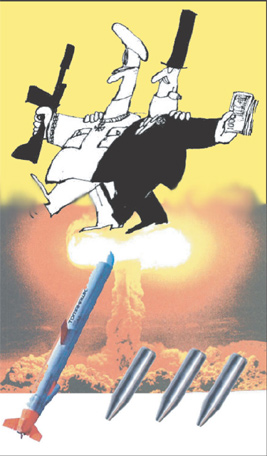 Weapons Manufacturers Are Making a Fortune Off Mid-East Chaos, Reader Supported News By Tim Mak, The Daily Beast 29 April 15
The Middle East is on a knife’s edge, thanks to a lunatic ISIS and a rising Iran. For American arms-makers, that means only one thing: opportunity.
 ar in Yemen. The continued threat of ISIS. Ongoing conflict in Iraq and Syria. Increasing Iranian influence. As America’s Middle Eastern allies watch their neighborhood burn, the U.S. defense industry is viewing increased instability as a money-making opportunity.
An unintended consequence of growing Iranian clout in the Middle East—punctuated most recently by a framework nuclear deal—has been the Obama administration’s decision to ease Gulf ally concerns by approving more sales of U.S.-made weaponry.
According to defense industry sources, inquiries for their product are way up. So while the region is a disaster for the Gulf states, the recent chaos is a timely godsend for the American defense industrial base—which due to congressional spending cuts is badly in need of customers. Continue reading
Russia’s thirst for Arctic mining causes effort to retrieve sunken nuc lear submarines
The most dangerous cast offs, say scientists, are the submarines, as the nuclear fuel in their reactors could ignite a 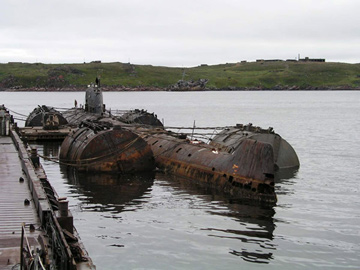 serious emergency.
the K-27 poses the most dangers for retrieval because its reactor might explode.
Raising sunken nuclear subs finally taking center stage , Bellona, April 22, 2015 by Anna Kireeva anna@bellona.ru, Charles Digges charles@bellona.no MURMANSK─ Two nuclear submarines lost or sunk by the Russian and Soviet Navies still lay at the bottom of the sea posing a possible source of contamination and laying tripwires to Moscow’s ambitious plans to develop the industrial and oil infrastructure of the Arctic.
The issue was one under discussion at a joint conference held by Bellona and Russian state nuclear corporation Rosatom last week in Murmansk. Authorities say lifting the K-27, scuttled by the Soviet navy after an accident, and the K-159, which the Russian navy lost while towing it to dismantlement, will require substantial research – and financing. The question of moving the submarines has long been on the table,but has gained little momentum in past year.
Now, though, they are standing in the way of Russia’s new national preoccupation with developing the Arctic for industry, oil and gas. The push early this week took antic proportions when Russian Deputy Prime Minister Dmitry Rogozin made a surprise visit Satuday to the Norwegian archipelago of Svalbard with no visa and despite sanctions against him not to enter the Europe for his role in in destabilizing the conflict in Eastern Ukraine……..
To realize the jingoistic mission, Russia has prioritized a giant Arctic pollution cleanup operation that would include dealing with decades of nuclear dumping in Arctic seas.
As revealed by Bellona in 2012, such litter includes nuclear submarines and ships, former military port infrastructure, sunken containers of spent nuclear fuel and nuclear waste…..
The waste includes 17,000 containers of radioactive waste; 19 ships containing radioactive waste; 14 nuclear reactors including five that still contain spent nuclear fuel; 735 other pieces of radioactively contaminated heavy machinery, two subs – the K-27, dumped in the shallows of the Kara Sea’s Novaya Zemlya Archipelago in 1981, and K-127, which sunk in 2003. Continue reading
Jean-Paul Baquiast – a nuclear war against Russia would finish USA
 US Will Not Survive a Nuclear War Against Russia – Jean-Paul Baquiast
http://sputniknews.com/us/20150417/1021016791.html#ixzz3Xd8u2w8E A nuclear strikes exchange between the United States and Russia will lead to the complete destruction of the United States, leaving Russia and China in a far better position, editor of the French portal Europesolidaire Jean-Paul Baquiast said.
His comment came in the wake of recent internet speculation about the US’ possible intent to carry out a preemptive nuclear attack on Russia. The concerns have risen after General Robin Rand was appointed as head of the US Air Force Global Strike Command.
There are assumptions that he might take an example from American General Curtis LeMay who became famous in 1949 for preparing a plan for a massive nuclear attack on the Soviet Union.
Unable to subdue Russia by conventional methods, Washington is preparing to destroy it with its armed forces, Jean-Paul Baquiast wrote. In the event of an armed conflict, American politicians may carry out a preemptive nuclear strike.
“Chances of the United States to destroy Russia without consequences for itself are small,” Baquiast said.
However, even the highly efficient S-500 missile system, which Russia is currently working on, would be unable to protect the country against a massive launch of ballistic missiles from US submarines, he noted.
In turn, Russia would launch its missiles from its submarines off the coast of the United States. And if the Americans manage to hit only a part of the Russian territory due to its large size, the US will be destroyed completely, the journalist wrote.
Nuclear submarine on fire – luckily it was unarmed
 Unarmed Russian nuclear submarine catches fire in shipyard, Stuff.co NZ, THOMAS GROVE , April 8 2015 Firefighters struggled to put out a blaze on a nuclear submarine as it underwent repairs at a shipyard in Russia’s northern province of Arkhangelsk on Tuesday (Wednesday NZT), Russian news agencies reported.
The agencies quoted sources as saying there were no weapons on board. Nobody was hurt, they said, although RIA news agency said the dry dock where the vessel was being repaired may have to be submerged under water to help extinguish the blaze.
The Emergencies Ministry declined comment on the reports of the fire at the Zvyozdochka shipyard, where the agencies said the 155-metre-long (just over 500 feet) 949 Antei submarine was being repaired.
“There is a fire on the submarine. We are fighting the fire now,” a shipyard source told Interfax news agency………http://www.stuff.co.nz/world/europe/67640388/unarmed-russian-nuclear-submarine-catches-fire-in-shipyard
Threats of a nuclear showdown, Russia’s Vladimir Putin tells NATO to back off
Vladimir Putin threatens NUCLEAR showdown over the West’s interference in Ukraine Express UK 2 Apr 15 VLADIMIR Putin has warned Nato to back off from interfering with Crimea or face a NUCLEAR response. By ROB VIRTUE Apr 2, 2015 In a secret meeting with Washington officials, Russia said it was looking at a range of actions over the threat of the West supplying weapons to Ukraine.
They also threatened civil disturbance by Russian nationals in the former Soviet states of Estonia, Latvia and Lithuania, who are feeling increasingly threatened by their powerfulneighbour.
A report of last month’s meeting, seen by The Times newspaper, said attempts by Nato to return the Crimean Peninsula to Ukraine would be met “forcefully including through the use of nuclear force”.
And it said the supply of weapons to Kiev would be seen as “further encroachment by Nato to the Russian border”.
Russia would hope slowly to entice those Russian populations towards Russia without giving Nato a pretext to deploy troops
The report of the meeting
Putin’s generals at the high-level gathering in Germany told the Americans they spoke with the approval of their president……http://www.express.co.uk/news/world/56
Russia’s economic woes delaying the build of nuclear reactors in Turkey
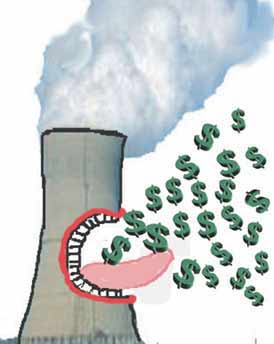 Russian Nuclear Plants in Turkey ‘Not Ready Before 2022’, Moscow Times Reuters Mar. 23 2015 Turkey’s first nuclear power plant is unlikely to be ready before 2022, energy officials said on Monday of the $20-billion project that has been beset by regulatory hurdles and complicated by Russia’s financial woes…..Rosatom initially pledged to have the first of the four reactors in the southern Turkish town of Akkuyu ready by 2019.
A senior Turkish energy official said the project would not be online before at least 2022, given that ground-breaking has yet to happen. “The first reactor can be online at least seven years after the ground-breaking so the 2019-2020 date is impossible,” the official said…..
-
 Economic Worries
Analysts say Russia’s economic troubles because of collapsing oil prices and Western sanctions over Ukraine may also have weighed on Rosatom’s finances.
“The Akkuyu timeline was — and remains — completely unrealistic,” Aaron Stein, associate fellow at British defense and security think-tank the Royal United Services Institute (RUSI), said. “The issue has, in recent months, become far more complicated because of Russia’s economic deterioration.”……http://www.themoscowtimes.com/opinion/business/article/russian-nuclear-plants-in-turkey-not-ready-before-2022/517868.html
1 This Month
Chernobyl: The Lost Tapes – A good documentary on Chernobyl on SBS available On Demand for the next 3 weeks– https://www.sbs.com.au/ondemand/tv-program/chernobyl-the-lost-tapes/2352741955560

of the week–London Campaign for Nuclear Disarmament

Tell the Ukrainian Government to Drop Prosecution of Peace Activist Yurii Sheliazhenko
To see nuclear-related stories in greater depth and intensity – go to https://nuclearinformation.wordpress.com
-
Archives
- April 2026 (152)
- March 2026 (251)
- February 2026 (268)
- January 2026 (308)
- December 2025 (358)
- November 2025 (359)
- October 2025 (376)
- September 2025 (257)
- August 2025 (319)
- July 2025 (230)
- June 2025 (348)
- May 2025 (261)
-
Categories
- 1
- 1 NUCLEAR ISSUES
- business and costs
- climate change
- culture and arts
- ENERGY
- environment
- health
- history
- indigenous issues
- Legal
- marketing of nuclear
- media
- opposition to nuclear
- PERSONAL STORIES
- politics
- politics international
- Religion and ethics
- safety
- secrets,lies and civil liberties
- spinbuster
- technology
- Uranium
- wastes
- weapons and war
- Women
- 2 WORLD
- ACTION
- AFRICA
- Atrocities
- AUSTRALIA
- Christina's notes
- Christina's themes
- culture and arts
- Events
- Fuk 2022
- Fuk 2023
- Fukushima 2017
- Fukushima 2018
- fukushima 2019
- Fukushima 2020
- Fukushima 2021
- general
- global warming
- Humour (God we need it)
- Nuclear
- RARE EARTHS
- Reference
- resources – print
- Resources -audiovicual
- Weekly Newsletter
- World
- World Nuclear
- YouTube
-
RSS
Entries RSS
Comments RSS
 nuclear-news