Case for Military Proportionality: Disabling Nuclear Plants.
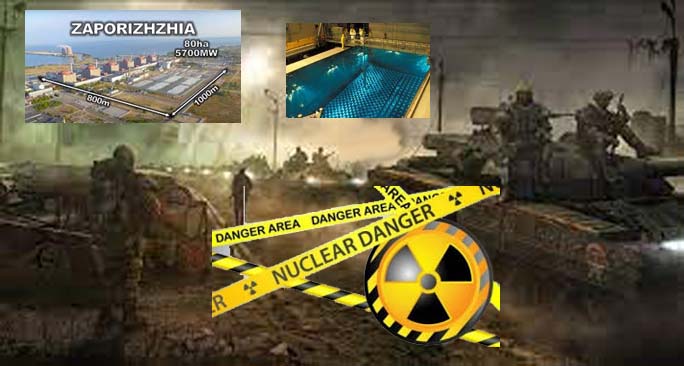
If a reactor’s spent fuel pond storage system was hit, the likely radiological releases could force millions of people to evacuate……………… In an attack against a spent fuel storage facility, US Nuclear Regulatory Commission staff conservatively estimate the radiological release could be 100 times greater than that of the Fukushima accident.20
Today, nuclear plants can be disabled in many ways without risking harmful releases of radiation. The Russians, in the Russia-Ukraine War, have demonstrated several disabling techniques
Russia’s attacks afford a clear example of disabling critical civilian objects (reactors) to its military advantage without releasing hazardous radiation
By: Henry Sokolski, Nonproliferation Policy Education Center, September 16, 2025
For nearly a decade, protecting civilians and civil objects from disproportionate military assaults has been a top priority of the Pentagon. Two Department of Defense secretaries from the first Donald Trump administration championed quantifying and reducing harm to civilians and civil objects. Under the Joe Biden administration, the Pentagon further focused on protecting civilians and civil objects, and, in 2023, Congress created a Civilian Protection Center of Excellence within the Department of Defense. This center, consisting of a staff of 30 people with an annual budget of $7 million, helped military commands execute their missions while minimizing collateral damage.1
In early 2025, however, the Pentagon cut the funding and eliminated almost all the staff in the Civilian Harm Mitigation and Response office and the Center and asked Congress to eliminate the legal requirement for its continued operation. Rattled, some wondered if the Department of War was rescinding its previous guidance on limiting civilian harm. The answer to the question was unclear.2
Trump administration officials stated the Civilian Protection Center of Excellence jeopardized war fighters’ abilities to do their jobs. But those officials did not discuss a deeper set of developments: Hamas’s October 7 attack against Israeli citizens; Israel’s crushing response, which killed thousands of noncombatants; and Russia’s attacks against Ukrainian civilians and civil infrastructure. Each development challenged many experts’ previous beliefs about what proportionality should prohibit.
Both Vladimir Putin and Benjamin Netanyahu insist their military operations are proportionate. These claims, in turn, rely on an American view of proportionality Abraham Lincoln’s top military and legal adviser, Francis Lieber, promulgated in the 1860s. The Lieber Code (General Orders No. 100) championed avoiding attacks on civilians and civilian objects. But the code also allowed, if a compelling military objective emerged whose achievement incidentally entailed harming civilian people and objects, that attacks were permissible. Commanders on the front lines should decide what actions are militarily justified or not, according to the code.3
Some have argued Lieber’s view renders proportionality hopelessly subjective. If commanders were free to determine what actions are justified, proportionality would seem to be little more than a standard of behavior the weak may demand of the strong, but the strong can effectively ignore. Victorious nations rarely litigate against their own officials or officers for disproportionate military actions (that is, for ignoring or violating the requirements of proportionality).4
Therefore, enforcing proportionality against defeated foreign nations might be attractive, but demanding one’s own military enforce proportionality is less realistic or practical. At best, realists argue, limiting harm to civil persons and objects is advisory; institutionalizing or promoting proportionality by creating Pentagon centers goes too far.
This line of thinking is intuitive and appealing. But it ignores a critical point: Sparing civilians and civilian objects unnecessary harm is often essential to achieving military victory.
Carl von Clausewitz, known for championing the necessity of violence in battle, was just as emphatic that wars could only be won by reaching political solutions the enemy’s military and leadership—and the enemy’s population—could accept. Needlessly killing civilians and destroying infrastructure critical to their welfare only complicates reaching lasting political solutions. For Clausewitz, the need to inflict violence in war had to be measured against the war’s ultimate objective, which is always political. Violence against civilians is self-defeating if it undermines the achievement of the war’s ultimate political objective.5
Thus, Winston Churchill and Dwight D. Eisenhower resisted calls in 1944 for the indiscriminate bombing of French cities and infrastructure during World War II because though such bombings would weaken German defenses, they would also dramatically undermine French political support of the Allied powers and the Allies’ resistance to the Nazis. Indiscriminate bombing would also complicate the reconstruction of the French economy after the Allies won the war.6
For similar reasons, President Harry S. Truman rejected the advice of his commander in the field, General Douglas MacArthur, who wanted to use nuclear weapons on North Korea and China. Truman feared attacking these states with nuclear weapons would escalate the conflict, cause unnecessary destruction, and turn international public opinion against the United States. Truman understood maintaining international support was essential to containing China and deterring Russia’s use of nuclear weapons after the end of the Korean War.7
One of Adolf Hitler’s best generals—Erwin Rommel—also refrained from using excessive force against civilians to protect his communications and supply lines from local disruption. Rommel understood that, in some cases, good military discipline and order required restraint, as did pacific relations with the local population (for example, in Northern Africa). Rommel’s attention to these points helped secure supply lines and reduced local resistance to his forces’ operations.8
Nazi troops terrorized enemy populations, but General Walther Wever, who served as the Luftwaffe’s chief of staff in the mid-1930s, argued such actions. Responsible for formulating Germany’s military air doctrine, Wever rejected the idea of bombing cities to break the will of the people. Wever believed such attacks were, at best, distractions from the Luftwaffe’s main mission: destroying the enemy’s armed forces. Wever also believed terror bombing was militarily self-defeating because it increased, rather than reduced, local resistance, jeopardizing the achievement of the Luftwaffe’s prime military missions.9
Besides these arguments, there are additional reasons for not hitting certain civilian facilities. Attacking chemical plants and nuclear facilities can poison the theater of operations with dangerous contaminants and hamper military operations (for example, if a dam is attacked, flooding the terrain). Such attacks can also prompt major evacuations which, in turn, retard military movements.
However, another advantage of avoiding conducting military assaults on civilian objects relates to military cohesion. As I noted in a previous Parameters article, Protocol I of the Geneva Conventions specifically discourages nations from attacking civilian objects, especially if doing so would risk releasing “hazardous forces” that could inflict “severe harm” on innocent civilians. Although the United States has signed the protocol, 174 nations took the additional step of ratifying it. The United States chose not to do so. As such, the United States is at odds with most of its NATO Allies.10
Thus, in 2022, foreign and military ministers in the European Union, the United Kingdom, and Germany declared Russian strikes against Ukrainian infrastructure and the Zaporizhzhya nuclear power plant were prosecutable war crimes. The United States took no position. In a war game conducted in 2022, close US Allies that have ratified Protocol I were at odds with Washington regarding how to respond to Russian attacks on Allied reactors. The United States’ Allies wanted to respond strongly to what they saw as a war crime, whereas the United States did not. In the game, the other NATO members were concerned NATO would be drawn into a larger conflict if Poland and Ukraine jointly attacked Russia. These concerns held up war operations and resulted in the United States using Article 5 of the North Atlantic Treaty to keep Poland from participating in a Ukrainian strike against Russia.11
Finally, temporarily disabling civilian infrastructure (for example, water, gas, and oil pumps; energy pipelines; telecommunications lines; and electrical-supply systems) can afford clear military advantages over physically obliterating civilian infrastructure, even if no hazardous forces are released. The temporary disablement of civilian infrastructure deprives one’s enemy of the ability to use infrastructure facilities, facilitates their subsequent use by one’s own forces in war, and allows for their speedy repatriation once the war is over.12
All of these points recommend fostering effective military applications of proportionality against civilian objects. The question is how.
………………………………………………………………………………………………………………………………………….If a reactor’s spent fuel pond storage system was hit, the likely radiological releases could force millions of people to evacuate, as confirmed by US Nuclear Regulatory Commission, government-sponsored, and private studies. The areas rendered uninhabitable could also be quite large: from 30,000 to 100,000 square kilometers (the latter area is larger than the entire state of New Jersey). In an attack against a spent fuel storage facility, US Nuclear Regulatory Commission staff conservatively estimate the radiological release could be 100 times greater than that of the Fukushima accident.20
The case of an attack against a spent fuel storage facility is extreme. A less dramatic scenario is the radiological release attendant to a loss of coolant induced by a military assault. Still, a wholesale, indiscriminate attack against Iran’s Bushehr power reactor could release significant radiation and force the evacuation of hundreds of thousands to millions of nearby civilians.21
Wholesale, indiscriminate attacks are precisely the kind of assault diplomats and lawyers aimed to prevent when they crafted Protocol I to the Geneva Conventions a half century ago. This international framework has several provisions that focus on the most likely type of military assault against nuclear power plants at the time: wholesale aerial attacks, which were almost certain to trigger massive releases of radioactivity. Today, things are different. With precision targeting and tailored munitions, nuclear power plants can be disabled in many ways without releasing radiation.22
Oddly, this transition to precision is still not fully reflected in the Pentagon’s legal guidance on targeting nuclear plants. …………………………………………………………………………………
Today, median miss distances for precision weapons are measured in meters or in smaller units. As a result, nuclear plants can be disabled in many ways without risking harmful releases of radiation. The Russians, in the Russia-Ukraine War, have demonstrated several disabling techniques……………
Through repeated strikes on these nonnuclear components, Russia has succeeded in shutting down Europe’s largest nuclear power plant—the Zaporizhzhya nuclear power plant. In addition, Putin can now collapse Ukraine’s entire electrical-supply system at a time of his choosing. Meanwhile, Russia says it could restart the Zaporizhzhya nuclear power plant to supply electricity to territories occupied by Russia in a matter of months.
More could be said about Russia’s studied targeting of Ukraine’s nuclear power plants and electrical-power systems. But Russia’s attacks afford a clear example of disabling critical civilian objects (reactors) to its military advantage without releasing hazardous radiation.26
Of course, other nuclear examples should be considered. Some states use portions of their civilian nuclear programs to make nuclear-weapons materials—for example, China, India, and North Korea. Disabling the facilities used to make nuclear-weapons materials would be a worthy military objective. Physically, obliterating those facilities and risking the widespread dispersal of harmful radiation, however, could be militarily counterproductive.median miss distances for precision weapons are measured in meters or in smaller units. As a result, nuclear plants can be disabled in many ways without risking harmful releases of radiation. The Russians, in the Russia-Ukraine War, have demonstrated several disabling techniques. These techniques exploited the nuclear-safety requirement for irradiated reactor fuel to be cooled continuously to prevent it from overheating, failing, and releasing dangerous, radioactive by-products.24
Rather than prompting such failures, analysis suggests Russia has been careful to target the electrical power–supply systems needed to keep the nuclear plants’ cooling and safety systems running. Russia’s aim is twofold: first, to force the plants’ operators to shut them down for safety reasons, and second, to increase the credibility of making follow-on strikes that might risk a significant release of radiation.25
The power-system components Russia has targeted include on- and off-site electrical transformers; high-voltage lines running in and out of the plants; cooling water supply systems; a major dam critical to supplying water to the Zaporizhzhya nuclear power plant; and major, off-site electrical power–generating plants needed to stabilize the electrical-supply grid supporting the nuclear plant’s safe operation…………………………
Recommendations
What steps can the US military take to update its plans and operations for targeting and protecting civil infrastructure?
First, the Pentagon should publicly share much more information about its thinking than it has to date, which would allow for greater civilian oversight, sharpen military planning, and increase the clarity of current policy and legal guidance.
Second, the Pentagon should work with private industry and other government departments focused on civil-infrastructure protection—the US Department of Homeland Security and the US Nuclear Regulatory Commission—to produce convincing public narratives about why and how civil objects should be protected and to improve existing protection schemes. Planning to protect this infrastructure has long been underway, but under the protection of the Federal Energy Regulatory Commission’s Critical Energy / Electric Infrastructure Information, which keeps these plans from the public. What’s needed is a sensible tear sheet for public consumption.27
Third, the Department of War should offer Congress routine public reports about matters related to protecting civil infrastructure. The US government must prepare the public for a future in which the United States’ electrical-supply systems, energy pipelines, biological research facilities, potentially dangerous petrochemical plants, telecommunications systems, and civil nuclear facilities may come under attack. Setting the public’s expectations about what can and should be done, actively and passively, to defend these systems should not wait until an attack occurs.
Finally, training is critical. The Department of War’s military education training institutions should offer dedicated, unclassified courses that provide technical and historical instruction on the targeting and defense of civil objects. The instruction should be fortified by unclassified government simulations for civilians and military officials, which play out alternative targeting plans against civil objects that could release hazardous forces.
How will the US government accomplish these objectives? The first step is to make mastering these matters a requirement for military promotion. This step could be done quietly, without top-down scolding, legal hectoring, or creating centers. The best US military operators and planners already know civil objects and nuclear facilities are becoming increasingly significant military targets. The Pentagon should reward and support efforts to clarify what should be done to disable and protect civil objects and nuclear facilities.
Acknowledgments: I would like to thank Caitlyn Collett for providing essential assistance in the production and editing of this special commentary.
To read the full piece, click here.
Can the US, Russia and China break their nuclear talks impasse?
With a key US-Russia arms treaty due to expire in February, the world is at risk of entering a new era of strategic instability, analysts warn.
Shi Jiangtao, SCMP, 21 Sep 2025
US President Donald Trump’s summit in Alaska last month with Russian leader Vladimir Putin failed to revive long-stalled nuclear negotiations or advance efforts to preserve the last major arms control pact between Washington and Moscow, which is set to expire in February.
Trump’s subsequent push for trilateral “denuclearisation” talks involving China elicited a firm refusal from Beijing, underscoring challenges to extending the New Strategic Arms Reduction Treaty (New START) amid fears of a fresh nuclear arms race, analysts said.
Following the summit, Beijing, with its long-standing policy of “no first use” and a nuclear strategy rooted in self defence, spurned Trump’s proposal, with Chinese foreign ministry spokesman Guo Jiakun calling it “neither reasonable nor realistic”…………………………(Subscribers only) https://www.scmp.com/news/china/diplomacy/article/3326243/can-us-russia-and-china-break-their-nuclear-talks-impasse?module=perpetual_scroll_0&pgtype=article
Ending a War That Never Should Have Started.

09/02/2025•Mises Wire•Kevin Rosenhoff
Six months after Zelenskyy’s historic humiliation in the Oval Office, Trump’s meeting with Putin hopefully signals an end of the Russia-Ukraine war. From a moral point of view, this is to be welcomed, as the war—from both sides—has been morally illegitimate from the outset.
A Morally Justified War Must Be Proportionate
The central framework for evaluating the morality of war is the so-called just war theory—an ancient tradition shaped by various philosophers. Within it, a fundamental requirement for starting and continuing a war is proportionality. Generally, this means the evils caused must stand in due proportion to the evils prevented. American philosopher Jeff McMahan differentiated this idea with his distinction between narrow and wide proportionality. Simply put, while narrow proportionality concerns the appropriate harms inflicted on aggressors (e.g., Russian soldiers), wide proportionality deals with harms inflicted on innocents (e.g., Ukrainian and Russian civilians)……………………………………………………………………………
“To the Last Man”—Why Ukraine’s War is Disproportionate
The reasons for Russia’s invasion are contested. Some point to Putin’s imperial ambitions and fear of Ukrainian democracy, others to NATO’s expansion. Still, there is broad agreement: Russia’s invasion is not only a violation of international law but also of morality. Waging war in the absence of a prior or imminent attack is reprehensible from every perspective. Participating Russian soldiers who threaten innocent lives can neither complain about being harmed nor demand compensation or an apology. Since they are therefore not wronged, their killing is proportionate in the narrow sense and, in principle, also morally legitimate as a means of warding off the threat……………………………………………………………………..
The problem of Ukraine’s war is not the harming of Russian invaders, but the harming of innocents by the Ukrainian state—that is, wide proportionality. These innocents include, not only the over 7,000 civilians in Russian-occupied areas of Ukraine presumably injured or killed by Ukrainian bombing attacks, but especially the many men forcibly recruited and held trapped. Since the war’s beginning, men between the ages of 18 and 60 have not only been prevented from fleeing the country but have increasingly been seized from their families and sent to the front—where they are highly likely to be killed or wounded. “A woman screamed for the army to spare her husband from conscription. A soldier slapped her and took her husband,” reported US journalist Manny Marotta, describing one of the forced mobilizations at the war’s outbreak. His account stands pars pro toto for the broader problem of the widespread unwillingness to fight and die for the Ukrainian state. According to former presidential adviser, Oleksiy Arestovych, half of Ukrainian men have refused to submit their data to recruitment centers. Over half a million men of military age have fled to the EU—and thousands more have been caught while trying to escape.
While initially there were still volunteers, their numbers have dwindled to zero. “There are no more volunteers,” complained military police officer Roman Boguslavskyi to Der Spiegel in November 2023. To avoid running into people like Roman, Ukrainians use Telegram channels to warn each other. The Kyiv-based group—Kyiv Povestka—alone now has close to 250,000 members. However, dodging the recruiters does not always work: the internet is flooded with videos showing military officers grabbing men off the street and trying to force them into minibuses like cattle. Accordingly, the term coined for this practice—“busification”—was named Ukraine’s Word of the Year in 2024. The cutesy term, however, should not obscure the repressive reality. In her 2024 essay Mobilisation, Ukrainian writer Yevgenia Belorusets reveals the world behind the videos—a world in which women hide their husbands and a brutal state no longer spares even those suffering from cancer or HIV. Ukrainians are thus not only victims of Russia, but also of their own state. Or, to quote the Ukrainian doctor Semyon from Belorusets’s essay: “We are in a situation we never imagined. We are devouring ourselves. Shelled by Russia, at war with Russia, and now at war with those who have decided we must question nothing.”
How should the actions of the Ukrainian state be judged morally? Unless the civilians harmed by Ukrainian bombing have consented, the state is wronging them—no differently than someone who injures or kills bystanders while fending off a mugger in the street. The same applies to the forcibly conscripted men: anyone who sees and hears how they are hunted down and torn from their loved ones should intuitively judge the state’s actions as a violation of their moral rights—and those of their families. After all, such conduct would be regarded in virtually any other context as an injustice requiring justification.
If I were attacked in my home and abducted you to defend me at risk to your life, I would be committing a moral wrong, both against you and your loved ones. Consistently, the actions of the Ukrainian state should be judged in the same way. It treats human beings as material to be used and consumed—a clear violation of their dignity and rights. The possible counterargument of a “duty to fight” seems unconvincing given the risk involved. According to reports by the Financial Times, Ukrainian commanders estimate that between 50 and 70 percent of new frontline soldiers are killed or wounded within just a few days. Yet we are normally not required to take significant personal risks to save others. If you could save my life by playing Russian roulette, doing so would be noble—but not your duty. To compel you anyway would still be a rights violation.
the Ukrainian war suffers from a more fundamental problem. Zelenskyy declared—both before and during the war—his intention to fight “to the last man” and “whatever the cost,” thereby rejecting proportionality itself. The Ukrainian state acts like someone who deliberately diverts a runaway train onto a track without caring how many people are on it. On this premise, all Ukrainians—and potentially humanity—become fair game to be sacrificed for Ukraine’s cause. Such conduct, which explicitly denies proportionality, can hardly be considered proportionate and morally justified. Under Zelenskyy, Ukraine has waged a war that has been morally unbounded from the start, with no regard for any losses.
It would therefore be right to end this war. Two morally illegitimate wars should be brought to a close—Russia’s war under Putin and Ukraine’s war under Zelenskyy. https://mises.org/mises-wire/ending-war-never-should-have-started
Russia is ready to discuss nuclear fuel at Ukraine’s Zaporizhzhia with US – RIA

By Reuters, September 5, 2025, https://www.reuters.com/world/russia-is-ready-discuss-nuclear-fuel-ukraines-zaporizhzhia-with-us-ria-2025-09-05/
VLADIVOSTOK, Russia, Sept 5 (Reuters) – The head of Russia’s State Atomic Energy Corporation Rosatom Alexei Likhachev said on Friday the company was ready to discuss with the U.S.’s Westinghouse the issue of nuclear fuel at Ukraine’s Zaporizhzhia nuclear power plant, RIA news agency reported.
In June, Russia asked the U.N. nuclear watchdog to mediate between Moscow and Washington to resolve the question of what to do with U.S. nuclear fuel stored at the Ukrainian power plant controlled by Russian forces.
Westinghouse and U.S. energy officials had previously raised intellectual property concerns with Russia in connection with the fuel issue, according to Likhachev.
Reporting by Vladimir Soldatkin and Olesya Astakhova; Editing by Christopher Cushing
What will happen if the Ukrainian Armed Forces attempt to strike the Kursk Nuclear Power Plant?
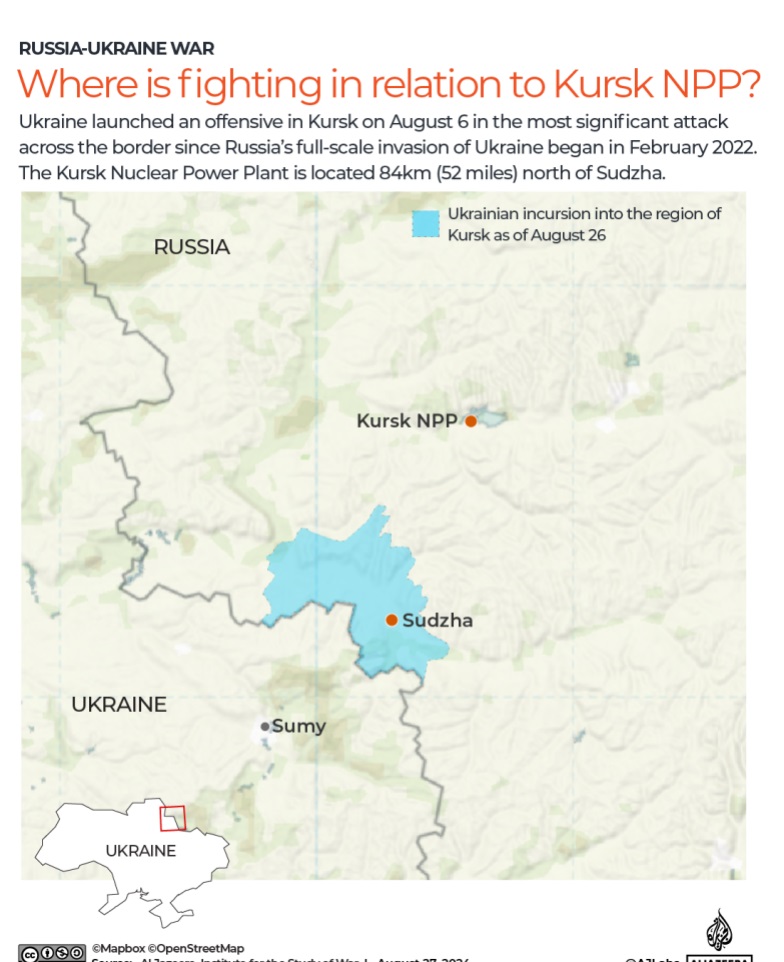
A drone of the Ukrainian Armed Forces was shot down near the Kursk Nuclear Power Plant. Metro learned what such an attack would entail if it hit the station
On Thursday, Kursk Region Governor Alexey Smirnov reported the destruction of a Ukrainian drone 5 kilometers from the Kursk Nuclear Power Plant. According to official information, the Ukrainian Armed Forces attempted to hit the nuclear power plant, but the drone was destroyed on approach.
As Andrey Ozharovsky, an engineer-physicist and expert on the Radioactive Waste Safety program, told Metro , the Kursk NPP is extremely vulnerable to external influences.
— The Kursk nuclear power plant has a serious feature that makes it extremely vulnerable to a military or terrorist attack. These are RBMK-100 reactors of the Chernobyl type. At this station, as at the Ukrainian one, there is no protective shell for the reactors. That is, the “cap” that usually covers the reactor itself at nuclear power plants and thus protects it from external influences, — the expert explained.
He noted that due to such a technical solution, any shelling poses a very serious danger to the station. According to the scientist, it is especially dangerous that the reactors at the Kursk NPP are located in non-specialized buildings.
“Of course, these Chernobyl-type reactors have been modernized and a literal repeat of Chernobyl is impossible. But in the event of a shelling at the station, a graphite fire and the release of a huge amount of radioactive substances into the environment with contamination of territories hundreds of kilometers away from the reactor cannot be ruled out,” the nuclear physicist emphasized.
He added that the recent attack by the Ukrainian Armed Forces could have been not on the station, but on another facility in Kurchatov.
Russia outsmarts France with nuclear power move in Niger
BBC, Paul Melly, West Africa analyst, 26 Aug 25
Russia has dangled the possibility of building a nuclear power plant in uranium-rich Niger – a vast, arid state on the edge of the Sahara desert that has to import most of its electricity.
It may be deemed impractical and may never happen, but the concept is yet another move by Moscow to seek a geopolitical advantage over Western nations.
Niger has historically exported the metal for further refining in France, but that is changing as the military-led country cuts off ties with the former colonial power.
The uranium-mining operation operated by French nuclear group Orano was nationalised in June, which cleared the way for Russia to put itself forward as a new partner.
It is talking about power generation and medical applications, with a focus on training local expertise under a co-operation agreement signed between Russian-state corporation Rosatom and the Nigerien authorities.
If ever brought to fruition this would be the first nuclear power project in West Africa.
Beyond initial discussions, it is unclear how far down this road things will progress. But already, with this first move, Moscow has shown that it grasps the depth of local frustrations.
For more than five decades Orano – which until 2018 was known as Areva – mined Niger’s uranium, to supply the nuclear power sector that is at the heart of France’s energy strategy.
The French government-owned company now gets most of its supplies from Canada and Kazakhstan and has projects in development in Mongolia and Uzbekistan.
But the Nigerien connection remained significant and freighted with a degree of political and perhaps even cultural weight.
Yet Paris did not share its nuclear energy knowhow with its loyal African supplier. Niger, meanwhile, has to rely largely on coal-fired generation and imports of electricity from Nigeria.
But now, the rupture in relations between Niger’s junta and France has allowed Moscow to offer the hope, however distant, of a nuclear future, something that Areva/Orano, over so many years of local operation, had failed to do.
“Our task is not simply to participate in uranium mining. We must create an entire system for the development of peaceful atomic energy in Niger,” Russian Energy Minister Sergei Tsivilev declared on 28 July during a visit to Niamey.
Naturally, this is not entirely altruistic. There are economic benefits for Russia and it is part of a broader push to displace Western influence from the Sahel region.
The Russians could get the chance to develop the mine in Imouraren, one of the world’s largest uranium deposits……………………………………………………………………………….
Building a nuclear plant can take years and such projects require a huge amount of capital investment, and once operational they need a large and secure power supply.
Furthermore, viability depends on the availability of industrial and domestic consumers who can afford the price of the power being generated.
There are also questions over whether a nuclear power plant could be safely built and protected in today’s fragile and violent Sahel region. Jihadist armed groups control large areas of terrain in Mali and Burkina Faso, and parts of western Niger which makes the area highly insecure.
Given the time, the costs and the complications of developing the nuclear sector in Niger, this remains a distant prospect…………………………………………………………………
the junta in power today now seems determined to bring the era of French uranium mining in Niger to an end, with one official telling the Paris newspaper Le Monde that Orano had been “stuffing itself with our country’s natural resources”.
Who can say what Moscow’s proposals for nuclear scientific partnership and perhaps even power generation will ever amount to in concrete terms?
But one thing is clear, in Niger it is the Russians who have correctly read the political mood. https://www.bbc.com/news/articles/c5y23lvm05no
Ukraine drone hits Russian nuclear plant, sparks huge fire at Novatek’s Ust-Luga terminal

Reuters, By Guy Faulconbridge and Lidia Kelly, August 24, 2025
- Summary
- Ukrainian drone sparks fire at nuclear plant
- Nuclear reactor cuts capacity after attack
- Ukrainian drones strike Ust-Luga fuel export terminal
- Attacks come on Ukraine’s Independence Day
MOSCOW, Aug 24 (Reuters) – Ukraine launched a drone attack on Russia on Sunday, forcing a sharp fall in the capacity of a reactor at one of Russia’s biggest nuclear power plants and sparking a huge blaze at the major Ust-Luga fuel export terminal, Russian officials said.
Despite talk of peace by Russia and Ukraine, the deadliest European war since World War Two is continuing along the 2,000 km (1,250 mile) front line accompanied by missile and drone attacks deep into both Russia and Ukraine.
Russia’s defence ministry said at least 95 Ukrainian drones had been intercepted across more than a dozen Russian regions on August 24, the day that Ukraine celebrates its declaration of independence from the Soviet Union in 1991.
The Kursk nuclear power plant, just 60 km (38 miles) from the border with Ukraine, said that air defences shot down a drone that detonated near the plant just after midnight, damaging an auxiliary transformer and forcing a 50% reduction in the operating capacity at reactor No. 3.
Radiation levels were normal and there were no injuries from the fire which the drone sparked, the plant said. Two other reactors are operating without power generation and one is undergoing scheduled repairs.
The United Nations’ nuclear agency, the International Atomic Energy Agency, said it was aware of reports that a transformer at the plant caught fire due to military activity and stressed that every nuclear facility should be protected at all times.
A thousand km north, on the Gulf of Finland, at least 10 Ukrainian drones were downed over the port of Ust-Luga in Russia’s northern Leningrad region, with debris sparking fire at the Novatek-operated terminal – a huge Baltic Sea fuel export terminal and processing complex, the regional governor said.
PLUME OF BLACK SMOKE
Unverified footage on Russian Telegram channels showed a drone flying directly into a fuel terminal, followed by a huge ball of fire rising high into the sky followed by a plume of black smoke billowing into the horizon.
“Firefighters and emergency services are currently working to extinguish the blaze,” Alexander Drozdenko, governor of Russia’s Leningrad region, said. There were no injuries, he added……………………..
Ukrainian drones also attacked an industrial enterprise in the southern Russian city of Syzran, the governor of the Samara region said on Sunday. A child was injured in the attack, according to the governor, who did not specify exactly what had been attacked.
………………………………………………………………….Earlier this month, the Ukrainian military said it had struck the Syzran oil refinery. The Rosneft-owned (ROSN.MM)
, opens new tab refinery was forced to suspend production and crude intake after the attack, sources told Reuters. https://www.reuters.com/world/europe/ukraine-drone-hits-russian-nuclear-plant-sparks-huge-fire-novateks-ust-luga-2025-08-24/
Russia reports blaze at one of its biggest nuclear power plants.
Guy Faulconbridge & Lidia Kelly, Sunday 24 August 2025, https://www.independent.co.uk/bulletin/news/ukraine-russia-kursk-nuclear-power-plant-b2813260.html
Russia accused Ukraine of launching multiple drone attacks on Sunday, targeting critical infrastructure.- A drone strike near the Kursk nuclear power plant damaged an auxiliary transformer, leading to a 50 per cent reduction in operating capacity at reactor No. 3, though radiation levels remained normal and there were no injuries from the fire that the drone sparked.
- A separate significant blaze erupted at the Novatek-operated Ust-Luga fuel export terminal in Russia’s Leningrad region after it was reportedly hit by Ukrainian drones.
- Drone activity resulted in temporary flight suspensions at several Russian airports, including Pulkovo.
- Ukrainian drones also attacked an industrial enterprise in Syzran, with Ukraine stating its strikes target infrastructure crucial to Russia’s military efforts.
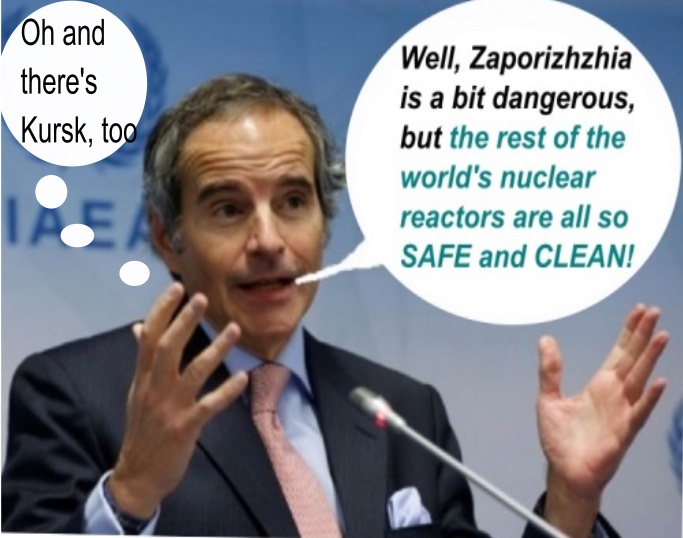
Fears are rising about the safety of a nuclear power plant in Russia after a Ukrainian attack overnight
Metro, 24 Aug 25
A fire broke out at the Kursk Nuclear Power Plant after military forces shot down what they claimed was a Ukrainian drone flying near the site.
The ‘device detonated’ upon impact, sparking a blaze which the facility said ‘was extinguished by fire crews,’ authorities in Kursk said in a statement.
It added: ‘A combat unmanned aerial vehicle (UAV) belonging to the Armed Forces of Ukraine was shot down by air defence systems near the Kursk Nuclear Power Plant………………….
Alexander Khinshtein, the regional acting governor, blamed Ukraine for the strikes in a post on Telegram, adding: ‘They are a threat to nuclear safety and a violation of all international conventions.’
The incident marks one of the most serious escalations in the targeting of energy facilities, fueling anxiety about fighting creeping dangerously close to nuclear assets.
Ukraine’s drone strike on Kursk was one of several reported overnights by Russian authorities.
Firefighters were also sent to an explosion and a fire at the port of Ust-Luga in Russia’s Leningrad region, which holds a large fuel export terminal.
The regional governor said about 10 Ukrainian drones were brought down and debris had sparked the fire.
Ukraine has not commented on the Russian accusations………….
Ukraine Drone Strikes Hit Russia’s Nuclear Plant & Fuel Terminal | War Escalates
India Times 24 Aug 25
Ukraine has carried out a powerful drone strike on Russia, crippling the Kursk nuclear power plant and setting the Ust-Luga fuel export terminal ablaze. On Ukraine’s Independence Day (August 24), Russia reported intercepting 95 drones across more than a dozen regions.
At Kursk, a drone explosion damaged a transformer, forcing reactor No. 3 to reduce capacity by 50%. Meanwhile, in Ust-Luga, a drone slammed into a Novatek fuel tank, triggering a massive fire and black smoke visible for miles. The terminal is one of Russia’s most important energy hubs, exporting jet fuel and fuel oil to China, Singapore, and Turkey.
Earlier this month, Ukraine also struck the Rosneft refinery in Syzran, intensifying pressure on Russia’s military-industrial infrastructure. Despite Putin’s downplaying of casualties and radiation risk, Ukraine insists these strikes are retaliation for Russia’s relentless missile and drone attacks. This video covers the full story, analysis, and global implications.
Downed Ukrainian Drone Causes Fire At Kursk Nuclear Power Plant
23 Aug 25, https://www.rferl.org/a/kursk-nuclear-power-plant-fire-ukraine-drone/33511527.html
A fire broke out at the Kursk Nuclear Power Plant in Russia after Russian military forces shot down a Ukrainian drone flying near the plant, the press service of the plant said.
The drone — one of several reported on August 23 by Russian authorities — fell on an auxiliary transformer, sparking the fire, which has been extinguished. There were no injuries, according to the press service’s statement.
“A combat unmanned aerial vehicle (UAV) belonging to the Armed Forces of Ukraine was shot down by air defense systems near the Kursk Nuclear Power Plant,” the press service said in a statement on Telegram.
“Upon impact, the drone detonated, resulting in damage to an auxiliary transformer,” the statement said.
As a result of the explosion, unit three of the plant was reduced to 50 percent capacity, the press service said.
Radiation levels at the site and in the surrounding area have not exceeded normal limits, it added.
There was no immediate comment from Ukraine. Kyiv has increased its drones strikes inside Russia over the past several months in response to Russia’s continued attacks on Ukraine. It says the attacks are aimed at destroying infrastructure that is crucial to Moscow’s military efforts.
The story was first reported by Russia’s federal television network REN TV. It reported that the transformer is not a part of the nuclear section of the plant, citing the plant’s press service. It was not immediately clear in which part of the plant the fire occurred.
Kursk NPP is 40 kilometers west of Kursk city, the regional capital, on the bank of Seim River. The first unit was launched in 1976. Other units were added in 1979, 1983, and 1985, according to the press service.
The International Atomic Energy Agency (IAEA) has repeatedly warned of the dangers of fighting around nuclear plants since Russia launched its full-scale invasion of Ukraine in February 2022.
Earlier on August 23, St. Petersburg and the Leningrad region were attacked by drones, regional authorities said, adding that six drones were shot down over the Leningrad region and two were shot down over St. Petersburg.
St. Petersburg authorities said windows were shattered in a residential building in the Krasnoselsky district when the drone was “neutralized.” There were no reports of injuries or deaths.
The drone attacks led to flight delays and cancellations at St. Petersburg’s Pulkovo Airport. More than 30 flights were diverted to alternate airports during the day, and more than 50 flights were delayed. The airport resumed operations by in the evening.
Moscow Mayor Sergei Sobyanin reported that a drone flying toward Moscow had been shot down.
Russia blames nuclear site attack on Ukraine as Kyiv marks independence day.
A fire has been put out at a nuclear power plant in Russia’s western
Kursk region and air defences have shot down a Ukrainian drone, Russian
officials have said. The drone detonated when it fell and damaged a
transformer, but radiation levels were normal and there were no casualties,
a post from the plant’s account on messaging app Telegram said.
BBC 24th Aug 2025,
https://www.bbc.co.uk/news/articles/czxy2v9dzgxo
Everyone will gain from a peace deal for Ukraine.

Given that the whole basis for Russia launching the war was to put a hard red line in the sand that NATO would not be expanded to include Ukraine, there is no reason to believe that Russia would attack Ukraine in future, if its core underlying concern was resolved.
But security guarantees will need to be realistic and sanctions removal must form part of the plan.
Ian Proud, Aug 25, 2025, https://thepeacemonger.substack.com/p/everyone-will-gain-from-a-peace-deal?utm_source=post-email-title&publication_id=3221990&post_id=171818401&utm_campaign=email-post-title&isFreemail=true&r=1ise1&triedRedirect=true&utm_medium=email
The need for Ukraine’s postwar security has become a major talking point since President Trump’s historic meeting with President Putin in Alaska on 15 August.
U.S. Special Envoy Steve Witkoff spoke of a ‘game-changing’ commitment by President Putin to accept Security guarantees by NATO states. This meant that ‘the United States and other European nations could effectively offer Article 5 like language’.
It is clear that security guarantees are vital for all sides, including for Russia.
Security guarantees are important to European nations, precisely to reduce the risk of Europe being engulfed in a senseless and, frankly, avoidable war with Russia. There has never been any evidence that Russia wants to invade Europe, despite that being a comfortable go-to line for European propagandists.
So, for Europe in particular, the offer of security guarantees must represent a meaningful act of deterrence. A commitment by western nations to fight, so as to prevent the possibility of future war. What this deterrence does not mean is to station NATO troops permanently or even temporarily inside of Ukraine, whether they be called a Reassurance Force, Peacekeeping Force or anything else.
If this war was provoked by a desire by Russia to stop NATO advancing to its western border through Ukraine, why then would Russia agree to have NATO troops inside Ukraine? NATO has large armies on Ukraine’s border already and mounts air patrols as it is.
So, security guarantees don’t need to mean boots on the ground, but rather a willingness to defend Ukraine against a future war which was absent during the current war.
And that is why security guarantees are important for Ukraine.
That country will be forgiven for scepticism about whether NATO states such as France, the UK or Germany would come to their military rescue in the event of a future war having gone to extreme lengths not to come to their military rescue in this war.
If NATO countries are going to make commitments to Ukraine’s future security, then they will have to mean it if they ever want to be taken seriously again.
This is important to Ukraine specifically because upon the cessation of hostilities, and whether it wants to or not, it will need to reduce the size of its army. Ursula von der Leyen has spoken about turning Ukraine into a ‘steel porcupine’ that Russia can’t swallow.
But who is going to pay for this, as Ukraine cannot?
In peacetime, European citizens will rightly press for their governments to refocus spending on domestic priorities, and to cease channeling funds into the woefully corrupt gravy train of Ukraine.
Ukrainian defence spending – $54.5bn for this year – already makes up over 67% of Ukraine’s budget and 31% of GDP. Ukraine needs yearly cash injections from western nations of at least $40bn just to stay afloat. Much of that, now, is in the form of concessionary loans which Ukraine, one day in the distant future, will need to pay back.
Ukraine is otherwise cut off from international capital markets. You don’t need to be a maths genius to see that if western funds dry up, Ukraine will have less than $15bn available each year for defence.
Ukraine’s army was around two hundred thousand before the war broke out and now counts at almost one million. Salary costs will come down after the war ends, because soldiers likely will lose the lucrative frontline bonuses they receive which can effectively quadruple their normal pay, if they survive long enough to spend it.
That in itself will present another major social problem for Ukraine to demobilise soldiers who will find themselves in a shattered country that is in a dire economic state. But specifically, Ukraine will need to trim the size of its army, because it won’t be able to afford to pay for it. It is completely unrealistic to expect western nations to continue to pump tens of billions each year into Ukraine to maintain an army of one million in peacetime.
So, this undoubtedly presents huge challenges, but it must surely be in Ukraine’s interest to sue for peace and to start a complicated and, I fear, long and rocky road to EU membership, reconstruction and growth. As a country, it gains nothing but death and destruction by keeping the war going and losing ground and lives each day.
Security guarantees are vitally important to Russia too. President Trump’s unequivocal stance that Ukraine won’t join NATO must be backed up by a Treaty to ensure that Russia will have confidence that this commitment to Ukrainian military neutrality is real and permanent,
Given that the whole basis for Russia launching the war was to put a hard red line in the sand that NATO would not be expanded to include Ukraine, there is no reason to believe that Russia would attack Ukraine in future, if its core underlying concern was resolved.
Conquering all of Ukraine has never been a core aim in this war, in my opinion. Even though it has the military upper hand, I believe that Russia wants peace too. Peace will mean a long and fraught process of normalisation of relations with Ukraine, Europe and with the U.S. Indeed, the reengagement in peaceable economic, social and cultural relations would surely prevent the need for a future war.
But there’s texture here, of course, both Russia and Ukraine would need to resist provocations that precipitated a future conflict. Let’s not forget that from the onset of the Ukraine crisis in 2014, and after the Minsk II agreement was reached in February 2015. It became a goal of Ukraine and western powers to impose economic sanctions on Russia.
As we seem to enter the final furlong towards peace in Ukraine after a devastating war, pressure continues from both Europe and Ukraine to continue to sanction Russia to maintain the pressure. In recent days, President Zelensky has urged more sanctions if President Putin does not meet him in person. The European Union is preparing its 19th round of sanctions since 2022, despite the prospect of peace seemingly on the horizon.
This is one of the reasons that any peace deal needs a plan for sanctions removal, not addition. As I have said many times before, setting out a clear plan to reduce Russian sanctions that do not provide Ukraine with a veto will be vital to incentivising President Putin to cut a deal.
It is deluded to believe, more than eleven years after the first sanctions were imposed on Russia, that threatening Russia with more sanctions will incentivise a peace deal. It must surely be obvious that further threats of sanctions will simply encourage President Putin to order his troops on in their campaign.
So, if a peace deal is to be agreed, despite the pain of agreeing it, it must facilitate peace or, at the very least, the absence of war. It must ensure that Europe is serious about honouring its commitment to Ukraine in the future, it must give Ukraine the confidence that it can move its army to a peacetime footing, and it must manifestly promote a normalisation of relations with Russia that is so long overdue.
Revealed: The KGB plot to poison loch with radioactive waste… then blame it on American nuclear subs CND peaceniks were campaigning to ban from Britain

Daily Mail, By MARK HOOKHAM, 24 August 2025
The KGB secretly plotted to attack the UK at the height of the Cold War by polluting Scotland’s coastline with radioactive waste, it was revealed this weekend.
Masterminded by a Soviet spy based in London, the plan involved dumping nuclear waste into Holy Loch on the Clyde, which was a crucial base for US nuclear-armed submarines.
The proposed attack was designed to fracture the UK’s ‘special relationship’ with America, by falsely implicating the US military in a devastating radioactive incident, and to stoke Britain’s anti-nuclear movement.
Details of the shocking plot have been unearthed from declassified FBI files by security expert Richard Kerbaj and are revealed in an explosive book about the extraordinary life of Oleg Lyalin, a Soviet agent who defected from the KGB in 1971.
Lyalin claimed to be a ‘knitwear’ specialist with Russia’s trade delegation in London. But in reality he was a spy attached to Department V, a top secret KGB unit tasked with assassinations, kidnappings and sabotage.
A heavy-drinking partygoer engaged in a string of extramarital affairs, Lyalin defected, aged 33, after his wife secretly told his Soviet colleagues that he was a liar and a cheat and that he was dissatisfied with his work for the KGB.
During his debriefing by MI5 he revealed how he had been tasked by Moscow with drawing up plans for a series of attacks to destabilise the UK and spread panic if a war looked imminent.
Lyalin’s bombshell revelations led to the UK’s expulsion of 105 suspected Soviet intelligence officers from Britain – the largest ever such expulsion by a single country and a turning point in MI5’s fight against Soviet spy networks during the Cold War.
The KGB agent’s dramatic defection came at the height of the Cold War, with the West and the Soviet Union locked in an arms race amid fears of nuclear conflict.
Official MI5 files on Lyalin remain under lock and key in Britain. However, information the Security Service passed to the FBI has now been unearthed by Kerbaj after painstaking research.
A file with hundreds of pages of intelligence reports and memos related to Lyalin’s defection gathered dust in an FBI warehouse until it was declassified in 2018.
One three-page FBI report, written in September 1971 and stamped ‘Secret’, revealed how ‘Lyalin revealed that on one occasion a proposal was submitted to headquarters for an operation to contaminate Holy Loch with radioactive material with a view to implicating US Naval forces’.
Holy Loch, a sea loch 25 miles from Glasgow, was used by the US Navy as a ballistic missile submarine base between 1961 and 1992.
Home to up to ten submarines carrying Polaris nuclear missiles, a floating dry dock and a depot ship, it was the epicentre of protests by the Campaign for Nuclear Disarmament (CND).
Crucially, unlike other KGB plans designed to sow chaos after the outbreak of war, the plot to poison Scottish waters would have been launched during peacetime.
The Kremlin had already targeted the base, obtaining a secret submarine manual in 1967, which led to the arrest and jailing of three KGB agents.
In his book, entitled The Defector, Kerbaj writes that the KGB ‘believed they could stoke the ongoing fears held by anti-nuclear protesters, who had been warning for years about the potential release of radioactive debris from the nuclear submarines in the Firth of Clyde’.
CND and other anti-nuclear protesters had established a camp on Holy Loch and tried to intercept US support ships using kayaks.
In May 1961, Michael Foot, one of the founders of the CND who later became Labour Party leader, led 2,000 people in a huge protest against the submarines in nearby Dunoon. Around 350 protesters were arrested later that year during another big demonstration.
The declassified FBI documents reveal how Lyalin’s audacious proposal required approval from the Central Committee of the Communist Party in Moscow…………………………………………………………………………………………………………………………… https://www.dailymail.co.uk/news/article-15027913/KGB-plot-poison-loch-radiation-blame-American-nuclear-subs-CND-peaceniks-campaigning-ban-Britain.html
Review of the Alaska meeting – The goal is always domination.
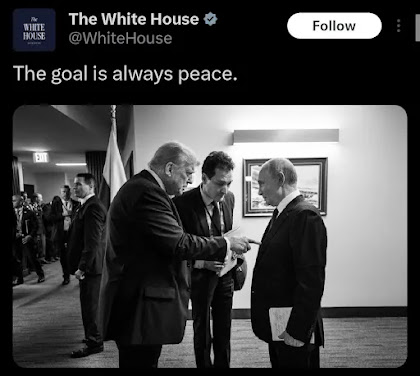
Organizing Notes, Bruce Gagnon, coordinator of the Global Network Against Weapons & Nuclear Power in Space, 16 Aug 25, https://space4peace.blogspot.com/2025/08/the-goal-is-always-domination.html?utm_source=substack&utm_medium=email
The Washington post reports in their top headline this morning the following: Trump reverses on Ukraine war ceasefire demand, aligning with Putin, splitting with allies: An immediate ceasefire to the war in Ukraine had long been a bedrock demand by the U.S., Ukraine and their European allies.
One can easily imagine that most neocons in Washington, London and the EU are pulling their hair out. Zelensky as well. His cash cow is wandering off the farm.
No immediate ceasefire was agreed upon. That was the chief demand of Zelensky, Starmer, Macon and Merz. They wanted to use that time to re-stock Ukraine with more weapons (especially drones) that could keep attacking civilians in the Donbass and inside of Russia.
Give Trump a nod (what ever his real motivations might be) he has now angered the ‘allies’ and they know that if they want the proxy war on Russia to continue (and they surely do) they are going to have to pay for it.
In one interview on Fox, Trump said the US funded Ukraine at the tune of $350 billion while the EU gave $100 billion.
Actually the US can’t afford to keep pissing money down the rat hole – especially when they want to spend that money getting ready for war with China. (And maybe still with Russia and Iran too.)
The Ukraine gamble is lost.
The oligarchic owned media in the US ensured that the Obama-Biden-Hillary Clinton orchestrated coup in Kiev in 2014 was swallowed by the people across the ‘democratic’ west. The public was firmly brainwashed to believe that Ukraine was the white hat team and Russia was the black hat bad guys.
Few know that the US-NATO started the war in 2014 and killed/wounded tens of thousands of Russian-ethnics in the Donbass region of eastern Ukraine – the place where the war is centered today.
In early 2022 Russian went into the Donbass after years of fruitless negotiations with the west to end their attacks on the Donbass. The US-NATO always wanted the war. They dreamed of breaking Russia up into pieces.
But don’t think the US has given up on its ill-fated quest to break up Russia. Alaska was just a ‘strategic retreat’. Just look at how Washington is fiddling with Armenia and Azerbaijan to destabilize another border land of both Russia and Iran.
The US is also working with Canada, Sweden, Denmark, Norway and Finland to militarize the Arctic in order to challenge Russia’s large border with that vast resource rich region.
The US-NATO only know war. Their economies are driven by military spending. Their so-called leaders are virtually all corporate apparatchiks.
And don’t forget that many of these EU-NATO leaders are related to former high level Nazi operatives during WW2.
Europe appears stuck in the quicksand of their disappearing ‘unipolar’ control. They just can’t accept that they must get along with the Global South that is rising after 500 years of colonial domination.
The US and EU got rich off the treasure they stole from the Global South. Museums across the west are loaded with treasures taken from these nations.
Trump is still about America First. That has not changed. The public in the US must campaign against the Pentagon’s trillion dollar a year offensive war machine.
That is the only way we will get true peace.
1 This Month

of the week – Shut Down Drone Warfare!


Tell the Ukrainian Government to Drop Prosecution of Peace Activist Yurii Sheliazhenko

Petition to revoke the licensing of the Near Surface Nuclear Disposal Facility (NSDF) at Chalk River. https://www.ourcommons.ca/petitions/en/Petition/Details?Petition=e-7247
To see nuclear-related stories in greater depth and intensity – go to https://nuclearinformation.wordpress.com
-
Archives
- April 2026 (44)
- March 2026 (251)
- February 2026 (268)
- January 2026 (308)
- December 2025 (358)
- November 2025 (359)
- October 2025 (376)
- September 2025 (257)
- August 2025 (319)
- July 2025 (230)
- June 2025 (348)
- May 2025 (261)
-
Categories
- 1
- 1 NUCLEAR ISSUES
- business and costs
- climate change
- culture and arts
- ENERGY
- environment
- health
- history
- indigenous issues
- Legal
- marketing of nuclear
- media
- opposition to nuclear
- PERSONAL STORIES
- politics
- politics international
- Religion and ethics
- safety
- secrets,lies and civil liberties
- spinbuster
- technology
- Uranium
- wastes
- weapons and war
- Women
- 2 WORLD
- ACTION
- AFRICA
- Atrocities
- AUSTRALIA
- Christina's notes
- Christina's themes
- culture and arts
- Events
- Fuk 2022
- Fuk 2023
- Fukushima 2017
- Fukushima 2018
- fukushima 2019
- Fukushima 2020
- Fukushima 2021
- general
- global warming
- Humour (God we need it)
- Nuclear
- RARE EARTHS
- Reference
- resources – print
- Resources -audiovicual
- Weekly Newsletter
- World
- World Nuclear
- YouTube
-
RSS
Entries RSS
Comments RSS
 nuclear-news