Is Russia’s Putin gambling with the safety of Ukraine’s nuclear stations?
Russia and Ukraine have traded blame, accusing one another of imperilling the Zaporizhzhia nuclear power plant.
Aljazeera, By Mansur Mirovalev, 6 Oct 2025
Kyiv, Ukraine – On October 2, Russian President Vladimir Putin alleged that Ukrainian attacks had destroyed a high-voltage transmission line between the Moscow-occupied Zaporizhzhia nuclear power plant in southeastern Ukraine and Kyiv-controlled areas.
Days earlier, Ukraine’s leader, President Volodymyr Zelenskyy, said Russian shelling had cut the plant off from the electricity network.
The mammoth, six-reactor plant – Europe’s largest and known in Ukraine as the ZAES – sits less than 10km (6.2 miles) south of the front line. It has been shut since 2022, generating none of the electricity that once provided up to a fifth of Ukraine’s needs.
But dozens of Moscow-deployed engineers have frantically tried to restart it – so far unsuccessfully. Ukraine has long feared that Russia is trying to connect the power grid and quench a thirst for energy in Crimea and other occupied areas.
Putin purported that the alleged Ukrainian strikes caused a blackout at the plant and that it had to be fuelled by diesel generators.
The latest blackout at the plant is the longest wartime outage of power.
“On the [Ukrainian] side, people should understand that if they play so dangerously, they have an operating nuclear power station on their side,” Putin told a forum in St Petersburg.
‘The radioactivity is so powerful’
In fact, apart from the Zaporizhzhia nuclear plant, Ukraine has three operating power stations – as well as the shutdown Chornobyl facility, the site of one of the world’s worst nuclear disasters.
“And what prevents us from mirroring [Ukraine’s alleged actions] in response? Let them think about it,” Putin said.
His threat had apparently already been fulfilled a day earlier. Ukraine accused Russia of shelling that damaged the power supply to the colossal protective “sarcophagus” over the Chornobyl station’s Reactor Four that exploded in 1986.
Both the Chornobyl station and the plant in Zaporizhzhia need electricity for their safety systems and, most importantly, for the uninterrupted circulation of water that cools nuclear fuel.
The fuel, thousands of uranium rods that keep emitting heat, are too radioactive to be taken anywhere else.
In Chornobyl, the fuel is spent and submerged in cooling ponds or “dry-stored” in ventilated, secured facilities.
But at the Zaporizhzhia site, the rods are still inside the reactors – and are newer, hotter, and made in the United States…………………………………………………………………………………
The biggest problem is Russia’s failure to hook the plant to the energy grid of occupied regions as Ukrainian forces pin-pointedly destroy the transmission lines Russia is building – along with fuel depots and thermal power stations, he said.
“The Russians are restoring them any way they can, but Ukrainian forces very much prevent the restoration,” the engineer quipped.
Bellona, a Norway-based nuclear monitor, said on October 2 that a “greater danger lies in Moscow’s potential use of the crisis to justify reconnecting the plant to its own grid – portraying itself as the saviour preventing a nuclear disaster”.
Should Moscow do that, the step would only “worsen [the] strategic situation, give Moscow additional leverage, and bring a potential restart closer – a move that, amid ongoing fighting, would itself sharply increase the risk of a nuclear accident,” it said.
Analysts pointed to a deal proposed by US President Donald Trump in March to transfer the plant to US management as a possible solution.
Ukrainian strikes “will go on until Russia makes a peace deal that also includes US control over the ZAES and its operation”, Nikolay Mitrokhin, a researcher with Germany’s University of Bremen, told Al Jazeera.
Meanwhile, in recent weeks, blackouts in Crimea have become unpredictable and distressing, a Crimea local told Al Jazeera…………..
Russia understands that improved power supply is a prerequisite for its efforts to restore occupied Ukrainian regions and conquer more Ukrainian land, said an observer.
Moscow needs the plant to “cover the growing [energy] consumption in the region, considering not just occupied Crimea, but also the occupied areas [above the Sea of] Azov. And also within the context of Russia’s plan to occupy part of the Zaporizhia region,” Kyiv-based analyst Aleksey Kushch told Al Jazeera.
Greenpeace said that its detailed analysis of high-resolution satellite images taken after what Putin alleged were Ukrainian strikes showed that he was bluffing.
“There is no evidence of any military strikes in the area surrounding the pylons and network of power lines in this part of Zaporizhzhia nuclear power plant,” the international environmentalist group said on October 1.
The images showed that the power towers remained in position and there were no craters left by explosions around the lines, it said.
Greenpeace concluded that the blackout at the plant is “a deliberate act of sabotage by Russia” whose aim is to “permanently disconnect the plant from the Ukraine grid and connect the nuclear plant to the grid occupied by Russia”. https://www.aljazeera.com/news/2025/10/6/is-russias-putin-gambling-with-the-safety-of-ukraines-nuclear-stations
Kremlin welcomes Trump’s comments to extend nuclear arms pact
The Kremlin has welcomed U.S. President Donald Trump’s comments about Russia’s offer to extend the last remaining nuclear arms treaty with the United States, saying it raises hope for keeping the pact alive after it expires in February
ByVLADIMIR ISACHENKOV Associated Press, October 7, 2025, https://abcnews.go.com/International/wireStory/kremlin-welcomes-trumps-comments-putins-offer-extend-new-126253222
MOSCOW — MOSCOW (AP) — The Kremlin on Monday welcomed U.S. President Donald Trump’s comments about Russia’s offer to extend the last remaining nuclear arms treaty with the United States, saying it raises hope for keeping the pact alive after it expires in February.
Last month, Russian President Vladimir Putin declared his readiness to adhere to nuclear arms limits under the 2010 New START arms reduction treaty for one more year, and he urged Washington to follow suit. When asked about the proposal, Trump said Sunday it “sounds like a good idea to me.”
Kremlin spokesman Dmitry Peskov welcomed Trump’s statement, noting that “it gives grounds for optimism that the United States will support President Putin’s initiative.”
While offering to extend the New START agreement, Putin said its expiration would be destabilizing and could fuel proliferation of nuclear weapons. He also argued that maintaining limits on nuclear weapons could also be an important step in “creating an atmosphere conducive to substantive strategic dialogue with the U.S.”
The Russian leader reaffirmed the offer Thursday, noting that Russia and the U.S. could use the one-year extension to work on a possible successor pact.
Such an agreement will involve complex talks that could deal with battlefield nuclear weapons and prospective strategic weapons systems that Russia has developed, Putin said.
“We haven’t forgotten about anything that we have planned, the work is ongoing and it will produce results,” he declared at a forum of international foreign policy experts.
He mentioned the longtime U.S. push for including China in any prospective nuclear arms control pact but emphasized that it’s up to Washington to try to persuade Beijing to do so. China has rejected the idea, arguing that its nuclear arsenals are far smaller than those of the U.S. and Russia.
Putin also argued that the nuclear arsenals of NATO members Britain and France should be included in a prospective agreement.
He noted at the forum that some in the U.S. oppose New START’s extension, and “if they don’t need it, we don’t need it either. We feel confident about our nuclear shield.”
Putin’s offer came at a time of heightened tensions between Russia and the West, with concerns rising that fighting in Ukraine could spread beyond its borders.
The New START, signed by then-U.S. President Barack Obama and his Russian counterpart Dmitry Medvedev, limits each country to no more than 1,550 deployed nuclear warheads and 700 deployed missiles and bombers. The pact also stipulates the need for on-site inspections to verify compliance, although inspections were halted in 2020 due to the COVID-19 pandemic and never resumed.
The treaty was originally supposed to expire in 2021 but was extended for five years.
Arms control advocates long have voiced concern about the treaty’s looming expiration and the lack of dialogue to secure a successor deal, warning of the possibility of a new nuclear arms race and the increased risk of a nuclear conflict.
Trump says Putin’s offer on nuclear arms control ‘sounds like a good idea’

By Andrea Shalal, October 6, 2025, Reporting by Andrea Shalal; Editing by Cynthia Osterman and Chizu Nomiyama, https://www.reuters.com/world/europe/trump-says-putins-offer-nuclear-arms-control-sounds-like-good-idea-2025-10-05/
- Summary
- Putin proposed voluntary limit on nuclear arsenals last month
- US-Russian ties strained despite Trump-Putin summit in August
- Putin warned US against sending long-range missiles to Ukraine
WASHINGTON, Oct 5 (Reuters) – U.S. President Donald Trump on Sunday said Russian President Vladimir Putin’s offer to voluntarily maintain limits on deployed strategic nuclear weapons “sounds like a good idea.”
Putin last month offered to voluntarily maintain limits capping the size of the world’s two biggest nuclear arsenals set out in the 2010 New START accord, which expires in February, if the U.S. does the same.
“Sounds like a good idea to me,” Trump told reporters as he departed the White House, when asked about Putin’s offer.
Russia’s U.N. Ambassador Vassily Nebenzia last week had said Moscow was still waiting for Trump to respond to Putin’s offer to voluntarily maintain the limits on deployed strategic nuclear weapons once a key arms control treaty expires.
Any agreement on continuing to limit nuclear arms would stand in contrast to rising tensions between the United States and Russia since Trump and Putin met in Alaska in mid-August given reported incursions of Russian drones into NATO airspace.
Speaking in a video clip released on Sunday, Putin warned that a decision by the United States to supply long-range Tomahawk missiles to Ukraine for strikes deep into Russia would destroy Moscow’s relationship with Washington.
U.S. Vice President JD Vance said last month that Washington was considering a Ukrainian request to obtain missiles that could strike deep into Russia, including Moscow, though it is unclear if a final decision has been made.
Trump, who has expressed disappointment in Putin for not moving to end the war in Ukraine, was not asked directly on Sunday about the prospect of supplying Tomahawks to Ukraine.
“This will lead to the destruction of our relations, or at least the positive trends that have emerged in these relations,” Putin said in a video clip released on Sunday by Russian state television reporter Pavel Zarubin.
One U.S. official and three other sources told Reuters that the Trump administration’s desire to send long-range Tomahawk missiles to Ukraine may not be viable because current inventories are committed to the U.S. Navy and other uses.
Trump is touring a U.S. Navy aircraft carrier, the George H.W. Bush, off the coast of Virginia on Sunday, and will give a speech on a second carrier, the Harry S. Truman, later.
Tomahawk cruise missiles have a range of 2,500 kilometres (1,550 miles). If Ukraine got the missiles, the Kremlin and all of European Russia would be within target.
Leah McGrath Goodman, Tony Blair and issues on torture (with added radiation)


Published by arclight2011- date 15 Sep 2012 -nuclear-news.net
[…]
Accusations: Despite the mockery of the film Borat, leaked U.S. cables suggest the country was undemocratic and used torture in detention
Other dignitaries at the meeting included former Italian Prime Minister and ex-EU Commission President
Romano Prodi. Mr Mittal’s employees in Kazakhstan have accused him of ‘slave labour’ conditions after a series of coal mining accidents between 2004 and 2007 which led to 91 deaths.
[…]
Last week a senior adviser to the Kazakh president said that Mr Blair had opened an office in the capital.Presidential adviser Yermukhamet Yertysbayev said: ‘A large working group is here and, to my knowledge, it has already opened Tony Blair’s permanent office in Astana.’
It was reported last week that Mr Blair had secured an £8 million deal to clean up the image of Kazakhstan.
[…]
Mr Blair also visited Kazakhstan in 2008, and in 2003 Lord Levy went there to help UK firms win contracts.
[…]
Max Keiser talks to investigative journalist and author, Leah McGrath Goodman about her being banned from the UK for reporting on the Jersey sex and murder scandal. They discuss the $5 billion per square mile in laundered money that means Jersey rises, while Switzerland sinks.
http://www.youtube.com/watch?v=gA_aVZrR5NI&feature=player_detailpage#t=749s
And as well as protecting the guilty child sex/torturers/murderers of the island of Jersey I believe that they are also protecting the tax dodgers from any association.. its just good PR!
FORMER Prime Minister Tony Blair was reportedly involved in helping to keep alive the world’s biggest takeover by Jersey-incorporated commodities trader Glencore of mining company Xstrata.
11/September/2012
[…]
Mr Blair was said to have attended a meeting at Claridge’s Hotel in London towards the end of last week which led to the Qatari Sovereign wealth fund supporting a final revised bid from Glencore for its shareholding. Continue reading
Russian nuclear submarine: Fears as K-159 nuke vessel, that sank over 20 years ago, rusty and resting on seabed with highly radioactive fuel

By Isabella Boneham, Reporter, https://www.nationalworld.com/news/world/russian-nuclear-submarine-fears-as-k-159-nuke-vessel-that-sank-years-ago-resting-on-seabed-5337748
The decommissioned Soviet nuclear submarine K-159 is still at the bottom of the Barents Sea after sinking more than 20 years ago.
In August 2003, the K-159 sank in a storm while being towed for scrapping. The submarine, which had been decommissioned since 1989, was in poor condition and was not defueled.
The submarine lies at a depth of about 246 meters in Russian territorial waters, near the entrance to the Kola Bay. Russia was soon to announce that the sub should be lifted, although it would be challenging due to the outer hull’s rusty conditions.
But nothing happened and Europe-Russia ties turned gradually colder. Researchers have since then monitored the wreck, fearing leakages of radioactivity from the two old nuclear reactors onboard could contaminate the important fishing grounds in the Barents Sea.
The K-159 still contains about 800 kg of spent nuclear fuel in its two reactors, posing a long-term environmental risk. The rusty hull is in a state of advanced corrosion, increasing the chance of future radioactive leaks.
A joint Norwegian-Russian expedition examined the site in 2014 and concluded that no leakage has so far occurred from the reactors to the surrounding marine environment. According to the Barents Observer, Lithuania-based nuclear expert Dmitry Gorchakov with the Bellona Environmental Transparency Center is worried.
He said: “There is a possibility of leaks, of course. Especially since K-159 was not prepared for flooding”. He underlined that so far, to his knowledge, “no leaks have been found.”
Dmitry Gorchakov says it one day eventually will be necessary to bring up the K-159. However, plans have been put on hold due to the Russia-Ukraine war.
He said: “In the current conditions of isolation, it is unlikely Russia will be able to conduct such an operation alone. There is no necessary equipment, and there may not be money for this in the budget. I think in the coming years they will depict preparations for the lift, but nothing more”.
Thomas Nilsen, editor of The Barents Observer online newspaper, previously described the submarines as a “Chernobyl in slow motion on the seabed”. In a BBC report, Ingar Amundsen, head of international nuclear safety at the Norwegian Radiation and Nuclear Safety Authority, agreed that it is a question of when, not if, the sunken submarines will contaminate the waters if left as they are.
Russian nuclear submarine surfaces near UK territory in ‘explosive hazard’
A Russian nuclear-powered submarine has been forced to surface in the Strait of Gibraltar after suffering a serious leak in its fuel system, with the vessel becoming an explosive hazard
William Morgan Reporter, Mirror, UK, 30 Sep 2025
International naval forces have been put on high alert following a ‘serious accident’ involving a Russian nuclear submarine, which was compelled to surface near UK waters over the weekend.
Further details have come to light about the incident in the Strait of Gibraltar, where the 74-metre missile-laden Novorossiysk became an “explosive hazard” after suffering a significant leak in its fuel system. Russian Telegram channels painted a grim picture of the situation on board as the stealth sub’s hull filled with diesel.
Despite the critical nature of the diesel-electric powered ship’s fuel delivery system, military bloggers alleged that no one on board had the training to rectify the problem and that there were no spare parts available. With the potentially nuclear-armed sub at risk of exploding in one of the world’s busiest shipping lanes, concerns were raised that the crew might start discharging diesel into the Mediterranean.
While the Russian Navy has yet to confirm the incident, open source ship-tracking software and eyewitnesses on the ground have observed a concerted effort from various military powers to keep tabs on the struggling submarine, which has moved west towards the Atlantic in the days since it was forced to surface………………………………………………………………………………. https://www.mirror.co.uk/news/world-news/russian-nuclear-submarine-surfaces-near-35986816
Putin just gave Trump the opportunity to maintain nuclear restraint. Will he seize it?
Bulletin, By Matthew Bunn | September 25, 2025
President Donald Trump has an opportunity to avoid the dangers of an unrestrained nuclear arms competition—something he has repeatedly warned about. New START, the last treaty limiting US and Russian nuclear arms, expires this coming February. This happens as China is engaged in a rapid nuclear buildup, Russia is building exotic new nuclear delivery systems and rattling its nuclear saber over the war in Ukraine, and North Korea continues its smaller but still frightening nuclear expansion with weapons now able to reach the continental United States.
To deter all these threats at once, many people in Washington are arguing that the United States should leap past the New START limits when the treaty expires, adding hundreds or even thousands of additional nuclear warheads. That, however, would mean a world with no limits at all on strategic nuclear forces for the first time in half a century. A US nuclear buildup, coupled with growing US missile defenses, would likely provoke still further buildups in Russia and China, leading to all the unpredictability and risk of a nuclear competition with no agreed limits.’But Russian President Vladimir Putin has just opened an opportunity to avoid that, at least for now.
Speaking at a meeting of his advisory Security Council on Monday—only hours ahead of the UN General Assembly in New York—Putin announced that “Russia is prepared to continue adhering to the central quantitative limitations of the New START treaty for one year.” He added that the offer stands as long as the United States does the same and does not take other steps “that undermine or disrupt the existing balance of deterrence potentials.” This is an important reversal. Putin has repeatedly rejected arms control talks throughout the war in Ukraine.
President Trump should quickly take Putin’s offer, while pushing Russia to also accept a return to on-site inspections and data exchanges. The president should then use that “pause” with limits still in place to explore what new accords might look like, in discussions with Russia, China, and potentially other nuclear powers…………………………………………………………………………………………………… https://thebulletin.org/2025/09/putin-just-gave-trump-the-opportunity-to-maintain-nuclear-restraint-will-he-seize-it/
Russia, Iran sign nuclear power plants deal as sanctions loom
Agreement between Rosatom and Iran targets energy expansion with eight new nuclear plants planned by 2040.
By Usaid Siddiqui and Reuters, 24 Sep 2025, https://www.aljazeera.com/news/2025/9/24/russia-iran-sign-nuclear-power-plants-deal-as-sanctions-loom
Russia and Iran have signed a memorandum of understanding on the construction of small nuclear power plants in Iran, according the Russian state nuclear corporation Rosatom, as Tehran has been engaged in a diplomatic push to avert new sanctions over its nuclear programme.
The agreement was signed by Rosatom chief Alexei Likhachev and Iran’s top nuclear official, Mohammad Eslami, on Wednesday at a meeting in Moscow. Rosatom described it as a “strategic project”.
Eslami, who is also Iran’s vice president, told Iranian state media earlier this week that the plan was to construct eight nuclear power plants as Tehran seeks to reach 20GW of nuclear energy capacity by 2040.
Iran, which suffers from electricity shortages during high-demand months, has only one operating nuclear power plant, in the southern city of Bushehr. It was built by Russia and has a capacity of approximately 1GW.
The development comes amid looming sanctions on Iran, after the United Nations Security Council voted on Friday not to permanently lift economic sanctions on Iran over its nuclear programme, meaning sanctions will return by September 28 if no significant deal is reached beforehand.
Russia was among four nations that voted to stop the sanctions from being reintroduced.
Iran pushed back against the UNSC vote, saying the resumption of sanctions would “effectively suspend” the country’s cooperation with the International Atomic Energy Agency (IAEA), the UN watchdog.
The vote followed a 30-day process launched in late August by the United Kingdom, France and Germany – known as the E3 – to reinstate sanctions unless Tehran meets their demands.
The E3 have accused Tehran of breaching its nuclear commitments, including by building up a uranium stockpile of more than 40 times the level permitted under a 2015 nuclear deal, from which Trump unilaterally withdrew in 2018, during his first term. The deal allowed Iran to enrich uranium up to 3.67 percent purity.
In its defence, Iran says it boosted its nuclear enrichment only after Trump withdrew from the deal and reimposed sanctions on the country. Tehran deems the US action a violation of the 2015 deal.
Iranian officials have accused the European trio of abusing the dispute mechanism contained in the 2015 Treaty on the Non-Proliferation of Nuclear Weapons (NPT), which allows for the application of sanctions under a “snapback mechanism”.
New sanctions would result in freezing of Iranian assets abroad, a halt in arms deals with Tehran, and penalise the development of ballistic missile programme, among other measures.
Iran has repeatedly denied pursuing nuclear weapons but affirmed its right to peacefully pursue nuclear energy. Addressing the United Nations General Assembly on Wednesday, Iran’s President Masoud Pezeshkian said Tehran would never seek a nuclear bomb.
On Tuesday, Iran’s Supreme Leader Ayatollah Ali Khamenei said Tehran will not directly negotiate with the United States over Iran’s nuclear programme, calling talks with the US “a sheer dead end”.
Tensions escalated this June, when Israel launched a 12-day war on Iran, with Israeli and US forces striking several nuclear facilities.
Trump Claims Ukraine Can Retake All Territory Captured by Russia, May Be Able to ‘Go Further’

So much for Trump’s promise to bring peace to Ukraine “in 24 hours”
So much for the push to give Trump the Nobel Peace Prize
Worst – Trump does not understand that (a) Russia is winning this war, and (b) Putin would use nuclear weapons if he thought that Russia really was threatened by NATO
The comments reflect the opinion of Trump’s special envoy to Ukraine, Keith Kellogg
by Dave DeCamp | September 23, 2025, https://news.antiwar.com/2025/09/23/trump-claims-ukraine-can-retake-all-territory-captured-by-russia-may-be-able-to-go-further/
President Trump claimed on Tuesday that Ukraine could retake all of the territory Russian forces have captured since the February 2022 invasion and may be able to “go further,” suggesting he’s willing to back the idea of a Ukrainian invasion of Russia.
“After getting to know and fully understand the Ukraine/Russia Military and Economic situation and, after seeing the Economic trouble it is causing Russia, I think Ukraine, with the support of the European Union, is in a position to fight and WIN all of Ukraine back in its original form,” the president said in a long post on Truth Social.
“With time, patience, and the financial support of Europe and, in particular, NATO, the original Borders from where this War started, is very much an option. Why not? Russia has been fighting aimlessly for three and a half years a War that should have taken a Real Military Power less than a week to win,” the president added.
Trump said that Russia looked like a “paper tiger” and that Ukraine was “getting better.” His comments reflect the opinion of his special envoy for Ukraine, Keith Kellogg, who recently claimed the US could “kick Russia’s ass” and insisted Ukraine could win the war despite Russia’s continued gains in eastern Ukraine and its clear manpower advantage.
Trump said in his post that Ukraine could “be able to take back their Country in its original form and, who knows, maybe even go further than that!” The president also claimed that Russia and Putin were in “big” economic trouble, though there’s no sign that threats of new US sanctions or tariffs will have any impact on the war.
“In any event, I wish both Countries well. We will continue to supply weapons to NATO for NATO to do what they want with them. Good luck to all!” the president said at the conclusion of his post.
Trump’s comment that the US will continue to supply “weapons to NATO” refers to the new initiative under which US allies are providing the funds for US weapons that will be shipped to Ukraine. Reuters reported last week that the Trump administration approved the first weapons packages that will be drawn from US military stockpiles under the initiative, known as the Prioritized Ukraine Requirements List (PURL).
Trump has justified his continued support for the proxy war, which he pledged to end while on the campaign, by pointing to the fact that NATO countries are now funding US weapons shipments. But the US recently approved a cruise missile deal for Ukraine that will be partially funded by the US, and the Trump administration has continued arms shipments that were previously approved by President Biden.
Russia willing to extend New Start nuclear treaty – Putin
22 Sept 25, https://www.rt.com/russia/625057-putin-start-treaty-initiative/
The president stressed that allowing the deal to expire would be a big mistake.
Russia is prepared to continue abiding by the New START treaty on nuclear arms for one year even after it expires next February, Russian President Vladimir Putin has said.
Speaking at a meeting with the permanent members of Russia’s Security Council on Monday, Putin said that due to the hostile and destructive steps taken by the West in recent years, the foundations of constructive relations and cooperation between nuclear-armed states have been significantly undermined.
“Step by step, the system of Soviet-American and Russian-American agreements on nuclear missile and strategic defensive arms control was almost completely dismantled,” Putin said. He stressed that the systems of agreements between Russia and the US, who possess the two largest nuclear arsenals in the world, long served as a stabilizing factor and contributed to global stability and international security.
Putin noted that the New START treaty, signed in 2010 by Russia and the US, is the last remaining bilateral agreement limiting nuclear weapons. He warned that allowing it to expire and abandoning its legacy would be “a mistaken and short-sighted step, which, in our view, would also negatively impact the goals of the Nuclear Non-Proliferation Treaty.”
The president announced that in order to avoid provoking a strategic arms race and ensuring an “acceptable level of predictability and restraint,” Russia is prepared to continue adhering to the central limitations of the New START Treaty for one year after February 5, 2026.
“Based on our analysis of the situation, we will subsequently make a decision on maintaining these voluntary self-restraints,” he added.
At the same time, Putin stressed that Moscow would implement this measure only if the US “follows suit and does not take steps that undermine or disrupt the existing balance of deterrence potential.”
The president ordered Russia’s relevant agencies to continue closely monitoring US activities in regard to strategic offensive arms arsenals and any plans to expand the strategic components of the US missile defense system. If it is deemed that Washington is taking actions that undermine Moscow’s efforts to maintain the status quo on strategic offensive arms, Russia will “respond accordingly,” Putin said.
Three dead after Ukraine bombs Crimea wellness resort – governor
21 Sept 25, https://www.rt.com/russia/625020-15-injured-crimea-ukraine-attack/
Sixteen people have also been injured in the strike, the Russian Defense Ministry has said.
At least three people were killed and sixteen injured by a Ukrainian drone strike on a wellness complex in Crimea on Sunday, the Russian Defense Ministry has said. A school building was also damaged, according to Crimean regional head Sergey Aksyonov.
The Russian Defense Ministry ministry stated that the attack targeted a “resort area of the Republic of Crimea, where there are no military facilities.”
Aksyonov said emergency services were working at the site and urged residents to “remain calm and trust only official information.”
The drone strike led to a fire at a school in the town of Foros, where the sanatorium is located, according to the regional arm of the Russian emergencies ministry. The 80 square meter fire has now been extinguished, it said.
In the peninsula’s largest city, Sevastopol, regional head Mikhail Razvozhaev reported that the Russian Black Sea fleet and air defenses are defending against a Ukrainian drone attack near the city.
“3 drones have been shot down so far,” he said on Telegram on Sunday.
Ukraine has been increasingly turning to long-range drone attacks for strikes inside Russia in recent months as its forces have been beaten back on the battlefield.
The attacks have targeted Russian energy and civilian infrastructure, killing and injuring dozens of civilians. Moscow has long accused Kiev of deliberately going after Russian civilians and often targeting children.
Case for Military Proportionality: Disabling Nuclear Plants.
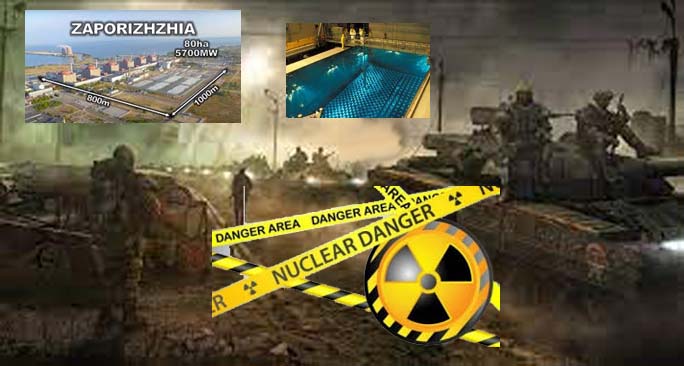
If a reactor’s spent fuel pond storage system was hit, the likely radiological releases could force millions of people to evacuate……………… In an attack against a spent fuel storage facility, US Nuclear Regulatory Commission staff conservatively estimate the radiological release could be 100 times greater than that of the Fukushima accident.20
Today, nuclear plants can be disabled in many ways without risking harmful releases of radiation. The Russians, in the Russia-Ukraine War, have demonstrated several disabling techniques
Russia’s attacks afford a clear example of disabling critical civilian objects (reactors) to its military advantage without releasing hazardous radiation
By: Henry Sokolski, Nonproliferation Policy Education Center, September 16, 2025
For nearly a decade, protecting civilians and civil objects from disproportionate military assaults has been a top priority of the Pentagon. Two Department of Defense secretaries from the first Donald Trump administration championed quantifying and reducing harm to civilians and civil objects. Under the Joe Biden administration, the Pentagon further focused on protecting civilians and civil objects, and, in 2023, Congress created a Civilian Protection Center of Excellence within the Department of Defense. This center, consisting of a staff of 30 people with an annual budget of $7 million, helped military commands execute their missions while minimizing collateral damage.1
In early 2025, however, the Pentagon cut the funding and eliminated almost all the staff in the Civilian Harm Mitigation and Response office and the Center and asked Congress to eliminate the legal requirement for its continued operation. Rattled, some wondered if the Department of War was rescinding its previous guidance on limiting civilian harm. The answer to the question was unclear.2
Trump administration officials stated the Civilian Protection Center of Excellence jeopardized war fighters’ abilities to do their jobs. But those officials did not discuss a deeper set of developments: Hamas’s October 7 attack against Israeli citizens; Israel’s crushing response, which killed thousands of noncombatants; and Russia’s attacks against Ukrainian civilians and civil infrastructure. Each development challenged many experts’ previous beliefs about what proportionality should prohibit.
Both Vladimir Putin and Benjamin Netanyahu insist their military operations are proportionate. These claims, in turn, rely on an American view of proportionality Abraham Lincoln’s top military and legal adviser, Francis Lieber, promulgated in the 1860s. The Lieber Code (General Orders No. 100) championed avoiding attacks on civilians and civilian objects. But the code also allowed, if a compelling military objective emerged whose achievement incidentally entailed harming civilian people and objects, that attacks were permissible. Commanders on the front lines should decide what actions are militarily justified or not, according to the code.3
Some have argued Lieber’s view renders proportionality hopelessly subjective. If commanders were free to determine what actions are justified, proportionality would seem to be little more than a standard of behavior the weak may demand of the strong, but the strong can effectively ignore. Victorious nations rarely litigate against their own officials or officers for disproportionate military actions (that is, for ignoring or violating the requirements of proportionality).4
Therefore, enforcing proportionality against defeated foreign nations might be attractive, but demanding one’s own military enforce proportionality is less realistic or practical. At best, realists argue, limiting harm to civil persons and objects is advisory; institutionalizing or promoting proportionality by creating Pentagon centers goes too far.
This line of thinking is intuitive and appealing. But it ignores a critical point: Sparing civilians and civilian objects unnecessary harm is often essential to achieving military victory.
Carl von Clausewitz, known for championing the necessity of violence in battle, was just as emphatic that wars could only be won by reaching political solutions the enemy’s military and leadership—and the enemy’s population—could accept. Needlessly killing civilians and destroying infrastructure critical to their welfare only complicates reaching lasting political solutions. For Clausewitz, the need to inflict violence in war had to be measured against the war’s ultimate objective, which is always political. Violence against civilians is self-defeating if it undermines the achievement of the war’s ultimate political objective.5
Thus, Winston Churchill and Dwight D. Eisenhower resisted calls in 1944 for the indiscriminate bombing of French cities and infrastructure during World War II because though such bombings would weaken German defenses, they would also dramatically undermine French political support of the Allied powers and the Allies’ resistance to the Nazis. Indiscriminate bombing would also complicate the reconstruction of the French economy after the Allies won the war.6
For similar reasons, President Harry S. Truman rejected the advice of his commander in the field, General Douglas MacArthur, who wanted to use nuclear weapons on North Korea and China. Truman feared attacking these states with nuclear weapons would escalate the conflict, cause unnecessary destruction, and turn international public opinion against the United States. Truman understood maintaining international support was essential to containing China and deterring Russia’s use of nuclear weapons after the end of the Korean War.7
One of Adolf Hitler’s best generals—Erwin Rommel—also refrained from using excessive force against civilians to protect his communications and supply lines from local disruption. Rommel understood that, in some cases, good military discipline and order required restraint, as did pacific relations with the local population (for example, in Northern Africa). Rommel’s attention to these points helped secure supply lines and reduced local resistance to his forces’ operations.8
Nazi troops terrorized enemy populations, but General Walther Wever, who served as the Luftwaffe’s chief of staff in the mid-1930s, argued such actions. Responsible for formulating Germany’s military air doctrine, Wever rejected the idea of bombing cities to break the will of the people. Wever believed such attacks were, at best, distractions from the Luftwaffe’s main mission: destroying the enemy’s armed forces. Wever also believed terror bombing was militarily self-defeating because it increased, rather than reduced, local resistance, jeopardizing the achievement of the Luftwaffe’s prime military missions.9
Besides these arguments, there are additional reasons for not hitting certain civilian facilities. Attacking chemical plants and nuclear facilities can poison the theater of operations with dangerous contaminants and hamper military operations (for example, if a dam is attacked, flooding the terrain). Such attacks can also prompt major evacuations which, in turn, retard military movements.
However, another advantage of avoiding conducting military assaults on civilian objects relates to military cohesion. As I noted in a previous Parameters article, Protocol I of the Geneva Conventions specifically discourages nations from attacking civilian objects, especially if doing so would risk releasing “hazardous forces” that could inflict “severe harm” on innocent civilians. Although the United States has signed the protocol, 174 nations took the additional step of ratifying it. The United States chose not to do so. As such, the United States is at odds with most of its NATO Allies.10
Thus, in 2022, foreign and military ministers in the European Union, the United Kingdom, and Germany declared Russian strikes against Ukrainian infrastructure and the Zaporizhzhya nuclear power plant were prosecutable war crimes. The United States took no position. In a war game conducted in 2022, close US Allies that have ratified Protocol I were at odds with Washington regarding how to respond to Russian attacks on Allied reactors. The United States’ Allies wanted to respond strongly to what they saw as a war crime, whereas the United States did not. In the game, the other NATO members were concerned NATO would be drawn into a larger conflict if Poland and Ukraine jointly attacked Russia. These concerns held up war operations and resulted in the United States using Article 5 of the North Atlantic Treaty to keep Poland from participating in a Ukrainian strike against Russia.11
Finally, temporarily disabling civilian infrastructure (for example, water, gas, and oil pumps; energy pipelines; telecommunications lines; and electrical-supply systems) can afford clear military advantages over physically obliterating civilian infrastructure, even if no hazardous forces are released. The temporary disablement of civilian infrastructure deprives one’s enemy of the ability to use infrastructure facilities, facilitates their subsequent use by one’s own forces in war, and allows for their speedy repatriation once the war is over.12
All of these points recommend fostering effective military applications of proportionality against civilian objects. The question is how.
………………………………………………………………………………………………………………………………………….If a reactor’s spent fuel pond storage system was hit, the likely radiological releases could force millions of people to evacuate, as confirmed by US Nuclear Regulatory Commission, government-sponsored, and private studies. The areas rendered uninhabitable could also be quite large: from 30,000 to 100,000 square kilometers (the latter area is larger than the entire state of New Jersey). In an attack against a spent fuel storage facility, US Nuclear Regulatory Commission staff conservatively estimate the radiological release could be 100 times greater than that of the Fukushima accident.20
The case of an attack against a spent fuel storage facility is extreme. A less dramatic scenario is the radiological release attendant to a loss of coolant induced by a military assault. Still, a wholesale, indiscriminate attack against Iran’s Bushehr power reactor could release significant radiation and force the evacuation of hundreds of thousands to millions of nearby civilians.21
Wholesale, indiscriminate attacks are precisely the kind of assault diplomats and lawyers aimed to prevent when they crafted Protocol I to the Geneva Conventions a half century ago. This international framework has several provisions that focus on the most likely type of military assault against nuclear power plants at the time: wholesale aerial attacks, which were almost certain to trigger massive releases of radioactivity. Today, things are different. With precision targeting and tailored munitions, nuclear power plants can be disabled in many ways without releasing radiation.22
Oddly, this transition to precision is still not fully reflected in the Pentagon’s legal guidance on targeting nuclear plants. …………………………………………………………………………………
Today, median miss distances for precision weapons are measured in meters or in smaller units. As a result, nuclear plants can be disabled in many ways without risking harmful releases of radiation. The Russians, in the Russia-Ukraine War, have demonstrated several disabling techniques……………
Through repeated strikes on these nonnuclear components, Russia has succeeded in shutting down Europe’s largest nuclear power plant—the Zaporizhzhya nuclear power plant. In addition, Putin can now collapse Ukraine’s entire electrical-supply system at a time of his choosing. Meanwhile, Russia says it could restart the Zaporizhzhya nuclear power plant to supply electricity to territories occupied by Russia in a matter of months.
More could be said about Russia’s studied targeting of Ukraine’s nuclear power plants and electrical-power systems. But Russia’s attacks afford a clear example of disabling critical civilian objects (reactors) to its military advantage without releasing hazardous radiation.26
Of course, other nuclear examples should be considered. Some states use portions of their civilian nuclear programs to make nuclear-weapons materials—for example, China, India, and North Korea. Disabling the facilities used to make nuclear-weapons materials would be a worthy military objective. Physically, obliterating those facilities and risking the widespread dispersal of harmful radiation, however, could be militarily counterproductive.median miss distances for precision weapons are measured in meters or in smaller units. As a result, nuclear plants can be disabled in many ways without risking harmful releases of radiation. The Russians, in the Russia-Ukraine War, have demonstrated several disabling techniques. These techniques exploited the nuclear-safety requirement for irradiated reactor fuel to be cooled continuously to prevent it from overheating, failing, and releasing dangerous, radioactive by-products.24
Rather than prompting such failures, analysis suggests Russia has been careful to target the electrical power–supply systems needed to keep the nuclear plants’ cooling and safety systems running. Russia’s aim is twofold: first, to force the plants’ operators to shut them down for safety reasons, and second, to increase the credibility of making follow-on strikes that might risk a significant release of radiation.25
The power-system components Russia has targeted include on- and off-site electrical transformers; high-voltage lines running in and out of the plants; cooling water supply systems; a major dam critical to supplying water to the Zaporizhzhya nuclear power plant; and major, off-site electrical power–generating plants needed to stabilize the electrical-supply grid supporting the nuclear plant’s safe operation…………………………
Recommendations
What steps can the US military take to update its plans and operations for targeting and protecting civil infrastructure?
First, the Pentagon should publicly share much more information about its thinking than it has to date, which would allow for greater civilian oversight, sharpen military planning, and increase the clarity of current policy and legal guidance.
Second, the Pentagon should work with private industry and other government departments focused on civil-infrastructure protection—the US Department of Homeland Security and the US Nuclear Regulatory Commission—to produce convincing public narratives about why and how civil objects should be protected and to improve existing protection schemes. Planning to protect this infrastructure has long been underway, but under the protection of the Federal Energy Regulatory Commission’s Critical Energy / Electric Infrastructure Information, which keeps these plans from the public. What’s needed is a sensible tear sheet for public consumption.27
Third, the Department of War should offer Congress routine public reports about matters related to protecting civil infrastructure. The US government must prepare the public for a future in which the United States’ electrical-supply systems, energy pipelines, biological research facilities, potentially dangerous petrochemical plants, telecommunications systems, and civil nuclear facilities may come under attack. Setting the public’s expectations about what can and should be done, actively and passively, to defend these systems should not wait until an attack occurs.
Finally, training is critical. The Department of War’s military education training institutions should offer dedicated, unclassified courses that provide technical and historical instruction on the targeting and defense of civil objects. The instruction should be fortified by unclassified government simulations for civilians and military officials, which play out alternative targeting plans against civil objects that could release hazardous forces.
How will the US government accomplish these objectives? The first step is to make mastering these matters a requirement for military promotion. This step could be done quietly, without top-down scolding, legal hectoring, or creating centers. The best US military operators and planners already know civil objects and nuclear facilities are becoming increasingly significant military targets. The Pentagon should reward and support efforts to clarify what should be done to disable and protect civil objects and nuclear facilities.
Acknowledgments: I would like to thank Caitlyn Collett for providing essential assistance in the production and editing of this special commentary.
To read the full piece, click here.
Can the US, Russia and China break their nuclear talks impasse?
With a key US-Russia arms treaty due to expire in February, the world is at risk of entering a new era of strategic instability, analysts warn.
Shi Jiangtao, SCMP, 21 Sep 2025
US President Donald Trump’s summit in Alaska last month with Russian leader Vladimir Putin failed to revive long-stalled nuclear negotiations or advance efforts to preserve the last major arms control pact between Washington and Moscow, which is set to expire in February.
Trump’s subsequent push for trilateral “denuclearisation” talks involving China elicited a firm refusal from Beijing, underscoring challenges to extending the New Strategic Arms Reduction Treaty (New START) amid fears of a fresh nuclear arms race, analysts said.
Following the summit, Beijing, with its long-standing policy of “no first use” and a nuclear strategy rooted in self defence, spurned Trump’s proposal, with Chinese foreign ministry spokesman Guo Jiakun calling it “neither reasonable nor realistic”…………………………(Subscribers only) https://www.scmp.com/news/china/diplomacy/article/3326243/can-us-russia-and-china-break-their-nuclear-talks-impasse?module=perpetual_scroll_0&pgtype=article
Ending a War That Never Should Have Started.

09/02/2025•Mises Wire•Kevin Rosenhoff
Six months after Zelenskyy’s historic humiliation in the Oval Office, Trump’s meeting with Putin hopefully signals an end of the Russia-Ukraine war. From a moral point of view, this is to be welcomed, as the war—from both sides—has been morally illegitimate from the outset.
A Morally Justified War Must Be Proportionate
The central framework for evaluating the morality of war is the so-called just war theory—an ancient tradition shaped by various philosophers. Within it, a fundamental requirement for starting and continuing a war is proportionality. Generally, this means the evils caused must stand in due proportion to the evils prevented. American philosopher Jeff McMahan differentiated this idea with his distinction between narrow and wide proportionality. Simply put, while narrow proportionality concerns the appropriate harms inflicted on aggressors (e.g., Russian soldiers), wide proportionality deals with harms inflicted on innocents (e.g., Ukrainian and Russian civilians)……………………………………………………………………………
“To the Last Man”—Why Ukraine’s War is Disproportionate
The reasons for Russia’s invasion are contested. Some point to Putin’s imperial ambitions and fear of Ukrainian democracy, others to NATO’s expansion. Still, there is broad agreement: Russia’s invasion is not only a violation of international law but also of morality. Waging war in the absence of a prior or imminent attack is reprehensible from every perspective. Participating Russian soldiers who threaten innocent lives can neither complain about being harmed nor demand compensation or an apology. Since they are therefore not wronged, their killing is proportionate in the narrow sense and, in principle, also morally legitimate as a means of warding off the threat……………………………………………………………………..
The problem of Ukraine’s war is not the harming of Russian invaders, but the harming of innocents by the Ukrainian state—that is, wide proportionality. These innocents include, not only the over 7,000 civilians in Russian-occupied areas of Ukraine presumably injured or killed by Ukrainian bombing attacks, but especially the many men forcibly recruited and held trapped. Since the war’s beginning, men between the ages of 18 and 60 have not only been prevented from fleeing the country but have increasingly been seized from their families and sent to the front—where they are highly likely to be killed or wounded. “A woman screamed for the army to spare her husband from conscription. A soldier slapped her and took her husband,” reported US journalist Manny Marotta, describing one of the forced mobilizations at the war’s outbreak. His account stands pars pro toto for the broader problem of the widespread unwillingness to fight and die for the Ukrainian state. According to former presidential adviser, Oleksiy Arestovych, half of Ukrainian men have refused to submit their data to recruitment centers. Over half a million men of military age have fled to the EU—and thousands more have been caught while trying to escape.
While initially there were still volunteers, their numbers have dwindled to zero. “There are no more volunteers,” complained military police officer Roman Boguslavskyi to Der Spiegel in November 2023. To avoid running into people like Roman, Ukrainians use Telegram channels to warn each other. The Kyiv-based group—Kyiv Povestka—alone now has close to 250,000 members. However, dodging the recruiters does not always work: the internet is flooded with videos showing military officers grabbing men off the street and trying to force them into minibuses like cattle. Accordingly, the term coined for this practice—“busification”—was named Ukraine’s Word of the Year in 2024. The cutesy term, however, should not obscure the repressive reality. In her 2024 essay Mobilisation, Ukrainian writer Yevgenia Belorusets reveals the world behind the videos—a world in which women hide their husbands and a brutal state no longer spares even those suffering from cancer or HIV. Ukrainians are thus not only victims of Russia, but also of their own state. Or, to quote the Ukrainian doctor Semyon from Belorusets’s essay: “We are in a situation we never imagined. We are devouring ourselves. Shelled by Russia, at war with Russia, and now at war with those who have decided we must question nothing.”
How should the actions of the Ukrainian state be judged morally? Unless the civilians harmed by Ukrainian bombing have consented, the state is wronging them—no differently than someone who injures or kills bystanders while fending off a mugger in the street. The same applies to the forcibly conscripted men: anyone who sees and hears how they are hunted down and torn from their loved ones should intuitively judge the state’s actions as a violation of their moral rights—and those of their families. After all, such conduct would be regarded in virtually any other context as an injustice requiring justification.
If I were attacked in my home and abducted you to defend me at risk to your life, I would be committing a moral wrong, both against you and your loved ones. Consistently, the actions of the Ukrainian state should be judged in the same way. It treats human beings as material to be used and consumed—a clear violation of their dignity and rights. The possible counterargument of a “duty to fight” seems unconvincing given the risk involved. According to reports by the Financial Times, Ukrainian commanders estimate that between 50 and 70 percent of new frontline soldiers are killed or wounded within just a few days. Yet we are normally not required to take significant personal risks to save others. If you could save my life by playing Russian roulette, doing so would be noble—but not your duty. To compel you anyway would still be a rights violation.
the Ukrainian war suffers from a more fundamental problem. Zelenskyy declared—both before and during the war—his intention to fight “to the last man” and “whatever the cost,” thereby rejecting proportionality itself. The Ukrainian state acts like someone who deliberately diverts a runaway train onto a track without caring how many people are on it. On this premise, all Ukrainians—and potentially humanity—become fair game to be sacrificed for Ukraine’s cause. Such conduct, which explicitly denies proportionality, can hardly be considered proportionate and morally justified. Under Zelenskyy, Ukraine has waged a war that has been morally unbounded from the start, with no regard for any losses.
It would therefore be right to end this war. Two morally illegitimate wars should be brought to a close—Russia’s war under Putin and Ukraine’s war under Zelenskyy. https://mises.org/mises-wire/ending-war-never-should-have-started
Russia is ready to discuss nuclear fuel at Ukraine’s Zaporizhzhia with US – RIA

By Reuters, September 5, 2025, https://www.reuters.com/world/russia-is-ready-discuss-nuclear-fuel-ukraines-zaporizhzhia-with-us-ria-2025-09-05/
VLADIVOSTOK, Russia, Sept 5 (Reuters) – The head of Russia’s State Atomic Energy Corporation Rosatom Alexei Likhachev said on Friday the company was ready to discuss with the U.S.’s Westinghouse the issue of nuclear fuel at Ukraine’s Zaporizhzhia nuclear power plant, RIA news agency reported.
In June, Russia asked the U.N. nuclear watchdog to mediate between Moscow and Washington to resolve the question of what to do with U.S. nuclear fuel stored at the Ukrainian power plant controlled by Russian forces.
Westinghouse and U.S. energy officials had previously raised intellectual property concerns with Russia in connection with the fuel issue, according to Likhachev.
Reporting by Vladimir Soldatkin and Olesya Astakhova; Editing by Christopher Cushing
1 This Month
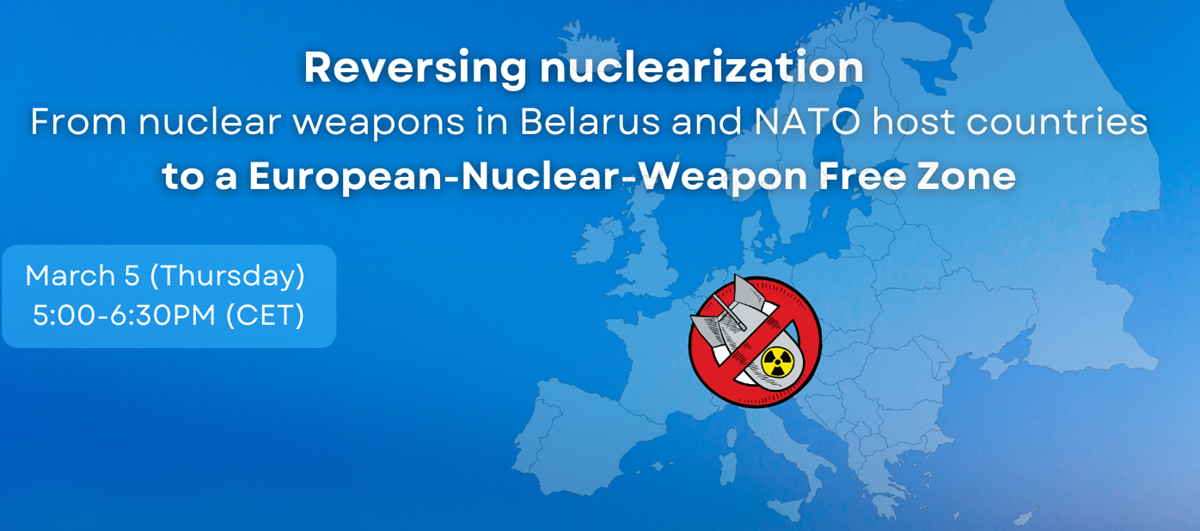
5 March -Online – Reversing nuclearization:
From nuclear weapons in Belarus and NATO host countries to a European-Nuclear-Weapon Free Zone
11am-12:30pm Eastern Time USA / 5pm-6:30pm CET

of the week – Advocating for a
nuclear free beach – https://www.samuellawrencefoundation.org/
The Samuel Lawrence Foundation advocates for a Nuclear Waste Free Beach at San Onofre, join us and take action!

10 March A LIVE WEBINAR THE REAL EFFECTS OF NUCLEAR POWER
What the Industry Isn’t Telling Us
1:00 PM Mountain, 2 pm Central, 3 pm Eastern. Live on the Keepers of the Water Facebook page

18 March Webinar @ 1 PM EST: An Assessment of SMR Projects: The Case of Canada
register for the zoom:
https://us02web.zoom.us/webinar/register/WN_o8BIIOUvQ2ONJR1nta65DQ#/registration

of the week – STOP SMALL MODULAR REACTORS IN CANADA
To see nuclear-related stories in greater depth and intensity – go to https://nuclearinformation.wordpress.com
-
Archives
- March 2026 (38)
- February 2026 (268)
- January 2026 (308)
- December 2025 (358)
- November 2025 (359)
- October 2025 (376)
- September 2025 (258)
- August 2025 (319)
- July 2025 (230)
- June 2025 (348)
- May 2025 (261)
- April 2025 (305)
-
Categories
- 1
- 1 NUCLEAR ISSUES
- business and costs
- climate change
- culture and arts
- ENERGY
- environment
- health
- history
- indigenous issues
- Legal
- marketing of nuclear
- media
- opposition to nuclear
- PERSONAL STORIES
- politics
- politics international
- Religion and ethics
- safety
- secrets,lies and civil liberties
- spinbuster
- technology
- Uranium
- wastes
- weapons and war
- Women
- 2 WORLD
- ACTION
- AFRICA
- Atrocities
- AUSTRALIA
- Christina's notes
- Christina's themes
- culture and arts
- Events
- Fuk 2022
- Fuk 2023
- Fukushima 2017
- Fukushima 2018
- fukushima 2019
- Fukushima 2020
- Fukushima 2021
- general
- global warming
- Humour (God we need it)
- Nuclear
- RARE EARTHS
- Reference
- resources – print
- Resources -audiovicual
- Weekly Newsletter
- World
- World Nuclear
- YouTube
-
RSS
Entries RSS
Comments RSS
 nuclear-news