Egypt going into $25 billion debt to Russia, to buy nuclear reactors
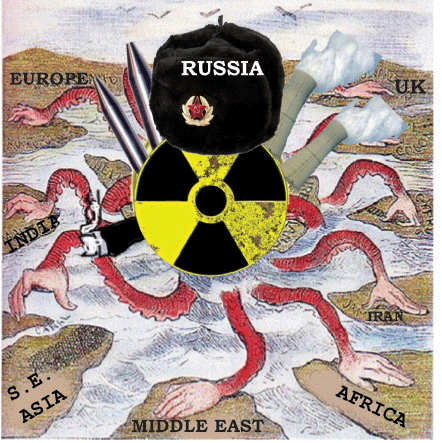
Russia lends Egypt $25 billion for Dabaa nuclear power plant, AL-Monitor, 26 Feb 20, CAIRO — Atomstroyexport, a subsidiary of Russia’s State Atomic Energy Corporation, or Rosatom, announced Feb. 17 that three Egyptian companies were awarded a tender offer for constructing the first phase of Egypt’s Dabaa nuclear power plant.
The three Egyptian companies, competing among 10 others, are Petrojet, Hassan Allam and the Arab Contractors.
The Egyptian government intends to start negotiations within the next few days with the Egyptian Nuclear and Radiological Regulatory Authority to obtain permission to start implementing the Dabaa nuclear plant project. The plant will be constructed in the Dabaa area of Marsa Matrouh governorate in the west of the country.
The Dabaa plant is the first nuclear plant for peaceful uses, with a total capacity of 4.8 gigawatts. The project is financially supported by Rosatom through a Russian loan amounting to $25 billion………….
Yemen al-Hamaki, a professor of economics at Ain Shams University said that under this agreement Egypt will use the loan to finance 85% of the total value of the building, construction, insurance and all other related works. Egypt would bear the remaining 15% in the form of installments. The loan is for 13 years at a 3% annual interest rate. If Egypt fails to repay any of the annual interest within 10 working days, it shall be subject to arrears of 150% of the interest rate calculated on a daily basis
Hamaki also warned that this massive Russian loan of $25 billion could blow up Egypt’s foreign debts. “This loan is a great risk to the future because it burdens the state and should be settled from the wealth and economic assets of the future generations,” she said, adding, “Egypt’s resorting to many loans foretells its inability to attract foreign investments, while tourism revenues continue to decline.” ….. https://www.al-monitor.com/pulse/originals/2020/02/power-plant-nuclear-egypt-russia-loan.html#ixzz6F5iQcolQ
Ultimate Doomsday Weapon: Missiles Powered By Nuclear Reactors
 Ultimate Doomsday Weapon: Missiles Powered By Nuclear Reactors, With disastrous results. National Interest Ultimate Doomsday Weapon: Missiles Powered By Nuclear Reactors, With disastrous results. National Interest
– 17 Feb 20 Key Point: Russia is resurrecting the demons of our shared Cold War past.
After days of speculation by Western analysts that a deadly accident on August 8 that briefly spiked radiation levels in northwestern Russia was tied to tests of an exotic nuclear-powered “Skyfall” nuclear-powered cruise missile, Russian sources confirmed to the New York Times the explosion of a “small nuclear reactor.”
While there’s a tactical rationale behind Russia’s development of a fast, surface-skimming cruise missile with an unlimited range as a means of bypassing American missile defenses, it strikes many analysts as an inordinately expensive, extremely technically challenging, and—evidently!—downright unsafe. That’s because the United States has tried it before sixty years earlier—and even with the fast-and-loose safety culture of the Cold War 1960s, the poison-spewing radioactive mega missile it began developing was considered too dangerous to even properly flight test. This project was most famously described in a 1990 article by Gregg Herken for Air & Space Magazine, which remains well worth the read. …..
The SLAM missile was expected to soar towards its Soviet targets at tree-top level, traveling at three times the speed of sound. The combination of low-altitude (reducing detection range) and Mach 3 speed was thought to make it too fast for interception by fighters or surface-to-air missile. The sonic shock wave produced by the huge missile was believed to be strong enough to kill anyone caught underneath it.
The huge missile, laden with up to twelve thermonuclear bombs, would proceed to race towards one Soviet city after another, visiting Hiroshima-level human tragedies upon each. And once the bombs were exhausted, the nuclear-powered missile would…simply keep on going and going like a murderous Energizer Bunny. Because installing adequate radioactive shielding on such a small reactor would have proven impossible, the SLAM would have spread in its wake trails of cancer-inducing gamma and neutron radiation and radioactive fission fragments expelled by its exhaust. Project Pluto scientists even considered weaponizing this property by programming the missile to circle overhead Soviet population centers, though how exposing even more people to slow deaths by radiation poisoning would be useful in an apocalyptic nuclear war that would likely leave both nations in ruin in a few days is hard to fathom. However, realizing the SLAM concept involved a succession of serious technical challenges. For example, a separate conventional rocket system would be necessary for the missile to reach the supersonic speeds at which its ramjet motor could function. That, in turn, meant the reactor had to be designed to withstand the heat and stress of those powerful booster rockets. In fact, it’s believed precisely that problem may have resulted in the deadly accident in Russia this August. As a result, the Livermore laboratory devised a 500-megawatt reactor so robust it was nicknamed the “flying crowbar.”……. Having established the workability of the nuclear ramjet, Merkle’s team then ran into a serious practical obstacle: where on Earth, literally, could a long-range weapon prone to trailing plumes of radioactive pollution behind it be tested? And what would happen if the supersonic weapon with theoretically nigh-unlimited range “got away”—ie., fell out of control, and potentially irradiated American communities? …….
Deploying the weapon operationally presented even worse dilemmas, as the missile would likely overfly U.S. allies on its approach to Russia. Even deploying an operational weapon to a remote Pacific island seemed to entail an inordinate amount of radiation poisoning for the surrounding environment. ……
Fortunately, the Pentagon was able to assess that the SLAM did nothing to alter the Mutually Assured Destruction dynamic of Moscow and Washington’s Cold War standoff, except perhaps by provoking an equally terrifying response. Furthermore, it presented undesirable budgetary burdens and intolerable safety and political risks.
Despite technical advances since the 1960s, those same fundamental considerations likely remain true for Russia’s Skyfall missile today.
As John Krzyzaniak succinctly put it in a piece for the Bulletin of the Atomic Scientists: “The problems with a nuclear-powered missile are so numerous and obvious that some have questioned whether Putin is being hoodwinked by his scientists, or whether he is bluffing to scare the United States back into arms control agreements. In any case, what was once a terrible new idea is now just a terrible old idea.”
Unfortunately, in a climate of escalating paranoia and nuclear arms competition, Moscow is not merely devising exotic new nuclear weapons, but resurrecting the demons of our shared Cold War past. https://nationalinterest.org/blog/buzz/ultimate-doomsday-weapon-missiles-powered-nuclear-reactors-123231
|
|
Excess radiation level recorded in Moscow

 Belsat 12th Feb 2020, A sensor of the Russian state enterprise Radon, which specializes in handling radioactive waste, has recorded a 60-fold excess of the radiation background at the construction site of the South-East Chord (multi-lane expressway) in Moscow, the Russian service of Radio Liberty reports.
radiation level of 0.3 microsieverts. Residents of the
Moskvorechye-Saburovo district report that this is the seventh time in
three days, but neither Radon nor the MES have taken any action, claiming
that the sensor works in test mode and there are no actual spikes in
radiation.
of radioactive waste on the South-Eastern Chord route. The mayor`s office
said that “in the case of the construction of the chord, the city faced a
unique and exceptional problem — radioactive waste, which the Moscow
Polymetal Plant stored in its backyard in the 1950s and 1960s”. At the
same time, the City Hall called the discovered traces of radioactive
contamination “insignificant”.
https://belsat.eu/en/news/excess-radiation-level-recorded-in-moscow/
Russian Orthodox Church rethinks its practice of blessing nuclear weapons
Russian priests shouldn’t bless nuclear weapons, other weapons of mass destruction, Orthodox Church says, https://www.foxnews.com/world/russian-priests-shouldnt-bless-nuclear-weapons-other-weapons-of-mass-destruction-orthodox-church-says 5 Feb 20, The Russian Orthodox Church thinks its priests should discontinue the practice of blessing weapons of mass destruction that inflict death upon thousands of people, according to a proposal published Monday.
The church released a draft document outlining its stance on the blessing of Orthodox Christians “for the performance of military duty” and “defense of the Fatherland.”
Russian priests have longed sprinkled holy water on various weapon systems, including submarines, ballistic missiles and space rockets, among others.
“It is not reflected in the tradition of the Orthodox Church and does not correspond to the content of the Rite of blessing of military weapons, and therefore, the use of this order to “sanctify” any kind of weapon, the use of which could lead to the death of an undetermined number of people, including weapons, should be excluded from pastoral practice indiscriminate action and weapons of mass destruction,” the church wrote.
The proposal noted the blessing of military vehicles used on land, air and sea is not the “blessing of guns, rockets or bombing devices that the Lord is asking for, but the protection of soldiers.”
The proposals will be discussed on June 1 and the public is being asked to weigh in the debate, Reuters reported.
The request comes as the church and the Russian military continue to forge close ties. The armed forces are building a sprawling cathedral at a military park outside Moscow
The Russian Orthodox Church just might cease its blessing of nuclear weapons
 THE RUSSIAN ORTHODOX CHURCH MAY STOP BLESSING NUCLEAR
  WEAPONS https://futurism.com/the-byte/russian-orthodox-blessing-nuclear-weapons JULY 10TH 19__DAN ROBITZSKI
A faction of clergy within the Russian Orthodox Church wants to end the eyebrow-raising practice of blessing the country’s nuclear missiles.
First of all, yes: Russian priests currently sprinkle holy water on nuclear missiles as part of an old tradition in which Orthodox priests bless soldiers and their weapons, reports Religion News Service. But that may change, as some priests feel that intercontinental ballistic missiles belong in a different category from individual firearms.
Faith Militant
The Russian military and the Russian Orthodox church have long worked hand in hand, according to RNS, framing many of the country’s military conflicts as holy wars. The nuclear arsenal even has its own patron saint — RNS reports that St. Seraphim’s remains were found in a Russian town that housed several nuclear facilities.
As such, the push to stop blessing nukes faces strong opposition among members of the clergy, such as the high-ranking priest Vsevolod Chaplin, who referred to the country’s nukes as “guardian angels.”
“Only nuclear weapons protect Russia from enslavement by the West,” Chaplin once said, per RNS.
Changing Hearts
One priest, Dmitry Tsorionov, parted from the more militant aspects of the Orthodox Church after seeing men willingly sign up to fight Russia’s wars “under the banner of Christ,” he told RNS. Now he wants to see less warmongering among the clergy.
“It was not uncommon to see how church functionaries openly flirted with these toxic ideas,” he told RNS. “It was only then that I finally realized what the blessing of military hardware leads to.”
Unsafety of Russia’s November-class submarines
Sailing These Russian Nuclear Submarines Was Basically A Suicide Mission, Safety was sacrificed for the sake of performance. National Interest, by Sebastien Roblin, 22 Jan 2020
Key Point: The November-class submarined expanded Soviet influence, but at a cost.
The United States launched the first nuclear-powered submarine, the USS Nautilus, in 1954, revolutionizing undersea warfare. The Nautilus’s reactor allowed it operate underwater for months at a time, compared to the hours or days afforded conventional submarines. The following year, the Soviet Union began building its own nuclear submarine, the Project 627—known as the November class by NATO. The result was a boat with a few advantages compared to its American competition, but that also exhibited a disturbing tendency to catastrophic accidents that would prove characteristic of the burgeoning Soviet submarine fleet during the Cold War………
the power of the November class’s reactors was bought at the price of safety and reliability. A lack of radiation shielding resulted in frequent crew illness, and many of the boat suffered multiple reactor malfunctions over their lifetimes. This lack of reliability may explain why the Soviet Union dispatched conventional Foxtrot submarines instead of the November-class vessels during the Cuban Missile Crisis, despite the fact that the diesel boats needed to surface every few days, and for this reason were cornered and chased away by patrolling American ships.
In fact, the frequent, catastrophic disasters onboard the Project 627 boats seem almost like gruesome public service announcements for everything that could conceivably go wrong with nuclear submarines. Many of the accidents reflected not only technological flaws, but the weak safety culture of the Soviet Navy………..
This is just an accounting of major accidents on the November-class boats—more occurred on Echo- and Hotel-class submarines equipped with the same nuclear reactors. Submarine operations are, of course, inherently risky; the U.S. Navy also lost two submarines during the 1960s, though it hasn’t lost any since.
The November-class submarines may not have been particularly silent hunters, but they nonetheless marked a breakthrough in providing the Soviet submarine fleet global reach while operating submerged. They also provided painful lessons, paid in human lives lost or irreparably injured, in the risks inherent to exploiting nuclear power, and in the high price to be paid for technical errors and lax safety procedures. https://nationalinterest.org/blog/buzz/sailing-these-russian-nuclear-submarines-was-basically-suicide-mission-115661
Environmental and technical worries, as Russia extends the life of old Kola Nuclear Power Plant
One of Russia’s oldest nuclear reactors set to run until 2034 https://bellona.org/news/nuclear-issues/2020-01-one-of-russias-oldest-nuclear-reactors-set-to-run-until-2034
The second reactor unit at the Kola Nuclear Power plant near Murmansk has received the nod from Russian regulators to operate until 2034, making it one of the longest running commercial reactors in the world and raising a host of environmental and technical concerns. January 2, 2020 by Charles Digges
The second reactor unit at the Kola Nuclear Power plant near Murmansk has received the nod from Russian regulators to operate until 2034, making it one of the longest running commercial reactors in the world and raising a host of environmental and technical concerns.
Currently, the longest serving reactor ever is the Oyster Creek Nuclear Generating Station in the United States, which, after running for 49 years, was finally shut down in 2018. Should the Kola plant’s No 2 reactor run out the term of its new lifetime extension, it would be 59 by the time it is retired.
Kola’s No 2 reactor, which came online in 1975, is not alone. The plant’s other three units, which are all VVER-440 reactors, are likewise operating on sometimes numerous lifetime extensions that would bring them to ripe old age before their operations are stopped. The No 1 reactor at the Kola plant, which started generating power 1973, was granted a second runtime extension two years ago, and won’t retire until 2033. The No 3 and No 4 reactors – which came online in the early 1980s – will operate until 2027 and 2029, respectively.
The prolonged operations of these reactors has been cause for concern among some experts, who say that bringing the units into step with current industry safety demands is difficult, given their aging design.
n the shadow of the 2011 Fukushima disaster, which resulted in a triple reactor meltdown, worldwide nuclear building standards have tightened across the board in ways that some fear have left the Kola Nuclear Power Plant’s reactors behind.
Yet more and more often, extending runtime extensions is becoming a general practice throughout the nuclear industry – and not only in Russia. Throughout central and western Europe, there are some 90 nuclear reactors that are currently under review for lifespan extensions, including many in countries like France, the United Kingdom, the Netherlands, Switzerland and Finland. Six of the 15 Soviet-built nuclear reactors in Ukraine are operating on extended lifespans, with the remaining expected to follow.
For its part, Germany has elected altogether to shutter its nuclear power plants – a goal it hopes to reach by 2022. But the move is proving politically and technically complex. The waste resulting from the closures – thought to eventually comprise some 2,000 containers – must be stored in safely the same spot for 1 million years, and experts are short on ideas about where, exactly, to do that. The costs, too, are astronomical, with the phase-out expected to reach nearly $73 billion.
t is expenses like these that are so deviling to Russia’s nuclear industry, which has failed to build up a robust savings account for decommissioning expenses. Like other countries, Russia collects decommissioning funding through electricity tariffs charged to customers. But unlike other countries, Russia has only been doing this since 1995, shortly after the fall of the Soviet regime and the introduction of a market-based economy. As a result, issuing lifetime extension to elderly reactors offers Moscow a cheap – and what many countries consider a safe – alternative to the more costly route of dismantlement.
Still, environmentalists are right to be nervous. Scientific research on how nuclear reactors age – and on the kinds of problems that emerge as they do – has come mostly from studies in research reactors. While these studies have offered some insight on how reactors weather over time, many experts say that the data on how commercial reactors behave in their twilight years are still too inconclusive to be trusted.
But Rosatom officials insist that the extended reactors at the Kola Nuclear Power Plant are safe, and offers figures to back up its claims. According to a report in the Barents Observer, the corporation spent some 4.5 billion rubles – or about $72 million – on upgrades to the No 2 reactor before regulatory officials granted the runtime extension. Plant officials likewise eliminated numerous safety violations and are in the process of eliminating them.
Russia, in fear of a USA first strike may now revive its “dead hand” nuclear weapon
 ‘s Nuclear “Dead Hand”
Russia won’t succumb to pressure near its territory. National Interest, by Michael Peck 30 Dec 19,
Key point: Russia is acting out of fear that a U.S. first-strike that would decapitate the Russian leadership before it could give the order to retaliate.
But the system, known as “Perimeter” or “Dead Hand,” may be back and deadlier than ever.
This comes after the Trump administration announced that the United States is withdrawing from the 1987 Intermediate-Range Nuclear Forces Treaty, which eliminated the once-massive American and Russian stockpiles of short- and medium-range missiles.
Donald Trump alleges that Russia has violated the treaty by developing and deploying new, prohibited cruise missiles.This has left Moscow furious and fearful that America will once again, as it did during the Cold War, deploy nuclear missiles in Europe. Because of geographic fate, Russia needs ICBMs launched from Russian soil, or launched from submarines, to strike the continental United States. But shorter-range U.S. missiles based in, say, Germany or Poland could reach the Russian heartland.
Viktor Yesin, who commanded Russia’s Strategic Rocket Forces in the 1990s, spoke of Perimeter/Dead Hand during an interview last month in the Russian newspaper Zvezda [Google English translation here]. Yesin said that if the United States starts deploying intermediate-range missiles in Europe, Russia will consider adopting a doctrine of a preemptive nuclear strike. But he also added this:
Yesin: “The Perimeter system is functioning, it has even been improved. But when it works, we will have little left – we can only launch those missiles that will survive after the first attack of the aggressor.” …….
What is unmistakable is that Perimeter is a fear-based solution. Fear of a U.S. first-strike that would decapitate the Russian leadership before it could give the order to retaliate. Fear that a Russian leader might lose his nerve and not give the order.
And if Russia is now discussing Perimeter publicly, that’s reason for the rest of us to worry.https://nationalinterest.org/blog/buzz/america-driving-return-russias-nuclear-dead-hand-109206
Russia extends license for remote nuclear power plant
One of the reactors at Bilibino NPP has got permission for another five years despite the nearby new floating nuclear power plant now is in operation. By Thomas Nilsen– December 29, 2019
Just one week after “Akademik Lomonosov” started to produce electricity to the grid in Pevek, one of the three remaining reactors at Bilibino nuclear power plant (NPP) got a renewed five-years permission until December 31st, 2025.
Bilibino NPP is located in the far remote Bilibinsky District in the Chukotka Autonomous Okrug, Russia’s northeastern corner. The power plant provides electricity to the same Pevek-Chaun-Bilibino grid currently under construction as the new floating nuclear power plant.
One of the four reactors at Bilibino is already shut-down, while the other three were to follow as soon as the grid and the “Akademik Lomonosov” came in place. That would likely not happen before earliest by the end of 2021.
The license was issued by Rosteknadzor, Russia’s Federal Agency for Ecological, Technological and Nuclear Supervision and is valid for reactor No. 2.
It is operator of the plant, state nuclear corporation Rosatom, that informs about the renewed license.
Bilibino nuclear power plant started operation in 1974 with reactors supposed to run for a 30-years period. In 2004, the plant’s operational lifetime was prolonged with 15 years, and now, another five years is added to one of the reactors.
Bilibino NPP, which is located some 240 kilometers from Pevek, would need a prolonged license even if shut down by 2022, since the spent nuclear fuel most likely will stay in the reactors for a much longer period before decommissioning work can start.
Russian nuclear news-site Seogan reports that work is underway aimed at prolonging the lifetime of reactor No. 3 and No. 4 as well.
The reactors are of the EGP-6 type, a scaled down version of the Chernobyl-type RBMK light-water cooled graphite reactors. The plant is both the world’s smallest and most remote located onshore nuclear power plant.
In August this year, Rostechnadzor made a scheduled audit at the plant and discovered 19 violations of norms and rules for operating a nuclear power plant. 3 of the violations were fixed on spot, while the 16 others resulted in administrative protocols and sanctions, the agency reports on its own portal.
Russia deploys first hypersonic missiles
Russia has deployed its first hypersonic nuclear-capable missiles, with Vladimir Putin boasting that it puts his country in a class of its own.
The president described the Avangard hypersonic glide vehicle, which can fly at 27 times the speed of sound, as a technological breakthrough comparable to the 1957 Soviet launch of the first satellite.
Putin has said Russia’s new generation of nuclear weapons can hit almost any point in the world and evade a US-built missile shield, though some western experts have questioned how advanced some of the weapons programmes are.
The Avangard is launched on top of an intercontinental ballistic missile, but, unlike a regular missile warhead, which follows a predictable path after separation, it can make sharp manoeuvres en route to its target, making it harder to intercept……. https://www.theguardian.com/world/2019/dec/27/russia-deploys-first-hypersonic-missiles-nuclear-capable
Scientists track down the source of radioactive plume, – Russian cover-up of a nuclear accident

|
Russia appears to have kept a major nuclear accident secret. But scientists called the ‘Ring of 5’ tracked the plume of radiation to its source. https://www.businessinsider.com.au/russia-nuclear-accident-radiation-timeline-2017-2019-12?r=US&IR=T, ARIA BENDIX DEC 21, 2019
A group of scientists called the “Ring of Five” noticed something unusual in the atmosphere in late 2017: Air across Europe showed “unprecedented” levels of the radioactive isotope ruthenium-106.
The isotope is often made when reprocessing nuclear fuel. “We were stunned,” Georg Steinhauser, a professor at the University of Hanover in Germany who is part of the group, told Business Insider in August. “We did not have any anticipation that there might be some radioactivity in the air. We were just measuring air filters as we do on a weekly basis, 52 times a year, and suddenly there was an unexpected result.” The Ring of Five, which had been monitoring Europe’s atmosphere for elevated levels of radiation since the mid ’80s, spent the next two years looking for the cause of the spike.
The culprit, according to a study released in July, was an undisclosed nuclear accident at the Mayak nuclear facility in Russia, which was once the centre of the Soviet nuclear-weapons program. Mayak was also the site of the 1957 Kyshtym explosion, the world’s third-worst nuclear accident. More than 10,000 nearby residents were forced to evacuate at the time. Russia has never acknowledged that any nuclear accident happened at the Mayak facility in 2017, and has not responded to any findings from the Ring of Five. But now, the scientists have unravelled the mystery even further.A second study published last month offers even more evidence that an accident occurred at Mayak in 2017. It even pinpoints a timeline: Most of the ruthenium was emitted on September 26, 2017.
Tracing a radioactive plume across EuropeThe Ring of Five is so named because the group was originally made up of scientists from five nations – Sweden, Germany, Finland, Norway, and Denmark – but it now includes researchers from 22 countries. Their monitoring work takes takes place 24 hours a day, 365 days a year. The new study suggests that the Mayak facility likely released 250 terabecquerels (a measurement of radioactivity) of ruthenium into the atmosphere. The Kyshtym explosion, by comparison, released around 2,700 terabecquerels of ruthenium. The world’s worst nuclear accident, Chernobyl, released around 5.3 million terabecquerels of radioactive material, according to a 2013 analysis.
To find out where the 2017 radioactive plume came from, scientists traced the path of the wind at the time using more than 1,100 measurements from the fall of that year. That required studying the wind’s altitude and direction, as well as weather conditions that may have changed its course.
The scientists determined that the plume started out in the Southern Urals, where the Mayak facility is located, then was driven towards southwest Russia. It arrived in Romania on September 29, then split in two. The main part of the plume spread toward Central Europe, where it encountered rain in Bulgaria. Plant and soil samples taken in the country showed elevated levels of ruthenium at the time. After that, the plume moved north to Scandinavia before arriving in Italy on October 2, 2017. That day, Italian scientists sent an alert to the Ring of Five about elevated levels of ruthenium in Milan. Steinhauser called this the “single greatest release from nuclear-fuel reprocessing that has ever happened.” Russia has not responded to the Ring of Five’s findingsAt the time of the alleged accident in 2017, Russian officials said the Mayak facility wasn’t the source of the release, even though the nation showed elevated levels of ruthenium. Instead, officials in Russia attributed the radiation to a satellite that burned up in the atmosphere. Russia still hasn’t issued a response to either of the studies the Ring of Five published this year. “We should not forget that Mayak is a military facility – and, of course, the Russian Federation is very reluctant when it comes to talking about military facilities,” Steinhauser said. “I presume this would not be much different for other superpower nations.” The scientists don’t consider the levels of radiation they detected to be an immediate threat to people’s health. Last year, France’s Institute for Radiological Protection and Nuclear Safety determined that the levels of ruthenium-106 in the atmosphere do not pose danger to human health or the environment. But the long-term consequences are unknown. Another unanswered question, Steinhauser said, is whether the population near the Mayak facility breathed any radiation into their lungs. He added that there could be reason to monitor food safety if radiation leaked into the soil and water. “We would like to get some more in-depth information on what actually happened,” he said. “There’s a good chance that we’ll catch every single accident – but, in the present case, surprise was on our side.” |
|
A quarter of Russia’s Andreeva Bay’s spent nuclear fuel stack removed, with Norway’s help
Norway helps pay for transporting old Russian navy nuclear waste
A shipment of 14 containers with spent nuclear fuel from Andreeva Bay to Atomflot in Murmansk took place this week. Barents Observer By Thomas Nilsen December 20, 2019
|
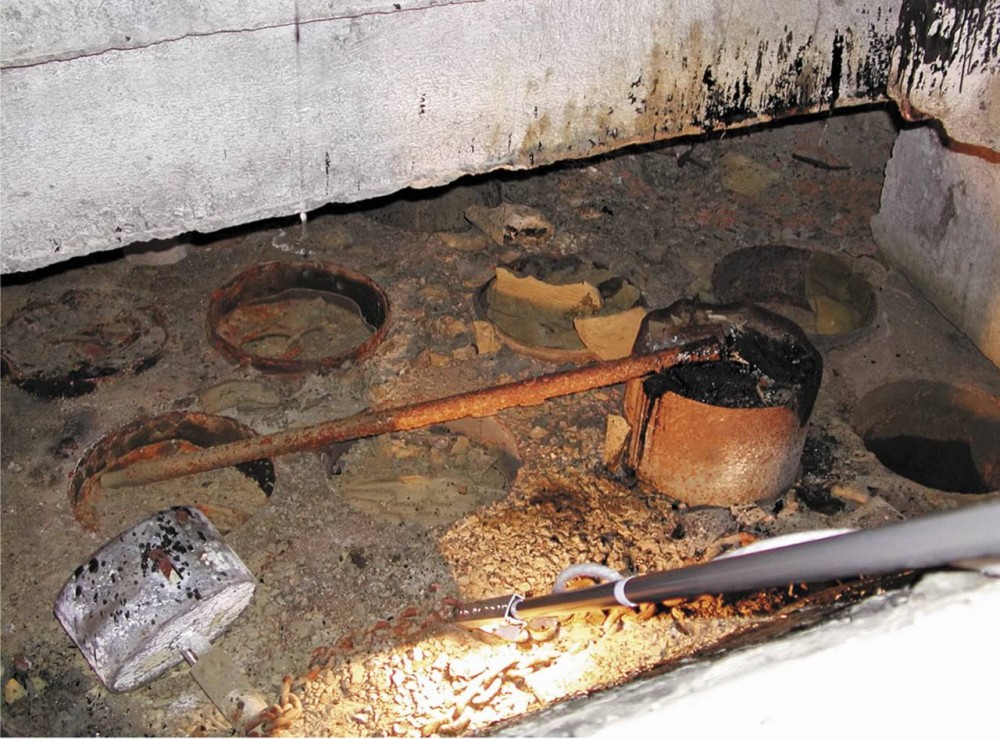
“This is the first time we will pay for removing. The ship was fully loaded. 14 containers with spent nuclear fuel,” says project coordinator Per-Einar Fiskebeck to the Barents Observer. The removed waste contained about one million Curie (37.000 TBq) of long lived isotopes. Unloading the 40-years old spent uranium fuel elements from the rundown storage tanks and repacking them to transport containers came with a price-tag of 5 million kroner (€500.000), while the shipment from Andreeva Bay to Murmansk will cost additional 2,5 million kroner (€250.000). This week’s shipment is the fourth this year, but the first one paid by Norway. Per-Einar Fiskebeck, an engineer with the County Governor of Troms & Finnmark, has since the 1990s worked in close cooperation with SevRao, Russia’s regional enterprise in charge of cleaning up the nuclear waste site on the western banks of the Litsa fjord. Here, only 65 kilometers from the border to Norway, the Soviet navy packed away its lethal leftovers. Without too much thought for the costs of future clean up. In Norway, like in Russia, the demand for action came out of fears for possible radioactive leakages that could have potentially negative impact on the important fisheries in the Barents Sea. So far, isotopes contamination has only been discovered in the sediments in the near proximity off the shore and not further out in the bay. Concerns of nuclear accidents and radioactive leakages are also why Norwegian authorities have granted hundres of millions kroner in aid to secure and clean up the site……. In 2017, the first load of containers with spent nuclear fuel left Andreeva Bay towards Murmansk, from where it go by rail to Mayak, Russia’s reprocessing plant north of Chelyabinsk east of the Ural Mountains. So far in 2019, three shipments paid by Russia and one shipment paid by Norway have left Andreeva Bay. “25% of the original amount of spent nuclear fuel is now removed,” says Per-Einar Fiskebeck. With one-fourth of the waste removed in two and a half years doesn’t mean the remaining will be shipped away with the same speed. «The fuel elements lifted out and re-packed so far have been undamaged,” Fiskebeck says. Both tank No. 1 and No. 2 are believed to hold mostly unproblematic elements. He explains how some of the other elements will be a much more challenging task. Tank 3A holds numerous rusty, partly destroyed steel pipes where concrete of poor quality was filled in the space between. Some of those fuel assemblies are stuck in the canisters, while some of the canisters are stuck in the cells. This is high level nuclear waste with radiation levels close to the uranium fuel comparable to the melted fuel rods inside the ill-fated Chernobyl reactor. Risk-assessments give a clear recommendation: Do not try to lift any of the assemblies before you are sure nothing falls out.
A worst case scenario is uranium pellets falling to the bottom, becomes unstable, creating an uncontrolled nuclear fission chain reaction with radionuclides being airborne. Three different kind of containers to handle damaged elements are now under development and testing, a work Fiskebeck estimates will take all of 2020 and 2021. “Risk assessment and environmental safety studies are core to all Norwegian funded projects,” Fiskebeck tells……… Another groundbreaking milestone in the clean up work took place earlier this fall when the retrieval of six abandoned, highly radioactive spent nuclear fuel assemblies from the bottom of Building No. 5 were successfully completed. Building No. 5 is a former pool storage, where several elements fell to the floor following a water-leakages in 1982. Traces of uranium and other radionuclides remained in the sludge at the bottom of the pool. The radiation on site was too high for humans to work safely. “You can’t have humans there. Robotics were needed to do the job,” Per-Einar Fiskebeck explains. Such remote controlled equipment were made and the six elements are now safely transferred to the nearby storage building No. 151 in Andreeva Bay……. https://thebarentsobserver.com/en/ecology/2019/12/norway-helps-pay-transporting-40-years-old-russian-navy-nuclear-waste |
|
Hazards of Russia’s nuclear colonialism- example South Africa
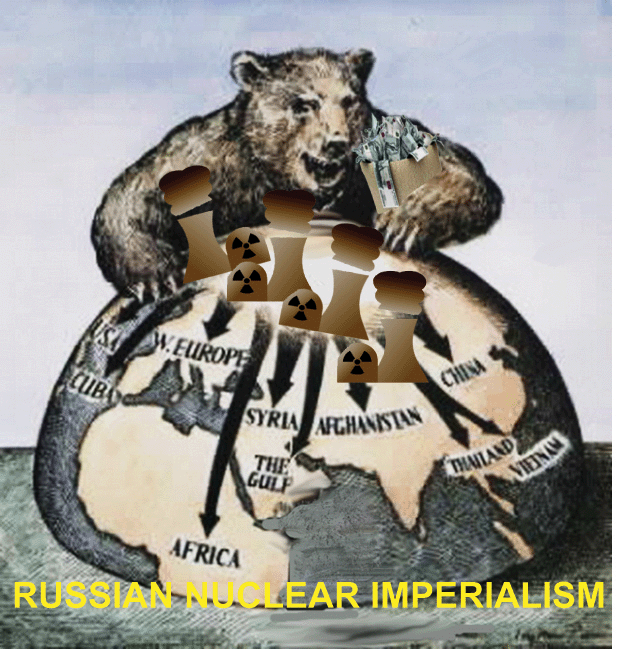
 Africa, Russia squandered close ties with the South African government by overplaying its hand and getting caught up in a corrupt nuclear energy pact. Carnegie Endowment For International Peace (thoroughly researched and referenced) 16 Dec 19,
 SUMMARY
 Amid the widespread attention the Kremlin’s recent inroads in Africa have attracted, there has been surprisingly little discussion of South Africa, a country which, for nearly a decade, unquestionably represented Russia’s biggest foreign policy success story on the continent. As relations soared during the ill-starred presidency of Jacob Zuma (2009–2018), the Kremlin sought to wrest a geopolitically significant state out of the West’s orbit and to create a partnership that could serve as a springboard for expanded influence elsewhere in Africa. Continue reading
 United States and Russia are on the verge of a new arms race
By most accounts, the United States and Russia are on the verge of a new arms race, if not already in one.
But last month, something unusual happened: U.S. inspectors traveled to Russia to examine a new missile that Moscow says is super-fast. The demonstration was “aimed at facilitating efforts to ensure the viability and efficiency of New START,” the Russian Defense Ministry said.
Dmitry Stefanovich, a researcher with the Russian International Affairs Council, said the inspection of the weapon — called Avangard by Russian military designers — was a demonstration that Moscow was eager to extend New START.
“It is more like an offer: See, we will [give] you transparency on some new weapons and probably some more in the future, but we have to extend the treaty for it to work,” he told RFE/RL. “And we expect the same from you, when your modernization of strategic weapons reaches fruition.”
Large Arsenals
Signed in 2010 by Presidents Barack Obama and Dmitry Medvedev, New START limited the U.S. and Russian nuclear arsenals by capping the numbers of delivery systems — long-range bombers, silo-based land missiles, and submarine-launched missiles — and deployed warheads.
As of September 1, Russia had 513 deployed strategic launchers with 1,426 warheads, according to State Department figures. The United States deploys 668 strategic launchers with 1,376 warheads, according to the data……
The treaty expires in February 2021, although provisions allow for it to be prolonged by five years if both sides agree. ….. https://www.rferl.org/a/new-hope-for-new-start-can-russia-and-the-u-s-agree-to-keep-a-lid-on-their-nuclear-arsenals-/30326546.html
Docking problems for Russia’s nuclear ships
After the floating dock SD-50 sank at Roslyakovo yard north of Murmansk last fall “Sevmorput” now had to sail all around Scandinavia to St. Petersburg to find a dock large enough. Barents Observer, By Thomas Nilsen, December 15, 2019
“Sevmorput” left her homeport in Murmansk on December 5th and arrived in St. Petersburg on the 12th after sailing a distance of nearly 3,000 nautical miles, information from MarineTraffic tells.
The 260 meters long container ship is currently moored at the Admiralteyskiye yard in the Neva River, but will later be taken to the nearby dry dock at Kanonerskiy yard, SeaNews agency reports.
It was late October last year the floating dock sank at shipyard No. 82 in Roslyakovo between Murmansk and Severomorsk in the Kola Bay. The dock was then holding “Admiral Kuznetsov”, Russia’s only aircraft carrier.
The sunken dock was the only one on the Kola Peninsula large enough to accommodate “Sevmorput” and navy ships like the nuclear-powered battle cruiser “Pyotr Velikiy” and ballistic missile submarines of the Delta-IV-, Oscar, II- and Borei-classes.
An older land-dock at naval yard No. 35, Sevmorput, in Murmansk will be expanded to facilitate larger military vessels, like the submarines. The dock is said to be ready by 2021. Meanwhile, navy ships will have to sail to Severodvinsk for simple docking operations……..https://thebarentsobserver.com/en/industry-and-energy/2019/12/nuclear-powered-container-ship-sailed-3000-nm-change-propellers-lack
1 This Month

of the week – Shut Down Drone Warfare!


Tell the Ukrainian Government to Drop Prosecution of Peace Activist Yurii Sheliazhenko

Petition to revoke the licensing of the Near Surface Nuclear Disposal Facility (NSDF) at Chalk River. https://www.ourcommons.ca/petitions/en/Petition/Details?Petition=e-7247
To see nuclear-related stories in greater depth and intensity – go to https://nuclearinformation.wordpress.com
-
Archives
- April 2026 (91)
- March 2026 (251)
- February 2026 (268)
- January 2026 (308)
- December 2025 (358)
- November 2025 (359)
- October 2025 (376)
- September 2025 (257)
- August 2025 (319)
- July 2025 (230)
- June 2025 (348)
- May 2025 (261)
-
Categories
- 1
- 1 NUCLEAR ISSUES
- business and costs
- climate change
- culture and arts
- ENERGY
- environment
- health
- history
- indigenous issues
- Legal
- marketing of nuclear
- media
- opposition to nuclear
- PERSONAL STORIES
- politics
- politics international
- Religion and ethics
- safety
- secrets,lies and civil liberties
- spinbuster
- technology
- Uranium
- wastes
- weapons and war
- Women
- 2 WORLD
- ACTION
- AFRICA
- Atrocities
- AUSTRALIA
- Christina's notes
- Christina's themes
- culture and arts
- Events
- Fuk 2022
- Fuk 2023
- Fukushima 2017
- Fukushima 2018
- fukushima 2019
- Fukushima 2020
- Fukushima 2021
- general
- global warming
- Humour (God we need it)
- Nuclear
- RARE EARTHS
- Reference
- resources – print
- Resources -audiovicual
- Weekly Newsletter
- World
- World Nuclear
- YouTube
-
RSS
Entries RSS
Comments RSS
 nuclear-news