Russia dumps its plans for costly huge Nuclear Destroyer and supersized Frigate Programs
Russia Has Abandoned Its Massive Nuclear Destroyer And Supersized Frigate Programs, The Drive BY JOSEPH TREVITHICK APRIL 21, 2020 The state-run shipbuilding company responsible for both programs now has concerns about its long-term finances
Eussia’s Severnoye Design Bureau has stopped development entirely of its Project 23560 destroyers, also known as the Lider class, and the Project 22350M frigate, an expanded derivative of the Project 22350 Admiral Gorshkov class. The company has said these ships are among its most promising future offerings and the halting of the two programs has raised quThe Lider destroyer, also referred to at times as the Shkval, was clearly an extremely ambitious project, perhaps overly so, from the very beginning. Though originally intended to be a conventionally powered warship, plans subsequently shifted to a nuclear-powered design. Its expected displacement also grew from already massive 12,000 to 13,000 tons to 19,000 tons, stretching its classification as a “destroyer.” estions about its long-term financial stability.
Russian newspaper Interfax reported the new developments at Severnoye, which is part of the country’s state-owned United Shipbuilding Corporation, on Apr. 18. The information was reportedly contained in an annual review of the shipbuilder’s activities in 2019, which the outlet had obtained……
The Lider destroyer, also referred to at times as the Shkval, was clearly an extremely ambitious project, perhaps overly so, from the very beginning. Though originally intended to be a conventionally powered warship, plans subsequently shifted to a nuclear-powered design. Its expected displacement also grew from already massive 12,000 to 13,000 tons to 19,000 tons, stretching its classification as a “destroyer.” …… HTTPS://WWW.THEDRIVE.COM/THE-WAR-ZONE/33099/RUSSIA-HAS-ABANDONED-ITS-MASSIVE-NUCLEAR-DESTROYER-AND-SUPERSIZED-FRIGATE-PROGRAMS
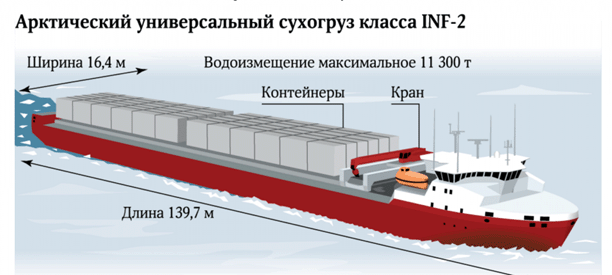
No easy fix for Russia’s troubled Arktica ice-breaker – delivery delayed for at least a year
|
Russia’s new Arktika nuclear icebreaker delayed for at least a year https://bellona.org/news/arctic/2020-04-russias-new-arktika-nuclear-icebreaker-delayed-for-at-least-a-yearA defective electric engine aboard Russia’s newest nuclear icebreaker has set off a cascade of difficulties that will postpone its scheduled May delivery date by at least several months, frustrating Moscow’s drive to tame Arctic sea routes as part of a broad economic plan. April 17, 2020 by Anna Kireeva, Charles Digges
A defective electric engine aboard Russia’s newest nuclear icebreaker has set off a cascade of difficulties that will postpone its scheduled May delivery date by at least several months, frustrating Moscow’s drive to tame Arctic sea routes as part of a broad economic plan. The problems aboard the Arktika icebreaker, slated to be the largest in the world, came to light in February, when a 300-ton electric propulsion motor on the vessel’s starboard side – which has nothing to do with the nuclear propulsion system – failed during sea trials. By this month, it has become clear to officials that there are no easy fixes are in sight, and that the delayed delivery of the enormous vessel from a St Petersburg shipyard to its stationing in Murmansk means a number of older nuclear powered will be forced to continue operations. “I don’t think we know all the details of this incident,” Andrei Zolotkov, a former nuclear icebreaker technician and the held of Bellona’s Murmansk offices, said. “The constant failure to meet the deadline to put new nuclear icebreakers into operation is already damaging to the builders’ reputations. The failure of the [electric motor] is another big minus.” The Artkika is the lead vessel of Russia’s LK60Ya nuclear icebreaker line, which Moscow sees as a central tool for developing the frozen Northern Sea Route, the Arctic shipping artery on which President Vladimir Putin has staked much of Russia’s economic future. Like its sister vessels – the Ural and the Sibir – the Arktika weighs in at a displacement of 33,500 tons, and measures 173 meters from bow to stern. The price tag of each new ship is about $550 billion. The Arktika’s twin RITM-200 reactors will deliver a combined 175 megawatts of power, making it the most powerful civilian vessel in the world. And like its sister vessels, the Arktika is named for an earlier nuclear icebreaker, in a nod to Soviet heyday of polar exploration. These newer vessels will be facing newer tasks. Putin has demanded that cargo tonnage flowing through the Arctic reach 80 million tons by 2024 – a huge increase over present levels – in hopes of making the Northern Sea Route a competitor to the Suez Canal. With these new vessels, Moscow say it can extend the annual navigation season in the polar region – which, even in the grip of climate change, is only about three months per year. But the Arktika’s delivery deadline to Atomflot, Russia’s nuclear icebreaker headquarters in Murmansk, has already undergone a series of revisions. The vessel has been on the drawing board since 2012, and was first due for commissioning in late 2017. When that date arrived, the deadline was pushed back to December 2019 – and that soon became May 2020. Such is the case for the Arktika’s sister vessels. Although the Baltic Shipyard in St Petersburg has floated their hulls, they have yet to be delivered to Murmansk and been at Atomflot. This leaves Moscow’s push to tame the Arctic running behind. To make up for the delays, Rosatom, Russia’s state nuclear corporation, has extended the operational lifetimes of three older icebreakers. As such, the Taymyr nuclear icebreaker, which began operations in 1987, will run until 2025. The Vaigach, launched in 1987, will run until 2027, and the Yamal, launched in 1989, will run through 2028. They will join the other old guard workhorse, the “50 let Pobedy,” or 50 years Victory, which Atomflot still has in operation. For the moment, prospects for the Arktika’s launch appear for this year. The faulty engine can’t be swapped with one from another icebreaker, and a new one can’t be built before 2021. That, said Zolotkov, might not stop the vessel from being delivered to Atomflot under so-called “trial operation” – a measure that allows various officials to claim at least some progress. But given the number of issues such a move would leave unresolved, Zolotkov discounted it as a possibility. “A vessel or ship should leave the shipyard in good order and ready for real work, and not imitate the fulfillment of plans and deadlines that have long been violated, ” Zolotkov said. |
|
Opening the lid on Russia’s super-secretive nuclear industry

“Our country will receive waste from foreign nuclear power plants built by Rosatom from time to time” https://realnoevremya.com/articles/4406-vladimir-slivyak-on-import-of-radioactive-waste-to-russia By  Matvey Antropov, 14.04.2020
Environmentalist Vladimir Slivyak on the industry that “always kept its affairs secret”
On March 19 and April 6 of this year, German eco-activists protested against the export of new shipments of radioactive waste to Russia, “cynically undertaken in the midst of the pandemic to safely avoid protests.” Realnoe Vremya spoke with Vladimir Slivyak, co-chairman of the Russian environmental group Ecozaschita!, author of the book From Hiroshima to Fukushima, about how nuclear waste is imported to Russia, how open information is about Rosatom’s activities, and whether a nuclear power plant will be built in Tatarstan.
“We will know that certain wastes are imported to Russia after their transportation or arrival”
Vladimir, let’s first determine what is considered to be radioactive waste.
There are different points of view on this issue. There is a view of the nuclear industry, which is the position of the state, and there is a view of environmentalists, which, of course, is fundamentally different. The first is that if you plan to use radioactive waste (RW) further, then they are not considered waste. Environmentalists believe that any action with radioactive materials leaves waste (by-products). This can be work at nuclear power plants, in places where uranium is extracted and enriched — there are a lot of such places. In general, the discussion about what is considered waste in Russia has been going on for many years.
It should also be noted that when it comes to importing nuclear waste to Russia, it is most often waste from uranium enrichment — depleted uranium hexafluoride UF6 or spent fuel from nuclear power plants.
How many tonnes of radioactive waste are imported to Russia and who is their main exporter?
There is a contract, under which from 2019 to 2022, 12,000 tonnes of depleted uranium hexafluoride should be imported to our country from the plant in Gronau (North Rhine —Westphalia), owned by Urenco. Approximately 6,000 tonnes have already been imported. Of course, we don’t know about all the contracts. From 2016 to at least 2019, Russia received depleted uranium hexafluoride from the British plant in Capenhurst of the same company Urenco. It is unknown exactly how much it was imported.
The nuclear industry has always kept its business secret and still does. All the words that they want to be open and engage with the public are conversations in favour of the poor. Of course, all the information in Rosatom is classified. We will know that certain wastes are imported to Russia after their transportation or arrival to Russia. We have colleagues abroad who monitor the movement of nuclear waste. So we will only find out about this through our own channels of civil cooperation of activists. Reports from representatives of the nuclear industry are very rare in the media, so it is quite difficult for us to navigate. But the data on the movement of uranium hexafluoride from the plant in Gronau are accurate — they were obtained by a member of the Bundestag from the official response of the German government.
It should also be noted that Rosatom builds nuclear power plants in different countries of the world. Last year, we conducted the first independent study in Russia to find out where Rosatom operates, where nuclear power plants are actually being built, and where only the appearance of construction is being created. We have a corresponding report on our website. Usually, the priority option when signing an agreement on the construction of a nuclear power plant involves the return of spent nuclear fuel to Russia, of course, for a lot of money. In other words, our country will receive waste from foreign nuclear power plants built by Rosatom from time to time. Ecologists consider them to be one of the most dangerous among the nuclear waste.
“They say that this is not waste but valuable raw materials. At the same time, a million tonnes of ‘raw materials’ lie idle for decades”
As far as I know, the import of nuclear waste in Russia was not always allowed, right?
Yes, in the ’90s, spent nuclear fuel from nuclear power plants could not be transported. And then it was considered waste. There was also a complete ban on the import of other raw materials. The nuclear industry (then ministry of atomic energy) came out of the situation in the following way: referring to long-concluded agreements that need to be fulfilled, the ministry for atomic energy asked to make an exception for them. And the government agreed with these arguments.
And in 2001, a bill was passed allowing the import of spent fuel from foreign nuclear power plants and removing it from the category of waste (because it can be used further). Although the essence of the question on this topic is as follows: during the production of electricity at nuclear power plants, nuclear waste occurs. Whether you use them in the future or not -it’s still waste. Besides, not all spent fuel is used in any way in industry.
Our legislation has done everything for Rosatom’s comfortable operation. If the latter has indicated somewhere that it plans to use the waste in some way in the future, this means that it ceases to be radioactive waste. But this is absurd.
Rosatom is committed to disposing of all depleted uranium hexafluoride available in Russia by 2080. Here is a quote on this topic from Novaya Gazeta: “But against the background of the international outcry, Rosatom announced the launch of a programme for the management of DUHF, in which uranium “tails” are called raw materials for nuclear power of the future, a source of hydrogen fluoride and fluorine. One of the goals of the programme is the complete elimination of DUHF reserves at all Russian landfills by 2080. “Our activities can be designated with the Recycling sign,” said the acting CEO of Techsnabexport (Rosatom’s subsidiary) Yury Ulyanin.”
Does anyone believe that Rosatom will be able to recycle millions of tonnes of UF6 by 2080? In Russia, any documents that speak of such a distant time are perceived as absurd. At the moment, more than one million tonnes of depleted uranium hexafluoride are stored at enterprises and in places where radioactive waste is stored in Russia. A very small part has been converted to a different form that is more convenient for storage, but this is not even disposal or recycling.
Now, when the issue of importing UF6 from Germany has been raised, Rosatom insists that it is not waste but insanely valuable and necessary raw materials. But at the same time, they have a million tonnes of this raw material without any use for decades
“We were brought and showed absolutely nothing”
Under what conditions are nuclear waste stored? How safe is it?
For example, waste from Germany is being transported to a landfill in the closed city of Novouralsk in Sverdlovsk Oblast. No one is allowed in this city to see what kind of radioactive waste is stored there. There are satellite photos that show that the containers are under the open sky. In some photos in Google Maps or Google Earth, one can see that some containers are subject to corrosion.
This information is also available from government agencies, but it is from the second half of the 2000s. Since then, publication of information on nuclear waste had been restricted. In the 2000s, Rostekhnadzor made reports on dangerous types of industry in Russia, in which the risks were described in detail. It said that a significant number of containers are subject to corrosion and there is a threat of their depressurization.
Now Rosatom says that everything is fine, take our word for it. Word — because an ordinary person can not get to the places where any radioactive waste is transported. For the most part, these are closed cities with access control. Even if someone is allowed on them as an exception, they only show a small piece of territory. You can’t freely study containers, you don’t decide what they show you.
I had a single experience of visiting a closed city in the 2000s. Then there was a fire at one of the enterprises of the uranium industry in the city of Lesnoy, Sverdlovsk Oblast. We distributed information about the fire through our channels, and a representative of Rosatom told us something like this: “Let’s take you to that company, and you will see for yourself that the information about the fire is not true.” My colleague and I were brought and showed absolutely nothing. We were taken to the house of culture, where the employees of this enterprise were sitting, and they began to express something to us. We asked: “Will you show us anything?” They told us they wouldn’t show us anything, and sent us back.
Apart from satellite images, there is no other open information on radioactive waste in closed cities.
Where and how are other types of radioactive waste stored in Russia? Are there any radiation leak?
If we take spent nuclear fuel from a nuclear power plant, then after removing it from the reactor, it is stored in pools, where it lies in the water for several years and cools down. Spent fuel can be stored dry for a long time in containers on special sites.
By default, we should assume that in theory, radiation leakage is always possible, and therefore we need to achieve the most reliable barrier between RW and the environment. Once radiation enters the environment, you can no longer control it. The rain or wind blows, and the radioactive trace spreads further and further. The only chance to contain radiation is to organize very well the places where radioactive substances are stored.
A person cannot imagine all the combinations of extreme circumstances that can lead to the depressurization of a container with radioactive substances or to the destruction of a storage facility. Accidents happen because people can’t calculate everything. Each accident is an example of some new combination of circumstances that we could not have predicted.
The nuclear industry remains the most classified in Russia. They try never to talk about any problems or accidents, and this is contrary to the interests of public safety. From the latest news, we can recall how last year the media reported about a suspected radiation leak in Novouralsk. We haven’t really found out what happened there.
New START treaty must be extended, a U.S. – Russia nuclear arms race an intolerable threat to the whole world
 Extend New START — The World Can’t Afford a U.S.-Russia Nuclear Arms Race Too, JUST SECURITY, by Kingston Reif and Shannon Bugos, April 10, 2020 The unrelenting and rapid spread of the novel coronavirus underscores the cost of neglect and indecision by the Trump administration in the face of serious threats to U.S. and global security. This reckless abandonment of leadership also characterizes America’s response to other transnational challenges, including the potential for conflict on the European continent and the threat posed by nuclear weapons.
For example, The Guardian reported on April 5 that the Trump administration may withdraw the United States from the Open Skies Treaty this fall. The treaty allows for short-notice, unarmed, observation flights over the territory of treaty parties to collect data on military forces and activities, and is staunchly supported by U.S allies. Nothing screams the U.S. absence in a world starving for leadership during a pandemic than moving forward with plans to withdraw from a treaty that continues to benefit U.S. and European security and that our allies want us to continue to support.
In addition, and even more consequentially, the New Strategic Arms Reduction Treaty (New START), which was signed a decade ago this week, expires in just 10 months. New START is the only remaining arms control agreement limiting the world’s two largest nuclear arsenals. However, as the novel coronavirus emerged earlier this year, the administration continued to stiff-arm Russian overtures to prolong the life of the agreement by five years, as permitted by the accord. Instead, the administration has pursued the idea of striking an entirely new, trilateral arms control agreement that would include China in addition to Russia.
The chances of successfully negotiating such a new, complex deal were already slim before the coronavirus pandemic. Now, in the midst of what clearly will be an extended crisis, the odds are nigh nonexistent……
Extending New START will maintain a cap on the Russian nuclear arsenal and is a necessary condition for follow-on talks with Russia and new negotiations with China. As the world girds for a long fight against the coronavirus pandemic, the preservation of New START represents the best immediate option that Trump has to reduce the risks of instability and insecurity posed by the still-bloated and dangerous U.S. and Russian nuclear arsenals. https://www.justsecurity.org/69613/extend-new-start-the-world-cant-afford-a-u-s-russia-nuclear-arms-race-too/
Russia wants to extend New START nuclear weapons treaty, but the U.S. has not revealed its plans
|
RUSSIA SAYS U.S. ‘UNWILLINGNESS’ IS THREATENING MAJOR NUCLEAR WEAPONS DEAL https://www.newsweek.com/russia-us-unwillingness-threatening-major-nuclear-weapons-deal-1496824 BY DAVID BRENNAN ON 4/8/20 Russia has again pointed the finger at the U.S. for delaying the extension of the New START nuclear weapons treaty, which expires next year.
Kremlin spokesperson Dmitry Peskov told reporters Wednesday that any questions about why the deal has not been extended should be directed to Washington rather than Moscow. Peskov said the Kremlin remains keen to make a deal, but has met with delay from the White House. “Actions on destruction of this document—on its non-extension—are taken not by Moscow,” Peskov told reporters, according to the Tass state news agency. “Rather, this is our U.S. colleagues’ unwillingness, and we have repeatedly expressed our regret in that regard.” The 10-year New START treaty came into force in 2011. It extended the existing START agreement, which was signed in the early 1990s. New START capped the number of deployed Russian and U.S. strategic nuclear warheads and bombs at 1,550, and the number of deployed intercontinental ballistic missiles, submarine-launched ballistic missiles and heavy bombers used for nuclear missions at 700. The total allowed number of deployed and non-deployed assets is currently 800. New START is the last of what former Soviet Premier Mikhail Gorbachev called the “three principal pillars of global strategic stability,” following the collapse of the Anti-Ballistic Missile Treaty in 2002 and the Intermediate-Range Nuclear Forces treaty last year. Russia has repeatedly said that it wants to extend New START, but the U.S. has still not revealed its plans. President Donald Trump has hinted that they wish to include China in any new deal, but experts—among them one of the original negotiators of START—have warned this is not feasible in such a short time frame. Chinese officials have dismissed any suggestion of involvement in a new treaty. Newsweek has contacted the State Department for comment on its plans regarding New START. Peskov acknowledged that the New START deal has fallen down the pecking order with the appearance of the coronavirus pandemic. Both the U.S. and Russia—like many other nations—are struggling to contain the virus. “The coronavirus has halted many vital processes,” Peskov said, “This is the reality we have to face.” Russian Deputy Chairman of the Security Council of Russia Dmitry Medvedev—who was serving as president when New START was signed—complained Wednesday that in the nine years since the deal was agreed, the U.S. has flipped from “cooperation to political pressure and unleashed an unprecedented war of sanctions against us, trying to oust Russia from the global agenda.” In an op-ed for Tass, Medvedev suggested that removing sanctions on Moscow would be a good first step to re-open New START talks. “If the New START deal ceases to exist, its demise will have extremely serious consequences for international security,” the former president and prime minister said. Russian officials including President Vladimir Putin have urged the White House to lift sanctions—imposed because of Russia’s annexation of Crimea, support of separatists in eastern Ukraine and meddling in the 2016 U.S. presidential election—to help the global response to coronavirus. |
|
Russia evacuates some employees from Bangladesh nuclear site
 Rosatom evacuates some employees from Bangladesh nuclear site, https://www.neimagazine.com/news/newsrosatom-evaucates-some-employees-from-bangladesh-nuclear-site-7864853 8 April 2020 Russia’s state nuclear corporation Rosatom has repatriated 178 employees from the Rooppur nuclear power plant construction site in Bangladesh.Rosatom had to obtain government permission to evacuate its employees. Russia temporarily suspended all international flights on 3 April in an effort to prevent the spread of the coronavirus.
The first 178 employees arrived on a flight from Dhaka, which landed at the Nizhny Novgorod international airport in Russia on Monday.
Almost all of the workers were from Rosatom’s Engineering Division or were subcontractors working at the Rooppur site, where Rosatom is building two VVER-1200 reactors.
Rosatom said passengers on the flight would be tested for Covid-19, and will need to spend two weeks in isolation, under medical supervision.
More than 4000 people are involved in the construction of Rooppur NPP, so the temporary relocation of 178 employees will not affect the project schedule, Rosatom said.
Rosatom said it is taking steps to combat the spread of Covid-19 by monitoring employee temperatures at various locations on-site, issuing masks to workers and increasing disinfection of all office space.
Rooppur 1 is currently scheduled to start operating 2023, followed by Rooppur 2 a year later.
Russia gambles on safety and cost, in extending life of fast breeder reactor
One of Russia’s fast neutron reactors granted a runtime extension https://bellona.org/news/nuclear-issues/2020-04-one-of-russias-fast-neutron-reactors-granted-a-runtime-extension
Russia’s nuclear regulator has agreed to extend the operational lifetime of 39-year-old experimental reactor as part of a wide-ranging modernization program at the Beloyarsk nuclear plan. April 8, 2020 by Charles Digges
The reactor, a BN-600, is a powerful sodium-cooled fast-breeder and its continued operation marks a step by Russia toward developing a closed nuclear fuel cycle, a subject of concern among some environmentalists and nonproliferation experts.
Fast breeder reactors form the backbone of Russia’s “proryv” or “breakthrough” program, which aims to develop reactors that do not produce nuclear waste. In simple terms, these breeders are theoretically designed to burn the spent nuclear fuel they produce, thus closing the nuclear fuel cycle and creating nearly limitless supplies of energy.
But the technology has been hard to perfect. Russia is alone among nuclear nations in actually running fast-breeders with any success. Yet they have still not been able to close the nuclear fuel cycle entirely.
Under the new order, the BN-600 reactor, which began operations in 1981, would continue to function until 2025, at which point the Beloyarsk plant’s operators say it will be evaluated for yet another extension that would see it run until 2040.
The Beloyarsk plant is the site of another fast-breeder reactor, the BN-800, which began commercial operations 2016 after several long delays. The plant also hosts two AMB supercritical water reactors, one of which ceased operations in 1983, the other in 1990.
At the moment, technicians at the plant have been isolated on site to prevent their exposure to the coronavirus, which has driven most of the world’s population indoors and shuttered much of the international economy.
But Rosenergoatom, Russia’s nuclear utility still maintains high hopes for the safety and modernization plan, of which the BN-600’s runtime extension is a part. So far, the modernization plan, which began in 2009 has included the installation of a reactor emergency protection system, an emergency dampening system using an air heat exchanger and a back-up reactor control panel.
In addition, a large amount of work has been carried out on the inspection and replacement of equipment, including the replacement of the reactor’s steam generators.
But many environmental groups, Bellona among them, consider reactor runtime extensions to be worrisome territory. As the world’s nuclear reactor fleet begins to age, runtime extensions throughout the world have become routine business.
Yet because commercial power-producing nuclear reactors have only been around for a little more than four decades, the industry can’t make safe bets on their behavior over longer periods of time than that.
In particular, data on how reactor cores – which are largely irreplaceable – age over time is extremely scarce. While certain characteristics of core aging can be simulated in test reactors, such simulations can’t take all variables into account.
Individual national regulatory bodies also set the criteria for whether or not reactors are granted runtime extensions – meaning that what Japan or France consider to be safe grounds for an extension might differ from what Russia or the United States deem safe.
But as the history of Chernobyl and Fukushima show, the fallout from nuclear disasters doesn’t respect international boundaries.
However, because nuclear reactors typically cost billions of dollars to build, there is less incentive to construct new ones to replace the old. But as Chernobyl and Fukushima also showed, such decisions could cost more than the short-term savings they provide.
Russia’s response to coronavirus risk for nuclear stations – isolate the nuclear workforce
 Russia’s nuclear workers isolated onsite as coronavirus spreads, Bellona, April 3, 2020 by Charles Digges, charles@bellona.no
Workers at Russia’s nuclear power plants will be isolated from the general public and required to live in onsite clinics at their respective stations as nuclear authorities tighten their response to the coronavirus after a number of industry infections.
The order came Tuesday from Rosenergoatom, Russia’s nuclear utility, and specified that both primary and back up crews of nuclear technicians, who “facilitate process continuity” would now be required check in to dispensaries at their plants, where they would be provided with daily living essentials and isolated from outside contact.
Rosenergoatom, which is a subsidiary of state nuclear corporation Rosatom, is responding to a Tuesday video address by Andrei Likhachev, the corporation’s CEO, which outlined the isolation measures.
Earlier this week, Likhachev confirmed that four Rosatom employees had tested positive for the coronavirus, the spread of which has all but ground the world economy to a halt as the number of those infected worldwide surpasses 1 million.
Russians have been told to stay home through next week on a government ordered holiday. There have been 4,149 cases of coronavirus reported by Moscow as of Friday, 34 of which have resulted in death. In his address, Likhachev asked all Rosatom employees who could feasibly work remotely had been asked to do so, though he said the corporation’s overseas reactor building projects would continue.
Rosenergoatom’s unprecedented steps to protect highly skilled nuclear specialists from falling ill from the virus mirror measures other countries are taking for their own workers to avoid power interruptions or outright plant shutdowns.
In the United States, the Nuclear Regulatory Commission is considering isolating its own workers from the effects of the coronavirus pandemic, while France – the world’s most nuclear-dependent nation – is weighing staff cuts of its own. Both France and the United Kingdom have shut down a number of their nuclear fuel reprocessing facilities in response to a spike in local infections
Rosenergoatom didn’t make clear precisely how many of Russia’s nuclear workers have been put in isolation, but its parent company Rosatom controls a sprawling network of reactors, laboratories, commercial structures and fuel fabrication facilities that employ some 250,000 people…….
Workers at the Beloyarsk nuclear power plant, 1,800 kilometers to Moscow’s east, have already been working in isolation for more than a week, after the wife of one of the plant’s technicians tested positive for the virus. https://bellona.org/news/nuclear-issues/2020-04-russias-nuclear-workers-isolated-onsite-as-coronavirus-spreads
Russia concerned about coronavirus and nuclear safety, as four nuclear workers test positive4
 Four nuclear workers test positive for coronavirus as Rosatom steps up pandemic response Bellona, April 1, 2020 by Charles Digges The staff of at least one nuclear power plant in Russia has been put into isolation due to concerns over the spread of Covid-19, as Rosatom, Russia’s state nuclear corporation, announced a raft of measures to protect the employees of its sprawling domestic and international apparatus.
Four Russian nuclear workers have tested positive for the coronavirus and the staff of a nuclear power plant has been put into isolation while state nuclear corporation Rosatom implements a raft of measures to protect employees of its sprawling domestic and international apparatus.
As Moscow – and the rest of the world – institutes lockdowns for its citizens, Rostom says it is erring on the side of caution to protect its highly skilled workers against an international pandemic that has infected some 877,000 people around the planet. As of March 31, Russia claims 2,337 of those cases………
On Monday, Alexei Likhachev, Rosatom’s CEO said in a video address on the company’s website that he had instituted corporation-wide health checks and sanitation practices at nuclear facilities in Russia, and had sent home all employees who could feasibly work remotely.
But he left broader decisions about staff quarantines up to local authorities, both in the Russian regions where Rosatom operates facilities as well as in foreign countries.
To that end, he said that Rosatom is continuing the construction of nuclear stations abroad despite the global coronavirus outbreak. But he added that the majority of business trips scheduled for Rosatom employees had been cancelled. …….
Throughout the world, nuclear operators are grappling with the advance of the coronavirus, which causes the Covid-19 illness. Some countries, like the United States, are suggesting that nuclear power plant operators should be isolated on site to prevent their specialized staff from falling ill.
The United Kingdom has already shut down one of its nuclear fuel reprocessing sites after a portion of its technicians were forced to self-isolate after being exposed to the virus.
In France, the Le Hague reprocessing facility has likewise been stalled. And while France’s national operator EDF has refused to comment about the level of absenteeism or the number of confirmed coronavirus infections among its staff, it says its nuclear power plants could operate for three months with a 25 percent reduction in staffing levels and for two to three weeks with 40 percent fewer staff.
Rosatom’s 250,000 employees operate 38 nuclear reactors throughout Russia and staff numerous mining, technological and sales concerns throughout Europe, Asia and the Middle East. The corporation also has 36 power units at different stages of implementation in 12 countries around the world. It is currently constructing seven reactors overseas: two each in Bangladesh, Belarus and India, plus one unit in Turkey.
Entire crew of nuclear submarine in coronavirus quarantine
“Orel” (K-266) is an Oscar-II class nuclear-powered submarine sailing for the Northern Fleet. Normally, the submarine has a crew of about 110 sailors.
The civilian that had met with a man infected with the coronavirus was on board “Orel” in a “business matter”, Murmansk-based news-online B-port reports.
Also, the crew of a nearby submarine and the personnel on a floating workshop are placed in quarantine.
The submarine is based in Zapadnaya Litsa, the westernmost bases of the Northern Fleet on the Kola Peninsula.
No reports have been published about any coronavirus cases in Zaozersk, the navy town where the crew and their families live.
By March 28th, Russia’s official number of coronavirus infections raised to 1,264.
The “Murmansk group” on social media channel Vkontakte says there are 12 people who have given pre-positive tests of coronavirus in the Murmansk region.
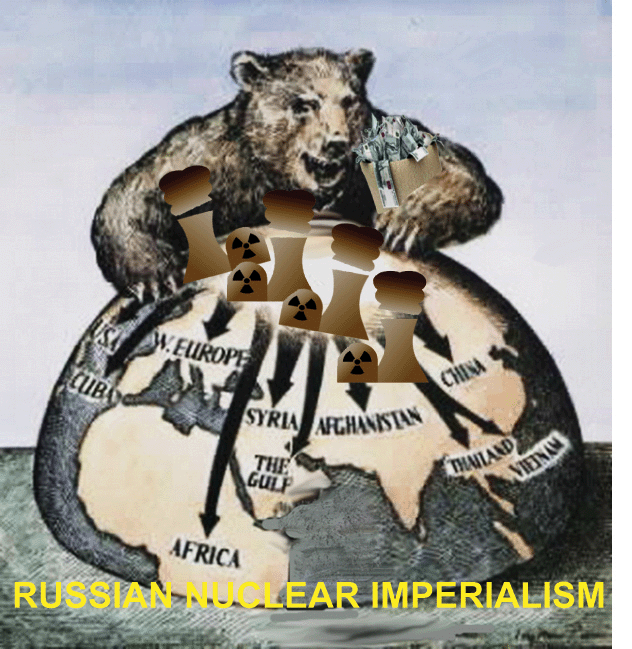
Belarus to swap gas dependence on Moscow for nuclear dependence on Moscow
|
Belarus to swap gas dependence on Moscow for nuclear dependence on Moscow https://bellona.org/news/nuclear-issues/2020-03-belarus-to-swap-gas-dependence-on-moscow-for-nuclear-dependence-on-moscowA nuclear power plant built to lessen Belarus’s dependence on Moscow for natural gas – but constructed and lavishly financed by Russia’s state nuclear corporation Rosatom – is due to begin operation later this year, officials in the Belarus capital of Minsk have said. March 24, 2020 by Charles Digges
A nuclear power plant built to lessen Belarus’s dependence on Moscow for natural gas – but constructed and lavishly financed by Russia’s state nuclear corporation Rosatom – is due to begin operation later this year, officials in the Belarus capital of Minsk have said. The plant will feature two VVER-1200 reactors – the second of which will come online next year – that will together generate some 2.4 gigawatts of power in the cloistered post-Soviet dictatorship on Russia’s western border. The International Atomic Energy Agency found that the plant largely fulfilled general safety guidelines and issued a number of recommendations for improvement. Others have raised alarm over potential safety issues. GlobalData quoted energy and nuclear policy analyst Mycle Schneider as warning: “Neighboring countries have voiced concern over the lack of review of some serious safety concerns, and Lithuania has transmitted an official note to the European Council.” Since its inception in the early 2000s, the Belarus nuclear power plant, in Ostrovets near the border of Lithuania, has been fraught with difficulties. Environmentalists who oppose the plant are routinely harassed and stifled and in some cases kicked out of the country. Neighboring Lithuania, once seen as a promising potential market when construction began, is now so opposed to the plant that its parliament outlawed purchasing any electricity it produces and has sent envoys to other countries encouraging them to do the same. Poland and the Ukraine have also spoken out against the plant. Each of these groups have called attention to the mishaps that have plagued the plant during its construction, including an incident in 2016 when technicians inadvertently dropped a 330-ton reactor pressure vessel – which houses the core – from a crane. A replacement unit sent to the site was accidentally run into a column at a railway station when it arrived. But the plant also illustrates an energy conundrum facing many European countries. While a number of nations in the old Soviet orbit seek to diversify their energy supplies away from Russian natural gas, Rosatom is more than willing to step into the vacuum left by that shift. By offering huge loans to build and supply nuclear power plants, Rosatom can keep customers financially and technically beholden to Moscow for as long as 50 years. With other kinds of power infrastructure, a contractor builds a facility and leaves it to be operated by the country where it stands. Not so with nuclear power plants, where foreign government customers, like Belarus, remain dependent on Rosatom – and thus the Russian state – for fuel, know-how and eventual decommissioning works. That geopolitical strategy is not lost on Lithuania, whose prime minister recently told the New York Times that: “The [Ostrovets} nuclear plant is an example of Russia’s desire to keep states along its borders in its orbit at all costs – it helps them preserve more influence.” The policy is has broad implications. Rosatom has convinced dozens of countries to sign memorandums of understanding on all manner of nuclear services, from research and training facilities to nuclear power plant construction. As a result, Rosatom says that its portfolio of foreign projects has swelled to more than $200 billion. But that figure invites skepticism. Many of the counties Rosatom counts toward that figure – like Ethiopia, Algeria, Nigeria, Sudan and Rwanda – won’t be ready to support nuclear power on their grids for decades. Others where Rosatom builds are already underway – like India’ Kudankulam, Iran’s Bushehr and China’s Tianwan – are already familiar with Rosatom’s typical cost overruns and delays. Furthermore, a deep dig into Rosatom’s claimed income by the Russian environmental group Ecodefence revealed that business wasn’t going quite as indicated. A report by the group, published last year, detailed a number of cases where the corporation misstated the worth of its overseas reactor construction projects, and inflated their worth by several billion dollars. Still, the corporation is an ambitious and successful presence on the international market. According to one study, cited by the New York Times, Rosatom has sold more nuclear technology abroad since 1999 than the United States, France, China, South Korea and Japan combined. Rosatom’s approach to marketing its reactors is distinct from its western competitors because it offers to finance, build and operate the plants that it builds abroad. These generous terms come thanks to the enormous state subsidies Rosatom receives – and which it can then funnel into loans that boost its profits on paper. The Belarus plant, for instance, comes thanks to a $10 million line of credit from Rosatom. Hungary, a member of the EU, became another customer when it took an $11 billion loan to build its Paks II in 2016. Rosatom also won a $30 billion contract for four reactors in Egypt, and another big nuclear plant deal in Turkey. While it’s tempting to see a strategy afoot in Rosatom’s foreign projects, the Kremlin insists it’s just business. President Vladimir Putin has publicly distanced himself from mixing politics with foreign commerce. |
|
Moscow preparing highway though nuclear waste site, despite protests
|
Moscow starts work on highway through nuclear waste site https://www.dw.com/en/moscow-starts-work-on-highway-through-nuclear-waste-site/a-52864335Preparation for the construction of a controversial road in the Russian capital has kicked off. Activists say it could send radioactive dust into the air and river. But the authorities are pushing on with the project. Residents film on their mobile phones as an excavator broke ground to prepare the construction site. They film through the shoulders of a row of police officers, pointing out that no one is wearing protective clothing for work on a nuclear waste site. “These comrades are protecting us from the radiation,” says one woman sarcastically about the officers. “Just wonderful.”
Behind the police line is a factory that produces military equipment. The onetime Polymetals factory used to extract thorium and uranium from ore and dump radioactive waste here in the 1950s and 1960s, before this spot became part of the territory of the capital. The site stretches along the sloping banks of the Moskva River, with the popular Kolomenskoe park on one side and residential apartment blocks on the other. Since January, Sergey Vlasov has been one of around 50 local activists standing guard at the site around the clock to prevent construction. “My family has lived here for decades,” he says. “It’s my home and I don’t want to have to move to avoid the threat of nuclear radiation. I don’t want to have to worry about them thoughtlessly digging this all up and radioactive dust being released into the air.” Vlasov is an elected deputy in the municipal council of the Pechatniki district across the river, and he also worries about representing his voters. There have been several protests against the highway, which demonstrators have call the “Road to Death.” Another local resident, Anna, whose windows look out on the nuclear waste dump, says the project is “scary” and complains that the police officers here are essentially “acting as security guards for the bridge building company.” Killing two birds with one stone
According to city authorities, the planned highway and flyover will help with Moscow’s chronic traffic problems by connecting districts and helping free up the city’s main ring road. In an official blog post Moscow’s mayor, Sergey Sobyanin, wrote in January that although the highway is no “panacea,” there are “no logical alternatives” to it. He did, however, admit for the first time that the area is contaminated. Sobyanin insists that construction of the highway will “solve two problems at once” by “radically improving the transportation situation and eliminating a radioactive dump.” On the other hand, the city authorities have repeatedly insisted that the actual highway will not cut through the nuclear waste itself. On its website the city planning department explains that the current work is merely preparation for construction, and that they will only begin work on the flyover after “positive results” confirm that the area is clean. Beneath the surface But the cleanup is difficult. The government agency in charge of it, Radon, has been removing contaminated soil from the site for years to prevent slippages. In an agency publication from 2006, Radon’s chief engineer for Moscow, Alexander Barionov, said that the hilly location of the site would make a full cleanup tough. “One incautious step, and radioactive soil gets into the river.” Rashid Alimov from the Russian branch of Greenpeace thinks authorities should not be digging in the area without having carried out a full ecological evaluation of the site. “We don’t really even know to what extent the company, Radon, understands where exactly the nuclear waste is and how deep it really is in the ground.”
The authorities did check the area ahead of the decision to build. But Greenpeace insists they were too superficial, and the group is taking the city to court to get that evaluation declared invalid. “Our position is that this place should have officially been declared a nuclear waste dump,” Alimov says. Greenpeace carried out its own tests with an external company in October and found that radiation in several samples from the area is “above the permissible norm” and that building work should not be carried out there. Alimov also points out that the government is contradicting itself. He cites a 2017 report from the official Russian consumer watchdog Rospodtrebnadzor on the “sanitary and epidemic” conditions in Moscow, which stated that there were 60,000 tons of nuclear waste by the former Polymetals factory. “That’s a very inconvenient number for Moscow authorities now,” he says. Keeping up the fight But many local residents seem to feel that the work being done ahead of building shows the authorities will most likely go ahead with their plans no matter what. Still, even after the excavators arrived, they were as determined as ever to stand their ground, despite the high police presence at the construction site. Authorities have opened a criminal case against several activists for apparently damaging a radiation monitor on the site. And there were several standoffs between protesters and police last week. On Thursday, over 60 activists were briefly detained. Vlasov says that since the arrests the residents have been regrouping. They may have to call off their shift duty at the construction site, he says. But just like Greenpeace, they are hoping to take authorities to court over the highway plans. “Of course we will keep fighting,” he says. “We plan to take this case to court — even though no one really believes we can win.”
|
|
Moscow: roadworks commence on top of radioactive waste dump: protestors enraged
 Protests as Moscow moves to build road on radioactive dump, https://www.france24.com/en/20200318-protests-as-moscow-moves-to-build-road-on-radioactive-dump Moscow (AFP)Moscow authorities on Wednesday began work on building a highway over a Soviet-era dump of radioactive materials, despite months of public protests and warnings from environmental campaigners.
Greenpeace and other activists have long campaigned against the project to build an eight-lane motorway over the top of a tree-lined slope in southern Moscow that contains radioactive waste buried in the Soviet era.
The former top-secret facility produced the radioactive element thorium for nuclear reactors until the 1970s.
Greenpeace and other activists have long campaigned against the project to build an eight-lane motorway over the top of a tree-lined slope in southern Moscow that contains radioactive waste buried in the Soviet era.
The former top-secret facility produced the radioactive element thorium for nuclear reactors until the 1970s.
“We have registered 0.4 microsieverts,” while the permitted level in Moscow is 0.3,” Vlasov told AFP, adding that he expected those levels to increase in the future.
“When large-scale work begins, all this crap will be in the air,” he said.
Galina Rozvadovskaya, who lives near the site, said she came as soon as she learnt of the start of the construction work.
“Our task is to stop this lawlessness,” Rozvadovskaya told AFP. “What do we want? For them to conduct a proper survey of this burial site.”
Moscow Mayor Sergei Sobyanin is keen to redevelop post-industrial wasteland and insists there are only “insignificant traces of contamination” on the road’s route.
Activists say, however, dangerous radioactive particles could be spread around and end up in people’s lungs. Citing a state report, Greenpeace says the site contains at least 60,000 tonnes of radioactive waste.
ma-video-as/am/cdw
Big European bank offers to help Russia retrieve 1000s of radioactive junk from the Arctic sea
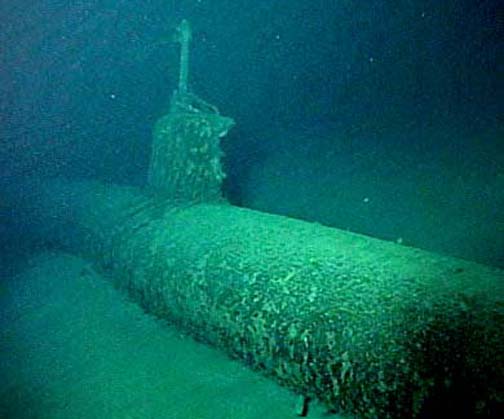
CTY Pisces – Photos of a Japanese midget submarine that was sunk off Pearl Harbor on the day of the attack. There’s a hole at the base of the conning tower where an artillery shell penetrated the hull, sinking the sub and killing the crew. Photos courtesy of Terry Kerby, Hawaii Undersea Research Laboratory. August 2003.
|
Major European bank could help Russia lift its sunken nuclear submarines https://bellona.org/news/nuclear-issues/2020-03-major-european-bank-could-help-russia-lift-its-sunken-nuclear-submarinesThe European Bank for Reconstruction and Development has signaled its readiness to help Russia raise Soviet-era radioactive debris, including two sunken nuclear submarines, from the bottom of Arctic seas. March 18, 2020 by Charles Digges charles@bellona.no While the deal is not yet final, it is thought that financial assistance would be allocated by the bank’s Northern Dimensions Environmental Partnership program – whose Nuclear Window fund has disbursed millions of dollars to help clean up radioactive hazards in Russia and Ukraine. Talks on funding the recovery of these Cold War artifacts have been underway since the end of last year, when the Russian government reinvigorated long-dormant discussions on retrieving the sunken radioactive cast offs. Alexander Nikitin, who heads Bellona’s St Petersburg offices, has been a part of these discussions. According to the Russian government’s official website on submarine decommissioning programs, the plan to raise the subs was presented at the EBRD’s assembly of donors in December, where the cost for the project was estimated at €300 million. It will now be up to Russia, the site reported, to furnish the bank with a comprehensive plan on raising the subs. While Moscow has considered various methods for raising the subs over the years, those who participated in the December discussions concluded a special ship might have to be built to get the job done. Beginning in the 1960s, the Soviet Navy used the waters east of the Novaya Zemlya atomic weapons testing range as a sort of watery nuclear waste dump. While the Soviet Union was hardly the only nuclear nation that resorted to dumping radioactive waste at sea, it was one of the most prolific. According to catalogues released by Russia in 2012, the military dumped some 18,000 separate objects in the Arctic that could be classified as radioactive waste. These included some 17,000 containers of radioactive waste; 19 ships containing radioactive waste; 14 nuclear reactors, including five still loaded with spent nuclear fuel; and 735 other piece of radioactively contaminated heavy machinery. Scientists at the Nuclear Safety Institute of the Russian Academy of Sciences, or IBRAE, say that time and corrosion have managed to decay thousands of these hazards and render them harmless. This leaves about 1,000 that continue to post a high risk of spreading radioactive contamination. Chief among these are two submarines, the K-159 and the K-27, both of which officials say pose the greatest threat to the environments in which they now lie. The K-159, which sank while it was being towed to decommissioning in 2003 and killed the nine sailors aboard, now lies in some of the most fertile fishing grounds of the Kara Sea. Raising this sub, say Russian experts, should be a priority. Its reactors hold some 800 kilograms of spent nuclear fuel, which they fear could contaminate the sea floor, leading to an economic crisis for the Russian and Norwegian fishing industries.
Like the K-159, the K-27 claimed its share of victims. Nine members of its crew of 144 died of radiation related illnesses shortly after returning to shore. Many more of the crew succumbed to similar illnesses in the years that followed. Too radioactive to be dismantled conventionally, the Soviet Navy towed the K-27 to the Arctic Novaya Zemlya nuclear testing range in 1982 and scuttled it in one of the archipelago’s fjords at a depth of about 30 meters. The sinking took some effort. The sub was weighed down by concrete and asphalt to secure its reactor and a hole was blown in its aft ballast tank to swamp it. But the fix won’t last forever. The asphalt was only meant to stave off contamination until 2032. Worse still is that the K-27’s reactors could be in danger of generating an uncontrolled nuclear chain reaction, prompting many experts to demand it be retrieved first. Raising these submarines from the depths will require technology Russia currently lacks. Even the lifting of the Kursk – perhaps the most famous sub recovery to date – required the assistance of the Dutch. But the K-159 lies at a depth much greater than the Kursk did, leading many experts to suggest building an new vessel for the purpose. From 1946 to 1993, more than 200,000 tons of waste, some of it highly radioactive, was dumped in the world’s oceans, mainly in metal drums, according to the International Atomic Energy Agency. The lion’s share of dumped nuclear waste came from Britain and the Soviet Union, figures from the IAEA show. By 1991, the US had dropped more than 90,000 barrels and at least 190,000 cubic meters of radioactive waste in the North Atlantic and Pacific. Other countries including Belgium, France, Switzerland and the Netherlands also disposed of tons of radioactive waste in the North Atlantic in the 1960s, 70s and 80s. |
|
|
Nuclear reactors on the sea floor – Russia’s costly problem

Lifting Russia’s accident reactors from the Arctic seafloor will cost nearly €300 million, https://thebarentsobserver.com/en/ecology/2020/03/lifting-russias-accident-reactors-arctic-seafloor-will-cost-nearly-eu300-millionExperts are discussing the framework for safe lifting of dumped reactors from four submarines and uranium fuel from one icebreaker reactor in the Kara Sea, in addition to one sunken nuclear submarine in the Barents Sea. By Thomas Nilsen 8 Mar, 20,
Russian and European experts agree that the dumped Soviet-era nuclear reactors in the Kara Sea can’t stay on the seafloor forever.
The Soviet Union used the waters east of Novaya Zemlya to dump accidental reactors, spent nuclear fuel and solid radioactive waste from both the navy and the fleet of nuclear-powered civilian icebreakers.
About 17,000 objects were dumped in the period from the late 1960s to the late 1980s.
Most of the objects are metal containers with low- and medium level radioactive waste. The challenge today, though, are the reactors with high-level waste and spent uranium fuel, objects that will pose a serious threat to the marine environment for tens of thousands of years if nothing is done to secure them.
According to the Institute for Safe Development of Nuclear Energy, part of Russia’s Academy of Science, the most urgent measures should be taken to secure six objects that contain more than 90% of all the radioactivity.
It is the information site for Russia’s submarine decommissioning program that informs about the plans.
The reactors from the submarines K-11, K-19 and K-140, plus the entire submarine K-27 and spent uranium fuel from one of the old reactors of the Lenin-icebreakers have to be lifted and secured.
Also, the submarine K-159 that sank north of Murmansk while being towed for decommissioning in 2003 have to be lifted from the seafloor, the experts conclude.
Special priority should be given to the two submarines K-27 in the Kara Sea and K-159 in the Barents Sea.
The study report made for Rosatom and the European Commission has evaluated the costs of lifting all six objects, bringing them safely to a yard for decommissioning and securing the reactors for long-term storage.
The estimated price-tag for all six will €278 millions, of which the K-159 is the most expensive with a cost of €57,5 millions. Unlike the submarines and reactors that are dumped in relatively shallow waters in the Kara Sea, the K-159 is at about 200 meters depth, and thus will be more difficult to lift.
Lifting the K-27, transporting to a shipyard for decommissioning and long-term storage in Saida Bay will come at a price of €47,7 millions the report reads.
The work can be done over an eight years period, according to the expert.
But, as the expert-group underlines, the €278 millions funding does not exist in any Russian Federal budgets today.
1 This Month

of the week – Shut Down Drone Warfare!


Tell the Ukrainian Government to Drop Prosecution of Peace Activist Yurii Sheliazhenko

Petition to revoke the licensing of the Near Surface Nuclear Disposal Facility (NSDF) at Chalk River. https://www.ourcommons.ca/petitions/en/Petition/Details?Petition=e-7247
To see nuclear-related stories in greater depth and intensity – go to https://nuclearinformation.wordpress.com
-
Archives
- April 2026 (91)
- March 2026 (251)
- February 2026 (268)
- January 2026 (308)
- December 2025 (358)
- November 2025 (359)
- October 2025 (376)
- September 2025 (257)
- August 2025 (319)
- July 2025 (230)
- June 2025 (348)
- May 2025 (261)
-
Categories
- 1
- 1 NUCLEAR ISSUES
- business and costs
- climate change
- culture and arts
- ENERGY
- environment
- health
- history
- indigenous issues
- Legal
- marketing of nuclear
- media
- opposition to nuclear
- PERSONAL STORIES
- politics
- politics international
- Religion and ethics
- safety
- secrets,lies and civil liberties
- spinbuster
- technology
- Uranium
- wastes
- weapons and war
- Women
- 2 WORLD
- ACTION
- AFRICA
- Atrocities
- AUSTRALIA
- Christina's notes
- Christina's themes
- culture and arts
- Events
- Fuk 2022
- Fuk 2023
- Fukushima 2017
- Fukushima 2018
- fukushima 2019
- Fukushima 2020
- Fukushima 2021
- general
- global warming
- Humour (God we need it)
- Nuclear
- RARE EARTHS
- Reference
- resources – print
- Resources -audiovicual
- Weekly Newsletter
- World
- World Nuclear
- YouTube
-
RSS
Entries RSS
Comments RSS
 nuclear-news