Russian city Severodvinsk, (near site of nuclear accident) sealed off due to Covid-19
 Coronavirus seals off city near secret Russian nuclear accident site, https://thebarentsobserver.com/en/2020/06/coronavirus-seals-city-near-secret-russian-nuclear-accident-site The Moscow Times 05, 2020, Authorities have blocked access to Severodvinsk, the north Russian city located near the site of last year’s mysterious nuclear testing accident as the coronavirus outbreak there intensified.The governor of the Arkhangelsk region signed an order to close public access to Severodvinsk this Saturday, the city’s press service said Thursday. Severodvinsk is near the Nyonoksa testing site where an August 2019 explosion during a rocket engine test killed five Russian nuclear workers and led to a radiation spike.
Severodvinsk will set up checkpoints Friday and restrict entry and exit starting midnight Saturday to everyone except workers and people attending funerals, going to country houses or transiting through the city.
“The measure remains in effect until special orders,” the city’s press service said in a statement.
Around 700 people have been infected with Covid-19 at two of the city’s major shipyards since April, an unnamed shipbuilding industry source told the Vedomosti business daily. The Sevmash and Zvezdochka shipyards reportedly saw more than 200 new cases in the past week alone.
The outbreak has prompted federal health officials last week to order enterprises in Severodvinsk to limit their activities.
The Arkhangelsk region has confirmed 2,496 coronavirus infections since the start of the outbreak. Severodvinsk accounts for roughly half of the region’s overall cases.
Last August, a missile exploded during what is believed to have been a recovery operation. The secrecy surrounding the accident has led outside observers to speculate that the explosion involved the Burevestnik nuclear-powered intercontinental cruise missile, dubbed the SSC-X-9 Skyfall by NATO.
President Vladimir Putin later said the accident occurred during testing of what he called promising new weapons systems.
Nuclear submarine accidents contaminating Russia’s Far East
Here’s What You Need To Remember: The explosion blew out the reactor’s twelve-ton lid—and fuel rods—and ruptured the pressure hull. The reactor core was destroyed, and eight officers and two enlisted men standing nearby were killed instantly. A the blast threw debris was thrown into the air, and a plume of fallout 650 meters wide by 3.5 kilometers long traveled downwind on the Dunay Peninsula. More debris and the isotope Cobalt-60 was thrown overboard and onto the nearby docks.
In 1985, a Soviet submarine undergoing a delicate refueling procedure experienced a freak accident that killed ten naval personnel. The fuel involved was not diesel, but nuclear, and the resulting environmental disaster contaminated the area with dangerous, lasting radiation. The incident, which remained secret until after the demise of the USSR itself, was one of many nuclear accidents the Soviet Navy experienced during the Cold War……
The explosion blew out the reactor’s twelve-ton lid—and fuel rods—and ruptured the pressure hull. The reactor core was destroyed, and eight officers and two enlisted men standing nearby were killed instantly. A the blast threw debris was thrown into the air, and a plume of fallout 650 meters wide by 3.5 kilometers long traveled downwind on the Dunay Peninsula. More debris and the isotope Cobalt-60 was thrown overboard and onto the nearby docks.
According to Nuclear Risks, the accident scene was heavily contaminated with radioactivity. Gamma ray radiation was not particularly bad; at an exposure rate of five millisieverts per hour, it was the equivalent of getting a chest CT scan every hour. However, the explosion also released 259 petabecquerels of radioactive particles, including twenty-nine gigabecquerels of iodine-131, a known cause of cancer. This bode very badly for the emergency cleanup crews, especially firefighters who needed to get close to the explosion site, and the nearby village of Shkotovo-22. Forty-nine members of the cleanup crew displayed symptoms of radiation sickness, ten of them displaying acute symptoms…….
While the Chazhma Bay region appears contaminated to this day with radiation, it is unknown how much of it is the result of the K-431 incident and how much the result of the many nuclear-powered submarines that were junked and forgotten in the area.
The K-431 incident was one of several involving Soviet submarine reactors. Ten Soviet submarines experienced nuclear accidents, and one other, K-11, also suffered a refueling criticality………. https://news.yahoo.com/1985-nuclear-submarine-explosion-contaminated-213000521.html
Russia will now allow use of atomic weapons against non-nuclear strike
By including a non-nuclear attack as a possible trigger for Russian nuclear retaliation, the document appears to send a warning signal to the U.S. The new expanded wording reflects Russian concerns about the development of prospective weapons that could give Washington the capability to knock out key military assets and government facilities without resorting to atomic weapons.
In line with Russian military doctrine, the new document reaffirms that the country could use nuclear weapons in response to a nuclear attack or an aggression involving conventional weapons that “threatens the very existence of the state.”
But the policy document now also offers a detailed description of situations that could trigger the use of nuclear weapons. They include the use of nuclear weapons or other weapons of mass destruction against Russia or its allies and an enemy attack with conventional weapons that threatens the country’s existence.
U.S.-Russia relations are at post-Cold War lows over the Ukrainian crisis, the accusations of Russian meddling in the U.S. 2016 presidential election and other differences.
Last year, both Moscow and Washington withdrew from the 1987 Intermediate-range Nuclear Forces Treaty. The only U.S.-Russia nuclear arms control agreement still standing is the New START treaty, which was signed in 2010 by U.S. President Barack Obama and then-Russian President Dmitry Medvedev. The pact limits each country to no more than 1,550 deployed nuclear warheads and 700 deployed missiles and bombers and envisages sweeping on-site inspections to verify compliance.
Uranium mining protests in Russia
“……..Uranium mining protest
In the Kurgan region, Rosatom’s subsidiary company, Dalur, has been mining uranium and the local communities fear an environmental disaster. In the summer of 2019, the state environmental appraisal revealed a discrepancy between Dalur’s documentation and the Russian legislation
Activists attribute her persecution to her work at the Public Monitoring Fund for the Environmental Condition and the Population Welfare which she led back in 2017. The Foundation has repeatedly published information on the possible environmental damage resulting from Dalur’s mining activity. (28)
9
In the fall of 2019, environmentalists revealed that radioactive and toxic waste (uranium hexafluoride, UF6)were being imported from Germany through the port of Amsterdam into Russia. This is the waste from the uranium enrichment process which will be sent to the Urals or Siberia and stored in containers above the ground. Thus, under the auspices of a commercial transaction, the German uranium–enriching enterprise, Urenco, avoids its nuclear waste problem, while Rosatom profits by taking the hazardous waste into Russia.
Activists, despite government oppression, campaign for decommissioning of Russia’s aging nuclear reactors
 Anti–nuclear resistance in Russia: problems, protests, reprisals [Full Report 2020] Report “Anti–nuclear resistance in Russia: problems, protests, reprisals” Produced by RSEU’s program “Against nuclear and radioaсtive threats”
“………..For many years, Murmansk regional environmental groups have opposed the ageing Kola NPP reactor’s lifetime extension. They have participated in public hearings, have organised many demonstrations (8-9-10), appealed to and received support from the prosecutor’s office(11), but this was all ignored by Rosatom. Activists also called on the governor to shut down the old NPP, but environmental organisations were shutdown instead. One such organisation is Kola Environmental Center (KEC) – listed as a Foreign Agent in 2017– and was subject to two trials and fined 150,000 rubles (12). KEC was forced to close down as a legal entity in2018, but has continued its environmental work as a public movement(13). Another organisation in the region –Nature and Youth – made the decision to close down in order to avoid prosecution, but continues its work as an unregistered initiative
• In 2018, after 45 years of operation, the first power unit of the Leningrad NPP was finally shut down.The second one scheduled for shutdown is in 2020, the third in 2025 and the fourth in 2026. However,decommissioning projects have not yet been clearly developed for the reactors.
• The public organisation, Green World, has worked for many years in Sosnovy Bor, Leningrad Region, a city dominated by the nuclear industry and closed to outsiders. Since 1988, activists of the organisation have opposed dangerous nuclear projects in the Baltic Sea region(17) and have provided the public with independent information on the environmental situation. (18)
In its place, another organisation was opened – the Public Council of the South Coast of the Gulf of Finland. Activists have continued their work as before under this new name…….”
Oleg Bodrov on the status of the Russian nuclear industry
Oleg Bodrov: Rosatom has agreements to build 36 nuclear power plants outside of Russia https://www.pressenza.com/2020/05/oleg-bodrov-rosatom-has-agreements-to-build-36-nuclear-power-plants-outside-of-russia/ 31.05.2020 – St Petersburg, Russia – Abolition 2000, On the 23rd of May, 2020, the Abolition 2000 Global Network to Eliminate Nuclear Weapons held its Annual General Meeting online for the first time due to the coronavirus pandemic. A large part of the meeting was dedicated to reflecting on the implications of covid-19 on the work of nuclear abolition. Oleg Bodrov of Public Council of the South Coast of the Gulf of Finland, near St Petersburg, Russia shared his views in a pre-recorded interview. We share it here for readers of Pressenza.
Transcript below
Dear colleagues, my name is Oleg Bodrov, I am a physicist, ecologist and peace movement activist from the south coast of the Gulf of Finland, in the Eastern Part of the Baltic Sea Region, close to St. Petersburg, Russia. I am the Chairman of the Public Council of the South Coast of the Gulf of Finland.
I worked in the Russian nuclear industry for 17 years but left it after the Chernobyl disaster. For the past 30 years, I have been working on issues of environmental protection, nuclear safety and the prohibition of nuclear weapons. I live on the border of the confrontation between NATO and Russia, on the southern coast of the Gulf of Finland.
So, the point which I will present just now, will be based on my personal experience and activities in the last years.
First of all I’d like to say something about the status of the Russian nuclear industry in the context of nuclear weapons and the export of “civil nuclear technologies” before the NPT Review Conference.First of all Russia, according to the official doctrine, could be the first to use nuclear weapons. It is a very important message. The Ministry of Foreign Affairs of the Russian Federation declared that: “The prohibition of nuclear weapons is contrary to our national interests”. And the president of the Russian Federation has demonstrated his psychological readiness to use nuclear weapons. He has personally launched four transcontinental missiles from submarines, air and ground-based facilities. Last but not least, the Russian state corporation, Rosatom, has agreements to build 36 nuclear power plants outside of Russia in different countries. Consumers of the nuclear electricity from these nuclear power plants outside of Russia may be investors in Russian military programs.
So the top level of Russian politicians are already ready to use nuclear weapons and develop the nuclear infrastructure outside of Russia which is possible to support Russian military programmes. This is number 1 of my message to my colleagues.
Some lessons after the pandemic Covid-19.
All countries, including nuclear weapons countries, have been powerless against the new virus.
Covid19 has stimulated the development of the economic crisis, and leaders of nuclear countries are using the crisis to find enemies outside of their counties. Thus, instead of joining forces against the virus, the political confrontation between countries deepens. What can we do, our international peace movement?
First of all I’d like to say that we have a SICK planet and we have no planet B! So now we need to not only protect our planet from nuclear weapons, but also reduce greenhouse gas emissions, stop “civil nuclear” expansion, which is part of military nuclear industry. We need to provide safe decommissioning of the more 400 nuclear power plants on our planet, and we need to promote sustainable development of our countries.
I think, first of all, we need to develop cooperation with our colleagues from non-governmental organisations working in the field of protection of traditional lifestyles of indigenous peoples, NGOs against climate change, and NGOs against the export of nuclear power plants.
It is reasonable to stimulate transboundary cooperation between NGOs, municipal and regional authorities close to the border between NATO and non-NATO countries.
I think that the politicians of NATO and Russia are trying to make us enemies 75 years after the Second World War. I think let’s hold hands, friends, in Russia, Europe, China and USA. We are friends and not enemies!
RUSSIAN NUCLEAR INDUSTRY STRUGGLES WITH PANDEMIC, also threatened by climate change
 COVID Infects World Nuclear Plants, May 27, 2020, by Alex Smith, Radio Ecoshock, “……….RUSSIAN NUCLEAR INDUSTRY STRUGGLES WITH PANDEMICNow it the time to talk about the awful virus out of control in Russia, the last bastion of nuclear ambition with an infamous track record. I have to report it, because it seems no one from there feels safe to talk about it. One environment group reported safety questions about secret nuclear cities – after a government minister mentioned it. They declined an interview. I contacted reporters usually willing to do radio, including two from the English language Moscow Times, but got no reply. Radio silence as they say. These are dangerous times in Moscow, as ambulances line up outside hospitals, mortuaries go into overdrive, and the Putin government, like many governments, covers up early mistakes. COVID Infects World Nuclear Plants, May 27, 2020, by Alex Smith, Radio Ecoshock, “……….RUSSIAN NUCLEAR INDUSTRY STRUGGLES WITH PANDEMICNow it the time to talk about the awful virus out of control in Russia, the last bastion of nuclear ambition with an infamous track record. I have to report it, because it seems no one from there feels safe to talk about it. One environment group reported safety questions about secret nuclear cities – after a government minister mentioned it. They declined an interview. I contacted reporters usually willing to do radio, including two from the English language Moscow Times, but got no reply. Radio silence as they say. These are dangerous times in Moscow, as ambulances line up outside hospitals, mortuaries go into overdrive, and the Putin government, like many governments, covers up early mistakes.
o I patch together what little we can find out. The Russian nuclear story, as I said in the beginning, spreads out to governments all over the world, from the Middle East to North Korea. Really their nuclear technology is not much more dangerous than in Japan or America. It is all dangerous when built and run by flawed humans. Every nuclear country has a secret history of near-misses and hidden atomic poisons. Britain, Canada, France, you name it. There is a long list of atomic leaks, break-downs, hair-raising risks all over the world. Like the Trump Administration, the Putin government downplayed the threat of COVID-19 for precious months after it broke out in China. For a while in February, it looked like the pandemic would barely graze Russia. It was business-as-usual. Then the first wave arrived. Now Russia has the third most serious infection in the world, with way over 300,000 cases confirmed, and who knows how many really. The government is reporting low death rates, under 4,000 mortalities. As in China, these numbers are not credible. The real number of deaths has to be many times that. In late May, the Moscow Times ran an article explaining why the Russian government did not count 60% of suspected Covid-19 deaths. Only cases where autopsies showed the disease were counted. But who has time or staff to do thousands of autopsies during a wave of the pandemic? The Moscow health department attributed the obvious spike in deaths to things like “heart failure, stage four malignant diseases, leukemia … and other incurable deadly diseases”. In many ways, Russia is still a secret state. Certainly it has secret atomic cities. These are closed cities. You needed special permits to go there even before the pandemic, in fact, since the 1950’s. Nuclear bombs, missiles, and torpedoes are made there. Factories make reactors that can float in the sea, hide in the ground, or blast out into space. During Soviet times, these cities also specialized in chemical and biological weapons. Some say they still do, though the Russians publicly denounced those weapons. So if was surprising when “The head of Russia’s state nuclear corporation has expressed concerns about the spread of the novel coronavirus to three of its so-called “nuclear cities.” At the beginning of May, Charles Digges from the Russian environment group Bellona wrote about it, after the public announcement by Rosatom chief Alexei Likhachev. Likhachev said: “The situation in Sarov, Elektrostal, Desnogorsk is today particularly alarming.” People in the West do not understand why it is alarming that anything was admitted at all. When he said it, Russia was just the seventh most infected country. Less than a month later, their cases have doubled, and Russia is number two worst. The archipelago of nuclear labs and businesses controlled by Russia’s Rosatom employ around 250,000 people. The company admits they have stashed some workers permanently on nuclear sites, but like the U.S. industry, won’t say how many or where. This is what you do when you have an emergency. During the pandemic, they need to try to isolate enough workers to keep nuclear reactors operating and cool, to keep vast lakes and mountains of nuclear waste cool and secure, literally, to keep the lights on. The record shows safety at many Russian nuclear complexes has been poor at the best of times. There is a long and painful history not just of nuclear accidents – those are legendary – but of atomic neglect. Barrels of highly radioactive materials were just buried all over, or sunk at sea. Nobody is totally sure where all of it went. The Soviet Union left the world a legacy of abandoned hot spots no-go zones. Putin inherited that, and doubled down on Russian nuclear ambitions. The Russians will sell, and have sold, nuclear technology to anyone. Iran? Sure. North Korea, well that transfer of Russian nuclear technology may or may not have been authorized. Now they are building a nuclear reactor in Bangladesh. But why not? Canada gave India nuclear tech that led to their atomic bomb, and trained the Pakistani father of the bomb. Canadian engineers watched as prison slave labor built a Candu nuclear plant in Romania. The Romanians couldn’t really pay, so Canada agreed to take it out in coal and jam. It’s a dirty corrupt business no matter who does it. The on-again off-again felon Mike Flynn was busy trying to selling nuclear reactors to dictators in the Middle East. China wants to make money selling reactors. Nobody makes money selling reactors. Nuclear power is the biggest money pit in the history of money pits. And the cost never ends. Deconstruction usually falls on future taxpayers. The dangerous radioactive waste needs to be secured and guarded for tens of thousands of years. It’s never over. Thank goodness nuclear weapons are no longer a threat. Except both Russia and the United States have announced new supersonic atomic delivery missiles in just the last couple of years. Trump is pushing to build new nuclear weapons – the best anybody has ever seen! Britain is always embarking on a new nuclear plan that sinks into hundreds of billions of wasted pounds. Don’t get me started on nuclear waste dump schemes that never work or mini-reactors to save the climate. But the Russians have to be champions of nuclear secrecy. I don’t know of any other whole cities entirely closed off, so secret they did not even appear on maps. Now they say that despite official worries, everything nuclear is under control in Russia. The Rosatom chief reported 47 employees infected with COVID-19. 23 of them are in the secret city of Sarov, he said, in late April. How many are there now? MORE NUCLEAR WORRIES IN RUSSIA AS COVID-19 RUNS RAMPANTEleven hundred miles East of Moscow, the Russian nuclear power plant at Beloyarsk was the first to keep it’s staff on site. Nobody goes home. That was reported in Russian-only by the state news agency Interfax. At least one staff member was sick for days with a high fever. That was in April. The old reactors from the 1960’s are temporarily shut down, but now they run two large fast-neutron reactors there. The Russian group Bellona reports “270 workers isolated at the Rostov nuclear plant took to social media to complain they were being treated like ’cattle’.” That is in Southwest corner of Russia, along the Don River. The workers reported lack of protection against the virus and terrible working conditions. Rosatom says those concerns have since been addressed. URANIUM MINING SHUT DOWN AROUND THE WORLDRosatom also reports the large Russian uranium mining industry has been shut down due to coronavirus concerns. Many mines of all kinds have been closed around the world. We will start to feel the shortages some time in the fall, even though demand has fallen off. The Russians are also concerned about their electric utilities, because as they say “Falling incomes of both retail and corporate consumers might result in a tidal wave of unpaid electricity bills.” The American and European electric utilities fear that too. Uranium mining has been closed down for the pandemic pretty well everywhere from Canada to Kazakhstan to Namibia. Nuclear reprocessing plants are also closed. There is currently a glut of nuclear fuel, but I suppose if the pandemic is not solved in a year or so, nuclear power plants could run low on fuel. Perhaps experts can advise us on that. On April 14, a Russia language news outlet reported three employees of Kursk Nuclear Power Plant were infected by COVID-19. That is in the city of Kurchatov, in the direction of the border with Ukraine. You need a special permit to go there too. How many are infected there now? The Russian nuclear industry, both weapons and power, is not immune to this novel virus. So far they have not been overwhelmed by it. Not that we know of. Now that the pandemic is full blown and still growing in Russia, there is practically nothing coming out about the nuclear danger there. I suppose we will find out 30 years from now when the archives are released. Or maybe any day now, when radioactivity monitors in Sweden or Washington State go off. Of course, that could be coming from Japan, China, Canada, the U.S., or any of the dozens of nuclear operations run by humans with no immunity to a new disease, and economies shaking down. THERE IS ANOTHER HOT SPOT – SIBERIABefore we leave Russia, let me tell you about another hot spot there: Siberia. In last week’s Radio Ecoshock program, two top scientists told us about the coming heat as we load up the atmosphere with carbon. Dr. Radley Horton from Columbia was part of a team that discovered heat beyond human endurance is already popping up in various countries. It’s not that hot in Siberia. I’m sure the locals are enjoying the early summer warmth, although they must be nervous. Forest fires, and they have massive planet-changing forest fires, are already burning in Siberia, when it should be time for the snow to melt. For European and Canadian listeners, that’s 31 degrees C in Siberia, instead of -12 C, over a massive, massive area. Will we see a repeat of the 2010 heat wave over Russia, that killed tens of thousands of people and closed down the country’s wheat export trade? How much carbon will be released this year from forest fires in the far north? It has begun. ‘…… https://www.ecoshock.org/2020/05/covid-infects-world-nuclear-plants.html |
|
Raising dangerously radioactive Russian submarines from the bottom of Arctic oceans

Russia plans to raise radioactive wrecks in the Arctic https://bellona.org/news/nuclear-issues/2020-05-russia-plans-to-raise-radioactive-wrecks-in-the-arctic
By 2030, the Russian government will raise seven pieces of radioactive debris – including two nuclear submarines – from the bottom of Arctic oceans, where they were intentionally scuttled during the Soviet era, documents received by Bellona confirm. May 12, 2020 by Charles Digges
By 2030, the Russian government will raise seven pieces of radioactive debris – including two nuclear submarines – from the bottom of Arctic oceans, where they were intentionally scuttled during the Soviet era, documents received by Bellona confirm.
The documents identify this debris as the most dangerous of the items the Soviet Union discarded in polar waters, and say that six of them contain more than 90 percent of the radioactivity to be found on the Arctic seabed.
Of particular importance, the documents say, are the K-159 and K-27 nuclear submarines, the nuclear reactors of which were still full of nuclear fuel when they went down.
Both submarines, say experts, are in a precarious state. In the case of the K-27, which was scuttled intentionally in 1982, the sub’s reactor was sealed with furfural, before it was sunk. But experts say this seal is eroding. The K-159, which sank while it was being towed to decommissioning in 2003, poses similar threats. Some 800 kilograms of spent nuclear fuel remained in its reactor when it went down in some of the most fertile fishing grounds in the Kara Sea.
In both cases, experts fear that a nuclear chain reaction could occur should water leak into the submarines’ reactor compartments.
Russian scientists have kept a close eye on the K-159, launching regular expeditions to monitor for potential radiation leaks. According to their data, should the submarine depressurize, radionuclides could spread over hundreds of kilometers, heavily impacting the local fishing industry.
Anatoly Grigoriev, who heads up the international programs department of Rosatom, Russia’s state nuclear corporation, says that raising the wrecks will cost some €123 million.
“Should the K-159 depressurize, it could cause €120 million of damage per month,” Grigoriev told Bellona at an earlier meeting.
Both submarines, say experts, are in a precarious state. In the case of the K-27, which was scuttled intentionally in 1982, the sub’s reactor was sealed with furfural, before it was sunk. But experts say this seal is eroding. The K-159, which sank while it was being towed to decommissioning in 2003, poses similar threats. Some 800 kilograms of spent nuclear fuel remained in its reactor when it went down in some of the most fertile fishing grounds in the Kara Sea.
In both cases, experts fear that a nuclear chain reaction could occur should water leak into the submarines’ reactor compartments.
Russian scientists have kept a close eye on the K-159, launching regular expeditions to monitor for potential radiation leaks. According to their data, should the submarine depressurize, radionuclides could spread over hundreds of kilometers, heavily impacting the local fishing industry.
Anatoly Grigoriev, who heads up the international programs department of Rosatom, Russia’s state nuclear corporation, says that raising the wrecks will cost some €123 million.
“Should the K-159 depressurize, it could cause €120 million of damage per month,” Grigoriev told Bellona at an earlier meeting.
The majority of this debris was left in the eastern bays of the Kara Sea near the Novaya Zemlya Archipelago. Still, the exact location of some of these sunken objects is still unknown. The whereabouts of the reactor compartment from the K-140 nuclear submarine remains unaccounted for.
And there are other radiation hazards that are farther afield. The K-278, or Komsomolets, nuclear submarine lies at the bottom of the Norwegian Sea.
“A quarter of all the radioactive waste that has been sunk in the oceans belongs to us,” says Sergei Antipov, director of strategic planning and project management at the Nuclear Safety Institute of the Russian Academy of Sciences.
Since the early 2000s, massive projects to decommission Soviet-era nuclear submarines have been ongoing with the assistance of numerous western partners. Moscow has shared information about these radioactive hazards with nations of the G-7 and has worked with the European Bank of Reconstruction and Development and other donors.
This international cooperation has brought significant results. Military bases have been cleared of most radioactive contamination and nearly 200 rusted-out nuclear submarines have been safely dismantled, as a review of the last 25 years of Bellona’s work clearly shows.
Russia, moreover, has the necessary infrastructure to deal with whatever discarded radiation hazards are brought to the surface of Arctic waters. And while Russia lacks the necessary vessels for such undersea rescues, the international partners it has developed while cleaning up other pieces of the Soviet nuclear legacy certainly do.
Next year, Russia assumes the rotating chairmanship of the Arctic Council, and we hope that Moscow will be able to announce upon the first meeting that these projects are underway. Bellona, which is already involved in discussing this important work, has high hopes.
Russia proposes 3 year extension of Strategic Arms Reduction Treaty (Start-3): USA silent
 Russia proposes five-year extension of nuclear weapons treaty, https://www.plenglish.com/index.php?o=rn&id=55581&SEO=russia-proposes-five-year-extension-of-nuclear-weapons-treaty Temas Relacionados: 11Moscow, May 11 (Prensa Latina) Russia proposed on Monday to extend for another five years the validity of the Strategic Arms Reduction Treaty (Start-3), amid the silence of the United States to refer to that possibility.
In the course of five years, a new mechanism for controlling weapons of mass destruction can be developed, said Russian Deputy Foreign Minister Sergei Riabkov.
Contacts between Moscow and Washington in the area of strategic weapons are maintained on a permanent basis, stressed the Russian deputy foreign minister, who admitted the absence for now of any intention from the White House to seek an extension of the agreement, without conditions.
I believe that Start-3 has worked and produced results over the past decade and can be sought to be extended for another five years to achieve a new agreement or to improve the existing one in that important area, the official said.
Riabkov described the American hopes that the so-called Chinese factor might have some influence on the Russian position as unrealistic. One cannot unite in a single discussion issues, the content of which is lacking in common, he said.
For the Russian diplomat, it is truly cumbersome to overload the already difficult relations between Russia and the United States with new problems and concerns.
On the 50th anniversary of the signing of the Nuclear Non-Proliferation Treaty, it would be wise to show the utmost responsibility for keeping Start-3, signed in Prague in April 2010, he observed. That compromise expires next year.
The pandemic is a direct threat to Russia’s secret nuclear cities – says Rosatom chief
 Rosatom fears for its nuclear cities amid coronavirus pandemic, The head of
  Russia’s state nuclear corporation has expressed concerns about the spread of the novel coronavirus to three of its so-called “nuclear cities,” including one that houses a top-secret research institute that helped develop the Soviet nuclear bomb. May 5, 2020 by Charles Digges charles@bellona.noThe head of Russia’s state nuclear corporation has expressed concerns about the spread of the novel coronavirus to three of its so-called “nuclear cities,” including one that houses a top-secret research institute that helped develop the Soviet nuclear bomb.
The cities hold a fabled place in Russia’s nuclear industry, which is managed by the state-controled Rosatom corporation. Most of them are closed to foreigners and even most Russians require special permission to enter them because of the top-secret facilities that many of them house.
In his most recent video appearance, Rosatom chief Alexei Likhachev said a special delivery of ventilators and personal protective equipment for medical workers has been sent to the city of Sarov and other closed towns where dozens of cases have been reported.
“This (pandemic) creates a direct threat to our nuclear towns,” Likhachev said in the video address on the Rosatom website – a communication method he has embraced since the beginning of the pandemic. “The situation in Sarov, Elektrostal, Desnogorsk is today particularly alarming.”
His remarks come as Russia reports a total of 155,370 cases of coronavirus infection and 1,451 deaths, making Russian the seventh most infected country, having surpassed China, Turkey and Iran last week.
The spread of the coronavirus has posed special challenges to the worldwide nuclear industry, where small groups of highly trained specialists are required to safely run reactors and manage nuclear fuel and radioactive waste services in close quarters.
In Russia, Rosatom has moved to sequester its nuclear technicians onsite at the plants and facilities where they work to minimize their exposure to carriers of the coronavirus.
Rosenergoatom, which is the utility subsidiary of Rosatom, hasn’t made clear precisely how many Russian nuclear workers have been put in isolation or ordered to shelter at their plants. But Rosatom controls a sprawling network of reactors, laboratories, commercial structures and fuel fabrication facilities that employ some 250,000 people.
Russia’s 11 commercial nuclear power plants operate a total of 38 nuclear reactors. Rosatom also has 36 power units at different stages of implementation in 12 countries around the world. It is currently constructing seven reactors overseas: two each in Bangladesh, Belarus and India, plus one unit in Turkey.
In a sense, Russian nuclear power and scientific facilities are uniquely designed to handle outbreaks of the virus. The 10 so-called “closed administrative territorial formations,” which were formed as part of the Soviet nuclear weapons program, are nearly entirely off limits for foreigners as well as most Russians.
The cities hosting Russia’s commercial nuclear plants, while less strictly separated from the rest of the country, are nonetheless surrounded by checkpoints and often require foreign visitors to get special permission to enter them.
As of last week, said Likhachev in his address, there were 47 infected personnel among the corporation’s ranks.
In the city of Sarov alone, there have been 23 cases of Covid-19, Likhachev said – 7 of them Rosatom employees.
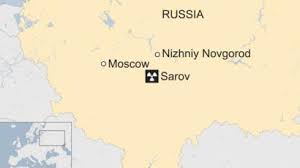
Known formerly as Arzamas-16, Sarov didn’t even appear on maps until the breakup of the Soviet Union in 1991. It remains home to the All-Russian Scientific Research Institute of Experimental Physics, which made headlines last year when five of its scientists died in a mysterious radiological explosion at a weapons testing site in the Russian Arctic.
The institute, which is now run by Rosatom, is an important part of Russia’s nuclear military complex. Likhachev indicated in his address that the workers who tested positive are affiliated with the institute.
In the city of Sarov alone, there have been 23 cases of Covid-19, Likhachev said – 7 of them Rosatom employees.
Known formerly as Arzamas-16, Sarov didn’t even appear on maps until the breakup of the Soviet Union in 1991. It remains home to the All-Russian Scientific Research Institute of Experimental Physics, which made headlines last year when five of its scientists died in a mysterious radiological explosion at a weapons testing site in the Russian Arctic.
The institute, which is now run by Rosatom, is an important part of Russia’s nuclear military complex. Likhachev indicated in his address that the workers who tested positive are affiliated with the institute.
New START is the only U.S.-Russian nuclear treaty still in effect. Time to renew it
|
Minister Lavrov was specific that Washington must agree to extend New START before Russia would agree to include new Russian systems in future negotiations. Secretary Pompeo reiterated the U.S. position that future arms control talks must embrace the White House desire to include China in a trilateral arms control agreement. Frankly, holding New START hostage to Chinese agreement to join a trilateral negotiation makes no sense. Under New START, Russia and the U.S. are permitted to deploy up to 1,550 nuclear warheads. China maintains a minimum deterrence force that the director of the Defense Intelligence Agency recently stated to be a couple of hundred nuclear warheads. Given this large disparity, China has little to gain from negotiating and has shown little interest in doing so. If Russia and the U.S. can bring their numbers down significantly through a new round of negotiations, there could be a basis then to persuade China to join a trilateral negotiation. The Trump administration should immediately accept the Russian offer to extend the New START Treaty and to engage in a new round of strategic arms negotiations. New START is the only U.S.-Russian nuclear treaty still in effect. If the pact is permitted to expire in February 2021, there will be no limits on Russian strategic systems and no inspection regime to verify what types and numbers of systems the Russians are deploying. The Joint Chiefs of Staff and the Intelligence Community are solidly in favor of extending New START because they know what the adverse impact will be on our ability to assess the threat to U.S. interests and our planning to address that threat. A bold approach the U.S. should consider is to enter into a negotiation now with Russia to extend New START at a lower level of 1,000 deployed warheads from the currently authorized 1,550. During the 2010 negotiations on New START, the Joint Chiefs certified that 1,000 would be adequate to support our deterrence strategy. …….. https://thehill.com/opinion/international/494960-time-to-restart-nuclear-arms-negotiations-with-russia |
|
Coronavirus a big threat to Russia’s secret nuclear cities, as virus incidence rises

Concern as coronavirus threatens Russia’s closed ‘nuclear cities’ https://www.theguardian.com/world/2020/apr/28/concern-as-coronavirus-threatens-russias-closed-nuclear-cities
Rosatom nuclear chief warns of ‘particularly alarming situation’ in three areas as country reports biggest daily rise in cases, Reuters in Moscow 29 Apr 2020
Alexei Likhachev, Rosatom chief, said the pandemic ‘creates a direct threat’ to Russia’s nuclear cities.
The head of Russia’s state-run nuclear corporation has expressed concern about the spread of the new coronavirus to three “nuclear cities”, including one that houses a top-secret research institute that helped develop the Soviet atomic bomb.
The cities are closely linked to Russia’s nuclear industry, which is managed by the Rosatom corporation. Several are closed to foreigners and Russians require special clearance to enter them as facilities located there are closely guarded secrets.
Rosatom chief Alexei Likhachev said special deliveries of ventilators and personal protection equipment (PPE) were being sent to the closed town of Sarov, east of Moscow, and other towns where dozens of cases of the virus have been registered.
“This [pandemic] creates a direct threat to our nuclear towns. The situation in Sarov, Elektrostal [and] Desnogorsk is today particularly alarming,” he said in an online speech to Russia’s nuclear industry workers.
“The situation in Sarov is exacerbated by an outbreak of the illness in the nearby Diveyevo monastery,” he said, without elaborating further.
Likhachev made his remarks on a day when Russia reported its biggest daily rise in new coronavirus cases. Russia now ranks eighth worldwide with 93,558 confirmed cases, though its death toll of 867 is still far below that of many other countries.
Moscow, which accounts for more than half of Russia’s cases, and many other regions have imposed stay-at-home orders to curb the spread of the virus.
Sarov, which was so secret that it did not appear on maps until the breakup of the Soviet Union in 1991, remains an important part of Russia’s nuclear military complex, defence experts say.
It is home to a research institute that gained prominence last year when five of its scientists died in a mysterious accident at a military testing site in the far north.
Rosatom said the incident had occurred during a rocket engine test on a sea platform. Some US experts said they suspected it had been a botched test of a new missile vaunted by the president, Vladimir Putin.
Last week, Rosatom said seven people at Sarov’s All-Russian Scientific Research Institute of Experimental Physics had been diagnosed with coronavirus, bringing the total number of cases in the city – which has a population of about 95,000 – to 23.
It said the outbreak in Sarov had begun when a retired couple returned to the city from a Russian holiday resort and that more than 100 people had since been isolated to stop it spreading further.
With international finance help, Russia is dismantling its most radioactive ship
|
Russia’s most radioactive ship reaches dismantlement milestone The Lepse service ship, once the most glaring nuclear hazard in the Murmansk harbor, will now be emptied of nearly all of its radioactive cargo by the end of this year, Russian nuclear authorities have said. Bellona April 29, 2020 by Anna Kireeva, Charles DiggesThe Lepse service ship, once the most glaring nuclear hazard in the Murmansk harbor, will now be emptied of nearly all of its radioactive cargo by the end of this year, Russian nuclear authorities have said.
During its career as a refueling vessel for Soviet era nuclear icebreakers, the Lepse amassed 639 spent nuclear fuel assemblies, some of them damaged, creating an environmental danger that bobbed neglected at a Murmansk dock for decades. After it was taken out of service in 1988, the Lepse was left to languish at Atomflot, the headquarters of Russia’s nuclear icebreaker fleet, where it posed a severe radioactive hazard to Murmansk and its 300,000 residents. Over the course of more than two decades, Bellona worked with Russian officials ensure the vessel’s safe disposal. Now those plans are coming to fruition as officials say 97 percent of the nuclear fuel loaded into the Lepse’s holds will be emptied at the Nerpa Shipyard, to where the vessels was finally moved in 2012 for its painstaking dismantling…… All told, the Lepse participated in 14 refueling operations aboard the Lenin as well as the nuclear icebreakers the Sibir and the Arktika. In 1981, the vessel was again retrofitted, this time to so it could accommodate irradiated machine parts and other radioactive waste the nuclear icebreakers needed to offload. The Lepse’s history took a darker when it was used to help dump radioactive waste in the Kara and Barents Seas, contributing to Russia’s Cold War heritage of f nuclear and radiological hazards strewn across the Arctic sea floor, the extent of which is only beginning to be understood. It was in the early 1990s that the Lepse and the dangers it posed caught Bellona’s eye, and the organization mobilized the European Union to allocate funding toward removing it from Murmansk harbor and safely dismantling it. The boat was finally towed from Atomflot to the Nerpa naval shipyard in September 2012, after more than a decade of strenuous and often tedious negotiations among Bellona, the Russian government and European financial institutions – most notably the European Bank of Reconstruction and Development – to ensure the Lepse’s safe disposal. The EBRD-managed program is financed by the NDEP Nuclear Window, an international fund with contributions from Belgium, Canada, Denmark, the European Union, Finland, France, Germany, the Netherlands, Norway and the UK. The bank is also helping finance the safe removal of some 22,000 spent nuclear fuel assemblies from Andreyeva Bay, a former technical base used to service Soviet Northern Fleet Submarines. https://bellona.org/news/nuclear-issues/2020-04-russias-most-radioactive-ship-reaches-dismantlement-milestone |
|
|
Coronavirus spreads to Russia’s ‘secret’ nuclear cities
|
Now, coronavirus spreads to Russia’s ‘secret’ nuclear cities,
WION New Delhi, Delhi, India Apr 29, 2020, The coronavirus has rattled Russia. The number of cases in the country is nearing the 100,000 milestone, the country’s oil prices have collapsed and its economy is set to contract by 4 to 6 per cent.
In the latest, the coronavirus has begun spreading to Russia’s nuclear cities. The secret cities are at high risk and they stand exposed. ……
Also lying exposed are Russia’s secret cities. The Wuhan virus has sneaked its way past their fences and now Sarov, Elektrostal and Desnogorsk are infected. The situation is so bad that a top Russian executive was forced to mention these cities during his address. “The situation in Sarov, Elektrostal, Desnogorsk is today particularly alarming. In Sarov, the situation is being compounded by the outbreak in the nearest Diveyevo convent,” Rosatom chief, Alexei Likhachev, said. Sarov has at least 23 coronavirus cases. The numbers for Elektrostal and Desnogorsk are not clear. Also unknown are the number of hospitals in these cities and their pandemic preparedness. Not surprising, given everything around these cities is blurry. Sarov, Elektostal, and Desnogorsk are among Russia’s many secret cities.
They are highly restricted, so much so that they weren’t shown on the map until the breakup of the Soviet Union in the 1990s. These cities were excluded from train and bus routes. They were known only by their postal codes. Sarov, for example, was Arzamas-16. No one knew who lived there. The lives of its residents were as secretive as those of KGB agents. For years, the Russian government rewarded the residents of its secret cities with numerous perks – private apartments, well-paying jobs and good healthcare. These cities are closely linked to Russia’s nuclear industry. They are managed by Russia’s state atomic energy corporation – Rosatom.
Sarov became a closed city after World War-II. Once known for its monastery, the city was quickly turned into a rocket-making hub. It’s monastery buildings were converted into rocket factories. Today, Sarov is home to one of Russia’s top research institutes. The city is fenced, patrolled by the military and no one can enter without a pass. Last year, five scientists from the research institute died in a mysterious accident. No one knew what had happened. Russia said there was an accident during a rocket engine test.
The United States claimed it was a missile test gone wrong. Today, these secret cities are becoming coronavirus hotspots. Russia says it is sending emergency ventilators and medical aids to its nuclear cities but truth be told – we may never know what’s really going on there. https://www.wionews.com/world/now-coronavirus-spreads-to-russias-secret-nuclear-cities-295663
|
|
Russia warns US against using low-yield nuclear weapons, threatening all-out retaliation
Russia warns US against using low-yield nuclear weapons, threatening all-out retaliation, SCMP, 29 Apr 20
US State Department had argued that deploying such warheads in submarines would help counter new threats from China and Russia
Moscow says any attack involving submarine-launched missiles will be perceived as nuclear aggression
, warning that an attempt to use such weapons against Russia would trigger an all-out nuclear retaliation.
The US State Department argued in a paper released last week that fitting the low-yield nuclear warheads to submarine-launched ballistic missiles would help counter potential new threats from Russia and China…… https://www.scmp.com/news/world/russia-central-asia/article/3082226/russia-warns-us-against-using-low-yield-nuclear
1 This Month

of the week – Shut Down Drone Warfare!


Tell the Ukrainian Government to Drop Prosecution of Peace Activist Yurii Sheliazhenko

Petition to revoke the licensing of the Near Surface Nuclear Disposal Facility (NSDF) at Chalk River. https://www.ourcommons.ca/petitions/en/Petition/Details?Petition=e-7247
To see nuclear-related stories in greater depth and intensity – go to https://nuclearinformation.wordpress.com
-
Archives
- April 2026 (91)
- March 2026 (251)
- February 2026 (268)
- January 2026 (308)
- December 2025 (358)
- November 2025 (359)
- October 2025 (376)
- September 2025 (257)
- August 2025 (319)
- July 2025 (230)
- June 2025 (348)
- May 2025 (261)
-
Categories
- 1
- 1 NUCLEAR ISSUES
- business and costs
- climate change
- culture and arts
- ENERGY
- environment
- health
- history
- indigenous issues
- Legal
- marketing of nuclear
- media
- opposition to nuclear
- PERSONAL STORIES
- politics
- politics international
- Religion and ethics
- safety
- secrets,lies and civil liberties
- spinbuster
- technology
- Uranium
- wastes
- weapons and war
- Women
- 2 WORLD
- ACTION
- AFRICA
- Atrocities
- AUSTRALIA
- Christina's notes
- Christina's themes
- culture and arts
- Events
- Fuk 2022
- Fuk 2023
- Fukushima 2017
- Fukushima 2018
- fukushima 2019
- Fukushima 2020
- Fukushima 2021
- general
- global warming
- Humour (God we need it)
- Nuclear
- RARE EARTHS
- Reference
- resources – print
- Resources -audiovicual
- Weekly Newsletter
- World
- World Nuclear
- YouTube
-
RSS
Entries RSS
Comments RSS
 nuclear-news