Radioactive particles in atmosphere: Russia tells IAEA it has had no nuclear incidents
Russia Tells IAEA It Is Incident-Free After Nuclear Particle Increase, https://www.nytimes.com/reuters/2020/06/30/world/europe/30reuters-nuclear-particles-baltic-russia.html By Reuters
June 30, 2020 VIENNA — Russia has told the U.N. atomic watchdog there have been no nuclear incidents on its territory that could explain elevated but still harmless levels of radioactive particles detected on the Baltic Sea last week, the U.N. agency said on Tuesday.
A separate body, the Comprehensive Nuclear-Test-Ban Treaty Organization (CTBTO), which watches for nuclear weapon tests, said on Friday a monitoring station in Sweden had found higher-than-usual levels of caesium-134, caesium-137 and ruthenium-103. The CTBTO said they were produced by nuclear fission.
CTBTO chief Lassina Zerbo posted a borderless map https://twitter.com/SinaZerbo/status/1276559857731153921?s=20 online showing where the particles might have come from in the 72 hours before they were detected – an area covering the tips of Denmark and Norway as well as southern Sweden, much of Finland, Baltic countries and part of western Russia including St. Petersburg.
All those countries except Denmark, which has no nuclear power plants http://www.ensreg.eu/country-profile/Denmark, and Russia, which has a history of not fully explaining incidents that emitted radioactive particles, told the International Atomic Energy Agency by Monday that there were no events on their territory that could explain the increase.
On Tuesday evening, however, the IAEA issued a statement https://www.iaea.org/newscenter/pressreleases/more-countries-provide-radioisotope-information-to-iaea-reported-levels-very-low saying the list of countries that had declared themselves incident-free had grown to around 40 and now included Denmark and Russia.
“Apart from Estonia, Finland and Sweden, none of the other countries which have so far provided information and data to the IAEA said they had detected elevated radioisotope levels,” said the IAEA, which asked member states for information over the weekend after the CTBTO announcement.
Asked on Monday if Russia was the origin of the elevated particle levels, Kremlin spokesman Dmitry Peskov said Moscow had detected no sign of a radiation emergency.
(Reporting by Francois Murphy; editing by Jonathan Oatis)
Russia’s environmental groups protest nuclear waste imports
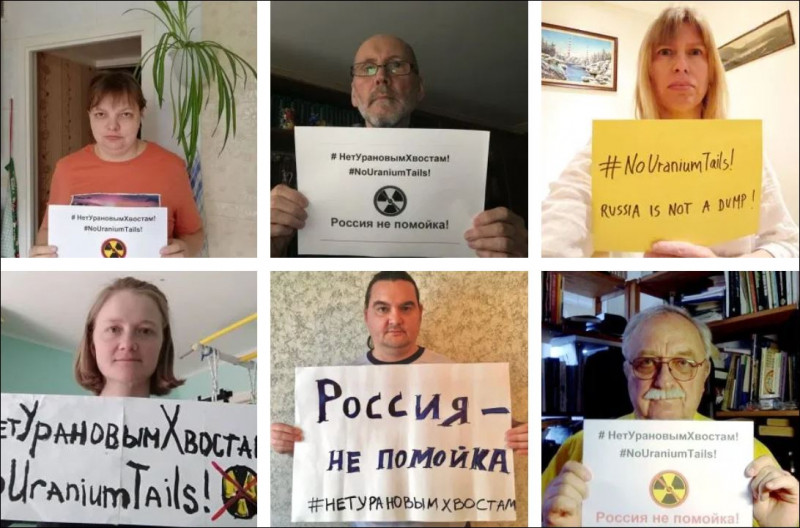
Russia is not a dump!
Stories of solidarity under coronavirus http://www.foeeurope.org/covidsolidarity-russia
25 June 20 Coronavirus hasn’t affected everyone equally. We’re sharing stories from across our European and global network of what lockdown and life under coronavirus look like around the world. Hearing from those who are among the worst affected, and how they are taking action.
I’m with Russia
Russia and Germany have taken advantage of the coronavirus crisis to resume shipping radioactive waste to dump in the Urals and Siberia in northern Russia.
When Russian environmental groups discovered, in autumn 2019, that Germany was exporting radioactive waste from it’s nuclear power stations to Russia, via the harbor of Amsterdam, they directly organized protests in the three countries.
Those protests had success, and the transport by rail and sea of uranium – a waste product of nuclear fuel production by Urenco Germany – was put on hold. That was before the coronavirus crisis hit.
But in March 2020, when Covid-19 lockdowns restricted people’s right to protest in Russia even further, the shipments of radioactive waste were set to resume.
BBC news reports that twelve rail cars carrying 600 tonnes of depleted uranium left Germany bound for Russia earlier this week.
Vitaly Servetnik from Russian Social–Ecological Union/Friends of the Earth Russia said:
“This radioactive waste is being sent to the Urals and Siberia. There it will be stored in containers above ground posing a direct danger to the environment and people living in the area. Disguised as a commercial transaction between Rosatom and Urenco, Germany exports its radioactive waste problem.”
Olaf Bandt, chair of BUND / Friends of the Earth Germany said:
“The federal government stands by while part of the unresolved nuclear waste problem moves quietly and secretly to Russia. German nuclear waste should not be disposed of in other countries, putting lives of people in danger. Germany must finally complete the nuclear phase-out.”
In response, the Russian Social–Ecological Union/Friends of the Earth Russia and other environmental and human rights groups organised a digital action. Images of activists holding signs reading “No uranium tails!” and “Russia is not a dump!” flooded social media.
Russia denies its nuclear plants are source of radiation leak
https://www.bbc.com/news/world-europe-53214259, 28 June, 20
Russia has said a leak of nuclear material detected over Scandinavia did not come from one of its power plants.
Nuclear safety watchdogs in Finland, Norway and Sweden said last week they had found higher-than-usual amounts of radioactive isotopes in the atmosphere.
A Dutch public health body said that, after analysing the data, it believed the material came “from the direction of western Russia”.
It said the material could indicate “damage to a fuel element”.
But in a statement, Russia’s nuclear energy body said its two power stations in the north-west – the Leningrad NPP and the Kola NPP – were working normally and that no leaks had been reported.
“There have been no complaints about the equipment’s work,” a spokesperson for the state controlled nuclear power operator Rosenergoatom told Tass news agency.
“Aggregated emissions of all specified isotopes in the above-mentioned period did not exceed the reference numbers.”
Radiation levels around the two powers stations “have remained unchanged in June”, the spokesperson added.
Lassina Zerbo, executive Secretary of the Comprehensive Nuclear-Test-Ban Treaty Organization (CTBTO) tweeted on Friday that its Stockholm monitoring station had detected three isotopes – Cs-134, Cs-137 and Ru-103 – at higher than usual levels but not harmful to human health.
The particles were detected on 22-23 June, he said.
The Dutch National Institute for Public Health and the Environment in the Netherlands said on Friday that the composition of the nuclear material “may indicate damage to a fuel element in a nuclear power plant”.
The International Atomic Energy Agency – the UN’s nuclear watchdog – said on Saturday it was aware of the reports and was seeking more information from member states.
Need for action on global heating – It’s 38°C in Siberia
|
The Arctic heatwave: here’s what we know, https://www.theguardian.com/commentisfree/2020/jun/25/arctic-heatwave-38c-siberia-scienceTamsin Edwards
It’s 38°C in Siberia. The science may be complicated – but the need for action now couldn’t be clearer Fri 26 Jun 2020 There’s an Arctic heatwave: it’s 38°C in Siberia. Arctic sea ice coverage is the second lowest on record, and 2020 may be on course to be the hottest year since records began. For many people, such news induces a lurch of fear, or avoidance – closing the webpage because they don’t want to hear yet more bad news. A few might think “It’s just weather,” and roll their eyes. How can we make sense of such an event? Climate is subtle and shifting, with many drivers and timescales. But we can use this northern heatwave to illuminate the complexity of our planet. We can break this question into parts, from fast to slow. Fast: the immediate effect is to increase wildfires. Siberia has seen “zombie fires” reignited from deep smouldering embers in peatland. This is bad news, releasing particulate air pollution and more carbon in 18 months than in the past 16 years. The immediate cause? Here in the mid-high northern latitudes, we live in unstable weather under the influence of the polar jet stream. This rapid current of air high above our heads drags weather in a conveyor belt from west to east, with alternating patches of cold and warm air, low and high pressure. Sometimes the weather patterns get stuck, creating a stable period of weather, like a heatwave. This is one long, severe example. Does climate change make this “blocking” more likely? Maybe. The jet stream is created by the contrast between cold polar air and the warmer south. The Arctic is warming twice as fast as the global average: that means less north-south contrast, so the jet stream can become more wobbly and meandering. Loops break off like the oxbow lakes of school geography lessons, stranding particular weather patterns in one place. And why is the Arctic warming faster? Because sea ice and snow are so bright. When they melt with global warming, the ocean and land beneath are darker, so they absorb more of the sun’s heat. Their loss amplifies our warming. The current low in Arctic sea ice is itself partly the result of the Siberian heatwave, amplifying the usual year-to-year fluctuations. But the trend is down: the more CO2 we emit, the more the planet’s temperature rises, and the more sea ice we lose. Scientists predict the Arctic will start seeing summers without sea ice by 2050. But it’s not irreversible. It’s not a tipping point. The sea ice would return if we could cool the climate again. Unfortunately we know only three ways to do that: extract vast amounts of CO2 from the air with trees or technology; reflect the sun’s rays at a planetary scale; or wait, for many generations. This Arctic heatwave is a sharp spike on top of the global warming trend. That’s what makes it more intense, more likely and more of a warning: it’s a taste of the future predicted for Russia, if we burn quickly through our fossil fuels. The real fear around the Arctic for the longer term, I find when talking to people, comes from the idea of “runaway” warming from methane release. Warming could release stores of methane – a strong greenhouse gas – from permafrost or frozen sediments at the bottom of the ocean, which would add to the warming from our own activities. There is more than twice the amount of carbon in the permafrost as in the atmosphere, and thawing has already begun. There are big local impacts – damage to roads and buildings, because the ground can no longer bear so much weight, and an appalling story involving what appears to be anthrax release from thawing burial grounds. Permafrost thaw was even blamed by a Russian mining company for the recent collapse of a fuel reservoir, contaminating the river with 20,000 tonnes of diesel, though other factors were probably also involved. So could this Siberian heatwave, or ones like it, trigger catastrophic warming? I see much fear about amplifying methane feedbacks, including the false idea that climate scientists don’t consider them (we do, just separately to the main global climate models). Yet for several years there has been growing evidence that this risk is less than originally thought. Carbon stored in permafrost and wetlands is predicted to contribute around 100bn tonnes of CO2 this century. That’s a lot, but we add around 40bn tonnes ourselves every year. The methane at the bottom of the ocean would take centuries to release, so as long as we limit global warming we should keep those stores mostly locked up. There are uncertainties, of course, but the stores’ impact on warming is likely to be tenths of a degree, not several degrees. Yet every tonne of CO2 released from permafrost means one tonne fewer we can emit if we are to reach net zero emissions by 2050. Every year’s equivalent of our emissions brings our deadline closer. Every tenth of a degree of warming brings us closer to our target of 1.5°C and makes more permafrost thaw, and the impacts of climate change worse for the most vulnerable people and species of the world. The Arctic heatwave shows us that there are few simple stories in climate change. There is always a mix of natural and human influence, bad news and slightly-less-bad news, and occasionally even hopeful news. So, more than ever, we need to avoid over-simplifying or slipping into easy tropes like “We’re all doomed” or “It’s all weather,” but to try to understand the details. Perhaps there is one simple story though: every bit of warming we avoid will help keep our planet a more familiar and an easier place to live on. • Dr Tamsin Edwards is a senior lecturer in physical geography at King’s College London |
US, Russia nuclear arms talks end with plans for second round
US, Russia nuclear arms talks end with plans for second round, Aljazeera, 26 June 20,
US says any new agreement on curbing nuclear weapons should include China, a condition Russia calls ‘unrealistic’. US and Russian negotiators have concluded a round of nuclear arms control talks in Austria’s capital, Vienna, aimed at producing a new agreement to replace the New START treaty that expires next year.
US negotiator Marshall Billingslea told reporters on Tuesday that the day of high-level “marathon discussions” ended late on Monday.
Billingslea said the talks had been productive enough to establish several technical working groups to delve deeper into the issues in order to pave the way for a second round of talks by late July or early August…… https://www.aljazeera.com/news/2020/06/coronavirus-deaths-children-extremely-rare-live-updates-200626000914304.html
Russia’s priority is to involve UK, France in future nuclear arms control talks — diplomat
Russia’s priority is to involve UK, France in future nuclear arms control talks — diplomat
The two states are the US closest NATO allies that possess nuclear weapons, the senior diplomat explained, MOSCOW, June 26. /TASS/. Russia thinks it necessary that the United Kingdom and France join the strategic nuclear arms control process as the United States’ closest NATO allies, Russian Deputy Foreign Minister Sergei Ryabkov said in an interview with TASS First Deputy Director General Mikhail Gusman on Friday……. https://tass.com/politics/1172109
2,000 Covid-19 Cases in Severodvinsk, city that builds Russia’s nuclear submarines
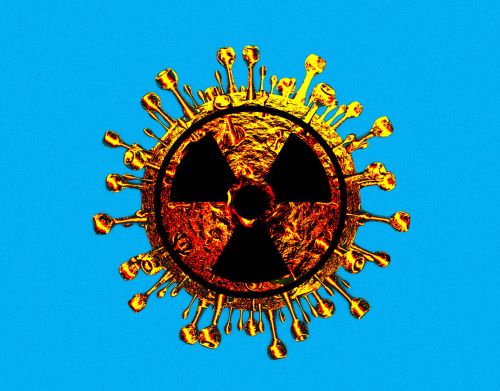 The City That Builds Russia’s Nuclear Submarines Now Has Over 2,000 Covid-19 Cases, By The Barents Observer, 24 June 20,
Two naval construction yards in a northern Russian city near the site of last year’s mysterious nuclear testing accident have become new hotbeds for the coronavirus.
Severodvinsk is near the Nyonoksa testing site where an August 2019 explosion during a rocket engine test killed five nuclear workers and led to a radiation spike. The building of nuclear subs and other naval vessels continues despite the increasingly serious virus situation.
Approximately 43% of all infections in the Arkhangelsk region are in Severodvinsk, regional authorities recently announced.
That indicates that there now are more than 2,000 cases in the city.
The lion’s share of the people infected are affiliated with Sevmash and Zvezdochka, the two naval yards.
Despite the introduction of protective measures, the virus has continued to spread among the local population of about 180,000.
In the past week alone, more than 320 new cases have been registered in town, most of them among the shipbuilders, a statistics overview said.
Temperature testing is conducted at entry points to the yards as well as on the construction premises, and workers are required to wear masks.
But the mask requirement is not observed, a local employee told the Sever.Realii newspaper in early June. Every worker is given 10 masks every five days along with a liter of antiseptic.
But most workers still do not wear the masks and ignore social distancing rules, the worker said.
There are about 30,000 employees at the Sevmash and about 11,000 workers at the Zvezdochka.
While the Zvezdochka engages primarily in vessel repair and upgrades, the Sevmash builds nuclear submarines. At the moment, there are at least eight new vessels under construction onsite, among them four Borey-class and four Yasen-class subs. AT TOP https://www.themoscowtimes.com/2020/06/24/the-city-that-builds-russias-nuclear-submarines-now-has-over-2000-covid-19-cases-a70681
Nuclear waste from Germany to Russia
A shipment of 600 tonnes of depleted uranium has left a nuclear fuel plant in Germany bound for Russia, a Russian environmentalist group says.
Twelve rail cars left the Urenco plant in the town of Gronau, close to the Dutch border, on Monday 22 June, according to the Ecodefense group.
The waste will reportedly be moved by sea and rail to a plant in the Urals.
Urenco told the BBC its uranium would be further enriched in Russia and the process met environmental standards.
Russia’s state atomic energy corporation, Rosatom, insisted it was “inaccurate and misleading” to refer to the depleted uranium as waste.
But environmental activists have long been concerned that Russia may become a “dumping ground” for radioactive material from power plants.
Greenpeace protested last year after German media reports that Urenco had resumed shipping depleted uranium from Germany to Russia after a gap of 10 years. Russia had halted the practice in 2009 under pressure from environmentalists.
On Monday activists in Germany posted video on social media of what appeared to be the train en route from Gronau, as well as photos of anti-nuclear protesters.
Why is the shipment being sent to Russia?
According to the report (in Russian) by Ecodefense, some of it will be shipped by sea to Russia via the port of Amsterdam.
It will, the group says, eventually arrive at the Ural Electrochemical Combine in Novouralsk, 3,400km (2,500 miles) away in Russia’s Ural Mountains.
The group believes that nearly 3,000 tonnes of depleted uranium have already been shipped from Germany to Russia this year.
The Urenco spokesperson contacted by the BBC said they could not give details of shipments for “safety and security reasons”.
But Urenco did confirm that it had a contract with a firm called Tradewill, a subsidiary of Tenex which is the overseas trade company of Rosatom.
Under the contract, it said, depleted uranium “tails” are sent to Russia for further processing. The enriched uranium product then returns to Urenco while the “depleted fraction” remains with Tenex.
“This is common and legal practice,” Urenco says. “We also retain depleted uranium at Urenco in Europe.”
Urenco, which is a partnership between German, British and Dutch companies, said its representatives had inspected the facilities involved in the process and had found that they complied with “all internationally recognised logistics standards, which includes handling, storage, safeguarding and processing of nuclear material, as well as appropriate environmental standards”.
Why are environmentalists so concerned?
One of the big questions is how much of the waste is eventually returned to Germany, with activists arguing that most of it stays in Russia.
There are also fears of toxic pollution in the event of any spill.
On 15 June, a petition to stop the shipments was sent to Russian President Vladimir Putin and German Chancellor Angela Merkel. It was signed by environmental groups and activists from Russia, Germany and the Netherlands.
The petition calls for an end to the “colonial policy of moving hazardous cargoes from Europe to Russia’s Siberian and Ural regions”.
It argues that Germany has the technology to deal with its own nuclear waste and ends with the words: “Russia is not a dumping ground!”
Greenpeace argued last year that Russia lacked a plan to utilise depleted uranium on a large scale. Continue reading
Record breaking heat in Verkhoyansk, north of the Arctic Circle
|
A Siberian town near the Arctic Circle just recorded a 100-degree temperature https://www.vox.com/2020/6/21/21298292/siberia-temperature-100-climate-change
One of the coldest towns on Earth clocks a potentially record-breaking — and worrying — temperature. By Zeeshan Aleem@ZeeshanAleem Jun 21, 2020,A small town in Siberia reached a temperature of 100.4 degrees Fahrenheit on Saturday, which, if verified, would mark the hottest temperature ever recorded north of the Arctic Circle. Temperatures have jumped in recent months to levels rarely seen in the Russian region, and it’s a sign of a broader trend of human-caused climate change that’s transforming weather patterns in the Arctic Circle. The town of Verkhoyansk is one of the coldest towns on Earth — temperatures dropped to nearly 60 degrees below zero there this past November — and the average June high temperature is 68 degrees. The 100.4 reading in Verkhoyansk, which sits farther north than Fairbanks, Alaska, would be the northernmost 100-degree reading ever observed. The Washington Post reports that while there are questions about the accuracy of the record temperature, a Saturday weather balloon launch that found unusually high temperatures in the lower atmosphere supports the reading. And on Sunday, the town reached 95.3 degrees, according to the Post. CBS News meteorologist and climate specialist Jeff Berardelli wrote on Saturday that 100-degree temperatures in or near the Arctic are “almost unheard of.” Before Saturday, Siberia was already experiencing an extraordinary heat wave. Surface temperatures in Siberia were 18 degrees higher than average in May, making it the hottest May in the region since record-keeping began in 1979, according to the Copernicus Climate Change Service. “It is undoubtedly an alarming sign, but not only May was unusually warm in this region,” said Freja Vamborg, a senior scientist at the Copernicus Climate Change Service, in a statement about the finding. “The whole of winter and spring had repeated periods of higher-than-average surface air temperatures.” Climate scientist Martin Stendel said on Twitter that the temperatures recorded in northwestern Siberia last month would be a 1-in-100,000-year event — if not for climate change. Berardelli said the average heat across Russia between January and May actually matches what current models project to be normal for the region in 2100, if carbon emissions continue. “Due to heat trapping greenhouse gases that result from the burning of fossil fuels and feedback loops, the Arctic is warming at more than two times the average rate of the globe,” he explained in his analysis of the Verkhoyansk reading. “This phenomenon is known as Arctic Amplification, which is leading to the decline of sea ice, and in some cases snow cover, due to rapidly warming temperatures.” He noted that if the climate continues to heat up, extreme heat waves will become more of the norm. |
|
Anti-nuclear resistance in Russia: problems protests, reprisals

Mayak victims’ organizer, Nadezhda Kutepova, a Nuclear-Free Future Award winner, was eventually forced to flee the country. (Photo: ©Orla Connolly)
Standing up to Rosatom
https://beyondnuclearinternational.org/2020/06/21/standing-up-to-rosatom/ June 21, 2020 by beyondnuclearinternational
Anti-nuclear resistance in Russia: problems protests, reprisals
The following is a report from the Russian Social Ecological Union (RSEU)/ Friends of the Earth Russia, slightly edited for length. You can read the report in full here. It is a vitally important document exposing the discrimination and fear tactics used against anti-nuclear organizers in Russia and details their courageous acts of defiance in order to bring the truth of Russia’s nuclear sector to light.
Rosatom is a Russian state-owned corporation which builds and operates nuclear power plants in Russia and globally. The state-run nuclear industry in Russia has a long history of nuclear crises, including the Kyshtym disaster in 1957 and Chernobyl in 1986. Yet Rosatom plans to build dozens of nuclear reactors in Russia, to export its deadly nuclear technologies to other countries, and then to import their hazardous nuclear waste.
This report is a collection of events and details about the resistance to Russian state nuclear corporation, Rosatom, and other activities that have led to the pollution of the environment and violation of human rights. Social and environmental conflicts created by Rosatom have been left unresolved for years, while at the same time, environmental defenders who have raised these issues, have consistently experienced reprisals.
Nuclear energy: failures and Lies
Siberia’s alarming prolonged heat wave
Climate crisis: alarm at record-breaking heatwave in 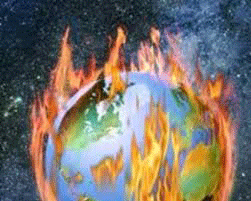 Siberia https://www.theguardian.com/environment/2020/jun/17/climate-crisis-alarm-at-record-breaking-heatwave-in-siberia
Thu 18 Jun 2020 A prolonged heatwave in Siberia is “undoubtedly alarming”, climate scientists have said. The freak temperatures have been linked to wildfires, a huge oil spill and a plague of tree-eating moths.
On a global scale, the Siberian heat is helping push the world towards its hottest year on record in 2020, despite a temporary dip in carbon emissions owing to the coronavirus pandemic.
Temperatures in the polar regions are rising fastest because ocean currents carry heat towards the poles and reflective ice and snow is melting away.
Russian towns in the Arctic circle have recorded extraordinary temperatures, with Nizhnyaya Pesha hitting 30C on 9 June and Khatanga, which usually has daytime temperatures of around 0C at this time of year, hitting 25C on 22 May. The previous record was 12C.
In May, surface temperatures in parts of Siberia were up to 10C above average, according to the EU’s Copernicus Climate Change Service (C3S). Martin Stendel, of the Danish Meteorological Institute, said the abnormal May temperatures seen in north-west Siberia would be likely to happen just once in 100,000 years without human-caused global heating.
Freja Vamborg, a senior scientist at C3S, said: “It is undoubtedly an alarming sign, but not only May was unusually warm in Siberia. The whole of winter and spring had repeated periods of higher-than-average surface air temperatures.
“Although the planet as a whole is warming, this isn’t happening evenly. Western Siberia stands out as a region that shows more of a warming trend with higher variations in temperature. So to some extent large temperature anomalies are not unexpected. However, what is unusual is how long the warmer-than-average anomalies have persisted for.”
Marina Makarova, the chief meteorologist at Russia’s Rosgidromet weather service, said: “This winter was the hottest in Siberia since records began 130 years ago. Average temperatures were up to 6C higher than the seasonal norms.”
Robert Rohde, the lead scientist at the Berkeley Earth project, said Russia as a whole had experienced record high temperatures in 2020, with the average from January to May 5.3C above the 1951-1980 average. “[This is a] new record by a massive 1.9C,” he said.
In December, Russia’s president, Vladimir Putin, commented on the unusual heat: “Some of our cities were built north of the Arctic Circle, on the permafrost. If it begins to thaw, you can imagine what consequences it would have. It’s very serious.”
Thawing permafrost was at least partly to blame for a spill of diesel fuel in Siberia this month that led Putin to declare a state of emergency. The supports of the storage tank suddenly sank, according to its operators; green groups said ageing and poorly maintained infrastructure was also to blame.
Wildfires have raged across hundreds of thousands of hectares of Siberia’s forests. Farmers often light fires in the spring to clear vegetation, and a combination of high temperatures and strong winds has caused some fires to burn out of control.
Swarms of the Siberian silk moth, whose larvae eat at conifer trees, have grown rapidly in the rising temperatures. “In all my long career, I’ve never seen moths so huge and growing so quickly,” Vladimir Soldatov, a moth expert, told AFP.
He warned of “tragic consequences” for forests, with the larvae stripping trees of their needles and making them more susceptible to fires.
The ‘chemical fingerprint’ of a 2017 nuclear explosion
 Scientists just found the ‘chemical fingerprint’ of an alleged nuclear explosion that went undeclared in Russia, Business Insider, Aria Bendix Jun 16, 2020
- A group of scientists known as the “Ring of Five” detected unusual levels of radiation in Europe in 2017.
- A new study offers “irrefutable proof” that the radiation came from nuclear waste reprocessing.
- The study lends further evidence to the claim that Russia failed to disclose an accident at the Mayak nuclear facility in September 2017.
- For the past three years, a group of scientists called the “Ring of Five” has been inching toward the conclusion that an undisclosed nuclear accident took place in Russia in 2017.
In July 2019, the group released evidence that an explosion may have occurred at the Mayak nuclear facility — once the center of the Soviet nuclear-weapons program. Mayak was also the site of the 1957 Kyshtym explosion, the world’s third-worst nuclear accident behind Fukushima and Chernobyl.
- In late 2019, the scientists suggested that, given the large amount of radiation admitted on the date, the accident took place on September 26, 2017. The radiation seemed to spread from Russia’s Southern Urals region (where the Mayak facility is located) toward central Europe, Scandinavia, and Italy.
A third study, released Monday, offers “irrefutable proof” that the explosion was linked to nuclear waste reprocessing — a method that separates plutonium and uranium from spent nuclear fuel. The Mayak facility is the largest nuclear reprocessing facility in the region. That makes it the most likely, if not the only possible, origin site — though Russia has never acknowledged a nuclear accident at the facility in 2017…….
- The Ring of Five has been monitoring Europe’s atmosphere for elevated levels of radiation since the mid-1980s. The group originally hailed from five countries: Sweden, Germany, Finland, Norway, and Denmark. But after the Chernobyl disaster in 1986, the team enlisted the help of other nations to expand their efforts. It now includes researchers from 22 countries.
- On October 2, 2017, Italian scientists sent an alert to the Ring of Five about elevated levels of ruthenium-106, a radioactive isotope, in Milan. The discovery marked the first time that ruthenium-106 had been found in the atmosphere since Chernobyl.
“We were stunned,” Steinhauser said. “We did not have any anticipation that there might be some radioactivity in the air. We were just measuring air filters as we do on a weekly basis, 52 times a year, and suddenly there was an unexpected result.”
- Steinhauser said the explosion was the “single greatest release from nuclear-fuel reprocessing that has ever happened.”
But Russia has not responded to any findings from the Ring of Five. In December 2017, Russian officials attributed the radiation to an artificial satellite that burned up in the atmosphere. The scientists’ latest study excludes that possibility.
- The study is the first direct evidence that the ruthenium-106 came from nuclear waste reprocessing. It identified a unique “chemical fingerprint” among samples of the isotope collected in 2017.
Within those samples, the scientists found signs of two chemicals commonly associated with nuclear waste reprocessing: (III) chloride and ruthenium(IV) oxide. This provided “direct evidence that fuel reprocessing was the origin of the 2017 environmental release,” the scientists wrote………. https://www.businessinsider.com/russia-nuclear-accident-mayak-facility-new-evidence-2020-6?r=AU&IR=T
Russia: commentary on its nuclear deterrence principles
The only public statement on nuclear deterrence was a standard sentence repeated in Russia’s military doctrine and other documents stating that Russia would only resort to nuclear weapons if it was attacked by weapons of mass destruction, or if an attack threatened the very existence of the state. …..
While the existence of such an ‘escalate to de-escalate’ doctrine and other details on Russia’s potential use of nuclear weapons was contested in the past, the final sentence of Article 4 of the doctrine comes closest to answering this question. It states that, once a war has started, nuclear deterrence policy is to seek to prevent it from escalating further, or from being terminated on terms unfavourable to Moscow. This is a short version of what in Russian military literature is termed ‘escalation control’. Escalation control implies that threats, demonstrations of strike capabilities, and inflicting “calibrated damage” on the enemy (which may, but does not have to, include nuclear weapons) should contain, localise, and if possible terminate a war on Moscow’s terms. …..
Article 19 deliberates on the conditions under which nuclear weapons could be released. It explicitly mentions a ‘launch on warning’ posture. This is a signal to the US that conventional or low-yield re-entry vehicles (the latter are in development) of intercontinental missiles would be treated as a full-scale attack and that Washington should therefore not think of employing them in a tactical or limited attack close to Russia’s borders. ……….
The Russian decree does not contain any detailed provisions on force structure, weapons systems (future or present), force modernisation, or references to other nuclear powers. Much detail is lacking from what one might normally expect to see in a nuclear doctrine. Article 15 states merely that nuclear deterrence needs to be adaptable, and should leave the enemy guessing about the time, scale, and manner of the use of nuclear weapons. It also says that Russia intends to maintain the minimal force required to achieve its tasks………
Taken together, all these provisions seem surprisingly minimalist. It may well be that Russia intends to signal to the United States that, if the American-Chinese arms race takes off, Moscow does not intend to follow suit and “spend itself into oblivion”, as US assistant secretary for terrorist financing in the Treasury, Marshall Billingslea, put it. Russia is hardly likely to publicly admit that in the 21st century it will most probably be a secondary nuclear power. But, in fact, it does seem to be adapting to this role.
Finally, Article 3 notes that Russia’s nuclear deterrence is flanked by other state measures to achieve its goals, including diplomatic and “information policies” (propaganda). The publication of the doctrine and the content of Article 3 effectively represent the firing of the starting pistol on a new ‘information campaign’ in the West: expect to soon see an information operation that aims to inflate the purported capabilities of Russia’s nuclear forces and induce fear (such as the new “Wunderwaffen”, presented in March 2018), and new diplomatic overtures in the fields of arms control, in particular designed to split the alliance. At least on the latter, Putin may get assistance from the White House: Trump’s clumsy and undiplomatic handling of the INF and Open Skies issues provide more opportunities to exploit than any Russian diplomat would have ever dreamed of creating. ……… https://www.ecfr.eu/article/commentary_russias_nuclear_deterrence_principles_what_they_imply_and_what_n
The last major treaty for nuclear weapons control now hangs in the balance
|
Nuclear might crux of push for new pact. Treaty expiration would end caps on arms; U.S. envoy says Russia meeting set Northwest Arkansas Democrat Gazette by PAUL SONNE AND ROBYN DIXON, 10 June 20, THE WASHINGTON POST The last major treaty limiting U.S. and Russian nuclear might hangs in the balance as the Trump administration pushes to replace it with an arms-control pact that also includes China five months before the U.S. presidential election.The New START accord, which restricts the number of deployed strategic nuclear warheads and certain launch platforms, is set to expire in February. If the Trump administration declines to extend it and the caps disappear, the United States and Russia will be left without any significant limits on their nuclear forces for the first time in decades.
Russia has said it is willing to extend the New START pact unconditionally. But the Trump administration has balked, saying the treaty signed by former President Barack Obama in 2010 is outdated, insufficient and overly advantageous for Moscow. …….. The result is a game of nuclear brinkmanship in the waning days of the Trump administration’s first term…… https://www.nwaonline.com/news/2020/jun/10/nuclear-might-crux-of-push-for-new-pact/ |
|
Anti–nuclear resistance in Russia: problems, protests, reprisals

Produced by RSEU’s program “Against nuclear and radioaсtive threats”
Report “Anti–nuclear resistance in Russia: problems, protests, reprisals” Produced by RSEU’s program “Against nuclear and radioaсtive threats”
Editor and translator: Vitaly Servetnik
English editor: Anna WhiteCover
illustration: Anastasia Semenova
Layout: Sergey Fedulov
Saitnt Petersburg 2020
Nuclear energy: failures and lies…….5
Expired reactors……………………………6
Decommissioning problems…………..7
Uranium mining protest………………..8
The Mayak plant: Rosatom’s dirty face………10
Struggle against nuclear repository……………11
A road through a radioactive graveyard……..14
Conclusion: nuclear power is a problem, not a solution….14
Nuclear energy: failures and lies
4 https://7×7–journal.ru/articles/2019/08/09/admin-istraciya–severodvinska–udalila–s–oficialnogo–saj-ta–reliz–o–skachke–radiacii–v–gorode–posle–vzry-va–pri–ispytanii–reaktivnoj–ustanovki–baza–soobshi-la–o–shesti–postradavshih–ot–oblucheniya
8 https://www.tol.org/client/article/23174-nucle-ar-strength-kola.html
9 https://barentsobserver.com/en/sections/nature/ kola-reactor-3-runs-overtime (Eng.)
10 https://barentsobserver.com/en/nature/ ice-cold-swimming-nuclear-protest (Eng.)
11 http://pim.org.ru/old/2005–04–28–answer–mur-manproc.pdf (Rus.)
12 https://profile.ru/society/ekolog–znachit–vrag–13271/
13 https://kec.org.ru/organisation/histrory/
14 http://rusecounion.ru/eng/nuclearstatusre-port2019 (Eng.)
15 http://rusecounion.ru/eng/node/2994 (Eng.),http://rusecounion.ru/eng/node/2991 (Eng.)
16 https://www.rbc.ru/spb_sz/29/12/2018/ 5c2633749a7947f8833fc99817 http://decommission.ru/2019/06/14/laes_sos-nobyl/
18 http://decommission.ru/2017/12/21/yad-news_1_201217/
19 http://rusecounion.ru/eng/node/2993 (Eng.)
20 http://rusecounion.ru/eng/node/2992 (Eng.)
21 http://greenworld.org.ru/?q=human_right_21111622 https://shtab.navalny.com/hq/kurgan/3687/
23 https://novayagazeta.ru/arti-cles/2019/11/08/82647–strana–uraniya
24 https://youtu.be/irqY75jSnA8
25 https://vk.com/wall–141292704_3351
26 https://45.ru/text/gorod/53533571/
27 https://ovdinfo.org/express–news/2020/04/15/v–kurgane–fsb–vozbudilo–ugolovnoe–delo–protiv–ekoaktivistki
28 http://chng.it/xHgMmwkPq5
29 http://rusecounion.ru/ru/no–uf6
30 http://activatica.org/blogs/view/id/8619/title/ pochemu–nuzhno–ostanovit–uranovyy poezd
31 https://www.zaks.ru/new/archive/view/195957
32 http://rusecounion.ru/ru/decomatom_19320
33 https://66.ru/news/society/226814/
34 https://greenpeace.ru/blogs/2019/12/17/peter-burg–ne–hochet–radioaktivnyh–podarkov/
35 https://foeasiapacific.org/2019/07/01/ russia-must-stop-criminal-persecu-tion-of-ecodefense-director-alexandra-koroly-ova-repeal-the-foreign-agent-law-and-promote-envi-ronmental-justice/ (Eng.)
36 https://ecodefense.ru/2019/12/30/alexandra–koroleva–political–refuge/
37 http://rusecounion.ru/ru/decom_mayak_2018
38 http://nuclear.tatar.mtss.ru/fa230907.htm
39 http://chel–portal.ru/enc/dvizhenie_za_yader-nuyu_bezopasnost
40 http://hudoc.echr.coe.int/eng?i=001-103084(Eng.), http://hudoc.echr.coe.int/eng?i=001-158136(Eng.)
41 https://www.vesti.ru/doc.html?id=949087
42 https://theins.ru/confession/81445
43 https://www.kommersant.ru/doc/941081
44 https://www.rbc.ru/poli-tics/18/03/2015/550812909a79475f79d367cc
45 https://novayagazeta.ru/ news/2016/12/13/127413–sud–v–chelyabinske–likvid-iroval–priznannyy–inostrannyym–agentom–fond–za–prirodu
46 https://za–prirodu.ru/page/ekspansija–neve-zhestva
47 http://babr24.com/kras/?IDE=198678
48 http://www.change.org/mogilnik
49 https://youtu.be/WTKfCnXt58Q?t=1729
50 https://meduza.io/news/2016/08/25/krasnoyarsk-ogo–aktivista–obvinili–v–razzhiganii–nenavisti–k–at-omschikam
51 http://greenworld.org.ru/sites/default/greenfiles/ Mariasov_doklad_int.pdf
52 https://vk.com/@pitsunova–filkina–gramota–ros-rao
53 https://news.sarbc.ru/main/2019/07/25/235566.html
54 https://regnum.ru/news/polit/2867802.html
55 http://chng.it/5RsJDQfkxq
56 https://ovdinfo.org/express–news/2020/03/11/ kirovskie–vlasti–ne–soglasovali–miting–ni–na–odnoy–iz–31–ploshchadok–no
57 http://rusecounion.ru/ru/horda_msk
58 https://youtu.be/R9_9phYaWBE
59 https://youtu.be/bMKfYD1SLdc
60 https://youtu.be/l5K8agywCNw
61 https://youtu.be/iXOyT0qPUi0
62 http://activatica.org/blogs/view/id/9759/title/ na–sklon–v–moskvoreche–vernulsya–simvol–obo-rony–sob
1 This Month

of the week – Shut Down Drone Warfare!


Tell the Ukrainian Government to Drop Prosecution of Peace Activist Yurii Sheliazhenko

Petition to revoke the licensing of the Near Surface Nuclear Disposal Facility (NSDF) at Chalk River. https://www.ourcommons.ca/petitions/en/Petition/Details?Petition=e-7247
To see nuclear-related stories in greater depth and intensity – go to https://nuclearinformation.wordpress.com
-
Archives
- April 2026 (91)
- March 2026 (251)
- February 2026 (268)
- January 2026 (308)
- December 2025 (358)
- November 2025 (359)
- October 2025 (376)
- September 2025 (257)
- August 2025 (319)
- July 2025 (230)
- June 2025 (348)
- May 2025 (261)
-
Categories
- 1
- 1 NUCLEAR ISSUES
- business and costs
- climate change
- culture and arts
- ENERGY
- environment
- health
- history
- indigenous issues
- Legal
- marketing of nuclear
- media
- opposition to nuclear
- PERSONAL STORIES
- politics
- politics international
- Religion and ethics
- safety
- secrets,lies and civil liberties
- spinbuster
- technology
- Uranium
- wastes
- weapons and war
- Women
- 2 WORLD
- ACTION
- AFRICA
- Atrocities
- AUSTRALIA
- Christina's notes
- Christina's themes
- culture and arts
- Events
- Fuk 2022
- Fuk 2023
- Fukushima 2017
- Fukushima 2018
- fukushima 2019
- Fukushima 2020
- Fukushima 2021
- general
- global warming
- Humour (God we need it)
- Nuclear
- RARE EARTHS
- Reference
- resources – print
- Resources -audiovicual
- Weekly Newsletter
- World
- World Nuclear
- YouTube
-
RSS
Entries RSS
Comments RSS
 nuclear-news