Russia urges IAEA monitoring, ‘transparency’ on US-Australia nuclear sub pact,
Russia urges IAEA monitoring, ‘transparency’ on US-Australia nuclear sub pact, Press TV, Friday, 17 September 2021 Russia warns against Australia’s attempt to becoming a nuclear power under a trilateral pact Canberra signed with the United States and Britain earlier this week.
Russian Permanent Representative to the International Atomic Energy Agency (IAEA) in Vienna Mikhail Ulyanov said on Friday that “time has not come yet for such estimations” about Australia turning into a nuclear power.
Under a new Australia-UK-US alliance (Aukus), Canberra would be building at least eight nuclear submarines, using US technology.
The first of the submarines is expected to enter service is 2036.
Ulyanov warned that the plan “is alarming and makes you keep a close eye on that.”
“Australia is a non-nuclear power,” he said, adding that “all this should be closely supervised by the IAEA and its inspection mechanism.”……..
Many observers warned that the trilateral pact could lead to a situation very similar to the US-Russian arms race during the cold war…… https://www.presstv.ir/Detail/2021/09/17/666731/Russia-Australia-nuclear-powered-submarines-Aukus-
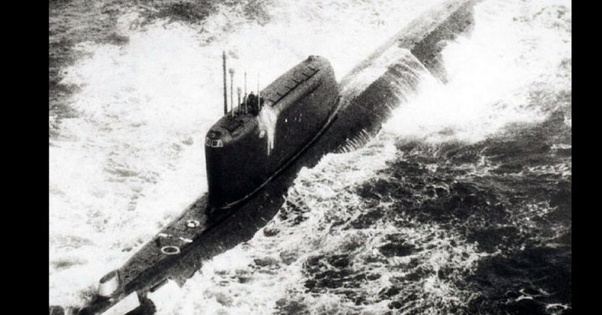
Nuclear ballistic missile submarine meltdown, 1961
August 24, https://www.quora.com/Has a nuclear submarine ever had a meltdown? Laurence Schmidt, Worked at Air Liquide America (1975–2010,
In the early Cold War Era, many Russian nuclear submarines had catastrophic engineering plant failures. These failures were caused by the soviet’s rush to equal the USN in its nuclear submarine ballistic missile program; they were poorly design and constructed, lack safety system redundancy and had haphazardly trained crews. But the crews of these boats were heroic in risking their lives to save their boats in stark life and death emergencies at sea.
One example is the case of the K-19, the first Russian nuclear powered ballistic missile submarine, nicknamed the “Hiroshima” boat, because of her numerous incidences.
On July 4, 1961, while at sea, one of its two nuclear reactors SCRAMMED. The primary cooling system had failed, flooding the reactor spare with radioactive water, and there was no backup system to cool the reactor core. As the reactor rods overheated, the engineering staff try a desperate plan to improvise a cooling system; to tie into the sub’s drinking water system. But it would require several men entering the highly radioactive reactor compartment to weld new piping to pumps and valves. The first jury-rigged attempt failed with 8 crewmen being horribly burnt by the high temperatures and exposed to lethal doses of radiation. They all soon died. After other attempts, the jury-rigged system finally worked, but other crew members too close to the reactor compartment would also soon die. The crew was evacuated to a nearby submarine, and the K-19 was towed back to base for repair. In total, 22 of the crew of 139 died of radiation sickness.
A section of the radiation contaminated hull was replaced, and a new power reactor unit was installed. The two original reactors, including their fuel rods, were dumped in the Kara Sea in 1965. A favorite dumping ground for Russian navy nuclear waste, including damaged nuclear reactors to whole ships.
Did the K-19 reactor meltdown? I would say yes.
Russia aims to dominate the Arctic, with nuclear ice-breakers
Moscow eyes ‘mastering’ Arctic waters with nuclear icebreaker fleet, Daily Sabah, BY FRENCH PRESS AGENCY – AFP, 8 Sept 21,
ABOARD THE ’50 YEARS OF VICTORY’ TRANSPORTATION SEP 08, 2021 11:24 AM GMT+3 s ice cover in the Arctic recedes with climate change, Russia is hard at work to secure supremacy in the warming region with a fleet of giant nuclear-powered icebreakers.
Moscow sees the development of the Arctic as a historic mission and already has huge projects to exploit its natural resources.
Its next big plan is for year-round use of the Northern Sea Route (NSR), a shipping lane through Arctic waters Russia hopes could rival the Suez Canal.
Here are some key facts about Russia’s plans for the Arctic:
Historic ambitions
As an icebreaker called the “50 Years of Victory” left the port of Murmansk for the North Pole this summer, its captain told an Agence France-Presse (AFP) journalist on board that Russia has a special role to play in the Arctic.
“A third of our territory lies above the Arctic Circle. Our ancestors have long mastered frozen waters. We are continuing this successfully,” Dmitry Lobusov said.
President Vladimir Putin has made the development of the Arctic a strategic priority and state companies such as Gazprom Neft, Norilsk Nickel and Rosneft already have major projects in the Arctic to extract oil, gas and minerals.
“The Arctic region has enormous potential,” Russian Deputy Prime Minister Alexander Novak said earlier this month.
“In terms of resources, we’re talking about 15 billion tons of oil and 100 trillion cubic meters of gas. Enough for tens if not hundreds of years,” he said.
Suez alternative
The NSR links the Pacific to the Atlantic through Russian Arctic waters.
It is not currently navigable year-round without the help of icebreakers, though in summer some specialized classes of ships can pass through.
With the ice cover receding, Moscow is aiming for year-round navigation by 2030…………..
Growing fleet
Rosatom, which already has a fleet of five icebreakers and a container ship, is building four more nuclear-powered vessels within the next five years.,,,,,,,,,,,
Environmental worries
Environmental groups have slammed the race for hydrocarbons and the increased presence of nuclear reactors in the Arctic – an already fragile ecosystem dramatically affected by climate change.
Greenpeace has said that “the incident-ridden history of Russian nuclear icebreakers and submarines” should cause alarm.,,,, https://www.dailysabah.com/business/transportation/moscow-eyes-mastering-arctic-waters-with-nuclear-icebreaker-fleet
Nuclear and Climate Clash – Russia’s nuclear weapons centre threatened by wildfires.

The fires have reached the closed city of Sarov, which has been a center for nuclear research since the Soviet era and was the site of the first Soviet atomic bomb’s development.
Today, the research center makes nuclear warheads and is believed to be developing Russia’s strategic missiles, including its highly touted hypersonic arsenal.
Wildfires Near Russia’s Nuclear Research Center Spark State of Emergency https://www.themoscowtimes.com/2021/08/24/wildfires-near-russias-nuclear-research-center-spark-state-of-emergency-a74878 Aug. 24, 2021 Russian authorities have declared an interregional state of emergency as tough-to-contain forest fires threaten the country’s top-secret nuclear weapons research center, Interfax reported Tuesday, citing the emergencies ministry.
Wildfires have raged in the Nizhny Novgorod region and the neighboring republic of Mordovia, both roughly 500 kilometers east of Moscow, since early August.
The fires have reached the closed city of Sarov, which has been a center for nuclear research since the Soviet era and was the site of the first Soviet atomic bomb’s development.
Today, the research center makes nuclear warheads and is believed to be developing Russia’s strategic missiles, including its highly touted hypersonic arsenal.
Firefighters have struggled to contain the fires due to hard-to-reach terrain, dead wood that remained after the 2010 wildfires and poor weather conditions.
Several aircraft from the Emergency Situations Ministry and Defense Ministry have been deployed to fight the fires.
The emergencies ministry told Interfax that two helicopters and a Be-200ES aircraft will be deployed to the site of the fires on Wednesday.
Russia has been hit hard by an unprecedented wildfire season fueled by historic heatwaves and drought conditions exacerbated by climate change, particularly in Siberia.
Russia begins constructing nuclear submarines amid increasing friction with West
Russia begins constructing nuclear submarines amid increasing friction with West, By Guy Taylor– The Washington Times – Monday, August 23, 2021
Russia has begun building new nuclear submarines capable of carrying intercontinental ballistic missiles as part of a wide-reaching military modernization effort amid rising tensions with the United States and other Western powers.
Russian President Vladimir Putin personally announced the new construction, delivering orders via a video call Monday for two ICBM-armed nuclear submarines, as well as two diesel-powered subs and two corvettes at shipyards in Severodvinsk, St. Petersburg and Komsomolsk-on-Amur………..
On a separate front, U.S. military officials sought to draw attention to the increased Russian military activity in the Arctic.
In April, CNN reported that new imagery had revealed a major Russian build-up in the Arctic and claimed Moscow had begun actively testing new weapons in the region, parts of which are freshly ice-free due to changing climate patterns.
Moscow’s apparent goal is to secure its northern coast and dominate a key shipping route from Asia to Europe.
The April CNN report cited weapons experts and Western officials expressing particular concern about one Russian “super-weapon” — the unmanned Poseidon 2M39 torpedo, a stealth projectile powered by a nuclear reactor and intended by Russian designers to sneak past coastal defenses on the seafloor……..
Monday’s ceremony for the new ships was part of the Army-2021 show intended to showcase military might and attract foreign customers for Russia‘s arms industries. The weeklong show features aircraft, tanks, missiles and other weapons.
“Many of our weapons have capabilities that have no analogues in the world, and some will remain unrivaled for a long time to come,” the Russian president said. https://www.washingtontimes.com/news/2021/aug/23/russia-begins-constructing-nuclear-submarines-amid/
Russian nuclear power plants insured for $27 billion
Russian nuclear power plants insured for $27 bln
The insurance case is recognized as loss, damage of insured property as a result of radiation impact, fire, lightning stroke, explosion https://tass.com/economy/1328737MOSCOW, August 22. /TASS/ Rosenergoatom, a member of the electric power division of the Russian state-run nuclear corporation Rosatom, will ensure all domestic nuclear power plants (NPP) against catastrophic risks for 2 trillion rubles ($27 bln). Sogaz became the winning bidder according to minutes of the meeting of the procurement board, posted on the government procurement website.Rosenergoatom will pay the insurance premium of 3 bln rubles ($40.5 mln) to the insurer.
“All the property to be accounted as fixed assets” of Rosenergoatom’s nuclear power plants is registered under the insurance agreement, according to the posted draft agreement.
The insurance case is recognized as loss, damage of insured property as a result of radiation impact, fire, lightning stroke, explosion, crash of piloted aircraft, their parts or cargo, earthquake, volcanic eruption, hurricane, whirlwind, storm, typhoon and other natural disasters, unlawful acts of third parties, terrorism, sabotage, machinery and equipment failures and cyberrisks. The insurance will be valid from September 1, 2021 to August 31, 2023.
Fire, floods ravage Russia, threaten nuclear research site
Fire, floods ravage Russia, threaten nuclear research site https://www.dailysabah.com/world/europe/fire-floods-ravage-russia-threaten-nuclear-research-site, BY GERMAN PRESS AGENCY – DPA MOSCOW EUROPE AUG 08, 2021 AAfter reports of over 250 fires ravaging through Russia, blazes now threaten a nuclear research center in the city of Sarov, prompting a state of emergency, officials said on Sunday.
The danger level was boosted as fires near Nizhny Novgorod are spreading and the change in status makes it easier to mobilize extra firefighting forces, according to city officials.
But it is only one of 250 fires Russia is currently trying to extinguish throughout the country. The Siberian region of Sakha, in the country’s northeast, has been hit particularly hard. Dozens of houses have burned down and residents have been evacuated to safety.
Meanwhile, state TV showed images of cities in the Irkutsk and Krasnoyarsk regions enveloped in smoke.
Authorities said that, nationwide, about 3.5 million hectares are burning – about the combined area of Serbia and Montenegro. Weather experts and Greenpeace spoke of the worst fires in the history of Russian record keeping.
On the flip side, emergency crews in the Amur region, which borders China, are battling floods after heavy rainfalls. About 80 kilometers (about 50 miles) of streets and six bridges are underwater, with about 24 communities cut off from the outside world due to flooding along the Amur River said the regional transportation minister, Alexander Selenin.
If They Chose, Biden and Putin Could Make the World Radically Safer
If They Chose, Biden and Putin Could Make the World Radically Safer, By David Swanson, World BEYOND War, June 11, 2021
The danger of nuclear apocalypse is at an all-time high. Understanding of the damage that would result from a nuclear war is of a greater horror than ever previously understood. The historical record of threats of nuclear weapons use, and of near-misses through misunderstandings, has mushroomed.
The influence of the Israeli model of aquiring nuclear weapons but pretending not to have done so is spreading. The Western militarism that other nations see as justification for their own nuclear armament continues to expand.
Demonization of Russia in U.S. politics and media has reached a new level. Our luck will not hold out forever. Much of the world has banned the possession of nuclear weapons. Presidents Biden and Putin could very easily make the world dramatically safer and redirect massive resources into benefitting humanity and the earth, if they were to choose to abolish nuclear weapons.
The American Committee for U.S.-Russia Accord has made these three excellent proposals:…….. https://worldbeyondwar.org/if-they-chose-biden-and-putin-could-make-the-world-radically-safer/
Dialogue between Russia and USA must include subject of offensive weapons in outer space – says Russian Foreign Minister
US plans to deploy arms in space should be taken into account in bilateral dialogue-LavrovAmericans are working on a program for the deployment of offensive weapons in outer space in the context of the global missile defense system, Russian Foreign Minister said https://tass.com/politics/1311759
VLADIVOSTOK, July 8. /TASS/. The Russian-US dialogue on strategic stability should reckon with the US program for the deployment of offensive weapons in outer space, Russian Foreign Minister Sergey Lavrov said on Thursday.
“Naturally, when we speak about the necessity to discuss strategic stability in all of its dimensions, we mean all the factors influencing this strategic stability. They include nuclear weapons, non-nuclear strategic weapons, offensive and defensive strategic systems, and, of course, we cannot ignore the fact that the Americans are working on a program for the deployment of offensive weapons in outer space in the context of the global missile defense system,” he said in a lecture he delivered at the Far Eastern Federal University..
The much-awaited Russian-American summit took place in the Swiss capital city of Geneva on June 16. Presidents Vladimir Putin of Russia and Joe Biden of the United States discussed the current state of and prospects for further development of bilateral relations, issues of strategic stability and international matters. The leaders said in a joint statement that the sides planned to launch a comprehensive bilateral dialogue on strategic stability.
 |
Russia tests giant nuclear submarine equipped with secret weapons
,
9 News By Richard Wood • Senior Journalist Jun 29, 2021, Russia has unveiled a nuclear submarine armed with advanced weapons that’s believed to be the largest built anywhere in the world over the last 30 years.The Belgorod started sea trials on the weekend amid rising tensions between Russia and NATO navies, reports Naval News.The 184 metre-long nuclear-powered submarine is armed with six intercontinental Poseidon torpedoes but can also act as a mothership for smaller submarines.The torpedoes can carry nuclear warheads and have an unlimited range.With a speed of about 70 knots and capable of reaching depths of 1000 metres, they cannot be countered with current weapons, reports say…….https://www.9news.com.au/world/russia-trials-biggest-nuclear-submarine-built-in-thirty-years-secret-weapons/3d4e5cc3-d184-494a-b187-29465131e036
Russia unveils largest nuclear submarine built in 30 years
Russia unveils largest nuclear submarine built in 30 years https://www.tvnz.co.nz/one-news/world/russia-unveils-largest-nuclear-submarine-built-in-30-years Russia has unveiled what’s believed to be its largest submarine built in 30 years amid a tense standoff with Britain in the Black Sea. The Belgorod sailed for the first time today, just days after the Russian military assets fired warning shots at a British Royal Navy destroyer after it came too close to what Moscow has claimed is its territorial waters near Crimea last week. Bombs were also dropped by jets near the vessel.
While the nuclear submarine’s specifications have not been revealed, the Belgorod will be able to launch nuclear strikes, according to the Daily Telegraph.
It will also act as a mothership for smaller submarines.
Russia, China Pledge to Not Use Nuclear Weapons First, Avoid Firing Missiles at Each Other
Russia, China Pledge to Not Use Nuclear Weapons First, Avoid Firing Missiles at Each Other , NewsWeek, BY JENNI FINK ON 6/28/21 Russia and China reaffirmed their friendship treaty amid increasing concerns about their growing relationship and the two countries continued a vow not to fire strategic missiles at each other.
Russia President Vladimir Putin and Chinese President Xi Jinping extended the 20-year Treaty of Good-Neighborliness and Friendly Cooperation, a document Putin credited with taking their relationship to “unprecedented height.” An extension that’s set to last for five years, it outlines that both countries will support each others’ right to defend their “national unity” and territories.
Article 2 has both countries promising to using “peaceful means” to resolve their differences, not the use of force, threat of force or economic pressures.
The contracting parties reaffirm their commitment that they will not be the first to use nuclear weapons against each other nor target strategic nuclear missiles against each other,” the treaty states.
Russia and China have grown closer as their relationships with the United States has deteriorated. Although Putin’s summit with President Joe Biden was seen as a positive step, America and Russia failed to see eye-to-eye on a number of topics, but they agreed to work together on the issue of nuclear weapons.
In a joint statement, the two countries agreed to “embark” on dialogue that would “lay the groundwork” for future arms control and risk reduction measures, acknowledging that “nuclear war cannot be won and must never be fought.”
One of two biggest nuclear powers, Putin’s endorsement of Russia’s nuclear deterrent policy raised concerns. The policy allows him to use nuclear weapons in response to a strike with conventional weapons, or if Russia gets “reliable information” about the launch of an attack against its territory or allies.
The strategy is “purely defensive,” according to General of the Army Valery Gerasimov, chief of the General Staff of the Armed Forces, but he defended Russia’s ability to use nuclear weapons at the Moscow International Security Conference last week……. https://www.newsweek.com/russia-china-pledge-not-use-nuclear-weapons-first-avoid-firing-missiles-each-other-1604865
Biden and Putin agree: ‘Nuclear war cannot be won and must never be fought’
Biden and Putin agree: ‘Nuclear war cannot be won and must never be fought’ DW, 17 June 21
US President Joe Biden and Russian President Vladimir Putin have concluded a high-stakes summit aimed at cooperation but dominated by deep disagreements.
US President Joe Biden and his Russian counterpart Vladimir Putin have ended their highly anticipated summit in Geneva.
The leaders’ first in-person meeting since Biden became president took place at a lakeside villa amid soaring tensions between their two countries.
As talks ended after less than the five hours either side thought they would need, Biden gave a thumbs up. Members of the US team said the meeting had been “quite successful.”
After the meeting, the two sides released a joint statement on one of the main topics of discussion, nuclear proliferation. The statement read, “Nuclear war cannot be won and must never be fought.”
DW Moscow correspondent Emily Sherwin said, “Biden managed to walk a fine line with Putin,” recognizing Russia’s desire to be seen as a major geopolitical power.
The joint US-Russian statement said progress on shared goals could be achieved, “even in periods of tension,” going on to state, “The United States and Russia will embark together on an integrated bilateral Strategic Stability Dialogue in the near future that will be deliberate and robust.”
The statement added that the countries “seek to lay the groundwork for future arms control and risk reduction measures.” …………………… https://www.dw.com/en/biden-and-putin-agree-nuclear-war-cannot-be-won-and-must-never-be-fought/a-57921072
Collaboration between Russia and Europe finally cleans up the most dangerous nuclear ship in the Arctic.
After 27 Years, Lepse No Longer Poses a Nuclear Threat to the Arctic, High North News, PETER B. DANILOV 17 June 21, Last week, the Russian service ship Serebryanka delivered the last spent-fuel bundles from the Lepse floating maintenance base to an Atomflot storage site in Murmansk, completing the final stage of securing the nuclear waste……. To ensure the dismantling of the Lepse floating maintenance base, it was necessary to specially develop new technologies and equipment and make innovative decisions,” said FSUE Atomflot Director General Mustafa Kashka.
In July 2020, the Lepse floating maintenance base’s main batch of spent nuclear fuel was unloaded at the Nerpa shipyard. A total of 620 spent-fuel bundles were extracted and unloaded.
Lepse was regarded as the most dangerous nuclear vessel in the north and the Norwegian environmental NGO Bellona began the work of securing the spent nuclear fuel onboard the vessel in 1994.
……….. The project to dismantle and dispose of the Lepse Floating Maintenance Base is multilaterally implemented.
In 1996, the project was included in the EU’s TACIS program (Technical Assistance to the Commonwealth of Independent States), which involved the allocation of funds for the inspection of the state of spent nuclear fuel.
Since 2008, the project has been carried out in the framework of a Grant Agreement between the European Bank for Reconstruction and Development (EBRD), Rosatom, and JSC NFC Logistics Centre (the project’s customer and coordinator).
The EBRD has provided 54 million euros from the Northern Dimension Environmental Partnership Fund (NDEP). https://www.highnorthnews.com/en/after-27-years-lepse-no-longer-poses-nuclear-threat-arctic
Russia’s Approach to Nuclear Power in Outer Space
Russia’s Approach to Nuclear Power in Outer Space
Jamestown Foundation, Eurasia Daily Monitor Volume: 18 Issue: 92 By: Pavel Luzinune 9, 2021
Russia has been conducting research and development (R&D) on using nuclear power in outer space for years. On May 22, Alexander Bloshenko, executive director for advanced programs and science of Roscosmos, announced that the first mission of the nuclear-powered spacecraft, also known as the transport and energy module (TEM), is scheduled for 2030 (TASS, May 22). A week before this announcement, there was a deliberate leak from the Keldysh Center, a Roscosmos subsidiary entity, that this nuclear-powered spacecraft might be used for military purposes along with civil ones (RIA Novosti, May 13). These verbal interventions almost coincided with the hearings in the US Congress on the NASA budget request that proposes $585 million for nuclear thermal propulsion technology in FY2022 and ongoing American efforts in this field (SpaceNews, May 19; Physics Today, May 28). That means the Russian program on space nuclear power systems has not only technological but also geopolitical goals.
The current Russian program has a Soviet background. The USSR launched 33 military reconnaissance and targeting spacecraft with nuclear reactors into low-Earth orbit from 1969 to 1988. Most of them used thermoelectric nuclear power plants “Buk,” and the last two spacecraft used more advanced thermal electron emission NPPs “Topaz” with 4.5–5.5 kW of electric power. The Soviet Union also developed the prototypes of nuclear rocket engines, but the project was closed in 1986. In the early 1990s, a Russian-American project aimed to develop the “Topaz” reactors further, but was canceled by 1995. In 2000–2007, Russia tried to cooperate with China in this field (Kukharkin, 2012).
Despite long-term economic decline, Moscow has also tried to continue its independent efforts in space nuclear power systems since 1998, and during the presidency of Dmitry Medvedev, these efforts were proclaimed among the Kremlin’s key priorities (Pravo.gov.ru, February 2, 1998; RG.ru, November 13, 2009).
The program’s budget of 17 billion rubles for the period 2010–2018 was divided between Roscosmos (9.8 billion rubles) and Rosatom (7.2 billion rubles), totaling $560 million according to the exchange rates of 2010 (RG.ru, October 3, 2012). However, the actual spending was smaller. In 2010, only 500 million rubles ($16.5 million) were assigned for the purpose (Roscosmos, February 10, 2010). During the following decade, the total spending has reached almost 10 billion rubles or $213 million according to open data on federal budget funds and procurements released by Roscosmos and Rosatom (Vesti.ru, January 19, 2011; Interfax, October 12, 2020; Zakupki.gov.ru, 2013–2021). The current results of these efforts are less than initially planned………..
In comparison with NASA that tries to design a 10 kW space nuclear reactor with a Stirling engine intended to increase efficiency, the thermal electron emission remains the central paradigm of Russia’s R&Ds and the idea of using engines or turbines together with space nuclear reactors still remains theoretical (NASA, May 2, 2018; Issledovaniya Naukograda, July–September 2017). It is doubtful that Russia will develop the space nuclear power system with 1 MW of electric power and ion thrusters with more power in the foreseeable future. Still, Moscow definitely will try to convert existing results into some advance in outer space and foreign policy.
Along with a significant deficiency in other dimensions of Russia’s space activity and the country’s overall economic weakness, these problems prompt the Kremlin to look for an ace up its sleeve. While there is still a long way to go to develop nuclear reactors for space exploration missions, Russian industry and authorities are seeking to apply nuclear power for military satellites (KB Arsenal, September 1, 2020). Such spacecraft may be used for radar reconnaissance and electronic warfare (jamming) and be deployed to low, medium or geosynchronous orbits. However, there have not been any flight tests or technological demonstrations of such a satellite yet. This means Moscow will not be ready to deploy these satellites any time soon……… https://jamestown.org/program/russias-approach-to-nuclear-power-in-outer-space/
1 This Month


9 September – online public forum THREE MILE ISLAND:
7-8:30 PM ET,
Legacy, resistance to reopening – https://us02web.zoom.us/webinar/register/WN_-LGJU4j6TD2Hgf0rpgAr1A#/registration
The nuclear industry and the U.S. Nuclear Regulatory Commission are threatening to restart Pennsylvania’s permanently closed and decommissioning Three Mile Island Unit 1 nuclear power station. Three expert speakers will present the resistance to this dangerous misadventure in a webinar hosted by the Clamshell Alliance, Beyond Nuclear and Massachusetts Peace Action.

No Nuclear in Cwm Llynfi! Stop the nuclear power station near Maesteg.
To see nuclear-related stories in greater depth and intensity – go to https://nuclearinformation.wordpress.com
-
Archives
- September 2026 (127)
- August 2026 (330)
- July 2026 (355)
- June 2026 (287)
- May 2026 (306)
- April 2026 (356)
- March 2026 (251)
- February 2026 (267)
- January 2026 (308)
- December 2025 (358)
- November 2025 (359)
- October 2025 (375)
-
Categories
- 1
- 1 NUCLEAR ISSUES
- business and costs
- climate change
- culture and arts
- ENERGY
- environment
- health
- history
- indigenous issues
- Legal
- marketing of nuclear
- media
- opposition to nuclear
- PERSONAL STORIES
- politics
- politics international
- Religion and ethics
- safety
- secrets,lies and civil liberties
- spinbuster
- technology
- Uranium
- wastes
- weapons and war
- Women
- 2 WORLD
- ACTION
- AFRICA
- Atrocities
- AUSTRALIA
- Christina's notes
- Christina's themes
- culture and arts
- Events
- Fuk 2022
- Fuk 2023
- Fukushima 2017
- Fukushima 2018
- fukushima 2019
- Fukushima 2020
- Fukushima 2021
- general
- global warming
- Humour (God we need it)
- Nuclear
- RARE EARTHS
- Reference
- resources – print
- Resources -audiovicual
- Weekly Newsletter
- World
- World Nuclear
- YouTube
-
RSS
Entries RSS
Comments RSS
 nuclear-news