Pentagon sees no change in Russia’s strategic nuclear force posture
By Reuters, May 7, 2024
WASHINGTON, – The Pentagon has not seen a change to Russia’s disposition of its strategic nuclear forces, it said on Monday, despite what it called “irresponsible rhetoric” from Moscow detailing plans for exercises involving the deployment of tactical nuclear weapons.
Russia said on Monday it would hold military drills that will include practicing the deployment of tactical nuclear weapons after what Moscow said were threats from France, Britain and the United States. It said the exercises were ordered by Russian President Vladimir Putin.
Russia said on Monday it would hold military drills that will include practicing the deployment of tactical nuclear weapons after what Moscow said were threats from France, Britain and the United States. It said the exercises were ordered by Russian President Vladimir Putin
Missile forces in the Southern Military District, aviation and the navy will take part, the defense ministry said.
“We’ve not seen any change in their strategic force posture. Obviously, we’ll continue to monitor,” said U.S. Air Force Major General Patrick Ryder, a Pentagon spokesperson.
The exercise of what Russia calls its non-strategic nuclear forces were aimed at ensuring Russia’s territorial integrity and sovereignty, its defense ministry said.
Russia’s foreign ministry said the drills also aimed to cool down “hotheads” in the West, who Moscow accused of pushing for a direct military confrontation between the U.S.-led NATO military alliance and Russia…………………………. https://www.reuters.com/world/us/pentagon-sees-no-change-russias-strategic-nuclear-force-posture-2024-05-06/
Putin orders tactical nuclear weapons drills
SOTT, Mon, 06 May 2024
An exercise to check the military’s ability to use smaller-range systems was announced by the Defense Ministry on Monday
Russia will test its ability to deploy tactical nuclear weapons, the Defense Ministry announced on Monday. The drill will be conducted “in the near future” and was ordered by President Vladimir Putin, the statement said.
Missile forces of the Southern Military District will be directly involved in the exercise. It will also require the participation of military aircraft and the Russian Navy, the ministry said.
The goal of the exercise is to iron out “the practical aspects of the preparation and deployment of non-strategic nuclear weapons,” it added.
The military cited “provocative statements and threats against Russia by certain Western officials” as the reason for the drill. The troops will confirm that they can “ensure unconditional territorial integrity and sovereignty” of the nation, it added.
Moscow has a wide range of nuclear-capable weapons, from long-range intercontinental ballistic missiles to smaller-range tactical nukes. Amid the Ukraine conflict, senior Russian officials, including Putin, have stated that the country’s nuclear doctrine allows the use of these weapons when the existence of the nation is at stake.
The US and its allies have accused Moscow of nuclear saber-rattling. Putin said in March that at no point in the conflict has the situation required such a radical move as a nuclear strike.
Comment: From the same source:
28 Apr, 2024
Macron calls for EU nuclear force
more https://www.sott.net/article/491187-Putin-orders-tactical-nuclear-weapons-drills
A Closer Look at Two Operational Small Modular Reactor Designs
There are literally dozens of small modular reactor (SMR) and microreactor designs being developed by different companies around the world, and some of the work has been going on for decades. Yet, only two designs have actually been built and put into commercial operation. POWER takes a closer look at both of them.
Power, by Aaron Larson 1 May 24
Many nuclear power supporters have long thought small modular reactors (SMRs) would revolutionize the industry. Advocates expect SMRs to shorten construction schedules and bring costs down through modularization and factory construction. They often cite numerous other benefits that make SMRs seem like no-brainers, and yet, only two SMR designs have ever been built and placed in commercial operation.
The International Atomic Energy Agency (IAEA) publishes booklets biennially on the status of SMR technology. In the IAEA’s most recent booklet, it notes 25 land-based water-cooled SMRs and another eight marine-based water-cooled designs are under development globally. It also lists 17 high-temperature gas-cooled SMRs, eight liquid-metal-cooled fast-neutron-spectrum SMRs, 13 molten-salt SMRs, and 12 microreactors. If you do the math, that’s 83 SMR designs under development, but only the KLT-40S and HTR-PM are actually operational.
KLT-40S
The KLT-40S is a pressurized water reactor (PWR) that was developed in Russia. It is an advanced version of the KLT-40 reactor, which has been used in nuclear-powered icebreakers. The first KLT-40S units, and, to date, the only two of these units to enter commercial operation, were deployed in the Akademik Lomonosov—the world’s first purpose-built floating nuclear power plant (FNPP, Figure 1 on original).
Main Design Features.………………………………………………………………………………………………………….
Deployment Details.…………………………….
Construction and testing of the FPU was completed in 2017 at the Baltic shipyard. In May 2018, the vessel was towed 4,000 kilometers (km), around Finland and Sweden, to Murmansk, completing the first leg of its journey to Pevek. Fuel loading was completed in Murmansk in October 2018. First criticality was achieved in November 2018, then in August 2019, the vessel embarked on the second leg of its journey—a distance of 4,700 km—towed by two tugboats to the Arctic port town of Pevek, where it was connected to the grid on Dec. 19, 2019. Akademik Lomonosov was fully commissioned on May 22, 2020, and it currently provides heat to the town of Pevek and supplies electricity to the regional Chaun-Bilibino power system.
HTR-PM
On Dec. 6, 2023, China National Nuclear Corp. announced it had commenced commercial operation of the high-temperature gas-cooled modular pebble bed (HTR-PM) reactor demonstrator. The HTR-PM project was constructed at a site in Rongcheng, Shandong Province, roughly midway between Beijing and Shanghai in eastern China…………………………………
Main Design Features.…………………………………………………………………………………………………..
Deployment Details.……………………………………………………………………. The civil work for the nuclear island buildings was completed in 2016 with the first of two reactor pressure vessels installed in March that year. The fuel plant reached its expected production capacity in 2017. Startup commissioning and testing of the primary circuit were finished by the end of 2020. The HTR-PM achieved first criticality in September 2021, and was ultimately grid connected on Dec. 20, 2021.
Spotty Results at Best
While it is laudable that these SMRs—the KLT-40S and HTR-PM—have been placed in commercial operation, their performance since entering service has come under fire. In The World Nuclear Industry Status Report 2023 (WNISR), a Mycle Schneider Consulting Project, co-funded by the German Federal Ministry for the Environment, Nature Conservation, Nuclear Safety, and Consumer Protection, it says both designs have operated at low capacity factors recently.
Concerning the Chinese HTR-PM, the WNISR says, “Between January and December 2022, the reactors operated for only 27 hours out of a possible maximum of 8,760 hours. In the subsequent three months, they seem to have operated at a load factor of around 10 percent.” The Russian units’ performance has been nearly as dismal. “The operating records of the two KLT-40S reactors have been quite poor. According to the IAEA’s PRIS [Power Reactor Information System] database, the two reactors had load factors of just 26.4 and 30.5 percent respectively in 2022, and lifetime load factors of just 34 and 22.4 percent. The reasons for the mediocre power-generation performance remain unclear,” the report says.
Meanwhile, the promises of shortened timelines and lower costs were not borne out by these projects. “The experience so far in constructing these two SMRs as well as estimates for reactor designs like NuScale’s SMR show that these designs are also subject to the historical pattern of cost escalations and time overruns. Those cost escalations do make it even less likely that SMRs will become commercialized, as the collapse of the Carbon Free Power Project involving NuScale reactors in the United States illustrated,” the WNISR says………….. https://www.powermag.com/a-closer-look-at-two-operational-small-modular-reactor-designs/
Nuclear expert fears flooded radioactive dump sites in Siberia can threaten Arctic Ocean
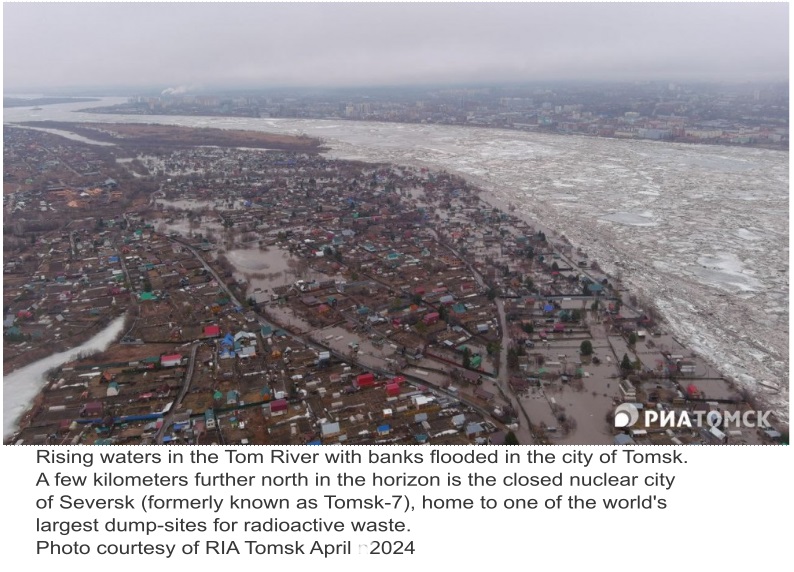
Floodwaters in Tomsk region threatens to submerge the river banks in Seversk where highly radioactive liquid waste from the Soviet Union’s nuclear weapons program for decades were injected into two unprotected underground reservoirs.
Water level on Monday continues to rise in the Tom River in Western Siberia.
The record floods are among the worst ever in the region and local emergency services help in evacuation of people living near tributaries of the Ob river system, including Tobol, Irtysh and Tom rivers.
Thousands of houses and tens of thousands of people live in the emergency zones, according to Kremlin information platform RIA Novosti. High snow falls in winter combined with swiftly rising spring temperatures and heavy rains are the reasons for the current extreme flood, Reuters reports.
Drone photos by RIA Tomsk shows how the swelling Tom River is inundating villages on the westside river banks. According to NEXTA news channel, water in Tom River has risen by nearly a meter over the day.
On the east side, a short 15 kilometers north of the city of Tomsk, is the closed city of Seversk. Until 1992, the secret city was code-named Tomsk-7 and was home to one of three production facilities for weapons-grade plutonium for the Soviet Union’s nuclear weapons program.
“There ain’t one single public message that Rosatom is monitoring the situation, that they have the situation under control,” says Aleksandr Nikitin, an exile nuclear safety expert working for the environmental foundation Bellona.
Nikitin was until the all-out war against Ukraine a member of Rosatom’s Public Council. The Council involved civic organizations and scientists in Russia and was aimed at raising public awareness of Rosatom’s core operations
“It’s surprising that there aren’t even simple statements like we have everything under control,” Nikitin adds.
According to the World Nuclear Association, the Siberian Chemical Combine in Seversk had five plutonium production reactors, an uranium enrichment plant and a processing plant for plutonium warheads. Although shut down, enormous amount of nuclear waste is still on site.
Most challenging are the liquid radioactive waste, both on the surface and pumped down in deep-well injections. The nuclear dump is likely Russia’s largest, by IAEA estimated to be 70 million cubic meters.
Widespread contamination in an area up to 28 kilometers came after a concrete cover blew off a reaction vessel at the plutonium extraction facility in 1993. The International Atomic Energy Agency (IAEA) listed it as a major radiological accident.
In 2000, a joint U.S.-Russian study found dangerous levels of radioactivity flowing into Russia’s Tom River from the Siberian Nuclear Combine.
Critics crumbled
Local environmentalists in Tomsk filed a lawsuit against the company in the late 1990s in an attempt to revoke a dumping permit for highly radioactive liquid waste down under. They feared for the city’s drinking water.
In Putin’s Russia, critical voices are gone. Environmental groups like Greenpeace, World Wide Fund for Nature, and Bellona are all listed as undesirable by law.
TV2 in Tomsk, known for its independent journalism and free debate since the early years after the breakup of the Soviet Union, got its broadcast shut down in 2014. After the start of the full-scale war in 2022, the reporters closed their YouTube producing newsroom and left Russia.
Aleksandr Nikitin is worried radioactivity could leak out to the river system under the current flood, but that information will not come before it is too late.
“Putin doesn’t give a fuck about these floods and other shitty lives of people in Russia.., he has a war and geopolitical goals of fighting the damned West,” Nikitin says.
For Rosatom, he adds, the logic is simple: “.. if you say that everything is under control, and then something happens, then you will have to answer for it.”
Nikitin says Rosatom is sure that in any case it will not bear any responsibility.
“Rosatom is today Putin’s “favorite child,” he explains.
It was Lavrenty Beria, director of Joseph Stalin’s secret police, who lead the establishment of the first plutonium production facilities east of the Ural mountains in the late 1940ties, early 1950ties. KGB and the Soviet nuclear establishment walked hand-in-hand for decades. What nowadays is Ulitsa Pervomayskaya (May 1st Street) in Seversk, was previously named Ulitsa Beria.
Arctic Ocean
A major concern for Aleksandr Nikitin and Bellona is that no one can exclude that leakages from a possible overflowed radioactive waste site could reach the Arctic Ocean.
Tom River is a tributary of the Ob which flows out in the Ob Bay and Kara Sea above the Arctic Circle.
During the years 1948-56, liquid radioactive waste from the Mayak reprocessing plant north of Chelyabinsk was discharged directly into the nearby river Techa which is connected to the river system Iset, Tobol, Irtysh and Ob. Especially Strontium-90, but also other isotopes, were carried by the water more than 2,000 kilometers downstream and measured in the Kara Sea, first time in 1951.
A joint Norwegian-Russian expedition to the Kara Sea in 1994 found traces of the same radionuclides, although in lower levels.
“Everything is now possible,” says Aleksandr Nikitin when seeing the photos of the flooded riverbanks of the Tom River.
“It all depends on the scale of leakages.”
“I’m sure the Siberian Chemical Combine sit quietly and wait. Hoping for it all to go over,” Nikitin says to the Barents Observer.
Increased activity at nuclear test site in northern Russia: expert
Active construction has been seen at a nuclear test site in northern Russia since last year, raising the possibility that Moscow is preparing for a fresh nuclear test, a Japanese expert on the Russian military said Monday.
Citing analysis of satellite images, Yu Koizumi, associate professor at the University of Tokyo, said a large-scale facility presumed to be related to nuclear testing appears to be almost complete at the site on the Novaya Zemlya archipelago in the Arctic Sea.
Koizumi called the activities exceptional and said Russia could be preparing a subcritical nuclear test, which does not create an explosion.
He believes the move is “to intimidate European countries and the United States” over their support for Ukraine, which is at war with Russia.
Novaya Zemlya was the site of the Soviet Union’s around 130 nuclear tests, including in the atmosphere, underground and undersea, between 1955 and 1990.
Russia continued with subcritical nuclear tests on the island to enhance nuclear weapons and assess their capabilities, with the latest conducted in 2004.
Satellite images by space tech company Maxar Technologies Inc. and Earth imaging firm Planet Labs PBC, both of the United States, showed that works to construct the large facility got fully underway around last summer at the test site on the southern part of Novaya Zemlya, according to Koizumi.
The building, some 200 meters in length, is around double the size of other facilities in the area and was nearly complete in the Maxar images taken in early February, Koizumi said.
“It is highly likely that the facility was newly built for a (nuclear) test,” he said, adding a pile-up of materials around an airport suggests that the facility could be further enlarged.
At the same time, the images did not show any direct evidence of a nuclear test, Koizumi said, citing snow covering an entrance of a tunnel located around 3 kilometers from the nuclear site in the mountains, which could be used for a subcritical nuclear experiment.
In November last year, Russia revoked its ratification of the Comprehensive Nuclear Test Ban Treaty, which bans all nuclear explosions, whether for military or peaceful purposes, in a move seen as its de facto exit from the treaty.
“We should seriously worry about Russia playing the card of a nuclear test,” Koizumi said.
Russia declares ‘state of emergency’ after radiation detected in eastern city of Khabarovsk
Authorities in Russia’s far eastern city of Khabarovsk have declared a state of emergency in an area where a “radiation source” was found, TASS news agency reported on Friday, adding that elevated radiation levels were detected near a power pylon about 2.5 km (1.5 miles) from residential buildings.
Officials have not provided an explanation for the leak but have confirmed its containment and transfer to a secure radioactive waste storage site. A state of emergency is to persist for a minimum of three additional days as law enforcement continues investigations into the incident.
Reports indicate a delay of approximately one week before authorities responded to the leak. Video footage has surfaced depicting an individual in a nuclear protective mask, carrying a radiation reader, which displayed escalating readings as he traversed a designated “waste dump” area.
No one had been injured or exposed to radiation and “there is no threat to the health of citizens”, TASS quoted the local branch of Russia’s consumer safety watchdog as saying.
It said radiation levels would be monitored for the next two days and the source of the radiation would be investigated.
Russia’s state-owned energy company Rosatom is drumming up new nuclear business in Africa
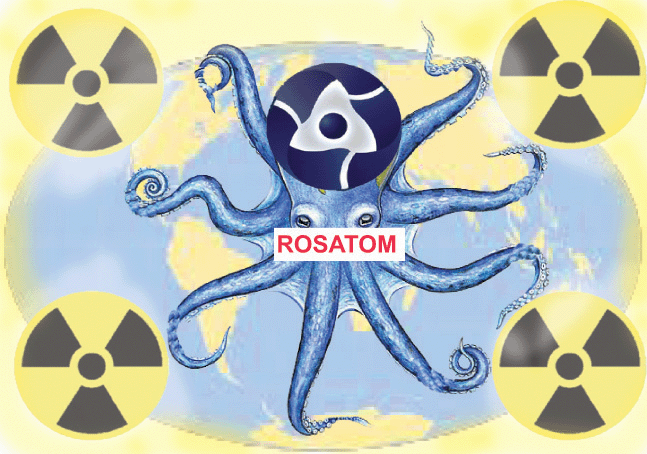
As the sabre-rattling over possible sanctions against Russia’s nuclear
industry intensifies, the country’s state-owned energy company Rosatom is
busily drumming up new business in Africa.
Last month, speaking at the
African Energy Indaba in Cape Town, Rosatom’s chief executive for central
and southern Africa, Ryan Collyer, urged the continent’s most
industrialised country, South Africa, to press go on its nuclear programme
to ensure “stable, affordable and environmentally friendly” power. It
was a message that resonated with South Africa’s energy minister Gwede
Mantashe, who said the country, which has been battling electricity
blackouts for the past 16 years, expects nuclear energy to be part of the
fix.
“The proposal to develop 2,500MW of nuclear power is not a dream —
there’s already an agreement, and the procurement capacity is being
worked on. We’re going to be investing in that capacity,” he told the
conference. While nuclear power provides about 10 per cent of electricity
generated globally, according to the Paris-based International Energy
Agency, the Koeberg plant in Cape Town is the only nuclear power station on
the African continent. Yet a number of African countries have announced
plans to build nuclear power plants in the past year — including Uganda,
Rwanda and Kenya.
FT 2nd April 2024
https://www.ft.com/content/4f1d0d1d-3a98-4b03-8771-54d88ed0a023
UKRAINIAN WAR PEACE TALKS: To Be or Not To Be?
Russian and Eurasian Politics by GORDONHAHN, April 2, 2024
Despite Western media reports over recent months and weeks regarding supposed secret talks between Westerners and Russians to settle or at least stop the NATO-Russia Ukrainian War, there are no such talks ongoing. But this does not mean that they cannot emerge.
First we heard of supposedly secret talks between Ukrainian Armed Forces General Staff Chief Gen. Valeriy Zaluzhniy and Russian General Staff Chief Gen. Valerii Gerasimov. Then there were Russian President Vladimir Putin’s alleged ‘signals’ indicating that he seeks negotiations. In reality, there are no peace talks underway between Russia, on the one hand, and the West and/or Ukraine, on the other hand. There are no signals that Putin is seeking negotiations. Although he is willing to hold talks, he expects that any negotiations be requested first by the West and/or Ukrainian President Volodomyr Zelenskiy. The New York Times piece about ‘Putin’s signals’ published just before Christmas was nothing more than another attempt to portray Russia and Putin as ‘losing the war’ and desperate for an exit ramp, and it was nothing less than a contribution in support of US President Joseph Biden’s desperate re-election prospects as the American presidential campaign is about to kickoff.
Nothing could be further from the truth than the tale of Russian desperation told since the war began. This is most evident now for anyone following the recent course of events on the front; a front that is collapsing on the Ukrainian side. In Zelenskiy’s eternal PR mode, the Ukrainian front’s collapse will be framed as an orderly retreat to new defense lines and part of a new defensive strategy replacing the offensive one that so ignominiously failed with this summer’s predictably disastrous counteroffensive. Nevertheless, the hard, cold realities of the summer campaign’s defeat following the fall of the strategic hub of Bakhmut (Artyomevsk) and preceding the fall of the heavily fortified town of Avdiivka (Avdeevka) are trumping Zelenskiy’s simulated reality productions both in the West and Ukraine ever so gradually.
As Russian forces slowly but but surely advance westward across the entire front ranging from Zaporozhe (and perhaps soon Kherson) to Kharkov — an advance that is likely to accelerate in spring and summer, the Kremlin has no burning need to negotiate. To be sure, Moscow would prefer ending the war, but on its own terms. The longer Washington, Brussels, and Kiev refuse negotiations, the more fluid the situation becomes and the less likely Moscow will be easy to negotiate with before its forces reach the Dnieper River. Some Russian officials are trumpeting a hard line. For example, a month ago Russian ambassador to the UN Dmitri Polyanskiy said that Kiev’s chance for talks had passed and now only capitulation talks are possible (https://t.me/RusskajaIdea/5265 and https://t.me/Slavyangrad/79622).
But Putin appears open to talks. However, he certainly is not desperate for them and may prefer holding off until more Ukrainian military force and territory is attritted. He has indicated numerous times since the war began that he is open to talks…………………..
The lack of talks is best explained by the West’s and Ukraine’s unwillingness to negotiate. In fact, since December 2022 Ukrainian law forbids Ukrainians from conducting peace talks with Putin’s Russia. The U.S. has apparently held to its proclaimed policy of ‘no talks about Ukraine without Ukraine’ at least in terms of any peace negotiations, though the US’s CIA chief, William Burns, and his Russian counterpart, SVR chief Sergei Narynskii met a few months back for discussions on undisclosed issues.
Therefore, Zelenskiy consistently rejects talks until such time as Russia has withdrawn all of its troops beyond Ukraine’s 1991 borders—the core of his supposed ‘peace plan.’ Obviously, without defeat on the battlefield Russia will not give up Crimea and the four oblasts it now considers to be its sovereign territory. Recently, Zelenskiy rejected negotiations out of hand. Several weeks ago, visiting Turkey, Zelenskiy spurned Turkish President Tayyip Recep Erdogan’s entreaties to start talks with Moscow under Ankara’s mediation…………………………………………………………………………. https://gordonhahn.com/2024/04/02/ukrainian-war-peace-talks-to-be-or-not-to-be/—
Putin says Russia will not attack NATO, but F-16s will be shot down in Ukraine
By Reuters, March 28, 2024, https://www.reuters.com/world/europe/putin-tells-pilots-f16s-can-carry-nuclear-weapons-they-wont-change-things-2024-03-27/
- Summary
- Russia will not attack NATO, Putin says
- Putin says Russia will not attack Poland, Baltic states
- Putin says Western F-16s will be shot down in Ukraine
MOSCOW, March 28 (Reuters) – Russia has no designs on any NATO country and will not attack Poland, the Baltic states or the Czech Republic but if the West supplies F-16 fighters to Ukraine then they will be shot down by Russian forces, President Vladimir Putin said late on Wednesday.
Russia’s invasion of Ukraine in February 2022 has triggered the deepest crisis in Russia’s relations with the West since the 1962 Cuban Missile Crisis.
Speaking to Russian air force pilots, Putin said the U.S.-led military alliance had expanded eastwards towards Russia since the 1991 fall of the Soviet Union but that Moscow had no plans to attack a NATO state.
“We have no aggressive intentions towards these states,” Putin said, according to a Kremlin transcript released on Thursday.
“The idea that we will attack some other country – Poland, the Baltic States, and the Czechs are also being scared – is complete nonsense. It’s just drivel.”
The Kremlin, which accuses the U.S. of fighting against Russia by supporting Ukraine with money, weapons and intelligence, says relations with Washington have probably never been worse.
Asked about F-16 fighters which the West has promised to send to Ukraine, Putin said such aircraft would not change the situation in Ukraine.
“If they supply F-16s, and they are talking about this and are apparently training pilots, this will not change the situation on the battlefield,” Putin said.
“And we will destroy the aircraft just as we destroy today tanks, armoured vehicles and other equipment, including multiple rocket launchers.”
Putin said that F-16 could also carry nuclear weapons.
“Of course, if they will be used from airfields in third countries, they become for us legitimate targets, wherever they might be located,” Putin said.
Putin’s remarks followed comments earlier in the day by Ukrainian Foreign Minister Dmytro Kuleba that the aircraft should arrive in Ukraine in the coming months.
Ukraine, now more than two years into a full-fledged war against Russia, has sought F-16s for many months.
Belgium, Denmark, Norway and the Netherlands are among countries which have pledged to donate F-16s. A coalition of countries has promised to help train Ukrainian pilots in their use.
Man blames nuclear meltdown for deformities in city more radioactive than Chernobyl

Ozersk – code named City 40 – was the birthplace of the Soviet nuclear weapons programme, now it’s one of the most contaminated places on the planet with residents exposed to high radiation levels.
By Kelly Williams, Assistant News Editor (Live) https://www.dailystar.co.uk/news/world-news/man-blames-nuclear-meltdown-deformities-32405120
A man living in a secret city five times more radioactive than Chernobyl has been left with facial deformities he blames on huge nuclear meltdowns.
Vakil Batirshin has massively swollen lymph nodes said to be caused by radiation-related illness. He lives in Ozersk – code named City 40 in Russia – which was built in total secrecy around the huge Mayak nuclear power plant by the Soviets in 1946.
For the first eight years after City 40 was built, Ozersk residents were forbidden from communicating with the outside world. Like Chernobyl, it was designed as a place to house the scientists working at the plant who – unbeknownst to the world – were leading the Soviet Union’s nuclear weapons programme during the Cold War era.
Locals were told they were “the nuclear shield and saviours of the world,” and everyone on the outside was an enemy.
They also kept it a secret that the extreme exposure to radiation was affecting the health of the city’s inhabitants. They started to get sick and die and the authorities were clandestine about the mortality rate.
However, the city’s graveyard with all its young victims tells the story.
Ozersk, nicknamed “The graveyard of the Earth,” was surrounded by guarded gates and barbed wire fences and did not appear on any maps.
Its inhabitants’ identities were also erased from the Soviet census to guard their secret.
The Mayak nuclear plant went through Russia’s biggest nuclear disaster when the facility allegedly dumped 200million curies worth of radioactive material into the environment around Ozersk.
The residents also suffered the Kyshtym disaster in 1957, the worst nuclear disaster the world had seen before Chernobyl.
Radiation bathed the city when a cooling system exploded at Mayak with the force of 100 tons of dynamite.
One of the nearby lakes has been so heavily contaminated by plutonium that locals have renamed it the “Lake of Death” or “Plutonium Lake”.
In an interview which resurfaced earlier this week on X (formerly Twitter), Vakil Batirshin struggles to speak, his neck is painfully swollen from lymph nodes that have grown to triple their normal size.
His exact diagnosis remains steeped in mystery as doctors say it can be hard to trace any one condition to radiation.
But asked if he has any doubt his symptoms are related to radioactivity, he said: “Well, when I lived in my home village, I didn’t have anything. Everything was great.
“When I came here, it all started.”
Another resident, Gilani Dambaev is riddled with diseases doctors think are linked to a lifetime’s exposure to excessive radiation. He and his family have government-issued cards identifying them as residents of radiation-tainted territory.
He said: “Sometimes they would put up signs warning us not to swim in the river, but they never said why. After work, we would go swimming in the river. The kids would too.”
Although the secret is now out and Ozyorsk resembles “a suburban 1950s American town” according to The Guardian, residents know their water is contaminated, their crops are poisoned, and their children may be sick.
Half a million people in Ozersk and its surrounding area are said to have been exposed to five times as much radiation as those living in the areas of Ukraine affected by the Chernobyl nuclear accident.
But most refused to leave, because while the Soviet population were suffering from famine and living in extreme poverty, the city was regarded as a paradise as authorities gave them private apartments, plenty of food, good schools and healthcare, and a plethora of entertainment and cultural activities.
Even still, residents opt against leaving. The Guardian reported that “it is prestigious to live in Ozersk.”
Residents describe it as a town of “intellectuals”, where they are used to getting “the best of everything for free”.
Living in Mayak’s nuclear shadow and resigned to her fate, one said: “I don’t hope for anything anymore. If we get sick, we get sick.”
Some locals, however, claim that long term dumping by the nuclear plant’s management continues today.
The government has started resettling residents to new homes away from the river, but the process only began in 2008.
‘The graveyard of the Earth’: inside City 40, Russia’s deadly nuclear secret
The city’s residents know the truth, however: that their water is contaminated, their mushrooms and berries are poisoned, and their children may be sick. Ozersk and the surrounding region is one of the most contaminated places on the planet, referred to by some as the “graveyard of the Earth”.
City 40’s inhabitants were told they were “the nuclear shield and saviours of the world”

From the late 1940s, people here started to get sick and die: the victims of long-term exposure to radiation.
‘The graveyard of the Earth’: inside City 40, Russia’s deadly nuclear secret, https://www.theguardian.com/cities/2016/jul/20/graveyard-earth-inside-city-40-ozersk-russia-deadly-secret-nuclear Samira Goetschel, Wed 20 Jul 2016 Ozersk, codenamed City 40, was the birthplace of the Soviet nuclear weapons programme. Now it is one of the most contaminated places on the planet – so why do so many residents still view it as a fenced-in paradise?
“Those in paradise were given a choice: happiness without freedom, or freedom without happiness. There was no third alternative.” (From the dystopian novel We, by Yevgeny Zamyatin, 1924)
Deep in the vast forests of Russia’s Ural mountains lies the forbidden city of Ozersk. Behind guarded gates and barbed wire fences stands a beautiful enigma – a hypnotic place that seems to exist in a different dimension.
Codenamed City 40, Ozersk was the birthplace of the Soviet nuclear weapons programme after the second world war. For decades, this city of 100,000 people did not appear on any maps, and its inhabitants’ identities were erased from the Soviet census.
Today, with its beautiful lakes, perfumed flowers and picturesque tree-lined streets, Ozersk resembles a suburban 1950s American town – like one of those too-perfect places depicted in The Twilight Zone.
Continue readingPutin warns again that Russia is ready to use nuclear weapons if its sovereignty is threatened
BY THE ASSOCIATED PRESS, March 14, 2024
President Vladimir Putin said Wednesday that Russia is ready to use nuclear weapons if its sovereignty or independence is threatened, issuing another blunt warning to the West just days before an election in which he’s all but certain to secure another six-year term.
The Russian leader has repeatedly talked about his readiness to use nuclear weapons since launching a full-scale invasion of Ukraine on Feb. 24, 2022. The most recent such threat came in his state-of-the-nation address last month, when he warned the West that deepening its involvement in the fighting in Ukraine would risk a nuclear war.
Asked in an interview with Russian state television released early Wednesday if he has ever considered using battlefield nuclear weapons in Ukraine, Putin responded that there has been no need for that. He also noted that he doesn’t think that the world is heading for a nuclear war, describing U.S. President Joe Biden as a veteran politician who fully understands the possible dangers of escalation…………………………….
In an apparent reference to NATO allies that support Kyiv, he also declared that “the nations that say they have no red lines regarding Russia should realize that Russia won’t have any red lines regarding them either.”https://apnews.com/article/russia-ukraine-war-putin-nuclear-weapons-82ced2419d93ae733161b56fbd9b477d
In pre-election messaging, Putin less strident on nuclear war
Japan Times, 14 Mar 24
President Vladimir Putin of Russia took a less strident tone on the possibility of nuclear war in an interview released Wednesday, an apparent attempt to bolster his domestic image as a guarantor of stability before the Russian presidential election this weekend.
In a lengthy interview released by Russian state television, Putin struck a softer tone than in his state-of-the-nation address last month, when he said that the West risked causing the “destruction of civilization” if it intervened more directly in Ukraine. In the interview, Putin described the United States as seeking to avoid such a conflict, even as he warned that Russia was prepared to use nuclear weapons if its “sovereignty and independence” were threatened.
“I don’t think that everything is rushing head-on here,” Putin said when asked whether Washington and Moscow were headed for a showdown. He added that even though the United States was modernizing its nuclear force, “this doesn’t mean, in my view, that they are ready to start this nuclear war tomorrow.”…………………………………………………………………………………………
Asked in the interview released Wednesday whether he had considered using “tactical” nuclear weapons at that point, Putin said that “there was never such a need.”………………………. more https://www.japantimes.co.jp/news/2024/03/14/world/politics/putin-softer-nuclear-tone/
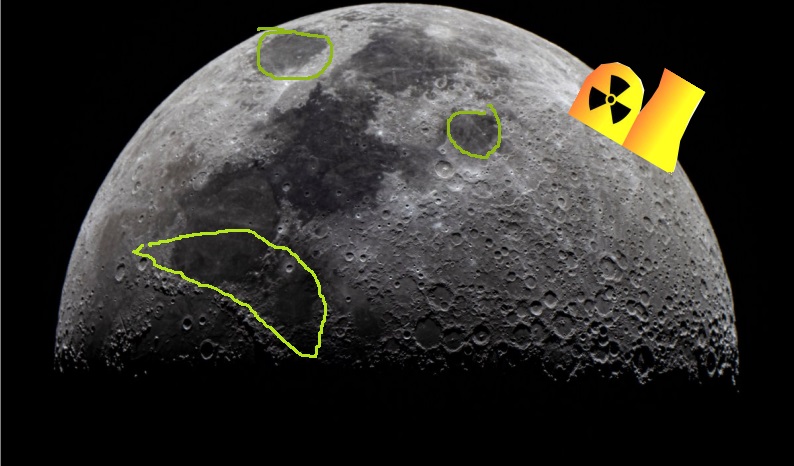
Russia and China announce plan to build shared nuclear reactor on the moon by 2035, ‘without humans’
Live Science, By Harry Baker, 8 Mar 24
The proposed nuclear reactor, which could be transported and assembled without human assistance, would provide energy to a lunar base that Russia and China have agreed to build together.
Russia’s space agency Roscosmos has announced plans to work with China to build an automated nuclear reactor on the moon by 2035. The proposed reactor will help power a proposed lunar base that the two countries will jointly operate.
Back in 2021, Roscosmos and the China National Space Administration (CNSA) revealed that they intended to build a shared base on the moon, named the International Lunar Research Station (ILRS), which they claimed at the time would be “open to all interested countries and international partners.”
However, NASA astronauts are unlikely to be allowed to visit this base due to historically frosty relations with CNSA and a more recent split with Roscosmos, which will leave the International Space Station by 2025 in response to sanctions from the U.S. over Russia’s invasion of Ukraine in February 2022.
On Tuesday (March 5), Roscosmos announced that it will eventually attempt to build a nuclear reactor alongside CNSA, which would theoretically be able to power the ILRS.
“Today we are seriously considering a project — somewhere at the turn of 2033-2035 — to deliver and install a power unit on the lunar surface together with our Chinese colleagues,” Roscosmos director general Yury Borisov told state-owned Russian news site TASS.
Borisov added that the challenging construction job would likely be carried out autonomously “without the presence of humans” and that the necessary technological solutions to pull it off are “almost ready.”
Roscosmos is also looking to use massive nuclear-powered rockets to transfer cargo to the moon to build this base, but the agency has not yet figured out how to build these spacecraft safely, Reuters reported……………………………………..
Roscosmos and CNSA, neither of which have put humans on the moon’s surface, have contrasting track records when it comes to recent lunar exploration.
Last year, Russia’s first moon mission in 47 years ended in disaster when the Luna-25 lander crashed into the lunar surface, leaving behind a 33-foot (10 meter) wide crater.
However, China has had a presence on the moon since 2013, when the Chang’e 3 mission put a lander and rover on the lunar surface. The subsequent Chang’e 4 and Chang’e 5 missions, which occurred in 2019 and 2020 respectively, also successfully landed spacecraft on the moon. The most recent mission also successfully returned lunar samples to Earth — a feat that CNSA will attempt to repeat later this year.
Last week, CNSA also announced that it will start launching giant reusable rockets over the next two years as part of the agency’s plan to put boots on the moon by 2030.
However, NASA is still on track to return humans to the lunar surface before then, despite the first crewed Artemis mission being delayed until 2026. https://www.livescience.com/space/space-exploration/russia-and-china-announce-plan-to-build-shared-nuclear-reactor-on-the-moon-by-2035-without-humans
Russia says it is considering putting a nuclear power plant on the moon with China
Reuters, March 6, 2024, https://www.reuters.com/technology/space/russia-china-are-considering-putting-nuclear-power-unit-moon-ria-2024-03-05/
MOSCOW, March 5 (Reuters) – Russia and China are considering putting a nuclear power plant on the moon from 2033-35, Yuri Borisov, the head of Russia’s space agency Roscosmos said on Tuesday, something he said could one day allow lunar settlements to be built.
Borisov, a former deputy defence minister, said that Russia and China had been jointly working on a lunar programme and that Moscow was able to contribute with its expertise on “nuclear space energy”.
“Today we are seriously considering a project – somewhere at the turn of 2033-2035 – to deliver and install a power unit on the lunar surface together with our Chinese colleagues,” Borisov said.
Solar panels would not be able to provide enough electricity to power future lunar settlements, he said, while nuclear power could.
“This is a very serious challenge…it should be done in automatic mode, without the presence of humans,” he said of the possible plan.
Borisov spoke also of Russian plans to build a nuclear-powered cargo spaceship. He said all the technical questions concerning the project had been solved apart from finding a solution on how to cool the nuclear reactor.
“We are indeed working on a space tugboat. This huge, cyclopean structure that would be able, thanks to a nuclear reactor and a high-power turbines…to transport large cargoes from one orbit to another, collect space debris and engage in many other applications,” Borisov said.
Russian officials have spoken before of ambitious plans to one day mine on the Moon, but the Russian space programme has suffered a series of setbacks in recent years.
Its first moon mission in 47 years failed last year after Russia’s Luna-25 spacecraft spun out of control and crashed.
Moscow has said it will launch further lunar missions and then explore the possibility of a joint Russian-China crewed mission and even a lunar base.
1 This Month
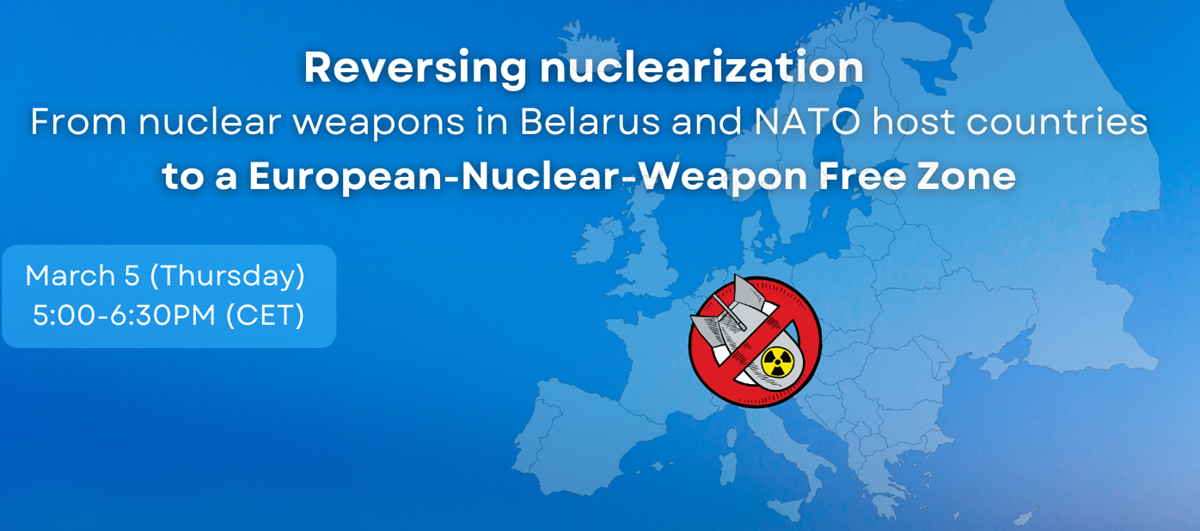
5 March -Online – Reversing nuclearization:
From nuclear weapons in Belarus and NATO host countries to a European-Nuclear-Weapon Free Zone
11am-12:30pm Eastern Time USA / 5pm-6:30pm CET

of the week – Advocating for a
nuclear free beach – https://www.samuellawrencefoundation.org/
The Samuel Lawrence Foundation advocates for a Nuclear Waste Free Beach at San Onofre, join us and take action!

10 March A LIVE WEBINAR THE REAL EFFECTS OF NUCLEAR POWER
What the Industry Isn’t Telling Us
1:00 PM Mountain, 2 pm Central, 3 pm Eastern. Live on the Keepers of the Water Facebook page

18 March Webinar @ 1 PM EST: An Assessment of SMR Projects: The Case of Canada
register for the zoom:
https://us02web.zoom.us/webinar/register/WN_o8BIIOUvQ2ONJR1nta65DQ#/registration

of the week – STOP SMALL MODULAR REACTORS IN CANADA
To see nuclear-related stories in greater depth and intensity – go to https://nuclearinformation.wordpress.com
-
Archives
- March 2026 (51)
- February 2026 (268)
- January 2026 (308)
- December 2025 (358)
- November 2025 (359)
- October 2025 (376)
- September 2025 (258)
- August 2025 (319)
- July 2025 (230)
- June 2025 (348)
- May 2025 (261)
- April 2025 (305)
-
Categories
- 1
- 1 NUCLEAR ISSUES
- business and costs
- climate change
- culture and arts
- ENERGY
- environment
- health
- history
- indigenous issues
- Legal
- marketing of nuclear
- media
- opposition to nuclear
- PERSONAL STORIES
- politics
- politics international
- Religion and ethics
- safety
- secrets,lies and civil liberties
- spinbuster
- technology
- Uranium
- wastes
- weapons and war
- Women
- 2 WORLD
- ACTION
- AFRICA
- Atrocities
- AUSTRALIA
- Christina's notes
- Christina's themes
- culture and arts
- Events
- Fuk 2022
- Fuk 2023
- Fukushima 2017
- Fukushima 2018
- fukushima 2019
- Fukushima 2020
- Fukushima 2021
- general
- global warming
- Humour (God we need it)
- Nuclear
- RARE EARTHS
- Reference
- resources – print
- Resources -audiovicual
- Weekly Newsletter
- World
- World Nuclear
- YouTube
-
RSS
Entries RSS
Comments RSS
 nuclear-news