Peace in Ukraine spells disaster for mainstream political parties in Europe.

we are living in an era of high debts and constant pressure for cuts, while carrying on funnelling billions into Zelensky’s life ending gravy train. It’s quite remarkable.
In discussion with Jamarl Thomas
Ian Proud, Aug 27, 2025 https://thepeacemonger.substack.com/p/peace-in-ukraine-spells-disaster?utm_source=post-email-title&publication_id=3221990&post_id=172084456&utm_campaign=email-post-title&isFreemail=true&r=1ise1&triedRedirect=true&utm_medium=email
I enjoyed talking today for the first time to Jamarl Thomas, an American commentator, currently living in Indonesia (a country I have a soft spot for from my time as Head of the Indonesia and East Timor Section at the start of my Foreign Office career). The conversation covers the first 45 minutes of the video.
We covered the normal topic – Ukraine. I set out my view that peace in Ukraine spells disaster for mainstream political parties in Europe, because they would have to admit a massive foreign policy blunder in the face of a rising tide of nationalism, including in the UK, Germany and France.
Of course, cutting their losses now and pushing Zelensky to sue for peace would increase their chances to repairing the damage before the next rounds of elections. Instead, they are pushing increasingly unsustainable policies, including massive welfare upheaval in Germany at a time when that country wants to boost defence spending by 100bn Euros per year by 2029! Britain, apparently, is edging closer to an IMF bailout – I personally think that story is overblown by the right wing media in the UK. However, we are living in an era of high debts and constant pressure for cuts, while carrying on funnelling billions into Zelensky’s life ending gravy train. It’s quite remarkable.
Partly, this is a bi-product of the erosion of democracy in Europe, characterised best by the ever centralising tendencies of the European Institutions.
Keir Starmer may wonder why his seemingly unassailable lead has been gobbled up by Reform (who, by the way, I’d personally never vote for). Rather than worry about English people putting up English flags, he might wonder whether, in fact, British voters want him to put British interests first.
Seems obvious, right? Clearly not, though..
I hope you find the discussion interesting. Also note I am setting up a new area in my study for podcast interviews which is a bit more personal.
The red plate over my shoulder is my Diplomatic number plate from Moscow.
Russia outsmarts France with nuclear power move in Niger
BBC, Paul Melly, West Africa analyst, 26 Aug 25
Russia has dangled the possibility of building a nuclear power plant in uranium-rich Niger – a vast, arid state on the edge of the Sahara desert that has to import most of its electricity.
It may be deemed impractical and may never happen, but the concept is yet another move by Moscow to seek a geopolitical advantage over Western nations.
Niger has historically exported the metal for further refining in France, but that is changing as the military-led country cuts off ties with the former colonial power.
The uranium-mining operation operated by French nuclear group Orano was nationalised in June, which cleared the way for Russia to put itself forward as a new partner.
It is talking about power generation and medical applications, with a focus on training local expertise under a co-operation agreement signed between Russian-state corporation Rosatom and the Nigerien authorities.
If ever brought to fruition this would be the first nuclear power project in West Africa.
Beyond initial discussions, it is unclear how far down this road things will progress. But already, with this first move, Moscow has shown that it grasps the depth of local frustrations.
For more than five decades Orano – which until 2018 was known as Areva – mined Niger’s uranium, to supply the nuclear power sector that is at the heart of France’s energy strategy.
The French government-owned company now gets most of its supplies from Canada and Kazakhstan and has projects in development in Mongolia and Uzbekistan.
But the Nigerien connection remained significant and freighted with a degree of political and perhaps even cultural weight.
Yet Paris did not share its nuclear energy knowhow with its loyal African supplier. Niger, meanwhile, has to rely largely on coal-fired generation and imports of electricity from Nigeria.
But now, the rupture in relations between Niger’s junta and France has allowed Moscow to offer the hope, however distant, of a nuclear future, something that Areva/Orano, over so many years of local operation, had failed to do.
“Our task is not simply to participate in uranium mining. We must create an entire system for the development of peaceful atomic energy in Niger,” Russian Energy Minister Sergei Tsivilev declared on 28 July during a visit to Niamey.
Naturally, this is not entirely altruistic. There are economic benefits for Russia and it is part of a broader push to displace Western influence from the Sahel region.
The Russians could get the chance to develop the mine in Imouraren, one of the world’s largest uranium deposits……………………………………………………………………………….
Building a nuclear plant can take years and such projects require a huge amount of capital investment, and once operational they need a large and secure power supply.
Furthermore, viability depends on the availability of industrial and domestic consumers who can afford the price of the power being generated.
There are also questions over whether a nuclear power plant could be safely built and protected in today’s fragile and violent Sahel region. Jihadist armed groups control large areas of terrain in Mali and Burkina Faso, and parts of western Niger which makes the area highly insecure.
Given the time, the costs and the complications of developing the nuclear sector in Niger, this remains a distant prospect…………………………………………………………………
the junta in power today now seems determined to bring the era of French uranium mining in Niger to an end, with one official telling the Paris newspaper Le Monde that Orano had been “stuffing itself with our country’s natural resources”.
Who can say what Moscow’s proposals for nuclear scientific partnership and perhaps even power generation will ever amount to in concrete terms?
But one thing is clear, in Niger it is the Russians who have correctly read the political mood. https://www.bbc.com/news/articles/c5y23lvm05no
Gaza to Donbass: How Israel and Ukraine Built a Fascist, Transnational War Machine.
Orinoco Tribune By Sarah B. – Aug 20, 2025
From Bandera to Ben-Gurion, a new axis of ethno-supremacy is rising, fueled by U.S. backing. Same guns. Same flags. Same ideology. Gaza and Donbass are not separate wars. They are one machine.
The Ukraine–Israel Nexus: Pragmatic Alliances Amid Paradoxes and Shared Challenges
From Bandera to Ben-Gurion, echoes of ethno-nationalist revival resonate in the modern trajectories of Ukraine and Israel, two states forged through war, hardened by siege mentalities, and fueled by historical narratives of existential struggle. But these similarities are no accident of parallel development. They reflect a deepening alignment shaped by shared adversaries like Russia and Iran, backed and brokered by the same Western patrons.
In 2022, an officer of Ukraine’s Azov Regiment, toured Israel after surviving the siege of Mariupol. By 2025, Israeli drones were flying missions over Rafah, while American-made PSRL-1 rocket launchers, initially supplied to Ukraine, were spotted in conflict zones across the Middle East. Some experts suggest these may have reached Gaza through black-market channels, though a direct transfer remains unproven. What is undeniable, however, is the convergence of military technologies, intelligence doctrines, and battlefield logistics spanning both theaters.
In April 2022, Ukrainian President Volodymyr Zelenskyy, himself a stalwart ally to the Zionist cause, declared that he envisioned Ukraine becoming “a big Israel.” In doing so, he abandoned the pretense of liberal reform and embraced a future defined by permanent militarization, domestic surveillance, and an ideologically mobilized citizenry. Ukraine, he suggested, would survive not by joining Europe’s post-national dream, only by imitating the ethos of a heavily securitized Middle Eastern state.
Zelenskyy’s statement didn’t emerge in a vacuum. It followed decades of quietly intensifying Ukrainian–Israeli ties, in historical memory, military cooperation, tech integration, and shared narratives of victimhood. But it also exposed a deeper and more disturbing fusion. When the president of a country still reckoning with the legacy of the Holocaust and its own fascist collaborators calls for the building of a “Big Israel,” he is not just invoking a model of defense, he is invoking a model of justified violence, permanent siege, and a long tradition of selective memory, one that both Ukraine and Israel have wielded to reconcile uncomfortable historical alliances of culpability.
Just as the OUN’s collaboration with Nazi Germany is selectively reframed within the Ukrainian national mythos, Israel’s founding story often omits its own moments of strategic accommodation with fascism.
In the 1930s and ’40s, elements of the Zionist movement, most notably the Haavara Agreement between Nazi Germany and the Jewish Agency, facilitated Jewish emigration to Palestine while bypassing international boycotts of the Nazi regime. Revisionist factions like Lehi (the Stern Gang) and Irgun Zvai Leumi even sought military cooperation with the Axis powers against the British. These uncomfortable truths, long buried beneath the moral absolutism of Holocaust remembrance, underscore a shared willingness, Ukrainian and Zionist alike, to collaborate with and even become genocidal regimes when national aspirations were at stake.
What binds Gaza and Donbass is not a monolithic “machine of violence” but a transnational matrix of ideological alignment, technical cooperation, and strategic utility. Ukraine’s campaign of “decommunization” often mirrors Israel’s internal securitization and demographic engineering, both clad in the moral armor of historical trauma. In practice, both states justify aggressive internal and external policies through the language of survival.
This article maps the ideological, military, economic, and cultural architecture of the Ukraine–Israel relationship. From Soviet-era tensions to the post-2014 reconfiguration of alliances, we explore how pragmatic imperatives have forged a new axis of ethno-nationalist power, increasingly central to NATO’s long-term vision of regional dominance.
I. Historical Ties
To understand the modern partnership between Ukraine and Israel, one must begin with their shared, and often contradictory past. Ukraine was both a cradle of early Zionism and a site of violent antisemitic pogroms. Movements like Hibbat Zion, emerged in the 1880s in cities like Odessa and Kiev, decades before Theodor Herzl’s more famous Vienna-based political Zionism. Their mission: to restore the Jewish people to their ancestral homeland in Palestine. Ukraine, in this sense, was an incubator for the ideological DNA of the Israeli state……………………………………………………………………………………………………………………………………………………………………………………………….
…………………….The historical relationship between Israel and Ukraine is not one of ideological clarity. It is a pragmatic evolution, shaped by war, memory, trauma, and strategy. The next sections will examine how these contradictions manifest on the battlefield through weapons, doctrine, personnel, and propaganda, across Gaza and Donbass alike.
Selective Memory: How Competing Genocides Forged Strategic Amnesia
In the narrative war between historical truth and political utility, few examples are as revealing, or as cynical, as the ways Ukraine and Israel have reframed and often embellished their respective traumas to enable strategic cooperation.
By the 1980s, Ukrainian nationalist émigrés began aggressively promoting the 1932–33 Soviet famine, or Holodomor, as the “Ukrainian Holocaust.” This was a calculated response to the rising global awareness of Jewish suffering, spurred by the 1978 NBC miniseries Holocaust, which explicitly portrayed Ukrainians as Nazi collaborators. For diaspora groups still loyal to Stepan Bandera’s legacy, the documentary posed a threat to their rehabilitated image, which they had worked fervently to whitewash. In turn, they constructed a counter-narrative of equal, if not greater, Ukrainian victimhood, one that would cast the Soviet state as genocidal and reframe Ukrainian history through the lens of national martyrdom.
This rhetorical project relied on inflating death tolls,………………………………………………………………..
The result is a pact built on strategic amnesia: a cold alliance between two states whose foundational traumas have been rewritten to serve military alignment, ideological affinity, and common enemies………………………….
…………II. Blood Ties and Battle Lines: Commanders, Crusaders, and Collaborators
The machinery of transnational warfare is not only built with weapons, laws, and doctrines, but with men. Individuals who embody the ideological convergence between Zionist ethno-nationalism and Ukrainian fascism do not operate in the shadows; they are often celebrated, recruited, and strategically deployed across theaters like Gaza and Donbass. These figures serve as ideological evangelists, field commanders, propaganda tools, and networking nodes between far-right militias, Western intelligence networks, and private security structures.
Some are Azov veterans turned actors and influencers. Others are American-Israeli contractors building bridges between Tel Aviv and Kiev. ……………………..
Continue readingHow France’s nuclear dream became a financial nightmare
Decades of neglect, spiralling costs and political denial have turned France’s once-vaunted nuclear program into a cautionary tale, writes Jean-Luc Porquet (translated by Dr Evan Jones).
By Jean-Luc Porquet | 22 August 2025, https://independentaustralia.net/politics/politics-display/how-frances-nuclear-dream-became-a-financial-nightmare,20076
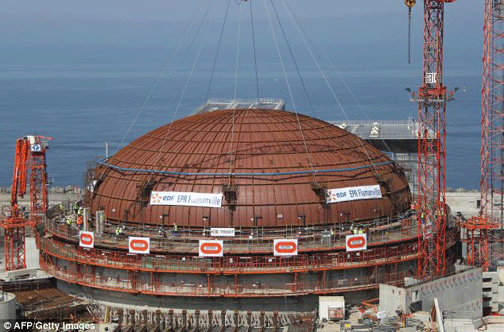
Translator’s note: The French nuclear power sector is in deep trouble technically and financially. Formally a cheap source of power, embedded costs have not been counted. There has been a dramatic loss of skills over the decades, inhibiting effective maintenance of existing plants and turning the construction of France’s then most powerful reactor at Flamanville on the Normandy coast into a nightmare.
Technological and resource challenges have escalated, including water availability in the face of climate change. The plan to bury accumulated highly radioactive waste at Bure, 250 kilometres east of Paris, remains at an impasse. And the political class lives in denial.
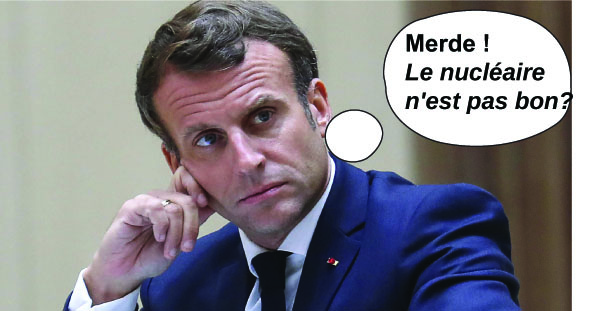
Meanwhile, sections of the Coalition parties cling to nuclear power as Australia’s post-coal salvation. Australia has uranium. However, regarding nuclear power prospects, there is no history, no capacities, no acceptable locations, no acceptable burial sites and no water. In short, local nuclear power adherents have no brains.
EVERYTHING WAS SUPPOSED to work to plan.
The 58 French nuclear reactors built at an accelerated pace between 1977 and 1996 were due to tranquilly finish their life after 30 years of good and faithful service. And the new super-powerful EPRs [European Pressurised Reactors], designed and built by Éléctricité de France, were to effect a seamless transition.
It was estimated that, by 2012, the first French EPR would be put into operation at Flamanville.
Kapow! Not only has its cost, initially fixed at €3.3 billion [AU$5.9 billion], multiplied by six (!), but its construction site has proved a nightmare. The EPR was connected to the grid only in 2024. And it has hardly run since (it is currently in shutdown).
An emergency patch-up job has been necessary on the aged French nuclear park so that its tired reactors can hang on for another 20 years. Total cost of this major overhaul now in progress: €100 billion [AU$180 billion].
At the moment when the urgent necessity to find €40 billion [AU$72 billion] in economies for the 2026 budget obsesses the Bayrou Government [under pressure from Brussels], Reporterre publishes on YouTube a remarkable documentary by journalist Laure Noualhat, titled Nucléaire – Comment il va ruiner la France. (See also Noulhat’s book, Le nucléaire va ruiner la France, Seuil-Reporterre, 224p.) It is noted there that, in the fairytale world that is nuclear energy, billions waltz out by the dozens. The golden rule is: “Whatever it costs!”
Other inescapable costs to come? To prolong the life of the plant at The Hague, where nuclear fuel is processed and which is at the end of its life — rough estimate: €34 billion [AU$61 billion]. To continue to dig deep at Bure, where the most dangerous nuclear waste will be buried 500 metres below ground — estimated cost: €35 billion [AU$63 billion]. To dismantle the 58 reactors, which, even patched up, will finish by being at the end of their life in ten or 20 years — cost: €50 billion. Total: €219 billion [AU$395.8 billion] to find. This is not all.
The EDF has sold an EPR to Finland for €3 billion [AU$5.4 billion] and two others to the United Kingdom for €22 billion [AU$39.7 billion]. And has promised to take care of any additional costs. Such comes in at €12 billion [AU$21.6 billion] for the former, €56 billion [AU$101 billion] for the latter. Do the maths.
Thomas Piquemal, the EDF’s chief financial officer at the time, went into meltdown. And resigned [in March 2016]. And this is not all.
In 2022, President Macron announced that, at his demand, the EDF will launch six “new generation” EPRs [initially, then eight more to 2050]. Hand on heart, it will happen (in fact, one knows nothing about them). Estimated total price: €100 billion [AU$180.7 billion] (more or less). A former EDF Director, Philippe Huet, interviewed by Laure Noualhat, called this a “crazy gamble”.
If ever this delusional program (transparently dismissed by the Cour des comptes [equivalent to the National Audit Office] as inadvisable) sees the day, who will pay for it? Not the EDF, already indebted to the tune of €55 billion [AU$99 billion]. Nor any private investor (not mad!). Guess… https://www.youtube.com/watch?v=rjfHyhkpef8
Jean-Luc Porquet has been a journalist at Le Canard enchaîné since 1994, where this article appeared on 9 July. He writes a column on ecology and technocratic society, as well as theatre reviews. He has written a dozen books, the latest of which, Le grand procès des animaux, is a satirical fictional account of the sixth extinction in progress.
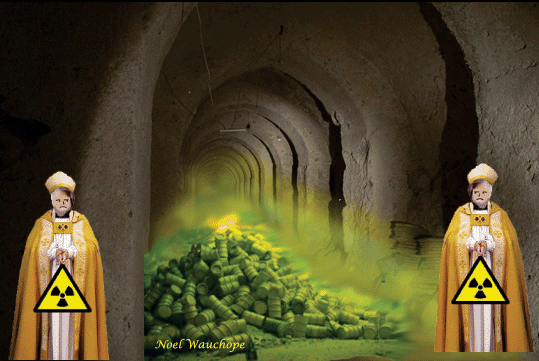
‘Nuclear Priests’ could warn future people about wastes under the Irish Sea
When Sir Keir Starmer entered No 10 last summer, it did not take long for
him to pick up where his predecessors left off on delivering more nuclear
power stations with a promise to “build, baby, build”. The Prime
Minister has vowed to “fast forward on nuclear” and so far has stuck
true to his word, with the Government taking up a larger stake in the
Sizewell C power plant in Suffolk, while loosening planning rules to allow
new small modular reactors to be built across the country.
But with the push for more nuclear power, bringing with it a steady supply of low-carbon energy, the question is inevitably asked: what do you do with all the
nuclear waste?
The answer is to dig a hole nearly the size of Wembley
Stadium 1km down beneath the Irish Sea, that could one day see the rise of
a new “atomic priesthood” and even, some have jokingly claimed, the
creation of glow in the dark cats.
But policymakers are aware that to push
ahead with this new nuclear drive, they will need to develop a stable,
long-term storage facility in which to hold not just future nuclear waste,
but all the nuclear waste the country has produced since the dawn of the
nuclear energy age in the 1950s. This is what the proposed Geological
Disposal Facility will provide.
And when they say long term, they mean long
term. “The purpose of the facility is to keep the radioactivity away from
humans and the environment so that it can’t cause harm for a sufficient
period of time – and that’s of the order of a few hundred thousand
years,” Neil Hyatt, Chief Scientific Adviser at the Nuclear Waste
Services, tells The i Paper.
iNews 24th Aug 2025, https://inews.co.uk/news/politics/nuclear-priests-glowing-cats-how-warn-future-generations-atomic-danger-3875319
Ukraine drone hits Russian nuclear plant, sparks huge fire at Novatek’s Ust-Luga terminal

Reuters, By Guy Faulconbridge and Lidia Kelly, August 24, 2025
- Summary
- Ukrainian drone sparks fire at nuclear plant
- Nuclear reactor cuts capacity after attack
- Ukrainian drones strike Ust-Luga fuel export terminal
- Attacks come on Ukraine’s Independence Day
MOSCOW, Aug 24 (Reuters) – Ukraine launched a drone attack on Russia on Sunday, forcing a sharp fall in the capacity of a reactor at one of Russia’s biggest nuclear power plants and sparking a huge blaze at the major Ust-Luga fuel export terminal, Russian officials said.
Despite talk of peace by Russia and Ukraine, the deadliest European war since World War Two is continuing along the 2,000 km (1,250 mile) front line accompanied by missile and drone attacks deep into both Russia and Ukraine.
Russia’s defence ministry said at least 95 Ukrainian drones had been intercepted across more than a dozen Russian regions on August 24, the day that Ukraine celebrates its declaration of independence from the Soviet Union in 1991.
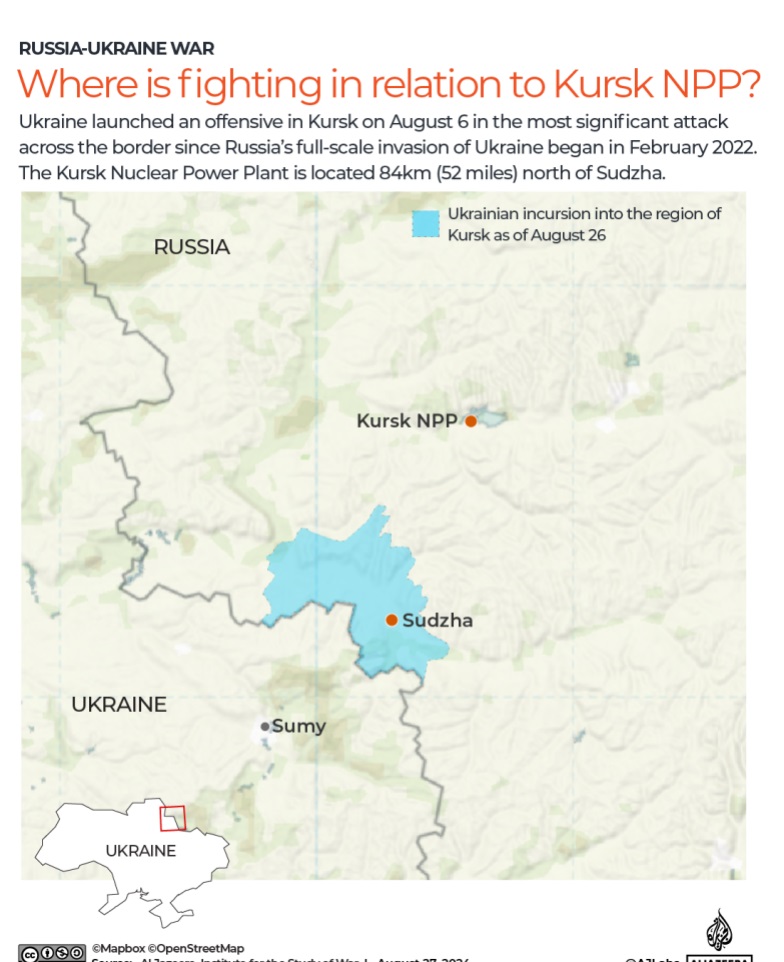
The Kursk nuclear power plant, just 60 km (38 miles) from the border with Ukraine, said that air defences shot down a drone that detonated near the plant just after midnight, damaging an auxiliary transformer and forcing a 50% reduction in the operating capacity at reactor No. 3.
Radiation levels were normal and there were no injuries from the fire which the drone sparked, the plant said. Two other reactors are operating without power generation and one is undergoing scheduled repairs.
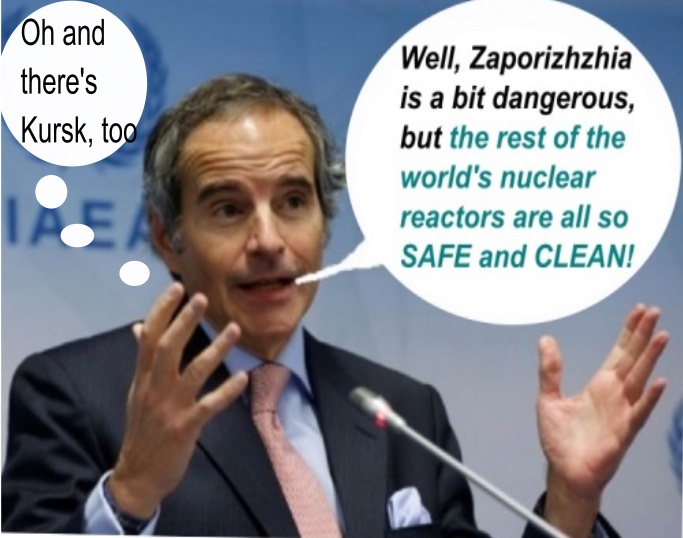
The United Nations’ nuclear agency, the International Atomic Energy Agency, said it was aware of reports that a transformer at the plant caught fire due to military activity and stressed that every nuclear facility should be protected at all times.
A thousand km north, on the Gulf of Finland, at least 10 Ukrainian drones were downed over the port of Ust-Luga in Russia’s northern Leningrad region, with debris sparking fire at the Novatek-operated terminal – a huge Baltic Sea fuel export terminal and processing complex, the regional governor said.
PLUME OF BLACK SMOKE
Unverified footage on Russian Telegram channels showed a drone flying directly into a fuel terminal, followed by a huge ball of fire rising high into the sky followed by a plume of black smoke billowing into the horizon.
“Firefighters and emergency services are currently working to extinguish the blaze,” Alexander Drozdenko, governor of Russia’s Leningrad region, said. There were no injuries, he added……………………..
Ukrainian drones also attacked an industrial enterprise in the southern Russian city of Syzran, the governor of the Samara region said on Sunday. A child was injured in the attack, according to the governor, who did not specify exactly what had been attacked.
………………………………………………………………….Earlier this month, the Ukrainian military said it had struck the Syzran oil refinery. The Rosneft-owned (ROSN.MM)
, opens new tab refinery was forced to suspend production and crude intake after the attack, sources told Reuters. https://www.reuters.com/world/europe/ukraine-drone-hits-russian-nuclear-plant-sparks-huge-fire-novateks-ust-luga-2025-08-24/
Russia reports blaze at one of its biggest nuclear power plants.
Guy Faulconbridge & Lidia Kelly, Sunday 24 August 2025, https://www.independent.co.uk/bulletin/news/ukraine-russia-kursk-nuclear-power-plant-b2813260.html
Russia accused Ukraine of launching multiple drone attacks on Sunday, targeting critical infrastructure.- A drone strike near the Kursk nuclear power plant damaged an auxiliary transformer, leading to a 50 per cent reduction in operating capacity at reactor No. 3, though radiation levels remained normal and there were no injuries from the fire that the drone sparked.
- A separate significant blaze erupted at the Novatek-operated Ust-Luga fuel export terminal in Russia’s Leningrad region after it was reportedly hit by Ukrainian drones.
- Drone activity resulted in temporary flight suspensions at several Russian airports, including Pulkovo.
- Ukrainian drones also attacked an industrial enterprise in Syzran, with Ukraine stating its strikes target infrastructure crucial to Russia’s military efforts.
Fears are rising about the safety of a nuclear power plant in Russia after a Ukrainian attack overnight
Metro, 24 Aug 25
A fire broke out at the Kursk Nuclear Power Plant after military forces shot down what they claimed was a Ukrainian drone flying near the site.
The ‘device detonated’ upon impact, sparking a blaze which the facility said ‘was extinguished by fire crews,’ authorities in Kursk said in a statement.
It added: ‘A combat unmanned aerial vehicle (UAV) belonging to the Armed Forces of Ukraine was shot down by air defence systems near the Kursk Nuclear Power Plant………………….
Alexander Khinshtein, the regional acting governor, blamed Ukraine for the strikes in a post on Telegram, adding: ‘They are a threat to nuclear safety and a violation of all international conventions.’
The incident marks one of the most serious escalations in the targeting of energy facilities, fueling anxiety about fighting creeping dangerously close to nuclear assets.
Ukraine’s drone strike on Kursk was one of several reported overnights by Russian authorities.
Firefighters were also sent to an explosion and a fire at the port of Ust-Luga in Russia’s Leningrad region, which holds a large fuel export terminal.
The regional governor said about 10 Ukrainian drones were brought down and debris had sparked the fire.
Ukraine has not commented on the Russian accusations………….
Ukraine Drone Strikes Hit Russia’s Nuclear Plant & Fuel Terminal | War Escalates
India Times 24 Aug 25
Ukraine has carried out a powerful drone strike on Russia, crippling the Kursk nuclear power plant and setting the Ust-Luga fuel export terminal ablaze. On Ukraine’s Independence Day (August 24), Russia reported intercepting 95 drones across more than a dozen regions.
At Kursk, a drone explosion damaged a transformer, forcing reactor No. 3 to reduce capacity by 50%. Meanwhile, in Ust-Luga, a drone slammed into a Novatek fuel tank, triggering a massive fire and black smoke visible for miles. The terminal is one of Russia’s most important energy hubs, exporting jet fuel and fuel oil to China, Singapore, and Turkey.
Earlier this month, Ukraine also struck the Rosneft refinery in Syzran, intensifying pressure on Russia’s military-industrial infrastructure. Despite Putin’s downplaying of casualties and radiation risk, Ukraine insists these strikes are retaliation for Russia’s relentless missile and drone attacks. This video covers the full story, analysis, and global implications.
Downed Ukrainian Drone Causes Fire At Kursk Nuclear Power Plant
23 Aug 25, https://www.rferl.org/a/kursk-nuclear-power-plant-fire-ukraine-drone/33511527.html
A fire broke out at the Kursk Nuclear Power Plant in Russia after Russian military forces shot down a Ukrainian drone flying near the plant, the press service of the plant said.
The drone — one of several reported on August 23 by Russian authorities — fell on an auxiliary transformer, sparking the fire, which has been extinguished. There were no injuries, according to the press service’s statement.
“A combat unmanned aerial vehicle (UAV) belonging to the Armed Forces of Ukraine was shot down by air defense systems near the Kursk Nuclear Power Plant,” the press service said in a statement on Telegram.
“Upon impact, the drone detonated, resulting in damage to an auxiliary transformer,” the statement said.
As a result of the explosion, unit three of the plant was reduced to 50 percent capacity, the press service said.
Radiation levels at the site and in the surrounding area have not exceeded normal limits, it added.
There was no immediate comment from Ukraine. Kyiv has increased its drones strikes inside Russia over the past several months in response to Russia’s continued attacks on Ukraine. It says the attacks are aimed at destroying infrastructure that is crucial to Moscow’s military efforts.
The story was first reported by Russia’s federal television network REN TV. It reported that the transformer is not a part of the nuclear section of the plant, citing the plant’s press service. It was not immediately clear in which part of the plant the fire occurred.
Kursk NPP is 40 kilometers west of Kursk city, the regional capital, on the bank of Seim River. The first unit was launched in 1976. Other units were added in 1979, 1983, and 1985, according to the press service.
The International Atomic Energy Agency (IAEA) has repeatedly warned of the dangers of fighting around nuclear plants since Russia launched its full-scale invasion of Ukraine in February 2022.
Earlier on August 23, St. Petersburg and the Leningrad region were attacked by drones, regional authorities said, adding that six drones were shot down over the Leningrad region and two were shot down over St. Petersburg.
St. Petersburg authorities said windows were shattered in a residential building in the Krasnoselsky district when the drone was “neutralized.” There were no reports of injuries or deaths.
The drone attacks led to flight delays and cancellations at St. Petersburg’s Pulkovo Airport. More than 30 flights were diverted to alternate airports during the day, and more than 50 flights were delayed. The airport resumed operations by in the evening.
Moscow Mayor Sergei Sobyanin reported that a drone flying toward Moscow had been shot down.
Chicago Tribune letters again avoid reality of Ukraine’s impending battlefield defeat
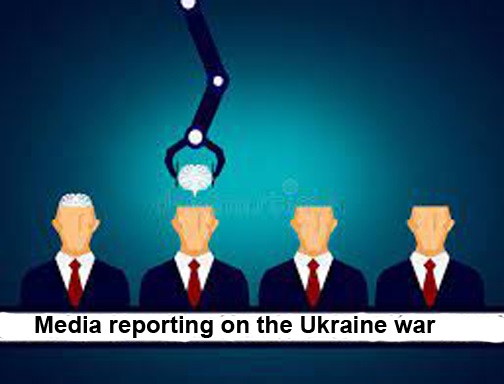
Walt Zlotow, West Suburban Peace Coalition, Glen Ellyn IL 25 Aug 25
It’s understandable the Trib would publish letters promoting further aid in weapons, severe economic sanctions, even NATO troops to enable Ukraine to prevail in their war with Russia. But it is not understandable that all 7 August 25th letters advocating that policy are disconnected from the battlefield reality.
Virtually all historians, political scientists and military realists concur that Ukraine’s military is within months, if not weeks of collapse. They also agree there is no way outside of all out war, likely to go nuclear, to reverse that collapse They understand any peace settlement must include Russia’s 3 security objectives including no NATO for Ukraine, neutrality for Ukraine going forward, and no return of the Ukraine oblasts containing Russian leaning Ukrainians seeking peace and separation from the Kyiv government bent on their destruction.
This alternative, reality based assessment of the war, deserves to be provided to the Trib’s readership. But only publishing readers promoting endless war which simply ensures Ukraine’s battlefield defeat, is not responsible journalism. Trib readers deserve a full range of views; indeed ones more connected to reality.
German experience shows transition to renewables possible for Taiwan and the world.
https://tcan2050.org.tw/en/nonuke-2/ 2025-08-19, Dr. Ortwin Renn |Professor emeritus of Environmental Sociology and Technology Assessment, Stuttgart University; Scientific Director emeritus, Research Institute for Sustainability at GFZ, Potsdam , Germany (RIFS)
I am writing to express my full support for your initiative to keep Taiwan’s nuclear power reactors permanently shut down and to accelerate the transition toward renewable energy. This position is not only grounded in scientific evidence but also in practical experience from countries such as my home country Germany that have successfully advanced toward a sustainable energy future.
In 2011, I served as a member of the German Federal Government’s Ethics Committee on a Safe Energy Supply, established after the Fukushima disaster. Our task was to assess the future role of nuclear energy in Germany. After extensive consultations with leading scientists, economic stakeholders, and civil society organizations, the Committee reached a consensual recommendation: to phase out nuclear energy within ten years while investing heavily in renewable energy sources. This decision was not only an ethical imperative but also based on sound economic and technological reasoning.
The results speak for themselves. Between 2011 and 2025, Germany’s share of renewable energy in electricity generation rose from 23% to over 54%—an increase of 230%. Nuclear power, which contributed less than 18% in 2011, was more than compensated for by renewables. In addition, the expansion of renewables significantly reduced reliance on fossil fuels, thereby contributing to climate protection and energy sovereignty.
Today, renewable energy is not only clean but also cost-competitive. The production of electricity from wind and solar power is now cheaper than generating electricity from coal or gas and even cheaper than nuclear power when comparing the costs of building new facilities. It is true that the transition requires substantial upfront investment in grid upgrades, storage systems, and backup solutions. However, once this infrastructure is in place, the long-term costs of renewable energy generation are lower than those of fossil or nuclear alternatives.
Germany’s relatively high electricity prices are not a consequence of renewables, but largely due to global gas price spikes and the cost of imported electricity. The long-term trend is clear: renewable energy is becoming the most economical, environmentally sound, and politically stable source of power.
The lessons for Taiwan are evident. A transition to renewable energy is possible, economically viable, and ultimately beneficial for society. It contributes to climate protection, environmental quality, and public health. It reduces dependence on imported fuels and avoids the long-term risks and costs associated with nuclear energy, including waste management and potential catastrophic accidents. Most importantly, it enables a decentralized and resilient energy system that benefits local communities.
Achieving this transformation requires significant investment and strong political will, but the German experience demonstrates that it is both feasible and advantageous. I strongly encourage Taiwan to seize this opportunity and prioritize a renewable-based energy future over a return to nuclear power.
https://tcan2050.org.tw/en/nonuke-2/
Russia blames nuclear site attack on Ukraine as Kyiv marks independence day.
A fire has been put out at a nuclear power plant in Russia’s western
Kursk region and air defences have shot down a Ukrainian drone, Russian
officials have said. The drone detonated when it fell and damaged a
transformer, but radiation levels were normal and there were no casualties,
a post from the plant’s account on messaging app Telegram said.
BBC 24th Aug 2025,
https://www.bbc.co.uk/news/articles/czxy2v9dzgxo
Everyone will gain from a peace deal for Ukraine.

Given that the whole basis for Russia launching the war was to put a hard red line in the sand that NATO would not be expanded to include Ukraine, there is no reason to believe that Russia would attack Ukraine in future, if its core underlying concern was resolved.
But security guarantees will need to be realistic and sanctions removal must form part of the plan.
Ian Proud, Aug 25, 2025, https://thepeacemonger.substack.com/p/everyone-will-gain-from-a-peace-deal?utm_source=post-email-title&publication_id=3221990&post_id=171818401&utm_campaign=email-post-title&isFreemail=true&r=1ise1&triedRedirect=true&utm_medium=email
The need for Ukraine’s postwar security has become a major talking point since President Trump’s historic meeting with President Putin in Alaska on 15 August.
U.S. Special Envoy Steve Witkoff spoke of a ‘game-changing’ commitment by President Putin to accept Security guarantees by NATO states. This meant that ‘the United States and other European nations could effectively offer Article 5 like language’.
It is clear that security guarantees are vital for all sides, including for Russia.
Security guarantees are important to European nations, precisely to reduce the risk of Europe being engulfed in a senseless and, frankly, avoidable war with Russia. There has never been any evidence that Russia wants to invade Europe, despite that being a comfortable go-to line for European propagandists.
So, for Europe in particular, the offer of security guarantees must represent a meaningful act of deterrence. A commitment by western nations to fight, so as to prevent the possibility of future war. What this deterrence does not mean is to station NATO troops permanently or even temporarily inside of Ukraine, whether they be called a Reassurance Force, Peacekeeping Force or anything else.
If this war was provoked by a desire by Russia to stop NATO advancing to its western border through Ukraine, why then would Russia agree to have NATO troops inside Ukraine? NATO has large armies on Ukraine’s border already and mounts air patrols as it is.
So, security guarantees don’t need to mean boots on the ground, but rather a willingness to defend Ukraine against a future war which was absent during the current war.
And that is why security guarantees are important for Ukraine.
That country will be forgiven for scepticism about whether NATO states such as France, the UK or Germany would come to their military rescue in the event of a future war having gone to extreme lengths not to come to their military rescue in this war.
If NATO countries are going to make commitments to Ukraine’s future security, then they will have to mean it if they ever want to be taken seriously again.
This is important to Ukraine specifically because upon the cessation of hostilities, and whether it wants to or not, it will need to reduce the size of its army. Ursula von der Leyen has spoken about turning Ukraine into a ‘steel porcupine’ that Russia can’t swallow.
But who is going to pay for this, as Ukraine cannot?
In peacetime, European citizens will rightly press for their governments to refocus spending on domestic priorities, and to cease channeling funds into the woefully corrupt gravy train of Ukraine.
Ukrainian defence spending – $54.5bn for this year – already makes up over 67% of Ukraine’s budget and 31% of GDP. Ukraine needs yearly cash injections from western nations of at least $40bn just to stay afloat. Much of that, now, is in the form of concessionary loans which Ukraine, one day in the distant future, will need to pay back.
Ukraine is otherwise cut off from international capital markets. You don’t need to be a maths genius to see that if western funds dry up, Ukraine will have less than $15bn available each year for defence.
Ukraine’s army was around two hundred thousand before the war broke out and now counts at almost one million. Salary costs will come down after the war ends, because soldiers likely will lose the lucrative frontline bonuses they receive which can effectively quadruple their normal pay, if they survive long enough to spend it.
That in itself will present another major social problem for Ukraine to demobilise soldiers who will find themselves in a shattered country that is in a dire economic state. But specifically, Ukraine will need to trim the size of its army, because it won’t be able to afford to pay for it. It is completely unrealistic to expect western nations to continue to pump tens of billions each year into Ukraine to maintain an army of one million in peacetime.
So, this undoubtedly presents huge challenges, but it must surely be in Ukraine’s interest to sue for peace and to start a complicated and, I fear, long and rocky road to EU membership, reconstruction and growth. As a country, it gains nothing but death and destruction by keeping the war going and losing ground and lives each day.
Security guarantees are vitally important to Russia too. President Trump’s unequivocal stance that Ukraine won’t join NATO must be backed up by a Treaty to ensure that Russia will have confidence that this commitment to Ukrainian military neutrality is real and permanent,
Given that the whole basis for Russia launching the war was to put a hard red line in the sand that NATO would not be expanded to include Ukraine, there is no reason to believe that Russia would attack Ukraine in future, if its core underlying concern was resolved.
Conquering all of Ukraine has never been a core aim in this war, in my opinion. Even though it has the military upper hand, I believe that Russia wants peace too. Peace will mean a long and fraught process of normalisation of relations with Ukraine, Europe and with the U.S. Indeed, the reengagement in peaceable economic, social and cultural relations would surely prevent the need for a future war.
But there’s texture here, of course, both Russia and Ukraine would need to resist provocations that precipitated a future conflict. Let’s not forget that from the onset of the Ukraine crisis in 2014, and after the Minsk II agreement was reached in February 2015. It became a goal of Ukraine and western powers to impose economic sanctions on Russia.
As we seem to enter the final furlong towards peace in Ukraine after a devastating war, pressure continues from both Europe and Ukraine to continue to sanction Russia to maintain the pressure. In recent days, President Zelensky has urged more sanctions if President Putin does not meet him in person. The European Union is preparing its 19th round of sanctions since 2022, despite the prospect of peace seemingly on the horizon.
This is one of the reasons that any peace deal needs a plan for sanctions removal, not addition. As I have said many times before, setting out a clear plan to reduce Russian sanctions that do not provide Ukraine with a veto will be vital to incentivising President Putin to cut a deal.
It is deluded to believe, more than eleven years after the first sanctions were imposed on Russia, that threatening Russia with more sanctions will incentivise a peace deal. It must surely be obvious that further threats of sanctions will simply encourage President Putin to order his troops on in their campaign.
So, if a peace deal is to be agreed, despite the pain of agreeing it, it must facilitate peace or, at the very least, the absence of war. It must ensure that Europe is serious about honouring its commitment to Ukraine in the future, it must give Ukraine the confidence that it can move its army to a peacetime footing, and it must manifestly promote a normalisation of relations with Russia that is so long overdue.
Trump ‘angry’ about Ukrainian attacks on key Russian pipeline to EU – Budapest
Comment: Trump’s angry, and yet, as we learned from NYT and WaPo reports earlier this year, HIMARS launches rely on American satellites for targeting and delivery to conduct such attacks, it’s possible that this key pipeline delivering oil to one of Trump’s ‘allies’ in eastern Europe… was effectively carried out by the Americans.
Sat, 23 Aug 2025 https://www.sott.net/article/501415-Trump-angry-about-Ukrainian-attacks-on-key-Russian-pipeline-to-EU-Budapest
Kiev has struck the Druzhba conduit supplying oil to Hungary and Slovakia at least three times this month.
US President Donald Trump has expressed outrage over Ukrainian strikes on a key pipeline supplying Hungary and Slovakia with Russian oil, according to a senior official in Budapest.
On Friday, Balazs Orban, political director to Hungarian Prime Minister Viktor Orban (no relation), shared a letter from his boss to Trump raising the issue of the Ukrainian attacks on the Druzhba pipeline. “Hungary supports Ukraine with electricity and petrol, in return they bomb pipeline that supply us. Very unfriendly move!” the Hungarian leader wrote.
On the same letter, Trump reportedly replied in his own hand:
“Viktor – I do not like hearing this. I am very angry about it. Tell Slovakia. You are my great friend,” alongside what appeared to be his signature.
“The Druzhba pipeline is a vital source of Hungary’s crude oil supply, without which our energy security cannot be guaranteed. Hungary will not allow its security to be undermined,” Balazs Orban wrote.
Ukraine has carried out at least three strikes this month on the Druzhba (‘Friendship’) pipeline, which stretches for more than 4,000km from Russia through Belarus and Ukraine to Poland, Germany, Hungary, Slovakia, and the Czech Republic.
The Druzhba controversy has become yet another source of tension in the already strained relations between Budapest and Kiev, which are marred by Hungary’s reluctance to support EU sanctions on Russia and by sharp disagreements over the rights of ethnic Hungarians living in western Ukraine.
In response to the attacks on the Druzhba pipeline, Hungarian Foreign Minister Peter Szijjarto said he and Slovak Foreign Minister Juraj Blanar were pressuring Brussels to force Kiev to stop the raids.
“With these attacks Ukraine is not primarily hurting Russia, but Hungary and Slovakia… Brussels must understand: they are the European Commission, not the Ukrainian Commission.”
Moscow has also denounced the attacks as “outrageous,” portraying them as proof that Kiev sees no bounds when engaging in malignant activities.
Meanwhile, Slovak officials have said the section of the Druzhba pipeline damaged in the latest attack is expected to be repaired by Monday.
1 This Month



26 September – International Day for the Total Elimination of Nuclear Weapons


PLEASE OPPOSE HR 8255 AND S.3639 – bills would accelerate satellite deployment, with no environmental review or safeguards – https://ncstd5li.quorum.us/campaign/169331/
To see nuclear-related stories in greater depth and intensity – go to https://nuclearinformation.wordpress.com
-
Archives
- September 2026 (269)
- August 2026 (330)
- July 2026 (355)
- June 2026 (287)
- May 2026 (306)
- April 2026 (356)
- March 2026 (251)
- February 2026 (267)
- January 2026 (308)
- December 2025 (358)
- November 2025 (359)
- October 2025 (375)
-
Categories
- 1
- 1 NUCLEAR ISSUES
- business and costs
- climate change
- culture and arts
- ENERGY
- environment
- health
- history
- indigenous issues
- Legal
- marketing of nuclear
- media
- opposition to nuclear
- PERSONAL STORIES
- politics
- politics international
- Religion and ethics
- safety
- secrets,lies and civil liberties
- spinbuster
- technology
- Uranium
- wastes
- weapons and war
- Women
- 2 WORLD
- ACTION
- AFRICA
- Atrocities
- AUSTRALIA
- Christina's notes
- Christina's themes
- culture and arts
- Events
- Fuk 2022
- Fuk 2023
- Fukushima 2017
- Fukushima 2018
- fukushima 2019
- Fukushima 2020
- Fukushima 2021
- general
- global warming
- Humour (God we need it)
- Nuclear
- RARE EARTHS
- Reference
- resources – print
- Resources -audiovicual
- Weekly Newsletter
- World
- World Nuclear
- YouTube
-
RSS
Entries RSS
Comments RSS

