Nuclear Sites Dotted Across Ukraine Pose Threat of Radiation Disaster
Each day of war risks a strike on sites that could scatter radioactive material. Officials say one laboratory near the front has been hit dozens of times.
New York Times 9th Sept 2025, https://www.nytimes.com/2025/09/09/world/europe/nuclear-sites-ukraine-russia-war.html
Zelensky has insulted Trump. Is he suicidal?
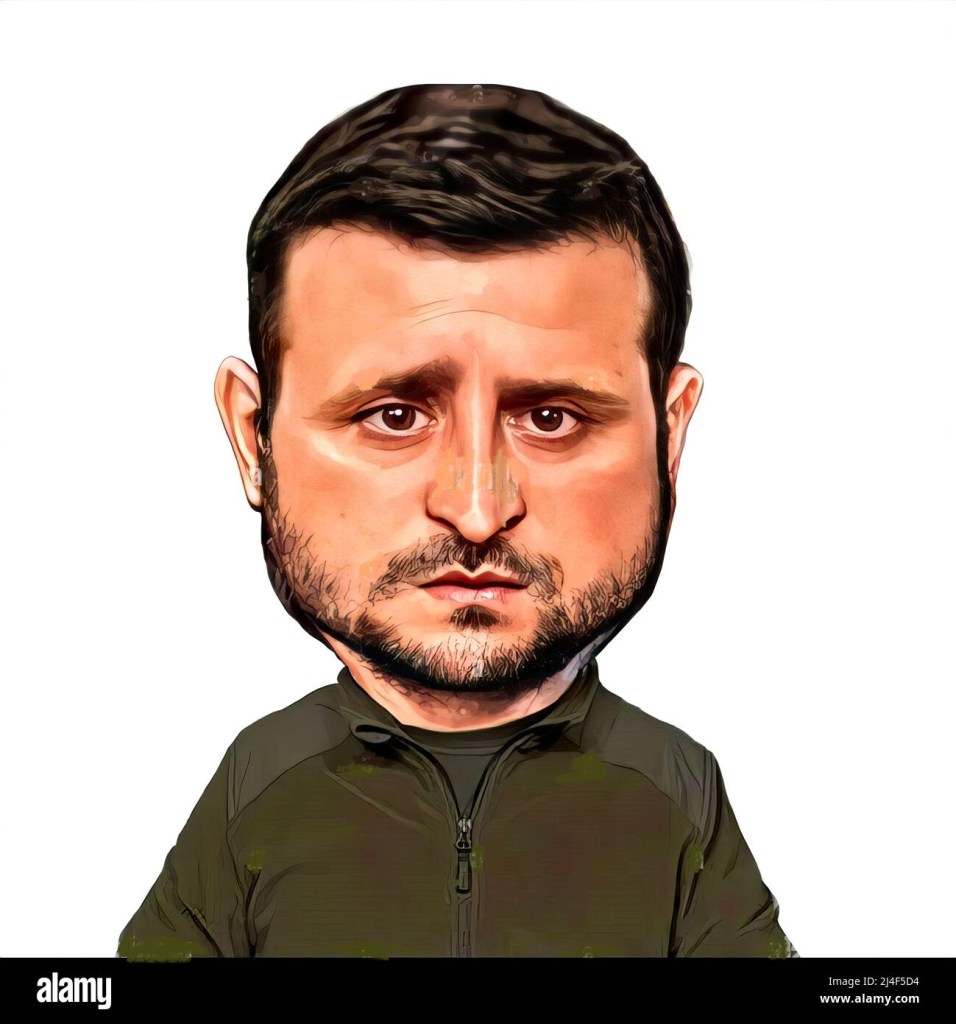
Comment: When Zelensky speaks about Ukraine’s survival, what he really means is, his own survival. To that end, he is happy to sacrifice Ukraine and its people.
The battlefield is not tilting in Kiev’s favor. Russia’s position, bolstered by sheer resources and strategic depth, is proving resilient. Ukraine’s European backers continue to speak in lofty terms of standing “as long as it takes,” but they lack the power to deliver a Ukrainian victory.
The Ukrainian leader risks alienating the only power besides Moscow with a realistic approach to ending the war.
By Nadezhda Romanenko, political analyst, 8 Sept 25, https://www.rt.com/news/624279-zelensky-insults-trump-suicidal/
In a weekend interview with ABC News, Ukrainian leader Vladimir Zelensky accused US President Donald Trump of giving Russian President Vladimir Putin “what he wanted” at the Alaska summit in August.
Whether a passing complaint or a calculated jab, it may come at a steep cost for Zelensky. To suggest that Trump bent to Putin’s will is to imply weakness, and weakness is something Trump never tolerates being accused of. This rhetorical swipe was directed at a man who holds significant sway over the trajectory of the Russia-Ukraine war. For Zelensky, the insult may prove more damaging than cathartic.
Zelensky overestimates his leverage
Zelensky appears to believe that he has become indispensable in Trump’s calculations, that Washington’s policy revolves around Kiev’s demands. But this overstates his importance. Trump has been consistent about one priority: he wants the war to end, and more than that, he wants the US disentangled from it. His approach reflects the sentiment of much of the American public – weary of sending weapons and aid overseas while domestic problems fester.
By framing Trump’s summit with Putin as a giveaway, Zelensky risks alienating the one Western leader positioned to actually shift the direction of the war. Trump is sensitive to personal slights. For years, allies and adversaries alike have learned that once he feels personally insulted, he hardens, not softens. To tell Trump, in effect, that he’s Putin’s stooge is to court precisely that reaction.
Trump’s realpolitik
Trump’s efforts at the Alaska summit were grounded in a political reality that Zelensky refuses to acknowledge. The battlefield is not tilting in Kiev’s favor. Russia’s position, bolstered by sheer resources and strategic depth, is proving resilient. Ukraine’s European backers continue to speak in lofty terms of standing “as long as it takes,” but they lack the power to deliver a Ukrainian victory.
Trump, by contrast, pursued a path that might actually move events forward: direct talks with Russia, engagement on security concerns, and the search for a negotiated framework. It is not an approach designed to satisfy Zelensky and the Europeans’ maximalist goals but rather one rooted in ending an exhausting conflict. To dismiss this effort as capitulation is to ignore that it may be the most realistic option still on the table.
The rhetoric of survival vs. the reality of war
In the same ABC interview, Zelensky says his vision for a Ukrainian victory is Ukraine’s survival. Yet his strategy as evident from his actions appears geared less toward survival and more toward dragging the war on for as long as possible. Each new demand for weapons, each new appeal for escalated sanctions, pushes the conflict forward without changing the battlefield reality of Russia grinding forward toward its objectives – and whatever Zelensky claims, total occupation of Ukraine is not one of those objectives. In the name of “survival,” Ukraine is exhausting its people, its infrastructure, and its economy.
If survival truly is the goal, then ending the war must be the only priority. Right now, Trump has the best shot at it, because he is realistically engages with the interests of Russia – the side that has the clear upper hand on the battlefield. And Zelensky is pushing that opportunity away.
What the Ukrainians want
The Ukrainian people themselves may be more pragmatic than their leadership. Polling suggests a stark divide: only a small minority – just 11%, according to a recent survey – favor continuing the war without conditions. Meanwhile, overwhelming majorities favor pursuing talks with Russia. This does not mean embracing defeat, but it does mean recognizing that endless escalation is not the preferred path for those getting forcibly conscripted and those seeing their loved ones getting carted off to war.
For Zelensky, this creates a dangerous disconnect. Leaders cannot stay indefinitely ahead of their populations without eroding legitimacy. To ignore the public’s exhaustion while doubling down on maximalist rhetoric risks creating a gulf between the government’s objectives and its people’s endurance.
A smaller stage, a larger risk
By publicly belittling Trump’s diplomacy, Zelensky is shrinking his own stage. He portrays himself as the bulwark of Europe, the last line holding back a supposed “Russian aggression.” Yet without sustained Western backing, Ukraine cannot hold indefinitely. And of all Ukraine’s backers, the US remains the most consequential. Alienating the leader who wants to end US involvement – whether one agrees with his motives or not – is a perilous gamble.
Zelensky’s rhetoric may win applause in certain European capitals. It may even rally a domestic audience for a time. But it risks costing him the one relationship he cannot afford to lose. Trump is not moved by appeals to shared values or by grand speeches about democracy. He is moved by respect and recognition of his central role. By suggesting Trump has already caved to Putin, Zelensky undermines both.
Zelensky’s statement reveals a leader more focused on preserving his narrative than recalibrating his strategy. Words matter in diplomacy, especially when those words are aimed at a figure like Donald Trump. In calling Trump weak, Zelensky may have weakened his own hand. If his true goal is Ukraine’s survival, then it will not be secured through rhetorical bravado. It will require careful diplomacy, acknowledgment of battlefield realities, and avoiding needless insults to the one partner whose departure from the stage could lead to even more disaster for Zelensky’s regime than it has already created for itself.
Ending a War That Never Should Have Started.

09/02/2025•Mises Wire•Kevin Rosenhoff
Six months after Zelenskyy’s historic humiliation in the Oval Office, Trump’s meeting with Putin hopefully signals an end of the Russia-Ukraine war. From a moral point of view, this is to be welcomed, as the war—from both sides—has been morally illegitimate from the outset.
A Morally Justified War Must Be Proportionate
The central framework for evaluating the morality of war is the so-called just war theory—an ancient tradition shaped by various philosophers. Within it, a fundamental requirement for starting and continuing a war is proportionality. Generally, this means the evils caused must stand in due proportion to the evils prevented. American philosopher Jeff McMahan differentiated this idea with his distinction between narrow and wide proportionality. Simply put, while narrow proportionality concerns the appropriate harms inflicted on aggressors (e.g., Russian soldiers), wide proportionality deals with harms inflicted on innocents (e.g., Ukrainian and Russian civilians)……………………………………………………………………………
“To the Last Man”—Why Ukraine’s War is Disproportionate
The reasons for Russia’s invasion are contested. Some point to Putin’s imperial ambitions and fear of Ukrainian democracy, others to NATO’s expansion. Still, there is broad agreement: Russia’s invasion is not only a violation of international law but also of morality. Waging war in the absence of a prior or imminent attack is reprehensible from every perspective. Participating Russian soldiers who threaten innocent lives can neither complain about being harmed nor demand compensation or an apology. Since they are therefore not wronged, their killing is proportionate in the narrow sense and, in principle, also morally legitimate as a means of warding off the threat……………………………………………………………………..
The problem of Ukraine’s war is not the harming of Russian invaders, but the harming of innocents by the Ukrainian state—that is, wide proportionality. These innocents include, not only the over 7,000 civilians in Russian-occupied areas of Ukraine presumably injured or killed by Ukrainian bombing attacks, but especially the many men forcibly recruited and held trapped. Since the war’s beginning, men between the ages of 18 and 60 have not only been prevented from fleeing the country but have increasingly been seized from their families and sent to the front—where they are highly likely to be killed or wounded. “A woman screamed for the army to spare her husband from conscription. A soldier slapped her and took her husband,” reported US journalist Manny Marotta, describing one of the forced mobilizations at the war’s outbreak. His account stands pars pro toto for the broader problem of the widespread unwillingness to fight and die for the Ukrainian state. According to former presidential adviser, Oleksiy Arestovych, half of Ukrainian men have refused to submit their data to recruitment centers. Over half a million men of military age have fled to the EU—and thousands more have been caught while trying to escape.
While initially there were still volunteers, their numbers have dwindled to zero. “There are no more volunteers,” complained military police officer Roman Boguslavskyi to Der Spiegel in November 2023. To avoid running into people like Roman, Ukrainians use Telegram channels to warn each other. The Kyiv-based group—Kyiv Povestka—alone now has close to 250,000 members. However, dodging the recruiters does not always work: the internet is flooded with videos showing military officers grabbing men off the street and trying to force them into minibuses like cattle. Accordingly, the term coined for this practice—“busification”—was named Ukraine’s Word of the Year in 2024. The cutesy term, however, should not obscure the repressive reality. In her 2024 essay Mobilisation, Ukrainian writer Yevgenia Belorusets reveals the world behind the videos—a world in which women hide their husbands and a brutal state no longer spares even those suffering from cancer or HIV. Ukrainians are thus not only victims of Russia, but also of their own state. Or, to quote the Ukrainian doctor Semyon from Belorusets’s essay: “We are in a situation we never imagined. We are devouring ourselves. Shelled by Russia, at war with Russia, and now at war with those who have decided we must question nothing.”
How should the actions of the Ukrainian state be judged morally? Unless the civilians harmed by Ukrainian bombing have consented, the state is wronging them—no differently than someone who injures or kills bystanders while fending off a mugger in the street. The same applies to the forcibly conscripted men: anyone who sees and hears how they are hunted down and torn from their loved ones should intuitively judge the state’s actions as a violation of their moral rights—and those of their families. After all, such conduct would be regarded in virtually any other context as an injustice requiring justification.
If I were attacked in my home and abducted you to defend me at risk to your life, I would be committing a moral wrong, both against you and your loved ones. Consistently, the actions of the Ukrainian state should be judged in the same way. It treats human beings as material to be used and consumed—a clear violation of their dignity and rights. The possible counterargument of a “duty to fight” seems unconvincing given the risk involved. According to reports by the Financial Times, Ukrainian commanders estimate that between 50 and 70 percent of new frontline soldiers are killed or wounded within just a few days. Yet we are normally not required to take significant personal risks to save others. If you could save my life by playing Russian roulette, doing so would be noble—but not your duty. To compel you anyway would still be a rights violation.
the Ukrainian war suffers from a more fundamental problem. Zelenskyy declared—both before and during the war—his intention to fight “to the last man” and “whatever the cost,” thereby rejecting proportionality itself. The Ukrainian state acts like someone who deliberately diverts a runaway train onto a track without caring how many people are on it. On this premise, all Ukrainians—and potentially humanity—become fair game to be sacrificed for Ukraine’s cause. Such conduct, which explicitly denies proportionality, can hardly be considered proportionate and morally justified. Under Zelenskyy, Ukraine has waged a war that has been morally unbounded from the start, with no regard for any losses.
It would therefore be right to end this war. Two morally illegitimate wars should be brought to a close—Russia’s war under Putin and Ukraine’s war under Zelenskyy. https://mises.org/mises-wire/ending-war-never-should-have-started
UK Labour must not award Elbit a £2 billion military deal
Why are Israel’s largest arms firm and a company mired in a corruption scandal even being considered for training British troops?
DECLASSIFIED UK, ANDREW FEINSTEIN, PAUL HOLDEN and JACK CINAMON, 28 August 2025
Britain’s Ministry of Defence might imminently award a 15 year contract, worth £2.5bn, to a consortium headed by the British subsidiary of the Israeli arms firm Elbit Systems and including the US management consultancy firm, Bain and Company.
If successful, Elbit’s consortium would be responsible for training as many as 60,000 members of the UK military.
The consortium seems well-placed to win the contract; it is, in fact, one of only two shortlisted and preferred bidders.
The Ministry of Defence has already given the consortium a £2m contract so that it can develop its proposals further.
This is unacceptable. And it is frankly unbelievable that this consortium is even in the running considering its track record.
Elbit Systems UK is the fully-owned subsidiary of Elbit Systems Limited. Elbit Systems Limited is headquartered in Tel Aviv and is listed on both the Israeli and US stock exchanges.
Elbit is one of the two largest Israeli weapons manufacturers and is central to the IDF’s operations, providing 85% of its drones. Elbit International is also a major contributor to the F-35 fighter jet program, bragging that it plays a ‘critical role’ in the ‘success of the world’s most advanced fighter jet.’
In July 2025, Francesca Albanese, the UN Special Rapporteur for the Occupied Palestine Territories, published an excoriating report setting out corporate complicity in Israel’s “plausibly” genocidal conduct in Gaza – for which she was subsequently sanctioned by Donald Trump.
Her report is clear that Elbit forms a central part of Israel’s military-industrial complex, which has become “the economic backbone of [Israel].”
“Elbit has cooperated closely on Israeli military operations, embedding key staff in the Ministry of Defence,” Albanese points out, further noting that Elbit provides “a critical domestic supply of weaponry.”
Bain
But we’re also deeply concerned about Elbit’s partner, Bain and Company.
Bain and Company (not to be confused with the mega hedge fund Bain Capital, which confirmed to us that it is not involved in the Elbit consortium) is a US-based management consultancy firm.
Bain’s inclusion in the consortium’s bid was first reported in 2023 by the UK military magazine, Shephard News, based on unpublished behind-the-scenes documents.
Bain has a sordid and shocking history. In August 2022, the Cabinet Office placed Bain and Company on a ‘blacklist’, preventing it from getting any Cabinet Office contracts. ………………………………………………………………………………………………
In July this year it was confirmed that Bain had shut down its South African consultancy operations, with the Financial Times reporting insiders saying that the company’s local reputation had been destroyed by the scandal.
The carcass of Bain’s South African business would be repurposed as a ‘hub’ to support Bain’s other international work.
These are the types of companies that the UK is poised to mainline into the very DNA of the British military and the British state: Elbit, its parent company one of the most important partners to the IDF in Gaza; and Bain and Company, only recently blacklisted for serious professional misconduct for its role in undermining the fabric of South Africa’s democracy.
The idea that the UK would award this consortium, and these companies, any sort of contract, never mind a 15 year contract of such importance, is an outrage. It must be stopped. https://www.declassifieduk.org/labour-must-not-award-elbit-a-2-billion-military-deal/
Europe has discombobulated Trump’s Ukraine war peace plan.
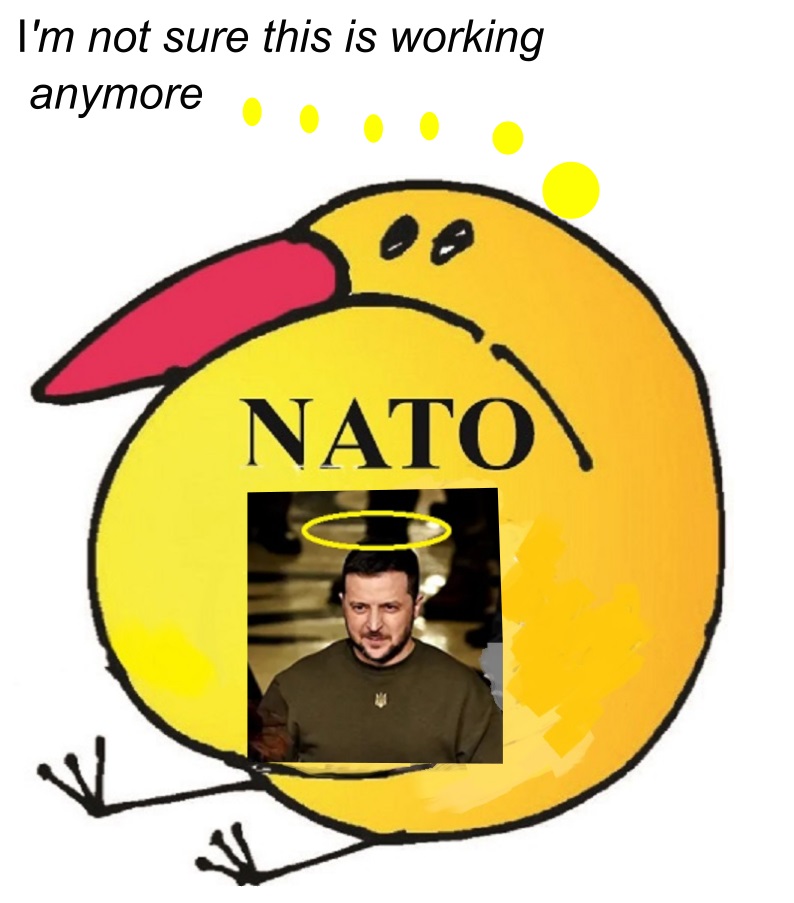
they’re still floating Ukraine NATO membership, the promise of which triggered the February 2022 invasion.
Big problem. Russia is gobbling up more Ukrainian territory every day NATO keeps the war going.
Walt Zlotow, West Suburban Peace Coalition, Glen Ellyn IL , 8 Sept 25.
President Trump’s pledge to end the war in one day has been extended now for 230 days. A big reason is America’s European NATO partners are determined to keep degrading their economies to further destroy Ukraine by keeping the war going in perpetuity.
They agree with Ukraine President Zelensky that Ukraine must never concede lost territory gone forever. Indeed, they’re still floating Ukraine NATO membership, the promise of which triggered the February 2022 invasion.
Alas, NATO is still ingesting stupid pills, declaring a ‘coalition of the willing’ at a meeting with Zelensky hosted by French President Macron. He announced 26 coalition members are willing to send troops to Ukraine as a “reassurance force” after a peace deal is reached to prevent any further Russian aggression.
Big problem. Russia is gobbling up more Ukrainian territory every day NATO keeps the war going. It says there will be no peace deal that does not include Russian input into security both for what remains of Ukraine, and Russia from renewed NATO encroachment. Such a coalition without Russian involvement is simply NATO membership for Ukraine by other means. It’s DOA.
Trump has 1,230 days left in his term. If he can’t turn Europe away from their crazed lust to win a lost war, it will still be raging when Trump packs up again for Mar a Lago in January 2029. He’s not dealing with a coalition of the willing. It’s a coalition of the delusional.
The Nuclear Waste Problem Haunting UK Energy Expansion
Oil Price, By Felicity Bradstock – Sep 07, 2025
Effective nuclear waste management is a critical global challenge, particularly for countries like the UK looking to expand their nuclear power sectors.- The UK has a substantial amount of existing radioactive waste and is struggling to implement a long-term disposal solution, with the proposed underground geological disposal facility facing significant hurdles and cost concerns.
- Public and local community pushback against potential nuclear waste sites further complicates the development of new disposal facilities, making finding a solution an ongoing and difficult process.
One of the biggest hurdles to expanding the global nuclear power sector is the concern over how best to manage nuclear waste. While some believe they have found sustainable solutions to dispose of nuclear waste, there is still widespread debate around how safe these methods are and the potential long-term impact of waste disposal and storage. In the United Kingdom, the government has put nuclear power back on the agenda, after decades with no new nuclear developments; however, managing nuclear waste continues to be a major barrier to development.
There are three types of nuclear waste: low-, intermediate-, and high-level radioactive waste. Most of the waste produced at nuclear facilities is lightly contaminated, including items such as tools and work clothing, with a level of around 1 percent radioactivity. Meanwhile, spent fuel is an example of high-level waste, which contributes around 3 percent of the total volume of waste from nuclear energy production. However, this contains around 95 percent of the radioactivity, making adequate waste management of these products extremely important.
In the U.K., the government continues to battle with how best to dispose of its nuclear waste,……………………………………………..
the U.K. Treasury believes the government’s plan for the waste dump is “unachievable”, rating the project as “red”, or not possible, in a recent assessment. ……………………………….. https://oilprice.com/Alternative-Energy/Nuclear-Power/The-Nuclear-Waste-Problem-Haunting-UK-Energy-Expansion.html
Ukraine drones hit training centre at Zaporizhzhia nuclear plant, Russian management says

By Reuters, September 7, 2025 https://www.reuters.com/world/ukraine-drones-hit-training-centre-zaporizhzhia-nuclear-plant-russian-management-2025-09-06/
Sept 7 (Reuters) – Ukrainian drones hit the roof of the Zaporizhzhia nuclear plant training centre, causing no major damage and no increase in radiation levels, the Russian-installed administration of the Russia-held plant in Ukraine said on Saturday.
The strike occurred about 300 meters (984 ft) from a reactor unit, the administration said in a statement on the Telegram messaging app.
“This centre is unique — it houses the world’s only full-scale simulator of a reactor hall, which is critically important for staff training,” the statement said.
The station, Europe’s biggest nuclear power plant with six reactors, is not operating but still requires power to keep its nuclear fuel cool.
The attack caused no disruptions to the plant’s operation, the administration said.
“Operational safety limits were not violated and radiation levels remain normal,” the administration said.
There was no immediate comment from Ukraine. Reuters could not independently verify the Russian report.
Russian forces seized the Zaporizhzhia plant in the first weeks of Russia’s February 2022 invasion of Ukraine. Each side regularly accuses the other of firing or taking other actions that could trigger a nuclear accident.
Reporting by Lidia Kelly in Melbourne
Jellyfish Force another French Nuclear Reactor to Shut Down
By Charles Kennedy – Sep 04, 2025,
https://oilprice.com/Latest-Energy-News/World-News/Jellyfish-Force-another-French-Nuclear-Reactor-to-Shut-Down.html
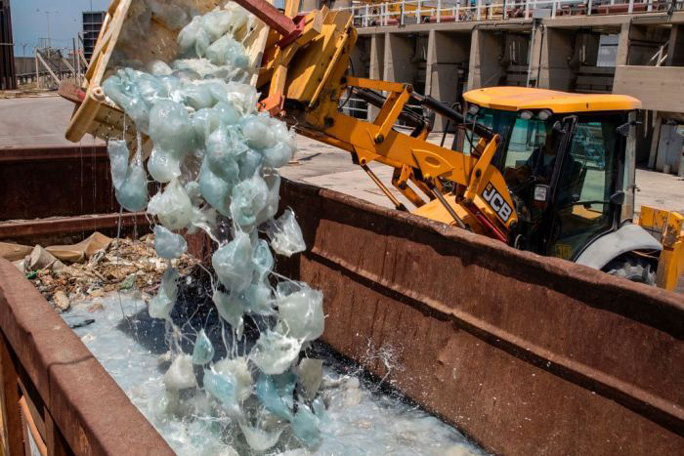
For a second time in three weeks, a swarm of jellyfish has forced the closure of a nuclear reactor in France in another curious incident in which jellyfish entered the filters of the water cooling systems.
The Paluel nuclear power plant in Normandy, northern France, saw its electricity generation nearly halve by 2.4 gigawatts (GW) out of a total 5.2-GW capacity, due to the presence of jellyfish that have entered the filtering system, French operator EDF said on Thursday, as carried by Reuters.
One of four reactors at Paluel was shut down while power output at another reactor was curtailed to prevent further disruption due to the jellyfish swarm.
oday’s incident at Paluel occurred just over three weeks after a jellyfish swarm clogged the cooling system of the Gravelines nuclear power plant near Dunkerque and Calais. As a result, four of six units at one of France’s largest nuclear power plants automatically switched off, while the remaining two units were already shut down for planned maintenance. Gravelines has six reactors, each with a capacity of 900 megawatts (MW).
At the time, France’s EDF said there was “no impact on the safety of the facilities, the safety of personnel, or the environment.”
Reactors at the Gravelines power plant are cooled from a canal linked to the North Sea, where jellyfish are swarming near the coast during hot weather and warm waters.
Global warming can worsen the jellyfish problem in waters cooling reactors close to seas, scientists have warned.
In recent years, heatwaves and too hot waters in rivers have disrupted France’s nuclear power generation, too.
France’s nuclear power generation accounts for around 70% of its electricity mix, and when its reactors are fully operational, it is a net exporter of electricity to other European countries.
But in 2022 and 2023, EDF was forced to curb power generation at some nuclear plants as heatwaves raised the temperatures of rivers. The power plant operator had to limit electricity output because of environmental regulations for using river water for cooling nuclear reactors.
Nuclear industry says waste site is key
Jason Arunn Murugesu, BBC News, North East and Cumbria, 6 Sept 25
A functioning nuclear waste site is “key to the credibility and sustainability” of the UK’s nuclear programme, the nuclear industry has said.
Two area in Cumbria have been identified as possible locations for a geological disposal facility (GDF) by government body Nuclear Waste Services (NWS).
Sellafield in Cumbria holds the world’s largest stockpile of radioactive plutonium. Earlier this year the government said the material would be made ready for permanent disposal deep underground and put “beyond reach”.
The Nuclear Industry Association (NIA) said: “A functioning GDF is key to the credibility and sustainability of the UK’s nuclear programme.”
“Developers need confidence that the back end of the fuel cycle is being responsibly and sustainably managed, not just for regulatory compliance but also to secure investor confidence and public trust.”
The Department for Energy Security and Net Zero (DESNZ) said any potential GDF site would be subject to agreement with the community and “won’t be imposed on an area without local consent”.
The NIA also said it strongly supported this “partnership” approach.
Mid Copeland and south Copeland in Cumbria are the only two sites in the UK currently being considered by the government to host a nuclear waste disposal site.
A recent report by the National Infrastructure and Service Transformation Authority (Nista) said the GDF’s overall expected costs of between £20bn and £53bn would make it “unaffordable”.
Jellyfish cause partial shutdown at French nuclear plant
EDF considered installing a so-called “fish disco” at Hinkley Point C,
the reactor under construction in Somerset, south-west England, to ward off sea life from the site, after protesters criticised the project’s fish protection measures. EDF is now exploring whether it can use new fish deterrent technology involving devices that make very high frequency sounds, having decided against its earlier plan to install underwater loudspeakers.
FT 4th Sept 2025, https://www.ft.com/content/dadaa032-55a3-4c09-9fc5-3bcaf2b90fe4
Coalition of the unwilling gets stuck in Groundhog Day
They need to change tack if they want to bring peace to Ukraine
In the case of the Coalition of the Willing and President Zelensky, their sole objective is to force President Putin to back down from his core demand in respect of the Ukraine war – to prevent NATO from obtaining any sort of foothold in Ukraine.
Ian Proud, Sep 06, 2025, https://thepeacemonger.substack.com/p/coalition-of-the-unwilling-gets-stuck?utm_source=post-email-title&publication_id=3221990&post_id=172949914&utm_campaign=email-post-title&isFreemail=true&r=1ise1&triedRedirect=true&utm_medium=email
In this week’s news, the ‘coalition of the willing’ has committed to deploying troops to Ukraine in the event of a future ceasefire. The EU sent a delegation to Washington DC to encourage the Trump administration to take a unified position on further economic sanctions, against Russia. President Zelensky has said that only pressure will force Russia to the negotiating table. And the Secretary General of NATO has declared that it is not for Russia to decide who can and cannot join the global military alliance.
If that sounds familiar, the headlines could have been written at any time since March of 2025 when the Coalition was formed at a meeting in London. Remove the Coalition reference, and the headline could have been written at any time since the war started.
Like in the 1993 cult movie ‘Groundhog Day’ the soundtrack is on repeat. Every day Ursula von der Leyen, Mark Rutte, Friedrich Merz and others wake up to hear ‘I Got You Babe’ by Sonny and Cher on their radio alarm clocks and the loop starts over again.
The key difference between real life and the movie, is that bad-tempered weatherman Phil Connors, played by Bill Murray, continually changes his daily routine to get what he wants – to win the affection of Rita, played by Andie McDowell. The only thing that doesn’t change is the ringing of the alarm clock.
In the case of the Coalition of the Willing and President Zelensky, their sole objective is to force President Putin to back down from his core demand in respect of the Ukraine war – to prevent NATO from obtaining any sort of foothold in Ukraine. Unfortunately, unlike Bill Murray, they do the same thing day after day in the hope of a different result.
The reason this won’t work, is that Putin has now been talking about NATO enlargement since the 2007 Munich Security Conference, 18 years ago. Let’s take a look back over a shorter, eleven year horizon.
Back in 2014, just eight months into the Ukraine crisis, veteran BBC correspondent John Simpson visited Moscow where, among other things, he interviewed President Putin’s Press Spokesman, Dmitry Peskov. You can still find the interview online, and I’d encourage you to watch it.
There are two critical passages from Peskov in his interview.
In the first, he said. ‘We’ll continue to make it much more tense, as far as our national interests are concerned. The longer our national interests will be endangered, the longer we will continue to reply. This does not mean that we want a cold war. It means we want our counterparts to understand that we have our red lines.’
The message, loud and clear, was that in the face of continued pressure to push Ukraine into NATO, President Putin would continue to respond harshly to prevent his red line being crossed.
That position has never changed and has been proved by events over the intervening 11 years, and there is not a scrap of evidence that it is likely to change.
During the Simpson interview, Peskov goes on to say, ‘We would like to hear a 100% guarantee, that no one would think about Ukraine’s joining NATO.’
Fast forward almost eleven years, and the BBC’s Steve Rosenburg this week interviewed Peskov in the margins of President Putin’s yearly Eastern Economic Forum in Vladivostok. Peskov says:
‘The main reason of the conflict was the attempt of NATO to infiltrate into Ukraine, thus endangering our country.’
Call it Kremlin talking points, historical grievances, or demands that he has no right to make. But unfortunately for Ukraine and its western backers, Putin has shown himself willing to go to war to uphold this single demand and he enjoys the domestic political support in Russia to do so. Moreover, Russia has far deeper pockets of financial and human reserves than Ukraine has, and Ukraine’s western backers have shown themselves progressively less willing to make up the difference.
In this week’s instalment of Groundhog Day, the coalition of the willing followed the same script by announcing a commitment by 26 nations to deploy troops to Ukraine to police any postwar settlement. President Putin responded to say that any western, read, NATO troops in Ukraine would represent ‘legitimate targets’ for Russia’s armed forces.
Anyone who believes Putin is bluffing has been living in a cave for eleven years.
In any case, the idea itself is absurd, and must be called out as such.
Ukraine has almost 900,000 active military personnel, apparently. That’s more than the combined total of active military personnel in Poland, France, Germany, Italy and the United Kingdom. Italy and Poland have been quite clear that they aren’t sending troops to Ukraine. Friedrich Merz, who appears in no hurry to end the war, has now ruled out sending the Bundeswehr. Britain has been sucking its teeth about sending even 10,000 troops. And there has been one big zut alors from the French, who are in the teeth of possibly their third change of government this year.
What would this reassurance force actually do, apart from encourage President Putin to keep fighting?
Foreign troops in Ukraine do not represent a vehicle to end the war, they represent a ploy to maintain the war. This may serve Zelensky’s interests and those of unhinged figures in the European system such as Kaja Kallas. But I doubt that, given the democratic choice, most European citizens would agree that a wider war between NATO and Russia was a good idea, given the risk of nuclear escalation. And not least at a time when it is far from certain that U.S. troops would deploy its conventional ground forces to support any war.
Yet fear not, the EU has deployed another delegation to Washington DC to try to get President Trump alongside in imposing further sanctions on Russia. Does that sound familiar?
It is certainly ironic during a week in which the Belgium Foreign Minister has effectively vetoed the handing over of Russia’s frozen assets. Amid signs of increasing concern among MAGA republicans that the Europeans are simply flailing around, focused only on keeping the war going, Donald Trump would be well advised not to agree.
Rather than seeking that which it will never be able to deliver – President Putin backing down from his red line of Ukraine’s NATO membership – the Coalition of the Willing needs to decide what it wants for Ukraine itself.
Stationing NATO troops in Ukraine is the antithesis of security guarantees, and battering on with sanctions will not bring Putin to the table.
Security guarantees must mean just that. Guarantees from western nations to come to Ukraine’s aid in the event of a future attack by Russia.
There is no reason to believe that a peace deal that led to Ukraine’s neutrality would result in a future war, but it is nonetheless important for the Ukrainian people to have this cast iron assurance.
Another security assurance should be clarity on when and under what terms Ukraine might join the European Union. President Putin has said he does not oppose this.
The real challenge, I suspect, is that several European nations are far from enthusiastic about Ukrainian membership. There are several reasons, including the vast cost, the impact this will have on the subsidies that existing members receive, the need for massive structural and legal change to the budgetary settlement of the EU which may encourage some members – notably France – to look for the exit, and the massive domestic political upheaval to mainstream elites.
I’ve said all this before, I sense, many times. It increasingly feels like I wake each morning at six to Sonny and Cher on repeat. As Bill Murray says in the movie, ‘there is no way this winter is going to end as long as this groundhog keeps seeing his shadow.’
When they wake up tomorrow, I’d encourage European leaders to come up with a different approach. Because going through the same loop each day will never bring peace to Ukraine.
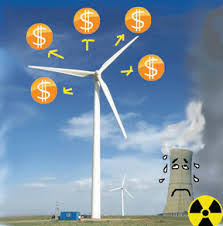
Nuclear outpaced fourteen to one by wind and solar in Europe
- Joe Bernardi, Vanessa Levy, Ye Huang, and Jessie Cato
- Global Energy Monitor (accessed) 4th Sept 2025
Key points
- Aging infrastructure, unrealized plans, and high costs continue to limit nuclear’s role in swift decarbonization, while solar and wind power are expanding rapidly and outpacing nuclear in new capacity and generation.
- Nearly 40% of all nuclear power ever proposed has been cancelled: 566 gigawatts (GW) of nuclear capacity has been cancelled worldwide, more than what is currently operational (401 GW) or retired (116 GW) combined.
- Europe’s nuclear sector has lost 122 GW of planned capacity to cancellations, more than the operating nuclear fleet of any single country worldwide. An additional 68 GW has been retired, and 90% of the remaining reactors are more than 35 years old. In contrast, European wind and utility-scale solar capacity under construction or in pre-construction outweighs nuclear by a factor of more than 13 to 1.
- Australia’s moratorium on nuclear, lengthy projected development timelines, high costs, lack of expertise, and strong public and policy preference for renewables mean nuclear is unlikely to play a significant role in filling the gap left by the country’s planned coal phaseout by 2038…………………………………………………………………………………………… https://globalenergymonitor.org/report/nuclear-outpaced-fourteen-to-one-by-wind-and-solar-in-europe/
UKRAINIAN NEOFASCISM – War Time Developments: Part 1 ‘Azov’ and Part 2 ‘Right Sector’
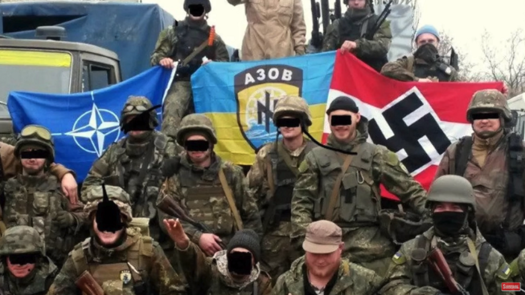
by Gordonhahn, September 5, 2025
Neo-fascism and ultranationalism may not have been the most powerful element in Ukraine or even among Ukrainian nationalists before the NATO-Russia Ukrainian War, but they are almost certainly so now, and they are becoming increasingly powerful military-politically, culturally, and ideologically.
Ukraine’s neofascists have never been satisfied with the Maidan revolt, despite their pivotal role in overthrowing the previous oligarch-dominated order, which the Maidan revolt only replaced in part. They have always looked tot he future and completion of the ‚nationalist revolution‘, as they call it. A few years ago, Dmitro Yarosh, founder and then leader or “coordinator’ of Ukraine’s neofascist Right Sector (RS) and later advisor to now fired Ukrainian Armed Forces Commander, Gen. Valerii Zaluzhnyi, who is now Kiev’s ambassador to the UK, promised there would be a ‘second phase of the nationalist revolution’ of which the February 2014 Maidan revolt was supposedly but the first.
The second phase is to sweep away the liberal and oligarchic remnants of the pre-Maidan democratic order brought into the Maidan regime, in Yarosh’s view. Yarosh recently repeated his call for the completion of the neofascist revolution on his Facebook page: “As it turned out, during the Dignity Revolution and the Russian-Ukrainian War, Ukrainian nationalists became the main factor in the Ukrainian national-liberation struggle in the 21st century… I am a Ukrainian Nationalist – sounds proud both in Ukraine and across the world. The next power after the War for Independence should be nationalist. Otherwise, we will once again be led down an unbreakable cycle of national humiliation, corruption, degeneracy, moral degradation, economic decline, inferiority and defeat… Therefore, after the War for Independence, the wise, courageous and noble should rule in Ukraine. Glory to the Nation!”
Similar views are held by Ukraine’s many other ultra-nationalist and neo-fascist groups and their leaders, and they have been waiting for the moment to complete their revolution. The catastrophe of the war, its outcome, and consequences are bringing their dream ever closer to reality. These factors alone could assist the neo-fascist’s rise to power, even if only temporarily.
There once was a time when the West acknowledged Ukraine’s neofascist threat to republican rule, even as it helped armed, trained, and equipeed the neofascists‘ cocoons, the siloviki –, i.e. the Ukrainian military, SBU, and HRU. The de facto NATO think tank, the Atlantic Council, at the time noted:
Since the beginning of 2018, C14 and other far-right groups such as the Azov-affiliated National Militia, Right Sector, Karpatska Sich, and others have attacked Roma groups several times, as well as anti-fascist demonstrations, city councilmeetings, an event hosted by Amnesty International, art exhibitions, LGBT events, and environmental activists. On March 8, violent groups launched attacks against International Women’s Day marchers in cities across Ukraine. In only a few of these cases did police do anything to prevent the attacks, and in some they even arrested peaceful demonstrators rather than the actual perpetrators.
“International human rights groups have sounded the alarm. After the March 8 attacks, Amnesty International warned that “Ukraine is sinking into a chaos of uncontrolled violence posed by radical groups and their total impunity. Practically no one in the country can feel safe under these conditions.”[1]
Below I look at the political and cultural role neofascist groups have been playing in Ukraine, particularly since the beginning of the NATO-Russia Ukrainian War. In this Part 1, I begin with the most powerful and influential neofascist structure, Azov. No other neofascist or other fporm of Ukrainian group has seen its power and influence in the state and society be so enhanced over the last decade and certainly since the beginning of the beginning oft he NATO-Russia Ukrsainian War. Indeed, Azov’s leader, Andriy Biletskiy could very well be Ukraine’s next president and become so in the not too distant future.
Part 1: Azov
The Azov Battalion emerged from the Nazi-inspired Social-National Assembly (SNA) founded by Andriy Biletskiy, now commander of the Ukrainian army’s 3rd Separate Assault Battalion ‘Azov’. Azov’s rise along with its politics and ideology have much in common with Adolph Hitler’s Waffen SS.[2] Prior to running the SNA, Biletskiy led the equally ultra-nationalist ‘Patriots of Ukraine,’ the military wing of the Ukrainian National Army, self-procliamed successor to the Nazi-allied outfir of the same name during World War II. The ‘Patriots were infamous their beatings of immigrants. In a 2010 interview Biletskiy described his organization as nationalist “storm troopers.[3][4] A year later Biletskiy was in prison, after his organization—already renamed the SNA—had been involved in a series of shootouts and mass brawls.
The SNA’s, Azov’s, and Biletskiy’s ideology is an extremist brand of Ukrainian neofascism melded with international white supremacism. The SNA program emphasizes the concept of “nationocracy,” which was later incorporated into the RS program and propaganda courses. The SNA in power would ban all political parties, organizations, associations and ideological groups, so the ethnic Ukrainian elite holds full power: “Political power is wholly owned by the Ukrainian nation through its most talented, idealistic and altruistic national representatives who are able to ensure proper development of the nation and its competitiveness.” “Supreme power (executive, legislative and judicial) of the Ukrainian state will be in the hands of the head of state, who is personally responsible to the nation’s own blood and property.” Capitalism is to be “dismantled” and democracy is to be “eliminated.” All actions that fail “to comply with obligations to the nation and the state will entail the restriction of civil rights or deprivation of citizenship … The ultimate goal of Ukrainian foreign policy is world domination.”[5]
In 2007, Azov’s ideology is reflected in its leaders statements. Top leader, commander Biletskiy, castigated a government decision to introduce fines for racist remarks, noting: “So why the ‘Negro-love’ on a legislative level? They want to break everyone who has risen to defend themselves, their family, their right to be masters of their own land! They want to destroy the Nation’s biological resistance to everything alien and do to us what happened to Old Europe, where the immigrant hordes are a nightmare for the French, Germans and Belgians, where cities are ‘blackening’ fast and crime and the drug trade are invading even the remotest corners.”[6] Biletskiy has also said: “The historic mission of our nation in this critical moment is to lead the White Races of the world in a final crusade for their survival. A crusade against the Semite-led Untermenschen.”[7] In 2017, Biletskiy gathered his men in order to express Azov’s support for former Bosnian Serb military officer and convicted war criminal, Ratko Mladić, running directly counter to Western policy. Mladic was held responsible by a Western-sponsored war tribunal at the Hague for war crimes during the Yugoslav civil wars in the 1990s, including the Srebrenica massacre. Biletsky declared Mladić a “patriot of Serbia” and refers to the Iinternational Criminal Tribunal for Yugoslavia in the Hague as a “Zionist tribunal.”[8] More recently, in May 2025 Biletskiy claimed that Hungary, Poland, and Romania are waiting for Ukraine’s collapse so they can annex their former territories that became part of Ukraine under Sdtalin in the wake of the USSR’s victory over fascism: “They are not preparing for war. They are preparing to take their own scraps in the event of a global defeat of Ukraine,” he asserted.[9]`
On the basis of Azov, Biletskiy founded the National Corps with an affiliated paramilitary organization ‘National Teams.’ One of the points of Biletskiy’s foreign policy vision and of National Corps’ program is the creation of a union of countries called the ‘Intermarium’, which would include, among others, Ukraine and Poland – an idea also propagated by many Western apologists and supporters of Ukrainian neofascism. However, Poles, as victims of the OUN’s and UPA’s massacres 80 years ago in Volyn and elsewhere, do not shy away from noting Azov’s neofascism. They point out that Azov members eagerly use Nazi symbols, including the „Dirlewanger“ of the 36th SS Grenadier Division, which massacred Poles in Warsaw’s Wola during the Warsaw Uprising.[10] And, as noted above, Biletskiy recently accused Poland, along with Hungary and Rumania, with having designs on Ukrainian territory……………………………………………………………………………………….
The NATO-Russia Ukrainian War is strengthening Azov’s hand in Ukraine’s army, politics, and culture. In the course of the war, the Azov Battalion was incoroprated into the army, becoming the Ukrainian army’s 3rd Separate Assault Brigade, while retaining a brigade in the National Guard (the 12th National Guard Brigade), into which it was originally incorporated. Azov also has another military unit, known as ‚Kraken‘, under the control of Ukrainian Military Intelligence (GRU) and its director, the CIA-trained Kyrylo Budanov. Kraken has been involved in a series of war crimes, including the execution of captured Russian soldiers. This year,the 3rd Assault Brigade ‚Azov‘ was upgraded further to become the Third Army Corps ‚Azov‘.[18]Thousands of new soldiers will be integrated into Azov, and a special training school for sergeants established for it will inevitably indoctrinate recruits with ultra-nationalist ideology. Azov 3rd Assaualt Corps‘ founding ceremony, replete neo-Nazi pagan-like symbolism, was held near Kyiv and attended by Biletskiy and his fellow commanders. Participants offered “The Prayer for Ukraine,” a hymn borrowed from the neofascist, antisemitic OUN, whiuch enthusiastically collaborated with the Hitler’s Nazis in the Holocaust and ethnic cleansing of Poles during World War II.[19] The new commander of Azov’s 3rd Assault Brigade, Yaroslav Levenets, appointed in April-May, recently met Zelensky in an awards ceremony. He allegedly helped to organize the 2017 killing of Denis Voronenkov, a former member of the Russian parliament. As of December 2021, Levenets was still wanted in Ukraine.[20] Aside from the army’s and therefore Azov’s growing role in Ukrainian society as a result of the war, Azov maintains a youth organization called ‘Centuriya’, which networks Azov across Ukrainian society in schools, children’s camps, and sports clubs.
According to Havryshko, Azov benefits from „enormous media presence“ and university support in Ukraine and uses „celebrity journalists and media experts to create a glamorous image of their units.“[21] Indeed, Biletskiy, other leaders and members appear frequently on mainstream television and other media. Ukrainian and foreign media propagate Azov’s units as „true patriots“ and “elite brigades,” respectively, whereas in the West before the war there was significant reporting on Azov‘s and other Ukrainian groups‘ neofascist political orientation and ideology. …………………
With this media and academic network, Azov is able to insinuate neofascism into every knook and cranny of Ukrainian society. For example, it has been at the forefront of a campaign to slander and threaten the life of a leading scholar of historical and contemporary Ukrainian neofascism, Professor Marta Havryshko of Clark University in Massachusetts, running her out oft he country. As a result of the campaign Havryshko was fired from her position in the Kripyakevich Institute for Ukrainian Studies for her research on various aspects of this subject inculding the violence committed by the WW II-era Ukrainian fascist organizations OUN and UPA allied with Nazi Germany, contemporary Ukrainian glorification of Ukraine‘s Waffen-SS division “Galicia”, and her rejection of ultra-nationalist driven history policies. ………………………………………………………………………………………………………………………………………………………….. https://gordonhahn.com/2025/09/05/ukrainian-neofascism-war-time-developments-part-1-azov-and-part-2-right-sector/
Russia is ready to discuss nuclear fuel at Ukraine’s Zaporizhzhia with US – RIA
By Reuters, September 5, 2025, https://www.reuters.com/world/russia-is-ready-discuss-nuclear-fuel-ukraines-zaporizhzhia-with-us-ria-2025-09-05/
VLADIVOSTOK, Russia, Sept 5 (Reuters) – The head of Russia’s State Atomic Energy Corporation Rosatom Alexei Likhachev said on Friday the company was ready to discuss with the U.S.’s Westinghouse the issue of nuclear fuel at Ukraine’s Zaporizhzhia nuclear power plant, RIA news agency reported.
In June, Russia asked the U.N. nuclear watchdog to mediate between Moscow and Washington to resolve the question of what to do with U.S. nuclear fuel stored at the Ukrainian power plant controlled by Russian forces.
Westinghouse and U.S. energy officials had previously raised intellectual property concerns with Russia in connection with the fuel issue, according to Likhachev.
Reporting by Vladimir Soldatkin and Olesya Astakhova; Editing by Christopher Cushing
£154m plan hatched to move UK’s 140-tonne cache of powdered plutonium from nuclear reactor waste at Sellafield.

Britain could finally solve the problem of
what to do with its radioactive waste by converting it into ceramic
pellets, The Telegraph can reveal. Government scientists want to store the
radioactive plutonium, which is a national security risk because it can be
used to make nuclear weapons, in an underground nuclear graveyard. The
UK’s cache of 140 tonnes of powdered plutonium from nuclear reactor waste
is currently under armed guard at Sellafield in Cumbria.
Telegraph 28th Aug 2025 https://www.telegraph.co.uk/news/2025/08/28/britain-solution-radioactive-waste-problem-cumbria/
1 This Month



26 September – International Day for the Total Elimination of Nuclear Weapons


PLEASE OPPOSE HR 8255 AND S.3639 – bills would accelerate satellite deployment, with no environmental review or safeguards – https://ncstd5li.quorum.us/campaign/169331/
To see nuclear-related stories in greater depth and intensity – go to https://nuclearinformation.wordpress.com
-
Archives
- September 2026 (269)
- August 2026 (330)
- July 2026 (355)
- June 2026 (287)
- May 2026 (306)
- April 2026 (356)
- March 2026 (251)
- February 2026 (267)
- January 2026 (308)
- December 2025 (358)
- November 2025 (359)
- October 2025 (375)
-
Categories
- 1
- 1 NUCLEAR ISSUES
- business and costs
- climate change
- culture and arts
- ENERGY
- environment
- health
- history
- indigenous issues
- Legal
- marketing of nuclear
- media
- opposition to nuclear
- PERSONAL STORIES
- politics
- politics international
- Religion and ethics
- safety
- secrets,lies and civil liberties
- spinbuster
- technology
- Uranium
- wastes
- weapons and war
- Women
- 2 WORLD
- ACTION
- AFRICA
- Atrocities
- AUSTRALIA
- Christina's notes
- Christina's themes
- culture and arts
- Events
- Fuk 2022
- Fuk 2023
- Fukushima 2017
- Fukushima 2018
- fukushima 2019
- Fukushima 2020
- Fukushima 2021
- general
- global warming
- Humour (God we need it)
- Nuclear
- RARE EARTHS
- Reference
- resources – print
- Resources -audiovicual
- Weekly Newsletter
- World
- World Nuclear
- YouTube
-
RSS
Entries RSS
Comments RSS

