America’s $80bn nuclear reactor fleet exposes Sizewell C costs.

The plants are expected to be bankrolled by Japanese investors as part of the $550bn investment pledged by Tokyo under the new US-Japan trade deal.
The United States has announced an $80 billion plan to build a fleet of nuclear power plants for less than two thirds of the cost per gigawatt of
Britain’s Sizewell C project. About eight of Westinghouse’s one
gigawatt AP1000 reactors are to be built across America, under a
partnership between the US government and the reactor-maker’s owners,
Brookfield and Cameco, to accelerate nuclear power deployment. The plants are expected to be bankrolled by Japanese investors as part of the $550 billion investment pledged by Tokyo under the new US-Japan trade deal.
The cost of about $10 billion (£7.5 billion) per gigawatt of new capacity is
significantly cheaper than the UK government’s recently approved plans
for the Sizewell C plant in Suffolk. Sizewell is due to generate 3.2
gigawatts of electricity — enough to power six million homes — at a
cost of £38 billion, or £11.9 billion per gigawatt. The contrast will do
nothing to alleviate concerns about the high costs of Britain’s nuclear
programme, although the US plans are still at a much earlier stage.
Critics have blamed factors including the UK’s choice of EDF’s “EPR”
reactor and safety red tape for inflating nuclear construction costs in
Britain. The costs of the 3.2GW Hinkley Point plant in Somerset, already
under construction, are estimated to have risen to as much as £48 billion.
Times 28th Oct 2025,
https://www.thetimes.com/business-money/companies/article/americas-80bn-nuclear-reactor-fleet-exposes-sizewell-c-costs-qxcqfdv5z
Furious French fairies challenge nuclear plans.

Frogtifa is just catching on in Portland, but French protesters have used street theatre for years. This summer’s anti-nuclear actions were no exception, reports Reseau sortir du nucléaire
Editor’s note: In her forthcoming book — No To Nuclear. Why Nuclear Power Destroys Lives, Derails Climate Progress and Provokes War — to be published by Pluto Press next March, Linda Pentz Gunter describes the creative resistance of French protesters, including the anti-nuclear movement. “The French anti-nuclear movement,” she writes, “has engaged in protests that deliver considerable numbers, abundant creativity — and sometimes a lot of useful tractors as well. France also has a long theatrical tradition, and French anti-nuclear activists have invariably embraced that as well. They understand that street theater is an attention-getter. They also know it makes protesting a lot more fun.” The chapter features the “goat ZAD” mobilized by the Piscine Nucléaire Stop collective. Since then, they have “escalated,” as sortir du nucléaire describes in this article.
From July 18 to 20, 2025, in La Hague, “HARO” made its grand debut: three days of meetings and mobilization around nuclear waste and local communities. Nearly a thousand people from the Cotentin region and elsewhere responded to the call of the Piscine Nucléaire Stop collective to participate in round tables, workshops, concerts, screenings, hikes, and, of course, the big demonstration by the Fées furieuses (Furious Fairies). The event took place in a festive atmosphere of determination.
The name of the event set the tone: derived from Norman customary law, the interjection “Haro” was used to demand justice, even in the face of powerful oppressors. In the Cotentin Peninsula, it is Orano [owner of the La Hague reprocessing facility] that is attempting to impose its Aval du Futur mega-project.
The event, located on the La Hague plateau in a field lent by local farmers committed to the anti-nuclear cause, offered a breathtaking view of the Orano plant, when the fog didn’t interfere with the festivities. The typical La Hague weather did not discourage participants who had come from all over France to take part in meetings against waste, nuclear power, and the nuclear chain, with an intersectional approach………………………………………………………………………………..
The packed program then continued throughout the weekend: between round tables on feminist anti-nuclear struggles, discussions on ways of living in contaminated areas, workshops on the legacy of decolonial struggles, the manufacture of radio transceivers, etc., there was something for everyone.
As for the cooperative village [established for the events], it was as varied as the program itself: local and national associations committed to the anti-nuclear cause or installation projects such as Atomic Marney, social struggle associations such as France Palestine Solidarité (Cherbourg branch), citizen laboratories, bookstores, and collectives from other environmental struggles, such as local committees of Soulèvements de la Terre.
The most courageous, who wanted to venture outside the meeting site, sometimes in pouring rain, were able to take part in the Randos Radieuses (Radiant Walks)…………………………………………………………..
Within this cultural program, the fight against Cigéo [the French nuclear waste entity] was highlighted with the screening of a film recounting ten years of struggle: Vivre et lutter à Bure entre 2015 et 2025 (Living and Fighting in Bure between 2015 and 2025), the documentary Les Bombes atomiques (The Atomic Bombs), which recounts a feminist highlight of the struggle in Bure, and the film Après les Nuages (After the Clouds) by the collective Les Scotcheuses
The highlight of the weekend was a demonstration on Saturday afternoon against Aval du Futur and, more broadly, the ever-increasing nuclearization of the region. In keeping with its offbeat and militant approach, the Piscine Nucléaire Stop collective decided to draw on the local legend of the little fairies and their method of collective self-defense armed with heather and gorse to confront an offense: the paving over of the last remaining primary moors on the La Hague plateau and the accumulation of nuclear waste by Orano.

A thousand people gathered to march against Orano’s project. The procession left the camp in sunny weather and headed for the village of Vauville, accompanied by a police presence and a helicopter dispatched for the weekend.
In a family atmosphere, the demonstrators and little fairies danced to the sounds of the Planète Boum Boum collective, chanted slogans concocted for the occasion, and sang to the tune of a summer camp song: “In my beautiful Cotentin, there will be no MOX, no swimming pools either, and no concrete either.”
The links between the struggles in Bure and La Hague were strengthened during this event, culminating in a concert by the Bure-based band Les Free’meuses, during which the audience was moved by their latest cover of Les Demoiselles de Rochefort: “We are twin struggles… “
In various ways throughout the weekend, activists from the east and west reiterated that “we don’t want radioactive waste dumps in La Hague, Bure, or anywhere else!”
The weekend ended with an evening concert and a final HARO as a cry of convergence of struggles to support social and environmental struggles as well as the struggle of the Palestinian people.
This article was first published in French by the Reseau sortir du nucléaire, a national network of French anti-nuclear organizations.
2
ATOMIC BLACKMAIL? The Weaponisation of Nuclear Facilities During the Russia-Ukraine War.
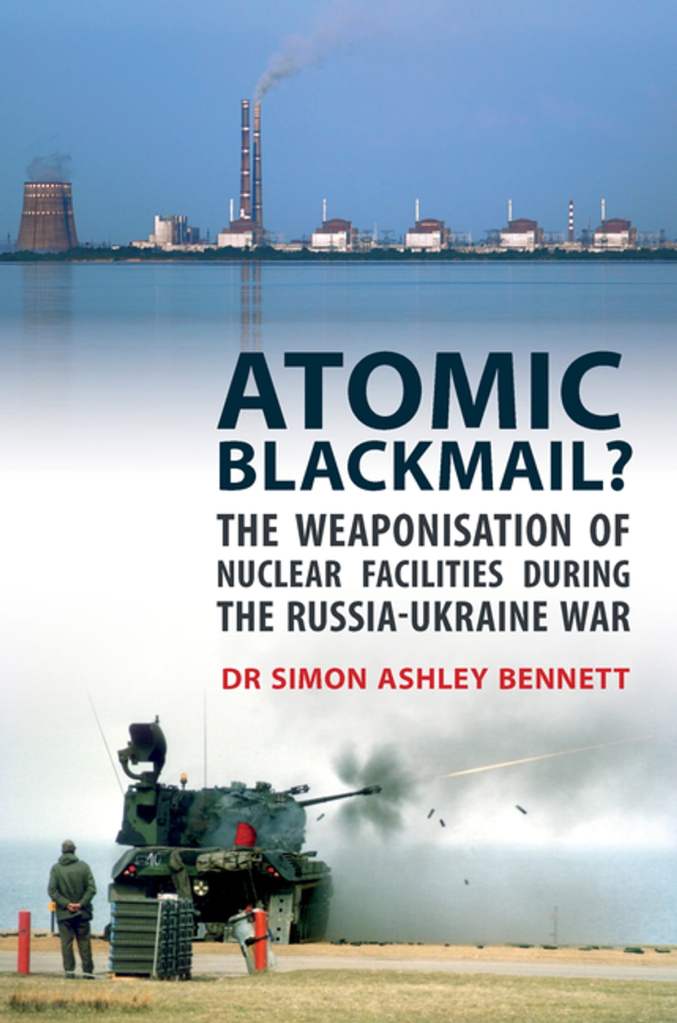
a protagonist could use long-range munitions to turn a NPP into a dirty bomb that would spread radioactive contamination over a wide area, dispersing or diverting army formations, rendering civilian infrastructure and farmland unusable, contaminating groundwater and creating a radioactive cloud that would – if the wind was blowing in a convenient direction – cause transborder harms.
Simon Ashley Bennett, https://www.libripublishing.co.uk/Products/CatID/16/ProdID=292
In Atomic Blackmail? Simon Bennett examines the very real possibility of the ‘weaponisation’ of nuclear facilities during the Russia-Ukraine War. The Russia-Ukraine War has several unique aspects, the most striking of which is that it is being fought in proximity to nuclear facilities and working nuclear power stations, including the six-reactor Zaporizhzhia Nuclear Power Plant (NPP), Europe’s largest, and the decommissioned four-reactor Chernobyl NPP that, in 1986, suffered a catastrophic failure that released radioactive contamination across much of Europe. Some experts claim the contamination caused several thousand excess cancer deaths.
In 1985, foreign affairs and nuclear expert Bennett Ramberg published Nuclear Power Plants: An Unrecognised Military Peril, with a second edition of the book published in 1992. In his visionary discourse, Ramberg posited that in future wars, regional or global, nuclear facilities and powerplants might be weaponised, to gain political traction over an opponent and/or neutralise opposing forces’ capacity for battlefield manoeuvre.
In one scenario, Ramberg described how a protagonist could use long-range munitions to turn a NPP into a dirty bomb that would spread radioactive contamination over a wide area, dispersing or diverting army formations, rendering civilian infrastructure and farmland unusable, contaminating groundwater and creating a radioactive cloud that would – if the wind was blowing in a convenient direction – cause transborder harms. As demonstrated by the Chernobyl disaster, a reactor malfunction can generate serious and long-lasting environmental impacts. Radioactive particles released from Chernobyl’s devastated Reactor Number Four were deposited as far afield as the Cumbrian hills in north-west England.
While, at the time of writing, none of Ukraine’s fifteen reactors had been damaged in an exchange of fire, the possibility remains that this could happen during Ukraine’s 2023, and subsequent, offensives to expel Russian forces from sovereign Ukrainian territory. Much to the consternation of the International Atomic Energy Agency (IAEA), there have been several near-misses, with weapons fired in and around both the decommissioned Chernobyl NPP and working Zaporizhzhia NPP. Further, Russian long-range precision munitions (cruise missiles) have been tracked flying either close to, or over Ukraine’s NPPs. The Pivdennoukrainsk (South Ukraine) NPP has been overflown. On 20 September, 2022, a missile landed some 300 metres from the NPP.
While Ramberg’s nightmare vision of destroyed NPPs rendering a country uninhabitable has not, yet, been realised in the Russia-Ukraine War, the longer and more intense the conflict, the greater the likelihood that one or more of Ukraine’s NPPs will be damaged or, via a credible sabotage threat, used to leverage tactical or strategic advantage. Atomic blackmail finally exampled.
Dounreay waste particle ‘most radioactive’ find for three years

Steven McKenzie, Highlands and Islands reporter and Rachel Grant, BBC Scotland. 23 Oct 25
A fragment of waste found near the decommissioned experimental nuclear power facility in Dounreay in April was the most radioactive to be detected in the past three years, the Highland site’s operator has said.
The fragment, categorised as “significant”, was discovered during monitoring work around the nuclear power plant near Thurso. It is the latest in a long line of particle discoveries in the area.
Dounreay was built in the 1950s as the UK’s centre of fast reactor research, but during the 1960s and 1970s sand-sized particles of irradiated nuclear fuel got into the drainage system.
Work to clear the pollution began in the 1980s, after particles were found washed up on the nearby foreshore.
The facility closed in 1994. The multi-billion pound decommissioning process involves hundreds of workers and is expected to last into the 2070s.
The full decontamination of the site is expected to take more than 300 years.
A Dounreay spokesperson said: “Particles are a legacy of industrial practices dating back to the early 1960s and our commitment today to environmental protection includes their monitoring and removal from the marine environment and transparent reporting of our activities.”
A group of independent experts, who advise the Scottish Environment Protection Agency (Sepa) and Dounreay, classify particles by the radioactivity of their caesium-137 content.
The categories are minor, relevant and significant.
Significant means a reading greater than one million becquerels of CS-137.
A becquerel is the standard unit of radioactivity.
The particle was found on the western part of Dounreay’s foreshore on 7 April. Eight other finds reported since then have been categorised as “minor” or “relevant”.
A significant-category particle was last discovered in March 2022.
Thousands of particles of different categories have been removed from beaches, foreshore and seabed at Dounreay.
The site’s operator said monitoring on the site on the north Caithness coast continued to be done on a fortnightly basis.
On occasions it said the scheduled work could be interrupted by bad weather or the presence of protected species of ground-nesting birds……………………………………………………..
What risk is there to the public?
According to official reports, risk to people on local beaches is very low.
Guidance issued by the UK government’s Nuclear Restoration Services says the most at-risk area is not accessible to the public.
The particles found along the coast vary in size and radioactivity with smaller and less active particles generally found on beaches used by the public.
Larger particles have only been found only on the foreshore at Dounreay, which is not used by the public.
The particles found on beaches are believed to come from the disintegration of larger fragments in the seabed near Dounreay. The area is continuously monitored for traces of radioactive materials.
Harvesting of seafood is prohibited within a 2km (1.2 mile) radius of a point near Dounreay. This is where the largest and most hazardous fragments have been detected.
Dounreay’s radioactive history
- 1954 – A remote site on the north coast of Scotland is chosen as the site of a new type of nuclear reactor. Modern homes were built in Caithness to attract workers to the sparsely populated area.
- 1957 – A chain reaction which provided sustained and controlled nuclear energy is achieved for the first time.
- 1959 – A new disposal site for radioactive waste called the Shaft opens. It drops 65.4m (214.5ft) below ground.
- 1962 – The fast reactor inside the dome is the first in the world to provide electricity to a national grid.
- 1977 – The original “golf ball” reactor is shut down and waste disposal in the Shaft ends after an explosion.
- 1994 – Dounreay nuclear power generating facility closes.
- 1998 – Decommissioning programme is announced.
- 2008 – Operation to scour the seabed for hazardous material begins and the Shaft shaft is encircled in a boot-shaped ring of grout to prevent contamination.
- 2020 – Clean-up begins of the highly contaminated Shaft – a three decades-long project.
- 2333 – Decontamination expected to be complete, making the 148-acre site available for other uses. https://www.bbc.com/news/articles/cz91nx0lv59o
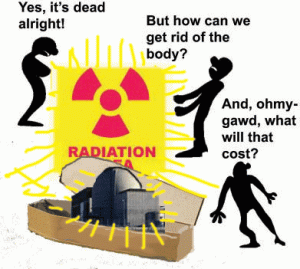
Germany destroys two nuclear plant cooling towers as part of nuclear phaseout plan.
Euronews, 25/10/2025,https://www.euronews.com/2025/10/25/germany-destroys-two-nuclear-plant-cooling-towers-as-part-of-nuclear-phaseout-plan
The two towers, equivalent to roughly 56,000 tonnes of concrete, collapsed in a controlled demolition on Saturday. It comes as part of Germany’s nuclear phaseout.
Two cooling towers of the former nuclear power plant in Germay’s Bavarian town of Gundremmingen were brought down in a controlled demolition at noon on Saturday.
The plant had served as an important landmark in the town for nearly six decades, bringing numerous new jobs and boosting the local economy.
As part of the country’s nuclear phaseout and under Germany’s energy transition policy, the Gundremmingen, as well as the Brokdorf, and Grohnde nuclear power plants, had already been decommissioned in December 2021.
The municipality, who had prepared for a large crowd of onlookers, set up a restricted zone around the power plant.
According to energy company RWE, the demolition could be observed from various watch points in the region. Some pubs also offered public “demolition viewing parties”
How the towers will be blown up
There were three explosions in total. The first was carried out to chase away nearby animals and wildlife. The second brought down the first tower, and the third caused the second tower to collapse.
Roughly 56,000 tonnes of concrete collapsed in a matter of seconds. Following Saturday’s demolition, the dismantling of the plant will further continue, local media report, with completion expected by 2040.
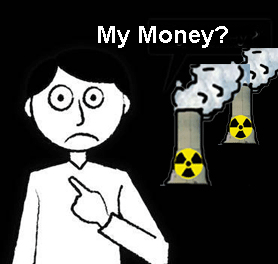
ED MILIBAND’S NUCLEAR NIGHTMARES
Jonathon Porritt, 22 Oct 25, https://jonathonporritt.com/uk-nuclear-subsidies-desnz-spending/
Meanwhile, in a parallel universe, the legions of nuclear fat cats residing here in the UK are smiling very broadly indeed. It would appear that both Rachel Reeves and Ed Miliband have nothing better to do with our money, as taxpayers, than to go on filling up their subsidy saucers more or less on demand.
Taxpayers really don’t know very much about how DESNZ spends our money. More problematically, not a lot of the UK’s more or less mis-informed energy correspondents are particularly interested in helping taxpayers to understand what’s really going on – for the most part because they’re ‘ideologically captured’, with very little interest in the truth.
A bit harsh? Well, why is it, for instance, that not one of them provides any serious analysis of DESNZ’s annual expenditure? Not least as the details of this (on p.18 of its 2024-2025 Annual Report & Accounts) are completely mind-blowing. To summarise:
DESNZ TOTAL DEPARTMENTAL SPEND
Total departmental spend: £8.6 billion
Total spend on nuclear power: £5.1 billion (60%)
Total spend on everything else: £3.5 billion (40%)
See what I mean? Literally mind-blowing! A few more details on the nuclear side of things:
*Great British Nuclear: £26 million (the more or less useless quango overseeing this fiasco).
*Nuclear Decommissioning Agency : £3 billion (dealing with the legacy of past nuclear programmes).
*Support for Sizewell C power station: £1.67 billion.
*UK Atomic Energy Agency (UKAEA): £400 million (doing bonkers stuff like nuclear fusion).
That’s the size of the nuclear sink hole: roughly £5.1 billion! Leaving roughly £3.5 billion for everything else, including all direct support for renewables, ‘delivering affordable energy’, science, research and ‘capability’, as well as other arm’s length bodies. Moreover, even that low figure is not quite what it seems: roughly £450 million is set aside for another of Ed Miliband’s sink holes, namely Carbon Capture and Storage.
Do you need any more persuading that this is obviously a completely mis-titled Department: instead of DESNZ, it really should be called DNPB&B – the Department of Nuclear Power and Bits & Bobs.
Where the hell are you, Rachel Reeves? For those sick of your hangdog ‘black hole blathering‘, it would be wonderful to think you might instruct just a few of your civil servants to instruct the ever-well-meaning Ed Miliband to undertake an exercise in zero budgeting for FY 25/26. Great British Nuclear could go at a stroke of a pen – no one would notice. The UKAEA’s budget could be halved, leaving it to focus on decommissioning redundant reactors and dealing with nuclear waste. Subsidies for Sizewell C could be massively reduced – although the Department did such a poor deal with various private sector investors that there will be significant compensation to be paid.
Sadly, of course, there is nothing that can be done about the £3 billion set aside, EVERY YEAR, for dealing with the legacy of earlier nuclear programmes – decommissioning, site security, managing nuclear waste and so on. Nuclear campaigners have struggled for years to explain that our ‘nuclear legacy’ is in fact our ‘current nuclear reality’, and that this is a figure which can only grow and grow over the years. The Public Accounts Committee looked recently at the cost of decommissioning many of the facilities at Sellafield, currently assessed at £396 million through to 2070, and couldn’t have made their incredulity any clearer. On top of that, we have the looming additional cost of building a long-term Geological Disposal Facility, for which taxpayers will be paying hundreds of billions of pounds through to the end of this century.
Ask the Treasury or officials at DNPN&B what they believe that total legacy figure will be in FY2030/2031,or FY2040/2041, and you can be absolutely guaranteed to get literally no answer at all.
And yet – AND YET – we go on pouring yet more billions into NEW waste-generating nuclear monstrosities like Hinkley C and now Sizewell C.
It’s nearly 50 years since the highly influential Flowers Report was published in 1976. Its single most important recommendation was as follows:
“There should be no commitment to a large programme of nuclear fission power until it has been demonstrated beyond reasonable doubt that a method exists to ensure the safe containment of long-lived, highly radioactive waste for the indefinite future.”
We are, truly, led by nuclear donkeys.
Meanwhile, back in the real world, all this never-ending filling-up of the industry’s subsidy saucers has massive opportunity costs for what we should really be doing with precious taxpayers’ money.
As in:
- getting as enthusiastically as possible behind the potential for tidal power (see yesterday’s blog).
- getting as enthusiastically as possible behind retrofitting and the green economy (see tomorrow’s blog).
I’ll return to the whole question of just how many billions Rachel Reeves could divert from these nuclear sink holes as we get a little closer to the budget in November.
Managing our ‘Energy Legacy’: £85 million (roughly half the total figure).
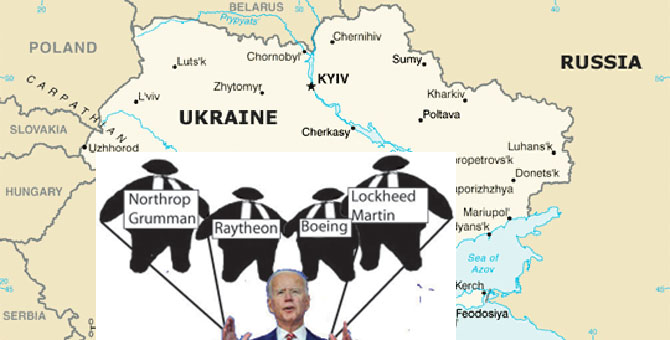
Biden hands off Ukraine war to Trump…who now owns it.
Walt Zlotow, West Suburban Peace Coalition, Glen Ellyn IL, 25 Oct 25
President Biden provoked the Russian invasion of Ukraine for 13 months with reckless NATO expansion before Russia said ‘enough’ and pushed back violently. Biden then spent his last 37 months pouring over $150 billion in military aid which proved worthless in achieving Ukrainian victory. All it did was prolong Ukraine’s suffering with hundreds of thousands dead and wounded in a shattered country.
2024 candidate Trump called out this senseless stupidity for what is was, Biden’s war that Trump wouldn’t have provoked had he won in 2020. He further boasted he’d end it on first day of second term.
Tho Trump largely stopped the direct funding that Biden kept squandering till his last sorrowful day, he’s still selling weapons to the European dead-enders UK, France, Germany and others to gift Ukraine. One day Trump says Ukraine should quit without return of a single lost square mile; next day he claims Ukraine can retrieve it all. One day he ponders sending Ukraine Tomahawk missiles likely to provoke nuclear war; next day he tells Ukraine President Zelensky, who flew 4,867 miles to beg for them…’Faggedaboudit.’
Trump’s got bigger war fish to fry than the lost cause of Ukraine. He’s still supporting Israel’s genocidal ethnic cleansing of Gaza, his fake ceasefire notwithstanding. He’s getting ready to bomb Venezuela, not content with just blasting small, unarmed Venezuelan boats to smithereens. He may be planning another round of air strikes on Iran in his quest at regime change and destabilization there.

Ukraine will collapse on Trump’ watch. Biden never wavered in support of a war impossible to win. Trump, however, wavered in his boast he would end Biden’s war, allowing it to continue incurring hundreds of thousands more casualties and more lost Ukrainian territory. By so doing, history will record Trump’s ownership of America’s failed proxy war to weaken Russia at the end, as surely as it records Biden’s ownership at the beginning.
Miliband starts fight with SNP over deploying new nuclear in Scotland
By Tom Pashby
Miliband starts fight with SNP over deploying new nuclear in Scotland.
Energy secretary Ed Miliband has asked Great British Energy – Nuclear to
explore deploying new nuclear at Torness, Hunterston and potentially other
parts of Scotland, despite the fact that the SNP-run Scottish Government
does not allow new nuclear developments in Scotland.
New Civil Engineer 24th Oct 2025, https://www.newcivilengineer.com/latest/miliband-starts-fight-with-snp-over-deploying-new-nuclear-in-scotland-24-10-2025/
MPs ‘deeply concerned’ about government’s proposed new nuclear siting policy
By Tom Pashby
MPs ‘deeply concerned’ about government’s proposed new nuclear
siting policy. MPs have said they are “deeply concerned” that the
government’s proposed new siting policy for new nuclear reactors “fails
to present a truly joined-up approach across planning, safety and
environmental regulation”.
New Civil Engineer 24th Oct 2025, https://www.newcivilengineer.com/latest/mps-deeply-concerned-about-governments-proposed-new-nuclear-siting-policy-24-10-2025/
Early engagement launched on £360m nuclear waste capping scheme
By Harmsworth
Nuclear Waste Services (NWS), the state-owned body responsible for
managing the UK’s radioactive waste, has launched early market engagement on a £360m programme to cap and extend the Low Level Waste Repository (LLWR) in Cumbria.
NWS operates the repository on behalf of the Nuclear
Decommissioning Authority (NDA), a non-departmental public body sponsored by the Department for Energy Security and Net Zero.
The scheme will involve installing a permanent engineered cap over disused trenches and Vault 8 at the LLWR site near Drigg. Capping is a method used to isolate radioactive waste from the environment. It involves layering materials such as clay, concrete and geomembranes to prevent water from reaching the waste and to contain any gas emissions.
Construction News 24th Oct 2025,
https://www.constructionnews.co.uk/civils/early-engagement-launched-on-360m-nuclear-waste-capping-scheme-24-10-2025/
Nuclear construction workers plan third strike.
Construction workers employed by contractors at a nuclear site are to go
on strike for a third time in two months in a dispute over pay. Unite
members at Sellafield in Cumbria will take action from Monday until 2
November after previously striking earlier in October and for four days in
September.
The union said it was because construction workers at other
nuclear projects received pay premiums that contractors at Sellafield did
not match. Sellafield Ltd said it did not directly employ those taking part
in the action but “safety and security” would continue to be its priority
throughout the strike.
BBC 24th Oct 2025,
https://www.bbc.co.uk/news/articles/cwy16l08eldo
UK Government look at bypassing SNP amid block on ‘billion pound’ nuclear investment.

The Scottish Government is refusing to give planning permission for any new nuclear reactors to be built in Scotland – despite the possibility of billions of pounds of investment.
UK Government look at bypassing SNP amid block on ‘billion pound’ nuclear
investment. The Scottish Government is refusing to give planning permission for any new nuclear reactors to be built in Scotland – despite the possibility of billions of pounds of investment. There has been interest
from the likes of Rolls Royce in building nuclear reactors north of the
border, but any planning applications would be rejected by the SNP
Government.
However, a source close to the UK Government suggested that it was pushing for reactors to be built in Scotland. It would put it on a
collision course with the SNP who are anti-nuclear. Former Scottish
Secretary Alister Jack suggested a few years ago that his office were
already plotting a similar move, if the SNP are kicked out of office in
2026. Now, this idea has been revived, it is understood, with Scotland set
to miss out on billions of pounds of investment if John Swinney clings on
to power in May next year. The UK and USA signed a lucrative deal last
month which will fast track the creation of small nuclear power stations,
halving the time it takes to gain regulatory approval for nuclear projects
from up to four years to two.
Express 22nd Oct 2025, https://www.scottishdailyexpress.co.uk/news/politics/uk-government-look-bypassing-snp-36109802
True cost of nuclear waste disposal facility £15bn higher than recent Treasury figures

MP says ministers ignore long-term waste costs of nuclear power
“Government ministers are very happy to talk about the so-called benefits of nuclear power without reference to its long-term impacts and the eye-wateringly large amounts of money associated with storage and security of nuclear waste, which is in the tens of billions of pounds just to create the GDF,” he said.
23 Oct, 2025 New Civil Engineer, By Tom Pashby
The true cost of an underground facility for long-term storage of nuclear waste has been revealed to be up to £68.7bn – £15bn more than the sum listed in the National Infrastructure and Service Transformation Authority’s (Nista’s) recent annual report.
A Geological Disposal Facility (GDF) represents a monumental undertaking, consisting of an engineered vault placed between 200m and 1km underground, covering an area of approximately 1km2 on the surface. This facility is designed to safely contain nuclear waste while allowing it to decay over thousands of years, thereby reducing its radioactivity and associated hazards.
Nuclear Waste Services (NWS) is responsible for the GDF project and declares that this method offers the most secure solution for managing the UK’s nuclear waste, aimed at relieving future generations of the burden of storage. NWS is part of the Nuclear Decommissioning Authority (NDA), which is itself an executive non-departmental public body, sponsored by the Department for Energy Security and Net Zero (DESNZ).
Nista is a unit of HM Treasury and published its NISTA Annual Report 2024 to 2025 in August 2025, where it described the GDF project as ‘Red’, meaning the projects appears to be “unachievable”, and as having a whole life cost of from £20bn to £53.3bn.
However, Nista’s Infrastructure Pipeline lists the GDF’s CapEx (capital expenditure) range for new infrastructure in 2024/2025 prices as being from £26.2bn to £68.7bn, with the top end being slightly over £15bn higher than the figure published in the annual report.
A government source explained to NCE that the discrepancy is because the figures published in Nista’s annual report are based on 2017/2018 prices, meaning the effects of long-term inflation were not accounted for.
Criticism was previously levied at High Speed 2 (HS2) because of its use of historic pricing figures to reduce the impact of inflation on budget projects and make the total cost of the project appear to be lower than it would end up being.
Parliamentarians told NCE that ministers should face up to the long-term legacy costs associated with the nuclear industry.
Current GDF pricing only provided by Nista to ensure consistency with pipeline
A government source told NCE that the difference in the two ranges for whole-life costs for the GDF is a factor of the price basis for each quoted figure.
They said that the NDA provided Nista with data in 2017/18 prices with the total range of £20bn-53.3bn, which was reflected in the Nista annual report.
The same data for this project was converted to 2024/25 prices for the Nista Infrastructure Pipeline, to ensure consistency with the rest of the data in the set, the source said. This is reflected in the higher figure of £26.1bn-£68.7bn.
NWS did not provide any comment.
MP says ministers ignore long-term waste costs of nuclear power
SNP spokesperson for energy security and net zero, transport, and science, innovation and technology, Graham Leadbitter MP, told NCE that ministers ignore the long term legacy of nuclear power when promoting projects.
“Government ministers are very happy to talk about the so-called benefits of nuclear power without reference to its long-term impacts and the eye-wateringly large amounts of money associated with storage and security of nuclear waste, which is in the tens of billions of pounds just to create the GDF,” he said.
He added that the waste would have to be managed for 1,000’s of years, and the money budgeted for nuclear waste management would be better spent on “more valuable infrastructure projects … that would support high-quality employment, investment in skills and vastly improved public services.”
Government must ‘face up to the legacy’ of nuclear – peer
Liberal Democrat Lords spokesperson for energy and climate change Earl Russell told NCE: “If this Government truly want to see a renaissance in nuclear power, it must finally face up to the legacy it leaves behind.”
Russell reiterated the fact that Nista described the GDF as “unachievable” and added: “The government must have a credible, long-term strategy for managing the waste new nuclear projects will produce.”……………………………………………………………………… https://www.newcivilengineer.com/latest/true-cost-of-nuclear-waste-disposal-facility-15bn-higher-than-recent-treasury-figures-23-10-2025/
Parliamentary Committee calls for clear direction on Oldbury and Wylfa, and a “one-stop shop” to finally overcome excessive cost and delays in deployment of nuclear energy
House of Commons Energy Security and Net Zero Committee, 24 October 2025
In a report today the Commons Energy Security and Net Zero Committee says new planning guidance for building Britain’s future nuclear energy generation brings a welcome ‘presumption of consent’ for low-carbon generation across a range of nuclear technologies.
But the UK’s move into unprecedented territory of private development of new nuclear sites creates new challenges. The Committee is concerned that the “exhaustive” drafting of the criteria in EN‑7, intended to introduce the flexibility to consider a wide range of factors towards approval, may in fact just duplicate issues also addressed by specialist regulators and create more uncertainty, delay and cost.
It concludes that new policy statement EN-7 “fails to present a truly joined-up approach across planning, safety, and environmental regulation” and so risks undermining its own purpose: to provide a definitive and coherent framework for decision-making. Commercial developers, facing a front-loaded application system and potential review both by multiple regulators and in Court, may be driven to “gold plate” applications with excessive detail. ……………………………………………………………………………… https://committees.parliament.uk/committee/664/energy-security-and-net-zero-committee/news/209808/committee-calls-for-clear-direction-on-oldbury-and-wylfa-and-a-onestop-shop-to-finally-overcome-excessive-cost-and-delays-in-deployment-of-nuclear-energy/
European leaders are unable to inflict a strategic defeat on Russia yet unwilling to face the political consequences of peace in Ukraine

The war in Ukraine is now entirely dependent on the ability of European states to pay for it at a cost of at least $50bn per year
a strong likelihood……….. that three years from now Ukraine would have to settle for a peace that was even more disadvantageous to it than that which is available now
Ian Proud, Oct 22, 2025, https://thepeacemonger.substack.com/p/european-leaders-are-unable-to-inflict?utm_source=post-email-title&publication_id=3221990&post_id=176818542&utm_campaign=email-post-title&isFreemail=true&r=1ise1&triedRedirect=true&utm_medium=email
President Trump’s latest about face on dialogue with Russia doesn’t change the fundamental predicament Europe finds itself in: unable to inflict a strategic defeat on Russia but unwilling to face the political consequences of ending the war in Ukraine.
The Budapest Summit between Trump and Putin is now off, it seems. European leaders and Zelensky have clearly sold the US President on the idea of entering a ceasefire along the current line of contact. Yet, caught between a rock and a hard place, European leaders continue to deny the obvious realities of the dire situation in Ukraine, which will only worsen over time. I see no evidence of any willingness to change course, despite the obvious political hazard they face and the increasingly grim forecast for Europe and for Ukraine should they continue to push an unwinnable war.
The war in Ukraine is now entirely dependent on the ability of European states to pay for it at a cost of at least $50bn per year, on the basis of Ukraine’s latest budget estimate for the 2026 fiscal year. Ukraine itself is bankrupt and has no access to other sources of external capital, beyond that provided by the governments sponsoring the ongoing war.
That then brings the conversation back to the creation of a so-called ‘reconstruction loan’ underwritten by $140bn of the Russian foreign exchange assets currently frozen in Belgium. The term ‘reconstruction loan’ is itself disingenuous, on the basis that any expropriated Russian assets would not be used for reconstruction, but rather to fund the Ukrainian war effort. Indeed. Chancellor Merz of Germany recently suggested that the fund could allow Ukraine to keep fighting for another three years.
The most likely scenario, in the terrible eventuality that war in Ukraine did continue for another three years is that the Russian armed forces would almost certainly swallow up the whole of the Donbass region – comprising Donetsk and Luhansk oblasts. This – Ukraine’s departure from the Donbas – appears to be the basis of President Putin’s conditions for ending the war now, together with a Ukrainian declaration of neutrality and giving up any NATO aspirations. More likely, the Russian Armed forces might also capture additional swathes of land in Zaporizhia and Kherson oblasts, and also in Dnipropetrovsk, where they have made recent incursions.
So, there is a strong likelihood, at the currently slow pace of the war effort in which Russia claims small pieces of land on a weekly basis, that three years from now Ukraine would have to settle for a peace that was even more disadvantageous to it than that which is available now, having lost more land, together with potentially hundreds of thousands of troops killed or injured.
Logically, European policymakers would be able to look into the future to see this grim predicament with clear eyes and encourage Zelensky to settle for peace now.
But European policy is driven by two key considerations. Firstly, an emotional belief that an extended war might so weaken Russia that President Putin was forced to settle on unfavourable terms. The idea of a strategic defeat of Russia – which is often spoken by European politicians – however, doesn’t bear serious scrutiny.
Russia doesn’t face the same considerable social and financial challenges that Ukraine faces. Its population is much larger and a wider conscription of men into the Armed forces has not been needed – Russia can recruit sufficient new soldiers to fight and, indeed, has increased the size of its army since 2022. Ukraine continues to resort to forced mobilisation of men over the age of 25, often using extreme tactics that involve busifying young men against their will from the streets.
Critically, Russia could likely continue to prosecute the war on the current slow tempo for an extended period of time without the need for a wider mobilisation of young men, which may prove politically unpopular for President Putin domestically. Yet, the longer the war continues, Ukraine will come under increasing pressure, including from western allies, to deepen its mobilisation to capture young men below the age of 25 to shore up its heavily depleted armed forces on the front line.
There has been considerable resistance to this so far within Ukraine. Mobilising young men above the age of 22 would prove unpopular for President Zelensky but it would also worsen Ukraine’s already catastrophic demographic challenge: 40% of the working age population has already been lost, either through migration or through death on the front line and that number will continue to go south, the longer the war carries on.
Russia’s financial position is considerably stronger than Ukraine’s. It has very low levels of debt at around 15% of GDP and maintains a healthy current account surplus, despite a narrowing of the balance in the second quarter of 2025. Even if Europe expropriates its frozen assets, Russia still has a generous and growing stock of foreign exchange reserves to draw upon, which recently topped $700bn for the first time.
Russia’s military industrial complex continues to outperform western suppliers in the production of military equipment and munitions. In the currently unlikely event that Russia started to fall into the red in terms of its trade – what commentators in the west refer to as destroying Russia’s war economy – it would still have considerable scope to borrow from non-western lenders, given the strength of its links with the developing world, aided by the emergence of BRICS.
Ukraine is functionally bankrupt because it is unable to borrow from western capital markets, on account of its decision to pause all debt payments. With debt expected to reach 110% in 2025, even before consideration of any loan backed by frozen Russian assets, it depends entirely on handouts from the west. Ukraine’s trade balance has continued to worsen throughout the war, reinforcing its dependence on capital injections from the west to keep its foreign exchange reserves in the black.
So while the determination of Ukraine to fight is unquestionable, the emotional belief in the west that this will overcome the enormous social and economic challenges the country faces in an extended attritional war with Russia is wildly misplaced.
So, let’s look at the rational explanation for Europe’s continued willingness to prolong the fight in Ukraine. The uncomfortable truth is that Europe’s political leaders have boxed themselves into this position because of a hard boiled determination not to concede to Russia’s demands in any peace negotiations. Indeed, there is a steadfast and immovable objection to talking to Russia at all, which has been growing since 2014.
However, across much of Europe, the political arithmetic is turning against the pro-war establishment with nationalist, anti-war parties gaining ground in Central Europe, Germany, France, Britain and even in Poland. And despite so far fruitless overtures made by President Trump towards negotiation with President Putin, Trumpophobia provides another brake on the European political establishment shifting its position.
So, changing course now and entering into direct negotiations with Russia would have potentially catastrophic consequences, politically, for European leaders, which they must surely be aware of. A full 180 degree change in diplomatic course by Europe would require an acceptance that the war against Russia was unwinnable, and that Russia’s underlying concerns – namely Ukrainian neutrality – would finally have to be accepted as a political reality.
On this basis, European politicians would face the prospect of explaining to their increasingly sceptical voters that their strategy of defeating Russia had failed, having spent four years of war saying at all times that it would eventually succeed. And that would lead potentially to internationalist governments falling across Europe starting in two years when Poland and France will again go to the polls, and in 2029 when the British and German governments will face the voters.
There are deeper issues too. An end of war would accelerate the process of admitting Ukraine into the European Union with potentially disastrous consequences for the whole financial basis of Europe. The European Commission will face the prospect of accepting that a two-tier Europe is inevitable, admitting Ukraine as a member without the financial benefits received by existing member states; for probably understandable reasons, this would cause widespread resentment within Ukraine itself, having sacrificed so much blood to become European, precipitating widespread internal dissent and possibly conflict in a disgruntled country with an army of almost one million. Alternatively, the European Commission would need to redraw its budget and face huge resistance from existing Member States, who would lose billions of Euros each year in subsidies to Ukraine. And the truth is that it will in all likelihood be unable to do so.
Caught between hoping for a strategic defeat of Russia which any rational observer can see is unlikely, and accepting the failure of their policy, causing a widespread loss of power and huge economic and political turmoil, Europe’s leaders are choosing to keep calm and carry on. If they had any sense, the likes of Von der Leyen, Merz, Starmer or Macron would change tack and pin their hopes on explaining away their failure before the political tide in Europe evicts them all from power. But I see no signs of them having the political acumen to do that. So we will continue to sit and wait, while storm clouds grow ever darker over Europe.
1 This Month



26 September – International Day for the Total Elimination of Nuclear Weapons


PLEASE OPPOSE HR 8255 AND S.3639 – bills would accelerate satellite deployment, with no environmental review or safeguards – https://ncstd5li.quorum.us/campaign/169331/
To see nuclear-related stories in greater depth and intensity – go to https://nuclearinformation.wordpress.com
-
Archives
- September 2026 (269)
- August 2026 (330)
- July 2026 (355)
- June 2026 (287)
- May 2026 (306)
- April 2026 (356)
- March 2026 (251)
- February 2026 (267)
- January 2026 (308)
- December 2025 (358)
- November 2025 (359)
- October 2025 (375)
-
Categories
- 1
- 1 NUCLEAR ISSUES
- business and costs
- climate change
- culture and arts
- ENERGY
- environment
- health
- history
- indigenous issues
- Legal
- marketing of nuclear
- media
- opposition to nuclear
- PERSONAL STORIES
- politics
- politics international
- Religion and ethics
- safety
- secrets,lies and civil liberties
- spinbuster
- technology
- Uranium
- wastes
- weapons and war
- Women
- 2 WORLD
- ACTION
- AFRICA
- Atrocities
- AUSTRALIA
- Christina's notes
- Christina's themes
- culture and arts
- Events
- Fuk 2022
- Fuk 2023
- Fukushima 2017
- Fukushima 2018
- fukushima 2019
- Fukushima 2020
- Fukushima 2021
- general
- global warming
- Humour (God we need it)
- Nuclear
- RARE EARTHS
- Reference
- resources – print
- Resources -audiovicual
- Weekly Newsletter
- World
- World Nuclear
- YouTube
-
RSS
Entries RSS
Comments RSS

