Peace For Ukraine – The disastrous derailment of early peace efforts to end the war.
Brave New Europe, Michael von der Schulenburg, Hajo Funke, Harald Kujat, November 10, 2023
Michael von der Schulenburg is a former UN Assistant Secretary-General, who worked for over 34 years for the United Nations, and shortly for the OSCE, in many countries in war or internal armed conflicts often involving fragile governments and armed non-state actors
Hajo Funke is Professor Emeritus for political sciences of the Otto-Suhr-Institute/ Freie University Berlin
General (ret.) Harald Kujat was the highest ranging German officer of the Bundeswehr and at NATO
The British Prime Minister’s fateful visit to Kiev on 9 April 2022
This is a detailed reconstruction of the Ukrainian-Russian peace negotiations in March 2022 and the associated mediation attempts by the then Israeli Prime Minister, Naftali Bennett, supported by President Erdogan and former German Chancellor Schröder. It was drawn up by retired General H. Kujat and Professor Emeritus H. Funke, two of the initiators of the recently presented peace plan for Ukraine. And it is also in connection with their peace plan that this reconstruction is so extremely important. It reminds us that we cannot afford to delay ceasefire and peace negotiations again. The human and military situation in Ukraine deteriorates dramatically, with the added danger that it could lead to a further escalation of the war. We need a diplomatic solution to this cruel war for Europe and the Ukraine – and we need it now!
From the detailed reconstruction of the March peace efforts 6 conclusions emerge:
1. Just one month after the start of the Russian military intervention in Ukraine, Ukrainian and Russian negotiators had come very close to an agreement for a ceasefire and to an outline for a comprehensive peace solution to the conflict.
2) In contrast to today, President Zelensky and his government had made great efforts to negotiate peace with Russia and bring the war to a quick end.
3) Contrary to Western interpretations, Ukraine and Russia agreed at the time that the planned NATO expansion was the reason for the war. They therefore focused their peace negotiations on Ukraine’s neutrality and its renunciation of NATO membership. In return, Ukraine would have retained its territorial integrity except for Crimea.
4) There is little doubt that these peace negotiations failed due to resistance from NATO and in particular from the USA and the UK. The reasons is that such a peace agreement would have been tantamount to a defeat for NATO, an end to NATO’s eastward expansion and thus an end to the dream of a unipolar world dominated by the USA.
5. The failure of the peace negotiations in March 2022 led to dangerous intensification of the war that has cost the lives of hundreds of thousands of people, especially young people, deeply traumatized a young generation and inflicted the most severe mental and physical wounds on them. Ukraine has been exposed to enormous destruction, internal displacements, and mass impoverishment. This si accompanied by a large-scale depopulation of the country. Not only Russia, but also NATO and the West bear a heavy share of the blame for this disaster.
6) Ukraine’s negotiating position today is far worse than it was in March 2022. Ukraine will now lose large parts of its territory.
7. The blocking of the peace negotiations at that time has harmed everyone: Russia and Europe – but above all the people of Ukraine, who are paying with their blood the price for the ambitions of the major powers and will probably get nothing in return.
Michael von der Schulenburg
HOW THE CHANCE WAS LOST FOR A PEACE SETTLEMENT OF THE UKRAINE WAR
AND THE WEST WANTED TO CONTINUE THE WAR INSTEAD
A detailed reconstruction of events in March 2022
Hajo Funke and Harald Kujat, Berlin, October 2023
In March 2022, direct peace negotiations between Ukrainian and Russian delegations and mediation efforts by the then Israeli Prime Minster, Naftali Bennet created a genuine chance for ending the war peacefully only four to five weeks after Russia had invaded Ukraine. However, instead of ending the war through negotiations as Ukrainian President Zelensky and his government appeared to have wanted, he ultimately bowed to pressures from some Western powers to abandon a negotiated solution. Western powers wanted this war to continue in the hope to break Russia. Ukraine’s decision to abandon negotiations may been taken before the discovery of a massacre of civilians in the town of Bucha near Kiev.
In the following is an attempt of a step-by-step reconstruction of the events that led to the peace negotiations in March and their collapse in early April 2022.
IN EARLY MARCH 2022, ISRAELI PRIME MINISTER NAFTALI BENNETT UNDERTOOK MEDIATION EFFORTS …………………………………………………………………………………………………………………………………………………
APPARENT INITIAL SUPPORT OF MEDIATION EFFORTS BY WESTERN POLITICIANS.
Proof of initial Western politicians’ support for the negotiations emerges from the sequence of telephone calls and meetings during the period from early March to at least mid-March. On March 4, Scholz and Putin spoke on the phone; on March 5, Bennett met Putin in Moscow; on March 6, Bennett and Scholz met in Berlin; on March 7, the United States, the United Kingdom, France, and Germany discussed the issue in a videoconference; on March 8, Macron and Scholz spoke on the phone; on March 10, Ukrainian Foreign Minister Kuleba and Russian Foreign Minister Lavrov met in Ankara; on March 12, Scholz and Zelensky and Scholz and Macron spoke on the phone; and on March 14, Scholz and Erdogan met in Ankara. (Cf. Petra Erler: Re: Review March 2022: Who did not want a quick end to the war in Ukraine, in: “News of a Lighthouse Keeper,” Sept. 1, 2023)
NATO SPECIAL SUMMIT OF MARCH 24, 2022 IN BRUSSELS OPPOSES ALL NEGOCIATIONS
But this initial support quickly turned sour, with NATO opposing any such negotiations before Russia doesn’t withdraws all its troops from Ukrainian territories. This, in fact, killed all negotiations. Michael von der Schulenburg, former UN Assistant Secretary-General (ASG) in UN peace missions, writes that “NATO had already decided at a special summit on March 24, 2022, not to support these peace negotiations (between Ukraine and Russia).” (Cf. Michael von der Schulenburg: UN Charter: Negotiations! In: Emma, March 6, 2023). The US president had flown in especially for this special summit to Brussels. Obviously, peace as negotiated by the Russian and Ukrainian negotiating delegations was not in the interest of some NATO countries.
AT FIRST ZELENSKY STICKS TO THE OUTCOME OF THE PEACE NEGOTIATIONS
“As late as March 27, 2022, Zelensky had shown the courage to defend the results of the Ukrainian-Russian peace negotiations in public before Russian journalists – and this despite the fact that NATO had already decided at a special summit on March 24, 2022, not to support these peace negotiations.” (Ibid)
According to von der Schulenburg, the Russian-Ukrainian peace negotiations had been a historically unique feature, made possible only because Russians and Ukrainians knew each other well and “spoke the same language and probably even knew each other personally.” We know of no other war or armed conflict in which the conflict parties agreed on specific peace terms so quickly.
On March 28, Putin, as a sign of goodwill and in support of the peace negotiations, declared readiness to withdraw troops from the Kharkov area and the Kiev area; this apparently occurred even before his public announcement.
THE PEACE NEGOTIATIONS UNRAVEL
On March 29, 2022, the day of the Istanbul meeting, Scholz, Biden, Draghi, Macron, and Johnson again spoke on the phone about the situation in Ukraine. By this time, the stance of key Western allies had apparently hardened. They formulated preconditions for negotiations that were in blatant contrast to Bennett’s and Erdogan’s peace efforts: “The leaders agreed to continue to provide strong support to Ukraine. They again urged Russian President Putin to agree to a ceasefire, to cease all hostilities, to withdraw Russian soldiers from Ukraine and to allow for a diplomatic solution (…)” (Petra Erler: Re: Review March 2022: Who Didn’t Want a Quick End to the War in Ukraine (in “News of a Lighthouse Keeper” September 1, 2023).
The Washington Post reported April 5 that in NATO, continuing the war is preferred to a cease-fire and negotiated settlement: “For some in NATO, it’s better for Ukrainians to keep fighting and dying than to achieve a peace that comes too soon or at too high a price for Kiev and the rest of Europe.” Zelensky, he said, should “keep fighting until Russia is completely defeated.”
BORIS JOHNSON’S MESSAGE TO UKRAINIANS ON APRIL 9, 2022: WE MUST CONTINUE THE WAR
On April 9, 2022, Boris Johnson arrived unannounced in Kiev and told the Ukrainian president that the West was not ready to end the war. According to Britain’s Guardian on April 28, PM Johnson had “instructed” Ukrainian President Zelensky “not to make any concessions to Putin”:
“Ukrainska Pravda” reported on this in detail in two articles on May 5, 2022:
“No sooner had the Ukrainian negotiators and Abramovich/Medinsky agreed in broad terms on the structure of a possible future agreement after the Istanbul results than British Prime Minister Boris Johnson appeared in Kiev almost without warning.
Johnson brought two simple messages with him to Kiev. The first is that Putin is a war criminal; he should be pressured, not negotiated with. The second is that even if Ukraine is willing to sign some agreements with Putin on guarantees, but that the collective West is not.
The Neue Züricher Zeitung (NZZ) reported on April 12 that the British government under Johnson is counting on a Ukrainian military victory. Conservative Member of the House of Commons Alicia Kearns said, “We’d rather arm the Ukrainians to the teeth than give Putin a success.” British Foreign Secretary (and later Prime Minister) Liz Truss professed in a keynote speech that “victory for Ukraine (…) is a strategic imperative for us all and therefore military support must be massively expanded”. Guardian columnist Simon Jenkins warned: “Liz Truss risks inflaming the war in Ukraine for her own ambitions.” This, he said, was probably the first Tory election campaign “to be fought on Russia’s borders.” Johnson and Truss wanted Zelensky “to keep fighting until Russia is completely defeated. They need a triumph in their proxy war. In the meantime, anyone who disagrees with them can be dismissed as a weakling, a coward, or a Putin supporter. That this conflict is being exploited by Britain for a sleazy upcoming leadership contest is sickening.”
Following his second visit to Kiev on April 25, 2022, U.S. Defense Secretary Lloyd Austin said the U.S. wants to use the opportunity to permanently weaken Russia militarily and economically in the wake of the Ukraine war. According to the New York Times, the U.S. government is no longer concerned with a fight over control of Ukraine, but with a fight against Moscow in the wake of a new Cold War.
At the April 26, 2022, meeting of defense ministers from NATO members and other countries convened by Austin in Ramstein, Rhineland-Palatinate/ Germany, the Pentagon chief declared the military victory of Ukraine as a strategic goal.
CONCLUSION: MISSED OPPORTUNITY
Based on the publicly available reports and documents, it is not only plain that there was a serious willingness to negotiate on the part of both Ukraine and Russia in March 2022. Apparently, the negotiating parties even agreed on a draft treaty ad referendum. Zelensky and Putin were ready for a bilateral meeting to finalize the outcome of the negotiations. Fact is that the main results of the negotiations were based on a proposal by Ukraine, and Zelenskyy courageously supported them in an interview with Russian journalists on March 27, 2022, even after NATO decided against these peace negotiations. Zelensky had already expressed similar support beforehand in a sign that proves that the intended outcome of the Istanbul negotiations certainly corresponded to Ukrainian interests.
. This makes the Western intervention, which prevented an early end to the war, even more disastrous for Ukraine. Russia’s responsibility for the attack, which was contrary to international law, is not relativized by the fact that responsibility for the grave consequences that Ukraine’s Western supporters that ensued must also be attributed to the states that demanded the continuation of the war. The war has now reached a stage where further dangerous escalation and an expansion of hostilities can only be prevented by a cease-fire. It may now be the last time that a peaceful resolution through negotiations could be achieved……………….. https://braveneweurope.com/michael-von-der-schulenburg-hajo-funke-harald-kujat-peace-for-ukraine
Can the UK’s 24GW of new nuclear by 2050 target be met? Revisiting the Nuclear Roadmap

29 Apr 2025, Stephen Thomas, University of Greenwich,
https://papers.ssrn.com/sol3/papers.cfm?abstract_id=5194931
Abstract
The UK government faces the prospect of having to make major public spending cuts in it June 2025 Public Spending Review, a review covering public expenditure over the following five years. Its plans for expanding nuclear power would require investments of public money in tens of billions of pounds in that period and these must therefore come under scrutiny.
The key decisions are whether to make a Final Investment Decision on the Sizewell C nuclear power plant, which would be majority owned by the government and whether to continue with Small Modular Reactor competition that would see orders placed for four reactors fully funded by government.
I argue that these projects represent poor value for money and will do little to help UK achieve its legally binding target of net zero greenhouse gas emissions by 2050.
Emmanuel Macron open to stationing French nuclear weapons in other European nations.
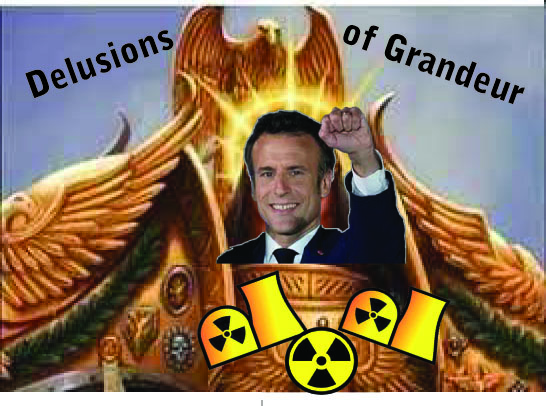
French President Emmanuel Macron said he was “ready to open a
discussion” with European allies about stationing France’s nuclear
weapons on their soil, in an effort to beef up defences against Russia. The
comments made by Macron in an interview with the broadcaster TF1 on Tuesday
come as he has been holding talks with Germany, Poland and other European
countries to explore whether and how France’s nuclear deterrence could be
extended on the continent. Such a move is being considered in response to
signs that US President Donald Trump wants to scale back the American
military presence in Europe and force European countries to take more
responsibility for their own security.
FT 13th May 2025, https://www.ft.com/content/96231d9c-ee48-43b3-9c82-bdc4002b41a5
Inspection at the Flamanville EPR: the nuclear watchdog points out serious shortcomings
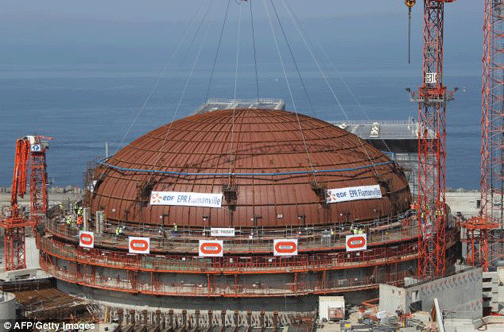
La Presse de la Manche 13th May 2025, https://actu.fr/normandie/flamanville_50184/inspection-a-lepr-de-flamanville-le-gendarme-du-nucleaire-pointe-de-graves-lacunes_62626503.html
Following an inspection into the subject of counterfeiting, falsification and fraud at the EPR site in Flamanville (Manche), the nuclear regulator, ASNR, has issued a severe report.
The affair had shaken the Flamanville EPR construction site (Manche). In February 2024 , journalists revealed cases of falsification involving an EDF supplier . The Flamanville construction site is directly concerned. Some parts, supplied by a subcontractor, are allegedly the subject of fraud . But it is difficult to obtain more information.
” Irregularities have been highlighted within two companies that are part of EDF’s supply chain and produce equipment for operating nuclear reactors as well as the Flamanville EPR reactor,” the Nuclear Safety Authority (ASN) simply admitted in a letter addressed to EDF.
An inspection carried out in March
The safety of the part is not in question. But the affair has revived concerns about fraud, counterfeiting and falsification in the nuclear sector .
A few months later, while the EPR continued its commissioning , the nuclear regulator, ASNR, published on its website the inspection follow-up letter concerning the Flamanville EPR on the theme of “Prevention, detection and treatment of the risk of counterfeiting, falsification and suspicion of fraud”.
For two days, on March 19 and 20, 2025 , the inspectors examined the implementation of the prevention policy , the training of staff on the subject, the monitoring of external stakeholders, the implementation of systems for collecting reports, etc. They carried out interviews with the central services and service providers. And, generally speaking, after this audit, the opinion of the ASNR is unequivocal , since it notes “ numerous weaknesses in the organization implemented.”
The inspectors noted: ”
Gaps in the local implementation of the national note on
irregularities ; weak promotion of the issue, with a lack of dedicated rituals and interfaces; a lack of periodicity in awareness-raising actions…”
Two months to react
The follow-up letter underlines that, generally speaking, it is “necessary to implement an organisation that allows the entire irregularity issue to be managed in a more robust manner, and that capitalisation around the sharing of feedback is still in its infancy and must be improved quickly “.
Seven pages of requests follow. EDF now has two months to formulate its observations and indicate the corrective measures taken in response to the ASNR’s findings.
Hinkley Point C court hearing over complying with UK environmental information law begins

New Civil Engineer, 13 May, 2025 , By Thomas Johnson
The legal challenge centres around Nuclear New Build (NNB) Generation Company, a subsidiary of the energy firm EDF who is responsible for constructing the Hinkley Point C nuclear power plant in Somerset. The case has been brought by environment group Fish Legal, which represents anglers and has been repeatedly denied information from the developers of the nuclear power station about its methods of deterring fish from the site.
NNB had a legal obligation to use an acoustic fish deterrent, based on its approved development consent order, but changed its plans for a saltmarsh instead. It has now switched back to a plan for an acoustic fish deterrent, having discovered a new “safe and effective” method for implementing it.
Despite this, Fish Legal is continuing with the case because it is bigger than just the fish deterrent at Hinkley Point C – it believes that foreign-owned private companies building and operating nuclear power plants in the UK must comply with domestic environmental information laws and therefore provide details on environmental plans when asked.
The group has previously taken similar legal action against private water and electricity companies, winning rulings that classified these companies as public authorities for the purposes of the Environmental Information Regulations (EIR). The UK’s Information Commissioner’s Office (ICO) supported this view in the current case, asserting that NNB Generation Company falls within the scope of the EIR and thus must disclose environmental data on request………………………………………………………………………………… https://www.newcivilengineer.com/latest/hinkley-point-c-court-hearing-over-complying-with-uk-environmental-information-law-begins-13-05-2025/
Andra updates French repository cost estimate
Tuesday, 13 May 2025,
https://www.world-nuclear-news.org/articles/andra-updates-french-repository-cost-estimate
French radioactive waste management agency Andra has estimated the overall cost of constructing, operating and closing France’s planned deep geological repository for the disposal of high- and intermediate-level radioactive waste at between EUR26.1 billion (USD29.1 billion) and EUR37.5 billion (at 2012 prices).
France plans to construct the Centre Industriel de Stockage Géologique (Cigéo) repository – an underground system of disposal tunnels – in a natural layer of clay near Bure, to the east of Paris in the Meuse/Haute Marne area. The facility is to be financed by radioactive waste generators – EDF, Orano and the French Alternative Energies and Atomic Energy Commission – and managed by Andra.
Andra said the costing file is one of the key inputs for determining the cost of Cigéo, which will be finalised by the Minister of Industry and Energy by the end of 2025, after gathering comments from the main waste producers and the opinion of the French Nuclear Safety and Radiation Protection Authority (ASNR).
“This decree provides waste producers with a reference allowing them to establish the provisions they are required to make for the management of their waste,” Andra said. “The overall cost estimate for Cigéo is an iterative process carried out by Andra. This assessment will be revised at key stages of the project.”
In 2005, Andra estimated the cost of the facility at between EUR13.5 and EUR16.5 billion. However, in 2009 it re-estimated the cost at around EUR36 billion. In October 2014, Andra gave a revised cost estimate for Cigéo of EUR34.4 billion, based on 2012 prices. This estimate included EUR19.8 billion for the facility’s construction, EUR8.8 billion for operational costs over 100 years, EUR4.1 billion in taxes and EUR1.7 billion in miscellaneous expenses.
Andra has now issued an updated estimate for the cost of Cigéo. It says the cost of constructing and commissioning the repository will be between EUR7.9 billion and EUR9.6 billion, which includes design (excluding R&D), construction of surface infrastructure and the first storage areas, taxes, and insurance. From its commissioning in 2050, the average annual cost of Cigéo is estimated at between EUR140 million and EUR220 million per year, including operation, progressive construction, maintenance, and refurbishment over a period of about a century, followed by decommissioning and closure over about 20 years, or between EUR16.5 billion and EUR25.9 billion in total, including taxes and insurance. The R&D cost identified to date, including the operation and closure of the underground laboratory, is estimated at between EUR1.7 billion and EUR2 billion.
Andra said the 2025 costing file is consistent with Cigéo’s updated provisional schedule. “This schedule takes into account the additional time required to complete the detailed preliminary design studies (including the optimisations identified in 2016 following the first cost decision), the preparation of the support file for Cigéo’s creation permit application, and its review.”
Subject to the issuance of the creation authorisation decree in late 2027/early 2028, the receipt of the first waste packages is currently planned for 2050.
The cost decree to be set by the Minister of Industry and Energy – expected by the end of 2025 – “will serve as a reference for the project’s continuation until its next assessment,” Andra said. It also “provides waste producers with a reference allowing them to establish the provisions they are required to make for the management of their waste.”
Too Great a Risk

But, by far the most significant yet most neglected reason for avoiding the road to nuclear is the risks that nuclear power engenders in our increasingly unstable world. The concentration of power produced at a single site constitutes a megarisk of meltdown and massive radioactive fallout from cyber attack, terrorism, warfare and even nuclear attack as events in Ukraine and elsewhere have demonstrated
13 May 2025. https://www.banng.info/news/regional-life/too-great-a-risk/
Andrew Blowers discusses the contrast of historic and current energy generation seen across the Blackwater estuary in the May 2025 column for Regional Life.
Out across the Blackwater estuary into the North Sea a quiet revolution in the way we get our energy is evident. The vast arrays of wind turbines, shimmering in sunshine and faintly visible in an overcast sky are the palpable evidence of the energy transition that is gathering pace as we struggle to eliminate fossil fuels in favour of renewable sources of energy, especially offshore wind. Wind is safe, low cost and secure contributing 30% of our electricity and rising.
On the Bradwell shore lies the gleaming hulk of a former nuclear power station, now a mothballed but active radioactive waste store which will not be cleared until the end of the century at the earliest. Nuclear power has been in decline since the turn of the century. Nuclear is unsafe, high cost and insecure contributing only 12% of our electricity and falling.
And yet, despite the risks, the Government claims that ‘there is an urgent need for new nuclear which is a safe and low carbon source of energy’. It is proposing to build up to 24GW of nuclear capacity. That’s something like ten giant 2.2 GW power stations, the size proposed for Sizewell C and the now abandoned Bradwell B project, or the equivalent of around 80 Small Modular Reactors (at 300MW each).
The Government’s Civil Nuclear; Roadmap to 2050 would displace vast amounts of the cheaper, credible, reliable and more flexible renewable power sources that can navigate a plausible pathway to a Net Zero future. Such a scaling up is clearly unachievable.
But, by far the most significant yet most neglected reason for avoiding the road to nuclear is the risks that nuclear power engenders in our increasingly unstable world. The concentration of power produced at a single site constitutes a megarisk of meltdown and massive radioactive fallout from cyber attack, terrorism, warfare and even nuclear attack as events in Ukraine and elsewhere have demonstrated. And the risks from accidents, and the impacts of climate change, not to mention institutional neglect or breakdown, are unknowable and unfathomable, though nevertheless real. And, let’s not forget nuclear energy leaves a long-lasting, dangerous and presently unmanageable legacy of highly active nuclear waste.
Sites such as Bradwell are sitting targets for malevolent actions as well as being exposed to the impacts of climate change. Far better for the now closed Bradwell power station to remain a passive store with a low risk than revive any ideas for nuclear plant which would pose an existential threat to the communities of the Blackwater and beyond.
Meanwhile, out into the North Sea the turning turbines signal a future that is relatively safe, secure and sustainable.
Hinkley Point C site served notice after crane ‘component failure’
AN improvement notice has been served to the developers of Hinkley Point
C’s construction site after a component failure was found in a crane. The
Office for Nuclear Regulation told the NNB Generation Company (HPC) Ltd
(NNB GenCo) that it must improve monitoring and management of tower cranes
at the Hinkley Point C construction site near Bridgwater.
This enforcement
action follows the discovery of a failing component in a tower crane at the
site in February this year. An operator undertaking pre-use checks on site
found the failure of a pin connecting two mast sections together, and
evidence of cracking within a mast section. The findings were reported
under the Reporting of Injuries, Diseases and Dangerous Occurrences
Regulations (RIDDOR). The issue was identified before there was any broader
failure of the crane, so there were no injuries to any workers.
Bridgwater Mercury 12th May 2025.
https://www.bridgwatermercury.co.uk/news/25156847.hinkley-point-c-site-served-notice-crane-
False promises, real costs: The nuclear gamble we can’t afford
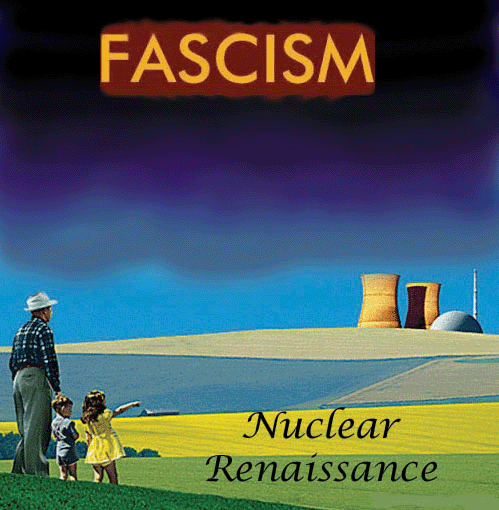
Beyond the financials, nuclear represents a specific vision of governance; centralised, top-down, and resistant to scrutiny. A small number of well-connected corporations manage most facilities. The civilian sector remains intertwined with military infrastructure. Decision-making processes often exclude community consultation. Most notably, nuclear generates waste that remains hazardous for thousands of years, demanding long-term institutional stability that even the Nuclear Waste Management Organization acknowledges no government can guarantee.
Scotland and Canada must forge an energy future that works
by Ben Beveridge, 11-05-2025 , https://bylines.scot/environment/false-promises-real-costs-the-nuclear-gamble-we-cant-afford/
Nuclear power is staging a quiet comeback. In boardrooms across Scotland and Canada, familiar promises are being repackaged as bold new solutions: reliable baseload electricity, energy security, and climate alignment. But behind the sleek rhetoric, the same truths remain. Nuclear power is still the slowest, most expensive, and least flexible energy option on the table.
Both countries now face pressure to commit to a nuclear future they neither need nor can afford. This isn’t the natural evolution of energy policy. It’s the resurrection of a failing model, defended not on merit, but on legacy interests.
In the UK, projects like Hinkley Point C and Sizewell C have seen cost projections soar, with current estimates exceeding £30bn. Scotland, despite producing 97% of its electricity from renewable sources, remains tied to a UK-wide strategy shaped by Westminster’s nuclear ambitions
In Canada, Ontario’s Darlington refurbishment has grown from C$6bn to more than C$12bn. Saskatchewan and New Brunswick are investing heavily in Small Modular Reactors (SMRs), which have yet to prove commercial viability. The Canadian Environmental Law Association has raised significant concerns over the feasibility, safety, and cost of these technologies, yet federal investment continues, often at the expense of grid modernisation and renewable storage.
Nuclear: more expensive, less flexible, needs political intervention
The narrative has shifted from energy independence to climate urgency, but the fundamentals have not. Lazard’s 2023 analysis puts the levelised cost of new nuclear at US$131–204 per megawatt-hour, while utility-scale solar sits at US$26–41, and wind at US$24–47. Nuclear projects frequently exceed ten-year construction timelines. By contrast, wind and solar facilities can be operational within five. Nuclear plants also lack the flexibility modern grids require, locking in oversupply and reducing the effectiveness of variable renewable sources.
Private capital has walked away. No nuclear facility proceeds without government subsidies, price guarantees, or risk backstops. The market has made its judgment. Nuclear survives only through political intervention, not economic logic.
Beyond the financials, nuclear represents a specific vision of governance; centralised, top-down, and resistant to scrutiny. A small number of well-connected corporations manage most facilities. The civilian sector remains intertwined with military infrastructure. Decision-making processes often exclude community consultation. Most notably, nuclear generates waste that remains hazardous for thousands of years, demanding long-term institutional stability that even the Nuclear Waste Management Organization acknowledges no government can guarantee.
Renewables: decentralised, democratic and resilient
In contrast, the model offered by renewables is decentralised, participatory, and adaptive. Community energy projects across Scotland – from the Isle of Eigg to the Outer Hebrides – demonstrate how generation can be local, democratic, and resilient. In Canada, provinces like Quebec and British Columbia have built near-100% clean grids through hydroelectricity, rejecting nuclear while Clean Energy Canada shows generational energy security and affordability.
So why does nuclear persist? The answer lies in its structure. Nuclear development creates concentrated profit centres, contracts for reactor manufacturers, engineering giants, uranium suppliers, and vertically integrated utilities. These stakeholders benefit from centralised generation, not distributed ownership. Regulatory frameworks often entrench their advantages, creating barriers for smaller-scale or community-led projects. The result is a policy environment that protects incumbents rather than enabling transition.
This is not a neutral technological debate. It’s a structural contest between legacy systems and emergent models of energy democracy. The framing may be about climate, but the stakes are about convention, and control.
Scotland and Canada renewable partnership
Scotland and Canada are uniquely positioned to lead an alternative path. Their respective strengths are complementary. A Scotland-Canada renewable partnership, modelled after the North Sea oil and gas collaboration, could drive investment in shared technologies like offshore wind, pumped hydro storage, and smart grid systems. Agencies such as Scottish Enterprise and Scotland Development International already maintain Canadian operations and could broker this cooperation directly.
The Commonwealth presents another opportunity. A Commonwealth Energy Transition Alliance could support shared investment frameworks, model policy design, and collaborative R&D between countries with aligned infrastructure and ambitions. It could also serve as a counterbalance to the lobbying power of the nuclear-industrial complex, directing climate funding towards solutions that scale affordably and equitably.
The choice facing both nations is not nuclear or catastrophe. It is between centralised systems that demand public subsidy and deliver rising costs, versus renewable models that are increasingly faster, cheaper, and community-driven. The facts are clear. The economics are settled. What remains is the political will to choose a future built for the many, not the few.
Scotland and Canada no longer need permission to lead. They need resolve. The nuclear mirage still shimmers, but it’s time to walk towards the real oasis: a clean, democratic energy future, and we have it already.
Want to know how the world really ends? Look to TV show Families Like Ours
John Harris, 1 May 25
The Danish drama is piercing in its ordinariness. In the real world, the climate crisis worsens and authoritarians take charge as we calmly look awaySun 11 May 2025 21.35 AESTShare649
The climate crisis has taken a new and frightening turn, and in the expectation of disastrous flooding, the entire landmass of Denmark is about to be evacuated. Effectively, the country will be shutting itself down and sending its 6 million people abroad, where they will have to cope as best they can. Huge numbers of northern Europeans are therefore being turned into refugees: a few might have the wealth and connections to ease their passage from one life to another, but most are about to face the kind of precarious, nightmarish future they always thought of as other people’s burden.
Don’t panic: this is not a news story – or not yet, anyway. It’s the premise of an addictive new drama series titled Families Like Ours, acquired by the BBC and available on iPlayer. I have seen two episodes so far, and been struck by the very incisive way it satirises European attitudes to the politics of asylum. But what has also hit me is its portrayal of something just as modern: how it shows disaster unfolding in the midst of everyday life. At first, watching it brings on a sense of impatience. Why are most of the characters so calm? Where are the apocalyptic floods, wildfires and mass social breakdown? At times, it verges on boring. But then you realise the very clever conceit that defines every moment: it is really a story about how we all live, and what might happen tomorrow, or the day after.
The writer and journalist Dorian Lynskey’s brilliant book Everything Must Go is about the various ways that human beings have imagined the end of the world. “Compared to nuclear war,” he writes, “the climate emergency deprives popular storytellers of their usual toolkit. Global warming may move too fast for the planet but it is too slow for catastrophe fiction.” Even when the worst finally happens, most of us may respond with the kind of quiet mental contortions that are probably better suited to literature than the screen. Making that point, Lynskey quotes a character in Margaret Atwood’s novel The Year of the Flood: “Nobody admitted to knowing. If other people began to discuss it, you tuned them out, because what they were saying was both so obvious and so unthinkable.”
These days, that kind of thinking reflects how people deal with just about every aspect of our ever-more troubled world: if we can avert our eyes from ecological breakdown, then everything else can be either underestimated or ignored. There is a kind of moment, I would wager, that now happens to all of us. We glance at our phones or switch on the radio and are assailed by the awful gravity of everything, and then somehow manage to instantly find our way back to calm and normality. This, of course, is how human beings have always managed to cope, as a matter of basic mental wiring. But in its 21st-century form, it also has very modern elements. Our news feeds reduce everything to white noise and trivia: the result is that developments that ought to be vivid and alarming become so dulled that they look unremarkable.
Where this is leading politically is now as clear as day. In the New Yorker, Andrew Marantz wrote, in the wake of Trump’s re-election, about how democracies slide into authoritarianism. “In a Hollywood disaster movie,” he writes, “when the big one arrives, the characters don’t have to waste time debating whether it’s happening. There is an abrupt, cataclysmic tremor, a deafening roar … In the real world, though, the cataclysm can come in on little cat feet. The tremors can be so muffled and distant that people continually adapt, explaining away the anomalies.” That is true of how we normalise the climate crisis; it also applies to the way that Trump and his fellow authoritarians have successfully normalised their politics.
Marantz goes to Budapest, and meets a Hungarian academic, who marvels at the political feats pulled off by the country’s prime minister, Viktor Orbán. “Before it starts, you say to yourself: ‘I will leave this country immediately if they ever do this or that horrible thing,’” he says. “And then they do that thing, and you stay. Things that would have seemed impossible 10 years ago, five years ago, you may not even notice.” The fact that populists are usually climate deniers is perfect: just as searingly hot summers become mundane, so do the increasingly ambitious plans of would-be dictators – particularly in the absence of jackboots, goose-stepping and so many other old-fashioned accoutrements. Put simply, Orbán/Trump politics is purposely designed to fit with its time – and to most of its supporters (and plenty of onlookers), it looks a lot less terrifying than it actually is.
Much the same story is starting to happen in the UK. On the night of last week’s local elections, I found myself in the thoroughly ordinary environs of Grimsby town hall, watching the victory speech given by Reform UK’s Andrea Jenkyns, who had just been elected as the first mayor of Greater Lincolnshire. For some reason, she wore a spangly outfit that made her look as if she was on her way to a 1970s-themed fancy dress party, which raised a few mirthless laughs. She said it was time for an end to “soft-touch Britain”, and suddenly called for asylum seekers to be forced to live in tents. That is the kind of thing that only fascists used to say, but it now lands in our political discourse with not much more than a faint thump.
Meanwhile, life has to go on. About 20 years ago, I went to an exhibition of works by the French photographer Henri Cartier-Bresson – one of which was of a family of four adults picnicking by the Marne, with their food and wine scattered around them, and a rowing-boat moored to the riverbank. When I first looked at it, I wondered what its significance was. But then I saw the date on the adjacent plaque: “1936-38.” We break bread, get drunk and tune out the noise until carrying on like that ceases to be an option: as Families Like Ours suggests, that point may arrive sooner than we think.
Zelenskyy says he is willing to meet Putin in Istanbul for peace talks
Euronews with AP 11/05/2025
The Ukrainian president said on Sunday he expected Russia to confirm a ceasefire starting Monday, and that he was prepared to meet with his Russian counterpart in Turkey on Thursday for direct talks to end Moscow’s war, now in its fourth year.
Zelenskyy’s words came in response to Putin’s remarks to the media overnight, in which he effectively ignored the idea of a ceasefire — pushed for by Western leaders — and proposed restarting direct talks with Ukraine in Istanbul on Thursday instead “without preconditions”.
Putin did not specify whether the talks on Thursday would involve Zelenskyy and him personally.
He added, however, that “the very first step in truly ending any war is a ceasefire.” “There is no point in continuing the killing even for a single day. We expect Russia to confirm a ceasefire — full, lasting, and reliable — starting tomorrow, May 12th, and Ukraine is ready to meet,” the Ukrainian leader said on X.
German Chancellor Friedrich Merz, French President Emmanuel Macron, British Prime Minister Keir Starmer and Polish Prime Minister Donald Tusk met with Zelenskyy in Kyiv on Saturday and issued a coordinated call for a 30-day truce starting Monday. The plan has received backing from both the European Union and Washington.
The leaders pledged tougher sanctions on Russia if Putin did not accept the proposal.
Prior to the Kyiv visit by the quartet of European leaders, US President Donald Trump insisted Ukraine accept Russia’s latest offer of holding direct talks in Turkey on Thursday. Ukraine, along with European allies, had demanded that Russia accept an unconditional 30-day ceasefire starting on Monday before holding talks, but Moscow effectively rejected the proposal and called for direct negotiations instead…….
Trump said in a social media post earlier Sunday that Ukraine should agree to Putin’s peace talks proposal “immediately.”……………………………..https://www.euronews.com/2025/05/11/zelenskyy-and-putin-to-meet-in-turkiye-on-thursday-possibly
Resuscitation at Zaporizhzhia?
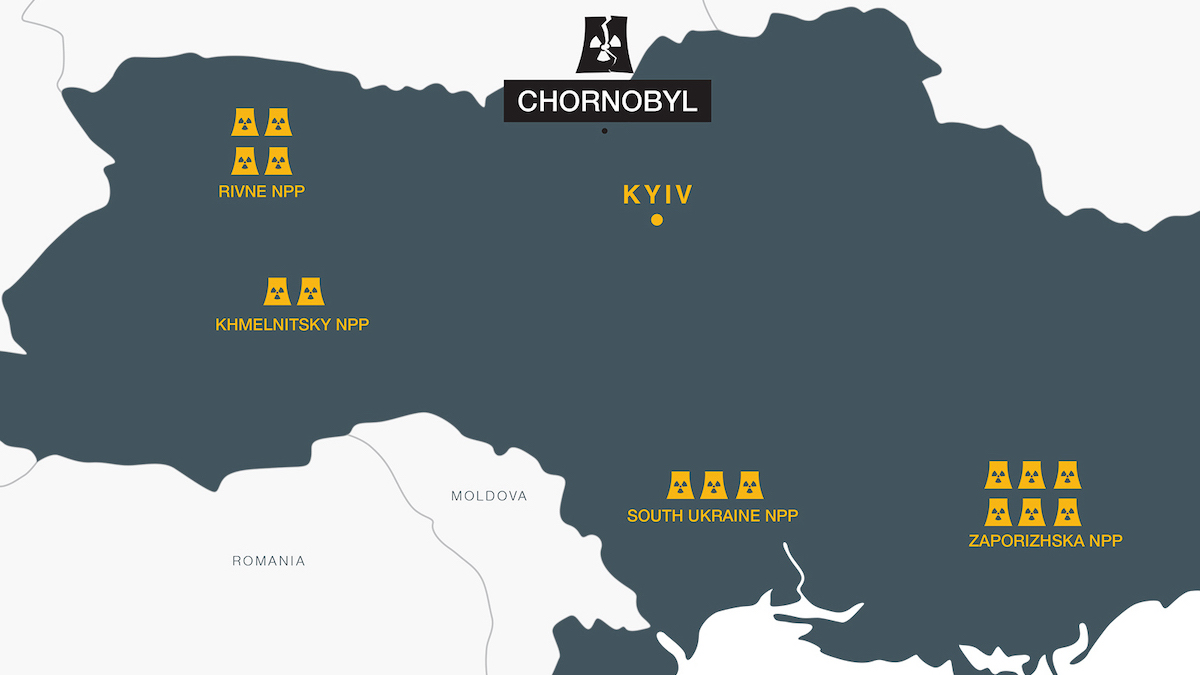
by beyondnuclearinternational, https://beyondnuclearinternational.org/2025/05/11/resuscitation-at-zaporizhzhia/
Why would the US, Ukraine and Russia contemplate this when renewables could answer energy needs faster and more safely, writes Linda Pentz Gunter
The Trump administration has been dangling all sorts of offers before the embattled (literally) Ukrainian government lately. These include a US grab for Ukraine’s minerals in exchange for continued support of its war with Russia, and asking Ukraine to serve as an overseas prison for those residents of the US deemed “illegals” and “criminals” by Trump’s (in)justice department.
Now, the White House is apparently suggesting that the US should first rebuild and then operate the damaged six-reactor Zaporizhzhia nuclear plant in the southeast of Ukraine, the area of some of the most intense fighting between Ukrainian and Russian forces.
This bizarre proposal is detailed in a new column by the director of the Nonproliferation Policy Education Center, Henry Sokolski, in the May 6, 2025 edition of The Bulletin of the Atomic Scientists. Along with the question of whose nuclear plant Zaporizhzhia actually is, or who damaged it, Sokolski also asks just how complex and expensive restoring the plant would be and whether it is even needed?
In reading through the list of challenges to a restart that Sokolski outlines, the answer to that last question becomes increasingly more obvious: No. It is glaringly evident that nuclear power is the wrong choice for Ukraine at this point (and, we would argue, always has been).
Renewable energy can take a couple of years — and in some cases just a few months — to build and bring into operation. Given Ukraine’s previous reliance on nuclear energy for around 55% of the country’s electricity (before the war interrupted the flow), developing an energy supplier that can come on fast and doesn’t present a safety risk (under war conditions or at any other time) is, as they say here, a “no brainer”.
And yet all three countries are vying to be the one responsible for a Zaporizhzhia restart. All three are also married to the idea of a nuclear-powered future and therefore cannot be relied upon to take the more sensible renewable energy route. Even in the midst of a war, Ukraine has signaled its intention to build as many as nine new Westinghouse AP1000 reactors at all four of its existing nuclear sites —yes, even at Zaporizhzhia! Both Russia and the US are expanding their nuclear power capacity, at home as well as abroad, including through the export of reactor technology.
Why then are any of these countries even contemplating an attempt to surmount the likely insurmountable challenges of resurrecting the existing Russian built VVER Zaporizhzhia reactors, which comprise the largest nuclear power plant in Europe at 5,700 MW?
As Sokolski asks in a preamble to his Bulletin article:
“Russia destroyed the Kakhovka Dam upstream of the plant. What would be required to assure a steady clean supply of cooling water for the reactors? The Russians laid mines around the plant; the area is also laced with unexploded ordnance. How will these be neutralized? Who will do this? The Russians looted and damaged much of the plant’s control equipment. How will it be repaired and replaced? Who will certify that the work has been done properly? The U.S. Nuclear Regulatory Commission? The Ukrainian State Nuclear Regulatory Inspectorate? Rosatom?”
Then there’s the issue of cost.
“Will seized Russian assets foot the bill?” Sokolski asks. “Or will it be European Reconstruction Bank funds? What of US investment, taxpayer funds, and any private entity potentially interested in chipping in? Once funds are allocated, who would receive the profits, if any, or be responsible for the losses? Who would assume responsibility for possible accidents and damage to property beyond the plant’s site? And, finally, who will bear the costs of ensuring the plant’s security so that its reactors do not become again the targets of future attacks?”
It’s not just a question of repairing the reactors of course. It’s also an issue of repairing the damaged — and in parts destroyed — electrical grid. Even assuming Zaporizhzhia gets restared, how will the electricity it generates even reach its customers? And do they even have homes left where the lights can be switched on? Let’s remind ourselves one more time that there is a war going on in Ukraine, a bloody and protracted one that began on February 24, 2022 when Russia invaded its neighbor. (The arguments about why and what the precursors were have raged on, especially on the left, but are not the subject of this present discussion.)
There seem to be altogether too many questions surrounding a Zaporizhzhia restart to make any such prospect an even vaguely rational proposition. And there would be no need to ask any of these questions, if the obvious alternative — renewable energy — was mooted instead. These days you can ask AI — a not entirely unbiased source to be sure — which responds that Ukraine hasn’t turned to renewable energy because it “requires significant investment and infrastructure development.” Yes, but not nearly as much as trying to re-establish broken nuclear power plants and reconnect them to a destroyed electricity grid.
None of this will cross the radar at peace talks between the warring parties and the US in its self-appointed role as peacemaker. That’s because solar panels and wind turbines don’t come with the radioactive inventory that has somehow earned nuclear power a position of international — and aspirational — prestige. What it should trigger instead is an array of red warning flags, and not the kind any of us would want to “keep flying here”.
Linda Pentz Gunter is the international specialist at Beyond Nuclear and writes for and edits Beyond Nuclear International. Opinions are her own.
.
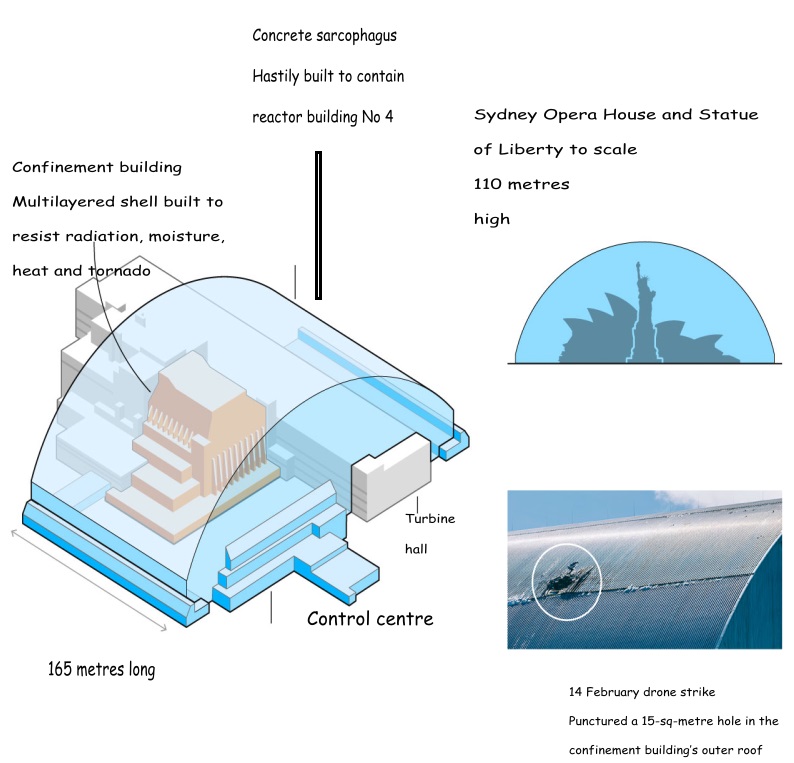
Chernobyl shelter’s drone damage includes 330 openings in outer cladding.
World Nuclear News 9th May 2025
The International Atomic Energy Agency has outlined the scale of the damage caused by a drone strike and subsequent fires to the giant shelter built over the ruins of Chernobyl’s unit 4.
The agency said that investigations continue to determine the extent of the damage sustained by the arch-shaped New Safe Confinement (NSC) shelter following the drone strike on 14 February.
The impact caused a 15-square-metre hole in the external cladding of the arch, with further damage to a wider area of about 200-square-metres, as well as to some joints and bolts. It took about three weeks to fully extinguish smouldering fires in the insulation layers of the shelter.
n its update on the situation, the International Atomic Energy Agency (IAEA) said: “It took several weeks to completely extinguish the fires caused by the strike. The emergency work resulted in approximately 330 openings in the outer cladding of the NSC arch, each with an average size of 30-50 cm.
“According to information provided to the IAEA team at the site, a preliminary assessment of the physical integrity of the large arch-shaped building identified extensive damage, for example to the stainless-steel panels of the outer cladding, insulation materials as well as to a large part of the membrane – located between the layers of insulation materials – that keep out water, moisture and air.”
The main crane system, including the maintenance garage area, was damaged and it is not currently operational, the IAEA said. The heating, ventilation and air conditioning systems are functional but have not been in service since the strike. Radiation and other monitoring systems remain functional, the IAEA said. There has been no increase in radiation levels at any time during or since the drone strike.
IAEA Director General Rafael Mariano Grossi said: “We are gradually getting a more complete picture of the severe damage caused by the drone strike. It will take both considerable time and money to repair all of it.”
…………………………………………………………………………………The New Safe Confinement was financed via the Chernobyl Shelter Fund which was run by the European Bank for Reconstruction and Development (EBRD). It received EUR1.6 billion (USD1.7 billion) from 45 donor countries and the EBRD provided EUR480 million of its own resources.
On 4 March the EBRD allocated EUR400,000 from the administrative budget of the continuing fund for specialist-led damage assessment……………………………..https://www.world-nuclear-news.org/articles/chernobyl-shelters-drone-damage-includes-330-openings-in-outer-cladding
Improvement notice issued at Dounreay nuclear power plant
By Gabriel McKay, 8 May 25, https://www.heraldscotland.com/news/25146874.improvement-notice-issued-dounreay-nuclear-power-plant/
An improvement notice has been issued at Dounreay nuclear power plant following a “significant potential risk to work safety”.
In February of this year a worker sustained a minor injury when a radiological contamination monitor, which weighed around two tonnes, toppled over.
Though there were no serious injuries, the Office for Nuclear Regulation (ONR) said there was a “significant potential risk to worker safety”.
Dounreay operated from 1955 until 1994 – though research reactors continued to function until 2015 – and is now Scotland’s largest nuclear clean-up and demolition project.
All plutonium on the site had been transferred to Sellafield by December 23, 2019.
The site upon which it stands is scheduled to become available for other uses by 2333.
Tom Eagleton, ONR Superintending Inspector, said: “This was a preventable incident that could have had serious consequences for those nearby.
“The improvement notice requires the Dounreay site to implement measures that will reduce the risk of similar occurrences in the future.
“Specifically, they must identify all operations involving the movement of heavy equipment and ensure comprehensive risk assessments and appropriate control measures are implemented before the work starts.”
Nuclear Restoration Services, which owns the plant has until 25 July 2025 to comply with the notice.
The company said: “We take the protection of people and the environment from harm very seriously.
We are taking action to strengthen our practices and management in this area, and will comply with the requirements of the notice received in April, having reported the incident to ONR and carried out an investigation.”
Torness in East Lothian is the last remaining nuclear power station in Scotland still generating electricity.
It is scheduled for shutdown in 2030, following Hunterston B in North Ayrshire in 2022, Chapelcross in Dumfries and Galloway in 2004 and Hunterston A in 1990.
Hearts and Minds: Report highlights East Lincolnshire still not a ‘willing community’.
A report recently published by campaigners opposed to a Geological Disposal Facility (GDF) in Lincolnshire demonstrates that theirs is still ‘not a willing community’ when it comes to the nuclear waste dump.
‘The Nuclear War for Lincolnshire’ published by Guardians of the East Coast (GOTEC) may conjure up an image of a decimated, burnt out waste land in the aftermath of an attack by nuclear weapons, but fortunately the publication is instead a detailed narrative of the relentless struggle to win public ‘hearts and minds’ support for a GDF first began by Nuclear Waste Services (NWS) in the middle of 2020, and continually valiantly resisted by GOTEC and its allies, amongst them local elected members and the Nuclear Free Local Authorities.
Following the announcement of a new inland ‘Area of Focus’ between Gayton le Marsh and the Carltons at the end of January, NWS ran a series of public events across the Theddlethorpe GDF Search Area. At each of these events, activists from Guardians of the East Coast offered attendees the opportunity to vote outside in a special private ‘ballot box’, built for the purpose by local Councillor Travis Hesketh.
535 members of the public attended these events. 93% took up the opportunity to vote. The result was decisive. 93% of those who voted wanted a public vote on the proposal now and 93% wanted the GDF to end now. The result was consistent across all the events.
A separate parish poll was also held in Gayton le Marsh in February 2025. 88% of parishioners voted and 93% expressed a desire to see an immediate vote.
These are just the latest expressions of the pronounced opposition to the GDF amongst residents…………………………………………………………………………………………………
NFLA 8th May 2025
1 This Month
Chernobyl: The Lost Tapes – A good documentary on Chernobyl on SBS available On Demand for the next 3 weeks– https://www.sbs.com.au/ondemand/tv-program/chernobyl-the-lost-tapes/2352741955560

of the week–London Campaign for Nuclear Disarmament

Tell the Ukrainian Government to Drop Prosecution of Peace Activist Yurii Sheliazhenko
To see nuclear-related stories in greater depth and intensity – go to https://nuclearinformation.wordpress.com
-
Archives
- April 2026 (152)
- March 2026 (251)
- February 2026 (268)
- January 2026 (308)
- December 2025 (358)
- November 2025 (359)
- October 2025 (376)
- September 2025 (257)
- August 2025 (319)
- July 2025 (230)
- June 2025 (348)
- May 2025 (261)
-
Categories
- 1
- 1 NUCLEAR ISSUES
- business and costs
- climate change
- culture and arts
- ENERGY
- environment
- health
- history
- indigenous issues
- Legal
- marketing of nuclear
- media
- opposition to nuclear
- PERSONAL STORIES
- politics
- politics international
- Religion and ethics
- safety
- secrets,lies and civil liberties
- spinbuster
- technology
- Uranium
- wastes
- weapons and war
- Women
- 2 WORLD
- ACTION
- AFRICA
- Atrocities
- AUSTRALIA
- Christina's notes
- Christina's themes
- culture and arts
- Events
- Fuk 2022
- Fuk 2023
- Fukushima 2017
- Fukushima 2018
- fukushima 2019
- Fukushima 2020
- Fukushima 2021
- general
- global warming
- Humour (God we need it)
- Nuclear
- RARE EARTHS
- Reference
- resources – print
- Resources -audiovicual
- Weekly Newsletter
- World
- World Nuclear
- YouTube
-
RSS
Entries RSS
Comments RSS
 nuclear-news