EU opens door to funding nuclear energy in next budget

By Kate Abnett, July 18, 2025, https://www.reuters.com/sustainability/climate-energy/eu-opens-door-funding-nuclear-energy-next-budget-2025-07-17/
BRUSSELS, July 17 (Reuters) – The European Commission wants to open up part of its proposed 2 trillion euro EU budget for 2028-2034 to nuclear energy, a move likely to divide the bloc’s member states, which Germany immediately rejected.
In an annex to its mammoth budget proposal published on Wednesday, the Commission listed nuclear power as an activity countries can fund through their national share of the budget – specifically, “new or additional fission energy capacity installed in GW”.
Around 865 billion euros of EU funding will be available under these national spending plans.
The move would be a sea change for the EU, whose current budget does not fund conventional nuclear power plants – reflecting a long-running conflict between pro-nuclear EU members like France and Sweden and traditionally anti-nuclear countries like Germany and Austria.
“Germany rejects any subsidization of nuclear power from the EU budget,” its environment minister Carsten Schneider said on Thursday, adding that Berlin respected the choice of other countries to build reactors.
“However, respect for national sovereignty in energy matters also means not claiming EU funds for this expensive path, a quarter of which comes from German taxpayers’ money,” Schneider said.
France’s energy ministry did not immediately respond to a request for comment. Swedish energy minister Ebba Busch declined to comment.
The Commission’s budget proposal marks the start of years of intense negotiations among EU nations, which must all approve the final budget.
EU countries have long been at loggerheads over whether to promote atomic power to reduce CO2 emissions, a dispute which has delayed policymaking on climate change and energy in the bloc.
That dynamic had appeared on the cusp of a shift earlier this year, when German Chancellor Friedrich Merz signalled Berlin would no longer object to treating nuclear power on a par with renewable energy in EU policies.
Countries including Denmark and Italy had also signalled a shift in their past opposition to nuclear power.
However, some EU diplomats said that this softening of positions had not extended into support for EU funding.
“There is no chance EU money goes to new nuclear,” one EU country diplomat said.
The EU’s current budget explicitly bans member states from building nuclear power plants using their share of hundreds of billions of euros in regional development funds – although the budget offers some limited funds for nuclear research and decommissioning of old reactors.
Reporting by Kate Abnett; additional reporting by Simon Johnson, Holger Hansen, America Hernandez, Riham Alkousaa; Editing by Hugh Lawson
Oxford fusion pioneer risks running out of cash within months
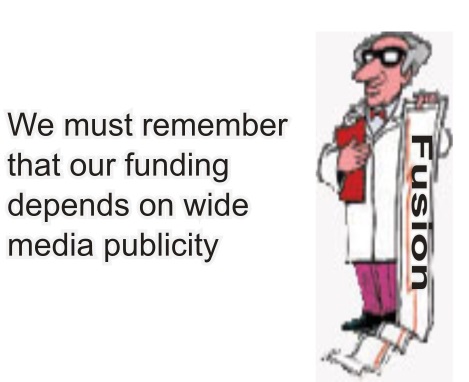
First Light scrambles for funding despite Labour promise to invest £2.5bn in nuclear
research. A British nuclear fusion pioneer has warned it risks running out
of cash within six months as it races to raise millions of pounds in
funding to secure its future. First Light Fusion, which is based in Oxford,
is in talks with investors to raise £20m after burning through tens of
millions of pounds to develop its novel fusion technology. The start-up,
founded in 2011, had sought to develop what it called “projectile
fusion”, developing a giant gas-powered gun that would fire a 5p-sized
projectile at extreme speeds into a fuel source, sparking a fusion
reaction. However, the company abandoned plans to build a prototype reactor
earlier this year as it struggled to raise funds.
Telegraph 20th July 2025, https://www.telegraph.co.uk/business/2025/07/20/oxford-fusion-pioneer-running-out-of-cash/
Pay danger money to communities impacted by nuclear projects, say NFLAs

The Nuclear Free Local Authorities have called on government ministers to
make the operators of nuclear plants pay their neighbouring communities
‘danger money’ to properly compensate them for living with the risk.
The Department of Energy Security and Net Zero has just concluded a
consultation on plans to introduce a mandatory scheme obliging energy
generators to pay community benefits. The amount of money payable annually
would be based on one of two models, the potential generating capacity of
the plant or the actual amount of electricity generated.
Ministers would make the scheme applicable to nuclear plants, as well as larger renewable
energy projects, but the NFLAs want them to factor in a premium on payments
made by nuclear operators to reflect the potential for accidents, the
environmental contamination caused during their operations, and their
legacy of deadly radioactive waste. We also want nuclear plants to make
payments through their lifecycle, including during the period of
decommissioning and waste management after closure.
NFLA 18th July 2025, https://www.nuclearpolicy.info/news/pay-danger-money-to-communities-impacted-by-nuclear-projects-say-nflas/
Nuclear: more than 3,000 radioactive drums discovered off the coast of Brest!

More than 3,000 radioactive drums have been discovered in the waters off Brest. Very old nuclear fuel.
Jean-Baptiste Giraud, July 17, 2025,
https://lenergeek.com/2025/07/17/nucleaire-3-000-futs-radioactifs-brest/
In the nuclear sector, the issue of radioactive waste storage is posing increasing problems. During a mission off the coast of Brest, Ifremer and the CNRS counted more than 3,000 drums deposited on the seabed. They could pose a threat to France.
Nuclear waste is accumulating at the bottom of the Atlantic Ocean
The return of a scientific mission off the coast of Brest has shaken the scientific community. After a month of intensive research, a team of experts revealed they had located more than 3,000 radioactive drums submerged in the Atlantic Ocean , a discovery that inevitably raises the question: should we be worried?
Behind this large-scale mission, a specific objective: to understand the fate of nuclear waste dumped between 1946 and 1993 by several European countries . During this period, more than 200,000 drums containing radioactive waste were dumped in international waters, at depths reaching 4,700 meters in the abyssal plain of the northeast Atlantic. The NODSSUM (Nuclear Ocean Dump Site Survey Monitoring) project has mapped an area of 163 km² where these drums are concentrated, some of which are in an advanced state of degradation.
The mission, led by the CNRS and Ifremer with the support of several national and international partners, used cutting-edge technologies to study the abyss. Aboard the ship L’Atalante, scientists deployed an autonomous submarine, UlyX, equipped with a sophisticated sonar system, allowing them to probe the seabed and obtain precise images of the condition of the 3,350 barrels.
No worrying radioactivity… for now
After several weeks of research, the good news is that the mission did not observe any “anomalous radioactivity” in the areas analyzed. For the researchers, there is therefore, as of yet, no reason to panic. However, not everything is that simple. Although the radioactivity does not appear to have crossed any worrying thresholds, some drums have shown signs of advanced corrosion, suggesting that material leaks may be occurring. The mission reveals that these leaks, although still difficult to identify precisely, could be due to the presence of bitumen, a material often used to seal waste in drums.
However, this is only a hypothesis. Future sampling will be necessary to better understand the exact nature of these substances and their impact on the marine environment.
This discovery raises many questions about nuclear waste management. Why were these drums submerged at a time when radioactive waste management was not as strictly regulated? While the practice of dumping waste has been banned since 1993, the question of the environmental impact of these repositories remains open. The results of this mission, still preliminary, underline that special attention will need to be paid in the future.
The next stage of the research will be to analyze the sediment, water and marine organisms in the area to detect possible contamination . In addition, a new mission is already planned for the coming years to study the barrels more closely and take additional samples , particularly of marine fauna that could be affected by this waste.
Ministers set to admit Sizewell C nuclear plant price-tag has soared to £38bn.

New official estimate reflects surging construction inflation and
contingency costs. Sizewell C nuclear plant will cost £38bn to build, the
UK government is set to admit for the first time next week as it reveals
the terms of an expected deal for private investors to fund a small portion
of the bill,
The new official estimate is a big increase from a £20bn
figure given by French energy giant EDF and the UK government for the
project in 2020, reflecting surging construction inflation and new
contingency costs.
A trio of private companies are set to invest around
£9bn of equity in Sizewell, but the majority of the construction will be
funded by loans underpinned by a levy on consumer bills, according to
people familiar with the matter.
The UK government is expected to remain
the largest investor in the project with a 47.5 per cent stake, the
Financial Times previously reported. The £38bn cost, details of the deal
and how the financial risk of the project will be shared is set to be
announced before the parliamentary summer recess begins on Wednesday, the
people said.
FT 18th July 2025, https://www.ft.com/content/d4315905-e7b5-4c2c-a0d1-32dd302e7761
“They want to impose a whole nuclear world on us without asking our opinion”: activists fight against the Orano nuclear fuel pools project.

by Lucas Hobe, 07/20/2025 , https://france3-regions.franceinfo.fr/normandie/manche/on-veut-nous-imposer-tout-un-monde-nucleaire-sans-demander-notre-avis-des-militants-luttent-contre-le-projet-des-piscines-d-orano-3190563.html
Nearly a thousand people marched on Saturday, July 19, 2025, in Vauville (Manche) to protest against the Aval du Futur project at the Orano La Hague site, which plans to install three new nuclear fuel storage pools.
” FukushiManche, no thanks! “, ” Stop Downstream of the Future ” could be read this Saturday, July 19, 2025 on placards held during the march organized in Vauville (Manche) against the project for new nuclear pools .
Monitored by law enforcement, the 1,000 people present marched to the beach, expressing their anger at the “world’s largest industrial project,” namely the expansion of the Orano site at La Hague to store spent nuclear fuel.
” It’s a project that’s pretty crazy,” laments Gilles, an activist . “We’ve been told for 40 years that scientists will find solutions for waste. And in the end, we haven’t found any solutions. La Manche is a department that’s already heavily nuclearized, so we’re fed up with these malfunctioning power plants and these high-voltage lines that disfigure the landscape .”
“Nuclear power can cause disasters”
Participants in the Vauville demonstration, which was part of the Haro anti-nuclear festival, are concerned about the future of the English Channel coastline if new 6,500-ton swimming pools and nuclear power plants are built. They are also concerned about their safety and health, given the potential for problems at these types of high-risk sites.
We see with the Flamanville EPR that it took years to build, there are still problems, and it cost us a lot of money. Nuclear power can cause disasters. We saw it at Fukushima and Chernobyl. – Gregory , Anti-nuclear activist opposed to the Aval du Futur project on the Orano site
Activists believe that the issue of the new nuclear pools at La Hague ”
is part of a larger picture. They’re still trying to sell us nuclear power as the energy of the future. They want to impose a whole nuclear world on us without asking our opinion. It’s scary. It’s important to fight against it .”
” We’ve taken up this Norman legend of the little fairies of La Hague who defend themselves when someone offends their land. We’re out in force, determined to show our anger, ” concludes the co-organizer of the anti-nuclear Haro festival.
2027, the calendar date for new factories
Announced in October 2024, the “Downstream of the Future” program has been launched. However, the exact timeline remains to be determined. According to Orano, more clarity should become available within two years, in the summer of 2027.
” The current plants are designed to last until 2040 ,” says Nicolas Ferrand, a specialist in nuclear waste reprocessing
. “We’re seeing if we can extend them beyond that, until 2050, 2055, 2060. By the end of 2026, we’ll have their lifespan and based on that, we’ll be able to schedule the commissioning of the new plants .”
Local website reveals city’s secret nuclear weapons programme

by Paul Linford , 18 Jul 2025, https://www.holdthefrontpage.co.uk/2025/news/local-website-reveals-citys-secret-nuclear-weapons-programme/
A city news website has revealed a university’s role in a programme to develop a new nuclear warhead.
The Sheffield Tribune, part of Mill Media, found evidence of a secure cell established at the Advanced Manufacturing Research Centre – part of the University of Sheffield.
The unit was set up by the Atomic Weapons Establishment (AWE) – an MoD body responsible for developing nuclear weapons — with the purpose of helping develop a new warhead for the UK’s nuclear arsenal, known as Astraea.
Data journalist Daniel Timms pieced together the story from documents already in the public domain, including a set of minutes from a meeting of parish councillors in Berkshire.
Danie spent four months working on the story and has written a first-person piece about how he uncovered the scoop.
Local website reveals city’s secret nuclear weapons programme
by Paul Linford Published 18 Jul 2025

A city news website has revealed a university’s role in a programme to develop a new nuclear warhead.
The Sheffield Tribune, part of Mill Media, found evidence of a secure cell established at the Advanced Manufacturing Research Centre – part of the University of Sheffield.
The unit was set up by the Atomic Weapons Establishment (AWE) – an MoD body responsible for developing nuclear weapons — with the purpose of helping develop a new warhead for the UK’s nuclear arsenal, known as Astraea.
Data journalist Daniel Timms pieced together the story from documents already in the public domain, including a set of minutes from a meeting of parish councillors in Berkshire.
Daniel, pictured, spent four months working on the story and has written a first-person piece about how he uncovered the scoop.
The key breakthrough came when he read a set of minutes from a meeting of Berkshire parish councillors around the AWE’s Aldermaston HQ in November 2023 which was addressed by an AWE director, Andrew McNaughton.
Wrote Daniel: “Unsurprisingly, AWE publishes very little. But they do have occasional meetings with local parish councillors around their Berkshire site. And in the published minutes, I finally find what I’d been searching for.
“It was the 108th meeting of the committee, in November 2023. Andrew McNaughton, the executive director for infrastructure on the fissile programme, explained that AWE had not had to design new warheads for decades, and taking this on will require new buildings and facilities.
“But in the meantime, they were doing some work elsewhere. And this was where the key admission was made.
“‘We already have a secure cell in Sheffield (part of Sheffield University) where we have some of the equipment we have been using… where we are going to be trialling the processes and training some of our employees,” McNaughton said.”
The Tribune gave both the Ministry of Defence and the university the opportunity to dispute its reporting, but they did not.
Added Daniel: “I’ve been working on this story for four months. I have no previous experience with the defence sector, and I assumed it would be an interesting diversion that would ultimately lead nowhere.
“Instead, largely by relying on freely available documents, I’ve been able to reveal where a significant aspect of the UK’s nuclear weapons programme is taking place — in a building with apparently minimal security just outside Sheffield.
“It’s possible that others with more of a headstart — and with less benign motives — have been able to do the same. But, given the lack of pushback (we haven’t been asked not to publish) perhaps the parties involved aren’t too concerned.”
A spokesperson for the university told The Tribune: “Our work at the AMRC involves developing and testing new technologies and processes for manufacturing companies and does not involve production of components for deployment.
Local website reveals city’s secret nuclear weapons programme
by Paul Linford Published 18 Jul 2025
A city news website has revealed a university’s role in a programme to develop a new nuclear warhead.
The Sheffield Tribune, part of Mill Media, found evidence of a secure cell established at the Advanced Manufacturing Research Centre – part of the University of Sheffield.
The unit was set up by the Atomic Weapons Establishment (AWE) – an MoD body responsible for developing nuclear weapons — with the purpose of helping develop a new warhead for the UK’s nuclear arsenal, known as Astraea.
Data journalist Daniel Timms pieced together the story from documents already in the public domain, including a set of minutes from a meeting of parish councillors in Berkshire.
Daniel, pictured, spent four months working on the story and has written a first-person piece about how he uncovered the scoop.
The key breakthrough came when he read a set of minutes from a meeting of Berkshire parish councillors around the AWE’s Aldermaston HQ in November 2023 which was addressed by an AWE director, Andrew McNaughton.
Wrote Daniel: “Unsurprisingly, AWE publishes very little. But they do have occasional meetings with local parish councillors around their Berkshire site. And in the published minutes, I finally find what I’d been searching for.
“It was the 108th meeting of the committee, in November 2023. Andrew McNaughton, the executive director for infrastructure on the fissile programme, explained that AWE had not had to design new warheads for decades, and taking this on will require new buildings and facilities.
“But in the meantime, they were doing some work elsewhere. And this was where the key admission was made.
“‘We already have a secure cell in Sheffield (part of Sheffield University) where we have some of the equipment we have been using… where we are going to be trialling the processes and training some of our employees,” McNaughton said.”
The Tribune gave both the Ministry of Defence and the university the opportunity to dispute its reporting, but they did not.
Added Daniel: “I’ve been working on this story for four months. I have no previous experience with the defence sector, and I assumed it would be an interesting diversion that would ultimately lead nowhere.
“Instead, largely by relying on freely available documents, I’ve been able to reveal where a significant aspect of the UK’s nuclear weapons programme is taking place — in a building with apparently minimal security just outside Sheffield.
“It’s possible that others with more of a headstart — and with less benign motives — have been able to do the same. But, given the lack of pushback (we haven’t been asked not to publish) perhaps the parties involved aren’t too concerned.”
A spokesperson for the university told The Tribune: “Our work at the AMRC involves developing and testing new technologies and processes for manufacturing companies and does not involve production of components for deployment.
“Our collaboration with partners in the defence sector helps them to overcome sustainability and productivity challenges, and support UK security and sovereign capabilities.”
Joshi Hermann, proprietor of Mill Media commented: “This is a fantastic story from Daniel Timms, revealing the existence of a secret nuclear weapons programme in Sheffield.
“If he can work this out from sources and the minutes of a parish council meeting in Berkshire, then the Russians/Chinese can too.”
Remembering the radical anti-nuclear Greenham Women’s Peace Camp

Huck Mag 18th July 2025, https://www.huckmag.com/article/anti-nuclear-greenham-womens-peace-camp-life-fence-janine-wiedel
Life at the Fence — In the early ’80s, a women’s only camp at an RAF site in Berkshire was formed to protest the threat of nuclear arms. Janine Wiedel’s new photobook revisits its anti-establishment setup and people.
Coming of age in the shadow of the 1962 Cuban Missile Crisis, Janine Wiedel remembers the “duck and cover drills” of her childhood years, where students hid under school desks, head in hands, practicing quiet surrender to nuclear Armageddon.
By the ’80s, Wiedel was living and working as a photographer, documenting working-class life in the UK. With Ronald Reagan in the White House, Cold War tensions reached a fevered pitch. Across the pond, Margaret Thatcher, Reagan’s “comrade-in-arms”, welcomed the NATO bequest of 96 US-manufactured, nuclear “cruise missiles”, which were to begin arriving at RAF Greenham Common in 1983.
As NATO and the USSR ran up their arsenals, a grassroots resistance movement sprouted in Greenham, in the English county of Berkshire, taking the shape of a “women’s only” peace camp in 1982. Despite evictions, fences, and spies organised to bring them down, the resistance stayed the course until the American forces packed up their weapons and went home following the collapse of the Soviet Union in 1991.
Their struggle made headlines, with even the Soviet premier Mikhail Gorbachev paying homage to the ‘Greenham women and the peace movement of Europe’ at the signing of the 1987 Intermediate-range Nuclear Forces (INF) Treaty. But those initial media reports, Wiedel remembers, were ultimately disparaging of the women, so she decided to visit the camp for herself in 1983.
“I was fascinated by the community that had evolved as a result of it being ‘all women’ – there were no leaders,” Wiedel says. “The women built homes out of wood they collected, and they lit and tended the fires. They attended and spoke at conferences. They represented themselves in court when they were arrested. Everyone had an equal voice. Confidence grew. The actions were spontaneous and flexible; the authorities and police never knew what they would do next.”
The lesson became clear: don’t stop until the job is done. Now, Wiedel revisits this historic chapter of protest history with Life at the Fence: Greenham Women’s Peace Camp 1983 – 84 (Image & Reality). Through transportive imagery and interviews conducted at the time, the book brings together Wiedel’s masterful reportage as she takes us through the camps, which were built along the nine-mile perimeter of the RAF base, while paratroopers perched in lookout towers, binoculars in hand. Against the backdrop of gnarly barbed wire, the women sorted themselves out among different camp sites, each named for a different colour of the rainbow. It was a world of striking contrasts.
Drawn to women who had given up everything to live in primitive, volatile conditions, Wiedel listened to the women, recording their testimonies, songs, and remembrances which she weaves alongside documentary, portraits, landscape, still life, and reportage of non-violent direct actions.
“At the time, as a ‘women only’ protest, it was subjected to every form of abuse and ridicule by the media,” says Wiedel. “Its presence at the base also became an embarrassment to the Thatcher government. The women, however, managed to remain at the base for 19 years. Everyone I spoke with said it had transformed their lives.”
Life at the Fence: Greenham Women’s Peace Camp 1983 – 84 by Janine Wiedel is published by Image & Reality.
UK’s nuclear push may hand investors a cushy deal

while the financing looks “private”, the real backstop is public.
Yawen Chen, July 18, 2025, https://www.reuters.com/commentary/breakingviews/uks-nuclear-push-may-hand-investors-cushy-deal-2025-07-18/
Brookfield’s (BAM.TO), opens new tab reported plan to take a 25% stake, opens new tab in the Sizewell C nuclear project would mark a big vote of confidence in Britain’s atomic energy revival. But while it suggests that private capital could play a role in funding the country’s energy security, taxpayers are likely to take much of the risk.
The Canadian giant is no stranger to infrastructure, but nuclear power comes with high upfront costs, delays and cost overruns. Sizewell C could cost up to 40 billion pounds ($54 billion) to build, the Financial Times says, up from the latest government estimate of 20 billion pounds.
Britain’s track record is far from reassuring. Take Hinkley Point C, which was majority owned by EDF. Construction began in 2017 and was originally expected to be completed in 2025 and cost 18 billion pounds. It is now unlikely to be operational before 2030, with the overall cost revised to up to 35 billion pounds in 2015 prices. EDF had little protection against those delays as the chief backing it got from the government came from energy price commitments, which kick in when the plant is running.
Bringing in private investors may therefore require a new approach. That’s why the government passed legislation in 2022 so that the Sizewell C plant will be financed via a model, opens new tab seen in utilities like water companies or energy networks, dubbed the regulated asset base (RAB). That model fixes an allowed return to investors by passing on costs to consumers. Crucially, it allows a project to generate revenue from the moment construction begins, instead of only when it becomes operational.
The closest precedent is probably London’s Thames Tideway Tunnel, which funded the construction of a new sewer. There, consumer bills are charged enough to cover a blended return to debt and equity investors, or weighted average cost of capital (WACC), of 2.5% over inflation while the project is under construction. Given the risks in nuclear, industry experts reckon a WACC of 4% above inflation is more likely, equivalent to a nominal rate of 6%. And, as with Thames Tideway, nuclear plants will likely require a commitment from the government for it to compensate investors if cost overruns exceed a certain threshold.
That’s means the RAB model could easily end up becoming pretty expensive. The National Audit Office’s modelling suggests that the WACC of a hypothetical nuclear project could rise to 9% if expenses were to come over budget by between 75% and 100%. As Hinkley Point showed, that’s quite plausible.
UK Prime Minister Keir Starmer may not have much choice. The government says
, opens new tab it needs new nuclear power stations to help its transition to net zero and ensure energy security threatened by Russia. And Chancellor Rachel Reeves will be loath to fund them all on balance sheet, given the country’s fiscal state. Brookfield’s interest shows that institutional investors may be able to step up. But while the financing looks “private”, the real backstop is public.
Context News
UK energy secretary Ed Miliband said in June that Sizewell C would be the beginning of a “golden age” for nuclear in Britain. He also said the project would be “majority public funded”. The government has committed 14.2 billion pounds
The UK government is closing in on a final deal to secure private investment into the Sizewell C nuclear power project. Its 84% stake in the development is expected to be diluted to around 47.5%, with Canadian investor Brookfield Asset Management, British energy supplier Centrica and French energy giant EDF holding the remainder, the Financial Times reported on July 9 citing people with knowledge of the ongoing negotiations.
Brookfield is likely to take a 25% stake, with Centrica buying 15%, the report said.
France’s state-owned EDF, which is leading the development of the site, said on July 8 it would reduce its holdings to 12.5%.
Office for Nuclear Regulation says its ‘insufficient organisational capability’ is increasing strategic risk.

18 Jul, 2025 By Tom Pashby
The Office for Nuclear Regulation (ONR) has identified its “insufficient
organisational capability” as an increasing strategic risk in its latest
annual report. The risks are: Insufficient organisational capability, the
ONR being ineffective at discharging its duties as a regulator, failure to
deliver objectives due to an inability to respond to incidents, poor
knowledge management, inflexible funding, the impact of changes to deliver
leadership and insufficient security controls.
Each of these risks has been
analysed on whether it is static, increasing or decreasing. Notably, it
said the risk of “insufficient organisational capability” was found to
be increasing. This has “matured out of the former Insufficient
Organisational Capability and Capacity risk to allow for an enhanced focus
on the capability of the organisation. “We have implemented a review of
regulatory competence and capacity to meet future regulatory
requirements.” An ONR spokesperson told NCE: “The government has
announced its biggest expansion of nuclear power in several decades and so
maintaining a resilient regulatory capability and capacity to deliver our
mission remains a key priority.
New Civil Engineer 18th July 2025, https://www.newcivilengineer.com/latest/office-for-nuclear-regulation-says-its-insufficient-organisational-capability-is-increasing-strategic-risk-18-07-2025/
Trump sprang Ukraine surprise on NATO states – Reuters

Trump noted that the plan is seen by Washington as a business opportunity.
16 July 25, https://www.rt.com/news/621575-trump-ukraine-weapons-surprise/
Several bloc members reportedly only learned they were supposed to fund American weapons for Kiev when it was announced by the US president.
Several NATO member states were not notified in advance that they would be asked to fund new arms deliveries to Ukraine under US President Donald Trump’s latest proposal, Reuters has reported, citing European officials.
On Monday, Trump pledged to provide more US-made weapons to Kiev through a new scheme funded by European NATO members. “We’re not buying it,” Trump said during an Oval Office meeting with the bloc’s secretary-general, Mark Rutte. “We will manufacture it, and they’re going to be paying for it.”
Trump noted that the plan is seen by Washington as a business opportunity.
Rutte said six countries – Finland, Denmark, Sweden, Norway, the Netherlands, and Canada – were willing to take part in the arms procurement scheme. However, high-ranking sources at the embassies of two of those countries told Reuters they only learned of their supposed participation when the announcement was made.
“It is my clear sense that nobody has been briefed about the exact details in advance,” one European ambassador told Reuters. “And I also suspect that internally in the administration they are only now beginning to sort out what it means in practice.”
Several countries have already distanced themselves from Trump’s plan. According to Politico and La Stampa, France and Italy will not be financially supporting the effort. Hungary and the Czech Republic have also declined to participate, with Czech Prime Minister Petr Fiala saying Prague is focusing on other projects.
EU foreign policy chief Kaja Kallas, on the other hand, has welcomed the proposal but emphasized that Washington should “share the burden,” stating that if European countries pay for the weapons, it should be considered as “European support.”
Since taking office in January, Trump has renewed pressure on NATO members to increase defense spending and warned that the US may not defend allies who do not meet their obligations.
Russia has repeatedly condemned Western arms supplies to Ukraine, arguing that it only prolongs the bloodshed and does not change the course of the conflict. The Kremlin maintains that foreign military aid is being used to escalate the hostilities rather than seek a diplomatic resolution.
Call for evidence on building nuclear for a new UK “golden age of clean energy abundance”
The UK is embarking on an ambitious programme of
investment in nuclear energy, seeking to reverse decades of declining
capacity. The Government is counting on new nuclear to help deliver energy
security and decarbonise electricity generation. Announcing funding for the
Sizewell C nuclear power plant in June, the Energy Secretary said “we
need new nuclear to deliver a golden age of clean energy abundance.”
But past promises of a golden age of nuclear energy have failed to materialise.
A new reactor has not been connected to the grid for 30 years. Nuclear
projects have historically faced unique barriers, including complex
regulatory and planning processes. The Government now aims to deliver
reforms to streamline planning approvals and give greater certainty to
developers. The Energy Security and Net Zero Committee is now inviting
written submissions to help assess whether EN-7 provides a coherent and
effective framework for enabling the UK’s nuclear ambitions.
Energy Security and Net Zero Committee 17th July 2025, https://committees.parliament.uk/committee/664/energy-security-and-net-zero-committee/news/208378/call-for-evidence-on-building-nuclear-for-a-new-uk-golden-age-of-clean-energy-abundance/
We’ll stop Nimbys from blocking nuclear power stations, say Tories.
The rule changes would see planning officers ignore all environmental
considerations when building a new nuclear site,
Party wants to make it impossible to challenge plans using environmental impact assessments or habitat regulations
Nimbys will be stopped from blocking nuclear power stations in their area
under Tory plans. The party wants to end the “absurd” blocking of new
nuclear sites through environmental impact assessments or regulations on
habitats, and would make it impossible to challenge a new power station in
court.
The Tories have submitted amendments to the Government’s Planning
and Infrastructure Bill that would exempt nuclear power stations from being
blocked or delayed on environmental grounds, to speed up energy production
in the UK. They accused Ed Miliband, the Energy Secretary, of presiding
over “the highest prices for offshore wind in a decade” and called for
more nuclear power to meet the UK’s growing demand for electricity.
The rule changes would see planning officers ignore all environmental
considerations when building a new nuclear site, which is likely to anger
locals and lead to public opposition. Writing for The Telegraph, Claire
Coutinho, the shadow energy secretary, said the new Hinkley Point C power
station in Somerset is set to be the most expensive in history because of
“bureaucracy and rampant lawfarism”. “[There is] Endless lawfare,
environmental paperwork, and legal challenges that do little to protect
nature but create plenty of expensive work for planning consultants and
pencil-pushing bureaucrats,” she said. “Every single delay and absurd
mitigation measure adds more cost.”
The amendments would only become law
with the support of Labour MPs, which is not expected to happen. Labour has
previously said it will reform the same rules raised by the Conservatives,
but will not exempt them from judicial review or all environmental
assessments.

Responding to the Conservative proposal, Sam Richards, chief
executive of pro-growth campaign group Britain Remade, said the UK had the
“worst of both worlds” with a planning system that does not protect
nature and slows down infrastructure projects. “These amendments are
radical, but the status quo where safe, clean nuclear power projects are
delayed and made more expensive due to repeated legal challenges and poorly
drafted environmental legislation is intolerable,” he said.
Telegraph 18th July 2025, https://www.telegraph.co.uk/news/2025/07/18/tories-stop-nimbys-block-nuclear-power-hinkley-fish-disco/
Miliband bets on nuclear fusion in bid to lead (?)clean power race.

Energy Secretary to make it easier for developers to build reactors with planning shake-up
Ed Miliband has taken a bet on nuclear fusion one day powering Britain by
making it easier for developers to build new reactors with minimal planning
restrictions.
Fusion plants are to be included in the UK’s national
infrastructure planning system, meaning they can be built in any part of
Britain without needing consent from local authorities and with little
opportunity for local people to object. Mr Miliband said the aim was to
ensure fusion, if it ever works, could rapidly become part of the UK energy
system.
Telegraph 18th July 2025, https://www.telegraph.co.uk/business/2025/07/18/miliband-bets-on-nuclear-fusion-by-making-it-easier-to-buil/
Sizewell C | Investor withdraws from consortium set for 25% stake.

17 Jul, 2025 By Tom Pashby, https://www.newcivilengineer.com/latest/sizewell-c-investor-withdraws-from-consortium-set-for-25-stake-17-07-2025/
One of the investors reported to be considering a stake in Sizewell C has decided to withdraw, while the government is no longer planning to classify nuclear energy as “sustainable”.
Schroders Greencoat, which describes itself as “a specialist renewables infrastructure investor”, was previously reported to be one of the companies considering an ownership stake in Sizewell C.
It was widely reported that Schroders Greencoat was one of the companies in the consortium led by Brookfield Asset Management, which was in total considering a 25% stake in the nuclear power plant.
In an email dated 16 July seen by NCE, the investor said it no longer wishes to invest in the project on the Suffolk coast.
Wait for final investment decision continues
Sizewell C must achieve its final investment decision (FID) before main construction can start.
Despite the delay, Sizewell C has committed over £2.5bn on contracts.
It is now expected that the final investment decision will be taken this summer.
Nuclear dropped from sustainable finance classification plans
The UK Government recently decided to not go ahead with plans to create a UK Green Taxonomy for financial investments, meaning that it won’t have a specific classification of certain areas of activity, like nuclear power, as “sustainable”.
This had been a plan hatched by former chancellor Jeremy Hunt in the 2023 Spring Budget, but NCE found that no work had gone towards this 16 months later.
HM Treasury economic secretary to the treasury and city minister Emma Reynolds announced the decision in the UK Green Taxonomy Consultation Response.
“To make sure the UK is well-positioned to capture [growth in the green economy], the government is delivering a world-leading sustainable finance framework,” Reynolds said.
“This includes ensuring that we have the right tools in place and the proportionate regulation that is needed to support the transition, strengthening the UK’s position as the sustainable finance capital of the world so that the UK can lead the clean energy transition at home and abroad.
“That is why, after careful consideration, the government has concluded that a UK Taxonomy would not be the most effective tool to deliver the green transition and should not be part of our sustainable finance framework.
“Whilst our ambitions to continue as a global leader remain unchanged, the consultation responses showed that other policies were of higher priority to accelerate investment into the transition to net zero and limit greenwashing.”
It is understood that the decision to drop plans for the taxonomy may have contributed to Schroders Greencoat’s withdrawal from investing in Sizewell C.
Anti-Sizewell C campaign attributes withdrawal to taxonomy decision
Stop Sizewell C executive director Alison Downes said: “It’s welcome news that Schroders Greencoat won’t be investing in Sizewell C.
Based on our dialogue with Schroders, we attribute this to the government deciding not to adopt a green taxonomy, which thankfully has the outcome that nuclear energy cannot be erroneously labelled ‘green’.
“We wish that other investors would take the same view and exit Sizewell C forthwith.”
No comment from parties to negotiations
The negotiations around the final investment decision are often described as commercially sensitive, and as such the government doesn’t tend to comment.
This hasn’t stopped sources informing the media about certain parts of the negotiations, like the report in the FT that the government is now taking a minority ownership stake.
The Department for Net Zero and Energy Security, Sizewell C and Schroders Greencoat did not supply a comment.
1 This Month
Chernobyl: The Lost Tapes – A good documentary on Chernobyl on SBS available On Demand for the next 3 weeks– https://www.sbs.com.au/ondemand/tv-program/chernobyl-the-lost-tapes/2352741955560

of the week–London Campaign for Nuclear Disarmament

Tell the Ukrainian Government to Drop Prosecution of Peace Activist Yurii Sheliazhenko
To see nuclear-related stories in greater depth and intensity – go to https://nuclearinformation.wordpress.com
-
Archives
- April 2026 (139)
- March 2026 (251)
- February 2026 (268)
- January 2026 (308)
- December 2025 (358)
- November 2025 (359)
- October 2025 (376)
- September 2025 (257)
- August 2025 (319)
- July 2025 (230)
- June 2025 (348)
- May 2025 (261)
-
Categories
- 1
- 1 NUCLEAR ISSUES
- business and costs
- climate change
- culture and arts
- ENERGY
- environment
- health
- history
- indigenous issues
- Legal
- marketing of nuclear
- media
- opposition to nuclear
- PERSONAL STORIES
- politics
- politics international
- Religion and ethics
- safety
- secrets,lies and civil liberties
- spinbuster
- technology
- Uranium
- wastes
- weapons and war
- Women
- 2 WORLD
- ACTION
- AFRICA
- Atrocities
- AUSTRALIA
- Christina's notes
- Christina's themes
- culture and arts
- Events
- Fuk 2022
- Fuk 2023
- Fukushima 2017
- Fukushima 2018
- fukushima 2019
- Fukushima 2020
- Fukushima 2021
- general
- global warming
- Humour (God we need it)
- Nuclear
- RARE EARTHS
- Reference
- resources – print
- Resources -audiovicual
- Weekly Newsletter
- World
- World Nuclear
- YouTube
-
RSS
Entries RSS
Comments RSS
 nuclear-news