Tory peer apologises for helping set up ministerial meeting for a nuclear firm he advises
Deputy speaker Ian Duncan found to have breached rules by providing parliamentary service for Terrestrial Energy
The former junior climate minister has been an adviser to Terrestrial Energy since 2020. When he joined he was given share options, which allowed him to buy shares in the company at a preferential rate if they became profitable.
The Guardian revealed that, in 2023, Duncan forwarded a letter to Andrew Bowie, the nuclear minister at the time, from Simon Irish, the firm’s chief executive who wanted a meeting with the minister at short notice. The peer signed off his email “Lord D of S”.
The chief executive of the company, which is developing a new type of nuclear reactor, secured the meeting with Bowie at which he lobbied for Terrestrial Energy to be given easier access to government funding.
In his response to the watchdog, Duncan said Bowie was a “friend of long standing” who had helped him get elected as a member of the European parliament in 2014 and had then worked in his Brussels office.
Margaret Obi, the Lords commissioner, decided that the rule prohibiting peers from providing “parliamentary services in return for payment or other incentive or reward” was absolute.
She added: “It did not provide an exemption in cases where there was an existing personal relationship.”
She ruled: “Although Lord Duncan stated he was not paid specifically for facilitating this introduction, he received an allocation of share options as consideration for his work for Terrestrial Energy.
“I consider that this can reasonably be understood to have been an incentive or reward for the various tasks he undertook for the company.”
Guardian 25th July 2025, https://www.theguardian.com/politics/2025/jul/25/tory-peer-ian-duncan-apologises-for-helping-set-up-ministerial-meeting-for-firm-he-advises
Sizewell C loans could see project cost rise above Hinkley to £47.7bn

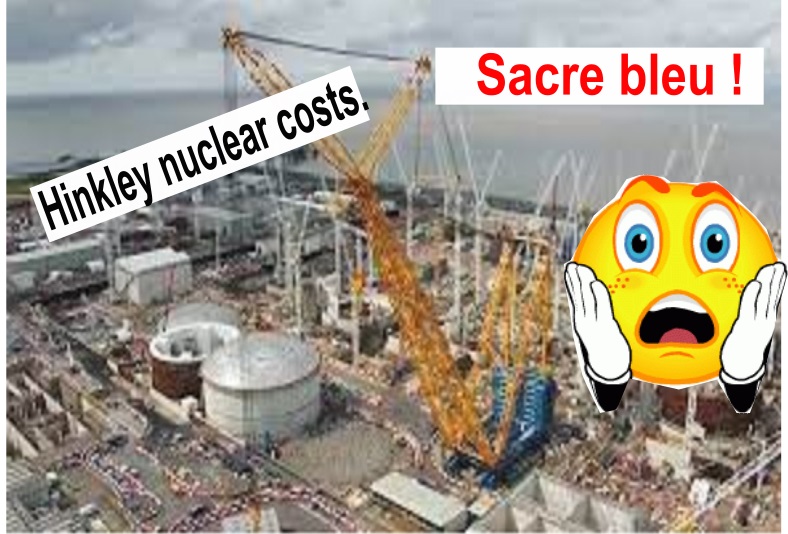
The National Wealth Fund said it will provide a loan facility for the nuclear power station of up to £36.6bn, pushing the upper limit to £47.7bn.
July 22nd 2025, https://www.energyvoice.com/renewables-energy-transition/576872/sizewell-c-loans-could-see-project-cost-rise-above-hinkley-to-47-7bn/
Project costs for the Sizewell C nuclear power station could rise to an upper threshold of £47.7 billion as a result of a new government loan extension.
The National Wealth Fund (NWF) has increased the size of its loan facilities to provide a debt buffer in case project costs rise, the government has confirmed.
The government’s new sovereign fund said in a statement that Treasury has recapitalised the fund from a prior capitalisation of £27.8bn so it can provide a loan facility for nuclear power station Sizewell C of £36.6bn.
The NFW, which started operating in October, will act as a lender of record for the project and continue to have the capacity to invest across its mandated sectors, a spokesperson said.
According to the statement, an additional £5bn of debt will be guaranteed by France’s export credit agency Bpifrance Assurance Export.
An energy department spokesperson told Energy Voice that “in order to finance a project of this size, the project partners have made available finance to fund costs up to £47.7bn (real) to safeguard taxpayers in the event of cost overruns”.
“This is based on a remote scenario for the project and is not what the company is managing the project to,” the government spokesperson said.
“The central target in terms of costs is around £38bn real, but as is standard for big and complex projects, we have secured a financing which contains contingency in case of overruns.”
According to people close to the matter, one of whom cited project documents, while Sizewell C is estimated to cost £38bn, the lower threshold for financing is £40bn, with a higher upper threshold of £47.7bn.
The newly secured loan capital would raise the projected upper limit of financing for the power station by nearly £10bn if it was fully drawn down over the course of the project’s lifecycle, they indicated, although a spokesperson for the fund said that would be unlikely. He said the facility provided for the effect of inflation.
“It is likely that NWF would not be exposed to the full amount of its debt provision, meaning its total debt exposure is likely to be less than the nominal maximum it has provided for,” the fund’s spokesperson said.
This increase would provide for a maximum project cost of £47.7bn, which would make the nuclear project more expensive than stalled Somerset nuclear power station Hinkley Point C, which is estimated to cost in the region of £46bn.
The UK Department for Energy Security and Net Zero (DESNZ) confirmed this morning that it had secured investors to commit a total of £38bn to Sizewell C. That included investment commitments from EDF, Centrica, Amber Infrastructure Group and Canadian fund La Caisse.
Together Against Sizewell C chair Jenny Kirtley said: “The scale of potential exposure of public funds to the Sizewell C project is revealed as a staggering £54.589bn in the government’s FID subsidy scheme.
“So much for claims made by EDF and government that there would be huge cost savings from ‘lessons learned’ from the Hinkley Point C build.”
She added that “future generations will have the responsibility to protect the Sizewell C site until the late 2100s and are depending on us to get it right”.
Sizewell C, which reached a final investment decision in the early hours of Tuesday, is expected to be a more efficient replica than its delayed and long-awaited Somerset counterpart, with efficiencies estimated to be between 20% and 25% greater than the first two reactors at Hinkley.
Supply chain ‘incentivised to keep costs down’
Investors insist that they are confident that costs will not overrun, yet Somerset nuclear power station Hinkley Point C is years overdue and over budget.
“The project supply chain is strongly incentivised to keep costs down and investors will see lower returns if there are overruns, reducing risk for taxpayers,” DESNZ told Energy Voice by email.
The new Suffolk nuclear power station at Sizewell is expected to be delivered by the mid-2030s.
Yet Hinkley Point C, which secured a contract-for-difference to operate in 2015, is still not fully built.
Project owner EDF received a dressing down from the French auditor earlier this year, which insisted that it should refinance Hinkley before investing in another nuclear power station in the UK, Sizewell C.
EDF has subsequently reduced its stake to 12.5%, representing an equity commitment of £1.1bn. Centrica has agreed to invest £1.3bn in a 15% stake, while Amber Infrastructure Group and Canadian fund Le Caisse have committed to take an initial 7.6% and 20% stake respectively.
The UK government said it will initially take a stake of 44.9% in Sizewell C, which is expected to reduce if Amber and La Caisse’s combined stake rises to 30%, according to a person familiar with the matter.
From hero to zero- When western leaders realised that Zelensky isn’t a corruption-fighting democrat –
Indeed, war has turbo-charged corruption to a new and more disgusting level.
it is impossible that British and European governmental agencies would not be aware of the huge graft within the Ukrainian state…… Having held up the ‘nothing to see here’ signs for so long, our political leaders may now be starting to worry about how they will account for and continue to justify the billions that western nations are pumping into Ukraine.
Ian Proud, The Peacemonger, Jul 25, 2025
Since the start of the war in Ukraine, in February 2022, Volodymyr Zelensky has been elevated to the status of a hero King, pure in thought and deed, interested only in saving humble Ukraine from the onrushing hordes of Russian Orcs. Like Aragorn from Lord of the Rings, but short, thin-skinned and with a gravelly voice.
Zelensky has been completely immune from criticism in the west, with allegations dismissed and labelled as Kremlin talking points, and accusers called out as Quislings.
Yet, in an instant, that illusion has been shattered.
For the first time since February 2022, Zelensky has been revealed as no different from every President of Ukraine since the country gained independence in August 1991; corrupt and authoritarian.
This comes as no surprise to most realists, but offers a devastating blow to the neo-liberal true-believers who invested their reputations and cash into defeating Russia.
This week, President Zelensky signed a law that stripped two important anti-corruption bodies – the National Anti-Courrption Bureau of Ukraine (NABU) and the Specialised Anti-Corruption Prosecutor’s Office (SAPO) of their independence, making them report to the Prosecutor General, who he appointed.
In the face of widespread protest, Zelensky has been forced to backtrack, although it is not year clear what the new arrangements will be, or when they will be implemented, and the Verkhovna Rada has started its summer recess.
Let’s be clear, corruption is and has been a totemic issue in Ukraine, right back to the onset of the Maidan protests in late 2013 and, of course, before that. During my visits to Ukraine, while posted to Russia, it was clear that young people saw tackling corruption as a top priority for the government. This formed part of their desire for Ukraine to move towards European Union membership and for their country to integrate into a community more clearly governed by democracy and the rule of law.
Whether they might consider the European Union to be democratic today, as unelected Commission President Ursula von der Leyen centralises ever more powers, is another question. But that European and anti-corruption aspiration was real back in 2013.
Yet scant progress has been made in tackling corruption since that time. In February 2015, one year after the height of the Maidan protests, the British Guardian newspaper published a long piece entitled ‘Welcome to Ukraine, the most corrupt country in Europe’. The Ukrainian Prime Minister, Arseny Yatseniuk, who had been personally selected by Victoria Nuland at the U.S. State Department, was forced to resign in April 2016 in the face of allegations of widespread corruption within his government.
In 2021, the European Court of Auditors produced a report entitled Reducing Grand Corruption in Ukraine: several EU initiatives, but still insufficient results. It defined Grand Corruption as ‘the abuse of high-level power that benefits the few, and causes serious and widespread harm to individuals and society’.
In January 2023, an article in the Hill remarked on the need to defeat corruption as Ukraine’s ‘other enemy’. Shortly after that article, a piece, again in the Guardian, discussed the challenges faced by the Head of Ukraine’s National Agency for Corruption Prevention (NACP), which works closely with the now de-clawed NABU and SAPO.
That report in particular talked about specific examples of corruption in President Zelensky’s inner circle. Occasionally, Zelensky has purged his cabinet, to show his commitment to governmental reform, for example, sacking his former Defence Minister, Oleksii Reznikov, in the face of widespread accusations that the Ukrainian Defence Ministry was siphoning off foreign donations on an industrial scale.
But the occasional show trial has never taken the whiff away that Zelensky’s administration is every bit as corrupt as those that preceded it.
This stripping of powers from NABU and SAPO took place as those organisations were closing in with investigations against senior members of the Zelensky administration. Zelensky has spoken about the need to deal with Russian influence, but most people have seen through that smoke screen.
Zelensky was voted into office in 2019 on a platform to eradicate corruption in Ukraine. He has not done so.
And, as I have pointed out often, war has held back real steps to address the problem.
Indeed, war has turbo-charged corruption to a new and more disgusting level. Money for infrastructure projects has been siphoned off, weapons’ orders have been falsified with officials skimming the profits. You’ll see as many hypercars tooling round Kyiv as might be witnessed at the Monaco Grand Prix. Want to get out of enlistment? We can make an arrangement for the right money. Need to cross the border? Just hand over the cash.
This has prompted the mother of all holy shit moments, in which European politicians are quickly waking up to the fact that their hero, Zelensky, is just a flawed human like everyone else. Although, from my personal experience, it is impossible that British and European governmental agencies would not be aware of the huge graft within the Ukrainian state.
Having held up the ‘nothing to see here’ signs for so long, our political leaders may now be starting to worry about how they will account for and continue to justify the billions that western nations are pumping into Ukraine. Two thirds of Ukrainian state expenditure is effectively paid for by us, non-Ukrainian citizens, through the donations of western governments.
And yet Ukraine has become more corrupt…………………………………………………………https://thepeacemonger.substack.com/p/from-hero-to-zero?utm_source=post-email-title&publication_id=3221990&post_id=169225133&utm_campaign=email-post-title&isFreemail=true&r=1ise1&triedRedirect=true&utm_medium=email
Trump’s Ukraine Plan: Power Play or Exit Strategy?
Beneath the rhetoric lies a fundamental truth: America is disengaging. Not with a decisive withdrawal, but through a form of diplomatic sleight-of-hand. By recasting its role from arsenal to arms dealer (insisting NATO nations pay “a hundred percent” for U.S.-made weapons) the United States transforms the principle of collective defense into a commercial transaction.
Beneath the rhetoric lies a fundamental truth: America is disengaging. Not with a decisive withdrawal, but through a form of diplomatic sleight-of-hand. By recasting its role from arsenal to arms dealer (insisting NATO nations pay “a hundred percent” for U.S.-made weapons) the United States transforms the principle of collective defense into a commercial transaction.
Uncover the hidden logic behind Trump’s delayed weapons aid, NATO rifts, and realpolitik tactics reshaping U.S. foreign policy and Ukraine’s fate.
Post-Liberal Dispatch, Jul 24, 2025, This piece was written by guest contributor Sérgio Horta Soares and has been reviewed and edited by Paulo Aguiar, founder of Post-Liberal Dispatch.
In geopolitics, there are no saints, only actors grappling for advantage, cloaking raw interests in the language of freedom, democracy, and humanitarian concern.
The recent choreography surrounding former U.S. President Donald Trump’s ostensible reentry into the Ukraine conflict lays bare the mechanics of power as they actually function: not through moral imperatives, but through calculated ambiguity, resource preservation, and the exploitation of time.
What masquerades as renewed support for Ukraine is, in substance, a meticulously engineered performance, designed not to rescue Kyiv, but to extricate Washington. Trump’s pronouncements of “billions” in arms, and his threats of tariffs against nations buying Russian oil, are not expressions of strategic commitment; they are instruments of political theater, signals issued to multiple audiences with competing agendas, none of whom are meant to receive a clear message.
To understand this gambit, one must first understand the war’s trajectory. Since Russia’s full-scale invasion of Ukraine in February 2022, Western countries (led by the United States) have supplied billions in weapons, economic assistance, and intelligence to Ukraine in an effort to repel Russian advances and prevent the collapse of the post–Cold War European security order.
Initially, this support was framed in terms of values: defending sovereignty, democracy, and international law. But as the war dragged on into its third year, cracks emerged in the Western coalition (rising costs, strained defense stockpiles, and growing domestic opposition to what many now view as an open-ended commitment).
Beneath the rhetoric lies a fundamental truth: America is disengaging. Not with a decisive withdrawal, but through a form of diplomatic sleight-of-hand. By recasting its role from arsenal to arms dealer (insisting NATO nations pay “a hundred percent” for U.S.-made weapons) the United States transforms the principle of collective defense into a commercial transaction.
NATO, once a bastion of mutual obligation, is being refashioned into a procurement agency. The nations of Europe are no longer being asked to fight beside the U.S.; they are being asked to shop.
That this approach incites confusion and resentment among allies is the point. Strategic ambiguity, long a hallmark of Trump’s foreign policy, is not a flaw but a deliberate tactic. By maintaining a posture of conditional engagement, the U.S. preserves its leverage, avoids definitive entanglement, and keeps both adversaries and allies on edge. This calculated vagueness allows for plausible deniability and quick reversals. It ensures that commitments can be revoked, blame can be shifted, and outcomes can be rebranded.
What emerges is not policy, but posture, a stance of strength unmoored from obligation. The imposition of delayed tariffs and the promise of weapons that will not arrive in time to affect the current Russian offensive are not strategic errors; they are expressions of strategic intent. They buy time; not for Ukraine, but for Russia.
Intelligence suggests that Russian commanders believe they can achieve key battlefield objectives within weeks, before weather and logistics slow their operations. Trump’s 50-day deadline for triggering sanctions likely falls outside of that window. This is not coincidence; it is complicity, veiled beneath performative deterrence.
Ukraine, under siege and starved of arms, is left to decipher whether the promised aid is a lifeline or a leash. Meanwhile, Washington hedges its bets, calibrating its involvement to extract maximum geopolitical return with minimum exposure.
The material realities further erode any illusion of robust support. Western arsenals are depleted. Since 2022, the U.S. and its NATO allies have shipped tens of thousands of artillery shells, air defense systems, and armored vehicles to Ukraine. Yet the West’s military-industrial base is still operating on peacetime rhythms, struggling to keep pace with the demands of high-intensity warfare. Arms production in the U.S. and Europe cannot meet short-term demand, and weapons systems, such as Germany’s promised Patriots, are delayed by months.
These constraints reveal a widening gap between political intent and logistical feasibility. Without urgent expansion of industrial capacity, Western efforts risk falling behind Russia’s war economy, rendering even well-publicized support strategies operationally irrelevant
The fragmentation of NATO in response to the Trump plan is less an aberration than a revelation.
France and Italy reject participation outright, prioritizing domestic industry and fiscal restraint. Hungary abstains on ideological grounds, and the Czech Republic prefers alternative aid mechanisms. Even those nations nominally listed as partners (Finland, Denmark, Sweden) were reportedly blindsided by the announcement. This is improvisation, and it exposes the brittle scaffolding of transatlantic unity, where each state calculates its own interests and distances itself from burdens it cannot (or will not) carry.
Within this fractured landscape, Ukraine is not a partner but a bargaining chip, leveraged between competing powers with conflicting priorities. Trump’s ultimate objective is not Ukrainian victory but………………………………………………..(Subscribers only) https://postliberaldispatch.substack.com/p/trumps-ukraine-plan-power-play-or?utm_source=post-email-title&publication_id=4747899&post_id=169097642&utm_campaign=email-post-title&isFreemail=true&r=ln98x&triedRedirect=true&utm_medium=email
The Flamanville EPR is still shut down: we know more after the visit of the nuclear regulator
Shut down since mid-June 2025 due to a leak on a protection valve, the Flamanville EPR received a visit from a team from ASNR, the nuclear regulator.
The Flamanville EPR is still shut down: we know more after the visit of the
nuclear watchdog. Shut down since mid-June 2025 due to a leak on a
protection valve, the Flamanville EPR received a visit from a team from
ASNR, the nuclear regulator.
La Presse de la Manche 22nd July 2025, https://actu.fr/normandie/flamanville_50184/lepr-de-flamanville-est-toujours-a-larret-on-en-sait-plus-apres-le-passage-du-gendarme-du-nucleaire_62944598.html
Predictably, there was no progress in Istanbul peace talks
Citizens have been fed a non-stop diet of propaganda about Zelensky our savior from the terrors of the Vlad the terrible. Yet now cracks have appeared and people are asking whether Zelensky is in fact just as corrupt as every Ukrainian leader who came before him
Will war now stretch into 2026 or has Zelensky’s anti-corruption blunder changed the game?
Ian Proud, The Peacemonger, Jul 24, 2025
Below my article of yesterday in Responsible Statecraft. I predicted there would be no progress at the Istanbul peace talks yesterday and there was no progress. The meeting apparently lasted just 40 minutes or so, with little to show except for further agreement on a further round of POW exchanges.
Zelensky didn’t need to cut a deal in Istanbul because he figures that the US will impose harsh secondary sanctions on Russia’s trading partners on 2 September, amounting to a 100% tariff. I have written previously about why I believe that will backfire on the US.
In any case, Zelensky stalling on peace talks in Istanbul may soon be overtaken by events closer to home, in Kyiv and other Ukrainian cities.
It would be easy, I think, to underestimate just how big an impact this will have on public perceptions of Zelensky in western nations that have supported Ukraine to the hilt in the war, and to the impoverishment of their own people. Citizens have been fed a non-stop diet of propaganda about Zelensky our savior from the terrors of the Vlad the terrible. Yet now cracks have appeared and people are asking whether Zelensky is in fact just as corrupt as every Ukrainian leader who came before him. More on that in my next article.
But having started yesterday certain that war would drag into 2026, I am coming round to the idea that it could be over this year. The Ukrainian front line is cracking in various places. European leaders may find it harder than ever before to justify feeding the Zelensky gravy train. One thing I do know, it’s going to be a rocky ride in Kyiv for a while. And more people will die on the front line while the drama unfolds.
Time to end this nonsense now.
President Volodymyr Zelensky of Ukraine has said that a further round of talks between Ukraine and Russia could start as early as this week, and indicated that “everything had to be done to get a ceasefire.” Yet it is far from clear that a ceasefire will be possible. And it’s likely that the war will continue into 2026.
In June, Zelensky was pressing the European Union to go further in its sanctions against Russia, including calling for a $30 per barrel cap on Russian oil shipments. Washington effectively vetoed a lowering of the oil price cap at the recent G7 Summit in Canada. However, on July 18 the European Union agreed its 18th round of Russian sanctions since war began, overcoming a blocking move by Slovakia in the process.
This imposes a cap on Russian oil shipments at 15% below market value ($47.60 at the time the package was agreed) and places further restrictions on Russia’s energy sector. But, there is scepticism that this will dent Russian revenues without the U.S. mirroring the measures, as the prior $60 per barrel G7 cap made no noticeable difference. Zelensky hailed the package as “essential and timely.”
Despite the overtures towards peace talks, economic sanctions against Russia continue to be the preferred approach for both Zelensky and for the EU. And the clock is ticking for the focus to shift back to President Trump’s proposed secondary sanctions. Having given Russia 50 days to agree a peace deal with Ukraine or face tariffs of 100% against its major trading partners, Trump has effectively set a deadline of September 2.
…………………………………………………………………………………………………….this limited agenda will not be enough to satisfy the Kremlin that Ukraine is ready to negotiate and make progress towards an agreement on Russia’s so-called underlying concerns, the key concern being Ukraine’s NATO aspiration. Without the negotiations seriously getting into this and other such substantive issues as the disposition of forces and territory when the fighting stops, don’t expect a leader-level meeting any time soon.
…………………This dynamic of Europe and the U.S. threatening Russia with sanctions unless progress towards peace is made, while no expectations are placed on Ukraine to make concessions, has been locked in since March of 2015. It simply will not work.
Calling on Putin to meet in Istanbul is therefore, like it was in May, an act of political theater by Zelensky. He needs to keep his Western sponsors on side and for the flow of money and arms into Ukraine to continue. He also wants to polish his image as a putative global statesman.
Meanwhile, at the most recent Contact Group of Support for Ukraine meeting, then Ukrainian Prime Minister Denis Shmyhal requested an additional $6 billion to cover this year’s deficit in defense procurement. He also urged “partners to allocate funds for Ukraine in their budget proposals for 2026, right now.”
Anyone who believes that Zelensky is really committed to accelerating moves towards peace in Ukraine may, I fear, be overly optimistic. I am increasingly convinced that war will continue into next year. https://thepeacemonger.substack.com/p/predictably-there-was-no-progress?utm_source=post-email-title&publication_id=3221990&post_id=169121725&utm_campaign=email-post-title&isFreemail=true&r=1ise1&triedRedirect=true&utm_medium=email
Anas Sarwar urged to break silence on Labour’s ‘nuclear tax’ for Scots
ANAS Sarwar has been urged to clarify whether he backs a plan to apply a
“nuclear tax” to Scots with bills set to go up due to the rising cost of an
English nuclear plant. Energy Security Secretary Ed Miliband has confirmed
the Sizewell-C plant will cost £38 billion, nearly double the previous
estimate of £20bn.
Miliband snuck out a statement hours before Parliament
was due to go into a six-week summer recess, admitting energy bill payers
would face a decade-long levy as a result of the price hike. This is
despite Labour promising ahead of the General Election that their flagship
GB Energy policy would save people £300 a year on their energy bills. In
actual fact, bills are on average 10% higher than they were this time last
year.
The National 23rd July 2025, https://www.thenational.scot/news/25335813.anas-sarwar-urged-break-silence-labours-nuclear-tax-scots/
US congresswoman labels Zelensky ‘dictator’
23 Jul, 2025 , https://www.rt.com/news/621871-us-congresswoman-zelensky-dictator/
Marjorie Taylor Greene has urged Washington to stop backing the Ukrainian leader, accusing him of refusing peace and clinging to power
US Representative Marjorie Taylor Greene has labeled Ukrainian leader Vladimir Zelensky “a dictator” and called for his removal, citing mass anti-corruption protests across Ukraine and accusing him of blocking peace efforts.
Her comments came after Zelensky signed a controversial bill into law that places the Specialized Anti-Corruption Prosecutor’s Office (SAPO) and the National Anti-Corruption Bureau (NABU) under the authority of the prosecutor general.
Critics argue that the legislation effectively strips the bodies of their independence. The law has sparked protests across Ukraine, with around 2,000 people rallying in Kiev and additional demonstrations reported in Lviv, Odessa, and Poltava.
“Good for the Ukrainian people! Throw him out of office!” Greene wrote Wednesday on X, sharing footage from the protests. “And America must STOP funding and sending weapons!!!”
Greene, a longtime critic of US aid to Kiev, made similar comments last week while introducing an amendment to block further assistance. “Zelensky is a dictator, who, by the way, stopped elections in his country because of this war,” she told the House.
“He’s jailed journalists, he’s canceled his election, controlled state media, and persecuted Christians. The American people should not be forced to continue to pay for another foreign war.”
Her statements come amid mounting speculation over Zelensky’s political future. Journalist Seymour Hersh has reported that US officials are considering replacing him, possibly with former top general Valery Zaluzhny.
Senator Tommy Tuberville also called Zelensky a “dictator” last month, accusing him of trying to drag NATO into the conflict with Russia. Tuberville claimed that Zelensky refuses to hold elections because “he knew if he had an election, he’d get voted out.”
Zelensky’s five-year presidential term expired in 2024, but he has refused to hold a new election, citing martial law, which has been extended every 90 days since 2022.
US President Donald Trump has also questioned Zelensky’s legitimacy, calling him “a dictator without elections” in February.
Russian officials have repeatedly brought up the issue of Zelensky’s legitimacy, arguing that any agreements signed by him or his administration could be legally challenged by future leaders of Ukraine.
UK Government drops plans to include smaller nuclear fusion energy plants in NSIP regime
The government has announced it will incorporate all nuclear fusion energy facilities generating at least 50 megawatts (MW) in England into the streamlined nationally significant infrastructure project (NSIP) planning regime, but will drop its proposal to include such developments that fall under this threshold.
by Natasha Norris, Planning 24th July 2025,
https://www.planningresource.co.uk/article/1926726/government-drops-plans-include-smaller-nuclear-fusion-energy-plants-nsip-regime
2
Why Nuclear Power in Scotland is not Needed, Economic, Wanted or Safe
John Drummond in conversation with Energy Scotland’s John Proctor and Leah Gunn Barrett
Leah Gunn Barrett, Dear Scotland, Jul 24, 2025
Last evening, John Proctor of Energy Scotland and I were guests on The Nation Talks podcast with John Drummond. We discussed why more nuclear power in Scotland should be a non-starter. It’s notNeeded, Economic, Wanted or Safe. And yet English Labour – from Kid Starver to Viceroy Murray to Anus Sarwar – are rabidly pro-nuclear, pushing this costly and dangerous energy source onto Scotland without our consent.
The video link to the programme is below. I’ve also provided notes below that I used to prepare, many taken from my previous posts.
Why Nuclear power is being pushed onto Scotland
The Corporate Nuclear Lobby has conducted one of the most aggressive lobbying and public relations campaigns of all energy sources. It pushes politicians and the public to support nuclear based on sketchy information and outright lies which aren’t challenged in the Scottish media.
The nuclear industry is funding lobby group Britain Remade, which launched a campaign to lift the ban on new Scottish nuclear power at a May 1 meeting in Dunbar, near the Torness power plant. English Labour’s Scotland manager Anus Sarwar accused the SNP of depriving Scotland of billions in investment and thousands of jobs, which is a lie. This is the same dude who wouldn’t save Grangemouth and its 500 jobs, after vowing he would.
And Viceroy Murray is pushing nuclear, even removing his name from the International Campaign to Abolish Nuclear Weapons (ICAN) pledge.
English Labour is bankrolled by the nuclear lobby. Tony Blair is one of its biggest beneficiaries and cheerleaders. The Nuclear Energy Association loved his Institute’s 2024 pro-nuclear power report.
Nuclear power subsidises nuclear weapons production
Here’s the dirty little secret – the UK Government needs nuclear power. Without it, there’d be no nuclear weapons programme, the flaccid UK’s national virility symbol.
All the processes of the nuclear fuel cycle – uranium mining, refining and U-235 enrichment – are used for both civilian and military purposes; the UK Capenhurst facility makes nuclear fuel for both reactors and Trident submarines; and nuclear reactors create tritium (the radioactive isotope of hydrogen), which is necessary for nuclear weapons.
A 2017 University of Sussex study found that the costs of the Trident programme would be “unsupportable” without “an effective subsidy, from electricity consumers to military nuclear infrastructure”. Consumers, bearing the costs of uneconomic nuclear power, are also subsidising nuclear weapons that don’t even work! The Trident delivery system has failed two tests in a row, in 2016, and 2024. Despite these fiascos, the UK government insists that Trident “remains the most reliable weapons system in the world.”
Westminster won’t allow the southeast of England to be polluted by these nuclear rustbuckets so has confined them to “north Britain.” Nor will it tell its northern colony how badly they’re polluting the land and water. In 2017, the MoD stopped publishing annual reports from its internal watchdog, after the reports for 2005-2015 flagged “regulatory risks” 86 times. It has also blocked Scotland’s environment agency from releasing information about radioactive pollution from the Clyde nuclear bases at Faslane and Coulport for the last ten years.
Scots are getting the mushroom treatment – kept in the dark and fed a load of shite.
I. Nuclear is Not Needed – Renewables are far cheaper and safer………………………………………………………………………………………………………………
So, English Labour is trying to force onto Scotland plants that aren’t even commercially viable. It’s regurgitating the marketing hot air from a desperate industry that’s frantically funding pathetic careerists like Sarwar, Starmer and the Viceroy who are pushing this crap.
……………………………………………………………………………………………………………………….. • With no solution to nuclear waste, the UK is starting a new nuclear building program which will worsen the waste problem and result in vastly increased radioactivity from spent fuel and other highly radioactive wastes which will have to be stored indefinitely at vulnerable sites scattered around the UK coast.
The UK won’t give up on its never-ending quest to screw Scotland. It has stolen our oil and gas and now our renewables, and now is trying to force us to accept not needed, not economic, not wanted and not safe nuclear power.
Please sign the petition calling on the Scottish Administration to implement the International Covenant on Civil and Political Rights to give Scots the tools to exercise their sovereignty and the ability to say NO to nuclear. https://dearscotland.substack.com/p/why-nuclear-power-in-scotland-is
EDF shifts nuclear strategy to focus on domestic projects
The company will
reduce its international sales team by 60, including ten managerial roles.
France’s state-run utility EDF is planning to reduce its overseas workforce
and withdraw from certain international nuclear projects to concentrate on
a domestic construction programme under its new CEO Bernard Fontana, as
reported by Reuters. Once a global leader in nuclear power, France is
retreating amid rising global demand, allowing new competitors to emerge as
high costs and design challenges hinder its international competitiveness.
Power Technology 23rd July 2025, https://www.power-technology.com/news/edf-nuclear-strategy-focus-domestic/
Time to Step Up – Campaigner calls on MP to challenge decision to give fusion indemnity over accident liabilities

Renowned nuclear campaigner, and friend to the Nuclear Free Local
Authorities, Dr David Lowry has just written to his local Member of
Parliament calling on her to challenge ministers over their pledge to
provide an absolute indemnity over costs incurred by a nuclear fusion pilot
plant being built in the Midlands should there be ‘incidents involving
nuclear matter or emissions of ionising radiation arising from fusion
activities relating to the STEP programme.’
In a written statement issued
to Parliament just prior to MPs leaving for the summer recess, Minister for
Climate – and seemingly defacto Nuclear Minister – Kerry McCarthy –
announced that this latest financial ‘get out of jail free’ card for the
nuclear industry would be ‘remote and uncapped’. The assumption by the
Treasury – and therefore by taxpayers – of any liability is Ms McCarthy
insists necessary to ‘address the gap in the insurance market’ which
rather suggests that no-one in the commercial insurance market is prepared
to take on the risks associated with this nascent technology.
NFLA 22nd July 2025, https://www.nuclearpolicy.info/news/time-to-step-up-campaigner-calls-on-mp-to-challenge-decision-to-give-fusion-indemnity-over-accident-liabilities/
Belgian court bans military shipments to Israel in activist victory

Anti-armament activists in Belgium celebrated a major victory as a judge ordered the Flemish government to halt military shipments to Israel.
July 23, 2025 by Ana Vračar, https://peoplesdispatch.org/2025/07/23/belgian-court-bans-military-shipments-to-israel-in-activist-victory/
In what could become a landmark ruling, a Belgian judge recently ordered the Flemish government to halt the transit of goods that could be used to continue or expand the genocide in Gaza. The decision follows a joint campaign by four organizations – Intal, Vredesactie (Peace Action), 11.11.11, and the Human Rights League – which was triggered by the discovery of containers in the port of Antwerp addressed to Israeli company Ashot Ashkelon Industries. The containers included materials used for the assembly of Merkava tanks, the same model implicated in the attack that killed six-year-old Hind Rajab.
The presence of these containers was brought to the attention of the organizations through links with investigative media outlets, Isabelle Vanbrabant, national coordinator of Intal, told Peoples Dispatch. Based on these alerts, Vredesactie initiated a formal inspection request and succeeded in detaining one container, though another was allowed to proceed. “We were doubtful about the effectiveness of a single inspection,” Vanbrabant says, noting activists feared the shipment might go unnoticed or that the inspection would impact only one case – despite knowing that Antwerp had previously been used to transport ammunition, and that similar cargo was en route aboard new vessels.
“We formed a coalition and contacted a lawyer. We had a solid case, so we decided to push further,” Vanbrabant explains. What followed was a swift but well-prepared legal campaign, which moved beyond a single shipment to challenge the broader conduct of Flemish authorities regarding military and dual-use exports to Israel. “We chose to argue that this wasn’t about one container, but about a wider pattern of the government allowing such cargo to pass through,” she said.
In a separate statement, Intal emphasized that facilitating the transit of military equipment to a country committing war crimes makes a government complicit. In this case, legal accountability involves both local and international law. Pledges made in 2009 explicitly state the region would not “issue arms export licenses that would strengthen the military capabilities of the warring parties” in occupied Palestine. Yet, as Vanbrabant describes, Flemish authorities have been, put mildly, pretty lax about implementing this line of policy towards Israel. “One of the key things this case proves is that having good-sounding legislation on paper isn’t enough,” she says. “You need to ensure it’s applied in practice, with proper oversight of the agencies involved.”
Implications for ongoing and future campaigns
While the judge criticized the government’s failure to follow domestic law, the ruling also leaned heavily on international legal standards. “That’s something new – and a very good development,” Vanbrabant stresses. “The government made no reference to international law. We did. This could set a real precedent for future arms transfer cases.”
Activists praised the court’s ruling as both thorough and principled. In addition to requiring the Flemish government to comply with its own regulations, the judge imposed financial penalties for possible violations: if similar cargo bound for Israel is discovered, the government will be fined €50,000 per container. Vanbrabant points out that, in the context of Europe’s push for rearmament and renewed austerity, the ruling might force the government to allocate additional resources to inspection agencies, currently underfunded and thus undercapacitated.
The ruling is also expected to influence ongoing and future campaigns in Belgium. There are already efforts underway challenging the country’s stance on arms shipments via its maritime and airspace. The organizations behind the Flemish case are also mobilizing against domestic and EU-level plans to weaken export controls under the ReArm Europe agenda. “What we achieved locally can be expanded,” Vanbrabant says. “This isn’t only about Palestine, it’s also about the broader arms export system.”
A tool that extends beyond the courts
The implications of the case are wide-ranging. “Legal action is becoming a growing tool [in the Palestine solidarity and anti-armament movements],” Vanbrabant notes. “But it goes beyond that.”
This is particularly relevant in the context of intensifying anti-militarization efforts across Europe and Intal’s wider work. “As a strong BDS partner and an organization that works on militarization more broadly, the issue of arms embargoes is central to us,” Vanbrabant adds. “In a way, it’s part of our DNA as an anti-imperialist group, the BDS campaign and the knowledge that genocide is only possible because of our governments’ complicity.”
The case is also expected to give a boost to the Palestine solidarity movement, which has faced constant repression in much of Europe. While the role of Antwerp port workers wasn’t as visible as that of logistics workers in Greece or France, who have repeatedly refused to load military cargo, this campaign provided an important opportunity for labor collectives to raise awareness and consult their members. Ultimately, as Vanbrabant emphasizes, the ruling proves that even without major resources, it’s possible to take on authorities – and win. The entire case was funded through small donations, showing widespread public support for the cause.
“There’s this belief that you have to be big and powerful to win,” she says. “But this proves it doesn’t have to be that way.”
Anti-Genocide Protesters Block Hundreds of Israeli Tourists From Disembarking in Greek Port
A group of residents on the island of Syros organized the protest and said it was ‘unacceptable’ that Israeli tourists be welcomed as Palestinians suffer from starvation and war in Gaza
News Desk, JUL 22, 2025, https://thecradle.co/articles/anti-genocide-protesters-block-hundreds-of-israeli-tourists-from-disembarking-in-greek-port
Israeli passengers on a cruise ship arriving in Greece on 22 July were unable to disembark the vessel due to a large crowd of pro-Palestine protesters demonstrating against the Israeli genocide of Palestinians in the Gaza Strip.
The MS Crown Iris, owned by Israeli cruise line Mano Maritime, arrived on Tuesday at the Greek island of Syros in the Aegean Sea. The passengers were supposed to disembark for six hours.
However, they were forced to remain on board due to the protests in support of Palestine.
“The demonstrators posed no danger to us,” an Israeli on board the ship told Hebrew news site Walla.
Between 120 and 300 protesters waved Palestinian flags and held banners reading “stop the genocide” as the ship arrived.
Israeli Foreign Minister Gideon Saar spoke with his Greek counterpart, Giorgos Gerapetritis, to request intervention to resolve the issue.
Yet the cruise ship ended up being redirected to Limassol, Cyprus. Around 1,600 Israelis were traveling on the MS Crown Iris, according to Israel’s Channel 12.
A group of the Greek island’s residents organized the protest and posted on social media that they “raise their fists in solidarity with the Palestinians in Gaza,” adding that “it is unacceptable that tourists from Israel continue to be welcomed here while the Palestinians are suffering in the Strip.”
Israel’s genocidal war has resulted in a significant decline in Tel Aviv’s popularity worldwide.
Israeli soldiers responsible for war crimes, including the destruction of civilian infrastructure in Gaza, are regularly pursued and targeted with criminal complaints issued by pro-Palestine organizations in courts around the world.
Two Israeli soldiers were detained at the Tomorrowland festival in Belgium last week. Belgian police released them after conducting an interview.
The legal complaint was filed by the Hind Rajab Foundation (HRF), which has been leading a global campaign against Israeli soldiers involved in war crimes.
In January, the Israeli army issued restrictions against media coverage of active-duty soldiers due to legal risks they face over war crimes in Gaza while traveling abroad.
This came after an Israeli army reservist’s vacation in Brazil ended abruptly after HRF convinced a federal judge in Brazil to open a war crimes investigation into his participation in the demolition of civilian homes in Gaza.
The inside story of how America sent nuclear weapons to Britain
Nukewatch UK explains how it tracked the bombs being flown across the Atlantic.
American nuclear weapons with three times the power of the Hiroshima bomb
were transported to England last week, new evidence suggests. The arsenal
is under the control of president Donald Trump and could be used without
British approval.
Our team at Nukewatch UK observed a special flight
carrying the bombs as it landed at RAF Lakenheath in Suffolk on 17 July,
having tracked its journey and monitored radio messages. The transport
plane, a giant C-17 Globemaster (flight number RCH4574 or Reach 4574) had
taken off from Lewis–McChord base in Washington state two days earlier.
Declassified UK 22nd July 2025, https://www.declassifieduk.org/the-inside-story-of-how-america-sent-nuclear-weapons-to-britain/
1 This Month
Chernobyl: The Lost Tapes – A good documentary on Chernobyl on SBS available On Demand for the next 3 weeks– https://www.sbs.com.au/ondemand/tv-program/chernobyl-the-lost-tapes/2352741955560

of the week–London Campaign for Nuclear Disarmament

Tell the Ukrainian Government to Drop Prosecution of Peace Activist Yurii Sheliazhenko
To see nuclear-related stories in greater depth and intensity – go to https://nuclearinformation.wordpress.com
-
Archives
- April 2026 (139)
- March 2026 (251)
- February 2026 (268)
- January 2026 (308)
- December 2025 (358)
- November 2025 (359)
- October 2025 (376)
- September 2025 (257)
- August 2025 (319)
- July 2025 (230)
- June 2025 (348)
- May 2025 (261)
-
Categories
- 1
- 1 NUCLEAR ISSUES
- business and costs
- climate change
- culture and arts
- ENERGY
- environment
- health
- history
- indigenous issues
- Legal
- marketing of nuclear
- media
- opposition to nuclear
- PERSONAL STORIES
- politics
- politics international
- Religion and ethics
- safety
- secrets,lies and civil liberties
- spinbuster
- technology
- Uranium
- wastes
- weapons and war
- Women
- 2 WORLD
- ACTION
- AFRICA
- Atrocities
- AUSTRALIA
- Christina's notes
- Christina's themes
- culture and arts
- Events
- Fuk 2022
- Fuk 2023
- Fukushima 2017
- Fukushima 2018
- fukushima 2019
- Fukushima 2020
- Fukushima 2021
- general
- global warming
- Humour (God we need it)
- Nuclear
- RARE EARTHS
- Reference
- resources – print
- Resources -audiovicual
- Weekly Newsletter
- World
- World Nuclear
- YouTube
-
RSS
Entries RSS
Comments RSS
 nuclear-news