Sellafield nuclear plant contractors to strike
BBC 5th Aug 2025,
https://www.bbc.co.uk/news/articles/cvg38w4xly3o
Workers supplying the Sellafield nuclear site have voted in favour of strike action over pay.
Almost 40 workers at Fellside Combined Heat and Power facility, the plant supplying the steam and power to the Cumbria site, will take industrial action on 19 and 20 August after rejecting two pay offers.
Owned by PX Ltd, Unite workers are also undertaking an overtime ban.
PX Ltd said it was unable to comment as another meeting was due to take place with the union on Wednesday. A spokesperson for Sellafield said the site was not “directly involved in the dispute”.
The final pay offer was 3.5 to 5% depending on a set of criteria, Unite said.
Unite general secretary, Sharon Graham, said: “PX Limited can clearly afford to pay our members for the vital work they do but is choosing to put profits over people.
“This dispute is completely caused by the employer’s greed.”
A spokesperson for Sellafield added: “As always, the safety and security of the Sellafield site, our workforce and the local community will be our priority during any industrial action.”
Ukraine hacks Russian submarine as Moscow expands Arctic presence
Ukraine claims to have pulled off a major hacking operation, obtaining
classified data on a new Russian nuclear submarine and revealing potential
vulnerabilities as Moscow intensifies its military presence in the Arctic.
Times 3rd Aug 2025, https://www.thetimes.com/world/russia-ukraine-war/article/ukraine-hacks-russian-submarine-as-moscow-expands-arctic-presence-2tmwc8dn5
Melting glaciers threaten to wipe out European villages – is the steep cost to protect them worth it?

Melting glaciers threaten to wipe out European villages – is the steep
cost to protect them worth it? Switzerland spends almost $500m a year on
protective structures, but a report carried out in 2007 for the Swiss
parliament suggested real protection against natural hazards could cost six
times that. Is that a worthwhile investment? Or should the country – and
residents – really consider the painful option of abandoning some of their
villages?
BBC 3rd Aug 2025,
https://www.bbc.co.uk/news/articles/cj4w9ggzxv4o
IAEA reports hearing explosions, sees smoke near Ukraine’s Zaporizhzhia nuclear plant.
The International Atomic Energy Agency (IAEA) said on Saturday that its
team at Ukraine’s Zaporizhzhia Nuclear Power Plant (ZNPP) heard explosions
and saw smoke coming from a nearby location. The nuclear plant said one of
its auxiliary facilities was attacked today, IAEA said in a statement.
Reuters 2nd Aug 2025, https://www.reuters.com/world/europe/iaea-reports-hearing-explosions-sees-smoke-near-ukraines-zaporizhzhia-nuclear-2025-08-02/
Anti-nuclear weapons demo takes place at Faslane base
HM Naval Base Clyde is home to the Royal Navy’s four Vanguard-class submarines – HMS Vanguard, Vengeance, Victorious and Vigilant – which each carry Trident 2 D5 nuclear missiles.
Gemma Ryder Reporter, 02 Aug 2025,
https://www.dailyrecord.co.uk/news/scottish-news/anti-nuclear-weapons-demo-takes-35664128
The “No To Nuclear Weapons” gathering was organised by Justice & Peace Scotland, and brought people of all faiths together for prayer, reflection, and a public stance against nuclear arms.
Those in attendance included Most Rev William Nolan, Catholic Archbishop of Glasgow and Bishop-President of Justice & Peace Scotland; Rt Rev Rosie Frew, Moderator of the General Assembly of the Church of Scotland; and Most Rev Mark Strange, Primus of the Scottish Episcopal Church.
They were joined by members of the Quakers, the Iona Community, the United Reformed Church, and other religious groups amid growing global tensions.
The UK is preparing to upgrade and expand its nuclear weapons system and President Trump ordered two nuclear submarines to be deployed “in the appropriate regions” in response to comments by former Russian President Dmitry Medvedev on social media.
Archbishop Nolan said: “The phrase ‘never again’ gained much currency 80 years ago.
“But the actions of nuclear powers, including our own, run contrary to that.
“As the late Pope Benedict articulated, the very concept of a nuclear deterrence has instead fuelled an arms race as those on opposing sides keep seeking to outdo the other.
“We have seen this in the replacement for Trident. Deterrence itself, therefore, has increased insecurity and does nothing to build up trust which is necessary to encourage disarmament and build up peace.”
HM Naval Base Clyde — located near Helensburgh on the Gare Loch — is home to the UK’s four Vanguard-class submarines, each armed with Trident 2 D5 nuclear missiles, capable of striking targets up to 4,000 miles away.
Rt Rev Frew said: “On the 80th anniversary of the atomic bombing of Hiroshima and Nagasaki, it seems right to stand with other Christians saying ‘No’ to nuclear weapons and ‘Yes’ to peace.
“My hope and prayer is to live in a world without war or the threat of war, a world without the threat of the deployment of nuclear weapons.
“I know opinion is very divided on holding nuclear weapons but I don’t believe anyone would ever wish them to be deployed, both those who will gather outside and those who serve in HM Naval Base Clyde.
“The Church of Scotland stands in solidarity with all those who work at Faslane in the service of the United Kingdom, while praying for peace in a world where there is no threat of nuclear weapons ever being used.”
Justice & Peace Scotland said the use and threat of nuclear weapons is incompatible with Christian teaching, and called on political leaders to reject a future based on “fear and power-wielding”.
They added: “Nuclear weapons are fundamentally incompatible with this call as their existence threatens indiscriminate destruction and a future built on fear and power-wielding rather than on fraternity amongst nations.”
Metsamor could trigger next global nuclear emergency and Armenians denying it.
Metsamor could trigger next global nuclear emergency and Armenians denying
it. In recent days, several Armenian news channels (websites) have been
engaged in a smear campaign, asserting that the Azerbaijani media has
“falsely” highlighted the Metsamor nuclear power plant under the guise of
“propaganda for the country’s politics.” They claim that Armenia’s nuclear
power plant does not pose any threat to the region and that the allegations
against it are unfounded. However, Azerbaijan, Türkiye, and even Georgia
have periodically asserted that this plant presents a significant threat
and have repeatedly submitted resolutions to the International Atomic
Energy Agency addressing their concerns. In this article, we will discover
how problematic and valid the notion of posing a threat is, for Metsamor
Plant.
Azer News 2nd Aug 2025,
https://www.azernews.az/analysis/245496.html
Sizewell C nuclear costs could hit £100bn including financing, modelling shows
Total for nuclear power station project set to be billions of pounds higher
than official government estimates.
The true cost of the Sizewell C power
station in Suffolk could be tens of billions of pounds higher than official
government estimates once financing costs are factored in, according to
official modelling seen by the Financial Times.
The UK government last week
said the mostly debt-funded project would cost an estimated £38bn in real
2024 prices to build. Under the financial structure of the deal, investors
will be rewarded if the project is built for less than £40bn, and not
obliged to put in further funds if costs rise above £47.7bn — which is
considered unlikely.
But financial modelling — prepared as part of the
wider fundraising process and seen by the Financial Times — gives a range
of roughly £80bn-£100bn in nominal terms over the period of construction
for the two scenarios, once debt interest and payments to shareholders are
factored in. That would imply costs of roughly £65bn-£80bn in real 2024
terms, although the exact costs will depend on inflation rates and spending
rates across the lifetime of the project.
FT 2nd Aug 2025, https://www.ft.com/content/5f54592e-50ba-4a1e-8219-7a4eb01f74ed
US, UK in secret talks with Ukrainian officials to ‘replace Zelensky’: Report
Three years into the war with Russia, the Ukrainian president has experienced his fortunes turn amid heavy human losses on the battlefield and intense Russian assaults.
JUL 29, 2025, https://thecradle.co/articles/us-uk-in-secret-talks-with-ukrainian-officials-to-replace-zelensky-report
Russia’s Foreign Intelligence Service (SVR) has revealed that US and British officials recently held a meeting in the Alps with top Ukrainian officials to discuss “replacing” Ukrainian President Volodymyr Zelensky.
According to a statement made available to TASS, the meeting involved Andrey Yermak, head of the Ukrainian president’s office, Kirill Budanov, chief of the Ukrainian Defense Ministry’s Main Directorate of Intelligence, and Valery Zaluzhny, the country’s ex-commander-in-chief who is now Ukraine’s ambassador to London..
“The Americans and the British announced their decision to propose Zaluzhny to the Ukrainian presidency. Yermak and Budanov ‘snapped a salute,’ while securing promises from the Anglo-Saxons to let them keep their present positions, as well as to take their interests into account in the course of making decisions over other personnel issues,” TASS reports.
The Ukrainian participants were reportedly promised they would retain their positions and influence over future personnel appointments following Zelensky’s ouster.
The SVR said Yermak helped prepare the ground for Zaluzhny by persuading Zelensky to weaken Ukraine’s anti-corruption bodies. Zelensky signed the new law, but Ukrainian MPs said the measure has not appeared on the parliament’s official website.
According to the SVR, the secret talks with UK and US officials aim to restructure Ukraine’s ties with the west, especially the US, and have established removing Zelensky as a prerequisite for continued western support in the war with Russia, after ceasefire talks between Moscow and Kiev in Istanbul last week ended without a breakthrough.
The SVR report comes a day after US President Donald Trump shortened his 50-day deadline for a ceasefire between Russia and Ukraine to “10 or 12 days,” warning of stalled progress and approving expanded weapons shipments to Kiev, including US-made Patriot systems financed by European partners and coordinated through NATO.
Former Ukrainian prosecutor general’s adviser Andriy Telizhenko said the plan to replace Zelensky predated Donald Trump’s return to office, adding, “Once the strings are cut, the puppet must be replaced.”
Journalist Seymour Hersh wrote in The End of Zelensky? that Zaluzhny “is now being viewed as Zelensky’s most reliable successor,” citing “well-informed Washington sources” confirming the role could be offered to him.
Mystery grows around state of Russian nuclear submarine base that is just 75 miles from epicentre of 8.8-magnitude megaquake
A colossal 8.8-magnitude earthquake rocked Russia’s far eastern Kamchatka
Peninsula early yesterday morning – raising serious questions about the
condition of Russia’s key nuclear submarine bases, located alarmingly close
to the epicentre. The quake, tied for the sixth strongest in recorded
history, struck just 75 miles from Avacha Bay, where some of the Russian
Navy’s most strategic nuclear assets, including Borei and Delta-class
ballistic missile submarines, are based. Though Russian authorities are
insisting the situation is under control, with ‘no reported fatalities or
serious injuries’, military analysts and international observers are
sounding the alarm over the potential impact on these high-security naval
installations.
Mail 31st July 2025, https://www.dailymail.co.uk/news/article-14956551/Russian-nuclear-submarine-base-earthquake.html
Court hears Uzbek group attempted to sell nuclear bomb material uranium on black market
An Uzbek court has convicted a group of individuals who sought to sell 120
grams of natural uranium, the heavy metal element required in the making of
a nuclear bomb. While the amount they were attempting to sell, at a price
of $2,000 per gram, would only make up a tiny fraction of the uranium
volume a nuclear bomb maker would need for enrichment, national security
officials the world over are wary of such black market sales reaching a
frequency that would enable terrorist, or other malign actors, to source
the volume of material needed for an atomic weapon from an assortment of
sellers.
Intellinews 29th July 2025, https://www.intellinews.com/court-hears-uzbek-group-attempted-to-sell-nuclear-bomb-material-uranium-on-black-market-393499/
Sizewell C will cost more than Hinkley: Is it worth it?
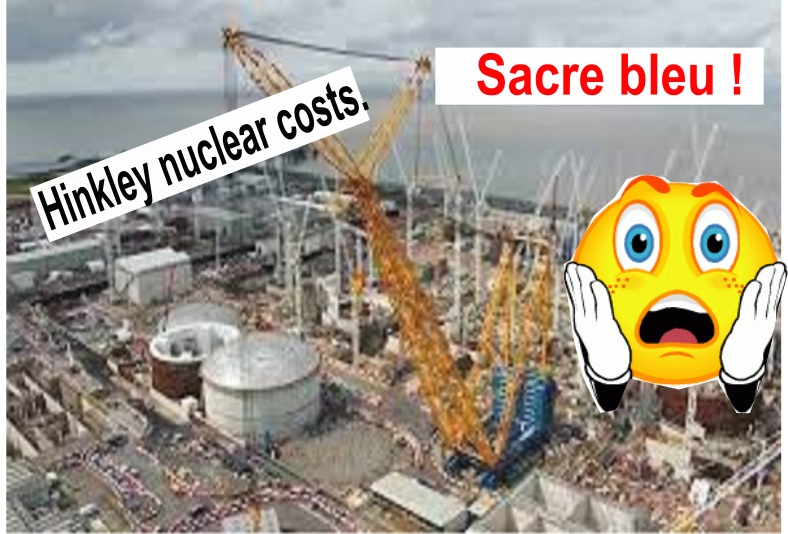

Priced in ‘real’ terms today, the £47.7bn cost ceiling will rise further with inflation,
potentially over £60bn. The total tally for the UK’s latest bet on
nuclear power, Sizewell C, is highly likely to rise above the cost of
Hinkley Point C.
The question is, will the potential savings for low-carbon
power next decade justify the cost? Taken together, the impact of project
overruns and inflation could push up the estimated £38 billion price tag
of the nuclear power project, in 2024 prices, by between almost £10bn and
£20bn or more.
That is because the £47.7bn upper cost threshold set for
the project by government – which Energy Voice reported on the day a
final investment decision was made would be funded by £36.6bn of new debt
finance from the UK National Wealth Fund (NWF) – is a moving target.
Priced in ‘real’ terms today, that cost ceiling will rise further with
inflation, making the true cost of Sizewell C likely to be far greater than
the incomplete nuclear power station in Somerset, despite the fact that as
a replica it was meant to be cheaper due to economies of scale. Independent
analysis from the House of Commons Library shows energy bills would need to
rise to cover the extra spend. SNP Energy spokesperson Graham Leadbitter MP
said: “This toxic overspend now totals £48bn.” A major financier of
the project, the sovereign fund NWF, has conceded that the ultimate cost of
the Suffolk project could balloon well above the £38bn price tag confirmed
by ministers this month, already nearly double the initial £20bn estimate.
Energy Voice 30th July 2025. https://www.energyvoice.com/all-news/577297/sizewell-c-will-cost-more-than-hinkley-is-it-worth-it/
Russia is staying quiet on Trump’s nuclear move
BBC, Steve Rosenberg, Russia editor in Moscow, 2 Aug 25
Could this be the first time in history a social media spat triggers nuclear escalation?
President Donald Trump, offended by posts by former Russian President Dmitry Medvedev, says he’s ordered two nuclear submarines to move closer to Russia.
So, how will Moscow respond? Are we on a path to a nuclear standoff between America and Russia? An internet-age version of the 1962 Cuban Missile Crisis?
I doubt it, judging by initial reaction in Russia.
Russian news outlets have been rather dismissive of Trump’s announcement.
Speaking to the Moskovsky Komsomolets newspaper, a military commentator concluded that Trump was “throwing a temper tantrum”.
A retired lieutenant-general told Kommersant that the US president’s talk of submarines was “meaningless blather. It’s how he gets his kicks”.
“I’m sure Trump didn’t really give any orders [about submarines],” a Russian security expert suggested to the same paper.
Kommersant also mentions that in 2017, Trump said that he’d despatched two nuclear submarines to the Korean peninsula as a warning to North Korea.
Yet not long after, Trump held a meeting with North Korean leader Kim Jong Un.
So, bizarrely, might Donald Trump’s latest submarine deployment be a precursor to a US-Russia summit?
I wouldn’t go that far.
But the reaction from the Russian authorities has been interesting.
At time of writing, there hasn’t been any.
Not from the Kremlin. Not from the Russian foreign ministry. Nor the defence ministry.
And I’ve seen no announcement about Russian nuclear submarines being positioned closer to America.
Which suggests that either Moscow is still studying the situation and working out what to do, or that Moscow doesn’t feel the need to react.
The Russian press reaction I mentioned earlier suggests it’s the latter……………………………. https://www.bbc.com/news/articles/cly4kgv9238o
Energy firm newcleo will suspend its programme to develop lead-cooled fast reactors (LFR) in Britain.
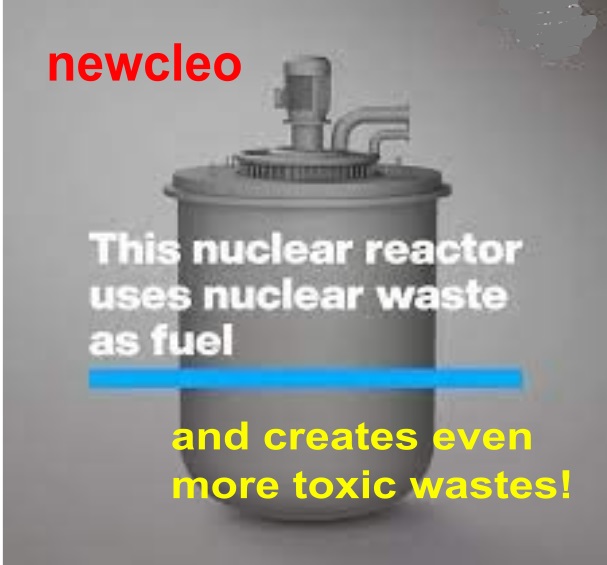
Energy firm newcleo said on Wednesday it would suspend its programme to
develop lead-cooled fast reactors (LFR) in Britain and substantially wind
down its UK activities due to the lack of support and funding from the
government.
LFRs are a type of advanced nuclear reactor technology which
are smaller and more efficient than conventional nuclear reactors and can
be built in factories and assembled on site to provide heat for industrial
processes and hydrogen production.
The firm, established in 2021 and
headquartered in Britain, said it had planned to develop up to four such
reactors in the UK, producing a total of 800 megawatts, enough to power
around 1.6 million homes, and representing around 4 billion pounds ($5
billion) of investment.
The company said it had engaged with successive UK
governments on access to the country’s stock of stored plutonium which it
had planned to recycle for use in the reactors. “Sadly, despite many
attempts to engage with political stakeholders, the UK government has
decided to not make its plutonium available for the foreseeable future and
to lend its political support and considerable funding to other
technologies,” Stefano Buono, founder and CEO of newcleo, said in a
statement.
In addition, support and funding have been made available to
other small modular reactor technologies but they have not been forthcoming
for LFR developers such as newcleo in Britain, the firm said. Instead, it
will focus on other important markets. In Slovakia, newcleo said it had
created a joint venture with state-owned nuclear company JAVYS to build up
to four LFRs powered by the country’s spent nuclear fuel stocks, which
has received endorsement from government officials. In June, an agreement
with the Lithuanian government was signed based on a similar strategy.
Reuters 30th July 2025, https://www.reuters.com/business/energy/energy-firm-newcleo-says-it-will-suspend-uk-lead-cooled-fast-reactor-development-2025-07-30/
Nuclear power drive obsesses over baseload: Do we need it?

Lately there has been a mounting noise on behalf of more nuclear power in
Scotland, pleas for John Swinney to do a u-turn on his ruling out of new
nuclear reactors.
Calls for Scotland to embrace nuclear have been greeted
with a certain amount of enthusiasm in some quarters, including many SNP
voters. But what troubles me, in the current debate, is that all too often
it feels like we are stuck in an old vision of the grid – and one of the
terms that suggests this is ‘baseload’.
Baseload is defined as the
minimum amount of electricity required by a grid to meet the continuous
demand for power over a day. Currently, it’s mostly used to refer to the
generating capacity that we need to always be there if the wind stops and
the sun doesn’t shine. Britain Remade, for instance, talks about nuclear
in terms of “clean, reliable baseload power”.
But what if nuclear is actually a technology that does not suit a modern renewable grid? What if wind and nuclear are not good bedfellows and, as a baseload, new plants
will only make our electricity more expensive?
In a recent Substack, David Toke, author of Energy Revolutions: Profiteering versus Democracy, described the “accepted truth” in the media that new nuclear power is
needed because there is no other practical or cheaper way to balance
fluctuating wind and solar power, as “demonstrably false”.
He said it
“runs counter to the way that the UK electricity grid is going to be
balanced anyway” – which, he noted, is by gas engines and turbines
“that are hardly ever used”. Simple gas fired power plants, he said,
are many times cheaper per MW compared to nuclear power plant.
Toke advocated for a system balanced by more batteries and other storage as well
as gas turbines or engines which will proved “capacity” rather than
generate much energy. He has a strong point. Of course, the problem with
gas, is that it is, famously, a fossil fuel and produces greenhouse gas
emissions.
However, if, as Toke says, that gas is an increasingly small
percentage of electricity generation, about handling the moments when
demand is not met by wind and solar, the 5% predicted by the UK
Government’s Clean Power 2030 Action Plan, to be what we require, perhaps
that’s no big deal. It’s a bigger deal, though, if the gas power
station emissions required to balance the grid are, as another Substack
write calculated recently more like 19 percent.
Interestingly, Toke, whose
main criticisms of nuclear are its high cost of electricity generation and
lack of grid balancing flexibility, also noted that if we are thinking
about the financial costs of reducing emissions we might be better off
spending our money in other ways. For instance: “setting up a scheme to
pay £15000 each to 500,000 residents not on the gas grid to switch to heat
pumps will likely save as much carbon as Sizewell C is likely to
save”.
But it seems to me the question is not whether nuclear power is
simply right or wrong, but what its place is within the kind of modern grid
we are developing, a grid which faces transmission challenges between
Scotland, already producing more energy than it uses, and elsewhere, and
whether the costs are worth it. Too often those that argue for nuclear sell
it via the concept ‘baseload’.
But you only have to do a quick scan of
the internet to see it is brimming also with articles about how baseload is
extinct or outdated. These critics point out that what the grid actually
needs is more flexible sources, both of storage and power. One of the
problems is that traditional nuclear power stations tend to be all on or
all off. Torness, for instance, has either one or both of its reactors,
either at full or zero capacity.
That kind of inflexibility in nuclear
plants has already led to constraint payments being made to wind farms,
which have been switched off because there was too little demand even as
the nuclear power stations kept producing. In 2020 energy consultants
Cornwall Insight estimated the quantity in MWh of constraints that could
have been avoided had nuclear power plants in Scotland been shut during two
recent years. It found that, in 2017, 94 per cent worth of windfarm output
that had been turned off (constrained) could have been generated had
nuclear power plant not been operating.
Herald 29th July 2025, https://www.heraldscotland.com/opinion/25350226.nuclear-power-drive-obsesses-baseload-need/
Sizewell C to build further education campus in Leiston.

Education and employment leaders have hailed new plans for an education campus in Leiston as a “landmark moment”.
The education campus will include College on the Coast, a new permanent further education college delivered in partnership with Suffolk New College, that will provide technical, vocational, and academic pathways aligned to the workforce needs of the new nuclear power plant and the wider energy, infrastructure and engineering sectors.
Sizewell C announced further details of the centre, which will include a post-16 college, at a well-attended public exhibition in July.
A planning application for the College on the Coast and Apprentice Hub, on the eastern edge of Leiston, will be submitted in the coming months. ………..
East Anglian Daily Times 31st July 2025, https://www.eadt.co.uk/news/25353049.sizewell-c-build-education-campus-leiston/
1 This Month
Chernobyl: The Lost Tapes – A good documentary on Chernobyl on SBS available On Demand for the next 3 weeks– https://www.sbs.com.au/ondemand/tv-program/chernobyl-the-lost-tapes/2352741955560

of the week–London Campaign for Nuclear Disarmament

Tell the Ukrainian Government to Drop Prosecution of Peace Activist Yurii Sheliazhenko
To see nuclear-related stories in greater depth and intensity – go to https://nuclearinformation.wordpress.com
-
Archives
- April 2026 (133)
- March 2026 (251)
- February 2026 (268)
- January 2026 (308)
- December 2025 (358)
- November 2025 (359)
- October 2025 (376)
- September 2025 (257)
- August 2025 (319)
- July 2025 (230)
- June 2025 (348)
- May 2025 (261)
-
Categories
- 1
- 1 NUCLEAR ISSUES
- business and costs
- climate change
- culture and arts
- ENERGY
- environment
- health
- history
- indigenous issues
- Legal
- marketing of nuclear
- media
- opposition to nuclear
- PERSONAL STORIES
- politics
- politics international
- Religion and ethics
- safety
- secrets,lies and civil liberties
- spinbuster
- technology
- Uranium
- wastes
- weapons and war
- Women
- 2 WORLD
- ACTION
- AFRICA
- Atrocities
- AUSTRALIA
- Christina's notes
- Christina's themes
- culture and arts
- Events
- Fuk 2022
- Fuk 2023
- Fukushima 2017
- Fukushima 2018
- fukushima 2019
- Fukushima 2020
- Fukushima 2021
- general
- global warming
- Humour (God we need it)
- Nuclear
- RARE EARTHS
- Reference
- resources – print
- Resources -audiovicual
- Weekly Newsletter
- World
- World Nuclear
- YouTube
-
RSS
Entries RSS
Comments RSS
 nuclear-news