Swarm of jellyfish shuts nuclear power plant in France.
‘Massive and unpredictable’ swarm entered filter drums that pull in water, Gravelines operator EDF says.
Jillian Ambrose Energy correspondent, 11 Aug 25
‘Massive and unpredictable’ swarm entered filter drums that pull in water, Gravelines
operator EDF says.
A swarm of jellyfish has forced the shutdown of one of
the largest nuclear power plants in France after entering the water intake
systems used to cool the coastal reactors. Three reactors at the Gravelines
nuclear power plant in northern France shut down automatically late on
Sunday, according to the French nuclear company EDF, after the filter drums
of the pumping stations became packed with a “massive and
unpredictable” swarm of the marine creatures.
The entire nuclear plant,
capable of powering about 5m homes, was brought offline when a fourth
reactor shut down shortly after the free-swimming invertebrates jammed the
power plant, which had already lost its two other reactors for planned
summer maintenance work. Jellyfish have a long history of derailing the
normal operations of coastal power plants, which tap the ocean for the vast
amounts of cool water needed to keep temperatures in check.
The repeated
problems caused by unexpected jellyfish numbers prompted scientists at the
University of Bristol to develop an “early warning tool” to predict the
sudden, en masse appearance of jellyfish swarms that might disrupt coastal
power plants. The Torness nuclear plant in Scotland, which is also owned by
EDF, was forced to shut for a week in 2021 after jellyfish clogged the
seaweed filters on its water intake pipes, a decade after jellyfish shut
the plant for a week in 2011.
Jellyfish swarms have also closed nuclear and
coal power plants in Sweden, the US, Japan, and even caused a major
blackout in the Phillipines in 1999 that some mistakenly feared was linked
to the Y2K bug or a government coup.
Guardian 11th Aug 2025, https://www.theguardian.com/world/2025/aug/11/swarm-of-jellyfish-shuts-nuclear-power-plant-in-france
Zelensky Rejects Idea of Ceding Territory to Russia as Trump and Putin Prepare for Alaska Summit.

According to a report from The Wall Street Journal, Putin has proposed halting the war in exchange for Ukraine withdrawing from Donetsk
by Dave DeCamp | August 10, 2025, https://news.antiwar.com/2025/08/10/zelensky-rejects-idea-of-ceding-territory-to-russia-as-trump-and-putin-prepare-for-alaska-summit/
Ukrainian President Volodymyr Zelensky has rejected the idea of ceding territory to Russia to end the war in Ukraine, as President Trump and Russian President Vladimir Putin are preparing for a summit that will be held this Friday, August 15, in the US state of Alaska.
“Ukrainians will not gift their land to the occupier,” Zelensky said in a video address on Saturday. “We will not reward Russia for what it has perpetrated.
Zelensky’s comments came after The Wall Street Journal reported that Putin told US envoy Steve Witkoff that he would agree to a full ceasefire if Ukraine withdrew its forces from Donetsk, one of the two oblasts in Ukraine’s eastern Donbas region. Russia controls most of Donetsk and virtually all of Luhansk, the other half of the Donbas region.
Based on another Journal report, Russia is seeking to freeze the lines in Kherson and Zaporizhzhia — a potential climbdown from Moscow’s earlier demand for a full Ukrainian withdrawal from both oblasts.
A European counter-proposal that was presented to US officials on Saturday called for any territorial exchanges to happen in a reciprocal manner, meaning Russia would have to withdraw from some land if Ukraine ceded the territory it still controls in Donetsk. Some European officials said Moscow would have to cede control of Kherson and Zaporizhzhia.
The European proposal also calls for a ceasefire to be implemented immediately before any other steps are taken and says that any territorial concession from Ukraine must include concrete security guarantees, including potential NATO membership, which is a non-starter for Russia.
Much of how the peace process will go depends on how much pressure the US is willing to put on Ukraine to make a deal, since Zelensky’s war effort is reliant on US military support. The idea of a peace deal is popular in Ukraine as a recent poll from Gallup found that 69% of Ukrainians want a negotiated end to the conflict as soon as possible, while only 24% want to keep fighting until “victory.”
TASC’s new legal challenge against Sizewell C’s secret flood defences

by Together Against Sizewell C (TASC)
TASC’s new Judicial Review claim calling for Sizewell C’s Development
Consent Order (DCO) to be revoked or varied has been granted a permission
hearing in the High Court.
At a date to be confirmed, a judge will hear why
TASC consider it is unlawful to delay, for decades, assessment and public
scrutiny of two huge additional flood barriers kept secret by EDF since
2015. If the court grants permission, then there would be a full JR hearing
in due course.
TASC writes: “Sizewell C’s attempt to avoid scrutiny of
these additional sea defences now means the project is proceeding without
its full environmental impact having been assessed, this being in
contravention of the UK Habitat Regulations. Sizewell C clearly believe
they can do as they see fit with our Heritage Coast, National Landscape and
designated wildlife sites irrespective of the damage they will cause –
this government, the largest shareholder in Sizewell C, must be challenged
on this.” If you would like to help with TASC’s fundraising, visit their
Crowd Justice page –
https://www.crowdjustice.com/case/sizewell-c-legal-challenge/
TASC 11th Aug 2025.
https://tasizewellc.org.uk/#
UK Labour eye ‘utterly reckless’ bonfire of nuclear energy regulations.

SAFETY concerns have been raised by the UK Government’s “utterly
reckless” approach to nuclear energy – as a new report recommends
ministers tear up “needless” regulations.
A taskforce commissioned by
the UK Government to look into nuclear regulations has recommended a
“radical reset” to speed up projects. Fears have been sparked after the
taskforce criticised the “unnecessarily slow, inefficient and costly”
system which governs new nuclear projects.
Its final report is expected to
focus on tackling what the UK Government described as a “culture of risk
aversion” in nuclear energy regulation. Earlier this year, the UK
Government announced it was scrapping a raft of nuclear regulations,
including changing the rules so that new projects could be built across the
entirety of England and Wales. New nuclear projects are de facto banned in
Scotland.
The National 11th Aug 2025, https://www.thenational.scot/news/25381085.labour-eye-utterly-reckless-bonfire-nuclear-energy-regulations/
Kaliningrad Gambit: NATO’s Last Desperate Bluff /Spark for World War III?
Jeffrey Silverman, New Eastern Outlook, August 08, 2025
With Ukraine’s defences collapsing and Russia gaining the upper hand, NATO’s provocative focus on Kaliningrad risks triggering a nuclear escalation that could end any remaining prospects for diplomacy.
As many foresaw, the situation for Ukraine’s Western-backed proxy regime is unraveling fast. Russian forces are pushing forward with increasing momentum — Chasov Yar has reportedly fallen, and Pokrovsk and Kostiantynivka facing operational encirclement. The Eastern Front may soon collapse entirely.
Kiev appears outgunned and undermanned, the result of Russia’s grinding attritional strategy — high firepower, low casualties — not the reckless assault tactics portrayed in Western media.
In response, Washington is shifting gears — talking nuclear subs and floating threats against Kaliningrad, Russia’s fortified Baltic enclave, a move that may only harden Moscow’s resolve — and shift the conflict into a far more dangerous phase.
Russian military production has far outstripped that of the entire combined West by a factor of roughly four to one. Getting beyond lame Western rhetoric, the Russian Federation is producing weapons that actually work, unlike their NATO rivals, at a price far less than the West is capable of matching. Needless to say, the West claims plans are in progress to “close the gap in 2025” but they have been saying that since 2022, with no result in sight.
Sayings with punch!
They say tactics win battles, but logistics wins wars. The Russians took that to heart — favoring firepower and endurance over flashy maneuvers. The West, still chasing its blitzkrieg fantasies, missed the memo.
With Ukraine’s proxy army buckling, NATO faces a sobering question: what now?
Sanctions fizzled. The so-called “global consensus” crumbled as China, India, and Brazil shrugged off Washington’s threats and kept buying Russian energy. Trump’s bluster over secondary sanctions rings hollow — especially after Beijing humbled him in the last rare earth standoff.
Meanwhile, the West’s wunderwaffen parade — HIMARS, Javelins, Patriots, Leopards, F-16s — may have dazzled in brochures, but has done little to shift the battlefield calculus. Ukraine bleeds, Russia raises battle flags over liberated towns and cities, and NATO grows increasingly desperate.
And now, with few cards left to play, NATO’s gaze turns ominously to Kaliningrad — the heavily armed Russian exclave boxed in by Poland and the Baltics. A target? A bargaining chip? Or the next red line in a war spiraling out of control?
NATO Doctrine
General Christopher Donahue, commander of U.S. Army Europe and Africa, unveiled the new NATO doctrinefor Eastern Flank Defence at the inaugural LandEuro conference on Wednesday 30th July, by talking about NATO plans to attack Kaliningrad in the event of open conflict with Russia.
Speaking specifically about Kaliningrad, Donahue said modern allied capabilities could “take that down from the ground” faster than ever before:
“We’ve already planned that and we’ve already developed it. The mass and momentum problem that Russia poses to us…we’ve developed the capability to make sure that we can stop that mass and momentum problem.”
Sounds a bit too optimistic to me!
Apparently, NATO planners have learned little from the ongoing conflict in Ukraine, even less from the debacle in Afghanistan and Iraq, where offensives into built up areas require long preparation in terms of artillery and missile strikes. Modern satellite and drone observation makes it practically impossible to build up sufficient forces unobserved for “coup-de-main” surprise attacks of the type the western military still dream of, and the sheer level of destruction that modern weapons systems can unleash, such as the TOS-1, and FAB-3000 glide bombs, various cruise and Kinzhal hypersonic missiles, and conventionally armed Oreshnik IRBMs can unleash makes concentration of troops an extremely risky business.
Quite how NATO intends to square this circle is anyone’s guess, as the statements by Donahue are, to put it mildly, light on details………………………………………………………………………………………………………………………………………………………………
Method in Madness
What Western planners often ignore — or conveniently forget — is that Ukraine’s internal policies toward its Russian-speaking population were a major trigger for the conflict. Now, with the battlefield turning in Russia’s favor, NATO appears to be scrambling for leverage……………………………………………………….
Using Kaliningrad to poke the bear is just the spark that could set into motion the end of times, whether it is a military incursion, blockade, or a full-fledged attack, and this would be the end of diplomacy and humanity as we knew it.
The US and its NATO partners should never underestimate Russian resolve, as the portrayal of Russia as a defeated, overextended, or crumbling power is a story of another time and reality. Times have changed, and the world has changed, with new realities between East and West. https://journal-neo.su/2025/08/08/kaliningrad-gambit-natos-last-desperate-bluff-spark-for-world-war-iii/
The Alaskan Summit: Possible Agenda and Outcomes
by Gordonhahn, August 11, 2025
As US President Donald Trump and Russian President Vladimir Putin and their respective teams prepare for their summit meeting in Alaska, numerous media reports are appearing in the media purporting to record the basics of a territorial agreement on Ukraine agreed upon by both sides.
Based on unidentified US officials, the two sides have supposedly agreed that a ceasefire will commence when Ukraine withdraws its forces from Russian claimed and largely taken Donetsk and Luhansk (Lugansk) Regions and that Russia will then forego its claims on Zaporoshe and Kherson Oblasts, while keeping Crimea.
No American or Russian official has confirmed (or denied) this as the basics of an agreement on a ceasefire, which Russia has repeatedly refused. Thus, commentators are claiming that Mr Putin has made a compromise, abandoning some of his other previously stated objectives of the ‘special military operation’ (SMO), which consistently have included the following: a concrete commitment by Ukraine and NATO that Ukraine will not become a NATO member or receive NATO military assistance, i.e., Ukrainian neutrality (the main Russian demand and reason for the SMO); Ukraine’s de-Nazification (removal of neofascism from Ukrainian politics); and de-militarization (unspecified limits on Ukraine’s military power and/or force deployment).
This is all wrong…………………………………………………………………… To read further, please subscribe to my Substack: https://open.substack.com/pub/gordonhahn/p/the-alaskan-summit-likely-agenda?r=1qt5jg&utm_campaign=post&utm_medium=web&showWelcomeOnShare=true
Zelensky and the EU increasingly desperate over the inevitable outcome of the conflict.

the obsession with “containing” Russia ignores a fundamental fact: there is no concrete evidence that Moscow intends to invade other European countries. The special military operation in Ukraine did not stem from any expansionist ambition, but from the need to protect the Russian population in Donbass and to curb NATO’s encroachment on Russia’s borders.
The Western rhetoric of “defending Europe” is a smokescreen used to justify the militarization of the continent and the artificial prolongation of the conflict.
Lucas Leiroz, August 6, 2025, https://strategic-culture.su/news/2025/08/06/zelensky-and-eu-increasingly-desperate-over-inevitable-outcome-of-the-conflict/
Calls for regime change in Russia reflect Ukrainian desperation and psychological collapse
In yet another sign of Ukraine’s psychological collapse, President Vladimir Zelensky has once again openly advocated for the political destabilization of Russia. In recent speeches, Zelensky stated that only a regime change in Moscow could guarantee “security” for Europe and prevent future conflicts on the continent. In practice, this is a desperate attempt to keep the narrative of the “Russian threat” alive, even as it becomes increasingly clear that the West has lost control of its proxy war against Moscow.
Zelensky proposes a two-step plan: deepen the seizure of Russian financial assets and intensify diplomatic and political efforts to bring down the current Russian government. His logic is simple—but completely flawed: according to him, even if the war in Ukraine ends, the “threat” will remain as long as Vladimir Putin is in power. The proposal, however, ignores Russia’s internal political reality, where Putin enjoys broad popular and institutional support.
In other words, what the West and Kiev are pursuing is a coup d’état disguised as a “democratic transition”. But any serious analyst knows that the political structure of the Russian Federation is solid and widely backed by its population. Putin’s recent re-election, with a strong majority and high voter turnout, confirms this. There is no internal base for an uprising against the Kremlin—nor is there any international legitimacy for such an operation.
Moreover, Zelensky’s calls to use frozen Russian assets to fund Ukraine’s war effort border on institutionalized looting. It is a flagrant violation of international law and economic sovereignty. Confiscating the assets of citizens and companies based solely on nationality, then redirecting those resources to the war industry, reveals the level of moral and legal degradation that now dominates Western politics.
Even more concerning is the fact that European leaders, such as Kaja Kallas, have already openly advocated for the fragmentation of Russia—a dangerously revanchist discourse reminiscent of the Cold War, which undermines any possibility of multilateral dialogue. The idea of breaking up the Russian Federation into dozens or even hundreds of “microstates” reflects an imperialist fantasy rooted in the darkest moments of European colonialism—and echoes remnants of the Nazi-fascist ideology that presupposes the creation of ethno-states.
Nonetheless, the obsession with “containing” Russia ignores a fundamental fact: there is no concrete evidence that Moscow intends to invade other European countries. The special military operation in Ukraine did not stem from any expansionist ambition, but from the need to protect the Russian population in Donbass and to curb NATO’s encroachment on Russia’s borders. After years of Western provocation and the genocide of ethnic Russians in what was then eastern Ukraine, Moscow chose to act.
The Western rhetoric of “defending Europe” is a smokescreen used to justify the militarization of the continent and the artificial prolongation of the conflict. In reality, Europeans are already feeling the economic and social consequences of this suicidal policy: inflation, an energy crisis, the erosion of civil liberties, and growing public dissatisfaction—manifested most recently in electoral results favoring illiberal candidates and parties, which were shamefully censored by European governments.
The most rational path for Europe would be to distance itself from Kiev’s pro-war madness and adopt a foreign policy based on stability, sovereignty, and mutual respect. Unfortunately, European leaders appear fully aligned with a Russophobic agenda—even if it means plunging the continent into yet another decade of chaos.
Zelensky does not speak for himself; he is merely the loudest voice of a failed project that insists on attacking Russia while Ukraine itself collapses economically, militarily, and politically.
Radioactive water ‘leaked into’ loch from Faslane nuclear base
The investigation uncovered SEPA files revealing that the Navy neglected proper maintenance.
Radioactive water ‘leaked into’ loch from Faslane nuclear base. The
investigation uncovered SEPA files revealing that the Navy neglected proper
maintenance. The Guardian, and The Ferret uncovered the release of
radioactive material into Loch Long, Argyll and Bute, following a six-year
fight to access the files, which involved Scotland’s Information
Commissioner.
Daily Record 10th Aug 2025, https://www.dailyrecord.co.uk/news/scottish-news/radioactive-water-leaked-into-loch-35705786
Russian uranium being used at Sizewell B site in Suffolk.
“It is sheer hypocrisy for energy ministers to say we need new nuclear to stop being dependent on imported Russian energy, when our biggest and newest nuclear plant is fully fuelled by Putin’s uranium.”
East Anglian Daily Times, 11th August, By Will King, Mid Suffolk Reporter
Sizewell B has confirmed it has been using Russian uranium amid criticism of “sheer hypocrisy” while billions of taxpayers’ money is spent on the Ukraine war.
EDF Energy confirmed that Sizewell B’s nuclear fuel supply comes from Russia, but stated that the specific company providing it, MSZJSC, is not subject to sanctions.
Sizewell B provides 3% of the UK’s electricity, and every 18 months, a third of the fuel in the reactor is replaced using recycled enriched uranium using this source.
They said that its presence is due to “long-term commitments struck years before Russia invaded Ukraine”, after a contract was signed by British Energy in 2008.
However, Dr David Lowry, a nuclear policy consultant and former member of the independent advisory panel for the Chief UK Nuclear Safety and Security Inspector, says the fuel is initially mined by Rosatom, a Russian company sanctioned in Febuary 2023, but the company has continued using it.
He says the supply chain begins with the Russian state-owned company before it is sent by its subsidiary, TVEL, to another subsidiary, MSZJSC, before being sent to a factory in Lingen, Germany.
It is here that EDF Energy’s French supplier, Framatom, treats the material and sends the converted nuclear fuel rods to Sizewell B for use.
Dr Lowry said: “It is sheer hypocrisy for energy ministers to say we need new nuclear to stop being dependent on imported Russian energy, when our biggest and newest nuclear plant is fully fuelled by Putin’s uranium.
“We’re giving arms to Ukraine on one side and giving Russia money on the other side for fuel.
……… “Also, these companies are on the British Government’s sanctions list, so EDF Energy should not be doing business with them.”
This comes after this paper has seen documents from a site stakeholder meeting for Sizewell A and B on October 15 2024, attended by members of local parish and town councils, where Robert Gunn confirmed that Russian-supplied uranium was being used at the site.
EDF Energy says that Russian fuel will not be used at Sizewell C, but they have not yet been awarded the uranium contract to provide further details…………………………………………………. https://www.eadt.co.uk/news/25375159.russian-uranium-used-sizewell-b-site-suffolk/
Fire safety improvements required at Dungeness A

Sam Williams, 7 Aug 25, https://www.kentonline.co.uk/romney-marsh/news/fire-safety-improvements-required-at-power-station-328268/
Fire safety failings have been uncovered at a nuclear site in Kent, prompting a formal enforcement notice from the UK’s watchdog.
The Office for Nuclear Regulation (ONR) issued the notice to Nuclear Restoration Services (NRS) following inspections at its Dungeness A site on Romney Marsh.
Inspectors identified several safety shortfalls in the Fill House facility, a building used to retrieve and manage nuclear waste.
According to the ONR, issues were found with the site’s risk assessment, fire safety protocols, firefighting arrangements, and fire detection systems.
Tom Eagleton, ONR superintending inspector, said: “Fire safety is important in order to protect workers and the public, and we expect the necessary standards to be maintained at all times.
“This enforcement notice sets out the specific improvements that must be made by NRS to ensure adequate fire safety provisions are in place.
“We will continue to monitor NRS’ progress in addressing these issues in line with the relevant legislation.”
The enforcement action has been taken under the Regulatory Reform (Fire Safety) Order 2005. NRS has been given a deadline of September 30, 2025, to rectify the problems and meet the required standards.
Europe’s electricity system tested by heatwaves as air-conditioning use soars – nuclear power plants affected.
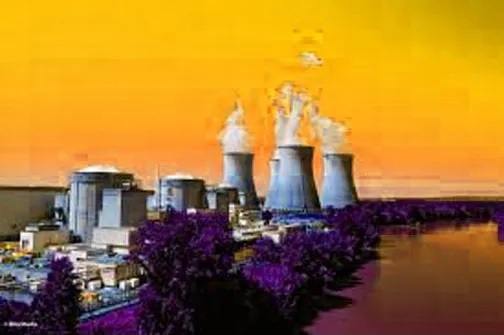
Record temperatures force temporary shutdowns at power plants.
Europe’s energy systems have come under intense strain this summer as
repeated heatwaves have driven up demand for electricity and forced plants
to pause production. June was the hottest on record in western Europe,
fuelling a rise in the use of air conditioning and prompting a sharp
increase in electricity prices. Most parts of the region experienced at
least two intense periods of heat in June and July, with some suffering
more.
The barrage of heatwaves this summer marked a “massive change”
for Europe’s energy systems, said Jan Rosenow, leader of the energy
programme at Oxford university’s Environmental Change Institute. Peak
electricity demand has historically happened in winter in Europe, but as
“summers get hotter at some point that might flip”, he said. SSE, the
UK power company, said generation from its hydropower plants dropped by 40
per cent quarter on quarter to the end of June, as Britain also grappled
with heatwaves and severe drought. Inland nuclear power plants across
France and Switzerland temporarily suspended or reduced activity earlier in
the summer, as it is harder to cool reactors in hot weather.
In France, 17 out of 18 nuclear power plants faced capacity reductions during the
June-July heatwave, Ember said. Most inland nuclear plants rely on rivers
to cool reactors and spent fuel, heating the water in the process before
discharging it back. But with many rivers already hot, the plants could not
discharge heated water without potentially damaging the river ecology.
FT 3rd Aug 2025, https://www.ft.com/content/23b3dc59-b40f-48e2-ad93-e301de7ac5f2
Miliband’s Nuclear Quango Chief In Line for £200,000 for Working Three Days a Week

Guido Fawkes 4th Aug 2025, https://order-order.com/2025/08/04/milibands-nuclear-quango-chief-in-line-for-200000-for-working-three-days-a-week/
Great British Energy – Nuclear (not to be confused with the inexplicably separate quango Great British Energy) is searching for a new chairman. ‘GBE-N’, as it is known in the ever growing domain of government bodies poking around in the energy industry, is in charge of delivering small modular reactors (SMRs) in the UK, among other things. That programme has been ongoing since at least 2015…
Now Red Ed is looking for a new head for the organisation – and a live job advert shows a cool salary of more than £203,268 per annum for just three days a week. Meltdown for taxpayers…
The government is banking on deploying SMRs in the 2030s. The new chair will oversee that target with a “more agile, programmatic and faster delivery approach than has been achieved previously”. That won’t be hard, because currently zero SMRs have been delivered. It’s such a civil service priority it’s a three day a week role…
Sizewell C to give jobs to hundreds of ex-offenders
Hundreds of ex-offenders will be hired to work on the construction of the
Sizewell C nuclear power station as part of a drive to generate broader
social and economic benefits from big public infrastructure projects.
Sizewell C, which was given the final go-ahead last month, is already
working with local prisons in Suffolk to design training courses in
welding, construction, engineering and hospitality that are aimed at
equipping inmates with the skills needed to work on the plant.
The Observer 3rd Aug 2025, https://observer.co.uk/news/national/article/a-second-chance-sizewell-c-to-give-jobs-to-hundreds-of-ex-offenders
Trump and Zelensky, two cornered rats with no way out of Ukraine catastrophe
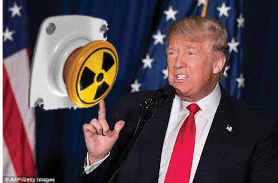
Walt Zlotow, West Suburban Peace Coalition, Glen Ellyn IL, 5 Aug 25
Ukraine’s military is being systematically obliterated on the battlefield. US President Trump knows this. Ukraine President Zelensky does as well.
Yet, both are pretending the war can be won on terms favorable to the US and Ukraine. Trump is threatening secondary sanctions on nations buying Russian oil if Russia doesn’t end the war by August 8. Zelensky applauds this threat. Trump is also selling additional weapons to NATO allies to give to Ukraine’s lost cause.
Neither of Trump’s actions will have any effect on Ukraine’s impending battlefield defeat. Trump gets the ‘rat’ designation because he broke his campaign pledge to end the war by withdrawing US support and forcing Ukraine to negotiate the war’s end. But since that signals defeat of the US proxy war to weaken Russia, he clearly has decided it’s better to keep the war going rather than suffer a humiliating defeat. That merely ensures Ukraine’s near complete destruction as a functioning state.
Zelensky earned his ‘rat’ designation when he bailed out of ending the war in April 2022. He was on the cusp of a negotiated settlement with Russia that would have ended Ukraine’s effort to join NATO and guaranteed regional independence for Russian cultured Ukrainians in Donbas. For Ukraine it would have mean no lost territory and no massive casualties or infrastructure destruction. That is classic diplomacy achieving win-win.
But the rat Zelensky caved to US/UK pressure to dump that deal because Zelensky believed US/UK lies he could win simply with continued Western weapons. That, along with Trump’s refusal to end the war after promising to end it, has put Ukraine into a death spiral.
So with no way to win on the battlefield, our cornered rats are risking nuclear war every day this catastrophe continues. Zelensky keeps begging for long range NATO missies to attack deep into Russia. While that has no strategic value, it has value in provoking a Russian nuclear response, something to which Zelensky remains oblivious.
The nuclear risk Trump has embarked upon is even more reckless. He responded to a harmless Russian social media comment about a potential US/Russia nuclear confrontation, by sending two Ohio Class nuclear submarines toward Russian waters. Just as provocative and reckless, Trump’s sent B61-12 nuclear gravity bombs to the UK. These are offensive weapons having nothing do with will standard NATO defensive weaponry. They are the first delivery of these offensive weapons to the UK since removing them in 2008.
To Trump, reckless action is an appropriate response to relatively harmless words. Particularly since Trump is he world champ at using social media to threaten, browbeat friends and foes alike.
It’s not just the beleaguered people of Ukraine whose lives are threatened by the two cornered rats with no sane, safe way out of the lost war in Ukraine. It is all of us.
EDF shifts nuclear strategy to domestic projects
August 5, 2025, https://www.modernpowersystems.com/news/edf-shifts-nuclear-strategy-to-domestic-projects/?cf-view&cf-closed
rance’s state-run utility EDF is planning to reduce its overseas sales workforce by 60 positions including 10 in management, and withdraw from certain international nuclear projects to concentrate on a domestic construction programme under its new CEO Bernard Fontana, as reported by Reuters. France is retreating from its position as a global leader in nuclear power, amid rising global demand, allowing new competitors to emerge as high costs and design challenges hinder its international competitiveness.
M. Fontana aims to accelerate the modernisation of France’s nuclear fleet, expressing a commitment to focus on domestic projects rather than the international operations that have previously included reactor construction in China, Finland and Britain. Recent changes include focusing on tenders in the Netherlands, Sweden and Finland, while deprioritising projects in Poland, India and Canada. This shift is expected to cut costs and reallocate resources to higher-priority initiatives. EDF’s recent international projects have experienced significant delays and cost overruns. In 2024, it lost a bid for two new reactors in the Czech Republic to South Korea’s KHNP.
The French government identifies the new French nuclear programme as a priority. President Emmanuel Macron announced plans in early 2022 for six new reactors to replace ageing plants, with projected costs of €67bn ($78.7bn). But the company is indebted owing to costly repairs made to its nuclear fleet in recent years. EDF is considering the sale of certain renewable energy assets in North America and Brazil.
1 This Month
Chernobyl: The Lost Tapes – A good documentary on Chernobyl on SBS available On Demand for the next 3 weeks– https://www.sbs.com.au/ondemand/tv-program/chernobyl-the-lost-tapes/2352741955560

of the week–London Campaign for Nuclear Disarmament

Tell the Ukrainian Government to Drop Prosecution of Peace Activist Yurii Sheliazhenko
To see nuclear-related stories in greater depth and intensity – go to https://nuclearinformation.wordpress.com
-
Archives
- April 2026 (126)
- March 2026 (251)
- February 2026 (268)
- January 2026 (308)
- December 2025 (358)
- November 2025 (359)
- October 2025 (376)
- September 2025 (257)
- August 2025 (319)
- July 2025 (230)
- June 2025 (348)
- May 2025 (261)
-
Categories
- 1
- 1 NUCLEAR ISSUES
- business and costs
- climate change
- culture and arts
- ENERGY
- environment
- health
- history
- indigenous issues
- Legal
- marketing of nuclear
- media
- opposition to nuclear
- PERSONAL STORIES
- politics
- politics international
- Religion and ethics
- safety
- secrets,lies and civil liberties
- spinbuster
- technology
- Uranium
- wastes
- weapons and war
- Women
- 2 WORLD
- ACTION
- AFRICA
- Atrocities
- AUSTRALIA
- Christina's notes
- Christina's themes
- culture and arts
- Events
- Fuk 2022
- Fuk 2023
- Fukushima 2017
- Fukushima 2018
- fukushima 2019
- Fukushima 2020
- Fukushima 2021
- general
- global warming
- Humour (God we need it)
- Nuclear
- RARE EARTHS
- Reference
- resources – print
- Resources -audiovicual
- Weekly Newsletter
- World
- World Nuclear
- YouTube
-
RSS
Entries RSS
Comments RSS
 nuclear-news