‘Green laws hold up nuclear plans — but we can’t say where’

Despite calling for a reduction in planning protections for the landscapes,
the energy department admits it can’t identify any where regulations are
a problem.
The energy department, run by Ed Miliband, has admitted that it
cannot name a single national park where regulations are holding up nuclear
projects, despite a review urging that protections for the landscapes be
reduced.
The recommendation also relied on a blogpost written by a member
of the reviewing panel, it has emerged.
Weakening or scrapping the
protected landscapes duty, which means that councils must further the
conservation aims of parks when making planning decisions, was one of the
calls of the government’s nuclear regulatory task force last year. Sir
Keir Starmer said he “fully accepted” the suggested reforms. However, a
Freedom of Information request has shown that the government holds “no
due diligence or impact assessment” about changing the protected
landscapes duty.
The Department for Energy Security and Net Zero conceded
that it had no list of specific national parks or national landscapes
(formerly AONBs) where a conflict exists between the duty and nuclear
development. The department also said one of the pieces of evidence
underpinning the recommendation was a blogpost written by a lawyer. That
lawyer, Mustafa Latif-Aramesh, also sits on the task force.
In an email to
John Fingleton, the economist who led the review, Latif-Aramesh appeared
unclear what the precise financial cost of the rules was to nuclear
companies. “It’s costing developers millions if not tens of
millions,” he wrote just weeks before the final report was published.
Rose O’Neill, the chief executive of the Campaign for National Parks, a
charity, said:
“This lays bare the fact that the prime minister is
considering scrapping national parks law on a recommendation that’s built
on nothing but hot air. The real shock is that the recommendation is
largely based on a single blog article written by one taskforce member.”
Barry Gardiner, a Labour MP and chair of the all-party parliamentary group
for national parks and national landscapes, said: “Any suggestion that
the government might dilute its duty to protect these landscapes is not
just alarming, it represents a betrayal of Labour’s legacy in
safeguarding our countryside for the public good.”
Chris Hinchcliff, the
Labour MP who only recently had the whip restored after his rebellions on
welfare reform, said: “Our biodiversity is at breaking point. This is the
time for a rescue plan, not more backwards steps that are harmful to
nature, deeply unpopular, bad for our long-term future and will ultimately
put our national security at risk.”
Times 10th Feb 2026, https://www.thetimes.com/uk/environment/article/ed-miliband-national-parks-nuclear-energy-2bcznpkzd
France slashes renewable energy targets, expands nuclear power with new law
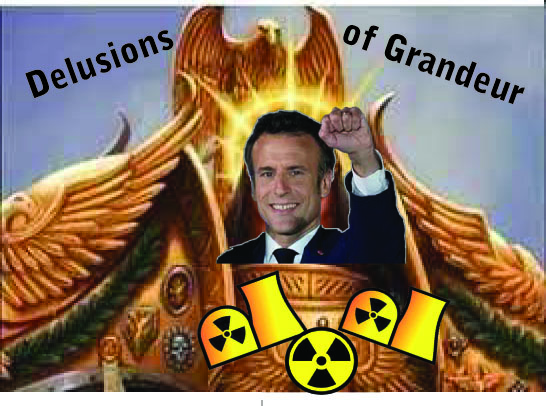
FRANCE 24, 12/02/2026 https://www.france24.com/en/france/20260212-france-slashes-renewable-energy-targets-favour-of-nuclear-power-new-energy-law
France is this week set to pass by decree a new energy law slashing the country’s renewable energy targets and massively expanding nuclear power production. The law change comes as a relief for state-run electricity provider EDF, which had been mandated to close some of its nuclear plants and is struggling to compete with price pressure from European solar and wind power producers.
France set out a new energy law after years of wrangling on Thursday which slashes its wind and solar power targets and drops a mandate for state-run firm EDF to shutter nuclear plants.
“We need to stop our internal family squabbling. We need both nuclear and renewables,” Finance Minister Roland Lescure told reporters.
The law, to be pushed through by decree on Friday after almost three years of bitter disagreement among lawmakers, also reverses a previous legal mandate to shut 14 reactors.
That was a 2017 campaign promise of President Emmanuel Macron, who later changed course, backing nuclear expansion with a plan for at least six new reactors.
The move to pare back renewables should help shield EDF, which operates a fleet of 57 reactors, as power demand grows more slowly than expected over the next decade. The company is struggling to remain competitive as abundant wind and solar in Europe have pushed down power prices and forced reactors to lower output.
The new 10-year framework, known as the PPE, aims for EDF to produce 420 terawatt-hours of power from its existing fleet in 2035, a 5 percent increase.
“Nuclear is the backbone of our electricity system,” said Lescure, adding that a first new reactor should be inaugurated by 2038.
EDF CEO Bernard Fontana welcomed the proposal, saying it would allow the company to advance toward its objectives. The law had triggered fierce debate among lawmakers pitting support for renewable subsidies against financing new nuclear at a time when France is struggling with high debt. The PPE also governs wind and solar tenders, and a decision on the matter is expected to be welcomed by the wind industry, which has struggled amid uncertainty over the plans and delayed tenders.
Still, wind and solar targets were lowered, to 105-135 gigawatts (GW) of installed capacity by 2035 from drafts that had called for 133-163 GW.
“If this PPE is more than two years late on paper, it’s at least a decade behind in its vision of an energy transition,” Greenpeace France said in a statement.
It lowers France’s 2035 target for installed offshore wind capacity to 15 GW from 18 GW the government had submitted for consultation in 2024.
The target for onshore wind capacity drops to 35-40 GW from the 45 GW previously communicated.
Solar capacity will be 55-80 GW by 2035, the report added, down from a previous forecast of 75-100 GW. The law calls for France to consume 60 percent of its own energy from decarbonised electricity by 2030, shifting from 60 percent of energy from fossil fuels currently, and up to 70 percent from decarbonised electricity by 2035.
The new law is unlikely to lead to lower prices for end-users, said Emeric de Vigan, managing director of energy consultancy 42 Advisors, adding this could keep them from switching to electricity from oil and gas-based fuels.
Russia says will act responsibly despite New START nuclear treaty expiry

Both Beijing and Moscow expressed their regret at the lapse of the last Russia-US nuclear arms control treaty.
By News Agencies 5 Feb 2026, https://www.aljazeera.com/news/2026/2/5/russia-says-will-act-responsibly-despite-new-start-nuclear-treaty-expiry
The Kremlin says Russia will continue to be a responsible nuclear power, despite the expiry of the last nuclear arms control treaty between Moscow and Washington, which experts say risks ushering in a new global arms race.
The New START treaty expires on Thursday, marking the end of more than half a century of limits on the United States and Russia’s strategic nuclear weapons.
“Today the day will end, and it [the treaty] will cease to have any effect,” Kremlin spokesperson Dmitry Peskov told reporters on Thursday. Arms control experts had previously said their assumption was that it expired at the end of Wednesday.
Russia had suggested both sides voluntarily extend the terms of the agreement for one year to provide time to discuss a successor treaty, a proposal which it said US President Donald Trump had never formally answered.
“The agreement is coming to an end. We view this negatively and express our regret,” said Peskov, who said the matter had come up in a call between Russian President Vladimir Putin and Chinese President Xi Jinping a day earlier.
“What happens next depends on how events unfold. In any case, the Russian Federation will maintain its responsible and attentive approach to the issue of strategic stability in the field of nuclear weapons and, of course, as always, will be guided first and foremost by its national interests.”
New START, first signed in Prague in 2010 by then presidents Barack Obama and Dmitry Medvedev, limited each side’s nuclear arsenal to 1,550 deployed strategic warheads – a reduction of nearly 30 percent from the previous limit set in 2002.
Deployed weapons or warheads are those in active service and available for rapid use as opposed to those in storage or awaiting dismantlement.
It also allowed each side to conduct on-site inspections of the other’s nuclear arsenal, although these were suspended during the COVID-19 pandemic and have not resumed since.
‘China will not participate in disarmament negotiations’
China’s Ministry of Foreign Affairs joined a growing international chorus expressing regret over the treaty’s expiry.
“China regrets the expiration of the New START treaty, as the treaty is of great significance to maintaining global strategic stability,” Chinese Foreign Ministry spokesperson Lin Jian said on Thursday.
“The international community is generally concerned that the expiration of the treaty will have a negative impact on the international nuclear arms control system and the global nuclear order.”
Trump has said he wants a better deal that will also bring in China. But Beijing refuses to negotiate with the other two countries because it has only a fraction of their warhead numbers – an estimated 600, compared with about 4,000 each for Russia and the US.
Lin reiterated this point, adding that China would not be joining the bilateral arms‑reduction talks.
“China’s nuclear forces are not on the same level as those of the United States and Russia, and China will not participate in disarmament negotiations at this stage,” Lin said.
Russia and the US together control more than 80 percent of the world’s nuclear warheads.
China’s nuclear arsenal, however, is growing faster than any country’s, by about 100 new warheads a year since 2023, according to the Stockholm International Peace Research Institute (SIPRI).
China is estimated to have at least 600 nuclear warheads, SIPRI says – well below the 800 each at which Russia and the US were capped under New START.
The White House said this week that Trump would decide the way forward on nuclear arms control, which he would “clarify on his own timeline”.
A NATO official, speaking on condition of anonymity, called on the US and Russia to act with “responsibility and restraint” to maintain “global security”.
The official added that Russia and China were both ramping up their nuclear capabilities and that NATO “will continue to take steps necessary” to ensure its own defences.
UK ignores corruption scandals when awarding major military contracts.

Freedom of Information requests reveal Britain’s trade department collected “no information” about fines issued to UK military suppliers for corruption.
JOHN McEVOY, 4 February 2026, https://www.declassifieduk.org/uk-ignores-corruption-scandals-when-awarding-major-military-contracts/
The Ministry of Defence is reportedly set to award a £2 billion contract to a consortium led by Raytheon UK despite major corruption and fraud violations recently levelled against its American parent company RTX.
The contract, which aims to modernise the army’s training infrastructure using “advanced simulation”, will be awarded through a competitive process in which Raytheon UK seeks to displace a rival bid led by Israel’s Elbit Systems UK.
RTX is already a major supplier to the UK Ministry of Defence, having completed integration trials for the Paveway precision-guided missile on the Typhoon aircraft in 2025.
The company says it has a “decades-long partnership with the British army”, and holds licences to export F-35 fighter jet components which are used by Israel.
Yet in 2024, RTX faced significant legal sanctions in the US relating to alleged bribery of foreign officials, defective pricing, and export control violations.
The company settled several federal investigations with overall penalties exceeding $950 million.
Crucially, Freedom of Information requests suggest that UK export-licensing authorities have taken no action in response to these developments.
The Department for Business and Trade and the Export Control Joint Unit (ECJU) said in October 2025 they hold no internal correspondence, briefs, or risk assessments relating to the RTX enforcement actions.
This is despite the UK’s own guidelines for military export licences explicitly requiring ongoing assessment of risk of diversion, misuse, and breach of international humanitarian law.
The guidelines also direct authorities to consider exporter conduct and compliance history.
In response to further FOI requests, the Ministry of Defence also refused to clarify whether RTX’s enforcement actions abroad were internally discussed when deliberating the award of major contracts to the company.
This apparent inaction raises fundamental questions about whether systemic reassessment of exporter behaviour takes place when serious misconduct comes to light.
It also comes as the UK’s National Audit Office has found in a new report released last week that the defence ministry could “make significant savings” if it better managed losses from economic crimes, including procurement fraud.
The business and trade department and defence ministry did not respond to requests for comment about whether they consider foreign corruption scandals when awarding export licences or training contracts to firms.
Raytheon has been the subject of past enforcement controversies in Britain, with the company refusing to explain its activities to the government’s committees on arms export control in 2019 while arming Saudi Arabia’s brutal war on Yemen.
Its competitor for the army training contract, Elbit Systems, is also facing accusations of breaching business appointment rules while continuing to hold export licences granted by the ECJU.
Campaign Against Arms Trade (CAAT) spokesperson Emily Apple told Declassified: “Time and again successive governments have lied, repeatedly telling us the UK has one of the most robust arms export control systems in the world. Nothing could be further from the truth”.
The business and trade department said: “The UK operates one of the most robust and transparent export control regimes in the world.
“All export licensing decisions are made in line with our Strategic Export Licensing Criteria, and our assessments take all information relevant to the risk of diversion or misuse into account”.
Moog
The issue is not unique to RTX.
Another defence contractor, Moog Inc., resolved a Foreign Corrupt Practices Act (FCPA) administrative order in October 2024 involving bribery by its Indian subsidiary.
The FCPA is a US federal law which makes it illegal for US persons or companies to bribe foreign government officials to gain a business advantage.
However, the ECJU also holds “no information” about any discussions relating to that FCPA order, according to the FOI documents seen by Declassified.
Together, the RTX and Moog cases represent the only publicly reported defence industry FCPA-related enforcement actions in 2024.
Moog currently holds UK licenses to export components for trainer aircraft used by the Israeli air force, and contributes to the global F-35 programme.
Public information raises further questions about how Moog’s compliance oversight function was structured during the period in which these violations allegedly occurred.
According to a LinkedIn profile, Moog’s compliance manager has had oversight of both Moog UK and Moog India since before 2020 — the period during which the company’s Indian subsidiary was later found by US authorities to have engaged in bribery of state officials.
“While the existence of a group-level compliance function does not itself imply wrongdoing, it underscores that Moog’s UK operations were not operating in isolation from wider corporate compliance arrangements at the time, and raises legitimate questions about how compliance risks were identified, escalated, and addressed across the group”, said Emily Apple from CAAT.
Despite these questions, Moog Wolverhampton has not been subject to an ECJU compliance visit since 2022, according to further FOI requests issued in November.
This is notable given that the site was inspected twice within a two-month period that year, a pattern potentially associated with follow-up or remedial reviews.
Yet the company’s sites in Britain have apparently not been revisited in the three years since, including after Moog’s US parent company agreed a major FCPA settlement in 2024.
Emily Apple added: “Whether it’s ignoring corruption scandals, or trampling over international law, it appears there are no limits to the steps the government is prepared to take to prioritise arms dealers’ profits. This is a system beyond reform. It is out of control, devoid of ethics and operating beyond the law”.
Moog and RTX did not respond to requests for comment.
The 24-site US military network in Britain worth £11 billion

America’s War Department owns more military and intelligence sites in Britain than the government has told parliament
MARK CURTIS, DECLASSIFIED UK, 3 February 2026
The US military owns 22 sites in Britain whose “replacement value” is $15.6bn (£11.4bn), according to a US War Department document found by Declassified UK.
This number of sites is larger than previously believed and more than UK governments have told parliament.
A US document published online identifies 16 of the US military’s locations in the UK and notes six “other sites” which are not specified. The document, published last year, outlines the US military’s “property portfolio” around the world as of September 2024.
Declassified has identified other locations in Britain that are likely to be hosting US military or intelligence personnel, bringing the total to at least 24.
This doesn’t cover the full scale of the US military presence in the UK, since it is believed that US military personnel are frequently, if not permanently, stationed at still more sites, such as the key Royal Navy bases at Coulport, Devonport and Faslane.
The 16 locations in Britain specified by the US War Department include the major US air bases at Lakenheath, Mildenhall, Croughton and Fairford but also lesser-known sites.
The smaller locations include a 35-acre US Air Force (USAF) site at RAF Bicester in Oxfordshire and a location said to comprise 35,397 square feet of buildings at RAF Oakhanger in Hampshire.
The document also notes US ownership of facilities at the top secret Fylingdales spy station in Yorkshire, where it possesses 5,860 square feet of building space.
Fylingdales is a joint enterprise between the US and UK and “provides a 24/7 missile warning and space surveillance capability for the UK and its allies”.
While most of the locations are operated by the USAF, the single site where the US Navy is said to be active is Lossiemouth near Inverness, the only location mentioned in Scotland.
A recent investigation by The Ferret found the US established a base there in May 2024, with the US navy helping to fund the construction of facilities for its Poseidon P8 anti-submarine spy and warplanes at the site.
The investigation also found the Scottish government was not consulted about stationing US aircraft at Lossiemouth.
Other US sites mentioned in the War Department document include a 736-acre ammunition storage location at RAF Welford in Berkshire and a “transmitter annex site” at RAF Barford St John in Oxfordshire.
These US sites stretch over 20 square miles, which is equivalent to around 11,500 football pitches, or an area larger than the city of Oxford.
Successive UK governments have failed to mention in parliament some of these 16 sites as being US military operating locations, such as RAF Oakhanger and RAF Bicester. The last time Oakhanger was mentioned in parliament was in November 1996.
More recently, in answer to a parliamentary question in February 2022, the Ministry of Defence (MoD) mentioned only eight sites from where US personnel were operating, along with “undisclosed locations”.
Two years earlier, in June 2020, a minister listed 11 bases which were “designated for use by the United States Visiting Forces” in the UK. This form of words appears to keep open the possibility that US personnel are also based elsewhere.
Where are the six other sites?
The US document specifies sites in Britain that are larger than ten acres or have a replacement value of over $10m (£7.3m)…………………………………………………………………………………………………………………………………………………………………………………………………… https://www.declassifieduk.org/the-24-site-us-military-network-in-britain-worth-11-billion/
Collapsing Empire: US Bows To African Revolutionaries
Kit Klarenberg, Global Delinquents, Feb 09, 2026
On February 2nd, the BBC published an extraordinary report on how the Trump administration “has declared a stark policy shift” towards Burkina Faso, Mali and Niger, the governments of which have sought to eradicate all ties to Western imperial powers, and forged the Alliance of Sahel States (AES). The independent bloc is a revolutionary enterprise, with the prospect further countries will follow its members’ lead. Washington is under no illusions about the new geopolitical realities unfolding in Africa.
The British state broadcaster records how Nick Checker, State Department African Affairs chief, is due to visit Mali to convey US “respect” for the country’s “sovereignty”, and chart a “new course” in relations, moving “past policy missteps.” Checker will also express optimism about future collaboration with AES, “on shared security and economic interests.” This is an absolutely unprecedented development. After military coups deposed the elected presidents of all three countries 2020 – 2023, the trio became Western pariahs.
France and the US initially aimed to isolate and undermine the military governments, halting “cooperation” projects in numerous fields. Meanwhile, the Economic Community of West African States, a neocolonial union of which all three were members, first imposed severe sanctions on Burkina Faso, Mali, and Niger, before its combined armed forces prepared to outright invade the latter in summer 2023. The three countries didn’t budge, and in fact welcomed Western isolation, forging new international partnerships and strengthening their ties. ECOWAS military action never came to pass.
In January 2025, the trio seceded from the union and created AES. Western-funded, London-based Amani Africa branded the move “the most significant crisis in West Africa’s regional integration since the founding of ECOWAS in 1975,” claiming it dealt “a significant blow to African…cooperation architecture.” Meanwhile, Burkina Faso’s leader Capt Ibrahim Traoré has become a media hate figure. A disparaging May 2025 Financial Times profile slammed him as a cynical opportunist leading a “Russia-backed junta”, and his supporters a “cult”.
As the BBC unwittingly explains, such antipathy towards Traoré stems from establishing himself “as a standard-bearer in resisting ‘imperialism’ and ‘neocolonialism’.” Via “vigorous social media promotion, he has gained huge support for this stance and personal popularity among young people across the continent and beyond,” ever since seizing office in September 2022. Far from just talk, Traoré and his fellow AES “junta” leaders have systematically neutralised malign Western influence locally, while pursuing left-wing economic policies for the good of their populations.
France and the US have proven markedly powerless to hamper, let alone reverse, this seismic progress…………………………………………………………………………………………………………………………………………………………………………………………………………………………. https://www.kitklarenberg.com/p/collapsing-empire-us-bows-to-african
Without an economic reset with Russia, a peace deal for Ukraine may render Britain and Europe weakened relics of a unipolar past.

the peace deal available to Ukraine and also to its European sponsors, will never be as good as the one available today.
It won’t be as good as the deal that was available to Ukraine in April 2022 in Istanbul.
Fighting on for another year will simply stack the advantages more in favour of Russia such that any final settlement just gets progressively worse.
Ian Proud, Feb 09, 2026, https://thepeacemonger.substack.com/p/without-an-economic-reset-with-russia?utm_source=post-email-title&publication_id=3221990&post_id=187362231&utm_campaign=email-post-title&isFreemail=true&r=1ise1&triedRedirect=true&utm_medium=email
In recent days, I have seen more mainstream media commentators claiming that a peace deal can’t be agreed without Ukraine. But that is a statement of the blindingly obvious.
Of course, Ukraine must agree to the terms of any agreement.
But Russia must also agree to the terms of any agreement, and it has been the exclusion of Russia from any direct dialogue on ending the war which has led to the war dragging on for almost four years.
It seems an obvious thing to say, although not obviously clear to mainstream pundits, but a peace deal has to be agreed by both Russia and Ukraine.
This is a war that will not end with a decisive military victory by either side, with either Ukraine or Russia capitulating, even if Russia emerges in a stronger position, which appears likely.
Ultimately, the contours of any peace deal will represent that which both sides can live with, in terms of how they present peace to their publics.
But its detailed terms will reflect the relative weight of both sides in the final negotiation.
The one certainty in any peace deal is that Ukraine will become militarily unaligned, with NATO membership taken permanently off the table, in return for which it receives security guarantees that both it, and Russia, can accept.
There is simply no scenario I can see in which Ukraine continues on its path to NATO membership.
Deadlock on this issue, which Russia will not back down from, will lead to the continuation of the war, with Russia in a progressively stronger position militarily and better able to navigate the economic impacts than Ukraine, which is already bankrupt.
Britain and European will increasingly struggle to give Ukraine the resources that it needs, not just to fight, but also to avoid a shocking economic meltdown.
Everything else is in the peace plan will be down to fine points of detail and white noise.
But, of course, the terms of the peace deal will reflect the relative weight of both sides in the negotiations.
And let’s be clear that Russia continues to hold the stronger hand of cards in negotiations.
Russia will end the war with the strategic advantage on the battlefield, their army the most battle hardened and well equipped that it has been since the end of World War II.
Their core aim, to prevent NATO expansion in Ukraine will decisively have been achieved.
Russia will have managed the economic consequences of war better than Ukraine and its western sponsors, in particular Europe.
Ukraine will end the war, wanting to maintain an army of 800,000 but without the money to do so without British and Europeans donations of aid that will become harder to secure as peace sets it.
It will have failed to land NATO membership and the prospects for joining the EU might not be as bright as the Ukrainian population would expect.
It will be functionally bankrupt and will need quickly to reintroduce itself to a healthy relationship with western financial markets, in order to stay afloat.
However, the peace deal available to Ukraine and also to its European sponsors, will never be as good as the one available today.
It won’t be as good as the deal that was available to Ukraine in April 2022 in Istanbul. Fighting on for another year will simply stack the advantages more in favour of Russia such that any final settlement just gets progressively worse.
So, what is at stake?
Both sides will sign an agreement when they are satisfied that it meets their respective needs.
For Ukraine, that means a guarantee of not being attacked in the future, possibly accelerated membership of the EU, and provisions to help invest in post-war reconstruction. These represent basic requirements for its stability as a state, though not a strategic victory.
For Russia, by far the biggest requirement is that Ukraine is never able to join NATO in the future, which on its own will represent a huge strategic victory over the west.
These are central issues.
However, for Russia and also for Europe and Ukraine, an end to war may not deliver a genuinely normalised and enduring peace unless there is a normalisation of economic relationships, including but not limited to the lifting of economic sanctions.
A continued state of economic warfare would simply risk pressing the pause button on military warfare, at a time of European rearmament.
There would be little to motivate Russia to stop fighting in the first place, or to reduce its military readiness significantly following any armistice, if it believed that its economy would continue to be squeezed by the west, even though it has successfully navigated the economic shock of war better than Europe in particular.
On economics in particular, Russia will be concerned about Ukraine within Europe pushing for a maintenance of economic warfare against Russia, as it has since 2014, and as the Poles and Baltic States, not the mention the Brits, have done for many years.
Russia will also undoubtedly want issues such as the widespread cancellation of Russia from the international arena reversed, borders reopened, and readmittance to international sporting and cultural events.
So, even though the USA is in pole position in bringing both sides together in the negotiation process, it will be decisions in Europe that dictate whether any peace sticks.
And that raises questions about the role that the EU plays in the negotiation process.
Read more: Without an economic reset with Russia, a peace deal for Ukraine may render Britain and Europe weakened relics of a unipolar past.Until now, the European Union and Britain have proved themselves singularly unwilling to enter into direct dialogue with Russia to end the war, adding to the sense that they are invested in its continuance.
Efforts in Europe to agree a lead negotiator with Russia have so far come to nothing.
It is therefore right that the US has mediated the talks between Russia and Ukraine, and for this President Trump must take the credit, as without initiative it would not have happened.
However, that poses risks, that the US will not be able to leverage EU policy towards Russia and include in any peace deal clauses that depend on European agreement.
And US leverage over Europe may have been weakened by its posture towards the future status of Greenland.
It does therefore make sense rationally for the Europeans to be introduced into the peace process at some stage.
Even if not in the main bilateral part of the talks between Russia and Ukraine, there may need to be a process in which the USA, perhaps directly with Europe, negotiates the contours of a unified economic off-ramp from a war that Ukraine and Russia have agreed bilaterally to bring to a halt.
Hitherto, the Europeans have been unable to coordinate on who this should be involved in negotiations, and the Russians clearly don’t want it to be Kaja Kallas, who has shown herself set against any peace deal to end the war, setting unrealistic conditions that she is not in a position to enforce on Russia.
Based on the evidence so far, the Europeans will need for the first time to reimagine their role as an external party to the conflict, having to date, positioned themselves directly as a party to the conflict, through military, political and financial support to Ukraine, and a stated strategy to defeat Russia.
That means both a commitment to integrate and support Ukraine into the Union and to normalise relations with Russia, both of which are more complex tasks that sending money to Ukraine to keep fighting.
This may prove almost as difficult a task as obtaining bilateral agreement between the combatants themselves to end the fighting, given the lack of clear and decisive leadership within Europe itself. It is hard to see Ursula von der Leyen playing the peace maker role. Will it be the leader or a group of leaders from Member States? And would it, in fact, make sense to include a small group of leaders, including from Central European States like Hungary, who have long opposed unconditional support for Ukraine and for the war? What role would Britain play, sitting outside of the EU, and having been one of the biggest advocates for the continuation of the war?
These are hugely complicated, and I am not confident that a decisive position will be reached soon, not least given the months it has taken already to discuss the basics of who might engage in direct dialogue with President Putin.
At the same time, the Europeans risk being even further sidelined in the process if they refuse to engage, which may force them to commit to a meaningful role in peace talks which they have hitherto ruled themselves out of.
One of the most fascinating aspects of the peace process is how it will finally be agreed and signed.
Zelensky has appeared for many months determined to sign off an any agreement through a direct meeting with President Putin.
It is entirely normal for Heads of State to meet to sign off landmark treaties and peace deals. After World War II, the surrender of both Germany and Japan was signed off by more junior figureheads, but Ukraine will not be surrendering.
It might not seem immediately obvious why Zelensky should want to meet Putin, having spent the whole war encouraging Russia’s isolation on the world stage.
Yet here the optics appear more about Zelensky’s desire to legitimise his role as President, in circumstances where he hasn’t faced an election since 2019.
Knowing that an end to the war will usher in Presidential elections in Ukraine, signing a peace deal may epitomise his desire to present himself to Ukrainian citizens as a peace maker, with one eye on boosting his popularity before elections.
I personally think that even if he meets Putin, Zelensky is probably still doomed to lose a future Presidential poll, because any deal he signs will be worse than the deal that was available to him in April 2022 in Istanbul.
Putin will also not want to give Zelensky a gift of free publicity and in any case will be concerned that Zelensky will simply try to pull a publicity stunt if he meets Putin. In any case, I don’t see such a hypothetical meeting taking place without Trump who wants to position himself as the ultimate peacemaker. And Putin will want to keep President Trump on side with one eye on a much bigger and more valuable to Russia reset in economic relations with America.
So, I don’t think Putin would see it in his interests to make not meeting Zelensky a red line issue, so long as Trump committed to making sure the choreography of the event was proper.
He will in any case know that he has a stronger claim to victory coming out of the war than Zelensky.
He will be seen by Russian people as the President who stared down NATO and prevented its expansion, weakening the perception of western hegemony among countries in the developing world, and sowing serious division within the European Union.
Zelensky, in the cold light of day, will be seen as the President who settled for a worse deal than that which was available to him in April 2022. And even if the prospect of EU membership is accelerated, it is unlikely that Ukraine will be allowed to join as an equal member and will have bankrupted and depopulated itself for the right to second class citizenship.
Both countries will have lost very large numbers of troops to death or injury. Russia will reach back into history to justify this on the basis of fending off an existential threat to its nation in the guise, not of Ukraine itself, but of the NATO military alliance.
Ukrainian leaders will have to explain why so many men and women died or were injured to bring about a less favourable peace to that which was available in Istanbul four years earlier, and that will be a harder case to make
But when it comes down to it, no one really wins in a war, and primarily ordinary working people suffer.
Which again serves as a reminder that wars are often judged in hindsight on their political aftermath.
The Second World War decisively signalled the end of the British Empire leaving only two in its place, the United States and the Soviet Union.
Ukraine will emerge from this war significantly weakened against a Russia that has renewed standing in the developing world. There is a significant chance that the Euro-integration project will have reached its high-water mark and, like the British Empire, will also go into decline.
The end of the war in Ukraine will decisively usher in a more multi-polar world, in which Europe and Britain are seen as weakened relics of a unipolar past.
France must start to plan nuclear closures – safety chief
Muriel Boselli, 27 Jan 2026
(Montel) France must plan now for the closure of some nuclear reactors or face investment barriers “that would be impossible to overcome” in replacing them, the head of the ASNR nuclear safety authority said on Tuesday…………………………(registered readers only)…………….. https://montelnews.com/news/4dfe0284-3e2b-4c92-804f-56a79bdfea31/france-must-start-to-plan-nuclear-closures-safety-chief
Electricity: A confidential EDF report anticipates an explosion in costs and risks.
Le Point has obtained EDF’s internal report on the consequences of adjusting its nuclear power plant fleet to make room for renewables. This explosive document comes as the government prepares to publish its Multiannual Energy Programme (PPE).
Géraldine Woessner, Editor-in-Chief of the Society Department.
They marched to Matignon this Friday, February 6 – wind power unions, solar power unions, network managers, representatives of the nuclear industry – “in an electric atmosphere, no pun intended,” a counselor whispered.
With the budget finally passed, the government intends to publish
its 3rd Multiannual Energy Programme (PPE 3) by the end of next week , a strategic document setting out the country’s energy roadmap until 2035. A storm is guaranteed, as the text, delayed by two and a half years, has been the subject of intense – and sometimes outrageous – lobbying by the industries concerned for months, against a backdrop of strong budgetary constraints and falling electricity consumption.
Le Point 7th Feb 2026, https://www.lepoint.fr/economie/electricite-un-rapport-confidentiel-dedf-anticipe-une-explosion-des-couts-et-des-risques-4G7YLSKDKBD7VOCDY66CHASSVQ/
Mediterranean Dockworkers Launch Historic International Strike
On February 6, dockworkers in more than 20 Mediterranean ports went on strike against war, militarization, and port privatization.
February 06, 2026 by Ana Vračar, https://peoplesdispatch.org/2026/02/06/mediterranean-dockworkers-launch-historic-international-strike/
Dockworkers in more than 20 ports across the Mediterranean marked a historic moment today as they launched an international day of strike and protest against war and rearmament. Dockers also protested the privatization and militarization of port infrastructure.
Unionists involved in preparing the action described it as the result of a long and complex process, built on dockworkers’ solidarity with Palestine and their struggles for dignified working conditions at home.
The impact of the strike was felt even before it fully unfolded on February 6, as reports emerged of ships – vessels that regularly transport military cargo to Israel – disrupting their itineraries due to the actions.
“Ports are places of sweat, not blood”
Demonstrations began in the morning in the Greek ports of Piraeus and Elefsina, in Türkiye’s Mersin, and in Bilbao and Pasaia in the Basque Country. The trade union Liman-İş Sendikası rallied hundreds of its members to send a message against genocide and in solidarity with Palestine, echoing similar dispatches by their comrades from LAB in the Basque Country.
In Greece, dockworkers highlighted the contradiction between massive European investments in rearmament and the imposition of austerity on public services and infrastructure, which is leading to increasingly unsafe working conditions. “We won’t accept work without rights,” said Damianos Voudigaris of the Greek union ENEDEP later in the day. “Development should mean going home alive. Ports are places of work, not war. They are places of sweat, not blood.”
Some of the largest mobilizations of the day took place in Italy. Strikes were organized in Ancona, Bari, Cagliari, Civitavecchia, Crotone, Genoa, Livorno, Palermo, Ravenna, Salerno, and Trieste, involving not only dockworkers and port employees but also students and members of the public. The map of the strikes once again underscored the momentum built by Italy’s labor movement over the past year, including three general strikes for Palestine – mobilizations that have drawn inspiration from some of the dockers collectives’ anti-war activism.
The trade union Unione Sindacale di Base (USB) reported from all striking ports, with union representatives addressing assemblies prominently displaying Palestinian and Cuban flags. Workers stressed that Europe’s labor movement must find an internationalist orientation in order to block the anti-worker agenda of the European Union and right-wing governments. Governments including that of Prime Minister Giorgia Meloni, which, as USB activists noted during live broadcasts, was rattled by the determination shown by workers after years of stagnation. According to trade unionists, this panic has translated into a new wave of repression, including measures targeting union members involved in Palestine solidarity actions. USB, however, insisted that resistance to Meloni’s policies would only intensify in the coming weeks.
“Today it’s the ports, tomorrow it will be the entire logistics sector”
While uniting around shared demands – to prevent the militarization of ports, reject rearmament, and stop a war economy from stifling all other priorities – striking workers also raised local concerns. Dockworkers in Trieste warned against port privatization. Elsewhere, including in Bari and Ravenna, workers and students described how port infrastructure was being used, sometimes covertly, to transport military and dual-use materials to Israel. “Everyone here has had enough of that,” one activist in Ravenna said.
Demonstrations held in Civitavecchia, Livorno, and Ancona on Friday evening were notable, with strikers in Ancona describing the day as “monumental.” In Genoa, as has become customary, turnout was massive. Members of the collective CALP – who had previously vowed that “not one nail” would leave the port if Israel attacked the Global Sumud Flotilla en route to Gaza – led the protest. Speaking to media and fellow activists, they stressed that the success of the international strike once again proved that dockworkers keep their promises.
“We promised to block everything – and we blocked everything. We promised a general strike – and we had a general strike. We promised an international strike – and here we are,” they said.
The international dockworkers’ strike, however, is not the end of the road, workers emphasized. “Today it’s the ports, tomorrow it will be the entire logistics sector, and then it will be all workers,” strikers in Ravenna concluded.
Actions were also reported in the ports of Fos-sur-Mer near Marseille, the German hubs of Bremen and Hamburg, and in Corsica. Dockworkers from Morocco’s Democratic Labor Organization (ODT), who had been involved in preparing the strike throughout the process, were forced to postpone their industrial action due to extreme weather conditions that led to port closures.
University of Cumbria, Nuclear Waste, AI / Bitcoin and a Strange Tale of Tapping Epstein for Money.

On By mariannewildart, https://mariannewildart.wordpress.com/2026/02/05/university-of-cumbria-nuclear-waste-ai-bitcoin-and-a-strange-tale-of-tapping-epstein-for-money/
The University of Cumbria is playing a “central role in a new £4.9 million nuclear robotics and AI cluster,” part of a consortium with the UK Atomic Energy Authority, University of Oxford and University of Manchester to develop a new nuclear robotics and AI cluster, linking Cumbria and Oxfordshire.
Awarded £4.9 million, the cluster is the largest of seven new research projects supported through an overall funding package of £22 million. This is from the UK Research and Innovation (UKRI), Engineering and Physical Sciences Research Council (EPSRC) and the Place Based Impact Acceleration Account (PBIAA) scheme. The robotics will of course end up as nuclear waste with the ultimate plan to dump the radioactive doggy robots in a big hole under the Lake District coast. The University of Cumbria has never made any comments that there should be no nuclear waste dump under the Lake District coast or that there should be no new nuclear waste, no new nuclear build. This latest nuclear complicity means that they are now hugely compromised and it would be a brave university professor (we do live in hope) to speak out against using the Lake District coast as a giant heat sink in which to dump hot nuclear robots.
Some years ago I was stood outside Gail Bradbrook’s (XR Leader) talk in Kendal leafletting against the (now rejected) coal mine near Sellafield with a nuclear waste barrel costume on. Professor Bendell walked past with his head down clearly not wanting to take a leaflet from a person in a nuclear waste barrel. When I did a bit of research I found that Professor Bendell is known is some circles as “Professor Bitcoin.” The University of Cumbria where he is “Professor of Sustainability Leadership” was the first in the world to accept student’s tuition fees in bitcoin. Whats wrong with that?Bitcoin and cryptocurrencies use enormous amounts of energy and are also the key to AI.
Prof Bendell has written long-winded deflections online regarding his connection to Epstein. Prof Bendell said he was introduced to Epstein through the Gates Foundation which does seem to be the case. Telling Epstein that his past was a problem in 2013 however does not seem to be reflected in the released files. Correspondence continues over several years.
The explanation above has been accepted by Jem’s followers of whom there are many.
A closer look reveals that Prof Bendell was keen to tap Epstein for money on behalf of the University of Cumbria in order to fund the Professor’s and the Uni’s interests in Bitcoin. This keenness for Epstein funds went so far as to the Professor sourcing a 5013c ( a United States corporation, trust, unincorporated association, or organisation exempt from federal income tax) through which to accept “donation/s from Epstein.
This was in 2012 a full four years after Epstein pleading guilty in 2008 of procuring a child for prostitution, amongst other things. Epstein was convicted of only two crimes as part of a controversial plea deal agreed by the U.S. This was widely reported in 2008 but in 2012 was not a red flag for Bendell despite the University of Cumbria’s safeguarding policy.
Bizarrely, one of the exchanges between Jem and Jeffrey includes both men saying they would not want to go to jail for the sake of “alternative exchange systems’ ie digital currency.
Harbour activity to increase at Sizewell C amid more work
There is set to be more marine activity near Sizewell C in the coming
months as construction of the nuclear power plant continues. Sizewell said
in a statement that there would be a “noticeable increase” in marine
activity due to multiple planned operational and survey activities. The
operations will involve specialist vessels and equipment in the “marine
construction zone”.
East Anglian Daily Times 6th Feb 2026, https://www.eadt.co.uk/news/25823395.harbour-activity-increase-sizewell-c-amid-work/
A Nuclear Renaissance for Scotland?

“They of course don’t want to talk about the European Power Reactor (EPR) configuration being installed at astronomical cost at Hinkley C. This project is forecast to cost around £45 billion when it finally comes online sometime next decade.”
They misleadingly present them as cheap, clean and ‘green’ – yet this is as far from the truth as it was 70 years ago when it was promised that nuclear energy would be ‘too cheap to meter’
By Mike Small, 5th February 2026, https://bellacaledonia.org.uk/2026/02/05/a-nuclear-renaissance-for-scotland/
At an exciting launch in Glasgow tonight where Sam Richards (CEO Britain Remade. Ex No10) will lay out his plans for new nuclear power in Scotland:
“Looking forward to speaking at the launch of this later. A nuclear renaissance is taking place across the world and Scotland shouldn’t be left behind.”
Tonight will see the launch of something called ‘Scotland for Nuclear Energy’ with support from groups like ‘Nuclear for Scotland‘, which has no information about itself on its own website, and Home | Minerva Health Physics Ltd which ‘are a dedicated team of experts in radiation protection and radioactive waste management’, and the North Highland Chamber of Commerce. Home – Caithness Chamber of Commerce
The launch was nicely timed in the week when it was revealed that the UK Govt has buried “almost 200 containers” of radioactive material underground in Scotland.
*
Today Britain Remade announced: “Today we’re part of the launch of Scotland For Nuclear Energy – a coalition of communities, businesses and campaigners calling on the Scottish Government to lift the ban on new nuclear power in Scotland.”
It’s not clear exactly who the ‘communities’ are, but maybe that will become clearer at the launch.
According to ‘Britain Remade’: “We are not affiliated with, or part of, any political party.”
But Sam Richards is the Director of the network of conservative environmentalists and caucus of green Conservative MPs, and was the Special Advisor to the PM on Energy & Environment (2019-2022). He’s a Boris SPAD. And Jeremy Driver (Head of Campaigns), is a former Lloyds Banker and Parliamentary Assistant to Ann Soubry. Sam Dumitriu is Head of Policy at Britain Remade who formerly worked at the Adam Smith Institute. Jason Brown is Head of Communications for Britain Remade, a former No. 10 media Special Adviser and Ben Houchen’s comms Adviser.
These are Tory SPADS working on their own campaign to support new nuclear in Scotland: Lift The Ban On New Scottish Nuclear Power.
Jeremy and Sam are a bit shy about the costs of nuclear power, and so they should be. Anas Sarwar and Labour energy minister Michael Shanks are enthusiastic. But, as John Proctor has pointed out, they too aren’t very up front about costs.
Proctor writes [I spent decades in energy. Here are the problems with UK nuclear plans]:
“They of course don’t want to talk about the European Power Reactor (EPR) configuration being installed at astronomical cost at Hinkley C. This project is forecast to cost around £45 billion when it finally comes online sometime next decade.”
“It is not easy to get a proper sense of this sum, but it might surprise people to realise that this is the equivalent of paying £1 million every single day for 120 years – and this is just the construction cost. We have not even started talking about operational costs, asset management and asset decommissioning.”
Remake Britain, or Scotland for Nuclear Energy (it’s not entirely clear if they are one and the same thing) are great at PR, managing to create this fantastic puff piece by Paris Gourtsoyannis on the BBC ‘News’ channel: The nuclear power station at the centre of the political divide in Scotland.
They’ve also managed to somehow try and re-create the ‘Nuclear Power No Thanks’ badge from the 1970s with a super-cringey ‘Nuclear Power Aye Cheers’ slogan.
SCRAM (Scottish Campaign to Resist the Atomic Menace) have issued a rebuttal to all this astroturfing.
Pete Roche, spokesperson for SCRAM said: “As renewable energy-rich Scotland heads towards an election, it is all too predictable that nuclear lobbyists are again arguing that Scotland needs new nuclear power stations. They misleadingly present them as cheap, clean and ‘green’ – yet this is as far from the truth as it was 70 years ago when it was promised that nuclear energy would be ‘too cheap to meter’
“An energy system built around renewables is already happening. Meeting all our needs this way is not just possible, but it’s quicker and cheaper without the costly distraction of new nuclear. Low-cost renewable energy combined with storage, flexible power to balance the grid and smart local energy systems will make the best use of our incredible renewable resources and engineering know-how. Why dilute that by backing eye-wateringly expensive nuclear power stations?”
“The highly skilled nuclear workforce will be kept busy for decades in decommissioning the sites at Torness, Hunterston, Chapelcross and Dounreay – and completing a sustainable renewable energy system is already bringing huge demand for skilled energy professionals. The renewables sector is the future, and where the focus for skills must remain.”
”A 100% renewable-based energy system will be cheaper, better for jobs and energy security, and be truly green and sustainable. We hope the information we have provided will be useful to all political parties and voters, and help to balance out the misleading propaganda of the nuclear PR machine.”
One of the other myths that SCRAM is keen to dispel is the notion that new nuclear power is a solution to climate change. They state:
“Nuclear power stations are not resilient to climate change. They are usually on the coast where sea levels are rising and storm surges could threaten installations. They require large quantities of water to keep cool and avert meltdowns. [see Nuclear Energy isn’t a Safe Bet in a Warming World – Here’s Why, by Paul Dorfman, The Conversation https://theconversation.com/nuclear-energy-isnt-a-safe-bet-in-a-warming-world-heres-why-163371 ]
“Using nuclear plants to address climate change involves unacceptable risks. Risks include the possibility of serious accidents; an unsolved radioactive waste problem; the environmental damage caused by uranium mining, yet another nuclear target for terrorists or in armed conflict and increased nuclear weapons proliferation. Renewable energy risks none of these.”
“Tackling climate change is urgent, so requires the fastest and cheapest solutions. We must spend our limited resources as effectively, quickly and fairly as possible. Amory B. Lovins, adjunct professor of civil and environmental engineering at Stanford University, explains that saving the most carbon per pound, as quickly as possible, requires not just energy generation that doesn’t burn fossil fuels, but also generation that is deployable with the least cost and time. That rules out nuclear energy as an answer to climate change. In fact, nuclear worsens climate change by spending valuable resources on a solution which is much too slow and too costly.” [see Why Nuclear Power Is Bad for Your Wallet and the Climate].
There is no case for new nuclear in Scotland.
These front groups and astroturf projects are attempting to paper over the cracks about Britain’s ageing and decrepit nuclear programme [Revealed: 585 cracks in Torness nuclear reactor ]. They are a costly clandestine distraction which threatens to undermine the urgent need to shift to clean energy and decarbonise the economy.
Sorrowful day for peace largely ignored thruout America

Walt Zlotow West Suburban Peace Coalition Glen Ellyn IL, 7 Feb 26
The New Start Treaty between Russia and US expires today and America largely yawned. Big story on mainstream news? Faggedaboudit. Ask the person on the street about New Start and he might mutter something about giving disadvantaged kids free comprehensive early childhood education. Wait, wait…that’s Head Start.
Nope, New Start is the 16 year old treaty Obama signed with Russian President Dmitry Medvedev on February 8, 2010. It caps the number of nuclear warheads each side can deploy at 1,550 and limits the number of deployed and non-deployed strategic launchers to 800. Still enough for either side to incinerate us all, but prevents a senseless arms race and symbolic of the critical need to reduce nuclear tensions.
But limited US Russian nuclear arsenals go back 54 years as 2010 Russian New Start signer Medvedev reminded us yesterday. “That’s it. For the first time since 1972, Russia (the former USSR) and the US have no treaty limiting strategic nuclear forces. SALT 1, SALT 2, START I, START II, SORT, New START – All in the past, winter is coming.”
President Trump rebuffed Russian President Putin’s offer to extend the limits for another year for sensible diplomacy to negotiate a new treaty.
Secretary of State Marco Rubio used the lame excuse that any new treaty must include China. But with a nuclear arsenal a pittance of the two nuclear giants, China demurred saying any treaty involving China must include US Russian nuclear stockpiles reduced to China’s level. Rubio knew his requirement was a poison pill deal breaker for any new extension of New Start.
Dumping nuclear agreements is nothing new for Trump. He left office in January 20, 2021 ignoring New Start’s eminent expiration. Successor Biden promptly renewed New Start for 5 years, exactly 5 years ago today. This time Trump has succeeded in letting it expire on his watch.
This gives Trump a trifecta in dumping critically needed nuclear agreements. In August 2019 Trump withdrew from the Intermediate Range Nuclear Forces (INF) Treaty that banned all land-based missiles with ranges between 500 and 5,500 km. . In November 2020, just before leaving office, Trump withdrew from the 2002 Open Skies Treaty which allowed the US and Russia to conduct short-notice, unarmed reconnaissance flights over each other’s territory to monitor military activities.
The only positive glimmer to put on Trump’s refusal to extend New Start, even for a measly year to negotiate a long term agreement? Trump has no more nuclear agreements to withdraw from in the last sorrowful 3 years of his second term.
This January the Bulletin of Atomic Scientists moved the Doomsday Clock, symbolic of approaching global catastrophe, to 85 seconds to Midnight, the closest in its 79 year history. With Trump president, the Bulletin might want to quickly reconvene for another gander at our march toward world annihilation. Next January, none of us might around to hear the 2027 announcement.
Europe feels the impact of weeks of wet weather and freezing cold.

Hundreds of thousands of people have been evacuated in Spain, Portugal and
Morocco after Storm Leonardo caused widespread flooding. Emergency services
and the military have been helping rescue people from their homes with
residents who remain warned to leave immediately. The Portuguese government
have extended a state of emergency due to what it describes as the
“devastating crisis” caused by a wave of storms. Saturday will see the
arrival of Storm Marta which will bring more rain to the region.
BBC 6th Feb 2026, https://www.bbc.co.uk/weather/articles/cwy8450qkwwo
1 This Month



26 September – International Day for the Total Elimination of Nuclear Weapons


PLEASE OPPOSE HR 8255 AND S.3639 – bills would accelerate satellite deployment, with no environmental review or safeguards – https://ncstd5li.quorum.us/campaign/169331/
To see nuclear-related stories in greater depth and intensity – go to https://nuclearinformation.wordpress.com
-
Archives
- September 2026 (233)
- August 2026 (330)
- July 2026 (355)
- June 2026 (287)
- May 2026 (306)
- April 2026 (356)
- March 2026 (251)
- February 2026 (267)
- January 2026 (308)
- December 2025 (358)
- November 2025 (359)
- October 2025 (375)
-
Categories
- 1
- 1 NUCLEAR ISSUES
- business and costs
- climate change
- culture and arts
- ENERGY
- environment
- health
- history
- indigenous issues
- Legal
- marketing of nuclear
- media
- opposition to nuclear
- PERSONAL STORIES
- politics
- politics international
- Religion and ethics
- safety
- secrets,lies and civil liberties
- spinbuster
- technology
- Uranium
- wastes
- weapons and war
- Women
- 2 WORLD
- ACTION
- AFRICA
- Atrocities
- AUSTRALIA
- Christina's notes
- Christina's themes
- culture and arts
- Events
- Fuk 2022
- Fuk 2023
- Fukushima 2017
- Fukushima 2018
- fukushima 2019
- Fukushima 2020
- Fukushima 2021
- general
- global warming
- Humour (God we need it)
- Nuclear
- RARE EARTHS
- Reference
- resources – print
- Resources -audiovicual
- Weekly Newsletter
- World
- World Nuclear
- YouTube
-
RSS
Entries RSS
Comments RSS
 nuclear-news