Lincolnshire nuclear waste burial can go ahead only if the local community suports it
Plans to dispose of nuclear waste from across the UK in Lincolnshire can
only go ahead with the support of a “willing community”, officials have
said. Radioactive Waste Management (RWM), a government agency, has
identified a potential site at a former gas terminal in Theddlethorpe, near
Mablethorpe. However, opponents said the move would impact tourism and
lower house prices in the area. A working group has now been formed to
examine the proposals.
BBC 12th Oct 2021
They don’t even know if the geology of Theddlethorpe, Lincolnshire is suitable for nuclear waste burial
The mining engineer in charge of the multi-billion pound scheme to bury
nuclear waste deep under the sea bed off the Lincolnshire coast has
admitted it is not known if the site is even suitable.
Government agency Radioactive Waste Management wants to build a plant at the old gas terminal
at Theddlethorpe to receive “high-level” material for storage at a
“geological disposal facility” (GDF) in clay rock 500 metres below the
North Sea. A GDF contains solid radioactive waste encapsulated in concrete
or glass and packaged in a concrete or metal container which is stored in
underground tunnels and vaults.
If Theddlethorpe went ahead, vaults would
be constructed and rubbish dumped over the plant’s 100-year operational
life before the site is finally sealed off. Local talks and the process of
identifying a search area for the facility can now begin following the
launch of a working group on Tuesday, October 12, after the county council
agreed to join the group. But the site would probably not receive its first
trainloads of waste until the 2040s at the earliest, even if the numerous
planning hurdles were successfully cleared and the public gives its
consent. Head of siting Steve Reece said that RWM is not entirely certain
at this stage if Lincolnshire even has the right geology.
Lincolnshire Live 12th Oct 2021
https://www.lincolnshirelive.co.uk/news/local-news/officials-honestly-dont-know-lincolnshire-6047422
Finland’s Greens turn a lovely shade of nuclear yellow, as they back nuclear power as ”sustainable”
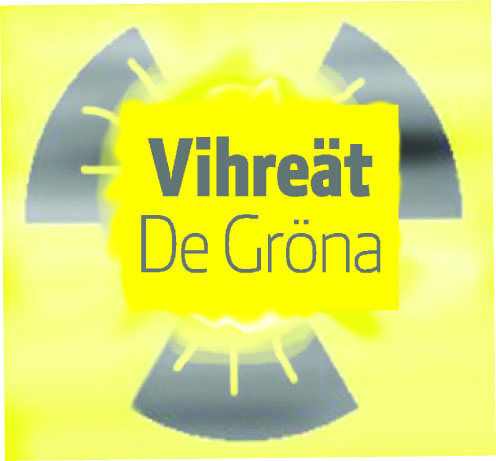
—Finland lobbies nuclear energy as a sustainable source https://www.euractiv.com/section/politics/short_news/finland-lobbies-nuclear-energy-as-a-sustainable-source/ By Pekka Vanttinen | EURACTIV.com, 11 Oct 2021
Following a previously secret decision, the Finnish government will lobby the European Union to declare nuclear power as a sustainable energy source.
Wind and solar have been approved as sustainable by the EU, but decisions on gas and nuclear have so far not been made. Even if plants are emission-free, nuclear is currently considered only a low-carbon energy source due to emissions caused by mining and transport.
Finland has four nuclear plants, and the fifth is nearing completion after years of postponements because of technical complexities. The future of nuclear energy remains important for the country. Its industry is highly energy-intensive, and Finland has a target of being carbon neutral by 2035. Currently, 30% of Finland’s energy is produced by nuclear energy.
As reported by the Finnish Broadcasting Company (YLE), the government’s alignment to lobby nuclear as a sustainable source marks a near U-turn within the Green Party sitting in the current five-party cabinet. Traditionally the party has been fiercely anti-nuclear and has resigned from previous governments over the issue. Its views have become more pragmatic, and the Greens now claim to have a technology-neutral attitude when it comes to fighting climate change.
The French are mainly for nuclear power, but not so keen on new nuclear stations
The French mainly for nuclear but against new power plants. According to
the Institute for Radiation Protection and Nuclear Safety, 53% of French
people consider that this energy has been a good thing for France, but they
are 45% to oppose the construction of new plants.
Le Monde 10th Oct 2021
A particular threat to health: Why it is vital to stop the dumping of mud from Hinkley Point C in the Severn Estuary.
Richard Bramhall: A particular threat to health: Why it is vital to stop
the dumping of mud from Hinkley Point C in the Severn Estuary. In 2018 the
French state-owned company Électricité de France (EDF) dug more than
100,000 tonnes of radioactively contaminated mud from the bed of the Severn
near Hinkley Point. Ignoring widespread protests they dumped it back into
the water less than two miles from Cardiff. This was to allow construction
of huge inlets and outlets for water to cool the reactors in the new
nuclear power station – Hinkley Point C – which EDF is building in
Somerset.
EDF held an old licence for the 2018 dump but it expired before
they could shift their target volume of nearly a million tonnes. They
applied to renew the dumping at Cardiff but, because of strong opposition
in Wales and more protective Welsh environment law, they switched to a site
at Portishead near Bristol.
This August the Marine Management Organisation
granted a licence for the Portishead operation and dumping immediately
began again. Campaigners on both sides of the estuary have now applied for
a Judicial Review. The legal challenge identifies many scientific and
regulatory issues.
This article concerns only one:- the health impact of
radioactive particles in the mud. Every nuclear power station in the world
vents dust particles. They are licensed to do this. Filters trap fragments
bigger than about 5 microns (thousandths of a millimetre) but thousands of
billions of smaller particles are released, as data published by the UN
show. Particles this size are inhalable and are biologically very mobile.
The greatest proportion are made of uranium.
Nation Cymru 10th Oct 2021
First George Monbiot Award for Nukiller Greenwash to Springfields Nuclear Fuel Manufacturing Plant in Cumbria – On Anniversary of the Windscale Fire — RADIATION FREE LAKELAND

PRESS RELEASE Springfields Nuclear Fuel Manufacturing Plant Wins the first George Monbiot Nukiller Greenwash award. To mark the anniversary of the 1957 Windscale [ Sellafield ] fire in Cumbria, the Close Capenhurst Campaign and Radiation Free Lakeland have awarded the first George Monbiot Award to the Springfields Nuclear Fuel Manufacturing plant in Lancashire. George Monbiot […]
First George Monbiot Award for Nukiller Greenwash to Springfields Nuclear Fuel Manufacturing Plant in Cumbria – On Anniversary of the Windscale Fire — RADIATION FREE LAKELAND
Questions over water supply for the new £20billion nuclear plant for Sizewell, UK
A regional water supplier is scrambling to work out how to provide enough
water if Sizewell C is approved, after the Environment Agency proposed a
large cut to the amount it can take from the River Waveney. EDF, the
company behind plans for the new £20billion nuclear plant, insisted today
it had a “clear and deliverable” strategy for its water supply.
Ipswich Star 7th Oct 2021
https://www.ipswichstar.co.uk/news/business/sizewell-c-questions-over-water-supply-8392154
Delay and huge cost in refuelling UK nuclear submarine

A Scottish-based submarine is still covered in scaffolding in a dockyard in southern England six years after the start of a multimillion-pound refurbishment, raising fears that taxpayers could be hit with a bill
topping half a billion pounds — more than twice the original estimate — and putting Britain’s nuclear deterrent at risk.
The Trident missile-armed HMS Vanguard was supposed to return to the Faslane naval base on the Clyde in 2018 after a three-year-long refuelling and refit but the Ministry of Defence has confirmed that it is still being worked on in Devonport dockyard. Defence sources say the £3.75 billion submarine is not expected to rejoin the fleet until the middle of next year at the earliest — four years late — raising fears about the ability of the Royal Navy to sustain Britain’s continuous at sea nuclear deterrent.
Times 10th Oct 2021
Mushrooms in Germany are still contaminated by Chernobyl radiation
Mushrooms in Germany are still contaminated by Chernobyl radiation https://nypost.com/2021/10/08/german-mushrooms-still-contaminated-by-chernobyl-radiation/ By Reuters Around 95% of wild mushroom samples collected in Germany in the last six years still showed radioactive contamination from the 1986 Chernobyl nuclear disaster, albeit not above legal limits, the German food safety regulator said on Friday.
Elevated concentrations of caesium-137 and caesium-134 isotopes bearing the characteristic signature of the Chernobyl blast were found especially in southern Germany, the federal office for consumer protection and food safety (BVL) said.
However, none of the 74 samples tested exceeded the legal limit of 600 becquerels of radiation per kg.
The Chernobyl reactor, located in what is now Ukraine, spewed tonnes of nuclear waste into the atmosphere, spreading radioactivity across swathes of the continent and causing a spike in cancers in the more immediate region.
The BVL said the radioactive material lingered in forests because their ecosystems recycled nutrients so efficiently, meaning that wild mushrooms will show contamination for much longer than other agricultural products.
Concern at the long-term impact of nuclear disasters has fueled public opposition to nuclear power, and in Germany triggered a decision, shortly after the accident at Japan’s Fukushima plant in 2011, to abandon it altogether.
Birth defects in the Chernobyl region

What about studying consequences rather than causes? Studying birth abnormalities in places where they occur more often than is normal? The Omni-Net Ukraine Birth Defects Prevention Program, came up with this different approach, reported in July 2012. http://ibis-birthdefects.org/start/pdf/BaltimoreAbstr.pdf

Measuring radiation is difficult, and can produce ambiguous results. But measuring babies with malformations is a concrete matter. Facts are facts here As Dr Vladimir Wertelecki says “ a baby that has no head is a baby that has no head.”
THE PROGRAM
The program started in 2000, conducting a 10 year study on 5 provinces of the Ukraine – measuring and monitoring all newborn babies. The study, led by Dr Wertelecki, was done in co-operation with Ukraine health authorities. This was a descriptive epidemiological study. It could prove only a difference between geographical areas. It cannot prove the cause of difference.

Within 2-3 years it was obvious that the rates of spina bifida and other defects of the nervous system, were many times greater than expected, particularly in one province. A few years later an excess of conjoined twins (“Siamese twins”) was found. They found other nervous system problems, mainly microcephaly (tiny head) .. After 10 years of study they published a report showing an excess of frequency of anomalies of nervous system and of these conjoined twins.

This was found especially in the northern half of the province – an area that is a unique ecology niche – mainly wetlands. And this area also has a unique population, an ethnic group living there since recorded history. They live in small villages, very isolated, and they rely completely on local foods.
These foods are all radioactive. The soil there is such that plants absorb many times more radioactivity. People there are absorbing much higher levels of radiation. – 20 times more than there would be in soil 50 km. away.
Dr Wertelecki reminds us that there are many causes of birth abnormalities. One well recognised cause is foetal alcohol syndrome, due to alcoholism in the mother. However, the program did in fact research this question. 6 universities joined it in a very well funded and thorough study of pregnant women. It showed that in this Northern area, alcohol use among pregnant women is statistically less than in the Ukraine in general. . Alcohol does not explain the birth abnormalities. Radiation is the obvious major cause.
ABNORMALITIES IN THE DEVELOPING FOETUS- TERATOGENESIS
Little research has been done on the causes of this in humans. Studies on non human species show that foetuses in first three months are about 1000 times more vulnerable to environmental effects.
Dr Wertelecki’s team focused on teratogenesis – changes caused by environmental interference to a developing foetus, a foetus with with normal genes. This must be distinguished from gene mutations, inherited from parents and the two processes have different effects. The genetic, inherited defects are most likely to cause mental disability. But with the teratogenic abnormalities, the baby, if it survives, most often is of normal intelligence.
This process can begin very early, before the ovum has been implanted in the wall of the womb – before the woman knows that she is pregnant. That very early “line” of the embryo can split. In this case – the result is – twins. This split can be incomplete – resulting in conjoined twins, (“Siamese twins”). A fetiform teratoma is a sort of failed Siamese twin, a monster like mass, containing a mixture of tissues.
Abnormalities that are started at a little later stage of pregnancy include spina bifida, ( opening in lower back body wall), opening in front body wall with heart on the exterior, anencephaly (absence of head or of most of the skull and brain)
Later effects – anophthalmia , (missing eyeball) , microphthalmia (tiny eye)
Full article at http://noelwauchope.wordpress.com/2012/10/22/a-baby-that-has-no-head-is-a-baby-that-has-no-head/
Finland lobbied EU to declare nuclear power sustainable after unpublished cabinet decision.

Finland lobbied EU to declare nuclear power sustainable after unpublished cabinet decision supported by Greens, Uutiset, 9 Oct 21,
The EU Commission decides this autumn if nuclear power will be classified as sustainable.
Finland’s government has agreed to lobby the EU to declare nuclear power a sustainable energy source, but kept the decision secret.
If nuclear power gets the so-called ‘green label’, financing for nuclear projects will be easier to come by and the terms of any loans will be softer than for other energy projects…..
Finland’s decision was reached at a meeting of ministers on 9 July, but not announced publicly. Yle’s sources say that parliament’s Grand Committee, which sets the parameters of Finland’s EU policy, has not been informed of the change.
Yle requested the memo from the meeting, which was provided after publishing a report on the decision on Thursday.
Finance Minister Annika Saarikko (Cen) said that she did not see a reason to keep Finland’s view on nuclear power secret, and that the decision was reached in order to influence the EU decision-making process.
The EU has already granted solar and wind power projects the green ‘sustainable’ stamp of approval, but postponed decisions on gas and nuclear…..
Greens emphasise that there are still different views on nuclear within the party, but it has now adopted a ‘technology neutral’ stance on fighting climate change, according to Yle’s sources…..
On Thursday Iltalehti reported that Prime Minister Sanna Marin (SDP) raised the matter of nuclear policy with EU Commission President Ursula von der Leyen in Helsinki on Monday https://yle.fi/uutiset/osasto/news/finland_lobbied_eu_to_declare_nuclear_power_sustainable_after_unpublished_cabinet_decision_supported_by_greens/12135621
Scottish police alerted to ‘suspicious activity’ of Taliban ally near nuclear weapons base,
Scottish police alerted to ‘suspicious activity’ of Taliban ally near nuclear weapons base,
ARAB NEWS, October 08, 2021,
- Local residents in Scotland said they saw eight men arrive at Waheed Totakhyl’s Scotland home and leave just 20 minutes later
- He has previously expressed support for the Taliban, sold Osama bin Laden pizzas, and called for the death of US soldiers
LONDON: Residents living near a military complex holding nuclear submarines in Scotland, UK, have alerted police to suspicious activity on land rented by a supporter of the Taliban adjacent to the naval base, Sky News reported.
Waheed Totakhyl once publicly called for the death of US soldiers in Afghanistan and his brother is currently serving as a military commander for the Taliban in Kabul.
He rents a farm less than five miles away from a critical Royal Navy submarine base, which holds submarines equipped with nuclear weapons.
Local residents said they have witnessed a number of men visiting him in recent weeks. They alerted local police to the activity, telling them that on Aug. 10 eight men arrived on Totakhyl’s farm in two vehicles and then left just 20 minutes later.
Local residents said the men claimed to be Afghans who had traveled there from London — a trip that takes around eight hours each way……….. https://www.arabnews.com/node/1944131/world
Legal challenge launched to stop waste from nuclear plant construction being dumped in the Bristol Channel
News in brief: Legal challenge launched to stop waste from nuclear plant
construction being dumped in the Bristol Channel. Campaigners from England
and Wales have formed a new group to oppose the dumping of sediment from
the construction of a nuclear power station in the Severn Estuary and are
taking legal action to block the plans.
The Save the Severn Estuary /
Cofiwch Môr Hafren campaign involves the Geiger Bay coalition and groups
from the English side of the estuary, and is seeking to halt the dumping of
sediment from the construction of the Hinkley C power station in the Marine
Protected Area (MPA) near Portishead, Bristol.
The group is urging the
Marine Management Organisation (MMO) to revoke the license granted earlier
this year to EDF to dump the waste, which they say puts the MMO in breach
of its international obligations to protect marine environments such as the
Severn Estuary. They are also demanding the UK’s Secretary of State for
Environment, Food and Rural Affairs, George Eustice, acknowledges the ban
on any dumping that causes harm in the Marine Protected Area and instruct
the MMO appropriately.
Nation Cymru 7th Oct 2021
Swedish insurance group Länsförsäkringar cuts off investment to nuclear weapons.
ICAN. 9 Oct 21, Last week, Swedish insurance group Länsförsäkringar, which has over $40 billion in assets, named the TPNW in its policy as a reason not to invest in nuclear weapons business. Our work to cut off funding for weapons of mass destruction is starting to pay off and we expect more financial institutions to follow suit.
Russia’s perilous job in raising sunken nuclear submarines

In both cases, experts fear that a nuclear chain reaction could occur should water leak into the submarines’ reactor compartments. Russian scientists have kept a close eye on the K-159, launching regular expeditions to monitor for potential radiation leaks. According to their data, should the submarine depressurize, radionuclides could spread over hundreds of kilometers, heavily impacting the local fishing industry.
Yet the subs represent just a fraction of the radiation hazards that the Soviet Navy dumped at sea. Between 1959 and 1992, the Soviets carried out 80 missions to sink radioactive debris in Arctic water. In total, some 18,000 objects considered to be radioactive waste were plunged to Arctic depths. Aside from the K-159 and the K-27, the Soviet Navy scuttled reactor compartments, solid radioactive waste, a number of irradiated vessels, as well as old metal structures and radioactive equipment.
Rosatom official puts deadline on raising old nuclear submarines https://bellona.org/news/nuclear-issues/2021-10-rosatom-official-puts-deadline-on-raising-old-nuclear-submarines
An official with Rosatom, Russia’s state nuclear corporation, has announced a deadline for raising two Soviet-era nuclear submarines that have been lying for decades at the bottom of seas in the Arctic over fears their reactors could contaminate fertile international fishing grounds. October 6, 2021 by Charles Digges
An official with Rosatom, Russia’s state nuclear corporation, has announced a deadline for raising two Soviet-era nuclear submarines that have been lying for decades at the bottom of seas in the Arctic over fears their reactors could contaminate fertile international fishing grounds.
As indicated in the strategy for the development of the Arctic, 2030, not earlier,” Anatoly Grigoriev, head of Rosatom’s international technical assistance project, told Interfax late last month.
The announcement confirms what unnamed officials had earlier told Russian state media more than a year ago. Since then, Bellona has urged Russia, during its two-year chairmanship of the Arctic Council, to pursue retrieving the submarines to avoid the contamination risk their reactors, and the spent nuclear fuel they contain, pose to the ocean environment.
Grigoriev’s remarks concerned the K-27 and K-159, both of which went down still loaded with their uranium fuel. Both submarines, say experts, are in a precarious state. But the submarines sank under different circumstances.
Continue reading-
Archives
- October 2026 (112)
- September 2026 (339)
- August 2026 (330)
- July 2026 (355)
- June 2026 (287)
- May 2026 (306)
- April 2026 (356)
- March 2026 (251)
- February 2026 (267)
- January 2026 (308)
- December 2025 (358)
- November 2025 (359)
-
Categories
- 1
- 1 NUCLEAR ISSUES
- business and costs
- climate change
- culture and arts
- ENERGY
- environment
- health
- history
- indigenous issues
- Legal
- marketing of nuclear
- media
- opposition to nuclear
- PERSONAL STORIES
- politics
- politics international
- Religion and ethics
- safety
- secrets,lies and civil liberties
- spinbuster
- technology
- Uranium
- wastes
- weapons and war
- Women
- 2 WORLD
- ACTION
- AFRICA
- Atrocities
- AUSTRALIA
- Christina's notes
- Christina's themes
- culture and arts
- Events
- Fuk 2022
- Fuk 2023
- Fukushima 2017
- Fukushima 2018
- fukushima 2019
- Fukushima 2020
- Fukushima 2021
- general
- global warming
- Humour (God we need it)
- Nuclear
- RARE EARTHS
- Reference
- resources – print
- Resources -audiovicual
- Weekly Newsletter
- World
- World Nuclear
- YouTube
-
RSS
Entries RSS
Comments RSS

