Nuclear power in Hungary: Green, cheap and independent?
Nuclear power in Hungary: Green, cheap and independent? DW, 26 Nov 21,
The Hungarian government is convinced that nuclear power is the path to a green future. A new Russian reactor block is to be constructed that allegedly guarantees low emissions and low energy prices.
While Germany is phasing out nuclear power and many EU states don’t have any atomic plants at all, others are expanding their nuclear programs as part of the fight against climate change. These states argue that atomic energy is low in CO2 emissions and allows them to produce cheap electricity and be more energy-independent.
But can nuclear power really lead the way out of the climate crisis?
EU split on nuclear power
The Hungarian government says it can — and is far from being alone. In mid-October, 10 EU states, including Finland, the Czech Republic and Poland, issued a statement that declared: “To win the climate battle, we need nuclear energy.”
France, a long-time enthusiastic advocate of nuclear energy, took the lead in formulating this statement. Currently, Paris is investing in new types of domestically developed reactors.
Meanwhile, Budapest is planning to expand its Russian-type nuclear plant. It is located near the small town of Paks on the banks of the Danube, less than a two-hour drive south of the Hungarian capital. In addition to the four existing reactors, two others are planned — Paks II.
Good for the environment and consumers?
…………… The question of whether atomic power is really beneficial to the environment is extremely contested. It is not just a matter of the catastrophic consequences of potential reactor accidents and the still unresolved questions about the safe storage of atomic waste. Nuclear energy does not guarantee lower emissions. A study of 123 countries that was published in the scientific journal Nature in 2020 came to the conclusion that actual emissions are not significantly lower in those countries with nuclear power than those without.
New reactor block in seismically active zone
The nuclear plant in Paks also has an impact on flora and fauna in the vicinity, stresses Andras Perger, the climate and energy expert for Greenpeace Hungary. He says that cooling water fed into the Danube can significantly increase the river’s temperature, in particular when water levels are low and all reactors are running.
“The cooling water is already the most significant environmental influence,” Perger says. The water temperature in the zone up to 500 meters (1,640 feet) downriver of the plant is legally permitted to reach a maximum of 30 C (86 F). In August 2018, the river reached, at times, the critical level of 29.8 C, according to the operator. Unofficial measurements conducted by the think tank Energiaklub even showed temperatures significantly above permitted levels.
Perger also stresses the fact that the new reactors are located in a seismically active zone and is skeptical whether all regulations were taken into account when choosing the site. The Federal Environmental Office in neighboring Austria shares his view. This summer, it produced a report that described the location of Paks II as “unsuitable.”……
How independent is nuclear energy?
The state-owned company MVM’s home page states that the new reactor blocks are not just safe but guarantee Hungary greater energy independence. Yet experts are not convinced that the plants really improve Hungary’s relatively high import rate — the technology as well as the fuel rods come from Russia. A study from 2020 comes to the conclusion that in view of this fact, nuclear energy can also ultimately be classed as an import, meaning some three-quarters of the country’s energy balance comes from beyond the country’s borders……………
Lack of transparency
But opposition parties and NGOs have sharply criticized the decision to directly award the contract for expanding the plant to Russia’s state-owned nuclear energy company Rosatom and to finance the project with a Russian loan worth more than €10 billion. The relatively high interest rate of between 4% and 5% and the Hungarian forint‘s drop in value could mean that taxpayers will end up paying more than the €12.5 billion ($14.1 billion) budgeted for the new reactors………….
Critics have also attacked the Fidesz government’s decision to declare the Rosatom contract a matter of national security and its passing of a new law that permits the documents to be kept under lock and key for 30 years.
Little hope for opponents of nuclear energy
Unlike Germany or Austria, Hungary does not have a broad-based anti-nuclear power movement. A number of opinion polls indicate that a majority of Hungarians tend to oppose the renewed extension of the operating licenses of the existing reactors and the expansion of Paks nuclear power plant — in particular after the 2011 Fukushima nuclear disaster.
But scrapping the contract for Paks II or abandoning nuclear power altogether would be difficult. Not only would energy prices for consumers be likely to rise, but the government could be forced to pay high compensation payments to Russia. https://www.dw.com/en/nuclear-power-in-hungary-green-cheap-and-independent/a-59950544
Hunterston nuclear reactor 3 closed, but there will be decades from defuelling through dismantling
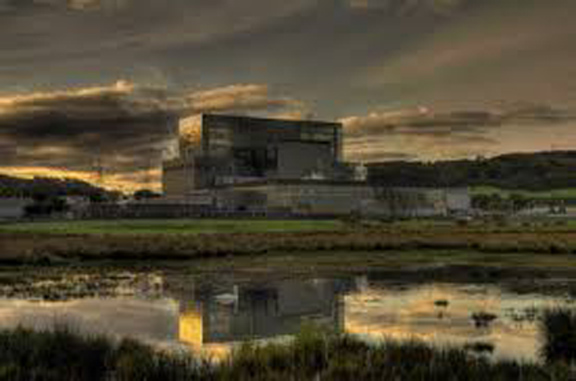
SafeEnergy E Journal No.92. December 2 Hunterston Reactor 3 is expected to come off line at the end of November and Reactor 4 before 7th January 2022. There would then be 2 months of statutory outage and then defueling would commence. EDF is hoping to despatch 4 rather than 2 spent fuel flasks every week to Sellafield during defueling.
Defueling will take around three years and will continue to draw on the skills of EDF’s specialist staff and contractors. It will then take around 5 or 6 years to prepare the plant for a period of 40 to 50 years of care and maintenance. Final dismantling could begin around 2070. https://www.no2nuclearpower.org.uk/wp/wp-content/uploads/2021/11/SafeEnergy_No92.pdf
What might trip up the Rolls Royce plan for small nuclear reactors?

Fix the Planet newsletter: Can small nuclear power go big? Small modular reactors are being pitched as an affordable and fast way to decarbonise power grids but questions about the technology abound, New Scientist EARTH, 25 November 2021, By Adam Vaughan
”……… nuclear power did have a showing in Glasgow, at official events in the conference, deals on the sidelines and cropping up as a subject during press briefings.
One new technology popped up a few times: small modular reactors (SMRs), mini nuclear plants that would be built in a factory and transported to a site for assembly. A UK consortium led by Rolls-Royce wants to build a fleet in the country to export around the world as a low carbon complement to renewables. During COP26 the consortium received £210 million from the UK government. More private investment is expected soon.
Yet questions abound. Why should this technology succeed where large nuclear plants have failed to take off in recent years, beyond China? If they are small, will they make a sizeable enough dent in emissions? And will they arrive in time to make a difference to a rapidly warming world?……
What exactly is planned?
The reactors that Rolls-Royce SMR wants to build have been six years in development, with their roots in ones the company previously built for nuclear submarines. Despite being billed as small, the new reactor design is fairly large. Each would have 470 megawatts of capacity, a good deal bigger than the 300 MW usually seen as the ceiling for an SMR.
The consortium hopes to initially build four plants on existing nuclear sites around the UK. Ultimately it wants a fleet of 16 , enough to replace the amount of nuclear capacity expected to be lost in the UK this decade as ageing atomic plants retire. Later down the line, the SMRs could be exported around the world too.
Alastair Evans at Rolls-Royce SMR. says the first SMR would cost about £2.3 billion and could be operational by 2031. Later versions may fall to £1.8 billion, he claims. That may seem cheap compared to Hinkley, but an offshore wind farm with twice the capacity costs about £1 billion today, and that figure will be even lower in a decade’s time………….
What might trip them up?
SMRs have been in development for years but have made little inroads to date. The UK government has been talking about them for much of the past decade, with nothing to show. Progress elsewhere around the world has been slow, too. Outside of Russia there are no commercial SMRs connected to power grids. Even China, one of the few countries that has built new nuclear plants in recent years, only started construction of a demo SMR earlier this year, four years late. It wasn’t until last year that leading US firm NuScale had its design licensed by US authorities.
Paul Dorfman at the non-profit Nuclear Consulting Group, a body of academics critical of nuclear power, says the nuclear industry has always argued economies of scale will bring down costs so it is hard to see why going small will work. He says modularisation – making the reactors in factories – will only bring down costs if those factories have a full order book, which may not materialise. “It’s chicken and egg on the supply chain,” he says. He also notes the plants will still create radioactive waste (something another potential next gen nuclear technology, fusion, does not). And he fears nuclear sites near coasts and rivers will be increasingly vulnerable to the impacts of climate change, such as storm surges as seas rise.
What’s next? The Rolls-Royce SMR group this month submitted its reactor design for approval by the UK nuclear regulator, a process that could take around five years. It now needs to pick three locations for factories and start constructing them. The group also needs to win a Contract for Difference from the UK government, a guaranteed floor price for the electricity generated by the SMRs…….. https://www.newscientist.com/article/2299113-fix-the-planet-newsletter-can-small-nuclear-power-go-big/
Nuclear fusion for UK – to save the dying nuclear industry, and UK as a nuclear weapons state?
SafeEnergy E Journal No.92. December 21, Fusion Four sites in England and one in Scotland are on the final shortlist of sites to be the home of the UK’s prototype fusion energy plant. The government is backing plans for the Spherical Tokamak for Energy Production (Step) with a final decision on its location expected at the end of 2022. The UK Atomic Energy Authority (UKAEA) hope the plant will be operational by the early 2040s. The five shortlisted sites are: Ardeer, North Ayrshire; Goole, East Riding of Yorkshire; Moorside, Cumbria; Ratcliffe-on-Soar, Nottinghamshire; Severn Edge, Gloucestershire; They were whittled down from a longlist of 15 sites, which included Chapelcross near Annan and Dounreay. (1 …………
The Scottish Campaign for Nuclear Disarmament (CND) has said that this latest effort to extol the virtues of nuclear fusion as a “low carbon” source of energy is to keep the industry “alive” due to the UK being a “nuclear weapon state”. (5)………https://www.no2nuclearpower.org.uk/wp/wp-content/uploads/2021/11/SafeEnergy_No92.pdf
Nicola Sturgeon reaffirms the Scottish Government’s opposition to nuclear power

Nicola Sturgeon has renewed the Scottish Government’s opposition to
nuclear power as part of the country’s drive towards net zero. The First
Minister ruled out any new nuclear power stations in Scotland in direct
opposition to calls from trade unions, backed by Labour’s Anas Sarwar,
for nuclear to be considered as a replacement to fossil fuels.
At First Minister’s Questions in Holyrood Sturgeon insisted it was was an
expensive option for taxpayers. She told SNP MSP Bill Kidd: “Renewables,
hydrogen and carbon capture and storage provides the best pathway to net
zero by 2045 and will deliver the decarbonisation we need to see across
industry, heat and transport. “We believe that nuclear power represents
poor value for consumers.”
Daily Record 25th Nov 2021
https://www.dailyrecord.co.uk/news/politics/nicola-sturgeon-rules-out-nuclear-25544965@ChristinaMac1
Boris Johnson avoids detail on how China will be removed from Sizewell C deal.
Boris Johnson avoided details when specifically asked about China’s
state-owned energy company’s role in Sizewell C – and how they will be
removed from the nuclear project amid concerns over national security. EDF
and China General Nuclear (CGN) are joint developers of Sizewell C taking
80% and 20% shares respectively, though the Financial Times has previously
reported that Whitehall is looking to push out CGN.
At Prime Minister’s Questions, shadow business secretary Matthew Pennycook told Mr Johnson that
“the Government’s Integrated Review concluded the Chinese state poses a
systemic challenge to our national security” and asked him to explain
“precisely how and when his Government intends to remove the CGN’s
interest from the Sizewell C nuclear project?”
Mr Johnson responded: “We
don’t want to see undue influence by potentially adversarial countries in
our critical national infrastructure and so that’s why we have taken the
decisions we have.” The National Security and Investment Bill, currently
going through parliament, is looking to give the government further powers
to screen and potentially block sensitive foreign investments.
Mr Pennycook later responded on Twitter: “We need certainty on the future of China’s
involvement in UK nuclear power and clarity about how and when the
Government intends to remove China’s state-controlled nuclear energy
company from involvement in any future UK project.”
East Anglian Daily Times 25th Nov 2021
https://www.eadt.co.uk/news/boris-johnson-sizewell-c-china-removal-8516062
Labour has called for clarity on how the government plans to remove China’s state-owned energy company from nuclear power projects in the UK.
Labour has called for clarity on how the government plans to remove
China’s state-owned energy company from nuclear power projects in the UK.
Asked about Chinese involvement in nuclear projects at Bradwell and
Sizewell during Prime Minister’s Questions (PMQs) yesterday, Boris
Johnson said the UK “do[es] not want to see undue influence by
potentially adversarial countries in our critical national
infrastructure” and highlighted new national security rules on investment
that come into force in January. Johnson added that more information would
be “forthcoming” about what it will decide about the Bradwell B
project.
Construction News 25th Nov 2021 https://www.constructionnews.co.uk/government/nuclear-pm-urged-to-elaborate-on-potential-removal-of-chinese-firms-25-11-2021/
New nuclear for Scotland- would be a tragic mistake?
SafeEnergy E Journal No.92. December 21, New Nuclear in Scotland Leader of the Scottish Labour Party, Anas Sarwar, says nuclear power should be part of the mix on energy. He has also called for a statutory “just transition commission” to be established to help workers move out of the oil and gas industry. He said: “I think we have to be honest about future opportunities and I think nuclear power has to be part of the mix. “I’m not saying nuclear power has to be the priority, or the lead. But it has to be part of the mix to have a diverse energy supply.” Sarwar insisted nuclear power could mean lower fuel bills for consumers at a time of rising inflation.
In September Sarwar announced plans for a Scottish Energy Transition Commission to outline how Scotland can protect and create highly skilled jobs in the transition to a net-zero economy. The commission will be chaired by pro-nuclear former Labour Energy Minister Brian Wilson. It will support the development of Scottish Labour energy policy and advise on how the transition to netzero can deliver for the working people of Scotland. It will also look at the failures of the current energy market, which has led to spiking prices this winter, the role of public energy companies and Scotland’s energy mix. (2)
The Bella Caledonia website described Wilson as “a devout nuclear enthusiast”. Sarwar told the BBC that “I think we should consider potential new (nuclear power) plants” (3) and certainly with a nuclear lobbyist chairing this is where they’ll end up. Journalist Dominic Hinde points out: “This is a little odd in that Scotland already meets almost a hundred per cent of its electricity needs from renewables and is set to surpass this. Most emissions now come from heating, agriculture and transport.” (4)
Dr Richard Dixon, Director of Friends of the Earth Scotland, called Scottish Labour’s drift towards nuclear power “a tragic mistake”. Nuclear is slow to build, eye-wateringly expensive and dangerous. There is still no agreed solution for nuclear waste, which will need monitoring for many thousands of years. It is neither a solution to short-term energy needs nor to the climate crisis.
Dixon said the Scottish Energy Transition Commission is Scottish Labour’s plan to keep the pressure up on the Scottish government’s official Just Transition Commission, and should have been welcome, but giving it to the former ‘Minister for Hunterston’ devalues it. Anas Sarwar was quoted saying he supports a “diverse energy supply”, which is standard union code for more nuclear – and thinks “nuclear is a key part of that and it’s something that I think we should fundamentally explore”. For many years the Scottish Conservative manifesto for every election said we should have two new nuclear power stations in Scotland. It became a running joke because they knew it was never going to happen and they quietly dropped any mention of nuclear a couple of elections ago. The tragedy of Labour finding a new enthusiasm for the ultimate unsustainable form of energy is that it was a Labour First Minister who put a stop to the nuclear industry’s ambitions in Scotland. Jack McConnell, despite massive pressure from Tony Blair’s government, said in 2005 that Scotland would use planning powers to block any proposals for new reactors in Scotland unless there was an answer to the question of permanent storage of radioactive waste, something that is no closer today than it was then. Scottish Labour’s drift into being pro-nuclear will please no-one but the GMB union and Brian Wilson. It is a betrayal of one of their greatest achievements in government in Scotland. (5)
Meanwhile, North Ayrshire Conservative councillor Tom Marshall has called for a new state-of-theart ‘mini’ nuclear reactor to be built at Hunterston. (6)
According to a Panelbase survey for The Times 37% of Scots asked about the idea of building nuclear power stations in Scotland as fossil-fuel use is cut back expressed support, while only 32% were opposed. When asked if they supported nuclear power to replace energy currently produced by fossil fuels, 57% of respondents felt it was probably or definitely necessary while 26% indicated it was not or probably not necessary. A further 17% were undecided. Liam Kerr, net-zero and energy spokesman for the Scottish Conservatives, called on the SNP to abandon its opposition to nuclear energy. (7)
Others joining a pro-nuclear clamour include Magnus Linklater who complains that “Without Torness, in a wind-free summer like this year’s, Scotland will have to rely on oil and gas courtesy of Vladimir Putin, imports from Norway or — irony of ironies — nuclear power from France.” (8)
And Lord Bird, co-founder of The Big Issue, has somehow got the misconceived idea that nuclear power can help to solve fuel poverty. Brian Wilson, the former UK energy minister, has supported his call. (9)
Unsurprisingly, the GMB union is also demanding the Scottish Government thinks again on nuclear power. (10)
See 1 page briefing on why nuclear power isn’t a solution to climate change here: https://www.no2nuclearpower.org.uk/wp/wpcontent/uploads/2021/11/Nuclear_no_solution_to_Climate-October-2021.pdfhttps://www.no2nuclearpower.org.uk/wp/wp-content/uploads/2021/11/SafeEnergy_No92.pdf
UK’s Ministry of Defence makes unprecedented attempt to dismantle dead nuclear submarines
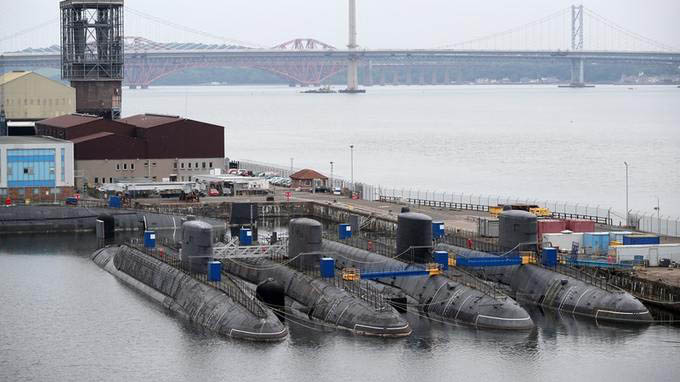
SafeEnergy E Journal No.92. December 21 , Submarine Dismantling The UK’s Submarine Dismantling Project hopes to dismantle 27 of the UK’s de-fuelled, nuclearpowered submarines after they have left service with the Royal Navy.
A demonstrator submarine is being used to define and refine the dismantling process. At Rosyth, the removal of low-level radioactive waste from the first two submarines, Swiftsure and Resolution, has been successfully and safely completed. As the unique approach is developed, work continues with the removal of low-level radioactive waste from a third submarine, Revenge. A fully developed process for steady state submarine dismantling should be ready by 2026. As the demonstrator programme progresses, the outcomes will provide more certainty in the future costs to dismantle the Devonport-based submarines. It is not MoD policy to pre-announce the funding of its projects for reasons of protecting commercial interests.”
REVENGE, entered the dry dock in Rosyth in late March 2020 to commence its LLW removal. The intent is to remove all LLW including large components such as steam generators and pressurisers. No nation has yet attempted this complex and challenging undertaking, so the MoD is currently putting in place the techniques necessary to remove all LLW for the first time to comply with safety and sustainability standards. https://www.no2nuclearpower.org.uk/wp/wp-content/uploads/2021/11/SafeEnergy_No92.pdf
Belene nuclear plant: Bulgarian far-right leader threatens to send opponents to a labour camp
Belene nuclear plant: Bulgarian far-right leader threatens to send opponents to a labour camp, By Krassen Nikolov | EURACTIV.bg 26 Nov 21,
Kostadin Kostadinov, leader of the pro-Russian far-right party ‘Vazrazhdane’ (Revival), started his first term as an MP by threatening to deport all those who oppose the Belene nuclear power plant to the town’s communist-era forced labour camp.
The Belene NPP is an unfinished project that dates back to the 1980s. Bulgaria has invested €600 million in it. 26 Nov 2021 ……..
Vazrazhdane’ won just under 5% in the parliamentary elections due to its consistent policy of disparaging the pandemic, resistance to COVID vaccines and green certificates. Now the party is beginning to expand on the energy issue. Vazrazhdane has 13 out of 240 MPs in the new parliament…….
Belene NPP is the last remaining project of the so-called Russian Grand Slam in Bulgaria, which was agreed between the Presidents of Bulgaria and Russia Georgi Parvanov and Vladimir Putin. The others were the South Stream gas pipeline and the Burgas-Alexandroupolis oil pipeline. https://www.euractiv.com/section/politics/short_news/belene-nuclear-plant/
Bellona signs open letter to prevent nuclear energy and fossil gas from being labelled as green

(Signed by 129 reputable European and international organisations)
Granting nuclear and fossil gas the label of sustainability would undermine the EU’s climate targets, divert much-needed investments in the green transition and jeopardize the credibility of the entire European Green Deal. Olaf ScholzFederal Minister of Finance
and Vice Chancellor
11016 Berlin
Germany
Dear Federal Minister,
We are extremely concerned by the announcement of the European Commission’s President, Ursula von der Leyen, to likely label both nuclear energy and fossil gas as sustainable in the context of the EU’s taxonomy. According to media coverage, it was the absence of a strong German voice against nuclear in the European Council on 21/22 October that directly contributed to this decision. In your role as current finance minister and future Chancellor, we call on you to swiftly and decisively confirm the German veto against labelling nuclear as a sustainable form of energy and highlight that the Commission’s attempt to shape this discussion during the sensitive time of a new government being formed in Germany is not acceptable.
The EU taxonomy regulation is meant to provide guidelines for the necessary future-oriented investments for Europe’s economic transition. Nuclear energy, however, is unsustainable due to severe safety risks, environmental pollution and the unsolved waste problem. Fossil gas emits large quantities of climate-damaging greenhouse gases, especially methane, along its extraction and transport chain. Granting nuclear and fossil gas the label of sustainability would undermine the EU’s climate targets, divert much-needed investments in the green transition and jeopardize the credibility of the entire European Green Deal.
Dear Federal Minister, Germany has embarked upon a clear path to phase out nuclear power by the end of next year. NGOs from across Europe count on you to take an equally clear stance against nuclear energy but also fossil gas at the European level. more https://bellona.org/news/climate-change/2021-11-bellona-signs-open-letter-to-take-action-to-prevent-nuclear-energy-and-fossil-gas-from-being-labelled-as-green
UK government tries to save its nuclear skin by turning to dubious Regulated Asset Base funding

At a time of rising energy bills in the UK, it certainly seems risky of the government to commit to increasing them further and opening themselves up to a downside risk that could prove very costly.
The National Infrastructure Commission, a body designed to give impartial advice to the government, said in March 2020 that a “renewable-based system looks like a safer bet” and a “substantially cheaper” option than the construction of multiple new nuclear power plants.
The UK’s nuclear plan is a financial, environmental and political risk, Investment Monitor, Jon Whiteaker , 16 Nov 21,” …………..The problem with financing nuclear power
…… Hinkley Point C has been a bit of a nightmare for the UK government. It is already seven years behind schedule, has controversial Chinese investors that the government is understood to be trying to get rid of, and is widely agreed to be far too expensive.
It was financed under the contracts for difference (CfD) model used for offshore wind. This guarantees a ‘strike price’ for the power plant owner, allowing them to raise capital for construction by having certainty of revenues.
Using the same funding model as offshore wind has, however, allowed for simple comparisons of the costs of the two power types. While the latest round of offshore wind projects saw strike prices of about £40 per megawatt-hour (MWh) over a 15-year contract, the owners of Hinkley are guaranteed at least £89.5/MWh over 35 years.
The reasons the Hinkley strike price is so much higher is because the capital costs are much higher, but also because the risks involved in developing them are much greater.
At least Hinkley Point C is being built. A number of planned projects, including the Moorside power station in West Cumbria and Wylfa Newydd plant on Anglesey, have been cancelled or shelved in recent years.
With the need to develop the UK’s next generation of nuclear plants increasingly urgent, the government has turned to the RAB model to save its skin.
UK government turns to the RAB model
The RAB model is known mostly for its successful use on the Thames Tideway Tunnel (TTT), the new super sewer in London that is helping to clean up the Thames River. The government says that like that project, nuclear power plants are complex, have high capital costs and long operating lives.
The RAB model allows developers of infrastructure to earn immediate revenues by adding charges to consumers’ utility bills during the construction. Bill payers will have to buy before they try their lovely new nuclear power.
This in theory widens the pool of potential investors, making the government less beholden to a small group of companies who typically invest in and build nuclear plants, lowering the cost of financing, and ultimately saving money for bill payers.
The government predicts that using the RAB model to build a new nuclear plant will save energy bill payers £10 per year compared with the CfD model.
Legislation allowing the introduction of the RAB model for new nuclear was introduced in October 2021 and is moving through the House of Commons. The government has pledged to reach a final investment decision on at least one new nuclear plant by the end of this parliament in 2024.
It is hoped by government that the previously stalled 3.2GW Sizewell C, owned by EDF Energy, will be the first nuclear project to use the RAB model.https://www.investmentmonitor.ai/business-activities/energy/uk-nuclear-rab-energy-renewable
The problems with RAB for nuclear
While this all sounds like a perfect panacea for the government’s problems, there are several downsides to using the RAB model.
The depth of investor interest in new nuclear power stations is yet unknown. As the UK government should be painfully aware, having just hosted COP26, the conversation about what does and does not meet different investors ESG standards is a live one. Whether nuclear power is seen as a sustainable investment is debatable.
Trying to get any of the investors in TTT to make clear their stance on nuclear power is not easy, and I have tried. For the government to achieve its goals, institutional investors, like those that supported TTT, should want to invest in new nuclear too.
Asset manager Aviva Investors, a major investor in UK infrastructure, has called on the government to present a robust ESG case for new nuclear, which it says is lacking at present.
Many investors will be concerned over whether nuclear meets the criteria of an environmentally sustainable activity. Institutional investors are incredibly cautious by nature and the shadow cast by the Fukushima disaster in Japan in 2011 is still long.
All energy suppliers will have to contribute to the costs of RAB nuclear plants, whether they want to or not, before passing those costs on to bill payers. That seems a retrograde step for an energy market that has been diversifying to provide customers with ‘green only’ options in recent years. Whether you have ethical objections to nuclear power or not, you will have to use a supplier that helps fund that technology.
Hinkley Point C is seven years behind schedule. You would be brave to bet against any delays to the first RAB model nuclear plant too.
The government says that there would be a cap on how much extra investors could charge consumers but that this cap could be increased by the government if deemed necessary. If the costs became excessive, the government would have the option of covering the costs itself, although this is ultimately taxpayer money too.
At a time of rising energy bills in the UK, it certainly seems risky of the government to commit to increasing them further and opening themselves up to a downside risk that could prove very costly. Perhaps the government thinks these are all costs worth shouldering to ensure its net-zero plans stay on track.
The National Infrastructure Commission, a body designed to give impartial advice to the government, said in March 2020 that a “renewable-based system looks like a safer bet” and a “substantially cheaper” option than the construction of multiple new nuclear power plants.
That sounds like advice worth considering again. https://www.investmentmonitor.ai/business-activities/energy/uk-nuclear-rab-energy-renewable
New German government aims for coal exit, and 80 pct renewables, by 2030

New deal between SDP, Greens and pro-business party calls for coal exit by 2030, and an 80 per cent share for renewables. The post New German government aims for coal exit, and 80 pct renewables, by 2030 appeared first on RenewEconomy.
Soren Amelung and Benjamin Wehrmann 25 November 2021 https://reneweconomy.com.au/new-german-government-aims-for-coal-exit-and-80-pct-renewables-by-2030/ Germany’s prospective new government has agreed to speed up the country’s coal exit and accelerate the rollout of renewable power to get the country on track for climate neutrality.
“We will align our climate, energy and economic policies nationally, in Europe and internationally with the 1.5 degree path and activate the potential at all levels of government,” states the coalition agreement between Social Democrats (SPD), Greens, and pro-business Free Democrats.
“With ambition and perseverance, we are making the country a pioneer in climate protection,” likely future chancellor Olaf Scholz, a Social Democrat, said during the presentation of the coalition treaty. He added that “modernisation won’t be for free – we will invest massively so Germany can stay a world leader.”
Germany plans to become climate-neutral by 2045, but the measures implemented by the outgoing government, a coalition between chancellor Angela Merkel’s Conservatives and the SPD, are insufficient to reach that target.
The September vote had been called a “climate election” due to the high importance many voters had given the topic.
Scholz aims to be elected chancellor in the week of December 6. Prior to that, the Greens will invite all 120,000 party members to vote on the coalition agreement online. The SPD and the FDP will organise party conferences on December 4 and 5, respectively, to secure their members’ backing for the agreement.
Faster rollout of renewables
“Reaching climate targets will require an accelerated exit from coal power generation,” the coalition treaty reads. “Ideally, this will be achieved by 2030 already.”
Green Party co-leader Robert Habeck said the measures agreed by the three parties would put Germany on an emissions reduction path compatible with the Paris Climate Agreement‘s target of limiting global warming to 1.5 degrees Celsius.
The coalition treaty’s “core” principle would be to reconcile prosperity with climate action, he argued.
“We have decided against setting higher climate targets in the coalition agreement, but rather formulated concrete measures,” Habeck said, adding that these measures would put the country on a 1.5 degree path.
The three parties aiming to form the next German government, said they aim to cover 80 percent of the country’s power demand with renewables by 2030, a significant increase from the current target of 65 percent. “Renewables are no longer an addition but will have to carry our supply security,” Habeck said.
FDP leader Christian Lindner, who is likely to become new finance minister, said “no other industrialised country will make efforts in climate action as great as ours, this is the most ambitious programme to date” and the government would make sure that it is sufficiently funded. At the same time, Germany would remain “an advocate of prudent financial policy,” Lindner added.
The parties also rejected calls for postponing the end of nuclear power plants. “We will stick to the nuclear exit,” their coalition agreement says.
To help the country’s famed industry to lower emissions, the future government plans to use new instruments, such as carbon contracts for difference, and support an EU-wide carbon border adjustment mechanism.
The coalition partners also said they will consider a national carbon floor price of 60 euros if the price in the EU emissions trading system falls below that limit. In the transport sector, they want to achieve a fast transition to low-emission mobility. “Our target is at least 15 million fully electric cars by 2030,” the treaty says.
The future government also agreed on considerable changes to the government architecture to implement its climate agenda. The parties plan to create a novel climate ministry that merges the energy and industry departments of the economy ministry with the environment ministry’s climate department.
First published on Clean Energy Wire
Powerful greenhouse gases emitted from Hunterston A nuclear station
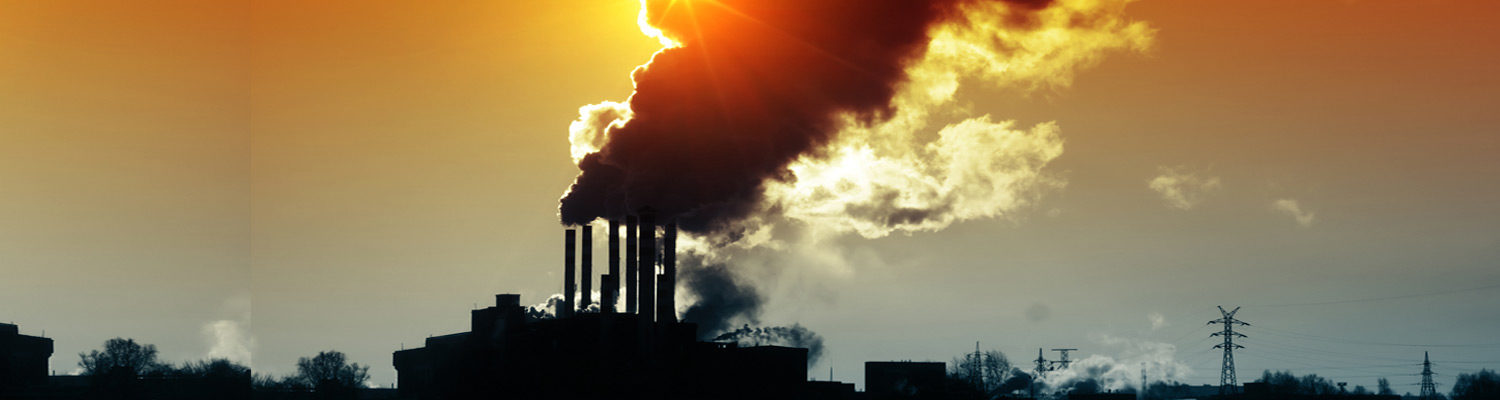
| THE release of a refrigerant gas during the ongoing decommissioning of Hunterston A has been revealed at a recent nuclear summit. Hunterston ‘A’ bosses reported two environmental incidents at the station during its decommissioning phase linked to their air conditioning units. Earlier this year, the release of fluorinated gases was noticed. These are powerful man-made gases that can stay in the atmosphere for centuries and contribute to a global greenhouse effect. The incidents formed part of a report to the recent Hunterston site stakeholders meeting. Largs & Millport News 22nd Nov 2021 https://www.largsandmillportnews.com/news/19720653.gas-leak-hunterston-reported-sepa/ |
The UK’s nuclear plan is a financial, environmental and political risk
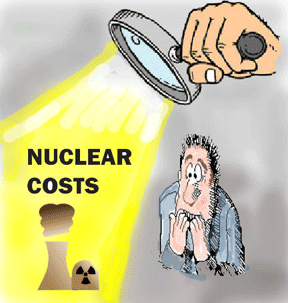
The UK’s nuclear plan is a financial, environmental and political risk, Investment Monitor, Jon Whiteaker , 16 Nov 21, If the UK government thinks the RAB model will solve all its nuclear power problems, it may have a nasty surprise coming its way.
As the dust settles on COP26, the UK government will turn its attention away from global discussions and towards what it is doing domestically to help mitigate the climate crisis.
The government’s Net Zero Strategy sets aside £120m towards developing new nuclear power plants, which it says “could support our path to decarbonising the UK’s electricity system” by 2035.
Could’ is doing a lot of work in that sentence, because although nuclear power plays a prominent role in the government’s decarbonising strategy, bringing additional nuclear capacity online is far from straightforward.
The government says nuclear is a continuous, reliable and low-carbon form of energy that has been part of the UK electricity system for 65 years. Nuclear is also controversial, hugely expensive in comparison to other fossil fuel alternatives, and often proves challenging to develop.
According to the latest World Nuclear Industry Status Report, between 1951 and 2021, of the 783 nuclear reactor projects launched, 12% have been cancelled. Delays and cost overruns are also very common when constructing nuclear plants.
The UK government is hoping to kickstart development of new nuclear in the UK through the introduction of the regulated asset base (RAB) funding model. This model is intended to widen the investor pool for nuclear power, reduce financing costs, and ultimately save bill payers money.
While the RAB model has proved successful for other large UK infrastructure projects, it comes with risks for the government. It is unclear which investors will be happy to support new nuclear projects, and there are potential political costs if UK citizens are made to pick up at least part of the tab if things go wrong.
The government expects electricity usage to increase by 40–60% by 2035. It has mapped out several scenarios for how this demand can be met solely by renewables, all of them dependant on building new nuclear power capacity.
Yet in 2020, while generation from all other renewable energy sources increased, generation from nuclear power actually declined in the UK due to a decision not to restart operations at the Dungeness B plant in Kent, which had been suffering a prolonged outage since 2018.
The UK nuclear fleet is old, suffering performance issues and largely due to be decommissioned. By 2035, the UK will lose almost 8GW of nuclear power plants to decommissioning.
The only new nuclear plant under construction is the 3.26GW Hinkley Point C plant, which is now due to be completed in 2026.
All this means the government needs to quickly develop new nuclear capacity. It seems very taken by new small modular reactors, particularly if they are developed by UK companies such as Rolls-Royce.Yet this and another new technology, advanced modular reactors, are not due to reach the demonstration phase until the early 2030s.
So, the government has been seeking a way to deliver several new Hinkley Point Cs…………………
The National Infrastructure Commission, a body designed to give impartial advice to the government, said in March 2020 that a “renewable-based system looks like a safer bet” and a “substantially cheaper” option than the construction of multiple new nuclear power plants.
That sounds like advice worth considering again. https://www.investmentmonitor.ai/business-activities/energy/uk-nuclear-rab-energy-renewable
-
Archives
- October 2026 (112)
- September 2026 (339)
- August 2026 (330)
- July 2026 (355)
- June 2026 (287)
- May 2026 (306)
- April 2026 (356)
- March 2026 (251)
- February 2026 (267)
- January 2026 (308)
- December 2025 (358)
- November 2025 (359)
-
Categories
- 1
- 1 NUCLEAR ISSUES
- business and costs
- climate change
- culture and arts
- ENERGY
- environment
- health
- history
- indigenous issues
- Legal
- marketing of nuclear
- media
- opposition to nuclear
- PERSONAL STORIES
- politics
- politics international
- Religion and ethics
- safety
- secrets,lies and civil liberties
- spinbuster
- technology
- Uranium
- wastes
- weapons and war
- Women
- 2 WORLD
- ACTION
- AFRICA
- Atrocities
- AUSTRALIA
- Christina's notes
- Christina's themes
- culture and arts
- Events
- Fuk 2022
- Fuk 2023
- Fukushima 2017
- Fukushima 2018
- fukushima 2019
- Fukushima 2020
- Fukushima 2021
- general
- global warming
- Humour (God we need it)
- Nuclear
- RARE EARTHS
- Reference
- resources – print
- Resources -audiovicual
- Weekly Newsletter
- World
- World Nuclear
- YouTube
-
RSS
Entries RSS
Comments RSS

