The Welsh dragon is getting ready to roar.
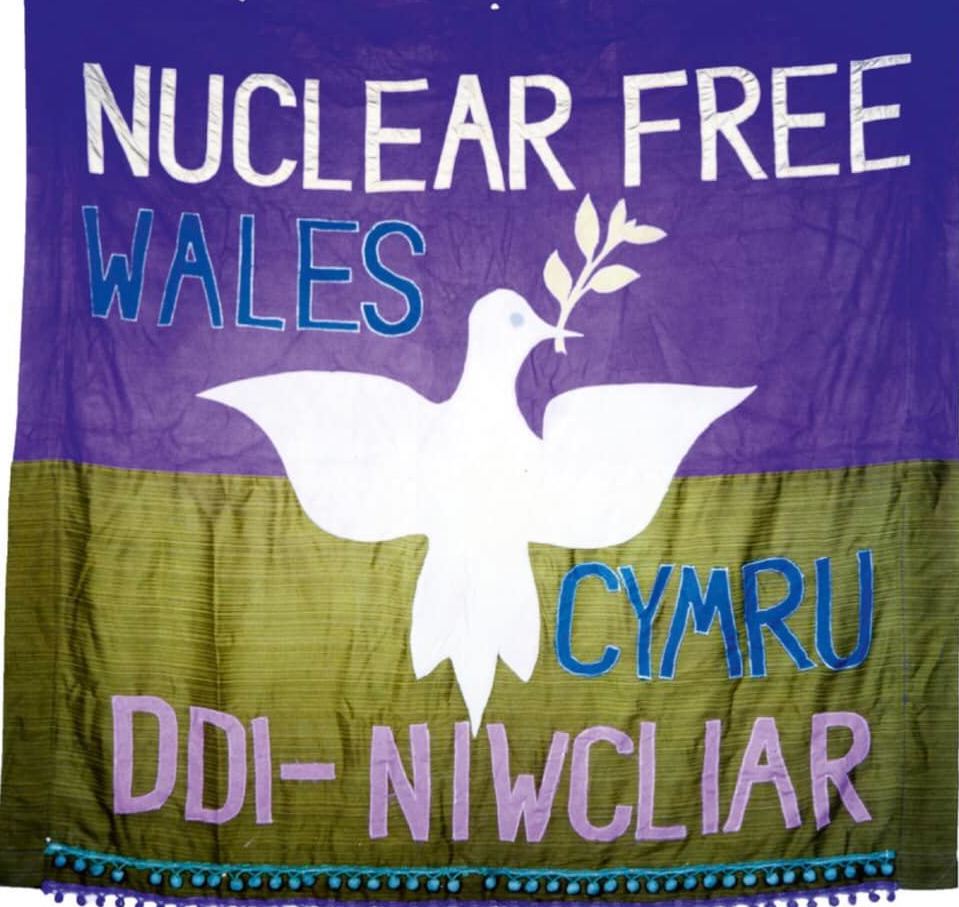
Citizens of Wales are gearing up for another assault on their right to a safe, clean and healthy environment
Anti-nuclear campaigners meeting in Wrexham last October issued a declaration calling on politicians representing Welsh constituencies in parliaments in Cardiff and Westminster to work for a nuclear-free, renewables-powered Wales.
Welsh campaigners are working with US, Canadian and other UK activists to establish a Transatlantic Nuclear-Free Alliance to campaign on issues of common concern. The new initiative came in conjunction with a screening of the award-winning film SOS: The San Onofre Syndrome, which highlights the impact of the decommissioning and the legacy of managing deadly radioactive waste faced by the neighbors of the San Onofre nuclear power plant in California.
The film’s messages resonate with international audiences faced with identical threats and challenges. At the screening, the audience heard from the filmmakers Marybeth Brangan and the now sadly late Jim Heddle as well as from Professor Stephen Thomas, Emeritus Professor in Energy Policy at Greenwich University and Richard Outram, Secretary of the Welsh Nuclear Free Local Authorities.
“The nuclear industry tries to assure us the radioactive waste disposal and reactor decommissioning are established processes with easily affordable costs,” Thomas said. “The truth is that we are three or more decades away from permanent disposal of waste and of carrying out the most challenging stages of decommissioning. The cost will be high, and the failure of previous funding schemes means the burden will fall on future taxpayers, generations ahead”.
Despite this, the UK Government will introduce developer-led siting plans, permitting nuclear operators to apply to locate new plants in sites throughout Wales, and intends to reduce regulation in the nuclear industry.
A recent Memorandum of Understanding was also signed with the United States that could lead to British regulators being obliged to accept US reactor designs not currently approved for deployment in the UK. Great British Energy – Nuclear has also acquired land at Wylfa in Anglesey (Ynys Môn) as a potential site for the deployment of one or more so-called Small Modular Reactors being commissioned from Rolls-Royce and the US company Westinghouse has also expressed interest in constructing a larger nuclear plant there.
The Welsh Government specifically created Cwmni Egino to develop a new nuclear plant on the Trawsfynydd site at the heart of the beautiful Eryri National Park. And in South Wales, US newcomer Last Energy is seeking permission to deploy multiple micro reactors on a former coal power station site at Llynfi outside Bridgend.
Eight leading campaign groups have backed the Wrexham Declaration which denounces the continued political obsession with the pursuit of nuclear power as a ‘fool’s errand’. NFLA Secretary Richard Outram explains why:
“Nuclear is too slow, too costly, too risky, contaminates the natural environment compromising human health, and leaves a legacy of nuclear plant decontamination and radioactive waste management lasting millennia that is ruinously expensive and uncertain. And nuclear plants represent obvious targets to terrorists and, as we have seen in Ukraine, to hostile powers in times of war”.
Campaigners are also convinced that nuclear power will worsen fuel poverty and climate change. As Welsh people face spiraling energy costs, with many in fuel poverty, while a new nuclear levy is to be added to all customers’ energy bills to help pay for the construction of the eye-wateringly expensive Sizewell C nuclear plant in Suffolk. Further, nuclear generation costs much more than generation from renewables, meaning more expensive electricity for consumers……………………………………………………………………………………………………………………………………………………………………………………………………………………… Read the Declaration. https://beyondnuclearinternational.org/2026/03/08/the-dragon-is-getting-ready-to-roar/
Trident workers to strike in row over nuclear job cuts.
Union says staff have been ‘pushed to the brink’ and warns walkout could cost millions of pounds
The workers who build and maintain Britain’s Trident nuclear arsenal are
to go on strike in a row over hundreds of job cuts at the Ministry of
Defence’s atomic weapons factories. Members of the Prospect union voted
81pc in favour of strike action at the Atomic Weapons Establishment (AWE),
which is responsible for manufacturing warheads intended for use on the
UK’s nuclear submarines.
The ballot covered sites including the AWE’s
plants in Aldermaston and Burghfield. Strikes are expected to take place on
March 12 and March 26. Union leaders accused the agency of a “litany of
errors” in a dispute over a restructuring that is expected to see as many
as 800 jobs cut.
Telegraph 6th March 2026,
https://www.telegraph.co.uk/business/2026/03/06/trident-workers-to-strike-in-row-over-nuclear-job-cuts/
14 March – Protesters to rally at Faslane base in anti-nuclear demonstration

PROTESTERS are set to rally at the Faslane naval base to protest against
the UK’s nuclear arsenal. The rally, organised by the Scottish Campaign for
Nuclear Disarmament (CND), will be held at HMNB Clyde’s north gate on March
14. The Scottish CND told The National that “nuclear weapons are a threat
to Scotland and the whole world”, saying the presence of the UK’s nuclear
submarines in Scotland is putting “a target on our backs”.
The National 3rd March 2026,
https://www.thenational.scot/news/25903195.protesters-rally-faslane-base-anti-nuclear-rally/
Coastal erosion risks to planned Sizewell C nuclear power station
Letter Nicholas Malins-Smith: : The comment by Sir David King, the former
chief scientific adviser, about how the eastern side of Britain is
“tilting into the sea”, particularly around Norfolk and Suffolk, is the
result of more than just aggressive coastal erosion caused by climate
change (“Residents lambast ‘nuts’ location of Sizewell C as coastal
erosion gains pace”, Report, February 24).
Britain is still experiencing
land mass movement where the north and western parts are slowly rising,
while the south and eastern parts are sinking. This phenomenon is a very
gradual geological process known as “glacial isostatic adjustment”
(GIA). During the last ice age, the weight of massive ice sheets pressed
down on Scotland and northern Britain, forcing the land to subside.
Meanwhile, the southern part of Britain acted as a counterweight and was
raised slightly. The melting of the ice sheets resulted in the land that
was pressed down to begin slowly rising, causing a “see-saw” effect
that lowers the south by an approximate equal amount.
The “tilting”
effect of GIA has been going on quite independently of more recent concerns
about sea-level rise caused by climate change, although the combination
exacerbates the likely impact on certain coastal areas.
The Suffolk
shoreline has long known about the effects of coastal erosion. Most of the
original town of Dunwich was lost to the sea in storms a very long time
ago. The little that is left of Dunwich is about 3.5 miles north of where
the Sizewell C nuclear power station will be built.
FT 4th March 2026, https://www.ft.com/content/bb9265e4-a235-4830-8c4b-49b6953cf753
Capenhust-based nuclear facility faces prosecution after uranium leak
A WIRRAL company that transports uranium overseas will be prosecuted for
health and safety offences following an incident involving a leak at its
facility. The Office for Nuclear Regulation (ONR) has notified
Capenhurst-based Urenco ChemPlants Ltd that it faces prosecution
alongside contractor Babcock Critical Services Ltd after the incident in
2024. According to the ONR in February 2024 at the Tails
Management Facility on the Urenco UK Ltd. nuclear licensed
site in Capenhurst, a metal container holding almost 11
tonnes of uranium oxide powder fell from a forklift
truck, striking surrounding equipment within the facility.
Wirral Globe 4th March 2026, https://www.wirralglobe.co.uk/news/25905939.capenhust-based-nuclear-facility-faces-prosecution-uranium-leak/
Trump Threatens Full Trade Embargo Over Spain’s Refusal to Be Complicit in Iran Attacks
Ripping the US president’s “flagrant disregard for European sovereignty—and security,” co-general coordinator of Progressive International declared: “Close the bases. All of them.”
Jessica Corbett, Common Dreams, Mar 03, 2026
President Donald Trump on Tuesday threatened to cut off all trade with Spain over the Spanish government’s refusal to allow US aircraft to use its military bases for the war that the United States and Israel are waging on Iran.
Speaking with reporters at the White House beside German Chancellor Friedrich Merz just after noon Eastern time, Trump initially signaled that he’d already taken action against Spain, but less than 10 minutes later, the president suggested he was still deciding.
Referring to Treasury Secretary Scott Bessent, who was also in the room, Trump said: “Spain has been terrible. In fact, I told Scott to cut off all dealings with Spain.”
Trump claimed that “it started” last year, when every other NATO member caved to US pressure to aim for spending 5% of gross domestic product on defense by 2035, “and Spain didn’t do it.”
“And now Spain actually said that we can’t use their bases. And that’s all right. We could use their base if we want. We could just fly in and use it. Nobody’s going to tell us not to use it. But we don’t have to. But they were unfriendly,” the president continued. “Spain has absolutely nothing that we need other than great people. They have great people but they don’t have great leadership.”
Again complaining about their refusal to commit to 5%, he said that “we’re gonna cut off all trade with Spain. We don’t want anything to do with Spain.”………………………………………………………………………………………………………………………………………….
Francesca Albanese, the United Nations special rapporteur focused on the occupied Palestinian territories and a target of Trump administration sanctions, responded to the US president by praising the “strength” of Spanish Prime Minister Pedro Sánchez.
“The peoples of Europe do not want to be complicit in a system that kills children and protects those who profit from their blood,” Albanese said. “Europe deserves better, and you are already part of that change. Thank you.”https://www.commondreams.org/news/iran-spain
Residents invited to have say on Hunterston nuclear forum
By Calum Corral, Ardrossan Herald 3rd March 2026, https://www.ardrossanherald.com/news/25903086.residents-invited-say-hunterston-nuclear-forum/
A PUBLIC meeting of the Hunterston Site Stakeholder Group will take place at Seamill Hydro on Thursday, March 5, to discuss the ongoing decommissioning of the former Hunterston A and B nuclear power stations
EDF is handing Hunterston B over to Nuclear Restoration Services (NRS), the decommissioning subsidiary of the Nuclear Decommissioning Authority, which will take ownership of the site and manage the long‑term clean‑up programme.
The event begins at 1.30pm
France officially enters Nuclear Arms Race

4 March 2026
In what can only be called a worst case scenario, the burgeoning nuclear arms race has officially broken its bounds and will now include the world’s fourth largest nuclear superpower, France. (Counting only nuclear weapons actively deployed, France ranks third, behind the US and Russia, as less than 5% of China’s nuclear stockpile is actually deployed.)
Without offering precise numbers, French President Emmanuel Macron announced on Monday that France would increase its nuclear stockpile, currently estimated to include 290 nuclear warheads.
Macron also announced plans to build a second nuclear-powered aircraft carrier that would, like the currently deployed Charles de Gaulle, be capable of launching nuclear armed Rafale fighter jets.
In addition, Macron announced that some nuclear-capable Rafale jets might be temporarily deployed to allied European countries, naming Britain, Germany, Poland, the Netherlands, Belgium, Greece, Sweden, and Denmark. This move expands France’s “nuclear umbrella” and places intermediate range missiles closer to Russia; it also positions France to replace US nuclear-armed aircraft currently deployed in three of those countries (Germany, Belgium, and The Netherlands) in the case of US withdrawal from NATO.
France, like the US, Russia, China, and Great Britain, is a signatory to the Treaty on the Nonproliferation of Nuclear Weapons. That Treaty requires nuclear-armed states to pursue “in good faith” a cessation of the arms race and complete nuclear disarmament “at an early date.” Since the signing of that Treaty more than fifty years ago, the US and Russia have intermittently engaged in negotiations leading to reductions in stockpile size, but both have also maintained nuclear arsenals with more than 3,500 warheads and show no signs of attempting a full disarmament campaign.
That reality, along with the consistent refusal of the nuclear powers to provide required reports to the United Nations about efforts to comply with NPT obligations, led non-nuclear nations to adopt the Treaty on the Prohibition of Nuclear Weapons in 2017. The TPNW entered into force in January 2021 and now has the support of a majority of global states.
The United States government has been dismissive of the TPNW, denouncing it when it was being negotiated in 2017 and ignoring it since then. The government’s attempt to pretend the Treaty does not exist has been abetted by US mainstream media that resolutely refuses to mention the TPNW even in articles exploring the current status of the nuclear threat that include hand-wringing about the failure of arms control efforts.
That same mainstream media has, in recent months, begun to speak of the new global nuclear arms race—something OREPA has been warning about for more than a decade. Fifteen years ago, we pointed out that US investment in “modernization” of its nuclear capabilities, including building new bomb plants like the Uranium Processing Factility in Oak Ridge, was pushing the world toward a new nuclear arms race.
Unfortunately, our prescience has since been validated. Today, as mainstream media used words like “verge” and “brink” to talk about the nuclear arms race, some media with deeper knowledge describe the situation more accurately. The Bulletin of Atomic Scientists, for instance, has stated that we are in a full-blown global nuclear arms race.
Until Macron’s announcement, that global nuclear arms race was considered to be between the US, Russia, and China. But as the illusion of the old “rules-based” world order collapses, nuclear weapons are once again being deployed as viable threats and, potentially, the beginning of the end for planet Earth.
Macron’s Monday speech did follow one long-standing rule of the nuclear establishment—never mention the human cost of nuclear weapons. Any conversation that includes the damage done to human beings, men, women, children, families, by nuclear weapons production, testing, use, and threat of use; or that mentions the trillions of dollars being spend on these weapons of mass destruction while hundreds of millions of people go hungry and lack health care and shelter; or that accounts for massive environmental damage at mines, processing, production, and testing sites around the world; or that warns of the effects of nuclear winter in the event of a nuclear exchange—would undermine if not erase arguments that nuclear weapons have a role in providing security in any rational, human sense.
As victims of nuclear weapons, the hibakusha, survivors of Hiroshima and Nagasaki, winners of the 2024 Nobel Peace Prize, courageously share their witness, telling the story of the worst day of their lives, the unimaginable horror of the devastation, death, and destruction wrought by bombs that, by today’s standards, are tiny. Their conclusion is the only one that makes sense—nuclear weapons must never be used again, and the only way to guarantee that is to abolish them altogether.
There exists today a path to nuclear disarmament, and it is not the path laid out by Emmanual Macron. It is the Treaty on the Prohibition of Nuclear Weapons, the only hope we have of avoiding a nuclear holocaust. As then-director of the International Campaign to Abolish Nuclear Weapons, Beatrice Fihn, said in accepting the 2017 Nobel Peace Prize: “There are only two possible outcomes to the story of nuclear weapons. Either we do away with them, or they will do away with us.”
Sellafield recruitment opens for Authorised Firearms Officers

The CNC has opened AFO recruitment at Sellafield as part of a rolling programme to sustain armed protection at one of the UK’s most sensitive nuclear sites.
The Civil Nuclear Constabulary (CNC) has opened recruitment for Authorised Firearms Officers (AFO) at Sellafield as part of a rolling national programme to sustain continuous armed protection at one of the UK’s most sensitive nuclear sites.
The CNC provides 24/7 armed policing to protect civil nuclear sites, materials and facilities across England and Scotland. Maintaining that capability requires ongoing recruitment and training to ensure operational resilience and a deterrent to those who would threaten critical national infrastructure………
Civil Nuclear Constabulary 3rd March 2026,
https://www.gov.uk/government/news/sellafield-recruitment-opens-for-authorised-firearms-officers
Macron plans to deploy nuclear weapons to Britain
French president announces dramatic increase in arsenal and says allies could host its aircraft.
Henry Samuel in Paris. James Crisp, 02 March 2026
French nuclear-armed jets could be stationed in Britain and other allied European countries after Emmanuel Macron unveiled a dramatic expansion of France’s deterrence doctrine…
The French president also used the symbolic
setting of Île Longue, the country’s Atlantic nuclear fortress in
Brittany, to announce the first increase in its nuclear warhead stockpile
since the 1990s.
Telegraph 2nd March 2026,
https://www.telegraph.co.uk/news/2026/03/02/macron-plan-nuclear-weapons-britain/
France to increase its number of nuclear warheads, Macron says – as it happened
French president says deterrent needs to be ‘strengthened’ in recognition of new challenges
Jakub Krupa, 3 Mar 26,
https://www.theguardian.com/world/live/2026/mar/02/eu-response-middle-east-conflict-evacuate-citizens-europe-live-latest-news
- French president Emmanuel Macron has said France would increase the number of nuclear warheads and allow for temporary deployment of its nuclear-armed aircraft to allied countries for exercises as part of its new nuclear strategy seeking to “Europeanise” its deterrence programme (15:29, 15:50).
- In a major speech at the nuclear submarines Navy base of Île Longue, Macron said Belgium, Denmark, Germany, Greece, Sweden, the Netherlands, Poland, and the United Kingdom are expected to be involved in the programme, with London and Berlin playing particularly important roles (15:47, 16:00).
- Several EU leaders confirmed their plans to engage with France on the details of the programme (16:44, 16:51, 17:04).
- The president repeated his warnings that Europe needed to urgently step up its defence posture to respond to new, emerging threats and disintegration of rules on the use of nuclear weapons
Could a huge data centre revitalise Ayrshire – or ruin it?
Jonathan Geddes,BBC Glasgow and West reporter, 1 Mar 26
It is currently a large, unassuming patch of farmland in East Ayrshire – but within years it could be one of the largest artificial intelligence data centres on Earth.
About 100 hectares (250 acres) of land near HMP Kilmarnock has been earmarked for a technology hub by energy firm ILI Group.
ILI says the development would be similar in size to the prison, while the “vast majority” of the land would be set aside for “biodiversity and landscaping”.
Supporters talk of it revitalising the region, bringing new jobs and investment that would be ploughed back into the community. But the plans have met strong opposition from locals concerned about the impact on the wider area.
Some of those opposed have contacted BBC Your Voice, and say the firm has not provided concrete details about a building that would dominate Hurlford for decades to come.
In recent years, a string of applications for data centres have been made across Scotland. The group Action to Protect Rural Scotland estimate 17 are at various stages of the planning process.
It comes during a worldwide rush to develop data centres. Estimates in 2025 suggested about $3tn (£2.2tn) will be spent on data centres that support AI between now and 2029.
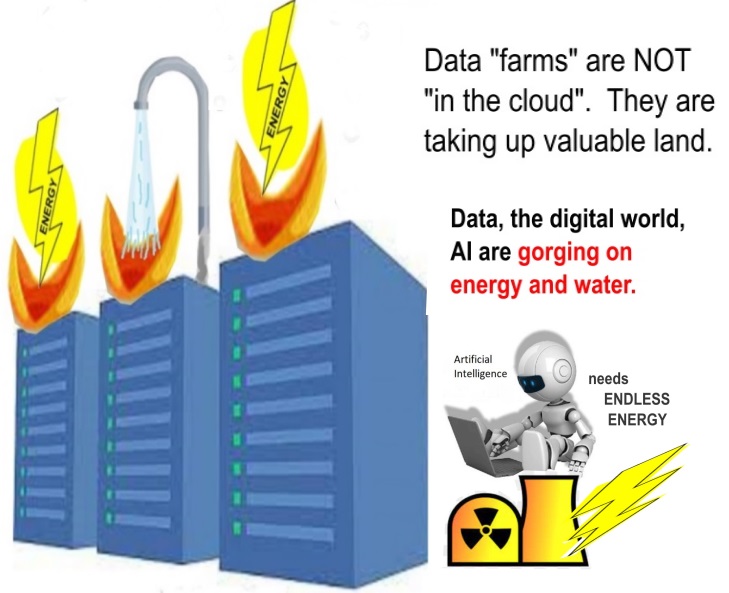
That surge has been accompanied by growing concern about the knock-on effects of the facilities, especially the large amounts of energy and water they consume……………….
For some Hurlford residents though, the announcement of the facility – called Rufus – prompted questions, and a lot of them.
Lisa Beacham became aware of the proposal – which ILI stress is still at a very early stage – shortly after the initial announcement.
A student from Hurlford, she then went down a rabbit hole looking at the amount of water that would be needed for coolant, the process which stops the computer chips there from overheating.
“The site proposal is that it would be powered at 540MW, which would require millions of litres of water a day,” she said.
“Water is a global commodity and we are currently facing global water bankruptcy, according to the UN. Yet we’ll have a site that is using up a huge amount, and due to residue [from the centre] the water used there cannot easily be recirculated.”
Last year the BBC told of people who lived near a data centre in Georgia in the USA who were struggling with an excessive build-up of sediment in water supplies………………………….
Alex De Vries, who runs the Digiconomist blog and website, said he estimated a 540MW facility “could result in almost 6bn litres of annual fresh water consumption” to generate the power needed.
He told BBC Scotland News: “The relatively cooler climate in Scotland isn’t going to do much to mitigate this.”…………………………………..
Cheryl Rowland, an admin assistant at a construction company, who lives in Hurlford, is sceptical.
Speaking at the consultation event, she said: “They are talking about something that will be here for 40 or 50 years.
“Would they arrange education upskilling, to bring local people through and help them grow into jobs here, or will the jobs all be people coming into the area?”……………………
Rowland says it is a worry such a large site will be built by a company who will not be there long term.
https://www.bbc.co.uk/news/articles/c2d1ny161yyo
Year 4: The Timeline That Tells the Tale
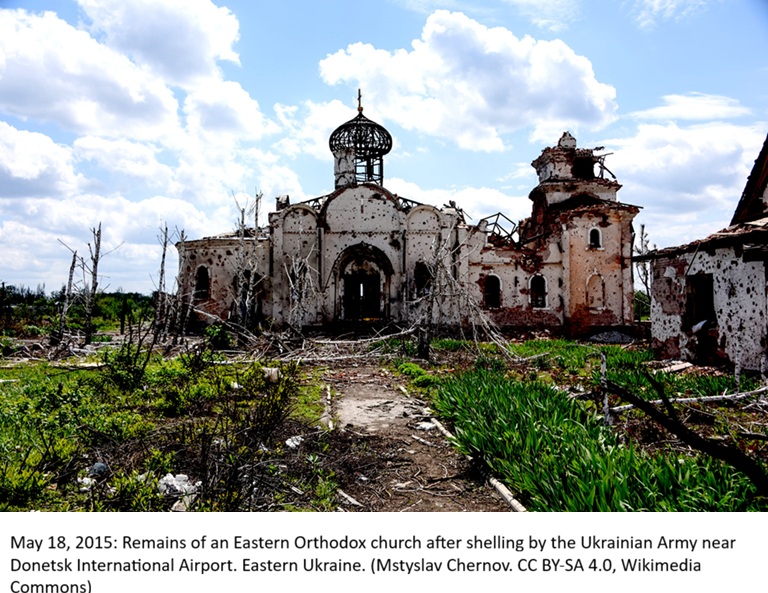
Without historical context, which is buried by corporate media, it’s impossible to understand the war in Ukraine. Historians will tell the story, but journalists are cut short for trying to tell it now.
By Joe Lauria, Consortium News, February 24, 2026
The way to prevent the Ukraine war from being understood is to suppress its history.
A cartoon version has the conflict beginning on Feb. 24, 2022 when Vladimir Putin woke up that morning and decided to invade Ukraine.
There was no other cause, according to this version, other than unprovoked, Russian aggression against an innocent country.
Please use this short, historical guide to share with people who still flip through the funny pages trying to figure out what’s going on in Ukraine.
The mainstream account is like opening a novel in the middle of the book to read a random chapter as though it’s the beginning of the story.
Thirty years from now historians will write about the context of the Ukraine war: the coup, the attack on Donbass, NATO expansion, and the rejection of the Minsk Accords and Russian treaty proposals without being called Putin puppets.
It will be the same way historians today write of the Versailles Treaty as a cause of Nazism and WWII, without being called Nazi-sympathizers.
Providing context is taboo while the war continues in Ukraine, as it would have been during WWII. Context is paramount in journalism.
But journalists have to get with the program of war propaganda while a war goes on. Journalists are clearly not afforded the same liberties as historians. Long after the war, historians are free to sift through the facts.
THE UKRAINE TIMELINE
World War II— Ukrainian national fascists, led by Stepan Bandera, at first allied with the German Nazis, massacre more than a hundred thousands Jews and Poles.
1950s to 1990 – C.I.A. brought Ukrainian fascists to the U.S. and worked with them to undermine the Soviet Union in Ukraine, running sabotage and propaganda operations. Ukrainian fascist leader Mykola Lebed was taken to New York where he worked with the C.I.A. through at least the 1960s and was still useful to the C.I.A. until 1991, the year of Ukraine’s independence. The evidence is in a U.S. government report starting from page 82. Ukraine has thus been a staging ground for the U.S. to weaken and threaten Moscow for nearly 80 years.
November 1990: A year after the fall of the Berlin Wall, the Charter of Paris for a New Europe (also known as the Paris Charter) is adopted by the U.S., Europe and the Soviet Union. The charter is based on the Helsinki Accords and is updated in the 1999 Charter for European Security. These documents are the foundation of the Organization for Security and Co-operation in Europe. The OSCE charter says no country or bloc can preserve its own security at another country’s expense.
Dec. 25, 1991: Soviet Union collapses. Wall Street and Washington carpetbaggers move in during ensuing decade to asset-strip the country of formerly state-owned properties, enrich themselves, help give rise to oligarchs, and impoverish the Russian, Ukrainian and other former Soviet peoples.
1990s: U.S. reneges on promise to last Soviet leader Gorbachev not to expand NATO to Eastern Europe in exchange for a unified Germany. George Kennan, the leading U.S. government expert on the U.S.S.R., opposes expansion. Sen. Joe Biden, who supports NATO enlargement, predicts Russia will react hostilely to it.
1997 :: The only thing that could provoke a “vigorous and hostile” Russian response would be needless NATO Expansion Far East right till the border of Russia – Sen. Joe Biden pic.twitter.com/hRW47hLL5y
— Rishi Bagree (@rishibagree) June 17, 2022
1997: Zbigniew Brzezinski, former U.S. national security adviser, in his 1997 book, The Grand Chessboard: American Primacy and Its Geostrategic Imperatives, writes:
“Ukraine, a new and important space on the Eurasian chessboard, is a geopolitical pivot because its very existence as an independent country helps to transform Russia. Without Ukraine, Russia ceases to be a Eurasian empire. Russia without Ukraine can still strive for imperial status, but it would then become a predominantly Asian imperial state.”
New Year’s Eve 1999: After eight years of U.S. and Wall Street dominance, Vladimir Putin becomes president of Russia. Bill Clinton rebuffs him in 2000 when he asks to join NATO.
Putin begins closing the door on Western interlopers, restoring Russian sovereignty, ultimately angering Washington and Wall Street. This process does not occur in Ukraine, which remains subject to Western exploitation and impoverishment of Ukrainian people.
Feb. 10, 2007: Putin gives his Munich Security Conference speech in which he condemns U.S. aggressive unilateralism, including its illegal 2003 invasion of Iraq and its NATO expansion eastward.
He said: “We have the right to ask: against whom is this [NATO] expansion intended? And what happened to the assurances our western partners made after the dissolution of the Warsaw Pact? Where are those declarations today? No one even remembers them.”
Putin speaks three years after the Baltic States, former Soviet republics bordering on Russia, joined the Western Alliance. The West humiliates Putin and Russia by ignoring its legitimate concerns. A year after his speech, NATO says Ukraine and Georgia will become members. Four other former Warsaw Pact states join in 2009.
2004-5: Orange Revolution. Election results are overturned giving the presidency in a run-off to U.S.-aligned Viktor Yuschenko over Viktor Yanukovich. Yuschenko makes fascist leader Bandera a “hero of Ukraine.”
April 3, 2008: At a NATO conference in Bucharest, a summit declaration “welcomes Ukraine’s and Georgia’s Euro-Atlantic aspirations for membership in NATO. We agreed today that these countries will become members of NATO”. Russia harshly objects. William Burns, then U.S. ambassador to Russia, and presently C.I.A. director, warns in a cable to Washington, revealed by WikiLeaks, that,
“Foreign Minister Lavrov and other senior officials have reiterated strong opposition, stressing that Russia would view further eastward expansion as a potential military threat. NATO enlargement, particularly to Ukraine, remains ‘an emotional and neuralgic’ issue for Russia, but strategic policy considerations also underlie strong opposition to NATO membership for Ukraine and Georgia. In Ukraine, these include fears that the issue could potentially split the country in two, leading to violence or even, some claim, civil war, which would force Russia to decide whether to intervene. … Lavrov stressed that Russia had to view continued eastward expansion of NATO, particularly to Ukraine and Georgia, as a potential military threat.”
A crisis in Georgia erupts four months later leading to a brief war with Russia, which the European Union blames on provocation from Georgia.
November 2009: Russia seeks new security arrangement in Europe. Moscow releases a draft of a proposal for a new European security architecture that the Kremlin says should replace outdated institutions such as NATO and the Organization for Security and Cooperation in Europe (OSCE).
The text, posted on the Kremlin’s website on Nov. 29, comes more than a year after President Dmitry Medvedev first formally raised the issue. Speaking in Berlin in June 2008, Medvedev said the new pact was necessary to finally update Cold War-era arrangements.
“I’m convinced that Europe’s problems won’t be solved until its unity is established, an organic wholeness of all its integral parts, including Russia,” Medvedev said.
2010: Viktor Yanukovich is elected president of Ukraine in a free and fair election, according to the OSCE.
2013: Yanukovich chooses an economic package from Russia rather than an association agreement with the EU. This threatens Western exploiters in Ukraine and Ukrainian comprador political leaders and oligarchs.
February 2014: Yanukovich is overthrown in a violent, U.S.-backed coup (presaged by the Nuland-Pyatt intercept), with Ukrainian fascist groups, like Right Sector, playing a lead role. Ukrainian fascists parade through cities in torch-lit parades with portraits of Bandera.
March 16, 2014: In a rejection of the coup and the unconstitutional installation of an anti-Russian government in Kiev, Crimeans vote by 97 percent to join Russia in a referendum with 89 percent turn out. The Wagner private military organization is created to support Crimea. Virtually no shots are fired and no one was killed in what Western media wrongly portrays as a “Russian invasion of Crimea.”
April 12, 2014: Coup government in Kiev launches war against anti-coup, pro-democracy separatists in Donbass. Openly neo-Nazi Azov Battalion plays a key role in the fighting for Kiev. Wagner forces arrive to support Donbass militias. U.S. again exaggerates this as a Russian “invasion” of Ukraine. “You just don’t in the 21st century behave in 19th century fashion by invading another country on completely trumped up pre-text,” says U.S. Secretary of State John Kerry, who voted as a senator in favor of the U.S. invasion of Iraq in 2003 on a completely trumped up pre-text.
May 2, 2014: Dozens of ethnic Russian protestors are burnt alive in a building in Odessa by neo-Nazi thugs. Eight days later, Luhansk and Donetsk declare independence and vote to leave Ukraine.
Sept. 5, 2014: First Minsk agreement is signed in Minsk, Belarus by Russia, Ukraine, the OSCE, and the leaders of the breakaway Donbass republics, with mediation by Germany and France in a Normandy Format. It fails to resolve the conflict.
Feb. 12, 2015: Minsk II is signed in Belarus, which would end the fighting and grant the republics autonomy while they remain part of Ukraine. The accord was unanimously endorsed by the U.N. Security Council on Feb. 15. In December 2022 former German Chancellor Angela Merkel admits West never had intention of pushing for Minsk implementation and essentially used it as a ruse to give time for NATO to arm and train the Ukraine armed forces.
2016: The hoax known as Russiagate grips the Democratic Party and its allied media in the United States, in which it is falsely alleged that Russia interfered in the 2016 U.S. presidential election to get Donald Trump elected. The phony scandal serves to further demonize Russia in the U.S. and raise tensions between the nuclear-armed powers, conditioning the public for war against Russia.
May 12, 2016: U.S. activates missile system in Romania, angering Russia. U.S. claims it is purely defensive, but Moscow says the system could also be used offensively and would cut the time to deliver a strike on the Russian capital to within 10 to 12 minutes.
June 6, 2016: Symbolically on the anniversary of the Normandy invasion, NATO launches aggressive exercises against Russia. It begins war games with 31,000 troops near Russia’s borders, the largest exercise in Eastern Europe since the Cold War ended. For the first time in 75 years, German troops retrace the steps of the Nazi invasion of the Soviet Union across Poland.
German Foreign Minister Frank Walter-Steinmeier objects. “What we shouldn’t do now is inflame the situation further through saber-rattling and warmongering,” Steinmeier stunningly tells Bild am Sontag newspaper. “Whoever believes that a symbolic tank parade on the alliance’s eastern border will bring security is mistaken.”
Instead Steinmeier calls for dialogue with Moscow. “We are well-advised to not create pretexts to renew an old confrontation,” he warns, adding it would be “fatal to search only for military solutions and a policy of deterrence.”
December 2021: Russia offers draft treaty proposals to the United States and NATO proposing a new security architecture in Europe, reviving the failed Russian attempt to do so in 2009. The treaties propose the removal of the Romanian missile system and the withdrawal of NATO troop deployments from Eastern Europe. Russia says there will be a “technical-military” response if there are not serious negotiations on the treaties. The U.S. and NATO reject them essentially out of hand.
February 2022: Russia begins its military intervention into Donbass in the still ongoing Ukrainian civil war after first recognizing the independence of Luhansk and Donetsk.
Before the intervention, OSCE maps show a significant uptick of shelling from Ukraine into the separatist republics, where more than 10,000 people have been killed since 2014.
March-April 2022: Russia and Ukraine agree on a framework agreement that would end the war, including Ukraine pledging not to join NATO. The U.S. and U.K. object. Prime Minister Boris Johnson flies to Kiev to tell Ukrainian President Volodymyr Zelensky to stop negotiating with Russia. The war continues with Russia seizing much of the Donbass.
March 26, 2022: Biden admits in a speech in Warsaw that the U.S. is seeking through its proxy war against Russia to overthrow the Putin government. Earlier in March he overruled his secretary of state on establishing a no-fly zone against Russian aircraft in Ukraine. Biden opposed the no-fly zone, he said at the time, because “that’s called World War III, okay? Let’s get it straight here, guys. We will not fight the third world war in Ukraine.”
September 2022: Donbass republics vote to join Russian Federation, as well as two other regions: Kherson and Zaporizhzhia.
May 2023: Ukraine begins counter-offensive to try to take back territory controlled by Russia. As seen in leaked documents earlier in the year, U.S. intelligence concludes the offensive will fail before it begins.
June 2023: A 36-hour rebellion by the Wagner group fails, when its leader Yevegny Prigoshzin takes a deal to go into exile in Belarus. The Wagner private army, which was funded and armed by the Russian Ministry of Defense, is absorbed into the Russian army. The Ukrainian offensive ends in failure at the end of November.
September 2024: Biden deferred to the realists in the Pentagon to oppose long-range British Storm Shadow missiles from being fired by Ukraine deep into Russia out of fear it would also lead to a direct NATO-Russia military confrontation with all that that entails.
Putin warned at the time that because British soldiers on the ground in Ukraine would actually launch the British missiles into Russia with U.S. geostrategic support, it “will mean that NATO countries — the United States and European countries — are at war with Russia. And if this is the case, then, bearing in mind the change in the essence of the conflict, we will make appropriate decisions in response to the threats that will be posed to us.”
November 2024: After he was driven from the race and his party lost the White House, a lame duck Biden suddenly switched gears, allowing not only British, but also U.S. long-range ATACMS missiles to be fired into Russia. It’s not clear that the White House ever informed the Pentagon in advance in a move that risked the very World War III that Biden had previously sought to avoid.
February 2025: The first direct contact between senior leadership of the United States and Russia in more than three years takes place, with a phone call between the countries’ presidents, and a meeting of foreign ministers in Saudi Arabia. They agree to begin negotiations to end the war.
August 15, 2025: Donald Trump and Vladimir Putin meet in Anchorage, Alaska for the first face-to-face meeting between U.S. and Russian leaders in more than four years. The Russians left believing Trump had thoroughly understood their position against a ceasefire and instead their desire to reach a comprehensive solution to the war that addressed the “root causes” and Russian security concerns, which have been outlined in this timeline. A series of follow-up diplomatic meetings have failed to advance that goal and the conflict continues to be decided on the battlefield with Russian gains as well as an increase in missiles being fired into each nations territory.
This timeline clearly shows an aggressive Western intent towards Russia, and how the tragedy could have been avoided if NATO would not allow Ukraine to join; if the Minsk accords had been implemented; and if the U.S. and NATO negotiated a new security arrangement in Europe, taking Russian security concerns into account.
Joe Lauria is editor-in-chief of Consortium News and a former U.N. correspondent for The Wall Street Journal, Boston Globe, and numerous other newspapers, including The Montreal Gazette and The Star of Johannesburg. He was an investigative reporter for the Sunday Times of London, a financial reporter for Bloomberg News and began his professional work as a 19-year old stringer for The New York Times. He is the author of two books, A Political Odyssey, with Sen. Mike Gravel, foreword by Daniel Ellsberg; and How I Lost By Hillary Clinton, foreword by Julian Assange. He can be reached at joelauria@consortiumnews.com and followed on Twitter @unjoe
Golden pipedreams – UK Advanced Nuclear plan
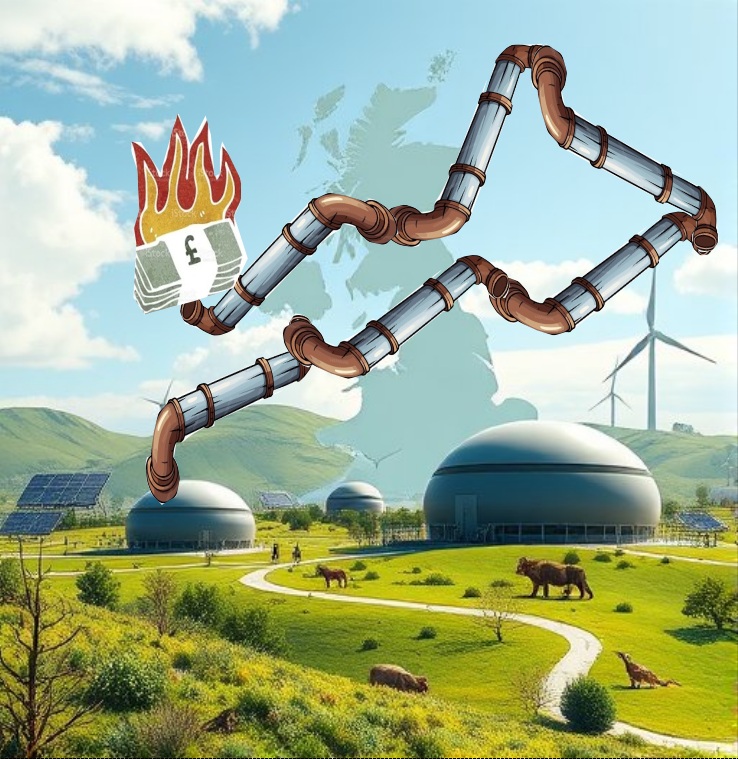
Not everyone is convinced that these new SMR/AMR/MMR projects will be viable technologically or economically,
To progress all this, the Department for Energy Security and Net Zero says it is setting up a ‘UK Advanced Nuclear Pipeline’, a new government managed process through which private sector projects submit detailed plans across 5 core areas: technology & supply chain; developer capability; finance/funding/investment; siting; and operator/end user arrangements. DESNZ and GBE N will conduct eligibility checks /Project Readiness Assessment, with successful projects then being invited to join the Pipeline, subject to ministerial approval.
February 28, 2026, https://renewextraweekly.blogspot.com/2026/02/golden-dreams-uk-advanced-nuclear-plan.html
The UK government is looking to ‘a new golden age of nuclear’, committing £17 billion to ‘the most ambitious programme of new plants for a generation’. As its new Advanced Nuclear Frameworks plan says, in the 2025 Spending Review, it committed £14.2 billion to Sizewell C and over £2.5 billion to the Great British Energy – Nuclear (GBE N) Small Modular Reactor (SMR) project at Wylfa. And it says ‘together with Hinkley Point C, these projects will add almost 8 GW of capacity in the 2030s’.
However, it also wants to do more, with plans for advanced nuclear, some based on US Advanced Modular Reactor (AMR) developments. As it notes, some major commercial deals have been concluded between UK and US companies, including ‘plans for X-Energy and Centrica to build 12 advanced modular reactors in Hartlepool, supporting 2,500 jobs, as well as plans for Holtec, EDF, and Tritax to build small modular reactors at the former coal-fired power station Cottam in Nottinghamshire, providing clean, secure power to data centres on the site’.
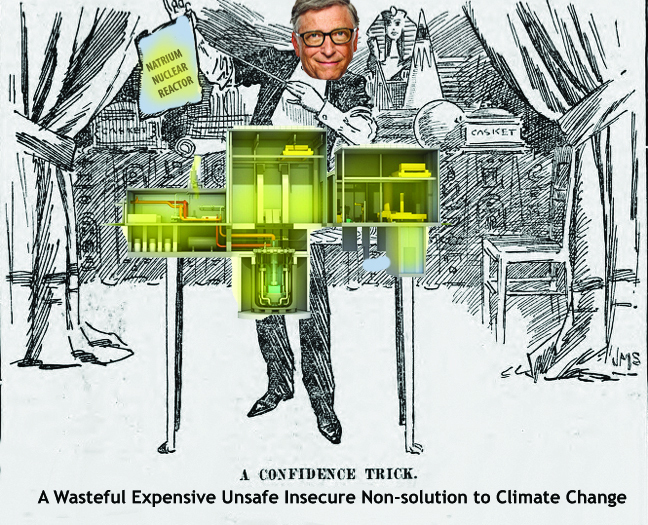
Meanwhile it says ‘TerraPower is working with engineering firm KBR to explore the potential deployment of its Natrium advanced reactor technology in the UK & beyond’. It also noted that ‘Last Energy & DP World intend to create one of the world’s first micro modular nuclear plants at London Gateway, backed by £80m in private money’. These MMRs are meant to be under 20MW.
Not everyone is convinced that these new SMR/AMR/MMR projects will be viable technologically or economically, but DESNZ is optimistic: ‘Britain could see some of the world’s first advanced nuclear power stations powering factories and AI data centres, as part of the government’s “golden age” of nuclear to support jobs, drive growth & protect billpayers with homegrown clean energy’.
To help with that, it is investing in ‘fuel cycle capabilities such as High Assay Low Enriched Uranium (HALEU)’ which some of the new plants will need- if they go forward. HALEU is enriched to below 20%, compared to under 5% for the uranium used in most conventional plants and DESNZ says that it ‘is essential for fuelling AMRs’. But the UK doesn’t have a plant for making it. £300m has been allocated for one, with the aim being to establish a UK domestic HALEU capability that ‘reduces global reliance on Russian supply chains, which currently dominate the global market, and mitigates strategic vulnerabilities for the UK and its allies. By investing early, the UK is ready to be a trusted supplier of HALEU to international partners’ this also ensuring ‘uninterrupted fuel supply for domestic AMR deployment’.
To progress all this, the Department for Energy Security and Net Zero says it is setting up a ‘UK Advanced Nuclear Pipeline’, a new government managed process through which private sector projects submit detailed plans across 5 core areas: technology & supply chain; developer capability; finance/funding/investment; siting; and operator/end user arrangements. DESNZ and GBE N will conduct eligibility checks /Project Readiness Assessment, with successful projects then being invited to join the Pipeline, subject to ministerial approval.
DESNZ says ‘Pipeline projects may engage with DESNZ on potential revenue support, e.g., a Contracts for Difference (CfD) style mechanism that stabilises future revenues, and High Impact, Low Probability (HILP) risk protections where private markets cannot efficiently bear residual risks.’ It adds ‘In parallel, all companies can approach the National Wealth Fund (NWF), who bring £27.8 billion of capital, a dedicated nuclear team, and a full suite of debt, equity and hybrid instruments, to explore investment opportunities aligned with strategic priorities’. DESNZ also look at the ‘wider enablers that the government is putting in place to support nuclear deployment, reforming the planning system, grid connection process, and regulatory process, to ease and accelerate deployment of new plants’.
DESNZ says that while ‘the Framework aims to support private projects that use advanced nuclear technologies for civil energy purposes,’ with the focus on electricity, it also includes ‘projects that supply energy as heat and/or electricity & where the energy is supplied to the National Grid and/or to private energy users.’ But it adds, given possibly unique regulatory, legal, safety, and/or strategic challenges, the new framework ‘specifically excludes offshore or floating nuclear platforms, civil nuclear propulsion, space based reactors and transportable nuclear solutions.’
Even so, it still feels quite breath-takingly pro-nuclear, a very big shift from earlier Labour and indeed Tory views on nuclear as economically unattractive. And the government seems keen to go even further, with revamps to basic regulatory approaches to nuclear safety – to speed thing up and, presumably, try to improve its economics. The new approach could have significant undesirable impacts and has not gone unopposed. But the nuclear lobby is clearly keen to press ahead, with a new perspective on risks being pushed: ‘Routine reactor emissions, both activated material (made radioactive by neutron bombardment) and fission by-products, pose no meaningful health risk.

Even if some vanishingly small effect existed, it would be statistically indistinguishable from the background cancer rate and would be lost in the noise of lifestyle, environmental, and biological risk factors.’ So said two pro-nuclear Breakthrough campaign members in a recent edition of the usually very critical Bulletin of the Atomic Scientists. No risk? Really? There is no shortage of contrary evidence on human health impacts, both occupational and residential, including a recent US national study, although there are still debates on their overall significance and implications.
However, while debates like that, and also on waste costs, continue, DESNZ seems keen to press ahead with nuclear expansion. And they are pretty ‘gung ho’ about that, backing a ‘Destination Nuclear’ staff recruitment campaign, part of their Nuclear Skills plan, which aims to support both civil and defence related nuclear jobs. DESNZ says that nearly 3,500 early careers starters entered the sector in 24/25, with ‘73 new nuclear fission PhDs added in academic years 24/25 and 25/26’.
Is all this wise? Can we really have a golden nuclear future? Well, the latest update from the World Nuclear Industry Status team says that, in Jan 2026 ‘404 nuclear power reactors were operating in the world – 5 units less than one year earlier – maintaining however a stable combined operating capacity. Construction of new nuclear plants was underway in 11countries, five fewer host nations than just two years earlier’. It noted that 2025 saw the lowest number of new start-ups since 2017, while 7 plants totalling 2.8 GW were closed – 3 each in Belgium & Russia, and 1 in Taiwan, completing its nuclear phaseout. So it doesn’t sound too sure about overall nuclear growth- indeed some portray nuclear as fizzling out .
That may be overstating the case, depending on location, but the renewables by contrast are really booming globally – led by China. Indeed Stanford University’s Prof Mark Jacobson says China could reach 100% renewable energy (nearly all power, heat & transport) by 2050. While, he notes that sadly, at the current rate of progress, the USA would only reach that point roughly 100 years later. China may still end having a little fossil and nuclear by 2050/60, but mostly, DNV suggests, it will be green energy. Is the USA’s big fossil and nuclear emphasis really the way to go for anyone? The UK is doing well on replacing fossil with low cost renewables, but, after having its financial fingers burnt by EDF’s high cost EPRs, it still seems strangely locked into uncertain and likely to be high cost new nuclear, increasingly from the USA.…
France arrests activists blocking ship over alleged Russia uranium links
Police arrested four Greenpeace activists on Monday for blocking a cargo ship in France that they alleged was transporting uranium from Russia for the country’s nuclear power plants.
By:RFI, 02/03/2026 ,
https://www.rfi.fr/en/france/20260302-france-arrests-activists-blocking-ship-over-alleged-russia-uranium-links-ukraine-war
Around 20 protestors carrying signs reading “Stop toxic contracts” and “Solidarity with Ukrainians”, blockaded the Mikhail Dudin at the northern port of Dunkirk early on Monday morning, to prevent it from unloading its cargo, a journalist from French news agency AFP observed.
French authorities then arrested four individuals, Dunkirk police told AFP, adding that the blockade was lifted around 9am local time.
Greenpeace has repeatedly accused France of maintaining ties with Russia’s state-owned energy company, Rosatom, despite President Vladimir Putin’s war in Ukraine.
Activists, some on kayaks, had impeded the ship while a large banner stretched across the lock read, “Uranium: EDF loves Putin” – a jab at the French state-owned energy giant.
In 2018, France’s EDF signed a 600-million-euro deal with a Rosatom subsidiary, Tenex, for reprocessed uranium from French nuclear power plants to be sent to Russia to be converted and then re-enriched before being reused in power production.
Rosatom has the only facility in the world – in Seversk in Siberia – capable of carrying out key parts of the conversion of reprocessed uranium to enriched reprocessed uranium.
“This trade, which indirectly fuels Putin’s war, must stop,” said Pauline Boyer, an energy campaigner for Greenpeace France on Monday.
The environment group alleges it has “on numerous occasions” observed the Mikhail Dudin unloading Russian natural and enriched uranium in France.
An AFP analysis of Global Fishing Watch tracking data shows the Mikhail Dudin has made more than 20 round trips between Dunkirk and the Russian ports of Vistino, Ust-Luga and Saint Petersburg since Russia’s full-scale invasion of Ukraine began on 24 February, 2022.
The Baltiyskiy-202 – another vessel that Greenpeace alleges has transported uranium between France and Russia – has completed more than 15 round trips during the same period.
Both sail under the Panamanian flag and are owned by companies registered in Hong Kong, according to the International Maritime Organisation’s register.
EDF did not immediately respond to AFP’s request for comment.
In 2022, France ordered EDF to halt its uranium trade with Rosatom when Greenpeace first revealed the contracts in the wake of Russia’s invasion.
But in March 2024, Jean-Michel Quilichini, head of the nuclear fuel division at EDF, said the company planned to continue to “honour” its 2018 contract.
France in March 2024 said it was “seriously” looking at the possibility of building its own conversion facility to produce enriched reprocessed uranium.
AFP analysis of French customs data shows that in 2025, France imported at least 112 tonnes of enriched uranium and its compounds from Russia, accounting for a quarter of total purchases by volume – a level stable compared to 2024.
These imports however fell significantly between 2022 and 2024.
1 This Month

of the week – Shut Down Drone Warfare!


Tell the Ukrainian Government to Drop Prosecution of Peace Activist Yurii Sheliazhenko

Petition to revoke the licensing of the Near Surface Nuclear Disposal Facility (NSDF) at Chalk River. https://www.ourcommons.ca/petitions/en/Petition/Details?Petition=e-7247
To see nuclear-related stories in greater depth and intensity – go to https://nuclearinformation.wordpress.com
-
Archives
- April 2026 (57)
- March 2026 (251)
- February 2026 (268)
- January 2026 (308)
- December 2025 (358)
- November 2025 (359)
- October 2025 (376)
- September 2025 (257)
- August 2025 (319)
- July 2025 (230)
- June 2025 (348)
- May 2025 (261)
-
Categories
- 1
- 1 NUCLEAR ISSUES
- business and costs
- climate change
- culture and arts
- ENERGY
- environment
- health
- history
- indigenous issues
- Legal
- marketing of nuclear
- media
- opposition to nuclear
- PERSONAL STORIES
- politics
- politics international
- Religion and ethics
- safety
- secrets,lies and civil liberties
- spinbuster
- technology
- Uranium
- wastes
- weapons and war
- Women
- 2 WORLD
- ACTION
- AFRICA
- Atrocities
- AUSTRALIA
- Christina's notes
- Christina's themes
- culture and arts
- Events
- Fuk 2022
- Fuk 2023
- Fukushima 2017
- Fukushima 2018
- fukushima 2019
- Fukushima 2020
- Fukushima 2021
- general
- global warming
- Humour (God we need it)
- Nuclear
- RARE EARTHS
- Reference
- resources – print
- Resources -audiovicual
- Weekly Newsletter
- World
- World Nuclear
- YouTube
-
RSS
Entries RSS
Comments RSS
 nuclear-news