Scotland’s electricity consumers will pay up for UK’s Hinkley nuclear plant, though it’s not even built
The UK Government’s commitment to new nuclear power stations in England
will push up energy bills for consumers in Scotland. Although Scotland has
used planning laws to prevent any new nuclear south of the border, the UK
Government has pressed ahead with projects like Hinkley Point, which will
charge bill payers upfront to subsidise nuclear power stations that
haven’t even been built yet.
The issue was raised in the Scottish
parliament this week by Scottish Greens energy spokesperson Mark Ruskell,
prompting the Net Zero secretary Michael Matheson to confirm that “in
2030 alone Hinkley could add almost £40/year to a consumer bill whereas an
equivalent offshore wind farm would reduce bills by £8/year.”
Commenting, Mark Ruskell said: “As well as leaving a toxic legacy for
generations to come, nuclear power is a bad deal for consumers now, at a
time when energy bills are pushing more and more households into fuel
poverty.
“Renewable energy is far cheaper, and since it doesn’t result
in toxic waste which will remain deadly for hundreds of thousands of years,
better for the environment too. That’s why with Greens in government
Scotland is doubling our onshore wind capacity and investing in offshore
wind and marine renewables too. “The UK Government’s energy policy is
more about helping its friends than following the science or tackling fuel
poverty. It’s important we do things differently in Scotland, which would
be helped with the greater powers of independence.”
Scottish Greens 14th Jan 2022
The detail in the European Commission’s draft for ”sustainable nuclear energy” makes nuclear energy unfeasible – even the nuke lobby hates it!


“The taxonomy reporting is annual, so there’s something impossible to match there, which means a major greenwashing risk”
The European Parliament, however, has a lower voting threshold and will be able to block the proposal by simple majority (i.e. at least 353 MEPs in Plenary).
‘Misunderstanding’ could block nuclear from claiming green EU label, industry warns https://www.euractiv.com/section/energy-environment/news/misunderstanding-could-block-nuclear-from-claiming-green-eu-label-industry-warns/ By Kira Taylor | EURACTIV.com Ambiguities and misunderstandings contained in a draft EU proposal could block nuclear power plants from claiming a green investment label under the bloc’s sustainable finance taxonomy, the industry has warned. The European Commission is currently in the process of putting together a rulebook, known as the sustainable finance taxonomy, to define which investments can be labelled as climate-friendly in the EU.
As part of this, nuclear energy has tentatively been categorised as a “transitional” technology making a “substantial contribution to climate change mitigation” under draft EU plans circulated by the European Commission on 31 December.
To qualify for the transitional label, new nuclear plants must be built before 2045 and show detailed plans to have a disposal facility in place by 2050 for high-level radioactive waste.
However, issues with the draft criteria mean no nuclear power plant would currently be able to claim the coveted green label, the nuclear industry body Foratom told EURACTIV.
This is because of a requirement that power plants must fully apply “the best-available technology and accident-tolerant fuel” to qualify. That fuel is still in the research phase and is currently not available or licenced, Foratom says.
“As it currently stands, no nuclear entity is covered by the taxonomy because of this,” said Jessica Johnson, communications director at Foratom. “If the text does not change, then we do have problems, particularly in relation to accident tolerant fuels – they don’t exist on the market today,” she told EURACTIV.
Criteria based on a currently unavailable fuel “is obviously not acceptable,” Johnson said, adding however that this could simply be a “misunderstanding” by the European Commission.
Nuclear industry leaders expressed their concerns in a letter sent to the EU executive. “Given that Accident-Tolerant Fuels are still at the research phase we believe this requirement should be removed and instead limited to existing legislation and best available technologies.”
Ambiguous wording
Alongside this, the industry has flagged concerns about the draft’s wording regarding the types of nuclear power plants that could qualify.
According to Foratom, criteria for the operation and maintenance of nuclear plants is ambiguous as the proposal only seems to cover new build projects or those undergoing a lifetime extension, potentially excluding the normal operation and maintenance of existing plants.
“We think it’s just an oversight and more an issue of wording. But it is important that it’s clearly stated that the technical screening criteria cover operation and maintenance of existing power plants,” she said.
Foratom has also questioned a requirement for final repositories of high-level radioactive nuclear waste. Companies will only be able to claim the green EU investment label if they can show “a plan with detailed steps” to have them “in operation by 2050,” according to the draft.
While Foratom agrees that such repositories must be available, Johnson said the current wording could mean a plant built in the 2040s would need a final repository in place by 2050, despite not requiring it for decades.
“We don’t see a need to have a final repository lying idle for 20 to 30 years. It doesn’t make much sense to us,” she explained.
Also it shouldn’t be restricted just to final repositories. We shouldn’t be hampering innovation in other solutions because there is other innovation and research ongoing in terms of other solutions for high level waste and spent fuel,” she added.
Opposition
Environmental groups also have concerns about this part of the leaked draft – only for the opposite reason.
“If the nuclear plant is reported as taxonomy aligned from year one, but [its plan for disposing of high-level waste] fails by, say 2045, then that means the nuclear plant was not taxonomy aligned at all from year one,” explained Sebastien Godinot from WWF, the global conservation NGO.
“The taxonomy reporting is annual, so there’s something impossible to match there, which means a major greenwashing risk,” Godinot warned.
Some EU member states have vowed to oppose the inclusion of nuclear in the EU’s green finance taxonomy. “If the EU taxonomy includes nuclear energy, we are ready to challenge that in court,” Austria warned in November. The country has since repeated that threat.
Luxembourg, Denmark and Spain have also voiced their opposition to the proposal. But they currently have little support from other EU countries, which are either pro-nuclear or keeping silent on the matter.
Anti-nuclear countries are unlikely to have a sufficient majority to veto the Commission’s draft proposal, known as a “delegated act”. To block a delegated act, they would need at least 72% of EU member states in the EU Council (i.e. 20) representing at least 65% of the EU population.
The European Parliament, however, has a lower voting threshold and will be able to block the proposal by simple majority (i.e. at least 353 MEPs in Plenary).
This makes the Parliament more of a threat to the nuclear industry, even though Foratom is still confident about the outcome. “We don’t think that they would get the number of votes needed to achieve that simple majority. Nevertheless, we are keeping a very close eye on that,” Johnson told EURACTIV.
German conservative lawmaker Peter Liese also believes the Parliament won’t block the proposal. “If I had to make a bet, I’d still bet that the European Parliament wouldn’t end up blocking the delegated act, but I wouldn’t put a lot of money on it anymore,” he told the Suddeutsche Zeitung.
Some EU lawmakers will be hoping they can garner enough support to stop the Commission’s proposal. They include German Green MEP Michael Bloss, who launched a petition to try and increase citizen pressure on the European Commission.
“With this proposal, EU Commission President Ursula von der Leyen is destroying the credibility of the European eco-label for financial investments. Including nuclear power and gas is an unprecedented labelling fraud, because nuclear power and gas are not sustainable energy sources,” Bloss told EURACTIV.
“There is now a lack of clarity for citizens who want to invest their money in sustainable, in the sense of green transformation. Where it says sustainable on it, it must also be sustainable in it, otherwise the entire regulatory framework loses its credibility,” he added.
The European Commission has given EU countries until 21 January to provide feedback on its plans and is expected to publish its proposal shortly after this month the deadline for experts to give feedback on divisive plans to allow some natural gas and nuclear energy projects to be labelled as sustainable investments.
Commission for Independent Research and Information on Radioactivity (CRIIRAD) wants transparency on the safety of EPR nuclear reactor design.
Safety defect of the Taishan 1 EPR reactor, CRIIRAD asks the authorities to draw all the consequences on the other EPRs including the one under construction in Flamanville.
According to information sent to CRIIRAD by a whistleblower from the nuclear industry, a generic problem could jeopardize the safety of reactors in the EPR sector
The serious malfunctions at the level of the EPR reactor n°1 of the Taishan power plant (China) – revealed in June 2021 and having led to its early shutdown on July 30 – would be partly linked to a design problem of the EPR tank.
The problems linked to the design of the EPR vessel in terms of hydraulics have been known to manufacturers since at least the end of the 2000s (model tests). The poor distribution of the primary liquid in the vessel would generate high levels of vibration of the nuclear fuel assemblies. These vibrations would have been observed as soon as Taishan 1 was commissioned in 2018.
The vibrations at the level of the reactor core would be the cause of the degradation of the sheaths of the nuclear fuel rods, thus causing leaks of radioactive rare gases, but also of radioactive isotopes of iodine and cesium. They would also have weakened the retaining grids of certain assemblies.
These leaks were noted by operators as early as October 2020 and have steadily worsened over the weeks. Given the risks this represents for workers, residents and nuclear safety, CRIIRAD believes that the Taishan 1 reactor should have been shut down well before July 30.
The damage to the nuclear fuel of the Taishan 1 reactor would be considerable. The whistleblower told CRIIRAD that 70 pencils are damaged belonging to about thirty different assemblies. Many retaining springs broke.
What about the French and Chinese Nuclear Safety Authorities? What do the French and Chinese Nuclear Safety Authorities know? CRIIRAD requests clarification and full transparency in an email sent to the French ASN on November 27, 2021: http://www.criirad.org/actualites/dos...

This more than worrying situation must absolutely be assessed and the results must be made public: nuclear safety and the protection of populations are at stake.
UK’s Advanced Gas Cooled (AGRs) reactors should be shut, as they are vulnerable to cracking
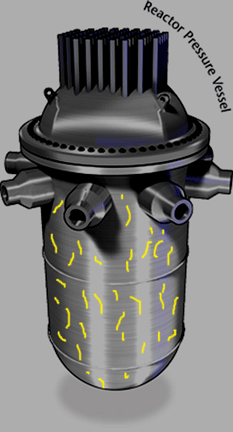
“The AGRs have already had a good run operating way beyond their intende 30-year lifecycle, but the fact is that as the reactors age so does the integrity of their graphite cores which moderate the nuclear reaction.
| EDF case for continued AGR reactor operations ‘cracking up’, says NFLA. The early closure of the final reactor at Hunterston B Nuclear Power Station last Friday (7 January) signalled yet another step towards the long-overdue demise of the outdated Advanced Gas Cooled (AGRs) reactors operated by EDF Energy, a subsidiary of French state owned EdF (Électricité de France), across the UK. After being shut down for much of 2019, EDF hoped to continue operations at Hunterston B until 2023 but increasing instances of cracks in the graphite cores of the reactor brought forward closure plans by a year. The problem of cracks in the graphite cores which compromises safety has long been an issue of concern to the Nuclear Free Local Authorities (NFLA). Councillor Blackburn said “The AGRs have already had a good run operating way beyond their intende 30-year lifecycle, but the fact is that as the reactors age so does the integrity of their graphite cores which moderate the nuclear reaction. Although EDF plans to close the last AGR in 2028, this is way too long and the timescale for closure needs to be brought forward in the interests of plant and public safety NFLA 12th Jan 2022 https://www.nuclearpolicy.info/news/edf-case-for-continued-agr-reactor-operations-cracking-up-says-nfla/ |
Nuclear: economically unsustainable, inherently dangerous and absolutely unfeasible as a solution to climate change

Nuclear: economically unsustainable, inherently dangerous and absolutely unfeasible as a solution to climate change.
A demolishing letter against those who postulate nuclear energy as part of the solution to the challenge
of climate change. The letter is signed by former top-level nuclear safety councils and regulatory authorities in France, Germany, the United Kingdom and the United States.
For nuclear power to contribute in a relevant way to the generation of energy on a global scale, the signatories maintain, it would take up to more than 10,000 new reactors, something that is “unsustainable from a financial point of view.”
Furthermore, nuclear power is still “subject to too many unresolved technical and safety problems” and
does not respond to the urgency of the challenge we face (climate change), given the construction times of the plants.
Energias Renovables 12th Jan 2022
Greenpeace France calls for a halt to Flamanville EPR nuclear project, to assess viability of EPR reactors.

EDF announced this morning that the start-up of the Flamanville EPR, which has been under construction for 15 years, has been postponed by several months, to mid-2023. The cost of this project, already multiplied by 6, increases again.
This umpteenth slippage of EPR technology questions the positioning of certain presidential candidates who promote it irresponsibly and disconnected from the facts.
Greenpeace France is calling for a moratorium on the work of the Flamanville EPR, in order to conduct an
independent assessment of the viability of EPR nuclear reactors. The incident that led to the shutdown of the world’s first EPR in Taishan,China, nearly 6 months ago, remains unresolved to this day. Beyond the
setbacks of construction sites, the EPR technology therefore proves to be faulty even in operation.
Greenpeace France 12th Jan 2022
A fifth French nuclear reactor affected by corrosion in safety system

Nuclear: a reactor at the Penly power plant also affected by a corrosion problem. This problem on a safety system has already been detected on four other EDF reactors currently shut down.
Nuclear: a reactor at the Penly power plant also affected by a corrosion problem. This problem on a safety system has already been detected on four other EDF reactors currently shut down. A nuclear reactor at the Penly power plant (Seine-Maritime) is also affected by a corrosion problem on a safety system already detected or suspected on four other EDF reactors currently shut down, AFP told on Thursday. Institute for Radiation Protection and Nuclear Safety (IRSN).
Le Figaro 13th Jan 2021
Drop in EDF’s 2022 production target due to nuclear outages because of cracks

EDF has cut its 2022 nuclear production target by almost 10% to 300-330 TWh following outages extensions at five of its 56 nuclear reactors (7.3 GW). Previously, the French utility aimed to generate 330-360 TWh of atomic output this year.
The firm attributed the reduced production figure to outage extensions of up to nine months at its Civaux 1,2, Chooz 1,2 (1.5 GW each) and Penly 1 (1.3 GW) units due to ongoing checks on the pipes of their safety injection system (SIS) circuit, it said in a statement late on Thursday.
Last month, the firm unexpectedly shut down both its Chooz reactors for inspections following the discovery of cracks close to welding on the pipes at the Civaux plant. EDF said that preventive checks at Penly 1 revealed “similar defects on the SIS circuit”.
Montel News 14th Jan 2022
https://www.montelnews.com/news/1292773/edf-cuts-2022-nuclear-output-target-by-10-amid-outages
‘Nuclear obsession’: Tory bill to let firms charge customers to build plants
‘Nuclear obsession’: Tory bill to let firms charge customers to build plants https://www.thenational.scot/news/19837771.nuclear-obsession-tory-bill-let-firms-charge-customers-build-plants/?fbclid=IwAR2qOsgM6f-vP8Y1Ieh4N2fAPD-00KK5j2I8Megxd7BEfa0hlLs-FmBI2ss
Gregor Young, 14 Jan 22, ONLY independence will rid Scotland of Westminster’s nuclear obsession ahead of a bill that will allow energy companies to increase consumer bills to build nuclear plants, the SNP have warned.
The Tories’ Nuclear Energy (Financing) Bill, which received its third reading in the House of Commons yesterday, would allow energy companies to pass the cost of a future nuclear power station to their current consumers.
The bill comes amidst a Tory-made cost-of-living crisis as energy bills and food prices continue to soar, after a £1000 cut to Universal Credit, and ahead of a regressive National Insurance hike.
The SNP Scottish Government has made it clear that it is committed to opposing new nuclear power plants and prioritising renewable and low carbon sources of energy, with Scotland producing nearly all of its electricity from renewable sources.
SNP energy spokesperson Alan Brown MP said: “Scotland has made it clear time and again that we do not want nuclear power stations – yet we will foot the bill for them anyway as the Tory government hammer on with their nuclear obsession.
“It is madness that during a cost of living crisis, the Tories are pushing through a bill that could see energy bill consumers forced to pay for another Tory vanity project.
“We do not need nuclear energy to decarbonise and there are better, and cheaper, ways to produce energy. The experts have made this clear.
“The only way for Scotland to escape the Tories’ costly nuclear obsession is through independence.”
Germany’s admirable record in promoting renewable energy, as it leaves nuclear behind.

The nuclear shenanigans aren’t enough to take away Germany’s crown as a climate-forward country. The politics that sped up the nuclear phaseout also created room for a renewables boom. Starting with the Renewable Energy Sources Act in 2000, Germany’s energy policy, known as energiewende, created some of the most generous subsidies for solar power. ………..
Germany moved ahead with a plan to shut off nearly 50 per cent of its nuclear power plants, with the rest scheduled to close by the end of 2022. Some asked how a climate-forward country could lay waste to a source of zero-carbon power, [zero carbon? not so] especially when there’s a shortage of it. Others
pointed out that Germany’s renewables investments are for naught if it has to fill up the nuclear quota using dirty coal. Outrageous, right?
Not so fast, says Nikos Tsafos, an energy and climate analyst at the Center for Strategic and International Studies. “It’s very easy to solve climate change if I’m not politically constrained.” Any sensible climate plan
requires that clean energy replaces dirty sources quickly, while at the same time efficiency measures cut the demand for energy overall.
That, in theory, would result in a smooth decline in emissions as laid out in scientific models. Reality, however, is anything but smooth. The transition will inevitably be shaped by human particularities.
The nuclear shenanigans aren’t enough to take away Germany’s crown as a climate-forward country. The politics that sped up the nuclear phaseout also created room for a renewables boom. Starting with the Renewable Energy Sources Act in 2000, Germany’s energy policy, known as energiewende, created some of the most generous subsidies for solar power. These came in the form of guaranteed prices (or feed-in tariffs) for generating solar power. German taxpayers paid billions of euros to support a new technology. The demand created giant solar companies, including many in China, that progressively made the technology cheaper (with additional support in the form of Chinese subsidies) and thus more accessible to the rest of the world.
Financial Post 11th Jan 2022
Claim that EDF contract for nuclear emergency generators was rigged.
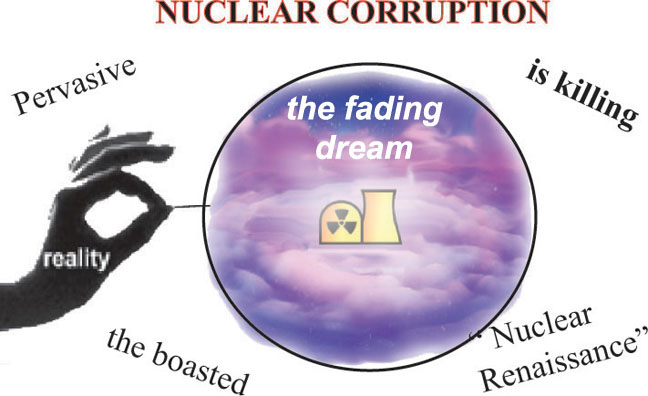
The contract for nuclear emergency generators was rigged, according to a former EDF top executive. This is what he told the judge of the financial investigations division who is investigating the matter. GRAND SLAM for EDF!
Not only do the emergency generators installed last year on some of the nuclear power plants catch fire when they are started, and not only has the national group had to compensate its supplier, Westinghouse, in secret, to the tune of 110 million euros (“Le Canard”, 8/12 and 15/12), but the contract is also said to have been rigged!
Be that as it may, this is what a former member of EDF’s procurement staff told the French National Financial Division in a statement. The latter is investigating the complaint for favouritism filed by an unsuccessful bidder, which has been joined by Greenpeace. Contacted on Monday, EDF’s management had not responded at the time the “Le Canard” went to press.
Le Canard Enchaine 22nd Dec 2021
Norway Activists Protest After Docking Of US Nuclear Submarine In Tromso: Reports
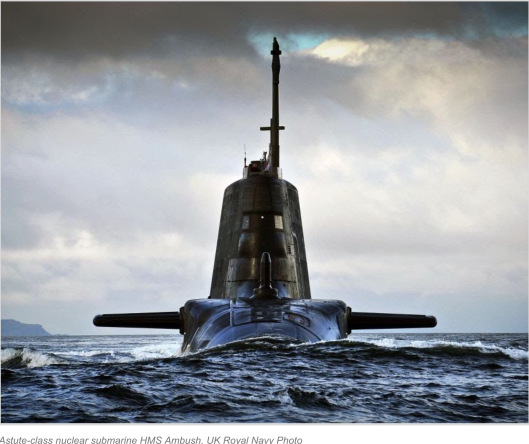
Norway Activists Protest After Docking Of US Nuclear Submarine In Tromso: Reports, https://www.republicworld.com/world-news/us-news/norway-activists-protest-after-docking-of-us-nuclear-submarine-in-tromso-reports-articleshow.html
Protest intensified in Norway as an American nuclear submarine has docked in Tromso– a city in northern Norway, news agency Sputnik reported.
By Ajeet Kumar 12 Jan 22, Protest intensified in Norway as an American nuclear submarine has docked in Tromso, a city in northern Norway. According to a report by news agency Sputnik, the US nuclear submarine was docked on January 11, the second time in a year. The media report said that the submarine was loaded with arms and missiles and tasked with patrolling the northern waters. As the news of an American submarine docked in Tromso hit headlines of several national media outlets, hundreds of protesters marched towards the guarded gates of the Tonsnes harbour. The protestors termed the recent move of America “a destructive game between superpowers.”
US nuclear submarine arrival in Norway sparks strong reactions
Hakon Elvenes, who represents the protestors, asserted the United States should not dock its submarine in Norway and added the act has a long “symbolic effect”. “This represents a dangerous mix of military and civilian purposes. It is a mixture that may be in conflict with international law, and which hasn’t been assessed well enough by the Norwegian authorities,” Sputnik quoted Elvenes as saying to the national broadcaster NRK. “There is always a risk that something can happen to any nuclear reactor, we have plenty of examples of that. And if something happens first, the consequences will be great,” added Hakon Elvenes.
Tension between two countries soar
Meanwhile, Alberta Tennoe Bekkhus, who represent, the youth wing of the Reds Party argued that the recent action by the US will contribute to unnecessary provocations and further conflict. “The fact that we invite American forces in the way we do makes us more insecure. It contributes to unnecessary provocations and further conflict,” Sputnik quoted Bekkrus as saying. “The way NATO is doing now, I believe it makes the world more insecure. This puts Norway in a more dangerous situation,” she added.
It is worth mentioning that the tension between US and Scandinavian countries has soared in the past few years due to action taken by the US Naval forces. Earlier in November last year, US Defense Secretary Lloyd Austin met with Norway’s new Defense Minister, Odd Roger Enoksen, in his first visit to the US since taking the position. According to AP, both said the commitment to NATO and the challenges posed by Russia would be topics high on the agenda during their meeting. The duo also discussed the recent activities of the US Navy in northern Norway and added the matter would be solved with discussions.
France’s new-generation Flamanville nuclear plant delayed again.
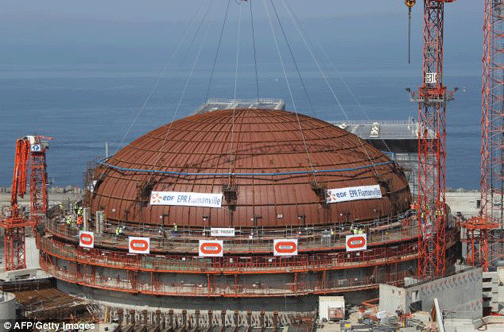
France’s new-generation nuclear plant delayed again, France 24 Paris (AFP) – Electricity giant EDF on Wednesday announced a further delay and cost overruns for France’s flagship new-generation nuclear plant, in a blow to President Emmanuel Macron’s strategy of making atomic power a cornerstone of energy policy.
EDF said that the Flamanville plant on the Channel coast would not be loaded with fuel until the “second quarter of 2023”, instead of late 2022.
The statement came after Macron announced plans for new reactors to provide low-carbon energy and as France backs classing nuclear as a “green” technology under future EU rules.
Projected costs had increased by another 300 million euros ($340 million) to 12.7 billion euros, EDF said — around four times more than the initial forecast of 3.3 billion euros.
Construction on the new-generation EPR plant began in 2007, and was supposed to be finished in 2012.
In November, Macron had announced that “for the first time in decades, we will restart construction of nuclear reactors in our country” — as well as “developing renewable energy”.
The plans would “guarantee France’s energy independence” and help reach its goal of being carbon neutral by 2050, he added.
But the president, who has yet to officially confirm that he plans to stand for re-election in April, was short on details like where or when the new plants would be built.
The Flamanville overruns were “a fiasco at the French public’s expense”, said Greens presidential candidate Yannick Jadot.
Left-wing candidate Jean-Luc Melenchon called the news a “shipwreck for the nuclear sector” — long one of the crown jewels of French industry.
Brussels battle
With 56 reactors providing over 70 percent of France’s electricity, according to EDF, Paris has led the charge for nuclear power to be recognised by the European Union as a green technology eligible for carbon-neutral investment.
Allying with eastern EU member states like Poland and the Czech Republic, the push to include atomic energy in the so-called green “taxonomy” has set it at odds with traditional partner Germany.
Berlin is in the process of shutting all its nuclear plants by the end of this year and Germany’s governing coalition now includes the Green party, rooted in part in opposition to the technology going back to the 1970s.
Environment Minister Steffi Lemke has said it would be “absolutely wrong” to include nuclear energy on the list, as it “can lead to devastating environmental catastrophes”.
“We agree to disagree on the issue” with the French, German Europe Minister Anna Luehrmann told AFP last week……….. https://www.france24.com/en/live-news/20220112-france-s-new-generation-nuclear-plant-delayed-again
UK’s Nuclear Financing Bill – very strange logic – with £40 billion to £60 billion for a new nuclear power station seen as a good thing.
Last week Tim Farron MP sent the following reply to Radiation Free Lakeland when we urged him to vote NO to the public paying for new nuclear build in the Nuclear Financing Bill yesterday. Our MP’s opposition to new nuclear is heartening. But this opposition was not reflected in the vote of
458 for to 53 against (how many others opposed did not vote?) the Bill at third reading.
The Bill will now be considered in the House of Lords. This vote is truly shocking. Alan Brown MP said during the debate Government “has been very good at telling us about the mythical savings that will
accrue via the regulated asset base funding model introduced by this Bill—they are estimated at between £30 billion and £70 billion. What the Government are not so good at is telling us what money they want to commit for the likes of Sizewell C. In effect, they are telling us, ”Let’s save money for bill payers by signing up to a less bad deal for a new nuclear project.”
According to the impact assessment, the capital and financing cost is going to be in the region of £40 billion to £60 billion for a new nuclear power station.
It is a strange logic to tell us that £50 billion being added to our energy bills at the time of a cost of living energy crisis is somehow a good thing. By default, the Government are also confirming just how much of a stinking, rotten deal Hinkley Point C was for bill payers if we are saying that we can save that much money compared with the contracts for difference model for Hinkley C.”
Radiation Free Lakeland 11th Jan 2022
UK’s Nuclear Energy (Financing) Bill passes in House of Commons

New funding plan for Sizewell C station clears final hurdle in Commons https://www.eadt.co.uk/news/business/funding-plan-sizewell-c-suffolk-clears-commons-8612482
Matthew Earth January 10, 2022
Plans for a new way of funding nuclear power plants – including Sizewell C on the Suffolk coast – have cleared their final hurdle in the House of Commons.
Business Secretary Kwasi Kwarteng described the passing of the Nuclear Energy (Financing) Bill on Monday evening as the “path to leadership and innovation”.
The Bill creates a new framework for funding nuclear power plants, after worries from investors have led to current projects stalling.
It would allow pension funds and other institutional investors to provide cash for power stations through a regulated asset base funding model.
Energy bill payers would contribute towards the cost of new power stations during construction through their bills, with the aim of giving investors greater certainty after projects such as Sizewell C faced delays due to concerns over the financial risks of construction.
However, Labour has said bill payers could be exploited as a “milk cow” under the new scheme if power stations face delays during building work.
MPs voted 458 to 53 in favour of the Bill at third reading, and it will now be considered in the House of Lords.
The government has recently agreed a six-week delay to the final decision A final decision on whether the station will be built is expected later this year.
-
Archives
- October 2026 (104)
- September 2026 (339)
- August 2026 (330)
- July 2026 (355)
- June 2026 (287)
- May 2026 (306)
- April 2026 (356)
- March 2026 (251)
- February 2026 (267)
- January 2026 (308)
- December 2025 (358)
- November 2025 (359)
-
Categories
- 1
- 1 NUCLEAR ISSUES
- business and costs
- climate change
- culture and arts
- ENERGY
- environment
- health
- history
- indigenous issues
- Legal
- marketing of nuclear
- media
- opposition to nuclear
- PERSONAL STORIES
- politics
- politics international
- Religion and ethics
- safety
- secrets,lies and civil liberties
- spinbuster
- technology
- Uranium
- wastes
- weapons and war
- Women
- 2 WORLD
- ACTION
- AFRICA
- Atrocities
- AUSTRALIA
- Christina's notes
- Christina's themes
- culture and arts
- Events
- Fuk 2022
- Fuk 2023
- Fukushima 2017
- Fukushima 2018
- fukushima 2019
- Fukushima 2020
- Fukushima 2021
- general
- global warming
- Humour (God we need it)
- Nuclear
- RARE EARTHS
- Reference
- resources – print
- Resources -audiovicual
- Weekly Newsletter
- World
- World Nuclear
- YouTube
-
RSS
Entries RSS
Comments RSS

