UK trained Ukraine military, including a thousand-strong neo-Nazi unit.
The battalion’s founder has said that Ukraine should “lead the white races of the world in a final crusade…against Semite-led Untermenschen[subhumans].”
UK Denies It Agreed to Train Neo-Nazi Linked Ukraine Unit Consortium News, February 15, 2022 Ukraine’s National Guard says that last year the U.K. military agreed to start training its forces, which include a thousand-strong neo-Nazi unit, Matt Kennard reports. The U.K. Ministry of Defence disputes the claim.
By Matt Kennard Declassified U.K.
- Photos of meeting in Kiev last year – which U.K. personnel thought was private – were posted by Ukraine’s National Guard (NGU)
- U.K. MoD tells Declassified it has no plans to train NGU and that British commander was misquoted
- But U.K. military is engaging with NGU and aware of “the peculiarities of [its] combat operations”
- Apparent member of another far-right Ukrainian group was trained at Sandhurst in 2020
Details and photos of the meeting in the capital, Kiev, were posted in Ukrainian on the website of Ukraine’s National Guard (NGU) last year.
Declassified understands the U.K. Ministry of Defence (MoD) believed the September 2021 meeting to be private and should not have been publicized. There is no mention of the meeting in any U.K. records that are publicly available.
Three British commanders of Operation Orbital — the U.K. military’s training mission in Ukraine — are pictured, alongside three NGU officers. They sit around a table taking notes.
The MoD refused to give Declassified the names of the U.K. personnel who attended the meeting, citing operational and personnel security issues.
However, the NGU report names Lt Col Andy Cox, deputy commander of Orbital, while two other British officers are pictured, one with his name tag prominently displayed.
Orbital, which was launched in 2015, has so far only trained Ukraine’s regular armed forces. Expanding it to include the National Guard would be controversial due to sensitivities around the far-right sympathies of some of its units.
The NGU was formed in 2014 to incorporate an array of paramilitary and volunteer battalions which were fighting pro-Russian separatists in eastern Ukraine. This included a neo-Nazi unit, the Azov Battalion, which reportedly has a thousand soldiers.
Now an official regiment within the NGU — and therefore part of Ukraine’s Ministry of Internal Affairs – Azov fighters have been pictured in eastern Ukraine with Nazi insignia such as swastikas and SS runes on their helmets.
The battalion’s founder has said that Ukraine should “lead the white races of the world in a final crusade…against Semite-led Untermenschen[subhumans].”…………………………….
In June 2018, Canadian military officers were briefed by leaders from the Azov Regiment and were photographed with its officials despite warnings about the unit’s Nazi ideology…………………………….. https://consortiumnews.com/2022/02/15/uk-denies-it-agreed-to-train-neo-nazi-linked-ukraine-unit/
Update on the status of Britain’s Rolls Royce Small Nuclear Reactor project

Safe Energy E-Journal No. 93 February 2022, Rolls Royce’s Small Modular Reactors On 9th November the Government announced that it would back the Rolls-Royce Small Modular Reactor with £210m in funding. Matched by private sector funding of over £250 million, this investment will be used to further develop the SMR design and start the Generic Design Assessment (GDA) process. (1)
This was followed in December by an announcement the Qatar Investment Authority will pour £85m into its Small Modular Reactor (SMR) programme, which now has total funding of £490m – enough for RR to start scouting sites for factories to supply parts to build SMRs. (2) France’s wealthy Perrodo family, is also investing in the project. (3) RR hopes to see the first reactors supplying electricity within the next decade.
Rolls-Royce is now seeking bids for a site for a factory to make parts for its small nuclear power plants. It has begun competition between English and Welsh regions. The industry consortium led by Rolls-Royce has sent letters to several regional development agencies in England and the Government of Wales to ask them to sell a site. (4) The main factory will build some of the key components of the reactors which will then be assembled at sites around the UK. The letter from Rolls-Royce promised “high value, sustainable jobs which will produce products that will be exported globally for many decades to come”. It also made clear they were looking for possible “financial and non-financial support” from the host. (5)
The consortium led by Rolls Royce, is planning to build 16 SMRs around the country by 2050, the first of which could be plugged into the grid by 2031. (6) Trawsfynydd and Wylfa are two sites expected to be in line for an SMR. (7) Moorside has also been mentioned and Tees Valley mayor Ben Houchen wants Hartlepool to be on the list. (8) North Ayrshire Conservative councillor Tom Marshall has called for an SMR to be built at Hunterston. (9)
Jamie Stone, the Liberal-Democrat MP for Caithness, Sutherland and Easter Ross wants Caithness to be considered as a possible site. Davie Alexander, the vice-chairman of the Dounreay Stakeholder Group and chairman of the Thurso and Wick Trades Union Council, would also like to see the county included as a possible location. (10) Stone is meeting with Rolls-Royce to discuss the matter. RollsRoyce welcomed the opportunity. (11)
Councillor Feargal Dalton, chair of the Scottish Forum of the NFLA urged Jaime Stone to think again. Given the good news on renewables, Councillor Dalton was shocked to hear that Stone has invited Rolls Royce for talks on locating a new reactor for Caithness.
“There is clearly no need, and almost no public support, for new nuclear in Scotland, and we need to tackle climate change now. The Rolls Royce technology is unproven, and civil nuclear projects continue to be notorious for being delivered years late or at an eye-wateringly inflated cost and there is no guarantee that the project will not eventually be cancelled because it took too long or cost too much.” (12)
In November Rolls Royce submitted its 470 MWe SMR design for entry to the UK’s Generic Design Assessment (GDA) process. (13) But this won’t formally begin until the government has assessed the company’s capability and capacity to successfully enter the GDA process. This could take up to 4 months. The GDA process, once it begins, will take 4 or 5 years. (14)
The Government claims that SMRs have the potential to be less expensive to build than traditional nuclear power plants because of their smaller size, and because the modular nature of the components offers the potential for parts to be produced in dedicated factories and shipped by road to site – reducing construction time and cost. But the reason why existing reactors are large is precisely to derive economies of scale: why smaller reactors should be more economic is problematic. Nuclear proponents allege that assembly-line technology will be used in reactor construction but this has yet to be shown in practice anywhere in the world
Some say that SMRs are little more than wishful thinking. For example, Professor MV Ramana ‒ Simons Chair in Disarmament, Global and Human Security at the School of Public Policy and Global Affairs at the University of British Columbia – states:
“SMR proponents argue that they can make up for the lost economies of scale by savings through mass manufacture in factories and resultant learning. But, to achieve such savings, these reactors have to be manufactured by the thousands, even under very optimistic assumptions about rates of learning.” (15)
The Rolls Royce SMR design is not exactly small at 470 MWe. It is proposing to build 16 reactors at an expected cost around £1.8bn – £2.2bn and producing power at £40-60/MWh over 60 yrs. (16)
As well as the Government funding, Rolls-Royce has been backed by a consortium of private investors. The creation of the Rolls-Royce Small Modular Reactor (SMR) business was announced following a £195m cash injection from BNF Resources, and Exelon Generation to fund the plans over the next three years. (17)
References; …………… https://www.no2nuclearpower.org.uk/wp/wp-content/uploads/2022/02/SafeEnergy_No93.pdf
ENGIE Doubles Down On Renewables And Reaffirms Closure Of Belgian NuclearIndustry
ENGIE Doubles Down On Renewables And Reaffirms Closure Of Belgian Nuclear
Industry. ENGIE’s renewables share at 34%, up from 28% in 2019, with 2030
target 50%; 2021 renewable capacity 34.4GW. CEO Catherine MacGregor
confirms shutdown of ENGIE’s Belgian nuclear fleet by end of 2025,
despite big contribution in 2021.
Seeking Alpha 17th Feb 2022
https://seekingalpha.com/article/4487924-engie-stock-doubles-down-renewables-closure-belgian-nuclear
No end in sight as the French nuclear industry reduces its output
There may be no end in sight for the European power crunch this year, even
after the winter season ends. Low nuclear power generation in France, a
major producer and exporter of nuclear-powered electricity in Europe, could
send power prices on the continent higher in the spring.
France gets more
than 70 percent of its total electricity from nuclear power generation and
is a major exporter of electricity, including to the UK. France’s EDF
stopped two nuclear power plants at the end of last year after finding a
fault at one during routine maintenance.
This brought the total number of
nuclear plants out of operation in December to four, which accounted for 13
percent of the current power availability in France.
Last week, EDF revised down both its 2022 and 2023 nuclear output estimates. As part of its
control program on the French nuclear fleet, EDF revised its 2022 nuclear
output estimate from 300 – 330 TWh to 295 – 315 TWh, the company said
on February 7.
Days later, EDF revised down its 2023 French nuclear output
estimate from 340 – 370 TWh to 300-330 TWh, to reflect a heavy industrial
program with 44 reactor outages for maintenance and inspection, including 6
ten-year inspections, plus 2 scheduled outages starting in 2022 that will
continue into 2023.
Another reason for the nuclear output downgrade is “the
continuation of the control and repair programme on the pipes potentially
affected by the stress corrosion phenomenon, which is still ongoing,” EDF
said.
Oil Price 17th Feb 2022
Campaign for Nuclear Disarmament marks 40th anniversary of Nuclear Free Wales Declaration
| The Campaign for Nuclear Disarmament in Wales is to mark the 40th anniversary of the Nuclear Free Wales Declaration with a webinar, a new website, and an exhibition touring Wales. The exhibition will visit locations in all 8 of the County Councils that existed in 1982, including at the Eisteddfod in Tregaron, and finishing in the Senedd in early December. Wales was declared ‘nuclear free’ on 23 February 1982 after local authorities around the country refused a UK Government instruction to draw up civil defence plans, including the establishment of nuclear bunkers from which the aftermath of a nuclear war would be “managed”. After opposition to the government’s plans, all eight county councils eventually refused to participate and passed resolutions declaring themselves nuclear-free zones. The Nuclear Free Wales Declaration emphasised that the whole of Wales was declared a nuclear-free zone, and that the people of Wales wished to live in peace without the threat of nuclear war. Nation Cymru 17th Feb 2022https://nation.cymru/news/exhibition-to-mark-40-years-since-the-nuclear-free-wales-declaration |
Plutonium problems won’t go away

Plutonium problems won’t go away, By Chris Edwards, Engineering and Technology, February 15, 2022
Nuclear energy’s environmental image is as low as carbon’s,with its clean fuel potential being tarnished by legacy waste issues. Are we any closer to resolving this?
At the end of 2021, the UK closed the curtain on one part of its nuclear waste legacy and took a few more steps towards a longer-lasting legacy. A reprocessing plant, built at the cost of £9bn in the 1990s to repackage waste plutonium from pressurised water reactors in the UK and around the world for use in new fuel, finally converted the last remaining liquid residue from Germany, Italy and Japan into glass and packed it into steel containers. It will take another six years to ship it and all the other waste that belongs to the reactor owners, who are contractually obliged to take it back.
Even when the foreign-owned waste has headed back home, the UK will still play host to one of the largest hoards of plutonium in the world, standing at more than 110 tonnes. It amounts to a fifth of the world’s total and a third of the global civilian stockpile of 316 tonnes. Despite operating a smaller nuclear fleet than France’s, the UK has 1.5 times more plutonium.
It was never meant to end this way. The long-term dream was for fission-capable fuel to keep going round in a circle, only topped up with virgin uranium when necessary. The plutonium produced during fission could itself sustain further fission in the right conditions. However, fast-breeder reactors that would be needed to close the cycle remain largely experimental, even in countries such as Russia where their development continues. Driven by both safety concerns and worries about nuclear proliferation that might result from easier access to separated and refined plutonium-239, the West abandoned its fast-breeder programmes decades ago.

It is possible to reprocess spent fuel into so-called mixed-oxide fuel, but it is only good for one use in a conventional reactor. Other actinides build up and begin to poison the fission process. The only prospects for change lie in so-called Generation IV reactors, but these designs have yet to be tested and may continue to fall foul of proliferation concerns.
While operators around the world have mulled over the practicality of fuel reuse, containers of both processed and reprocessed fuel have lingered in storage tanks cooled by water despite, in some countries, being earmarked for deep burial for decades. In the late 1980s, the US Department of Energy (DoE) settled on Yucca Mountain in Nevada as the single destination for the country’s spent nuclear fuel, and scheduled it for opening a decade later. By 2005, the earliest possible opening date had slipped by 20 years. It remains unopened and will probably never open. In the interim, much of the fuel has lingered in water-filled cooling tanks while politicians consider more localised deep-storage sites.
Fukushima provided a wake-up call to the industry, not just about the problems of controlling reactors but their spent fuel. After the tsunami, engineers were concerned that without replenishment pumps, the water in the storage tanks for the spent fuel would evaporate. If the fuel then caught fire, it would likely release radioactive tritium and caesium into the atmosphere. In a stroke of luck, water leaked into the damaged ponds. Now the issue for operators of some older reactors is that the fuel canisters are just corroding into the water instead.Experts such as Frank von Hippel, professor of public and international affairs at Princeton University, recommend storage pools should only be used until the fuel is cool enough to be transformed into glass, immersed in concrete or both, and transferred to dry storage, preferably in a deep geological disposal facility (GDF).At a conference last November organised by the International Atomic Energy Agency (IAEA), Laurie Swami, president and CEO of Canada’s Nuclear Waste Management Organisation, claimed “there is scientific consensus on the effectiveness of deep geologic repositories” for highly radioactive waste.
The UK similarly settled 15 years ago on a plan to build its own GDF for high-level waste in tandem with the establishment of a single government-owned body responsible for organising where the waste goes, in the shape of the Nuclear Decommissioning Authority (NDA). The GDF took a small step forward at the end of 2021 when two candidate sites were announced, both close to the Cumbrian coast. The local communities have agreed in principle that the NDA can investigate where they are suitable for a set of tunnels that may extend under the Irish Sea. With the project at such an early stage, the country remains years away from opening a GDF. Finland, in contrast, has pressed ahead and expects its GDF to open in 2025, while Sweden is likely to have the second one in the world.
At the same time, there is an enormous volume of other irradiated material that cannot economically be put into deep storage. In a keynote speech at the IAEA’s conference, James McKinney, head of integrated waste management at the NDA, explained that a lot of radioactive waste is contaminated building material. The Low-Level Waste Repository at Drigg in Cumbria was designed for this kind of waste, but McKinney stressed that capacity is “precious” and in danger of running out if all the material is taken there. Over the past decade, the NDA and its subcontractors have been working to divert as much waste as possible from the Drigg site by reprocessing and repackaging it.
By bringing waste management under one umbrella instead of dividing it among power-station operators, the NDA has been able to change procurement strategies to favour the use of much more R&D for waste handling. “The destination of radioactive waste can be changed through interventions,” McKinney adds. “At this moment, we estimate some 95 per cent of potential low-level waste is being diverted away [from Drigg]. Twelve years ago, the opposite would be true.”
A recent example of this in action is the dismantling of pipes that were once installed at the Harwell research centre. More than 1,500 sections of metal pipe were delivered to oil-and-gas specialist Augean, which is using high-pressure water jets to remove radioactive scale so the metal can be recycled instead of needing long-term storage.
Getting less manageable waste away from the storage tanks presents another major challenge, particularly if it comes from the oldest reactors. For example in the UK, when spent Magnox fuel was taken out of the reactors, the magnesium cladding around it was stripped away and moved to Sellafield’s Magnox Swarf Storage Silo (MSSS). Though the swarf itself is just intermediate-level waste, Sellafield’s operator regards emptying the silo ready for transfer to long-term dry storage as one of the more hazardous projects on the site. Stored underwater to keep them cool, the packages of swarf gradually corrode and release hydrogen gas and contaminants, which can escape into the ground. Moving the waste for treatment can itself lead to more escapes.
To manoeuvre 11,000 cubic metres of waste out of the 22 chambers of the MSSS, it has taken more than two decades to design, build and install two out of three shielded enclosures and grabbing arms that can lift out pieces of the swarf and prepare it to be immobilised in concrete or glass.
The time it has taken to even begin to clean up the MSSS illustrates the core issue that faces decommissioning and clean-up programmes: the sheer difficulty of trying to handle even moderately radioactive materials in circumstances where access was never considered when these structures were first built and filled. Everything in this kind of decommissioning calls for ungainly long-distance manipulators because there is no other way to protect the clean-up crews.
As engineers struggled to deal with the Fukushima disaster in March 2011, many people in Japan thought the same thing, and expressed surprise that a country that had invested so much in robotics research had none that it could send into the reactors to even perform a survey.
Japan was not alone with this issue: no country had a dedicated nuclear-accident response robot. Work on robots began decades ago but continued only in fits and starts for the most part. After a serious incident in 1999 at an experimental reactor at Tokaimura, the Japanese Ministry of Economy, Trade and Industry set aside $36m to develop remote-controlled machines. But the projects ended within a few years.
To help deal with the immediate problems at Fukushima, the US research agency DARPA was quick to repurpose the military and disaster robots to which it had access, originally planning to send them on Navy ships across the Pacific. But it quickly emerged that this would be too slow
At a conference organised by the International Federation of Robotics Research on the 10th anniversary of the accident, Toyota Research chief scientist Gill Pratt said the first robots “got there in the overhead luggage of commercial flights”. For all of them it was a baptism of fire.
(Here this aticle continues with a discussion on robot technology – which must be remotely done and turns out to be very problematic)
………………………………………….Deep burial seems to be the easiest way to deal with long-lived waste, assuming no-one tries to dig it up without heavy protection and good intentions hundreds or thousands of years into the future. But the question of how safe it is if the repository breaches accidentally is extremely hard to answer.
Plutonium is unlikely to be the biggest problem. Although it oxidises readily to dissolve in water, the short-lived fission products such as strontium-90 and caesium-137 could be more troublesome if they escape the confines of a storage site, according to analyses such as one performed by SKB as part of Sweden’s programme to build a deep burial site there.The half-lives of these isotopes are far shorter than those of plutonium, so the risk from them will subside after a couple of hundred years rather than the thousands for plutonium. But what if they could be shortened to days or even seconds? Any radiation could then be contained or used before the waste is repackaged.
This is the promise of laser transmutation, which uses high-energy beams to displace neutrons in donor atoms that then, with luck, smash into those unstable isotopes to produce even more unstable atoms that quickly decay. In one experiment performed by Rutherford-Appleton Laboratory, a laser transmuted atoms in a sample of iodine-129, with a half-life measured in millions of years, to iodine-128. A similar experiment at Cambridge converted strontium-90 to the medical labelling chemical strontium-89.
The bad news is that the energy required to perform transmutation at scale is enormous and not all isotopes are cooperative: their neutron-capture volumes are so small the process becomes even less efficient.Nobel laureate Gérard Mourou believes careful control over high-energy pulsed lasers will bring the energy cost of transmutation down significantly. He is working with several groups to build industrial-scale systems that could begin to clean up at least some of the high-activity waste.
Even if lasers can be made more efficient, there are further problems. For one, the waste needs to be separated as otherwise the stray neutrons will transmute other elements in the sample, generating unwanted actinides. This will not only increase the cost of reprocessing, it will increase the risk of proliferation, as it will lead to plutonium that is far easier to handle and move around, the one outcome that deep burial is meant to avoid……………………https://eandt.theiet.org/content/articles/2022/02/plutonium-problems-won-t-go-away/
Standoff ending, Ukraine and Russia both claim victory
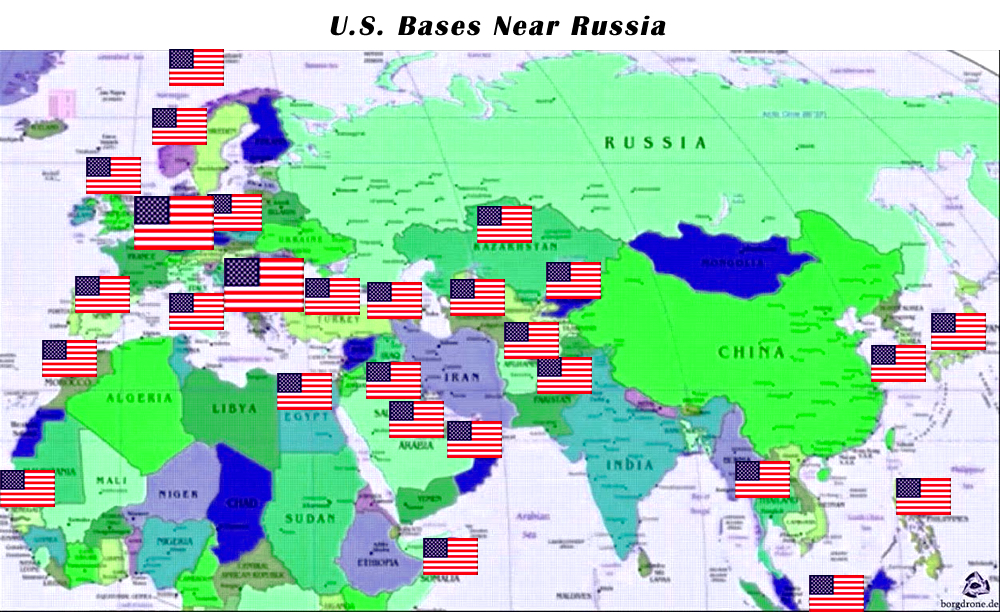
And for the same thing: Russian troops returning to barracks. To put matters in perspective, NATO troops, arms and equipment continue to flood into what the military alliance claims as its eastern flank, from the Arctic Circle to the Caucasus, notwithstanding Maria Zakharova’s statement below. ==== 112 UkraineFebruary 15, 2022 Ukraine, together with partners, manages […]
Standoff ending, Ukraine and Russia both claim victory — Anti-bellum
Ukrainian Pacifists Say US, NATO and Russia Share Responsibility to Avoid War.
Truthout, Amy Goodman & Juan González, Democracy Now! 16 Feb 22,
ATO officials have joined the U.S. and other Western nations in saying they have yet to see evidence that Russia is pulling back some troops near the shared border with Ukraine, as Russia claimed earlier this week. We speak with Yurii Sheliazhenko, executive secretary of the Ukrainian Pacifist Movement, who says, “Both great powers of the West and the East share equal responsibility to avoid escalation of war in Ukraine and beyond Ukraine.”TRANSCRIPT
This is a rush transcript. Copy may not be in its final form.
……….. We go now to Kyiv, to the capital, where we’re joined by Yurii Sheliazhenko, the executive secretary of the Ukrainian Pacifist Movement and a board member of the European Bureau for Conscientious Objection, also member of the board of directors at World BEYOND War and a research associate at KROK University in Kyiv.
……………………………………………… The escalation towards major war in Ukraine is unnecessary. Our government became part of it when we recklessly took side of the West in global power struggle. And instead, we should be neutral country. We should commit to universal peace. People of Ukraine, as well as all people in the world, want to live in peace and be happy. Both great powers of the West and the East share equal responsibility to avoid escalation of war in Ukraine and beyond Ukraine and give up nuclear stockpiles threatening to kill all life on the planet because of these absurd political quarrels. I believe all governments should join Treaty on the Prohibition of Nuclear Weapons. If global leaders fail to negotiate sustainable peace in good faith, instead of blame game and violent settlement of their power dispute on the local battlefield in Ukraine, it will be a shame. But, unfortunately, Ukraine became a battlefield of the new Cold War between the United States and Russia.
…………………. it is part of the influence of — both great powers created social networks of clientele, nationalist clientele of Russia and nationalist clientele of the West. So, when Ukraine became battlefield of the new Cold War between United States and Russia, these two great powers are competing for control over Ukraine, using and inflating in their global power struggle militant nationalism of Ukrainian government and similar militant nationalism of pro-Russian separatists in Donetsk and Luhansk. Peaceful life of Ukraine was destroyed by these militant nationalisms and great power struggle. Eight-year bloodshed took thousands of lives of civilians, turned millions into refugees and internally displaced persons, devastated our economy and debilitated our society. https://truthout.org/video/ukrainian-pacifists-say-us-nato-and-russia-share-responsibility-to-avoid-war/?eType=EmailBlastContent&eId=5cab6a32-d17c-4e19-8dfe-d79b2658a92c
Julian Assange appeals to the Supreme Court.
Julian Assange appeals to the Supreme Court, https://www.bindmans.com/insight/updates/julian-assange-appeals-to-the-supreme-court, Kate Goold, 03 FEBRUARY 2022.
In December 2021, the High Court ruled that Julian Assange could be extradited to the USA, reversing a previous decision of Westminster Magistrates’ Court that extradition would be unjust or oppressive due to Mr Assange’s mental condition.
The ruling of the High Court was based on a package of diplomatic assurances provided by the US government about how and where Mr Assange would be detained if extradited and/or convicted. The assurances had been provided after the Magistrates’ Court found that Mr Assange was at a high risk of suicide if imprisoned in the very harsh regime that can be imposed on prisoners, who are considered a threat to national security, by the US. These fresh assurances were said by the USA to be sufficient to meet that concern, and the High Court agreed.
Among the assurances were undertakings that Mr Assange would not, at this time, be subject to Special Administrative Measures (SAMs), restricting his correspondence, visits and use of the telephone, nor detained at USP Florence ADMAX (ADX), a maximum-security prison in Colorado.
Crucially, however, these assurances were subject to the caveat that the US retained the power to impose such conditions if Mr Assange were to commit any future act that meets the tests for the imposition of SAMs or designation to ADX.
Application to the Supreme Court
As anticipated, Mr Assange sought permission to appeal the High Court judgment to the Supreme Court on the basis that there is a point of law of general public importance involved in the decision. He argued that the Supreme Court’s guidance was required on three questions of law regarding the assurances.
Firstly, he submitted that the Supreme Court ought to consider the question of whether a court can consider assurances that are introduced for the first time on appeal.
The second and third questions related to the caveat in the assurances concerning future acts. Mr Assange questioned whether it could be lawful to allow for potential exposure to conditions under SAMs or in ADX if the imposition of those prison regimes was judged by the US authorities to be justified by his own conduct. In Mr Assange’s case, this was said to be particularly important because conduct could involve speech, and also because it was accepted that he suffers from a severe mental condition.
On 24 January 2022, only the first question was certified by the High Court as an issue of general public importance:
In what circumstances can an appellate court receive assurances from a requesting state which were not before the court of first instance in extradition proceedings.
In the view of the High Court, this point of law is settled, but the High Court has certified a point of law of general public importance with regards to the provision of assurances at a later stage in proceedings, as the Supreme Court has not yet considered this specific question. The High Court concluded that the Supreme Court should have an opportunity to do so, since assurances are at the heart of many extradition proceedings and are increasingly relied on.
In extradition proceedings, assurances are not currently classed as ‘evidence’, but as ‘issues’, and therefore do not necessarily attract the same scrutiny. This also means they can be introduced after all evidence has been heard and tested.
The Supreme Court itself will now decide whether or not it should hear the appeal on this point.
Extradition practitioners largely welcome Supreme Court guidance on this point as late assurances designed to alleviate the court’s concerns about human rights violations following extradition have become a highly contentious issue, especially when provided by States with a poor record in human rights themselves.
It is of note that the High Court refused to certify the point of law with regards to future acts and did not appear to be overly concerned regarding the conditional nature of the diplomatic assurances provided. Mr Assange’s lawyers argued that the principle of absolute protection against inhuman or degrading treatment, contrary to Article 3, should also apply in cases where an individual’s mental condition is such that even if they are moved to a severe regime due to their behaviour (including speech), extradition should still be barred as oppressive (s91 Extradition Act) because the severity of the regime will cause such a deterioration in their mental health. The assurances provided do not rule out this possibility. This would have been an interesting issue for the Supreme Court to have considered, but that opportunity is no longer available.
Wider issues
Meanwhile, Mr Assange is likely to appeal to the High Court those grounds where he was unsuccessful before the District Judge at Westminster, as he was unable to cross appeal while the US appealed the District Judge decision. These grounds will largely focus on political motivation, freedom of speech and fair trial issues. If leave to appeal on the certified point is refused by the Supreme Court, Mr Assange still therefore has an opportunity to appeal to the High Court and his fight continues.
Bradwell nuclear project -dead in the water? – partly due to work of BANNG (Blackwater Against New Nuclear Group).
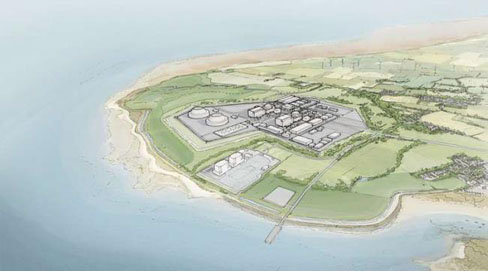
There are reasons to be cheerful. One is the long pause and retreat
confirmed by the developer who does not expect to submit an application
‘for several years yet’.
Another is the general feeling that the Chinese project is now dead in the water.
Yet another is the persistent failing of an industry that is too costly, too dangerous and too slow.
And, it must be said, BANNG’s unrelenting campaign over fourteen years, together with the support of local councils and communities, has demonstrated that the Bradwell site, far from being ‘potentially suitable’, is inappropriate, unsustainable and unacceptable.
It is clear that CGN has doubts about the viability of the Bradwell site in an era of Climate Change. It is likely it has hung on until it gains UK regulatory approval for its reactors. Gaining that coveted passport may be the signal for CGN to quit Bradwell and try its luck elsewhere.
BANNG 14th Feb 2022
Europe’s nuclear power plants will need investments of EUR 500 Billion, so they need to be labelled ‘green” !

Nuclear Power Preparing to Change Colour, Energy Industry Review, Adrian Stoica February 16, 2022
Cutting-edge nuclear power plants will need investments of EUR 500 billion by 2050, according to the European Commissioner for the Internal Market, Thierry Breton, and to support these projects it is ‘crucial’ for nuclear power to receive the green label within energy transition.
The European Commission (EC) has already prepared a draft proposing rules for the classification of investments that will meet the climate sustainability criteria (“sustainable finance taxonomy”). Therefore, nuclear power plants will be considered green if there is a plan, funding, and location suitable for the elimination of radioactive waste.
The draft has already ignited the spirits in the European Union. While France, a country that ensures 70% of its energy consumption from nuclear source, supports it, Germany, but also other states, vehemently oppose to such draft and threatened to even consider legal action against the European Commission. Together with France, several states, including Romania, have signed a declaration requesting the Commission that nuclear energy be included in the list of green investments.
Existing nuclear plants alone will need €50 billion of investment from now until 2030. And new generation ones will need €500 billion by 2050,” said Thierry Breton. At the end of last year, the European Commission announced that it was preparing a draft according to which some nuclear power plants and some of the gas-fired power plants could be considered green projects, which would make it easier for them to attract funding. The Community Executive has raised comments on this draft until January 12, following to officially present the text of its proposal. Currently, about 26% of electricity produced in the EU comes from nuclear power plants and Commissioner Thierry Breton has estimated that it would account for at least 15% of the energy mix in 2050.
Romania supports the EC initiative
Romania, country which operates two nuclear units, and which has several projects providing for the construction of two other groups and small nuclear power plants with a US partner, has publicly requested, together with other states, the inclusion of nuclear energy in the list of ‘green’ investments………………………… For all of us, nuclear energy is a crucial and reliable asset for a low-carbon future,” reads a statement signed in October 2021 by the representatives of Poland, Hungary, Slovakia, Bulgaria, Croatia, Romania and Slovenia……………………… https://energyindustryreview.com/power/nuclear-power-preparing-to-change-colour/
Should the Taishan nuclear plant shutdown worry UK regulators?
Should the Taishan nuclear plant shutdown worry UK regulators? China is
not well known for its commitment to an open government. So the information
now published, as to why one of its new nuclear plants at Taishan has been
shut down for over six months, is potentially very worrying for the UK.
The closure is owing to cracked fuel rods that emerged after only one operating
cycle. Why is it worrying? Taishan is the only completed example in the
world of the prototype EPR being constructed at Hinkley Point in Somerset,
and scheduled for Sizewell in Suffolk. And the implications for the
viability of both of these £20bn+ ‘investments’ are potentially very
serious.
The Business Department is taking no responsibility for analysing
these implications. Instead, a spokesman told the Daily Telegraph that,
“If the British Office for Nuclear Regulation (ONR) considered that any
nuclear site was not safe or secure, it would not be allowed to operate.”
So, is the ONR keeping a beady eye upon the Taishan problems? Er, no. In
response to a Freedom of Information request from Sussex University this
January, the ONR admitted it ‘holds no information relating to design
flaws regarding Taishan, or indeed any information that suggests this
claimed design flaw has or may impact either Hinkley Point C or Sizewell
C’.
But this must mean the ONR cannot have made any inquiries as to these
possible design flaws, because if so they would by definition hold some
information. Given the amount of worldwide media attention the issue has
had, most people would rightly think the ONR is simply not discharging its
duty.
Electrical Review 16th Feb 2022
Super Furry Animals call out alleged nuclear mud dumping at Hinkley Power Station
Super Furry Animals have called on the Marine Management Organisation
(MMO) to revoke the licence granted to EDF – which they claim has
resulted in nuclear mud dumping in the Severn Estuary. In 2018, a group of
activists took EDF to court to stop 300,000 tonnes of alleged nuclear mud
from a Somerset power station being disposed of just outside Cardiff. Now,
the Welsh indie veterans have picked up the cause again.
NME 15th Feb 2022
Brief summary of Engineering and Technology’s fine article on UK’s plutonium problem.

At the end of 2021, the UK closed the curtain on one part of its nuclear waste legacy and took a few more steps towards a longer-lasting legacy. A reprocessing plant, built at the cost of £9bn in the 1990s to repackage waste plutonium from pressurised water reactors in the UK and around the world for use in new fuel, finally converted the last remaining liquid residue from Germany, Italy and Japan into glass and packed it into steel containers.
It will take another six years to ship it and all the other waste that belongs to the reactor owners, who are contractually obliged to take it back.
Even when the foreign-owned waste has headed back home, the UK will still play host to one of the largest hoards of plutonium in the world, standing at more than 110 tonnes. It amounts to a fifth of the world’s total and a third of the global civilian stockpile of 316 tonnes.
Despite operating a smaller nuclear fleet than France’s, the UK has 1.5 times more plutonium. It was never meant to end this way. The long-term dream was for fission-capable fuel to keep going round in a circle, only topped up with virgin uranium when necessary. The plutonium produced during fission could itself sustain further fission in the right conditions.
However, fast-breeder reactors that would be needed to close the cycle remain largely experimental, even in countries such as Russia where their development continues. Driven by both safety concerns and worries about nuclear proliferation that might result from easier access to separated and refined plutonium-239, the West abandoned its fast-breeder programmes
decades ago.
Engineering & Technology 15th Feb 2022
https://eandt.theiet.org/content/articles/2022/02/plutonium-problems-won-t-go-away/
French utility EDF will check auxiliary cooling circuits, or RRAs, at its 56 domestic reactors, after faults found
French utility EDF will check auxiliary cooling circuits, or RRAs, at its 56 domestic reactors, it confirmed on Tuesday. “We will gradually look at other circuits including the RRA circuit. The [French nuclear safety authority] ASN is being regularly informed of the results of the checks and
expert assessments,” a spokesman for the state-owned firm told Montel.
The comments came in the wake of a Montel report on Monday that EDF had uncovered potential issues with the RRAs, which are used for depressurising the cooling water in the primary circuit of a reactor in the event of an emergency shutdown of the unit. The spokesman declined to say why the utility was checking other circuits, as well as the RRAs.
Montel 15th Feb 2022
https://www.montelnews.com/news/1299687/edf-confirms-new-safety-checks-on-french-reactors
-
Archives
- October 2026 (92)
- September 2026 (339)
- August 2026 (330)
- July 2026 (355)
- June 2026 (287)
- May 2026 (306)
- April 2026 (356)
- March 2026 (251)
- February 2026 (267)
- January 2026 (308)
- December 2025 (358)
- November 2025 (359)
-
Categories
- 1
- 1 NUCLEAR ISSUES
- business and costs
- climate change
- culture and arts
- ENERGY
- environment
- health
- history
- indigenous issues
- Legal
- marketing of nuclear
- media
- opposition to nuclear
- PERSONAL STORIES
- politics
- politics international
- Religion and ethics
- safety
- secrets,lies and civil liberties
- spinbuster
- technology
- Uranium
- wastes
- weapons and war
- Women
- 2 WORLD
- ACTION
- AFRICA
- Atrocities
- AUSTRALIA
- Christina's notes
- Christina's themes
- culture and arts
- Events
- Fuk 2022
- Fuk 2023
- Fukushima 2017
- Fukushima 2018
- fukushima 2019
- Fukushima 2020
- Fukushima 2021
- general
- global warming
- Humour (God we need it)
- Nuclear
- RARE EARTHS
- Reference
- resources – print
- Resources -audiovicual
- Weekly Newsletter
- World
- World Nuclear
- YouTube
-
RSS
Entries RSS
Comments RSS

