Ukraine quietly abolishes corruption oversight rule.
Rt.com 23 Nov 22, Activists have blasted Zelensky for “harmful” move they say shatters Kiev’s EU dreams.
President Vladimir Zelensky has harmed Ukraine’s hopes of joining the EU by signing an amendment that reduced financial oversight of politicians, anti-corruption activists in Kiev said on Monday.
The measure “practically kills” efforts to combat money-laundering, the head of the Anti-Corruption Action Centre (AntAC) claimed. The body is funded by the US government and EU member states and elites in Kiev have long been hostile to its work, despite their dependence on Western funding and support.
Ukraine had previously mandated lifetime financial monitoring of “politically exposed persons,” including government officials and lawmakers – until Zelensky signed an amendment last week limiting it to just three years. Officially, the law is supposed to “protect Ukraine’s financial system from Russia and Belarus,” but the AntAC says it will harm the country’s interests instead.
“With this law, politicians destroyed the system of financial monitoring of their loved ones, which means they actually blocked negotiations on Ukraine’s accession to the EU,” AntAC head Vitaly Shabunin said on social media. The amended law “practically kills the system of preventing money-laundering by Ukrainian politicians,” he added.
AntAC’s executive director Daria Kaleniuk pointed out that the law also breaks Kiev’s promise to the European Union, one of the seven commitments made by Zelensky to Brussels in June.
In order for us to be able to convince our European partners that we are serious about joining the EU and are implementing all the necessary reforms for this, we need to correct this,” she told Hromadske. …………………….. more https://www.rt.com/russia/566960-zelensky-ukraine-corruption-monitoring/
Maligned in Western Media, Donbass Forces are Defending their Future from Ukrainian Shelling
Republished 24 Nov 22 Eva Bartlett in Gaza
Published Nov 19, 2022, Covert Action [See the comments section, some apologists for the West’s war on Syria have resurfaced…]
Smeared, stigmatized, and lied about in Western media propaganda, the mostly Russian-speaking people of the Donbass region were being slaughtered by the thousands in a brutal war of “ethnic cleansing” launched against them by the neo-Nazi regime in Kyiv, which the U.S. installed after the CIA overthrew Ukraine’s legally elected president in a 2014 coup.
Although the Donbass people had been pleading for Russian military aid to defend them against the increasingly murderous military assaults by the Ukraine government forces, which killed more than 14,000 of their people, Russian President Vladimir Putin declined to intervene. Instead, he tried to broker a peace agreement between the warring parties.
But the U.S. and Britain secretly colluded to sabotage peace negotiations, persuading president Zelenksy to ignore the Minsk III peace agreement that the Ukraine government had previously signed, and which had been countersigned by Russia, France and Germany.
Realizing that the U.S. and its NATO allies would never permit peace negotiations to succeed, Putin finally sent troops into Ukraine on February 24. Russian troops went in to support and reinforce the outnumbered and outgunned Donbass Forces who had been defending their land against attacks by the Kyiv government for nearly eight years.
Voices From the Frontlines of Former Eastern Ukraine Republics
In the Donetsk People’s Republic (DPR) in October, I went to a frontline outpost 70 meters from Ukrainian forces in Avdeevka (north and west of Donetsk), according to the Donbas commanders I spoke with there. [Watch our interview here]
To reach that position, I went with two other journalists to a meeting point with two commanders of Pyatnashka—volunteer fighters, including Abkhazi, Slovak, Russian, Ossetian and other nationalities, including locals from Donbas.
From there, they drove us to a point as far as they could drive before walking the rest of the way, several minutes through brush and trenches, eventually coming to their sandbagged wood and cement fortified outpost.
It has changed hands over the years, Ukrainian forces sometimes occupying it, Donbas forces now controlling it.
One soldier, a unit commander who goes by the call sign “Vydra” (Otter), was formerly a miner from the DPR who had been living in Russia with his family. In 2014, he returned to the Donbas to defend his mother and relatives still there. He spoke of the outpost.
“We dug and built this with our hands. Several times over the years, the Ukrainians have taken these positions. We pushed them back, they stormed us…Well, we have been fighting each other for eight years.”
There, artillery fire is the biggest danger they face. “You can hide from a sniper, but not from artillery, and they’re using large caliber.”
………………………………………………… Perhaps surprising to some, when Vydra was asked whether he hates Ukrainians, he replied emphatically no, he has friends and relatives in Ukraine.
“We have no hatred for Ukraine. We hate those nationalists who came to power. But ordinary Ukrainians? Why? Many of us speak Ukrainian. We understand them, they understand us. Many of them speak Russian.
I’ve been involved in sports a lot of time, wrestling. So, I’ve got a lot of friends in Dnepropetrovsk, Kharkov, Kirovograd, Odessa, Lvov, Ivano-Frankivsk, Transcarpathia.
I have relatives in western Ukraine, and we still communicate. Yes, they say one thing on the street, but when we talk to each other, they say, ‘Well, you have to, because the SBU is listening.’
Ukraine shouts about democracy, then puts people in handcuffs for no reason. My aunt got in trouble because they found my photo on her Skype.
And I’m on the Myrotvorets [kill list] website.” [As is the author, see this article.]
He spoke of Ukraine’s shelling from 2014, when the people of the Donbass were unarmed and not expecting to be bombed by their own country.
“When the artillery hit the city of Yenakievo, east of Gorlovka, we were defenseless. We went with hunting rifles and torches to fight them. Most of the weapons we had later were captured from them. We had to go to the battlefield without weapons in order to get the weapons.”
When asked if he was concerned that Ukrainian forces might take Donetsk he replied no, of course not, they didn’t succeed in 2014, they won’t now……………….
I asked how he felt to be treated and described as sub-human, to be called dehumanizing names, a part of the Ukrainian nationalists’ brainwashing propaganda. As I wrote previously:
“Ukrainian nationalists openly declare they view Russians as sub-human. School books teach this warped ideology. Videos show the extent of this mentality: Teaching children not only to also hate Russians and see them as not humans, but also brainwashing them to believe killing Donbas residents is acceptable. The Ukrainian government itself funds neo-Nazi-run indoctrination camps for youths.”
“It’s offensive,” Vydra said, “We are saddened: There are sick people. We need to heal them, slowly.”
I asked whether he thought friendship between Ukrainians and Russians would be possible.
“It will take years for any friendship. Take Chechnya, one region of Russia, it was at war. But slowly, slowly…We must all live together. We are one people.” Indeed, now Chechen fighters are one of the most effective forces fighting alongside Donbas and Russian soldiers to liberate Donbas areas from Ukrainian forces…………………………………..
Commanders Speak of Geopolitical Reasons for Ukraine’s War
Outside, sitting in front of an Orthodox banner and a collection of collected munitions—including Western ones—two platoon commanders, “Kabar” and “Kamaz,” spoke of the bigger geopolitical picture. [See video]
“America is running the show here,” Kabar said. “It builds foreign policy on the basis of how its domestic policy is built, which is through conflicts with external countries. They are accustomed to proving their power to their people through terrorism around the world, inciting fires in Syria, in the east. They played the card of radical Islam there………………………………………….. more https://wordpress.com/read/feeds/46477/posts/4401278654
Europe’s biggest nuclear power plant, Zaporizhzhia, is maybe the most dangerous place in the world right now.
The plant is in Russian-occupied Ukraine and has been shelled repeatedly since March.
The situation is carefully monitored by the International Atomic Energy Agency, the U.N.’s
nuclear watchdog agency tasked with making sure nuclear facilities are safe
and atomic material is only used for peaceful purposes.
Its director general, Rafael Mariano Grossi, recently inspected the site. “Well, it’s an
unprecedented thing, really, in so many ways,” Grossi told Lesley Stahl for
this week’s 60 Minutes. “This place is at the front line which makes the
whole thing so volatile and in need of an urgent action.” Before the war
the plant supplied 20% of Ukraine’s power.
It’s now largely idle, but the reactors still need to be constantly cooled down with circulating water. If
they over-heat it could lead to nuclear catastrophe within hours.
CBS 20th Nov 2022
Putin touts Russia’s ‘Arctic power’ with new nuclear icebreaker
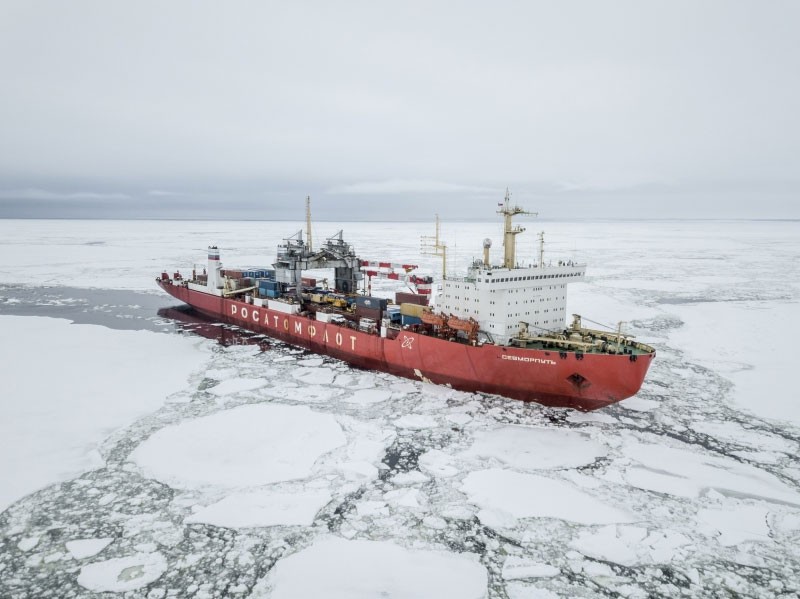
President vows to develop his country’s nuclear fleet despite current difficulties in Russia’s economy and production.
Aljazeera, 22 Nov 22,
President Vladimir Putin on Tuesday touted Russia’s Arctic power at a flag-raising ceremony and dock launch for two nuclear-powered icebreakers that will ensure year-round navigation in the Western Arctic.
Presiding via video link from the Kremlin at the launch ceremony in St Petersburg in northern Russia, Putin said such icebreakers were of strategic importance for the country.
“Both icebreakers were laid down as part of a large serial project and are part of our large-scale, systematic work to re-equip and replenish the domestic icebreaker fleet, to strengthen Russia’s status as a great Arctic power,” Putin said.
The Arctic is taking on greater strategic significance due to climate change, as a shrinking ice cap opens up new sea lanes.
Vast oil and gas resources lie in Russia’s Arctic regions, including a liquefied natural gas plant on the Yamal Peninsula.
The Kremlin chief pledged to develop his country’s nuclear fleet despite current difficulties in Russia’s economy and production, in an apparent reference to Western sanctions over Moscow’s offensive in Ukraine……………………..
The 173.3-metre (569 feet) Yakutia, with a displacement of up to 33,540 tonnes, can smash through ice of up to three metres. It will enter service in 2024.
Two other icebreakers in the same series, the Arktika and the Sibir, are already in service, and another, the Chukotka, is scheduled for 2026.
Putin said a super-powerful nuclear 209-metre icebreaker known as “Rossiya”, with a displacement of up to 71,380 tonnes, would be completed by 2027. It will be able to break through ice four metres thick………………………………….. more https://www.aljazeera.com/news/2022/11/22/putin-touts-russias-arctic-power-with-new-nuclear-icebreaker
UK recognises veterans of nuclear weapons tests with medals
Aljazeera, 22 Nov 22
The honour comes 70 years after Britain detonated a nuclear bomb in the Indian Ocean.
Seventy years after Britain detonated a nuclear bomb in the Indian Ocean, troops who took part – sometimes unknowingly – in the country’s atomic weapons tests are being recognised with a medal.
The UK government’s announcement on Monday of the Nuclear Test Medal is a victory for veterans and their families, who have campaigned for years for recognition.
Now, many want recognition of the health problems they believe they suffered as a result of exposure to radiation.
……….. Sunak attended the first-ever ceremony for the nuclear veterans at the National Memorial Arboretum in central England, marking the 70th anniversary of the United Kingdom’s first atmospheric atomic test on October 3, 1952.
Operation Hurricane
The detonation of a plutonium implosion device aboard a Royal Navy ship in the Montebello Islands off Western Australia, dubbed Operation Hurricane, made Britain the world’s third nuclear-armed nation, after the United States and Russia…….
The UK set off further nuclear explosions in Australia and ocean territories, including on Christmas Island, over the following years.
Veterans groups say about 22,000 UK military personnel were involved in British and American tests in the 1950s and 60s, many of them conscripts doing postwar national service.
Veterans, scientists and civil servants from Australia, New Zealand, Fiji and Kiribati who served under British command during the tests between 1952 and 1967 will also be eligible for the UK medal.
Many veterans and their families are convinced there is a link between the tests and health problems they have suffered, and are pressing the UK to hold a public inquiry into the tests.
Some allege they were deliberately exposed to radiation to see how their bodies would react, and claim their medical records were later suppressed.
‘The end of the world’
John Morris, who saw nuclear blasts on Christmas Island as a young conscript in the 1950s, told the BBC earlier this year that “I felt like I had seen the end of the world.”
“I saw right through my hands as the light was so intense,” he said. “It felt like my blood was boiling. The palm trees – which had been 20 miles [32km] away – were scorched.”
Numerous studies over the decades have probed allegations of high cancer rates among the test veterans, and of birth defects in their children, but have failed to establish an ironclad connection with the nuclear tests.
Successive British governments have denied troops were exposed to unsafe levels of radiation.
Alan Owen, founder of the Labrats International charity for atomic test survivors, welcomed the government’s recognition, but said “we want more”………………………………………https://www.aljazeera.com/news/2022/11/21/uk-recognises-veterans-of-nuclear-weapons-tests-with-medals
Videos showing execution of Russian POWs in Ukraine are authentic – New York Times
Rt.com 21 Nov 22
The clips suggest captive troops were “killed at close range,” the American newspaper insists.
The New York Times says it has verified the authenticity of videos that surfaced online last week, showing the execution of captive Russian soldiers by Ukrainian troops. The men “appear to have been shot dead at close range,” according to the newspaper.
The events shown in the clips occurred in the village of Makeyevka in the People’s Republic of Lugansk, earlier this month, the newspaper reported on Sunday.
“The videos… whose authenticity has been verified by The New York Times, offer a rare look into one gruesome moment among many in the war, but do not show how or why the Russian soldiers were killed,” the NYT wrote, adding that what actually happened to the soldiers remains “a mystery.”
However, the outlet noted out that judging by the footage, “at least 11 Russians… appear to have been shot dead at close range after one of their fellow fighters suddenly opened fire on Ukrainian soldiers standing nearby.”
The NYT also cited Dr. Rohini Haar, medical adviser at Physicians for Human Rights, who said that “killing or wounding a combatant, who, having laid down his arms or having no longer means of defense, has surrendered at discretion” is a violation of the laws of international armed conflict……………….. https://www.rt.com/news/566901-ukraine-pow-execution-nyt/
Finland’s Fortum turns to U.S. in bid to replace Russian nuclear fuel
https://www.reuters.com/business/energy/finlands-fortum-turns-us-bid-replace-russian-nuclear-fuel-2022-11-22/ HELSINKI, Nov 22 (Reuters) – Finnish power company Fortum (FORTUM.HE) on Tuesday said it was planning to begin buying nuclear fuel from U.S.-based Westinghouse Electric.
Fortum began looking to replace Russian fuel, which it has been using solely since 2008, last March as a response to Moscow’s war in Ukraine.
“The new and parallel fuel supplier will diversify our fuel strategy, improve security of supply and ensure reliable electricity production,” head of Loviisa power plant Sasu Valkamo said.
Fortum has applied for a licence to run its two plants in Finland until 2050, while the current fuel-supply agreements with TVEL, a subsidiary of Russian state-owned power company Rosatom, will run until 2027 and 2030, it said.
“A tendering process will be arranged for fuel supply for the new operating licence period,” the company said.
Fortum has also put its Russian assets up for sale.
Electricity production at Olkiluoto 3 reactor delayed until 2023.
Full-scale electricity production at Olkiluoto 3 reactor delayed until
2023. An investigation into damage to the reactor’s feedwater pumps will
take a number of weeks, with a knock on effect on the schedule for the
beginning of regular electricity production.
Finland’s newest nuclear reactor will remain offline longer than expected, announced its owner on
Monday, pushing back much-needed relief for electricity consumers. Nuclear
power utility Teollisuuden Voima (TVO) has announced that an investigation
into damage at the much-delayed Olkiluoto 3 nuclear reactor’s feedwater
pumps will continue for a number of weeks.
In a press statement, TVO said
that as a result of the ongoing investigation, the schedule for when
regular electricity production will begin at the reactor cannot currently
be estimated.
YLE News 22nd Nov 2022
Nuclear Industry Liability under the Paris Convention
The Paris Convention on Third Party Liability in the Field of Nuclear
Energy and the Brussels Convention supplementary to the Paris Convention
established a special legal regime in relation to the compensation payable
in the event of an accident involving a civil nuclear power installation or
the transportation of nuclear substances to and from that installation.
Unlike general tort law, which is based on fault or negligence, under the
convention, the plant operator or party involved in the transportation is
exclusively liable for damages in the event of an accident and is always
deemed to be liable, regardless of whether fault can be established.
These two conventions were amended by agreement between the contracting powers,
including the United Kingdom, on 17 December 2021. After 1 January 2022,
nuclear plant operators became liable to pay compensation of up to €700
million in the event of an accident.
This level of liability will be increased by €100 million in each of the next five years leading to an
ultimate maximum liability of €1.2 billion towards claims involving
‘personal injury or loss of life, economic loss, the cost of preventive
measures and of measures of reinstatement of impaired environment’.
NFLA 21st Nov 2022
With Kiev exposed for a lie that could have triggered a third world war, it is time to examine past deceptions that Western media promoted.
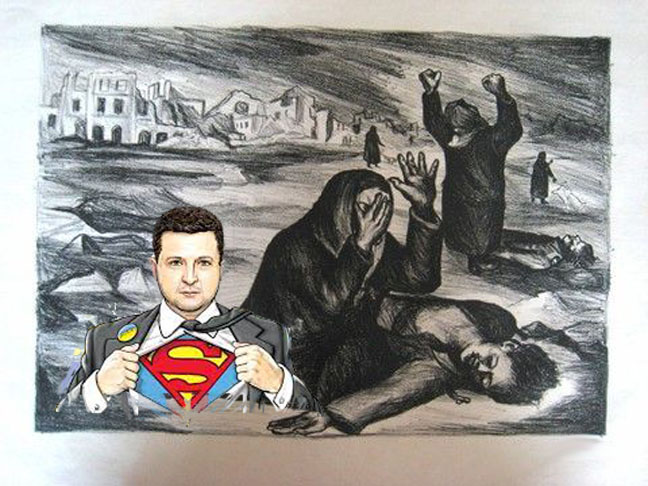
As the war grinds on, elements in the Biden administration appear to be growing impatient with the tall tales of their Ukrainian clients. “This is getting ridiculous,” an unnamed NATO official told the Financial Times on November 16. “The Ukrainians are destroying our confidence and they are openly lying. This is more destructive than the missile.”
Zelensky, media lackeys caught in most dangerous lie yet. https://thegrayzone.com/2022/11/18/zelensky-media-lie/ ALEXANDER RUBINSTEIN·NOVEMBER 18, 2022
With Kiev exposed for a lie that could have triggered a third world war, it is time to examine past deceptions that Western media promoted.
A missile that exploded on Polish soil on November 15 killed two civilians and destroyed farm equipment. Ukrainian President Volodymyr Zelensky and Western corporate media rushed to blame the explosion on Russia in apparent hopes of triggering NATO’s Article 5, which requires NATO states to defend one another militarily when attacked by a hostile force.
Polish and NATO members including US President Joseph Biden have since confirmed the missile that struck Poland was, in fact, a Ukrainian S-300 anti-aircraft missile. Yet Zelensky is sticking to his line, blaming Russia for the strike, while NATO Secretary-General Jens Stoltenberg still insists that “Russia bears ultimate responsibility.” Meanwhile, the media outlets that reflexively pointed the finger at Russia have been forced to take a step back from their initial reporting.
“Russian missiles hit Poland, the territory of our friendly country. People died,” Zelensky insisted on November 15, the night of the attack. “The longer Russia feels impunity, the more threats there will be to anyone within reach of Russian missiles. To fire missiles at NATO territory! This is a Russian missile attack on collective security! This is a very significant escalation. We must act.”
Zelensky held firm the following day, despite mounting evidence that his own country’s air defenses were responsible, declaring “I have no doubt that this is not our missile… I believe that this was a Russian missile, based on our military reports.” By this time, most analysts rejected the Ukrainian president’s assessment, including the founder of the US government-sponsored intelligence cutout Bellingcat, who wrote “At this point I think it’s fair anyone saying that a Russian missile hit Poland based on the current evidence is being irresponsible.”
A Russian attack on NATO member Poland could have triggered Article 5 of the North Atlantic Treaty Organization which compels its member states to consider “an attack against one Ally” to be “an attack against all Allies.” Such a mobilization would have amounted to World War III.
Despite the clear risk of such a catastrophic escalation – or perhaps because of it – Western corporate media immediately blamed Russia for the strike, never even posing the question of why Russia would consider Polish farmland such an important military target that it would be willing to risk a full-scale war with the 30-member NATO alliance.
Initially, the Associated Press ran with the headline “Russian missiles cross into Poland during strike on Ukraine.” The article cited a “senior US intelligence official,” and later, “a second person.”
On November 16, AP began redirecting the link to its original article to a correction that stated, “The Associated Press reported erroneously, based on information from a senior American intelligence official who spoke on condition of anonymity, that Russian missiles had crossed into Poland and killed two people. Subsequent reporting showed that the missiles were Russian-made and most likely fired by Ukraine in defense against a Russian attack.”
Time Magazine ran with the headline, “Russian Missiles Cross Into Poland During Strike, Killing Two,” and cited the AP report.
Fox News similarly announced, “Russian missiles cross into NATO member Poland, kill 2: senior US intelligence official, citing the Associated Press. MSNBC also blamed a “Russian missile” for the strike in its headline.
Then there was CNN, which reported, “Poland says Russian-made missile killed two, will consider invoking NATO Article 4.” NATO Article 4 deals with the meetings between NATO states that are to take place in the event one of them is “threatened” and would theoretically precede any invocation of Article 5. Like CNN, Reuters cited the Polish Foreign Ministry and ran the headline, “Poland says Russian rocket hit its territory as NATO weighs response.”
The New York Times stated in the second sentence of its report on the missile strike that “the blast came as Russia fired roughly 90 missiles into Ukraine.” Two lines later, the Times stated “local media suggests a Russian missile strike.” Readers of the paper of record would have to scroll down several times to even read that Russian officials denied responsibility.
Earlier in the war, in an article on “Ukraine’s online propaganda,” the New York Times sought to downplay the Ukrainian government’s penchant for pushing fake news, arguing that Kiev’s information war merely “dramatize[s] tales of Ukrainian fortitude and Russian aggression.” The article quoted an unnamed Twitter user, who wrote, “Why can’t we just let people believe some things? … If the Russians believe it, it brings fear. If the Ukrainians believe it, it gives them hope.”
The US media’s support for Ukraine’s propaganda efforts meant that it covered some of the most suspicious events without a hint of skepticism, and thereby encouraged more.
These questionable incidents included the following:
- On March 8, Western media reported that a Mariupol maternity hospital was attacked by Russian aircraft. Zelensky claimed the attack was evidence of Russian “genocide” against Ukraine. However, a key witness – a pregnant woman in the hospital photographed by AP – stated that no such airstrike occurred, and that nearby explosions were caused by Ukrainian artillery shells.
- On March 16, the Ukrainian government blamed a targeted Russian airstrike for destroying the Mariupol Dramatic Theater and causing anywhere from 300 to 600 deaths. Western corporate media promoted the Ukrainian narrative of the event despite a total absence of footage showing a missile strike, no images or evidence of large numbers of dead civilians inside, no images or evidence of any attempted rescue, and testimony by Mariupol locals asserting the Azov Battalion fighters that controlled the theater’s grounds staged the explosion to provoke NATO military intervention. Photographic evidence showed that Azov fighters removed all vehicles from the theater’s parking lot one day before the explosion.
- The Kramatorsk train station bombing that was blamed on Russia despite the fact the Tochka-U missile responsible for the blast contained a serial number matching others in Ukraine’s arsenal and originated from Ukrainian-controlled territory.
As the war grinds on, elements in the Biden administration appear to be growing impatient with the tall tales of their Ukrainian clients. “This is getting ridiculous,” an unnamed NATO official told the Financial Times on November 16. “The Ukrainians are destroying our confidence and they are openly lying. This is more destructive than the missile.”
Shelling of Zaporizhzhia is playing with fire, says UN nuclear chief, as blasts reported
Explosions cause damage at Ukrainian power plant, as Kyiv says it will investigate videos allegedly of surrendering Russians being shot
Guardian, Jennifer Rankin, Mon 21 Nov 2022
The UN nuclear energy watchdog has said the forces behind the shelling of Ukraine’s Zaporizhzhia power plant are “playing with fire”, after a series of explosions shook the facility.
The International Atomic Energy Agency (IAEA), which has experts based at Zaporizhzhia, reported on Sunday that powerful explosions had shaken the area on Saturday night and Sunday. It said its on-site experts saw some of the explosions from their windows.
It reported more than a dozen blasts from apparent shelling, with damage to some buildings, systems and equipment, but “none so far critical for nuclear safety”.
The head of the IAEA, Rafael Grossi, said the news was extremely disturbing and he called the explosions completely unacceptable. “Whoever is behind this, it must stop immediately. As I have said many times before, you’re playing with fire,” he said.
According to the IAEA Twitter account, Grossi renewed his appeal to Ukraine and Russia to agree and implement a nuclear safety and security zone around the plant as soon as possible.
Zaporizhzhia, in south-east Ukraine, is Europe’s largest nuclear power station and has been under Russian control since March, although its Ukrainian staff remain in place to run the facility. It has faced repeated shelling, raising fears of a nuclear disaster. Moscow and Kyiv have blamed each other for the attacks.
The plant’s six Soviet-designed water-cooled reactors are currently shut down, but there is a risk that nuclear fuel could overheat if the power that drives the cooling systems is shut. Shelling has frequently damaged the plant’s power supply.
Russian officials claimed that Ukrainian forces were behind the latest attacks. “They are shelling not only yesterday but also today, they are shelling even now,” an adviser to the head of Russia’s nuclear power operator Rosenergoatom, Renat Karchaa, told the Russian state news agency Tass. He said there had been 15 aerial strikes, including one that hit a storage facility.
Soon after the Russian accusations, Ukraine’s nuclear energy agency, Energoatom, said Russia was responsible for the shelling, which it said had resulted in 12 hits to Zaporizhzhia’s infrastructure. The company said on Telegram that the list of damaged equipment indicated that the attackers “targeted and disabled exactly the infrastructure that was necessary for the restart of 5th and 6th power units” and the restoration of power production for Ukrainian needs……………………………….. https://www.theguardian.com/world/2022/nov/20/shelling-of-zaporizhzhia-is-playing-with-fire-says-un-nuclear-chief-ukraine
UK’s Sizewell nuclear project remains unfinanced
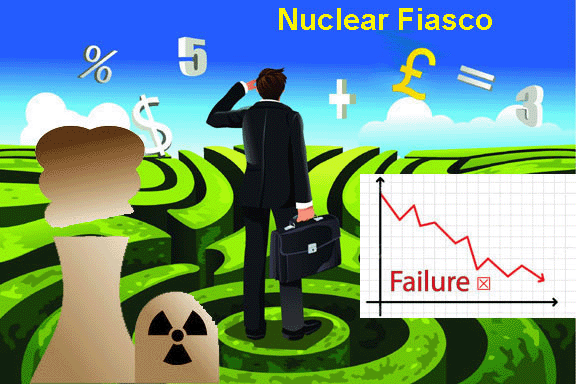
Alistair Osborne: The wind of change with no direction. Sizewell all at C.
Sometimes the brackets do a lot of work: “The government will continue to
secure the UK’s energy security through delivering new nuclear power,
including Sizewell C (subject to final agreement)”.
How far away is that deal? Maybe an unbuilt nuke on a Suffolk flood plain really can attract an
investor fan club. But, as yet, this £20 billion to £30 billion project
— the top end, natch, knowing nuclear — remains unfinanced.
France’s EDF only wants about 20 per cent of the project, with the taxpayer possibly
taking a fifth. And the only money pledged to date is the £700 million
from Boris Johnson on his way out of No 10. Final agreement may prove some
way off.
Times 18th Nov 2022
https://www.thetimes.co.uk/article/alistair-osborne-the-wind-of-change-with-no-direction-w8kcq5l9b
Putin’s nuclear grip on Europe could spark another energy crisis, expert warns
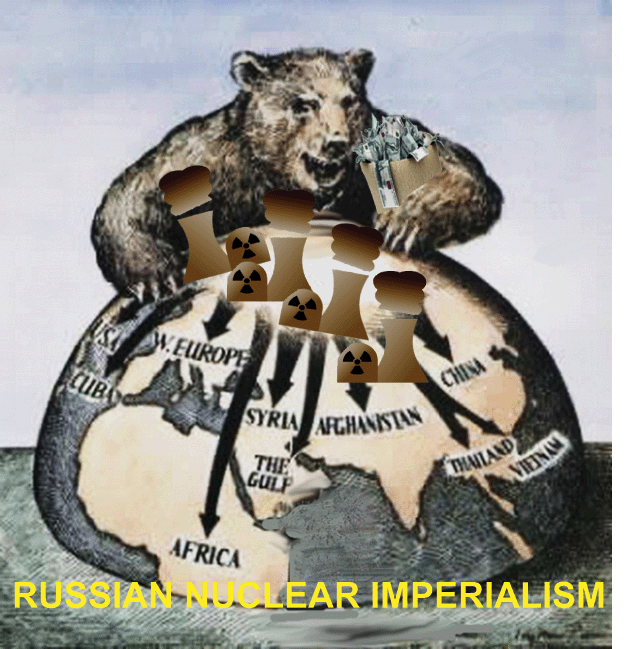
Russian President Vladimir Putin controls about 42 percent of the world’s nuclear fuel, and may be able to send electricity prices soaring if he withholds supplies.
https://www.express.co.uk/news/science/1698529/putin-nuclear-power-energy-uranium-gas-prices By JACOB PAUL, Nov 20, 2022, As global gas prices have been sent to record highs over the last year due to Russian President Vladimir Putin’s war in Ukraine and his supply cuts to Europe, nations across the continent have been scrambling to wean themselves off Russian fossil fuels to weaken Moscow’s tight grip on the energy market. But an expert has told Expess.co.uk that countries which have hedged bets on nuclear power as a means of gaining energy independence may not actually be able to escape Putin’s clutches as the Kremlin has dominance over nuclear fuel supplies, which could potentially trigger another price crisis.
While policymakers across Europe have argued that nuclear power stations can boost homegrown supplies of energy, they have failed to mention these plants require uranium to fuel them.
This is the crux of the issue as Russia, and Russia-controlled Kazakhstan currently supplies 42 percent of all uranium for all reactors worldwide. And when compared with the gas crisis, the statistics look eerily similar.
The EU for instance, got around 40 percent of its gas from Russia before Putin sent his troops into Ukraine. And when he withheld supplies to Europe, prices in Britain shot up too, despite the UK only getting four percent of its gas from Russia. This is due to the integrated nature of the gas market.
With the EU relying on Russia for 20 percent of its uranium needed to fuel supplies if Russia decided to curtail uranium deliveries to the bloc, it may spark the same problem and trigger another energy crisis.
Prof Paul Dorfman, an Associate Fellow from the Science Policy Research Unit (SPRU) at the University of Sussex told Express.co.uk: “The argument goes that nuclear provides a security of supply. In other words, ‘you don’t need to worry about Putin’s gas or the Middle East’s oil’. But this point of view is hugely problematic.
“There is no question that the whole business about the Russian invasion of Ukraine has turned the nuclear industry on its head. This whole idea of security of supply, that nuclear won’t leave us dependent on foreign problems is false.
“Putin, Russia and Russia-controlled Kazakhstan supply 42 percent of all uranium of all reactors worldwide. 20 percent for the EU, 14 percent of the US and nearly 30 percent of their enrichment services.
“The UK is different. We get our uranium from Australia and Canada and we don’t rely on Russia so we are ok.”
However, while nuclear fuel may not run short in the event of a supply cut from Russia, Prof Dorfman warned, it could send the cost of electricity in Britain soaring too.
Asked if the nuclear market was similar to the gas market in this regard, Prof Dorfman told Express.co.uk: “In my view, it certainly would have a significant impact on UK electricity prices because we live in a market world. Absolutely, yes.”
This could be a concern for the UK, given that Britain is planning to dramatically expand its number of nuclear power plants, a desire unveiled in the April energy strategy under former Prime Minister Boris Johnson.
It included the plan to set up new government body, Great British Nuclear, and a £120milion Future Nuclear Enabling Fund in a bid to build eight new reactors across the UK. Mr Johnson said: “We’re setting out bold plans to scale up and accelerate affordable, clean and secure energy made in Britain, for Britain – from new nuclear to offshore wind – in the decade ahead.
“This will reduce our dependence on power sources exposed to volatile international prices we cannot control, so we can enjoy greater energy self-sufficiency with cheaper bills.”
While it is recognised that renewable energies like wind and solar power are cheaper than other sources like oil and gas, Mr Johnson appeared to fail to take into account Putin’s grip on the global nuclear market and the prospect of sending electricity bills soaring in the UK.
Strange Rolls Royce plan for Large complex of Large Small Nuclear Reactors for Bradwell

Rolls Royce announced on 9 November that it is eying up Bradwell as a potential site for the deployment of four to six so-called (and currently non-existent) Small Nuclear Reactors (SMRs).
Professor Andy Blowers, the Chair of the Blackwater Against New Nuclear Group (BANNG), commented:
‘This proposal, if it ever came about, would place up to six nuclear reactors on the Bradwell site. And they are hardly ‘small’ since each reactor would be close to the size of the old Bradwell A station. Together
these reactors would comprise a nuclear complex larger than the massive, proposed Bradwell B currently under consideration for development by the Chinese company, CGN.
‘It is hard to state how utterly inappropriate such a development, which would include long-term storage of highly radioactive nuclear wastes, would be on the low- lying Bradwell site, threatened by the impacts of Climate Change and Sea Level Rise.
BANNG finds it extremely odd that Rolls Royce is proposing the Bradwell site for SMRs. Only two days
before the announcement BANNG, at a meeting of the Department of Business, Energy and Industrial Strategy (BEIS) NGO Nuclear Forum, asked if CGN had withdrawn from the Bradwell B project. BANNG was told that there was no change to the proposals for Bradwell B but that further discussion was not
possible because of ‘commercial confidentiality’.
The Bradwell site is owned by the French company, EDF, which is also a minor partner in the
Bradwell B project. Rolls Royce agree that its proposal ‘requires agreement with CGN and EDF energy’.
Perhaps the Rolls Royce announcementunravels the mystery as to why CGN has not quit its operations at Bradwell altogether, claiming they are paused indefinitely. Could this be paving the way for Rolls Royce and also explain why BEIS invoked commercial confidentiality?
Blackwater Against New Nuclear Group 17th Nov 2022
NATO’s hair trigger: The Polish missile incident was a close brush with nuclear annihilation
https://www.rt.com/news/566710-polish-missile-incident-nato/ Scott Ritter. 18 Nov 22The fervor with which Poland and others sought to drag NATO into a war with Russia should ring alarm bells for everyone
The world dodged a bullet this week, with some NATO members trying, but failing, to trigger Article 4 as a means of confronting Russia in Ukraine. We may not be so lucky next time.
The recent scandal surrounding what most of the world now agrees was an errant Ukrainian surface-to-air missile landing on Polish soil, killing two Polish citizens in the process, has exposed an ugly reality about the eastern reaches of NATO today:
Despite the more reserved stance of the old NATO establishment (the US, UK, France, and Germany), the new upstarts in eastern Europe seem hell-bent on finding a mechanism that will justify NATO intervention in Ukraine.
This predilection for nuclear annihilation (no one should have any misgivings that a NATO-Russia conflict would end any other way) should send alarm bells ringing in the halls of power throughout NATO and the rest of the world, because left to their own devices, the Russophobic officials that dominate the governments of Poland and the three Baltic republics act like lemmings, running toward the Ukrainian cliff, oblivious to their fate as they chase the fantasy of NATO defeating Russia on a European battlefield.
The rush to judgment that accompanied the arrival of the Ukrainian surface-to-air missile on Polish soil serves as a stark reminder about how the supposedly defensive characteristics of the NATO Charter can be used to promote, rather than deter, conflict.
Let there be no doubt – NATO was aware that the missile that impacted near the village of Przewodów in Poland, killing two Polish citizens, was a Ukrainian surface-to-air missile the moment it was launched.
The airspace over Ukraine is one of the most highly-monitored locations in the world. Without revealing sources and methods, suffice it to say there isn’t anything that happens over Ukraine that isn’t registered in real time on a NATO display in headquarters throughout Europe – including Poland.
And yet … Poland saw fit to summon the Russian ambassador and lodge a protest.
Moreover, Poland declared that it would increase its military readiness while contemplating the activation of Article 4 of the NATO Treaty, a mechanism which allows the alliance to discuss security threats to member states with an eye on possibly using NATO military force to rectify the situation. Article 4 is behind every combat deployment of NATO since its inception, from Serbia, to Libya, to Afghanistan.
On cue, Lithuanian President Gitanas Nausėda, whose country borders Poland, tweeted that “every inch of NATO territory must be defended!”
Czech Prime Minister Petr Fiala likewise turned to Twitter to exclaim: “If Poland confirms that the missiles also hit its territory, this will be a further escalation by Russia. We stand firmly behind our EU and NATO ally.”
For its part, Estonia called the news “most concerning,” with its foreign minister declaring via Twitter, “We are consulting closely with Poland and other allies. Estonia is ready to defend every inch of NATO territory.”
While all parties concurred that there was no basis for triggering Article 5 of NATO (i.e., the collective security clause), Article 4 was very much in play. Poland was adamant: The missile “attack” against Poland was clearly a crime, one that could not go unpunished. As such, under Article 4, Poland would be pushing “for NATO members and Poland to agree on the provision of additional anti-aircraft defense, including in part of the territory of Ukraine.”
And there you have it: “Including in part of the territory of Ukraine.”
Enter Germany, stage left: “As an immediate reaction to the incident in Poland, we will offer to strengthen air policing with combat air patrols over its airspace with German Eurofighters,” a German Defense Ministry spokesperson declared.
Cue NATO Secretary General Jens Stoltenberg, who convened an emergency meeting of NATO ambassadors in Brussels to discuss the Polish incident. According to the Finnish foreign minister (Finland, although not a NATO member, was invited to the meeting), “Closing the airspace [above Ukraine] will definitely be discussed. Various options of how we can protect Ukraine are on the table.”
While Germany reportedly rejected the establishment of a no-fly zone over Ukraine, noting that such an action would pose a threat of direct confrontation between Russia and NATO, one is left pondering how such a discussion came to be in the first place: Ukraine fired a surface-to-air missile, which was tracked by NATO as it impacted on Polish soil. And, as a result, NATO members end up discussing the possibility of invoking Article 4 of the NATO Charter, seeking to extend NATO air defense into Ukrainian air space in concert with the establishment of a no-fly zone enforced by NATO aircraft.
“Even if it was a blue on blue [incident] with a Ukrainian rocket that landed in Poland, I think there is still enough ground for Poland to invoke Article 4,” a former director of policy planning for NATO, Fabrice Pothier, declared.
Just to clarify what Mr. Pothier is saying: Because Ukraine fired a surface-to-air missile that ended up landing on Polish soil, NATO is justified in invoking Article 4, setting the stage for a possible NATO-Russia conflict in Ukraine which could lead to global nuclear annihilation.
If there was ever any doubt about the threat NATO posed to the entire world, there is no more.
That this is being promulgated on behalf of a Ukrainian leader who, despite universal consensus that the missile which hit Poland was Ukrainian, denies this possibility, all the while blaming Russia in the hopes that NATO will intervene, only adds to the insanity of this crisis.
While it appears that the world has dodged the potential death sentence triggered by the NATO Article 4 this time, the hair-trigger aspect of NATO’s Pavlovian response mechanism when it comes to seeking causal justification for military intervention in Ukraine should have everyone on high alert.
1 This Month





PLEASE OPPOSE HR 8255 AND S.3639 – bills would accelerate satellite deployment, with no environmental review or safeguards – https://ncstd5li.quorum.us/campaign/169331/
To see nuclear-related stories in greater depth and intensity – go to https://nuclearinformation.wordpress.com
-
Archives
- October 2026 (67)
- September 2026 (339)
- August 2026 (330)
- July 2026 (355)
- June 2026 (287)
- May 2026 (306)
- April 2026 (356)
- March 2026 (251)
- February 2026 (267)
- January 2026 (308)
- December 2025 (358)
- November 2025 (359)
-
Categories
- 1
- 1 NUCLEAR ISSUES
- business and costs
- climate change
- culture and arts
- ENERGY
- environment
- health
- history
- indigenous issues
- Legal
- marketing of nuclear
- media
- opposition to nuclear
- PERSONAL STORIES
- politics
- politics international
- Religion and ethics
- safety
- secrets,lies and civil liberties
- spinbuster
- technology
- Uranium
- wastes
- weapons and war
- Women
- 2 WORLD
- ACTION
- AFRICA
- Atrocities
- AUSTRALIA
- Christina's notes
- Christina's themes
- culture and arts
- Events
- Fuk 2022
- Fuk 2023
- Fukushima 2017
- Fukushima 2018
- fukushima 2019
- Fukushima 2020
- Fukushima 2021
- general
- global warming
- Humour (God we need it)
- Nuclear
- RARE EARTHS
- Reference
- resources – print
- Resources -audiovicual
- Weekly Newsletter
- World
- World Nuclear
- YouTube
-
RSS
Entries RSS
Comments RSS

