Marie Curie’s Belongings Will Be Radioactive For Another 1,500 Years

By BARBARA TASCH, BUSINESS INSIDER, https://www.sciencealert.com/these-personal-effects-of-marie-curie-will-be-radioactive-for-another-1-500-years?fbclid=IwAR2mz5r9iMmKfNoIYm1ddsmsoLUqMZn7a84pCdZYKp5aYi1TWup0Tl0vkN4 21 Aug 2015
Marie Curie, known as the ‘mother of modern physics’, died from aplastic anaemia, a rare condition linked to high levels of exposure to her famed discoveries, the radioactive elements polonium and radium.
Curie, the first and only woman to win a Nobel Prize in two different fields (physics and chemistry), furthered the research of French physicist Henri Becquerel, who in 1896 discovered that the element uranium emits rays.
Alongside her French physicist husband, Pierre Curie, the brilliant scientific pair discovered a new radioactive element in 1898. The duo named the element polonium, after Poland, Marie’s native country.
Still, after more than 100 years, much of Curie’s personal effects including her clothes, furniture, cookbooks, and laboratory notes are still radioactive, author Bill Bryson writes in his book, A Short History of Nearly Everything.
Regarded as national and scientific treasures, Curie’s laboratory notebooks are stored in lead-lined boxes at France’s Bibliotheque National in Paris. Wellcome Library
While the library grants access to visitors to view Curie’s manuscripts, all guests are expected to sign a liability waiver and wear protective gear as the items are contaminated with radium 226, which has a half life of about 1,600 years, according to Christian Science Monitor.
Her body is also radioactive and was therefore placed in a coffin lined with nearly an inch of lead.
The Curie’s are buried in France’s Panthéon, a mausoleum in Paris which contains the remains of distinguished French citizens – like philosophers Rousseau and Voltaire.
Russia Adds ‘Unrivaled’ Nuclear-Powered Missile Cruisers To Its Arsenal; Putin Says Has No Analogs In The World
https://eurasiantimes.com/russia-adds-unrivaled-nuclear-powered-missile-carriers/ By Ashish Dangwal, January 1, 2023
Russian President Vladimir Putin stated at a naval commissioning ceremony on December 29 that Russia’s latest nuclear-powered missile cruisers have no counterparts anywhere else in the world.
Regarding the Sevmash Shipyard and Rubin Design Bureau’s contributions to the production of the nation’s nuclear submarines, Putin stated that “the latest nuclear-powered missile carriers being designed and built there have no analogs in the world in many characteristics.”
He stated the vessels have advanced underwater acoustics, navigation, and communication systems in addition to high-precision weapons and robotic systems.
The flag hoisting signifies that the ships have been accepted into the Russian Navy. Defense Sergey Shoigu announced at the end of the ceremony that “the ships have been accepted into the Navy.”
The President of Russia also thanked the designers, engineers, and employees of the Sevmash, Zelenodolsk, and Sredne-Nevsky shipyards for their diligent work and timely, high-quality completion of duties.
Europe shows how to cut demand for energy use

Europe’s energy sacrifices: the winter test of resolve. From Finland to
France, citizens are reducing their power consumption. Can a drop in
temperatures break that collective resilience? Prices across the bloc have
been sky high, even if they have come down since a sharp rise in August
Entire swaths of industry — notably steel and chemical manufacturers —
have cut production, while governments have poured more than €700bn into
subsidies and financial support, according to the Brussels-based think-tank
Bruegel.
Data from Eurostat show that household gas bills dramatically
increased in almost all of the EU’s 27 member states in the first half of
the year with some, such as Estonia and Bulgaria, shouldering more than
double last year’s cost.
Broad estimates for the reduction in gas use
across Europe hover at around 15 per cent in the second half of this year,
in line with a commitment by EU governments in July to voluntarily cut
demand by that amount. Much of the savings have come from “demand
destruction” among industrial users that have shut down production but
that should not negate household and community efforts, says Henning
Gloystein, director of energy, climate and resources at Eurasia Group.
Even if consumer demand is “super volatile across Europe, depending almost
entirely on the weather”, he says, “the heating of households and small
businesses is the biggest part of gas consumption each winter and if we
can’t solve that we are screwed.”
In Germany, which received more than
half of its gas from Russia in 2021, a concerted government campaign to cut
energy consumption has filtered down through city authorities. Lights in
public buildings have been dimmed, temperatures in sports facilities
lowered to 17C, hot water has been switched off in public buildings and
heating of municipal buildings in major cities cut to a minimum.
In France, where the situation is made more challenging by the closure of almost half
of its nuclear power fleet for maintenance, monuments such as the Eiffel
Tower and the Palace of Versailles now stand in darkness for most of the
night and the shop windows of luxury stores belonging to the LVMH
conglomerate, including Louis Vuitton on the Champs Elysées, are now
dimmed from around 10pm.
FT 30th Dec 2022
https://www.ft.com/content/6e08003e-5de0-4707-93c3-43b64480443e
France’s nuclear headache – Macron on the brink of rationing electricity
France’s nuclear headache leaves Macron on brink of rationing
electricity. The threat of power cuts has been looming over France —
curious considering that it is normally a significant exporter of
electricity, thanks to its 56 nuclear reactors, by far the largest number
of Europe.
This same dependence on nuclear has proved to be its Achilles
heel, however, as a result of a crisis prompted by the discovery of cracks
in the pipes of a number of its reactors which, at its height, forced the
closure of almost half of its nuclear power stations.
The resulting cut in
output to a 30-year low has added to the energy supply problems across
Europe caused by Russia’s war on Ukraine. Some of the problem reactors
have since been restarted, but last week 39 per cent of France’s 61,370
megawatts of nuclear generation capacity remained offline, according to
analysis by Reuters of data provided by RTE, which operates the country’s
grid.
Times 1st Jan 2023
Europe’s nuclear industry heavily dependent on Russian fuel and technology – no sanctions there.
Western countries are being urged to stop buying Russian nuclear fuel amid
fears the trade is funding the war in Ukraine. Russia is one of the
world’s largest uranium suppliers with around 40pc of global capacity for
uranium enrichment.
While Europe has been weaning itself off Russian fossil
fuels, its nuclear sector is still heavily dependent on Russian imports.
“We need to escalate our collective pressure against the Kremlin, and the
nuclear industry is exactly one of the arenas that needs to be
considered,” said Tobias Ellwood, chairman of Parliament’s defence
committee. Russia’s dominance in the market, and the reliance of
countries including Hungary and Bulgaria on the fuel, has so far helped it
escape sanctions.
Russian state-owned uranium supplier Rosatom claims 17pc
of the global nuclear fuel market. It expects its 2022 exports growth to
reach 15pc, according to reports. It now has $200bn (£135bn) of orders.
Western countries have been stepping up their efforts to restrict
Russia’s revenues from oil as its war on Ukraine drags on. Companies such
as EDF in the UK have sought other suppliers in the wake of the war, but
there are concerns that Russia’s control of the market will return when
the conflict ends.
Telegraph 30th Dec 2022
3,000 civilians dead in Mariupol – Russian officials investigating – and claim that Ukrainian troops are responsible
Over 3,000 bodies of civilians recovered in Mariupol – investigators- https://www.rt.com/russia/569180-mariupol-civilian-deaths-ukraine/ 30 Dec 2022
Russian officials blamed the deaths on Ukrainian troops who are said to have forced residents to remain in the city .
The criminal actions of Ukrainian troops during the battle for Mariupol resulted in thousands of civilian deaths, Russian investigators have claimed. Local authorities have reportedly recovered over 3,000 bodies of people who were allegedly forced by Kiev’s troops to remain in the city while the conflict raged.
The figure was revealed in a statement by Russia’s Investigative Committee on Friday, after committee chief Aleksandr Bastrykin held a meeting in Mariupol with officials investigating alleged Ukrainian crimes.
The port city, located in the Donetsk People’s Republic (DPR), saw intense fighting between February and May, as Ukrainian troops were pushed back and encircled by Russian and DPR forces. Russia created humanitarian corridors to allow civilians to leave the city, but the Ukrainian side would not allow them to use the escape routes, Russian officials claimed.
“With no opportunity to leave the city, civilians moved around in search of food and became living targets for the Ukrainian punishers, who murdered them using various kinds of weapons,” the statement said.
In April alone, the bodies of 51 civilians were found at positions previously held by Ukrainian forces, while the total number of civilians found in the city was over 3,000, according to the prosecutors.
Russia has opened criminal cases targeting the people directly involved in the alleged transgressions as well as those above them in the Ukrainian chain of command. The list includes Gen. Valery Zaluzhny, the head of the country’s armed forces, according to the Investigative Committee. They are being probed for offenses related to the use of banned methods of war, with prosecutors collecting evidence of possible criminal orders to kill civilians and prisoners of war.
Officials remarked that identifying many of the victims was challenging. They suggested that people searching for missing relatives in Mariupol be urged to donate their DNA so that the samples could be compared against a database of samples collected from the recovered bodies.
German residents told to prepare for nuclear emergencies
German Residents must make preparations for nuclear emergencies, the
President of the Federal Office for Radiation Protection, Inge Paulini,
warned on Wednesday. In an interview with Funke media group newspapers,
Paulini pointed out that “radiation does not stop at the borders,” and
claimed that the ongoing military conflict between Moscow and Kiev has
“made it clear to the German residents that we have to be and remain
prepared for a wide variety of nuclear emergencies.”
Russia has repeatedly insisted that it does not intend to use atomic weapons in
Ukraine and has referred to its nuclear doctrine which only allows the use
of such munitions in a retaliatory fashion or in the case the country is
faced with an existential threat from conventional warfare.
Global Village Space 29th Dec 2022
No new nuclear weapons in Europe!
There are new US nuclear weapons which POLITICO announced could be delivered to US host countries – Belgium, Germany, Italy, the Netherlands, and Turkey, as soon as December, replacing the current weapons stationed in those countries.
The B61-12 warhead is a more advanced warhead from the ones currently stationed in countries hosting US nuclear weapons. It has different yields, from 0.3kt to 50kt, but could be even more destructive if detonated underground, increasing its yield to up to 1,250kt, 83 times the size of Hiroshima-sized nuclear weapons.
As France’s nuclear energy sector falters, Britain’s wind and solar power booms

the continued sharp growth of green power in Britain’s electricity mix. Wind farms generated a record 28 per cent of the country’s needs this year, up from 23 per cent last year. Solar generation increased to 5 per cent this year, from essentially zero a decade earlier.
Britain exported more electricity to Europe than ever before this year while wind and solar generation hit all-time highs, according to the first analysis of the year’s power mix. The energy crisis in Europe prompted by
Russia’s invasion of Ukraine and safety problems at French nuclear plants resulted in Britain becoming a net exporter of electricity to the Continent for the first time in more than a decade.
Renewable power sources generated in excess of 40 per cent of Britain’s electricity needs for the first
time as both wind and solar output increased, according to the analysis by Imperial College London for Drax Electric Insights and seen by The Times.
Gas-fired power generation also increased, compensating for a sharp drop in imports and helping to supply the rising exports. Soaring gas prices meant power prices were almost twice as high as a year earlier. Iain Staffell, of Imperial College London, lead author of the report, said: “This has been a year like no other for the energy industry.
The public are feeling the pain of high gas prices on their energy bills, even though renewables are
providing the grid with more cheap, green electricity than ever before. The lesson from 2022 is that we need to break our addiction to fossil fuels once and for all if we want lower-cost and more secure energy supplies.”
This reversal was driven by net exports to France, with more than half of the French nuclear fleet forced offline over the summer for maintenance and to repair corrosion and cracking.
Power flows on interconnectors are normally decided by the market, travelling in the direction of the highest
bidder. The analysis also shows the continued sharp growth of green power in Britain’s electricity mix. Wind farms generated a record 28 per cent of the country’s needs this year, up from 23 per cent last year. Solar
generation increased to 5 per cent this year, from essentially zero a decade earlier.
Times 29th Dec 2022
“Nuclear Sharing” – USA’s obscene system to turn non-nuclear weapons countries into nuclear attackers/targets.

The Steadfast Noon exercise will practice a controversial arrangement known as nuclear sharing, under which the United States installs nuclear equipment on fighter jets of select non-nuclear NATO countries and train their pilots to carry out nuclear strike with U.S. nuclear bombs.
NATO Steadfast Noon Exercise And Nuclear Modernization in Europe,
By Hans Kristensen • October 17, 2022,
Today, Monday October 17, 2022, the North Atlantic Treaty Organization (NATO) will begin a two-week long exercise in Europe to train aircrews in using U.S. non-strategic nuclear bombs. The exercise, known as Steadfast Noon, is centered at Kleine Brogel Air Base in Belgium, one of six airbases in Europe that store U.S. nuclear bombs. The exercise takes place midst significant modernizations at nuclear bases across Europe.
The arrangement is controversial because the United States as a party to the nuclear Non-Proliferation Treaty (NPT) has promised not to hand over nuclear weapons to other countries, and the non-nuclear countries in the sharing arrangement have promised not to receive nuclear weapons from the nuclear weapon states. In peacetime the nuclear weapons are under U.S. control, but the arrangement means that they would be handed over to the non-nuclear country in war time. The arrangement was in place before the NPT was signed so it is not a violation of the letter of the treaty. But it can be said to violate the spirit and has been an irritant for years.
Steadfast Noon exercises are held once every year, but this year is unique because the exercise will take place during the largest conventional war in Europe since World War II with considerable tension and uncertainty resulting from Russia’s war in Ukraine. Moreover, Steadfast Noon is expected to more or less coincide with a large Russian strategic nuclear exercise. For NATO officials, other than Putin’s war in Ukraine, this is all routine. But for the public, it is but the latest development in rising tensions and unprecedented fears about nuclear war.
According to NATO, Steadfast Noon will involve 14 countries (less than half of the 30 NATO allies) and up to 60 aircraft. That involves fourth-generation F-16s and F-15Es as well as fifth-generation F-35A and F-22 fighter jets. A number of tankers and surveillance aircraft will also take part. Although the exercise is practicing NATO’s non-strategic nuclear forces, a couple of U.S. strategic B-52 bombers will also participate. Training flights will take place over Belgium and the United Kingdom as well as over the North Sea. There might also be flights over Germany and the Netherlands.
Practicing Nuclear Bomb Sharing
The Steadfast Noon exercise will practice a controversial arrangement known as nuclear sharing, under which the United States installs nuclear equipment on fighter jets of select non-nuclear NATO countries and train their pilots to carry out nuclear strike with U.S. nuclear bombs.
“If NATO was to conduct a nuclear mission in a conflict,” NATO says, “the B-61 [sic] weapons would be carried by certified Allied aircraft…However, a nuclear mission can only be undertaken after explicit political approval is given by NATO’s Nuclear Planning Group (NPG) and authorisation is received from the US President and UK Prime Minister.” It is unclear why the U.K. Prime Minister would have to authorize employment of U.S. nuclear weapons, and unless NATO territory had been attacked with nuclear weapons first, it seems unlikely that the 29 countries in the NPG would be able to agree to approve of employment of non-strategic nuclear weapons from bases in Europe.
NATO disclosed earlier this year that seven NATO countries contribute dual-capable aircraft to the nuclear sharing mission. The countries were not identified but five are widely known: Belgium, Germany, Italy, Netherlands, and the United States. The sixth country is probably Turkey (despite rumors that it was no longer part of the mission), in which case some Turkish F-16s are still equipped to deliver B61 bombs. The seventh country is a mystery, but might possibly be the United Kingdom, in which case some British Eurofighters would have a nuclear mission with U.S. bombs [Note: a UK role has not been confirmed].
Nuclear Base Modernizations
During the past several years, the nuclear bases and the infrastructure that support the nuclear sharing mission in Europe have been undergoing significant upgrades, including cables, command and control systems, weapons maintenance and custodial facilities, security perimeters, and runway and tarmac areas.
There are currently six active sites in Europe that store U.S. nuclear bombs: Kleine Brogel air base in Belgium, Büchel air base in Germany, Aviano and Ghedi air bases in Italy, Volkel air base in the Netherlands, and possibly Incirlik in Turkey. The estimated number of weapons at each site is based on the number of active vaults, aircraft, and other information:
Each of these bases have one or two dozen active vaults (Weapons Storage Security System, WS3) inside as many protective aircraft shelters. Ramstein air base in Germany used to be the largest storage site in Europe but only 7 vaults remain active possibly for training and transfer. All weapons were withdrawn from Lakenheath before 2007 but the United Kingdom was recently added to the nuclear infrastructure storage modernization program, which means there are now eight active WS3 sites in Europe:
The modernizations at the various bases vary depending on capacity, location, and host country. At Kleine Brogel Air Base in Belgium,…………………………
At Büchel Air Base in Germany…………………….
At Volkel Air Base in the Netherlands,…………
Ghedi Air Base in Italy………….
Upgrades of Aviano Air Base in Italy and Incirlik Air Base in Turkey……….
Weapons Modernization……………………..
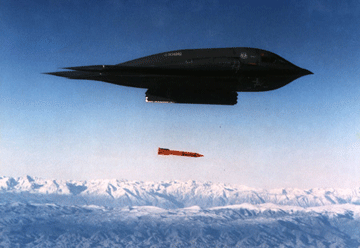
Finally, the existing B61 nuclear bombs will soon be replaced by the enhanced B61-12 guided nuclear bomb. Development is essentially complete and full-scale production of about 480 B61-12s is expected to begin soon. The new weapon is thought to have the same yield range as the current B61-4: 0.3, 1.5, 10 and 50 kilotons. Training of the units in Europe to receive the new weapon is scheduled to begin in early-2023 and the first weapons potentially arriving at the first base in late-2023 or 2024.
In addition to the non-strategic fighter jets F-15E, F-16, F-35A, and Tornado, the B61-12 will also be integrated on the B-2 and B-21 strategic bombers. ecause of the increased provided by the tail kit, all the digital aircraft that can make use of it (all except F-16 and Tornado) will be able to hold at risk a wide range of targets. The combination of increased accuracy and lower-yield options on non-strategic and strategic stealth aircraft will significantly increase the capability of the gravity bomb mission.
Sunak’s wrongheaded renewables tax risks trashing Britain’s wind and solar ambitions.
DR NINA SKORUPSKA: Sunak’s wrongheaded renewables tax risks trashing
Britain’s wind and solar ambitions. The Government must change course,
otherwise we will see winters even more painful than this one.
Call it what you will – a windfall tax, a clawback, a levy – the fact remains that the
Electricity Generator Levy (EGL), in its current form, is set to cause
irreparable damage to Britain’s green energy industry by stalling
investment. In principle, our sector is certainly not against the
Government’s policy to require generators to help pay for energy bill
support.
However, we would question the wisdom of subjecting the cheaper,
greener renewable power sector to a more punishing tax regime than its oil
and gas counterparts. It is an inexplicable disparity – our sector is key
to tackling the volatile costs of fossil fuels at the heart of rising
energy bills. Treatment should be fair and equitable in relation to the oil
and gas sector.
Telegraph 23rd Dec 2022
Dounreay pushes forward plans to build new 37-metre-high stack at prototype fast breeder reactor.
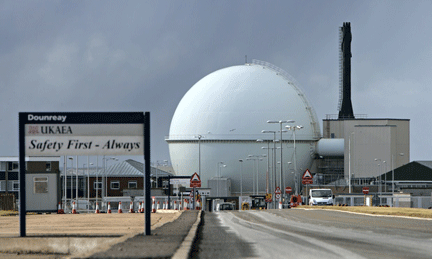
Dounreay pushes forward plans to build new 37-metre-high stack at reactor.
Dounreay’s operators are looking to clear the way to progress long-delayed
plans to replace the discharge stack at the site’s prototype fast reactor.
Dounreay Site Restoration Limited (DSRL) is seeking Highland Council’s
agreement to approve a design for the system to vent authorised emissions
of gases, including radionuclides. Last year, it awarded a £7 million
contract to US conglomerate Jacobs to carry out the work.
Concrete foundations and a steel framework would support the proposed new 37-metre
high stack which would house a plant room containing an extract fan, filter
units, stack sampling and control panels. The contract involves removal of
the existing vent and the design, manufacturing, testing, installation and
commissioning of its replacement. The new stack is earmarked to go up on
the seaward side of the reactor and be in place by October 2024.
John O Groat Journal 21st Dec 2022
UK tipped to export even more energy to France despite blackout fears.
UK tipped to export even more energy to France despite blackout fears.
France’s nuclear power output has plunged to a 30-year low – and the UK is
expected to continue to part ways with its energy supplies despite shortage
fears this winter.
A nuclear expert has warned that the UK may have to send
more energy across the Channel to help keep the lights on in France. This
is despite fears that Britain could be weeks away from its own shortages
this winter.
France has taken 16 of its 56 nuclear reactors offline due to
corrosion issues, causing nuclear power output levels to plummet in recent
months. Making matters worse, Paris confirmed last week that maintenance
halts at two of Electricite de France SA’s reactors – and that it will last
for an extra four months. It may also have to carry out lengthy repairs at
seven other reactors next year, too.
Under normal circumstances, France is
a net exporter of energy, sending some of this to the UK via
interconnectors. While the exchange of energy from the UK to France has
been happening regularly for a number of months, Dr Paul Dorfman, a nuclear
expert from Sussex University, has warned that the UK could ramp up its
exports to France, despite its own domestic energy issues.
Express 24th Dec 2022
https://www.express.co.uk/news/science/1711900/uk-energy-france-nuclear-blackout-edf
The Ukraine Arms Drain
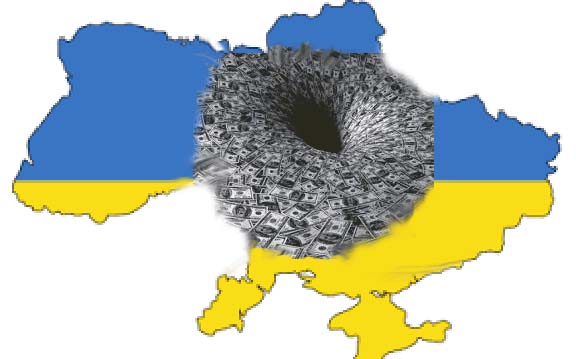
New Eastern Outlook, Brian Berletic 23 Dec 22
After months of feigned confidence and optimism from both the West and Ukraine’s senior military leadership, cracks are beginning to appear. During Ukrainian Commander-in-Chief General Valery Zaluzhny’s recent interview with the Economist, Ukraine’s desperate need for additional arms and the consequences for not receiving them was made very clear.
The discussion revolved around the desperate need for resources – everything ranging from air defense missiles to tanks, armored vehicles, artillery pieces and artillery shells themselves – all things that both the West and now Ukraine are admitting are in short supply, and perhaps cannot be supplied any time in the near or intermediate future.
From “Extending Russia” to “Demilitarizing” NATO
Washington’s proxy war against Russia in Ukraine is the manifestation of the RAND Corporation’s 2019 paper “Extending Russia” which recommended US policymakers to “provide lethal aid to Ukraine” hoping it would expand hostilities in eastern Ukraine and “increase the costs to Russia, in both blood and treasure, of holding the Donbass region.”
The paper had hoped that Russian losses in equipment and lives in the Donbass would replicate the costs the Soviet Union suffered in Afghanistan. While the Russian Federation is indeed facing mounting costs in Ukraine, it can easily be argued that the US, the rest of NATO, and most of all – Ukraine itself – are suffering at least as much if not more.
What’s perhaps more important than how much either side is losing in the conflict is how much either side can afford to lose because of their respective military industrial capacity to regenerate manpower and equipment throughout the fighting. After nearly a year of fighting, it is clear that Russia’s stockpiles and military were prepared for this type of protracted, intense, large-scale military conflict. Ukraine and its Western sponsors were not.
Ukraine’s General Zaluzhny shared with the Economist a “wishlist” of weapons he claimed he needed in order to restore the February 23, 2022 borders of what Kiev claims is Ukraine. The list included 300 tanks, 600-700 infantry fighting vehicles, and 500 howitzers – numbers NATO couldn’t provide Ukraine no matter how much it wants to.
This “wishlist” follows Ukraine expending a massive reserve made up of weapons, vehicles, and ammunition the collective West transferred to Ukraine ahead of the so-called Kharkov and Kherson offensives. In addition to losing multiple brigades worth of men, huge amounts of equipment were also lost as Russian ground forces withdrew and instead used long-range weapons to strike at Ukrainian forces now out from behind well-laid defenses.
The temporary political points Ukraine’s offensives gained by taking territory came at the cost of expending the vast majority of what the West could afford to transfer to Ukraine.
A growing number of admissions are now being made regarding the limits of Western aid to Ukraine……………………………………………….. more https://journal-neo.org/2022/12/23/the-ukraine-arms-drain/
Zelensky’s diaspora delegation led by economic hit-woman who led plunder of Ukraine

the conflict with Russia has provided Zelensky with justification to strip 70 percent of Ukraine’s workers of collective bargaining rights and arrest everyone from his political rivals to socialist organizers – a wave of repression
With tens of billions more on the way to Ukraine, the country’s debt to international creditors continues to grow, setting the stage for another crushing wave of austerity after the war. The diaspora operatives I encountered on their way into the Capitol gallery appeared poised to guide the plunder from the comfort of suburban America.
The Grayzone, MAX BLUMENTHAL·DECEMBER 23, 2022 The Grayzone intercepted Volodymyr Zelensky’s Ukrainian diaspora delegation outside the US Capitol and encountered Natalie Jaresko, the corporate operative who helped guide Wall Street’s pillaging from Kiev to Puerto Rico. Jaresko indignantly justified Zelensky’s banning of his political rivals as a necessary wartime measure.
Steel fencing and police barricades ringed the perimeter of the US Capitol Building hours ahead of the arrival of Volodymyr Zelensky. The Ukrainian president appeared in Washington DC in the early afternoon on December 21, 2022, emerging from a US military jet clad in an olive drab sweatshirt and cargo pants, and charged with a singular mission:
convince Congress and the Biden administration to send his government more than the whopping $45 billion in military and humanitarian aid it had already allocated for 2023.
Just outside the police barricades, at the eastern side of the Capitol grounds, as a demonstration by a small but dedicated group of antiwar activists wound down, a group of around 20 Ukrainians in dark business attire gathered for a photo. They were on their way into the Capitol, where they were to function as Zelensky’s personal cheering section, representing the Ukrainian diaspora before a nationally televised audience.
I approached members of the delegation to challenge them on Zelensky’s lobbying push and the planned expansion of the NATO proxy war he is leading against Russia. My questions were met with a torrent of worn-out talking points about Ukraine’s crusade to defend democracy, accusations that Moscow was sponsoring my reporting, and a complaint that $45 billion in US aid was too little.
Several of the Ukrainian delegates I encountered on the way into the US Capitol happened to have played significant roles in the transformation of Ukraine from a neutral state into a hyper-militarized vassal of the US and the IMF.
The most voluble among them, acting as a de facto spokesperson for the group, was Natalie Jaresko. A Ukrainian-American financial industry operative, Jaresko presided over several IMF austerity packages and the rampant privatization of Ukraine’s economy as the country’s Minister of Finance in its post-coup government.
The economic hit-woman
In our exchange, Jaresko unabashedly defended Zelensky’s outlawing of 11 opposition political parties, his banning of opposition media, and his plans to blacklist the Russian wing of the Orthodox Church. “It’s martial law!” Jaresko exclaimed, justifying Kiev’s authoritarian crackdown as a necessary wartime measure.
Jaresko has seen the corruption and de-democratization of Ukraine from within. She helped open up the country’s economy to Western multinationals after being appointed to the Foreign Investors Advisory Council of Victor Yuschenko, a neoliberal president who gained power thanks to the “Orange Revolution” backed by US intelligence and Western-aligned oligarchs George Soros and Boris Berisovsky in 2005.
Under Yuschenko’s reign, Ukraine’s government officially heroized the World War Two-era Nazi collaborator Stepan Bandera. During our exchange, Jaresko deflected when asked if she supported Bandera. However, her brother, John, has presided over the construction of a memorial in Bloomingdale, New Jersey to “Heroes of Ukraine” including World War Two-era Nazi collaborators, according to researcher Moss Robeson.
Nine years later, following the Euromaidan coup also engineered by Washington, Jaresko rose to Minister of Finance. She was granted Ukrainian citizenship on the day of her appointment.
Through her new post, Jaresko assumed control of Datagroup, the company that oversees Ukraine’s telecom sector. As former investment executive Tim Duff recounted, Jaresko “immediately proceeded to squeeze her competitor, the owner of Datagroup, out of business using the kind of foreign currency loan debt scam favored by Mafia hoods and economic hitmen employed by the CIA.”
While in Kiev, steering the government alongside a cadre of Ukrainian-American operatives, Jaresko grumbled about her salary while angling for opportunities to supplement it. In a withering analysis of her financial self-dealing, the late investigative journalist Robert Parry found that Jaresko “collected $1.77 million in bonuses from a U.S.-taxpayer-financed investment fund where her annual compensation was supposed to be limited to $150,000”
As Jaresko lapped up praise from Beltway corporate media, the NATO-sponsored Atlantic Council that employed her as a visiting fellow acknowledged that under her watch, “the average monthly wage in Ukraine is only $194, an inflation rate of 55 percent is decimating citizens’ purchasing power, and a painful IMF-mandated austerity program involving sweeping cuts to social programs is being implemented.”
In 2017, Jaresko was rewarded with an appointment and $625,000 salary as director of Promesa, the unelected US board charged with restructuring Puerto Rico’s debt – and which average Puerto Ricans refer to derisively as “La Junta.” Jaresko resigned rom her position this April after leaving Puerto Rico’s economy firmly in the hands of Wall Street creditors.
The all-encompassing shock therapy that Jaresko prescribed from Puerto Rico to Ukraine was only possible thanks to society-wide disasters. In San Juan, it was Hurricane Maria that placed neoliberal capitalism on overdrive; in Kiev, it was a coup and a proxy war. Indeed, the conflict with Russia has provided Zelensky with justification to strip 70 percent of Ukraine’s workers of collective bargaining rights and arrest everyone from his political rivals to socialist organizers – a wave of repression that Jaresko explicitly justified in her exchange with me.
The Ukrainian president accompanied his Pinochet-style crackdown with an appeal this October at the NYSE Stock Exchange for multinational corporations to deepen their exploitation of his country’s economy and resources. As The Grayzone’s Alex Rubinstein reported, Zelensky’s foreign investment initiative plastered the word “deregulation” across the homepage of its website.
The diaspora lobbyist
As I challenged the Ukrainian delegation on the nearly $100 billion of military aid the US has forked over to Kiev, a bespectacled middle-aged man interjected, demanding to know why I supposedly supported an “unprovoked” assault on an “innocent people.”
I countered that I opposed the Ukrainian military’s 8-year-long attack on the ethnic Russian population of Donetsk and Lugansk, where thousands had been killed before the Russian military ever entered Ukraine in February 2022. I then asked the indignant character if he also opposed the shelling of civilians in the eastern republics.
His reply came in the form of a firm “no!”
That person turns out to be a member of the US Commission on Security and Cooperation in Europe named Orest Deychakiwsky. His commission is charged with monitoring Ukrainian compliance with OSCE commitments, including those Kiev made – and relentlessly violated –– to the Minsk Accords. As former German Chancellor Angela Merkel confessed this December, Ukraine’s Western backers used the Minsk Accords as a stalling tactic to prepare it for military conflict with Russia………………………………..
“We’re gonna send a lot more!”
With tens of billions more on the way to Ukraine, the country’s debt to international creditors continues to grow, setting the stage for another crushing wave of austerity after the war. The diaspora operatives I encountered on their way into the Capitol gallery appeared poised to guide the plunder from the comfort of suburban America.
In the meantime, lawmakers from both parties can hardly contain their exuberance for expanding the proxy war. As one of the energy industry’s favorite senators, Democrat Joe Manchin, exclaimed when I asked him on a sidewalk outside the Capitol about the billions in military aid on the way to Ukraine, “We’re gonna send a lot more. I’m all in!” https://thegrayzone.com/2022/12/23/zelenskys-diaspora-hit-woman-ukraine/
1 This Month





PLEASE OPPOSE HR 8255 AND S.3639 – bills would accelerate satellite deployment, with no environmental review or safeguards – https://ncstd5li.quorum.us/campaign/169331/
To see nuclear-related stories in greater depth and intensity – go to https://nuclearinformation.wordpress.com
-
Archives
- October 2026 (58)
- September 2026 (339)
- August 2026 (330)
- July 2026 (355)
- June 2026 (287)
- May 2026 (306)
- April 2026 (356)
- March 2026 (251)
- February 2026 (267)
- January 2026 (308)
- December 2025 (358)
- November 2025 (359)
-
Categories
- 1
- 1 NUCLEAR ISSUES
- business and costs
- climate change
- culture and arts
- ENERGY
- environment
- health
- history
- indigenous issues
- Legal
- marketing of nuclear
- media
- opposition to nuclear
- PERSONAL STORIES
- politics
- politics international
- Religion and ethics
- safety
- secrets,lies and civil liberties
- spinbuster
- technology
- Uranium
- wastes
- weapons and war
- Women
- 2 WORLD
- ACTION
- AFRICA
- Atrocities
- AUSTRALIA
- Christina's notes
- Christina's themes
- culture and arts
- Events
- Fuk 2022
- Fuk 2023
- Fukushima 2017
- Fukushima 2018
- fukushima 2019
- Fukushima 2020
- Fukushima 2021
- general
- global warming
- Humour (God we need it)
- Nuclear
- RARE EARTHS
- Reference
- resources – print
- Resources -audiovicual
- Weekly Newsletter
- World
- World Nuclear
- YouTube
-
RSS
Entries RSS
Comments RSS

