Russian troops ‘went FISHING in the nuclear reactor cooling channel at Chernobyl’ and are now suffering from radiation sickness
- Russian troops spent a fortnight in the vicinity of the radioactive nuclear reactor
- Some 37 years ago it exploded and spilled reactor core into the environment
Daily Mail, By CHRISTIAN OLIVER , 30 April 2023[excellent photos]
Putin‘s men were struck down with radiation sickness after they camped in a forest near Chernobyl‘s nuclear disaster amid their infiltration of Ukraine last year.
Ukrainians living in Chernobyl have told of how they warned their Russian enemies of the dangers despite last year’s invasion, with soldiers even fishing in the nuclear reactor’s cooling chamber.
The Russian soldiers spent around a fortnight in the vicinity of the radioactive nuclear reactor in March last year, which 37 years ago exploded and spilled reactor core into the environment.
Ukrainians have told how the Russian men crossed from Belarus and dug defensive positions in the nearby ‘Red Forest’, named after the colour the trees turned after the nuclear disaster.
Some suggested that the Russians chose the area as they knew they would not come under attack from Ukrainian shelling.
Speaking to The Sunday Times, Oksana Pyshna, 30, an official responsible for the exclusion zone, said ‘don’t try to find logic’ regarding the upheaval of radioactive soil by Putin’s men in Chernobyl’s nearby forest.
Russian soldiers are said to have spent two weeks with six mile vicinity of the radioactive reactor No 4, where they slept, ate, and drank.
‘It’s the most dangerous territory in the special zone, because under the ground we have nuclear waste.’
Some suggested that Russian troops made their base there as they knew Ukrainian forces would not attack the area as they knew the catastophic dangers around the nuclear plant.
The Russians are also said to have fished in the reactor’s cooling chamber, catching the catfish that swim in the destroyed nuclear base.
But others were struck down with radiation sickness from simply being in the area, walking around, and kicking up the dust………………………………………………………….. more https://www.dailymail.co.uk/news/article-12030417/Invading-Russian-troops-radiation-sickness-camped-Chernobyl-forest.html
Hinkley fish deterrent farce makes mockery of Environment Agency and Minister

In a humiliating climbdown, the Environment Agency now recommend that EDF Energy be excused from installing an acoustic fish deterrent at Hinkley Point C nuclear power plant, and they have had the cheek to ask for the public’s endorsement of the Agency’s inexplicable volte face in a further consultation.
The UK/Ireland Nuclear Free Local Authorities for one will not be giving it.
NFLA England Forum Chair Councillor David Blackburn said: “After a late hour supper of humble lamprey pie, senior executives at the Environment Agency appear to have shown themselves to have less spine than jellyfish. The requirement to install a deterrent was first made after representations from the public and campaign groups, including the NFLA; a detailed analysis of the impact of the plant on fish stocks and pain-staking deliberations; and the personal intercession of the Secretary of State George Eustice to ensure that it became part of the permitting conditions.
“This new recommendation makes a mockery of the Environment Agency inspection team and the Secretary of State who previously had the courage to stand up to nuclear interests. It also represents a massive slap in the face with a wet kipper for public consultation, because what is the point responding again and again to consultations and presenting to inquiries demonstrating conclusively the validity of your case when senior civil servants simply cave into any clamour from EDF Energy?”
Nonetheless, the NFLA, in a last-ditch effort, will be joining local campaigners by responding robustly to oppose this proposal – for the sake of the fish.
Councillor Blackburn added: “It looks like someone at EDF Energy is following the adage of Robert the Bruce ‘to try, try, try again’ as clearly the company remains determined to pressurise the Environment Agency to recuse it from installing an acoustic fish deterrent at Hinkley Point C to save time and money, for this is a project well behind schedule and massively over budget. French shareholders will be happy, but the fish will not.
“The Severn Estuary is one of the most important fish habitats in the UK, and the fear is that millions of fish will die every day once this plant finally becomes operational as they are sucked to their deaths along with the cooling water.
“We would urge members of the public, elected members and local groups opposed to this plan to respond to the Environment Agency consultation before 25 May 2023. This is your last chance to save the fish!”
Details of the latest Environment Agency consultation can be found at:
https://www.gov.uk/government/consultations/hinkley-point-c-water-discharge-activity-permit-variation
Sensitive files on nuclear submarine found in English pub restroom
kk/kb 30.04.2023 British services have launched an investigation into the alleged finding of Royal Navy documents marked “official sensitive” in a Wetherspoons pub restroom in Barrow-in-Furness, England, media reported. The files reportedly concerned HMS Anson, the most recent of the navy’s cutting-edge nuclear-powered submarines.
According to “The Sun” daily, the files showed the inner workings of the torpedo-loaded vessel, including key details regarding its hydraulics, which control torpedo hatches.
They were reportedly found with a Royal Navy lanyard from the new GBP 1.3 bn (USD 1.63 bn) submarine……………………………… https://tvpworld.com/69544839/sensitive-files-on-nuclear-submarine-found-in-english-pub-restroom
Largest ever Arctic Challenge NATO fighter aircraft exercise begins in Northern Europe
30 May 2023, By The Brussels Times with Belga
Vast exercises involving around 150 fighter jets from Western countries, began on Monday in Finland, Sweden and Norway, the Finnish air force announced.
Participating countries include the United States, the United Kingdom, Belgium and France,
The manoeuvres are due to last nearly two weeks, according to Finland, a brand new member of NATO, which is leading the ‘Arctic Challenge’ operation……………….. more https://www.brusselstimes.com/527325/major-nato-fighter-aircraft-exercises-begin-in-northern-europe
Free Julian Assange, member of our organisations – European Federation of Journalists
https://europeanjournalists.org/blog/2023/04/27/free-julian-assange-member-of-our-organisations/ Our Italian FNSI affiliates were visited today in Rome by Julian Assange‘s wife, Stella Morris. The Italian journalists’ union, at the initiative of its Campania branch, presented Julian Assange with an FNSI membership card. The European Federation of Journalists (EFJ) passed on the initiative to its affiliates in Europe: 18 of them decided to follow the Italian example and grant Julian Assange membership (or honorary membership) of their organisations. The EFJ and its affiliates once again call on the UK authorities to release Julian Assange.
Here is the joint appeal delivered to Stella Morris in Rome this morning:
We, the undersigned European unions and associations of journalists, join the International Federation of Journalists (IFJ) in calling on the US government to drop all charges against Julian Assange and allow him to return home to his wife and children.
We are gravely concerned about the impact of Assange’s continued detention on media freedom and the rights of all journalists globally. We urge European governments to actively work to secure Julian Assange’s release.
To show our solidarity, we declare Julian Assange a full member, an honorary member or a free member of our organisations.
Signed:
- Maja Sever, EFJ President and TUCJ President, Croatia
- Fabrizio Cappella, SUGC-FNSI Secretary, Italy
- Satik Seyranyan, UJA President, Armenia
- Borka Rudić, BHJA General Secretary, Bosnia & Herzegovina
- Hrvoje Zovko, HND President, Croatia
- Emmanuel Poupard, SNJ First General Secretary, France
- Emmanuel Vire, General secretary SNJ-CGT, France
- Tina Groll, dju in ver.di President, Germany
- Maria Antoniadou, JUADN President, Greece
- Laszlo M. Lengyel, HPU Executive President, Hungary
- Pavle Belovski, SSNM President, North Macedonia
- Luís Filipe Simões, SJ President, Portugal
- Darko Šper, GS Kum President, Serbia
- Dragana Čabarkapa, Sinos President, Serbia
- Zeljko Bodrozic, IJAS President, Serbia
- Petra Lesjak Tušek, DNS President, Slovenia
- Miguel Angel Noceda, FAPE President, Spain
- Urs Thalmann, impressum Director, Switzerland
- Tim Dawson, NUJ, United Kingdom
Will The EU Sanction Russia’s Nuclear Industry? (I don’t think France will agree to this)

ED. I can’t see France agreeing to anything that would limit the nuclear industry!!
“France to participate in Russian Rosatom’s Hungary nuclear power plant project.” – https://www.lemonde.fr/international/article/2023/04/27/hongrie-la-france-prete-a-participer-au-projet-de-centrale-nucleaire-du-russe-rosatom_6171229_3210.html
By Felicity Bradstock – Apr 28, 2023, Oilprice.com
- One Russian industry that has avoided EU sanctions to date is its nuclear energy sector.
- Rosatom is a major exporter of nuclear fuel and technology.
- Despite uncertainty over how to impose sanctions on Russian nuclear energy without harming the interests of several European countries, Brussels is working on a plan.
In February 2022, the EU imposed sanctions on Russia in response to the Russian invasion of Ukraine. The sanctions at this point included restrictive measures (individual sanctions), economic sanctions, and visa measures. The sanctions aimed to disrupt the country’s economy to prevent Russia from continuing its conflict with Ukraine. Throughout the year, the EU and other parts of the world increased the number and types of sanctions on Russia as they decreased their reliance on Russian energy.
…………………… one area that the EU has avoided sanctioning, to date, is Russian nuclear power. This is largely because of the significant role Russia’s state-owned nuclear energy monopoly, Rosatom, plays in global nuclear power. Paul Dorfman, chair of Nuclear Consulting Group, explained that the problem is a “Russian doll’s worth of interlocking dependencies.” Firstly, Rosatom is a major exporter of nuclear fuel, providing the U.S. with 14 percent of its uranium in 2021. Meanwhile, utilities across Europe purchased around a fifth of their uranium from Rosatom, and they have been unable to diversify their uranium sources since cutting other energy ties with Russia. Rosatom also provided 28 percent of the U.S.’s enrichment services in 2021.”
Further, Rosatom is not just limited to Russia, holding ownership of several nuclear plants around the world. By the end of 2021, one in five nuclear plants worldwide was either in Russia or was Russian-built. Rosatom has repeatedly stepped in to help finance nuclear plants in countries that want to expand their nuclear power sectors but don’t have the money to do so. Many of these plants fall under a build-own-operate model, relying on Rosatom for their operation.
Certain EU states have, therefore, opposed sanctions on Russian nuclear power as they continue to rely on Rosatom for their energy security. For example. Hungary sources around 40 percent of its electricity from nuclear power and has a long-term financing deal with Rosatom to build two new nuclear reactors. In February this year, the European Commission (EC) scrapped plans for sanctions on Russia’s nuclear energy industry, citing opposition from some member states. The EU had considered imposing sanctions on individual employees of Rosatom and other companies on the list but has not acted on this idea so far. …………………………………….
Swedish reactor shutdowns nearly double Finland’s electricity price overnight
Swedish reactor shutdowns nearly double Finland’s electricity price
overnight. A short circuit encountered during maintenance near Stockholm
forced the closure of two nuclear reactors in Forsmark, Sweden.
YLE 27th April 2023
Russia fixing power line from Zaporizhzhia nuclear plant to land it controls, IAEA says
VIENNA, April 28 (Reuters) https://www.reuters.com/world/europe/russia-fixing-power-line-zaporizhzhia-nuclear-plant-land-it-controls-iaea-says-2023-04-28/– Russia has informed the U.N. nuclear watchdog that equipment spotted at Ukraine’s Zaporizhzhia nuclear power plant, which Russia controls, will be used to fix a power transmission line that leads to Russian-held territory, the watchdog said on Friday.
The planned restoration of the downed power line could heighten Ukrainian fears that Russia is preparing to connect Zaporizhzhia, Europe’s largest nuclear power plant, to the power grid of territory that it controls.
A small number of International Atomic Energy Agency officials are present at the Zaporizhzhia nuclear power plant (ZNPP), which is operated by Ukrainian staff working under the orders of Russian forces and the Russian nuclear company Rosatom.
“The (IAEA) Team observed, and following questions were subsequently informed, that a large piece of equipment being transported into the turbine hall of Unit 3 was a transformer to replace the damaged ‘Kakhovka’ node in the ZNPP open switchyard,” the IAEA said in a statement.
“The Kakhovka line is one of the four 750 kV (kilovolt) lines that were operational before the military conflict. This line is linked to the currently Russian-controlled electrical grid, to the south of the ZNPP site,” it added.
Only one of those four power lines is currently working and is the only source of external power to the plant, which it needs to keep cooling the fuel in its six reactors even though they are shut down. Failing to cool that fuel could lead to a potentially catastrophic nuclear meltdown.
The IAEA said it also had not had access to the switchyard at a nearby thermal power plant (TPP) that can supply backup power to Zaporizhzhia. The IAEA last visited that switchyard in December, when damage from shelling was observed.
“Two weeks ago the team was informed that access would be granted in the coming days. It is important that ISAMZ (the IAEA Support and Assistance Mission to Zaporizhzhia) gets the necessary access to the ZTPP open switchyard given the implications on nuclear safety and security at ZNPP.”
Chernobyl anniversary offers a bleak look at what may await other Ukrainian nuclear plants
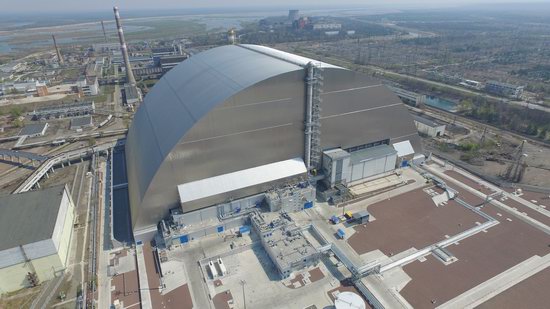
A huge steel and concrete sarcophagus covers the site of the meltdown. Under its dome, called the New Safe Confinement, lie 200 tons of lava-like nuclear fuel, 30 tons of highly contaminated dust and 16 tons of uranium and plutonium that continue to release high levels of radiation.
April 26, 2023 by Charles Digges https://bellona.org/news/nuclear-issues/2023-04-chernobyl-anniversar
A little over a year ago, Russian troops abandoned Chernobyl after briefly occupying it during the grim opening days of Moscow’s invasion of Ukraine. The takeover of the site where the world’s worst nuclear disaster happened thirty-seven years ago this week offered a preview of the reckless disregard for nuclear safety that has characterized so much of this war.
While the site has been left to Ukraine to painstakingly restore since the Russian withdrawal on March 31, 2022, the new anniversary of the Chernobyl plant’s original disaster on April 26, 1986, leaves lingering questions about what, exactly, the world can do when Ukraine’s nuclear infrastructure — or indeed any nuclear infrastructure — is attacked by a hostile neighbor.
The answer, at this point? Not much — aside from trying to pick up the pieces after the damage is already done.
As it stands, the Chernobyl exclusion zone is still dotted with mines planted by Russian troops when they rolled into the territory, churning up clouds of radioactive dust with hundreds of heavily armored vehicles. The mines have made treacherous any efforts to restore the territory.
Russian troops also dug trenches and set fires in an area known as the Red Forest — a gnarled expanse of irradiated trees — and scorched, according to NASA, some 14,000 hectares of land, filling the air with so much radioactive smoke that it was unsafe for firefighters to quell the blazes.
All the while, hundreds of Chernobyl employees — who oversee the site’s sprawling network of spent fuel storage facilities as well as the enormous efforts to dismantle the radioactive remnants of the exploded No. 4 reactor — were held hostage onsite, prevented from rotating out at the end of their shifts. Five workers were kidnapped and nine were killed, according to The Washington Post.
Those who remained said later that they had tried to keep the Russians from the most dangerous areas within the plant’s territory. But in what many called the worst situation they have seen in the decades since the initial disaster, Chernobyl’s power was cut by fighting, leaving them to rely on diesel generators for nearly a week to support the critical work of circulating water to cool spent nuclear fuel.
The damage the Russian soldiers did wasn’t purely technical. Doors to offices were ripped off hinges, windows smashed, walls spray-painted with graffiti.
“The poop was the icing on the cake,” Aleksander Barsukov, deputy director of the Chernobyl Ecocenter, which keeps samples of radioactive material collected from all over the world, told The Wall Street Journal after the Russian retreat.
By the time Russian troops pulled back from the plant on March 31, 2022 — amid reports of possible radiation poisoning among their ranks — Chernobyl’s technicians had been held at literal gunpoint at their workstations for more than a month.
During the retreat, according to Ukrainian accounts, Russian soldiers ransacked the site and took anything that looked valuable, looting more than 1,000 computers, and spiriting away dosimeters, software, lab tools, firefighting equipment — and in some cases even household appliances — piling them in stolen Ukrainian trucks.
“Whatever they didn’t steal, they broke,” Chernobyl Information Director Vitaly Medved told the BBC at the time.
Russian soldiers then brazenly mailed much of the booty home from across the Belarusian border. They also made off with radioactive instruments used to calibrate personal dosimeters for Chernobyl staff — substances that can cause radiation burns if handled improperly.
According to the European Bank of Reconstruction and Development, which has financed much of Chernobyl’s cleanup work since the original 1986 disaster, the Russian Army’s destructive adventure in the world’s most famous radioactive wasteland will cost some €100 million to repair.
The four RBMK reactors at the enormous nuclear station in Chernobyl no longer produce power, but before the invasion nearly 6,000 workers monitored the lasting effects of the disastrous meltdown that took place in 1986, as well oversaw as processing spent nuclear fuel from other plants in Ukraine. In the days before the invasion, all but a few hundred employees were evacuated.
Located just a few miles from the Belarusian border, Chernobyl was one of the first places occupied by Russian troops. Yevhen Kramarenko, the director of the exclusion zone — the 2,6000-square-kilometer area where radiation levels remain high and public access is limited — told The Washington Post that on the first day of the invasion, a Russian general presented himself as the new leader of the station, and introduced employees from Rosatom, Russia’s state nuclear corporation.
“I believe that at the time when they came,” Kramarenko told the paper, “they planned to be there permanently, they planned to take control for a long time.”
A sign of things to come?
Even before the occupation, the Chernobyl station had a post-apocalyptic air. It is situated in a dense forest, swarming with mosquitoes and gnats. Pripyat, the city where employees lived before the disaster, now stands empty and is being reconquered by nature.
A huge steel and concrete sarcophagus covers the site of the meltdown. Under its dome, called the New Safe Confinement, lie 200 tons of lava-like nuclear fuel, 30 tons of highly contaminated dust and 16 tons of uranium and plutonium that continue to release high levels of radiation.
Yet while Rosatom may have failed to keep hold of Chernobyl, the same cannot be said about Ukraine’s embattled Zaporizhzhia nuclear plant — Europe’s largest such facility — which once supplied a fifth of Ukraine’s electricity.
Since October of 2022, Moscow claims that it now controls the plant — a claim not honored by the UN’s International Atomic Energy Association, to say nothing of Kyiv.
From then on, Rosatom has begun flooding the Zaporizhzhia plant with Russian staff that it has transferred from its own Kalinin nuclear plant, 545 kilometers across the front to the northeast.
But while Russia asserts the six-reactor facility has been taken over as a protective measure, there is little to suggest that the joining of Russian and Ukrainian workforces is going smoothly. Only about 2,000 Ukrainian staff members still work at the plant, out of 11,000 before the war.
Indeed, much of Rosatom’s effort to assert itself at the plant has involved arresting and torturing Ukrainian workers opposed to the occupation as it toils to link Zaporizhzhia with the Russian electricity grid.
The plant, which lies on the south side of the Dnipro River next to the nuclear plant’s home city of Enerhodar, is on the front line of the war. Ukrainian troops are just a few of kilometers to the north, on the far bank of the Dnipro, while Russians are holed up in the power plant.Anxieties are high that the area could see renewed fighting in any Ukrainian counteroffensive.
Ukraine accuses the Russians of using the plant as a shield, hoping that the danger of causing a nuclear accident will keep Ukrainian soldiers from firing on them — the first time an atomic reactor has been put in such a position.
“They know Ukrainian troops would not dare to fire back. The nuclear power plant is a perfect hiding place from Ukrainian artillery,” Oleksiy Melnychuk, a former worker at the plant who fled from Enerhodar last July to Ukrainian-held territory, told Politico.eu. The Russians in turn accuse the Ukrainians of ignoring safety protocols and firing on areas near the plant.
The IAEA has inspectors on site and has been trying to walk a diplomatic tightrope to establish a non-military safety zone around the plant. While Moscow says it is keen to do so, Kyiv is leery of any step that could lend legitimacy to the Russian occupation.
Late last month, IAEA chief Rafael Mariano Grossi dropped the idea, and instead is now pushing for both sides to take steps to ensure that the plant isn’t attacked.
Over the last year, four of the station’s six VVER reactors have been put into a cold shutdown to minimize the risk of an accident, while two have been restarted to produce low levels of power to keep the plant operational. The facility needs access to electricity to ensure reactor cooling and other safety functions. However, its links to the Ukrainian grid have been cut six times since last March, forcing the ZNPP to rely on diesel-powered generators for emergency backup power — a situation that IAEA Director General Rafael Grossi has referred to as “rolling the dice.”
“And if we allow this to continue time after time then one day our luck will run out,” he added.
Still, even as events deteriorate, there is little the world can do but watch.
Even Grossi — who heads the world’s most respected nuclear power diplomacy body — has admitted as much. During a meeting of the IAEA’s 35-member board of governors last month, Grossi castigated his colleagues for “complacency” after the latest spate of airstrikes had again cut off Zaporizhzhia’s access to grid electricity.
“What are we doing to prevent this [from] happening?“ a flabbergasted Grossi asked the board. ”We are the IAEA, we are meant to care about nuclear safety.”
Even so, aspirations of pushing out the Russians among plant workers remain high.
“We still hope de-occupation is possible,” Melnychuk told Politico.eu. “You can’t even imagine how ready we all are to return and let our colleagues, working under tremendous pressure and fear, to finally have some rest.”
Unfortunately, the state of Chernobyl offers the clearest glimpse of what they may find if — or when — that time comes.
Survivors of Britain’s Cold War radiation experiments to have their stories recorded
Survivors of Britain’s Cold War radiation experiments are to have their
life stories recorded and stored in the British Library. The £250,000
scheme will lead to a documentary and resources to teach A-level students
about the Cold War and the impact the weapons testing programme had on the
men who took part in it, and their families.
Dr Chris Hill, one of the academics leading the project, said: “It’s about furthering their story, embedding it deeper in the public consciousness and confronting what is a
very problematic part of Britain’s history.”
Mirror 27th April 2023
https://www.mirror.co.uk/news/politics/nuclear-heroes-win-250000-documentary-29833221
France to participate in Russian Rosatom’s Hungary nuclear power plant project.
Hungary: France ready to participate in Russian Rosatom’s nuclear power
plant project. The executive gave the green light to Framatome to take part
in the construction of two new reactors at the Paks power plant, arguing
that the nuclear industry is not targeted by international sanctions
against Russia.
Le Monde 27th April 2023.
Russia is preparing to defend Zaporizhzhia nuclear power plant
According to British intelligence, Russian occupying forces in Ukraine have
built defensive positions at the reactors of the Zaporizhzhia nuclear power
plant (NPP) in Enerhodar. By reinforcing their positions, the Russians are
preparing for a counterattack by the Ukrainian Armed Forces. At the same
time, their actions increase the probability of damage to security systems.
The UK Ministry of Defence’s Twitter account published a satellite image on
April 27 showing the occupiers’ defensive positions at the Zaporizhzhia
NPP.
Emerging Europe 27th April 2023
EDF Q1 revenues rise but nuclear output declines
PARIS, April 28 (Reuters) more https://www.reuters.com/business/energy/edf-says-q1-revenues-rise-nuclear-output-down-2023-04-28/ Reporting by Benjamin Mallet, editing by Silvia Aloisi – French nuclear power giant EDF (EDF.PA) said first-quarter like-for-like sales rose by 34.6% to 47.8 billion euros ($52.64 billion) thanks to higher electricity and gas prices, though it reported a fall in nuclear output due to reactor outages and strikes in France.
Reporting by Benjamin Mallet, editing by Silvia Aloisi
“This decrease is explained by a lower nuclear fleet availability, mainly due to outages for the controls and repairs on the pipes affected by the stress corrosion phenomenon, and to the impacts of social movements,” EDF said in a statement.
The group, which is in the process of being fully nationalised, confirmed its estimate of nuclear output in France for 2023 in a range of 300-330TWh.
Nuclear production fell to a 34-year low last year due to a record number of reactor outages at EDF, turning France into a net importer of electricity for the first time since 1980.
Will the West turn Ukraine into a nuclear battlefield?

Stuart Dyson died in 2008 at the age of 39…….. his cancer was later recognized in a court of law as having been caused by exposure to depleted uranium. In a landmark 2009 ruling, jurors at the Smethwick Council House in the UK found that Dyson’s cancer had resulted from DU accumulating in his body, and in particular his internal organs.
While the UK’s decision to send depleted uranium shells is unlikely to turn the tide, it will have a lasting, potentially devastating, impact.
APRIL 26, 2023 byJoshua Frank
It’s sure to be a blood-soaked spring in Ukraine. Russia’s winter offensive fell far short of Vladimir Putin’s objectives, leaving little doubt that the West’s conveyor belt of weaponry has aided Ukraine’s defenses. Cease-fire negotiations have never truly begun, while NATO has only strengthened its forces thanks to Finland’s new membership (with Sweden soon likely to follow). Still, tens of thousands of people have perished; whole villages, even cities, have been reduced to rubble; millions of Ukrainians have poured into Poland and elsewhere; while Russia’s brutish invasion rages on with no end in sight.
The hope, according to Ukrainian President Volodymyr Zelensky, is that the Western allies will continue to furnish money, tanks, missiles, and everything else his battered country needs to fend off Putin’s forces. The war will be won, according to Zelensky, not through backroom compromises but on the battlefield with guns and ammo.
“I appeal to you and the world with these most simple and yet important words,” he said to a joint session of Great Britain’s parliament in February. “Combat aircraft for Ukraine, wings for freedom.”
The United Kingdom, which has committed well over $2 billion in assistance to Ukraine, has so far refused to ship fighter jets there but has promised to supply more weaponry, including tank shells made with depleted uranium (DU), also known as “radioactive bullets.” A by-product of uranium enrichment, DU is a very dense and radioactive metal that, when housed in small torpedo-like munitions, can pierce thickly armored tanks and other vehicles.
Reacting to the British announcement, Putin ominously said he would “respond accordingly” if the Ukrainians begin blasting off rounds of DU.
Stuart Dyson survived his deployment in the first Gulf War of 1991, where he served as a lance corporal with Britain’s Royal Pioneer Corps. His task in Kuwait was simple enough: he was to help clean up “dirty” tanks after they had seen battle. Many of the machines he spent hours scrubbing down had carried and fired depleted uranium shells used to penetrate and disable Iraq’s T-72 tanks, better known as the Lions of Babylon.
Dyson spent five months in that war zone, ensuring American and British tanks were cleaned, armed, and ready for battle. When the war ended, he returned home, hoping to put his time in the Gulf War behind him. He found a decent job, married, and had children. Yet his health deteriorated rapidly and he came to believe that his military service was to blame. Like so many others who had served in that conflict, Dyson suffered from a mysterious and debilitating illness that came to be known as Gulf War Syndrome.
After Dyson suffered years of peculiar ailments, ranging from headaches to dizziness and muscle tremors, doctors discovered that he had a severe case of colon cancer, which rapidly spread to his spleen and liver. The prognosis was bleak and, after a short battle, his body finally gave up. Stuart Dyson died in 2008 at the age of 39.
His saga is unique, not because he was the only veteran of the first Gulf War to die of such a cancer at a young age, but because his cancer was later recognized in a court of law as having been caused by exposure to depleted uranium. In a landmark 2009 ruling, jurors at the Smethwick Council House in the UK found that Dyson’s cancer had resulted from DU accumulating in his body, and in particular his internal organs……………………………………………………………………………………
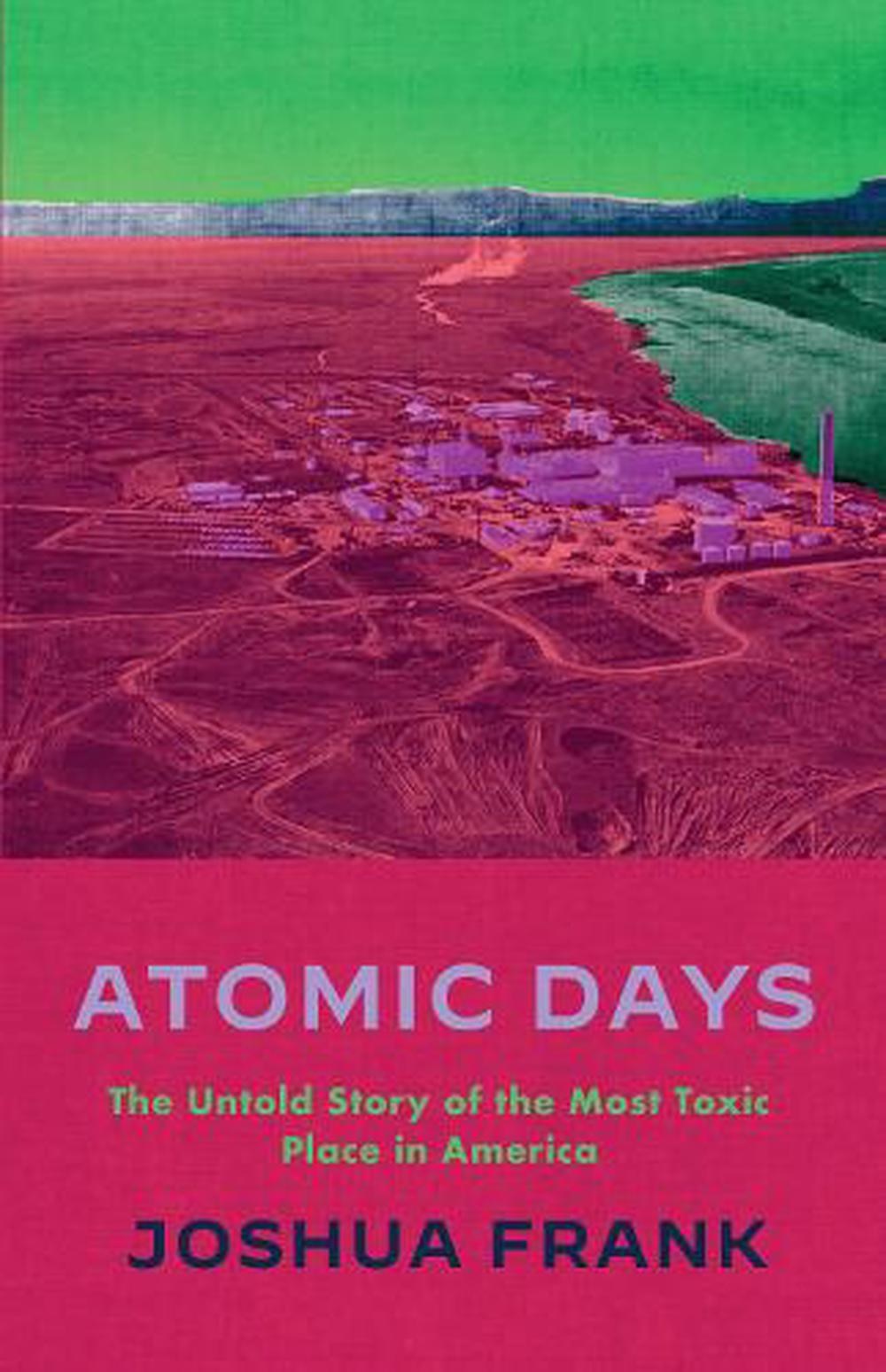
Both Russia and the U.S. have reasons for using DU, since each has piles of the stuff sitting around with nowhere to put it. Decades of manufacturing nuclear weapons have created a mountain of radioactive waste. In the U.S., more than 500,000 tons of depleted-uranium waste has built up since the Manhattan Project first created atomic weaponry, much of it in Hanford, Washington, the country’s main plutonium production site. As I investigated in my book Atomic Days: The Untold Story of the Most Toxic Place in America, Hanford is now a cesspool of radioactive and chemical waste, representing the most expensive environmental clean-up project in history with an estimated price tag of $677 billion………………………………………………………….
Of course, we’ve known about the dangers of uranium for decades, which makes it all the more mind-boggling to see a renewed push for increased mining of that radioactive ore to generate nuclear power. The only way to ensure that uranium doesn’t poison or kill anyone is to leave it right where it’s always been: in the ground. Sadly, even if you were to do so now, there would still be tons of depleted uranium with nowhere to go. A 2016 estimate put the world’s mountain of DU waste at more than one million tons (each equal to 2,000 pounds).
So why isn’t depleted uranium banned? That’s a question antinuclear activists have been asking for years. It’s often met with government claims that DU isn’t anywhere near as bad as its peacenik critics allege. In fact, the U.S. government has had a tough time even acknowledging that Gulf War Syndrome exists. A Government Accountability Office report released in 2017 found that the Veterans Affairs Department had denied more than 80% of all Gulf War illness claims by veterans. Downplaying DU’s role, in other words, comes with the terrain.
“The use of DU in weapons should be prohibited,” maintains Ray Acheson, an organizer for the International Campaign to Abolish Nuclear Weapons and author of Banning the Bomb, Smashing the Patriarchy. “While some governments argue there is no definitive proof its use in weapons causes harm, it is clear from numerous investigations that its use in munitions in Iraq and other places has caused impacts on the health of civilians as well as military personnel exposed to it, and that it has caused long-term environmental damage, including groundwater contamination. Its use in weapons is arguably in violation of international law, human rights, and environmental protection and should be banned in order to ensure it is not used again.”
If the grisly legacy of the American use of depleted uranium tells us anything, it’s that those DU shells the British are supplying to Ukraine (and the ones the Russians may also be using there) will have a radioactive impact that will linger in that country for years to come, with debilitating, potentially fatal, consequences. It will, in a sense, be part of a global atomic war that shows no sign of ending. https://responsiblestatecraft.org/2023/04/26/will-the-west-turn-ukraine-into-a-nuclear-battlefield/
Remembering Chornobyl — Beyond Nuclear
In 2018, host Libbe HaLevy recorded a special edition of Nuclear Hotseat, focused on the aftermath of the April 26, 1986 Chornobyl nuclear disaster. This week, the episode is being replayed. Sadly, none of this information goes out of date. The program featured: Bonnie Kouneva, a 15-year-old living in Communist Bulgaria when the Chornobyl disaster began,…
Remembering Chornobyl — Beyond Nuclear
In 2018, host Libbe HaLevy recorded a special edition of Nuclear Hotseat, focused on the aftermath of the April 26, 1986 Chornobyl nuclear disaster. This week, the episode is being replayed. Sadly, none of this information goes out of date. The program featured:
- Bonnie Kouneva, a 15-year-old living in Communist Bulgaria when the Chornobyl disaster began, but no one knew about it because the Soviet Union said nothing to its people. On May 1, May Day, only five days after it began, Bulgarian citizens were “encouraged” by the Soviet hierarchy to attend all-day celebrations of the communist state – outdoors, in the rain – at the exact time the worst of Chornobyl’s radiation was directly overhead. Here, she paints the picture of the impact of that radiation rainout and lets us know the result of this devastating experience on her life.
- Dr. Timothy Mousseau, an evolutionary biologist and faculty member of the Department of Biological Sciences at the University of South Carolina. Since 1999, Professor Mousseau and his collaborators have explored the ecological, genetic and evolutionary consequences of low-dose radiation in populations of plants, animals and people inhabiting the Chornobyl region of Ukraine and Belarus.
- The late Dr. Janette Sherman edited the the English translation of the groundbreaking work, Chernobyl: Consequences of the Catastrophe for People and the Environment by Alexei Yablokov, Vassily B. Nesterenko, and Alexey V. Nesterenko. Dr. Sherman and I spoke about this book for NH #97 on April 23, 2013. She passed away on November 20, 2019.
- Dr. Alexei Yablokov was environmental advisor to Russian President Boris Yeltsin and the Gorbachev administration, as well as a co-founder of Greenpeace, Russia. His book, Chernobyl: Consequences of the Catastrophe for People and the Environment, compiled and translated into English more than 5,000 separate scientific reports on Chornobylthat completely contradict the World Health Organization’s report, which undermined the seriousness of the accident. Dr. Yablakov died in January, 2017.
Click on the title to receive a free pdf of the entire book.
1 This Month





PLEASE OPPOSE HR 8255 AND S.3639 – bills would accelerate satellite deployment, with no environmental review or safeguards – https://ncstd5li.quorum.us/campaign/169331/
To see nuclear-related stories in greater depth and intensity – go to https://nuclearinformation.wordpress.com
-
Archives
- October 2026 (40)
- September 2026 (339)
- August 2026 (330)
- July 2026 (355)
- June 2026 (287)
- May 2026 (306)
- April 2026 (356)
- March 2026 (251)
- February 2026 (267)
- January 2026 (308)
- December 2025 (358)
- November 2025 (359)
-
Categories
- 1
- 1 NUCLEAR ISSUES
- business and costs
- climate change
- culture and arts
- ENERGY
- environment
- health
- history
- indigenous issues
- Legal
- marketing of nuclear
- media
- opposition to nuclear
- PERSONAL STORIES
- politics
- politics international
- Religion and ethics
- safety
- secrets,lies and civil liberties
- spinbuster
- technology
- Uranium
- wastes
- weapons and war
- Women
- 2 WORLD
- ACTION
- AFRICA
- Atrocities
- AUSTRALIA
- Christina's notes
- Christina's themes
- culture and arts
- Events
- Fuk 2022
- Fuk 2023
- Fukushima 2017
- Fukushima 2018
- fukushima 2019
- Fukushima 2020
- Fukushima 2021
- general
- global warming
- Humour (God we need it)
- Nuclear
- RARE EARTHS
- Reference
- resources – print
- Resources -audiovicual
- Weekly Newsletter
- World
- World Nuclear
- YouTube
-
RSS
Entries RSS
Comments RSS

