Germany’s power mix boasts more renewables, lower spot market prices – despite nuclear exit
Germany’s shutdown of nuclear power plants in April did not result in a
ramp-up of lignite-fired power plants, despite concerns. Instead, there has
been a significant increase in the share of renewables in the electricity
mix, and the proportion of coal-generated electricity has fallen by more
than 20%.
Electricity in Germany has become cheaper and cleaner since its
last three nuclear power plants were shut down, according to new data from
the Fraunhofer Institute for Solar Energy Systems ISE. Net electricity
production from lignite and hard coal has decreased by more than 20%, while
natural gas has experienced a minor decline.
In contrast, renewables have
reached a record share of 57.7% of net electricity generation. According to
Fraunhofer ISE, the German energy system successfully managed the nuclear
phase-out. The decommissioned reactors’ reduced output was offset by lower
consumption, decreased exports, and increased imports.
PV Magazine 4th July 2023 https://www.pv-magazine.com/2023/07/04/germanys-nuclear-exit-leads-to-more-renewables-lower-spot-market-prices/
World’s Largest Fusion Project Is in Big Trouble, New Documents Reveal

The International Thermonuclear Experimental Reactor (ITER) is already billions of dollars over budget and decades behind schedule. Not even its leaders can say how much more money and time it will take to complete
Scientific American Charles Seife on June 15, 2023
“……………………………….. ITER is on the verge of a record-setting disaster as accumulated schedule slips and budget overruns threaten to make it the most delayed—and most cost-inflated—science project in history.
………………. Since the 1950s fusion machines have grown bigger and more powerful, but none has ever gotten anywhere near what would be needed to put this panacea energy source on the electric grid. ITER is the biggest, most powerful fusion device ever devised, and its designers have intended it to be the machine that will finally show that fusion power plants can really be built.
The ITER project formally began in 2006, when its international partners agreed to fund an estimated €5 billion (then $6.3 billion), 10-year plan that would have seen ITER come online in 2016. The most recent official cost estimate stands at more than €20 billion ($22 billion), with ITER nominally turning on scarcely two years from now.
Documents recently obtained via a lawsuit, however, imply that these figures are woefully outdated: ITER is not just facing several years’ worth of additional delays but also a growing internal recognition that the project’s remaining technical challenges are poised to send budgets spiraling even further out of control and successful operation ever further into the future.
The documents, drafted a year ago for a private meeting of the ITER Council, ITER’s governing body, show that at the time, the project was bracing for a three-year delay—a doubling of internal estimates prepared just six months earlier. And in the year since those documents were written, the already grim news out of ITER has unfortunately only gotten worse.
Yet no one within the ITER Organization has been able to provide estimates of the additional delays, much less the extra expenses expected to result from them. Nor has anyone at the U.S. Department of Energy, which is in charge of the nation’s contributions to ITER, been able to do so. When contacted for this story, DOE officials did not respond to any questions by the time of publication.
The problems leading to these latest projected delays were several years in the making. The ITER Organization was extremely slow to let on that anything was wrong, however. As late as early July 2022, ITER’s website announced that the machine was expected to turn on as scheduled in December 2025. Afterward that date bore an asterisk clarifying that it would be revised. Now the date has disappeared from the website altogether.
ITER leaders seldom let slip that anything was awry either…………………………………………………………….
In response to this stonewalling, earlier this year I initiated a lawsuit under the U.S. Freedom of Information Act seeking to reveal the extent of ITER’s expected schedule and cost troubles. So far, the lawsuit has been partially successful. It has extracted partially redacted documents revealing that in November 2021 ITER’s internal estimates showed the project already facing about 17 months of delays. By the time of the June 2022 ITER Council meeting, the number had doubled to roughly 35 months of delays—enough to easily add billions of dollars to ITER’s already bloated budget. But this timeline didn’t reflect other events bound to introduce even more delays……………………………………………….
With each passing decade, this record-breaking monument to big international science looks less and less like a cathedral—and more like a mausoleum. https://www.scientificamerican.com/article/worlds-largest-fusion-project-is-in-big-trouble-new-documents-reveal/
Chris Hedges: They Lied About Afghanistan. They Lied About Iraq. And They Are Lying About Ukraine.
The U.S. public has been conned, once again, into pouring billions into another endless war.
The playbook the pimps of war use to lure us into one military fiasco after another, including Vietnam, Afghanistan, Iraq, Libya, Syria and now Ukraine, does not change. Freedom and democracy are threatened. Evil must be vanquished. Human rights must be protected. The fate of Europe and NATO, along with a “rules based international order” is at stake. Victory is assured.
The results are also the same. The justifications and narratives are exposed as lies. The cheery prognosis is false. Those on whose behalf we are supposedly fighting are as venal as those we are fighting against.
The Russian invasion of Ukraine was a war crime, although one that was provoked by NATO expansion and by the United States backing of the 2014 “Maidan” coup which ousted the democratically elected Ukrainian President Viktor Yanukovych. Yanukovych wanted economic integration with the European Union, but not at the expense of economic and political ties with Russia. The war will only be solved through negotiations that allow ethnic Russians in Ukraine to have autonomy and Moscow’s protection, as well as Ukrainian neutrality, which means the country cannot join NATO. The longer these negotiations are delayed the more Ukrainians will suffer and die. Their cities and infrastructure will continue to be pounded into rubble.
But this proxy war in Ukraine is designed to serve U.S. interests. It enriches the weapons manufacturers, weakens the Russian military and isolates Russia from Europe. What happens to Ukraine is irrelevant.
“First, equipping our friends on the front lines to defend themselves is a far cheaper way — in both dollars and American lives — to degrade Russia’s ability to threaten the United States,” admitted Senate Republican Leader Mitch McConnell.
“Second, Ukraine’s effective defense of its territory is teaching us lessons about how to improve the defenses of partners who are threatened by China. It is no surprise that senior officials from Taiwan are so supportive of efforts to help Ukraine defeat Russia. Third, most of the money that’s been appropriated for Ukraine security assistance doesn’t actually go to Ukraine. It gets invested in American defense manufacturing. It funds new weapons and munitions for the U.S. armed forces to replace the older material we have provided to Ukraine. Let me be clear: this assistance means more jobs for American workers and newer weapons for American servicemembers.”
Once the truth about these endless wars seeps into public consciousness, the media, which slavishly promotes these conflicts, drastically reduces coverage. The military debacles, as in Iraq and Afghanistan, continue largely out of view. By the time the U.S. concedes defeat, most barely remember that these wars are being fought.
The pimps of war who orchestrate these military fiascos migrate from administration to administration. Between posts they are ensconced in think tanks — Project for the New American Century, American Enterprise Institute, Foreign Policy Initiative, Institute for the Study of War, The Atlantic Council and The Brookings Institution — funded by corporations and the war industry. Once the Ukraine war comes to its inevitable conclusion, these Dr. Strangeloves will seek to ignite a war with China. The U.S. Navy and military are already menacing and encircling China. God help us if we don’t stop them.
…………………………………………………………………………………… And what of the Ukrainian democracy we are fighting to protect? Why did the Ukrainian parliament revoke the official use of minority languages, including Russian, three days after the 2014 coup? How do we rationalize the eight years of warfare against ethnic Russians in the Donbass region before the Russian invasion in Feb. 2022? How do we explain the killing of over 14,200 people and the 1.5 million people who were displaced, before Russia’s invasion took place last year?
How do we defend the decision by President Volodymyr Zelenskyy to ban eleven opposition parties, including The Opposition Platform for Life, which had 10 percent of the seats in the Supreme Council, Ukraine’s unicameral parliament, along with the Shariy Party, Nashi, Opposition Bloc, Left Opposition, Union of Left Forces, State, Progressive Socialist Party of Ukraine, Socialist Party of Ukraine, Socialists Party and Volodymyr Saldo Bloc? How can we accept the banning of these opposition parties — many of which are on the left — while Zelenskyy allows fascists from the Svoboda and Right Sector parties, as well as the Banderite Azov Battalion and other extremist militias, to flourish?
How do we deal with the anti-Russian purges and arrests of supposed “fifth columnists” sweeping through Ukraine, given that 30 percent of Ukraine’s inhabitants are Russian speakers? How do we respond to the neo-Nazi groups supported by Zelenskyy’s government that harass and attack the LGBT community, the Roma population, anti-fascist protests and threaten city council members, media outlets, artists and foreign students? How can we countenance the decision by the U.S and its Western allies to block negotiations with Russia to end the war, despite Kyiv and Moscow apparently being on the verge of negotiating a peace treaty?
I reported from Eastern and Central Europe in 1989 during the breakup of the Soviet Union. NATO, we assumed, had become obsolete. President Mikhail Gorbachev proposed security and economic agreements with Washington and Europe. Secretary of State James Baker in Ronald Reagan’s administration, along with the West German Foreign Minister Hans-Dietrich Genscher, assured Gorbachev that NATO would not be extended beyond the borders of a unified Germany. We naively thought the end of the Cold War meant that Russia, Europe and the U.S., would no longer have to divert massive resources to their militaries.
The so-called “peace dividend,” however, was a chimera……………………
It was universally understood in Eastern and Central Europe following the collapse of the Soviet Union that NATO expansion was unnecessary and a dangerous provocation. It made no geopolitical sense. But it made commercial sense. War is a business.
In a classified diplomatic cable — obtained and released by WikiLeaks — dated Feb. 1, 2008, written from Moscow, and addressed to the Joint Chiefs of Staff, NATO-European Union Cooperative, National Security Council, Russia Moscow Political Collective, Secretary of Defense, and Secretary of State, there was an unequivocal understanding that expanding NATO risked conflict with Russia, especially over Ukraine………………………………………………………..
The Russian invasion of Ukraine would not have happened if the western alliance had honored its promises not to expand NATO beyond Germany’s borders and Ukraine had remained neutral. The pimps of war knew the potential consequences of NATO expansion. War, however, is their single minded vocation, even if it leads to a nuclear holocaust with Russia or China.
The war industry, not Putin, is our most dangerous enemy. https://scheerpost.com/2023/07/02/chris-hedges-they-lied-about-afghanistan-they-lied-about-iraq-and-they-are-lying-about-ukraine/
IAEA debunks Ukrainian claim about Europe’s largest nuclear plant
https://www.rt.com/russia/578480-iaea-zaporozhye-nuclear-mines/ 26 June 23
There are no mines at the cooling pond of the Zaporozhye NPP, the UN watchdog has said
Rafael Mariano Grossi, the director-general of the International Atomic Energy Agency (IAEA), denied on Tuesday claims made by the Ukrainian government that the cooling pond of the Zaporozhye Nuclear Power Plant (ZNPP) had been rigged with explosives.
“The IAEA is aware of reports of mines having been placed near the cooling pond. No mines were observed at the site during the Director General’s visit, including the cooling pond,” Grossi said in a report on the situation at Europe’s largest atomic power facility.
There were mines outside the perimeter and “at particular places inside,” which the security personnel at ZNPP explained were for defensive purposes, the IAEA head said.
“Our assessment of those particular placements was that while the presence of any explosive device is not in line with safety standards, the main safety functions of the facility would not be significantly affected,” added Grossi.
His report comes after claims by Ukrainian President Vladimir Zelensky and his aide Mikhail Podoliak that Russia had prepared a “terrorist attack” on the facility it has controlled since March 2022.
Ukrainian intelligence has received information that Russia is planning “a terrorist attack with radiation leakage,” Zelensky said in a tweet on Thursday morning, adding that “the world has been warned, so the world can and must act.”
Podoliak claimed that Russia was “considering a large-scale terrorist attack at the ZNPP to stop the Ukrainian counteroffensive and create a depopulated sanitary gray zone,” and was mining the cooling pond, demanding that “the global world” should announce consequences “not tomorrow. Today.”
Zelensky’s claims are “yet another lie,” Kremlin spokesman Dmitry Peskov said on Thursday, noting that Russia has fully cooperated with the IAEA. Moscow has insisted that Kiev was behind the destruction of the Kakhovka dam earlier this month, which the IAEA described as a potential threat to the ZNPP’s supply of cooling water.
According to Russia, Ukraine has also repeatedly attacked the ZNPP, including an attempted commando raid in September 2022, as the IAEA mission was en route to the site. The most recent attack was on June 9, when Russian air defenses reported bringing down three drones headed for the plant.
The Zaporozhye Nuclear Power Plant has six reactors and is located in Energodar, on the right shore of the Dnieper River. It is currently operated by Rosatom in standby mode. The surrounding region officially became part of Russia last September.
2 important Russo Ukraine war stories: 1 covered 24/7; 1 covered up

It would be so nice for me to think (as a good, genuinely conservative, Christian Westerner and patriotic Australian) , – that this Walt Zlotow story is a pack of lies, (obviously from a paid stooge of Putin)
My problem is: that everything that I see, read, hear, on Australian corporate media and the Australian Broadcasting Corporation – just happens to tally with what he is saying.
Good on Walt Zlotow for having the guts to speak out.
I’m just sorry that I think that he is not going to be believed. The end result? We might find a small group of (?)wealthy individuals presiding over a nearly dead planet.

Walt Zlotow West Suburban Peace Coalition, Glen Ellyn IL 27June 23
Mainstream news got the figurative memo from the US State Dept. and military Friday: Full media press coverage of the mini insurrection against Russian President Putin that could potentially have toppled him. But not one word on the apparently failing Ukrainian counteroffensive the US was counting on before even considering negotiations to end the 17 month war.
That coverage simply continues the 487 days of media compliance with US not so subtle demands that the war be reported as Ukraine largely defeating a Russia hopelessly unable to secure control of Donbas and keep NATO off its doorstep.
If the American people were informed on Ukraine’s near complete inability to repel the Russian invaders, they might push back against the squandering of over a hundred billion dollars in US treasure on a futile cause not affecting US national security in the least.
If they knew we’re sending cluster bombs, prohibited by most countries, that can kill long after the war ends, if ever, they might call for negotiations, not more weapons.
If they knew we’re sending long range missiles to strike deep in Russia, possibly triggering nuclear confrontation, they might protest this madness.
But most Americans don’t know any of this. Like the apparently failing Ukrainian offensive, only good news, justifying America’s ghoulish demand this war goes on endlessly, gets on mainstream news.
If the US had that insane approach to diplomacy and negotiations during the Cuban Missile Crisis, we wouldn’t be having this discussion. We’d have all been blown away 61 years ago. more at https://www.antiwar.com/blog/author/walt_zlotow/
Italy’s Nuclear Energy Debate: Past, Present, and Future
Note that Italy has actually held 2 referendums about nuclear power, and both resulting in a definite “NO”
It seems that the public, the ordinary people, might have more sense than their leaders?
Italy’s nuclear energy debate has been a long-standing and complex issue, with a history of fluctuating public opinion, political decisions, and technological advancements. The country’s relationship with nuclear power began in the 1960s, when Italy was one of the first European countries to invest in nuclear energy. However, the nuclear debate has evolved significantly over the past few decades, with Italy’s nuclear energy program experiencing a series of stops and starts, ultimately leading to its current state of uncertainty.
……………………………………. Italy held a national referendum in 1987, in which a majority of voters chose to phase out the country’s existing nuclear power plants. By 1990, all four of Italy’s nuclear power plants had been shut down.
………………………………….. In the early 2000s, Italy’s nuclear energy debate re-emerged as a prominent issue, as the country faced growing energy demands and concerns about climate change. In 2008, the Italian government announced plans to resume investment in nuclear power, with the goal of generating 25% of the country’s electricity from nuclear energy by 2030.
……………………………………However, the 2011 Fukushima nuclear disaster in Japan once again shifted public opinion on nuclear energy, reigniting concerns about the safety of nuclear power plants. In response to the disaster, Italy held another national referendum in June 2011, in which a majority of voters chose to maintain the country’s moratorium on nuclear power. As a result, the Italian government abandoned its plans to invest in new nuclear power plants.
Since the 2011 referendum, Italy’s nuclear energy debate has remained a contentious issue,…………………………………………….Opponents argue that the risks associated with nuclear power, particularly in terms of safety and waste disposal, outweigh its potential benefits.
In recent years, Italy has made significant investments in renewable energy sources, such as solar and wind power, in an effort to diversify its energy mix and reduce its reliance on imported energy. However, the question of whether nuclear power should play a role in Italy’s energy future remains unresolved………………….. https://www.energyportal.eu/news/italys-nuclear-energy-debate-past-present-and-future/45044/
The changing narrative of the war in Ukraine

Meanwhile Secretary of State Antony Blinken is telling reporters that the dangers of human extinction from nuclear war are no greater than the dangers humanity faces from climate change. Goebels would be proud of him.
On the Russian home front do you feel that the country is at war? Armageddon Newsletter, GILBERT DOCTOROW, JUL 31, 2023
“……………………………………………………………………………………………..for those who can bear watching war news on television, the narrative has been changing, especially in the past week. Until then, news of the material damage and bodily harm caused by daily Ukrainian bombardment of Donetsk city and other towns in the Donbas took up much of the news bulletins. Now the accent is on the destruction Russian forces are dealing out to the Ukrainians as Kiev directs larger scale attacks and brings into play its strategic reserves, especially in the Zaporozhie region. The new Ukrainian offensive appears to be no more successful than previous probing maneuvers in breaking though the dense Russian defense lines.
Russian military experts on the leading talk shows who showed great reserve about predicting the future course of the conflict lest Russians be overconfident a week ago now appear radiant and ready to confide that the Ukrainians never got the equipment they needed to make their counter-offensive a success.
As I noted in a recent essay, the Russian military command has been biding its time until it is certain that Ukraine was already committing its reserves to battle and would soon run dry. Now that time is approaching. We see that the Russians are opening an offensive in the northeast, in the Kharkov region………………………
Against this background of the changes in the correlation of forces in Russia’s favor, I am stunned that U.S. and other observers and commentators are not taking note.
These authors like so many talking heads in the West do not have the necessary linguistic skills to access Russian news sources on their own. They depend wholly on propagandists in the State Department for the raw facts from which they can spin their reasonable compromises. I humbly submit that this war will either end on Russia’s terms or it will escalate thanks to American miscalculations and obstinacy to the point of a nuclear exchange that puts the survival of humankind in peril.
Meanwhile Secretary of State Antony Blinken is telling reporters that the dangers of human extinction from nuclear war are no greater than the dangers humanity faces from climate change. Goebels would be proud of him.
Key moments of aborted Wagner revolt in Russia
https://www.rt.com/russia/578650-recap-failed-coup-wagner/ 25 June 23
RT breaks down how the private military company’s attempted rebellion unfolded
The Wagner private military company led by Evgeny Prigozhin launched an insurrection in Russia that began on Friday evening and lasted through Saturday.
The armed contractors managed to seize an army headquarters in the southern part of the country.
However, they failed to rally other units and eventually aborted their advance towards Moscow after a deal was reached with the authorities.
The agreement, which includes an amnesty for Prigozhin, was brokered by Belarusian leader, Aleksandr Lukashenko.
Simmering Wagner-MOD tensions
The private military company Wagner Group was founded by restaurateur and catering tycoon Evgeny Prigozhin. The group’s members fought alongside regular Russian troops and distinguished themselves in the bloody battle for the Donbass city of Artyomovsk, known to Ukrainians as Bakhmut.
Prigozhin is a vocal critic of the country’s top military brass. He has publicly accused Defense Minister Sergey Shoigu and General Valery Gerasimov, the Chief of the General Staff, of mishandling the military operation in Ukraine. Prigozhin has also refused to sign an official contract with the Russian Defense Ministry.
Prigozhin begins ‘march on Moscow’
Late on Friday, Prigozhin accused the Russian military of striking Wagner’s field camps. The MOD quickly rejected his claim as “informational provocation.” Nevertheless, Prigozhin announced that his forces were beginning a “march for justice” with a plan to reach Moscow.
In the early hours of Saturday, an armored Wagner convoy, which included tanks, rolled into the southern city of Rostov-on-Don. In the city, Wagner members took control of the headquarters of the Southern Military District without a fight. Several gunshots were heard in Rostov later during the day, but no casualties were reported.
Putin condemns revolt
Shortly after Prigozhin declared his “march,” the Federal Security Service accused the Wagner boss of inciting an armed rebellion and opened a criminal case against him. In a video address on Saturday morning, President Vladimir Putin said Wagner’s actions were tantamount to treason, describing them as the “backstabbing of our country and our people.” He called for unity and stated that all necessary steps were being taken to restore order.
Meanwhile, counter-terrorism measures were enacted in Moscow and the surrounding Moscow Region. All public events were canceled in several cities, and traffic along major highways leading to Moscow was suspended.
Meanwhile, Prigozhin’s endeavor failed to attract support from other military units. On the contrary, several high-profile commanders and officials called on Wagner to lay down their arms.
Mutinous unit turns back after deal reached
On Saturday evening, Belarusian President Aleksandr Lukashenko, who had spoken to Prigozhin on Putin’s behalf, said the Wagner boss agreed to end his attempted insurrection in exchange for security guarantees. Prigozhin stated hours later that the Wagner convoys were halting their advance towards Moscow and returning to their bases. After some time, the regional authorities confirmed that Wagner fighters had left Rostov-on-Don.
The Kremlin said that, in order to avoid bloodshed, the case against Prigozhin would be dropped, and that he would “leave for Belarus.” Putin’s spokesman Dmitry Peskov added that Wagner members would not be prosecuted due to “their achievements on the frontline” in Ukraine.
Suffolk campaigners vow to continue fighting Sizewell C
Campaigners have vowed to continue their fight against the “monstrous”
Sizewell C nuclear power station on the Suffolk coast despite losing a
legal challenge against the plans. The High Court announced on Thursday
that the judicial review brought by Together Against Sizewell C (TASC) had
been rejected as being ‘totally without merit’. TASC had launched the
review over the environmental impact of the project, particularly the
disposal of nuclear waste and the provision of a water supply to the
station.
East Anglian Daily Times 23rd June 2023
https://www.eadt.co.uk/news/23608074.suffolk-campaigners-vow-continue-fighting-sizewell-c/
IAEA Director General Grossi discusses nuclear safety with Russia’s Director of Rosatom, at Zaporizhzhia, in new consultations

MOSCOW, June 23 https://english.news.cn/20230624/19c5c0119ce24b04a7ab10e6a08f9a0b/c.html — General Director of Russia’s Rosatom State Corporation Alexey Likhachev discussed the current nuclear safety situation around the Zaporizhzhia nuclear power plant (ZNPP) with the International Atomic Energy Agency (IAEA) Director-General Rafael Grossi in Russia’s Kaliningrad on Friday.
During the discussion, both delegations addressed issues raised by Grossi at the UN Security Council briefing on May 30, in which the official discussed the security situation at the nuclear facility, Rosatom said in a statement.
Likhachev emphasized that the Russian side “expects the IAEA Secretariat to take specific steps to prevent strikes by the Ukrainian armed forces both on the ZNPP and on the adjacent territory,” it added.
He informed Grossi about the specific measures currently being taken by the Russian side to ensure the nuclear facility’s safe operation, particularly its water supply “after the Kakhovka hydroelectric power plant dam was destroyed by the Ukrainian armed forces,” Rosatom said.
Both sides further discussed the outcomes of Grossi’s visit to the plant on June 15. During his visit, Grossi was able to personally verify whether the plant could continue operating safely, and confirm among other things that the water supply in the cooling pond was sufficient for the safe operation of the facility
Diversion from urgent climate action. How the European nuclear lobby undermines the EU’s energy future –

By Jan Haverkamp, https://eu.boell.org/en/nuclear-lobby, 22 June 23
In several countries in the EU, as well as in the Brussels corridors of the European Union institutions, a vehement debate is currently taking place regarding the demand for more nuclear power. Only five years ago, this attention hardly existed. This study looks at the sudden surge in attention for nuclear energy and tries to understand the role of different actors on the side of the nuclear lobby. It investigates the case of the Netherlands, which turned from a de facto nuclear phase-out country to one where expansion of nuclear energy is currently under preparation, as well as the European Union, where a large minority of Member States have brought nuclear back to the table in many climate-related legislative debates.
The current enormous political lobby for nuclear energy – at the party-political level in the Netherlands and by a substantial group of Member States in the EU – leads to a diversion of attention and capital from urgent and effective climate measures and threatens to delay urgent climate action.
This study provides ideas about how this lobby may be countered. The chances for that lie in the complexity of the issue and the realities on the ground that may force the executive – the government in the Netherlands and the European Commission in the EU – to prevent the nuclear debate diverting too much attention and capital from urgent and effective climate action, keeping in mind that nuclear power itself will deliver virtually nothing to the climate emergency’s resolution.
more https://eu.boell.org/sites/default/files/2023-06/nuclear_lobby_report_final.pdf
…… Executive summary
1. Introduction
2. Nuclear lobby in the Netherlands
3. Nuclear lobby in the EU
Who is who in the Brussels nuclear debate?
Who drives nuclear lobbying in the EU?
4. Final conclusions
References
Ukraine Can Develop Nuclear Weapons ‘Within a Short Time’: Ex-Zelensky Aide
BY JON JACKSON ON 6/23/23
eksii Arestovych, a former adviser to Ukrainian President Volodymyr Zelensky, said during a Thursday interview that Ukraine has the ability to quickly produce its own nuclear weapons “within a short time.”
Arestovych, who also served as an officer in Ukraine’s military intelligence service, made the remarks while speaking with Russian activist Mark Feygin…………… Arestovych has also stated that Crimea would be a major target for Zelensky’s forces during the conflict. https://www.newsweek.com/ukraine-can-develop-nuclear-weapons-within-short-time-ex-zelensky-aide-1808663
Community energy for the UK
At the close of Community Energy Fortnight (10-23 June), the Nuclear Free
Local Authorities have written to a minister asking the government to hold
onto parts of the Energy Bill that will be vital if the community energy
sector is to continue to grow.
In his letter to Nuclear and Networks
Minister Andrew Bowie, who is leading on the legislation for the
government, NFLA Steering Committee Councillor Lawrence O’Neill has asked
for Clauses 272 and 273 to be retained in the bill.
These clauses, backed by the campaign group Power for People, would allow small community owned projects generating renewable energy to supply electricity to the National
Grid or to the communities that they serve on a fairer basis, and they
would also guarantee these suppliers a set income. Disappointingly, the
government is believed to be looking at dropping these clauses from the
bill, without suggesting any alternate provision.
NFLA 23rd June 2023
Legal challenge against Sizewell C nuclear power plant rejected
High court judge rules in favour of government decision to let EDF build plant on the Suffolk coast.
Rob Davies, 23 June 23, Guardian
A legal challenge against the government’s decision to build the Sizewell C nuclear power plant has been rejected.
The campaign group Together Against Sizewell C (Tasc) had launched a judicial review against the government’s decision to give the green light to the 3.2 gigawatt plant on the Suffolk coast, which is being built by French energy company EDF.
The group said the government had failed to consider alternatives to nuclear power to meet its emissions targets when approving the project. It cited the threat to water supplies in an area officially designated as seriously water-stressed, the threats to coastal areas from the climate crisis, and environmental damage.
Mr Justice Holgate rejected the group’s challenge against the secretary of state for energy security and net zero in a written ruling at the high court on Thursday. Holgate ruled the government’s decision was in keeping with energy policy intended to achieve “diversity of methods of generation and security of supply”…………
Tasc said it would continue its campaign and was examining options for how to do so…………………………… more https://www.theguardian.com/business/2023/jun/22/legal-challenge-against-sizewell-c-nuclear-power-plant-rejected
Russia asks IAEA to ensure Zaporizhzhia nuclear plant security
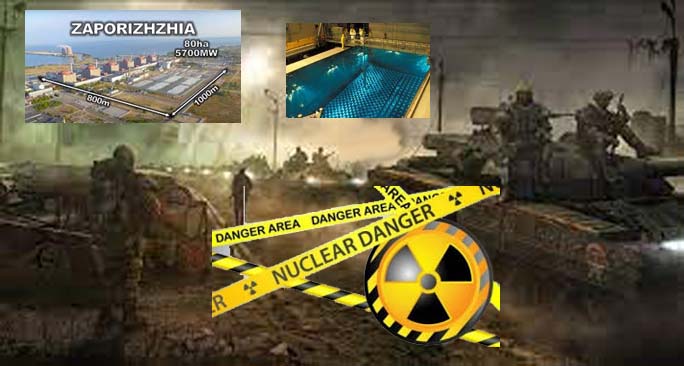
Reuters, June 23, 2023 https://www.reuters.com/world/europe/russia-asks-iaea-ensure-zaporizhzhia-nuclear-plant-security-2023-06-23/
June 23 (Reuters) – Russia urged the International Atomic Energy Agency on Friday to ensure Ukraine does not shell the Zaporizhzhia nuclear power plant, saying it was otherwise operating safely.
Alexei Likhachev, chief executive of the Russian state nuclear energy firm Rosatom, made the comments at a meeting with IAEA chief Rafael Grossi in the Russian city of Kaliningrad, Rosatom said in a statement, after Grossi visited the plant last week.
“We expect concrete steps from the IAEA aimed at preventing strikes by the Armed Forces of Ukraine, both on the Zaporizhzhia nuclear power plant and on adjacent territory and critical infrastructure facilities,” Rosatom quoted its chief as saying in a statement.
The IAEA said this week that the power plant was “grappling with … water-related challenges” after the destruction of the Kakhovka dam emptied the vast reservoir on whose southern bank the plant sits.
It also said the military situation in the area had become increasingly tense as Kyiv began a counteroffensive against the Russian forces that have seized control of swathes of eastern and southern Ukraine.
Moscow and Kyiv have regularly accused each other of shelling Europe’s largest nuclear power station, with its six offline reactors. International efforts to establish a demilitarised zone around it have so far failed.
Ukraine this week accused Russia of planning a “terrorist” attack at the plant involving the release of radiation, while Moscow on Friday detained five people who it said were planning to smuggle radioactive caesium-137 at the request of a Ukrainian buyer in order to stage a nuclear incident.
Reporting by Reuters; Editing by Kevin Liffey
1 This Month





PLEASE OPPOSE HR 8255 AND S.3639 – bills would accelerate satellite deployment, with no environmental review or safeguards – https://ncstd5li.quorum.us/campaign/169331/
To see nuclear-related stories in greater depth and intensity – go to https://nuclearinformation.wordpress.com
-
Archives
- October 2026 (39)
- September 2026 (339)
- August 2026 (330)
- July 2026 (355)
- June 2026 (287)
- May 2026 (306)
- April 2026 (356)
- March 2026 (251)
- February 2026 (267)
- January 2026 (308)
- December 2025 (358)
- November 2025 (359)
-
Categories
- 1
- 1 NUCLEAR ISSUES
- business and costs
- climate change
- culture and arts
- ENERGY
- environment
- health
- history
- indigenous issues
- Legal
- marketing of nuclear
- media
- opposition to nuclear
- PERSONAL STORIES
- politics
- politics international
- Religion and ethics
- safety
- secrets,lies and civil liberties
- spinbuster
- technology
- Uranium
- wastes
- weapons and war
- Women
- 2 WORLD
- ACTION
- AFRICA
- Atrocities
- AUSTRALIA
- Christina's notes
- Christina's themes
- culture and arts
- Events
- Fuk 2022
- Fuk 2023
- Fukushima 2017
- Fukushima 2018
- fukushima 2019
- Fukushima 2020
- Fukushima 2021
- general
- global warming
- Humour (God we need it)
- Nuclear
- RARE EARTHS
- Reference
- resources – print
- Resources -audiovicual
- Weekly Newsletter
- World
- World Nuclear
- YouTube
-
RSS
Entries RSS
Comments RSS

