Rush to accept Ukraine into EU could spell ‘disaster’ – Austrian FM
Rt.com 1 Sept 23
Fast-tracking membership for Kiev would imply some candidates are “more equal than others,” Alexander Schallenberg has warned
The EU cannot afford to prioritize Ukraine’s accession to the bloc while neglecting other long-standing candidacies, Austrian Foreign Minister Alexander Schallenberg warned on Friday.
Speaking on Politico’s EU Confidential podcast, Schallenberg said that while he believes Ukraine and neighboring Moldova belong in the “European family,” the EU must carefully consider its enlargement policy.
We can’t have Ukraine on the fast-track and the other countries on the service line. That will be a geostrategic disaster,” the minister claimed. Referencing George Orwell’s dystopian novel ‘Animal Farm’, Schallenberg stressed that the EU should avoid a system in which some countries “are more equal than others.”
The Austrian minister noted that the EU had promised membership to Western Balkan nations around 20 years ago, but had failed to deliver on that pledge. He urged Brussels to “put its money where its mouth is” and drop “binary thinking” about membership, suggesting candidate nations should be allowed some participation in EU deliberations and activities………………………………………… https://www.rt.com/news/582219-ukraine-eu-accension-disaster/—
Germany facing up to its nuclear waste problem

German nuclear phaseout leaves radioactive waste problem
Klaus Deuse, August 30, 2023 https://www.dw.com/en/german-nuclear-phaseout-leaves-radioactive-waste-problem/a-66661614?maca=en-Facebook-sharing&mibextid=2JQ9oc&fbclid=IwAR1xPxzvz3kfLoNV1JbUx70rWCRa5tiML4tl2jffIm0ILDquq2-av2j7bxw
While Germany searches for a permanent storage facility for its nuclear waste, it risks sitting on piles of dangerous waste for decades. The problem drains public finances by hundreds of millions of euros every year.
Germany ended the era of nuclear energy in Europe’s biggest economy when it decommissioned the last three remaining nuclear power plants on April 15 this year. Decades of nuclear power generation, however, have left a legacy that is unlikely to go away as smoothly as the phaseout: nuclear waste.
Since a permanent German storage facility is out of sight in the near future, the spent fuel rods, packed into specialized containers called Casks for Storage and Transport of Nuclear Material (CASTOR), will likely remain in interim storage for decades.
About 1,200 CASTOR containers are currently stored at 17 interim sites in Germany. A state-owned company, the Bundeseigene Gesellschaft für Zwischenlagerung mbH (BGZ), is tasked with operating the sites.
BGZ spokesperson Janine Tokarski told DW that the company finally expects “about 1,800 containers from across Germany to be designated for final disposal.”
Another state company, the Federal Company for Radioactive Waste Disposal (BGE), is exploring sites in Germany for the final disposal of the dangerous waste. According to Tokarski of BGZ, experts plan to find a site and, more importantly, reach a political consensus on it “in the 2040s at the earliest.”
From then on, another 20 to 30 years are likely to be spent on planning and construction, said Tokarski. She anticipates the beginning of final storage “in the 2060s at the earliest.” The shipping of all the waste from the various interim sites will probably take another 30 years, she added.
The century-long operation is expected to cost hundreds of billions of euros. Last year alone, BGZ spent €271 million ($292 million) just to ensure Germany’s nuclear waste is safely stored — €191 million of the sum on operating the interim sites and €80 million on investments in them.
A nuclear fortress
In 1992, the first CASTOR containers with highly radioactive fuel rods were stored in the interim storage site of Ahaus in northwestern Germany.
The 200-meter-long (218-yard-long) central storage building towers 20 meters high above the flat landscape of the Münsterland region and is protected by a wire fence surrounding the sprawling 5,700-square-meter (61,354-square-feet) site.
Bisected by a reception and maintenance area, the building currently holds more than 300 yellow casks containing burned fuel rods. Additionally, six CASTOR containers, each 6 meters long and weighing 120 tons, are stored in one of the two halls, keeping the waste leak-tight for a calculated 40 years.
Leak tightness is achieved through a pressure switch installed in the double-wall sealing system of these containers, said David Knollmann from BGZ in Ahaus.
“A gas is inserted between the two walls, specifically helium gas, at a certain pressure. This switch ensures the pressure doesn’t fall below a certain level,” he told DW.
David Knollmann proudly added that in 30 years, there hasn’t been a single case of a container requiring repairs.
The nuclear safety at the Ahaus interim storage site is not only overseen by German nuclear authorities but also by Euratom, an independent nuclear energy organization run by European Union member states, and the International Atomic Energy Agency (IAEA). Their auditors inspect the site regularly but without advance notice.
Pressure of time
In addition to the two central interim storage facilities in Ahaus and Gorleben, Germany operates other decentralized temporary storage facilities at the sites of all former German nuclear power plants.
Moreover, additional waste, shipped for reprocessing to France and the UK, will eventually return to Germany. Knollmann said this will only happen “when all the necessary regulatory conditions are met.”
Much of the waste, he explained, comes from “dismantled nuclear power plants” and includes contaminated pumps and filters. Those would eventually be stored at the Schacht Konrad site near the town of Salzgitter, a former iron ore mine proposed as a deep geological repository for medium- and low-level radioactive waste.
The Schacht Konrad mine, said Tokarski, is expected to become operational as a nuclear waste storage “around the early 2030s.”
All German interim storage sites are subject to limited operating permits of 40 years. For example, the permit for the Ahaus site will be up for renewal by 2028 at the latest. As all experts agree that a final central repository for Germany’s nuclear waste won’t be fully operational before 2090 at the earliest, the country faces the problem of what to do with the radioactive material until then.
Without political consensus on the issue, Ahaus residents fear that their neighborhood’s storage facility might secretly become “a final repository solution.”
Chancellor Scholz dismisses talk of keeping nuclear energy option open in Germany
German Chancellor Olaf Scholz dismissed a suggestion by a junior coalition
partner that the country should keep open the option of using its closed
nuclear power plants, declaring that atomic energy is a “dead horse” in
Germany.
Germany switched off its last three nuclear reactors in April,
completing a process that received wide political support after Japan’s
Fukushima nuclear reactor disaster in 2011. But some argued for a rethink
after energy prices spiked because of the war in Ukraine. Among those who
advocated a reprieve were members of the Free Democrats, a pro-business
party that is part of Scholz’s governing coalition.
Daily Mail 2nd Sept 2023
Hinkley Point C Nuclear Station will need daily 4,200 Olympic swimming pools’ amount of cooling water.
Hinkley Point C nuclear power station will keep itself cool by drawing in
and flushing out enough water to fill 4,200 Olympic swimming pools – every
day. To do this, it needs 5.5 miles (8.8 kilometers) of tunnels located
nearly 100 feet (30 meters) underneath the Bristol Channel, which has the
second highest tidal range in the world. …………..These are the first nuclear qualified tunnels to be designed in the U.K.,” says Jacobs’ HPC Marine Works Project Manager Steve Marshall.
“They will have the capacity to transfer 2.7 billion U.S. gallons (10.4 million cubic meters) of coolingwater a day. “There is a blueprint for building reactors but marine works
to deliver the cooling water can never be exactly the same because we’re
always dealing with different geology and tidal ranges,” he explains.
“Added to this we have the nuclear safety aspect and the need to build
structures that are capable of doing their jobs for an 85-year design life
with very little maintenance. They also have to be capable of withstanding
a 1-in-10,000 year earthquake and extreme waves in the stormiest sea
conditions.”
Market Screener 1st Sept 2023
A bottomless pit of public money for the UK government’s nuclear vanity project
In response to Nuclear Minister, Andrew Bowie’s announcement of an
additional £341m government support for the Sizewell C project, TASC
deputy Chair, Pete Wilkinson, said “There seems to be a bottomless pit of
public money when it comes to funding Sizewell C, so besotted is the
government with this already redundant nuclear vanity project.
Not so for cash-strapped public sector workers though. The £341m recently announced,
taking taxpayer funding over an eye-watering £1.2bn, is apparently
designed to speed up preparations for construction of a plant which has yet
to receive dozens of licences and permits – not the least of which is the
Office for Nuclear Regulation’s permission to build on a site threatened by
climate change impacts – and is still subject to determination of an
outstanding legal challenge.
Put another way, it is public money to be
spent on the destruction of a coast which is designated as an area of
outstanding natural beauty for a project which may still not happen. It
also claims that it will ‘help to drive Putin further out of global
energy markets’, apparently missing the point that uranium supplies –
essential for the mythical nuclear renaissance and already at peak supply –
come largely from Russian-influenced countries, so out of the oil and gas
fire into the uranium frying pan.
As for the ‘rapid expansion of UK
nuclear energy’, the fantasy of 24GW from nuclear, should it ever be
attempted, will be cripplingly expensive and generate a mountain of waste
for which there is no universally acceptable disposal route, in short, a
recipe for future financial and environmental disaster rather than energy
security”
TASC 30th Aug 2023
Anger over claims RAF Lakenheath could host US nuclear weapons
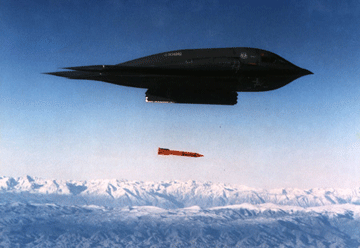
By Stuart Bailey, BBC News 31 Aug 23 https://www.bbc.com/news/uk-england-suffolk-66657765
Campaigners have urged the government to refuse the US any permission to base nuclear weapons in the UK again.
A US Air Force report showed plans to build a “surety dormitory” at RAF Lakenheath in Suffolk, which experts said implied a return of nuclear arms.
The Campaign for Nuclear Disarmament (CND) said it would be “beyond irresponsible” and put the UK at risk.
The Ministry of Defence and the Pentagon said they would not comment on the location of weapons.
US Air Force budget documents included a justification for a 144-bed dormitory “to house the increase in enlisted personnel as the result of the potential Surety Mission.”
The word “surety” is often used by the US government to refer to the concept of ensuring American nuclear weapons are kept safe and secure.
The Federation of American Scientists (FAS), which first reported the plans, said they “strongly imply” the intention to re-establish nuclear arms at Lakenheath, which hosted them until 2008.
CND general secretary, Kate Hudson, said: “It’s increasingly clear that Lakenheath is once again a vital cog in Washington’s overseas nuclear machine.
“The deployment of the new B61-12 (gravity bombs) to Europe undermines any prospects for global peace and ensures Britain will be a target in a nuclear conflict between the US/NATO and Russia.
“It’s beyond irresponsible that the UK government is allowing this deployment.”
Construction of the $50m (£39.5m) building is due to begin in June 2024 and end in February 2026, the budget report said.
The Ministry of Defence, which owns the site, said it was unable to comment on US spending decisions and capabilities.
Deputy Pentagon press secretary Sabrina Singh said: “It is US policy to neither confirm nor deny the presence or absence of nuclear weapons at any general or specific location.”
RAF Lakenheath is home to USAF’s 48th Fighter Wing, which consists of more than 4,000 military members and 1,500 civilians. Control of the base transferred from the RAF to USAF in 1948.
Last year more than 200 people protested outside the base after the US added the UK to a list of nuclear weapons storage site locations in Europe.
German Chancellor Scholz speaks out against new nuclear power, Deutschlandfunk reports
September 2, 2023 https://www.reuters.com/business/energy/german-chancellor-scholz-speaks-out-against-new-nuclear-power-deutschlandfunk-2023-09-01/
FRANKFURT, – German Chancellor Olaf Scholz said he is against a new nuclear power debate in the country, in an interview released late on Friday with German radio station Deutschlandfunk.
“The issue of nuclear power is a dead horse in Germany,” said Scholz, leader of Germany’s social democrats (SPD).
Scholz’s coalition partner, the free democrats (FDP), recently demanded Germany should keep an nuclear option.
For new nuclear power plants to be built, significant time and investment would be required, Scholz said, estimating at least 15 billion euros ($16.16 billion) would have to be spent per power plant over the next 15 years.
On the widely debated topic of an industrial electricity price cap in Germany, the chancellor expressed doubt how this could be funded, naming options including taxpayer money and debt.
($1 = 0.9282 euros)
Reporting by Emma-Victoria Farr; Editing by Leslie Adler and Josie Kao
Money thrown at Sizewell C to win hearts and minds.
The government has allocated a further £341m to get the Sizewell C
nuclear power station project shovel-ready. The extra money will help
prepare the Sizewell C site in Suffolk for construction, procuring key
components from the project’s supply chain, and expanding its workforce.
It would see activity ramp up at the Suffolk site, supporting continued
preparation works, such as constructing onsite training facilities for
1,500 apprenticeships and further development of the plant’s engineering
design.
The public relations campaign will also be stepped up in a bid to
wins hearts and minds in the Southwold-Aldeburgh area, where opposition to
the project is strong. The government plans “direct investments in the
local community ahead of work starting” to show that having a £35bn
construction project on your doorstep is not necessarily all bad news.
latest £341m tranche follows a £170m allocation last month and builds on
the government’s existing £870m stake in the project to help secure a
final investment decision before the next general election.
The Construction Index 30th Aug 2023
https://www.theconstructionindex.co.uk/news/view/money-thrown-at-sizewell-c-to-win-hearts-and-minds
US fighter jets capable of nuclear bombing to be based in UK.
US fighter jets capable of nuclear bombing to be based in UK. Two
squadrons of hi-tech F-35 As set to arrive at RAF Lakenheath in Suffolk
imminently.
Telegraph 30th Aug 2023
https://www.telegraph.co.uk/news/2023/08/30/f35-fighter-jets-nuclear-weapons-raf-lakenheath-suffolk/
Nuclear is the new green. (Really?)

Funds-Europe, 1 Sept 23, Piyasi Mitra examines the debate around the role of nuclear energy in Europe’s sustainable future.
The global pursuit of a net-zero future is fraught with challenges and choices. Integrating natural gas and nuclear into sustainable portfolios could potentially speed up the process, but the European Commission’s recent classification of these resources as climate-friendly prompted scrutiny and debate. Alarmed by the emissions and potential risks, organisations such as Greenpeace, Client Earth and WWF launched legal actions. So, is nuclear the key to a sustainable energy future?
Serious business
The position of the European Commission (EC) is this: “The taxonomy is an essential part of the EU sustainable finance framework in the broader context of the European Green Deal. It helps guide and mobilise private investment to transition towards climate neutrality.”
………………. The EC also announced its intention “to adopt a complementary Climate Taxonomy Delegated Act for some energy sectors, notably nuclear and gas, where they can comply with the criteria for activities under the taxonomy regulation”
Opinions on the topic vary widely. A spokesperson for the German investment funds association, the BVI, says: “It would have been better not to include nuclear energy and gas in the taxonomy because they are contentious and jeopardise the credibility of the taxonomy as a universal measure of sustainability.”…………………………………………………………………………………………………………..
Challenges galore
All nuclear technologies share the same problem: cost. According to the International Energy Agency, about 25% of existing nuclear capacity in advanced economies is expected to shut down by 2025. On average, the nuclear fleet in developed economies – particularly in the US and the EU – is 35 years old, with most of these fleets nearing the end of their designed lifetimes, says Anthony Catachanas, CEO of Victory Hill Capital Partners. “The requirement for dealing with nuclear waste and decommissioning costs make it a less attractive investment proposition than other more sustainable energy sources.”
………………………………… A more practical technology is fusion. Nonetheless, the costs still need to be lowered as it will use the very expensive hydrogen molecule as feedstock, and the technology still needs to be proven.
………………… The costs associated with reactors, whether large or small scale, utilising fission technology are significantly prohibitive. “Besides, fission has a costly by-product in nuclear waste from an enriched uranium or plutonium process. Investing in this technology will be more difficult to explain to investors because the waste issue is unsustainable,” says Catachanas.
……………………………………………….environmental concerns about nuclear waste disposal and its impact on human health and biodiversity are real, and broader safety implications exist for people working and living near nuclear power plants.
……………………..Another drawback of nuclear power is that state or state-owned utilities are likely to remain the only suitable ownership models, says Joost Bergsma, CEO of infrastructure equity firm Glennmont Partners from Nuveen. He adds: “Nuclear does not immediately contain to solving Europe’s energy security issue, as the raw materials needed for nuclear energy generation often come from non-EU countries, and often countries with very different geopolitical agendas to ours.”
Renewables are a far more attractive option for fund managers, as they are cheaper than nuclear and fossil fuels and quick to build, says Bergsma. “Traditional renewables such as onshore and offshore wind and solar have proven reliability and are only growing more efficient. Beyond this, renewables hold the edge regarding public support and easy deployability.”…………… https://www.funds-europe.com/insights/nuclear-is-the-new-green—
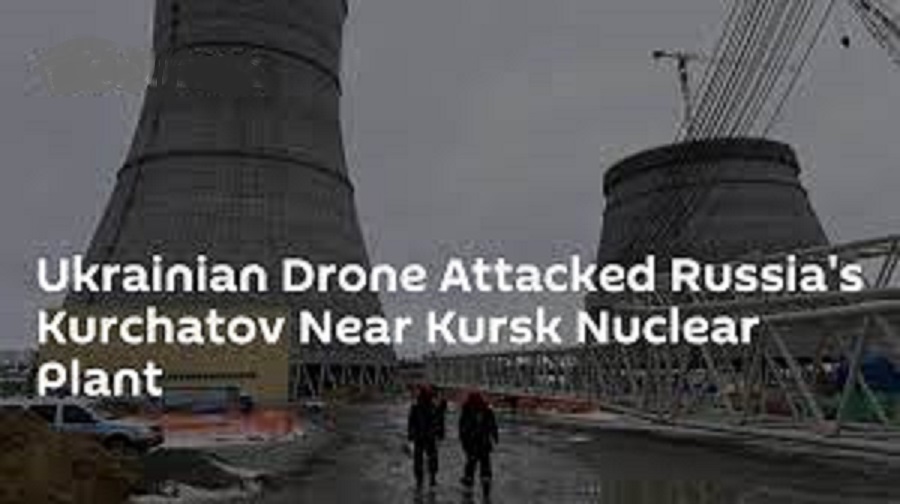
Ukrainian drone attacks Russian town near major nuclear plant
- Summary
- Drone attacks nuclear town
- No damage to nuclear power station
- Kursk power station is one of biggest
- Ukrainian drone shot down near Moscow
MOSCOW, Sept 1 (Reuters) https://www.reuters.com/world/europe/ukrainian-drones-attack-russian-town-home-nuclear-plant-2023-09-01/–
A Ukrainian drone attacked a town in western Russia which is home to one of the country’s biggest nuclear power stations, though there was no damage reported to the plant, Russian officials said.
Governor Roman Starovoit said a Ukrainian drone had damaged the facade of a building in the town of Kurchatov, just a few kilometres from the Kursk nuclear power station, early on Friday. He had earlier said there were two drones but clarified his remarks.
“There are no casualties,” Starovoit said. Starovoit did not mention any potential damage to the Kursk nuclear power plant.
The Soviet-era Kursk nuclear power station has the same graphite-moderated reactors as the Chernobyl nuclear plant.
An explosion and fire at the Chernobyl plant in 1986, in then Soviet Ukraine, was the world’s worst nuclear accident, spreading radiation across Europe.
Currently three RBMK-1000 reactors in Kursk are operational with one shut down, according to Russia’s state nuclear corporation.
Russia and Ukraine have in the past accused each other of plotting to attack the Zaporizhzhia nuclear power station in Ukraine. Russian troops seized the station, Europe’s largest nuclear facility with six reactors, in the days after the Kremlin ordered the invasion of Ukraine in February 2022.
Another drone was shot down approaching Moscow on Friday morning, said Mayor Sergei Sobyanin. That briefly disrupted flights to Moscow’s Vnukovo airport.
In the western Russian region of Belgorod another drone was shot down, according to Governor Vyacheslav Gladkov.
Writing by Guy Faulconbridge; Editing by Clarence Fernandez and Michael Perry
Russia puts advanced Sarmat nuclear missile system on ‘combat duty’
Russian space agency chief Yuri Borisov says new intercontinental ballistic missile system is now in service, Russia’s news agencies report.
Moscow has put into service an advanced intercontinental ballistic missile that Russian President Vladimir Putin has said would make Russia’s enemies “think twice” about their threats, according to reported comments by the head of the country’s space agency.
Yuri Borisov, the head of the Russian space agency Roscosmos, said Sarmat missiles have “assumed combat duty”, according to Russian news agency reports on Friday……………………………………………………………………………………. more https://www.aljazeera.com/news/2023/9/2/russia-puts-advanced-sarmat-nuclear-missile-system-on-combat-duty
Over 100 security incidents at UK’s Ministry of Defence (MoD) nuclear weapons body
An arm of the Ministry of Defence (MoD) which oversees the UK’s nuclear
weapons programme has refused to release details of over 100 security
incidents it logged over the last five years, prompting accusations of a
“cover up”.
According to new figures – released to The Ferret after a
freedom of information (FoI) request – the Defence Nuclear Organisation
(DNO) has recorded 113 ‘security concerns’ since 2017-18. The DNO said
these incidents may have ranged from minor breaches of security policies to
the outright loss of information.
But despite claiming that many of the
reported incidents would not have “significant ramifications”, the
organisation refused to provide descriptions of any. It cited national
security concerns and fears about damaging the UK’s reputation
internationally.
The Ferret 30th Aug 2023 https://theferret.scot/over-100-incidents-body-oversees-nuclear-weapons/
‘Unrealistic and irrational’: Government announces Sizewell C nuclear station £341m speed-up despite local backlash in Suffolk
Tom Daly, the cabinet member for energy and climate change at East Suffolk
Council, believes the project is “unrealistic and irrational”, and the
announcement nothing but a publicity stunt. He said: “I think it is part
of the government’s efforts to keep the subject in the news and make sure
it is in the public’s minds.
“The money that is being highlighted has
already been allocated — this is a way to create a sense of confidence
and try to dispel doubts.” In early 2020, the Together Against Sizewell C
(TASC) local action group sought a judicial review of the previous
administration at East Suffolk Council’s 2019 decision to grant planning
permission for preparations to begin on the site. However, in October 2020,
the High Court ruled the impacts would be “minor” and “not
significant”.
Pete Wilkinson, the deputy chair at TASC, said: “There
seems to be a bottomless pit of public money when it comes to funding
Sizewell C, so besotted is the government with this already redundant
nuclear vanity project.” Several concerns have been raised by the new
council including nuclear waste, water supply, sea defence, impacts on the
coastal economy, species diversity, habitat destruction, and size. Cllr
Daly added: “The government’s newfound enthusiasm for nuclear is not
based on reality. It’s far too expensive and far too damaging.
Suffolk News 30th Aug 2023
NATO’s ‘proxy war’ blues: How the US-led campaign to use Ukraine to ‘cripple’ Russia has failed
Moscow has overcome Western economic sanctions and honed a bigger and more effective military through 18 months of combat
The US-led drive to isolate Russia and the attempt to debilitate its economy and military using Ukraine – acknowledged as a “proxy war” even by some Western leaders – appears to be having the opposite effect by various measures.
Washington and other NATO members have repeatedly proclaimed that Russian President Vladimir Putin has already suffered a strategic defeat in Ukraine and has “no possibility” of winning the conflict. “Putin’s already lost the war,” US President Joe Biden claimed last month after attending a NATO summit in Vilnius, Lithuania.
Pentagon officials, who have openly admitted that their goal is to weaken Russia’s military, have spoken in recent weeks of heavy losses for Moscow’s forces and “steady progress” in Ukraine’s long-touted counteroffensive. America’s top-ranking general, US Chairman of the Joint Chiefs of Staff Mark Milley, went so far earlier this year as to say, “Russia has lost. They’ve lost strategically, operationally and tactically.”
Russian leaders are seeing a far different picture on the ground. For instance, Putin has claimed that Russian forces achieved a ten-to-one kill ratio in a key battle last month. Ukraine has lost 43,0000 troops, as well as dozens of Western-supplied tanks, infantry vehicles and artillery pieces since Kiev’s counteroffensive began in early June, according to an August 4 estimate by the Russian Defense Ministry. “It is obvious that the Western-supplied weapons are failing to bring success on the battlefield and only prolong the military conflict,” Russian Defense Minister Sergey Shoigu has said.
Grading the military impact
While assessments of the battlefield situation diverge wildly, NATO has clearly failed so far in its effort to weaken the Russian military. Moscow’s forces are inarguably stronger, better-armed and larger today than when the conflict started in February 2022. They’ve also gained 18 months of experience in fighting NATO-trained troops and countering NATO-supplied weaponry. In fact, Russian troops have become so formidable in this regard that even Western media outlets have quoted defense analysts on the increasingly effective tactics employed by Moscow’s battle-hardened forces…………………………………….
The Center for European Policy Assessment (CEPA), which is funded by a variety of US weapons makers, offered a similar view on the strengthening of Russia’s military. “The Russians have gone to school on the Ukrainians and have been learning quickly,” Chels Michta, a US military intelligence officer, wrote in May. “The 2023 Russian Army is a different beast from the 2022 Russian Army from the early stages of the war.”……………………………………………………………………………………………………………………………………… https://www.rt.com/news/581704-ukraine-proxy-war-backfires-for-west/
1 This Month





PLEASE OPPOSE HR 8255 AND S.3639 – bills would accelerate satellite deployment, with no environmental review or safeguards – https://ncstd5li.quorum.us/campaign/169331/
To see nuclear-related stories in greater depth and intensity – go to https://nuclearinformation.wordpress.com
-
Archives
- October 2026 (29)
- September 2026 (339)
- August 2026 (330)
- July 2026 (355)
- June 2026 (287)
- May 2026 (306)
- April 2026 (356)
- March 2026 (251)
- February 2026 (267)
- January 2026 (308)
- December 2025 (358)
- November 2025 (359)
-
Categories
- 1
- 1 NUCLEAR ISSUES
- business and costs
- climate change
- culture and arts
- ENERGY
- environment
- health
- history
- indigenous issues
- Legal
- marketing of nuclear
- media
- opposition to nuclear
- PERSONAL STORIES
- politics
- politics international
- Religion and ethics
- safety
- secrets,lies and civil liberties
- spinbuster
- technology
- Uranium
- wastes
- weapons and war
- Women
- 2 WORLD
- ACTION
- AFRICA
- Atrocities
- AUSTRALIA
- Christina's notes
- Christina's themes
- culture and arts
- Events
- Fuk 2022
- Fuk 2023
- Fukushima 2017
- Fukushima 2018
- fukushima 2019
- Fukushima 2020
- Fukushima 2021
- general
- global warming
- Humour (God we need it)
- Nuclear
- RARE EARTHS
- Reference
- resources – print
- Resources -audiovicual
- Weekly Newsletter
- World
- World Nuclear
- YouTube
-
RSS
Entries RSS
Comments RSS

