The UK Government Knows How Extreme the Online Safety Bill Is

SCHEERPOST, By Joe Mullin / Electronic Frontier Foundation (EFF)
The U.K.’s Online Safety Bill (OSB) has passed a critical final stage in the House of Lords, and envisions a potentially vast scheme to surveil internet users.
The bill would empower the U.K. government, in certain situations, to demand that online platforms use government-approved software to search through all users’ photos, files, and messages, scanning for illegal content. Online services that don’t comply can be subject to extreme penalties, including criminal penalties.
Such a backdoor scanning system can and will be exploited by bad actors. It will also produce false positives, leading to false accusations of child abuse that will have to be resolved. That’s why the OSB is incompatible with end-to-end encryption—and human rights. EFF has strongly opposed this bill from the start.
Now, with the bill on the verge of becoming U.K. law, the U.K. government has sheepishly acknowledged that it may not be able to make use of some aspects of this law. During a final debate over the bill, a representative of the government said that orders to scan user files “can be issued only where technically feasible,” as determined by Ofcom, the U.K.’s telecom regulatory agency. He also said any such order must be compatible with U.K. and European human rights law. ……………………………………………………………………………
People Need Privacy, Not Weak Promises
Let’s be clear: weak statements by government ministers, such as the hedging from Lord Parkinson during this week’s debate, are no substitute for real privacy rights.
Nothing in the law’s text has changed. The OSB gives the U.K. government the right to order message and photo-scanning, and that will harm the privacy and security of internet users worldwide. These powers, enshrined in Clause 122 of the OSB, are now set to become law. After that, the regulator in charge of enforcing the law, Ofcom, will have to devise and publish a set of regulations regarding how the law will be enforced.
Several companies that provide end-to-end encrypted services have said they will withdraw from the U.K. if Ofcom actually takes the extreme choice of requiring examination of currently encrypted messages. Those companies include Meta-owned WhatsApp, Signal, and U.K.-based Element, among others. ……………………….
Finally, lawmakers in other jurisdictions, including the United States, should take heed of the embarrassing result of passing a law that is not just deceptive, but unhinged from computational reality. The U.K. government has insisted that through software “magic,” a system in which they can examine or scan everything will also somehow be a privacy-protecting system. Faced with the reality of this contradiction, the government has turned to an 11th hour campaign to assure people that the powers it has demanded simply won’t be used. https://scheerpost.com/2023/09/15/the-uk-government-knows-how-extreme-the-online-safety-bill-is/
Solar energy boost for France
CNR is leading a consortium in the development of “Ombrières
PHotovoltaïquE grand LIneAire”, a solar shading project along the
ViaRhôna cycling route in southern France’s Caderousse department,
alongside the Rhône River.
The pilot project aims to evaluate the
integration of a PV facility into the landscape and assess its energy
performance. The project partners include French cable supplier Nexans,
Schneider Electric, railway operator SNCF, and the SuperGrid Institute.
The PV system will span 900 meters in length and have an installed capacity of
900 kW. It will consist of 30 shaded structures with west-east oriented
solar panels. The consortium will conduct tests on the system’s overall
architecture and the equipment needed for transporting medium voltage
direct current (MVDC) electricity to the delivery point. Construction and
testing are scheduled for the 2025-28 period, following a three-year phase
of engineering studies, research and development (R&D), and prototyping.
PV Magazine 13th Sept 2023
https://www.pv-magazine.com/2023/09/13/french-consortium-plans-900-kw-solar-cycling-path/
Sunak gives China green light to build UK nuclear plants despite nationbeing ‘threat to our way of life’
The Government has rejected calls
for Chinese state-linked firms to be excluded entirely from Britain’s
nuclear sector. China will not be permanently barred from investing in
Britain’s nuclear energy despite posing a “threat to our open and
democratic way of life”, the Government has said.
Ministers were accused
of a “patronising” and “misleading” approach by senior
Conservatives after ruling out a ban and insisting existing rules on China
are already tough enough. A committee of MPs suggested that allowing firms
with links to the Beijing regime to be involved in the civil nuclear sector
provided an “incentive and opportunity for espionage”.
In its response,
the Government said that it would consider new ways to scrutinise China’s
involvement in Hinkley Point C, which is already well under way, but would
not impose a blanket ban. It said: “The Government will continuously
review measures to ensure that economic security and critical national
infrastructure is protected. All investment involving critical
infrastructure is subject to thorough scrutiny and needs to satisfy strong
legal, regulatory, and national security requirements.” Future nuclear
projects would be “subject to these individual assessments” in which
the Government characterises as “a one step at a time approach” –
although a Chinese firm has already been bought out of the Sizewell C
project in which it was originally an investor.
iNews 14th Sept 2023
Top candidate for head of European Investment Bank cautions about defense, nuclear investments
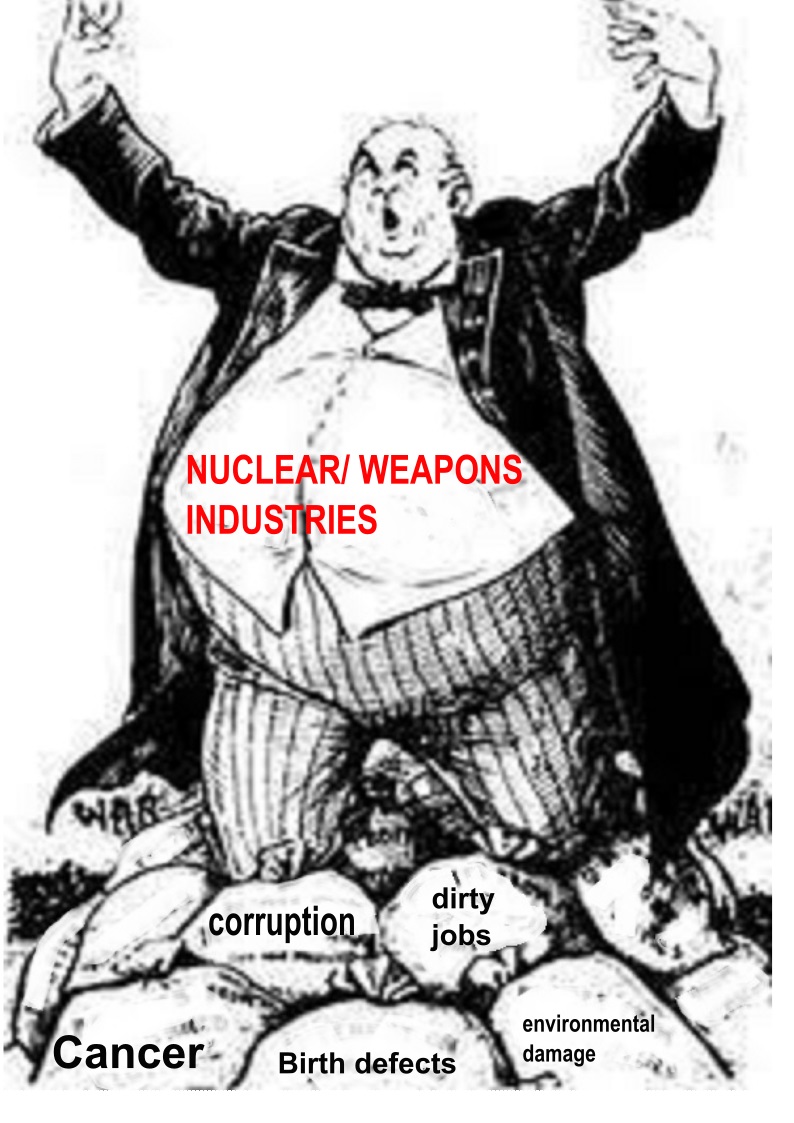
France has been pushing for a candidate sympathetic to steering the EIB funds to nuclear projects and defense investments.
Vestager cautions about defense, nuclear investments in EIB pitch
BY PAOLA TAMMA. SEPTEMBER 15, 2023, Politico
The European Investment Bank is ‘for everybody,’ Dane says in an effort to win wider support for job bid.
SANTIAGO DE COMPOSTELA, Spain — The European Investment Bank should not become a “political fighting arena” for investments in nuclear energy or defense, said Margrethe Vestager, who’s trying to convince European Union finance ministers to pick her to head the powerful government-backed lender.
Vestager, currently on leave as EU digital and antitrust chief, is one of the top candidates to take over from President Werner Hoyer next year and lead the bank that finances EU policies, from fighting climate change to rebuilding Ukraine.
She stressed that a successful candidate needed broad support, including smaller countries, because “the bank is for everybody, big shareholders as well as small shareholders,” she told POLITICO on the sidelines of a finance ministers’ gathering in Santiago de Compostela.
France and Germany, who together with Italy, account for nearly half of the bank’s capital, haven’t said who they will back. France has been pushing for a candidate sympathetic to steering the EIB funds to nuclear projects and defense investments. It also wants someone willing for the cautious lender to take on more risks.
Germany has emphasized that “sound banking is essential” and that “the mission of the EIB mustn’t be overstretched,” Finance Minister Christian Lindner said ahead of the meeting.
Nuclear “is a good example of the fact that the bank should not be a political fighting arena,” Vestager said. The EIB “should not take sides” and should “engage in processes that maybe can find a new balance.”……………more https://www.politico.eu/article/margrethe-vestager-nuclear-defense-eib-european-investment-bank-pitch-smaller-nations/
Chris Hedges: Stella Assange Speaks Out on the Conditions of Julian Assange’s Imprisonment
SCHEERPOST, September 14, 2023
Julian Assange has languished in Belmarsh Prison in the UK since 2019 as he fights extradition to the US to face prosecution under the Espionage Act.
Prison is always a political tool, and in the case of whistleblowers like Julian Assange, the use of incarceration to suppress, discourage, and silence dissent is self-evident. Since being imprisoned, Assange has married and even started a family—but has been kept apart from his wife and children. In the second part of a two-part conversation, Stella Assange and Chris Hedges discuss the conditions of Julian’s incarceration, and how it offers a glimpse into the overall brutality of the prison system……………………………………………………
Nuclear Free Local Authorities concerned over safety risks regarding nuclear-armed U.S. base planned for RAF Lakenheath, Suffolk
A combination of tremendous heroism, good fortune and the will of
God” – will this be the future of safety at a nuclear-armed Lakenheath?
With evidence mounting that the United States Air Force intends to return
nuclear weapons to RAF Lakenheath in Suffolk, the Nuclear Free Local
Authorities have written to emergency planners in the county, and on their
recommendation now to the Ministry of Defence, to question their
preparedness for any future accident involving the destruction of a
military aircraft carrying nuclear weapons, either at Lakenheath or in
transit to or from the airbase.
NFLA 14th Sept 2023
NATO’s Steadfast Defender Drills Near Russia Signal Bloc’s Shift to ‘War Footing’
Ilya Tsukanov, Sputnik News 11 Sept 23
All thirty-one NATO countries plus Sweden are reportedly gearing up to conduct the bloc’s biggest military drills since the Cold War in early 2024. Sputnik reached out to Michael Maloof, a former security policy analyst with the Office of the Secretary of Defense, to get a sense of the risks posed by the exercises.
British business media reported Monday that NATO plans to hold large-scale exercises across Germany, Poland and the Baltic countries between February and March of 2024, with the drills’ pretext being to practice “repelling Russian aggression” against allies. The drills, dubbed Steadfast Defender 24, are set to involve up to 41,000 troops, 50 warships, and to feature between 500-700 air combat missions, according to sources familiar with the plans.
The exercises are the first of their kind since 2021, with the alliance previously mostly avoiding large-scale exercises in Russia’s direct vicinity amid concerns about Moscow’s possible reaction amid repeated warnings by Russian Foreign Intelligence that some NATO countries may be preparing to transform the Ukrainian proxy conflict into a direct shooting war with Russia.
The drills are “designed to put Russia and allies in the most unfavorable position,” former Pentagon analyst Michael Maloof told Sputnik.
Pointing to the exercises’ expected heavy focus on air power, something Ukraine has lacked utterly throughout its three-month long counteroffensive this summer, Maloof emphasized that the drills appear aimed at going “from being reactionary in terms of reacting to a crisis, to actually going on a war footing” on NATO’s part, “assuming that there’s an invasion, and that Russia has allies participating.”
The exercises will be meant to “show coordination on a wartime footing,” the observer said, and NATO will likely use experience gained by observing fighting in Ukraine to “coordinate their air, sea, land, but also their space and cyber capabilities together.”
“That said,” Maloof noted, “the reality is” that much of NATO’s stocks of war materiel “have been depleted because of Ukraine,” with Europe and the United States each running low on weapons and ammunition after sending nearly $100 billion in arms assistance to Kiev over the past 18 months.
“If, in fact, there was a war, Russia would certainly activate ships and other aircraft and what have you in international waters and perhaps off the coast of the United States to deal with” US attempts to set up a logistical supply train across the Atlantic.
The observer doesn’t believe that the alliance is “really ready for a real confrontation and real head-on war” with Russia, with any conflagration certain to result in “tremendous losses.”…………………. more https://sputnikglobe.com/20230911/natos-steadfast-defender-drills-near-russia-signal-blocs-shift-to-war-footing-1113292863.html
Ukrainians blame Zelensky for corruption – poll
https://www.rt.com/news/582796-ukraine-corruption-poll-zelensky-responsible/ 13 Sept 23
Nearly eight in ten citizens believe the country’s president is “directly responsible” for rampant graft, a new survey has shown
The vast majority of Ukrainians believe that President Vladimir Zelensky is at fault for widespread corruption in the country’s government and military, a new study has revealed.
The poll, released on Monday, found that 78% of Ukrainian adults see Zelensky as “directly responsible” for Kiev’s corruption problem. It was conducted by the Ilko Kucheriv Democratic Initiatives Charitable Foundation and the Kiev International Institute of Sociology.
Prior to the launch of Russia’s military offensive in February 2022, Ukraine consistently ranked among the world’s most corrupt nations, but it was touted as a bastion of freedom and democracy as the US and its NATO allies rallied public support for massive aid to Kiev. However, Ukrainian corruption remains a concern and could hinder the country’s bid to join the European Union, an unidentified Western diplomat told Politico on Monday.
Ukraine is a “very corrupt country,” the diplomat said, adding that Zelensky’s plan to use the Security Service of Ukraine (SBU) to prosecute graft cases could “send the wrong message.” Upon landing in Kiev for a surprise visit on Monday, German Foreign Minister Annalena Baerbock reportedly said Ukraine needed to step up its efforts to fight corruption.
The Ukrainian poll was conducted from July 3 to July 17 in face-to-face interviews with thousands of citizens across the country. There were no major differences in findings based on region or socioeconomic factors. Respondents aged 60 and older took a harsher view, with 81% saying Zelensky was responsible for government corruption. The rate was 70% in the youngest segment, ages 17 to 29. Overall, only 18% of Ukrainian adults disagreed with the statement that Zelensky bears responsibility.
Documents obtained by the International Association of Investigative Journalists in 2021 showed that Zelensky and his business partners set up offshore companies to purchase lavish properties in central London. Zelensky transferred his stake in one of the companies to an aide just before he was elected president in 2019. Supporters of former Ukrainian president Petro Poroshenko accused Zelensky and his associates of using their offshore accounts to evade taxes.
Zelensky has purged officials in his government for alleged corruption, including an embezzlement scheme involving humanitarian aid. Just this month, he sacked Defense Minister Aleksey Reznikov, who came under fire earlier this year over purchases of military rations at inflated prices. However, the new defense chief, Rustem Umerov, is reportedly under investigation for alleged crimes in his previous job.
Zelensky Issues Veiled Threat To Destabilize Europe If Weapons Flow Curtailed
Zero Hedge, TYLER DURDEN, WEDNESDAY, SEP 13, 2023 –
As predicted by a number of independent geopolitical commentators, including ourselves, the emerging official narrative on why Ukraine’s counteroffensive ended in failure will be to falsely claim the West didn’t provide “enough” weapons in a timely fashion. Despite the literally tens of billions of US taxpayer dollars sunk into Kiev’s war effort at record-breaking pace and scale, it will be the “fault” of the United States and its allies—or at least this will be solidified as the Ukrainian government’s perspective and narrative (and then will be parroted among Zelensky’s most diehard hawkish supporters).
Ukrainian President Volodymyr Zelensky has this week been busy advancing this as a key talking point, first telling CNN’s Fareed Zakaria on Sunday his country “waited too long” to start counteroffensive. The reason? He blames the West for forcing his military leaders to wait so long for the necessary weaponry and equipment.
“We — look, we waited too long. It’s true. No, I’m thankful to partners, to the United States, EU, other partners,” Zelensky said. “I’m thankful very much to President Biden and to Congress, but we have to understand: We waited too long, they put mines.”
“Then when we been ready from the point of view of our partners because the decision to give us, for example, Bradley [Fighting Vehicles] and other kind of weapons, the decision, it doesn’t mean the result.” And The Hill underscores of his remarks, “Zelensky noted that Ukraine does not get the weapons promised to it immediately after they are announced by allies.” This is not the first time Zelensky has blamed slowness in supplies and training from his Western sponsors. But behind the scenes, his Western patrons have criticized him for being “ungrateful”.
In late March, Zelensky when asked about why the counteroffensive was being delayed said that he can’t “start yet” as he’s unable to “send our brave soldiers to the front line without tanks, artillery and long-range rockets.” And then in May he reasserted that “We can advance with what we’ve got and I think we can be successful but we will lose a lot of people, I think that is unacceptable.” He had added at the time, “We need to wait, we need a bit more time.” The offensive later belatedly kicked off in full force in June.
In another interview freshly published this week with US media, Zelensky took this theme of “blame the West” even further. In remarks to the Economist, he issued a thinly veiled threat to those countries thinking about curtailing aid in any way, warning that “millions of Ukrainian refugees in European countries” are capable of destabilizing the West.
Here’s what Zelensky said as captured by the Economist interview published this week:
Curtailing aid to Ukraine will only prolong the war, Mr Zelensky argues. And it would create risks for the West in its own backyard. There is no way of predicting how the millions of Ukrainian refugees in European countries would react to their country being abandoned.
Ukrainians have generally “behaved well” and are “very grateful” to those who sheltered them. They will not forget that generosity. But it would not be a “good story” for Europe if it were to “drive these people into a corner”.
A number of online commentators took note of his surprisingly open and aggressively accusatory rhetoric, saying he seems to be threatening Europe with terrorism if Ukraine doesn’t get its way.
“Am I misreading this or is Zelenskyy actually threatening European countries with terrorism if they don’t send the weapons he wants to Ukraine?” Arnaud Bertrand reacted. And Max Abrahms, a counterterrorism expert and professor of international relations had this to say…
Zelensky is now threatening that Ukrainian refugees will attack Europe if it doesn’t keep the gravy train running.
In the same interview Zelensky tripled down on prior repeat vows to never negotiate with Putin or to contemplate ceding territory. …………………………………………………..
When will US, UK, and European leaders begin to say “enough is enough” when it comes to Zelensky’s chastising, humiliating and threatening them?https://www.zerohedge.com/geopolitical/zelensky-issues-veiled-threat-destabilize-europe-if-weapons-flow-curtailed
Small modular nuclear reactors for Ukraine (safe?)

Ukraine’s Energoatom and the US firm Westinghouse have signed a memorandum
of understanding (MoU) relating to the development and deployment of AP300
small modular reactors (SMRs) in Ukraine.
World Nuclear News 12th Sept 2023
https://www.world-nuclear-news.org/Articles/Westinghouse-and-Energoatom-agree-AP300-SMR-cooper
Ukraine plans up to 1GW wind farm in Chernobyl nuclear disaster zone
Five years after a small solar farm was built at the site, Ukraine has
unveiled plans to develop a potentially huge wind power plant in the
Chernobyl exclusion zone – the site of the worst nuclear power plant
disaster in world history. Der Spiegel reports that a declaration of intent
was signed this week between German-based developer Notus Energy, the
Ukrainian government and electricity transmission system operator
Ukrenergo, to build an up to 1,000MW wind farm, capable of supplying power
to around 800,000 homes – including in the capital Kyiv.
Renew Economy 13th Sept 2023
Ukraine joining NATO ‘would not promote peace’ – ex-French president
https://www.rt.com/news/582921-france-sarkozy-ukraine-nato-eu/ 12 Sept 23
Kiev must adopt a neutral stance between Russia and the West, Nicolas Sarkozy has said
Former French President Nicolas Sarkozy has warned that Ukrainian membership of NATO and the EU “would not promote peace” and would be perceived as a “provocation” by Russia.
Speaking to French news station BFMTV on Wednesday, Sarkozy argued it is in Kiev’s best interests to remain “neutral” regarding Western blocs. The former leader also insisted that diplomacy with Moscow remains the most prudent option for Ukraine to end the current conflict.
“Bringing Ukraine into NATO would not promote peace,” said Sarkozy, who served as French president between 2007 and 2012.
NATO leaders declared at a summit in Lithuania in July that the bloc would only invite Ukraine to become a member “when allies agree and conditions are met.” NATO had already denied Kiev’s calls for a “fast-track” to full membership in September of 2022.
Moscow has frequently expressed its opposition to NATO’s eastward expansion. President Vladimir Putin cited the bloc’s involvement in Ukraine as among the key reasons when Moscow began its military operation against Kiev last year.
Ukraine has also pursued EU membership and was granted formal candidate status in 2022. In June, sources within the bloc told Reuters that Kiev currently meets two of the seven conditions required to be considered for full membership.
Rather than chasing closer ties with the West, Sarkozy told BFMTV there are “two solutions” available to Ukraine and its allies to bring an end to the hostilities. The first, he claimed, is the “annihilation” of Russia – before explaining that this is unrealistic because “we are not going to wipe out the second nuclear power in the world, or the world risks falling into total war.”
According to Sarkozy, a more achievable scenario is “diplomatic discussion.” The former president stated that his experience had given him a clear view of what can be achieved over the negotiating table. “They tell me Putin has changed and [that] we cannot have discussions with him,” Sarkozy said. “Those who say that are generally those who have never met him.”
Sarkozy reiterated to BFMTV his stance that Ukraine should pursue firm neutrality in its relationships with Russia and the West, arguing: “When you wave the muleta under the bull’s nose, you shouldn’t be surprised if he attacks.”
Sarkozy’s comments follow the backlash he received for an interview with French publication Le Figaro last month, in which he said Kiev should disregard joining NATO or the EU in favor of “an international agreement providing it with extremely strong security assurances to protect it against any risk.”
Endless energy use needed for endless data storage – so, small nuclear reactors for Sweden

Nuclear-powered campus in Sweden will power data centers
Small modular player Kärnfull Next plans commercial campus at Nyköping
September 11, 2023 By Peter Judge
Swedish nuclear company Kärnfull Next has announced plans for a campus of small modular reactors (SMRs) on the Swedish coast, which will power data centers.
The company plans to build the campus at a site in Nyköping, on the east coast of Sweden, where nuclear software firm Studsvik currently operates test reactors. It is planned to come on stream in 2030.
DCD has asked Kärnfull for more details, including the type of data center partners the company hopes to engage with…………………………………………
The company is still checking on aspects such as financing, permitting, and the possibility of power purchase agreements with power off-takers, and expects to finalize some decisions on all that towards the end of 2024……………………………………………………………. https://www.datacenterdynamics.com/en/news/nuclear-powered-campus-in-sweden-will-power-data-centers/
Windfarm bid withdrawn after Ministry of Defence raises nuclear testing station concerns
Midlothian View, by Local Democracy Reporter, Paul Kelly, Wednesday September 13th 2023
A bid for a domestic windfarm in Hawick has been withdrawn after the Ministry of Defence (MoD) raised concerns over its potential impact on a nearby nuclear testing station.
Scottish Borders Council received a planning application for the erection of a 10.4m high turbine on land south east Of Wynburgh Cottage at Langburnshiels.
But the MoD objected to the application due to its potential impact on the Eskdalemuir Seismological Recording Station.
The normally unmanned station was established by the UK Atomic Energy Authority in 1962 as the British contribution to an international network intended to identify and locate underground nuclear tests and, later, monitor compliance with the Comprehensive Nuclear Test Ban Treaty…………………………more https://www.midlothianview.com/news/windfarm-bid-withdrawn-after-mod-raises-nuclear-testing-station-concerns
Safety fears : the problem of Britain’s ageing nuclear submarines
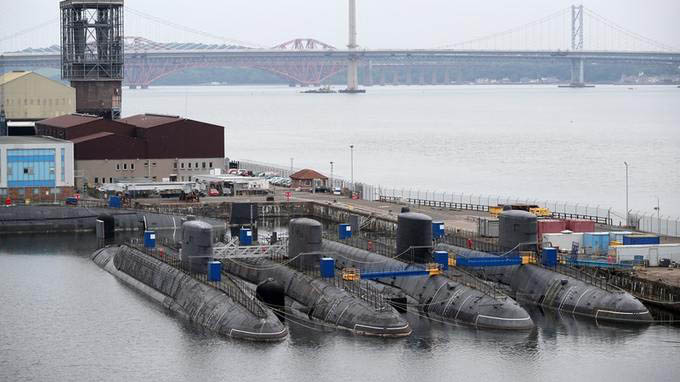
A British nuclear submarine has broken the record for the longest patrol at
sea as safety fears grow over the Royal Navy’s ageing fleet. The
Vanguard-class vessel returned to the Faslane naval base in Scotland on
Monday encrusted with barnacles and covered in slime after a gruelling tour
understood to have lasted more than six months.
Naval experts have raised concerns that the long patrols result in immense physical strain on the vessels and take a psychological toll on the crews. The UK has four
Vanguard-class submarines, which are armed with up to eight Trident
ballistic missiles carrying Britain’s nuclear warheads. At least one
submarine is on patrol at all times to maintain a continuous at-sea
deterrent. The fleet has been effectively reduced to two functioning
vessels, HMS Vigilant and HMS Vengeance, owing to repair works on the other
two.
Times 12th Sept 2023
1 This Month





PLEASE OPPOSE HR 8255 AND S.3639 – bills would accelerate satellite deployment, with no environmental review or safeguards – https://ncstd5li.quorum.us/campaign/169331/
To see nuclear-related stories in greater depth and intensity – go to https://nuclearinformation.wordpress.com
-
Archives
- October 2026 (29)
- September 2026 (339)
- August 2026 (330)
- July 2026 (355)
- June 2026 (287)
- May 2026 (306)
- April 2026 (356)
- March 2026 (251)
- February 2026 (267)
- January 2026 (308)
- December 2025 (358)
- November 2025 (359)
-
Categories
- 1
- 1 NUCLEAR ISSUES
- business and costs
- climate change
- culture and arts
- ENERGY
- environment
- health
- history
- indigenous issues
- Legal
- marketing of nuclear
- media
- opposition to nuclear
- PERSONAL STORIES
- politics
- politics international
- Religion and ethics
- safety
- secrets,lies and civil liberties
- spinbuster
- technology
- Uranium
- wastes
- weapons and war
- Women
- 2 WORLD
- ACTION
- AFRICA
- Atrocities
- AUSTRALIA
- Christina's notes
- Christina's themes
- culture and arts
- Events
- Fuk 2022
- Fuk 2023
- Fukushima 2017
- Fukushima 2018
- fukushima 2019
- Fukushima 2020
- Fukushima 2021
- general
- global warming
- Humour (God we need it)
- Nuclear
- RARE EARTHS
- Reference
- resources – print
- Resources -audiovicual
- Weekly Newsletter
- World
- World Nuclear
- YouTube
-
RSS
Entries RSS
Comments RSS

