Crackdown on nuclear firm after cyber security ‘shortfalls’

“Cyber attacks threaten the security of nuclear facilities by compromising command and control systems and damaging safety, security and emergency responses.”
“Rapidly spreading computer viruses and worms can infect instrument systems and corrupt files.
The Ferret Rob Edwards, October 18, 2023
A multinational nuclear power company has been hit by an official crackdown because of cyber security failures that critics warned were a “very real and present danger”.
Oversight of EDF Energy by the UK Government’s safety watchdog, the Office for Nuclear Regulation, has been “significantly enhanced” to combat “shortfalls” in defences against digital attacks. This means more inspections and increased scrutiny of EDF’s cyber security.
EDF is a French government company that runs one nuclear power station in Scotland, at Torness in East Lothian, and four in England. It is also building a new nuclear station at Hinkley Point in Somerset.
Campaigners described EDF’s failure to properly protect its nuclear operations from “potentially dangerous cyber attacks” as “incomprehensible”. Nuclear plants were “vulnerable” to computer viruses that could threaten safety, they said……….
No details of EDF’s cyber security failings have been released for fear of helping would-be hackers. Cyber attacks are on the increase, with many organisations – such as the Scottish Environment Protection Agency – severely impacted.
The Times reported in 2017 that insecure passwords used by EDF nuclear managers had been found in two lists of stolen credentials traded on Russian hacking sites. According to The Telegraph in 2019, UK government intelligence experts had been called in after a cyber attack on an unnamed nuclear power company, suspected to be EDF.
The Ferret revealed in March 2023 that the police force tasked with guarding UK nuclear plants reported 37 security breaches in 2021-22, the highest for eight years. In August we reported that the Ministry of Defence’s nuclear managers had recorded 113 “security concerns” since 2017-18………………………………………………..
Nuclear plants ‘vulnerable’ to cyber attack
Dr Paul Dorfman, a nuclear critic and visiting fellow at the science policy research unit in the University of Sussex, highlighted concerns expressed by the UN’s International Atomic Energy Agency (IAEA) about the growing threats posed by cyber attacks.
Nuclear power plants are “vulnerable,” Dorfman said. “Cyber attacks threaten the security of nuclear facilities by compromising command and control systems and damaging safety, security and emergency responses.”
He added: “Rapidly spreading computer viruses and worms can infect instrument systems and corrupt files. EDF’s persisting failure to prepare for the very real and present danger of cyber attack on nuclear facilities is, quite simply, incomprehensible.”
Pete Roche, a consultant and anti-nuclear campaigner based in Edinburgh, pointed out that the Torness nuclear station was due to keep operating until 2028 despite cracks spreading in its graphite core.
“We need an operating company which can give meticulous attention to detail,” he said. “These revelations about cyber security seem to indicate that EDF is not capable of doing that.” …………………………………………………………………more https://theferret.scot/cyber-security-nuclear-security-crackdown/ #nuclear #antinuclear #nuclearfree #NoNukes
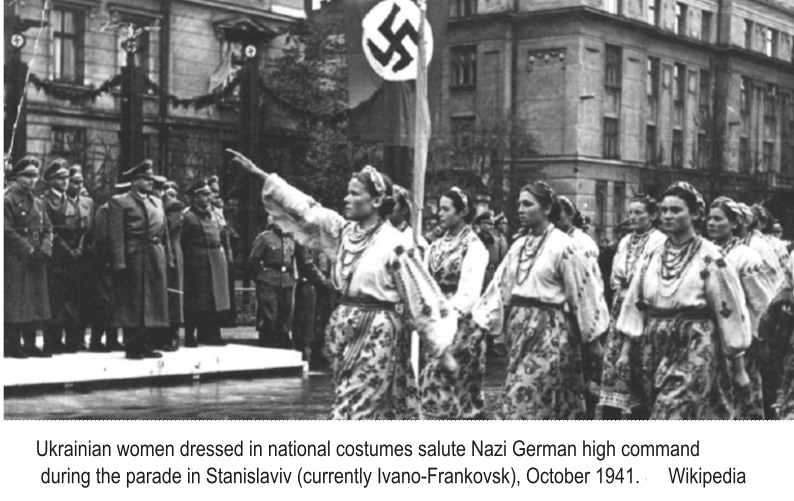
Declassified Soviet files reveal horror crimes of Ukrainian Nazi collaborators
https://www.rt.com/russia/584980-kgb-documents-ukrainian-nazis/ 16 Oct 23
Nationalists began ethnic cleansing of Jews during WWII, even before German occupation began, documents show
RT has obtained a trove of declassified KGB documents, highlighting crimes committed by Ukrainian nationalists in Soviet territories occupied by Nazi Germany during WWII. The files include witness accounts of people who survived ethnic cleansing, as well as testimonies of Ukrainian collaborators captured by the Soviet domestic intelligence, then known as the NKVD.
Large swaths of present-day Ukraine fell under Nazi occupation in summer 1941 as German troops advanced deep into the Soviet Union. In fact, attacks on ethnic Jews and Poles, as well as local communists, began immediately as Soviet troops withdrew.
“In the first hours following the retreat of the Bolsheviks, the Ukrainian population has demonstrated commendable activity against Jews,” a status report from the Gestapo, Nazi Germany’s secret police, dated July 16, 1941, reads.
Said “commendable activities” involved burning down a synagogue in the western Ukrainian city of Dobromyl and the murder of some 50 Jews by an “angry crowd” in Sambor. In Sokal, the help of local “trustworthy Ukrainians” allowed Nazis to find and exterminate some 183 “communist Jews.” Moreover, Ukrainian nationalists rounded up and brutally abused around 1,000 Jews in Lvov, subsequently putting them into a local prison, with the facility and the ‘inmates’ eventually taken over by the Germans, according to the status report.
With the German occupation regime properly established, the ethnic cleansing process was streamlined, with the so-called Ukrainian Auxiliary Police, created by the Nazis in August 1941, playing a very active role in it. According to the testimony of the Ukrainian police commander in Belya Tserkov, a major city in the Kiev region, Mikhail Tomasevish, members of his unit were so eager to kill Jews that they acted even beyond orders given by their Nazi masters. Namely, the local police secretary took pleasure in “questioning” arrested Jews, beating them with a rubber tube, and freely taking them “away” afterwards, with none of the detained ever returning to the police HQ.
Tomasevich led the police unit until 1943, when he fled alongside retreating German forces but ultimately ended up in the NKVD’s custody. While Tomasevich claimed most of the city’s Jews were exterminated before he assumed the post, he admitted partaking, one way or another, in the killing of over 1,000 people. Under his leadership, the police continued to actively search for survivors, using various tricks to lure the remaining Jews in the city to their deaths.
“To identify hiding persons of Jewish nationality, the [German field] gendarmerie, through the [Ukrainian] police, organized so-called traps, i.e., it was announced throughout the city that henceforth Jews would be allowed to live freely, but only in select houses,” Tomasevich testified.
“I put all the Jews who believed that and settled in the houses on a special register, a special folder of cases, titled ‘Yids’ [a derogatory term for ‘Jews’], was opened,” he explained, adding that when the flow of Jews willing to settle in the houses waned, all of them, some 50 people, were detained and killed “around January or February 1942.”
Civilian Ukrainian authorities, established under German occupation, have actively contributed to ethnic cleansings as well. For instance, according to an indictment in a 1944 case about Nazi crimes committed in the city of Sarny and its vicinity, local Ukrainian mayor Marinyuk directly facilitated the extermination of the entire local Jewish population in August 1942.
Some 13,000 people were gathered at a local concentration camp, guarded by field gendarmerie and Ukrainian police, under the pretext of being relocated for “work” in Germany. Instead, the Jews ended up before firing squads, with children thrown into the death pits and buried alive. Only some 40–50 people managed to escape the massacre, with Ukrainian nationalist units in pursuit, and those who managed to capture escapees were awarded a sack of salt.
Ukraine’s counteroffensive is over – Moscow

Russia is opposed not by the armed forces of Ukraine, whose resources are almost exhausted, but by the collective military machine of the NATO countries and their combined defense industry,
https://www.rt.com/russia/584853-ukraine-offensive-failed-nebenzia/ 16 Oct 23
Kiev has achieved nothing and Russian troops have now taken the initiative, top diplomat says
The four-month “counteroffensive” by Ukrainian forces has failed to reach any of its objectives, the Russian ambassador to the United Nations, Vassily Nebenzia, told the Security Council on Friday.
“For several days now, Russian troops have switched to combat operations, practically along the entire front line. Therefore, we can consider the so-called Ukrainian counteroffensive formally over,” Nebenzia said.
According to the Russian envoy, four months of Ukrainian attacks resulted only in “hundreds of units of destroyed Western equipment” and “tens of thousands of lives of those conscripted by the Kiev regime, most of whom did not want to fight.” Some of the lucky ones surrendered and stayed alive, Nebenzia added.
Ukraine’s casualties have amounted to “over 90,000 people,” 557 tanks and 1,900 armored vehicles, Russian President Vladimir Putin revealed last week at the Valdai Discussion Club in Sochi.
Instead of putting an end to the “massacre” of Ukrainians on the frontline, the West “continues to feed them weapons, like a drug to an addict, thus prolonging his agony,” Nebenzia told the UN Security Council.
“Let me emphasize that Russia is opposed not by the armed forces of Ukraine, whose resources are almost exhausted, but by the collective military machine of the NATO countries and their combined defense industry,” the Russian envoy added.
The cynicism of our former Western partners is simply amazing,” he said, bringing up the recent statement of Dutch Defense Minister Kajsa Ollongren that arming Ukraine is “a very cheap way” to confront Russia.
A Ukraine that lives in peace with its neighbors and respects the rights of all of its citizens “had and still has a future,” the Russian envoy concluded. “The criminal neo-Nazi regime of [Vladimir] Zelensky does not.”
The head of Ukraine’s military intelligence, Kirill Budanov, admitted on Thursday that the offensive wasn’t just “behind schedule” but “off the schedule entirely,” adding that the explanation for that is classified.
Fukushima plant water release: Russia follows China, suspends all Japanese seafood imports
WION News, Moscow, Russia Edited By: Srishti Singh Sisodia Oct 16, 2023,
Russia on Monday (Oct 16) suspended all Japanese seafood imports in the aftermath of Tokyo’s release of wastewater from the Fukushima nuclear plant.
Previously, China had suspended the imports, saying that Tokyo has not proved the authenticity and accuracy of the nuclear wastewater data, nor that the ocean discharge of the water is harmless to the marine environment and human health.
China was Japan’s biggest market for fish, accounting for more than $500 million worth of exports in 2022.
Japan recently released treated radioactive water into the sea from its defunct nuclear reactor in Fukushima after the International Atomic Energy Agency approved the plan. ………………………………………………
What did Russia say?
Ever since it released the treated water, Japan has faced the wrath of some nations and a number of environmentalists.
Japan has also criticised Russia for its invasion of Ukraine, while Tokyo’s relations with Beijing, which has deepened ties with Moscow, have worsened.
As reported by the news agency AFP, Rosselkhoznadzor, Russia’s body responsible for regulating agriculture products, said that as a “precautionary measure”, it was “joining China’s provisional restrictive measures on the import of fish and seafood products from Japan as of October 16, 2023”.
It added that the restrictions would remain in place “until the necessary exhaustive information to confirm the safety of seafood produce … is forthcoming”. https://www.wionews.com/world/fukushima-nuclear-plant-like-china-russia-suspends-all-japanese-seafood-imports-647527
Zelensky orders reporters to keep silent about corruption – Ukrainian media.

https://www.rt.com/russia/584929-ukraine-gags-media-corruption/ 16 Oct 23
The Ukrainian president reportedly told journalists not to mention the issue until the end of the Russia-Ukraine conflict
President Vladimir Zelensky has allegedly ordered Ukrainian journalists to avoid reporting on corruption, the editor-in-chief of the Zerkalo Nedeli (‘Mirror of the Week’) news outlet has claimed.
The Ukrainian president told journalists not to mention the issue until the end of the Russia-Ukraine conflict, according to a leading Kievb outlet.
Speaking at the National Media Talk 2023, Yulia Mostovaya said that she had learned of Zelensky’s demand from colleagues who had attended an off-the-record meeting with him.
The president reportedly made the request after the Ukrainian press published reports about inflated food prices paid by the country’s armed forces.
According to Ukrainian media reports, including Zerkalo Nedeli, the Defense Ministry had been buying food and clothing for its service members at prices two to three times higher than the market price. For example, the ministry paid up to 17 hryvnia ($0.47) for a single egg and 22 hryvnia ($0.60) for a kilogram of potatoes, while the average prices for those goods at stores in Kiev at the time were about seven hryvnia ($0.19) and eight hryvnia ($0.22), respectively.
Mostovaya stated that Zelensky’s request to avoid the topic of corruption in media publications was something the Ukrainian press may have considered if Zelensky had presented it in a “balanced manner” and explained that reporting on such issues could affect Ukraine’s battlefield capabilities.
“We would accept these conditions if the president had said: ‘Here is a person. Here’s his phone number. If you have substantiated facts, please provide them to this person, he will immediately pick up the phone. And give us a week to respond. If there is no reaction within a week, send it to print.’”
However, no such proposal was put forward by Zelensky, Mostovaya claimed, noting that instead the president told reporters to “remain silent until victory.”
“If we remain silent, there will be no victory,” the editor-in-chief said.
The issue of corruption in Ukraine has repeatedly been brought up by journalists and officials, both within the country and in the West.
Last week, the former president of the European Commission, Jean-Claude Juncker, stated that Ukraine will likely be unable to join the EU anytime soon because it is “corrupt at all levels of society.” He also urged Brussels not to make any “false promises” to the Ukrainian people who are already “up to their neck in suffering.”
Ukraine has for years been seen as among the most corrupt countries in Europe and was ranked 116th out of 180 in Transparency International’s Corruption Perception Index for 2022. #Ukraine
Poland’s $40 billion plan for 2 nuclear reactors, built by 2043, (hopefully)

US and Polish officials have signed an agreement to go ahead with the construction of Poland’s first nuclear power plant, under the Polish government’s policy to reduce its dependence on fossil fuels.
The Polish state-owned utility Polskie Elektrownie Jadrowe, PEJ, which is charged with overseeing the country’s nuclear programme, signed the agreement with a consortium of Westinghouse and Bechtel. The plant will be located about 280 km from Poland’s border with Germany, which recently shut down its last remaining nuclear reactors in line with its own national policy, and in 2022 the four German states closest to Poland said they were opposed to the Polish plan. There has also been some opposition to the plan within Poland on the grounds that the initial cost is prohibitive, and construction takes too long, but the opposition has not achieved any decisive results to date.
The current plan is for Poland to spend $40 billion on two nuclear plants, each with three reactors. The construction programme will come to a close in 2043. PEJ – a special purpose vehicle 100% owned by the State Treasury – applied to the ministry on 13 April for a decision-in-principle. The application included a description of project characteristics, indicating the maximum total installed capacity, the planned operating period and details of the Westinghouse AP1000 technology proposed for construction of the plant. In July the ministry issued a decision-in-principle, enabling the investor, PEJ, to apply for a number of further administrative decisions, including a siting decision and subsequently the construction licence………..
IAEA: Zaporizhzhia nuclear plant to move second reactor into hot shutdown
Y! News, Abbey Fenbert, Sat, October 14, 2023
The Russian-occupied Zaporizhzhia Nuclear Power Plant (ZNPP) intends to transition a second reactor into hot shutdown, the International Atomic Energy Agency (IAEA) reported on Oct. 13.
IAEA Director General Rafael Mariano Grossi said authorities at the plant informed the agency they were beginning to move reactor 5 from cold to hot shutdown in order to provide warm water and heating for Enerhodar ahead of the winter season.
Previously, only one unit, reactor 4, was in hot shutdown mode. The IAEA has said that for safety purposes, all units at the nuclear plant should be kept in cold shutdown.
The agency has strongly recommended that the ZNPP find an external source of steam generation. The IAEA experts were told that the plant is looking into purchasing an external steam generator, but that “installation of this equipment is not expected until the first part of 2024, possibly not until after the end of the heating season.”
Occupying authorities at the plant did not tell IAEA inspectors how long unit 5 would remain in hot shutdown. They also said there were no plans to transfer addition units from cold to hot shutdown…………………….. https://news.yahoo.com/iaea-zaporizhzhia-nuclear-plant-move-010453561.html #nuclear #antinuclear #NuclearFree #NoNukes #NuclearPlants
The nuclear dispute driving a wedge between France and Germany
The two nations have opposing ideas about atomic energy, threatening the EU’s transition
away from fossil fuels. France and Germany’s split over nuclear power is a
tale of diverging mindsets fashioned over decades, including since the
Chernobyl disaster in USSR-era Ukraine.
But it has now become a major
faultline in a touchy relationship between Europe’s two biggest economies.
Their stand-off over how to treat nuclear in a series of EU reforms has
consequences for how Europe plans to advance towards cleaner energy. It
will also affect how the bloc secures power supplies as the region weans
itself off Russian gas, and how it provides its industry with affordable
energy to compete with the US and China.
France, which produces two-thirds
of its power from nuclear plants and has plans for more reactors, is
fighting for nuclear technology to be factored into its targets for
reducing emissions and for leeway to use state subsidies to fund the
sector.
For Germany, which closed its last nuclear plants this year and has
been particularly shaken by its former reliance on Russian gas, there’s
concern that a nuclear drive will detract from renewable energy advances.
Berlin is wary that Paris would benefit more than its neighbours if it ends
up being able to guarantee low power prices from its large nuclear output
as a result of new EU rules on electricity markets, people close to talks
between the two countries say.
FT 15th Oct 2023
https://www.ft.com/content/b1dbd7b4-d8b9-45eb-bd18-4976f7c9af5e #nuclear #antinuclear #NuclearFree #NoNukes #NuclearPlants
Fresh stock of iodine tablets for Swiss living near nuclear plants
People living within a 50km radius of Swiss nuclear power plants will receive a fresh stock of iodine tablets over the coming weeks and until next April.
October 13, 2023
The government has purchased 12 million packs of iodine tablets. The budget for the iodine distribution campaign is CHF34 million of which CHF11 million will be financed by the nuclear power plant operators, who will pay CHF 1.22 million a year into government’s general fund from 2021 to 20……………………………………………………. more https://www.swissinfo.ch/eng/business/fresh-stock-of-iodine-tablets-for-swiss-living-near-nuclear-plants/48887374
#nuclear #antinuclear #NuclearFree #NoNukes #NuclearPlants
UK’s old nuclear submarines, dead for over 40 years, and a new plan for turning them into “tin cans and razor blades”.
BABCOCK International want to build a new industrial building at Rosyth
Dockyard for the dismantling of old nuclear submarines. If approved, and a
planning application has gone into Fife Council, the metal waste disposal
facility will go up at the corner of Wood Road and Caledonia Road.
Seven old nuclear subs have been laid up at the yard for decades, Dreadnought has
been there since 1980, longer than it was in service, and last year
councillors were told of a UK Government pledge to “de-nuclearise Rosyth”
by 2035. They were also informed of a world first in removing the most
radioactive waste and the overall aim of cutting up the vessels and turning
them into “tin cans and razor blades”.
Blyth and Blyth, of Edinburgh, have
been appointed by Babcock as civil and structural engineering consultants
for the Rosyth Submarine Dismantling Project and are agents for the
application. The plans say the building would be around 200 square metres
in size and the council are expected to make a decision next month.
Dunfermline Press 16th Oct 2023
https://www.dunfermlinepress.com/news/23853192.rosyth-babcock-plans-new-metal-waste-disposal-building/ #nuclear #antinuclear #NuclearFree #NoNukes #NuclearPlants
Sweden: Vattenfall going too slow on developing nuclear reactors?
The Swedish government’s key coalition partner is ratcheting up pressure on
Vattenfall AB to expand nuclear power production and says a separate
company could be formed for that purpose if the state-run utility doesn’t
move fast enough.The strategy of the nationalist Sweden Democrats, whose
support is crucial to the country’s three-party government, stems from
their perception that Vattenfall is dragging its heels over expanding the
fleet of reactors. The utility has said it may take a decade or more to get
new units online.
Bloomberg 13th Oct 2023
https://www.bloomberg.com/news/articles/2023-10-13/swedish-nationalists-mull-new-nuclear-firm-to-rival-vattenfall #nuclear #antinuclear #NuclearFree #NoNukes #NuclearPlants
France uses teargas on banned pro-Palestinian rally
By Layli Foroudi and Michel Rose, October 13, 20233
PARIS, Oct 12 (Reuters) – French police used teargas and water cannon to break up a banned rally in support of the Palestinian people in Paris on Thursday, as President Emmanuel Macron urged the French to remain united and refrain from bringing the Israel-Hamas conflict home.
Macron’s interior minister had earlier banned pro-Palestinian protests, saying they were “likely to generate disturbances to public order”.
France is home to Europe’s largest Muslim and Jewish communities. The Middle East conflict has often stoked domestic tensions in the past.
“This event is an earthquake for Israel, the Middle East and beyond,” Macron said in a solemn TV address. “Let’s not pursue at home ideological adventures by imitating or projecting.”
“Let’s not add, through illusions or calculations, domestic divides to international divides,” he said. “The shield of unity will protect us from hatred and excesses.”
Macron said the government had acted to boost police protection of Jewish sites, including schools and synagogues, and that there could be no justification for atrocities……………..
BANNED RALLY
Despite the ban, several hundred pro-Palestinian demonstrators gathered in central Paris in separate groups that police forces sought to keep from merging……….
“We live in a country of civil law, a country where we have the right to take a stand and to demonstrate. (It is unfair) to forbid for one side and to authorise for the other,” said Charlotte Vautier, 29, an employee at a non-profit who took part in the rally…………….
Two pro-Palestinian demonstrations in Paris had already been banned on Thursday for fear of outbursts when interior minister Gerald Darmanin told prefects to ban all pro-Palestinian demonstrations across the country…………more https://www.reuters.com/world/europe/france-bans-pro-palestinian-protests-citing-risk-disturbances-public-order-2023-10-12/
Skills gap and grid connections key hurdles in UK’s nuclear energy ambitions, says Great British Nuclear chair
Skills gap and grid connections key hurdles in UK’s nuclear energy
ambitions, says Great British Nuclear chair. Simon Bowen, chair of Great
British Nuclear, the organisation tasked with delivering the Government’s
long-term nuclear programme, has cited the skills gap and grid connections
as key issues faced by the nuclear energy sector on its road to achieving
Government targets.
Yorkshire Post 12th Oct 2023
https://www.yorkshirepost.co.uk/business/skills-gap-and-grid-connections-key-hurdles-in-uks-nuclear-energy-ambitions-says-great-british-nuclear-chair-4369765 #nuclear #antinuclear #NuclearFree #NoNukes #NuclearPlants
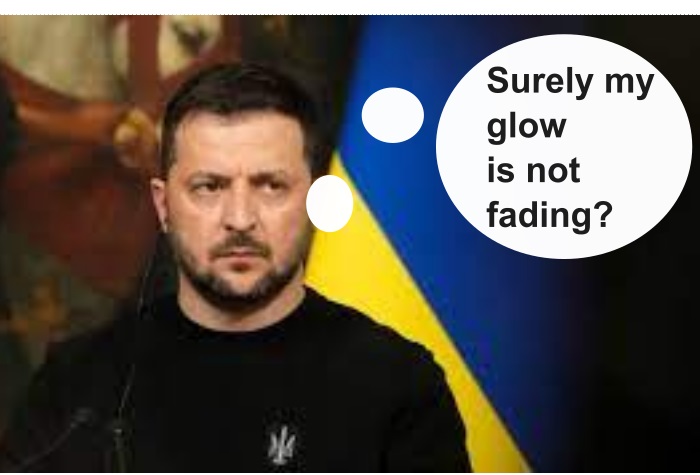
US bails on Ukraine…but doesn’t tell Zelensky.
Walt Zlotow, West Suburban Peace Coalition, Glen Ellyn IL 13 Oct 23
In an astonishing statement at a press briefing Wednesday, National Security Department spokesperson John Kirby admitted the US is running out of interest in weaponizing Ukraine for the long term. Since Ukraine is on US life support to continue fighting their lost cause to recapture Crimea, Donbas and join NATO, it’s clear ‘game over’ for Ukraine looms.
“I think in the immediate term, right now, we can continue to support Ukraine – with the authorities in the appropriations we have. But, you know, we’re … certainly running out of runway.”
Kirby then shifted from the runway metaphor to one even starker. “The US administration had the means to support Ukraine in the near term. But you don’t want to be trying to bake in long-term support when you’re at the end of the rope,” And on the Ukraine funding, we’re coming near to the end of the rope. I mean, today we announced $200 million, and we’ll keep that aid going as long as we can, but it’s not going to be indefinite”
Is Ukraine President Zelensky listening to Kirby’s ominous warning? If he had an iota of understanding of Ukraine’s rapidly deteriorating plight, he’d immediately partner with responsible countries such as Turkey to initiate negotiations with Russia to end the war. He did that 18 months ago, Marcy 31-April 1, 2022, inking a tentative deal with Russia to end the war without losing any territory in Donbas, albeit giving Donbas regional autonomy under Ukraine sovereignty. The agreement would also have ended Ukraine’s self-destructive NATO aspirations.
To sum up: The US provoked the war by championing Ukraine NATO membership and weaponizing their civil war that killed thousands in Donbas. When Russia invaded to prevent both, the US sabotaged every effort to end the war quickly and peaceably, prolonging it with $113 billion in weapons and other aid. Result? Hundreds of thousands of dead Ukrainians with no chance of victory.
It’s not just the US that is “certainly running out of runway” and “coming near to the end of the rope.” The US is moving on to enabling and supplying the ongoing destruction of Gaza. No more runway and no more rope are much more appropriate to the former comedian staring in ‘Tragedy in Ukraine.’ #Ukraine #nuclear #antinuclear #NuclearFree #NoNukes #NuclearPlants
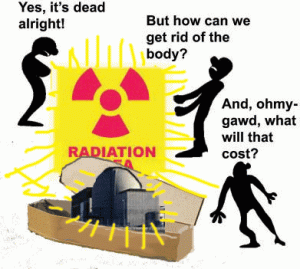
Nuclear reactor that operated for only 9 years will take many (expensive) decades to decommission .
Complete dismantling of experimental French reactor to proceed.
1WNN, 0 October 2023
EDF has been authorised to begin the third and final phase of the decommissioning of the Brennilis nuclear power plant in the Monts d’Arée in Brittany, France. The plant is a unique 75 MWe gas-cooled heavy water reactor that operated between 1972 and 1981.
The first phase of the plant’s decommissioning – the removal of all fuel and the dewatering of its systems – was completed in 1992. The second phase – the dismantling of equipment and all buildings (with the exception of the reactor building) – was completed in 2005.
On 26 September, EDF obtained the “complete dismantling” decree, signed by the Minister of Energy Transition, which makes it possible to launch the dismantling of the reactor, the cleaning up of the civil engineering, the demolition of the reactor building and the final rehabilitation of the Brennilis site………..
The final deconstruction of Brennilis is a complex operation,” noted Cédric Lewandowski, director of the nuclear and thermal fleet at EDF, on LinkedIn. “Indeed, this prototype, unique in France, using heavy water reactor technology, is contained in a concrete cube measuring 20 metres on each side and 1.5 metres thick. Inside, the equipment to be dismantled is tightly packed into a very cramped space.
“To carry out this work on time and to guarantee the protection of personnel, the EDF Deconstruction and Waste Projects Department (DP2D) is working with its industrial partners on innovative tele-operation and robotics solutions.”
The dismantling of the reactor’s peripheral circuits, entrusted by DP2D to Onet Technologies and Cyclife Engineering, will begin later this year.
1 This Month





PLEASE OPPOSE HR 8255 AND S.3639 – bills would accelerate satellite deployment, with no environmental review or safeguards – https://ncstd5li.quorum.us/campaign/169331/
To see nuclear-related stories in greater depth and intensity – go to https://nuclearinformation.wordpress.com
-
Archives
- October 2026 (19)
- September 2026 (339)
- August 2026 (330)
- July 2026 (355)
- June 2026 (287)
- May 2026 (306)
- April 2026 (356)
- March 2026 (251)
- February 2026 (267)
- January 2026 (308)
- December 2025 (358)
- November 2025 (359)
-
Categories
- 1
- 1 NUCLEAR ISSUES
- business and costs
- climate change
- culture and arts
- ENERGY
- environment
- health
- history
- indigenous issues
- Legal
- marketing of nuclear
- media
- opposition to nuclear
- PERSONAL STORIES
- politics
- politics international
- Religion and ethics
- safety
- secrets,lies and civil liberties
- spinbuster
- technology
- Uranium
- wastes
- weapons and war
- Women
- 2 WORLD
- ACTION
- AFRICA
- Atrocities
- AUSTRALIA
- Christina's notes
- Christina's themes
- culture and arts
- Events
- Fuk 2022
- Fuk 2023
- Fukushima 2017
- Fukushima 2018
- fukushima 2019
- Fukushima 2020
- Fukushima 2021
- general
- global warming
- Humour (God we need it)
- Nuclear
- RARE EARTHS
- Reference
- resources – print
- Resources -audiovicual
- Weekly Newsletter
- World
- World Nuclear
- YouTube
-
RSS
Entries RSS
Comments RSS

