Czech Republic, France and others will use “Declaration to Triple Nuclear Energy” to push for EU funding to the nuclear industry
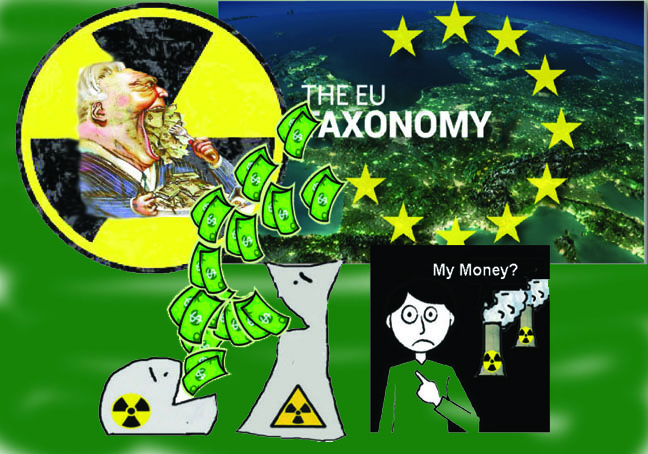
Edvard Sequens, Calla, Czech Nuclear Republic 20 Nov 23
“Declaration to Triple Nuclear Energy” – The Czech Government had it on
the agenda this week, saying that they wanted to join in. Supporting
countries include the Czech Republic, USA, France, Korea, Sweden, UK and
Ukraine (more countries are expected to join).
Substantively, this is nonsense, and the declarations adopted at COP
meetings are often only formal. But I expect that the nuclear alliance
of European countries will use the declaration to press for a
redirection of direct support from the European budget to new nuclear
projects. This is, after all, a long-term goal of the Czech political
representation. Step by step – Recognition of nuclear energy as a tool
to achieve European climate goals – Inclusion in the taxonomy –
Possibility of public support for nuclear energy by individual states
without the need to approve exemptions – Direct financial support – …
Finland extends nuclear reactor outage, pushing up power price
November 20, 2023 —by Essi Lehto and Nora Buli for Reuters
HELSINKI, Nov 20 (Reuters) – Finnish power company TVO said on Monday it had extended an outage at Olkiluoto 3, Europe’s largest nuclear power generator, while it undertakes repairs, likely boosting electricity prices.
The 1,600 megawatts (MW) unit, known as OL3, on Sunday suffered an unexpected outage due to a turbine problem, TVO and Nordic power bourse Nord Pool said.
“We are looking into a fault on the turbine side and when we find out what it is, we can say what caused it and when we can return to electricity production,” said a TVO spokesperson.
“We will issue a statement as soon as we know more.”
The outage was expected to drive up short-term power prices in Finland and the Nordic region, an LSEG market analyst said.
TVO had initially predicted a return to full production capacity on Monday morning, but in a regulatory filing said it was instead aiming for a partial restart to take place on Tuesday…………………… https://www.nasdaq.com/articles/finland-extends-nuclear-reactor-outage-pushing-up-power-price
—
UK’s Foreign Secretary urged to send observers to nuclear ban meeting in New York
The Second Meeting of the States Parties to the Treaty on the Prohibition of Nuclear Weapons will be held at the United Nations in New York between 27 November and 1 December.
The Treaty, usually referred to as the TPNW or Ban Treaty, entered international law in January 2021 after an intensive campaign championed by the International Campaign to Abolish Nuclear Weapons, a global coalition of civil society and faith groups, Hibakusha (atomic bomb and test survivors), scientists, and academics. In total there are 661 partner organisations in 110 countries within ICAN, amongst them are the UK/Ireland Nuclear Free Local Authorities and Mayors for Peace, of which NFLA founder Manchester is a Vice-Presidential and Executive city. ICAN won the Nobel Peace Prize for its work.
First opened for signature in July 2017, the TPNW now has 93 signatory states, of which 69 have taken the final step of ratifying their absolute adherence to it through their national parliaments.
The Treaty obliges signatory states not to ‘deploy, develop, test, produce, acquire, possess, stockpile, use or threaten to use nuclear weapons’ or assist other states to do so. In addition, and importantly for the UK and the other nuclear weapons states, the treaty contains obligations placed upon signatories ‘to provide adequate assistance to individuals affected by the use or testing of nuclear weapons, as well as to take necessary and appropriate measure of environmental remediation in areas under its jurisdiction or control contaminated as a result of activities related to the testing or use of nuclear weapons’.
Unfortunately, none of the nine nuclear weapon armed states (the USA, Russia, France, UK, China, India, Pakistan, Israel and North Korea), or their allies who choose to shelter under their supposed ‘nuclear umbrella’, have chosen to sign the Treaty, and in each of the nine states campaigners are seeking to influence government ministers to at least engage with this important international peace initiative by authorising observers to attend the second meeting in progress.
Norway and Germany have recently chosen to do so and now the Nuclear Free Local Authorities have joined the United Nations Association – UK and co-campaigners in writing to Britain’s new Foreign Secretary urging him to let Britain follow their lead. Campaigners also want the UK Government to acknowledge the ongoing harm caused to Indigenous people and their environments by the conduct of British atomic and nuclear weapons tests in Australia, in the Pacific and in the USA, and to use the meeting to listen to the testimony of representatives from Kiribati, formerly Christmas Island.
Councillor Lawrence O’Neill, Chair of the UK/Ireland Nuclear Free Local Authorities, explained why he was so determined to endorse the joint letter on behalf of the NFLAs:
“The UK Government claims to be committed, alongside the USA, Russia, France, and China, to achieving nuclear disarmament through the Non-Proliferation Treaty, yet in over fifty years this has achieved nothing. The reality is that India, Israel, Pakistan and North Korea continue to operate as nuclear weapon states outside of the NPT and we now live in a world where the nuclear powers continue to invest in their frightful nuclear arsenals, where the use of nuclear weapons has being threatened in Ukraine and Gaza, and where the Doomsday Clock hovers at 90 seconds to midnight!
“The world needs something to bring us back from the abyss – and the Ban Treaty represents that hope. Half of the United Nations have so far signed up to it and the NFLAs want the other half to do so. Seeing the UK attend the New York meeting as an observer and listen to the testimony of the awful impact of nuclear weapons testing in Kiribati would be the first sign that our government is serious about achieving nuclear disarmament and righting the wrongs that we as a nation have inflicted on the Kiribati people.”
UK MPs say that Wylfa big nuclear power project should go ahead, locals not so sure
Wylfa should be the next site for a nuclear power station, according to
politicians in Westminster. The recommendation was made my MPs and Peers on
the Cross-Party Parliamentary Group on Nuclear Energy. It said choosing the
site on Ynys Môn was key if the UK Government is to meet its target of
large-scale nuclear power stations producing 24 gigawatts of energy. The
group said the Conservative-led government in Westminster must give the
site its backing during this Parliament and start negotiations as soon as
possible in order to meet that ambition. A report produced by the
cross-party group of politicians described Wylfa as the “best site in
Europe for large-scale nuclear.”
There has long been talk about the
proposed project in north Wales, which the parliamentary group argues would
create high-quality jobs on Ynys Môn. That is disputed by local campaign
group People Against Wylfa-B. It said claims over the number of jobs
possibly created are exaggerated. The project has been a source of heated
debate from its inception more than a decade ago.
ITV 17th Nov 2023
EU media names member states against Ukrainian membership
Rt.com 19 Nov 23
Austria and Hungary are among the bloc’s members expected to impede Kiev’s European integration
Several EU member states are likely to resist the proposed accession of Ukraine to the union, media outlet EUObserver has reported, citing an unnamed diplomat.
Kiev’s possible integration into the European bloc is set to be discussed by the 27 EU heads of government at a summit in Brussels in December, after the European Commission recommended this month that integration discussions should begin. But while the European Council is expected to back the plan, signs indicate that the process may receive pushback from several key member states, EUObserver said in a report on Thursday.
“For sure, Austria will be obstructive [to Ukraine’s integration], but it will hide behind Hungary,” the publication said, citing comment from the anonymous EU diplomat. “Despite its new rhetoric, France doesn’t really want Ukraine in the EU and Germany is playing a cynical game.”……………………………………
EU leaders will decide at the summit in Brussels on December 14 and 15 whether Ukraine should be allowed to hold formal membership talks. https://www.rt.com/news/587553-ukraine-eu-membership-opposition/
Greenpeace installs radiation sensors in Ukraine and calls for EU sanctionsagainst Rosatom.

Greenpeace Germany, Greenpeace Central and Eastern Europe,
and Ukrainian environmental group SaveDnipro have installed sensors to
provide vital information on radiation levels in Ukraine in the event of
major nuclear contamination.
Following a visit to Chornobyl, Zaporizhzhia
and other frontline regions in southern Ukraine, Greenpeace and SaveDnipro
installed sensors on schools, hospitals and nuclear sites which aim to
provide early warning of increasing gamma radiation in case of another
nuclear disaster in Ukraine.
Greenpeace 17th Nov 2023
https://www.greenpeace.org/eu-unit/issues/climate-energy/46835/greenpeace-installs-radiation-sensors-in-ukraine-and-calls-for-eu-sanctions-against-rosatom/
Chernobyl, site of world’s worst nuclear disaster, could soon be home to an exciting new project: ‘Tolerable exposure levels for limited periods of time’
Jeremiah Budin, November 20, 2023 , https://news.yahoo.com/chernobyl-world-worst-nuclear-disaster-213000130.html
Chernobyl, the site of the world’s most well-known nuclear disaster, has been essentially abandoned since the infamous reactor meltdown of 1986 — with good reason, as the site has been contaminated by radiation.
Nonetheless, Ukraine now plans to give Chernobyl a makeover that will have it generate power once again. But this time, it’s going to be a massive wind farm.
The current plan, according to a report from Popular Mechanics, is to turn Chernobyl into a one-gigawatt wind farm, which would be one of the largest in Europe. At full capacity, the wind farm could power up to 800,000 homes in nearby Kyiv, Ukraine’s capital, according to the report.
As for whether it will actually be safe for workers to spend time in the radiated zone, the answers are somewhat unclear. According to the International Atomic Energy Agency, there is still radioactive material in the atmosphere, but it exists at “tolerable exposure levels for limited periods of time.”
However, there were also reports of Russian soldiers experiencing radiation sickness as recently as last year after digging into the dirt near the power plant. Russian forces seized the Chernobyl site during its invasion of Ukraine and held it for several weeks before abandoning it.
The Ukrainian government and Notus Energy, the German company that has been brought on to build out the project, are reportedly still assessing how to move forward safely. While there are certainly concerns around the projects, the Chernobyl site also comes with big upsides, as there is already a lot of power plant infrastructure in place. Furthermore, no residents will be displaced by the project, as the radiation zone is still basically a ghost town.
There is also a nice symmetry to the site of one of the world’s worst-ever power-related disasters being rehabilitated into a modern power plant that can produce clean, renewable energy that allows Ukraine to transition away from harmful dirty energy sources.
It could “become a symbol of clean, climate-friendly energy, providing Kyiv with green electricity,” said Oleksandr Krasnolutskyi, Ukraine’s deputy ecology minister.
The Sir John Armitt interview: ‘I’m not sure the government is really serious about nuclear’.
At the age of 77 and with the successful delivery
of the Olympics under his belt, Sir John Armitt is not one to pull his
punches. Prime Minister Rishi Sunak was wrong to cancel HS2 in the way that
he did, is daft to sell off the project’s land almost certainly at a
loss, is not serious about nuclear power, has misjudged renewable energy
and has imperilled the UK’s climate change targets, says the country’s
infrastructure tsar.
And that’s not even the full charge sheet. The
National Infrastructure Commission (NIC), which Sir Armitt chairs, has just
published their latest assessment on major long-term challenges, which
includes a series of bold policy recommendations directed to the
government, like shutting down Britain’s gas network and spending
billions to roll out heat pumps.
Nuclear is another area where Sir Armitt
– who worked on delivering the Sizewell B station – believes the
government needs to act faster: “At the moment, we’re not making any
progress really on Sizewell C, there is no deal being done with EDF… so
we don’t see nuclear as really having a significant part to play in any
new stations other than Hinkley before 2035. “I would say I’m not sure
the government’s really serious about nuclear.” To his mind, it is a
commercial deal, and – if you were serious – you would “sit down and
thrash something out”, not “leave it to drift”.
Politics Home 19th Nov 2023
Exposure to CT Radiation and Risk of Blood Cancers in Young Patients
By The ASCO Post Staff, 11/14/2023
Investigators may have uncovered an association between exposure to computed tomography (CT) radiation in young patients and an increased risk of hematologic malignancies, according to a recent study published by Bosch de Basea Gomez et al in Nature Medicine. These recent findings highlighted the significance of continuing to apply strict radiologic protection measures in young patients.
Background
Currently, more than 1 million young patients in Europe undergo CT scans each year. The impact of these scans in patient management—including diagnostic efficacy, treatment planning, and disease follow-up—is generally considered positive. However, the extensive use of this procedure in recent decades has raised concerns in the medical and scientific community about the potential cancer risks associated with exposure to ionizing radiation, particularly in young patients.
“The exposure associated with CT scans is considered low (< 100 mGy), but it is still higher than for other diagnostic procedures,” explained senior study author Elisabeth Cardis, PhD, Head of the Radiation Group at the Barcelona Institute for Global Health.
Previous studies have suggested that young patients exposed to CT scans may have an increased risk of developing cancer, but these studies faced several methodologic limitations.
Study Methods and Results
In the recent multinational EPI-CT study, the investigators—including clinicians, epidemiologists, and dosimetrists from Belgium, Denmark, France, Germany, the Netherlands, Norway, Spain, Sweden, and the United Kingdom—analyzed the data of 984,174 patients who underwent at least one CT scan prior to age 22 to address the limitations of the previous research.
The dose of radiation delivered to the bone marrow was estimated for each of the patients. By linking this information to national cancer registries, the investigators were able to identify those who developed hematologic malignancies after an average follow-up of 7.8 years. However, for those who had CT scans in the early years of the technology, the investigators were able to monitor cancer incidence for more than 20 years after their first scan.
The investigators determined there was a clear correlation between the total radiation doses to the bone marrow from CT scans and the risk of developing both myeloid and lymphoid malignancies. A dose of 100 mGy multiplied the risk of developing a hematologic malginancy by a factor of about three. The investigators suggested that a typical scan today (with an average dose of about 8 mGy) may increase the risk of developing hematologic malignancies by about 16%………………………………………………. more https://ascopost.com/news/november-2023/exposure-to-ct-radiation-and-risk-of-blood-cancers-in-young-patients/
CND mounts legal challenge against US nuclear weapons storage at RAF Lakenheath
https://www.thecanary.co/uk/2023/11/15/raf-lakenheath-cnd-legal-challenge/
The Campaign for Nuclear Disarmament (CND) is legally challenging development works at RAF Lakenheath which it believes are to prepare for stationing nuclear weapons by the US Air Force (USAF).
CND: challenging RAF Lakenheath’s expansion
CND claims the Ministry of Defence (MoD) and West Suffolk Council (West Suffolk) have failed to assess the environmental impact of potentially facilitating the weapons at the Suffolk airbase and has called on the MoD to halt development works at RAF Lakenheath while the necessary screening is carried out.
In letters to the MoD and West Suffolk, CND says that under the Town and Country Planning (General Permitted Development) (England) Order 2017 the development does not have permitted development rights which would allow it to go ahead.
CND points out that works at RAF Lakenheath – rapid airfield damage repair facilities (RADR), a child development centre and a 144-bed dormitory – should have been considered as one whole project for planning purposes. Planning Practice Guidance states: “an application should not be considered in isolation if, in reality, it is an integral part of a more substantial development”.
Separate environmental impact screening assessments have been carried out for the child development centre and the RADR, but none has been done for the 144-bed dormitory, which the MoD has indicated that it believes has permitted development rights. CND says there has been no screening of the dormitory plan by West Suffolk to show it would have no significant environmental impact, and without that screening it cannot have permitted development rights.
One whole project’
In its legal letter to the MoD, CND explains that the development works for the dormitory should not be considered as one of several small projects but as part of one whole project with a major environmental impact that should be assessed as a whole.
t says any assessment must include not only the construction of the buildings comprising the various developments, but also the effects of the use of those buildings, that is the effects of stationing nuclear weapons at RAF Lakenheath.
It says CND does not need to rehearse the potential risks which stationing weapons at RAF Lakenheath entails at a local, national and international level. Those risks extend not only to the risk of weapons being negligently maintained or handled by USAF personnel, but also security risks if malicious actors break into the airbase or the weapons cause the UK to become a target for a nuclear attack.
Ignoring the risks
CND General Secretary Kate Hudson said:
USAF has ploughed ahead with construction at the airbase by purportedly relying on planning rights that assume that the development won’t have significant environmental effects. But in doing that they’ve completely ignored the risks that stationing nuclear weapons would entail and therefore might arguably be operating unlawfully in breach of planning control.
CND is represented by planning law specialist, solicitor Ricardo Gama at law firm Leigh Day.
Gama said:
CND wants to make sure that the development at RAF Lakenheath, and the wider question of whether nuclear weapons should be stationed on UK soil, if that is what the USAF is planning, doesn’t slip under the radar without proper public scrutiny. The planning process is one way for members of the public to make representations on these controversial plans.
Zelensky comments on ‘frozen conflict’ prospects

Zelensky stated that his country would continue fighting until it recaptured all territories within its 1991 borders, despite large swathes now being part of Russia, even if the US withdraws support.
https://www.rt.com/news/587383-zelensky-ukraine-wants-peace-frozen-conflict/ 17 Nov 23
According to the president, though his country has “already lost too many people,” Ukraine cannot afford to even think about freezing the conflict, “however hard it may be.”
“If we want to end the war, we must end it,” he proclaimed, insisting that Russia must be “put in its place,” or else it would strike again later on.
The Ukrainian president told visiting reporters that Kiev has “already lost too many people”
The next generation of Ukrainians, or their offspring, may end up fighting if Ukraine’s conflict with Russia becomes ‘frozen’ at this stage, President Vladimir Zelensky has told a group of visiting journalists in Kiev. He also said his government is working to prevent such an outcome.
The Ukrainian head of state’s latest comments, made on Wednesday, follow an admission by the country’s top military commander, General Valery Zaluzhny, that Kiev and Moscow are locked in a “stalemate,” with neither side apparently in a position to launch a decisive offensive.
Asked about the prospects, Zelensky insisted that “if there is a stalemate and a frozen conflict, we have to honestly say that our children, or our grandchildren, will have to fight” – something Kiev wants to avoid, he added.
According to the president, though his country has “already lost too many people,” Ukraine cannot afford to even think about freezing the conflict, “however hard it may be.”
“If we want to end the war, we must end it,” he proclaimed, insisting that Russia must be “put in its place,” or else it would strike again later on.
In an interview with Reuters last week, Zelensky stated that his country would continue fighting until it recaptured all territories within its 1991 borders, despite large swathes now being part of Russia, even if the US withdraws support. Earlier last week, he claimed that Kiev had a “plan” that would help bring some “results” on the battlefield by the end of the year.
The president’s recent series of statements follow a bombshell article in The Economist by Ukraine’s top military commander, General Valery Zaluzhny earlier this month, in which he conceded that Kiev’s military was unlikely to carry out a “deep and beautiful breakthrough.” The general also said the conflict in its present form could “drag on for years.”
Zaluzhny quickly came under fire from the Zelensky administration, with several media outlets having claimed since the clash that, behind closed doors, Western officials may be pushing Ukraine to finish the conflict, even if that means territorial concessions.
Speaking last Thursday, Kremlin spokesperson Dmitry Peskov insisted that there was no way the Russian military could be defeated, adding that it was not deadlocked, contrary to Zaluzhny’s assessment.
As for the prospects for peace, the Russian leadership has never ruled out talks with Kiev and President Vladimir Putin repeatedly pointed out that it is Ukraine that is unwilling to engage in dialogue. A decree signed by President Zelensky, which bans any such negotiations, is cited by Moscow as evidence of this.
Last month, Former German Chancellor Gerhard Schroeder claimed that, in March 2022, weeks after the outbreak of fighting, the US government wouldn’t allow Kiev to reach a peace agreement with Moscow – a version of events supported by Russian officials.
UK nuclear lobby brainwashing young students, especially women

Science Fair connecting students to a future in nuclear, UK government 17 Nov 23
Nuclear Waste Services (NWS) and Women in Nuclear (WiN UK) hosted an event for young people to promote and showcase career opportunities in the nuclear industry
Around 150 students attended the first ever Nuclear Connection Science Fair in Oxford, hosted by NWS and Women in Nuclear (WiN UK) on 10 November.
The event was an opportunity for young people to learn more about the career prospects in the nuclear sector, and provided the opportunity to interact with successful professionals working in the industry today.
Nuclear Waste Services is part of the Nuclear Decommissioning Authority (NDA) group with a vision and mission that is vitally important to the UK today and for future generations………………………….
Students, teachers, parents and guardians from four secondary schools (Eden Girls Slough, Greyfriars, Didcot Girls and The Abbey) attended the fair in Oxsrad Sports and Leisure Centre in Headington, open to pupils from Year 9 to Sixth Form.
It was an opportunity for students to engage with presentations and have conversations to discover everything they want and need to know about nuclear science, and about the places it could take their future careers.
The event included interactive games and activities with nuclear professionals, talks by key industry figures and a student poster exhibition and prizegiving. Students participated in a poster competition that was opened ahead of the event, with the winners announced on the day. It also provided the opportunity to arrange work experience placements with significant nuclear industry players.
Louise Honeyman, Event Organiser, Co-leader for WiN UK Central England and Business Manager at NWS, said:…………………………………………………………..
The event was a great success, it was fantastic to see so many young people eagerly engaged and keen to learn about a career in the nuclear industry – and we are keen to attract them!
There are a huge range of careers on offer in the sector, looking for a variety of different skill sets. It’s an exciting, expanding and rewarding industry to work in…………………………………………………………..
NWS has an apprenticeship programme, a variety of work experience opportunities and recruits graduates through the NDA group graduate programme. ….. more https://www.gov.uk/government/news/science-fair-connecting-students-to-a-future-in-nuclear
Russia Shuts Down Nuclear Plant Reactor Unit After Malfunction
Nov 16, 2023, https://www.newsweek.com/russia-shuts-down-nuclear-reactor-malfunction-1844413
Russia has reported the shutdown of a unit at a nuclear power plant after turbine blades broke.
Rosenergoatom, which runs Russia’s nuclear power stations, said it was not clear what caused the blades to malfunction at the Leningrad nuclear power plant west of St Petersburg on Sunday.
“The main thing now is to understand the reason for the destruction of the blades. This is a new phenomenon,” Alexander Shutikov, head of Rosenergoatom, told Reuters. Repairs should be completed by December 22, he said.
The unit where the malfunction occurred was built in 2018 with a next-generation VVER 1200, a pressurised water reactor, according to the news agency.
Russia is building units of this type at the Akkuyu nuclear power plant in Turkey. They are also planned for the Paks-2 plant in Hungary. Russia has already supplied such units to Belarus.
The blades that failed were part of a 1,200-megawatt high-speed steam turbine, Shutikov told Reuters.
The turbines are produced by Power Machines, owned by Russian billionaire Alexey Mordashov who was sanctioned by the U.S. and the EU following Russia’s invasion of Ukraine.
Turbines of the same type had operated without problems since 2016 at four power units, Power Machines told Reuters.
The company said it was taking steps to restart the affected unit as soon as possible and working with specialists to investigate the causes. “Based on the results, conclusions will be drawn and compensatory measures will be determined,” the company said.
Newsweek has contacted Rosenergoatom and Power Machines for further comment via email.
Earlier this week, European Commissioner for Energy Kadri Simson said Hungary needed to reduce its reliance on Russian energy because it left the country open to influence from Russia.
Speaking during Politico’s Sustainability Future Week summit on Tuesday, Simson said it was regrettable that Hungary was proceeding with construction of the Paks-2 nuclear reactor. The work is reportedly being financed with a 10-billion euro ($11.3 billion) loan from a Russian state bank.
“Our clear request to them is that like other member states, who are still using Russian technology, that nuclear fleet, they have to prepare a plan how to diversify,” Simson said.
The European Union and other Western leaders have largely shunned Russian President Vladimir Putin, but Hungarian Prime Minister Viktor Orbán held talks with him in October.
Orbán has been keen to maintain ties with Moscow—on which Hungary is highly dependant for natural gas, oil and nuclear fuel—and has been critical of Western sanctions against Russia.
How the United States and its NATO allies sabotaged a peace between Russia and Ukraine.

A Son of the New American Revolution, 14 November 2023 by Larry Johnson
We now know that the United States played the primary role in sabotaging the March 29, 2022 tentative peace agreement between Russia and Ukraine thanks to the recently published article by Hajo Funke and Harald Kujat, HOW THE CHANCE WAS LOST FOR A PEACE SETTLEMENT OF THE UKRAINE WAR — AND THE WEST WANTED TO CONTINUE THE WAR INSTEAD. The United States persuaded its NATO allies that pursuing the war against Russia, using Ukraine as a proxy, offered a legitimate opportunity to destroy Russia. You want a definition of evil? This is it. Instead of helping end the war between Russia and Ukraine, the United States and its NATO puppets condemned hundreds of thousands of Ukrainian soldiers to death in a war with Russia they could not win.
In the course of strong arming Ukraine’s Zelensky into rejecting the peace agreement, the West prepared and launched a propaganda campaign that claimed that Ukrainian military forces defeated the Russian forces and compelled them to retreat. It was a lie. As you will read in the timeline below, Putin ordered the withdrawal of Russian forces starting on April 1, 2022 as a good faith gesture about Russia’s seriousness in complying with the 29 March Istanbul Agreement.
Chalk this up as one more massive war crime by the United States and NATO. They are accessories to murder. I have summarized the timeline presented in the Funke/Kujat article if you do not have time to read it in its entirety. I also am republishing their piece for your convenience. All of the death and destruction experienced in Ukraine and Russia could have been avoided. But the West was intent on dethroning Putin and carving up Russia. Once you understand this point I think you will appreciate that Putin and his Generals are no longer of a mind to give the West the benefit of the doubt. Destroying NATO’s designs on Ukraine is now their chief aim in my view.
March 4, 2022 — Putin and Naftali Bennet speak via phone.
March 5, 2022 — At Putin’s invitation, former Israeli Prime Minister Bennett flew to Moscow. Putin, Bennett said, had made some substantial concessions, in particular, he had renounced his original wartime goal of demilitarizing Ukraine. … .In return, the Ukrainian president agreed to renounce joining NATO. The Ukrainians did not agree to peace because they were not allowed to. They first had to ask the Americans about everything they discussed.”
March 6, 2022 — Bennett and Scholz met in Berlin; on March 7, the United States, the United Kingdom, France, and Germany discussed the issue in a videoconference; on
March 8, 2022 — Macron and Scholz spoke on the phone; on
March 10, 2022 — Ukrainian Foreign Minister Kuleba and Russian Foreign Minister Lavrov met in Ankara; on
March 12, 2022 — Scholz and Zelensky and Scholz and Macron spoke on the phone; and on
March 14, 2022 — Scholz and Erdogan met in Ankara.
March 15-19, 2022 — Only a month after the outbreak of the war, Ukraine and Russia agreed on the broad outlines of a peace settlement. Ukraine promised not to join NATO and not to allow military bases of foreign powers on its territory, while Russia promised in return to recognize Ukraine’s territorial integrity and to withdraw all Russian occupation troops. Special arrangements were made for the Donbas and Crimea.”
March 24, 2022 — NATO decided at a special summit on March 24, 2022, not to support these peace negotiations.
March 27, 2022 — Zelensky defended the results of the Ukrainian-Russian peace negotiations in public before Russian journalists
March 28, 2022 — Putin, as a sign of goodwill and in support of the peace negotiations, declared readiness to withdraw troops from the Kharkov area and the Kiev area
29 March, 2002 — Turkiye’s President Erdogan hosted a Ukrainian-Russian peace conference in Istanbul and an armistice agreement was approved in principle.
April 1, 2022 — Putin orders Russian troops to initiate withdrawal from Kiev and Kharkiv in show of good faith in accordance with the armistice agreed to in Istanbul.
April 5, 2022 — NATO was firm in its position that continuing the war is preferred to a cease-fire and negotiated settlement: “For some in NATO, it’s better for Ukrainians to keep fighting and dying than to achieve a peace that comes too soon or at too high a price for Kiev and the rest of Europe.”
April 6, 2022 — Russia completes withdrawal from Kiev suburbs and Kharkiv.
April 9, 2022 — Boris Johnson arrived unannounced in Kiev and told the Ukrainian president that the West was not ready to end the war.
April 25, 2022 — U.S. Defense Secretary Lloyd Austin said the U.S. wants to use the opportunity to permanently weaken Russia militarily and economically in the wake of the Ukraine war.
April 26, 2022 — Meeting with defense ministers from NATO members and other countries convened by Austin in Ramstein, Rhineland-Palatinate/ Germany, the Pentagon chief declared the military victory of Ukraine as a strategic goal.
April 28, 2022 — According to Britain’s Guardian, PM Johnson “instructed” Ukrainian President Zelensky “not to make any concessions to Putin.”
HOW THE UNITED STATES AND ITS NATO ALLIES SABOTAGED PEACE BETWEEN RUSSIA AND UKRAINE
14 November 2023 by Larry Johnson 127 Comments
FacebookTwitterTelegramEmailShare

We now know that the United States played the primary role in sabotaging the March 29, 2022 tentative peace agreement between Russia and Ukraine thanks to the recently published article by Hajo Funke and Harald Kujat, HOW THE CHANCE WAS LOST FOR A PEACE SETTLEMENT OF THE UKRAINE WAR — AND THE WEST WANTED TO CONTINUE THE WAR INSTEAD. The United States persuaded its NATO allies that pursuing the war against Russia, using Ukraine as a proxy, offered a legitimate opportunity to destroy Russia. You want a definition of evil? This is it. Instead of helping end the war between Russia and Ukraine, the United States and its NATO puppets condemned hundreds of thousands of Ukrainian soldiers to death in a war with Russia they could not win.
In the course of strong arming Ukraine’s Zelensky into rejecting the peace agreement, the West prepared and launched a propaganda campaign that claimed that Ukrainian military forces defeated the Russian forces and compelled them to retreat. It was a lie. As you will read in the timeline below, Putin ordered the withdrawal of Russian forces starting on April 1, 2022 as a good faith gesture about Russia’s seriousness in complying with the 29 March Istanbul Agreement.
Chalk this up as one more massive war crime by the United States and NATO. They are accessories to murder. I have summarized the timeline presented in the Funke/Kujat article if you do not have time to read it in its entirety. I also am republishing their piece for your convenience. All of the death and destruction experienced in Ukraine and Russia could have been avoided. But the West was intent on dethroning Putin and carving up Russia. Once you understand this point I think you will appreciate that Putin and his Generals are no longer of a mind to give the West the benefit of the doubt. Destroying NATO’s designs on Ukraine is now their chief aim in my view.

March 4, 2022 — Putin and Naftali Bennet speak via phone.
March 5, 2022 — At Putin’s invitation, former Israeli Prime Minister Bennett flew to Moscow. Putin, Bennett said, had made some substantial concessions, in particular, he had renounced his original wartime goal of demilitarizing Ukraine. … .In return, the Ukrainian president agreed to renounce joining NATO. The Ukrainians did not agree to peace because they were not allowed to. They first had to ask the Americans about everything they discussed.”
March 6, 2022 — Bennett and Scholz met in Berlin; on March 7, the United States, the United Kingdom, France, and Germany discussed the issue in a videoconference; on
March 8, 2022 — Macron and Scholz spoke on the phone; on
March 10, 2022 — Ukrainian Foreign Minister Kuleba and Russian Foreign Minister Lavrov met in Ankara; on
March 12, 2022 — Scholz and Zelensky and Scholz and Macron spoke on the phone; and on
March 14, 2022 — Scholz and Erdogan met in Ankara.
March 15-19, 2022 — Only a month after the outbreak of the war, Ukraine and Russia agreed on the broad outlines of a peace settlement. Ukraine promised not to join NATO and not to allow military bases of foreign powers on its territory, while Russia promised in return to recognize Ukraine’s territorial integrity and to withdraw all Russian occupation troops. Special arrangements were made for the Donbas and Crimea.”
March 24, 2022 — NATO decided at a special summit on March 24, 2022, not to support these peace negotiations.
March 27, 2022 — Zelensky defended the results of the Ukrainian-Russian peace negotiations in public before Russian journalists
March 28, 2022 — Putin, as a sign of goodwill and in support of the peace negotiations, declared readiness to withdraw troops from the Kharkov area and the Kiev area
29 March, 2002 — Turkiye’s President Erdogan hosted a Ukrainian-Russian peace conference in Istanbul and an armistice agreement was approved in principle.
April 1, 2022 — Putin orders Russian troops to initiate withdrawal from Kiev and Kharkiv in show of good faith in accordance with the armistice agreed to in Istanbul.
April 5, 2022 — NATO was firm in its position that continuing the war is preferred to a cease-fire and negotiated settlement: “For some in NATO, it’s better for Ukrainians to keep fighting and dying than to achieve a peace that comes too soon or at too high a price for Kiev and the rest of Europe.”
April 6, 2022 — Russia completes withdrawal from Kiev suburbs and Kharkiv.
April 9, 2022 — Boris Johnson arrived unannounced in Kiev and told the Ukrainian president that the West was not ready to end the war.
April 25, 2022 — U.S. Defense Secretary Lloyd Austin said the U.S. wants to use the opportunity to permanently weaken Russia militarily and economically in the wake of the Ukraine war.
April 26, 2022 — Meeting with defense ministers from NATO members and other countries convened by Austin in Ramstein, Rhineland-Palatinate/ Germany, the Pentagon chief declared the military victory of Ukraine as a strategic goal.
April 28, 2022 — According to Britain’s Guardian, PM Johnson “instructed” Ukrainian President Zelensky “not to make any concessions to Putin.”
BEGIN FUNKE AND KUJAT ARTICLE
Berlin, October 2023
In March 2022, direct peace negotiations between Ukrainian and Russian delegations and mediation efforts by the then Israeli Prime Minster, Naftali Bennet created a genuine chance for ending the war peacefully only four to five weeks after Russia had invaded Ukraine. However, instead of ending the war through negotiations as Ukrainian President Zelensky and his government appeared to have wanted, he ultimately bowed to pressures from some Western powers to abandon a negotiated solution. Western powers wanted this war to continue in the hope to break Russia. Ukraine’s decision to abandon negotiations may been taken before the discovery of a massacre of civilians in the town of Bucha near Kiev.
In the following is an attempt of a step-by-step reconstruction of the events that led to the peace negotiations in March and their collapse in early April 2022…………………………………………………………………………………………………………………………………………………………………………………………………………………………..
CONCLUSION: MISSED OPPORTUNITY
Based on the publicly available reports and documents, it is not only plain that there was a serious willingness to negotiate on the part of both Ukraine and Russia in March 2022. Apparently, the negotiating parties even agreed on a draft treaty ad referendum. Zelensky and Putin were ready for a bilateral meeting to finalize the outcome of the negotiations. Fact is that the main results of the negotiations were based on a proposal by Ukraine, and Zelenskyy courageously supported them in an interview with Russian journalists on March 27, 2022, even after NATO decided against these peace negotiations. Zelensky had already expressed similar support beforehand in a sign that proves that the intended outcome of the Istanbul negotiations certainly corresponded to Ukrainian interests. This makes the Western intervention, which prevented an early end to the war, even more disastrous for Ukraine. Russia’s responsibility for the attack, which was contrary to international law, is not relativized by the fact that responsibility for the grave consequences that Ukraine’s Western supporters that ensued must also be attributed to the states that demanded the continuation of the war. The war has now reached a stage where further dangerous escalation and an expansion of hostilities can only be prevented by a cease-fire. It may now be the last time that a peaceful resolution through negotiations could be achieved. There are peace proposals from China, the African Union, Brazil, Mexico, Indonesia, and a proposal developed at the invitation of the Vatican as early as June 2022. On 3 October this year, we presented the German Government our own peace proposal that tried to incorporate all other peace proposals made earlier. See Ending the war by a negotiated peace – Legitimate self-defense and the quest for a just and lasting peace are not contradictory HERE.
Since the failed Istanbul negotiations The course of the war and the current extremely critical timing should be reason enough for a responsible world community and UN member states to rethink and press for a ceasefire and peace negotiations. https://sonar21.com/how-the-chance-was-lost-for-a-peace-settlement-of-the-ukraine-war/
The Uzbek nuclear endeavour: Boon or bane for Central Asia?

Eu Reporter, NOVEMBER 13, 2023
In the shadow of the Uzbek-Kazakh border, in a region prone to seismic tremors, Uzbekistan has unveiled plans to construct a nuclear power plant with significant help from Russia. This decision, given Russia’s current war in Ukraine and its resultant sanctions by Western nations, stirs unease and scepticism, writes Alan Kosh in International Policy Digest.
Beyond geopolitical ramifications, there are substantial concerns that this project might disrupt the environmental equilibrium and investment climate throughout Central Asia, further exacerbating regional security tensions. One of the glaring consequences of this alliance is not merely its economic implications but the potential for Uzbekistan to be ensnared in a “strategic dependency” on Russia.
In this geopolitical chessboard, Moscow, already wielding influence through avenues like labour migration, natural gas, and petrochemical products, stands to gain control over nuclear fuel production and the upkeep of the upcoming nuclear facility.
The proposed plant’s location is by Lake Tuzkan, part of the Aydar-Arnasay lake system, a mere 40 kilometres from the Uzbekistan-Kazakhstan border. Alarmingly, Tashkent, a bustling city home to three million residents, is just 140 kilometres away. Experts have voiced concerns over the plant’s positioning without proper windrose calculations and in an earthquake hotspot, where magnitudes can range from 6.0 to 6.5 and even higher.
Furthermore, Uzbekistan’s seismic activity is widespread. Several towns, including Jizzak and settlements near the proposed plant, lie in earthquake-sensitive zones, with some tremors potentially hitting a catastrophic 9 on the Richter scale.
Some posit that the mountainous terrain would shield Uzbekistan from any airborne radioactive emissions in the event of a nuclear disaster. However, the ensuing contaminated water would invariably flow towards the Kazakh plains, infiltrating deep into the earth.
Kazakh ecologist Timur Yeleusizov articulates the anxieties many share: the consequences of potential contamination of water bodies in an accident scenario. “Seismological activity in the area of the selected NPP site raises many questions. Who will be responsible for everything that happens in the event of accidents or leaks? After all, rivers and lakes, including underground streams, will also be contaminated with toxic substances.”………………………………………………………..
Rosatom’s claim regarding the VVER-1200 reactor’s safety post-Fukushima has been challenged by European nuclear safety experts, pointing to significant design and safety flaws. This, coupled with a lack of licensing in Western nations, raises red flags.
Despite public petitions against the nuclear power plant, spearheaded by Uzbek activist Akzam Akhmedbaev, the movement hasn’t gained significant traction. Anvarmirzo Khusainov, a former Uzbek minister turned environmentalist, opines on Russia’s strategic manoeuvring in Central Asia, highlighting the long-term maintenance and security implications of such plants.
…………………………… While Kazakhstan contemplates a national referendum on nuclear energy, Uzbekistan’s decision circumvented public consultation. This sidestepping is concerning, especially given the inherent risks and costs associated with nuclear power.
As the plant’s blueprint progresses, environmental concerns loom large, notably the potential drop in water levels in the Aydar-Arnasay Lake system, crucial for cooling the reactors. Yeleusizov emphasizes the region’s acute water scarcity, arguing that water concerns overshadow energy needs and thus warrant project reconsideration.
Uzbekistan’s nuclear aspirations, set against the backdrop of Central Asia’s quest for unity and peace, present a conundrum. The presence of a Russian-backed nuclear facility amidst escalating global conflicts raises alarms. Wilder Alejandro Sánchez’s contemplative piece, “Does Uzbekistan Need a Nuclear Power Plant?” mirrors these anxieties. As the world teeters on the brink of potential nuclear calamity, the urgency to address these concerns and the associated regional ramifications cannot be understated. https://www.eureporter.co/world/uzbekistan/2023/11/13/the-uzbek-nuclear-endeavor-boon-or-bane-for-central-asia/
1 This Month





PLEASE OPPOSE HR 8255 AND S.3639 – bills would accelerate satellite deployment, with no environmental review or safeguards – https://ncstd5li.quorum.us/campaign/169331/
To see nuclear-related stories in greater depth and intensity – go to https://nuclearinformation.wordpress.com
-
Archives
- October 2026 (19)
- September 2026 (339)
- August 2026 (330)
- July 2026 (355)
- June 2026 (287)
- May 2026 (306)
- April 2026 (356)
- March 2026 (251)
- February 2026 (267)
- January 2026 (308)
- December 2025 (358)
- November 2025 (359)
-
Categories
- 1
- 1 NUCLEAR ISSUES
- business and costs
- climate change
- culture and arts
- ENERGY
- environment
- health
- history
- indigenous issues
- Legal
- marketing of nuclear
- media
- opposition to nuclear
- PERSONAL STORIES
- politics
- politics international
- Religion and ethics
- safety
- secrets,lies and civil liberties
- spinbuster
- technology
- Uranium
- wastes
- weapons and war
- Women
- 2 WORLD
- ACTION
- AFRICA
- Atrocities
- AUSTRALIA
- Christina's notes
- Christina's themes
- culture and arts
- Events
- Fuk 2022
- Fuk 2023
- Fukushima 2017
- Fukushima 2018
- fukushima 2019
- Fukushima 2020
- Fukushima 2021
- general
- global warming
- Humour (God we need it)
- Nuclear
- RARE EARTHS
- Reference
- resources – print
- Resources -audiovicual
- Weekly Newsletter
- World
- World Nuclear
- YouTube
-
RSS
Entries RSS
Comments RSS

