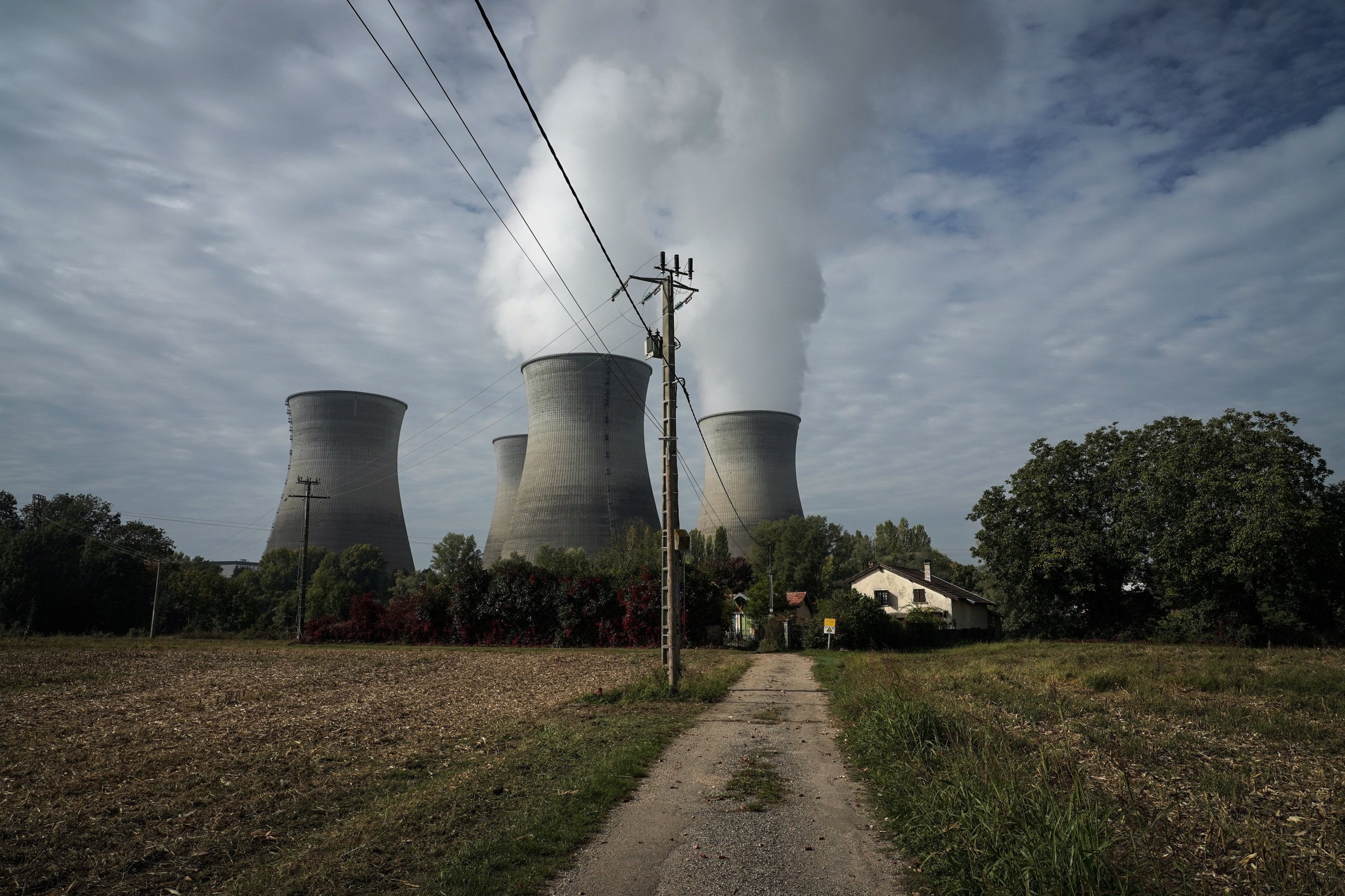
Touting a ‘new age of nuclear fusion’

West Burton, a sprawling site that is also home to a gas-fired station,
has been chosen as the location for a nuclear fusion plant that the
government aims to have in operation by 2040.
It is an ambitious plan.
Fusion has been the next big thing in energy since the 1950s, but it still
faces big technical obstacles to becoming a reality. It also will be a race
against a big field of international rivals.
The largest developed
economies, in particular the United States and Japan, are pouring billions
into fusion research, as are a gaggle of deep-pocketed technology
billionaires.
Before Brexit, Britain was a leading member of a
multinational effort spearheaded by the European Union. The West Burton
plan represents it striking out on its own.
It will not be a small
undertaking. Paul Methven, the executive in charge of the project, says it
is too early to estimate the likely cost, but suggests that the plant and
its associated infrastructure will be of a similar size to Hinkley Point C,
the nuclear power station being built in Somerset by EDF. That scheme’s
latest budget estimate is £33 billion.
Times 7th Jan 2024
France has more grandiose plans for building nuclear reactors, but has no renewable energy targets.
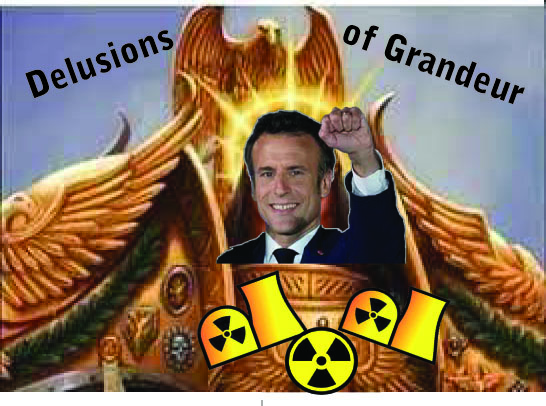
France outstrips plans, to build additional nuclear plants beyond six
DAILY SABAH, BY AGENCE FRANCE-PRESSE – PARIS JAN 07, 2024
France is set to build eight new nuclear plants on top of six already announced, the energy minister has said, arguing more reactors are needed to hit carbon reduction targets.
A draft law set to be presented soon recognizes that “we will need nuclear power beyond the six first European Pressurized Reactors” (EPRs) announced by President Emmanuel Macron in early 2022, Agnes Pannier-Runacher told Sunday’s edition of the weekly newspaper Tribune Dimanche.
The bill will include a further eight plants that had until now been discussed as an “option” by the government, Pannier-Runacher said.
By contrast, the text would not include any targets for renewable energy generation by 2030, remaining “technologically neutral,” she added………………………………………………..
Pannier-Runacher suggested that the construction of even more than 14 nuclear reactors could be raised in talks with lawmakers once the energy bill reaches Parliament.
State energy firm EDF’s next-generation EPR has had a rocky start.
Three are online, one in Finland and two in China, after suffering massive construction delays and cost overruns that have also beset projects in Britain and France.
The first EPR in France, at Flamanville in Normandy, is set to come online for testing in mid-2024, EDF said last month – 17 years after construction started and at a cost of 12.7 billion euros ($13.9 billion), around four times the initial budget of 3.3 billion. more https://www.dailysabah.com/business/energy/france-outstrips-plans-to-build-additional-nuclear-plants-beyond-six
Challenging questions concerning UK’s Geological Disposal Facility (GDF)Test of Public Support.

Nuclear Waste Services (NWS), the division of the taxpayer-funded Nuclear
Decommissioning Authority, charged with identifying a location for a
Geological Disposal Facility (GDF) into which Britain’s legacy and future
high-level radioactive waste will be deposited, has stated that the two
criteria that will determine the location are – the availability of
sufficient ‘suitable’ geology and the consent of a ‘willing
community’.
Three ‘Search Areas’ are known to be under consideration
for the GDF – Theddlethorpe on the East Lincolnshire coast and Mid and
South Copeland on the West coast of Cumbria.
According to the government
and industry guidance that governs the conduct of this investigation,
whether such consent exists will ultimately be determined by a Test of
Public Support amongst the members of the Potential Host Community (PHC).
The timing of the test is down to the Relevant Principal Local Authorities
(RPLAs) – Cumberland Council in Cumbria and Lincolnshire County Council
and East Lindsey District Council in Lincolnshire, but its nature and the
participants in it are determined by the Community Partnerships that have
been established supposedly to provide stakeholder oversight to the
process.
Whether the test is then carried out by the RPLAs, NWS staff or
both is not specified, but if the result is negative, NWS are required to
withdraw the area from further consideration.
NFLA 2nd Jan 2024
UK’s Nuclear Waste Service (NWS) to grant £millions to the 3 Community Partnerships, to seek a site for nuclear waste dump.

In Phase 1, Community Investment Funding of up to £1 million per annum is
made available by Nuclear Waste Services (NWS) to each of the three
Community Partnerships currently engaged in the siting process for a
Geological Disposal Facility (GDF).
Where a Community Partnership / Search
Area is taken forward into Phase 2, involving the commencement of borehole
investigations, this sum will increase to £2.5 million per annum.
A decision on which two Search Areas will be taken forward is anticipated in
2026. The grants can be used to fund projects, schemes or initiatives
benefiting the community of each Search Area that: provide economic
opportunities, enhance the natural and built environment, or improve
community wellbeing. Each Community Partnership can also agree its own
criteria for awards based on local circumstances.
A Freedom of Information
request was submitted to NWS with a short question set which was identical
for each of the Community Partnerships. The responses received from NWS
follow.
NFLA 5th Jan 2024
BBC Panorama to feature RAF Lakenheath nuclear weapons saga- BBC Two on Thursday, January 18
A new BBC Panorama documentary is set to look into the ongoing saga around
nuclear weapons potentially being stored at RAF Lakenheath. Fears have been
mounting that the north Suffolk airbase is set to host nuclear weapons for
the first time in 16 years. The first US nuclear bombs arrived on British
soil in September 1954, and several sources confirmed the withdrawal of the
weapons from Lakenheath in 2008. Panorama’s senior foreign affairs
correspondent Jane Corbin will speak to campaigners in Suffolk in the
documentary that is set to air on BBC Two on Thursday, January 18.
East Anglian Daily Times 6th Jan 2024
https://www.eadt.co.uk/news/24031890.bbc-panorama-feature-raf-lakenheath-nuclear-weapons-saga/
Hinkley Point C proposes new wetland reserve to protect fish from cooling system

Pippa Neill, https://www.endsreport.com/article/1856616/hinkley-point-c-proposes-new-wetland-reserve-protect-fish-cooling-system. 05 Jan 2024
The developers of the Hinkley Point C nuclear power station are asking the public for views on plans to create more than 320 hectares of saltmarsh habitat on the river Parrett in Somerset, which it says will act as a natural alternative to installing an acoustic fish deterrent.
Under a previous proposal, French energy firm EDF Energy was planning to install an acoustic fish deterrent (AFD) system to keep some fish species away from the power station’s cooling water system.
This system would have used 280 speakers to make noise louder than a jumbo jet, 24 hours a day for 60 years. However EDF said there were “significant issues” associated with the installation, namely that installing and maintaining the sound projectors underwater would present risks to divers and offshore works.
In August last year, the Environment Agency approved an amendment to the permit allowing the firm to remove this AFD system from the plans.
Campaigners have warned that the removal of the AFD could “decimate” fish stocks. A report published in 2021 by the Hinkley Point C stakeholder reference group, an expert panel which advises the Welsh government on the development of the new power station, estimated that without AFDs, 182 million fish would be caught by the system annually, “and it is likely that many of these will not survive”.
The firm has said that the proposed saltmarsh will help wildlife and the environment around the Severn estuary by providing breeding grounds for fish and providing food and shelter for birds and animals. The plans are being developed with Natural England, Natural Resources Wales and the Environment Agency.
It also said that Hinkley Point C is “still the first power station in the area to have any fish protection measures in place – including a fish recovery and return system and low velocity water intakes. Power stations have been taking cooling water from the Bristol Channel for decades with no significant impact on fish populations”.
In March, the Environment Agency issued three new permits linked to the Sizewell C nuclear plant in Suffolk, despite concerns that the approved cooling system and lack of fish deterrent device could result in “thousands of fish dying every day”.
Chris Fayers, head of environment at Hinkley Point C, said: “The new wetland would be a fantastic place for wildlife and a beautiful place to visit. Using natural and proven ways to improve the environment is better than creating 60 years of noise pollution with a system that is untested far offshore in the fast-flowing waters of the Severn.
“Hinkley Point C is one of Britain’s biggest acts in the fight against climate change and its operation will provide significant benefits for the environment”.
The proposals for habitat creation and other changes to Hinkley Point C’s design, such as alterations to the way the power station will store spent fuel, will be included in a public consultation launching on 9 January.
Pentagon ‘out of money’ for Ukraine
https://www.rt.com/news/590145-pentagon-no-money-ukraine/ 5Jan 24
The US Congress must approve additional funds to maintain the flow of arms to Kiev, a top general has said
The US government has exhausted its funds for military assistance to Ukraine, Pentagon spokesman Major General Patrick Ryder has said, noting that Washington is simply “out of money” unless lawmakers pass a new aid package.
Speaking to reporters at a Thursday briefing, Ryder explained that while the Pentagon is authorized to spend another $4.2 billion on weapons for Ukraine, the actual funds are not available and must be set aside by Congress.
“We have the authority to spend that [$4.2 billion] from available funds but wouldn’t have the ability to replenish the stocks by taking money out – or taking stuff out of our inventory,” the spokesman said, adding “We’re out of money.”
The admission came after Ukrainian Foreign Minister Dmitry Kuleba told CNN’s Christiane Amanpour that his country had no “plan B” without American military aid, reiterating demands for new combat drones, long-range missiles and air defense capabilities, among other gear.
Kuleba also noted growing political divisions In the US regarding Ukraine, as a vocal group of Republican critics have blocked the passage of additional aid funds while demanding sweeping immigration reforms. Though the party backed dozens of separate aid packages following the escalation of the Ukraine conflict in 2022, some GOP members have soured on the American largesse in recent months, creating a widening partisan divide on the issue.
While President Joe Biden has urged lawmakers to pass a massive aid package including some $61 billion for Kiev, Congress has remained deadlocked for weeks amid Republican opposition, though independent Senator Kyrsten Sinema has said lawmakers are “closing in” on a deal.
Nonetheless, State Department spokesman Matthew Miller told reporters on Thursday to expect decreases in US aid in the future, voicing hopes to eventually help Ukraine “build its own military industrial base so it can both finance and build and acquire munitions on its own.”
The United States has authorized nearly $45 billion in direct military assistance to Ukraine since the conflict with Russia escalated in early 2022, in addition to other indirect military aid and financial and humanitarian assistance. Moscow has repeatedly condemned Western arms shipments to Kiev, arguing they would only prolong the fighting and do little to deter its military aims.
Nuclear Fuel: Russian Cutoff Would Upend Global Market
Jan 5, 2024, Author, Grace Symes, London. Editor. Phil Chaffee
The global nuclear fuel market could be upended this year by one increasingly likely scenario: the possibility that Moscow cuts off all nuclear fuel supplies to the US in retaliation for a bill expected to pass this month in the US Congress.
That bill would ban imports of Russian low-enriched uranium with waivers through 2028, but US nuclear operators fear it would prompt more immediate Russian retaliation, which would in turn have far-reaching effects on the global nuclear fuel sector and leave US utilities in a precarious position, whether or not they were reliant on Russian fuel. US utilities are unlikely to have to actually stop operating reactors due to a lack of available fuel, , but sources expect such a scenario to push further north already high prices for uranium, conversion
and enrichment.
Energy Intelligence 5th Jan 2024
https://www.energyintel.com/0000018c-cabf-d61c-a7cc-fbbf5b580000
Nuclear Free Local Authorities (NFLAs) call upon nuke cops chief to issue statement on ‘toxic’ Sellafield allegations

Following the disturbing revelations in The Guardian that a ‘toxic’
workplace culture exists within the Civil Nuclear Constabulary, the Nuclear
Free Local Authorities Chair has written to the force’s Chief Constable
‘offering him the opportunity’ to issue a statement.
The Guardian
published its allegations on 6 December, and this article included a
comment from Chief Constable Chesterman who said that he has ‘made it
clear that anyone holding misogynistic, racist, homophobic, or other
unacceptable views, or who carries out behaviour that breaches our
standards of professional conduct, has no place in the CNC.’
NFLA 3rd Jan 2024
Nuclear disasters–in–waiting
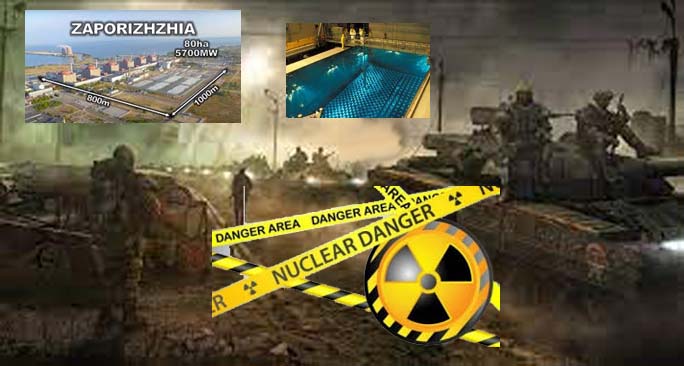
RICHARD STONE, Science 4 Jan 24
Having taken a heavy toll on Ukraine’s ecosystems and water resources, the war with Russia threatens to create a another environmental disaster: damage to the region’s extensive nuclear infrastructure—including 15 power reactors and three research reactors.
“There continues to be a highly precarious nuclear safety and security situation across Ukraine,” International Atomic Energy Agency (IAEA) Director General Rafael Mariano Grossi said in a statement after explosions were heard near the Khmelnitsky Nuclear Power Plant and its two Soviet-era reactors on 28 November 2023—the second near-miss in a single month at the site. “All of Ukraine’s nuclear facilities remain vulnerable, either directly if hit by a missile or indirectly if their off-site power supplies are disrupted.”
Russia’s assault on Ukrainian nuclear sites began on the very first day of the full-scale invasion. On 24 February 2022, troops overran the Chornobyl Nuclear Power Plant, infamous for the explosion and fire there in 1986 that sent a plume of radioactive smoke into Western Europe. During 5 weeks of occupation, Russian soldiers ransacked labs and kicked up radioactive soil and dust as they dug trenches and slogged through contaminated forests in the exclusion zone around the defunct plant. To the east that spring, Russian troops frequently shelled the Kharkiv Institute of Physics and Technology, damaging a hall containing a subcritical nuclear reactor.
Shelling has also flared up repeatedly around the Zaporizhzhia Nuclear Power Station, a complex of six reactors that constitutes Europe’s largest nuclear power plant. Russia captured the plant in March 2022 and the reactors were shut down 6 months later, eliminating the risk of a core meltdown. Still, a prodigious amount of nuclear material remains there: The reactor halls hold 1380 tons of fresh and spent uranium oxide fuel, and two repositories store an additional 2100 tons of spent fuel laced with nasty long-lived radionuclides—the ingredients, many Ukrainians fear, of a “dirty bomb” that would use conventional explosives to spread radioactive isotopes……………………………………….
The presence of IAEA observers at the Zaporizhzhia station since September 2022 has deterred the theft of dirty-bomb ingredients. But a major missile strike on one of its spent fuel repositories could turn the plant itself into a dirty bomb, spreading radioactive contamination in a radius of up to 30 kilometers, says Volodymyr Borysenko, a nuclear engineer with the National Academy of Sciences of Ukraine’s Institute for Safety Problems of Nuclear Power Plants (ISPNPP).
Even a smaller strike could contaminate the reactor complex. And the spent fuel is also at risk from repeated electricity blackouts that have struck the plant, the latest in early December 2023. Diesel-fueled generators can supply power for up to 10 days, but a prolonged outage could be dangerous, as power is needed to pump cooling water into the plant’s uranium reactor cores and pools holding spent fuel.
A lesser known radioactive risk is situated about 150 kilometers upstream from the Zaporizhzhia plant on the Dnipro River. During the Cold War, the Prydniprovsky Chemical Plant was one of Europe’s largest uranium ore processing facilities. The complex accumulated some 40 million tons of tailings—leftovers of milling uranium—and other foul residues before it closed in 1992. By early 2022, Ukraine, with help from the European Union, had fenced off highly contaminated areas. But a missile or artillery strike on a tainted building or dump could disperse radioactive dust over the nearby city of Kamianske.
One relative bright spot is Chornobyl, where Ukrainian scientists are restoring labs damaged early in the war. But large parts of the exclusion zone remain off limits because of the threat of mines and unexploded ordinance, says ISPNPP Director Anatolii Nosovskiy. Complicating matters for radiation monitoring, he says, the Ukrainian army has built defensive fortifications in the zone, near the border with Belarus…………………. https://www.science.org/doi/10.1126/science.adn7987
Germany’s coal power production drops to lowest level in 60 years in2023 after nuclear exit
Germany’s coal power production drops to lowest level in 60 years in
2023 after nuclear exit. Germany’s lignite power production fell to the
lowest level since 1963 last year, while hard coal power production even
dropped to the lowest level since 1955, an analysis by research institute
Fraunhofer ISE has found.
The country’s entire coal-fired power
production fell by almost one third (48 TWh), cutting coal’s share of
total net power generation to 26 per cent. Meanwhile, the country sourced
nearly 60 percent (59.7%) of its net power production from renewables,
which generated a total of 260 terawatt hours (TWh), an increase of 7.2
percent compared to 2022. With an increase of more than 17 TWh, output from
wind turbines grew particularly strong, according to the institute’s
annual energy review.
Renew Economy 4th Jan 2024
IAEA says its inspectors are denied access to parts of Ukraine nuclear plant .
The head of the U.N. nuclear power watchdog said on Wednesday his
inspectors had been denied access to parts of Ukraine’s Russian-occupied
Zaporizhzhia nuclear power station and had yet to receive 2024 maintenance
plans for the facility. The plant was seized by Russia in the days
following Moscow’s 2022 invasion of Ukraine. Each side has accused the
other of shelling around the station, Europe’s largest, though its six
reactors now produce no electricity.
Reuters 3rd Jan 2024
Nuclear weapons test treaty fears sink plans for major wind farm
UK Ministry of Defence objected to 315MW array over fears nuclear monitoring station would be affected by vibrations
5 January 2024 By Cosmo Sanderson , Recharge,
The UK’s obligations to monitor nuclear weapons testing have helped scupper a proposal for a Scottish wind farm over fears it could affect a nearby monitoring station.
The Scottish government rejected a proposal from British developer Community Windpower for a planned 315MW array made up of 45 turbines near the border with England last month.
The reasons for this included the potential impact of the wind farm on the nearby Eskdalemuir Seismic Array, a seismological monitoring station that forms part of the UK’s obligations under a multilateral treaty to ban nuclear weapons testing…………..(Subscribers only) more https://www.rechargenews.com/wind/nuclear-weapons-test-treaty-fears-sink-plans-for-major-wind-farm/2-1-1579329
A ‘natural alternative’ plan for protecting fish from Hinkley nuclear station’s cooling system
Plans for a salt marsh near a nuclear power station have been proposed as
a “natural” alternative to protect fish from its cooling systems.
Campaigners had called for changes amid fears Hinkley Point C’s cooling
tunnels could kill millions of fish. EDF Energy said it would carry out a
consultation on its proposal for the 800 acres of wetland near Bridgwater.
Chris Fayers from Hinkley Point C said it would be a natural alternative to
installing an acoustic fish deterrent.
The deterrent system would have used
280 speakers to make noise “louder than a jumbo jet” 24-hours a day for 60
years. The alternative plans for the wetland, being developed with Natural
England, Natural Resources Wales and the Environment Agency, are expected
to create new habitats for fish and animals, improve local water quality
and help prevent flooding.
BBC 5th Jan 2024
A Visit to Belmarsh Prison, Where Julian Assange Awaits His Final Appeal Against Extradition to the US

The Wikileaks founder says he fears his own imprisonment, US government surveillance, and restrictions on the group’s funding have effectively scared off potential whistleblowers.
The Nation, CHARLES GLASS, 2 Jan 24
MP BELMARSH—It is 2:30 PM on Wednesday, December 13, when Julian Assange strides into the visitors’ area. He stands out in the column of 23 prisoners for his height—6′ 2″—and flowing white locks with trimmed beard. He squints, looking for a familiar face among the wives, sisters, sons, and fathers of the other inmates. I am waiting, as assigned, at D-3, one of about 40 sets of small coffee tables surrounded by three upholstered chairs—two blue, one red—screwed into the floor of what looks like a basketball court. We spot each other, walk forward, and embrace. It is the first time I have seen him in six years. I blurt, “You’re pale.” Through a mischievous smile I remember from past meetings, he jokes, “They call it prison pale.”
He has not been outdoors—apart from a minute when police dragged him into a paddy wagon—since he took refuge in London’s cramped Ecuadorian Embassy in June 2012. The embassy’s French windows had afforded glimpses of sky. Here at Belmarsh maximum security prison in southeast London, his abode since April 11, 2019, he has not seen the sun. Warders confine him to a cell for 23 out of every 24 hours. His single hour of recreation takes place within four walls, under supervision. His paleness is best described as deathly……………………………………………………………………………………………………………………………..
Julian and I sit down, face to face, me on the red chair, he on one of the blues. Above us, glass globes hide cameras that record the interactions between inmates and their guests.
…………………………. Julian had thought prison meant communal meals at long tables, as in the movies. Belmarsh’s warders shove the food into the cells for prisoners to eat alone. It is hard to make friends that way. He has been there longer than any other prisoner apart from an old man who had served seven years to his four and a half. There are occasional suicides, he tells me, including one the night before.
……………………………… I ask whether he still has the radio he had struggled to obtain in his first year. He did, but it was not working due to a defective plug. Regulations permit each prisoner to have a radio purchased from prison stores. The authorities, however, said no radios were available for him. When I heard about it, I sent him a radio. It was returned. I then sent him a book on how to make a radio. That too was returned………………………………………………………………
How did he, a news addict, keep in touch? The prison allows him to read printouts of news stories, and friends write to him. With the invasions of Ukraine and Gaza, I say, now is an important time for whistleblowers to send documents to WikiLeaks. He regrets that WikiLeaks is no longer able to expose war crimes and corruption as in the past. His imprisonment and US government surveillance and restrictions on WikiLeaks’ funding wards off potential whistleblowers. He fears that other media outlets are not filling the vacuum.
Belmarsh does not offer him education programs or communal activity, like orchestra practice, sports, or publishing a prison journal, that are standard at many other prisons. The regime is punitive; although Belmarsh’s 700-odd inhabitants are on remand, awaiting trial or appeal. They are Category A prisoners, those who “pose the most threat to the public, the police or national security” and stand accused of terrorism, murder, or sexual violence.
We talk about Christmas, which is just another day in Belmarsh: no turkey, no carols, no presents. The prison is closed to visitors on Christmas Day and the day after, and the prison has informed his wife, Stella Moris, that she and their two young sons, Gabriel and Max, may not see him on Christmas Eve. He can attend Catholic Mass celebrated by the Polish chaplain, who has become a friend.
………….Apart from occasional visiting days, his days are all the same: the confined space, the loneliness, the books, the memories, the hope that his lawyers’ appeal against extradition and life imprisonment in the United States will succeed……….. https://www.thenation.com/article/activism/julian-assange-wikileaks-belmarsh-prison/
1 This Month





PLEASE OPPOSE HR 8255 AND S.3639 – bills would accelerate satellite deployment, with no environmental review or safeguards – https://ncstd5li.quorum.us/campaign/169331/
To see nuclear-related stories in greater depth and intensity – go to https://nuclearinformation.wordpress.com
-
Archives
- October 2026 (10)
- September 2026 (339)
- August 2026 (330)
- July 2026 (355)
- June 2026 (287)
- May 2026 (306)
- April 2026 (356)
- March 2026 (251)
- February 2026 (267)
- January 2026 (308)
- December 2025 (358)
- November 2025 (359)
-
Categories
- 1
- 1 NUCLEAR ISSUES
- business and costs
- climate change
- culture and arts
- ENERGY
- environment
- health
- history
- indigenous issues
- Legal
- marketing of nuclear
- media
- opposition to nuclear
- PERSONAL STORIES
- politics
- politics international
- Religion and ethics
- safety
- secrets,lies and civil liberties
- spinbuster
- technology
- Uranium
- wastes
- weapons and war
- Women
- 2 WORLD
- ACTION
- AFRICA
- Atrocities
- AUSTRALIA
- Christina's notes
- Christina's themes
- culture and arts
- Events
- Fuk 2022
- Fuk 2023
- Fukushima 2017
- Fukushima 2018
- fukushima 2019
- Fukushima 2020
- Fukushima 2021
- general
- global warming
- Humour (God we need it)
- Nuclear
- RARE EARTHS
- Reference
- resources – print
- Resources -audiovicual
- Weekly Newsletter
- World
- World Nuclear
- YouTube
-
RSS
Entries RSS
Comments RSS