“The defense of nuclear power as a low-carbon energy weakens the European Union’s action against climate change”
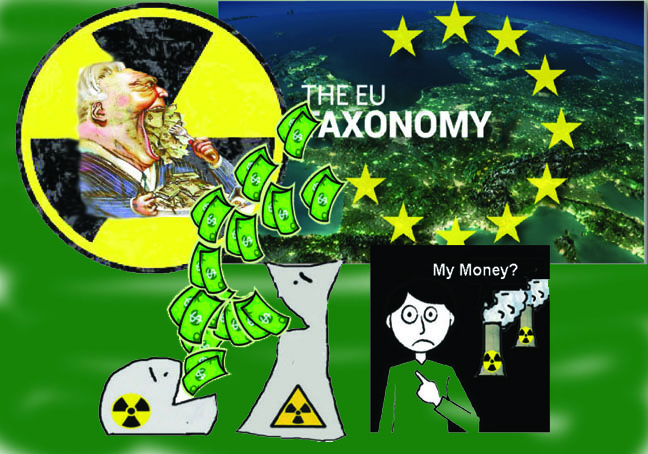
“The defense of nuclear power as a low-carbon energy weakens the
European Union’s action against climate change”.
The Renewable Energies for All association denounces, in a column in “Le Monde”, the
deleterious effects of the inclusion of nuclear power in the French and
European objectives for the deployment of renewable solutions.
Seeking to relaunch nuclear power whatever the cost, France is not only missing a
historic opportunity for a rapid and less costly transition to renewable
energies and decarbonization.
It weakens the climate ambition of theEuropean Union (EU). The reintegration of current nuclear production in Europe – 6% of its final energy – into the objective of 42.5% renewable
energies set by the RED III directive [Renewable Energy Directive III]
would create an accounting artifice and lead to vagueness strategic in a
field which nevertheless needs a long-term vision.
Le Monde 13th Jan 2024
Will Sizewell nuclear project go ahead? Campaigners question the timetable and the funding.

The Government has announced that the timetable for investing in the new
Sizewell C nuclear power station in Suffolk will be revealed before a
general election. However, the campaign group Stop Sizewell C, which is
opposed to the project, said there was still much that was unknown about
whether the project could go ahead, including how the £20bn would be
raised to pay for the station.
A Stop Sizewell C spokesperson said: “From
our extensive discussions with officials it is clear that a Sizewell C
Final Investment Decision (FID) is still some months away and the time
before the next election is running out, for Rishi Sunak hasn’t ruled out a
May poll.
East Anglian Daily Times 12th Jan 2024
https://www.eadt.co.uk/news/24046041.campaigners-say-unknown-whether-sizewell-c-will-proceed/
Nuclear convoys: Blacked-out lorries carry ‘deadly cargo’ through the village

A TINY English village could be top of Putin’s nuclear hitlist, locals
fear. Brize Norton is only a stone’s throw away from the largest station in
the Royal Air Force.
Huge convoys of blacked-out lorries, police riot vans,
ambulances and other trucks regularly rumble through, clogging up the
village’s narrow main road. Locals claim they’ve had guns pointed at them
by cops, and even been forced to pull over to make room for the fleet of
“deadly cargo”.
One video shows parents and kids on the school run having
to stand aside as a convoy with blue flashing lights thunders through,
shaking the walls of surrounding buildings and towering over homes just
metres away. The cargo, widely believed to contain “nuclear material”, is a
key part of Britain’s Trident weapons programme.
The Sun 13th Jan 2024
https://www.thesun.co.uk/news/25310004/brize-norton-nuclear-weapons-putin-oxfordshire-cotswolds/
Hotel near Bridgwater could be repurposed to house Hinkley Point C workers
By Jamie Grover
Bridgwater Mercury 12th Jan 2024
PLANS have been submitted to Somerset Council to request permission for a hotel near Bridgwater and Highbridge to be repurposed in order to house Hinkley Point C workers.
It is proposed that Laburnum Lodges in West Hunstpill would be converted to accommodate workers at the EDF power plant for a minimum of five years, before then resuming usual operations as holiday accommodation.
The news comes after it was recently revealed EDF were once again in talks with Somerset Council to increase the workforce on site, despite an ongoing housing crisis in Bridgwater.
……………………………………………. Cllr Leigh Redman, Bridgwater Town Council spokesperson for Nuclear Issues, said that the original development consent order (DCO) signed by the secretary of state for Hinkley Point C, indicated that at peak, the number of workers on site would be 5,600.
This number was since raised to 8,600 due to the conversion of Pontins in Brean to become an accommodation site for workers at the power plant, which is now full.
There are now over 11,000 workers at Hinkley Point C, and EDF has confirmed its plans to bring in more staff in the near future.
To keep up to date with the application, or for more information, search reference number 52/23/00010 on the Somerset Council website.
Comments are welcomed until Tuesday, February 13, and approval could be given as early as Wednesday, February 14. https://www.bridgwatermercury.co.uk/news/24045404.hotel-near-bridgwater-house-hinkley-point-c-workers/
On the road to nowhere… UK Ministers launch nuclear ‘Roadmap’ in election year

11th January 2024, https://www.nuclearpolicy.info/news/on-the-road-to-nowhere-ministers-launch-nuclear-roadmap-in-election-year/
The UK/Ireland Nuclear Free Local Authorities are dismissive of the UK Government’s announcement today (11 Jan) of a ‘Roadmap’ supposedly outlining the route to undertake ‘the biggest expansion of nuclear power for 70 years’,[1] as another example of blinkered thinking by Ministers who are taking the wrong path to achieve energy security and net zero.
NFLA Chair Councillor Lawrence O’Neill said of the ‘Roadmap’: “Prime Minister Sunak and his ministers seem more like a group of clueless hikers too focused on the endless trail to their nuclear nirvana to see the turning immediately enroute which leads down the renewables path and the truly sustainable electricity future that Britain needs.
“Those with a cynical bent may be inclined to believe that its launch may not be coincidental in what is likely to be an election year as it represents a mantra of aspirations that will appeal to a certain voter base – two pointed references to Churchill are made by Energy Secretary Claire Coutinho in the preamble – but is nonetheless completely unaffordable. How can a vast programme of nuclear new build costing hundreds of billions of pounds be paid for, when the HS2 railway programme was curtailed on grounds of cost?
11th January 2024
On the road to nowhere… Ministers launch nuclear ‘Roadmap’ in election year
The UK/Ireland Nuclear Free Local Authorities are dismissive of the UK Government’s announcement today (11 Jan) of a ‘Roadmap’ supposedly outlining the route to undertake ‘the biggest expansion of nuclear power for 70 years’,[1] as another example of blinkered thinking by Ministers who are taking the wrong path to achieve energy security and net zero.
NFLA Chair Councillor Lawrence O’Neill said of the ‘Roadmap’: “Prime Minister Sunak and his ministers seem more like a group of clueless hikers too focused on the endless trail to their nuclear nirvana to see the turning immediately enroute which leads down the renewables path and the truly sustainable electricity future that Britain needs.
“Those with a cynical bent may be inclined to believe that its launch may not be coincidental in what is likely to be an election year as it represents a mantra of aspirations that will appeal to a certain voter base – two pointed references to Churchill are made by Energy Secretary Claire Coutinho in the preamble – but is nonetheless completely unaffordable. How can a vast programme of nuclear new build costing hundreds of billions of pounds be paid for, when the HS2 railway programme was curtailed on grounds of cost?
“Despite several academic reports having been published in recent months outlining how the UK can meet its electricity needs through renewables [2,3,4] this government appears intent to once more trod the route taken by many Ministers before them – the route of greatest resistance – to the nuclear never-never.
“A plan based upon generation by a range of green technologies, coupled with energy efficiency measures and storage solutions, would be far quicker, far cheaper, and create many jobs to achieve the government’s stated goals of achieving energy security and net zero for the nation.”
The ‘Civil Nuclear Roadmap’ recommits the government to building a fleet of nuclear reactors capable of producing 24GW by 2050, around a quarter of electricity demand. Approval will be given for one to two reactors every five years between 2030 and 2044, a rate far faster than historic trends. The plan is predicated upon building a third large-scale plant alongside Hinkley Point C and Sizewell C. This would most likely be located at Wylfa in North Wales, which was ‘talked up’ by Prime Minister Sunak in a recent interview with BBC Wales as ‘a fantastic site’.[5]
Government ministers are also wedded to investment in so-called Small Modular Reactors, which may be built at existing or former nuclear sites or co-located alongside large industrial consumers. A ‘competition’ is currently being held by a new company specifically created to take forward the government’s SMR ambitions. In the initial stage, Great British Nuclear has approved new SMR designs from six companies with a view to taking forward two as preferred competitors in the spring. The plan also provides for investment in a range of so-called Advanced Modular Reactors.
Alongside the ‘Roadmap’, the government has also launched two consultations. One is to establish a new policy on ‘siting’ nuclear plants on ‘a greater diversity of sites’ and with ‘a flexible approach to nuclear siting’. The second concerns Alternative Routes to Market for New Nuclear Projects exploring how to ease the way for new nuclear. To the NFLAs these both sound suspiciously like vehicles to favour developers by loosening the regulatory regime to enable SMRs and AMRs to make development and deployment possible on a wider range of sites, by adopting new procedures involving less planning, licensing, and consultation with elected members, community organisations and the public.
11th January 2024
On the road to nowhere… Ministers launch nuclear ‘Roadmap’ in election year
The UK/Ireland Nuclear Free Local Authorities are dismissive of the UK Government’s announcement today (11 Jan) of a ‘Roadmap’ supposedly outlining the route to undertake ‘the biggest expansion of nuclear power for 70 years’,[1] as another example of blinkered thinking by Ministers who are taking the wrong path to achieve energy security and net zero.
NFLA Chair Councillor Lawrence O’Neill said of the ‘Roadmap’: “Prime Minister Sunak and his ministers seem more like a group of clueless hikers too focused on the endless trail to their nuclear nirvana to see the turning immediately enroute which leads down the renewables path and the truly sustainable electricity future that Britain needs.
“Those with a cynical bent may be inclined to believe that its launch may not be coincidental in what is likely to be an election year as it represents a mantra of aspirations that will appeal to a certain voter base – two pointed references to Churchill are made by Energy Secretary Claire Coutinho in the preamble – but is nonetheless completely unaffordable. How can a vast programme of nuclear new build costing hundreds of billions of pounds be paid for, when the HS2 railway programme was curtailed on grounds of cost?
“Despite several academic reports having been published in recent months outlining how the UK can meet its electricity needs through renewables [2,3,4] this government appears intent to once more trod the route taken by many Ministers before them – the route of greatest resistance – to the nuclear never-never.
“A plan based upon generation by a range of green technologies, coupled with energy efficiency measures and storage solutions, would be far quicker, far cheaper, and create many jobs to achieve the government’s stated goals of achieving energy security and net zero for the nation.”
The ‘Civil Nuclear Roadmap’ recommits the government to building a fleet of nuclear reactors capable of producing 24GW by 2050, around a quarter of electricity demand. Approval will be given for one to two reactors every five years between 2030 and 2044, a rate far faster than historic trends. The plan is predicated upon building a third large-scale plant alongside Hinkley Point C and Sizewell C. This would most likely be located at Wylfa in North Wales, which was ‘talked up’ by Prime Minister Sunak in a recent interview with BBC Wales as ‘a fantastic site’.[5]
Government ministers are also wedded to investment in so-called Small Modular Reactors, which may be built at existing or former nuclear sites or co-located alongside large industrial consumers. A ‘competition’ is currently being held by a new company specifically created to take forward the government’s SMR ambitions. In the initial stage, Great British Nuclear has approved new SMR designs from six companies with a view to taking forward two as preferred competitors in the spring. The plan also provides for investment in a range of so-called Advanced Modular Reactors.
Alongside the ‘Roadmap’, the government has also launched two consultations. One is to establish a new policy on ‘siting’ nuclear plants on ‘a greater diversity of sites’ and with ‘a flexible approach to nuclear siting’. The second concerns Alternative Routes to Market for New Nuclear Projects exploring how to ease the way for new nuclear. To the NFLAs these both sound suspiciously like vehicles to favour developers by loosening the regulatory regime to enable SMRs and AMRs to make development and deployment possible on a wider range of sites, by adopting new procedures involving less planning, licensing, and consultation with elected members, community organisations and the public.
A third consultation on the taxonomy of nuclear projects, to declare nuclear a ‘green’ energy source to facilitate investment, and the publication of the government’s response to the consultation on managing radioactive waste are promised, but these have already been long-delayed.
But all is not ‘rosy’ in their nuclear garden.
Both the Hinkley Point C and Sizewell C plants will be built and operated by EDF, a French state- owned company which is in dire financial trouble and is faced with the diversion of needing to make further significant investment in existing and new nuclear plants at home. Hinkley Point C, which is currently under construction in Somerset, is behind schedule and massively over budget. In 2016, EDF estimated the cost of building the plant at £18 billion, this budget has now mushroomed to £33 billion at current prices. The enterprise was a partnership with CGN, a Chinese state-owned nuclear company, which agreed to take a 33.5 percent stake, but which last month declined to put any more money into the project after meeting its contracted share, putting more financial pressure on EDF.[6]
The date of first generation has also been constantly pushed back, with the latest official estimate that generation from reactor one will start in the summer of 2027 and from reactor two one year later. However, it is interesting to note that both The Daily Telegraph[7] and now The Guardian[8] have recently printed that generation will not actually begin until the 2030’s. Even the road map is non-specific pledging only to monitor developments so generation ‘can come online later this decade’.
At Sizewell C, EDF’s partners, CGN, were forced out on a tide of anti-Chinese sentiment and the French and British Governments instead agreed to take a fifty percent stake. £1.2 billion of UK taxpayers’ money has already been poured in, whilst Ministers seek private investment from the money markets to enable them to reduce the government’s stake. Eager to move things on, in the ‘Roadmap’ Ministers have pledged to arrive at a Financial Investment Decision ‘before the end of this Parliament’ and to hold a future consultation on taxonomy, but this will not make money materialise.
For whilst ministers and certain sections of the media talk of the budget as being as low as £20 billion, this seems fanciful given the additional engineering challenges attached to development at the Suffolk site and the established runaway cost of Sizewell’s older sister at Hinkley Point C, and respected academics, such as Professor Stephen Thomas at the University of Greenwich, have calculated that the eventual cost could be over twice that. Although there has rumours of interest in investment from Middle East sovereignty funds and Centrica, nothing of substance has so far materialised, and investors may baulk at the cost.
Hinkley Point C and Sizewell C would both be equipped with the EPR, the European Pressurised Reactor, a design with a chequered history. One EPR in China was offline for many months following an accident and others in Finland and France have, or are being, delivered very late, well over budget and with a series of ‘teething troubles’. Even EDF’s former Chief Executive Henri Proglio, in December 2022 told a hearing of the French National Assembly in exasperation that: “The EPR is too complicated, almost unbuildable. We see the result today.”[9]
Interest in Wylfa has been expressed by American nuclear engineering companies Westinghouse and Bechtel, whose performance has proven to be lamentable at the VC Summer and Vogtle 3 nuclear projects in the United States. In South Carolina, a new nuclear project ended in a fiasco, with a corporate bankruptcy, prosecutions for fraud, and an inoperable plant which amounted to a ‘hole in the ground which had to be filled in’ at an estimated cost of up to $9 billion to state taxpayers.[10] Whilst in Georgia, Vogtle 3 has just begun operations after a six-year delay and with a $30 billion price tag.[11] More likely to coalesce is an interest from KEPCO, the South Korean nuclear company, which signed a commercial partnership agreement alongside the recent state visit paid to the UK by the South Korean President.
On the SMR front, only two of the six potential designs have so far been entered into the Generic Design Assessment process managed by the Office of Nuclear Regulation. The government have pledged to speed this process up but may face pushback from the regulators. Although the ‘Roadmap’ specifies 2029 as the target date for investment decision making, we are still at an early stage with the six designs still technically unproven and, as shown by NuScale’s recent experience in Utah, financially uncertain. As to the supposedly Advanced Modular Reactor designs, these are mostly rehashed concepts first developed in the aftermath of the Second World War, tried previously, and found wanting.
In describing the ‘road’ that Ministers have ‘mapped’ out, NFLA Chair Cllr Lawrence O’Neill added:
“This is indeed a rocky road involving dependency on foreign investment, foreign technologies, and, yes until at least 2030, Russian uranium; failed or uncertain reactor designs; the uncertain risk of accidents; the most certain generation of radioactive waste; and the massive cost of managing both it and the decommissioning of old plants. And reliance on nuclear will mean creating an energy network of potential ‘dirty bombs’ that will be a prime target for terrorists and hostile state actors in time of war.
“Nonetheless these Whitehall hikers are heedless, for ultimately it will be electricity consumers and taxpayers who will pick up the tab for their folly with new plants funded through the imposition of a ‘nuclear tax’ on bills through the Regulated Asset Model; through paying higher metered prices for the electricity generated by nuclear plants; by paying for the cost of decommissioning the old nuclear plants; and by bankrolling the ongoing management of the resultant nuclear waste.
“These costs will be especially burdensome for low-income households already faced with huge energy bills and would be iniquitous to consumers in my own native Scotland which has so robustly rejected nuclear.”
Ends//… For further information please contact the NFLA Secretary, Richard Outram, by email at richard.outram@manchester.gov.uk
References: ……………………………………………………….
IG report finds Pentagon failed to account for more than $1B in weapons sent to Ukraine
Pentagon finds nearly 40,000 weapons sent to Ukraine were not properly tracked
By Danielle Wallace , Liz Friden Fox News, 11 Jan 24
A new Department of Defense Inspector General report released Thursday finds more than $1 billion worth of weapons sent to Ukraine were not properly tracked by U.S. defense officials.
The DOD IG has personnel stationed in Ukraine and is investigating with its Defense Criminal Investigative Service allegations of diversion of weapons. For now, the IG says, “It was beyond the scope of our evaluation to determine whether there has been diversion of such assistance.”
The weapons in question are small and include shoulder-fired missiles, one-way attack drones and night-vision devices.
“From a monetary perspective, the delinquent serial numbers account for more than $1.005 billion of the total $1.699 billion (59 percent of the total value) of EEUM‑designated defense articles as of June 2, 2023,” the report says. “Until those challenges are resolved, the DoD will not be able to fully account for all of the more than $1.699 billion in EEUM‑designated defense articles provided to Ukraine.”
As Congress weighs sending more U.S. military assistance to Ukraine, a growing number of lawmakers are demanding greater oversight. ……………………………………………….. https://www.foxnews.com/politics/ig-report-finds-pentagon-failed-account-more-1b-weapons-sent-ukraine
Ayrshire radiation highlighted as Labour’s nuclear support attacked
12th January
SCOTTISH Labour have been called out for their support of nuclear energy as
an MP warned of the risks of radioactivity in parts of the country. Allan
Dorans, the MP for Ayr said parts of his constituency were being
contaminated by radioactive waste from the Sellafield reprocessing plant in
Cumbria.
He highlighted research which found that shellfish caught off the
Ayrshire coast at Maidens, in the extreme west of his constituency,
contained radiation at a level which would mean it would be illegal for
sale in Japan.
It comes as the Government yesterday unveiled new plans for
what it called the “biggest nuclear expansion in 70 years”. Catches,
including the shells of mussels, cockles and winkles made off the Ayrshire
coast, which is downstream from Sellafield, were found to contain
“significant” levels of radiation in a 2015 study.
Labour are committed
to nuclear energy, with party leader Keir Starmer using a speech last
summer to slam the Government for stalling the UK’s progress on setting up
new atomic power plans and to pledge if in power he would invest in the
energy source. But concerns have been raised about its safety, with critics
pointing to the possibility of leaks or major breakdowns like Chernobyl or
Fukushima.
The National 12th Jan 2024
Allan Dorans: Scottish Labour’s support for nuclear fuel poses a risk
THE Labour candidate for the Central Ayrshire constituency at the next
General Election is supported by the GMB Scotland trade union. The GMB is a
champion of the nuclear fuels industry and of nuclear weapons.
The Labour candidate for my constituency of Ayr, Carrick and Cumnock will follow the
UK Labour Party line which supports Trident and is calling for new nuclear
power stations in Scotland.
My party, the SNP, is firmly opposed to both.
Just last month, The Guardian released a video explaining why the
Sellafield nuclear reprocessing plant in Cumbria, a short distance down the
coast from my constituency and upstream from it, is “Europe’s most
dangerous industrial site”, pointing out that Sellafield has failed to
contain numerous threats, including a cybersecurity breach by groups linked
to Russia and China and of growing physical cracks in its “most hazardous
facility”. In 2016, researchers at Glasgow University reported
“enhanced” radioactivity levels, in shellfish catches, at a number of
coastal locations in Cumbria, near the Sellafield plant, and on the west
coast of Scotland, including the village of Maidens, in my Ayrshire
constituency.
The National 12th Jan 2024
UK’s Nuclear Roadmap is Pure Fantasy

11th January 2024, http://stophinkley.org/press-releases/nuclear-roadmap-is-pure-fantasy/
The Stop Hinkley Campaign has described the Government’s so-called Nuclear Roadmap as “pure fantasy”.
The Roadmap majors on plans to explore the possibility of building another large-scale power plant as big as Hinkley Point C. Anglesey and Cumbria are suggested as possible sites. But these sites were designated twelve and a half years ago and have come to nothing. The problem is finding somebody willing to invest the huge sums of money required for these risky projects. SSE, Iberdrola, Engie and Toshiba have already rejected the idea of investing in Moorside in Cumbria. And RWE, Eon and Hitachi have given up on Wylfa on Anglesey.
The Financial Times reports today that the Government and EDF might be able to raise £20bn to fund Sizewell C by end of this year. This looks as though it will probably include investment from the United Arab Emirates sovereign wealth fund. So, we have basically jumped out of a Chinese frying pan into a UAE fire.
Stop Hinkley Spokesperson Roy Pumfrey said:
“This plan is yet another vague wish-list from the Government. It is pure fantasy. Many people will be tempted to echo Beryl from Bristol’s famous phrase “Not another one!” There is nothing here which get us any closer to the important target of zero carbon electricity by 2035. We need to rapidly ramp up energy efficiency and home refurbishments – something we could be doing right now that would save people money.
Global renewable energy capacity grew by the fastest pace recorded in the last 20 years last year, but it’s still not fast enough. Britain is fast losing its lead in this area, thanks to Government bungling and too much focus on fantasy nuclear projects.”
He continued:
“The two reactors being built at Hinkley Point C are now unlikely to be generating electricity until 2028 and 2029 at the earliest and the cost is likely to reach £33bn. Our climate simply doesn’t have the time to wait around for these expensive white elephants to come on-line.
We need to get on with energy efficiency and renewable developments right now.”
Sizewell C: UK and France-owned EDF look to raise £20bn for Suffolk nuclear site

The UK government and EDF energy has announced its bid to raise £20bn for an extension to EDF’s nuclear facility in Suffolk.
The British government and the French-owned energy company EDF plan to build the UK’s second-largest power station, Sizewell C, on the Suffolk site.
They hope to raise the money by the end of 2024, the energy minister responsible for the sector told the Financial Times.
Ministers approved the construction of the building in 2022 after a decade of consultations. It is expected to take a further decade to build, although delays and high costs at sister plant Hinkley Point C suggest that it may take even longer.
“It’s a phenomenal sum of money but we are genuinely very pleased and very positive about the reaction we have had through the capital-raising process so far,” Andrew Bowie told the Financial Times. “We are very much on track.”
The UK government has already committed £1.2bn to the project, while a UAE sovereign wealth fund is among several potential investors.
On Thursday, the UK government launched its £300m civil nuclear road map in the “biggest expansion of nuclear power for 70 years”, which restates its aim to build up the UK’s supply of nuclear energy to 24GW by 2024…………………… more https://www.cityam.com/sizewell-c-uk-and-france-owned-edf-look-to-raise-20bn-for-suffolk-nuclear-site/
UK Government’s nuclear power expansion plans branded hot air
12 Jan 24 https://morningstaronline.co.uk/article/government-nuclear-power-expansion-plans-branded-hot-air
NEW government plans for “Britain’s biggest nuclear power expansion in 70 years” were dismissed today as “unevidenced” hot air.
Unite and Greenpeace poured doubt over ministers’ latest “grandiose” promises of cheap energy provision amid faltering nuclear output and project delays.
The government has published a roadmap recommitting itself to building a series of nuclear reactors capable of producing 24 gigawatts — a quarter of national electricity demand — by 2050.
Approval would be given for one or two new reactors every five years from 2030 to 2044, alongside backing for another large-scale reactor in addition to Hinkley Point C and the planned Sizewell C.
Prime Minister Rishi Sunak hailed the announcement as “the next step in our commitment to nuclear power, which puts us on course to achieve net zero by 2050 in a measured and sustainable way.”
But Unite general secretary Sharon Graham said: “The government’s announcement to expand nuclear power sounds like a lot of hot air.
“We have had years of time wasting and underinvestment by ministers in this industry, which is vital to achieving energy security and net zero.”We have had years of time wasting and underinvestment by ministers in this industry, which is vital to achieving energy security and net zero.
“If they now want to be taken seriously we need to see far more detail and clarity. Any plans for nuclear need to include small modular reactors as part of Britain’s balanced energy mix.
“It is also essential that we don’t just hand over government funding to private companies and hope for the best.”
French energy giant EDF said the cost of Hinkley Point C has spiralled to £33bn, a 30 per cent increase from 2015 when it forecast the cost at £25-£26bn.
Hinckley Point C’s planned successor project at Sizewell C in Suffolk, which has been planned for the past 12 years, is yet to receive a final investment decision.
Greenpeace UK chief scientist Doug Parr said: “Every few months the government makes a grandiose public announcement about future nuclear in the hope that a big investor will believe the hype and step up to fund this 20th century technology, but it isn’t working.
“The energy industry knows that the economic case for slow, expensive nuclear just doesn’t add up, and the future is renewable.
“This vague, aspirational announcement with its unevidenced claims of cheap energy is unlikely to change their minds when there are real reactors overshooting their massive construction budgets and showing them the truth.”
Mini nuclear plants to be built almost anywhere in UK
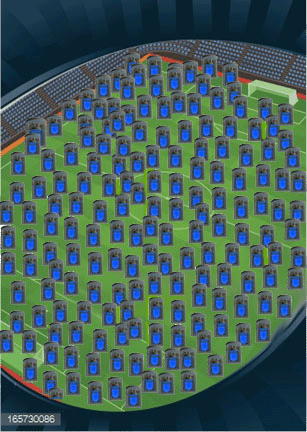
Mini-nuclear power plants will be allowed almost anywhere outside built-up
areas, as ministers relax planning rules to allow a “reawakening” of
atomic electricity.
Under plans to quadruple capacity in the next quarter
of a century, ministers want a fleet of “small modular reactors” to be
built across Britain alongside large power plants. Unlike conventional
plants, small modular reactors do not need to be built on the coast and the
government wants to open up far more areas as potential sites, in a
developer-led approach that will replace rules that allow nuclear power
stations only in eight named locations.
Rishi Sunak argues that “nuclear
is the perfect antidote to the energy challenges facing Britain”, helping
meet net zero goals with reliable, domestically produced power. A
consultation on overhauling planning rules published on Thursday says that
rather than ministers specifying sites, developers will be asked to
identify locations for such reactors based on a new list of safety and
environmental criteria. Only “population density” and “proximity to
military activities” will rule out nuclear plants, meaning they cannot be
built in areas with more than 5,000 people per square kilometre. This would
rule out cities and most towns, and is designed to “minimise the risk to
the public” in the event of a radioactive spill.
All other criteria will
be discretionary, including size, flood risk, proximity to civil airports,
the natural beauty, ecological importance or cultural heritage of the site.
“Sites may still be considered suitable for nuclear deployment even where
they fail to fully meet individual discretionary criteria, although not
fully addressing multiple discretionary criteria may cumulatively lead to a
site being considered unsuitable,” the consultation says. Officials
believe developers are likely to want to site plants near industrial
estates needing power and heat, or in areas that have skilled workers and
grid connections. “The government particularly encourages applications to
develop on former industrial and brownfield land,” the consultation says.
Times 11th Jan 2024
https://www.thetimes.co.uk/article/nuclear-power-plants-built-uk-plans-2024-rv5qxhzg2
No to nuclear power: stop the expansion

The UK government hopes to plough ahead with its biggest expansion of nuclear power for decades, despite major concerns over safety, cost, the legacy of nuclear waste, and its link to nuclear weapons.
A long-awaited plan was unveiled by ministers on Thursday and follows a commitment made at COP28 last November to triple nuclear power production by 2050. The roadmap includes plans by government and the nuclear industry to cut red tape in order to “accelerate new nuclear projects,” build another nuclear reactor in addition to Hinkley Point C and Sizewell C, and make investment decisions on new nuclear projects every five years from 2030 to 2044. £300 million has also been made available to launch a high-assay low-enriched uranium (HALEU) programme – making Britain the only country in Europe after Russia to commercially produce such a fuel.
Prime Minister Rishi Sunak lauded his nuclear plan as the “perfect antidote to the energy challenges facing Britain” adding “it’s green, cheaper in the long term and will ensure the UK’s energy security for the long-term.” But is it?
Britain’s two existing nuclear projects – Hinkley Point C and Sizewell C – have been beset with problems since the beginning. A 2015 forecast of Hinkley Point put the project at around £25 billion. These costs have since spiralled by 30 percent to £33 billion and the start date for the plant is likely to be in the early 2030s instead of 2027. Sizewell C is also struggling to attract private financing and the government has already spent over £1 billion on the project. Energy consumers too will pay more: a Regulated Asset Base (RAB) funding model proposed to help fund the project will add a levy to customer bills years before the plant ever starts to generate electricity.
Safety standards within Britain’s nuclear industry have also been under the spotlight recently. The Guardian’s Nuclear Leaks investigation revealed a litany of safety concerns at the Sellafield nuclear waste site including: crumbling infrastructure at some of the site’s most dangerous areas; security breaches; and a toxic workplace culture including harassment of whistleblowers. The scandal has already led to senior management leaving.
Sellafield remains Europe’s most toxic nuclear site and efforts to build a new underwater nuclear waste dump in Cumbria or Lincolnshire have so far failed to achieve community support.
CND General Secretary Kate Hudson said:
“The nuclear lobby was an obvious presence at last November’s COP28 summit and the UK government is working overtime to sell to the public the myth that nuclear power is the answer to the climate crisis and Britain’s energy needs. The evidence points in the opposite direction as renewables are cheaper, faster to deliver, and cleaner. Meanwhile, Hinkley Point C is seriously delayed and overbudget and the government thinks it’s ok to bill consumers twice for Sizewell C: once through taxation and again through a levy on consumer bills. Even if these projects were brought in on time and on budget, it still doesn’t solve the issue of Britain’s shocking record when it comes to safety, as shown in the recent Sellafield Leaks, or with what to do with nuclear waste. We must also bear in mind the main reason this government is so in favour of nuclear power: it helps to normalise Britain’s nuclear weapons and ensures a steady stream of skilled personnel to maintain and manufacturer them. Anyone who tells you any different is living in Cloud Cuckoo Land.”
Nuclear Free Local Authorities question the Chief Constable on alleged misconduct among Civil Nuclear Constabulary

Following the December 2023 revelations in The Guardian alleging misconduct
amongst some officers of the Civil Nuclear Constabulary and a ‘toxic work
culture’ amongst police and civilian staff employed at the Sellafield
nuclear complex, the Chair of the UK/Ireland Nuclear Free Local Authorities
wrote to the Chief Constable outlining our concerns and offering him an
‘opportunity’ to respond. The letter sent 3 January and the response of 8
January are reproduced below.
NFLA 10th Jan 2024
Ministers told to say how Sizewell C will be funded as new nuclear plan launched.
Government announced plans to build third new nuclear plant, even
though existing plan for reactor yet to be decided. Ministers are facing
demands to reveal the timetable for a final investment decision in Sizewell
C before a general election is called after the Government committed to
building a third major nuclear plant.
The Government announced plans to
build a new large scale nuclear power station that will be able to provide
energy to more than six million homes, even though the final funding for an
existing proposal in Suffolk has yet to be secured. Energy minister Andrew
Bowie faced calls from Labour to reveal the timetable for a final
investment decision in the Suffolk power station before the end of
Parliament.
Shadow business minister Sarah Jones insisted it was “all
well and good talking about commitments to new stations in the next
Parliament” before demanding what the timetable is for the Sizewell C
investment decision. Ms Jones urged Mr Bowie to give a “categorical
promise” that the final decision will come before the election, adding:
“Time is running out.” Mr Bowie replied: “We remain committed to
making that decision by the end of this Parliament, and in fact on Hinkley
Point C we are very proud of the progress that is being made.” The new
station is expected to be built at Wylfa in Anglesey, north Wales, with
firms from South Korea, the US and France expected to bid for the scheme.
Government sources said that Chinese firms will be blocked from any bidding
process, to avoid any risk to the country’s critical infrastructure.
iNews 11th Jan 2024
1 This Month





PLEASE OPPOSE HR 8255 AND S.3639 – bills would accelerate satellite deployment, with no environmental review or safeguards – https://ncstd5li.quorum.us/campaign/169331/
To see nuclear-related stories in greater depth and intensity – go to https://nuclearinformation.wordpress.com
-
Archives
- October 2026 (10)
- September 2026 (339)
- August 2026 (330)
- July 2026 (355)
- June 2026 (287)
- May 2026 (306)
- April 2026 (356)
- March 2026 (251)
- February 2026 (267)
- January 2026 (308)
- December 2025 (358)
- November 2025 (359)
-
Categories
- 1
- 1 NUCLEAR ISSUES
- business and costs
- climate change
- culture and arts
- ENERGY
- environment
- health
- history
- indigenous issues
- Legal
- marketing of nuclear
- media
- opposition to nuclear
- PERSONAL STORIES
- politics
- politics international
- Religion and ethics
- safety
- secrets,lies and civil liberties
- spinbuster
- technology
- Uranium
- wastes
- weapons and war
- Women
- 2 WORLD
- ACTION
- AFRICA
- Atrocities
- AUSTRALIA
- Christina's notes
- Christina's themes
- culture and arts
- Events
- Fuk 2022
- Fuk 2023
- Fukushima 2017
- Fukushima 2018
- fukushima 2019
- Fukushima 2020
- Fukushima 2021
- general
- global warming
- Humour (God we need it)
- Nuclear
- RARE EARTHS
- Reference
- resources – print
- Resources -audiovicual
- Weekly Newsletter
- World
- World Nuclear
- YouTube
-
RSS
Entries RSS
Comments RSS

