Ukraine: how nuclear weapons continue to increase the risks, two years on
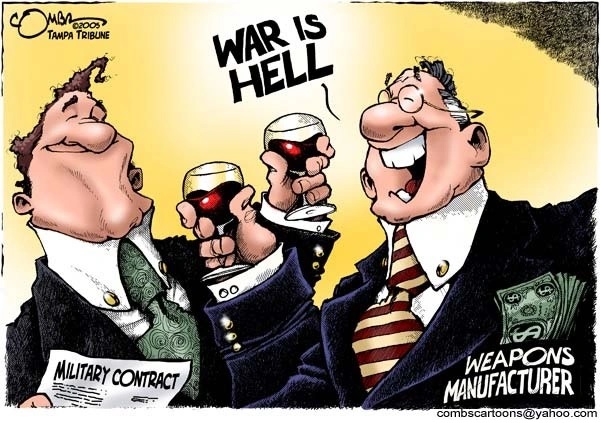
nuclear weapons industry has profited shamelessly off the world’s concerns over nuclear war. Since the conflict in Ukraine and the increased nuclear tensions that followed, profits for the companies that produce nuclear weapons drove up, with an $15.7 billion increase in share and bond holding and $57.1 billion increase in loans and underwriting.
https://www.icanw.org/ukraine_two_years_how_nuclear_weapons_increase_the_risks— 24 Feb 24
Two years after the start of Russia’s full-scale invasion of Ukraine, the risk of nuclear weapons use continues to escalate, while the looming threat of their use protracts this conflict with a high civilian cost. Nuclear-armed states and their allies waver between condemning nuclear threats and engaging in irresponsible practices such as nuclear sharing and championing their own nuclear deterrent. But the rest of the world is pushing back, condemning these behaviors and demanding the total elimination of these weapons of mass destruction through the UN Treaty on the Prohibition of Nuclear Weapons (TPNW).
Melissa Parke, Executive Director of ICAN, said: “This terrible war with its use of nuclear blackmail and overt threats to use nuclear weapons is a wake up call that the world needs to heed – as long as the nuclear-armed states hang on to their arsenals and cling to the misguided doctrine of deterrence, we face the likelihood these weapons will be used sooner or later. Nuclear weapons should be abolished before it is too late.”
The escalating nuclear risk
Following Vladimir Putin’s initial explicit threats to use nuclear weapons, we have seen nuclear-armed states and their allies continue to erode the decades-long nuclear taboo over the past two years. The escalation in nuclear rhetoric has not just been seen in Russia (Medvedev made explicit threats just this last weekend) but also in Israel and North Korea, and in recent calls by Polish and German politicians and NATO leaders for a European nuclear weapon. Nuclear threats heighten tensions in an already dangerous environment, reduce the threshold for use of nuclear weapons, and greatly increase the risk of nuclear conflict and global catastrophe.
The risk is also increased by the irresponsible practice of nuclear sharing, or stationing nuclear weapons, which seems to be on the rise. In June 2023, Vladimir Putin said Russia delivered its first tactical weapons to Belarus, though it is unclear how many nuclear weapons were transferred. This is a reckless and dangerous escalation that was widely condemned. But for NATO states, and particularly the five states that host US nuclear weapons, simply condemning Russia’s nuclear sharing without taking any action is insufficient and hypocritical. Particularly as the US and the UK also seemingly explore the return of US nuclear weapons to Lakenheath. Any nuclear sharing complicates decision making and increases the risk of miscalculation, miscommunication and potentially catastrophic accidents. It is time to end this practice that threatens peace and security and puts us all at risk.
Deterrence theory and nuclear weapons profiteers at the heart of the problem
The use of nuclear blackmail by Russia in the context of the Ukraine war has demonstrated the flawed nature of nuclear deterrence which, instead of ensuring stability, gave Russia the cover to commense its brutal and devastating invasion. Yet Russia’s nuclear threats have failed to deter the US and European countries from supplying Ukraine with weapons and money to fight Russia.
With current conflicts directly involving two nuclear-armed states, it is clear that nuclear deterrence doesn’t keep the peace. NATO states are playing into Putin’s hands by insisting nuclear weapons are a necessary deterrent. It only strengthens Putin’s position to promote his own “deterrent” now, whereas rejecting deterrence and reinforcing the nuclear taboo would limit his options.
Meanwhile, the conflict has also accelerated the global nuclear arms race, with the nine nuclear-armed states increasing spending to $82.9 billion in 2022. As a result, the nuclear weapons industry has profited shamelessly off the world’s concerns over nuclear war. Since the conflict in Ukraine and the increased nuclear tensions that followed, profits for the companies that produce nuclear weapons drove up, with an $15.7 billion increase in share and bond holding and $57.1 billion increase in loans and underwriting.
The global response to nuclear risk: the TPNW
The way to respond to the heightened risk of nuclear war is not to increase nuclear arsenals or threaten nuclear retaliation. The answer is for all countries to condemn nuclear threats, end their reliance on nuclear deterrence and join the UN Treaty on the Prohibition of Nuclear Weapons (TPNW). The TPNW specifically outlaws the threat to use nuclear weapons, as well as the irresponsible practice of nuclear sharing.
All nuclear-armed states need to take urgent steps to de-escalate tensions and to break free from the dangerous doctrine of nuclear deterrence, and nuclear disarmament must be an essential element of a negotiated peace between Russia and Ukraine. Multilateral nuclear disarmament is the only guarantee to prevent other nuclear-armed countries from following Russia’s lead and using their nuclear weapons as a shield to commit war crimes and terrorize civilian populations. Joining the TPNW is a crucial step to delegitimize nuclear deterrence and eliminate nuclear weapons.
Over the past two years, the states parties of the TPNW have been central in pushing back against any and all nuclear threats and challenging the false narrative of nuclear deterrence. At the First Meeting of States Parties in 2021, they condemned unequivocally “any and all nuclear threats, whether they be explicit or implicit and irrespective of the circumstances.” At the second meeting in New York,they agreed “to challenge the security paradigm based on nuclear deterrence by highlighting and promoting new scientific evidence about the humanitarian consequences and risks of nuclear weapons and juxtaposing this with the risks and assumptions that are inherent innnuclear deterrence.” It is time for all responsible states to join the TPNW.
UK to consider suspending arms exports to Israel if Rafah offensive goes ahead
As situation in Gaza worsens, diplomatic pressure is mounting on UK to follow other countries and suspend arms sales to Israel
Patrick Wintour, 23 Feb 24, Guardian,
The UK government will consider suspending arms export licences to Israel if Benjamin Netanyahu goes ahead with a potentially devastating ground offensive on the Palestinian city of Rafah in southern Gaza.
As the humanitarian situation in Gaza has worsened, diplomatic pressure has been mounting on the UK to follow other countries and suspend arms exports to Israel.
Ministerial sources said that while no decision had been made about a suspension of arms export licences, the UK had the ability to respond quickly if the legal advice to ministers said that Israel was in breach of international humanitarian law.
The UK has joined other allies in pressuring Israel to avoid a ground offensive in Rafah. In a letter to the foreign affairs select committee about arms export controls to Israel published on Tuesday, David Cameron, the foreign secretary, said he could not see how an offensive in Rafah could go ahead without harming civilians and destroying homes.
In the Commons, the UK foreign minister Andrew Mitchell underscored that an offensive in Rafah represented a red line for the UK government, telling MPs on Wednesday that the UK was urging the Israeli government not to launch an attack that could have “devastating consequences”……………………………………………………………………………………………………………………………………………………….
Earlier this month The Hague district court ordered the Dutch government to stop the export of F-35 fighter jet parts to Israel within seven days due to the risk of serious violations of international humanitarian law and referred to the ATT and EU policy. https://www.theguardian.com/world/2024/feb/21/uk-to-consider-suspending-arms-exports-to-israel-if-rafah-offensive-goes-ahead
Alexei Navalny Was an Ultra-Right Nationalist Who Compared Muslims to Cockroaches
Medium, Matthew Puddister 23 Feb 24
The death of Alexei Navalny in a Russian prison camp Feb. 16 prompted a wave of eulogies from Western politicians and media, Canada summoning the Russian ambassador in protest, and the immediate accusation that Russian President Vladimir Putin had had the Western-backed opposition leader killed. Such accusations may or may not be true; the authoritarian Putin has long been credibly linked to the assassination of his political rivals. But the campaign to portray Navalny as some liberal hero of democracy and human rights — perhaps reaching its height with the 2022 film Navalny, which won the Academy Award for Best Documentary Feature — is pure fiction, a Western propaganda invention.
In reality, Navalny was a far nastier piece of work: an ultra-right racist and Russian nationalist, who railed against immigration and compared Muslims to “flies and cockroaches”. It’s ironic that Western liberals who view Donald Trump as a puppet of Russia/Putin and the very incarnation of evil are mourning a figure whose politics in all essentials are very similar to Trump’s. Consider Trump’s infamous attack on illegal immigrants launching his 2016 U.S. presidential campaign — “When Mexico sends its people, they’re not sending their best … They’re bringing drugs, they’re bringing crime, they’re rapists” — to Navalny’s remarks in a 2012 interview stating, “Immigrants from Central Asia bring in drugs [to Russia].”
Like Trump, Navalny encouraged and welcomed support from the most extreme fringes of the far right. In 2007, Yabloko, Russia’s oldest liberal party, kicked out Navalny for his “nationalist views” and participation in the Russian March, an annual rally that brings together thousands of far-right Russian nationalists, monarchists, and white supremacists under the slogan “Russia for ethnic Russians”. Shortly thereafter, Navalny released a video in which he presents himself as a “certified nationalist” who wants to exterminate “flies and cockroaches”, his rant intercut with shots of bearded Muslim men. In the video, Navalny then takes out a gun and shoots an actor wearing a keffiyeh, who is portrayed as trying to attack him……………………………………………………………………………………………………………………
the fawning tributes to Navalny by reformist politicians and celebrities beggar belief in their willful disregard for this man’s racist, far-right politics. Instead, they adhere to the bourgeoisie’s standard rubric by which those who support the interests of U.S. imperialism are hailed as champions of “freedom”, while those who oppose the interests of U.S. imperialism are vilified…………………………………………
Contrary to what Joe Biden, Cornel West, and Bono would have us believe, the mere fact of being Russian and opposing Vladimir Putin does not make someone an icon of freedom. U.S. imperialism and its allies have a long tradition of funding far-right forces abroad as proxies………………………………………. https://medium.com/@matthew.puddister/alexei-navalny-was-an-ultra-right-nationalist-who-compared-muslims-to-cockroaches-1864e0cda000
Nuclear route does Scotland no favours – Tommy Sheppard
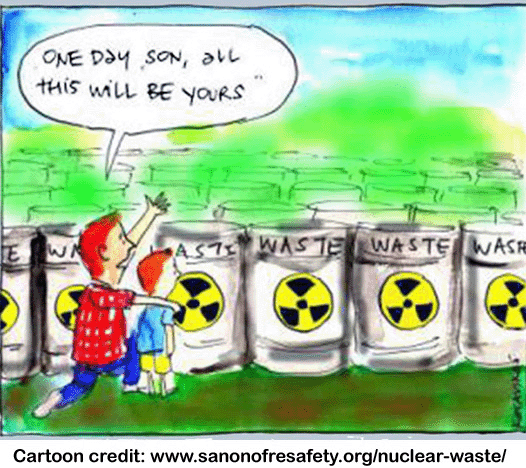
As we limp towards a general election later this year, energy policy will feature high on the political agenda.
By Tommy Sheppard, 23rd Feb 2024, https://www.edinburghnews.scotsman.com/news/opinion/columnists/nuclear-route-does-scotland-no-favours-tommy-sheppard-4529234
Sadly, though, it looks as if one aspect of that debate will escape serious scrutiny due to a cosy consensus between the main parties at Westminster. Nuclear power.
Earlier this week Parliament debated the government’s recently published civil nuclear roadmap. This hare-brained scheme sets out an ambition to quadruple the current 5.9 gigawatts of nuclear energy production by 2050. Sadly, not only does the Labour party support this Conservative plan, it accuses the government of dragging its feet on implementation, suggesting that if anything a Starmer administration will accelerate the nuclear programme.
It’s crazy that this 20th century technology still commands such widespread political support in the UK. A quick recap. Nuclear power is – by far – the most expensive way of generating electricity ever devised by mankind. Contrary to claims it is not a renewable energy source. It is fuelled by uranium ore of which there is approximately 90 years supply left, less if programmes expand. Most of this is in Kazakhstan so it hardly qualifies as a secure energy source.
Moreover, it produces toxic waste which has to be kept isolated from human beings for generations. The new roadmap by the way suggests a new form of reactor which will produce twice as much waste and has no credible plan to safeguard it.
You can only spend a pound once – and if the government spends billions on nuclear that investment will be siphoned off renewable energy development. The craziest part of Labour’s plan is to argue for a further windfall tax on oil and gas in order to subsidise new nuclear plants in England. Don’t get me wrong, corporations should pay fair taxes, especially on excess profits. But of all the things you might spend that revenue on, subsidising nuclear power must surely be the worst.
If this continues, our children will look back mid-century and wonder why we didn’t make use of the phenomenal natural energy resources from sun, sea and air. We can stop this nonsense by the simple measure of putting Scotland’s energy policy in the hands of the people who live here. Another reason why Scotland should be an independent country.
Tommy Sheppard is SNP Scotland & Constitutional Affairs Spokesperson
Navalny had a mixed past – was an “ultra nationalist”
Radio Free Europe, February 25, 2021
1 “…………………………On February 23, the prominent NGO Amnesty International withdrew Navalny from its list of “prisoners of conscience,” a designation reserved for people imprisoned for who they are or what they believe. Amnesty said Navalny, who is in prison on what he and his supporters call trumped-up charges aimed at silencing him, fell short of its criteria because of past statements the rights watchdog perceived as reaching the “threshold of advocacy of hatred.”
Amnesty’s recent probe into Navalny, who has come under scrutiny for his association with Russian nationalists and statements seen as racist and xenophobic, was prompted by a wave of complaints that appeared part of “a coordinated campaign” to discredit him after he was named a “prisoner of conscience” in January.
One anonymous Amnesty employee told Russian media that a Twitter thread about Navalny by Katya Kazbek — a U.S.-based freelance columnist and translator who has written for Russia’s state-funded media outlet RT and for RFE/RL — lists examples of objectionable comments made by Navalny and was cited by a wave of e-mails sent to the organization.
Kazbek, whose real name is Yekaterina Dubovitskaya, told RFE/RL she has “never been knowingly in touch with anyone connected to Amnesty International.”
In response, the liberal Yabloko party expelled Navalny from its ranks, but under the banner of a new group called the National Russian Liberation Movement in 2007 he released YouTube videos describing himself as a “certified nationalist” and advancing thinly veiled xenophobia.
In one clip, Navalny is shown in a dentist’s outfit as footage of migrants in Moscow is interspersed with his references to harmful tooth cavities. “I recommend full sanitization,” he says. “Everything in our way should be carefully but decisively be removed through deportation.”
In subsequent years Navalny publicly softened his tone but continued promoting conservative immigration policies, campaigning to introduce a visa regime with Central Asia, a major source of labor migrants to Russia, ahead of the 2018 presidential election from which the Kremlin ultimately barred him. He also railed against “Islamism” in posts to his blog as late as 2015.
Navalny has repeatedly stated in interviews that he doesn’t regret his past comments or videos, and suggested that an ability to engage both liberals and nationalists is part of his strength as a politician.
Environment Agency and Natural England behind Hinkley Point wetland plan, says MP
THE Environment Agency (EA) and Natural England (NE) were both ‘clearly
implicated’ in a plan to turn nearly 1,000 acres of prime West Somerset
farmland into wetland, said local MP Ian Liddell-Grainger. Mr
Liddell-Grainger accused the two agencies of hiding behind a smokescreen
while they promoted a project which had already aroused a lot of anger
among local people.
West Somerset Free Press 21st Feb 2024
DAY ONE: Assange Timeline Exposes US Motives
February 20, 2024
Julian Assange’s lawyers on Tuesday argued before the High Court about why the imprisoned publisher must be allowed to appeal against his extradition order, reports Joe Lauria.
By Joe Lauria, in London, Consortium News
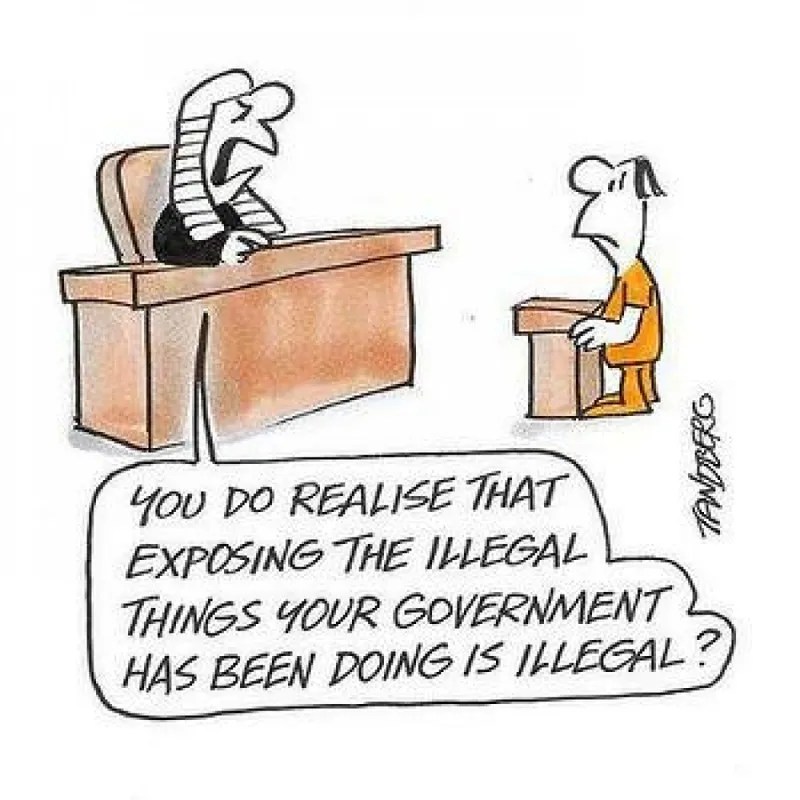
On Day One of Julian Assange’s attempt to appeal Britain’s order to extradite him to the United States, his lawyers laid out a timeline that exposed U.S. motives to destroy the journalist who revealed their high-level state crimes.
Before two High Court judges in the cramped, wood-paneled Courtroom 5 at the Royal Courts of Justice, Assange’s lawyers argued on Tuesday that two judges had seriously erred in the case on a number of grounds necessitating an appeal of the home secretary’s decision to extradite Assange to the United States.
High to the left of the court, next to oak shelves with neat rows of law books, was an empty iron cage. The court said it had invited Assange to either attend in person or via video link from Belmarsh Prison, where he has been locked up on remand for nearly five years. But Assange said he was too ill take part in any capacity, his lawyers confirmed.
Vanessa Baraitser, the district judge who presided over Assange’s 2020 extradition hearing, and Jonathan Swift, a High Court judge, came in for heavy criticism from Assange’s lawyers. Baraitser in January 2021 ordered Assange released on health grounds.
But she refused him bail while the U.S. appealed. On the basis of assurances that it would not mistreat Assange in the United States, the High Court reversed Baraitser’s decision. The U.K. Supreme Court then refused to take Assange’s challenge of the legality of these assurance and the home secretary signed the extradition order.
Assange’s last avenue of appeal is of the home secretary’s order as well as Baraitser’s 2021 decision, in which, on every point of law and many of fact, she sided with the United States. The application to pursue this appeal was rejected by a single High Court judge, Swift, last June.
He permitted his rejection of the application to itself be appealed. That two-day hearing began Tuesday before Justice Jeremy Johnson and Dame Victoria Sharp.
The Timeline
Assange lawyer Mark Summers made a forceful argument that the United States in essence is treating Assange no differently than any authoritarian regime would deal with a dissident journalist who revealed its secret crimes.
“There was evidence before the district judge that this prosecution was motivated to punish and inhibit the exposure of American state-level crimes,” Summers told the court. “There was unchallenged evidence” during Baraitser’s 2020 extradition hearing “of crimes that sit at the apex of criminality,” he said.
He said there was a direct nexus between Assange’s work to expose U.S. crimes and the U.S. pursuing him. “This is a prosecution for those disclosures,” he said. “There is a straight-line correlation between those disclosures and the prosecution, but the district judge (Baraitser) addressed none of this and neither did Swift.”
Summers then sketched out a timeline of events showing successive stages of motivation for the United States to go after Assange. “There was compelling circumstantial evidence why the U.S. brought this case,” he said.
First, he said, there was no prosecution of Assange (despite the Obama administration empaneling a grand jury) until 2016, when the International Criminal Court announced it would look into possible U.S. crimes in Afghanistan, following Assange’s disclosures. The U.S. then denounced him as a political actor.
Summers said “that morphed into plans to kill or rendition Assange” from the Ecuadorian embassy, where he had asylum, following the Vault 7 release of C.I.A. spying tools in 2017.
The then new C.I.A. Director Mike Pompeo, in his first public appearance in that position, denounced WikiLeaks as a hostile, non-state intelligence service, a carefully chosen legal term, Summers said, that permitted taking covert action against a target without Congressional knowledge.
Because these plans to kill or rendition Assange, asked for by President Donald Trump, raised alarms with White House lawyers, a legal prosecution was pursued as a way to determine where to put Assange if he were renditioned to the U.S., Summers said.
“This prosecution only emerged because of that rendition plan,” he said. “And the prosecution that emerged is selective and it is persecution.” It was selective because even though other outlets, such as Freitag and cryptome.org,, had published the unredacted diplomatic cables first, Assange was the only one charged.
“This is not a government acting on good faith pursuing a legal” path, he said……………………………………
Assange lawyer Edward Fitzgerald called espionage, with which Assange is charged, a “pure political offense.” The issue is crucial to Assange’s defense because the U.S.-U.K. Extradition Treaty bars extraditions for political offenses.
However, the Extradition Act, Parliament’s implementing legislation of the Treaty, does not mention political offenses. Baraitser ruled that the Act and not the Treaty should take precedence.
Assange’s team has been arguing that he is wanted for a political crime and therefore the extradition should not proceed. They argued that the Act bars extradition for “political opinion,” which they equate with “political offense.
A considerable amount of time in the five-hour hearing was thus spent by Assange’s lawyers making the point that Assange’s charges are political. Fitzgerald argued that Britain has extradition treaties with 158 nations and in all but two (Kuwait and the UAE), political offenses are barred.
Assange’s work was to influence and change U.S. policy, Fitzgerald said, therefore his work was political and he could not be extradited for his political views or opinions.
Informants!
Justices Johnson and Sharp appeared to be not extremely well-versed in the Assange case and seemed at times surprised by what they were hearing from Assange’s lawyers. But they had been prepared on the U.S. view of Assange allegedly harming U.S. informants.
What they didn’t know is that Assange had actually spent time redacting the names of U.S. informants from the Diplomatic Cables, while WikiLeaks‘ mainstream partners in 2010 did not.
Justice Johnson asked before lunch whether there were cases where someone had published the names of informants and were not prosecuted. After the break, Summers offered the example of Philip Agee, the ex-C.I.A. agent who revealed undercover agents’ names, some of whom were harmed, but he was never indicted for it.
Summers also mentioned The New York Times publishing names of informants in the Pentagon Papers. “The New York Times was never prosecuted,” Summers said. However, Richard Nixon indeed empaneled a grand jury in Boston to indict Times reporters but after it was revealed the government tapped whistleblower Daniel Ellsberg’s phone — and thus also the reporters’ — the case was dropped.
Despite their apparent unfamiliarity with the Assange case both judges seemed intrigued by its serious political, legal and press freedom issues. They are senior judges who might be less susceptible to political pressure.
The Death Penalty
The judges may also have been surprised to learn that under U.S. law and practice, (in this case with agreement from the British government), new charges could be added to Assange’s indictment after he would arrive in America. The Espionage Act, for instance, carries a provision for the death penalty if committed during wartime.
Britain does not have the death penalty and cannot extradite someone who could face capital punishment. Though the U.S. could offer Britain diplomatic assurances that it would not seek the death penalty against Assange, so far it has refused.
Fitzgerald also seemed to shock the courtroom by speaking of instances in U.S. courts where someone convicted for one crime could at sentencing receive time for another offense he or she was never tried for.
He expressed concern that though Assange was never charged with the Vault 7 C.I.A. leak, he might still be sentenced for it. He also said that at sentencing the rules of admissibility could be discarded, for example to consider evidence that was obtained through surveillance.
First Amendment
The judges may have been surprised to hear that the U.S. prosecutor in Virginia has said he may deny Assange his First Amendment rights during trial on U.S. soil because he is not a U.S. citizen. Pompeo stated more categorically that Assange would be without First Amendment protection.
Stripping the right of free speech is a violation of Article 10 of the European Court of Human Rights, Assange’s lawyers argued.
What Strasbourg Would Do
Summers brought the court through a scenario in which the European Court of Human Rights had tried Chelsea Manning, instead of a U.S. military court. He said whistleblower protection laws in Europe had advanced to the point where he believed the court would have weighed the harm done by breaking a confidentiality agreement and the harm prevented by blowing the whistle…….
The overall strategy of Assange’s lawyers appeared to be to make it obvious to these judges that there are vast grounds for appeal as well as arguments to toss the case (such as evidence of C.I.A. spying on Assange’s privileged conversations with his lawyers)
Forseeable
Assange’s lawyers also argued that Article 7 of the European Convention on Human Rights says someone must foresee that their behavior is a crime before he or she could be charged with it.
They said Assange could not have known that publishing his classified disclosures could have led to prosecution under the Espionage Act because no journalist or publisher had ever been charged under it for possession and publication of classified material. Therefore a violation of Article 7 should bar extradition, they say……………………
The hearing continues on Wednesday with lawyers representing the United States presenting their arguments about why Assange should not be allowed to appeal. https://consortiumnews.com/2024/02/20/day-one-assange-timeline-exposes-us-motives/
—
Utility EdF Writes Down $14B Loss on Delayed UK Nuclear Megaproject

By Peter Reina, February 20, 2024, https://www.enr.com/articles/58180-utility-edf-writes-down-14b-loss-on-delayed-uk-nuclear-megaproject
Following recent news of additional delays and cost hikes on the U.K.’s 3,260-MW Hinkley Point C nuclear power plant, the project company has reported an impairment of $14 billion on its assets.
French state controlled utiilty firm Electricité de France (EdF), which controls project financing and construction, last month updated Hinkley Point C’s forecast completion to between 2029 and 2031, with costs rising to a range of $39-43 billion. The previous completion target set in May 2022 was June 2027. EdF is currently financing all project construction costs.
Announcing its 2023 annual report, the utility also set this March as the expected target date for fuel loading at its 1,650-MW Flamanville 3 nuclear power plant on the north French coast. When work started in 2007, fuel loading was forecast for 2011.
Victory: Nuclear Free Local Authorities welcome Council vote on South Holderness nuke dump plan

NFLA 21 Feb 24,
The UK/Ireland Nuclear Free Local Authorities have welcomed today’s (21 February) overwhelming decision by the East Riding of Yorkshire Council to withdraw South Holderness from further consideration as a potential location for a high-level radioactive waste dump.
A motion was brought by South East Holderness Ward Councillor Sean McMaster to a meeting of the Full Council calling for the Council to ‘use its right of withdrawal with immediate effect due to the strong opposition from the communities of South Holderness’ . The Leader of the Council, Councillor Anne Handley, had already indicated her support for the motion, as had the Leaders of the Opposition Groups. Consequently, the motion was carried on a cross-party basis with 52 in favour and only 1 against.
News that the area was under consideration by Nuclear Waste Services was only announced in late January, with Invest East Yorkshire listed as the ‘Interested Party’ and a Working Group established with Dr David Richards as Chair.
The news prompted a massive public backlash with local people in the hundreds flocking to join a Facebook group, South Holderness against the GDF. Tens of thousands of leaflets have been distributed by local volunteers who have been pounding the streets in all weathers to inform residents of their reasons for opposing the plan, whilst 1,200 local people attended the first round of public events hosted by NWS staff, many to register their opposition and pose challenging questions to geologists from the nuclear industry. Chair Lynn Massey-Davis appeared in the first few days of the campaign to challenge the legitimacy of the dump in a spirited performance in a television interview with Peter Levy on BBC Look North.
The NFLAs have been proud to have offered some advice to the group and to local politicians at the Withernsea Town and East Riding Councils. Following an online conversation with the Labour Group Leader, Councillor Steve Gallant, the NFLA Secretary produced a bespoke briefing on the Right to Withdraw (see notes) for circulation to Councillors.
21st February 2024
Victory: NFLAs welcome Council vote on South Holderness nuke dump plan
The UK/Ireland Nuclear Free Local Authorities have welcomed today’s (21 February) overwhelming decision by the East Riding of Yorkshire Council to withdraw South Holderness from further consideration as a potential location for a high-level radioactive waste dump.
A motion was brought by South East Holderness Ward Councillor Sean McMaster to a meeting of the Full Council calling for the Council to ‘use its right of withdrawal with immediate effect due to the strong opposition from the communities of South Holderness’ . The Leader of the Council, Councillor Anne Handley, had already indicated her support for the motion, as had the Leaders of the Opposition Groups. Consequently, the motion was carried on a cross-party basis with 52 in favour and only 1 against.
News that the area was under consideration by Nuclear Waste Services was only announced in late January, with Invest East Yorkshire listed as the ‘Interested Party’ and a Working Group established with Dr David Richards as Chair.
The news prompted a massive public backlash with local people in the hundreds flocking to join a Facebook group, South Holderness against the GDF. Tens of thousands of leaflets have been distributed by local volunteers who have been pounding the streets in all weathers to inform residents of their reasons for opposing the plan, whilst 1,200 local people attended the first round of public events hosted by NWS staff, many to register their opposition and pose challenging questions to geologists from the nuclear industry. Chair Lynn Massey-Davis appeared in the first few days of the campaign to challenge the legitimacy of the dump in a spirited performance in a television interview with Peter Levy on BBC Look North.
The NFLAs have been proud to have offered some advice to the group and to local politicians at the Withernsea Town and East Riding Councils. Following an online conversation with the Labour Group Leader, Councillor Steve Gallant, the NFLA Secretary produced a bespoke briefing on the Right to Withdraw (see notes) for circulation to Councillors.
The impact of this decision will be profound. Under the published Community Guidance governing the GDF siting process, consideration of any Search Area must have the support of a Relevant Principal Local Authority (RPLA). The East Riding of Yorkshire Council is the RPLA for South Holderness and as such has the Right to Withdraw. Although the Community Guidance is vague and contradictory, appearing both to suggest that withdrawal can occur at any time or only once a Community Partnership is formed, it is clear that there will be little point NWS investing further money, time and staff resources on taking its plan forward at this early stage without political support; clearly then the process must soon come to an end.
Councillor David Blackburn, Chair of the NFLAs English Forum, was full of praise for local campaigners:
Commenting on the vote, Cllr Blackburn added:
“I am glad that Councillors of all parties saw sense and supported this motion on a cross-party basis. South Holderness is an agricultural and touristic area and as such was never appropriate for consideration for a nuclear waste dump. So what I do find inexplicable is why the Leader of the Council ever agreed for East Riding of Yorkshire Council to engage with the process and become a member of the Working Group in the first place, as a resolute NO would have killed the process off at the onset, as happened at Hartlepool.”
Nuclear Waste Services have now issued a press statement stating that it ‘fully respects the council’s decision to withdraw from the GDF siting process. Together with the Working Group Chair, NWS will now take the necessary steps to wind down the South Holderness Working Group and respond to outstanding requests for more information’. (See notes)…………………………………… more https://www.nuclearpolicy.info/news/victory-nflas-welcome-council-vote-on-south-holderness-nuke-dump-plan/
Locals campaign to oppose Hinkley Point C’s plans to build a saltmarsh on the Pawlett Hams
LOCALS to a village near Bridgwater have set up a campaign group to oppose
Hinkley Point C’s plans to build a saltmarsh on the Pawlett Hams. The
group, named Protect Pawlett Hams, describes the area of land as ‘a
treasured expanse of 320 hectares of vibrant fresh water wetland and
grazing land’. The saltmarsh, planned by EDF to facilitate the Hinkley
Point C nuclear power station, is currently under public consultation, and
comes as an alternative to a previously proposed acoustic fish deterrent
system, which would reportedly make noise louder than a jumbo jet, 24-hours
per day for the next 60 years.
Bridgwater Mercury 20th Feb 2024
https://www.bridgwatermercury.co.uk/news/24130587.locals-campaign-hinkley-point-c-saltmarsh-plans
Somerset County Gazette 20th Feb 2024
Local environmental group says EDF’s plans for new salt marsh would be
an ‘ecological disaster’.
Burnham-on-sea.com 20th Feb 2024
Chris Hedges: Julian Assange’s Day in Court

The defense must convince the two judges that the District Judge made serious legal errors to see an appeal granted.
They argued that espionage is, as a matter of law, a political offense and that the extradition treaty with the U.S. prohibits extradition for political offenses. They focused on the extensive UK law, common law and international law that defines espionage as a “pure political offense” because e it is directed against a state apparatus. For this reason, those charged with espionage should be protected from extradition.
The hearing was, after those in 2020 that focused on Julian’s mental and psychological health, refreshing in that it discussed the crimes committed by the U.S. and the importance of making them public.
Julian Assange’s lawyers — in a final bid on Tuesday to stop his extradition — fought valiantly to poke holes in the case of the prosecution to obtain an appeal.
By Chris Hedges https://scheerpost.com/2024/02/21/chris-hedges-julian-assanges-day-in-court/
LONDON — By the afternoon the video link, which would have allowed Julian Assange to follow his final U.K. appeal to prevent his extradition, had been turned off. Julian, his attorneys said, was too ill to attend, too ill even to follow the court proceedings on a link, although it was possible he was no longer interested in sitting through another judicial lynching. The rectangular screen, tucked under the black wrought iron bars that enclosed the upper left hand corner balcony of the courtroom where Julian would have been caged as a defendant, was perhaps a metaphor for the emptiness of this long and convoluted judicial pantomime.
he arcane procedural rules — the lawyers in their curled blonde wigs and robes, the spectral figure of the two judges looking down on the court from their raised dais in their gray wigs and forked white collars, the burnished walnut paneled walls, the rows of lancet windows, the shelves on either side filled with law books in brown, green, red, crimson, blue and beige leather bindings, the defense lawyers, Edward Fitzgerald KC and Mark Summers KC, addressing the two judges, Dame Victoria Sharp and Justice Johnson, as “your lady” and “my lord” — were all dusty Victorian props employed in a modern Anglo-American show trial. It was a harbinger of a decrepit justice system that, subservient to state and corporate power, is designed to strip us of our rights by judicial fiat.
The physical and psychological disintegration of Julian, seven years trapped in the Ecuadorian Embassy in London and nearly five years held on remand in the high-security HM Prison Belmarsh, was always the point, what Nils Melzer the former U.N. Special Rapporteur on torture calls his “slow-motion execution.” Political leaders, and their echo chambers in the media, fall all over themselves to denounce the treatment of Alexei Navalny but say little when we do the same to Julian. The legal farce grinds forward like the interminable case of Jarndyce and Jarndyce in Charles Dickens’ novel Bleak House. It will probably grind on for a few more months — one can’t expect the Biden administration to add the extradition of Julian to all its other political woes. It may take months to issue a ruling, or grant one or two appeal requests, as Julian continues to waste away in HM Prison Belmarsh.
Julian’s nearly 15-year legal battle began in 2010 when WikiLeaks published classified military files from the wars in Iraq and Afghanistan — including footage showing a U.S. helicopter gunning down civilians, including two Reuters journalists in Baghdad. He took refuge in London’s Ecuadorian embassy, before being arrested by the Metropolitan Police in 2019 who were permitted by the Ecuadorian embassy to enter and seize him. He has been held for nearly five years in HM Prison Belmarsh.
Julian did not commit a crime. He is not a spy. He did not purloin classified documents. He did what we all do, although he did it in a far more important way. He published voluminous material, leaked to him by Chelsea Manning, which exposed U.S. war crimes, lies, corruption, torture and assassinations. He ripped back the veil to expose the murderous machinery of the U.S. empire.
The two-day hearing is Julian’s last chance to appeal the extradition decision made in 2022 by the then British home secretary, Priti Patel. On Wednesday the prosecution will make its arguments. If he is denied an appeal he can request the European Court of Human Rights (ECtHR) for a stay of execution under Rule 39, which is given in “exceptional circumstances” and “only where there is an imminent risk of irreparable harm.” But the British court may order Julian’s immediate extradition prior to a Rule 39 instruction or may decide to ignore a request from the ECtHR to allow Julian to have his case heard by the court.
District Judge Vanessa Baraitser in January 2021, at Westminster Magistrates’ Court, refused to authorize the extradition request. In her 132-page ruling, she found that there was a “substantial risk” Julian would commit suicide due to the severity of the conditions he would endure in the U.S. prison system. At the same time, she accepted all the charges leveled by the U.S. against Julian as being filed in good faith. She rejected the arguments that his case was politically motivated, that he would not get a fair trial in the U.S. and that his prosecution is an assault on the freedom of the press.
Baraitser’s decision was overturned after the U.S. government appealed to the High Court in London. Although the High Court accepted Baraitser’s conclusions about Julian’s “substantial risk” of suicide if he was subjected to certain conditions within a U.S. prison, it also accepted four assurances in U.S. Diplomatic Note no. 74, given to the court in February 2021, which promised Julian would be treated well. The “assurances” state that Julian will not be subject to Special Administrative Measure. They promise that Julian, an Australian citizen, can serve his sentence in Australia if the Australian government requests his extradition. They promise he will receive adequate clinical and psychological care. They promise that, pre-trial and post-trial, Julian will not be held in the Administrative Maximum Facility in Florence, Colorado.
Continue readingUK lawmakers seek reassurances after nuclear missile test fails for second time
By CNN, Associated Press9News Staff, Feb 22, 2024
British lawmakers are seeking reassurances about the nation’s nuclear deterrent after a test of the system failed dramatically last month when an unarmed missile crashed into the sea near the submarine from which it was launched.
It marks the second time in eight years that the country’s Trident II ballistic missiles have malfunctioned during trials.
An “anomaly occurred” during the test on board the nuclear-powered submarine HMS Vanguard, a UK Ministry of Defence spokesperson said on Wednesday in a statement……………
Britain’s Trident nuclear deterrent system suffered an earlier failure off the coast of Florida in June 2016, a US defence official with direct knowledge of the incident previously told CNN.
The latest incident, first reported by The Sun newspaper, occurred during an exercise on January 30 near Florida. https://www.9news.com.au/world/uk-trident-nuclear-missile-test-fails-sparking-concerns-about-program/0fe0541b-67e9-4690-b31a-291e81d8bc5b
Stop Sizewell C’s Response to Regulated Asset Base Licence Consultation

Stop Sizewell C’s Response to Regulated Asset Base Licence Consultation,
Modifications to Sizewell C Limited’s electricity generation licence.
It is entirely credible that the scenario of Hinkley Point C – where predicted
overnight costs have almost doubled, and completion time has slipped by 5
or 6 years since construction began – may be replicated at Sizewell C, with
the obvious conclusion that consumers would pay more, and for longer.
DESNZ should therefore revise the figures in the RAB impact assessment taking
this new information and inflation into account, and publish it to show how
bills would be impacted. We wish to highlight the conclusions of the
Science Information and Technology Committee which said of Sizewell C in
July 2023: “A headline lower cost than Hinkley Point C is not justified
if the value of the risk is too great”
Stop Sizewell C 29th Jan 2024
Buried trial verdict confirms false-flag Maidan massacre in Ukraine
Oligarchic and far-right leaders and organizations, including neo-Nazis, who were involved in this false-flag mass killing to seize power in Ukraine, were hailed by Western and Ukrainian politicians, media, and even many academics as heroes and defenders of democrac
Ukrainian-Canadian political scientist and professor Ivan Katchanovski on the hidden origins of the Russia-Ukraine war
Ivan Katchanovski / February 20, 2024
A nearly one-million-word verdict from Ukraine’s Maidan massacre trial has recently confirmed that many Maidan activists were shot not by members of Ukraine’s Berkut special police force or other law enforcement personnel but by snipers in the far-right-controlled Hotel Ukraina and other Maidan-controlled locations a decade ago today. The verdict, handed down on October 18, 2023, states specifically that this hotel was controlled by Maidan activists and that an armed, far-right-linked Maidan group was in the hotel and fired from it. It also confirms that there was no Russian involvement in the massacre and that no massacre orders were issued by then President Viktor Yanukovych or his ministers. The verdict concludes that the Euromaidan was at the time of this massacre not a peaceful protest but a “rebellion” that involved the killing of Berkut and other police personnel.
This is an important official acknowledgement, not only because the violence represented the most significant case of mass murder, violent crime, and human rights violations in independent Ukraine to that point, but also because of the subsequent conflicts to which it has led or contributed. Notably, the massacre precipitated the violent overthrow of Yanukovych and his government, who were falsely blamed for carrying it out. It then spiralled into the Russian annexation of Crimea, the subsequent civil war and Russian interventions in the Donbas, and the conflicts between Ukraine and Russia, and between Russia and the Western powers, which Russia dramatically escalated with its illegal invasion of Ukraine on February 24, 2022.
There has been, however, a blackout of the verdict’s confirmation of the Maidan snipers in the Ukrainian media and, with a few notable exceptions, the Western mainstream media. Moreover, in an op-ed piece in The Bulwark, an online neoconservative magazine, author Cathy Young misrepresented the verdict, falsely claiming that it had found the Berkut police responsible for the deaths of 40 of the 48 protesters killed. Young also denied and openly whitewashed the existence of Maidan snipers and the far-right’s involvement in the Maidan massacre, labelling it a “conspiracy theory” despite clear and overwhelming evidence to the contrary in the verdict, the trial, and the investigation, as well as in academic studies of the event. Such deliberate omission and misrepresentation has been perpetrated in spite of the fact that the verdict’s Ukrainian text, as well as automatic English translation of the relevant excerpts, are publicly available, and in spite viral tweets describing and quoting from it.
The verdict by the Ukrainian Sviatoshyn District Court in Kyiv, along with the findings of the investigation by the Ukrainian prosecutor general’s office (GPU), comprise a de facto official admission—on the part of Ukraine’s justice system no less, which cannot be called independent—that on February 20, 2014, at least 10 of the 48 Maidan activists killed, and 115 of the 172 wounded, were shot not by Berkut or other law enforcement personnel firing from government-controlled areas but by Maidan snipers operating in Maidan-controlled locations. The government investigation admitted that one dead protester and 77 wounded Maidan activists were not shot from Berkut-controlled sectors, and therefore did not charge anyone for those crimes. Of course, it stands to reason that if these activists were not shot by government personnel, they must have been shot by the Maidan snipers.
The verdict, issued by the Kyiv court shortly before the tenth anniversary of the Euromaidan, shows that the Maidan massacre narrative that has been propagated by governments, the mainstream media, and a variety of info-warriors in the West and in Ukraine is false. The proponents of this narrative have called the Maidan a peaceful protest and presented the massacre of the Maidan protesters as a crime perpetrated by government snipers on the orders of Yanukovych and his government. The prosecution, the victims’ lawyers, the New York Times and other mainstream media (with some notable exceptions), Wikipedia, self-proclaimed experts, and info-warriors denied the presence of snipers in the Hotel Ukraina and other Maidan-controlled buildings, the shooting of Maidan protesters by these snipers, and the far-right’s involvement in this mass killing, and claimed instead that such ideas comprise a “conspiracy theory” and “Russian disinformation.” The exceptions included reports by ARD, BBC, The Nation, Jacobin, Court House News, Ekathimerini (Greece), Jyllands-Posten (Denmark), Weltwoche (Switzerland), Il Fatto Quotidiano (Italy), and El Nacional (Spain)—in addition to Canadian Dimension, which has published some of my other writing on this subject………………………………………………………………………………………………………………………………………………………………………………………………………………….
Wikipedia editors who deliberately and literally misrepresent and whitewash the false-flag Maidan massacre also systematically misrepresent and whitewash the far-right in Ukraine and its involvement in the Holocaust. These editors include Wise2, also known as Prohoshka, who has also propagated “scientific anti-Semitism” and whitewashed the involvement of the Organisation of Ukrainian Nationalists (OUN) in the 1941 Lviv pogroms during the Nazi occupation of Ukraine, justifying it on the basis of “Jewish collaboration.” Another Wikipedia editor, who uses the handle My Very Best Wishes, brazenly whitewashed the fact that monuments in Canada to the Galicia Division and Roman Shukhevych are in fact commemorating a division of the Waffen-SS and a Nazi collaborator. A scholarly article by a noted historian at the University of Ottawa also listed My Very Best Wishes as one of the editors involved in an intentional distortion of Wikipedia’s history of the Holocaust in Poland. This editor also recently wrote, falsely, on Wikipedia’s biographical page on Elon Musk about the latter’s supposed “involvement in the Russian invasion of Ukraine.” Various publications and websites have identified Wise2/Prohoshka as a far-right Svoboda activist named Svyatoslav Gut, and My Very Best Wishes as Andrei Lomize, a biophysics researcher at the University of Michigan.
Fabricated evidence against Berkut, no massacre order by Yanukovych
The trial verdict also confirms the absence of evidence for any order by Yanukovych or his government to massacre the Maidan protesters. This is a crucial official acknowledgment, since Yanukovych and his government were overthrown on the basis of accusations of having ordered the massacre. Joe Biden, then US vice-president, wrote in his memoirs that during the Maidan massacre, he called Yanukovych and told him that “it was over; time for him to call off his gunmen and walk away,” that he “had lost the confidence of the Ukrainian people … and he was going to be judged harshly by history if he kept killing them.”
In addition to acquitting two Berkut policemen for killing and wounding the Maidan activists, the verdict states that all five accused Berkut officers had been blamed, baselessly, for killing 13 Maidan protesters and wounding another 29. This is further evidence of trumped-up, politically motivated charges.
The decision to convict in absentia three Berkut officers, who had been transferred by Zelensky to the Donbas separatists in a 2019 exchange, is a political one. The charging of these officers for the murders of 31 of 48 Maidan protesters killed, and the attempted murders of another 44 of 80, was based on a single, fabricated forensic examination, not to mention posited on the notion of collective responsibility. This single forensic examination of bullets, undertaken five years after the massacre, reversed the results of some 40 earlier forensic bullet examinations, including a computer-based examination which showed that bullets taken from the bodies of killed Maidan protesters did not match the Berkut Kalashnikov rifles.
The three Berkut policemen were convicted in absentia based on this single, fabricated forensic examination as well as on their presumed collective responsibility for the murders of 31 protesters and the attempted murders of 44 more. On the same basis and contrary to all other evidence, a Berkut commander was also convicted of the manslaughter of four protesters and the wounding of another eight, for supposedly having ordered his officers to fire indiscriminately during the evacuation of internal troops by the Berkut company, and its subsequent retreat after one Berkut officer was killed and another wounded……………………………………………………………………………………………………………………………………………….
The verdict means that a decade since this crucial massacre—one of the most documented cases of mass killing in history—nobody is in prison for the murders and attempted murders of Maidan activists and police officers, or for shooting at foreign journalists. The silence on the part of those who deny the false-flag Maidan massacre, who call these claims a “conspiracy theory” and thereby whitewash the mass murderers of the far-right, is both deafening and revealing.
Media blackout and whitewash
All Ukrainian media reports omitted the verdict’s confirmations of the false-flag massacre. The Western media (with a few notable exceptions) also omitted this information. Moreover, writer Cathy Young, mentioned above, deliberately misrepresented the Maidan massacre trial verdict, branding the revelations about Maidan snipers operating in the Hotel Ukraina a “conspiracy theory” and claiming, falsely, that the verdict did not indicate that Maidan protesters were shot from the hotel or other Maidan-controlled locations, and that it did not disprove involvement by Russian snipers. ………………………………………………………………………………
Oligarchic and far-right leaders and organizations, including neo-Nazis, who were involved in this false-flag mass killing to seize power in Ukraine, were hailed by Western and Ukrainian politicians, media, and even many academics as heroes and defenders of democracy. They were invited for government visits and talks at universities, including in Canada. Government leaders, journalists, investigators, Maidan lawyers, NGO activists, partisan researchers, and info-warriors who branded the reports of the Maidan snipers and their false-flag massacre a conspiracy theory and propaganda were hailed as defenders of justice and human rights, and given grants by Western governments, foundations, and universities, including even a Nobel Peace Prize.
It is doubtful that any of the above parties will suffer any consequences for such fraud and whitewashing of mass murderers, in particular those of the far-right. Ukraine and Ukrainians continue to suffer the consequences of this massacre, which has spiralled into major conflicts, including the ongoing and devastating Russia-Ukraine war, which is also a dangerous, unwinnable proxy war undertaken by the West against Russia.
Ivan Katchanovski teaches at the School of Political Studies at the University of Ottawa. He is the author of Cleft Countries: Regional Political Divisions and Cultures in Post-Soviet Ukraine and Moldova and co-author of Historical Dictionary of Ukraine (Second Edition) and The Paradox of American Unionism: Why Americans Like Unions More Than Canadians Do, But Join Much Less. https://canadiandimension.com/articles/view/buried-trial-verdict-confirms-false-flag-maidan-massacre-in-ukraine-2024
Germany and nuclear weapons: A difficult history

Volker Witting | Rina Goldenberg, 02/17/2024February 17, 2024
Donald Trump’s suggestion the US will no longer apply NATO’s principle of collective defense should he become president again has sent shockwaves through Europe.
German Defense Minister Boris Pistorius is annoyed by the current debate about European nuclear weapons.“There is no reason to discuss the nuclear umbrella now,” he told public broadcaster ARD.
Ever since Donald Trump suggested that, as US president, he would not provide military assistance to NATO countries if they invested less than 2% of their GDP in their defense, German politicians have been discussing whether French and British nuclear weapons would suffice as a protective shield or whether Europe needs new nuclear weapons.
“The debate about European nuclear weapons is a very German debate that we don’t see in any other country,” political scientist Karl-Heinz Kamp from the German Council on Foreign Relations (DGAP) told DW — especially not in Eastern Europe, where there is a constant perceived threat from Russian President Vladimir Putin’s Russia.
Germany has a special history: Germany was “seen as an intrinsically aggressive country, that had started two world wars and could not be trusted with nuclear weapons,” said Kamp.
Germany-based nukes during the Cold War
In 1954, not long after the end of World War II, the first chancellor of the Federal Republic of Germany, Konrad Adenauer, signed an agreement renouncing the production of its own nuclear, biological or chemical weapons on its territory. In return, the US included West Germany in its nuclear deterrence policy against the Soviet-led Warsaw Pact.
In 1958, the German parliament, the Bundestag, approved the deployment of US nuclear weapons, despite some pacifist protests among the population. In 1960, 1,500 US nuclear warheads were stored in West Germany and a further 1,500 in the rest of Western Europe.
The nuclear weapons were also available to the Bundeswehr for training and use in the “case of defense.” “There was never any discussion about Germany acquiring its own nuclear weapons,” said Kamp.
The West German and European peace movements grew. The protest against the “NATO Dual-Track Decision” in 1982 saw over a million people in West Germany take to the streets in protest against the planned stationing of new US medium-range missiles in the country.
Nevertheless, on November 22, 1983, a center-right majority in the Bundestag approved the stationing of the missiles in US bases shortly thereafter. At the time, the Greens were newly represented in the Bundestag and appealed to the Federal Constitutional Court against the storing and deployment of nuclear missiles on West German territory. This bid was rejected as unfounded in December 1984.
During the Cold War, East Germany, the communist German Democratic Republic (GDR), was part of the Warsaw Pact military alliance, and from 1958, nuclear missiles and warheads were stationed in Soviet military bases on GDR territory. Some were withdrawn in 1988 as part of the Intermediate-Range Nuclear Forces Treaty between the US and the Soviet Union.
After German reunification and the withdrawal of the Soviet military, the territory of the former GDR officially became free of nuclear weapons in 1991.
Post-Cold War Germany
After the fall of the Berlin Wall in 1989, the collapse of the Soviet Union and the end of the division between East and West Germany, the German position was once again cemented in the so-called “Two-Plus-Four Treaty”: No nuclear weapons! On September 12, 1990, the four victorious powers of World War II (the US, the Soviet Union, France and UK) stipulated that Germany East and West should be reunified and renounce nuclear weapons.
Kamp says this was hardly surprising, because “a German nuclear power would be something that would cause horror. For historical reasons alone.”
The US government withdrew many of these nuclear warheads after the collapse of the Soviet Union, though an estimated 180 US nuclear weapons are still stored in Europe, in Italy, Turkey, Belgium, the Netherlands and Germany.
Experts believe that 20 US nuclear warheads are currently stored in the town of Büchel in Rhineland-Palatinate, western Germany. “But the decision-making authority over these weapons lies solely with the American president,” explained Kamp.
Any debate about Germany acquiring its own nuclear weapons is completely unrealistic, says political scientist Peter Rudolf from the German Institute for International and Security Affairs. Nuclear bombs need to be stored so that they are not easy targets, he told the Frankfurter Allgemeine daily.
“Survivable nuclear weapons would have to be on nuclear-powered submarines that can remain underwater for a very long time, he said, pointing to equipment the Bundeswehr does not have. “So there are so many problems standing in the way of a German nuclear bomb that it has no relevance to current crises,” Rudolf concluded.
“Those who are now talking about a European defense dimension are not talking about German nuclear weapons, because Germany is a member of the Nuclear Non-Proliferation Treaty and has made several binding commitments under international law to renounce the possession of weapons of mass destruction — including nuclear weapons,” agreed Kamp.
Defense Minister Pistorius, meanwhile, who made headlines not so long ago saying Germany should get “war-ready”, is now keen to brush the whole debate aside: He told ARD that “the majority of those in charge in the United States of America know exactly what they have in their transatlantic partners in Europe, what they have in NATO.”
And Kamp agrees: “Trump may be able to damage NATO considerably, but he cannot destroy it. You can’t destroy decades of transatlantic relations in one term of office.”
Edited by Ben Knight and Peter Hille
1 This Month





PLEASE OPPOSE HR 8255 AND S.3639 – bills would accelerate satellite deployment, with no environmental review or safeguards – https://ncstd5li.quorum.us/campaign/169331/
To see nuclear-related stories in greater depth and intensity – go to https://nuclearinformation.wordpress.com
-
Archives
- October 2026 (10)
- September 2026 (339)
- August 2026 (330)
- July 2026 (355)
- June 2026 (287)
- May 2026 (306)
- April 2026 (356)
- March 2026 (251)
- February 2026 (267)
- January 2026 (308)
- December 2025 (358)
- November 2025 (359)
-
Categories
- 1
- 1 NUCLEAR ISSUES
- business and costs
- climate change
- culture and arts
- ENERGY
- environment
- health
- history
- indigenous issues
- Legal
- marketing of nuclear
- media
- opposition to nuclear
- PERSONAL STORIES
- politics
- politics international
- Religion and ethics
- safety
- secrets,lies and civil liberties
- spinbuster
- technology
- Uranium
- wastes
- weapons and war
- Women
- 2 WORLD
- ACTION
- AFRICA
- Atrocities
- AUSTRALIA
- Christina's notes
- Christina's themes
- culture and arts
- Events
- Fuk 2022
- Fuk 2023
- Fukushima 2017
- Fukushima 2018
- fukushima 2019
- Fukushima 2020
- Fukushima 2021
- general
- global warming
- Humour (God we need it)
- Nuclear
- RARE EARTHS
- Reference
- resources – print
- Resources -audiovicual
- Weekly Newsletter
- World
- World Nuclear
- YouTube
-
RSS
Entries RSS
Comments RSS

