Cancer “epidemic” in the Young as Radioactive Wastes are Increasingly Dispersed to the Environment meanwhile Nuclear given “green” status in Brussels.

BY MARIANNEWILDART https://mariannewildart.wordpress.com/2024/03/24/cancer-epidemic-in-the-young-as-radioactive-wastes-are-increasingly-dispersed-to-the-environment-meanwhile-nuclear-given-green-status-in-brussels/
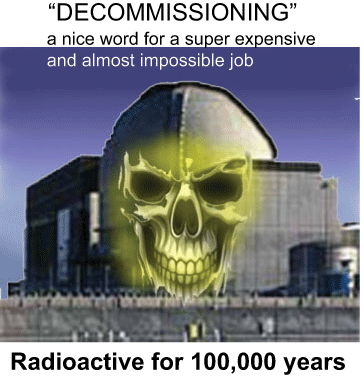
“Decommissioning” old and redundant nuclear plants sounds great and is greenwashed by the nuclear industry and Government as “Nuclear Restoration Services” . But in reality “decommissioning” means dispersal of nuclear wastes to the air, sea and land. Laws have been changed (despite opposition by Radiation Free Lakeland and others) to facilitate this by “moving waste up the heirarchy” ie what once was banned as too dangerous in landfill, incinerators and radioactive scrap metal is now routinely dispersed to the public realm. This also means that far higher level wastes are proposed for Geological Disposal than was the case in the 1990s when the NIREX inquiry stopped plans for intermediate and low level wastes in a deep nuclear dump.
In the same week the “Princess of Wales reveals diagnosis, doctors warn of mysterious cancer ‘epidemic” but the finger of suspicion never falls on the increase in radioactive wastes now being chucked into the public realm – nope the public are asked to fill in polls on whether they think processed food, lack of exercise, smoking is to blame for increase in cancers. In other words folks – “its your fault” despite the increased burden on your body from radiation and chemicals in the public realm.

Also in the same week EU ‘leaders’ in Brussels met to sign a Declaration pushing new nuclear “as part of the transition to a net-zero-emissions society”. The International Atomic Energy Agency’s Nuclear Energy Summit in Brussels on March 21 was protested by more than 40 organisations and we support that protest. But our support was tempered with the knowledge that rather than shouting about the radioactive and chemical toxic burden on the planet and people NGOs have for too long focussed on the narrative that nuclear is not a “climate solution.” NGOs “aim is to highlight that nuclear energy is a dangerous distraction from real climate solutions.” It is good to see opposition but by not pushing hard against the full consequences of nuclear (this is especially true of NGOs in the UK with few exceptions ) , the industry has been given a free ride to push its ‘climate solution’ agenda in the knowledge that it will not be overly tarnished by NGOs’ in the public ’s perception as Poison Power.
Of course it is a climate solution in the sense that the nuclear mafia agenda for the planet and its human and non-human inhabitants mean that we will not be in the least bit concerned about the climate.

Beyond Nuclear reported from Brussels and produced an excellent leaflet “The Lying Piper of Nukeland” :
The IAEA and 30 countries that met in Brussels on March 21, spun false nuclear fairy tales, then issued a suitably “solemn pledge” to expand nuclear power, effectively announcing their own funeral. Many European groups protested in Brussels at the expo center where the summit was held .
Man blames nuclear meltdown for deformities in city more radioactive than Chernobyl

Ozersk – code named City 40 – was the birthplace of the Soviet nuclear weapons programme, now it’s one of the most contaminated places on the planet with residents exposed to high radiation levels.
By Kelly Williams, Assistant News Editor (Live) https://www.dailystar.co.uk/news/world-news/man-blames-nuclear-meltdown-deformities-32405120
A man living in a secret city five times more radioactive than Chernobyl has been left with facial deformities he blames on huge nuclear meltdowns.
Vakil Batirshin has massively swollen lymph nodes said to be caused by radiation-related illness. He lives in Ozersk – code named City 40 in Russia – which was built in total secrecy around the huge Mayak nuclear power plant by the Soviets in 1946.
For the first eight years after City 40 was built, Ozersk residents were forbidden from communicating with the outside world. Like Chernobyl, it was designed as a place to house the scientists working at the plant who – unbeknownst to the world – were leading the Soviet Union’s nuclear weapons programme during the Cold War era.
Locals were told they were “the nuclear shield and saviours of the world,” and everyone on the outside was an enemy.
They also kept it a secret that the extreme exposure to radiation was affecting the health of the city’s inhabitants. They started to get sick and die and the authorities were clandestine about the mortality rate.
However, the city’s graveyard with all its young victims tells the story.
Ozersk, nicknamed “The graveyard of the Earth,” was surrounded by guarded gates and barbed wire fences and did not appear on any maps.
Its inhabitants’ identities were also erased from the Soviet census to guard their secret.
The Mayak nuclear plant went through Russia’s biggest nuclear disaster when the facility allegedly dumped 200million curies worth of radioactive material into the environment around Ozersk.
The residents also suffered the Kyshtym disaster in 1957, the worst nuclear disaster the world had seen before Chernobyl.
Radiation bathed the city when a cooling system exploded at Mayak with the force of 100 tons of dynamite.
One of the nearby lakes has been so heavily contaminated by plutonium that locals have renamed it the “Lake of Death” or “Plutonium Lake”.
In an interview which resurfaced earlier this week on X (formerly Twitter), Vakil Batirshin struggles to speak, his neck is painfully swollen from lymph nodes that have grown to triple their normal size.
His exact diagnosis remains steeped in mystery as doctors say it can be hard to trace any one condition to radiation.
But asked if he has any doubt his symptoms are related to radioactivity, he said: “Well, when I lived in my home village, I didn’t have anything. Everything was great.
“When I came here, it all started.”
Another resident, Gilani Dambaev is riddled with diseases doctors think are linked to a lifetime’s exposure to excessive radiation. He and his family have government-issued cards identifying them as residents of radiation-tainted territory.
He said: “Sometimes they would put up signs warning us not to swim in the river, but they never said why. After work, we would go swimming in the river. The kids would too.”
Although the secret is now out and Ozyorsk resembles “a suburban 1950s American town” according to The Guardian, residents know their water is contaminated, their crops are poisoned, and their children may be sick.
Half a million people in Ozersk and its surrounding area are said to have been exposed to five times as much radiation as those living in the areas of Ukraine affected by the Chernobyl nuclear accident.
But most refused to leave, because while the Soviet population were suffering from famine and living in extreme poverty, the city was regarded as a paradise as authorities gave them private apartments, plenty of food, good schools and healthcare, and a plethora of entertainment and cultural activities.
Even still, residents opt against leaving. The Guardian reported that “it is prestigious to live in Ozersk.”
Residents describe it as a town of “intellectuals”, where they are used to getting “the best of everything for free”.
Living in Mayak’s nuclear shadow and resigned to her fate, one said: “I don’t hope for anything anymore. If we get sick, we get sick.”
Some locals, however, claim that long term dumping by the nuclear plant’s management continues today.
The government has started resettling residents to new homes away from the river, but the process only began in 2008.
‘The graveyard of the Earth’: inside City 40, Russia’s deadly nuclear secret
The city’s residents know the truth, however: that their water is contaminated, their mushrooms and berries are poisoned, and their children may be sick. Ozersk and the surrounding region is one of the most contaminated places on the planet, referred to by some as the “graveyard of the Earth”.
City 40’s inhabitants were told they were “the nuclear shield and saviours of the world”

From the late 1940s, people here started to get sick and die: the victims of long-term exposure to radiation.
‘The graveyard of the Earth’: inside City 40, Russia’s deadly nuclear secret, https://www.theguardian.com/cities/2016/jul/20/graveyard-earth-inside-city-40-ozersk-russia-deadly-secret-nuclear Samira Goetschel, Wed 20 Jul 2016 Ozersk, codenamed City 40, was the birthplace of the Soviet nuclear weapons programme. Now it is one of the most contaminated places on the planet – so why do so many residents still view it as a fenced-in paradise?
“Those in paradise were given a choice: happiness without freedom, or freedom without happiness. There was no third alternative.” (From the dystopian novel We, by Yevgeny Zamyatin, 1924)
Deep in the vast forests of Russia’s Ural mountains lies the forbidden city of Ozersk. Behind guarded gates and barbed wire fences stands a beautiful enigma – a hypnotic place that seems to exist in a different dimension.
Codenamed City 40, Ozersk was the birthplace of the Soviet nuclear weapons programme after the second world war. For decades, this city of 100,000 people did not appear on any maps, and its inhabitants’ identities were erased from the Soviet census.
Today, with its beautiful lakes, perfumed flowers and picturesque tree-lined streets, Ozersk resembles a suburban 1950s American town – like one of those too-perfect places depicted in The Twilight Zone.
Continue readingWhaat! Romania’s state-owned Nuclearelectrica to partner with NuScale to build small nuclear reactors.

Romania expects to make a preliminary final investment decision next year
on whether to build a small modular reactor plant (SMR), which could become
Europe’s first project using the technology, Energy Minister Sebastian
Burduja said on Monday. State-owned nuclear power producer Nuclearelectrica
opens new tab said in 2021 it will partner with U.S. utility firm NuScale
Power (SMR.N), opens new tab to build reactors as part of its efforts to
boost low-emission power sources.
Reuters 18th March 2024
Air attacks on Ukraine have again put the Zaporizhzhia nuclear power plant(ZNPP), under Russian control, in danger

Air attacks on Ukraine have again put the Zaporizhzhia nuclear power plant
(ZNPP), under Russian control, in danger. The vital power supply to keep
the reactors cool is off; potential meltdown and a catastrophic nuclear
“accident” is only being prevented by ancient power generators.
Nobody needs reminding of the devastation to Ukraine and vast swathes of Europe
when the nuclear power plant at Chernobyl melted down and exploded in 1986.
Though ZNPP is newer than Chernobyl with more safety features, it is very
much larger and simply is not safe without power.
Meanwhile, Rafael Grossi,
head of the International Atomic Energy Agency (IAEA), has been cosying up
to President Assad in Damascus, offering to help Syria with nuclear power!
It is well known that Assad has been trying to make the “bomb” for
years.
I humbly suggest Mr Grossi should be in Ukraine or perhaps Moscow to
ensure the safety of ZNPP, rather than waving nuclear power under the nose
of another tyrant who will probably use it as a horrific weapon rather than
a valuable source of power for his people.
Times 25th March 2024
https://www.thetimes.co.uk/article/nuclear-plant-may-be-putins-new-weapon-prgdqxj0p
For the EPR, the objective of loading fuel before the end of March is no longer tenable.
Officially, the loading of fuel on the Flamanville EPR (Manche) is still
planned by EDF before the end of March 2024. Officially, there is nothing
new to know about the Flamanville EPR (Hague). No new delay (even slight)
to announce, nor “white smoke” to be seen. However, the deadlines are
getting closer, and the calendar no longer matches.
La Presse de la Manche 19th March 2024
UK Court to Decide Tuesday If Julian Assange Can Appeal Extradition

The decision will be issued at 10:30 am London time
by Dave DeCamp March 25, 2024, https://news.antiwar.com/2024/03/25/uk-court-to-decide-if-julian-assange-can-appeal-extradition/
London’s High Court will rule on Tuesday whether WikiLeaks founder Julian Assange can appeal his extradition to the United States, where he would face trial for exposing US war crimes.
According to WikiLeaks, the written ruling is due to be delivered by 10:30 am London time.
Last month, Assange’s legal team presented its case for the appeal. His lawyers also introduced new evidence, including a bombshell report from Yahoo News that revealed the CIA in 2017, under Mike Pompeo at the time, considered kidnapping and even discussed assassinating Assange over WikiLeaks publishing detailed the CIA’s hacking tools, known as Vault 7.
Assange did not attend the two-day hearing due to his poor health, and he remains in London’s Belmarsh Prison, where he’s been held since 2019. Assange’s family and legal team believe he will die if extradited to the US.
The news of the High Court’s impending decision comes after The Wall Street Journal reported that the US was considering offering a plea deal to Assange and that Justice Department officials had preliminary talks with his legal team. However, Assange’s lawyer, Barry Pollack, said in response to the report that the US has “given no indication” that the US will take a deal.
Assange faces 17 counts under the Espionage Act and one charge for conspiracy to commit a computer intrusion for obtaining and publishing documents from a source, a standard journalistic practice. If Assange is convicted, it would set a grave precedent for press freedom in the US and around the world. A plea deal that criminalizes the journalist-source relationship could also set a dangerous precedent.
WikiLeaks has been asking Americans to put pressure on the Biden administration to stop its pursuit of Assange by contacting their House representatives and telling them to support H.Res.934, a bill introduced by Rep. Paul Gosar (R-AZ) that calls for the US to drop the charges against Assange.
MPs claim Zelensky has total control of Ukraine – media
https://www.rt.com/russia/594576-ukraine-parliament-crisis-zelensky-media/ 24 Mar 24
The president has reduced the national legislature to a tool for rubber-stamping his decisions, a major outlet reports
Ukraine is now essentially under the personal rule of President Vladimir Zelensky, leading Kiev news outlet Ukrainskaya Pravda (UP) reported on Wednesday. He has virtually stripped the national parliament – the Verkhovna Rada – of its powers and reduced it to a mere rubber-stamp body, UP outlined in a piece based on numerous interviews with Ukrainian MPs.
The Rada has long been tightly controlled by the presidential administration, according to UP. The outlet claims that Zelensky’s office is not only determining the priority of bills on the agenda but also deciding “whether the parliament should convene at all or its MPs should be promptly sent to the trenches.”
“The president’s office despises the parliament,” an unnamed senior MP reportedly said. Zelensky and his team believe his party – the Servant of the People – which holds a majority in the legislature, “would vote for anything” the president needs, according to the lawmaker.
Meanwhile, Zelensky is losing support within his own party, UP claimed. In the last parliamentary election in 2019, Servant of the People won 254 seats in the Rada. This number has been reduced to 235 due to lawmakers leaving the president’s party. Many of them, who are still formally considered members, skip parliamentary sessions, according to the outlet’s sources. Only between 170 and 180 Servant of the People MPs still actively vote on bills, the sources stated.
”First of all, everyone is tired of the war,” a senior lawmaker told UP. Members also understand they are “not influencing the developments in the state and see no role for themselves in the Rada or any sense of being there,” he said.
According to the article, the president’s faction in the parliament is on the verge of “total disorganization,” with MPs apparently ready to surrender their mandates and leave altogether. Dozens have already attempted to do so, UP reported, citing its sources. A “lion’s share” of members would also like to see the parliament dissolved, it added.
Zelensky deals with the parliament “from a position of power,” the UP report observed, and the parliament essentially works only when the president “needs something.” Otherwise, it is “unable to function” and the Ukrainian leader could not care less about it, the outlet wrote.
The absence of real power in the Rada also makes those on the other side of the aisle reluctant to take over the reins, according to the article. “Our ruling [party] has no power and the opposition avoids it as well,” an opposing politician said. He explained that “no one needs any authority or power” and everyone just thinks about escaping responsibility for current conditions in the country.
“We have a unique situation in Ukraine: one person decides everything,” another opposition MP complained. “There is one very specific decision-making center,” he said, referring to Zelensky.
UK launches ‘national endeavour’ to reinforce nuclear deterrent
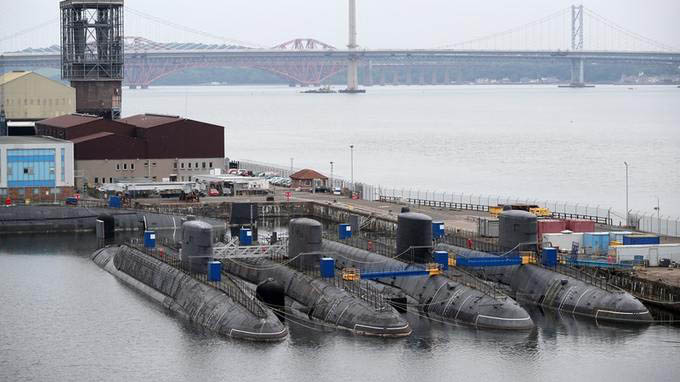
Government and industry will invest £760mn towards critical skills and infrastructure.
Ft.com Sylvia Pfeifer in London, 24 Mar 24
The UK government will launch a “national endeavour” to reinforce the country’s nuclear deterrent, including a promise to invest more than £760mn with industry over the next six years into critical skills and infrastructure.
Rishi Sunak, the prime minister, will on Monday also announce a separate £200mn investment into a “transformation fund” for Barrow-in-Furness, the Cumbrian town where Britain’s nuclear submarines are built by BAE Systems for the Royal Navy. Barrow has suffered from health inequalities, poor housing and some of the most deprived neighbourhoods in the country despite multiple attempts at lasting regeneration.
The investments come as the government prepares to set out how it plans to sustain and modernise the UK’s nuclear deterrent in a new Defence Command Paper. It follows concerns that ageing infrastructure and a lack of investment were undermining the effectiveness of the deterrent, a cornerstone of Britain’s defence posture.
Ministers were forced last month to declare that the deterrent remained “safe, secure and effective” after a nuclear missile test failed when the Trident weapon crashed into the sea near the submarine that fired it. Adding to the embarrassment, defence secretary Grant Shapps was on board HMS Vanguard to witness the test launch which took place in January.
The Defence Command Paper will detail the government’s plans to bring new Dreadnought-class submarines into service in the early 2030s. The Dreadnoughts are due to replace the current Vanguard-class vessels which were commissioned into service in the mid-1990s.
“Safeguarding the future of our nuclear deterrent and nuclear energy industry is a critical national endeavour,” Sunak will say on a visit to Barrow on Monday. “In a more dangerous and contested world, the UK’s continuous at-sea nuclear deterrent is more vital than ever.
And nuclear delivers cheaper, cleaner homegrown energy for consumers.” Investments into Britain’s nuclear capabilities and skills — both defence and civil — are seen as vital if the government is to build a new fleet of atomic power stations to bolster its energy security, as well as deliver on the new Dreadnought programme.
The government is also committed to building a new generation of attack submarines under the trilateral Aukus pact with the US and Australia……………………… more https://www.ft.com/content/a276c351-7e48-4662-a9fe-27363ac24a2b
This is why Sizewell C construction poses ‘possible risk’ to new hospital build
Potential obstacles facing construction of new West Suffolk Hospital in
Bury St Edmunds by 2030 include funding shortfall and development of
Sizewell C
A shortfall in funding and a difficulty in finding a contractor
are among the potential obstacles facing plans to build a new hospital in
Bury St Edmunds by 2030. A report, published ahead of the West Suffolk NHS
Foundation Trust (WSFT) board meeting tomorrow, highlighted potential
issues with the Hardwick Manor project.
The building of a new nuclear power
plant, Sizewell C, on the Suffolk coast was mentioned as one of the reasons
finding a contractor could be challenging.
Suffolk News 21st March 2024
Green Groups Protest ‘Nuclear Fairy Tale’ in Brussels
“All the evidence shows that nuclear power is too slow to build, too expensive, and it remains highly polluting and dangerous,” one activist said.
OLIVIA ROSANE, Mar 21, 2024, https://www.commondreams.org/news/protest-nuclear-power
An international coalition of environmental groups dropped banners and blockaded roads to protest the International Nuclear Energy Summit in Brussels on Thursday.
While the summit, hosted by the Belgian government and the International Atomic Energy Agency (IAEA), pushes nuclear energy as a replacement for fossil fuels, more than 600 climate action groups launched a declaration calling nuclear power plants a “distraction which slows down the energy transition.”
“We are in a climate emergency, so time is precious, and the governments here today are wasting it with nuclear energy fairy tales,” Greenpeace E.U. senior campaigner Lorelei Limousin said in a statement. “All the evidence shows that nuclear power is too slow to build, too expensive, and it remains highly polluting and dangerous.”
“The nuclear lobby camouflages itself beneath a climate-friendly facade, hoping to divert massive sums of money away from real climate solutions, at the expense of people and the planet.”
At the United Nations COP28 climate conference in the United Arab Emirates last year, more than 20 countries pledged to triple nuclear energy capacity by 2050. However, Greenpeace France calculated that achieving this would mean finishing 70 reactors each year between 2040 and 2050. This would be an unprecedented buildout in defiance of current trends: Between 2020 and 2023, 21 reactors were completed while 24 were shut down worldwide.
In the European Union specifically, many countries turned away from nuclear after 2011 in response to the Fukushima accident in Japan, according to Reuters. Germany shuttered its last three reactors for good in April 2023 following a successful anti-nuclear campaign there. In general, the nuclear share of the E.U. power mix dropped from 32.8% in 2000 to 22.8% in 2023, Greenpeace said.
Activists argue that nuclear still poses all the dangers the anti-nuclear movement has been warning about for decades and also cannot be ramped up quickly enough to prevent escalating climate extremes.
To reinforce this message, members of Greenpeace France blockaded the main roads to the Brussels summit using cars and bicycles. They also lit pink flares and threw pink powder as a motorcade of officials en route to the summit approached. The action succeeded in delaying the arrival of several delegations, Greenpeace E.U. said.
Other demonstrators dropped banners from the summit site at Brussels Expo reading, “Nuclear Fairy Tale,” while a group representing the 600 declaration signatories protested in front of an inflatable bouncy castle holding up a sign reading, “Nuclear fairy tales = climate crisis.”
The declaration was drafted by Climate Action Network Europe and signed by groups from at least 56 different countries and territories including Climate Action Network Canada, the David Suzuki Foundation, the Sierra Club, Food and Water Watch, CodePink, International Physicians for the Prevention of Nuclear War, and several 350.org, Fridays for Future, and Friends of the Earth affiliates.
“The nuclear lobby camouflages itself beneath a climate-friendly facade, hoping to divert massive sums of money away from real climate solutions, at the expense of people and the planet,” the declaration reads.
The signatories pointed out that, while the world must dramatically reduce greenhouse gas emissions by 2030 in order to limit global temperature rise to 1.5°C above preindustrial levels, it would take longer than this for any new nuclear plant to come online.
At the same time, it costs significantly more money to increase nuclear capacity than renewable options like wind and solar, they stressed. A new reactor requires almost four times the funds of a new wind power installation.
“Governments need to invest in proven climate solutions, such as home insulation, public transport, and renewable energy, rather than expensive experiments, like small modular reactors, which have no guarantees of actually delivering,” the declaration says.
It also points to safety risks across the nuclear lifecycle, from uranium mining to waste storage. And it adds that those dangers would only increase as temperatures rise.
“The climate crisis also increases the risks involved in nuclear power, as increased heatwaves, droughts, storms, and flooding all pose significant threats to the plants themselves and to the systems that aim to prevent nuclear accidents,” the signatories argued.
Instead, the declaration proposes that governments focus on achieving 100% renewable energy while also improving efficiency.
“What we demand is a just transition toward a safe, renewable, and affordable energy system that secures jobs and protects life on our planet,” the declaration concludes.
Sen. Lindsey Graham’s structural path: Let Ukrainians do all the dying in support of US proxy war against Russia

Walt Zlotow, West Suburban Peace Coalition, Glen Ellyn IL 22 Mar 24
Early in the US proxy war against Russia in Ukraine, Senator Lindsey Graham gloried in America’s use of Ukrainian soldiers to do all the dying. “I like the structural path we’re on here. As long as we help Ukraine with the weapons they need and the economic support, they will fight to the last person.” Anybody but US cannon fodder was just fine for the armchair warrior from South Carolina.
Two years later, with over 400,000 of those hapless Ukrainian soldiers dead from Sen. Graham’s exhortations to die for American exceptionalism, Graham remains unbowed.
During his recent visit to Kyiv, he demanded Ukraine pass a new mobilization law to draft younger cannon fodder to send into the chopper mill of a lost war. Graham is miffed Ukraine draft laws exempt men under 27. “I would hope that those eligible to serve in the Ukrainian military would join. I can’t believe it’s at 27. You’re in a fight for your life, so you should be serving — not at 25 or 27. We need more people in the line. No matter what we do, you should be fighting.”
Graham remains unconcerned he supported US provocations which led to the Russian invasion of Ukraine. He’s in denial of his acquiescence in the effort to prevent a negotiated settlement early on that would have preserved Ukraine territory. Now he’s telling Ukraine to send its young men to fill the ranks of the 400,000 dead Ukrainians he exalted to die for US exceptionalism.
It would take a psychiatrist, maybe a team of psychiatrists, to determine the pathology in in Graham’s psyche that leads him to promote mass slaughter of foreigners to prop up American’s collapsing control of European geopolitics. But good luck trying to get the Senior Senator from South Carolina to lie on the couch. His focus remains: ‘So many Ukrainians yet to die…so little time.”
Nuclear test veterans demand compensation and medical records access
By Anna Lamche, BBC News, 20 Mar 24
Veterans exposed to radiation during British nuclear tests are calling for the government to create a “special tribunal” to oversee compensation.
The group, who say their lives have been blighted by ill health as a result of the tests, also want access to their missing military medical records.
The Ministry of Defence (MoD) says no information is withheld from veterans.
But on Tuesday it was threatened with legal proceedings by alleged victims and their families.
Former military personnel and their families served a “letter before action” on the MoD and handed a petition into Downing Street earlier.
Veterans and their families developed cancer, heart problems and even lost babies after the tests – and their children have been born with obvious disabilities, the group claims.
The campaigners have called on the government to establish a “special tribunal” that would investigate, compensate and commemorate alleged victims of the nuclear tests, which took place between 1952 and 1967 in Australia and the South Pacific.
The government is under pressure to act quickly because many of the claimants are now getting older.
The group is demanding access to blood and urine samples taken during the Cold War weapons trials.
Regis
Nuclear test veterans demand compensation and medical records access
By Anna Lamche, BBC News 20 Mar 24
Veterans exposed to radiation during British nuclear tests are calling for the government to create a “special tribunal” to oversee compensation.
The group, who say their lives have been blighted by ill health as a result of the tests, also want access to their missing military medical records.
The Ministry of Defence (MoD) says no information is withheld from veterans.
But on Tuesday it was threatened with legal proceedings by alleged victims and their families.
Former military personnel and their families served a “letter before action” on the MoD and handed a petition into Downing Street earlier.
Veterans and their families developed cancer, heart problems and even lost babies after the tests – and their children have been born with obvious disabilities, the group claims
The campaigners have called on the government to establish a “special tribunal” that would investigate, compensate and commemorate alleged victims of the nuclear tests, which took place between 1952 and 1967 in Australia and the South Pacific.
The government is under pressure to act quickly because many of the claimants are now getting older.
The group is demanding access to blood and urine samples taken during the Cold War weapons trials…………………………………………. https://www.bbc.com/news/uk-68611769
Nuclear power station workers set to walk out in dispute over pay
The union say that the dispute is a result of an ‘inadequate’ pay offer of 4.5%, effective from April 2023.
Caitlyn Dewar, 18 Mar 24, https://news.stv.tv/highlands-islands/dounreay-nuclear-power-station-workers-in-highlands-set-to-walk-out-in-dispute-over-pay
Hundreds of workers at a nuclear power station in the Highlands are being balloted for strike action in a pay dispute.
Unite the union confirmed that around 450 members employed by Magnox Limited based at Dounreay power station are being balloted for strike action in a pay dispute.
The union say that the dispute is a result of an “inadequate” pay offer of 4.5%, effective from April 2023 which was rejected by 95% in a consultative pay ballot.
Unite said the offer amounts to a substantial real terms pay cut, adding that the true rate of inflation based on the RPI stood at 11.4%.
Unite’s Magnox membership includes craft technicians, general operators, chemical and electrical engineers, and maintenance fitters and safety advisors.
Unite general secretary Sharon Graham said: “The Dounreay workforce are highly-skilled and they undertake an extremely important job.
3 days ago
Share this story
Posted in
Hundreds of workers at a nuclear power station in the Highlands are being balloted for strike action in a pay dispute.
Unite the union confirmed that around 450 members employed by Magnox Limited based at Dounreay power station are being balloted for strike action in a pay dispute.
The union say that the dispute is a result of an “inadequate” pay offer of 4.5%, effective from April 2023 which was rejected by 95% in a consultative pay ballot.
Unite said the offer amounts to a substantial real terms pay cut, adding that the true rate of inflation based on the RPI stood at 11.4%.
Unite’s Magnox membership includes craft technicians, general operators, chemical and electrical engineers, and maintenance fitters and safety advisors.
Unite general secretary Sharon Graham said: “The Dounreay workforce are highly-skilled and they undertake an extremely important job.
Ad
“The failure to pay our members a decent pay increase is outrageous, Magnox seems to have money to burn for directors and shareholders but thinks it is acceptable to deny its workers a decent pay increase.”
“Unite will fully support our members at Dounreay power station in the fight for better jobs, pay and conditions.”
Magnox Ltd, currently trading as Nuclear Restoration Services, is a wholly owned subsidiary of the Nuclear Decommissioning Authority (NDA).
The Dounreay power station is scheduled to be fully decommissioned and cleaned-up in 2033.
The union said that the remuneration package of the highest paid Magnox director went up from £331,000 to £651,000 in March 2023, and the company paid dividends of £2.1m in the same period.
Marc Jackson, Unite industrial officer, added: “Pay negotiations with Magnox have been ongoing since January 2023 with next to no movement by the company. However, Magnox has not been slow in making sure the remuneration packages for directors have been bolstered with the highest paid director seeing their package double in the space of a year.
“Unite’s membership at Dounreay power station will no longer accept these double standards, and that’s why we are balloting our members for strike action.”
Magnox has been contacted for comment.
NATO Builds Largest Europe Base Near Black Sea
NewsWeek, Mar 18, 2024
Romania has now begun construction of what will eventually be the NATO alliance’s largest European military base, as the transatlantic bloc seeks to bolster its capabilities in the Black Sea region with an eye on Russian activity there.
The $2.7 billion project will expand the Romanian Air Force 57th Air Base Mihail Kogălniceanu, which is located close to the Black Sea port city of Constanța. The new facility will have a perimeter of almost 20 miles, cover around 11 square miles, and will be home to some 10,000 NATO personnel and their families.
Romania has long been a key hub for NATO operations in the Black Sea region. Thousands of U.S. troops have cycled through the country on training and security missions since the beginning of Russia’s full-scale war on Ukraine. American combat and surveillance aircraft regularly operate from there as part of NATO’s policing operations………………………….
NATO began building its network of four Enhanced Forward Presence multinational battlegroups in the Baltic region following Russia’s annexation of Crimea in 2014.
Comment: 2014 was the year of the US coup in Ukraine.
After the start of the full-scale invasion in February 2022, the alliance reinforced those missions and established four additional battlegroups in Bulgaria, Hungary, Romania and Slovakia.
France is the framework nation for the Romanian battlegroup, with Belgium, Luxembourg, North Macedonia, Poland, Portugal, and the U.S. all contributing forces.
Bucharest is looking towards closer cooperation with its NATO allies — and the U.S. in particular — as the Black Sea becomes an increasingly fraught theater of confrontation between Ukraine and Russia, as well as between Moscow and its Western rivals.
“Romania has already established itself as an anchor of the eastern flank of NATO and the EU,” Prime Minister Marcel Ciolacu told Newsweek in June. https://www.newsweek.com/nato-builds-largest-europe-base-black-sea-romania-1880210
1 This Month





PLEASE OPPOSE HR 8255 AND S.3639 – bills would accelerate satellite deployment, with no environmental review or safeguards – https://ncstd5li.quorum.us/campaign/169331/
To see nuclear-related stories in greater depth and intensity – go to https://nuclearinformation.wordpress.com
-
Archives
- September 2026 (339)
- August 2026 (330)
- July 2026 (355)
- June 2026 (287)
- May 2026 (306)
- April 2026 (356)
- March 2026 (251)
- February 2026 (267)
- January 2026 (308)
- December 2025 (358)
- November 2025 (359)
- October 2025 (375)
-
Categories
- 1
- 1 NUCLEAR ISSUES
- business and costs
- climate change
- culture and arts
- ENERGY
- environment
- health
- history
- indigenous issues
- Legal
- marketing of nuclear
- media
- opposition to nuclear
- PERSONAL STORIES
- politics
- politics international
- Religion and ethics
- safety
- secrets,lies and civil liberties
- spinbuster
- technology
- Uranium
- wastes
- weapons and war
- Women
- 2 WORLD
- ACTION
- AFRICA
- Atrocities
- AUSTRALIA
- Christina's notes
- Christina's themes
- culture and arts
- Events
- Fuk 2022
- Fuk 2023
- Fukushima 2017
- Fukushima 2018
- fukushima 2019
- Fukushima 2020
- Fukushima 2021
- general
- global warming
- Humour (God we need it)
- Nuclear
- RARE EARTHS
- Reference
- resources – print
- Resources -audiovicual
- Weekly Newsletter
- World
- World Nuclear
- YouTube
-
RSS
Entries RSS
Comments RSS

